Alco's "RS11": Showcasing The 251B Power Plant

Last revised: August 1, 2023
By: Adam Burns
The RS11 began a new class of road switcher for Alco. The model was the first offered with a low, short hood and
came equipped with the manufacturer's newest prime mover.
Unfortunately, it could not recapture the market from Electro-Motive. By the time the RS11 debuted EMD was so backlogged with orders for the GP9, along with the fact that railroads had become somewhat distrustful of Alco due to its problematic prime movers, the model had little chance to offer strong competition.
Despite these issues the RS11 proved became Alco's best-selling late model Road Switcher (RS) design. It could be found in service far and wide, from the Great Northern and Missouri Pacific to New Haven and Chicago & North Western. Today, several examples remain preserved.
Photos
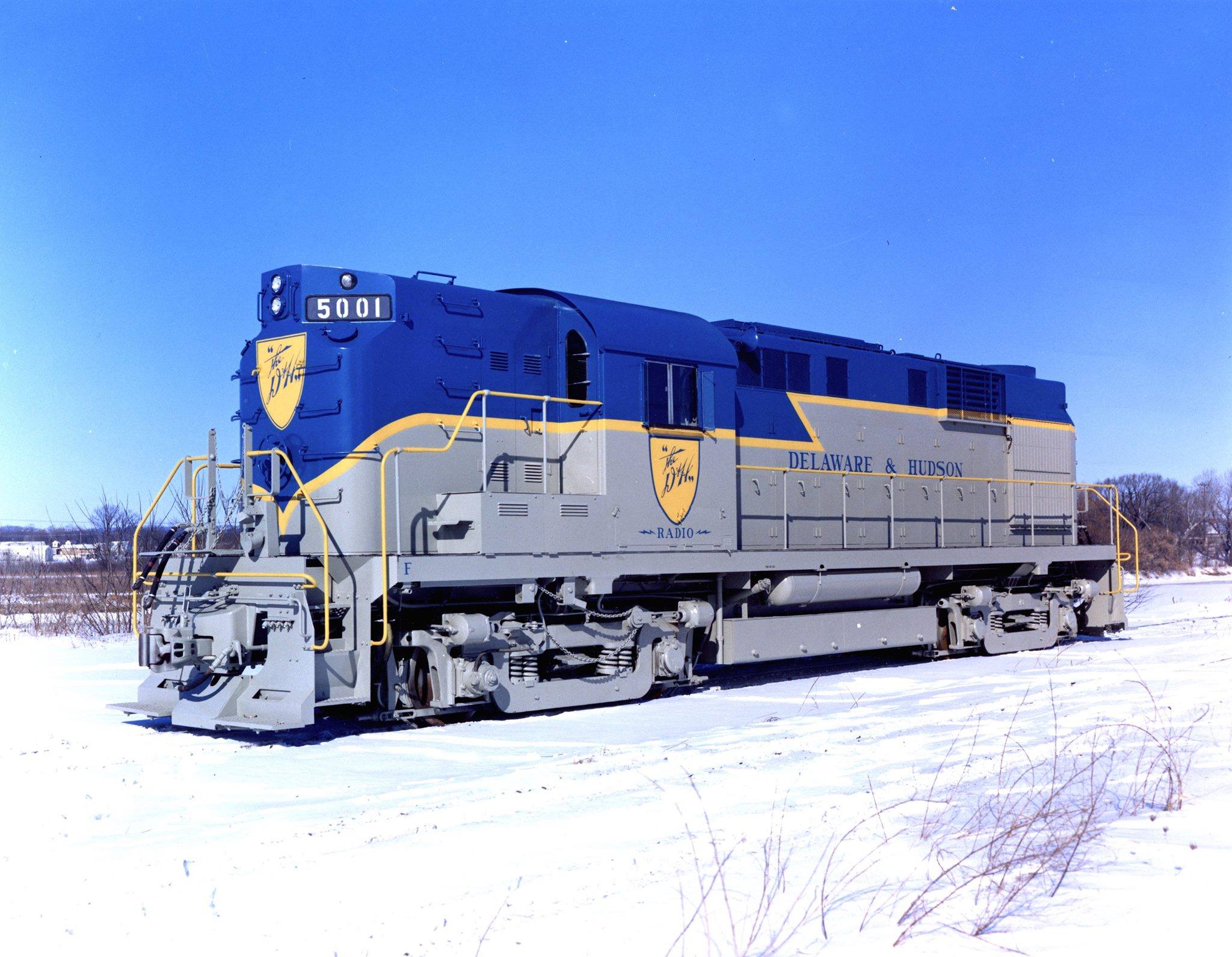 An American Locomotive photo featuring new Delaware & Hudson RS11 #5001 at the company's plant in Schenectady, New York circa 1960. Warren Calloway collection.
Overview
Alco was seemingly always racing to catch EMD in an attempt to remain competitive with the industry's leading locomotive manufacturer. Ironically, it had pioneered the road switcher design with its initial RS1 in 1941.
However, by the time EMD released the GP9 in 1954 Alco had fallen far behind in the market as the General Motors company was simply offering far superior products that were more rugged, reliable, and efficient. In 1956 the Schenectady builder released the RS11 model, listed by Alco as its DL701.
In many ways, perhaps the RS11 best described Alco's losing battle against EMD, and very soon against General Electric as well. Of course, releasing the model when it did nearly two years after the GP9 went on sale Alco was once again trying to catch up.
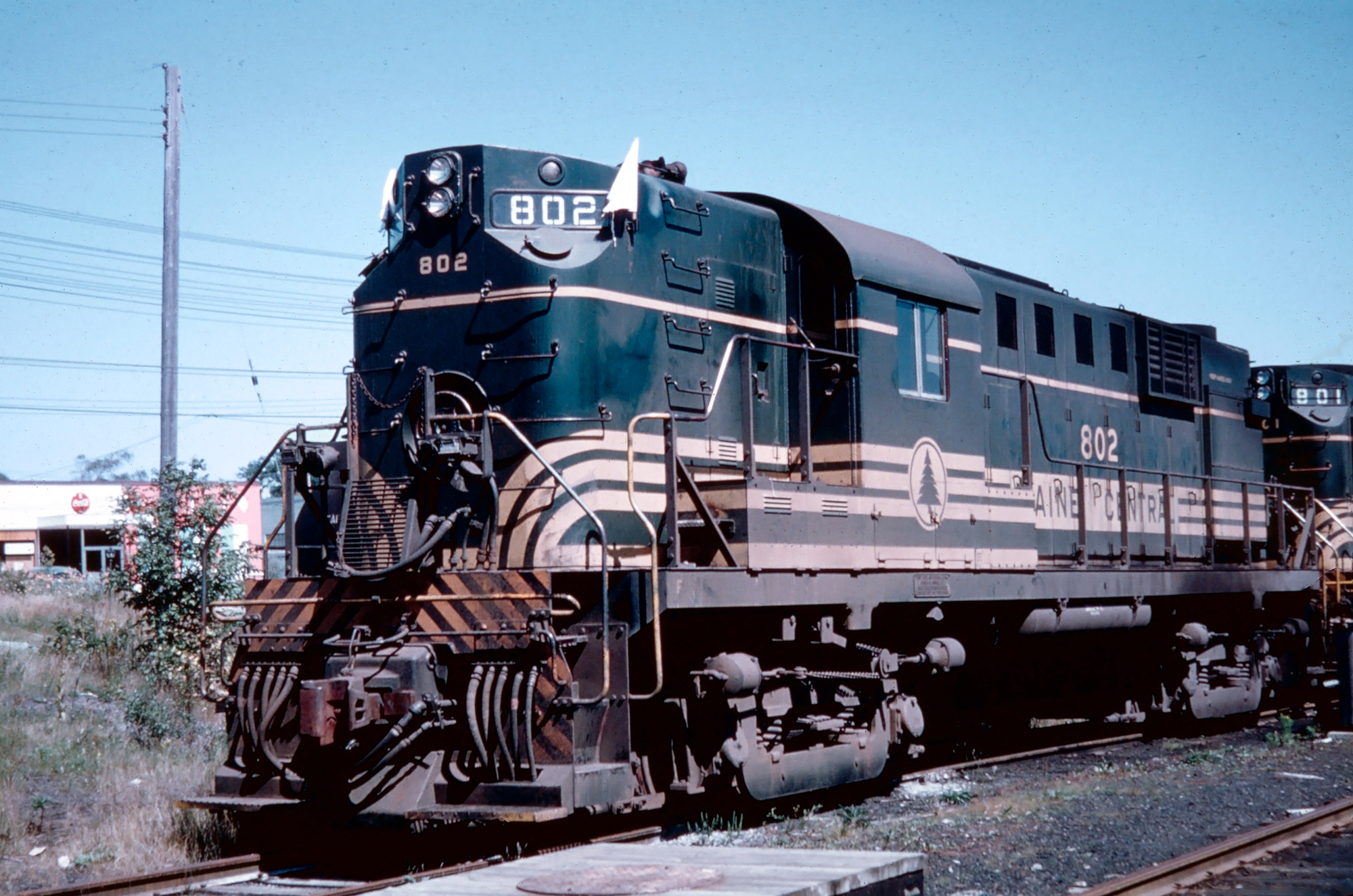 Maine Central RS11's #802 (ex-Portland Terminal #1082) and #801 at Rockport, Maine in the summer of 1964. American-Rails.com collection.
%20and%20%23801%20at%20Rockport%2C%20Maine%20in%20the%20summer%20of%201964.%20American-Rails.com%20collection.)
Some of its sales for the RS11 was the result of EMD being so backlogged with orders for the GP9 that some railroads went elsewhere to fill their locomotive shortage.
Interestingly, Alco's product in this case was actually a better locomotive than the GP9 in terms of specifications:
- Whereas the GP9 featured 1,750 horsepower the RS11, using Alco's new model 251B engine, could produce 1,800 horsepower.
- It offered a continuous tractive effort rating of 47,000 pounds compared to the GP9's 40,000 pounds.
- Finally, the model could accelerate faster while spending less fuel than the GP9 thanks to its 12-cylinder prime mover (EMD's 567C used 16 cylinders). This last feature was a trademark of Alco engineering but unfortunately was not a considerable sales advantage in those days.
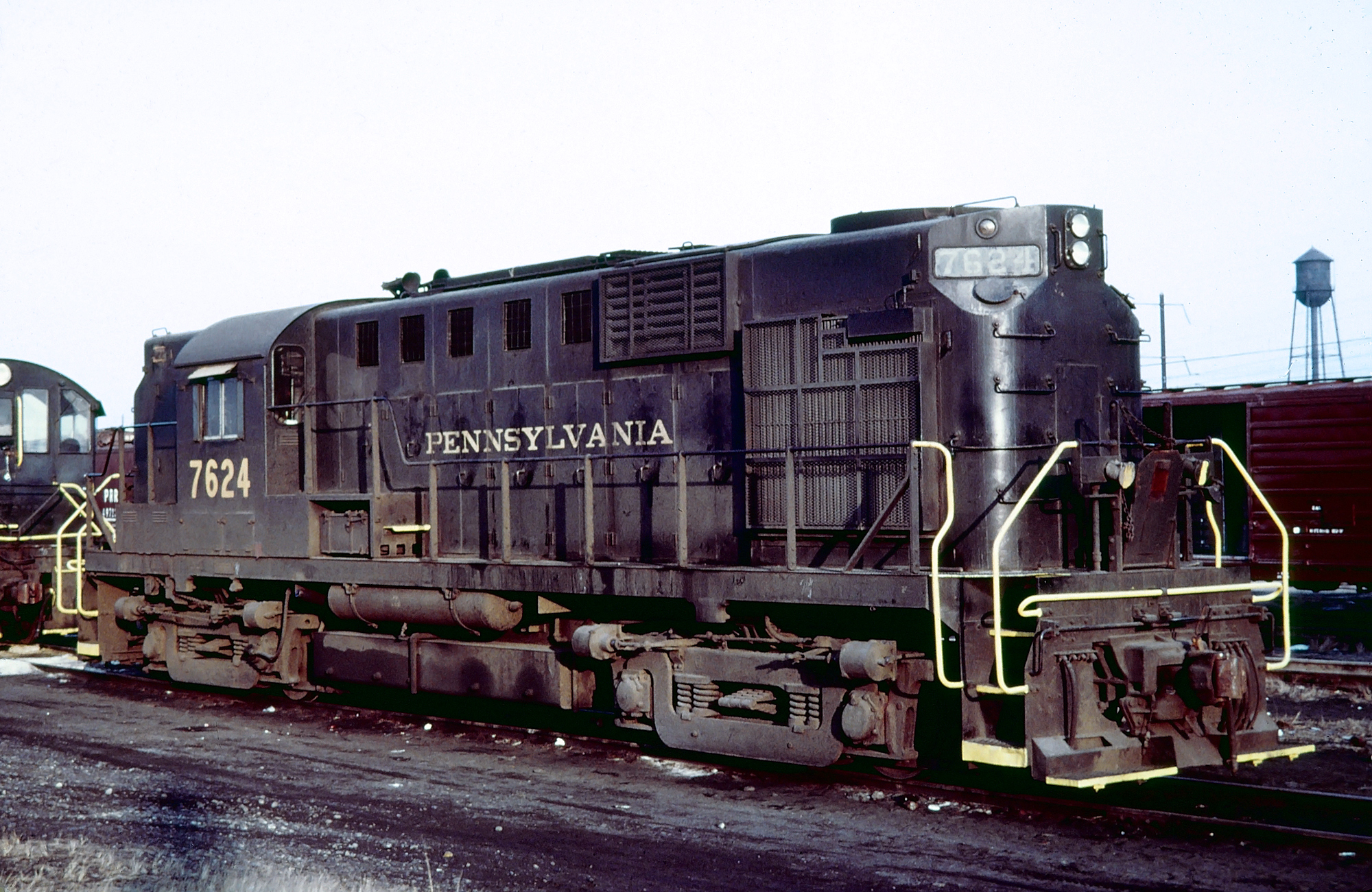 Pennsylvania RS11 #7624 (built as #8624) at Trenton, New Jersey, circa 1967. Fred Byerly photo. American-Rails.com collection.
%20at%20Trenton%2C%20New%20Jersey%2C%20circa%201967.%20%20Fred%20Byerly%20photo.%20%20American-Rails.com%20collection.)
Despite these improvements the RS11 really never offered serious competition for EMD, despite Alco's best attempts. The new 251B prime mover did, at least, give railroads more reason to trust the builder's reliability as the engine was not nearly as trouble-prone as the earlier model 244.
For the first time Alco began giving railroads the option to purchase road switchers with either low or high, short hoods (it was always an option before, but only via special request). Still, most continued to purchase them with high hoods although some like the Delaware & Hudson and Southern Pacific did order a few with low hoods.
Beginning with the RSD7, Alco changed the appearance of its road switcher, making it truly a Schenectady product. The builder's RS1s, RS2s, RS3s, and their variants all featured cabs protruding well above both long and short hoods.
However, Alco changed its design so as the hood (particularly the long hood) mounted flush with the top of the cab.
While radiator housings, vents, and other minor various exterior elements could denote an EMD from Alco perhaps what truly set the latter apart was the notched corners housing number boards. This very small, yet classy touch makes for an easy spotting feature of Alco locomotives.
Data Sheet and Specifications
| Alco Class | 404-DL-240 |
| Entered Production | 2/1956 (Demos: To Southern Pacific) |
| Years Produced | 2/1956-6/1961 |
| Model Specification | DL701 |
| Engine | 251B, V-12 |
| Horsepower | 1,800 |
| RPM | 1,000 |
| Carbody Styling | Alco |
| Length (Between Coupler Pulling Faces) | 56' 11.75" |
| Weight | 240,000 Lbs. |
| Dynamic Brakes | Optional |
| Trucks | B-B |
| Truck Type | Swing Bolster, Drop-Side Equalizer (AAR Type-B) |
| Truck Wheelbase | 9' 4" |
| Wheel Size | 40" |
| Traction Motors | GE 752 (4) |
| Traction Generator | GT581 |
| Steam Generator | Optional |
| Gear Ratio | 74:18 (65 MPH), 65:18 (75 MPH) |
| Tractive Effort Rating | 46,500 Lbs. at 12 MPH |
| Top Speed | 75 MPH |
Production Rosters
Alco
Total Built = 356 (Including Export)
| Owner | Road Number(s) | Serial Number(s) | Date Built |
|---|---|---|---|
| Alco (Demonstrator) | 701 (became Southern Pacific #5720) | 81456 | 2/1956 |
| Alco (Demonstrator) | 701A, 701B (became Southern Pacific #5721-5122) | 81457, 81458 | 2/1956 |
| Carolina & North Western | 11 | 81464 | 3/1956 |
| Delaware & Hudson | 5000-5002 | 83504-83506 | 3/1960 |
| Delaware & Hudson | 5003-5005 | 83534-83536 | 3/1960 |
| Delaware & Hudson | 5006-5011 | 83685-83690 | 4/1961 - 5/1961 |
| Duluth, Winnipeg & Pacific | 3600-3608 | 81934-81942 | 8/1956 - 9/1956 |
| Duluth, Winnipeg & Pacific | 3609-3614 | 82026-82031 | 9/1956 |
| Erie Mining | 300, 301 | 81914, 81915 | 6/1956 |
| Erie Mining | 302, 303 | 81918, 81919 | 6/1956 |
| Erie Mining | 304, 305 | 81929, 81930 | 8/1956 |
| Erie Mining | 306, 307 | 81932, 81933 | 8/1956 |
| Erie Mining | 308-310 | 82036-82038 | 10/1956 |
| Erie Mining | 311, 312 | 82041, 82042 | 10/1956 |
| Erie Mining | 313, 314 | 82050, 82051 | 11/1956 |
| Green Bay & Western | 309 | 81931 | 8/1956 |
| Lehigh Valley | 400-403 | 83537-83540 | 3/1960 |
| Maine Central | 801 | 81916 | 6/1956 |
| Missouri Pacific | 4601-4612 | 83492-83503 | 10/1959 - 11/1959 |
| Monongahela Connecting | 700 | 82370 | 7/1957 |
| New Haven | 1400-1413 | 81781-81794 | 5/1956 |
| New Haven | 1414 | 81913 | 6/1956 |
| New York Central | 8000-8008* | 82361-82369 | 6/1957 - 7/1957 |
| Nickel Plate Road | 558-562 | 81459-81463 | 2/1956 - 3/1956 |
| Nickel Plate Road | 563-567 | 82832-82836 | 3/1958 |
| Nickel Plate Road | 568-572 | 82863-82867 | 3/1958 |
| Nickel Plate Road | 573-575 | 83541-83543 | 5/1960 |
| Nickel Plate Road | 576, 577 | 83580, 83581 | 5/1960 |
| Nickel Plate Road | 850-863 | 83014-83027 | 1/1959 - 2/1959 |
| Nickel Plate Road | 864 | 83394 | 2/1959 |
| Norfolk & Western | 308-318 | 81465-81475 | 3/1956 - 4/1956 |
| Norfolk & Western | 319-324 | 81775-81780 | 4/1956 |
| Norfolk & Western | 325-333 | 82057-82065 | 1/1957 |
| Norfolk & Western | 334-340 | 82323-82329 | 1/1957-2/1957 |
| Norfolk & Western | 341-343 | 82340-82342 | 6/1957 |
| Norfolk & Western | 344 | 82358 | 6/1957 |
| Norfolk & Western | 345-350 | 82372-82377 | 11/1957 |
| Norfolk & Western | 351-364 | 82628-82641 | 11/1957 - 12/1957 |
| Norfolk & Western | 365-376 | 82956-82967 | 11/1958 - 12/1958 |
| Norfolk & Western | 377-380 | 83010-83013 | 1/1959 |
| Norfolk & Western | 381-392 | 83395-83406 | 2/1959 - 3/1959 |
| Norfolk & Western | 393-400 | 83435-83442 | 5/1959 - 6/1959 |
| Norfolk & Western | 401-406 | 83691-83696 | 5/1961 - 6/1961 |
| Northern Pacific | 900, 901 | 82830, 82831 | 1/1958 |
| Northern Pacific | 902, 903 | 82881, 82882 | 6/1958 |
| Northern Pacific | 904, 905 | 82948, 82949 | 7/1958 |
| Northern Pacific | 906-911 | 82950-82955 | 7/1958 |
| Northern Pacific | 912-917 | 83582-83587 | 6/1960 |
| Pennsylvania Railroad | 8617-8625 | 81920-81928 | 8/1956 |
| Pennsylvania Railroad | 8626-8633 | 82330-82337 | 2/1957 |
| Pennsylvania Railroad | 8634, 8635 | 82338, 82339 | 5/1957 |
| Pennsylvania Railroad | 8636-8639 | 82642-82645 | 11/1957 |
| Pennsylvania Railroad | 8640, 8641 | 82646, 82647 | 11/1957 |
| Pennsylvania Railroad | 8642-8644 | 82817-82819 | 11/1957 |
| Pennsylvania Railroad | 8645-8647 | 82820-82822 | 11/1957 |
| Pennsylvania Railroad | 8648 | 82823 | 11/1957 |
| Pennsylvania Railroad | 8649-8654 | 82824-82829 | 12/1957 |
| Portland Terminal (Maine) | 1082 | 81917 | 6/1956 |
| Seaboard Air Line | 100-106 | 83588-83594 | 6/1960 |
| Seaboard Air Line | 107-109 | 83681-83683 | 6/1960 |
| Southern Pacific | 5723-5729 | 82043-82049 | 11/1956 |
| Southern Pacific | 5845-5856 | 83407-83418 | 4/1959 - 5/1959 |
| Southern Pacific | 5857-5859 | 83432-83434 | 5/1959 |
| Southern Pacific | 5860-5866 | 83445-83451 | 8/1959 |
| Southern Pacific | 5867-5871 | 83487-83491 | 8/1959 - 9/1959 |
| Toledo, Peoria & Western | 400, 401 | 83008, 83009 | 11/1958 |
| Toledo, Peoria & Western | 402 | 83444 | 6/1959 |
* Alco constructed six additional RS11's for the New York Central, road numbers 8009-8011 (construction numbers 83504-83506) and 8012-8014 (construction numbers 83534-83536), between March 24-31, 1960.
As John Kirkland points out in his book, "The Diesel Builders: Volume Two," after delivery it was determined an Authority For Execution (AFE) was never completed and New York Central rejected the locomotives.
The units were returned to Alco and stored; they were eventually acquired by the Delaware & Hudson between January 31-February 17, 1961 and given road numbers 5000-5005.
Export
| Owner | Road Number(s) | Construction Numbers | Completion Dates |
|---|---|---|---|
| Ferrocarril del Pacifico (Mexico) | 1501 | 82371 | 11/1957 |
| Ferrocarriles Nacionales de México (Mexico) | 7200-7204 | 82052-82056 | 12/1956 |
| Ferrocarriles Nacionales de México (Mexico) | 7205-7217 | 82868-82880 | 4/1958 - 5/1958 |
| Ferrocarriles Nacionales de México (Mexico) | 7218 | 83684 | 4/1961 |
| Ferrocarriles Nacionales de México (Mexico) | 7219-7253 | 84414-84448 | 6/1963 - 12/1963 |
| Ferrocarriles Nacionales de México (Mexico) | 7254-7293 | 84449-84488 | 1/1964 - 4/1964 |
| Secretaria de Comunicaciones y Obras Públicas (S.C.O.P.)/Mexico | 7123-1 thru 7123-3 | 82032-82034 | 10/1956 |
| Secretaria de Comunicaciones y Obras Públicas (S.C.O.P.)/Mexico | 7123-4 | 82035 | 10/1956 |
| Southern Peru Copper Mine (Peru) | 3, 4 | 82039, 82040 | 10/1956 |
| Southern Peru Copper Mine (Peru) | 5, 6 | 82359, 82360 | 6/1957 |
| Southern Peru Copper Mine (Peru) | 8 | 83443 | 6/1959 |
Sources
- Foster, Gerald. A Field Guide To Trains. New York: Houghton Mifflin, 1996.
- Kirkland, John F. Diesel Builders, The: Volume Two, American Locomotive Company And Montreal Locomotive Works. Glendale: Interurban Press, 1989.
- Pinkepank, Jerry A. Diesel Spotter's Guide. Milwaukee: Kalmbach Publishing Company, 1967.
- Solomon, Brian. Alco Locomotives. Minneapolis: Voyageur Press, 2009.
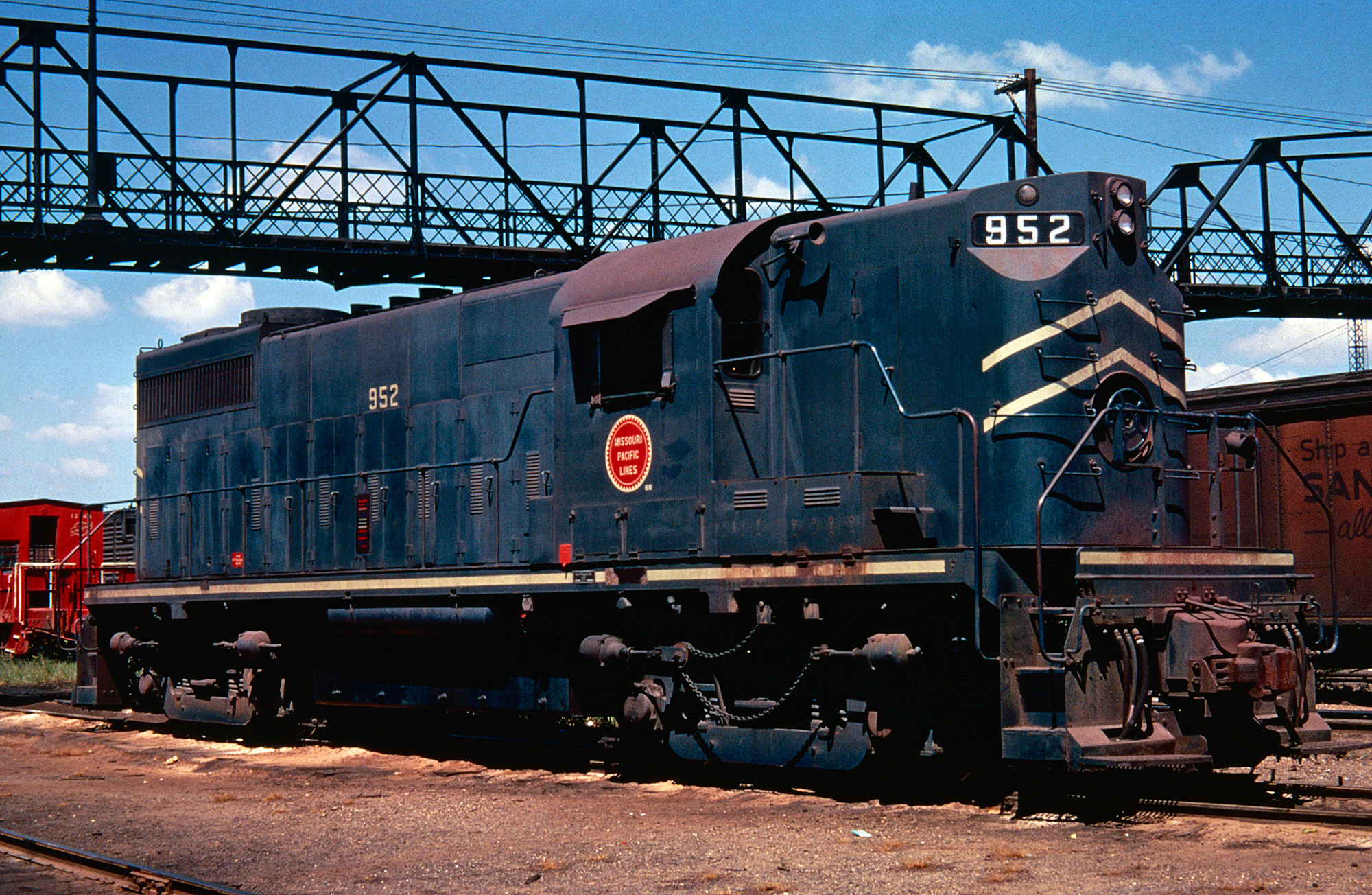 Missouri Pacific "RS11" #952 is seen here in St. Louis, circa 1970. This unit was built as #4609 and later wore #72. It had already been reengined with an EMD prime mover by this date and listed as a "GP16." American-Rails.com collection.
In the end, despite the Alco RS11's smaller sales volume it could be found on a number or railroads across the US from the Norfolk & Western and Pennsylvania to the Northern Pacific and Southern Pacific.
Production of the Alco RS11 ended in May of 1964 with a total of 462 units produced in the US and Canada. Several foreign lines picked up examples of the locomotive including the Ferrocaril del Pacifico, National de Mexico, Secretarias Communicaciones de Obras Publicas, and Southern Peru Copper.
Unfortunately, the rest of Alco's road-switcher series cataloged at the time would not see sales reach numbers anywhere near the RS11.
SteamLocomotive.com
Wes Barris's SteamLocomotive.com is simply the best web resource on the study of steam locomotives.
It is difficult to truly articulate just how much material can be found at this website.
It is quite staggering and a must visit!