The "RS-12": Baldwin's Lightly Powered Road-Switcher

Last revised: June 1, 2023
By: Adam Burns
The RS-12 was Baldwin's lightest road-switcher design in terms of horsepower, featuring just 1,200 HP.
As John Kirkland notes in his book, "The Diesel Builders: Volume Three (Baldwin Locomotives Works)," Eddystone never made a concerted effort to challenge Alco's success in this market with its popular RS-1.
Baldwin had a built a few 1,000 horsepower road-switchers (DRS-4-4-1000) for a few North American lines (Tennessee Central, Canadian Pacific, and Pennsylvania) but by and large stayed out of the market.
When the company upgraded its road-switchers with the 608A prime mover, it increased the DRS-4-4-1000 by 200 horsepower and renamed it the RS-12.
Baldwin put more effort into marketing this new variant but by the 1950s railroads were looking for greater power in an over-the-road locomotive. As such, the RS-12 saw few sales.
Today, there are several RS-12's preserved, most of Seaboard Air Line heritage; in addition, McCloud River Railroad #33 (only one of two built with dynamic brakes) can be found at California's popular Skunk Train while short line freight carrier Escanaba & Lake Superior owns eight units (all of Seaboard heritage).
Photos
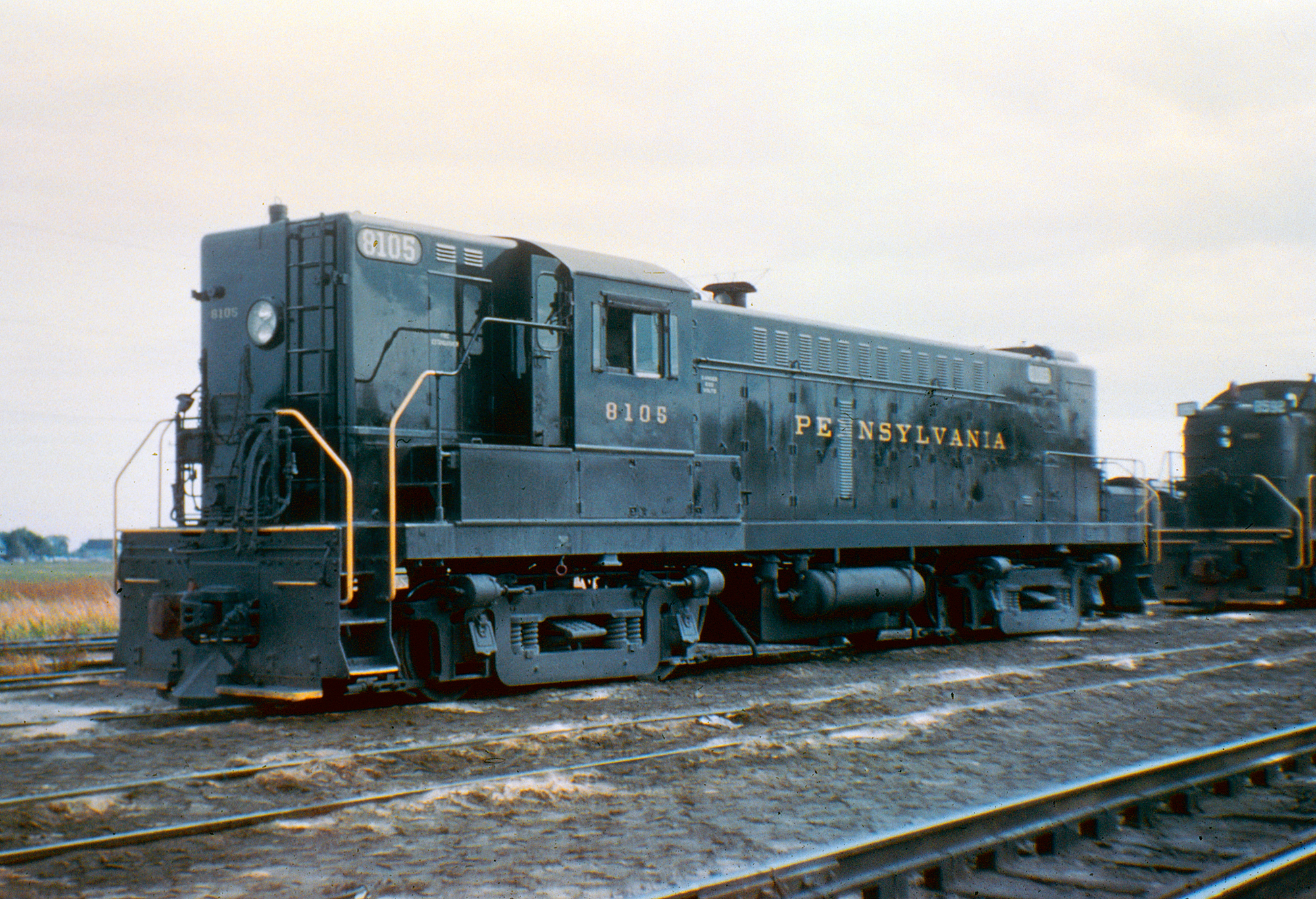 Pennsylvania RS12 #8105. Author's collection. This unit was part of a batch of six (#8105-8110) to initially feature the high, short hood. This group did not feature dynamic brakes. In his book, "The Diesel Builders: Volume Three (Baldwin Locomotives Works)," John Kirkland notes the following: "As a consequence of carbody design changes that were made beginning in 1953 on the 1,600 hp road switcher models...certain changes were also made to the model RS-12 production beginning in 1954 in order to permit using the same jigs and fixtures for all road switcher production insofar as was possible. To accomplish this objective, the underframes were lengthened from 58 feet to 58'6" over couplers, and the level of the short hood was raised nearly to the level of the cab roof. The long hood, however, was not raised..."
%20to%20initially%20feature%20the%20high%2C%20short%20hood.%20%20This%20group%20did%20not%20feature%20dynamic%20brakes.%20%20Author's%20collection.)
Overview
The RS12 was Baldwin's lone light road-switcher the builder attempted to market although it appears to have been largely a half-hearted effort.
Incidentally, Baldwin's success in the diesel market began with a line of switchers and it had been producing small electric locomotives, such a various box cab designs, for years in conjunction with Westinghouse.
The RS12 was one of four road switcher models Baldwin-Lima-Hamilton offered in its new Standard line released in 1950.
These new locomotives sold far better than the company's earlier designs of the 1940s and one cannot help but wonder how successful BLH would have become had parent Westinghouse allowed it to continue refining its diesels.
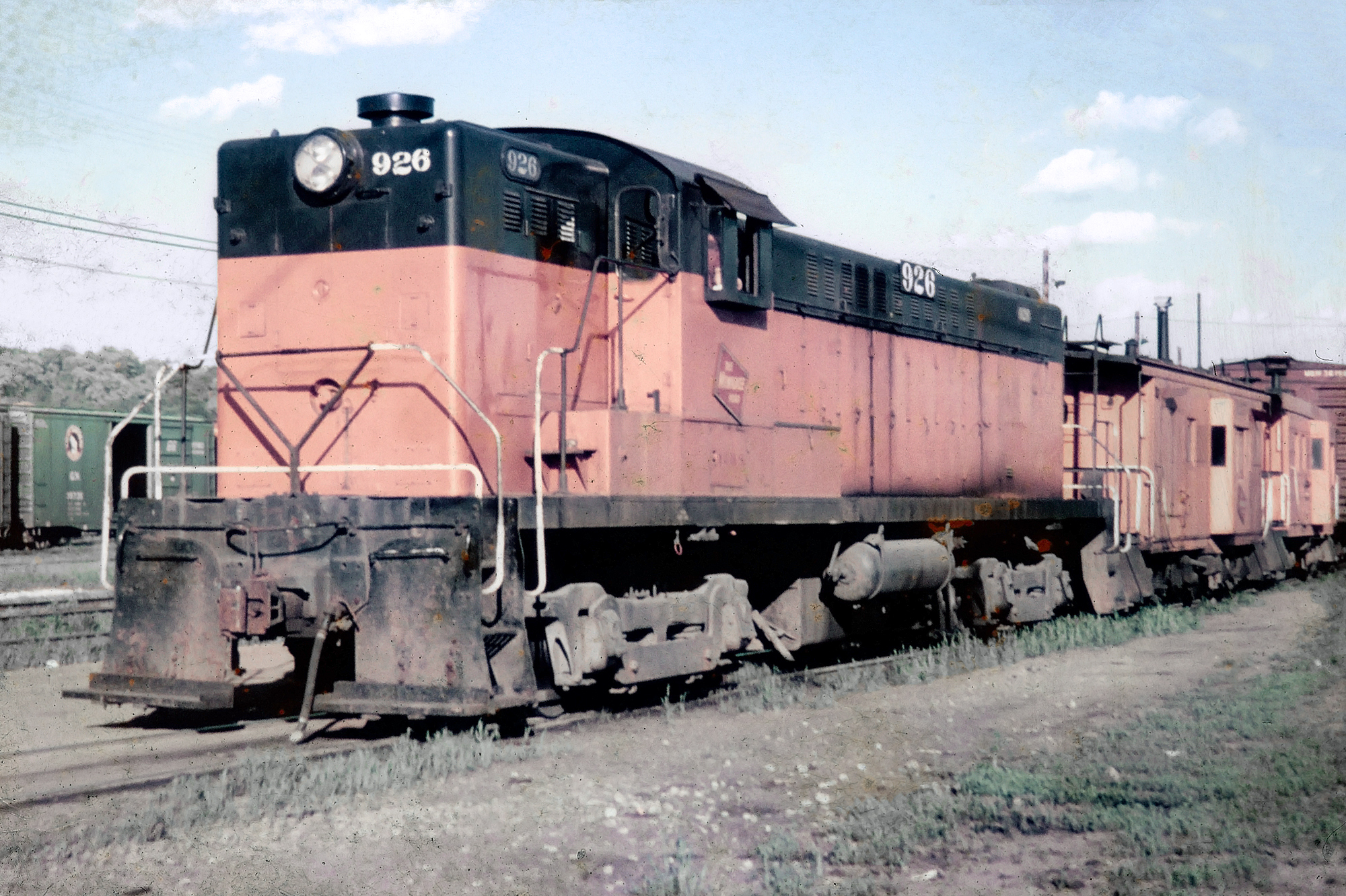 Milwaukee Road RS12 #926 (built as #970) is seen here at Pigs Eye Yard in St. Paul, Minnesota during June of 1968. Fred Byerly photo. American-Rails.com collection.
%20is%20seen%20here%20at%20Pigs%20Eye%20Yard%20in%20St.%20Paul%2C%20Minnesota%20during%20June%20of%201968.%20%20Fred%20Byerly%20photo.%20%20American-Rails.com%20collection.)
In any event, BLH's new classification system was fairly straightforward and certainly much easier to decipher than its earlier system, partially based from the steam era.
In the case of the RS12 the "RS" referred to Road Switcher while the "12" regarded its 1,200 horsepower (the model was actually even easier to understand than the AS16, AS416, and AS616 classifications).
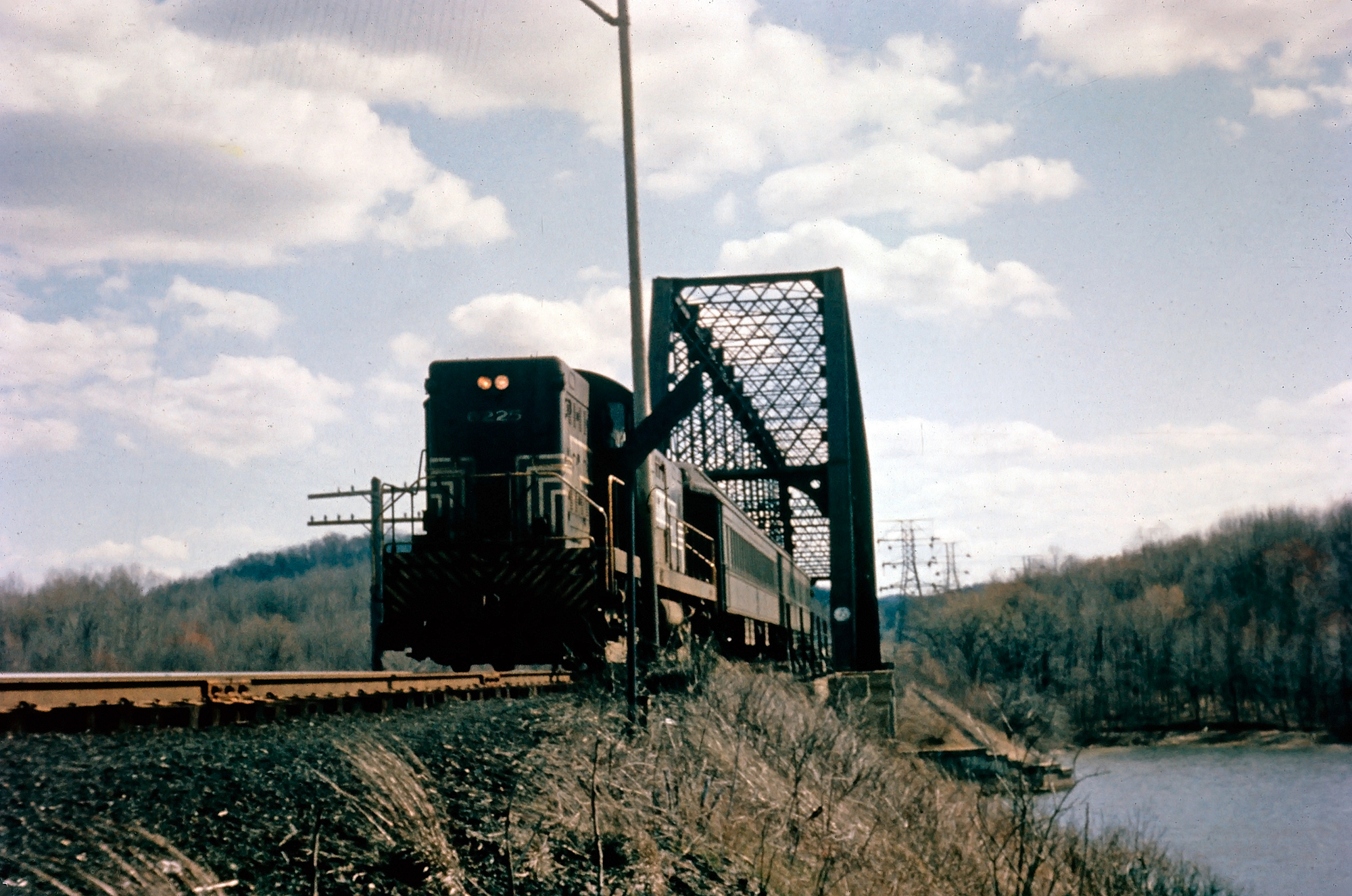 New York Central RS-12 #6225 (built as #5825) leads a two-coach commuter run northbound on the Putnam Division as the train crosses Croton Lake (New York), circa 1957. Meyer Pearlman photo. American-Rails.com collection.
%20leads%20a%20two-coach%20commuter%20run%20northbound%20on%20the%20Putnam%20Division%20as%20the%20train%20crosses%20Croton%20Lake%20(New%20York)%2C%20circa%201957.%20%20Meyer%20Pearlman%20photo.%20%20American-Rails.com%20collection.)
The RS12 began production in April of 1951 and utilized Baldwin's 608A prime mover, an upgraded version of a previous engine. The locomotive featured a B-B truck setup (meaning there were two axles per truck) but no dynamic braking.
As with all of Baldwin's road switchers the RS12 used its standard carbody design; a short lead hood, offset cab, and trailing long hood. The look was actually quite pleasing with soft beveling and a flush roof line.
Overall, the RS12 was 58 feet in length and weighed in at a very light 133 tons (for a locomotive of its size). While rather long and light for its horsepower rating the locomotive included a starting tractive effort of 60,000 pounds and 32,000 pounds continuous.
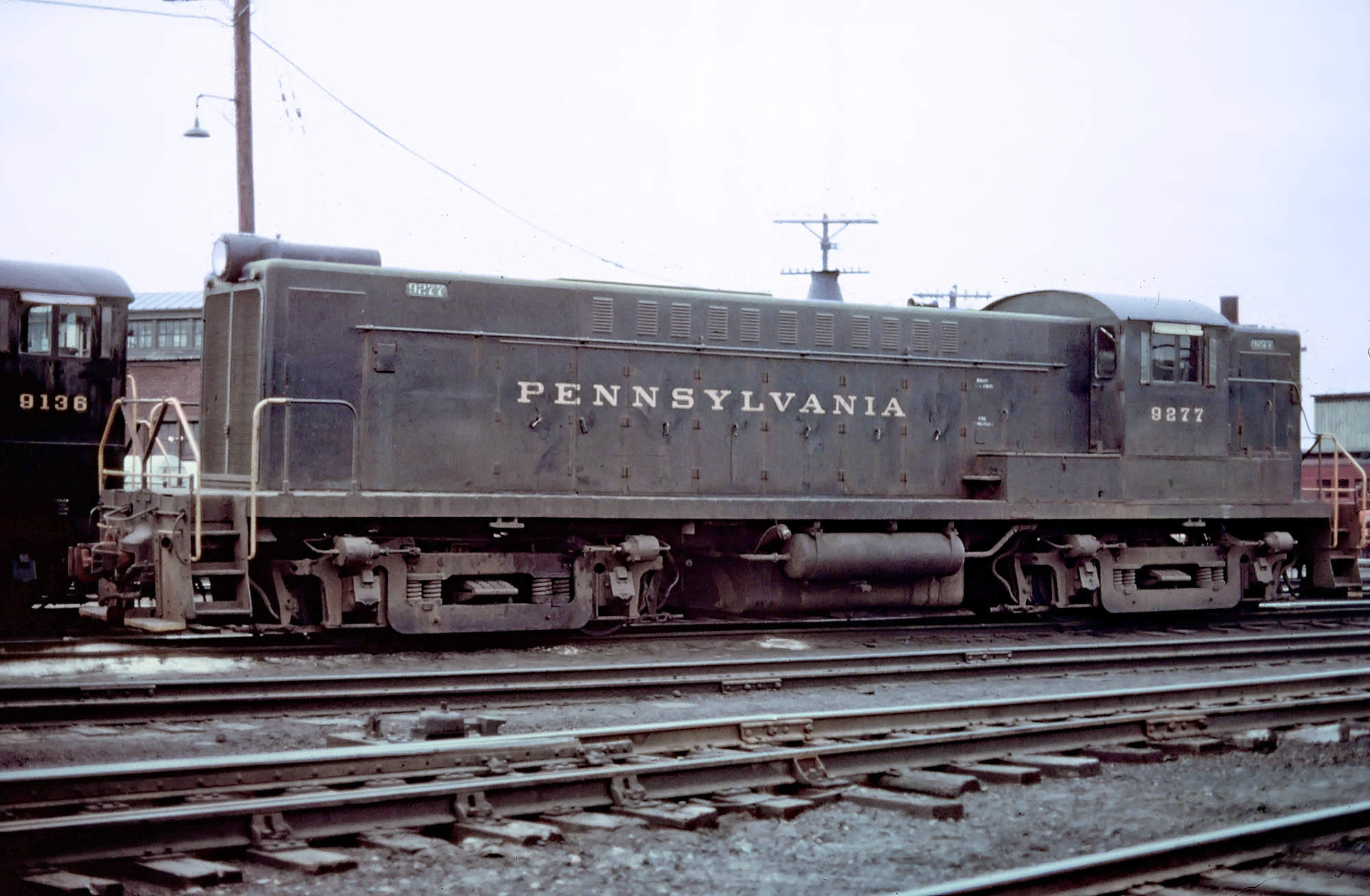 Pennsylvania DRS-4-4-1000 #9277 is seen here at Camden, New Jersey, circa 1965. American-Rails.com collection.
DRS-4-4-1000 Roster
| Owner | Road Number | Baldwin Serial Number | Construction Number | Completion Date |
|---|---|---|---|---|
| Tennessee Central | 75 | 1 | 73706 | 7/13/1948 |
| Tennessee Central | 76 | 2 | 73707 | 7/13/1948 |
| Tennessee Central | 77 | 3 | 73708 | 8/3/1948 |
| Canadian Pacific | 8000 | 4 | 73967 | 1/21/1949 |
| Canadian Pacific | 8001 | 5 | 73968 | 1/19/1949 |
| Canadian Pacific | 8002 | 6 | 73969 | 1/11/1949 |
| Canadian Pacific | 8003 | 7 | 73970 | 1/26/1949 |
| Canadian Pacific | 8004 | 8 | 73971 | 1/27/1949 |
| Canadian Pacific | 8005 | 9 | 73972 | 1/25/1949 |
| Canadian Pacific | 8006 | 10 | 73973 | 1/25/1949 |
| Canadian Pacific | 8007 | 11 | 73974 | 2/28/1949 |
| Canadian Pacific | 8008 | 12 | 73975 | 2/21/1949 |
| Canadian Pacific | 8009 | 13 | 73976 | 2/3/1949 |
| Canadian Pacific | 8010 | 14 | 73977 | 2/9/1949 |
| Canadian Pacific | 8011 | 15 | 73978 | 2/10/1949 |
| Canadian Pacific | 8012 | 16 | 73979 | 2/11/1949 |
| Pennsylvania | 9276 | 17 | 74403 | 2/24/1949 |
| Pennsylvania | 9277 | 18 | 74404 | 2/24/1949 |
| Pennsylvania | 5591 | 19 | 74744 | 3/8/1950 |
| Pennsylvania | 5592 | 20 | 74745 | 3/10/1950 |
| Pennsylvania | 5593 | 21 | 74746 | 3/15/1950 |
| Pennsylvania | 5593 | 22 | 74747 | 3/17/1950 |
Data Sheet and Specifications
| Entered Production | 4/3/1951 (Pennsylvania #8975) |
| Years Produced | 4/3/1951 - 5/15/1956 |
| Baldwin Class | DRS-4-4-1200/1 SC |
| Engine | 608A |
| Engine Builder | De La Vergne |
| Horsepower | 1200 |
| Carbody Styling | Baldwin |
| Length (Between Coupler Pulling Faces) | 58' |
| Weight | 325,000 Lbs |
| Height (Top Of Rail To Top Of Cab) | 14' |
| Width | 10' 2" |
| Trucks | B-B |
| Truck Type | GSC Swing Bolster, Drop Side Equalizers |
| Truck Wheelbase | 9' 10" |
| Wheel Size | 42" |
| Traction Motors | 362DF (4)*, Westinghouse |
| Traction Generator | 480FZ, Westinghouse |
| Auxiliary Generator | YG42B, Westinghouse |
| Gear Ratio | 14:68 |
| Tractive Effort Rating | 32,400 Lbs at 11.4 mph |
| Top Speed | 60 MPH |
* Late variants were equipped with 362DZ model traction motors.
During the course of production there were several changes made to the RS-12, as is described in the following:
- New York Central #5820-5836: Equipped with steam generators for passenger service and MU capability.
- Pennsylvania #8105-8110: Frame length increased from 58' to 58' 6" (over couplers) and the short hood raised to nearly the height of the cab roof.
- Kaiser Bauxite #101-104 and McCloud River Railroad #32-33: Equipped with 370DEZ traction motors with 15:63 gearing which increased continuous tractive effort to 48,000 Lbs at 7.6 mph.
Production Roster
Total Built = 50
| Owner | Road Number | Baldwin Serial Number | Construction Number | Completion Date |
|---|---|---|---|---|
| Pennsylvania | 8975 | 1 | 75116 | 4/3/1951 |
| Chicago, Milwaukee, St. Paul & Pacific (Milwaukee Road) | 970 | 2 | 75242 | 5/14/1951 |
| New York Central | 5820 | 3 | 75256 | 11/7/1951 |
| New York Central | 5821 | 4 | 75257 | 11/7/1951 |
| New York Central | 5822 | 5 | 75258 | 11/9/1951 |
| New York Central | 5823 | 6 | 75259 | 11/9/1951 |
| New York Central | 5824 | 7 | 75260 | 11/12/1951 |
| New York Central | 5825 | 8 | 75261 | 11/12/1951 |
| New York Central | 5826 | 9 | 75262 | 11/13/1951 |
| New York Central | 5827 | 10 | 75263 | 11/13/1951 |
| New York Central | 5828 | 11 | 75264 | 11/20/1951 |
| New York Central | 5829 | 12 | 75265 | 11/20/1951 |
| New York Central | 5830 | 13 | 75266 | 12/19/1951 |
| New York Central | 5831 | 14 | 75267 | 12/19/1951 |
| New York Central | 5832 | 15 | 75268 | 12/21/1951 |
| New York Central | 5833 | 16 | 75269 | 12/21/1951 |
| New York Central | 5834 | 17 | 75270 | 12/27/1951 |
| New York Central | 5835 | 18 | 75271 | 12/31/1951 |
| New York Central | 5836 | 19 | 75272 | 12/31/1951 |
| Seaboard Air Line | 1466 | 20 | 75475 | 5/13/1952 |
| Seaboard Air Line | 1467 | 21 | 75476 | 5/19/1952 |
| Seaboard Air Line | 1468 | 22 | 75477 | 5/21/1952 |
| Seaboard Air Line | 1469 | 23 | 75478 | 5/22/1952 |
| Seaboard Air Line | 1470 | 24 | 75479 | 5/22/1952 |
| Seaboard Air Line | 1471 | 25 | 75480 | 5/24/1952 |
| Kaiser Bauxite Company | 101 | 26 | 75486 | 4/30/1952 |
| Kaiser Bauxite Company | 102 | 27 | 75487 | 4/30/1952 |
| Pennsylvania | 8776 | 28 | 75663 | 9/17/1952 |
| Chicago, Milwaukee, St. Paul & Pacific (Milwaukee Road) | 871 | 29 | 75702 | 10/30/1952 |
| Central Railroad Of New Jersey | 1206 | 30 | 75446 | 1/30/1953 |
| Central Railroad Of New Jersey | 1207 | 31 | 75447 | 1/30/1953 |
| Central Railroad Of New Jersey | 1208 | 32 | 75448 | 1/30/1953 |
| Central Railroad Of New Jersey | 1209 | 33 | 75698 | 1/30/1953 |
| Seaboard Air Line | 1472 | 34 | 75765 | 1/8/1953 |
| Seaboard Air Line | 1473 | 35 | 75766 | 1/8/1953 |
| Seaboard Air Line | 1474 | 36 | 75767 | 1/12/1953 |
| Seaboard Air Line | 1475 | 37 | 75768 | 1/16/1953 |
| Pennsylvania | 8110 | 38 | 75955 | 2/15/1954 |
| Pennsylvania | 8105 | 39 | 75950 | 2/4/1954 |
| Pennsylvania | 8106 | 40 | 75951 | 2/4/1954 |
| Pennsylvania | 8107 | 41 | 75952 | 2/5/1954 |
| Pennsylvania | 8108 | 42 | 75953 | 2/5/1954 |
| Pennsylvania | 8109 | 43 | 75954 | 2/8/1954 |
| Durham & Southern | 1200 | 44 | 76001 | 3/26/1954 |
| Durham & Southern | 1201 | 45 | 76002 | 3/31/1954 |
| Durham & Southern | 1202 | 46 | 76003 | 3/30/1954 |
| McCloud River Railroad | 32 | 47 | 76024 | 4/29/1955 |
| McCloud River Railroad | 33 | 48 | 76105 | 4/29/1955 |
| Kaiser Bauxite Company | 103 | 49 | 76133 | 5/15/1956 |
| Kaiser Bauxite Company | 104 | 50 | 76134 | 5/15/1956 |
Sources
- Kirkland, John F. Diesel Builders, The: Volume Three, Baldwin Locomotive Works. Pasadena: Interurban Press, 1994.
- Pinkepank, Jerry A. Diesel Spotter's Guide. Milwaukee: Kalmbach Publishing Company, 1967.
- Solomon, Brian. Baldwin Locomotives. Minneapolis: Voyageur Press, 2009.
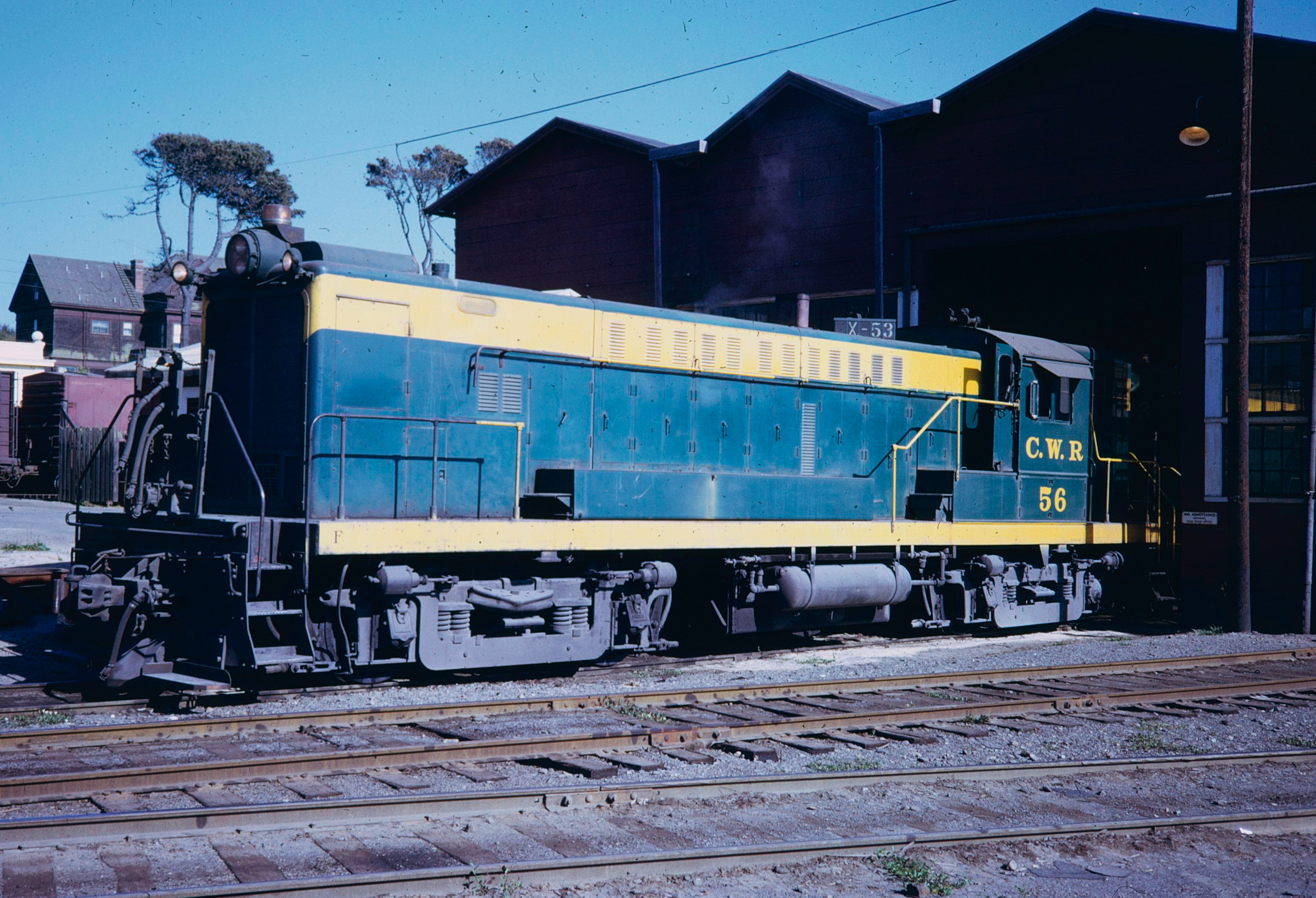 California Western RS12 #56 (built as McCloud River Railroad #33) lays over at the engine shop in Willits, California in May, 1973. Author's collection.
%20lays%20over%20at%20the%20engine%20shop%20in%20Willits%2C%20California%20in%20May%2C%201973.%20%20Author's%20collection.)
The New York
Central would come to own the most, seventeen, which interestingly were
supposed to be model LRS-1200s from Lima. However, due to the
Lima-Baldwin merger NYC accepted the RS12 model
instead.
In total, eight railroads purchased the locomotive; the aforementioned NYC and McCloud River as well as the Milwaukee Road, Jersey Central, Durham & Southern, Kaiser Bauxite, Seaboard Air Line, and ever-loyal Pennsylvania.
SteamLocomotive.com
Wes Barris's SteamLocomotive.com is simply the best web resource on the study of steam locomotives.
It is difficult to truly articulate just how much material can be found at this website.
It is quite staggering and a must visit!