Charles Crocker

Last revised: January 25, 2024
By: Adam Burns
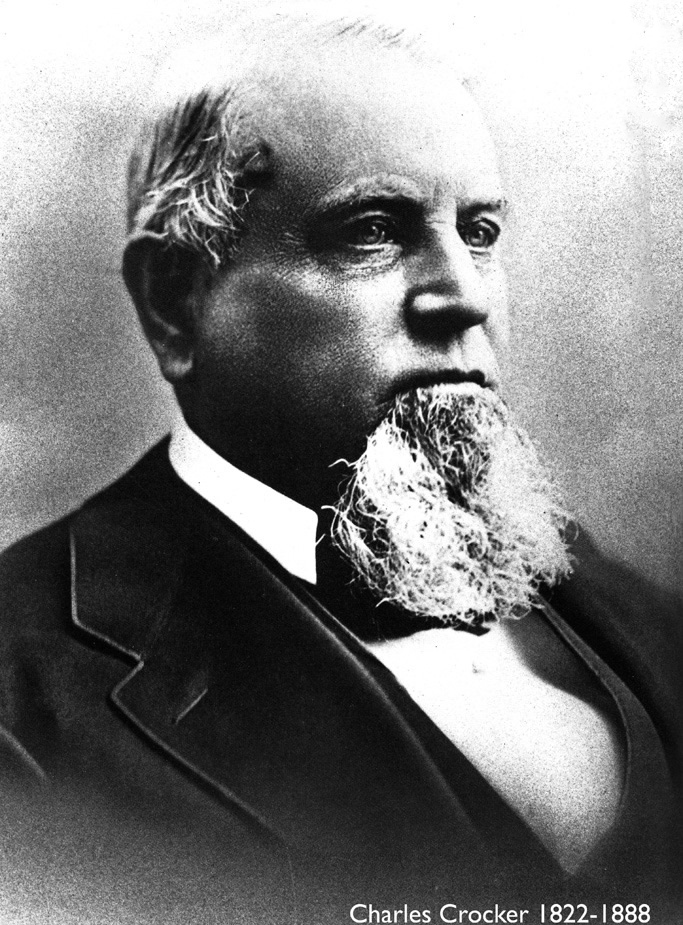
Charles Crocker was an American railroad executive and financier who was one of the founders of the Central Pacific Railroad, which formed part of the first transcontinental railroad in the United States.
Charles Crocker is best remembered for being part of the "Big Four" in financing
the construction of the railroad, which included (along
with himself) Collis Huntington, Leland Stanford, and Mark Hopkins.
It was Crocker who is credited with supervising the actual construction of the route through the rugged Sierra Nevada mountain range. The western leg of the fabled Transcontinental Railroad was no doubt the most difficult.
Whereas Union Pacific's construction crews enjoyed relatively flat topography across Nebraska and eastern Wyoming their Central Pacific counterparts were faced with the Sierra's granite cliffs only 50 miles east of Sacramento.
Crocker, which employed largely Chinese labor to blast a right-of-way out of the mountains, oversaw the completion of 15 tunnels along what would be Central Pacific's 720 miles from Sacramento to Promontory Point, Utah.
Born in 1822 in New York, he moved to California during the Gold Rush and became a successful businessman. He was also a prominent member of the "Big Four" group of investors who drove the construction of the railroad. Crocker passed away in 1888.
Early Life
Charles Crocker was a businessman and railroad magnate Born on September 16, 1822, in Troy, New York, Charles was the son of Isaac Crocker, a modest farmer of English descent, and Eliza Wright. Growing up in a family of modest means instilled in Charles a strong work ethic from an early age.
He quit school at the age of 12 to help out his family as his father struggled to make a living farming. Crocker's father headed to Indiana to try and improve the family's situation but a disagreement between them caused Crocker to leave home at the age of 17.
The future magnate was deprived a formal education, and circumstances forced him to become apprenticed to a blacksmith after his father's death in 1836.
Despite the challenges, the young Charles never allowed his circumstances to dampen his spirit. He had worked a number of odd jobs and for a time tried his hand at owning a small foundry business.
Recognizing the limitations of his surroundings, he, along with two other brothers, migrated to California in 1849, following the news of the Gold Rush.
While Charles initially aspired to make his fortune in gold, he soon found that the surest way to wealth in California lay not in the mines but in providing goods and services to the miners.
At A Glance
Isaac Crocker (father) Eliza Wright (mother) |
|
Charles Crocker's personal life was a testament to solidity and stability. He married Mary Ann Deming in 1852, with whom he had four children. Despite his demanding business schedule, Charles ensured that he spent quality time with his family.
His wife and children played a grounding role in his life, serving as a constant reminder of his humble beginnings and instilling in him the importance of family and community.
Big Four
Once he California Crocker started a dry-goods business in Sacramento, which quickly prospered due to the escalating demand. Furthermore, he possessed a knack for selecting the right business at the right time. Charles Crocker remained a successful businessman in Sacramento until the mid-1850s.
Crocker's involvement with the "Big Four" – a term coined later to collectively refer to Charles Crocker, Leland Stanford, Collis P. Huntington, and Mark Hopkins – began in the early 1860s.
The four men, who were already successful entrepreneurs in their respective businesses, saw great potential in the Central Pacific project, which aimed to connect the West Coast with the existing rail network of the Eastern United States.
Huntington, particularly, wished to see rails sprawling across California and with Abraham Lincoln winning the presidential nomination of 1860 the Central Pacific Railroad had its chance.
Central Pacific
The company was originally incorporated on June 28, 1861 to build across its home state of California. With the signing into law of the Pacific Railroad Act July 1, 1862 the CP would help establish the country first, Transcontinental Railroad.
The Union Pacific, established directly as a result of the act, would construct rails westward from eastern Nebraska.
The Central Pacific Railroad provided a significant challenge for the "Big Four". Not only did the project require a vast amount of capital to undertake, but it also involved laying tracks through challenging landscapes, including the formidable Sierra Nevada mountain range.
However, Charles and his associates were not deterred. Through sheer determination and strategic planning, they pushed the project forward, managing construction and overseeing the financial aspects.
With the building of the CP also subsidized through the federal government it was Huntington became the principal leader of the group, working with Congress to ensure the railroad received the land grants it needed.
Dedicated to the railroad project, Charles Crocker self-appointed himself as the construction supervisor. Despite having no formal engineering education, he displayed remarkable acumen in overseeing the project.
He implemented the efficient use of manual labor – importing thousands of Chinese laborers to meet personnel demands – and harnessed the power of novel construction techniques.
The relentless efforts of Charles Crocker and his fellow members of the "Big Four" eventually paid off. While building the CP turned out to take much longer, and cost much more than originally envisioned ,it was completed on May 10, 1869 at Promontory Summit, Utah.
Later Investments
Even after the completion of the ambitious Central Pacific, Charles Crocker continued to invest in other railway projects.
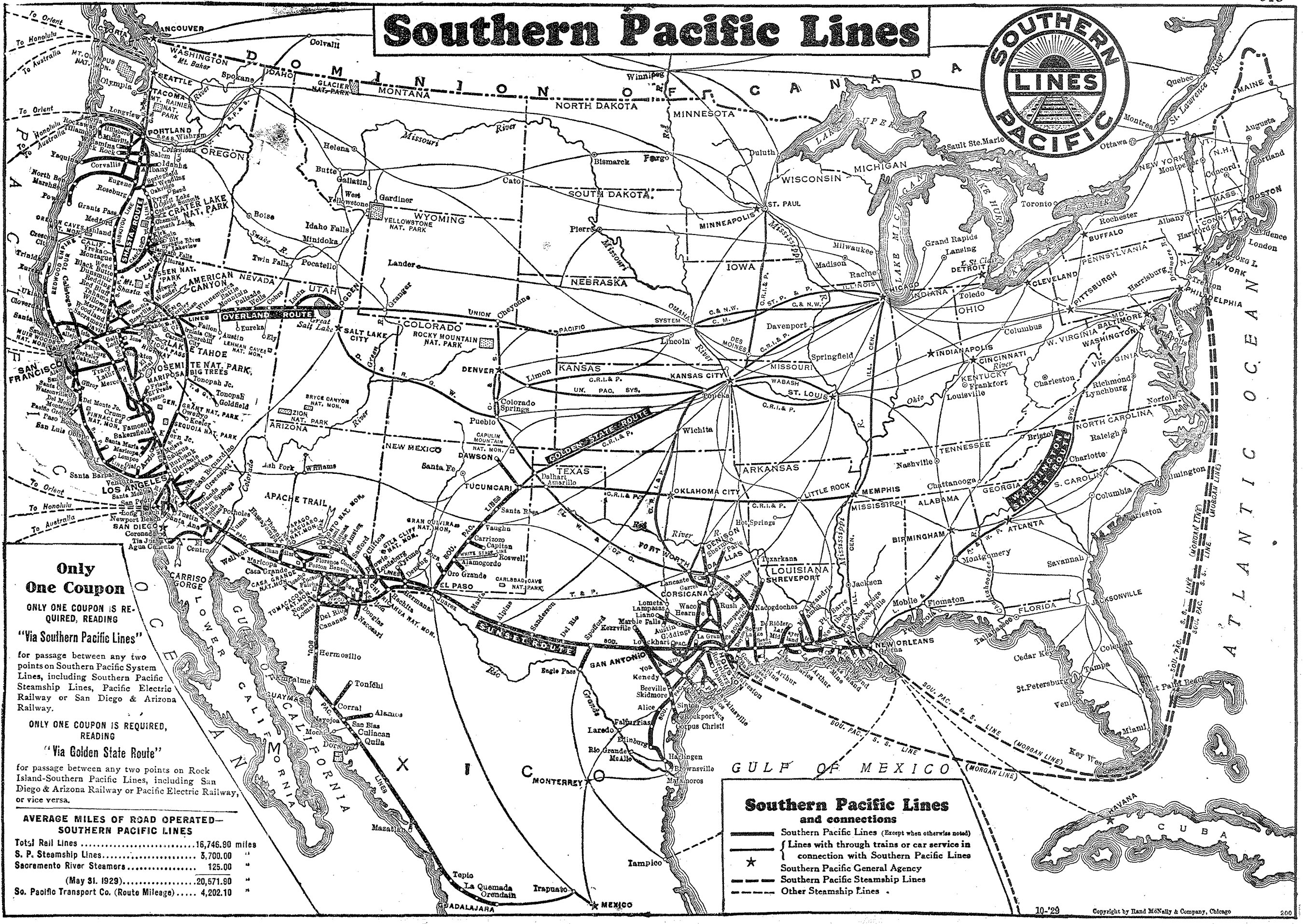
He acquired the Southern Pacific Railroad in 1879, another landmark in the U.S. rail network. Crocker’s destiny was intricately linked with the development of the American railway system, reflecting his unceasing commitment to infrastructure development.
)

In terms of net worth, Charles Crocker was one of the wealthiest men of his time, leaving behind an estate worth around $20 million upon his death in 1888. His financial acumen, coupled with strategic vision and relentless determination, titanically contributed to his unprecedented wealth accumulation.
Legacy
Charles Crocker's legacy is multifaceted. His critics point to his ruthless business tactics and his treatment of laborers. However, others remember him for his contributions to the development of California and the Western United States. His part in the Transcontinental Railroad helped shape the United States as we know it today, binding the East and West together.
In addition to his infrastructural contributions, Charles left a significant cultural legacy. He donated vast sums for the establishment of educational institutions and made a substantial contribution towards philanthropic causes. His name adorns various institutions, including buildings at the prestigious Stanford University, named in honor of his fellow "Big Four" member.
Crocker's influence on the United States, particularly on the West Coast, resulted in a lasting legacy that extends beyond his commercial enterprises. Despite his courtship with controversy, he reformulated the parameters of entrepreneurship during the Gilded Age.
He navigated through an era defined by ruthless competition, rapid industrialization, and extreme societal disparities, helping to shape the dynamics of the American economy.
Charles Crocker will indeed be remembered as a paradoxical figure: a ruthless businessman, a dedicated family man, a generous patron of education, and a lawmaker of questionable principles.
Yet, his indelible contribution to the American Midwest's economic development secures his place among the pantheon of both admired and reviled titans of American industry.
Charles Crocker passed away on August 14, 1888. His life's journey from a humble blacksmith's apprentice to one of America's most influential figures offers valuable lessons in resilience, determination, and vision.
His legacy continues to impact contemporary discussions on the role of entrepreneurship and large-scale infrastructure in shaping a country's future.
In summary, the importance of Charles Crocker in the annals of American history cannot be overstated. The magnitude of his contributions, the scale of his ambitions, and the lasting impact of his endeavors influence how we understand the transformative period of the late 19th century.
His life embodies the rapid transitions and contradictions present in that era, providing a rich case study for those interested in the intersection of personal ambition, economic development, and societal change in American history.
Charles Crocker was not limited to the traditional confines of what a businessman or entrepreneur should be. His life and work blurred the line between business, politics, and philanthropy, offering a view into a man who made sizable contributions to the building of modern America, even while provoking debate about his methods.
For anybody seeking to explore the history of American industry, the West's development, or the intricacies of large-scale project management, Charles Crocker's journey provides an inexhaustible resource. His life stands as a testament to the ability of individuals to impact the course of a nation's history.
Despite his significant accomplishments, Charles Crocker was not without his controversies. His treatment of Chinese laborers, his legal battles, and his relentless pursuit of wealth at all costs painted him as a controversial figure, a prime example of the unbridled capitalism of his day.
Even after his death, Charles Crocker's influence continues to reverberate. As part of the "Big Four," his role in opening up the West to commerce and settlement fundamentally altered the trajectory of U.S. history. The Central Pacific Railroad and other infrastructure projects in which he was involved became critical conduits for the ongoing development of the United States.
Charles Crocker's life offers a fascinating prism through which to analyze the interplay of power, wealth, and social relations in a rapidly evolving society. His influence was felt across sectors, spheres, and socio-cultural demographics, illuminating the transformative power of individual capital and vision in shaping collective destinies.
Although Charles Crocker died over a century ago, his story remains alive in the annals of business, rail transportation, and societal development in the United States.
The controversies surrounding him — his business ethics, employment practices, and personal traits — continue to spark debate, reinforcing his enduring relevance.
In the broadest sense, Charles Crocker’s life encapsulated the ethos of the American Dream. From humble beginnings, he leveraged his ambition, tactical acumen, and tireless work ethic to position himself among the eminent figures of the industrial era.
His story resonates with those who view success not as an overnight phenomenon but the product of strategic vision, relentless pursuit, and a tolerance for immense risk.
Charles Crocker’s participation in the construction of the Central Pacific Railroad, an endeavor overtaking geographical challenges and financial risks, became one of his crowning achievements.
The project not only exhibited his commitment to progress and innovation but also positioned him within the context of an expanding nation, leaving an indelible mark on America's complex historical fabric.
In the context of socio-economic progress, Charles Crocker’s story cements the role of private enterprise in the momentum of the American nation during the industrial age. His ventures intertwined with public interest, reflecting the inherent dynamics between capitalist ambition and societal advancement.
The philanthropic aspect of Charles Crocker’s legacy is no less remarkable, with him extending considerable financial aid to educational and cultural institutions. His deep-seated belief in education’s role in progress ripened into the establishment of several schools and learning institutions, reaffirming his commitment to future generations.
Charles Crocker’s life exemplifies how wealth can be used as a powerful tool to improve society in addition to individual gain. His wealth accumulation was supplemented by a parallel dedication to societal upliftment, presenting a balanced perspective to the age-old debate on wealth creation and distribution.
In essence, the life of Charles Crocker, both in its successes and controversies, holds lessons for aspiring entrepreneurs, policy makers, and social scientists. It symbolizes the ceaseless ambition of individuals propelled by their core beliefs, fortitude, and a vision for societal advancement.
Charles Crocker’s life story, embedded within the larger narrative of American industrialization, exemplifies the indivisible link between individual ambitions and societal progress.
His story stretches beyond the realms of business and railway expansion, reaching into questions of ethics, societal development, and the shaping of historical trajectories.
The complexities in Charles Crocker’s persona and professional endeavors make his story a riveting narrative, fraught with triumphs and tumults. For scholars of history, business, industrialization, transportation, and social change, the rich tapestry of his life continues to provide invaluable insight and provoking discussion points.
In final assessment, Charles Crocker is a benchmark figure in the annals of American capitalism. He harnessed the opportunities of his time, weathered numerous trials, and emerged as a significant contributor to the fabric of American society.
This complex manifestation of ruthless business acumen combined with a commitment to societal development underscores the intricate layers of his life and legacy.
At the crossroads of history, psychology, and sociology, Charles Crocker's story invites contemplation on the power and limitations of personal ambitions in shaping collective outcomes.
While he embodied many characteristics of the Gilded Age – its optimism, innovation, and unbridled capitalism – his narrative transcends temporal boundaries and remains pertinent in contemporary discussions.
In summary, whether viewed as an esteemed industrial leader or a controversial figure of American capitalism, Charles Crocker’s legacy is irreversible.
A self-made man, his relentless push for progress defined an era, changed the geography of a nation, and influenced the unfolding of U.S. history. His contribution merits scholarly attention and public recognition alike, securing his standing as an integral figure of American progression.
SteamLocomotive.com
Wes Barris's SteamLocomotive.com is simply the best web resource on the study of steam locomotives.
It is difficult to truly articulate just how much material can be found at this website.
It is quite staggering and a must visit!