
Leland Stanford (Railroads): Net Worth, Industry, Facts
Last revised: February 23, 2025
By: Adam Burns
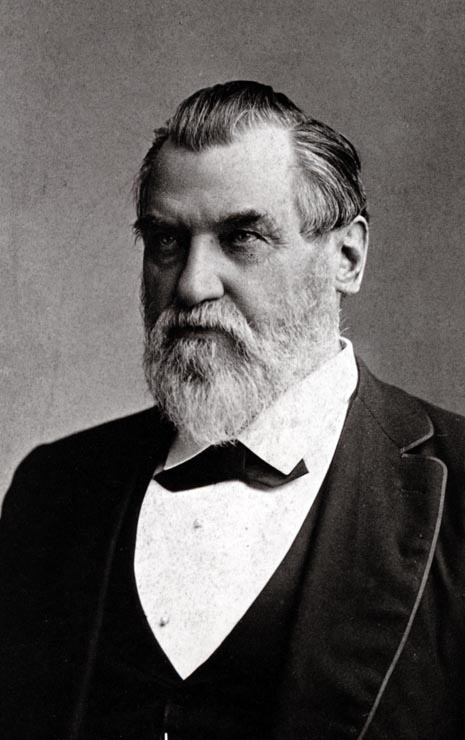
Leland Stanford was an American industrialist, politician, and tycoon who made his fortune as a railroad tycoon. He was one of the founders of the Central Pacific Railroad and served as its president.
Stanford was also a leading member of the Republican Party, serving one term as the Governor of California and later as a U.S. Senator.
He is perhaps best known for founding Stanford University, one of the world's leading research and teaching institutions, in memory of his son, Leland Stanford Jr.
Background
Leland Stanford, is remembered as part of the "Big Four" in financing the construction of the Central Pacific Railroad, which included (along with himself) Collis Huntington, Charles Crocker, and Mark Hopkins.
In terms of building the railroad, it was Stanford who helped secure much of the land grants and funding through the state of California as he held the governorship at that time.
While he had spent much of his early years studying and practicing law, much of his life after the California Gold Rush hit in 1849 was dedicated to operating business including railroads.
At A Glance
Josiah Stanford (father) Elizabeth Phillips (mother) |
|
Stanford played such a large role in the entire Central Pacific endeavor that is unlikely the railroad would have been completed otherwise. Interestingly, his career pursuits did not immediately begin in the railroad industry.
Instead, after earning his law degree in 1845 he began practicing in Albany, New York with the law office of Wheaton, Doolittle & Hadley. It was the Gold Rush which ultimately brought him to California in 1852.
Recognizing the great migration would offer bountiful business he opened successful mercantile establishments in Sacramento in 1856. It was here that he met the three other men of the so-called "Big Four."
Early Life
Amasa Leland Stanford, known simply as Leland Stanford, was born on March 9, 1824, in the modest farming community of Watervliet, New York. He was the fourth of eight children in his family. However, an unfortunate typhoid epidemic claimed the lives of Leland's three older brothers, thrusting him into the role of the oldest son.
Leland Stanford completed his basic education in local schools before reading law at Cazenovia Seminary in New York. Post studies, he moved to Albany, New York, where he worked in law offices and eventually was admitted to the bar in 1848.
Stanford's personal life echoed the glamour of his corporate endeavors. He married Jane Elizabeth Lathrop in 1850.
Their union, filled with both marital bliss and heartrending tragedy, shaped much of Stanford's pursuits in philanthropy, particularly their only child’s untimely death, which led to the founding of Stanford University.
In his early business career, Stanford operated a law practice and managed a general store with his brothers in Port Washington, Wisconsin, in the late 1840s and early 1850s. The Gold Rush's prospect lured Stanford to move to California in 1852, where he started a wholesale commodities distribution firm.
In California, Stanford ultimately became a successful merchant and wholesaler, a career trajectory that led him to cross paths with Collis Huntington, Charles Crocker, and Mark Hopkins.
This quartet, known in American industrial history as the "Big Four," played a fundamental role in the inception and construction of the Central Pacific Railroad.
Central Pacific
In the 1850s Stanford began to engage in politics, and is where he would eventually meet Huntington, Crocker, and Hopkins in 1856 (all of which were members of the Republican party).
Huntington, particularly, wished to see rails sprawling across California and helped establish the Central Pacific Railroad in 1861. In addition, with Abraham Lincoln winning the presidential nomination in 1860 the new CP ratified the Pacific Railroad Act to help complete the Transcontinental Railroad.
The Union Pacific was created directly as a result of the Pacific Railroad Act signed into law on July 1, 1862 and together the two railroads began working together to build from the east and west. For Leland Stanford's part, he was elected governor of California on September 4, 1861, which provided serious leverage for the CP's financing and construction.
Along with Stanford's efforts, the CP was also subsidized through the federal government (being given land grants as well as loans), mostly through Huntington's efforts.
Under Stanford's leadership, the project faced many significant challenges, including the Sierra Nevada's rugged terrain and labor shortages due to the American Civil War. However, Stanford and his partners managed to overcome these obstacles, in part by hiring many Chinese immigrant workers.
The Central Pacific Railroad and the Union Pacific Railroad met at Promontory, Utah, on May 10, 1869, marking the completion of the first transcontinental railroad in the United States. Stanford was chosen to drive in the symbolic last spike, colloquially known as the "Golden Spike."
The Central Pacific contributed significantly to the economic growth of the American West Coast, particularly in California. The railroad opened up vast opportunities for mining, agriculture, and other industries, making it a key factor in the region's development.
In September, 1868, Stanford and the rest of the "Big Four" bought out the original founders of the SP and would combine the operations of the Central Pacific by 1870. Stanford became SP's president and remained so until 1890.
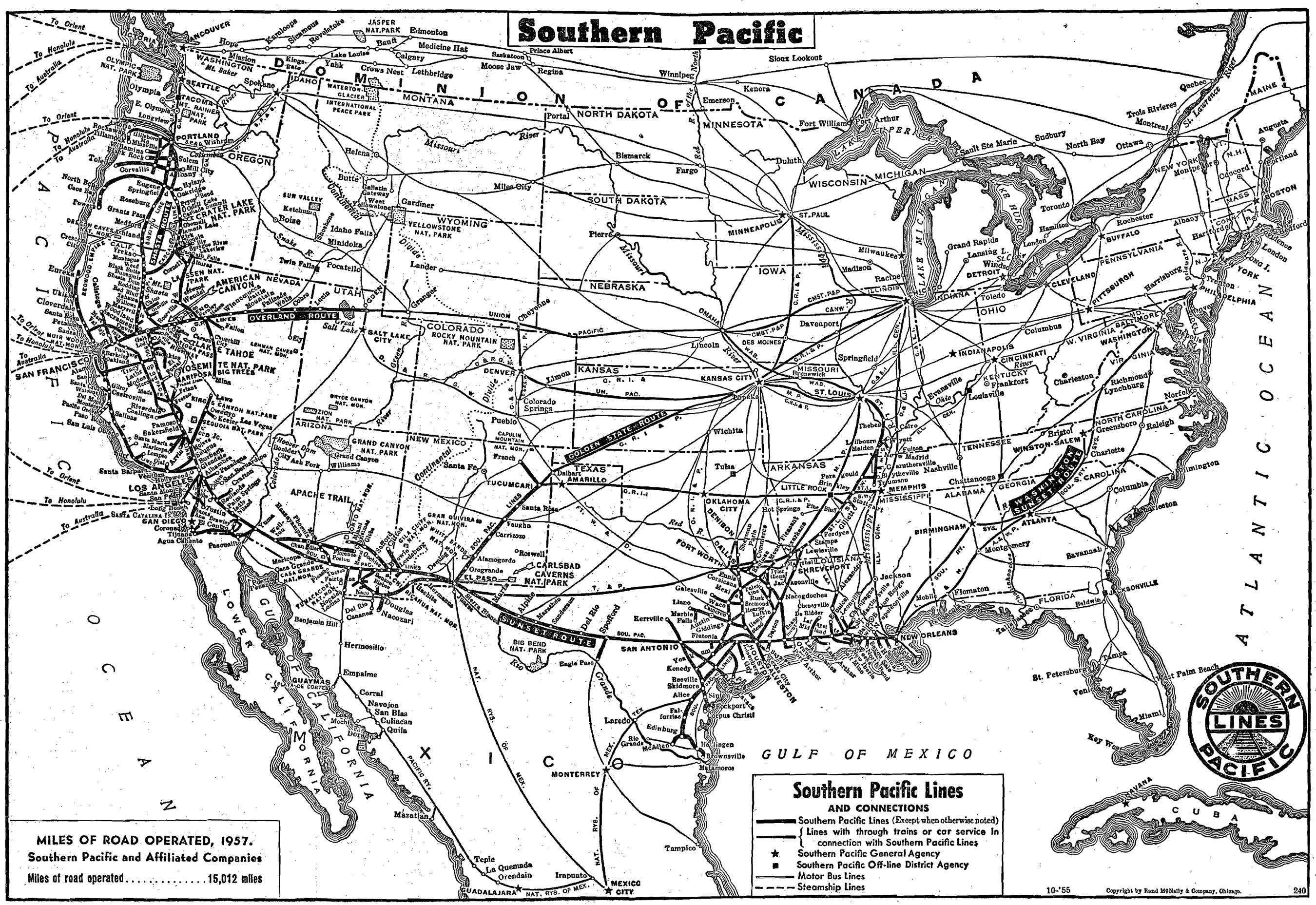
By the late 1870s the railroad was sprawling out across Southern California and served the state's largest markets including its line through the Southwest, which reached El Paso, Texas by the early 1880s.
Throughout the rest of the 19th century the Espee continued to spread throughout the West and Southwest, reaching northern Oregon and serving most of that state's largest cities by the late 1880s. By the 20th century the railroad continued to expand and was by this time well entrenched into the Southeastern markets of New Orleans and the Gulf Coast.
By mid-century it owned a stunning 15,000 miles of track, stretching from the warm and sunny beaches of Southern California and Gulf of Mexico to the deserts of Arizona and mountains of the Sierra Range.
Legacy
Stanford wielded significant influence thanks to his vast wealth and multiple high-profile positions. He served two consecutive terms as the governor of California and later became a US senator. His political career aligned well with his business growth, cementing his influence on regional and industrial affairs.
However, his greatest legacy was arguably his philanthropy. After the death of his only son, Leland Stanford Jr., at 15, Stanford and his wife decided to use their wealth for the betterment of society. They founded Stanford University as a tribute to their late son, opening the university's doors to "all children of California" in 1891.
Stanford University
Stanford, as laid out in founding documents, aimed to create an institution that was responsible for promoting public welfare by exercising influence on behalf of humanity and civilization. Under his early stewardship, Stanford University developed into an exceptional educational institution, emphasizing a blend of practical teachings and academic theory.
Stanford played a direct role in shaping the academic and administrative policies of the university, often emphasizing the importance of multidisciplinary and innovative learning approaches. He ensured the university nurtured an open-minded, intellectual culture that would yield societal benefits.
Throughout his life, Stanford's net worth saw significant fluctuations. He was a businessman, politician, philanthropist, and an academic visionary. Upon his death on June 21, 1893, he left an estate valued at approximately $50 million, most of which was directed towards sustaining Stanford University.
Towards the end of his life, Stanford faced significant financial challenges due to various factors, including a nationwide economic depression in 1893. However, he persevered, securing the longevity of his cherished project, Stanford University, despite his declining fortune.
Leland Stanford left a lasting legacy, resonating far beyond his lifetime. His guiding role in the completion of the transcontinental railroad transformed the economic landscape of the West.
His political career was transformative in its right, but his educational endowment in Stanford University, which is globally recognized as a hub of innovation and learning, remains an indelible part of his legacy.
Stanford has also influenced every student passing through the university's halls and every researcher benefiting from its resources. The silicon valley, which owes its inception to the entrepreneurial spirit fostered by Stanford University, is a living embodiment of Stanford’s vision.
Leland Stanford’s story is intriguing because it is a chronicle of courage, resilience, adaptability, and dedication. Stanford, a man of humble beginnings, embarked on a journey that had significant ramifications across societal, cultural, and historical contexts.
Stanford successfully maneuvered through the Gold Rush era, a political career, the establishment of a groundbreaking transportation channel, and landed at the helm of an academic institution. His life is a testament to the timeless appeal of grit, determination, and the human spirit to continue reinventing itself.
Whether viewed as a pioneer in rail infrastructure, an influential politician, or a profound educationist, Stanford's impact is undeniably profound. His contributions echo down the annals of American history, reinforcing the importance of vision, innovation, and public service.
A closer look at Stanford's life reveals a man deeply committed to his causes. By navigating politics, business, and education, Stanford demonstrated an unfaltering dedication that etched his principles and ideals in the institutions he has shaped.
Stanford, with his enduring legacy, invites contemplation on broader societal themes and implications. His life amplifies the transformative power of vision, leadership, and philanthropy.
Leland Stanford's contributions spanning multiple spheres deliver invaluable insights into 19th-century America's society, economy, and drive. His life and achievements serve as excellent case studies for all those interested in American history, industrial revolution, entrepreneurship, and philanthropy.
The life narrative of Leland Stanford is filled with significant milestones and turning points. It amplifies the role of tenacity, creativity, and vision, affirming the belief that one person can indeed make a significant difference.
The story of Leland Stanford and his contributions paints a multi-hued portrait of a man who refused to accept the status quo. It serves as a poignant reminder of the power of vision and the fundamental role of human endeavors in shaping history.
Stanford's legacy created a unique narrative that binds personal tragedy with public success, creating contrasts that are testament to human resilience. His well-lived life encapsulates an essence of perseverance and creativity that scholars and researchers continue to draw inspiration from.
Notwithstanding the controversies and challenges encountered throughout his journey, Stanford's life is a testament to his unwavering commitment to creating and improving societal structures. His life illustrates the power of endurance, dedication, and a clear vision.
Stanford's life symbolizes the spirit of the 19th-century American Dream, speaking volumes about the possibility of achievement through determination and hard work. His life stands testament to how a person can leave a lasting mark in history.
The life of Leland Stanford stands as an invaluable reservoir for academia, research, and society. His story transcends its physical existence, narrating a timeless tale of innovation, evolution, socio-economic progress, and the relentless spirit of a remarkable man.
Leland Stanford’s life journey offers unique insights into socio-political realms, infrastructure development, and the world of education. His life and works continue to ignite intellectual pursuit and foster academic excellence, marking him as a major figure in the annals of American history.
No matter which way one looks at it, Stanford's life is a compelling narrative of overcoming challenges, forging peculiar paths, and making lasting contributions. His influence resonates beyond the confines of history, extending into the realms of culture, academic excellence, and sustainable development.
In conclusion, Leland Stanford’s life embodies a blend of entrepreneurial acumen, political astuteness, and visionary academic investments, which has left an undeniable imprint on American history. His life continues to inspire students, historians, entrepreneurs, and anyone with an interest in the evolution and dynamism of the American society and beyond.
Recent Articles


-
Wisconsin Railroad Museums (2026): A Complete Guide
Oct 10, 26 11:51 PM
Wisconsin railroad museums—Green Bay’s Big Boy 4017 and Eisenhower’s A4, Mid-Continent at North Freedom, East Troy’s interurban, and the Riverside & Great Northern. Confirm hours on each site. -
Interstate Railroad (Virginia): Map, Roster, Logo, History
Oct 10, 26 11:22 PM
 Interstate Railroad, a Virginia coal road chartered February 18, 1896. Andover shops. Ten Alco RS3s, 30–39. Southern control in 1961. The company ended October 31, 1985.
 -
North Carolina Railroad Museums (2026): A Complete Guide
Oct 10, 26 11:16 PM
 North Carolina railroad museums—Spencer Shops, Wilmington’s Atlantic Coast Line 250, Hamlet’s Seaboard depot, and the New Hope Valley Railway. Confirm hours on each site.
 -
New Mexico Railroad Museums (2026): A Complete Guide
Oct 10, 26 10:54 PM
 New Mexico railroad museums—Santa Fe 2926 in Albuquerque, the Clovis depot, Alamogordo’s Toy Train Depot, and Belen. Confirm hours on each site.
 -
New York Railroad Museums (2026): A Complete Guide
Oct 10, 26 09:33 PM
 New York railroad museums—Phoenicia, Medina’s New York Central freight house, the Transit Museum, Long Island 35 and 39, and GG1 4933. Confirm hours on each site.
 -
Columbia, Newberry & Laurens Railroad: History, Timetable, Roster
Oct 10, 26 09:08 PM
 Columbia, Newberry & Laurens Railroad, Columbia to Laurens, 75 miles. Chartered in 1885. Five Atlantic Coast Line GP7s, 100–104. Merged into the Seaboard System on April 30, 1984.
 -
New Haven Diesel Roster (All-Time)
Oct 10, 26 06:35 PM
 New Haven diesel roster, all-time. 558 road numbers: 60 DL-109s, 30 FA-1s, 27 PA-1s, 60 FL9s, and the switchers from HH600 0900. Serials and order numbers.
 -
New Haven Steam Roster (Post 1900)
Oct 10, 26 06:31 PM
 New Haven steam since 1900. Drury's class grid: 226 Moguls, 33 Mikados, 50 Santa Fes, 70 Mountains, 141 Pacifics, and 10 Hudsons. Last fan trip July 19, 1953.
 -
New Haven Railroad: Rosters, Map, Logo, History, Trains
Oct 10, 26 06:26 PM
 New York, New Haven and Hartford. The Shore Line, Hell Gate, the 1952 map at 1,838.89 miles, and the railroad Penn Central took at 11:59:59 p.m. on December 31, 1968.
 -
C&O's 4-6-4 "Hudson" Locomotives (Class L): Specs, Roster, History
Oct 10, 26 05:36 PM
 Chesapeake & Ohio Class L 4-6-4 Hudsons. Eight L-2s, five L-1 rebuilds, five L-2-As. Specs, Baldwin works numbers, and the roster. No. 490 survives.
 -
Alton Railroad: Map, History, Timetables
Oct 09, 26 10:31 PM
 Alton Railroad, chartered February 27, 1847 as the Alton & Sangamon. Chicago, St. Louis, and Kansas City, the 1937 Official Guide, and the May 31, 1947 merger into the Gulf, Mobile & Ohio.
 -
Mobile & Ohio Steam Roster (Post 1900)
Oct 09, 26 12:26 PM
 Mobile & Ohio steam since 1900. Drury's class grid: 48 six-wheel switchers, 107 Ten-Wheelers, 15 Consolidations, 58 Mikados, and 14 Pacifics. Last revenue steam October 7, 1949.
 -
Mobile & Ohio Railroad: History, Map, Timetable
Oct 09, 26 11:31 AM
 Mobile & Ohio Railroad, chartered in 1848. Columbus on April 22, 1861, the Cairo & St. Louis, the March 1940 Official Guide, and the September 13, 1940 merger into the Gulf, Mobile & Ohio.
 -
Gulf, Mobile & Northern Steam Roster (Post 1900)
Oct 09, 26 10:42 AM
 Gulf, Mobile & Northern steam since 1900. Drury's class grid: Ten-Wheelers, Mikados, Russian Decapods, Pacifics 425 and 426, and three light 4-8-2s. Last revenue steam October 7, 1949.
 -
Gulf, Mobile & Ohio Diesel Roster (All-Time)
Oct 09, 26 10:41 AM
 Gulf, Mobile & Ohio diesel roster, all-time. The 1935 boxcab, DL-107s, 55 FA-1s, F3s and F7s, the Ingalls 4-S, GP30s through GP38-2s, and 21 SD40s. Serials and order numbers.
 -
Gulf, Mobile & Northern Railroad: History, Rebel Route
Oct 09, 26 10:36 AM
 Gulf, Mobile & Northern, from the 1890 Mobile, Jackson & Kansas City to the Rebel and the September 13, 1940 merger into the Gulf, Mobile & Ohio. Steam roster is the companion page.
 -
Gulf, Mobile & Ohio Railroad: Map, Photos, Trains, History
Oct 08, 26 11:48 PM
 Gulf, Mobile & Ohio, chartered in 1938 and merged September 13, 1940. The Mobile & Ohio, the Alton on May 31, 1947, the Rebel Route, and Illinois Central Gulf on August 10, 1972.
 -
New Jersey Railroad Museums (2026): A Complete Guide
Oct 08, 26 11:37 PM
 New Jersey railroad museums—Whippany, Maywood, Pine Creek, Mahwah’s Erie depot, Phillipsburg, and Boonton. Confirm hours on each site.
 -
New Hampshire Railroad Museums (2026): A Complete Guide
Oct 08, 26 11:34 PM
 New Hampshire railroad museums—North Conway, the Flying Yankee, Ashland, Gorham, Raymond, and Sandown. Confirm hours on each site.
 -
Missouri Railroad Museums (2026): A Complete Guide
Oct 08, 26 11:00 PM
 Missouri railroad museums—the National Museum of Transportation, Patee House, Frisco 4524, the Chicago & Alton depot, and Marceline. Confirm hours on each site.
 -
Milwaukee Road X3800: Deer Lodge’s Shop Goat
Oct 08, 26 04:28 PM
 Milwaukee Road X3800, the a home-built shop goat that served the Deer Lodge, MT yard. It was a 220-volt DC switcher, powered through an extension cord that moved electrics into a roundhouse where the…
 -
Key West Extension (Overseas Railroad): History, Construction, Decline
Oct 08, 26 03:59 PM
 Henry Flagler's Overseas Railroad, Miami to Key West, 1905–1935. The Seven Mile Bridge, the 1935 Labor Day Hurricane, and the road that became U.S. 1.
 -
Florida East Coast Steam Roster (Post 1900)
Oct 08, 26 02:34 PM
 Florida East Coast steam since 1897. Seventeen Ten-Wheelers, twenty Atlantics, eighty-seven Pacifics, ninety Mountains, fifteen Mikados, and the switchers.
 -
Florida East Coast Diesel Roster (All-Time)
Oct 08, 26 02:12 PM
 Florida East Coast diesel roster, all-time. E units from 1939, F3s, BL2s, GP7s and GP9s, the GP40-2 orders, 22 SD40-2s, and 24 ES44C4s. Serials and EMD order numbers.
 -
Florida East Coast Railway: Map, History, Rosters
Oct 08, 26 01:46 PM
 Florida East Coast Railway, Henry Flagler's line from Jacksonville to Miami and Key West. Receivership in 1931, the 1963 strike, Grupo México in 2017, and Brightline on the same track.
 -
Minnesota Railroad Museums (2026): A Complete Guide
Oct 08, 26 10:32 AM
Minnesota railroad museums—the Lake Superior Railroad Museum, Two Harbors, Jackson Street, Willmar’s Great Northern 2523, and Currie. Confirm hours on each site. -
Maine Railroad Museums (2026): A Complete Guide
Oct 08, 26 09:24 AM
 Maine railroad museums—Seashore Trolley, the two-foot lines at Portland, Alna, and Phillips, Boothbay, and the Bangor & Aroostook depots. Confirm hours on each site.
 -
Massachusetts Railroad Museums (2026): A Complete Guide
Oct 08, 26 12:08 AM
 Massachusetts railroad museums—Berkshire Scenic at Lenox, Shelburne Falls trolley No. 10, Edaville, Chatham’s 1887 depot, and Lowell. Confirm hours on each site.
 -
Clinchfield Steam Roster (Post 1900)
Oct 07, 26 12:09 PM
 Clinchfield steam since 1900. Fifteen H-4 Consolidations, K-1 Mikados, M-2 and M-3 Mallets, L-class 2-8-8-2s, eighteen Challengers. Class grid after Drury. Last steam April 16, 1954.
 -
Clinchfield Diesel Roster (All-Time)
Oct 07, 26 12:05 PM
 Clinchfield diesel roster, all-time. F3A 800, FP7 200, the F7s, GP7s, 25 SD40s, 18 SD45-2s, seven U36Cs, and the Family Lines hoods. Serials and EMD order numbers.
 -
Clinchfield Railroad: Map, Steam Locomotives, Roster, Logo
Oct 07, 26 12:02 PM
 Clinchfield Railroad, Elkhorn City to Spartanburg. George L. Carter, the Carolina, Clinchfield & Ohio, the 1924 lease, coal, the loops, and CSX. Steam and diesel rosters are companion pages.
 -
Kentucky Railroad Museums (2026): A Complete Guide
Oct 07, 26 11:39 AM
 Kentucky railroad museums—the Kentucky Railway Museum, Bowling Green’s L&N depot, Paducah, Versailles, and Covington. Confirm hours on each site.
 -
Kansas Railroad Museums (2026): A Complete Guide
Oct 07, 26 11:26 AM
 Kansas railroad museums—Santa Fe 3768 at Wichita, Santa Fe 132 in Topeka, the Great Overland Station, and Abilene. Confirm hours on each site.
 -
Cincinnati, New Orleans and Texas Pacific Diesel Roster (All-Time)
Oct 07, 26 10:38 AM
 All-time diesel roster of Southern locomotives lettered for the Cincinnati, New Orleans and Texas Pacific. Serials, order numbers, and builder dates.
 -
Cincinnati, New Orleans and Texas Pacific Railway
Oct 07, 26 10:31 AM
 Cincinnati, New Orleans and Texas Pacific Railway, incorporated September 8, 1881, to lease Cincinnati’s railroad to Chattanooga. Queen and Crescent route, Rathole, and the 2024 sale to Norfolk Southe…
 -
Indiana Railroad Museums (2026): A Complete Guide
Oct 07, 26 12:26 AM
Indiana railroad museums—Nickel Plate 765, Elkhart’s New York Central collection, French Lick, Linden’s junction depot, and Haley Tower. Confirm hours on each site. -
"Triplex" Steam Locomotive: Specs, History, Photos
Oct 06, 26 11:52 PM
 Erie class P-1 Triplex 2-8-8-8-2s. Three Baldwin compounds, 2603–2605, later 5014–5016, built 1914 and 1916. Matt H. Shay, the 1930 class card, and Virginian XA 700.
 -
Illinois Railroad Museums (2026): A Complete Guide
Oct 06, 26 11:47 PM
 Illinois railroad museums—the Illinois Railway Museum, Monticello, the Pioneer Zephyr, Galesburg’s Burlington 3006, and the depots. Confirm hours on each site.
 -
Iowa Railroad Museums (2026): A Complete Guide
Oct 06, 26 11:41 PM
 Iowa railroad museums—the Union Pacific Railroad Museum, RailsWest, Sioux City, Boone, and the National Hobo Museum in Britt. Confirm hours on each site.
 -
Charleston and Western Carolina Diesel Roster (All-Time)
Oct 06, 26 11:29 PM
Charleston and Western Carolina diesel roster. Twenty-one GP7s, two SW7s, two SW9s, and six F7As, all built 1950–1952. Serials, order numbers, and ACL and SCL numbers. -
Charleston and Western Carolina Railway: Map, History, Timetables
Oct 06, 26 11:18 PM
 Charleston and Western Carolina Railway, incorporated September 16, 1896. Port Royal to Spartanburg, with branches to Anderson and Greenville. Merged into the Atlantic Coast Line on December 31, 1959.
 -
Central of Georgia Steam Roster (Post 1900)
Oct 06, 26 04:00 PM
 Central of Georgia steam since 1900. Cooke Consolidations, Harriman Mikados, 32 Mountains, and eight Lima 4-8-4s. Class grid after Drury. Last steam May 1953.
 -
Central of Georgia Diesel Roster (All-Time)
Oct 06, 26 03:44 PM
 Central of Georgia diesel roster. SW1 No. 1 in 1939, E7s and E8s, nine F3As, 39 RS3s, GP7s through SD35s. Serials and order numbers.
 -
Central of Georgia Railway: Map, Logo, History, Rosters
Oct 06, 26 03:42 PM
 Central of Georgia Railway, from the 1833 Savannah charter to Southern control on June 17, 1963. Map, logos, Nancy Hanks II, and links to the steam and diesel rosters.
 -
Georgia Railroad Museums (2026): A Complete Guide
Oct 06, 26 03:33 PM
Georgia railroad museums—Savannah’s Central shops, Duluth, the General at Kennesaw, the Texas in Atlanta, Tifton, Waycross, and Albany. Confirm hours on each site. -
Florida Railroad Museums (2026): A Complete Guide
Oct 06, 26 03:18 PM
 Florida railroad museums—Boca Raton, Winter Garden, Whitehall, the Gold Coast, Parrish, Fort Myers, Milton, and Plant City. Confirm hours on each site.
 -
Connecticut Railroad Museums (2026): A Complete Guide
Oct 06, 26 01:05 PM
 Connecticut railroad museums—the Shore Line Trolley, East Windsor, the Naugatuck Railroad, Danbury Union Station, Willimantic, and the SoNo tower. Confirm hours on each site.
 -
Colorado Railroad Museums (2026): A Complete Guide
Oct 06, 26 12:47 PM
 Colorado railroad museums—Golden, the Forney’s Big Boy 4005, Pueblo’s Santa Fe 2912, and the depots at Castle Rock, Limon, and Ridgway. Confirm hours on each site.
 -
Atlantic Coast Line Steam Roster (Post 1900)
Oct 06, 26 12:44 PM
 Atlantic Coast Line steam since 1900. Copper Head Ten-Wheelers, 235 P-5 Pacifics, Q-1 Santa Fes, twelve R-1 4-8-4s. Class grid after Drury. Last steam June 30, 1955.
 -
Atlantic Coast Line Diesel Roster (All-Time)
Oct 06, 26 11:57 AM
 Atlantic Coast Line diesel roster. HH660 1900 in 1939, E3s for the Champion, FTs and F2s, GP7s 100–279, GP30s, U25Cs, and the 1967 SCL numbers. Serials and orders.
)
