Virginian Railway: Map, Rosters, History, Electrification
Last revised: October 16, 2026
By: Adam Burns
The Virginian Railway was built to carry West Virginia coal to tidewater. The Deepwater Railway and the Tidewater Railway were combined in 1907, and the railroad was completed to Norfolk in 1909. Reporting mark VGN. Headquarters were in Norfolk. The Norfolk & Western absorbed the company on December 1, 1959, because it wanted the easier profile east of Princeton. The steam roster and the diesel roster are separate pages. The electrified line, from Roanoke to Elmore, is on this one.
Coal was the whole point of the construction. The Chesapeake & Ohio stood to the north and the Norfolk & Western to the south, and both refused the newcomer a traffic and rate agreement. The backers answered by building their own railroad through Princeton, Roanoke, and Victoria to Norfolk, and their own coal piers.
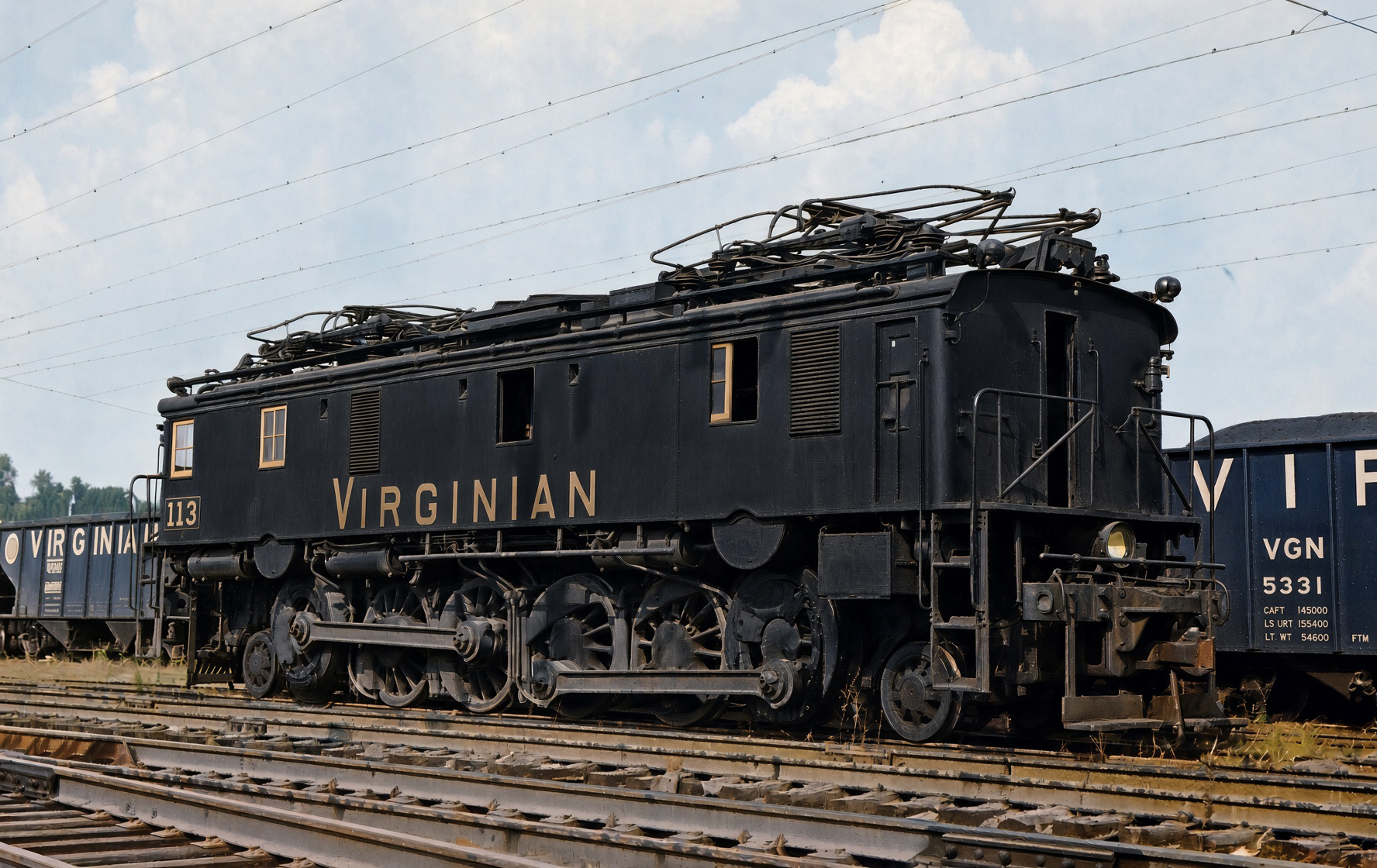
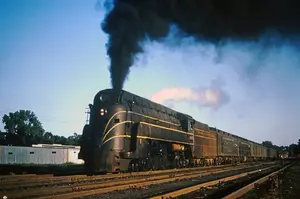
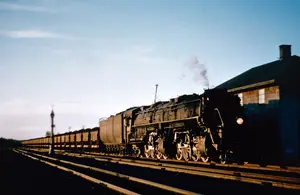
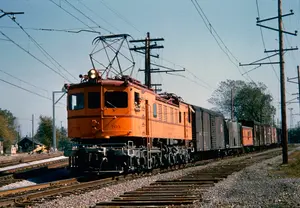
Boxcab No. 113, class EL-1a, at Princeton, West Virginia, circa 1957. Richard Cook photograph. These locomotives typically worked in sets of three. The electrified railroad ran from Roanoke to Elmore.
On this page: Deepwater and Tidewater · The grade · Passenger trains · Electrification · Diesels · Norfolk & Western · At a glance
Deepwater and Tidewater
The project began as the Deepwater Railway, a short line meant to gather coal from a district lying between the Chesapeake & Ohio and the Norfolk & Western. Westbound coal would have been handed to the Chesapeake & Ohio at Deepwater. The much larger eastbound movement would have been handed to the Norfolk & Western at Matoaka, mostly for that railroad’s own piers at Norfolk. Neither neighbor would make the agreement. H. A. McBride, writing “Coal Carrier” in Trains for January 1950, put the Deepwater at that stage at 4 miles, between Deepwater and Robson.
The men behind the short line built the Tidewater instead, through Princeton, Roanoke, and Victoria, and they built their own piers. The two companies were combined in 1907. The railroad reached Norfolk in 1909. Roanoke, already the Norfolk & Western’s city, became the division point: the Western Division ran from Roanoke to Deepwater, and the Eastern Division ran from Roanoke to Norfolk. Roanoke was also the eastern end of the electrification.
The Virginian Railway herald. Author’s work. It was often applied to the long hood of the company’s Fairbanks-Morse diesels.
A second version of the Virginian Railway logo. Author’s work.
The grade
In the 61 miles between the Chesapeake & Ohio and New York Central connections at Deepwater and the yard at Elmore, the maximum grades were 1.65 percent westbound and 2 percent eastbound. The hill that mattered was east of Elmore. Clark’s Gap Mountain was thirteen miles of crooked 2 percent, with a maximum of 2.07 percent, straight up to Algonquin. Every eastbound load of coal had to be dragged up that hill. The railroad double-tracked it early.
East of Clark’s Gap the trains dropped down a 1.5 percent grade from just east of Princeton to the New River at Glen Lyn. The steel bridge there is 2,155 feet long and stands 129 feet above the river, and it also crosses the Norfolk & Western. Where the Norfolk & Western crossed Alleghany Mountain on seven miles of 1.0 percent, the Virginian got through on nine miles of 0.6 percent. East of Roanoke the line followed the Roanoke River. The ruling grade there was 0.2 percent. The Norfolk & Western’s was 1.2 percent. A class MC Mikado could take 100 loads, 7,500 tons, from Roanoke to Norfolk. The locomotive assignments on Clark’s Gap, and the rest of the steam classes, are on the steam roster.
The builders had left room. Clearances were liberal, and the coal cars that became the railroad’s trademark were 120-ton gondolas on six-wheel trucks. The piers were at Sewalls Point, which is the spelling on the company’s own maps. The place is commonly spelled Sewell’s Point now. In 1931 a bridge across the Kanawha River at Deepwater gave the railroad a New York Central interchange and let the passenger trains reach Charleston’s Smith Street Union Station, which the Baltimore & Ohio and the New York Central also used.
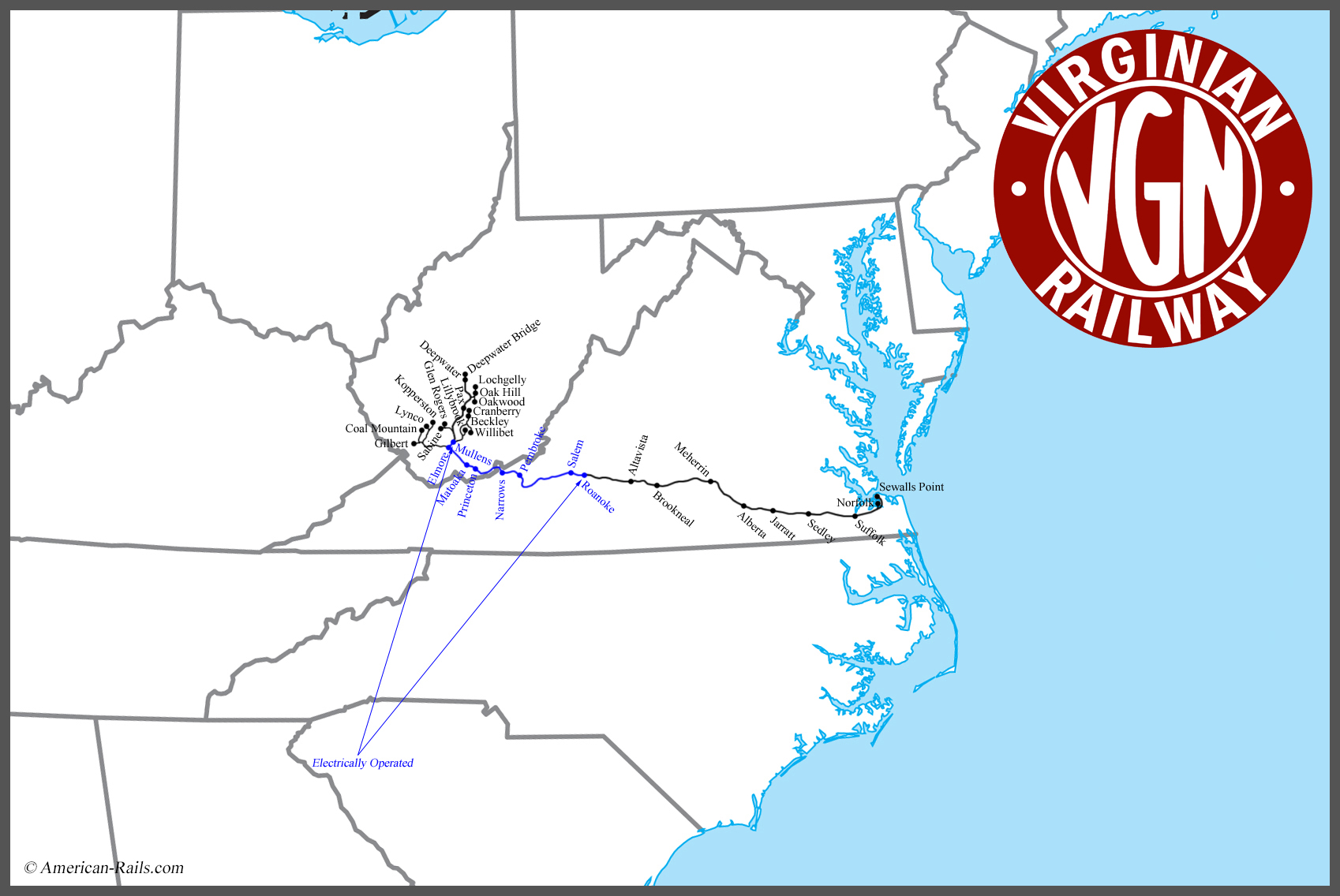
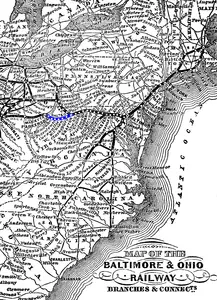
A historic system map of the Virginian Railway. Author’s work. A few short coal spurs are omitted. Sewell’s Point is spelled as the company’s official maps spelled it, Sewalls Point.
Passenger trains
The passenger trains were a small part of a coal railroad. Nos. 3 and 4 carried parlors, diners, and Pullmans until August 1932, and then they ran coach-only. In the last years a baggage-coach rented from the Norfolk & Western did the work. H. Reid, in “Of Black Upholstery And Commanding Exhaust,” Trains, August 1956, dates the last runs to January 29, 1956. The Tidewater Chapter of the National Railway Historical Society helped fill the trains that day, and the extra passengers needed another coach. The August 1952 public timetable is on its own page. The six Pacifics that handled the trains are class PA, Nos. 210–215, on the steam roster.
Electrification
By 1925 the railroad had decided that steam could not move the coal efficiently west of Roanoke. The line from Roanoke to Elmore was electrified with three-unit jackshaft locomotives. They were phase-converter machines, rated at 6,000 horsepower and 231,000 pounds of starting tractive effort. The June 1925 issue of Railway & Locomotive Engineering gives the same starting figure, a continuous rating of 135,000 pounds, and 6,000 horsepower continuous, and it notes that the starting effort was more than twice that of the railroad’s largest steam locomotives. The power plant was at Narrows, Virginia, on the New River, and it burned coal. The overhead was tied to the Norfolk & Western’s electrification, and the two railroads borrowed power from each other. The current was 11,000-volt single-phase alternating current.
The boxcabs were side-rod locomotives. A phase converter turned the single-phase supply into three-phase current for the induction motors. The railroad classed a single unit EL-1a, a pair EL-2a, and a three-unit set EL-3a. No. 113, in the photograph at the top of this page, is an EL-1a. The sets were hard on the track. In 1948 General Electric delivered four rectifier locomotives, Nos. 125–128, class EL-2B. Each was a semi-permanently coupled set, arranged B-B+B-B+B-B+B-B, and each set was rated at 6,800 horsepower.
Ten EL-C rectifier locomotives, Nos. 301–310, were built in October 1956. They came to the Norfolk & Western with the merger and were sold to the New Haven in 1962 as class EF-4. They are electrics, and they stand outside the diesel count. The class history is the EL-C page. Electric operation on the former Virginian ended on June 30, 1962.
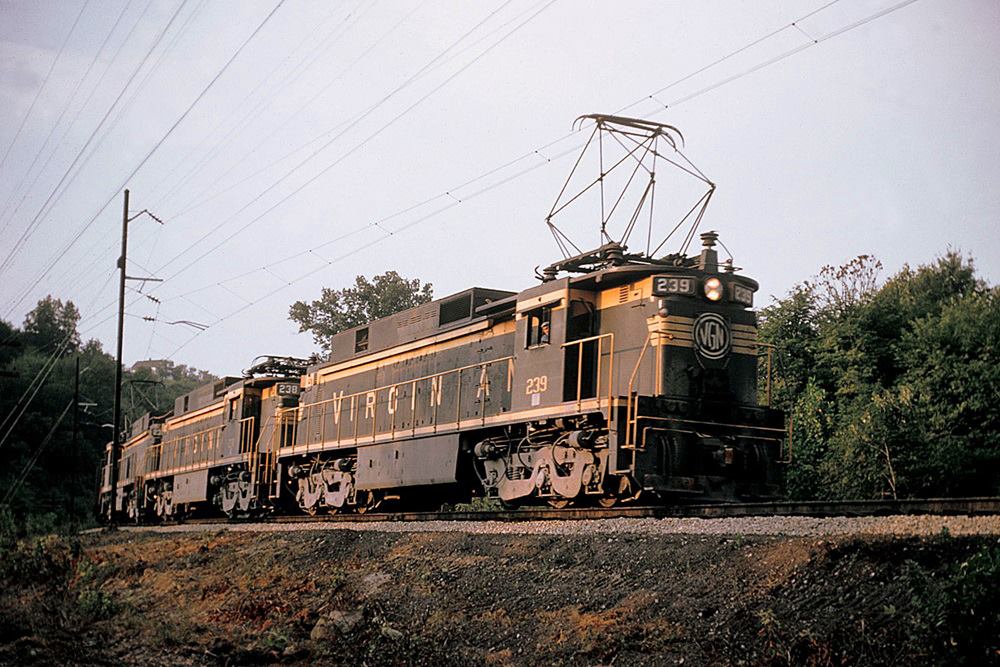
Ex-Virginian EL-C electrics, led by Norfolk & Western 239, nearing Princeton, West Virginia, in September 1960. Harold Cavanaugh photograph. The Virginian had been part of the Norfolk & Western since December 1, 1959.
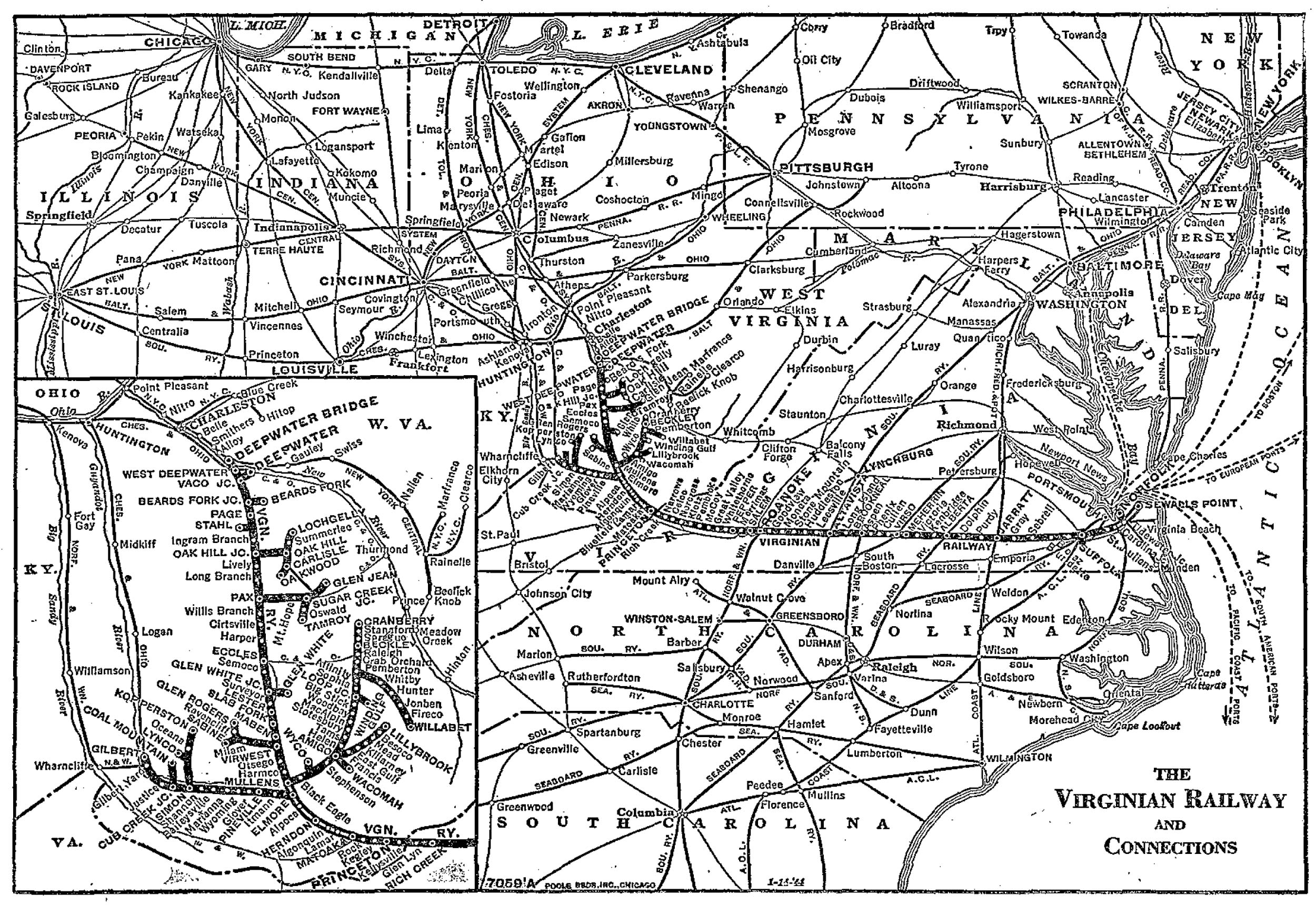
An official 1944 system map of the Virginian Railway. Author’s collection.
Diesels
The railroad bought 66 diesel locomotives. Sixty-five of them were Fairbanks-Morse road units, and those 65 took Norfolk & Western numbers on December 1, 1959. Forty H16-44s, Nos. 10–49, became Norfolk & Western 110–149. Twenty-five H24-66 Train Masters, Nos. 50–74, became 150–174. The sixty-sixth locomotive was General Electric 44-tonner No. 6, built in December 1941 as New Haven 0806. It did not receive a Norfolk & Western number. Serials, builder dates, and the later sale of No. 6 are on the diesel roster. Drury’s chapter places the merger two years after the lines were dieselized. Steam was still being scrapped in 1960, so the change was the end of steam as main-line practice.
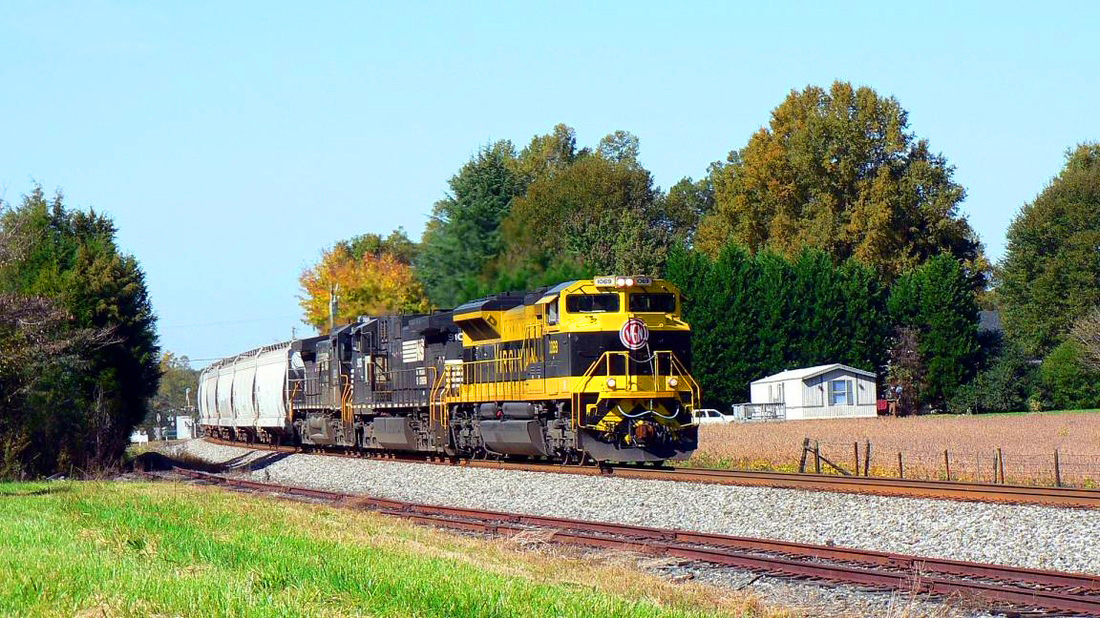
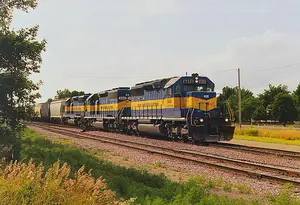
Norfolk Southern SD70ACe No. 1069, eastbound on freight 162 between Salisbury and Statesville, North Carolina, on October 20, 2012. Dan Robie photograph. The yellow and black is the Virginian’s livery, worn here by a successor locomotive.
Norfolk & Western
The Norfolk & Western absorbed the Virginian on December 1, 1959. The prize was the profile east of Princeton, the 0.2 percent along the Roanoke River against the Norfolk & Western’s 1.2 percent. The 65 Fairbanks-Morse diesels took the numbers above. The ten EL-C electrics stayed with the electric roster and went to the New Haven in 1962. The wires came down, for this railroad, on June 30, 1962. Much of the main line is still the way Norfolk Southern prefers to move eastbound coal. The steam classes, from the 1909 switchers through the 1946 Berkshires, are on the steam roster, and the ten 2-10-10-2s have their own page.
At a glance
| Item | Detail |
|---|---|
| Headquarters | Norfolk, Virginia |
| Reporting mark | VGN |
| Gauge | 4 feet, 8½ inches |
| States | Virginia and West Virginia |
| Formed | Deepwater and Tidewater combined in 1907. Completed to Norfolk in 1909 |
| Purpose | West Virginia coal to the piers at Sewalls Point. The Chesapeake & Ohio and the Norfolk & Western both refused a traffic and rate agreement |
| Main line | Deepwater to Sewalls Point and Norfolk, by Elmore, Princeton, Roanoke, Victoria, and Suffolk |
| Clark’s Gap | Thirteen miles east out of Elmore, maximum 2.07 percent, to Algonquin. Double-tracked early |
| East of Roanoke | Ruling grade 0.2 percent along the Roanoke River. The Norfolk & Western’s crossing was 1.2 percent |
| Electrification | Roanoke to Elmore, in service by 1925. 11,000-volt alternating current. Power plant at Narrows. Electric operation ended June 30, 1962 |
| EL-C | Ten, Nos. 301–310, built October 1956. Sold to the New Haven in 1962 as class EF-4. Class page |
| Passenger | Nos. 3 and 4 coach-only after August 1932. Last runs January 29, 1956. August 1952 timetable |
| Steam | Drury’s post-1900 class grid. Steam roster. The 2-10-10-2s are class AE |
| Diesels | 66 locomotives. The 65 Fairbanks-Morse units took Norfolk & Western numbers on December 1, 1959. No. 6, the 44-tonner, did not. Diesel roster |
| Absorbed | Norfolk & Western, December 1, 1959 |
Related Reading
- Virginian steam roster
- Virginian diesel roster
- Class AE 2-10-10-2s
- EL-C electrics
- August 1952 timetable
- Norfolk & Western
- Norfolk & Western diesel roster
Sources
- E. W. King, Jr., “Virginian,” in George H. Drury, Guide to North American Steam Locomotives, revised edition, pp. 320–323. The 1907 combination, the 1909 completion, the grade profile from Deepwater to Norfolk, Clark’s Gap at a maximum of 2.07 percent, the Glen Lyn bridge, the 0.6 percent and the 0.2 percent, the 7,500-ton train of 100 loads, the 1925 electrification from Roanoke to Elmore, the 6,000-horsepower phase-converter locomotives and 231,000 pounds of starting tractive effort, the Narrows plant, power borrowed both ways with the Norfolk & Western, the 120-ton gondolas, and the 1959 merger two years after the lines were dieselized, because the Norfolk & Western wanted the easier profile east of Princeton.
- H. A. McBride, “Coal Carrier,” Trains, January 1950. The Deepwater described as 4 miles between Deepwater and Robson.
- H. Reid, “Of Black Upholstery And Commanding Exhaust,” Trains, August 1956. The last passenger runs on January 29, 1956.
- Railway & Locomotive Engineering, June 1925. The three-unit boxcab sets at 231,000 pounds starting tractive effort, a continuous rating of 135,000 pounds, and 6,000 horsepower continuous.
- Norfolk & Western Historical Society, The Arrow, Vol. 39, No. 1 (January/March 2023), the installment on the end of Virginian electrification. The last electric train ran on the evening of June 30, 1962.
- Norfolk & Western diesel roster on this site. Sixty-five Virginian diesels took Norfolk & Western numbers on December 1, 1959: H16-44s 110–149, former Virginian 10–49, and H24-66s 150–174, former Virginian 50–74. Ten EL-C electrics, 301–310, built in October 1956, were sold to the New Haven in 1962 as class EF-4.
- H. Reid, The Virginian Railway (Kalmbach, 1961), and the published rosters Drury names: Railroad, April 1937, p. 71, and July 1951, p. 106; Trains, January 1950, p. 25. The Norfolk & Western Historical Society, nwhs.org, is the society named in the chapter.
Recent Articles


-
Southern Railway Diesel Roster (All-Time)
Oct 23, 26 11:00 PM
 All-time diesel roster of the Southern Railway. 2,505 locomotives in the system number series, from the 1939 demonstrator FT to GP50s and B30-7A1s. Serials included.
 -
Illinois Central Diesel Roster (All-Time)
Oct 23, 26 04:06 PM
 Illinois Central and Illinois Central Gulf diesel locomotives, each frame once. The quantity column is 886. Serials and order numbers from Electro-Motive's builder lists. Paducah rebuilds and Gulf, Mo…
 -
Illinois Central Gulf Diesel Roster
Oct 23, 26 04:02 PM
 Illinois Central Gulf operating numbers from August 10, 1972, to February 29, 1988. New frames stay on the Illinois Central diesel roster. Gulf, Mobile and Ohio frames stay on that roster. No Gulf fle…
 -
Illinois Central Railroad: Map, Logo, History
Oct 23, 26 03:50 PM
 Illinois Central, the Main Line of Mid-America, from the 1850 land grant to Canadian National control on July 1, 1999. Charter lines, Cairo bridge, Paducah, and the Illinois Central Gulf. Steam quanti…
 -
Grand Trunk Western Diesel Roster (All-Time)
Oct 23, 26 12:53 PM
 Grand Trunk Western diesel locomotives, each frame once. The quantity column is 377. Serials are filled for the Detroit, Toledo and Ironton and Detroit and Toledo Shore Line engines the railroad kept…
 -
Grand Trunk Western Steam Roster
Oct 23, 26 12:14 PM
 Grand Trunk Western steam locomotives in service about 1937 to 1942, from Richard Leonard's class list. Drury has no chapter. The quantity column is the counted Grand Trunk Western rows. Two mixed Gra…
 -
Grand Trunk Western Railroad: Map, Roster, History
Oct 23, 26 12:09 PM
 Grand Trunk Western, reporting mark GTW, Canadian National's railroad between Port Huron and Chicago. Trade name adopted in 1923. Steam class list quantity 232. Diesel quantity column 377. Identity in…
 -
Green Bay and Western Railroad: Map, Rosters, History
Oct 22, 26 11:18 PM
 Green Bay & Western, the Green Bay Route, reporting mark GBW. From Kewaunee to Winona. Mailer's steam and diesel rosters, and the August 1993 sale to Fox Valley & Western.
 -
Chicago & North Western Class E-4: Streamlined 4-6-4 Hudsons
Oct 22, 26 10:28 PM
 C&NW Class E-4, nine streamlined 4-6-4s, 4001–4009, Alco 1938. 84-inch drivers, 25-by-29 cylinders, 300 psi. Conventional Chicago–Omaha trains. Oil in 1947–48. Retired 1953–1956.
 -
Gateway Western Railway: Map, Roster, History
Oct 22, 26 02:43 PM
 Gateway Western Railway, reporting mark GWWR. Class II from Kansas City to East St. Louis. Kansas City Southern control May 5, 1997. The 1992 diesel fleet, with serials and order numbers.
 -
Duluth, Winnipeg & Pacific Railway: Roster, Map, History
Oct 22, 26 01:51 PM
 Duluth, Winnipeg & Pacific, the Peg, reporting mark DWP. From the Rainy River to Duluth. CNRHA steam list 36. Fifteen RS-11s. Merged into Wisconsin Central Ltd. on December 31, 2011.
 -
Elgin, Joliet and Eastern Diesel Roster (All-Time)
Oct 22, 26 01:35 PM
 All-time diesel roster of the Elgin, Joliet and Eastern.
 -
Elgin, Joliet and Eastern Steam Roster
Oct 22, 26 01:25 PM
 Elgin, Joliet and Eastern steam locomotives of the final decade, which largely comprised switcher types, 2-8-0s, and a large fleet of Mikados.
 -
Elgin, Joliet and Eastern Railway: Map, Roster, History
Oct 22, 26 12:32 PM
 Elgin, Joliet & Eastern, the outer arc around Chicago, from the Joliet, Aurora & Northern of April 30, 1884. Illinois company March 18, 1887. Merged December 4, 1888. Principal lines sold Janu…
 -
Denver and Salt Lake Railway: History, Roster, Timetable
Oct 22, 26 09:47 AM
 Denver & Salt Lake, the Moffat Road, from Denver to Craig. Tunnel opened February 26, 1928. Dotsero Cutoff dedicated June 16, 1934. Merged April 11, 1947. Steam locomotives 59.
 -
Duluth, Missabe and Iron Range Diesel Roster (All-Time)
Oct 22, 26 09:43 AM
 All-time diesel roster of the Duluth, Missabe and Iron Range. 148 owned frames, each counted once. SW9s, SD9s, SD18s, SD38s, RSD-15s, and C630s. Serials and builder order numbers included. Helm SD40-3…
 -
Duluth, Missabe and Iron Range Steam Locomotives (Since 1900)
Oct 22, 26 09:22 AM
 Duluth, Missabe & Iron Range steam locomotives built since 1900. Duluth & Iron Range, Duluth, Missabe & Northern, and later DM&IR acquisitions. Quantity column 252. Yellowstones 220-23…
 -
Duluth, Missabe and Iron Range Railway: Roster, Map, Logo
Oct 22, 26 09:17 AM
Duluth, Missabe & Iron Range, reporting mark DMIR, from the Mesabi and the Vermilion to the Lake Superior docks. Formed July 1, 1937. Steam quantity 252. Owned diesels 148. On paper through Decemb… -
Duluth, South Shore, and Atlantic Railway: Map, Roster, Timetables
Oct 21, 26 11:21 PM
 Duluth, South Shore & Atlantic Railway, the South Shore. Marquette to the Sault, St. Ignace, Houghton, and Duluth-Superior. Soo Line on January 1, 1961. Twenty-four diesels.
 -
Detroit, Toledo and Ironton Diesel Roster (All-Time)
Oct 21, 26 02:55 PM
 All-time diesel roster of the Detroit, Toledo and Ironton. 119 frames, each counted once. Serials and builder order numbers included. Last steam was December 24, 1955.
 -
Detroit, Toledo and Ironton Steam Roster (Post 1900)
Oct 21, 26 02:49 PM
 Detroit, Toledo and Ironton steam locomotives built after 1900. Drury's class grid. The quantity column prints 141. Counted once, the frames are 137. Last steam was Mikado 805 on December 24, 1955.
 -
Detroit, Toledo and Ironton Railroad: Map, Roster, History
Oct 21, 26 02:40 PM
 Detroit, Toledo & Ironton, reporting mark DTI, from Detroit to Ironton, Ohio. Railway organized May 2, 1905. Railroad articles filed February 21, 1914. Henry Ford, 1920 to 1929. Steam and diesel r…
 -
Iowa, Chicago and Eastern Railroad: Roster, Map, History
Oct 21, 26 01:04 PM
 Iowa, Chicago & Eastern Railroad Corporation, reporting mark ICE. About 1,125 miles and about 275 miles of trackage rights from the I&M Rail Link. Operations at 12:01 a.m. July 30, 2002. Canad…
 -
Rapid City, Pierre & Eastern Railroad: Route, Roster, Overview
Oct 21, 26 10:16 AM
 Rapid City, Pierre & Eastern Railroad, reporting mark RCPE. Genesee & Wyoming Class II. Agreement of January 2, 2014, Finance Docket 35799. Freight service from June 1, 2014, on the Dakota, Mi…
 -
Dakota, Minnesota & Eastern Railroad: Roster, Map, History
Oct 21, 26 12:26 AM
 Dakota, Minnesota & Eastern Railroad, reporting mark DME. The July 2, 1986 Chicago & North Western sale, 826 miles and 139 miles of trackage rights. Canadian Pacific control October 30, 2008…
 -
Detroit and Mackinac Railway: Map, Roster, History
Oct 20, 26 11:58 PM
 Detroit & Mackinac Railway, the Turtle Line. Bay City to Cheboygan along Lake Huron. Incorporated December 29, 1894. Lake State Railway leased the operation in 1992 and bought the lines in 1997. E…
 -
Davenport, Rock Island and Northwestern Railroad
Oct 20, 26 11:22 PM
 Davenport, Rock Island and North Western Railway, the DRI Line. Clinton to East Moline across the Crescent Bridge. Burlington and Milwaukee. Merged into the Soo Line on June 29, 1995. Eighteen diesels…
 -
Chicago Great Western Steam Roster (Post 1900)
Oct 20, 26 11:17 PM
 Chicago Great Western steam locomotives built or rebuilt since 1900. Drury's class grid. 320 frames, each once. The quantity column prints 376 because a rebuild is listed again. Last steam in the reti…
 -
Chicago Great Western Diesel Roster (All-Time)
Oct 20, 26 10:47 PM
All-time diesel roster of the Chicago Great Western. 157 frames, each counted once. Serials and builder order numbers included. Steam was gone by 1950. The 1963 glance figure of 141 is one year's flee… -
Chicago Great Western Railway: Map, Photos, History, Rosters
Oct 20, 26 10:43 PM
 The Chicago Great Western, the Corn Belt Route, linked Chicago, the Twin Cities, Omaha, and Kansas City from September 27, 1885, until the Chicago & North Western merger at 12:01 a.m. on July 1, 1968…
 -
Chicago, South Shore & South Bend Railroad: "The South Shore Line"
Oct 20, 26 05:48 PM
 Chicago South Shore & South Bend, the South Shore Line, from the 1901 Air Line through Samuel Insull's 1925 rebuild, the orange cars, the 800s, and the railroad NICTD and Anacostia still run.
 -
Northwestern Virginia Railroad: Map, History, Timetable
Oct 20, 26 04:18 PM
 Northwestern Virginia Railroad, chartered February 14, 1851, Grafton to Parkersburg, 104 miles. Opened May 1, 1857. Foreclosure sale February 15, 1865, as the Parkersburg Branch. Twenty-three tunnels…
 -
"Exposition Flyer" (Train): Consist, Timetable, History
Oct 20, 26 03:29 PM
 Exposition Flyer, Chicago to Oakland, June 10, 1939 to March 20, 1949. Burlington, Rio Grande, and Western Pacific. Heavyweight cars, then diesels and a vista-dome. Replaced by the California Zephyr.
 -
Chicago, St. Paul, Minneapolis & Omaha Railway, "The Omaha Road"
Oct 20, 26 02:13 PM
 The Omaha Road, reporting mark CMO. Formed May 26, 1880. North Western management on December 16, 1882. Leased January 1, 1957. Class K-1 No. 183 and the sublettered diesels.
 -
Chicago and Western Indiana Railroad: Map, Rosters, History
Oct 20, 26 01:17 PM
 Chicago and Western Indiana, chartered June 5, 1879. Five equal owners, Dearborn Station, and two main lines. Dolton suburban mile 16.6. Fifteen diesels. Railroad service ended in 1994. The Illinois c…
 -
Railroad Tell-Tales: Protecting The Brakeman
Oct 20, 26 12:58 PM
 Railroad tell-tales: hanging ropes that warned a man on a freight-car roof of a low bridge or tunnel. The 1897 bridge-warning report, the 1905 Wisconsin statute, retainers, and why the roof walk outla…
 -
Chicago & North Western Steam Roster (Post 1900)
Oct 20, 26 12:54 PM
 Chicago & North Western steam locomotives built since 1900, and the Omaha Road list beside it. Drury's parent quantity column sums to 1,445, with four rows left blank. The Omaha Road column sums to 24…
 -
Chicago & North Western Diesel Roster (All-Time)
Oct 20, 26 12:49 PM
 All-time diesel roster of the Chicago & North Western. 2,494 frames, each counted once, including Chicago Great Western, Minneapolis & St. Louis, and Omaha Road units that received North Western numbe…
 -
Chicago and North Western Railroad: Map, History, Logo
Oct 20, 26 12:37 PM
 The Chicago & North Western, chartered as the Galena & Chicago Union in 1836 and formed in June 1859. Granger railroad of the 400s, the Cowboy Line, and Powder River coal. Union Pacific common control…
 -
Chicago & Illinois Midland Steam Roster (Post 1900)
Oct 20, 26 12:30 AM
 Chicago & Illinois Midland steam locomotives built since 1900. Drury's class grid, 57 engines. Twenty-six 2-10-2s, including nine from the Wabash and nine from the Atlantic Coast Line. Last road steam…
 -
Chicago & Illinois Midland Diesel Roster (All-Time)
Oct 20, 26 12:20 AM
 All-time diesel roster of the Chicago & Illinois Midland. 28 frames, each counted once. Six SW1200s, five SD9s, the only two RS1325s, two SD18s, six SD38-2s, and four SD20s. Serials included.
 -
Chicago and Illinois Midland Railroad: Map, Rosters, History
Oct 20, 26 12:17 AM
 The Chicago & Illinois Midland moved Illinois coal for Commonwealth Edison, Taylorville and Springfield to Pekin, with Peoria over the Peoria & Pekin Union. The 1906 railway began operating February 1…
 -
Chicago & Eastern Illinois Diesel Roster (All-Time)
Oct 19, 26 04:23 PM
 All-time diesel roster of the Chicago & Eastern Illinois. 143 frames, each counted once. Switchers, F3s, FP7s, E7s, the BL1, and the GP7s through GP35s. Serials included.
 -
Chicago & Eastern Illinois Steam Roster (Post 1900)
Oct 19, 26 04:19 PM
Chicago & Eastern Illinois steam locomotives built or rebuilt since 1900. 146 Consolidations, 60 Mikados, and 24 Pacifics. Drury's class grid. Last steam was Mikado 1944 at Vincennes on May 5, 1950. -
Chicago and Eastern Illinois Railroad: Map, Rosters, History
Oct 19, 26 03:57 PM
 The Chicago & Eastern Illinois ran from Chicago to Evansville, St. Louis, and Thebes. First company of the name, August 28, 1877. The remainder merged into the Missouri Pacific on October 15, 1976. St…
 -
Rock Island Diesel Roser: All-Time
Oct 19, 26 11:05 AM
 Chicago, Rock Island and Pacific diesel locomotives, 1,029 frames counted once. Switchers, cab units, road-switchers, two acquired slugs, five RDCs, and bi-power 10000. Serial and order are separate c…
 -
Rock Island Steam Roster: Post 1900
Oct 19, 26 11:01 AM
Chicago, Rock Island and Pacific steam locomotives built or rebuilt since 1900. Drury's class grid, 1,482 frames counted once, including 85 4-8-4s. Last revenue steam was July 1953. -
Rock Island Railroad: Map, Pictures, Logo, History
Oct 19, 26 10:51 AM
 The Chicago, Rock Island and Pacific ran from Chicago to the Twin Cities, Denver, Tucumcari, and the Gulf. First train October 10, 1852. Directed service ended March 23, 1980. Steam and diesel rosters…
 -
EMD "F7" Locomotives: Cab, Top Speed, Specs, Rosters
Oct 19, 26 12:27 AM
 EMD F7 cab units and boosters, 1,500 horsepower, built February 1949 through December 1953. Gear ratios, specifications, and the production roster by owner, serial, and order.
 -
Harlem Transfer Company: An NYC Terminal System
Oct 19, 26 12:01 AM
 Harlem Transfer Company, the Lackawanna's offline freight terminal on the Bronx side of the Harlem River at East 135th Street. Carfloats to Hoboken, boxcab No. 2, and GE 44-tonner 53.