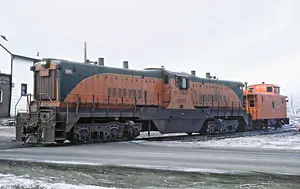
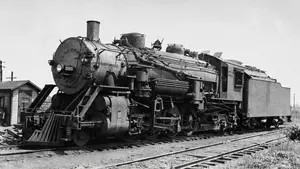
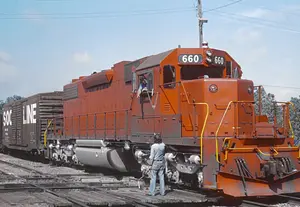
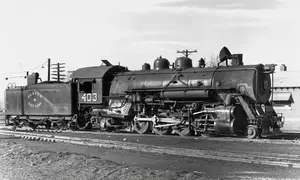
Bangor and Aroostook Railroad: Serving Northern Maine
Last revised: September 15, 2026
By: Adam Burns
The Bangor & Aroostook, Serving Northern Maine. Albert A. Burleigh and Aroostook County built it to put a railroad into potato country that had none. Maine chartered the company on February 13, 1891. The first trains ran to Houlton on January 1, 1894. For a century the map stayed inside the state: Searsport on Penobscot Bay, Northern Maine Junction outside Bangor, the shops at Derby, Great Northern’s mills at Millinocket, and the County as far as Van Buren and St. Francis. Potatoes and paper paid the bills. The last train under the BAR name ran in 2003. Reporting mark BAR—not B&A, which was the Boston & Albany.
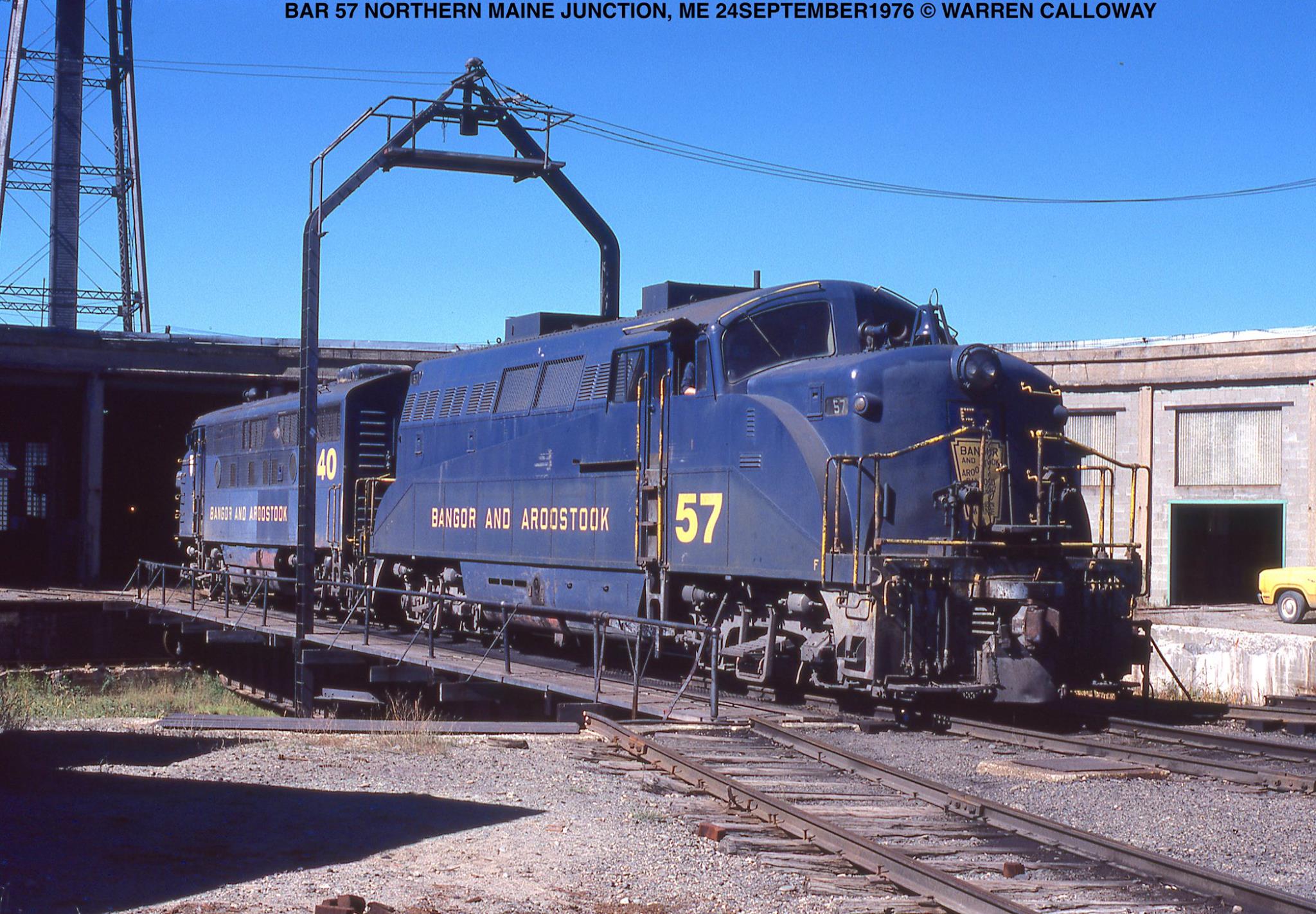
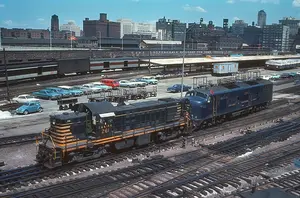
Bangor & Aroostook BL2 #57 and F3A #40 on the turntable at Northern Maine Junction, Maine on September 24, 1976. Warren Calloway photo.
On this page: At a glance · Burleigh and the County · How the map was built · Potatoes, paper, and the seaport · Passenger trains · Diesels and the State of Maine cars · Bangor Punta, Dumaine, and the potato winter · Iron Road, MM&A, and Lac-Mégantic · What remains
At a glance
The Bangor & Aroostook logo. Author’s work.
| Item | Detail |
|---|---|
| Headquarters | Bangor, Maine |
| Charter | Maine, February 13, 1891 |
| Founder | Albert A. Burleigh, Houlton |
| First trains | Houlton, January 1, 1894 |
| Dates of operation | January 1, 1894–January 9, 2003 |
| States | Maine (Van Buren Bridge into St. Leonard, New Brunswick, from May 1, 1915) |
| Route-miles (1930) | 616. Peak plant, on the order of 850 miles of track |
| Route-miles (2000) | 433, before Iron Road added the former Canadian Pacific line toward Montreal |
| Gauge | 4 feet 8½ inches |
| Slogan / mark | Serving Northern Maine / BAR |
| Shops / yard | Derby. Northern Maine Junction (Hermon) |
| Diesels (1963) | 46 |
| Cars (1963) | 4,646 freight; 2 passenger |
| Last passenger train | Potatoland, September 4, 1961 |
| Successors | Montreal, Maine & Atlantic (January 9, 2003). Central Maine & Quebec, 2014. Canadian Pacific, June 4, 2020. CPKC, April 14, 2023 |
| Rosters | Steam (post-1900) · All-time diesel |
| Principal lines | Searsport–Derby–Fort Kent; Northern Maine Junction–Bangor; Oakfield–Presque Isle–Van Buren; Van Buren–St. Francis; Derby–Greenville; Brownville–Brownville Junction; branches to Limestone, Fort Fairfield, East Millinocket, Ashland |
Jerry Angier and Herb Cleaves are the company narrative used throughout. 1930 mileage is the Official Guide route-mile figure. Peak plant follows Mike Schafer, More Classic American Railroads. Information compiled September 15, 2026.
Burleigh and the County
From 1870 to 1890 Aroostook potato production rose about sixty-fold, hauled out on long wagon roads and on other people’s railroads that charged for the privilege. Houlton’s Albert A. Burleigh figured the County could have its own line if it would put money behind the charter. George Mulherin, writing in 1900, recorded that the county was allowed to subscribe up to five percent of its valuation. The legislature followed the February 13 charter with enabling acts that spring. The projected main ran about 200 miles from Brownville north to Caribou, by Houlton, Island Falls, Oakfield, and Smyrna, with branches toward Fort Fairfield and Ashland.
Two older roads gave the new company a south end. The Bangor & Piscataquis, taken in 1892, and the Bangor & Katahdin Iron Works Railway together reached from Old Town to Brownville. Construction then went north. Track reached Houlton in December 1893. Regular trains began January 1, 1894. A year later, on January 1, 1895, service opened to Caribou, Presque Isle, and Fort Fairfield. The wilderness had a railroad. The potatoes had a way out that did not start with a sled.
How the map was built
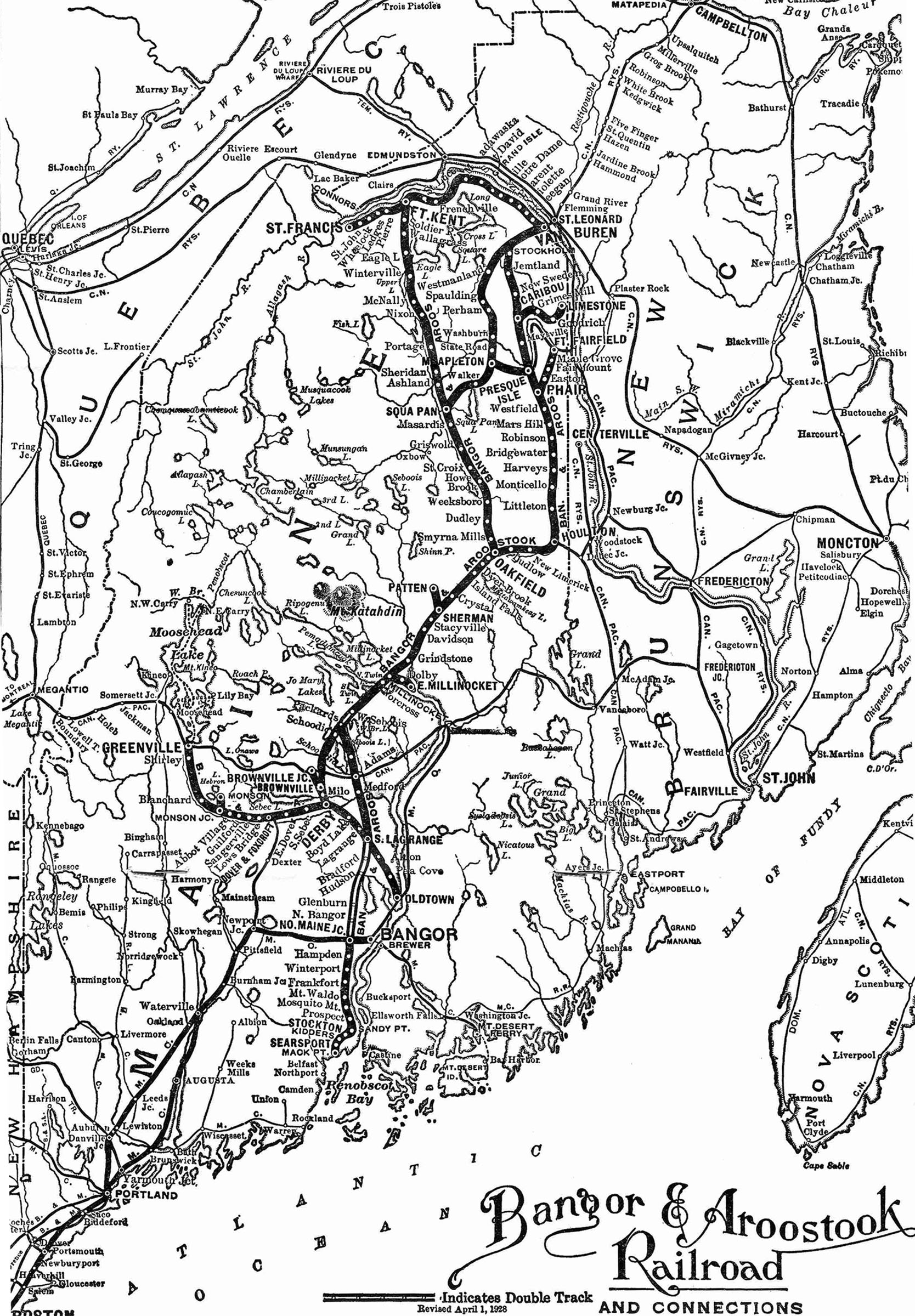
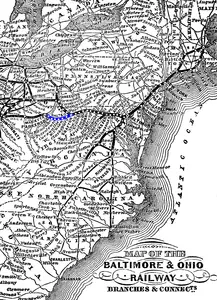
An official, 1928 system map of the Bangor & Aroostook. Author’s collection.
The 1890s and 1900s filled the County. Oakfield to Ashland opened in 1896. Caribou to Limestone, 1897. The main from Caribou to Van Buren, 1899. The Ashland Branch reached Fort Kent in 1902, the Fish River Railroad folded in. Rails up the Maine side of the St. John—Van Buren through Madawaska and Fort Kent to St. Francis—were in by 1910. Mapleton tied Stockholm, Presque Isle, and Squa Pan together. Millinocket already had Great Northern Paper; a short branch served a new mill at East Millinocket. The Medford Cutoff, Packard to South Lagrange, opened in 1907 and shortened the south end.
The last new BAR iron of consequence was international. The Van Buren Bridge Company put a span across the St. John to St. Leonard, New Brunswick, opened May 1, 1915. On the far side sat the National Transcontinental, later a Canadian National division, and a Canadian Pacific connection. From that day a BAR car could leave the County without a Maine Central haul to the border.
South of Brownville the map was older. The Bangor & Piscataquis and the Katahdin Iron Works road had already been absorbed. What the BAR still lacked was salt water of its own. That is the next section. The 1928 map on this page is the finished plant: Searsport to Fort Kent, the County branches, Derby, Northern Maine Junction, and the Van Buren bridge. Mike Schafer, in More Classic American Railroads, puts peak size at 858 miles. The 1930 Official Guide figure used in the glance table is 616 route-miles. The railroad never entered bankruptcy in the Depression. It did not need a trunk’s map. It needed the County, the mills, and a port.
Potatoes, paper, and the seaport
Franklin Cram, the BAR’s president in the early 1900s, wanted an ice-free port that was not the Maine Central’s. Great Northern Paper at Millinocket was already the largest customer and would stay that way for decades. In 1904 surveyors marked South Lagrange to Searsport. The Northern Maine Seaport Railroad was incorporated December 1, 1904, leased to the BAR on June 27, 1905, and opened that November—South Lagrange to Searsport and Cape Jellison on Penobscot Bay. A six-mile piece from Hermon into Bangor made the passenger and less-than-carload door. Hermon became Northern Maine Junction: the yard, the engine terminal, the place where Maine Central cars were handed across. Derby, up the line, was the shop town. Both names stayed on the railroad until the name itself died.
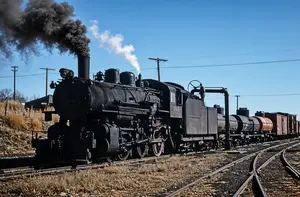
Potatoes moved in heated cars from 1895. After the Second World War they were still about half the freight revenue. A poor year was fewer than 40,000 carloads; some seasons topped 50,000. Paper, pulpwood, and inbound mill chemicals were the other half. Coal came in for the mills while they still burned it. In the world wars Searsport handled ammunition. In the Cold War the line fed Loring Air Force Base coal and jet fuel. Connections were Maine Central at Northern Maine Junction and Brownville, Canadian Pacific at Brownville Junction, Canadian National at Van Buren / St. Leonard. The BAR did not need Boston. It needed a dependable haul from the County to a port and to somebody else’s main.

Bangor & Aroostook BL2 #50 and F3A #47 bring their train into Searsport, Maine on January 24, 1960. Norton Clark photo.
Passenger trains
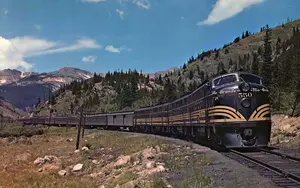
The BAR was never a passenger railroad in the New York Central sense. Most of the timetable was mixed trains and locals. Two named trains carried the flag: the afternoon Aroostook Flyer, Bangor to Van Buren, and the overnight Potatoland Special on the same line, with St. Francis stops on the morning run. After the war the company bought a little streamlining—American Flyer cars, a buffet-lounge, new coaches—and painted F3s and a pair of E7As blue and gray with a winged shield. It did not pretend the County would fill a fleet. The last Potatoland ran on September 4, 1961. The train encyclopedias are the Flyer and Potatoland pages. After that date the railroad was freight.
Diesels and the State of Maine cars
The BAR tested an Electro-Motive F3 in July 1946 and ordered its own the next year. F3As 500A–507A arrived October 1947 through May 1948; two of them carried steam generators and took the varnish on May 14, 1948. A pair of E7As, 700–701, followed in April 1949. Eight BL2s, 550–557, came in 1949—one of the larger blocks of a model almost nobody else wanted, and the locomotives that still mean BAR in photographs. GP7s and GP9s finished the first-generation roster. Steam was largely off by 1951, with winter potato extras bringing a few engines back until the mid-1950s. The class tables are the steam and diesel rosters. Derby kept F3s and BL2s running long after bigger roads had traded them.

Bangor & Aroostook F3A #44 and a BL2 perform switching chores at Caribou, Maine with the first section of train #57 on February 6, 1970. Roger Puta photo.
In 1950 the company built about 500 insulated refrigerator cars and painted them red, white, and blue with STATE OF MAINE PRODUCTS along the side. Potatoes needed a steady 40 degrees. The BAR, for a time, owned the second-largest railroad reefer fleet in the country after the Santa Fe. In the off months the cars went west; Pacific Fruit Express used BAR reefers on California produce while PFE cars came east for the potato season. Lionel put the scheme under Christmas trees. The cars made a Maine railroad famous in places that could not find Houlton on a map.
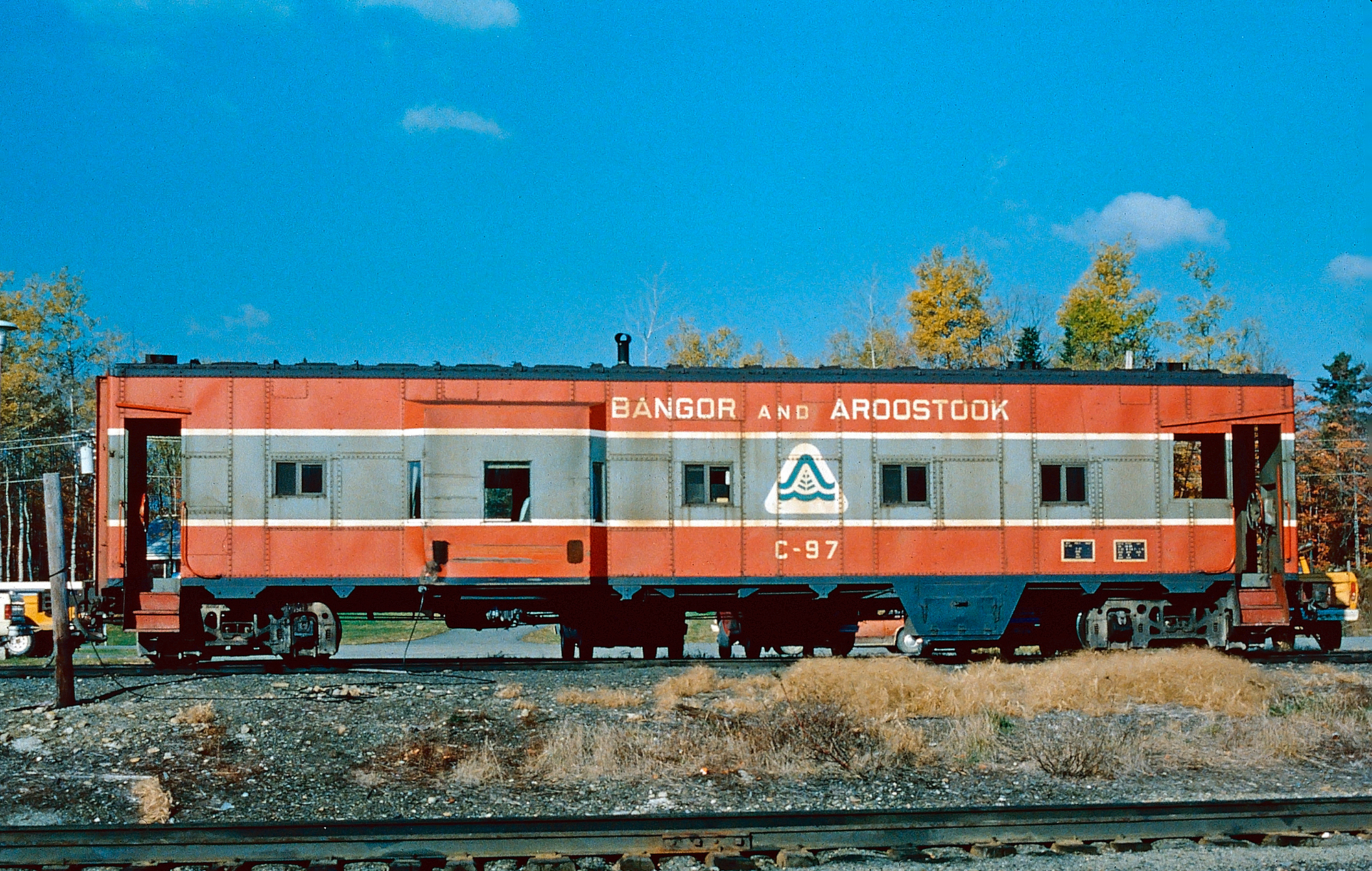
Bangor & Aroostook caboose C-97, rebuilt from a former troop car, at Northern Maine Junction, Maine in the fall of 1984. Don Jilson photo. American-Rails.com collection.
Bangor Punta, Dumaine, and the potato winter
Highways into the County, then Interstate 95, put trucks on the potato business in the 1960s. The Greenville Branch came up in 1962–64. In 1960 the railroad sat under a holding company; in 1964 that company merged with Punta Alegre Sugar as Bangor Punta, a conglomerate that wanted dividends more than reefers. On October 2, 1969 F. C. “Buck” Dumaine’s Amoskeag Company bought the BAR back out of Bangor Punta. The railroad no longer had to feed a conglomerate. It still had to deliver potatoes to the rest of the country.
That winter, 1969–70, Penn Central interchange collapsed. Cars sat. Heaters ran out of fuel. A large part of the 1969 Aroostook crop froze—Selkirk Yard on the Hudson was the name that stuck in Maine. Claims against Penn Central were still open when that company filed on June 21, 1970. Farms failed. The farms that survived did not come back to the railroad. Potatoes had been half the BAR. After that winter they were a memory, and paper had to carry a railroad built for both.
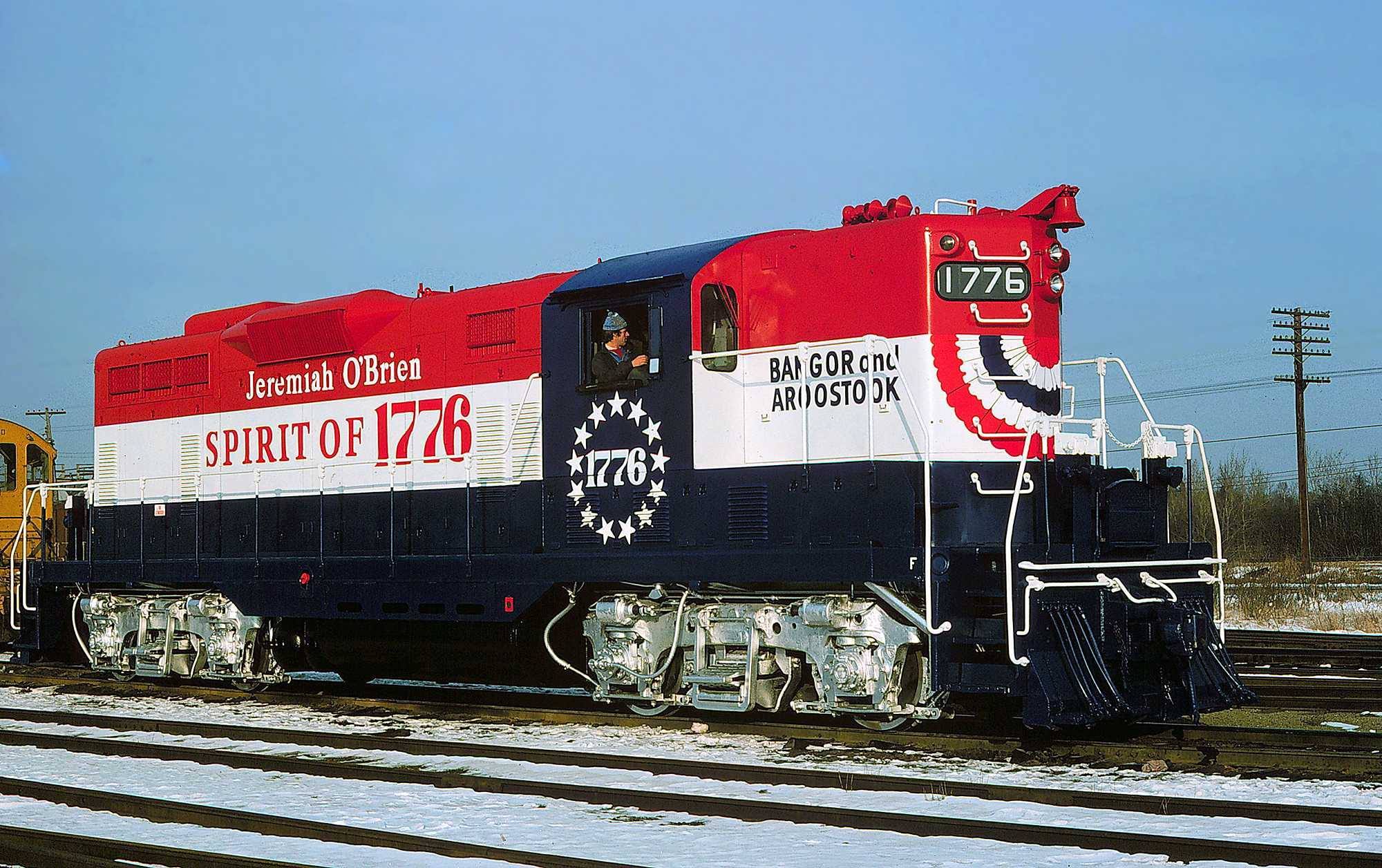
Bangor & Aroostook GP7 #1776 (built as #573) is seen here straight out of the paint shop and dressed up for the Bicentennial. The unit was named the “Jeremiah O’Brien,” a Patriot born in Kittery, Maine in 1744 who later became a captain in the Massachusetts State Navy. He was in command of the sloop “Unity” when he captured the British armed schooner HMS “Margaretta” in the Battle of Machias, the first naval engagement of the Revolutionary War.
Dumaine kept the company alive on paper, chemicals, and leased reefers. GP7 #573 wore 1776 and the name Jeremiah O’Brien for the Bicentennial, a Maine captain for a Maine railroad. The F3s and BL2s in the photographs on this page are that era: still lettered BAR, still switching Caribou and turning at Northern Maine Junction, a decade after the potatoes had gone to the highway.
Iron Road, MM&A, and Lac-Mégantic
Iron Road Railways bought the BAR on March 17, 1995. Mileage was down to 433. Iron Road added a former Canadian Pacific line through Brownville toward Montreal and roughly doubled the map. That extra iron was not BAR iron; it was the old International of Maine. Paper mills were no longer enough. After a failed recapitalization and a traffic drop on the Conrail split, Iron Road put the railroad into bankruptcy. Rail World, Inc.—Ed Burkhardt—took the property and started the Montreal, Maine & Atlantic on January 9, 2003. The BAR name stopped that day. The MM&A story, including the February 2010 plan to drop 233 miles of the old BAR between Madawaska and Millinocket, is that page.
On July 6, 2013 an MM&A crude-oil train ran away and burned downtown Lac-Mégantic, Quebec. More than forty people were killed. The MM&A was in bankruptcy by August. Railroad Acquisition Holdings, a Fortress Investment Group company, bought the assets on January 23, 2014 and started the Central Maine & Quebec that spring. Canadian Pacific closed on the CM&Q on June 4, 2020. CPKC began on April 14, 2023.
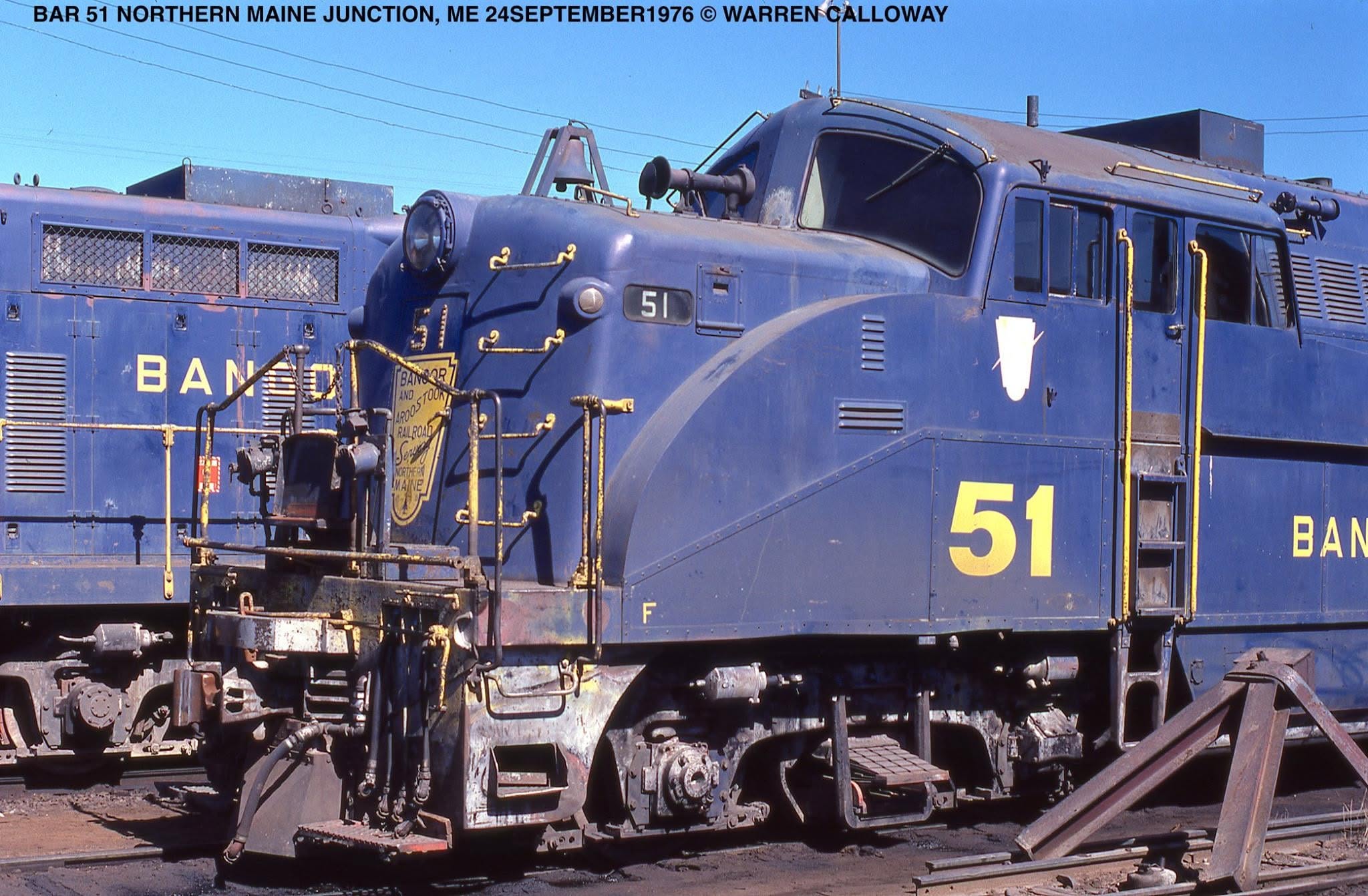
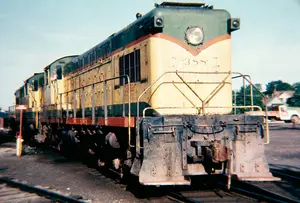
A close up of Bangor & Aroostook BL2 #51 at Northern Maine Junction, Maine on September 24, 1976. Warren Calloway photo.
What remains
CPKC runs the former BAR south end: Searsport, Northern Maine Junction, Derby, Brownville, and the old CP International of Maine toward Montreal. That is a Class I in Maine, which the state did not have on its own rails for decades. Eastern Maine Railway / New Brunswick Southern still meets the map at Brownville Junction. North of Millinocket the old County main is a patchwork—state-saved pieces, abandoned pieces, a remnant toward Madawaska and the Van Buren bridge. Oakfield’s 1912 BAR depot is a museum. Cole Land Transportation Museum in Bangor has BL2 #557. The blue-and-gray F3s are gone from the turntable in the 1976 photograph. The name on the remaining trains is CPKC. The map they run is still Burleigh’s idea: a railroad in the County, and a way to the sea.
Related reading on American-Rails.com
- BAR steam roster (post-1900) · BAR diesel roster · EMD BL2
- Aroostook Flyer · Potatoland Special
- Maine Central · Montreal, Maine & Atlantic · Maine railroads
- Canadian Pacific · Canadian National · CPKC · Penn Central
Sources
- Angier, Jerry, and Herb Cleaves. Bangor and Aroostook. The company narrative: Burleigh, construction north from Brownville, Northern Maine Seaport, Van Buren Bridge, potatoes and paper, Bangor Punta, Dumaine
- Mulherin, George. A Brief History of the Bangor and Aroostook Railroad. 1900. County subscription up to five percent of valuation; projected Brownville–Caribou line
- Schafer, Mike. More Classic American Railroads. Osceola, Wis.: MBI. Peak plant 858 miles
- Trains. “Bangor & Aroostook Railroad remembered.” NMSRR December 1, 1904 / lease June 27, 1905 / Searsport November 1905; Van Buren Bridge May 1, 1915; Greenville Branch 1962; Dumaine purchase from Bangor Punta October 2, 1969; Iron Road March 1995
- American-Rails.com, Aroostook Flyer and Potatoland Special. Streamlined cars; last Potatoland September 4, 1961; F3 steam-generator passenger debut May 14, 1948
- American-Rails.com, BAR steam and BAR diesel rosters. F3, BL2, GP7/GP9, E7 dates
- American-Rails.com, Montreal, Maine & Atlantic. January 9, 2003 start; Madawaska–Millinocket abandonment plan February 2010; Lac-Mégantic July 6, 2013; Fortress / CM&Q 2014
- American-Rails.com, Maine railroads and short-line notes. Canadian Pacific closed on Central Maine & Quebec June 4, 2020
- American-Rails.com, CPKC. Operations began April 14, 2023
Recent Articles


-
Green Bay and Western Railroad: Map, Rosters, History
Oct 22, 26 11:18 PM
 Green Bay & Western, the Green Bay Route, reporting mark GBW. From Kewaunee to Winona. Mailer's steam and diesel rosters, and the August 1993 sale to Fox Valley & Western.
 -
Chicago & North Western Class E-4: Streamlined 4-6-4 Hudsons
Oct 22, 26 10:28 PM
 C&NW Class E-4, nine streamlined 4-6-4s, 4001–4009, Alco 1938. 84-inch drivers, 25-by-29 cylinders, 300 psi. Conventional Chicago–Omaha trains. Oil in 1947–48. Retired 1953–1956.
 -
Gateway Western Railway: Map, Roster, History
Oct 22, 26 02:43 PM
 Gateway Western Railway, reporting mark GWWR. Class II from Kansas City to East St. Louis. Kansas City Southern control May 5, 1997. The 1992 diesel fleet, with serials and order numbers.
 -
Duluth, Winnipeg & Pacific Railway: Roster, Map, History
Oct 22, 26 01:51 PM
 Duluth, Winnipeg & Pacific, the Peg, reporting mark DWP. From the Rainy River to Duluth. CNRHA steam list 36. Fifteen RS-11s. Merged into Wisconsin Central Ltd. on December 31, 2011.
 -
Elgin, Joliet and Eastern Diesel Roster (All-Time)
Oct 22, 26 01:35 PM
 All-time diesel roster of the Elgin, Joliet and Eastern.
 -
Elgin, Joliet and Eastern Steam Roster
Oct 22, 26 01:25 PM
 Elgin, Joliet and Eastern steam locomotives of the final decade, which largely comprised switcher types, 2-8-0s, and a large fleet of Mikados.
 -
Elgin, Joliet and Eastern Railway: Map, Roster, History
Oct 22, 26 12:32 PM
 Elgin, Joliet & Eastern, the outer arc around Chicago, from the Joliet, Aurora & Northern of April 30, 1884. Illinois company March 18, 1887. Merged December 4, 1888. Principal lines sold Janu…
 -
Denver and Salt Lake Railway: History, Roster, Timetable
Oct 22, 26 09:47 AM
 Denver & Salt Lake, the Moffat Road, from Denver to Craig. Tunnel opened February 26, 1928. Dotsero Cutoff dedicated June 16, 1934. Merged April 11, 1947. Steam locomotives 59.
 -
Duluth, Missabe and Iron Range Diesel Roster (All-Time)
Oct 22, 26 09:43 AM
 All-time diesel roster of the Duluth, Missabe and Iron Range. 148 owned frames, each counted once. SW9s, SD9s, SD18s, SD38s, RSD-15s, and C630s. Serials and builder order numbers included. Helm SD40-3…
 -
Duluth, Missabe and Iron Range Steam Locomotives (Since 1900)
Oct 22, 26 09:22 AM
 Duluth, Missabe & Iron Range steam locomotives built since 1900. Duluth & Iron Range, Duluth, Missabe & Northern, and later DM&IR acquisitions. Quantity column 252. Yellowstones 220-23…
 -
Duluth, Missabe and Iron Range Railway: Roster, Map, Logo
Oct 22, 26 09:17 AM
Duluth, Missabe & Iron Range, reporting mark DMIR, from the Mesabi and the Vermilion to the Lake Superior docks. Formed July 1, 1937. Steam quantity 252. Owned diesels 148. On paper through Decemb… -
Duluth, South Shore, and Atlantic Railway: Map, Roster, Timetables
Oct 21, 26 11:21 PM
 Duluth, South Shore & Atlantic Railway, the South Shore. Marquette to the Sault, St. Ignace, Houghton, and Duluth-Superior. Soo Line on January 1, 1961. Twenty-four diesels.
 -
Detroit, Toledo and Ironton Diesel Roster (All-Time)
Oct 21, 26 02:55 PM
 All-time diesel roster of the Detroit, Toledo and Ironton. 119 frames, each counted once. Serials and builder order numbers included. Last steam was December 24, 1955.
 -
Detroit, Toledo and Ironton Steam Roster (Post 1900)
Oct 21, 26 02:49 PM
 Detroit, Toledo and Ironton steam locomotives built after 1900. Drury's class grid. The quantity column prints 141. Counted once, the frames are 137. Last steam was Mikado 805 on December 24, 1955.
 -
Detroit, Toledo and Ironton Railroad: Map, Roster, History
Oct 21, 26 02:40 PM
 Detroit, Toledo & Ironton, reporting mark DTI, from Detroit to Ironton, Ohio. Railway organized May 2, 1905. Railroad articles filed February 21, 1914. Henry Ford, 1920 to 1929. Steam and diesel r…
 -
Iowa, Chicago and Eastern Railroad: Roster, Map, History
Oct 21, 26 01:04 PM
 Iowa, Chicago & Eastern Railroad Corporation, reporting mark ICE. About 1,125 miles and about 275 miles of trackage rights from the I&M Rail Link. Operations at 12:01 a.m. July 30, 2002. Canad…
 -
Rapid City, Pierre & Eastern Railroad: Route, Roster, Overview
Oct 21, 26 10:16 AM
 Rapid City, Pierre & Eastern Railroad, reporting mark RCPE. Genesee & Wyoming Class II. Agreement of January 2, 2014, Finance Docket 35799. Freight service from June 1, 2014, on the Dakota, Mi…
 -
Dakota, Minnesota & Eastern Railroad: Roster, Map, History
Oct 21, 26 12:26 AM
 Dakota, Minnesota & Eastern Railroad, reporting mark DME. The July 2, 1986 Chicago & North Western sale, 826 miles and 139 miles of trackage rights. Canadian Pacific control October 30, 2008…
 -
Detroit and Mackinac Railway: Map, Roster, History
Oct 20, 26 11:58 PM
 Detroit & Mackinac Railway, the Turtle Line. Bay City to Cheboygan along Lake Huron. Incorporated December 29, 1894. Lake State Railway leased the operation in 1992 and bought the lines in 1997. E…
 -
Davenport, Rock Island and Northwestern Railroad
Oct 20, 26 11:22 PM
 Davenport, Rock Island and North Western Railway, the DRI Line. Clinton to East Moline across the Crescent Bridge. Burlington and Milwaukee. Merged into the Soo Line on June 29, 1995. Eighteen diesels…
 -
Chicago Great Western Steam Roster (Post 1900)
Oct 20, 26 11:17 PM
 Chicago Great Western steam locomotives built or rebuilt since 1900. Drury's class grid. 320 frames, each once. The quantity column prints 376 because a rebuild is listed again. Last steam in the reti…
 -
Chicago Great Western Diesel Roster (All-Time)
Oct 20, 26 10:47 PM
 All-time diesel roster of the Chicago Great Western. 157 frames, each counted once. Serials and builder order numbers included. Steam was gone by 1950. The 1963 glance figure of 141 is one year's flee…
 -
Chicago Great Western Railway: Map, Photos, History, Rosters
Oct 20, 26 10:43 PM
 The Chicago Great Western, the Corn Belt Route, linked Chicago, the Twin Cities, Omaha, and Kansas City from September 27, 1885, until the Chicago & North Western merger at 12:01 a.m. on July 1, 1968…
 -
Chicago, South Shore & South Bend Railroad: "The South Shore Line"
Oct 20, 26 05:48 PM
 Chicago South Shore & South Bend, the South Shore Line, from the 1901 Air Line through Samuel Insull's 1925 rebuild, the orange cars, the 800s, and the railroad NICTD and Anacostia still run.
 -
Northwestern Virginia Railroad: Map, History, Timetable
Oct 20, 26 04:18 PM
 Northwestern Virginia Railroad, chartered February 14, 1851, Grafton to Parkersburg, 104 miles. Opened May 1, 1857. Foreclosure sale February 15, 1865, as the Parkersburg Branch. Twenty-three tunnels…
 -
"Exposition Flyer" (Train): Consist, Timetable, History
Oct 20, 26 03:29 PM
 Exposition Flyer, Chicago to Oakland, June 10, 1939 to March 20, 1949. Burlington, Rio Grande, and Western Pacific. Heavyweight cars, then diesels and a vista-dome. Replaced by the California Zephyr.
 -
Chicago, St. Paul, Minneapolis & Omaha Railway, "The Omaha Road"
Oct 20, 26 02:13 PM
 The Omaha Road, reporting mark CMO. Formed May 26, 1880. North Western management on December 16, 1882. Leased January 1, 1957. Class K-1 No. 183 and the sublettered diesels.
 -
Chicago and Western Indiana Railroad: Map, Rosters, History
Oct 20, 26 01:17 PM
 Chicago and Western Indiana, chartered June 5, 1879. Five equal owners, Dearborn Station, and two main lines. Dolton suburban mile 16.6. Fifteen diesels. Railroad service ended in 1994. The Illinois c…
 -
Railroad Tell-Tales: Protecting The Brakeman
Oct 20, 26 12:58 PM
 Railroad tell-tales: hanging ropes that warned a man on a freight-car roof of a low bridge or tunnel. The 1897 bridge-warning report, the 1905 Wisconsin statute, retainers, and why the roof walk outla…
 -
Chicago & North Western Steam Roster (Post 1900)
Oct 20, 26 12:54 PM
 Chicago & North Western steam locomotives built since 1900, and the Omaha Road list beside it. Drury's parent quantity column sums to 1,445, with four rows left blank. The Omaha Road column sums to 24…
 -
Chicago & North Western Diesel Roster (All-Time)
Oct 20, 26 12:49 PM
 All-time diesel roster of the Chicago & North Western. 2,494 frames, each counted once, including Chicago Great Western, Minneapolis & St. Louis, and Omaha Road units that received North Western numbe…
 -
Chicago and North Western Railroad: Map, History, Logo
Oct 20, 26 12:37 PM
 The Chicago & North Western, chartered as the Galena & Chicago Union in 1836 and formed in June 1859. Granger railroad of the 400s, the Cowboy Line, and Powder River coal. Union Pacific common control…
 -
Chicago & Illinois Midland Steam Roster (Post 1900)
Oct 20, 26 12:30 AM
 Chicago & Illinois Midland steam locomotives built since 1900. Drury's class grid, 57 engines. Twenty-six 2-10-2s, including nine from the Wabash and nine from the Atlantic Coast Line. Last road steam…
 -
Chicago & Illinois Midland Diesel Roster (All-Time)
Oct 20, 26 12:20 AM
 All-time diesel roster of the Chicago & Illinois Midland. 28 frames, each counted once. Six SW1200s, five SD9s, the only two RS1325s, two SD18s, six SD38-2s, and four SD20s. Serials included.
 -
Chicago and Illinois Midland Railroad: Map, Rosters, History
Oct 20, 26 12:17 AM
 The Chicago & Illinois Midland moved Illinois coal for Commonwealth Edison, Taylorville and Springfield to Pekin, with Peoria over the Peoria & Pekin Union. The 1906 railway began operating February 1…
 -
Chicago & Eastern Illinois Diesel Roster (All-Time)
Oct 19, 26 04:23 PM
 All-time diesel roster of the Chicago & Eastern Illinois. 143 frames, each counted once. Switchers, F3s, FP7s, E7s, the BL1, and the GP7s through GP35s. Serials included.
 -
Chicago & Eastern Illinois Steam Roster (Post 1900)
Oct 19, 26 04:19 PM
Chicago & Eastern Illinois steam locomotives built or rebuilt since 1900. 146 Consolidations, 60 Mikados, and 24 Pacifics. Drury's class grid. Last steam was Mikado 1944 at Vincennes on May 5, 1950. -
Chicago and Eastern Illinois Railroad: Map, Rosters, History
Oct 19, 26 03:57 PM
 The Chicago & Eastern Illinois ran from Chicago to Evansville, St. Louis, and Thebes. First company of the name, August 28, 1877. The remainder merged into the Missouri Pacific on October 15, 1976. St…
 -
Rock Island Diesel Roser: All-Time
Oct 19, 26 11:05 AM
 Chicago, Rock Island and Pacific diesel locomotives, 1,029 frames counted once. Switchers, cab units, road-switchers, two acquired slugs, five RDCs, and bi-power 10000. Serial and order are separate c…
 -
Rock Island Steam Roster: Post 1900
Oct 19, 26 11:01 AM
Chicago, Rock Island and Pacific steam locomotives built or rebuilt since 1900. Drury's class grid, 1,482 frames counted once, including 85 4-8-4s. Last revenue steam was July 1953. -
Rock Island Railroad: Map, Pictures, Logo, History
Oct 19, 26 10:51 AM
 The Chicago, Rock Island and Pacific ran from Chicago to the Twin Cities, Denver, Tucumcari, and the Gulf. First train October 10, 1852. Directed service ended March 23, 1980. Steam and diesel rosters…
 -
EMD "F7" Locomotives: Cab, Top Speed, Specs, Rosters
Oct 19, 26 12:27 AM
 EMD F7 cab units and boosters, 1,500 horsepower, built February 1949 through December 1953. Gear ratios, specifications, and the production roster by owner, serial, and order.
 -
Harlem Transfer Company: An NYC Terminal System
Oct 19, 26 12:01 AM
 Harlem Transfer Company, the Lackawanna's offline freight terminal on the Bronx side of the Harlem River at East 135th Street. Carfloats to Hoboken, boxcab No. 2, and GE 44-tonner 53.
 -
Belpre Industrial Parkersburg Railroad: Roster, History, Photos
Oct 18, 26 11:44 PM
 Belpre Industrial Parkersburg Railroad, a Class III short line leasing about 46.9 miles of CSX track at Parkersburg since 2020. The Ohio River bridge, the Marietta Subdivision, and five GP38-3s.
 -
Chicago, Peoria & St. Louis Railroad: Map, Timetables, History
Oct 18, 26 10:57 PM
 Chicago, Peoria & St. Louis Railroad, an Illinois line from Pekin and Peoria through Springfield to Madison. Chartered in 1853. Sold in parcels on November 20, 1924. The Pekin line is today the Illino…
 -
Chicago, Burlington & Quincy Diesel Roster (All-Time)
Oct 18, 26 10:54 PM
 All-time diesel roster of the Chicago, Burlington & Quincy. 951 parent frames, 72 Colorado & Southern, and 36 Fort Worth & Denver, each counted once. Serials included.
 -
Burlington Railroad (CB&Q): Map, History, Rosters, Photos
Oct 18, 26 10:49 PM
 The Chicago, Burlington & Quincy, the Burlington Route, ran from Chicago to Denver, the Twin Cities, and the Gulf. Steam built since 1900 and the diesel fleets are companion rosters. Burlington Northe…
 -
Chicago, Burlington & Quincy Steam Roster (Post 1900)
Oct 18, 26 10:33 PM
Chicago, Burlington & Quincy steam locomotives built or rebuilt since 1900. 429 Prairies, 383 Mikados, the Hudsons, and the O-5 4-8-4s. Drury's class grid. -
Virginian Railway's 2-6-6-6 Locomotives (Class AG)
Oct 18, 26 01:38 PM
 Virginian Railway class AG. Eight Lima 2-6-6-6s, Nos. 900-907, built in 1945 for the east end. Billed at 753,000 pounds. Scrapped in 1960.
 -
Pennsylvania (PRR) Steam Roster: Post 1906
Oct 18, 26 01:05 PM
ennsylvania steam after 1906—H8, H9, and H10 Consolidations, 574 L1s Mikados, 598 I1s Decapods, 425 K4s Pacifics, 301 M1 Mountains. Drury’s grid. Last steam November 30, 1957.