
- Home ›
- Freight Cars ›
- Caboose
Caboose (Train): Definition, Types, Photos
Last revised: February 22, 2025
By: Adam Burns
Perhaps no other symbol of American railroading has defined the industry as the simple caboose. An endearing piece of equipment, even to the general public, the car was an all too common sight that many folks anticipated watching pass as the end of the train went by.
First reportedly developed just a few decades after the Baltimore & Ohio Railroad was chartered the caboose became a vital part of a freight train for over a century.
There were several different types and versions of the car developed during that time, mostly in regards to how a particular railroad designed theirs (such as the Pennsylvania, Reading, B&O, and others).
While the car no longer graces the end of a freight train, it has found a new life in other types of settings; many tourist railroads use them for excursions while some folks have even purchased retired cars and fully restored them. You can also find countless examples on display at various parks and railroad museums around the country.
Photos
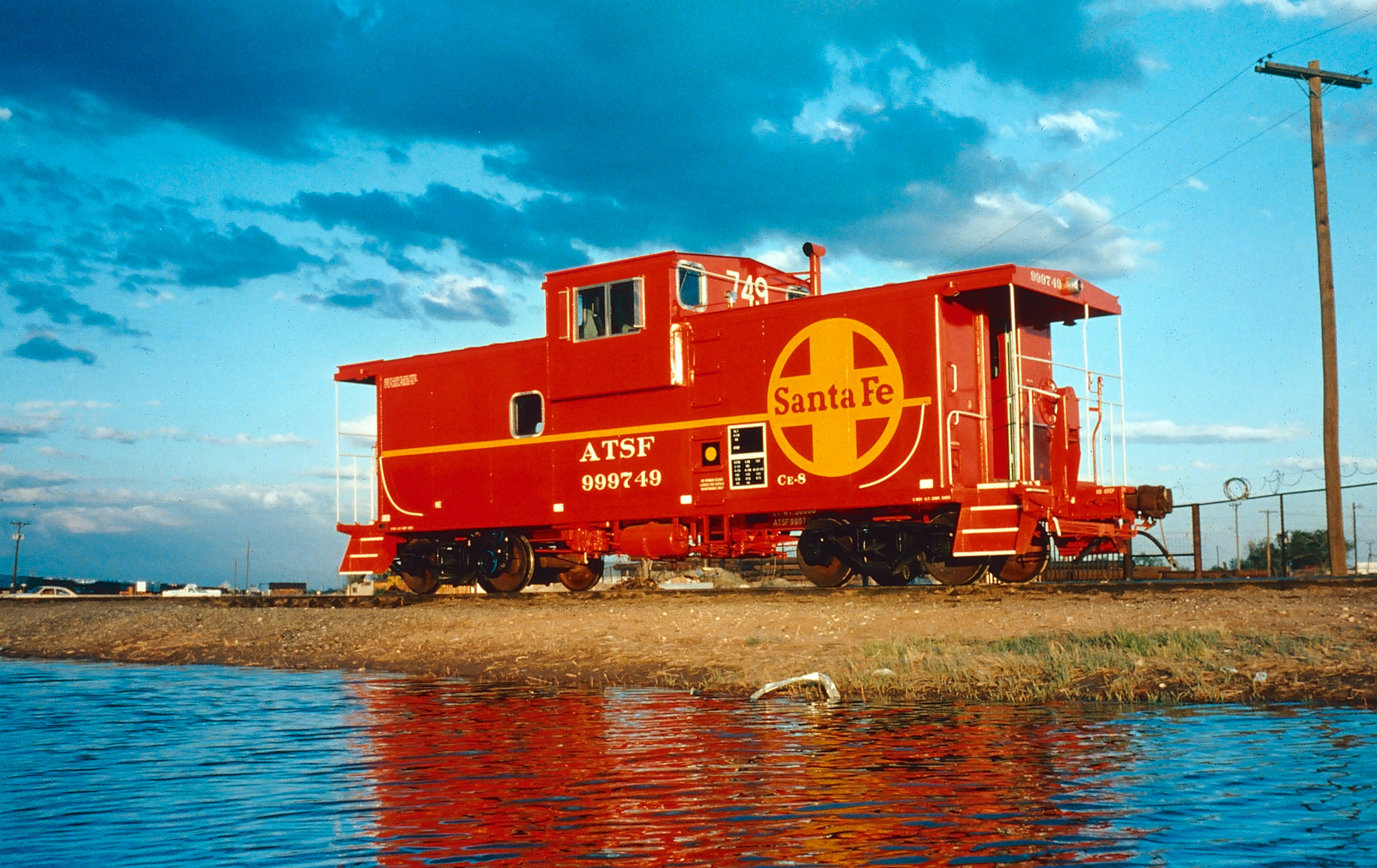 One of the Santa Fe's modern Class CE-8 cabooses, #999749, is seen here in Clovis, New Mexico in 1982. This class was manufactured by the International Car Company in 1978. Mike Bledsoe photo. American-Rails.com collection.
History
The origins of the caboose appear to date back to the 1840s when Nat Williams, a conductor of the Auburn & Syracuse Railroad (a later affiliate of the New York Central).
He became fed up with cramped and uncomfortable quarters to do paperwork (a common job of the conductor, whose responsibility is general oversight and control of a train, passenger or freight). This was usually done within either a free space on a passenger car or combine/baggage car.
To fix this problem, Williams found an unused boxcar and, using a simple box and barrel as a seat and desk, set up shop to do his duties. Not only did he find there was plenty of room to work but also figured he could use the unused space to store tools (flags, lanterns, spare parts, etc.) and other essentials when needed.
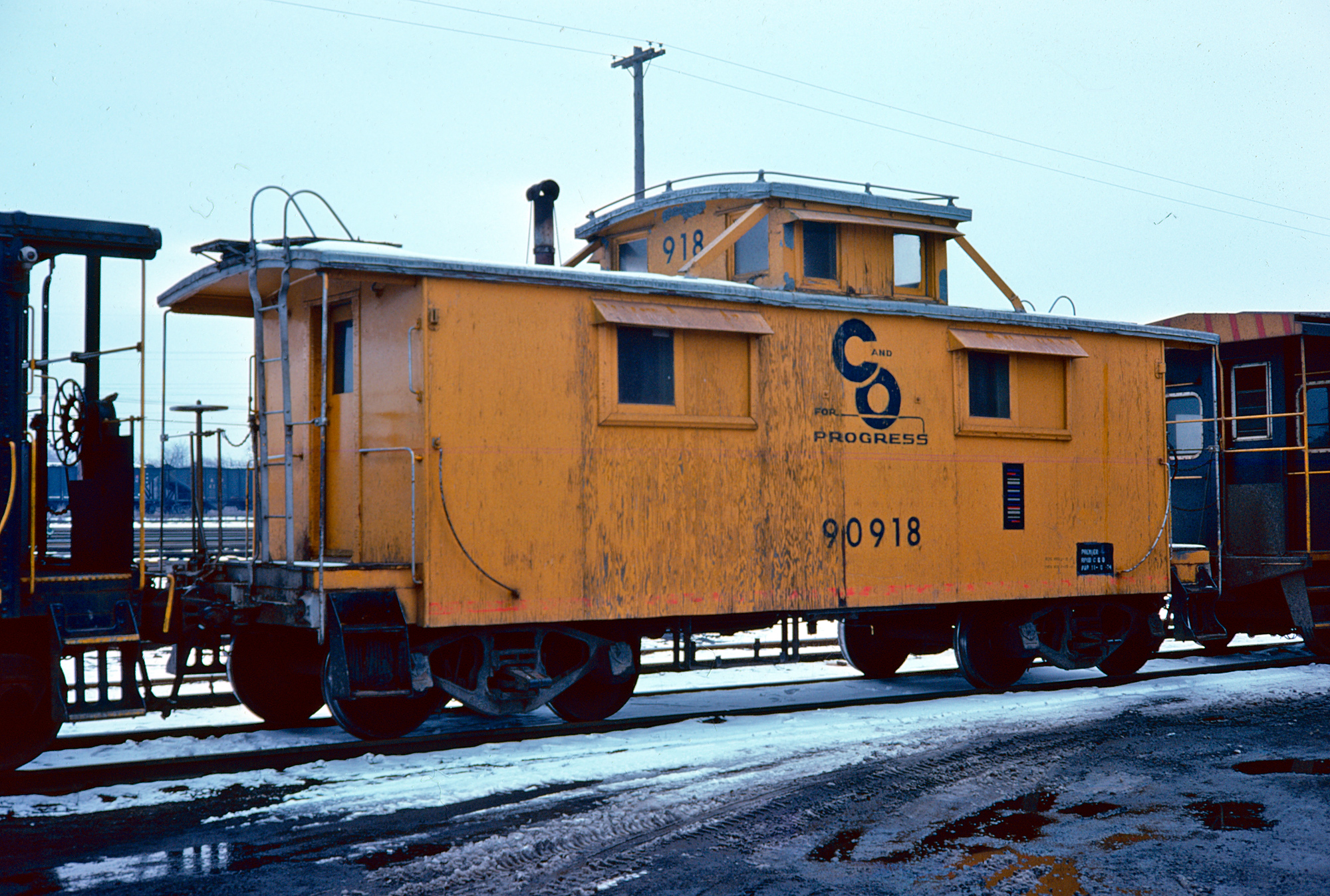 Chesapeake & Ohio wooden caboose #90918 lays over at Parsons Yard in Columbus, Ohio during March of 1975. American-Rails.com collection.
Definition
Since non-locomotive personnel on freight trains did not have assigned quarters (space in the locomotive in those days was at a premium) the “conductor’s car,” as it was originally called, quickly caught on all across the industry.
At some point, an exact date is unknown, the term "caboose" was applied to the car. At first these cars looked like short, stubby boxcars (or were boxcars) called bobbers, with just two axles and no truck assembly. Eventually, as railroads realized the car’s potential, upgrades and additions appeared over the years.
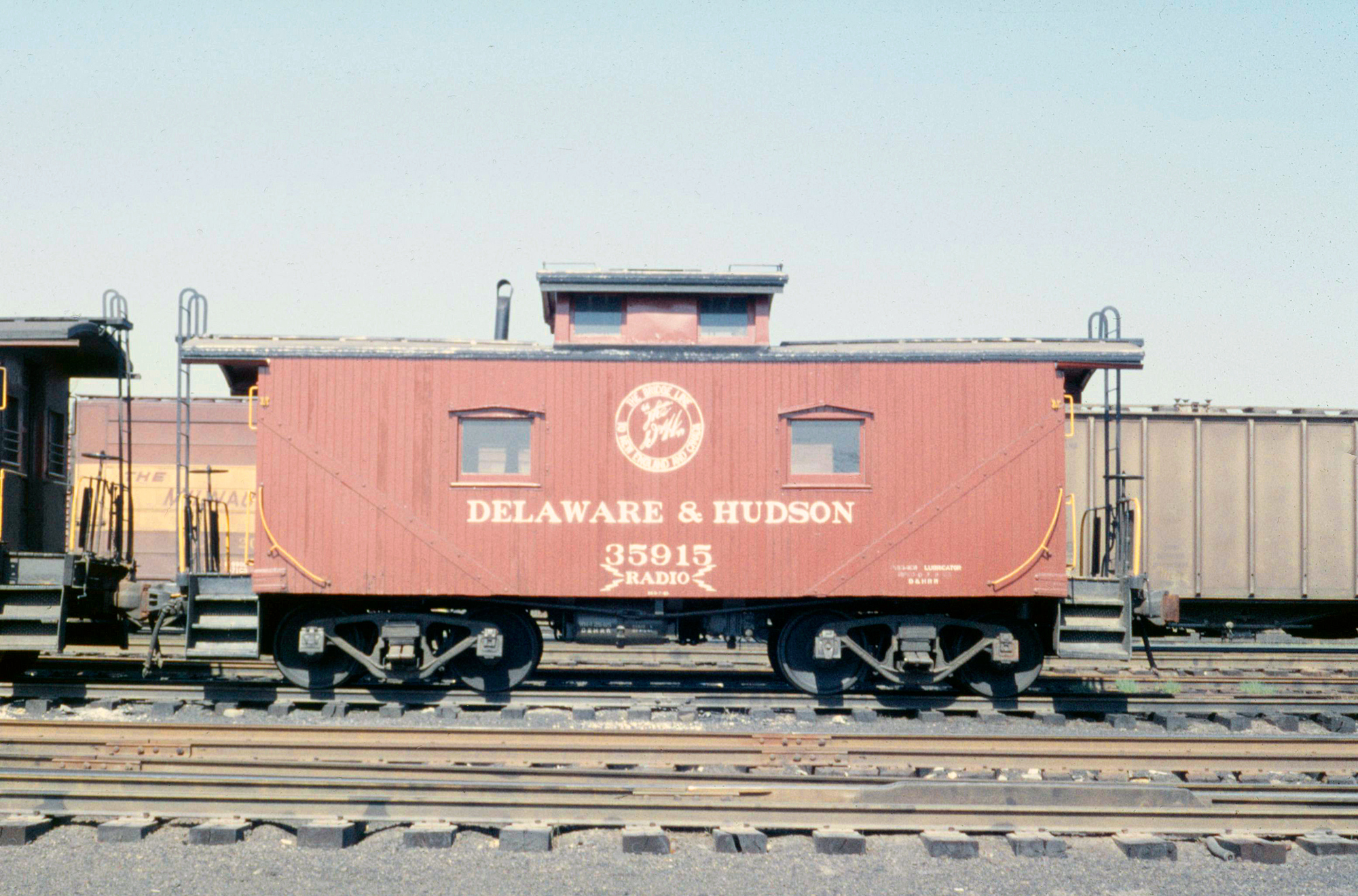 A classic Delaware & Hudson wooden caboose, #35915, was photographed here at Oneonta, New York in April of 1966. Author's collection.
Cupola
Perhaps the most striking feature was the cupola. According to the story, during the 1860s conductor T.B. Watson of the Chicago & North Western reportedly used a hole in a boxcar’s roof (being used as his caboose) to get a better vantage point of the train ahead.
Watson was amazed by the view afforded from this position as he could not only see the train ahead but also from all sides and the rear; a true 360-degree spectacle. In terms of safety it was a gamechanger.
He apparently convinced C&NW shop forces to construct a type of open observation box onto an existing singe-level caboose with windows all around where one could sit and view their surroundings. The rest, as they say, is history and the common cupola was born.
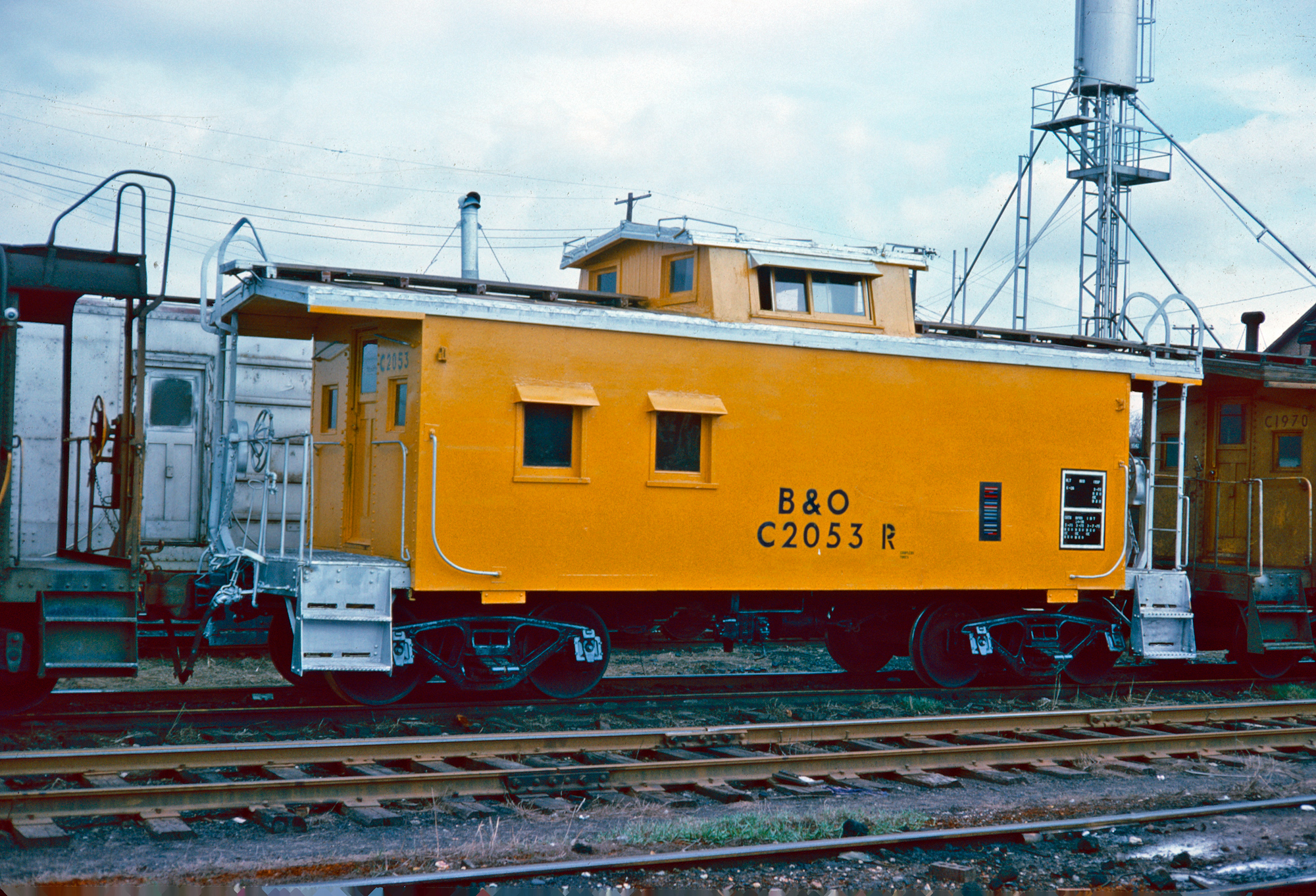 One of the Baltimore & Ohio's wood-sided cabooses, a Class I-5D, is seen here at Chillicothe, Ohio in March, 1975. American-Rails.com collection.
Cupolas were not the only upgrades added; other features included extended porches on both ends of the car with doors, which offered increased flexibility and movement. In addition, ladders were later added to the end of the "porches" for access to the roof.
Railroads quickly discovered that by placing a crewman in the cupola safety was vastly improved as a set of eyes from above could watch for a possible derailment (hot box) or, in the unfortunate event, another train approaching from the rear. To further improve safety, and help prevent the latter, a rear brakeman was assigned to the car.
In the early days, before automatic air brakes, the rear brakeman also helped apply freight car brakes, a dangerous task that involved navigating rooftop catwalks; he worked from the back towards the front while the head brakeman worked from the front towards the back.
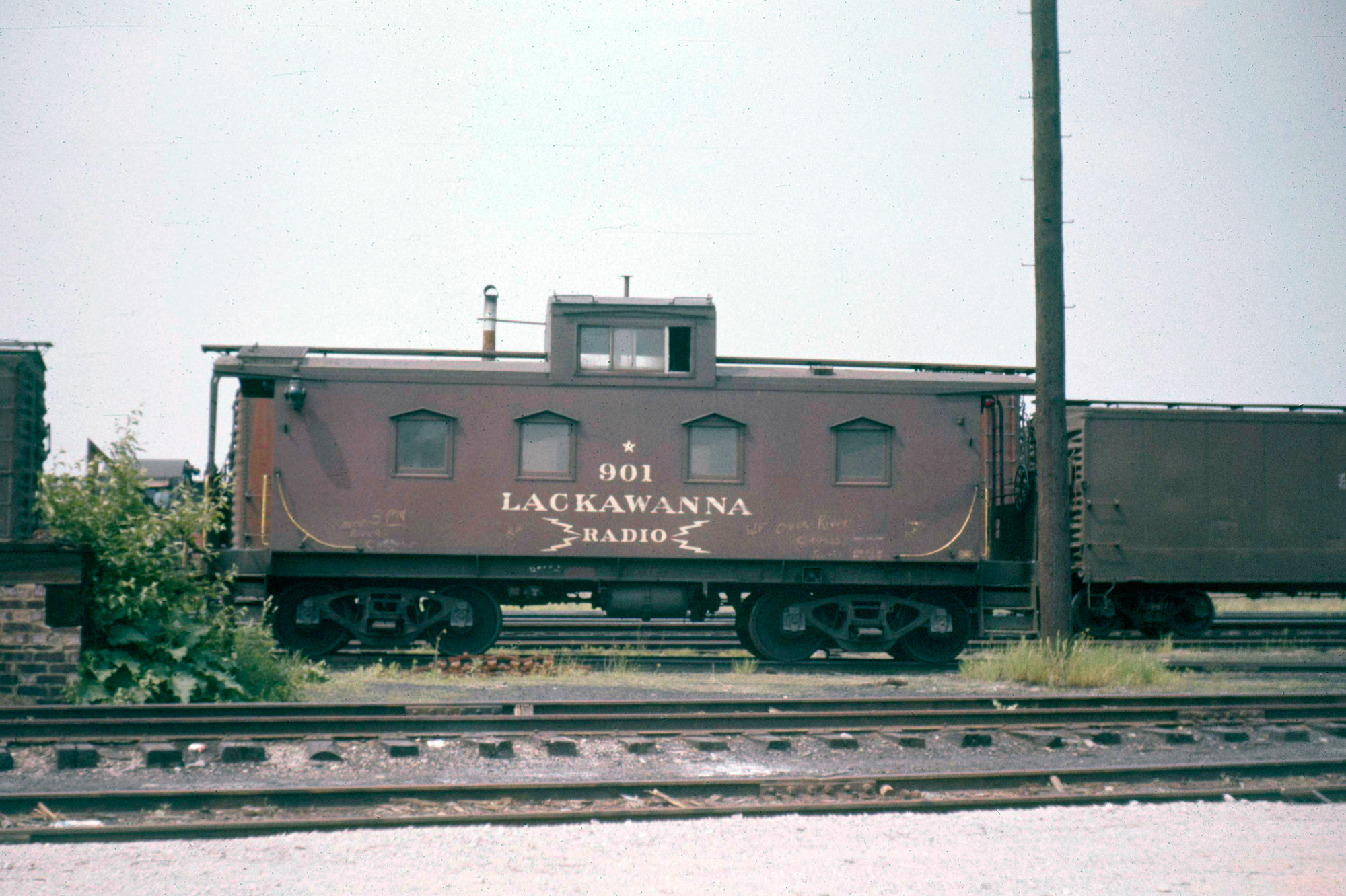 This former Delaware, Lackawanna & Western caboose features stylized gables above the windows. The feature, though, was excluded on the cupola window. The car was photographed at Binghamton, New York during the early Erie Lackawanna era in June, 1963. Author's collection.
By the late 19th century the caboose was a staple of the freight train and its basic shape and design, for the most part, was in place. By the early 20th century the car was being constructed of the much stronger material, steel, in place of wood.
Interestingly, wood or partial-wood cabooses remained in service throughout the industry until the 1970s when federal laws overseeing interstate commerce banned the interchange of wood-constructed cars.
As the 20th century progressed caboose upgrades included things like better crew quarters for the conductor, brakeman, and flagman (whose primary job, before the days of two-way radio, was to watch the rear of the train for other trains approaching). Some late-era designs even included air-conditioning!
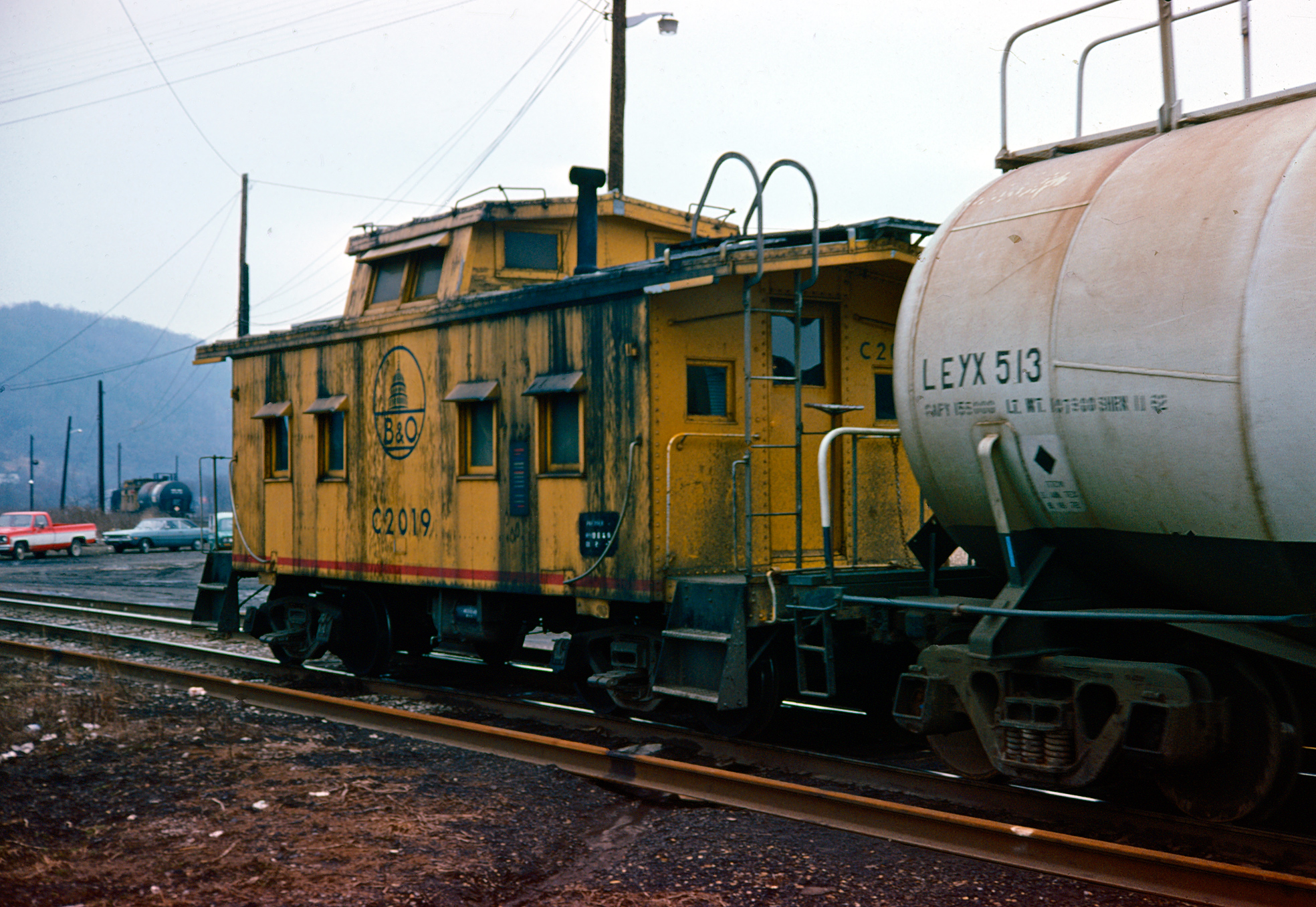 An aging Baltimore & Ohio caboose, C-2019, is on the north leg of the wye at Brooklyn Junction, West Virginia (New Martinsville); March, 1975. American-Rails.com collection.
Types
Another distinguishing caboose feature first appeared in the late 1930s, side protrusions; more commonly known as the bay-window. They were first tested on the Baltimore & Ohio and Milwaukee Road.
Bay Window
These cars were custom built on the B&O and Milwaukee Road; they were not only cheaper but also, in some respects, offered better vantage points. In addition, an unintended safety aspect of the bay window was the elimination of slack action issues.
Slack action is the result of play between car couplers, usually an inch or two, that is removed as a train begins to move. By the mid-20th century freight trains were sometimes 100 cars, or more, resulting in several feet of slack action by the time it had reached the caboose.
For an unaware crewman in the cupola they could be violently tossed about, sometimes falling to the floor below that could be as far as 10 feet down. The other advantage of the bay-window was its low clearance, a particular problem on eastern railroads, which contained many tunnels.
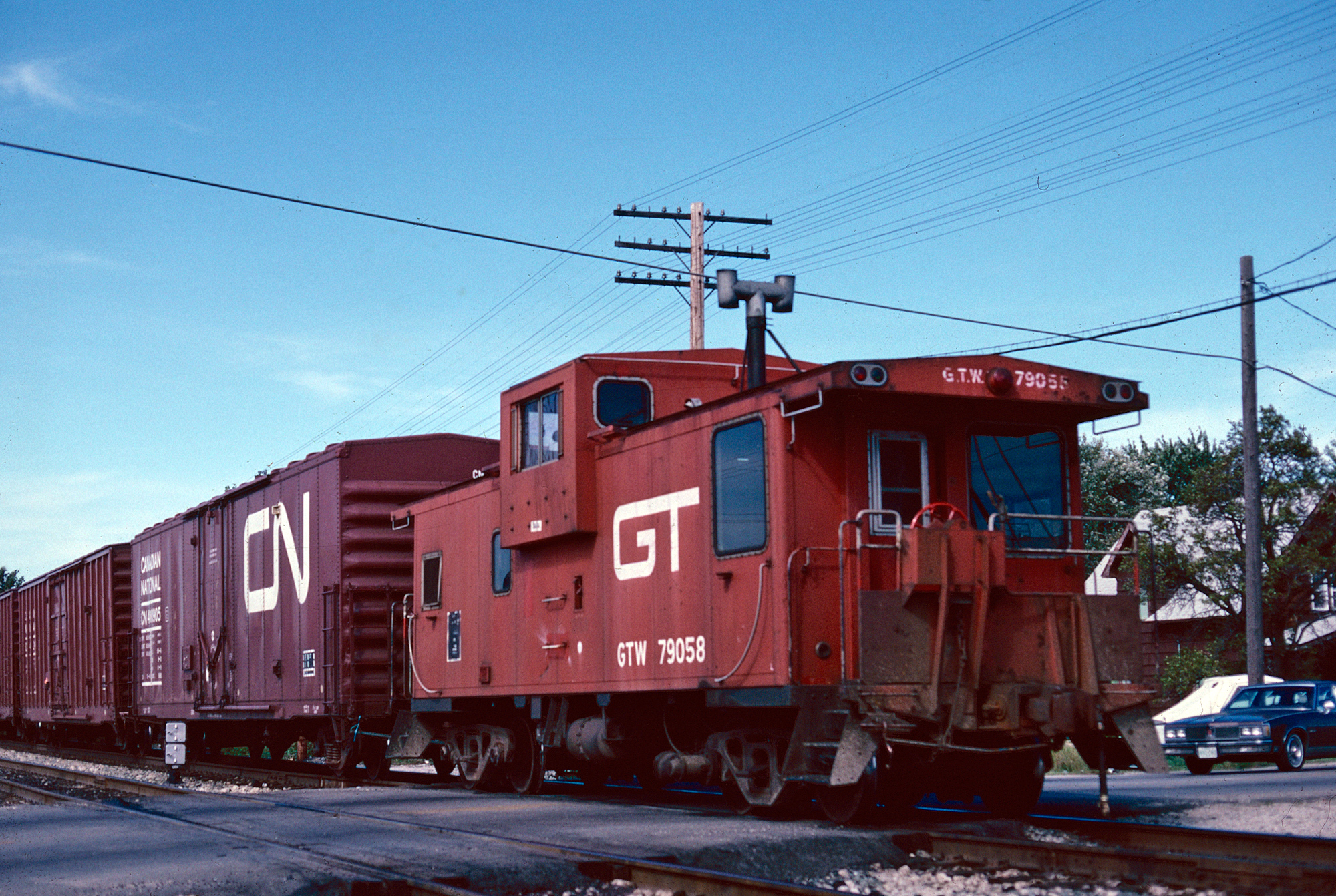 Grand Trunk Western caboose #79058 has just crossed Pickle Road in East Toledo, Ohio as it brings up the tail end of a northbound freight on the Toledo Terminal in August, 1989. American-Rails.com collection.
While almost all railroads built, at least, a few of their own designs, most purchased cabooses directly from freight car manufacturers, which by the 20th century included them in their catalogs. Of these, the International Car Company was the most well known and by the peak of caboose use was widely regarded as the industry leader.
Interestingly, the caboose was perhaps the only car-type that never had a truly uniform, utopian design. Yes, the cupola and bay-window became standard features of the caboose.
However, the cupola's placement varied from centered, off-centered, or placed at one end entirely to better utilize space. Some railroads also developed their own cupola or bay-window designs.
One of the final cupola designs to improve visibility was the extended vision cupola, or EVC. This featured added a protruding window, similar to a bay-window, which gave a crewman the best of both worlds (cupola and bay-window).
Transfer
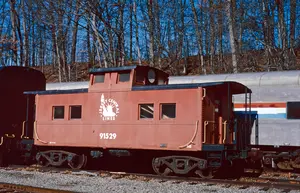
Likely the very last specific car-type ever developed was the transfer caboose. Used primarily on terminal or transfer railroads (usually found in big cities where many cars or entire trains are transferred between many different railroads) this caboose was used over short distances that did not cover more than a few dozen miles.
As a result, the car carried only the bare essentials with large open porches to either end and a scaled-down “shack” structure in the middle for protection from the elements (none of the essentials found on over-the-road cabooses, like bunks and refrigerators, where workdays on the car lasted for 12-14 hours were available on transfer cabooses).
You might be wondering, “Why in the heck were cabooses almost always painted red?” The simple answer is that red was a warning color; bright, noticeable and easy to see from afar marking the end of a train for approaching trains from the rear.
Sometimes, the car’s ends were painted a bright yellow for even better visibility. In later years, as technology improved and the two-way radio found widespread use, the bright colors became less of a priority.
For instance, many railroads began painting their cabooses in their respective liveries, which among other things added color, uniqueness, and interest to freight trains.
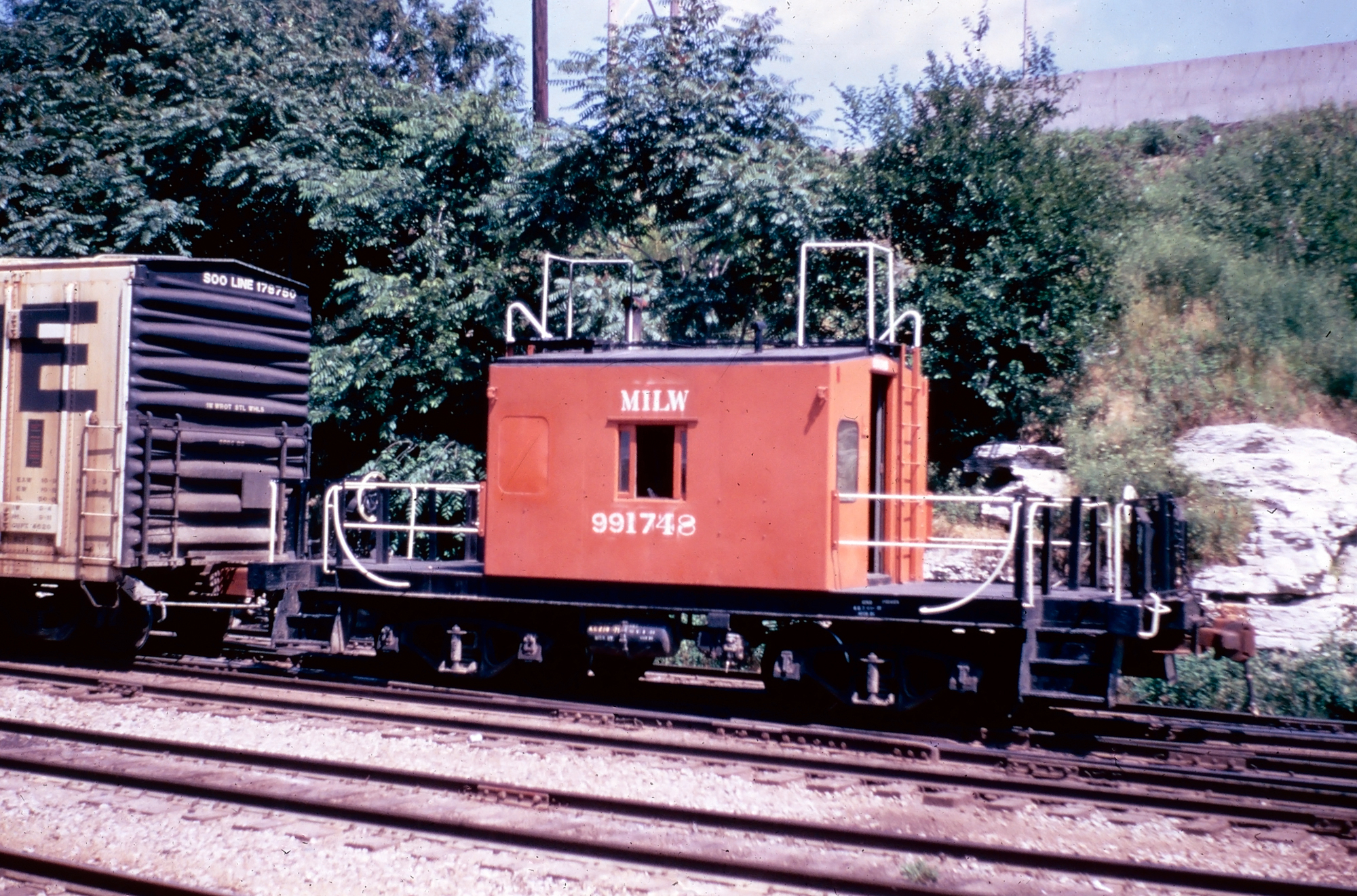 Milwaukee Road transfer caboose #991748 was photographed here in Kansas City during June of 1973. Photographer unknown. American-Rails.com collection.
The caboose had dozens of different names over its lifetime with different railroads calling it by a different name; on the Pennsylvania Railroad the car was known as "cabins", the B&O's homebuilt bay-window cars were often referred to as "wagontops," or generally as "cabeese," and the "Northeastern."
The latter was developed by the Reading Railroad and later used by several Northeastern railroads; it featured a slanted cupola design with two windows to each side of both the cupola and the car itself. Other names given included crummy, bobber, brain box, monkey box and the intelligence department.
By the 1980s the caboose was on the decline. New technologies were making the car, and most of its occupants (save for the conductor), obsolete.
Final Years
Computers made long hours of paperwork on board trains almost redundant.
Likewise, with the development of the two-way radio, EOTs (End-Of-Train devices, also known as FREDs, Flashing Rear-End Devices, which were first developed by the Florida East Coast Railway in 1969.
These monitored, among other things, a train’s air pressure for its brakes) and automatic hotbox detectors (which detected car journal bearing hotboxes, without the need of human eyes) made for brakeman and flagman virtually unneeded.
To make matters worse, the caboose served no profitable value for railroads. Labeled “non-revenue” equipment they earned nothing and were merely a cost of doing business.
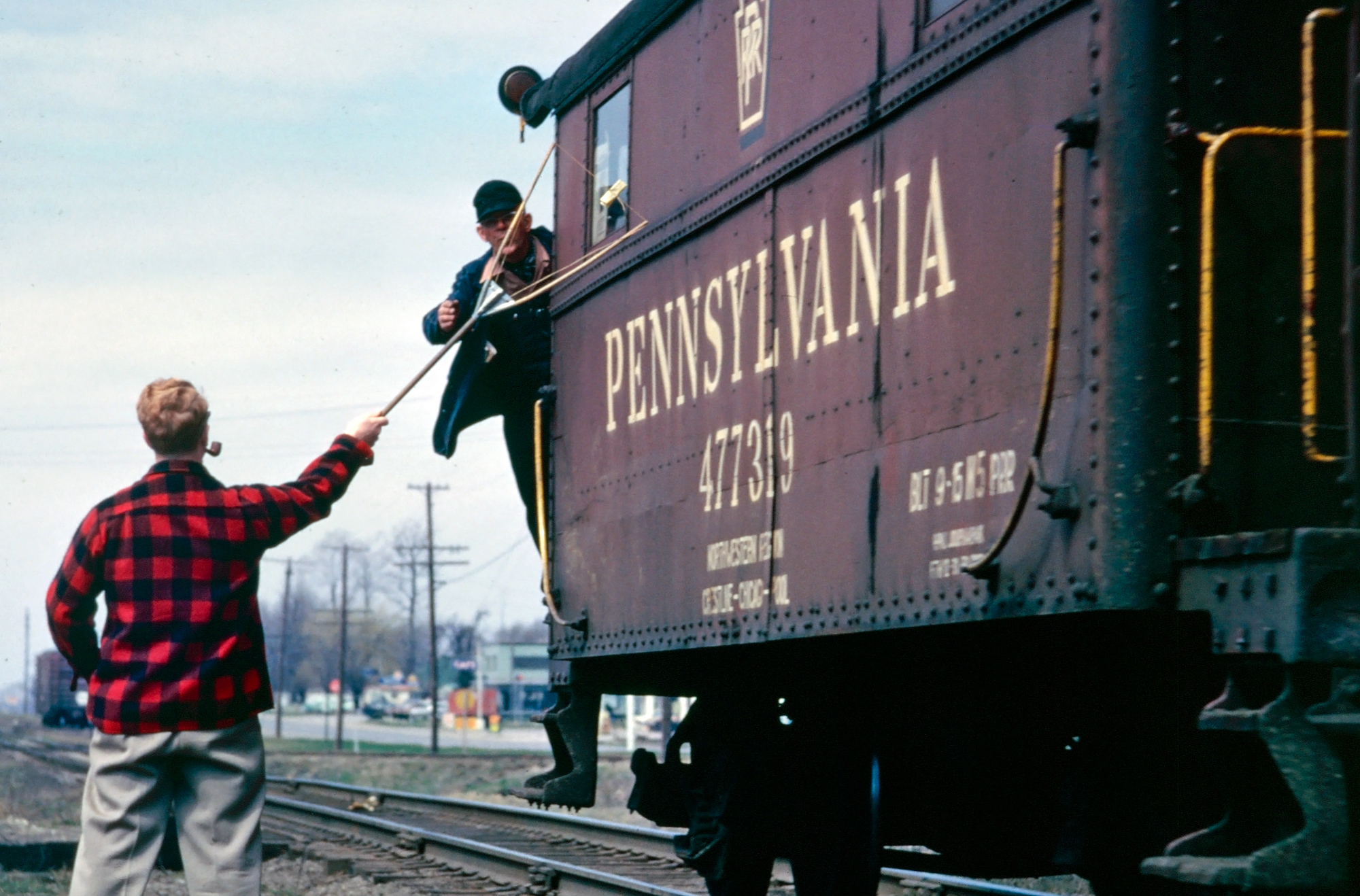 The conductor grabs train orders from Pennsylvania cabin #477319 attached to an eastbound freight at Kentland, Indiana in April, 1962. American-Rails.com collection.
Because of this, it was clear, even to railroad unions, the car was outdated. In 1982 the United Transportation Union (UTU), and most railroads, reached an agreement to begin phasing out the car from active service. For instance, by the 1980s a new caboose could cost as much as $80,000 and $1,300 per train movement.
While still in use today for minor jobs like transfer operations and back-up moves (where it is safer for crewmen/women to be planted on a solid, sturdy surface than dangling from the rear of a freight car), the caboose has been virtually relegated to the history books.
It’s charm and appealing legacy, however, among many railroaders and especially the general public, will likely never be lost.
Thanks to Butch Rausch for help with the information on this page.
Gallery
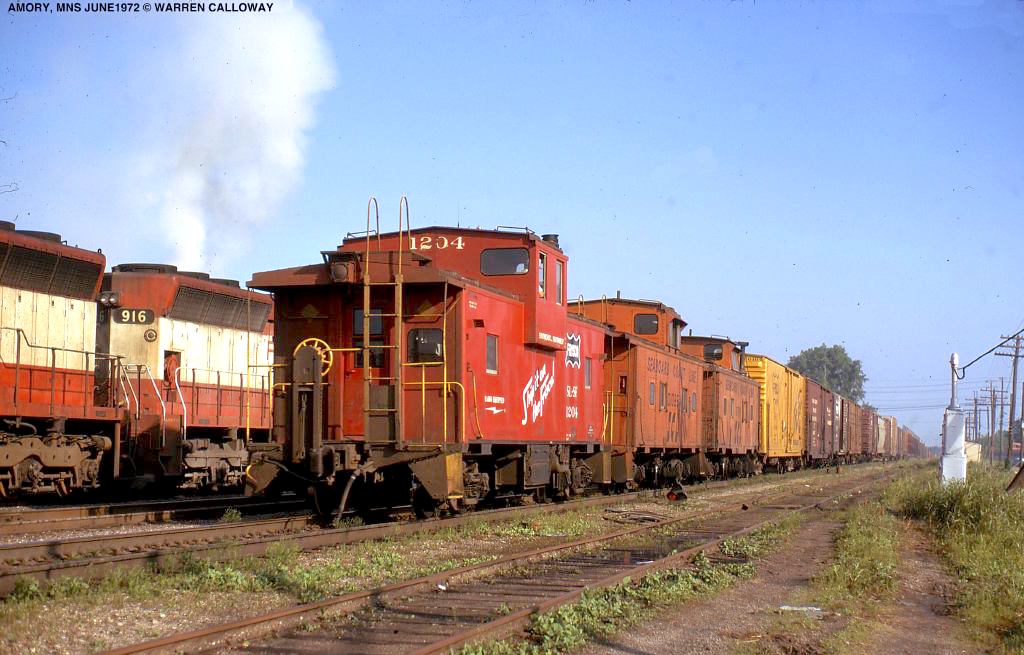 Frisco caboose #1204 and a pair of Seaboard Coast Line cabooses at Amory, Mississippi on the SLSF in June, 1972. At the time both roads were regularly pooling power. Warren Calloway photo.
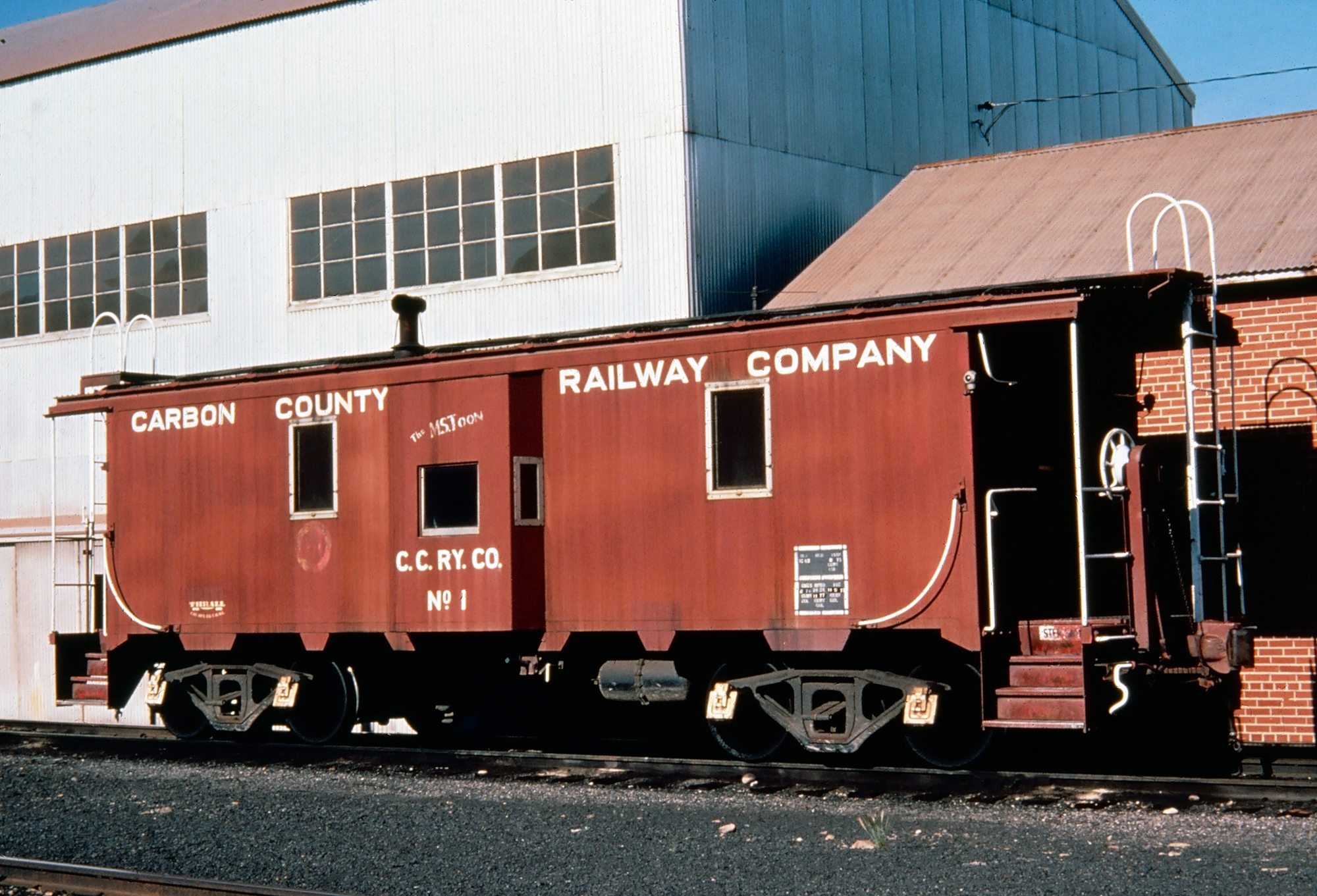 Carbon County Railway bay-window caboose #1 at the shops in East Carbon, Utah, circa 1970. American-Rails.com collection.
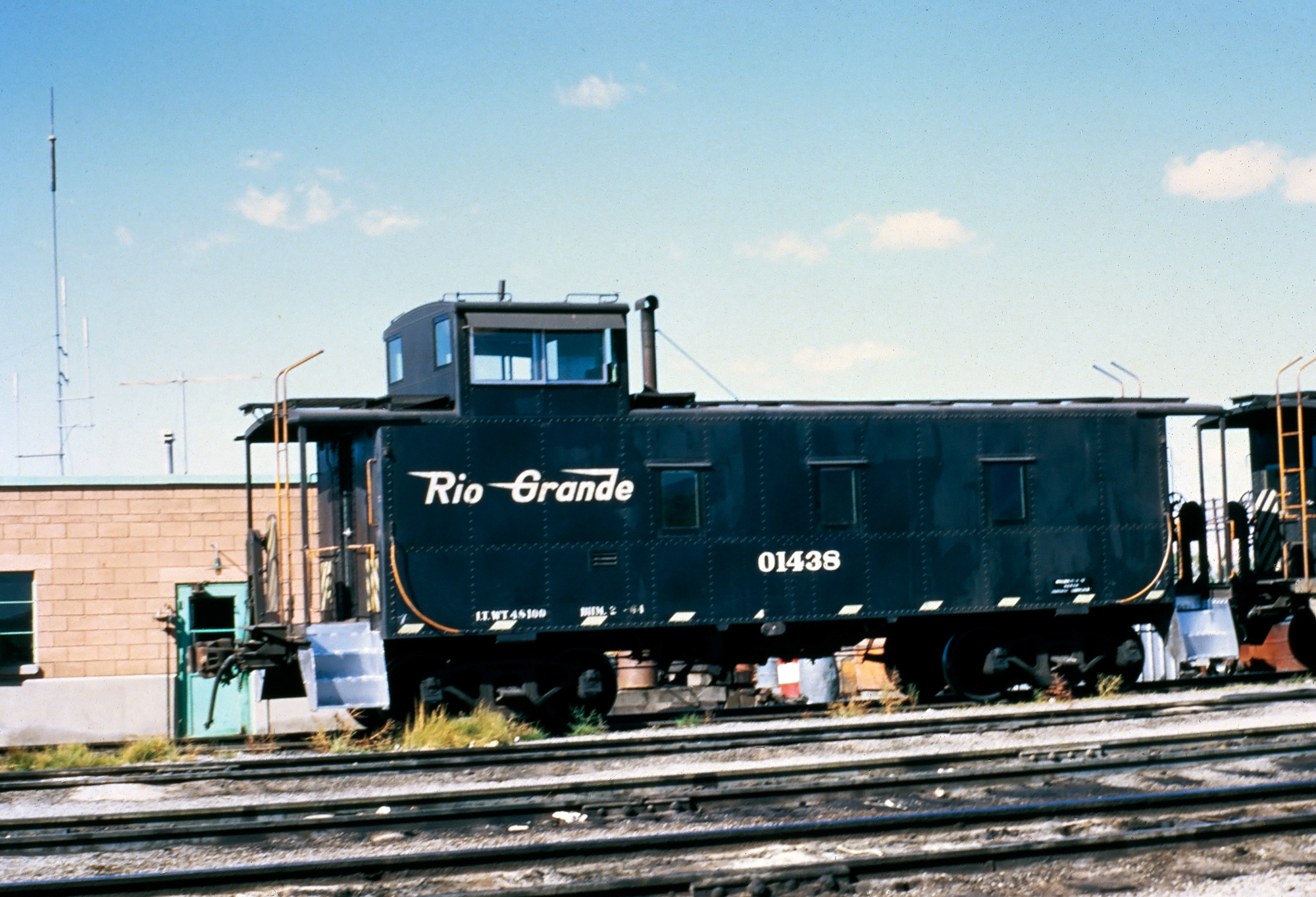 Rio Grande end-cupola steel caboose #01438 is seen here late in its career at Grand Junction, Colorado circa 1975. Robert Eastwood, Jr. photo. American-Rails.com collection.
Sources
- Boyd, Jim. American Freight Train, The. Osceola: MBI Publishing, 2001.
- White Jr., John H. American Railroad Freight Car, The: From The Wood-Car Era To The Coming Of Steel. Baltimore: The John Hopkins University Press, 1993.
- Schafer, Mike. Caboose. Osceola: MBI Publishing, 1997.
- Schafer, Mike and McBride, Mike. Freight Train Cars. Osceola: MBI Publishing, 1999.
Recent Articles


-
Louisville & Nashville Steam Roster (Post 1900)
Oct 11, 26 05:44 PM
 Louisville & Nashville steam since 1900. Drury's class grid: Consolidations, 165 heavy Mikados, 42 Big Emma 2-8-4s, Pacifics, and 22 Mountains. Last steam January 1957.
 -
Louisville and Nashville Railroad: Map, Rosters, History
Oct 11, 26 05:39 PM
 Louisville & Nashville, the Old Reliable. Charter of March 5, 1850, Milton H. Smith, the 921-mile main line, Big Emma, and the December 29, 1982 merger. Steam and diesel rosters are companion pages.
 -
Oregon Railroad Museums (2026): A Complete Guide
Oct 11, 26 05:19 PM
 Oregon railroad museums—the Oregon Rail Heritage Center, Brooks trolleys, Canby’s 1891 depot, Medford’s Willamette, and Train Mountain. Confirm hours on each site.
 -
Texas Railroad Museums (2026): A Complete Guide
Oct 11, 26 05:15 PM
 Texas railroad museums—Frisco’s Big Boy 4018, Galveston’s Santa Fe depot, Temple’s 1911 station, Plano’s interurban, and Fort Worth & Denver 304. Confirm hours on each site.
 -
Wisconsin Railroad Museums (2026): A Complete Guide
Oct 10, 26 11:51 PM
Wisconsin railroad museums—Green Bay’s Big Boy 4017 and Eisenhower’s A4, Mid-Continent at North Freedom, East Troy’s interurban, and the Riverside & Great Northern. Confirm hours on each site. -
Interstate Railroad (Virginia): Map, Roster, Logo, History
Oct 10, 26 11:22 PM
 Interstate Railroad, a Virginia coal road chartered February 18, 1896. Andover shops. Ten Alco RS3s, 30–39. Southern control in 1961. The company ended October 31, 1985.
 -
North Carolina Railroad Museums (2026): A Complete Guide
Oct 10, 26 11:16 PM
 North Carolina railroad museums—Spencer Shops, Wilmington’s Atlantic Coast Line 250, Hamlet’s Seaboard depot, and the New Hope Valley Railway. Confirm hours on each site.
 -
New Mexico Railroad Museums (2026): A Complete Guide
Oct 10, 26 10:54 PM
 New Mexico railroad museums—Santa Fe 2926 in Albuquerque, the Clovis depot, Alamogordo’s Toy Train Depot, and Belen. Confirm hours on each site.
 -
New York Railroad Museums (2026): A Complete Guide
Oct 10, 26 09:33 PM
 New York railroad museums—Phoenicia, Medina’s New York Central freight house, the Transit Museum, Long Island 35 and 39, and GG1 4933. Confirm hours on each site.
 -
Columbia, Newberry & Laurens Railroad: History, Timetable, Roster
Oct 10, 26 09:08 PM
 Columbia, Newberry & Laurens Railroad, Columbia to Laurens, 75 miles. Chartered in 1885. Five Atlantic Coast Line GP7s, 100–104. Merged into the Seaboard System on April 30, 1984.
 -
New Haven Diesel Roster (All-Time)
Oct 10, 26 06:35 PM
 New Haven diesel roster, all-time. 558 road numbers: 60 DL-109s, 30 FA-1s, 27 PA-1s, 60 FL9s, and the switchers from HH600 0900. Serials and order numbers.
 -
New Haven Steam Roster (Post 1900)
Oct 10, 26 06:31 PM
 New Haven steam since 1900. Drury's class grid: 226 Moguls, 33 Mikados, 50 Santa Fes, 70 Mountains, 141 Pacifics, and 10 Hudsons. Last fan trip July 19, 1953.
 -
New Haven Railroad: Rosters, Map, Logo, History, Trains
Oct 10, 26 06:26 PM
 New York, New Haven and Hartford. The Shore Line, Hell Gate, the 1952 map at 1,838.89 miles, and the railroad Penn Central took at 11:59:59 p.m. on December 31, 1968.
 -
C&O's 4-6-4 "Hudson" Locomotives (Class L): Specs, Roster, History
Oct 10, 26 05:36 PM
 Chesapeake & Ohio Class L 4-6-4 Hudsons. Eight L-2s, five L-1 rebuilds, five L-2-As. Specs, Baldwin works numbers, and the roster. No. 490 survives.
 -
Alton Railroad: Map, History, Timetables
Oct 09, 26 10:31 PM
 Alton Railroad, chartered February 27, 1847 as the Alton & Sangamon. Chicago, St. Louis, and Kansas City, the 1937 Official Guide, and the May 31, 1947 merger into the Gulf, Mobile & Ohio.
 -
Mobile & Ohio Steam Roster (Post 1900)
Oct 09, 26 12:26 PM
 Mobile & Ohio steam since 1900. Drury's class grid: 48 six-wheel switchers, 107 Ten-Wheelers, 15 Consolidations, 58 Mikados, and 14 Pacifics. Last revenue steam October 7, 1949.
 -
Mobile & Ohio Railroad: History, Map, Timetable
Oct 09, 26 11:31 AM
 Mobile & Ohio Railroad, chartered in 1848. Columbus on April 22, 1861, the Cairo & St. Louis, the March 1940 Official Guide, and the September 13, 1940 merger into the Gulf, Mobile & Ohio.
 -
Gulf, Mobile & Northern Steam Roster (Post 1900)
Oct 09, 26 10:42 AM
 Gulf, Mobile & Northern steam since 1900. Drury's class grid: Ten-Wheelers, Mikados, Russian Decapods, Pacifics 425 and 426, and three light 4-8-2s. Last revenue steam October 7, 1949.
 -
Gulf, Mobile & Ohio Diesel Roster (All-Time)
Oct 09, 26 10:41 AM
 Gulf, Mobile & Ohio diesel roster, all-time. The 1935 boxcab, DL-107s, 55 FA-1s, F3s and F7s, the Ingalls 4-S, GP30s through GP38-2s, and 21 SD40s. Serials and order numbers.
 -
Gulf, Mobile & Northern Railroad: History, Rebel Route
Oct 09, 26 10:36 AM
 Gulf, Mobile & Northern, from the 1890 Mobile, Jackson & Kansas City to the Rebel and the September 13, 1940 merger into the Gulf, Mobile & Ohio. Steam roster is the companion page.
 -
Gulf, Mobile & Ohio Railroad: Map, Photos, Trains, History
Oct 08, 26 11:48 PM
 Gulf, Mobile & Ohio, chartered in 1938 and merged September 13, 1940. The Mobile & Ohio, the Alton on May 31, 1947, the Rebel Route, and Illinois Central Gulf on August 10, 1972.
 -
New Jersey Railroad Museums (2026): A Complete Guide
Oct 08, 26 11:37 PM
 New Jersey railroad museums—Whippany, Maywood, Pine Creek, Mahwah’s Erie depot, Phillipsburg, and Boonton. Confirm hours on each site.
 -
New Hampshire Railroad Museums (2026): A Complete Guide
Oct 08, 26 11:34 PM
 New Hampshire railroad museums—North Conway, the Flying Yankee, Ashland, Gorham, Raymond, and Sandown. Confirm hours on each site.
 -
Missouri Railroad Museums (2026): A Complete Guide
Oct 08, 26 11:00 PM
 Missouri railroad museums—the National Museum of Transportation, Patee House, Frisco 4524, the Chicago & Alton depot, and Marceline. Confirm hours on each site.
 -
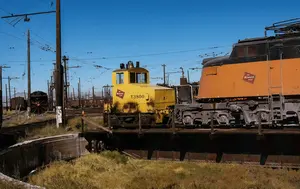
Milwaukee Road X3800: Deer Lodge’s Shop Goat
Oct 08, 26 04:28 PM
 Milwaukee Road X3800, the a home-built shop goat that served the Deer Lodge, MT yard. It was a 220-volt DC switcher, powered through an extension cord that moved electrics into a roundhouse where the…
 -
Key West Extension (Overseas Railroad): History, Construction, Decline
Oct 08, 26 03:59 PM
 Henry Flagler's Overseas Railroad, Miami to Key West, 1905–1935. The Seven Mile Bridge, the 1935 Labor Day Hurricane, and the road that became U.S. 1.
 -
Florida East Coast Steam Roster (Post 1900)
Oct 08, 26 02:34 PM
 Florida East Coast steam since 1897. Seventeen Ten-Wheelers, twenty Atlantics, eighty-seven Pacifics, ninety Mountains, fifteen Mikados, and the switchers.
 -
Florida East Coast Diesel Roster (All-Time)
Oct 08, 26 02:12 PM
 Florida East Coast diesel roster, all-time. E units from 1939, F3s, BL2s, GP7s and GP9s, the GP40-2 orders, 22 SD40-2s, and 24 ES44C4s. Serials and EMD order numbers.
 -
Florida East Coast Railway: Map, History, Rosters
Oct 08, 26 01:46 PM
 Florida East Coast Railway, Henry Flagler's line from Jacksonville to Miami and Key West. Receivership in 1931, the 1963 strike, Grupo México in 2017, and Brightline on the same track.
 -
Minnesota Railroad Museums (2026): A Complete Guide
Oct 08, 26 10:32 AM
Minnesota railroad museums—the Lake Superior Railroad Museum, Two Harbors, Jackson Street, Willmar’s Great Northern 2523, and Currie. Confirm hours on each site. -
Maine Railroad Museums (2026): A Complete Guide
Oct 08, 26 09:24 AM
 Maine railroad museums—Seashore Trolley, the two-foot lines at Portland, Alna, and Phillips, Boothbay, and the Bangor & Aroostook depots. Confirm hours on each site.
 -
Massachusetts Railroad Museums (2026): A Complete Guide
Oct 08, 26 12:08 AM
 Massachusetts railroad museums—Berkshire Scenic at Lenox, Shelburne Falls trolley No. 10, Edaville, Chatham’s 1887 depot, and Lowell. Confirm hours on each site.
 -
Clinchfield Steam Roster (Post 1900)
Oct 07, 26 12:09 PM
 Clinchfield steam since 1900. Fifteen H-4 Consolidations, K-1 Mikados, M-2 and M-3 Mallets, L-class 2-8-8-2s, eighteen Challengers. Class grid after Drury. Last steam April 16, 1954.
 -
Clinchfield Diesel Roster (All-Time)
Oct 07, 26 12:05 PM
 Clinchfield diesel roster, all-time. F3A 800, FP7 200, the F7s, GP7s, 25 SD40s, 18 SD45-2s, seven U36Cs, and the Family Lines hoods. Serials and EMD order numbers.
 -
Clinchfield Railroad: Map, Steam Locomotives, Roster, Logo
Oct 07, 26 12:02 PM
 Clinchfield Railroad, Elkhorn City to Spartanburg. George L. Carter, the Carolina, Clinchfield & Ohio, the 1924 lease, coal, the loops, and CSX. Steam and diesel rosters are companion pages.
 -
Kentucky Railroad Museums (2026): A Complete Guide
Oct 07, 26 11:39 AM
 Kentucky railroad museums—the Kentucky Railway Museum, Bowling Green’s L&N depot, Paducah, Versailles, and Covington. Confirm hours on each site.
 -
Kansas Railroad Museums (2026): A Complete Guide
Oct 07, 26 11:26 AM
 Kansas railroad museums—Santa Fe 3768 at Wichita, Santa Fe 132 in Topeka, the Great Overland Station, and Abilene. Confirm hours on each site.
 -
Cincinnati, New Orleans and Texas Pacific Diesel Roster (All-Time)
Oct 07, 26 10:38 AM
 All-time diesel roster of Southern locomotives lettered for the Cincinnati, New Orleans and Texas Pacific. Serials, order numbers, and builder dates.
 -
Cincinnati, New Orleans and Texas Pacific Railway
Oct 07, 26 10:31 AM
 Cincinnati, New Orleans and Texas Pacific Railway, incorporated September 8, 1881, to lease Cincinnati’s railroad to Chattanooga. Queen and Crescent route, Rathole, and the 2024 sale to Norfolk Southe…
 -
Indiana Railroad Museums (2026): A Complete Guide
Oct 07, 26 12:26 AM
Indiana railroad museums—Nickel Plate 765, Elkhart’s New York Central collection, French Lick, Linden’s junction depot, and Haley Tower. Confirm hours on each site. -
"Triplex" Steam Locomotive: Specs, History, Photos
Oct 06, 26 11:52 PM
 Erie class P-1 Triplex 2-8-8-8-2s. Three Baldwin compounds, 2603–2605, later 5014–5016, built 1914 and 1916. Matt H. Shay, the 1930 class card, and Virginian XA 700.
 -
Illinois Railroad Museums (2026): A Complete Guide
Oct 06, 26 11:47 PM
 Illinois railroad museums—the Illinois Railway Museum, Monticello, the Pioneer Zephyr, Galesburg’s Burlington 3006, and the depots. Confirm hours on each site.
 -
Iowa Railroad Museums (2026): A Complete Guide
Oct 06, 26 11:41 PM
 Iowa railroad museums—the Union Pacific Railroad Museum, RailsWest, Sioux City, Boone, and the National Hobo Museum in Britt. Confirm hours on each site.
 -
Charleston and Western Carolina Diesel Roster (All-Time)
Oct 06, 26 11:29 PM
Charleston and Western Carolina diesel roster. Twenty-one GP7s, two SW7s, two SW9s, and six F7As, all built 1950–1952. Serials, order numbers, and ACL and SCL numbers. -
Charleston and Western Carolina Railway: Map, History, Timetables
Oct 06, 26 11:18 PM
 Charleston and Western Carolina Railway, incorporated September 16, 1896. Port Royal to Spartanburg, with branches to Anderson and Greenville. Merged into the Atlantic Coast Line on December 31, 1959.
 -
Central of Georgia Steam Roster (Post 1900)
Oct 06, 26 04:00 PM
 Central of Georgia steam since 1900. Cooke Consolidations, Harriman Mikados, 32 Mountains, and eight Lima 4-8-4s. Class grid after Drury. Last steam May 1953.
 -
Central of Georgia Diesel Roster (All-Time)
Oct 06, 26 03:44 PM
 Central of Georgia diesel roster. SW1 No. 1 in 1939, E7s and E8s, nine F3As, 39 RS3s, GP7s through SD35s. Serials and order numbers.
 -
Central of Georgia Railway: Map, Logo, History, Rosters
Oct 06, 26 03:42 PM
 Central of Georgia Railway, from the 1833 Savannah charter to Southern control on June 17, 1963. Map, logos, Nancy Hanks II, and links to the steam and diesel rosters.
 -
Georgia Railroad Museums (2026): A Complete Guide
Oct 06, 26 03:33 PM
Georgia railroad museums—Savannah’s Central shops, Duluth, the General at Kennesaw, the Texas in Atlanta, Tifton, Waycross, and Albany. Confirm hours on each site. -
Florida Railroad Museums (2026): A Complete Guide
Oct 06, 26 03:18 PM
 Florida railroad museums—Boca Raton, Winter Garden, Whitehall, the Gold Coast, Parrish, Fort Myers, Milton, and Plant City. Confirm hours on each site.


%3B%20March%2C%201975.%20%20American-Rails.com%20collection.)


