"California Zephyr" (Train): Route Map, Schedule, Timetable
Last revised: August 24, 2024
By: Adam Burns
Other trains may have been more luxurious but none could compare to the California Zephyr in the way of friendly service and breathtaking scenery.
Operated jointly by the Chicago, Burlington & Quincy (the Burlington Route); Denver & Rio Grande Western (Rio Grande); and Western Pacific the train traveled through some of the most spectacular scenery in the country.
As a result it is not surprising the CZ continued to do well even even during rail travel's waning years after World War II.
Following the CZ's cancellation as a through service in 1970, Rio Grande picked up the torch and operated a truncated version along its territory between Denver and Salt Lake City/Ogden as the Rio Grande Zephyr.
Background
The RGZ remained in service for more than a decade until the D&RGW finally handed over the train to Amtrak during the early 1980s.
The national carrier brought back the California Zephyr name and today it remains one of the most popular long distance trains in the country.
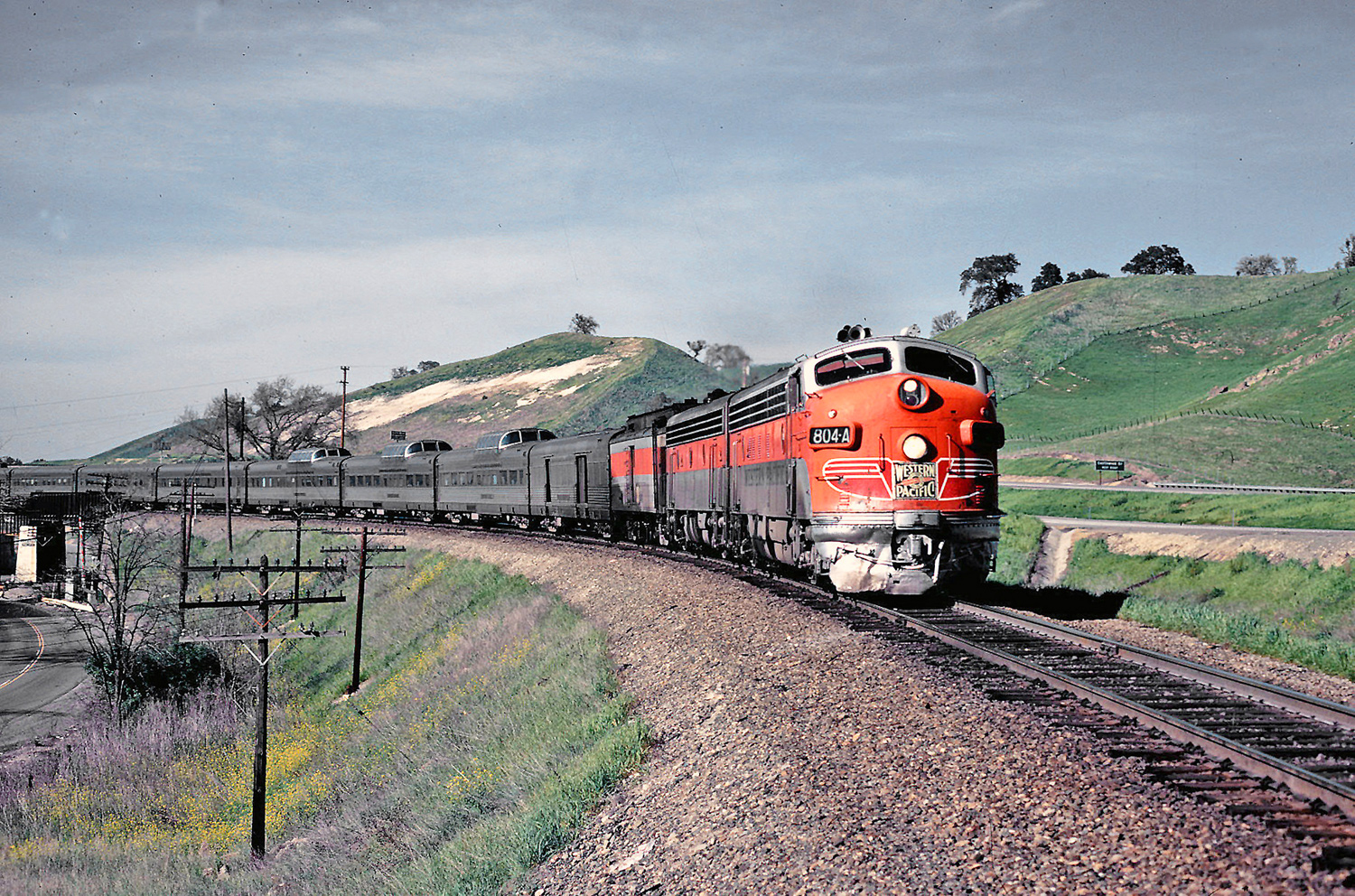 Just prior to the train's cancellation the "California Zephyr" is seen here operating west on the Western Pacific near Hearst, California in March of 1970. Drew Jacksich photo.
History
Mike Schafer and Joe Welsh note in their fabulous book, "Streamliners: History Of A Railroad Icon," that the California Zephyr had a "double beginning." An argument could be made that it actually had a so-called "triple beginning" as two notable events preceded its inauguration.
In 1934 the Burlington made a splash by deputing one of the first-ever streamliners, the Zephyr 9900 (also known as the Pioneer Zephyr) during April of 1934.
The sleek, stainless-steel contraption was the first of its kind powered by a diesel engine and proved more successful, operationally, than UP's design.
Both wowed the public and led to the Burlington christening an entire fleet of Zephyrs through the 1940s. In 1939 the Golden Gate International Exposition opened on Treasure Island in San Francisco Bay.
The CB&Q, Rio Grande, and Western Pacific subsequently came up with a plan to provide a through train for this event; known as the Exposition Flyer it traveled virtually the same route as the later California Zephyr albeit utilized largely heavyweight Pullman equipment and was steam powered.
At A Glance (1950)
50 Hours and 20 Minutes (Westbound) 50 Hours and 30 Minutes (Eastbound) | |
Union Station (Chicago) 3rd & Washington Street Station (Oakland) |
The train entered service on June 10, 1939 and became so popular thanks to its scenic route the railroads agreed to continue its operation after the San Francisco event.
Into the 1940s the Flyer gained diesel power and some lightweight equipment while the three lines contemplated revamping the entire service with new, streamlined cars and locomotives after the war (the Flyer remained in service until the CZ's inauguration in 1949).
The Burlington led the charge, buffered by the success of its Zephyr fleet and new Vista-Domes first delivered by the Budd Company in 1947.
According to, "The Art Of The Streamliner" (Bob Johnston, Joe Welsh, Mike Schafer), Budd designer John Harberson toured the CZ's proposed route, which passed through the Colorado Front Range, entered scenic Glenwood Canyon, worked its way along California's rugged Feather River Canyon, and finally wound through the rolling green hills of Altamont Pass before terminating in Oakland.
He concluded that trainsets should feature no fewer than five dome cars, nearly unheard of at the time, for maximum viewing pleasure of the passengers.
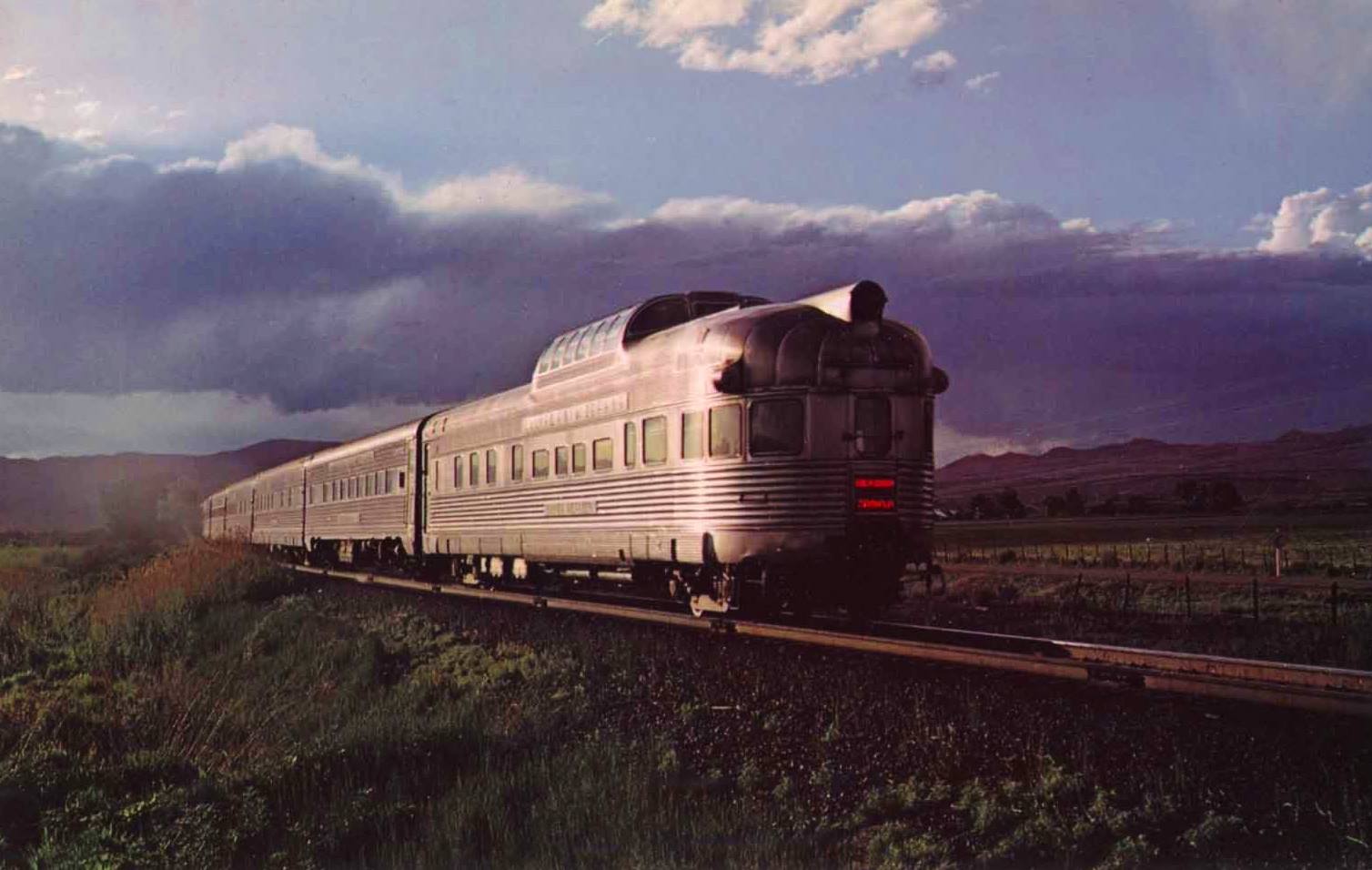 Running on the Rio Grande, train #17, the "California Zephyr," hustles westward near Price, Utah on June 5, 1967. Gordon Glattenberg photo.
Individually, the three roads could not offer a flagship, transcontinental streamlined train such as the Santa Fe, Union Pacific, Southern Pacific, Great Northern, Northern Pacific, or even the Milwaukee Road. The Burlington provided the longest stretch of unbroken territory reaching as far west as Denver.
The railroad was also the gateway to Chicago, the key to any successful long-distance passenger train; without large markets at each end point no train would garner considerable patronage and there was no bigger market than the Windy City.
The Burlington understood this (as did all other western lines) and already worked with allying roads GN and NP to provide service from Chicago to the Pacific Northwest with popular trains like the North Coast Limited and Empire Builder.
Consist (1952)
In a first within the industry, and perhaps only time it proved wildly successful, the California Zephyr was routed specifically as a scenic train. It sacrificed speed for viewing and the concept proved a huge success.
In December of 1945 all three agreed on what was dubbed the California Zephyr. In 1947 they placed an order for six sets of stainless-steel cars from the Budd Company, all of which carried a western theme but with the prefix "Silver" as per Burlington's standards.
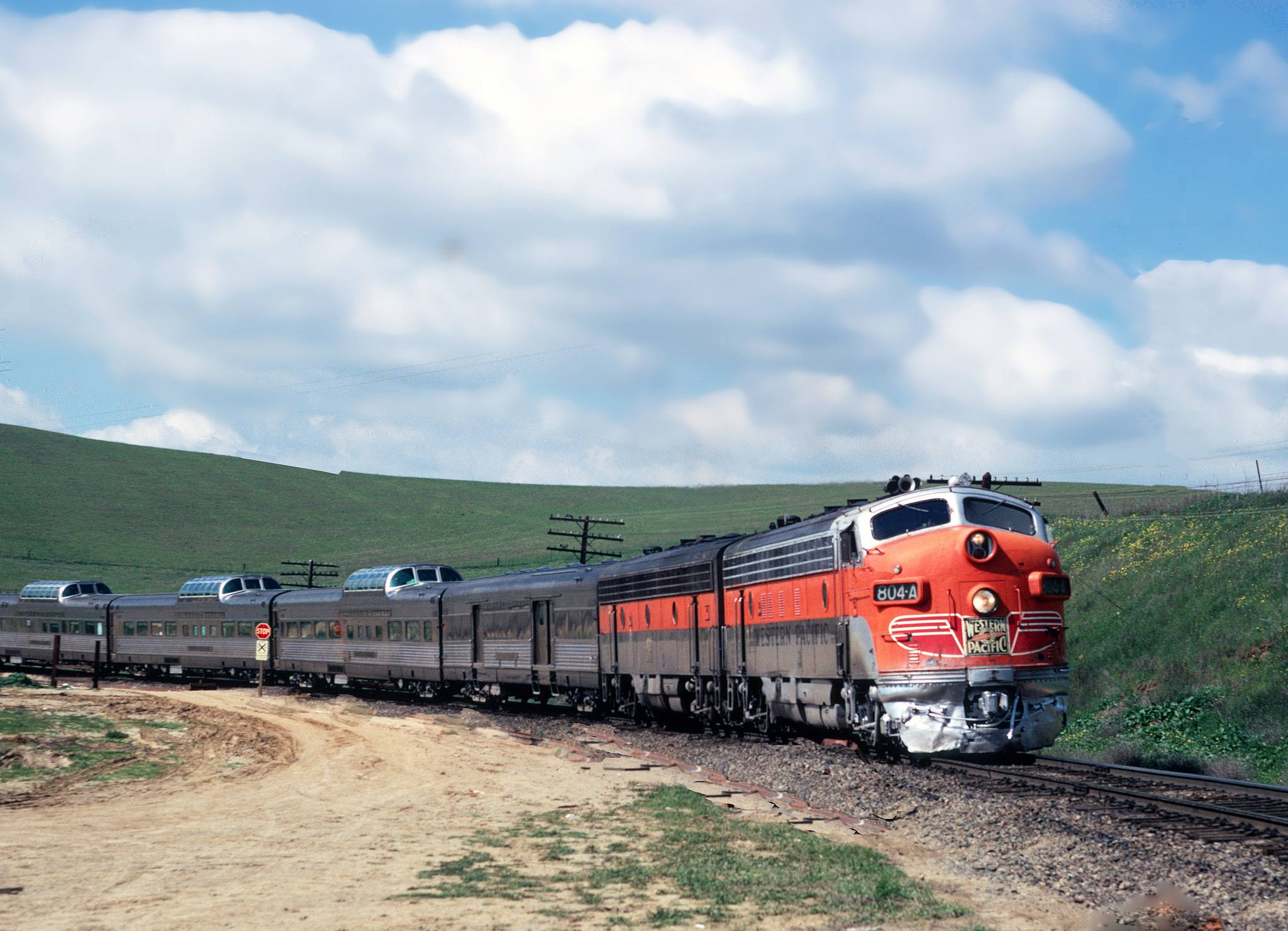 Western Pacific's "California Zephyr" on Altamont Pass, California in March of 1970. Drew Jacksich photo.
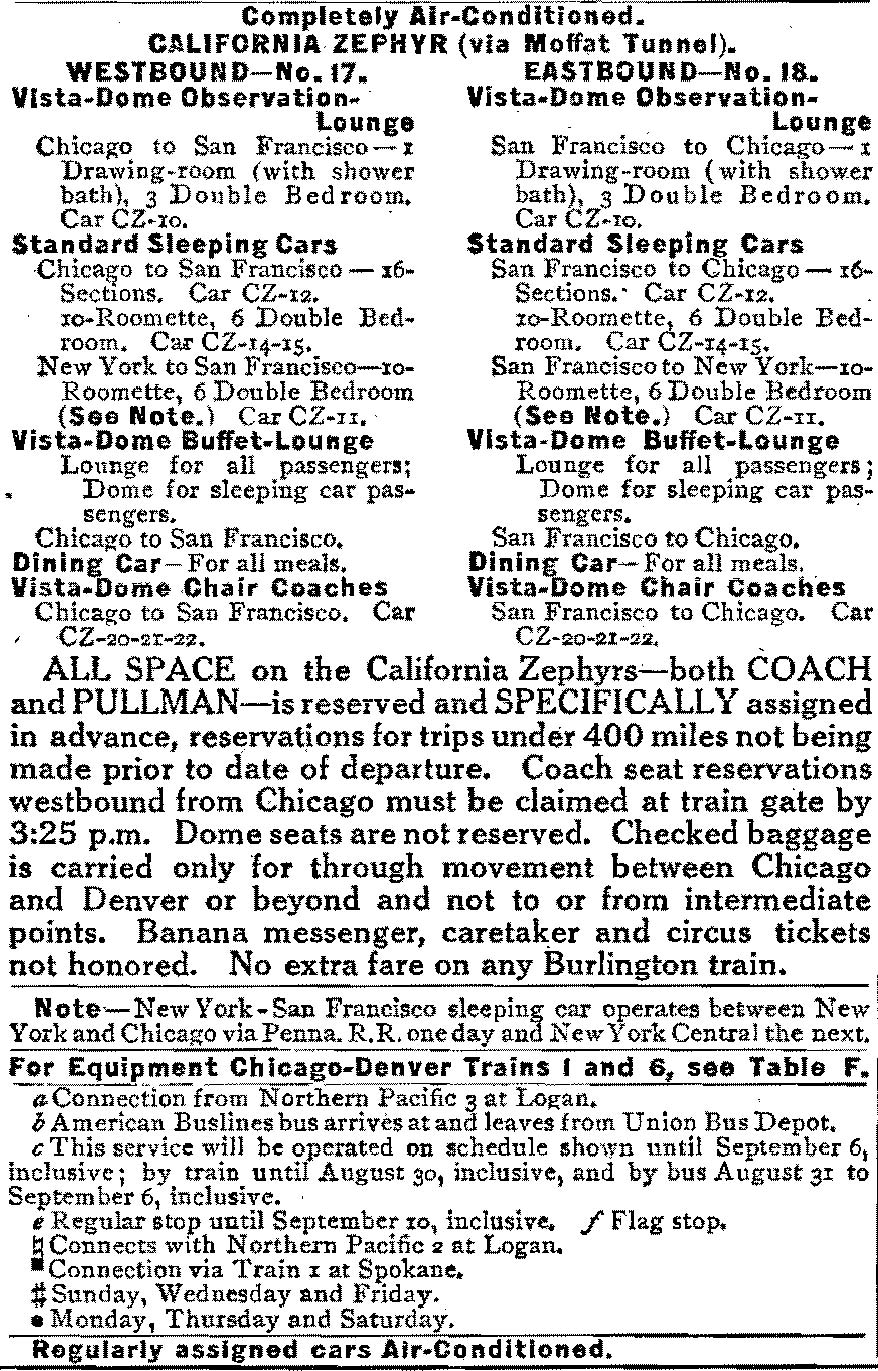
As the authors point out in "Streamliners," each CZ trainset normally consisted of a baggage, three reclining-seat Vista-Dome coaches, a Vista-Dome dormitory-buffet-lounge, diner, four sleepers, and the Vista-Dome sleeper-lounge observation bearing the train's famous neon "California Zephyr" drumhead featuring the Golden Gate Bridge.
Officially, the new train debuted on March 20, 1949 when the first eastbound consist, train #18, departed from Oakland under the Western Pacific.
Christening A Legend
A huge celebration took place on March 19, 1949 in San Francisco to officially dedicate the new California Zephyr. The train's primary terminus in daily operation was Oakland with ferry service provided across the bay to San Francisco.
However, for this special event the WP backed the train down an industrial spur through city streets to the Embarcadero where Mayor Leland Cutler, WP President H.A. Mitchell, and California Lieutenant Governor Goodwin Knight gave brief speeches. The train was officially christened by Hollywood actress Eleanor Parker and a legend was born.
The following day riders on the maiden trip were given corsages of orchids flown in from Hawaii while Edward Budd, Jr. himself, whose company had built the train's equipment, made the trip to Chicago.
It was immediately splashed as "The most talked about train in America" and despite its slower schedule the use of new lightweight cars and diesels enabled the CZ to sped up its running times from 60 hours, under the Exposition Flyer, to just 51 hours.
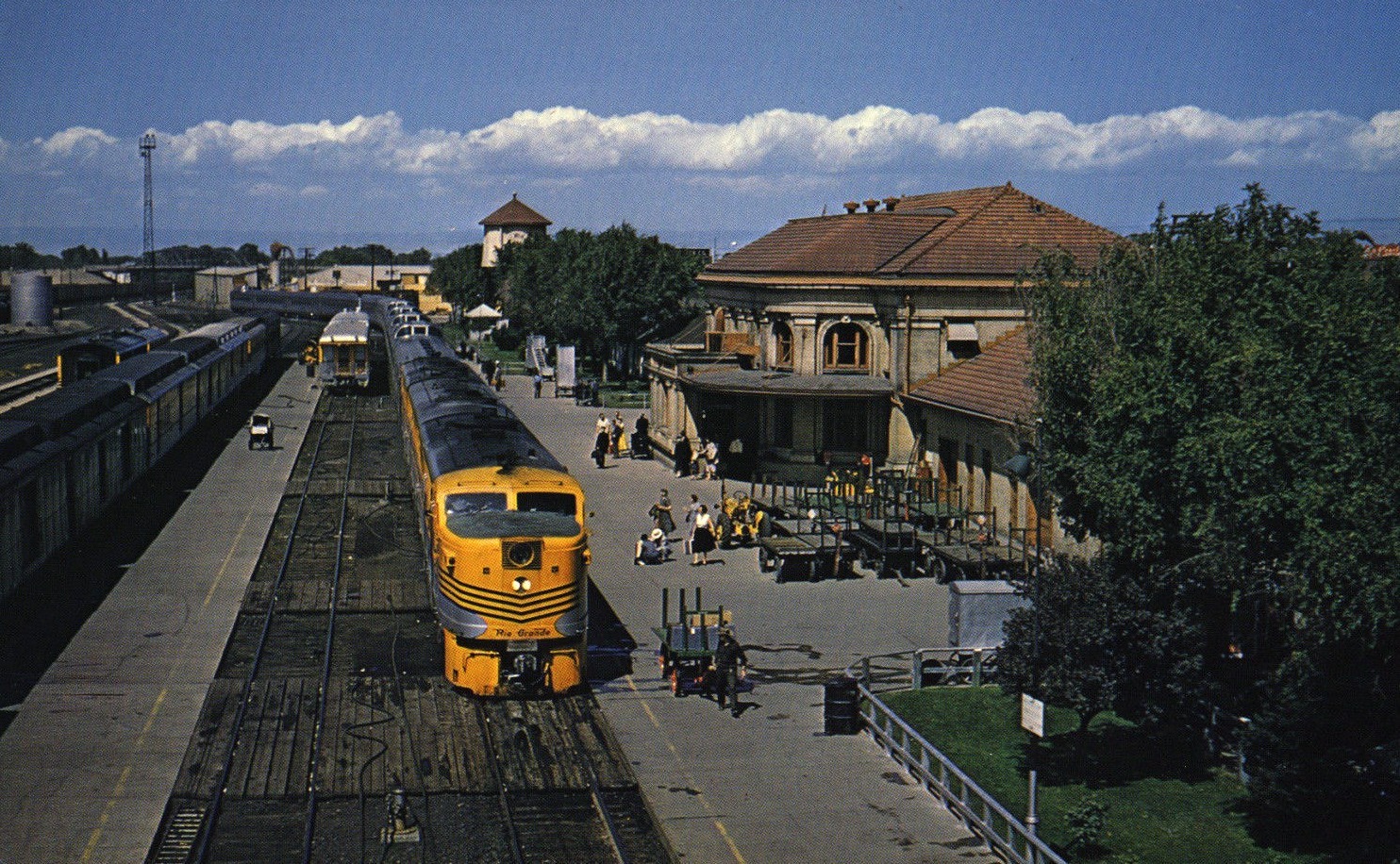 A Rio Grande PA-1 arrives with train #18, the eastbound "California Zephyr," at Grand Junction, Colorado just before noon on September 13, 1956. Jackson Thode photo.
Historically, the CZ was also noteworthy as being the first-ever transcontinental train to run with dome cars. To provide the very best scenic enjoyment, the train was scheduled so vacationers could enjoy the fabulous views through Colorado, Utah, Nevada, and California during daylight hours.
Once again, Electro-Motive was contracted to provide the power as all three roads used a combination of the builder's popular E and F series cab model "covered wagons" as primary road power.
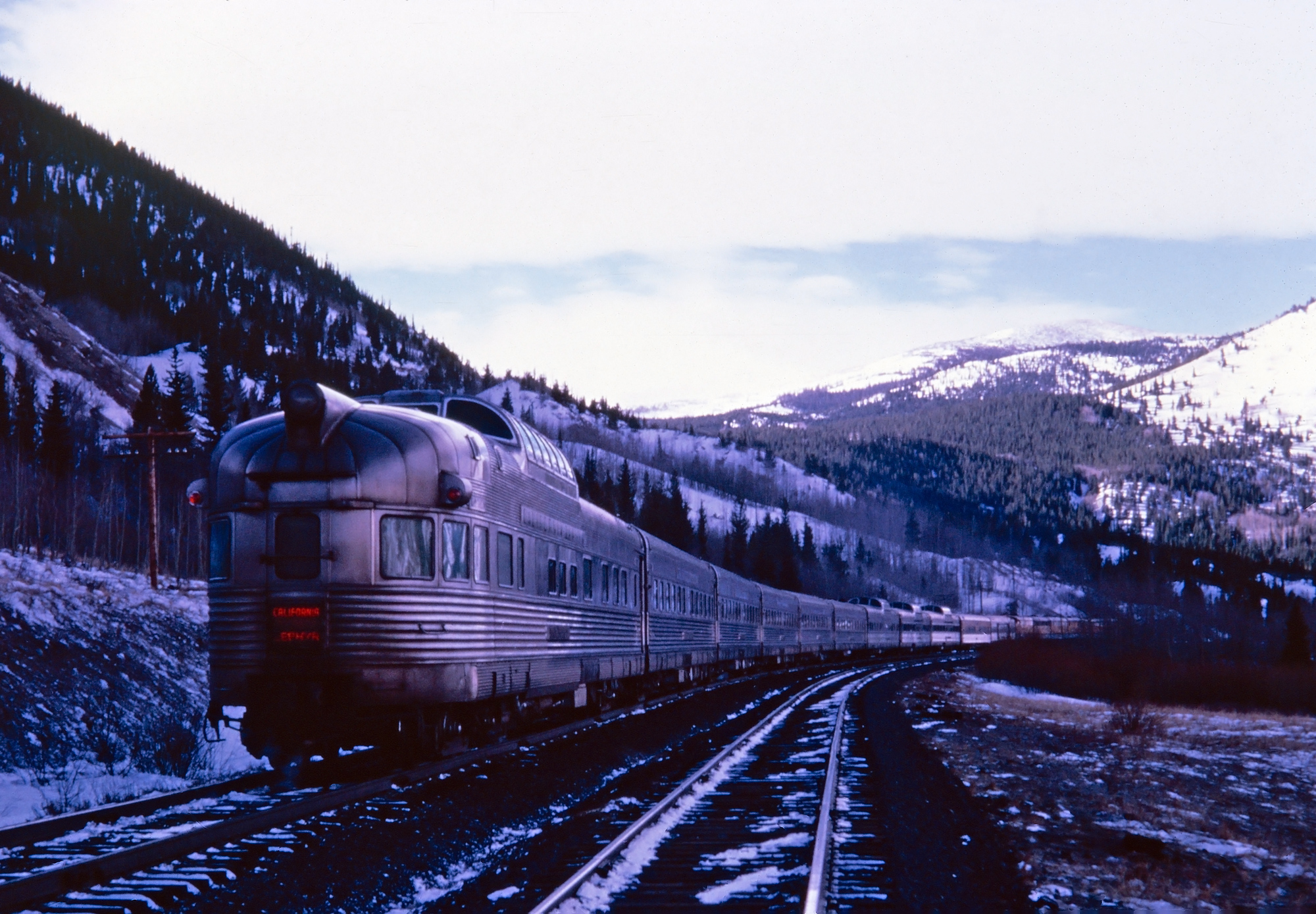 One of the popular Vista-Dome observation lounges brings up the tail end of the "California Zephyr" operating over the Rio Grande, circa 1965. American-Rails.com collection.
Beyond the scenery, the CZ success was thanks to its friendly staff; passengers were treated warmly no matter if you were just a vacationer or a well-known celebrity (although the “rich and famous” tended to take other trains like the Super Chief and City of Los Angeles).
The "Zephyrettes"
The "Zephyrettes" were a unique phenomenon during the "Silver Age" of streamlined rail travel. Outside of the Burlington's network no other service duplicated what the California Zephyr offered in terms of friendly on-board staff members, akin to the present-day airline stewardesses.
They traveled with the CZ from the very beginning and remained a fixture on-board until the very end during its last run on March 22, 1970. The "Zephyrettes" held a combination of jobs from social director to tour guide and train nurse; essentially, they performed nearly any task requested by the train crew or passengers and always did so with a friendly smile.
The idea for these hostesses came from CB&Q's Supervisor of Passenger Train Services, Velma McPeek. It had first been tested on the Denver Zephyr and carried over to the CZ. As the book, "Streamliners," notes former "Zephyrette" Beaulah Ecklund (1964-1970) was welcomed back by Amtrak to host the first trip of the re-inaugurated California Zephyr in the summer of 1983.
And then, there were the "Zephyrettes," a distinctively Burlington creation; these hostesses were courtesy, friendly, and just plain nice young women that made a lasting impression on thousands of passengers.
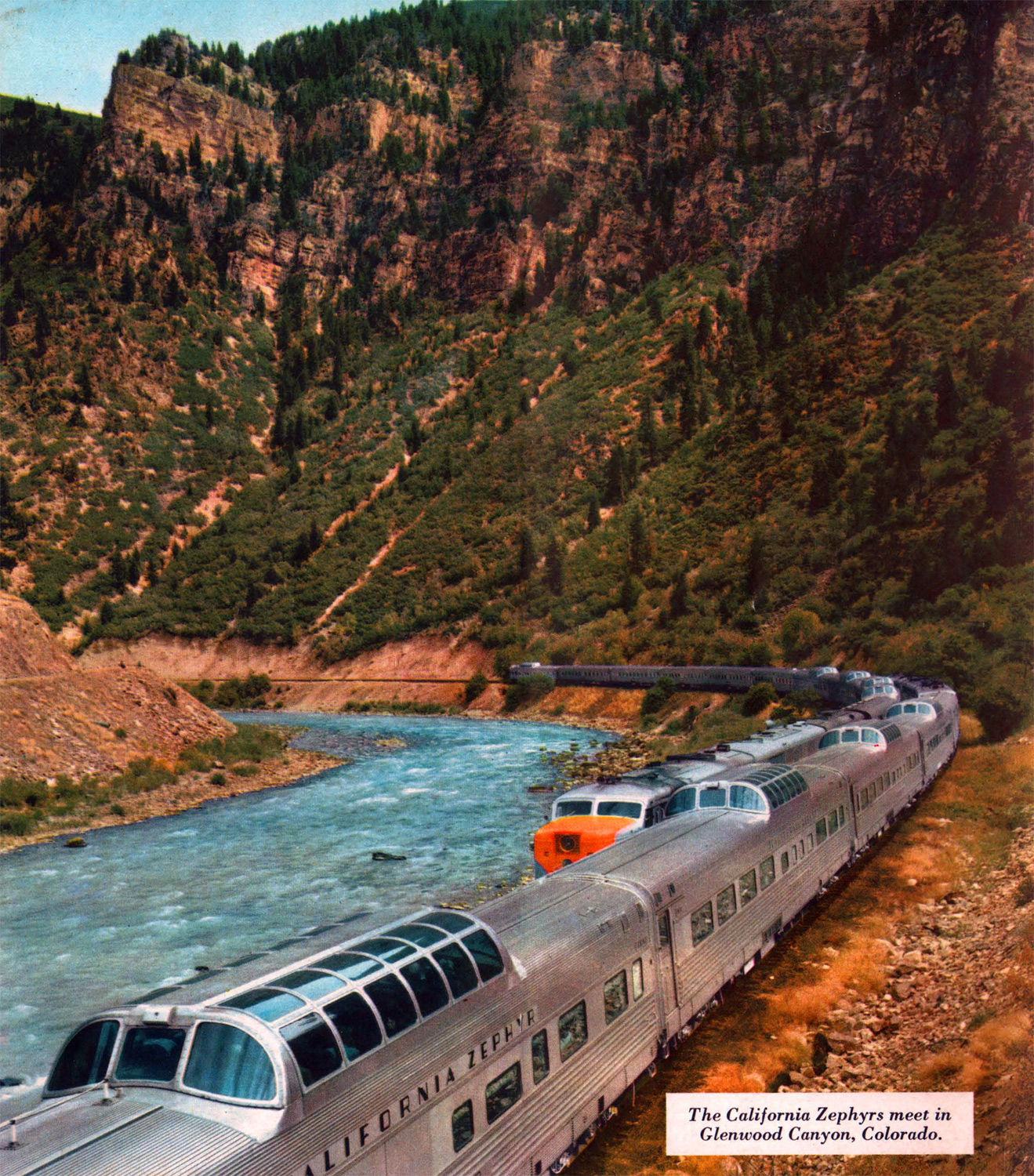 This spectacular scene shows the east and westbound "California Zephyr's" passing one another in Colorado's Glenwood Canyon along the Colorado River, likely taken during the late 1940s or early 1950s. Note the A-B set of Alco PA's.
Other attractive features included prerecorded music played into passenger's rooms and hall windows which allowed guests to enjoy views from both sides of the train.
If their was one signature car aboard-train, similar in nature to the Super Chief's "Turquoise Room," it was the buffet-lounge. Given the moniker of "Cable Car Room" it was dressed in murals and motifs from the Bay Area and even featured scale models of San Francisco's trademark cable cars.
Train Route
The original California Zephyr route began on the Chicago, Burlington & Quincy from Chicago to Denver before being passed off there to the Denver & Rio Grande Western at Union Station.
From there travelers could enjoy the spectacular scenery of the Rocky Mountains while passing through the 6.2-mile Moffat Tunnel before reaching Salt Lake City at the Rio Grande Depot.
They would then complete their journey over the Western Pacific which traveled through the equally stunning Feather River Canyon and over the rolling green hills of Altamont Pass.
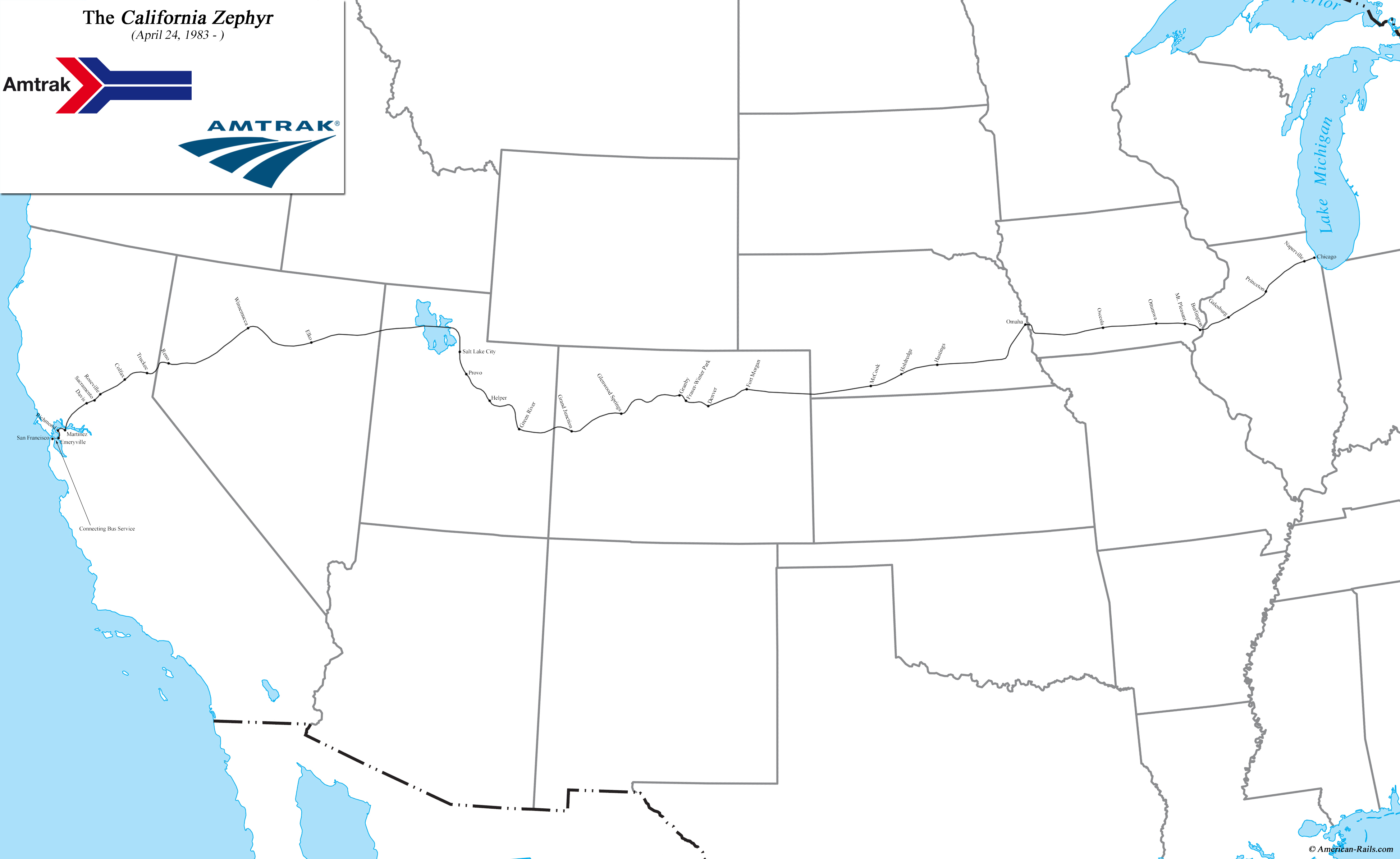
Today's version of the train, maintained by Amtrak since 1983, largely still travels the previous route albeit now utilizes the former Southern Pacific/Central Pacific corridor (part of the original Transcontinental Railroad) over Donner Pass, west of Salt Lake City, to reach San Francisco.
Map (Original)
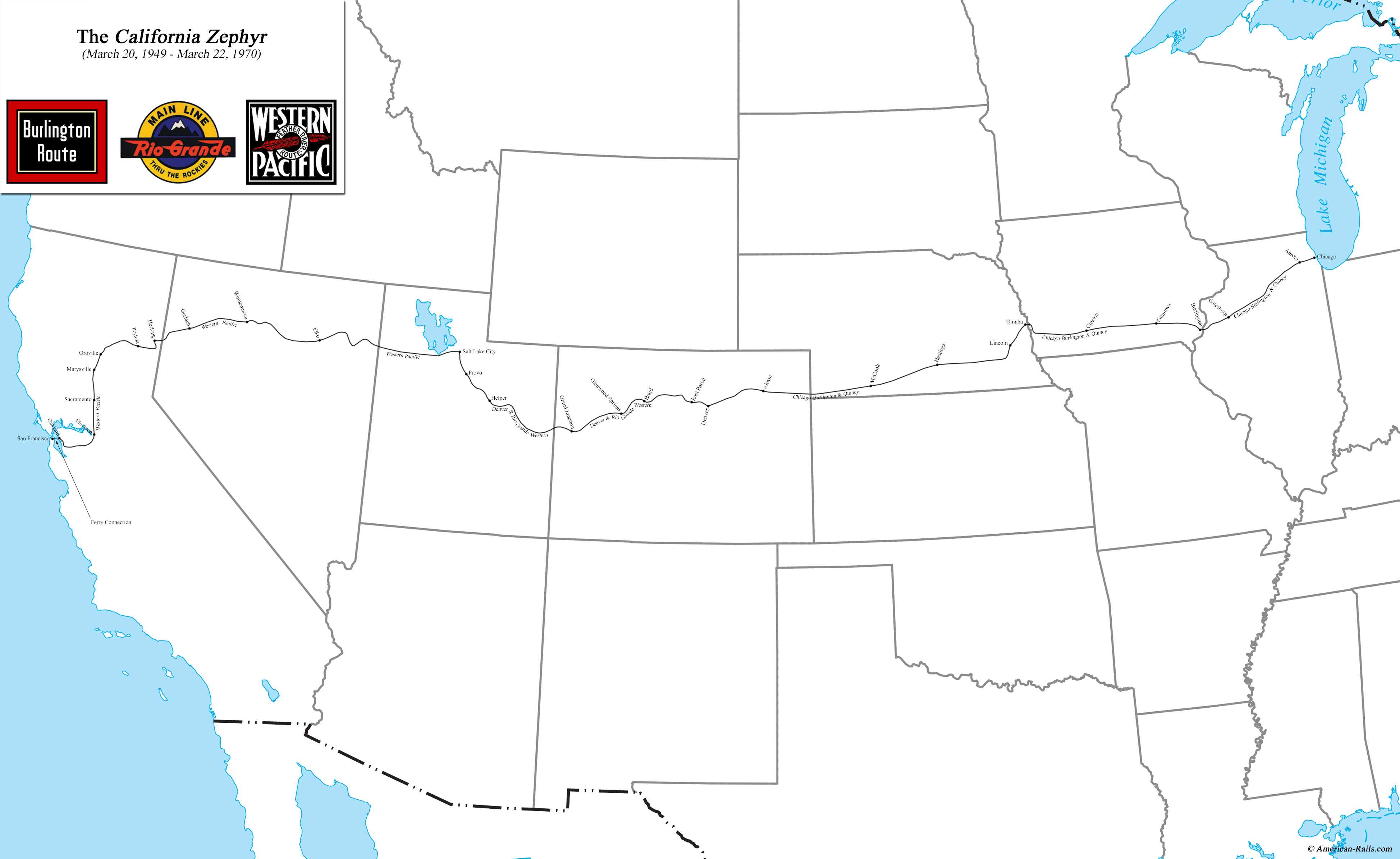
Along the way you will pass through such historic locations as Truckee, Norden, Yuba Pass, Emigrant Gap, Colfax, and Sacramento.
Route Map (Amtrak Era)
The current California Zephyr also features a fraction of the original's services with "Superliners" throughout which double as a dome cars for maximum viewing above and sleeping quarters below. The train's food service has been deemed acceptable but again falls short of the high quality meals
According to the train's 1950 timetable it could complete a Chicago to San Francisco run in just over two days across the three different railroads; such scheduling was not bad considering its scenic routing and the fact that Santa Fe's "San Francisco Chief" made the run only about 3.5 hours faster (47 hours and 30 minutes).
After only a few years of operation it was clear the railroads were on to something; annually the CZ averaged about 80% ridership and was often sold out during the summer. In 1952 new cars were ordered to meet demand and sellouts persisted throughout 1965.
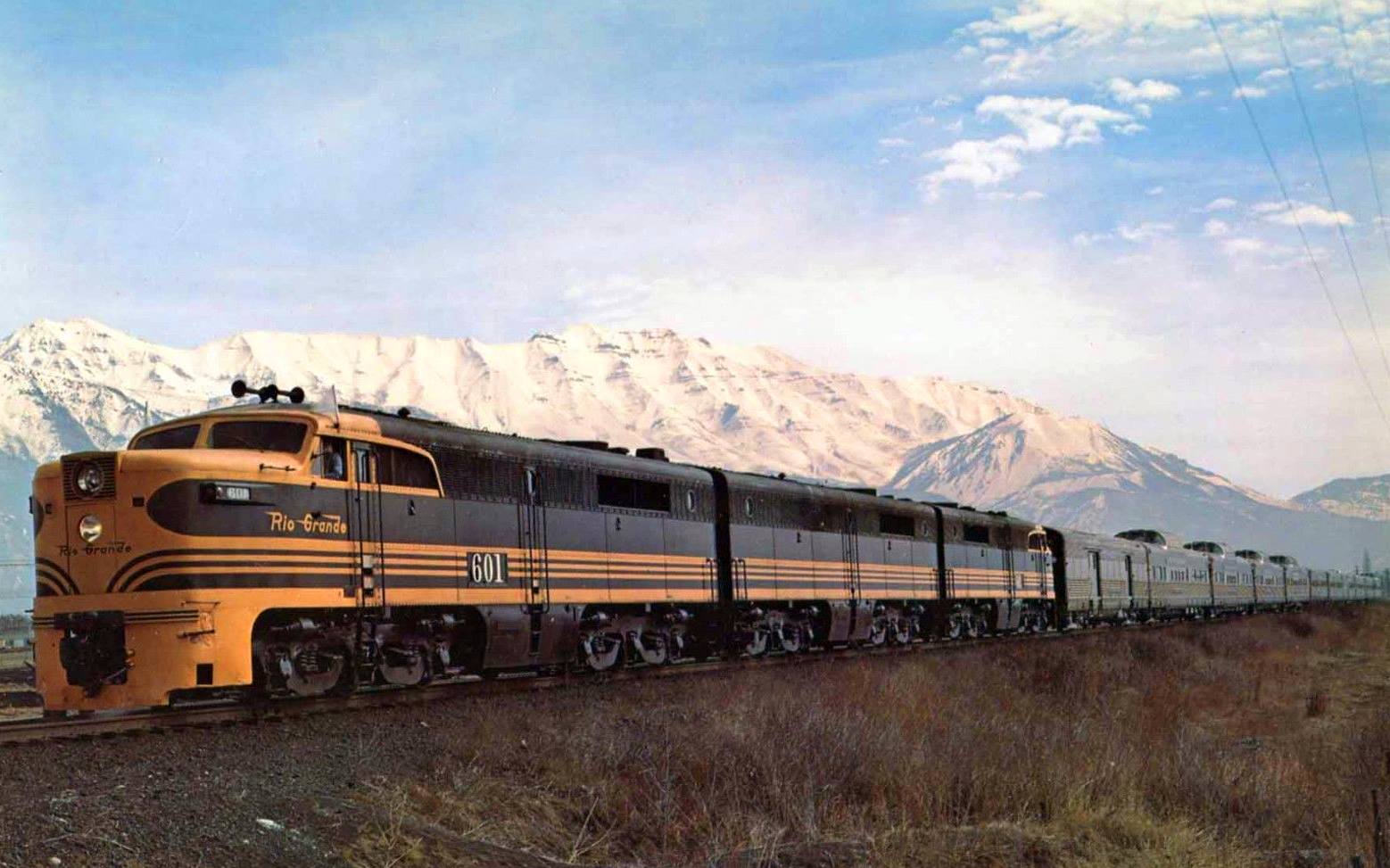 A Rio Grande PA/PB/PA set leads the demonstration train for the soon-to-be-launched "California Zephyr" near Draper, Utah on March 14, 1949. It officially entered service on March 20th. In the background looms Mt. Timpanogos. Otto Roach/Rio Grande photo.
The CB&Q and Western Pacific carried the train for much of its journey while the Rio Grande was in charge during perhaps the most scenic stretches across the Rocky Mountains between Denver and Salt Lake City.
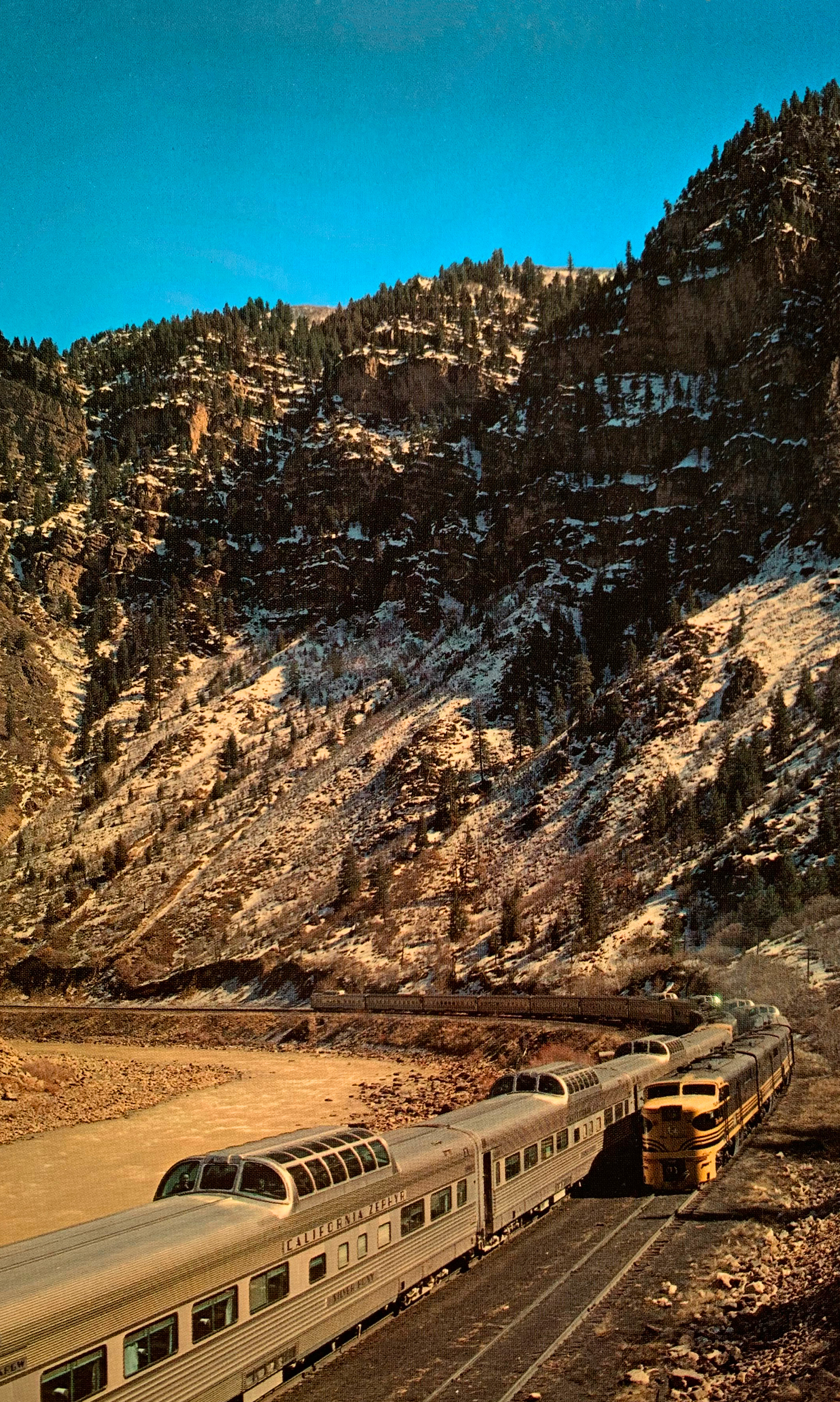 In this publicity photo, the Rio Grande's very first eastbound and westbound "California Zephyrs" meet within Colorado's Glenwood Canyon at Grizzly Siding on March 21, 1949. Otto Roach photo. Author's collection.
The downfall of the original CZ is an interesting story. While patronage remained incredibly high throughout the 1960s, particularly when compared to the severe declines experienced overall by the industry, costs to operate the train were increasing so rapidly that even strong, sustained ridership made it increasingly unprofitable to operate.
The larger, and more financially stable carriers, Rio Grande and Burlington, could more or less weather the growing red ink although the much smaller Western Pacific could not. During September of 1966 the WP petitioned the Interstate Commerce Commission to discontinue its leg.
Timetable (August, 1950)
| Read Down Time/Leave (Train #17/Burlington) | Milepost | Location | Read Up Time/Arrive (Train #18/Burlington) |
|---|---|---|---|
| 3:30 PM (Dp) | 0.0 | 1:30 PM (Ar) | |
| 4:06 PM | 38 | 12:44 PM | |
| 5:45 PM (Ar) | 162 | 10:58 AM (Dp) | |
| 5:50 PM (Dp) | 162 | 10:53 AM (Ar) | |
| 6:35 PM | 206 | 10:07 AM | |
| 7:46 PM (Ar) | 280 | 8:55 AM (Dp) | |
| 7:48 PM (Dp) | 280 | 8:53 AM (Ar) | |
| 9:42 PM (Ar) | 393 | 7:02 AM (Dp) | |
| 9:45 PM (Dp) | 393 | 6:58 AM (Ar) | |
| F 10:30 PM | 443 | ||
| 11:45 PM (Ar) | 496 | 5:00 AM (Dp) | |
| 11:59 PM (Dp) | 496 | 4:55 AM (Ar) | |
| 1:04 AM (Ar) | 551 | 3:55 AM (Dp) | |
| 1:19 AM (Dp) | 551 | 3:40 AM (Ar) | |
| 2:49 AM (Ar) | 648 | 2:09 AM (Dp) | |
| 2:52 AM (Dp) | 648 | 2:06 AM (Ar) | |
| 4:49 AM (Ar) | 779 | 12:14 AM (Dp) | |
| 3:55 AM (Dp) | 779 | 11:09 PM (Ar) | |
| 922 | 9:13 PM | ||
| 8:20 AM (Ar) | 1034 | 7:15 PM (Dp) | |
| Time/Leave (Train #17/Rio Grande) | Milepost | Location | Time/Arrive (Train #18/Rio Grande) |
| 8:40 AM (Dp) | 1034 | 7:00 PM (Ar) | |
| 1084 | |||
| 12:35 PM (Ar) | 1163 | 3:12 PM (Dp) | |
| 12:38 PM (Dp) | 1163 | 3:09 PM (Ar) | |
| 2:01 PM | 1219 | 1:35 PM | |
| 3:48 PM (Ar) | 1309 | 11:35 AM (Dp) | |
| 3:58 PM (Dp) | 1309 | 11:46 AM (Ar) | |
| 7:21 PM | 1485 | 8:36 AM | |
| 9:21 PM | 1560 | 6:32 AM | |
| 10:20 PM (Ar) | 1604 | 5:40 AM (Dp) | |
| Time/Leave (Train #17/Western Pacific) | Milepost | Location | Time/Arrive (Train #18/Western Pacific) |
| 10:40 PM (Dp) | 1604 | 5:20 AM (Ar) | |
| 1:55 AM (Ar) | 1867 | 11:17 PM (Dp) | |
| 1:57 AM (Dp) | 1867 | 11:15 PM (Ar) | |
| 4:01 AM (Ar) | 2000 | 9:12 PM (Dp) | |
| 4:08 AM (Dp) | 2000 | 9:05 PM (Ar) | |
| 5:38 AM | 2094 | 7:33 PM | |
| 6:42 AM | 2160 | 6:26 PM | |
| 7:39 AM (Ar) | 2211 | 5:30 PM (Dp) | |
| 7:42 AM (Dp) | 2211 | 5:27 PM (Ar) | |
| 11:02 AM (Ar) | 2327 | 2:14 PM (Dp) | |
| 11:05 AM (Dp) | 2327 | 2:11 PM (Ar) | |
| 11:38 AM | 2353 | 1:39 PM | |
| 12:28 PM | 2393 | 12:50 PM | |
| 1:34 PM (Ar) | 2438 | 11:53 AM (Dp) | |
| 1:37 PM (Dp) | 2438 | 11:51 AM (Ar) | |
| 4:00 PM | 2525 | 9:44 AM | |
| 4:15 PM (Ar) | 2528 | 9:30 PM (Dp) | |
| 4:30 PM (Dp) | 2528 | 9:20 PM (Ar) | |
| 4:50 PM (Ar) | 2532 | 9:00 PM (Dp) |
There was strong public backlash from this attempt, which the ICC labeled a, "unique national asset." A second try came in 1969 when the Rio Grande filed to discontinue its section but again the ICC rebuffed the idea.
The commission finally relented a year later; in a ruling that came down on February 13, 1970 it allowed the WP to cancel its section but required the D&RGW and Burlington to continue operating a tri-weekly version of the CZ from Chicago to Ogden.
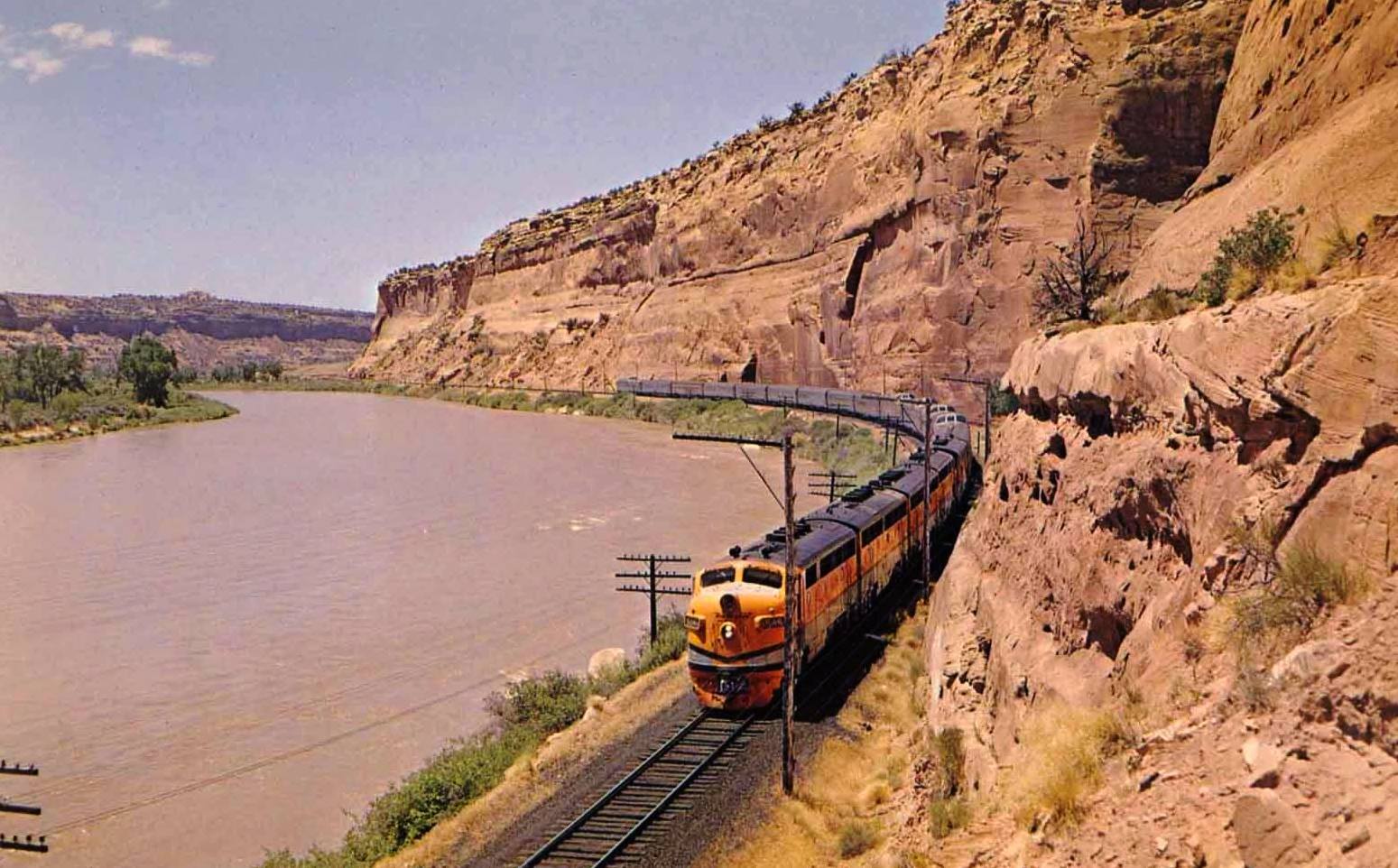 In this panoramic publicity photo train #18, the eastbound "California Zephyr" and its many Vista-Domes, is operating over the Rio Grande as it skirts the Colorado River within picturesque Ruby Canyon during the 1960s.
From there passengers continuing westward could take Southern Pacific's/Union Pacific's City of San Francisco into the Bay Area.
On March 20th the final, original California Zephyr's left Chicago and Oakland for the last time arriving at their destinations on March 22nd.
Following its cancellation regional versions included Burlington's "California Service" (Chicago - Denver) and Rio Grande's Rio Grande Zephyr (Denver - Salt Lake City - Ogden).
Interestingly, while Amtrak had been setup in 1971 to operate all intercity passenger trains across the country the Rio Grande would not relinquish control of its Rio Grande Zephyr until the early 1980s.
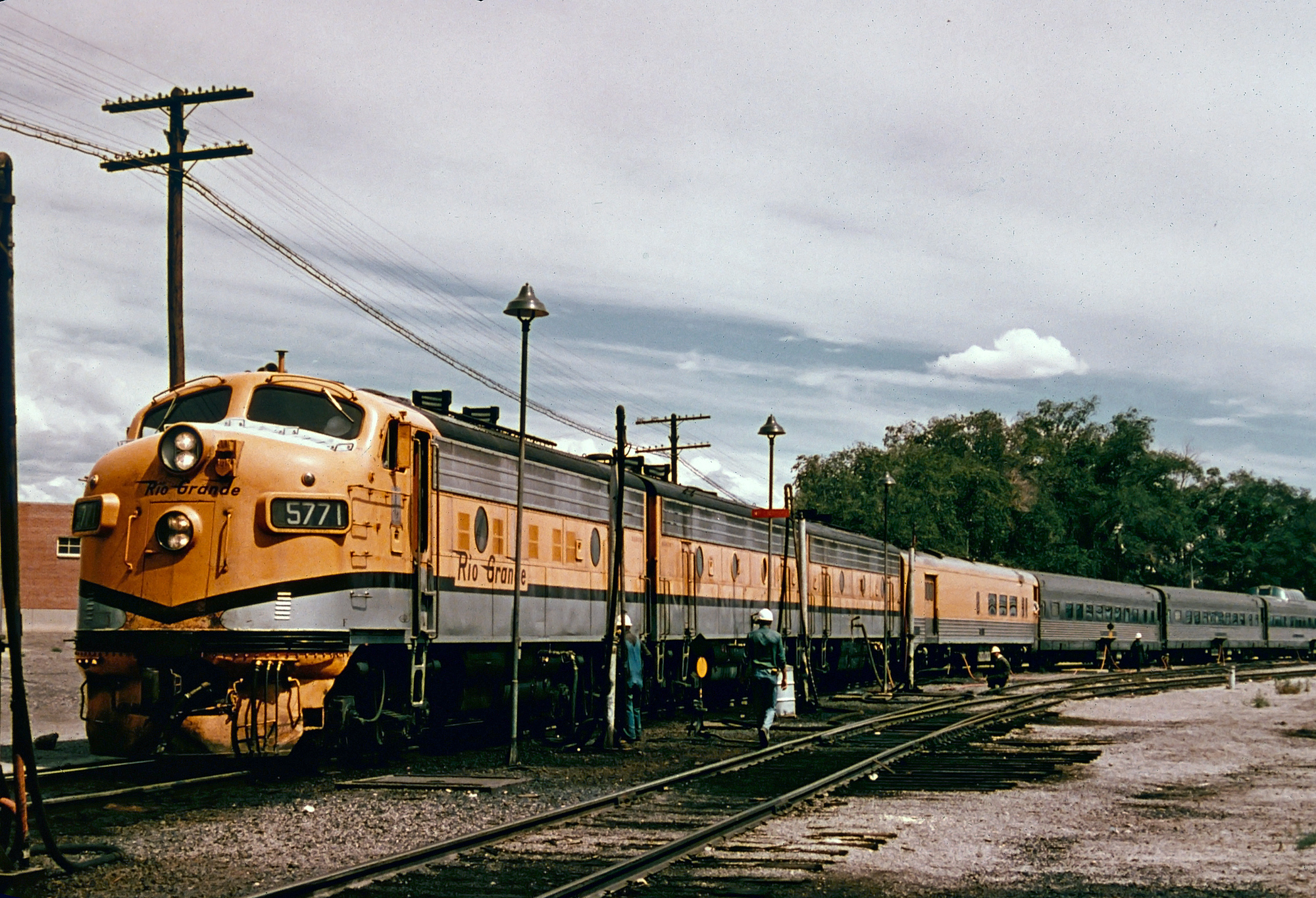 Rio Grande's "Rio Grande Zephyr," led by F9A #5771, is serviced in Grand Junction, Colorado on August 2, 1976. Carl Sturner photo. American-Rails.com collection.
Amtrak Era
It was at this time that Amtrak reinstated the train due to the original's popularity. Its first 2,400-mile run (Chicago - San Francisco) occurred on April 23, 1983 although its route did not entirely follow the original.
East of Salt Lake City the former Rio Grande and Burlington main lines are used. However, west of that point the ex-Southern Pacific line is used which crosses Donner Pass (much of which is the original Central Pacific alignment, the western leg of the Transcontinental Railroad).
While the reborn CZ may no longer feature streamlined equipment, "Zephyrettes," classic diesel locomotives on the head-end, or Vista-Domes it remains a very popular and respected train under Amtrak thanks largely to the corridor it travels across the West.
Amtrak's California Zephyr also offers something the original never could, coast-to-coast service with vacation packages ranging from several hundred to several thousand dollars. While somewhat expensive these trips are such a great way to see the country.
Schedule (Amtrak): Effective As Of July, 2017
| Read Down Time/Leave (Train #5/Daily) | Milepost | Location | Read Up Time/Arrive (Train #6/Daily) |
|---|---|---|---|
| 2:00 PM (Dp) | 0.0 | 2:50 PM (Ar) | |
| 2:34 PM (Dp) | 28 | 1:53 PM (Dp) | |
| 3:44 PM (Dp) | 104 | 12:33 PM (Dp) | |
| 4:38 PM (Dp) | 162 | 11:41 AM (Dp) | |
| 5:25 PM (Dp) | 205 | 10:36 AM (Dp) | |
| 5:59 PM (Dp) | 233 | 9:54 AM (Dp) | |
| 6:53 PM (Dp) | 279 | 9:09 AM (Dp) | |
| 8:09 PM (Dp) | 359 | 7:40 AM (Dp) | |
| 8:41 PM (Dp) | 392 | 7:04 AM (Dp) | |
| 10:55 PM (Ar) | 500 | 5:14 AM (Dp) | |
| 11:05 PM (Dp) | 500 | 4:59 AM (Ar) | |
| 12:08 AM (Ar) | 555 | 3:26 AM (Dp) | |
| 12:14 AM (Dp) | 555 | 3:20 AM (Ar) | |
| 1:47 AM (Dp) | 652 | 1:42 AM (Dp) | |
| 2:34 AM (Dp) | 706 | 12:54 AM (Dp) | |
| 3:43 AM (Dp) | 783 | 11:49 PM (Dp) | |
| 5:05 AM (Dp) | 960 | 8:25 PM (Dp) | |
| 7:15 AM (Ar) | 1038 | 7:10 PM (Dp) | |
| 8:05 AM (Dp) | 1038 | 6:38 PM (Ar) | |
| 10:07 AM (Dp) | 1100 | 3:50 PM (Dp) | |
| 10:37 AM (Dp) | 1113 | 3:12 PM (Dp) | |
| 1:53 PM (Dp) | 1223 | 12:10 PM (Dp) | |
| 4:10 PM (Dp) | 1311 | 10:23 AM (Dp) | |
| 5:58 PM (Dp) | 1417 | 7:59 AM (Dp) | |
| 7:20 PM (Dp) | 1488 | 6:37 AM (Dp) | |
| 9:26 PM (Dp) | 1563 | 4:35 AM (Dp) | |
| 11:05 PM (Ar) | 1608 | 3:30 AM (Dp) | |
| 11:30 PM (Dp) | 1608 | 3:05 AM (Ar) | |
| 3:03 AM (Dp) | 1871 | 9:31 PM (Dp) | |
| 5:40 AM (Dp) | 2013 | 7:08 PM (Dp) | |
| 8:36 AM (Dp) | 2202 | 4:06 PM (Dp) | |
| 9:37 AM (Dp) | 2237 | 2:38 PM (Dp) | |
| 11:48 AM (Dp) | 2301 | 12:21 PM (Dp) | |
| 12:57 PM (Dp) | 2336 | 11:35 AM (Dp) | |
| 2:13 PM (Ar) | 2353 | 11:09 AM (Dp) | |
| 2:44 PM (Ar) | 2367 | 10:36 AM (Dp) | |
| 3:26 PM (Ar) | 2411 | 9:54 AM (Dp) | |
| 3:59 PM (Ar) | 2430 | 9:22 AM (Dp) | |
| 4:10 PM (Ar) | 2438 | 9:10 AM (Dp) |
Photo Gallery
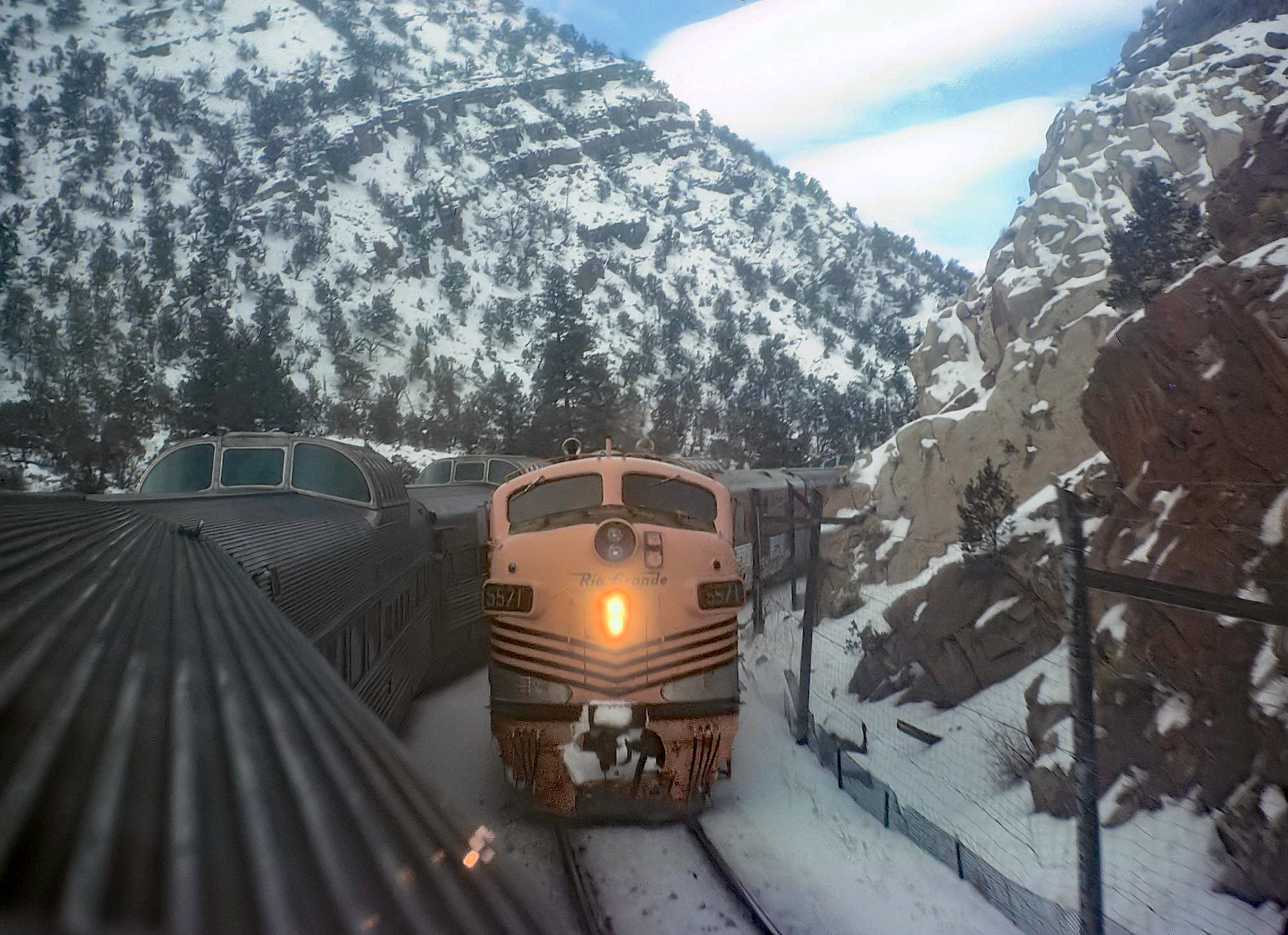 Rick Burn captured Rio Grande's "Yampa Valley" from his dome seat aboard the "California Zephyr" at Bond, Colorado in January, 1968.
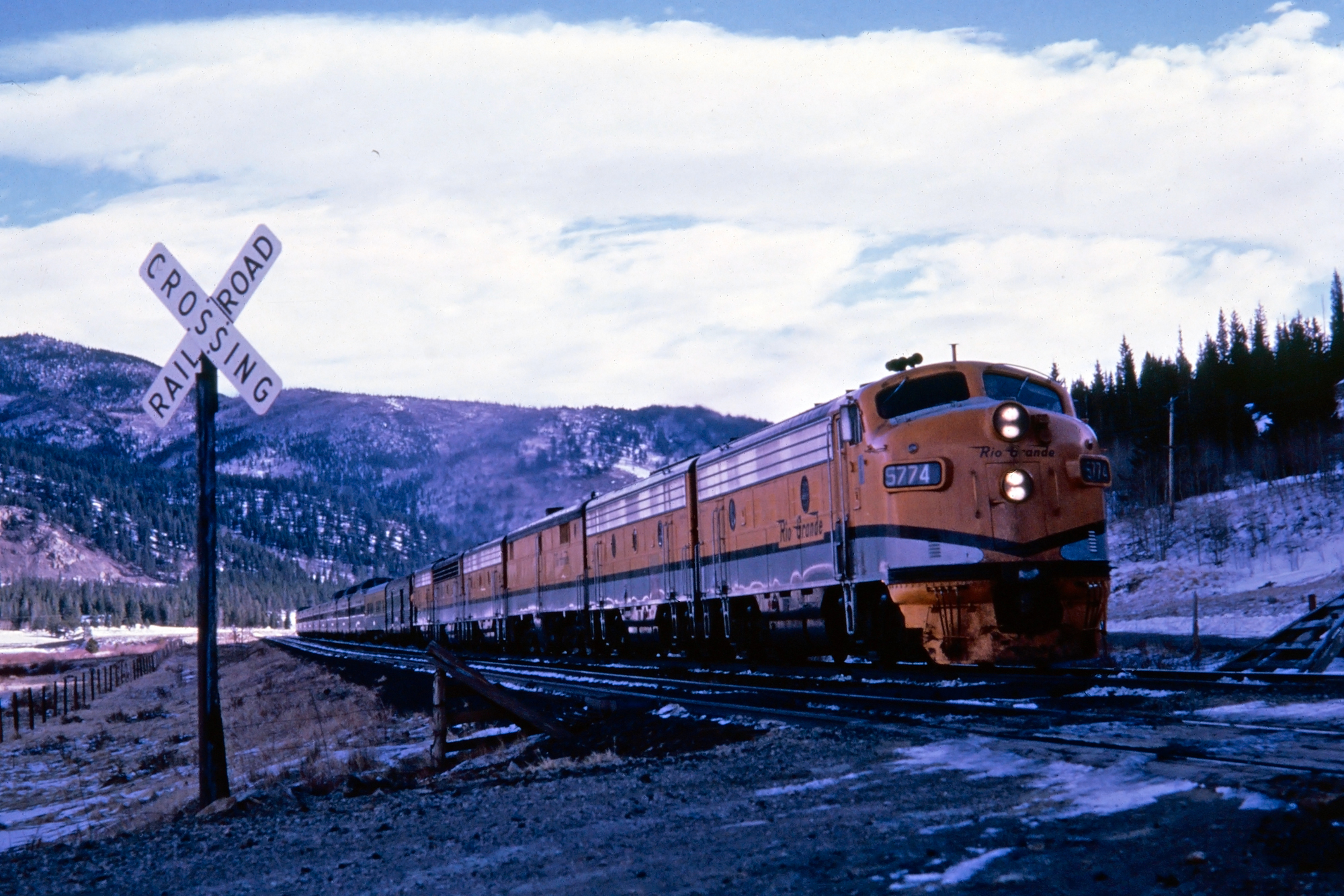 Rio Grande F9A #5774 leads the westbound "California Zephyr" at Plainview, Colorado, circa 1969. American-Rails.com collection.
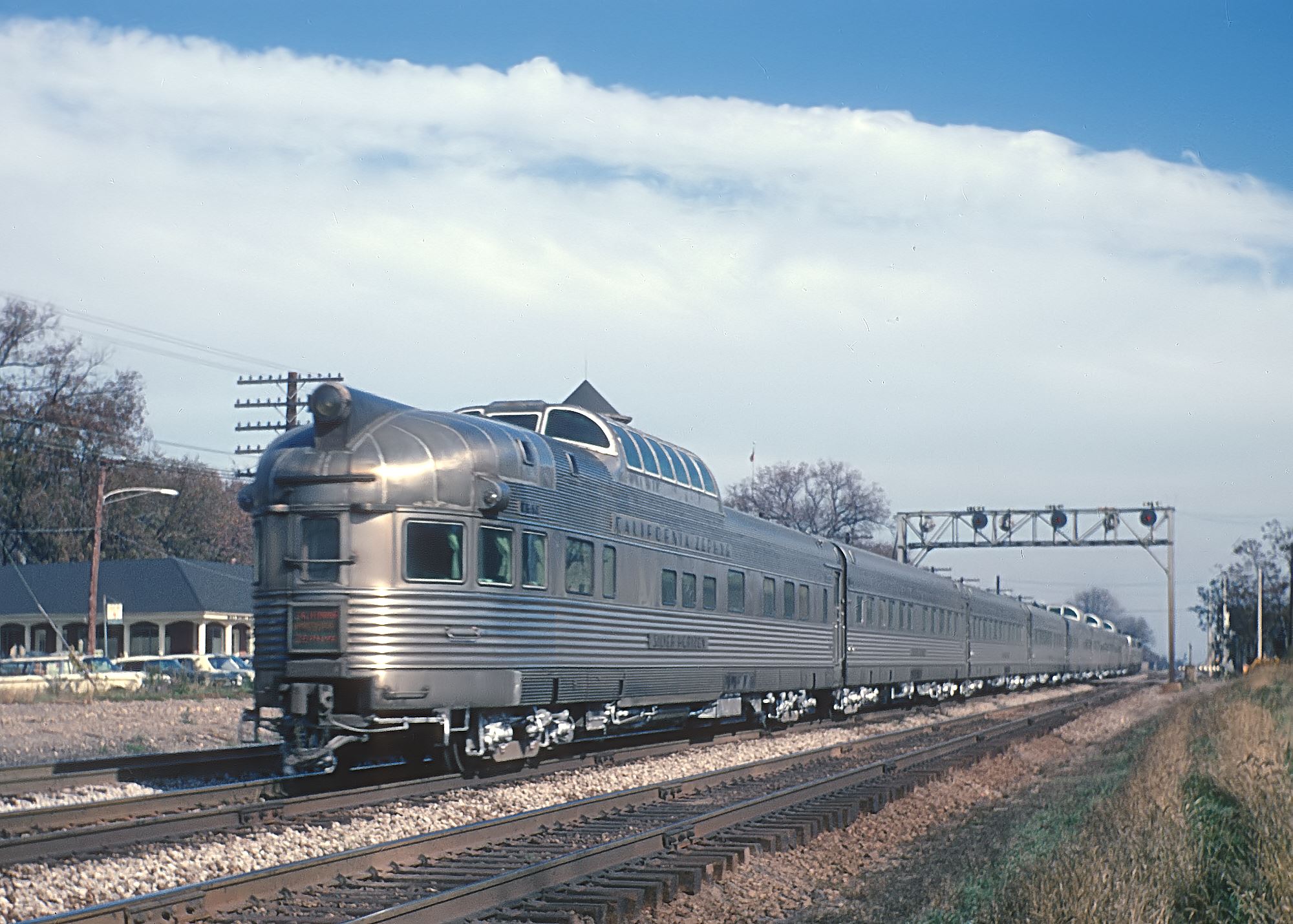 Train #18, the "California Zephyr," is moving away from the photographer at Western Springs, Illinois in November, 1969. The train was led by E8A #9938B. Rick Burn photo.
Recent Articles


-
Ohio BBQ Tasting Train Rides
Mar 13, 26 12:27 PM
 Among the HVSR's most popular special events is the “Starbrick BBQ Ribs and Wings Dinner Train,” a culinary-themed excursion that combines classic barbecue cuisine with a relaxing evening rail journey…
 -
Maryland Dinner Train Rides At Walkersville
Mar 13, 26 11:47 AM
 While WSRR runs a variety of seasonal and special trains, one of its most appealing “date night” offerings is the Valentine’s Dinner Train, a romantic two-hour ride built around classic railroad ambia…
 -
Arkansas Dinner Train Rides On The A&M
Mar 13, 26 11:35 AM
 If you want a railroad experience that feels equal parts “working short line” and “time machine,” the Arkansas & Missouri Railroad delivers in a way few modern operations can.
 -
North Carolina Dinner Train Rides At Spencer
Mar 13, 26 10:01 AM
 Tucked into the Piedmont town of Spencer, the North Carolina Transportation Museum is the kind of place that feels less like a typical museum and more like a living rail yard that never quite stopped…
 -
Tennessee Dinner Train Rides At TVRM
Mar 13, 26 09:56 AM
 Tucked into East Chattanooga, the Tennessee Valley Railroad Museum (TVRM) is less a “museum you walk through” and more a railroad you step aboard.
 -
New York Dinner Train Rides In The Adirondacks
Mar 13, 26 09:36 AM
 Operating over a restored segment of the former New York Central’s Adirondack Division, the Adirondack Railroad has steadily rebuilt both track and public interest in passenger rail across the region.
 -
Pennsylvania Dinner Train Rides At Boyertown
Mar 13, 26 09:33 AM
 With beautifully restored vintage equipment, carefully curated menus, and theatrical storytelling woven into each trip, the Colebrookdale Railroad offers far more than a simple meal on rails.
 -
Wisconsin BBQ Tasting Train Rides
Mar 12, 26 10:57 PM
 The Wisconsin Great Northern Railroad will once again welcome passengers aboard its popular Spring BBQ Dinner Train in 2026.
 -
Connecticut DOT Awards $20 Million In Railroad Grants
Mar 12, 26 01:19 PM
 The Connecticut Department of Transportation (CTDOT) has announced a new round of funding aimed at improving the safety, reliability, and capacity of the state’s freight rail network.
 -
California's Beer Tasting Train Rides
Mar 12, 26 12:59 PM
 While the Niles Canyon Railway is known for family-friendly weekend excursions and seasonal classics, one of its most popular grown-up offerings is Beer on the Rails.
 -
Reading & Northern Unveils Semiquincentennial 1776
Mar 12, 26 12:48 PM
In November 2025, the Reading, Blue Mountain & Northern Railroad (RBMN)—commonly known as the Reading & Northern—announced the debut of a striking patriotic locomotive commemorating the upcoming 250th… -
New Jersey's Beer Tasting Train Rides
Mar 12, 26 11:35 AM
 On select dates, the Woodstown Central Railroad pairs its scenery with one of South Jersey’s most enjoyable grown-up itineraries: the Brew to Brew Train.
 -
Florida BBQ Tasting Train Rides
Mar 12, 26 11:28 AM
 While Florida does not currently offer any BBQ train rides the Florida Railroad Museum does host a similar event, a campfire experience!
 -
Texas "Murder Mystery" Dinner Train Rides
Mar 12, 26 10:40 AM
 Here’s a comprehensive look into the world of murder mystery dinner trains in Texas.
 -
Connecticut's Murder Mystery Dinner Train Rides
Mar 12, 26 10:36 AM
 All aboard the intrigue express! One location in Connecticut typically offers a unique and thrilling experience for both locals and visitors alike, murder mystery trains.
 -
Missouri's Wine Tasting Train Rides
Mar 12, 26 10:33 AM
 The fusion of scenic vistas, historical charm, and exquisite wines is beautifully encapsulated in Missouri's wine tasting train experiences.
 -
Minnesota's Wine Tasting Train Rides
Mar 12, 26 10:28 AM
 This article takes you on a journey through Minnesota's wine tasting trains, offering a unique perspective on this novel adventure.
 -
Charlotte Approves $37.9M For "Red Line" To Lake Norman
Mar 11, 26 02:18 PM
 The Charlotte City Council has approved $37.9 million in funding for the next phase of design work on the long-planned Red Line commuter rail project.
 -
NS, Progress Rail Announce SD70ICC Modernization
Mar 11, 26 12:15 PM
 Norfolk Southern Railway has announced a significant locomotive modernization initiative in partnership with Progress Rail Services Corporation that will rebuild 96 existing road locomotives into a ne…
 -
Colorado Seeks Input On Proposed Front Range Passenger Train Name
Mar 11, 26 11:55 AM
 Colorado officials are inviting the public to help name a proposed passenger train that could one day connect major cities along the state’s heavily traveled Interstate 25 corridor.
 -
Virginia Whiskey Train Rides
Mar 11, 26 11:22 AM
 Among the Virginia Scenic Railway's most popular specialty excursions is the “Bourbon & BBQ” tasting train, an adults-oriented rail journey that pairs scenic views of the Shenandoah Valley with guided…
 -
Minnesota's Beer Tasting Train Rides
Mar 11, 26 10:32 AM
 Among the North Shore Scenic Railroad's special events, one consistently rises to the top for adults looking for a lively night out: the Beer Tasting Train.
 -
New Mexico's Beer Tasting Train Rides
Mar 11, 26 10:23 AM
 Sky Railway's New Mexico Ale Trail Train is the headliner: a 21+ excursion that pairs local brewery pours with a relaxed ride on the historic Santa Fe–Lamy line.
 -
Indiana's Murder Mystery Dinner Train Rides
Mar 11, 26 10:19 AM
 This piece explores the allure of murder mystery trains and why they are becoming a must-try experience for enthusiasts and casual travelers alike.
 -
Ohio's Murder Mystery Dinner Train Rides
Mar 11, 26 10:02 AM
The murder mystery dinner train rides in Ohio provide an immersive experience that combines fine dining, an engaging narrative, and the beauty of Ohio's landscapes. -
Kentucky Easter Train Rides
Mar 10, 26 11:39 AM
 The Bluegrass State is home to beautiful rolling farms and the western Appalachian Mountain chain, which comes alive each spring. A few railroad museums host Easter-themed events during this time.
 -
California Easter Train Rides
Mar 10, 26 10:26 AM
 California is home to many tourist railroads and museums; several offer Easter-themed train rides for the entire family.
 -
NS Faces Multiple Derailments Near Historic Horseshoe Curve
Mar 10, 26 10:15 AM
One of America’s most famous railroad landmarks, the legendary Horseshoe Curve west of Altoona, Pennsylvania, has recently been the site of multiple freight-train derailments involving Norfolk Souther… -
Oregon's Beer Tasting Train Rides
Mar 10, 26 10:11 AM
 If your idea of a perfect night out involves craft beer, scenery, and the gentle rhythm of jointed rail, Santiam Excursion Trains delivers a refreshingly different kind of “brew tour.”
 -
Arizona's Beer Tasting Train Rides
Mar 10, 26 09:57 AM
 Verde Canyon Railroad’s signature fall celebration—Ales On Rails—adds an Oktoberfest-style craft beer festival at the depot before you ever step aboard.
 -
Connecticut's Wine Tasting Train Rides
Mar 10, 26 09:54 AM
 If you’re looking for a signature “special occasion” experience, the Essex Steam Train's Wine & Chocolate Dinner Train stands out as a decadent, social, and distinctly memorable take on dinner on…
 -
Massachusetts Wine Tasting Train Rides
Mar 10, 26 09:37 AM
 This article dives into some of the alluring aspects of wine by rail in Massachusetts, currently offered by the Cape Cod Central Railroad.
 -
Union Pacific Restores Rail Bridge Service in Lincoln
Mar 09, 26 11:34 PM
Union Pacific crews have successfully restored freight rail service across a key bridge in Lincoln, Nebraska, completing a rapid reconstruction effort in just a few weeks. -
TVRM To Assist In Gas-Powered Locomotive's Restoration
Mar 09, 26 11:15 PM
The Tennessee Valley Railroad Museum has announced it is assisting in the eventual cosmetic restoration of a former gas powered locomotive used in the logging industry. -
Michigan's Easter Train Rides
Mar 09, 26 10:37 AM
 Spring sometimes comes late to Michigan but this doesn't stop a handful of the state's heritage railroads from hosting Easter-themed rides.
 -
Pennsylvania's Easter Train Rides
Mar 09, 26 10:05 AM
Pennsylvania is home to many tourist trains and several host Easter-themed train rides. Learn more about these special events here. -
Tennessee's Whiskey Tasting Train Rides
Mar 09, 26 09:33 AM
 Here’s what to know, who to watch, and how to plan an unforgettable rail-and-whiskey experience in the Volunteer State.
 -
Michigan's Whiskey Tasting Train Rides
Mar 09, 26 09:07 AM
 There's a unique thrill in combining the romance of train travel with the rich, warming flavors of expertly crafted whiskeys.
 -
Massachusetts Wine Tasting Train Rides
Mar 09, 26 08:56 AM
This article dives into some of the alluring aspects of wine by rail in Massachusetts, currently offered by the Cape Cod Central Railroad. -
Maryland Wine Tasting Train Rides
Mar 09, 26 08:37 AM
 This article delves into the enchanting world of wine tasting train experiences in Maryland, providing a detailed exploration of their offerings, history, and allure.
 -
New York's Whiskey Tasting Train Rides
Mar 08, 26 10:16 AM
 For those keen on embarking on such an adventure, the Arcade & Attica offers a unique whiskey tasting train at the end of each summer!
 -
Florida's Whiskey Tasting Train Rides
Mar 08, 26 10:15 AM
 If you’re dreaming of a whiskey-forward journey by rail in the Sunshine State, here’s what’s available now, what to watch for next, and how to craft a memorable experience of your own.
 -
Colorado Wine Tasting Train Rides
Mar 08, 26 10:14 AM
 To truly savor these local flavors while soaking in the scenic beauty of Colorado, the concept of wine tasting trains has emerged, offering both locals and tourists a luxurious and immersive indulgenc…
 -
Iowa Wine Tasting Train Rides
Mar 08, 26 10:13 AM
 The state not only boasts a burgeoning wine industry but also offers unique experiences such as wine by rail aboard the Boone & Scenic Valley Railroad.
 -
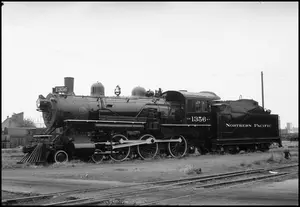
Northern Pacific 4-6-0 1356 Receives Cosmetic Restoration
Mar 07, 26 02:19 PM
 A significant preservation effort is underway in Missoula, Montana, where volunteers and local preservationists have begun a cosmetic restoration of Northern Pacific Railway steam locomotive No. 1356.
 -
New York's Beer Tasting Train Rides
Mar 07, 26 02:08 PM
 Among the Adirondack Railroad's most popular special outings is the Beer & Wine Train Series, an adult-oriented excursion built around the simple pleasures of rail travel.
 -
Kentucky's Whiskey Tasting Train Rides
Mar 07, 26 10:17 AM
Whether you’re a curious sipper planning your first bourbon getaway or a seasoned enthusiast seeking a fresh angle on the Kentucky Bourbon Trail, a train excursion offers a slow, scenic, and flavor-fo… -
Ohio's Whiskey Tasting Train Rides
Mar 07, 26 10:15 AM
 LM&M's Bourbon Train stands out as one of the most distinctive ways to enjoy a relaxing evening out in southwest Ohio: a scenic heritage train ride paired with curated bourbon samples and onboard refr…
 -
Georgia 'Wine Tasting' Train Rides In Cordele
Mar 07, 26 10:13 AM
 While the railroad offers a range of themed trips throughout the year, one of its most crowd-pleasing special events is the Wine & Cheese Train—a short, scenic round trip designed to feel…
 -
Arizona Wine Tasting Train Rides
Mar 07, 26 10:12 AM
 For those who want to experience the charm of Arizona's wine scene while embracing the romance of rail travel, wine tasting train rides offer a memorable journey through the state's picturesque landsc…