
"Capitol Limited" (Train): Schedule, Route, Consist, History
Last revised: February 28, 2025
By: Adam Burns
The Baltimore & Ohio’s premier New York-Chicago passenger train, the
Capitol Limited, was born as much out of necessity as anything else.
Ever the underdog in the New York-Chicago market, the B&O knew it needed to keep pace against its two stronger competitors and introduce a train that would strongly rival both the 20th Century Limited and Broadway Limited.
History
While the PRR and NYC had inaugurated their trains in 1902 (the Penny's train, however, was not called the Broadway Limited until 1912) the B&O did not enter the market until 1923 when that year on May 12 it introduced the Capitol Limited (sometimes affectionately referred to as the Cap).
The B&O was always a distance third in the eastern trunk line market but nevertheless maintained an impressive fleet of trains. Names like the Capitol Limited, National Limited, Royal Blue, and others were held in high esteem by the press and public.
While services reduced as patronage waned the railroad maintained its remaining trains to high standards until the end in 1971.
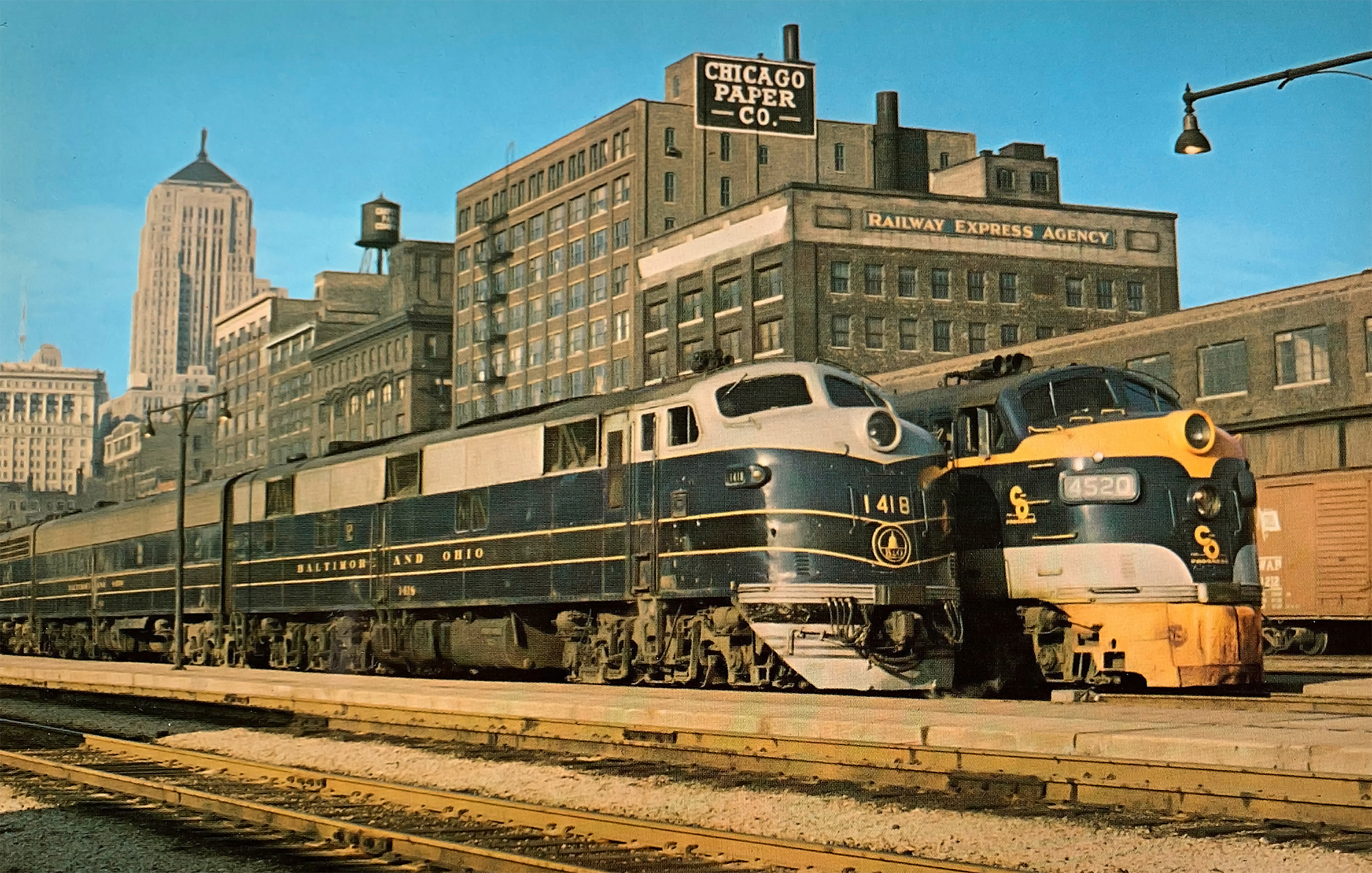 In this Baltimore & Ohio publicity photo, circa 1962, the eastbound "Capitol Limited" awaits departure from Chicago's Grand Central Station while sitting alongside a Chesapeake & Ohio "Pere Marquette." American-Rails.com collection.
The Baltimore & Ohio’s inability to effectively compete against the New York Central and Pennsylvania railroads in the hotly contested New York-Chicago market was threefold; a longer route, indirect access to downtown Manhattan, and prolonged financial struggles.
Not only was the B&O unable to access New York City directly (indirect entry occurred via the Central Railroad of New Jersey's Jersey City Terminal using ferry service across the Hudson River) but also its route to the Midwest was filled with stiff grades over the Alleghenies.
Drumhead
By comparison, the NYC and PRR both operated relatively level main lines across Pennsylvania/New York, Ohio, and Indiana. To compensate for these disadvantages the B&O provided personal, courtesy service and exquisite dining for which it became legendary.
Many of these amenities included secretaries, barbers, manicures, and valets, and fine Chesapeake Bay cuisine offered on exquisite dinnerware with colonial-style furniture.
At A Glance
20 Hours, 45 Minutes (Westbound) 20 Hours, 40 Minutes (Eastbound) |
|
May 12, 1923 - April 30, 1971 (Baltimore & Ohio) May 1, 1971 - Present (Amtrak) |
|
5 (Westbound) 6 (Eastbound) | |
Grand Central Station (Chicago) Communipaw Terminal (Jersey City, New Jersey) |
For the first three years of its existence the Capitol Limited was somewhat successful in the New York market as the B&O was under contract with the PRR to terminate its trains directly into the city at Pennsylvania Station.
However, this changed in the late summer of 1926 when the PRR ended the contract and the B&O was once again forced back into Jersey City (despite this the railroad made the ferry service as pleasant as possible, promoting friendly and prompt bus service into Manhattan, a move that for a time was actually quite successful).
In 1938 the Capitol Limited got a big boost when the B&O equipped the train with the Electo-Motive Corporation’s brand new, self-contained and streamlined diesel-electric locomotive, the EA.
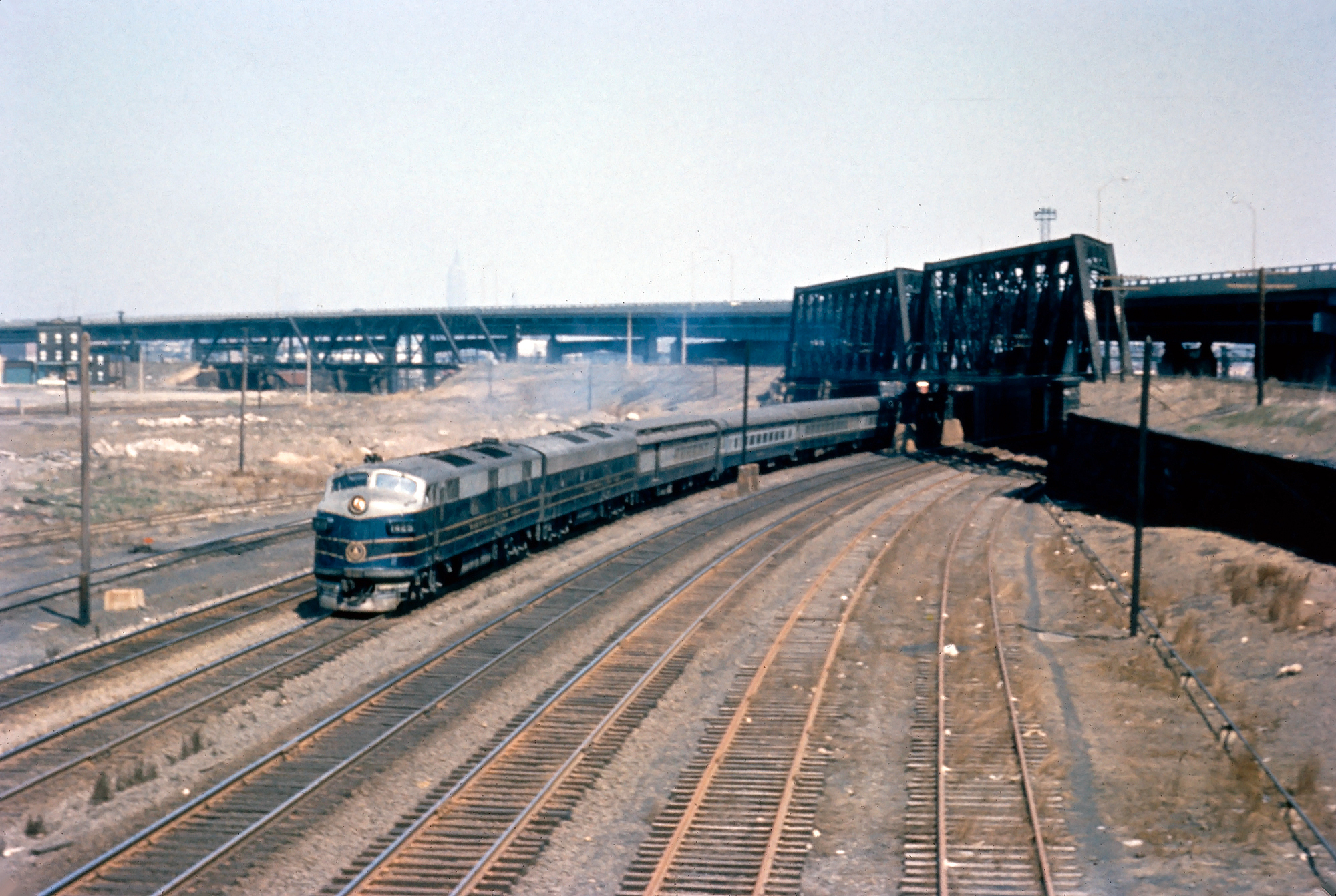 Running over the Jersey Central, Baltimore & Ohio's westbound "Capitol Limited" has just departed Communipaw Terminal in Jersey City, New Jersey, circa 1956. Up front is pair of E7's, led by #1425. Meyer Pearlman photo. American-Rails.com collection.
Not only was the diesel streamlined but the ever-resourceful B&O, not satisfied with the light-weight, aluminum cars it had purchased for its first streamliner, the Royal Blue, turned to its Mount Clare Shops in Baltimore.
The forces there used traditional heavyweight equipment and gave the cars streamlining to match the EA/EB set. What resulted, with the help of renowned industrial designer Otto Kuhler was a stunning train with one of the all-time classic liveries; royal blue, silver, and gold pin-striping.
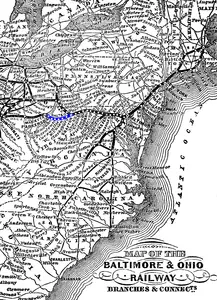
Route Map (B&O)
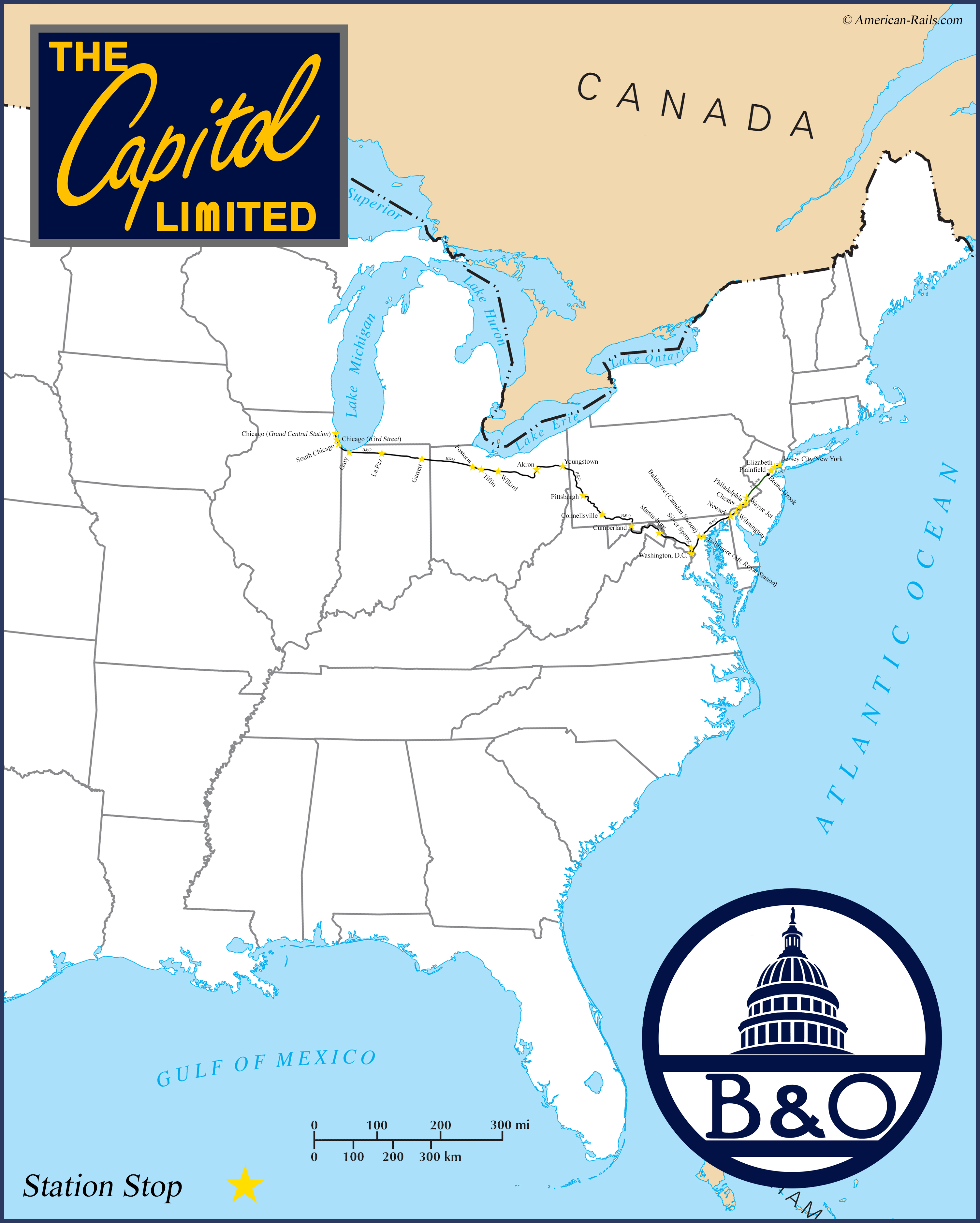
While the B&O won over the hearts of many with its splendid services and on board offerings (later amenities included air-conditioning and strata-dome car service, giving passengers a 360-degree view of the surrounding landscape) it simply could not compete with the PRR and NYC to New York.
Route Map (Amtrak)
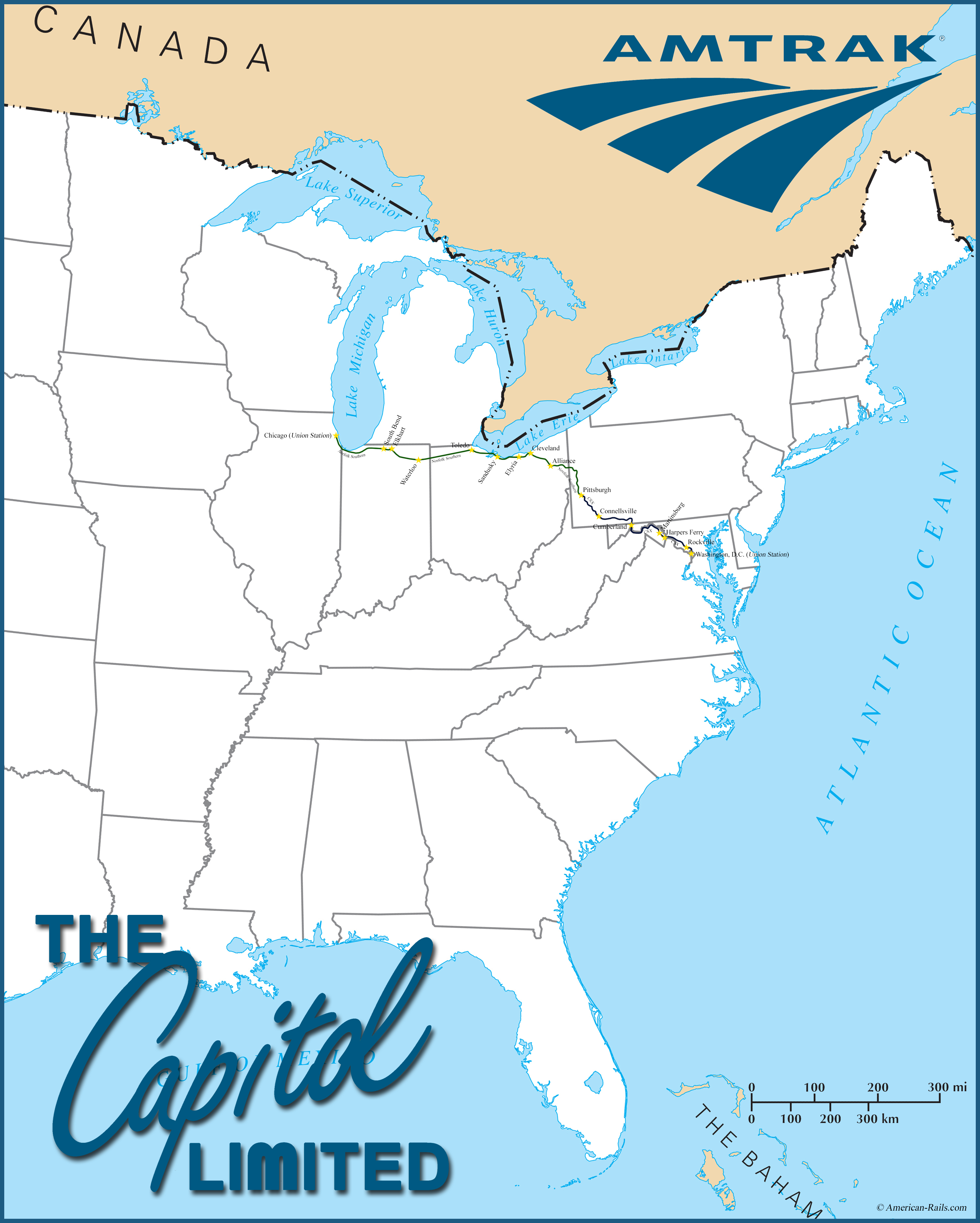
As a result on April 26, 1958 the B&O gave up all service to New York and began terminating its trains only as far east as Baltimore.
However, unlike many other railroads the B&O did not let its passenger service slide away, and die a slow death. Right until the end the railroad offered premier service on the Cap and the train’s last journey under the B&O banner was fit for kings.
Consist (1952)
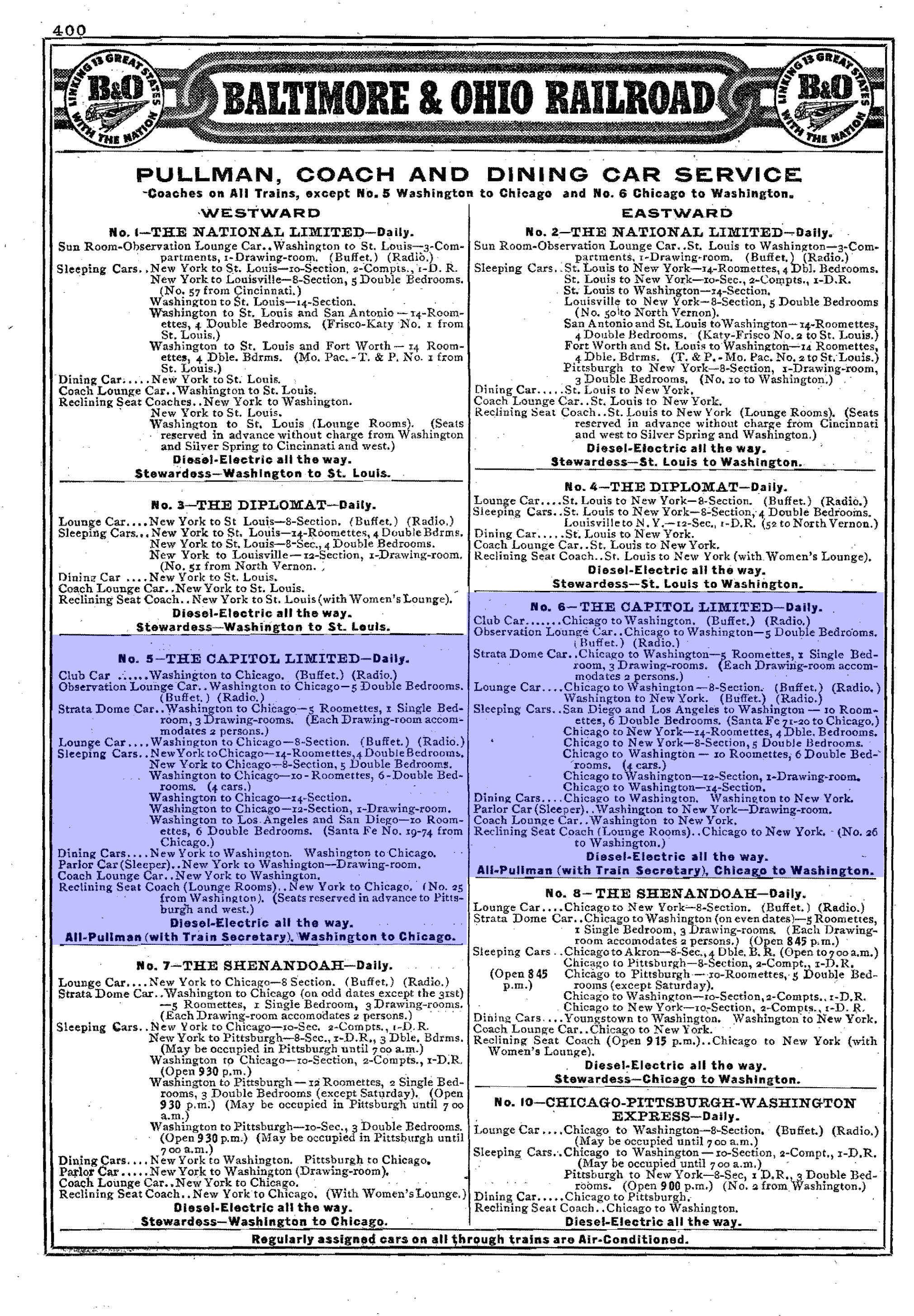
For the next thirteen years the B&O continued running its premier flagship train between Washington, D.C./Baltimore. As ridership declined the railroad began merging other trains into the Cap such as the Ambassador, which operated to Detroit, and the all-coach Columbian to Chicago.
Consist (1948)
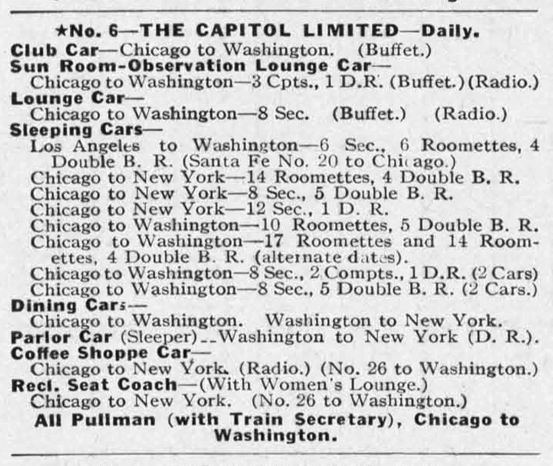
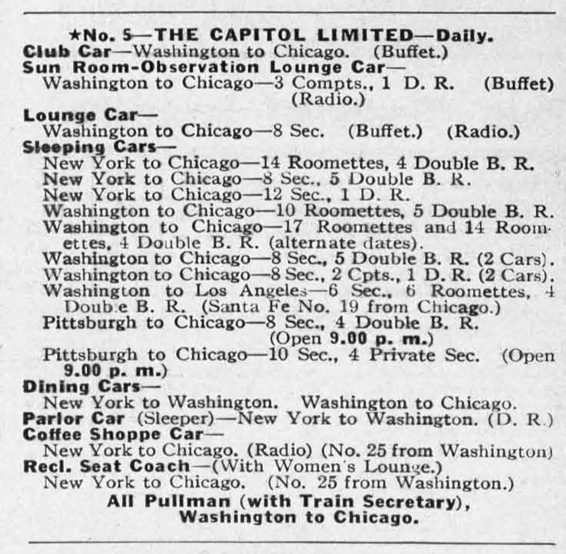
During its last years of service the Capitol Limited continued to provide coach service with reclining seats, lounge service, Chessie tavern service, and finally Chessie Starlight Sleeper service (a rarity in the years directly before Amtrak).
Timetable (1952)
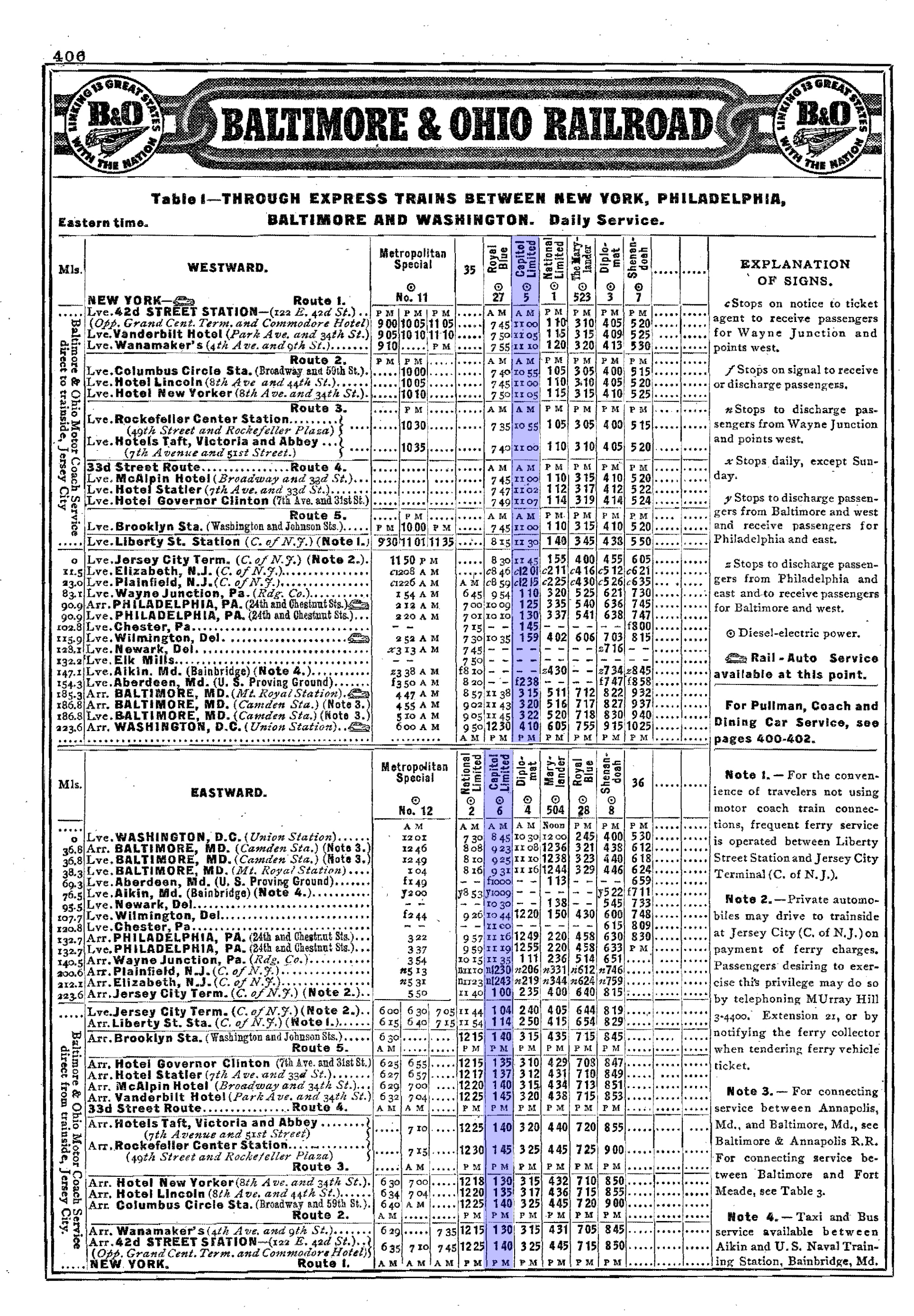
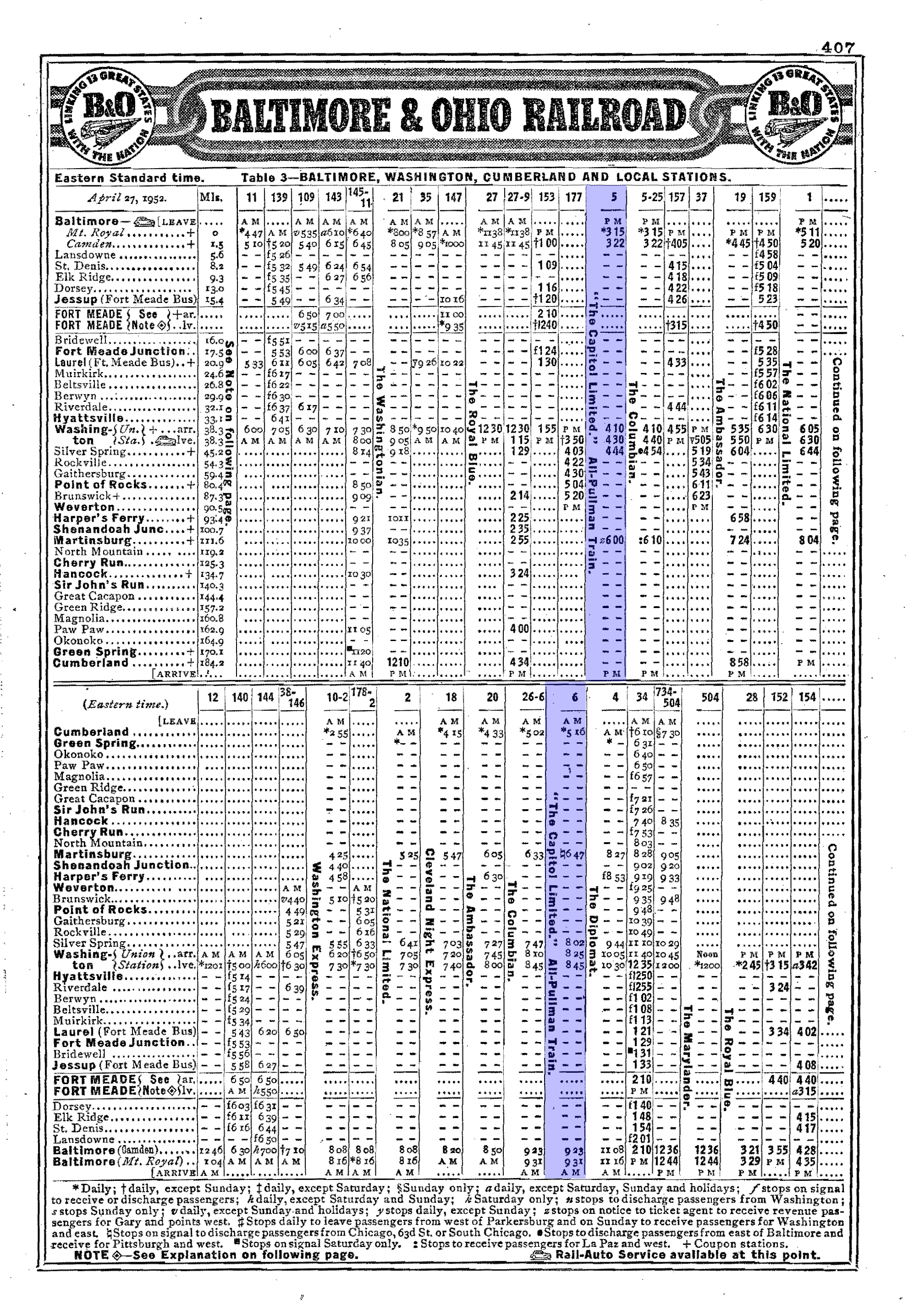
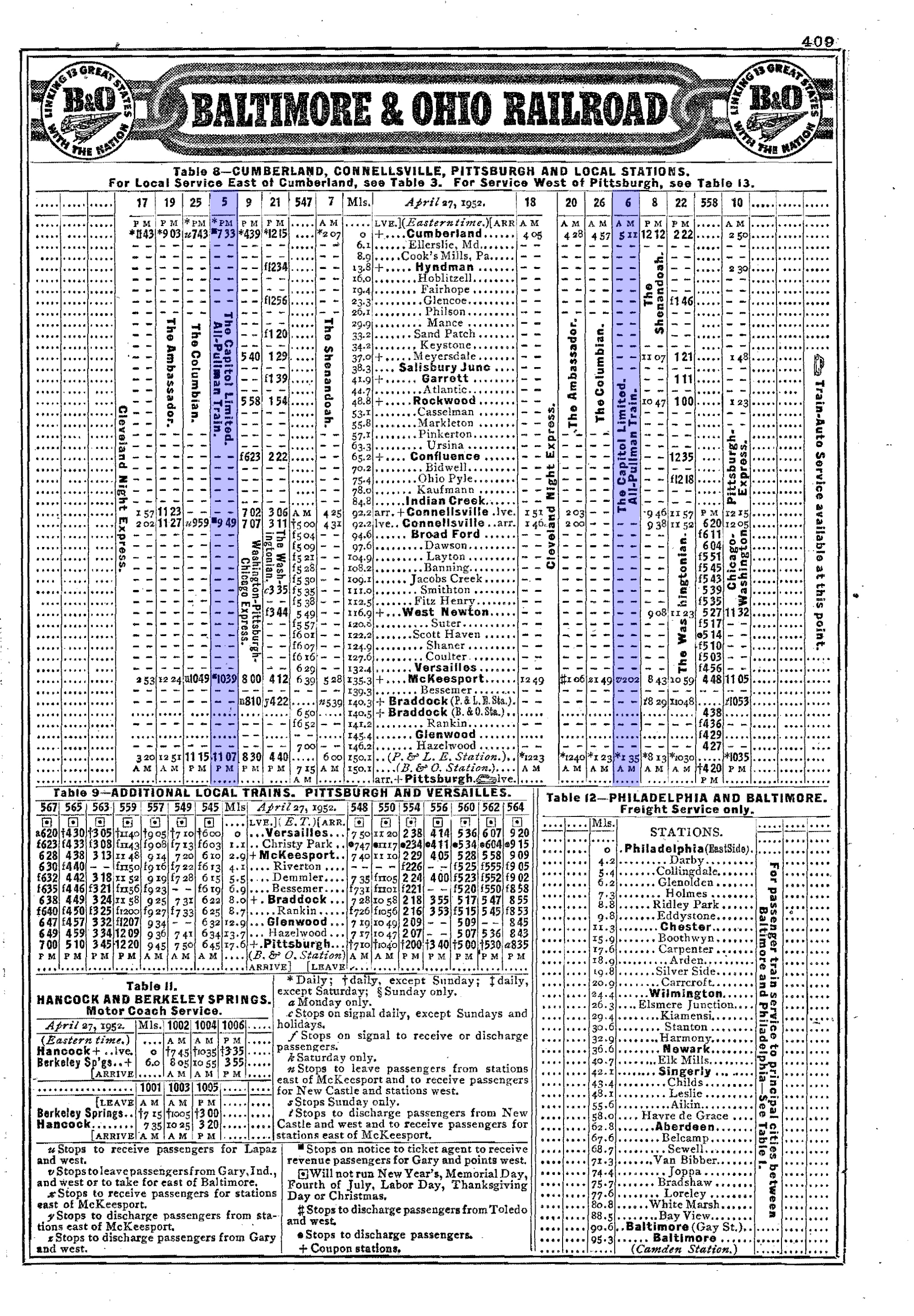
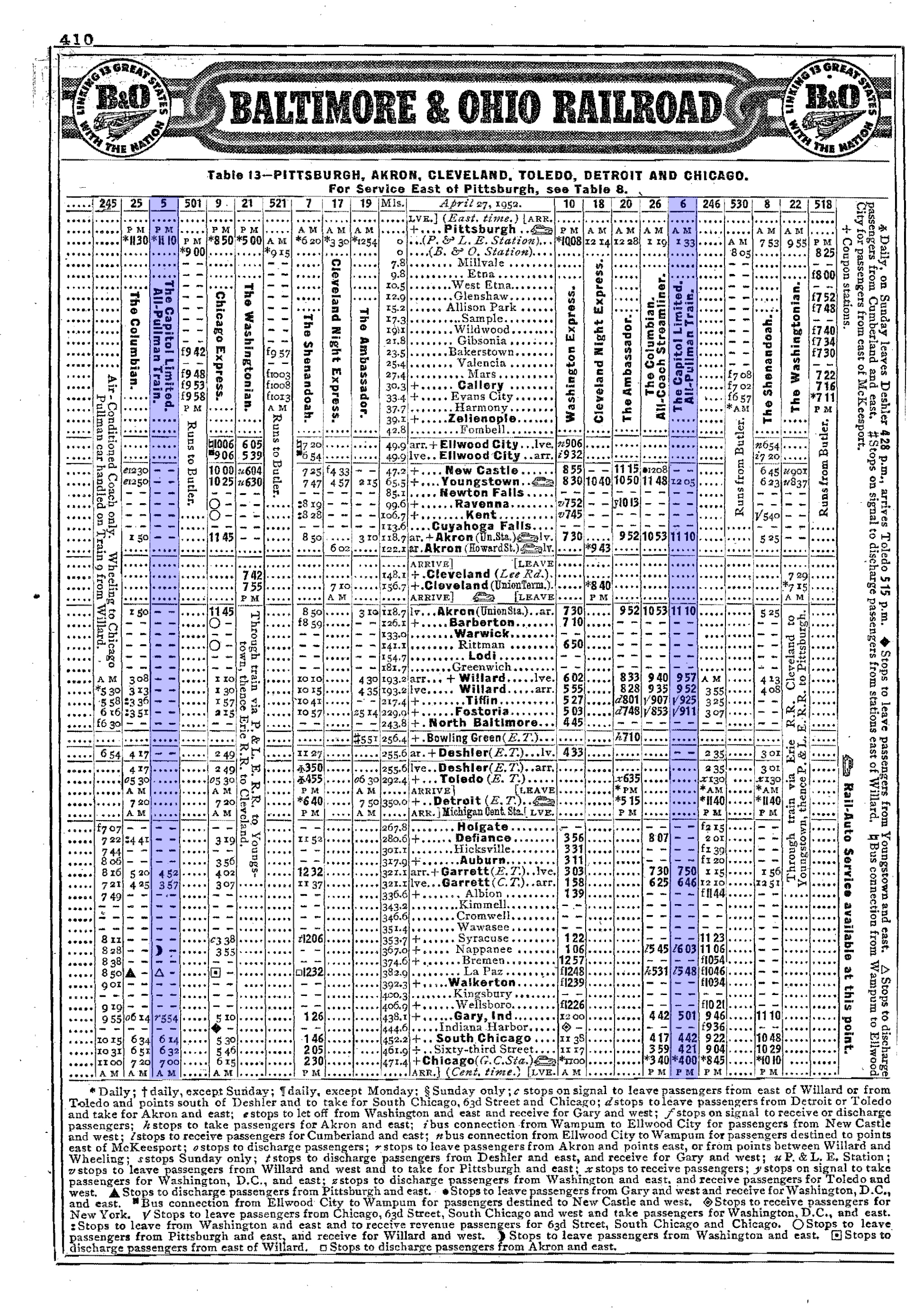
On April 29, 1971, two days before Amtrak took over most intercity passenger operations around the country, the Cap pulled out of Baltimore’s Camden Station replete with coaches, diners, lounges, strata-dome, and all for its final trip to Chicago.
Timetable (May, 1941)
| Time/Leave (Train #5) | Milepost | Location | Time/Arrive (Train #6) |
|---|---|---|---|
| 12:45 PM | 0.0 | 1:30 PM | |
| 12:58 PM | 1.0 | 1:17 PM | |
| 1:14 PM | 12.5 | 1:01 PM | |
| 1:28 PM | 24.0 | 12:47 PM | |
| 2:27 PM | 84.1 | 11:49 AM | |
| 2:42 PM (Ar) 2:43 (Dp) | 91.9 | 11:33 AM (Dp) 11:31 AM (Ar) | |
| 2:59 PM | 103.8 | ||
| 3:14 PM | 116.9 | 11:01 AM | |
| 3:29 PM | 129.1 | ||
| 4:33 PM | 186.3 | 9:48 AM | |
| 4:38 PM (Ar) 4:40 PM (Dp) | 187.8 | 9:42 AM (Dp) 9:40 AM (Ar) | |
| 5:25 PM (Ar) 5:45 PM (Dp) | 224.6 | 9:00 AM (Dp) 8:40 AM (Ar) | |
| 5:59 PM | 231.5 | 8:22 AM | |
| 7:16 PM | 298.0 | 7:04 AM | |
| 8:49 PM | 375.7 | 5:35 AM (Dp) 5:30 AM (Ar) | |
| 11:09 PM | 467.9 | ||
| 511.0 | 2:22 AM | ||
| 12:25 AM (Ar) 12:35 (Dp) | 525.8 | 1:56 AM (Dp) 1:54 AM (Ar) | |
| 591.3 | 12:26 AM | ||
| 644.5 | 11:29 PM | ||
| 719.0 | 10:07 PM (Dp) 10:02 PM (Ar) | ||
| 743.2 | 9:33 PM | ||
| 755.7 | 9:17 PM | ||
| 6:33 AM | 846.9 | 7:46 PM | |
| 5:35 AM | 846.9 | 6:44 PM | |
| 908.7 | 5:42 PM | ||
| 7:28 AM | 963.9 | 4:49 PM | |
| 7:43 AM | 978.0 | 4:31 PM | |
| 8:05 AM | 987.7 | 4:13 PM | |
| 8:30 AM | 997.2 | 3:50 PM |
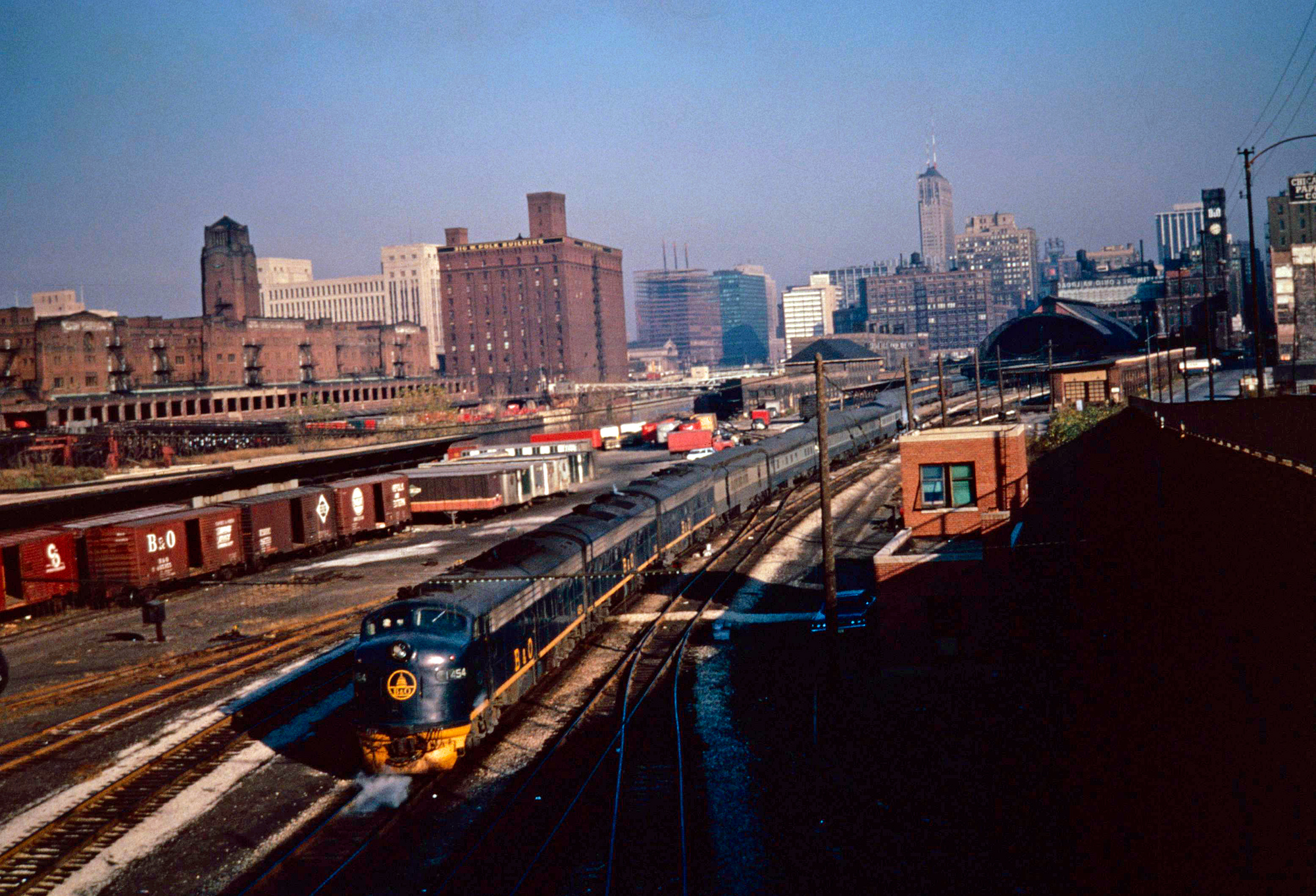 Baltimore & Ohio E9A #1454 (built as #34) leads train #5, the eastbound "Capitol Limited," out of Chicago's Grand Central Station on a fall morning in the late 1960s. American-Rails.com collection.
The railroad even brought back its famed Deer Park spring water and all onboard vegetables were fresh, not frozen or canned. After Amtrak took over it initially canceled all B&O trains, including the Cap.
However, ten years after making its final run under its original creator, Amtrak brought back the train in 1981, operating it over its original route between Washington, D.C. and Chicago where it continues to remain in service today.
 B&O E8A #1449, still sporting its fading "Sunburst" on the nose, is ahead of the "Capitol Limited," at Hammond, Indiana on March 31, 1964. Roger Puta photo.
Amtrak
Amtrak's Capitol Limited still connects Washington D.C. and Chicago. The route boasts several significant stops, serving as a vital link within the United States railway network. Notable stops include Harpers Ferry in West Virginia, Pittsburgh in Pennsylvania, Cleveland in Ohio, and South Bend in Indiana, among others.
This noteworthy train is recognized by the numbers 29 and 30 on the timetable. Train 29 travels westward from Washington D.C. to Chicago, and the reverse, eastward trip, is carried by train 30.
Amtrak provides a range of on-board services to make the journey on the Capitol Limited as comfortable as possible. These include reclining coach seats, private rooms, a dining car and a café, free WiFi, and even checked baggage service at select stations.
The exact travel time varies due to differing factors, but generally spans around 17 hours and 25 minutes, offering ample time for passengers to unwind, relax, and soak up the countryside's scenic beauty.
The train's route stretches an impressive length of approximately 764 miles across several states, truly embodying the spectrum of American landscapes and cityscapes.
The Capitol Limited's termi offer numerous connecting Amtrak train services. In Washington D.C., the Silver Meteor and Cardinal connect passengers to the south and southeastern U.S., while in Chicago, the Southwest Chief and Empire Builder offer connectivity to the western U.S.
Several Amtrak partner bus services further diversify the reach of the Capitol Limited, providing passengers with an extended web of travel opportunities.
Traveling on this train reveals a panorama of the American heartland, offering passengers a myriad of diverse landscapes. Historic cities, industrial towns, stretches of Appalachian Mountains, and the serene Potomac River are among the many scenic highlights noted by many passengers.
From the historical sites within the charismatic cities of Washington D.C. and Chicago to the quaint charm of Harpers Ferry or the deep riverside woods of Cumberland, the sights available on this route provide a unique cross-continental picture.
The Capitol Limited not only serves as a crucial transportation artery but also tells an extraordinary tale of the expansion and interconnection of America's east and midwest regions.
The train has upheld its legacy of offering reliable and comfortable transportation while presenting a broad taste of America's heartland to its passengers.
Tracing back to 1923, the service, formerly the B&O's (Baltimore and Ohio) Capitol Limited, connected the same two cities and shared a similar route with today's version.
Historically, the train played an essential role in supporting the nation's growth and development, serving communities and contributing to economic activity in the areas it connects.
Today, its cars feature long-haul amenities, such as superliner sleeping cars, bi-level Superliner coaches, Sightseer lounge cars, and more. Riding aboard is a journey of convenience, historical exploration, and scenic appreciation.
Amtrak remains committed to upholding the historic legacy of the Capitol Limited while constantly innovating towards a more environmentally friendly, efficient, and passenger-centric future.
Planning a journey on this route also allows one to explore numerous on-route attractions, such as the John F. Kennedy Center in Washington D.C., Navy Pier in Chicago, Harpers Ferry National Historical Park, and the Carnegie Museum of Natural History in Pittsburgh.
Whether one is a seasoned railway enthusiast, historian, or casual traveler seeking an efficient and exciting transportation choice, the Capitol Limited offers an unparalleled experience.
Ultimately, it is more than just a train ride – it's a journey through the heart of America, connecting individuals, landscapes, and histories, and continuing to drive the nation's growth and development.
Photos
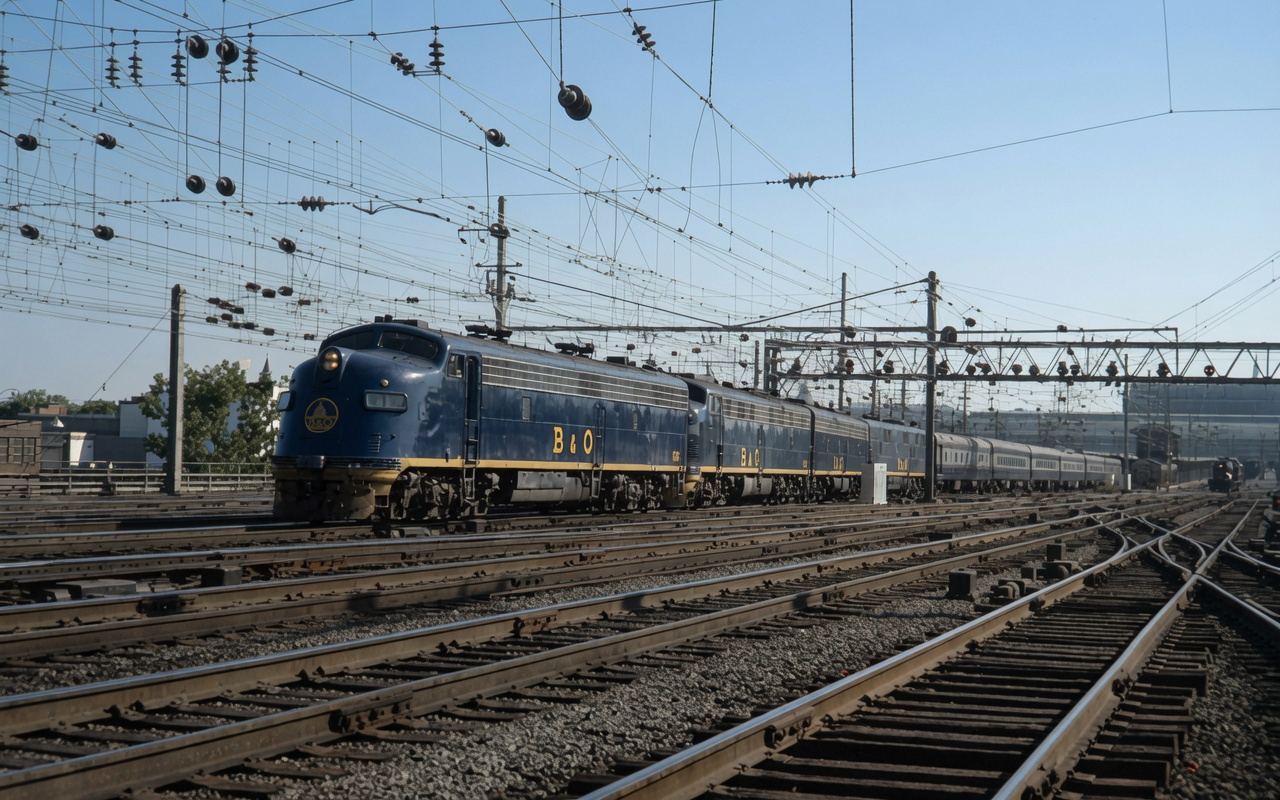 Baltimore & Ohio E8A #1413 heads up two other E8As and an E7A as the westbound "Capitol Limited" departs Washington Union Station in September, 1968. Mac Owen photo.
 Baltimore & Ohio E8A #1461, a former C&O unit, leads the final run of the "Capitol Limited" near Harpers Ferry, West Virginia on May 1, 1971. James Jeffrey photo.
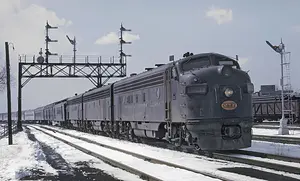
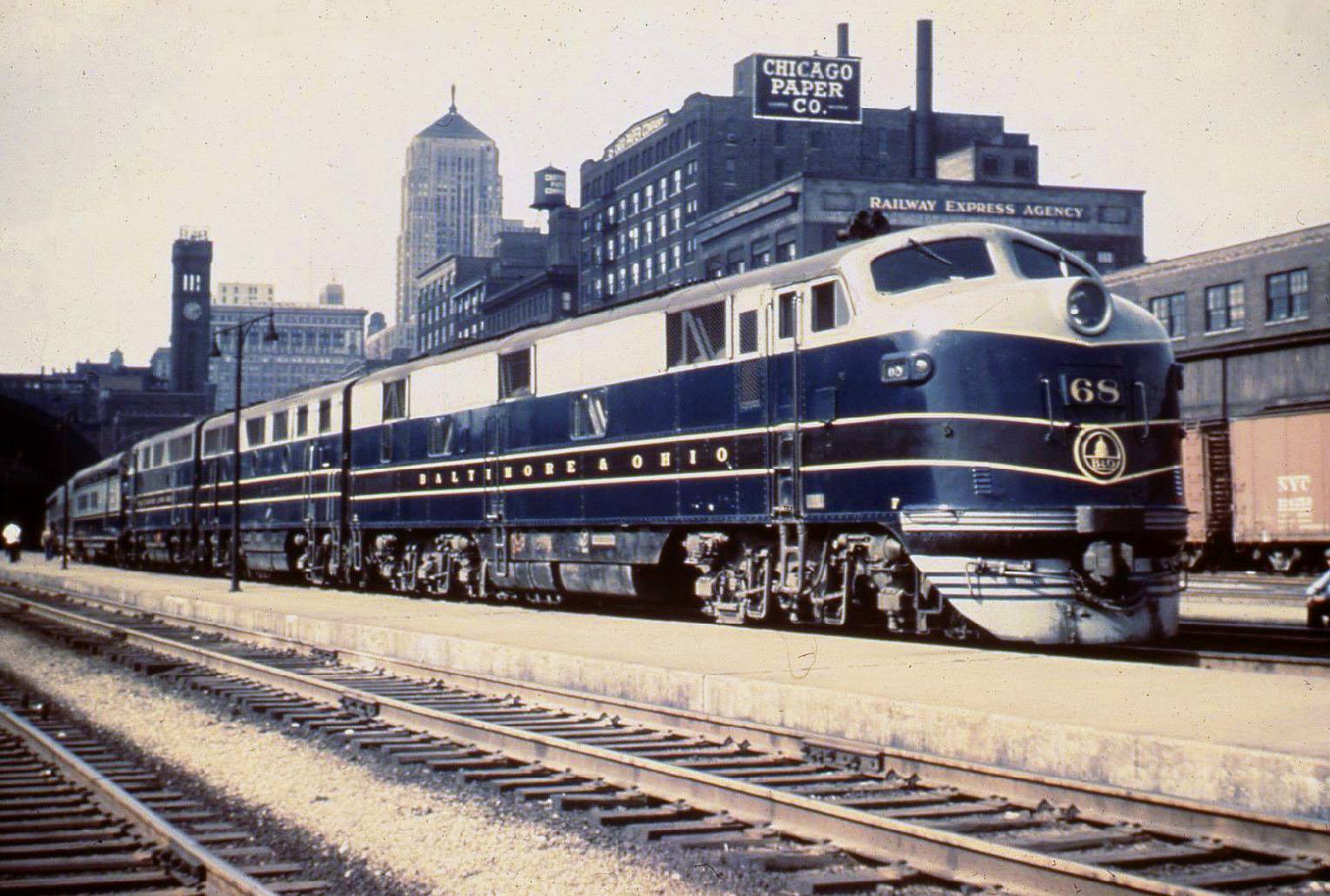 Baltimore & Ohio E7A #68 and what appears to be a trailing B-A set of F3's have what is likely the "Capitol Limited" (New York - Chicago) at Chicago's Grand Central Station during May of 1953.
Sources
- Reynolds, Kirk and Oroszi, David. Baltimore & Ohio Railroad. Osceola: MBI Publishing, 2000.
- Schafer, Mike. Classic American Railroads. Osceola: MBI Publishing, 1996.
- Schafer, Mike and Welsh, Joe. Streamliners, History of a Railroad Icon. St. Paul: MBI Publishing, 2003.
- Welsh, Joe. Baltimore & Ohio's Capitol Limited And National Limited. St. Paul: MBI Publishing, 2007.
Recent Articles


-
Chicago & North Western Class E-4: Streamlined 4-6-4 Hudsons
Oct 22, 26 10:28 PM
 C&NW Class E-4, nine streamlined 4-6-4s, 4001–4009, Alco 1938. 84-inch drivers, 25-by-29 cylinders, 300 psi. Conventional Chicago–Omaha trains. Oil in 1947–48. Retired 1953–1956.
 -
Gateway Western Railway: Map, Roster, History
Oct 22, 26 02:43 PM
 Gateway Western Railway, reporting mark GWWR. Class II from Kansas City to East St. Louis. Kansas City Southern control May 5, 1997. The 1992 diesel fleet, with serials and order numbers.
 -
Duluth, Winnipeg & Pacific Railway: Roster, Map, History
Oct 22, 26 01:51 PM
 Duluth, Winnipeg & Pacific, the Peg, reporting mark DWP. From the Rainy River to Duluth. CNRHA steam list 36. Fifteen RS-11s. Merged into Wisconsin Central Ltd. on December 31, 2011.
 -
Elgin, Joliet and Eastern Diesel Roster (All-Time)
Oct 22, 26 01:35 PM
 All-time diesel roster of the Elgin, Joliet and Eastern.
 -
Elgin, Joliet and Eastern Steam Roster
Oct 22, 26 01:25 PM
 Elgin, Joliet and Eastern steam locomotives of the final decade, which largely comprised switcher types, 2-8-0s, and a large fleet of Mikados.
 -
Elgin, Joliet and Eastern Railway: Map, Roster, History
Oct 22, 26 12:32 PM
 Elgin, Joliet & Eastern, the outer arc around Chicago, from the Joliet, Aurora & Northern of April 30, 1884. Illinois company March 18, 1887. Merged December 4, 1888. Principal lines sold Janu…
 -
Denver and Salt Lake Railway: History, Roster, Timetable
Oct 22, 26 09:47 AM
 Denver & Salt Lake, the Moffat Road, from Denver to Craig. Tunnel opened February 26, 1928. Dotsero Cutoff dedicated June 16, 1934. Merged April 11, 1947. Steam locomotives 59.
 -
Duluth, Missabe and Iron Range Diesel Roster (All-Time)
Oct 22, 26 09:43 AM
 All-time diesel roster of the Duluth, Missabe and Iron Range. 148 owned frames, each counted once. SW9s, SD9s, SD18s, SD38s, RSD-15s, and C630s. Serials and builder order numbers included. Helm SD40-3…
 -
Duluth, Missabe and Iron Range Steam Locomotives (Since 1900)
Oct 22, 26 09:22 AM
 Duluth, Missabe & Iron Range steam locomotives built since 1900. Duluth & Iron Range, Duluth, Missabe & Northern, and later DM&IR acquisitions. Quantity column 252. Yellowstones 220-23…
 -
Duluth, Missabe and Iron Range Railway: Roster, Map, Logo
Oct 22, 26 09:17 AM
Duluth, Missabe & Iron Range, reporting mark DMIR, from the Mesabi and the Vermilion to the Lake Superior docks. Formed July 1, 1937. Steam quantity 252. Owned diesels 148. On paper through Decemb… -
Duluth, South Shore, and Atlantic Railway: Map, Roster, Timetables
Oct 21, 26 11:21 PM
 Duluth, South Shore & Atlantic Railway, the South Shore. Marquette to the Sault, St. Ignace, Houghton, and Duluth-Superior. Soo Line on January 1, 1961. Twenty-four diesels.
 -
Detroit, Toledo and Ironton Diesel Roster (All-Time)
Oct 21, 26 02:55 PM
 All-time diesel roster of the Detroit, Toledo and Ironton. 119 frames, each counted once. Serials and builder order numbers included. Last steam was December 24, 1955.
 -
Detroit, Toledo and Ironton Steam Roster (Post 1900)
Oct 21, 26 02:49 PM
 Detroit, Toledo and Ironton steam locomotives built after 1900. Drury's class grid. The quantity column prints 141. Counted once, the frames are 137. Last steam was Mikado 805 on December 24, 1955.
 -
Detroit, Toledo and Ironton Railroad: Map, Roster, History
Oct 21, 26 02:40 PM
 Detroit, Toledo & Ironton, reporting mark DTI, from Detroit to Ironton, Ohio. Railway organized May 2, 1905. Railroad articles filed February 21, 1914. Henry Ford, 1920 to 1929. Steam and diesel r…
 -
Iowa, Chicago and Eastern Railroad: Roster, Map, History
Oct 21, 26 01:04 PM
 Iowa, Chicago & Eastern Railroad Corporation, reporting mark ICE. About 1,125 miles and about 275 miles of trackage rights from the I&M Rail Link. Operations at 12:01 a.m. July 30, 2002. Canad…
 -
Rapid City, Pierre & Eastern Railroad: Route, Roster, Overview
Oct 21, 26 10:16 AM
 Rapid City, Pierre & Eastern Railroad, reporting mark RCPE. Genesee & Wyoming Class II. Agreement of January 2, 2014, Finance Docket 35799. Freight service from June 1, 2014, on the Dakota, Mi…
 -
Dakota, Minnesota & Eastern Railroad: Roster, Map, History
Oct 21, 26 12:26 AM
 Dakota, Minnesota & Eastern Railroad, reporting mark DME. The July 2, 1986 Chicago & North Western sale, 826 miles and 139 miles of trackage rights. Canadian Pacific control October 30, 2008…
 -
Detroit and Mackinac Railway: Map, Roster, History
Oct 20, 26 11:58 PM
 Detroit & Mackinac Railway, the Turtle Line. Bay City to Cheboygan along Lake Huron. Incorporated December 29, 1894. Lake State Railway leased the operation in 1992 and bought the lines in 1997. E…
 -
Davenport, Rock Island and Northwestern Railroad
Oct 20, 26 11:22 PM
 Davenport, Rock Island and North Western Railway, the DRI Line. Clinton to East Moline across the Crescent Bridge. Burlington and Milwaukee. Merged into the Soo Line on June 29, 1995. Eighteen diesels…
 -
Chicago Great Western Steam Roster (Post 1900)
Oct 20, 26 11:17 PM
 Chicago Great Western steam locomotives built or rebuilt since 1900. Drury's class grid. 320 frames, each once. The quantity column prints 376 because a rebuild is listed again. Last steam in the reti…
 -
Chicago Great Western Diesel Roster (All-Time)
Oct 20, 26 10:47 PM
 All-time diesel roster of the Chicago Great Western. 157 frames, each counted once. Serials and builder order numbers included. Steam was gone by 1950. The 1963 glance figure of 141 is one year's flee…
 -
Chicago Great Western Railway: Map, Photos, History, Rosters
Oct 20, 26 10:43 PM
 The Chicago Great Western, the Corn Belt Route, linked Chicago, the Twin Cities, Omaha, and Kansas City from September 27, 1885, until the Chicago & North Western merger at 12:01 a.m. on July 1, 1968…
 -
Chicago, South Shore & South Bend Railroad: "The South Shore Line"
Oct 20, 26 05:48 PM
 Chicago South Shore & South Bend, the South Shore Line, from the 1901 Air Line through Samuel Insull's 1925 rebuild, the orange cars, the 800s, and the railroad NICTD and Anacostia still run.
 -
Northwestern Virginia Railroad: Map, History, Timetable
Oct 20, 26 04:18 PM
 Northwestern Virginia Railroad, chartered February 14, 1851, Grafton to Parkersburg, 104 miles. Opened May 1, 1857. Foreclosure sale February 15, 1865, as the Parkersburg Branch. Twenty-three tunnels…
 -
"Exposition Flyer" (Train): Consist, Timetable, History
Oct 20, 26 03:29 PM
 Exposition Flyer, Chicago to Oakland, June 10, 1939 to March 20, 1949. Burlington, Rio Grande, and Western Pacific. Heavyweight cars, then diesels and a vista-dome. Replaced by the California Zephyr.
 -
Chicago, St. Paul, Minneapolis & Omaha Railway, "The Omaha Road"
Oct 20, 26 02:13 PM
 The Omaha Road, reporting mark CMO. Formed May 26, 1880. North Western management on December 16, 1882. Leased January 1, 1957. Class K-1 No. 183 and the sublettered diesels.
 -
Chicago and Western Indiana Railroad: Map, Rosters, History
Oct 20, 26 01:17 PM
 Chicago and Western Indiana, chartered June 5, 1879. Five equal owners, Dearborn Station, and two main lines. Dolton suburban mile 16.6. Fifteen diesels. Railroad service ended in 1994. The Illinois c…
 -
Railroad Tell-Tales: Protecting The Brakeman
Oct 20, 26 12:58 PM
 Railroad tell-tales: hanging ropes that warned a man on a freight-car roof of a low bridge or tunnel. The 1897 bridge-warning report, the 1905 Wisconsin statute, retainers, and why the roof walk outla…
 -
Chicago & North Western Steam Roster (Post 1900)
Oct 20, 26 12:54 PM
 Chicago & North Western steam locomotives built since 1900, and the Omaha Road list beside it. Drury's parent quantity column sums to 1,445, with four rows left blank. The Omaha Road column sums to 24…
 -
Chicago & North Western Diesel Roster (All-Time)
Oct 20, 26 12:49 PM
 All-time diesel roster of the Chicago & North Western. 2,494 frames, each counted once, including Chicago Great Western, Minneapolis & St. Louis, and Omaha Road units that received North Western numbe…
 -
Chicago and North Western Railroad: Map, History, Logo
Oct 20, 26 12:37 PM
 The Chicago & North Western, chartered as the Galena & Chicago Union in 1836 and formed in June 1859. Granger railroad of the 400s, the Cowboy Line, and Powder River coal. Union Pacific common control…
 -
Chicago & Illinois Midland Steam Roster (Post 1900)
Oct 20, 26 12:30 AM
 Chicago & Illinois Midland steam locomotives built since 1900. Drury's class grid, 57 engines. Twenty-six 2-10-2s, including nine from the Wabash and nine from the Atlantic Coast Line. Last road steam…
 -
Chicago & Illinois Midland Diesel Roster (All-Time)
Oct 20, 26 12:20 AM
 All-time diesel roster of the Chicago & Illinois Midland. 28 frames, each counted once. Six SW1200s, five SD9s, the only two RS1325s, two SD18s, six SD38-2s, and four SD20s. Serials included.
 -
Chicago and Illinois Midland Railroad: Map, Rosters, History
Oct 20, 26 12:17 AM
 The Chicago & Illinois Midland moved Illinois coal for Commonwealth Edison, Taylorville and Springfield to Pekin, with Peoria over the Peoria & Pekin Union. The 1906 railway began operating February 1…
 -
Chicago & Eastern Illinois Diesel Roster (All-Time)
Oct 19, 26 04:23 PM
 All-time diesel roster of the Chicago & Eastern Illinois. 143 frames, each counted once. Switchers, F3s, FP7s, E7s, the BL1, and the GP7s through GP35s. Serials included.
 -
Chicago & Eastern Illinois Steam Roster (Post 1900)
Oct 19, 26 04:19 PM
Chicago & Eastern Illinois steam locomotives built or rebuilt since 1900. 146 Consolidations, 60 Mikados, and 24 Pacifics. Drury's class grid. Last steam was Mikado 1944 at Vincennes on May 5, 1950. -
Chicago and Eastern Illinois Railroad: Map, Rosters, History
Oct 19, 26 03:57 PM
 The Chicago & Eastern Illinois ran from Chicago to Evansville, St. Louis, and Thebes. First company of the name, August 28, 1877. The remainder merged into the Missouri Pacific on October 15, 1976. St…
 -
Rock Island Diesel Roser: All-Time
Oct 19, 26 11:05 AM
 Chicago, Rock Island and Pacific diesel locomotives, 1,029 frames counted once. Switchers, cab units, road-switchers, two acquired slugs, five RDCs, and bi-power 10000. Serial and order are separate c…
 -
Rock Island Steam Roster: Post 1900
Oct 19, 26 11:01 AM
Chicago, Rock Island and Pacific steam locomotives built or rebuilt since 1900. Drury's class grid, 1,482 frames counted once, including 85 4-8-4s. Last revenue steam was July 1953. -
Rock Island Railroad: Map, Pictures, Logo, History
Oct 19, 26 10:51 AM
 The Chicago, Rock Island and Pacific ran from Chicago to the Twin Cities, Denver, Tucumcari, and the Gulf. First train October 10, 1852. Directed service ended March 23, 1980. Steam and diesel rosters…
 -
EMD "F7" Locomotives: Cab, Top Speed, Specs, Rosters
Oct 19, 26 12:27 AM
 EMD F7 cab units and boosters, 1,500 horsepower, built February 1949 through December 1953. Gear ratios, specifications, and the production roster by owner, serial, and order.
 -
Harlem Transfer Company: An NYC Terminal System
Oct 19, 26 12:01 AM
 Harlem Transfer Company, the Lackawanna's offline freight terminal on the Bronx side of the Harlem River at East 135th Street. Carfloats to Hoboken, boxcab No. 2, and GE 44-tonner 53.
 -
Belpre Industrial Parkersburg Railroad: Roster, History, Photos
Oct 18, 26 11:44 PM
 Belpre Industrial Parkersburg Railroad, a Class III short line leasing about 46.9 miles of CSX track at Parkersburg since 2020. The Ohio River bridge, the Marietta Subdivision, and five GP38-3s.
 -
Chicago, Peoria & St. Louis Railroad: Map, Timetables, History
Oct 18, 26 10:57 PM
 Chicago, Peoria & St. Louis Railroad, an Illinois line from Pekin and Peoria through Springfield to Madison. Chartered in 1853. Sold in parcels on November 20, 1924. The Pekin line is today the Illino…
 -
Chicago, Burlington & Quincy Diesel Roster (All-Time)
Oct 18, 26 10:54 PM
 All-time diesel roster of the Chicago, Burlington & Quincy. 951 parent frames, 72 Colorado & Southern, and 36 Fort Worth & Denver, each counted once. Serials included.
 -
Burlington Railroad (CB&Q): Map, History, Rosters, Photos
Oct 18, 26 10:49 PM
 The Chicago, Burlington & Quincy, the Burlington Route, ran from Chicago to Denver, the Twin Cities, and the Gulf. Steam built since 1900 and the diesel fleets are companion rosters. Burlington Northe…
 -
Chicago, Burlington & Quincy Steam Roster (Post 1900)
Oct 18, 26 10:33 PM
Chicago, Burlington & Quincy steam locomotives built or rebuilt since 1900. 429 Prairies, 383 Mikados, the Hudsons, and the O-5 4-8-4s. Drury's class grid. -
Virginian Railway's 2-6-6-6 Locomotives (Class AG)
Oct 18, 26 01:38 PM
 Virginian Railway class AG. Eight Lima 2-6-6-6s, Nos. 900-907, built in 1945 for the east end. Billed at 753,000 pounds. Scrapped in 1960.
 -
Pennsylvania (PRR) Steam Roster: Post 1906
Oct 18, 26 01:05 PM
ennsylvania steam after 1906—H8, H9, and H10 Consolidations, 574 L1s Mikados, 598 I1s Decapods, 425 K4s Pacifics, 301 M1 Mountains. Drury’s grid. Last steam November 30, 1957. -
Chicago, Aurora and Elgin Railroad: The "Roarin' Elgin"
Oct 18, 26 10:54 AM
The Chicago, Aurora & Elgin, the Roarin' Elgin, ran 600-volt third-rail trains from Chicago to Aurora, Batavia, and Elgin. Passenger service ended at noon on July 3, 1957. Freight ended June 11, 1959.


%20leads%20train%20%235%2C%20the%20eastbound%20%22Capitol%20Limited%2C%22%20out%20of%20Chicago's%20Grand%20Central%20Station%20on%20a%20fall%20morning%20in%20the%20late%201960s.%20American-Rails.com%20collection.)
%20at%20Chicago's%20Grand%20Central%20Station%20during%20May%20of%201953.)