Alco "Century" Diesel Locomotives: Models, History, Photos
Last revised: December 21, 2024
By: Adam Burns
Alco’s Century series was perhaps a line developed more from desperation than anything else in an attempt to gain a footing in the locomotive market and better compete with both General Electric and General Motors.
The American Locomotive Company (Alco) was a manufacturing icon for years before it switched from steam power to diesels.
History
During the steam era the company constructed some of the best and well-known locomotives to ever roam the rails, many of which still survive today.
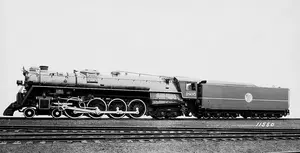
These included designs such as the 4-6-4 Hudson, 4-8-4 Niagara, 4-6-6-4 Challenger and the legendary 4-8-8-4 Big Boy (one of which, #4014 is now slated for restoration by Union Pacific).
During the early diesel era Alco performed quite well in the market as an early pioneer particularly with the S and RS line.
However, it lagged behind in research and development of road-switchers, which resulted in the company exited the market during the late 1960s.
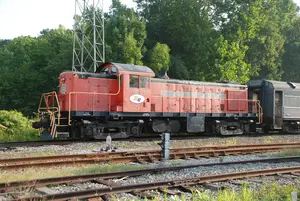
Today, several Centuries survive, preserved at museums or even remaining in operation at a handful of short lines.
The locomotives' age means parts are becoming increasingly difficult to find although some companies have found the old Alco's preferable due to their simplicity and ruggedness.
Photos
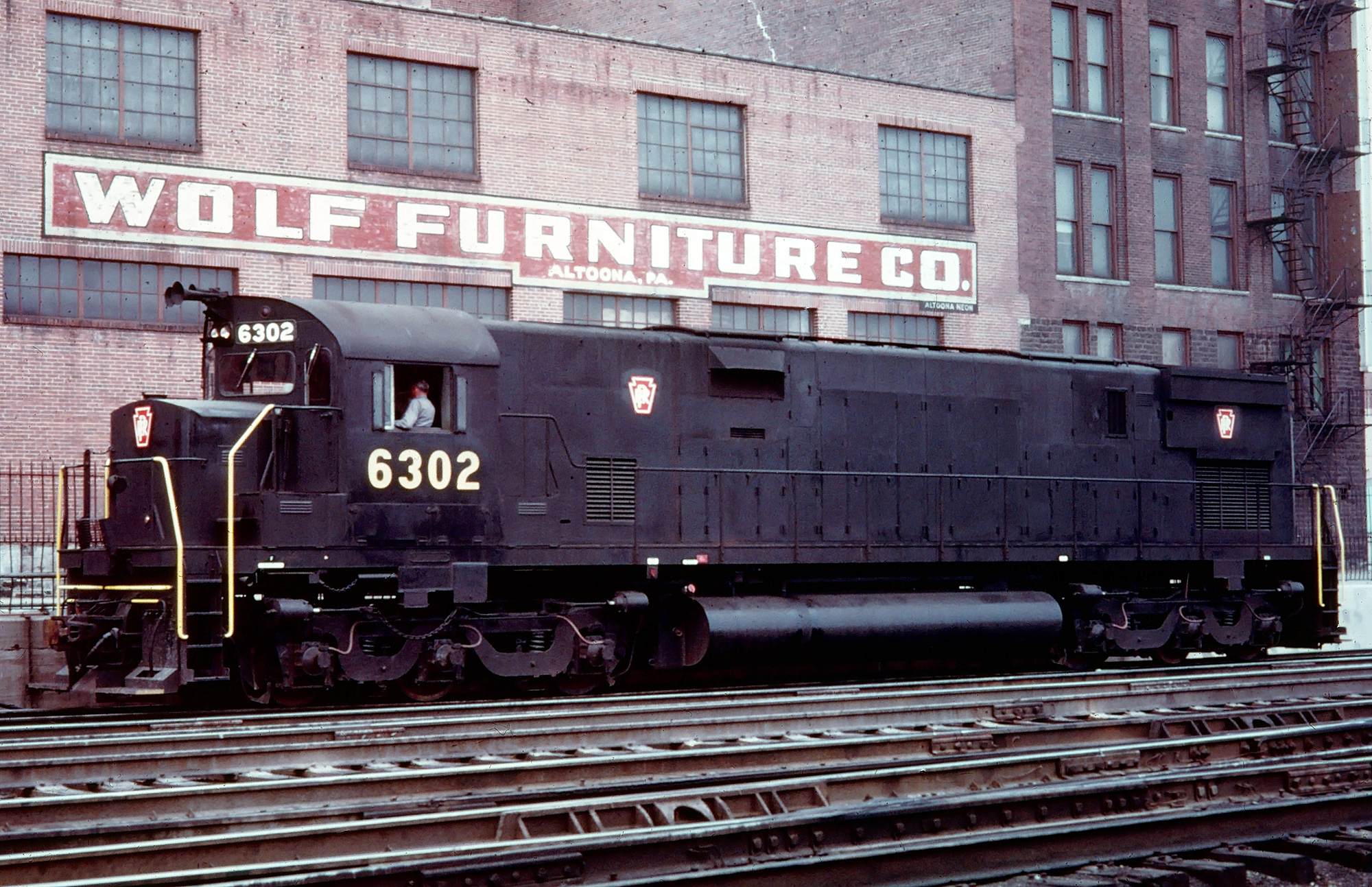 A big Pennsylvania Railroad C628, #6302, at Altoona, Pennsylvania; June, 1965. Fred Byerly photo. American-Rails.com collection.
Ironically, Alco itself had first pioneered the road-switcher when it introduced the RS1 in early 1941 but later fell behind Electro-Motive when the General Motors division released its General Purpose and later, Special Duty series.
EMD almost immediately became the industry standard for diesel designs from the time it debuted the EA and FT in the latter 1930s and held this coveted status through the 1980s.
However, convinced that railroads would never favor diesels over steam, Alco did not invest heavily in diesel research and development for years, which cost the company dearly in the future.
While Alco held second place in the diesel locomotive market for the first twenty years or so from the late 1930s onward, it was essentially no contender to EMD.
Overview
C420 (DL721A) C424 (DL640A) C425 (DL640B) C855 (DL855 and DL856A) C430 (DL430) C415 (DL415) C628 (DL628) C630 (DL630) C636 (DL636) | |
* Engines for the Century line were produced at Alco's Auburn, New York facility. Prior to this the company's primary manufacturing plant in Schenectady, New York had produced the model-251 power plants.
As John Kirkland notes in his book, "The Diesel Builders, Volume Two: American Locomotive Company and Montreal Locomotive Works," the transition had occurred a few years earlier as the final "RS" series were being out-shopped.
The 12-cylinder 251's were phased out at Schenectady in 1961 while the 16-cylinder engines were transitioned to Auburn the following year.
The change can be identified by the engine serial numbers, which changed from five digits with Schenectady-built products to four digits at Auburn. The changeover occurred between 1961 and 1963 with models RS11, RS36, RSD12, RS32, RS27, and early C424's still in production.
Introduction
The company’s outlook would worsen in the 1950s when General Electric not only broke ranks with Alco but also debuted their very own line, its ubiquitous Universal series, which was not only became popular but also bumped Alco into third place in the market.
To counter GE’s new models Alco debuted its Century series in the early 1960s. The first was the C420; a powerful, clean design that unfortunately was much more successful with railfans (and still is) than railroads.
Designation
The Centuries also brought a new numbering system, replacing the straightforward symbols from before (“RS” for road-switcher, “PA” for passenger and A-unit, etc.) with letters and digits, something roughly similar to Baldwin’s numbering system.
For instance, in regards to the C420; “C”, of course, stood for Century series, “4” was the axle number (in this case a B-B arrangement), and the last two digits were the horsepower rating.
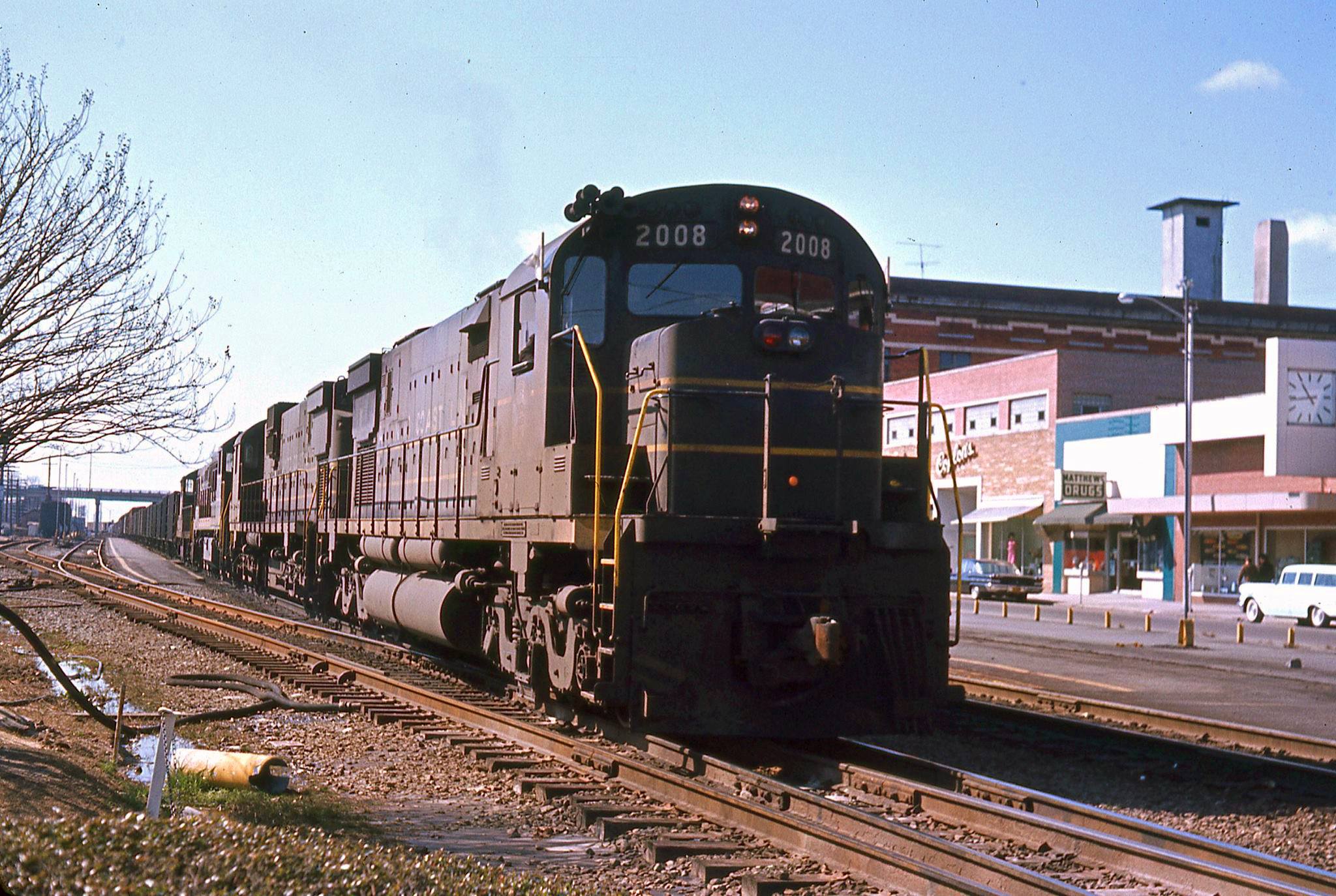 A pair of big Atlantic Coast Line C628's depart northbound from the yard at Rocky Mount, North Carolina with extra 2008 during the 1960s. Warren Calloway photo.
Later models followed the C420 such as the C425 and C430, although a bit more powerful than the former. The model certainly had a modern look and with a rather tall nose and carbody design gave it a beefy, powerful appearance that was especially true for the six-axle, C-C version.
The most powerful locomotives for their time, the C628, C630 and C636 were true monsters and could certainly lug a heavy freight with ease.
Reception
Despite being the most powerful locomotives since Fairbanks Morse's H24-66 "Train Master" model, the Centuries (especially the C636) could just not compete with EMD and GE.
To make matters worse, around the time the six-axle models debuted EMD had launched its SD40, and later upgraded SD40-2 series, one of the most successful designs ever built with several thousand rolling off of the assembly line through the 1980s (most of which are still in regular freight use today).
Models
| Model Type | Units Built | Date Built | Horsepower |
|---|---|---|---|
| C-415 | 26 | 1966-1968 | 1,500 |
| C-420 | 131 | 1963-1968 | 2,000 |
| C-424 | 190 | 1963-1967 | 2,400 |
| C-425 | 91 | 1964-1966 | 2,500 |
| C-430 | 16 | 1966-1968 | 3,000 |
| C-628 | 186 | 1963-1968 | 2,750 |
| C-630 | 133 | 1965-1969 | 3,000 |
| C-636 | 83 | 1967-1968 | 3,600 |
| C-643H | 3 (Built For SP) | 1964 | 4,300 |
| C-855 | 3 (Built For UP) | 1964 | 5,500 |
Today
In all, between the Century series (both four and six-axle models), only a few hundred were ever built, a mere drop in the bucket to what EMD and GE were cranking out with their similar designs.
The C636 also proved as Alco’s last entry into its long and storied history and the company sadly closed its doors during the fall of 1968, no longer able to compete with GE and EMD.
Today, Century series models can still be found roaming the country here and there, especially the four axle units.
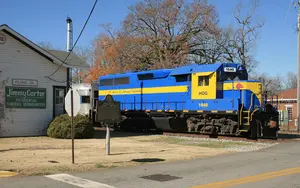
While many are relegated to museums and tourist lines you can still find a number of the locomotives working freight service on short lines such as the Apache Railway and Livonia Avon & Lakeville.
Recent Articles


-
Buffalo, Rochester & Pittsburgh Steam Roster (Post 1900)
Jun 02, 26 12:32 AM
 The BR&P's steam locomotive roster evolved from modest 19th-century power to some of the heaviest articulated engines in the Northeast, reflecting the railroad’s growing tonnage demands and challengin…
 -
Virginia 'Dinner Train' Rides At Staunton
Jun 01, 26 12:11 PM
 If you’ve ever wished you could pair a classic scenic train ride with a genuinely satisfying meal—served at your table while the countryside rolls by—the Virginia Scenic Railway was built for you.
 -
Oregon 'Dinner Train' Rides At Hood River
Jun 01, 26 12:06 PM
 The Mt. Hood Railroad is the moving part of that postcard—a century-old short line that began as a working railroad.
 -
Maryland 'Wine Tasting' Train Rides
Jun 01, 26 11:58 AM
 This article delves into the enchanting world of wine tasting train experiences in Maryland, providing a detailed exploration of their offerings, history, and allure.
 -
Indiana 'Whiskey Tasting' Train Rides
Jun 01, 26 11:50 AM
 Among IRE’s most talked-about offerings is the Wine & Whiskey Train—an adults-only, evening-style trip that leans into the best parts of classic rail travel: atmosphere, comfort, and a little…
 -
Maryland 'Dinner Train' Rides At Cumberland
Jun 01, 26 11:44 AM
 The Western Maryland Scenic Railroad (WMSR) has become one of the Mid-Atlantic’s signature heritage operations—equal parts mountain railroad, living museum, and “special-occasion” night out.
 -
Massachusetts 'Dinner Train' Rides At Cape Cod
Jun 01, 26 11:43 AM
 The Cape Cod Central Railroad (CCCR) has carved out a special niche by pairing classic New England scenery with old-school hospitality, including some of the best-known dining train experiences in the…
 -
Rhode Island 'Dinner Train' Rides In Portsmouth
Jun 01, 26 11:41 AM
 Despite its small size, Rhode Island is home to one popular dinner train experience where guests can enjoy the breathtaking views of Aquidneck Island.
 -
Maine 'Dinner Train' Rides At Portland
Jun 01, 26 11:38 AM
 While this isn’t generally a “dinner train” railroad in the traditional sense—no multi-course meal served en route—Maine Narrow Gauge does offer several popular ride experiences where food and drink a…
 -
Atlantic Coast Line Diesel Roster (All-Time)
May 31, 26 11:47 AM
 The Atlantic Coast Line was an early pioneer in dieselization, acquiring its first diesel locomotives in 1939 and completing the transition from steam by the mid-1950s.
 -
New Hampshire - Murder Mystery - Dinner Train Rides
May 31, 26 11:27 AM
 The state's murder mystery trains stand out as a captivating blend of theatrical drama, exquisite dining, and scenic rail travel.
 -
New York - Murder Mystery - Dinner Train Rides
May 31, 26 11:25 AM
 New York State, renowned for its vibrant cities and verdant countryside, offers a plethora of activities for locals and tourists alike, including murder mystery train rides!
 -
Pennsylvania 'Murder Mystery' Dinner Train Rides
May 31, 26 11:23 AM
 Pennsylvania, steeped in history and industrial heritage, offers a prime setting for a unique blend of dining and drama: the murder mystery dinner train ride.
 -
New Jersey 'Murder Mystery' Dinner Train Rides
May 31, 26 11:18 AM
There are currently no murder mystery dinner trains available in New Jersey although until 2023 the Cape May Seashore Lines offered this event. Perhaps they will again soon! -
Colorado 'Wine Tasting' Train Rides
May 31, 26 11:14 AM
 To truly savor these local flavors while soaking in the scenic beauty of Colorado, the concept of wine tasting trains has emerged, offering both locals and tourists a luxurious and immersive indulgenc…
 -
Georgia 'Wine Tasting' Train Rides In Cordele
May 31, 26 11:03 AM
 While the railroad offers a range of themed trips throughout the year, one of its most crowd-pleasing special events is the Wine & Cheese Train—a short, scenic round trip designed to feel like a tasti…
 -
Iowa 'Wine Tasting' Train Rides
May 31, 26 10:55 AM
 The state not only boasts a burgeoning wine industry but also offers unique experiences such as wine by rail aboard the Boone & Scenic Valley Railroad.
 -
Arizona 'Wine Tasting' Train Rides
May 31, 26 10:47 AM
 For those who want to experience the charm of Arizona's wine scene while embracing the romance of rail travel, wine tasting train rides offer a memorable journey through the state's picturesque landsc…
 -
Atlantic Coast Line Steam Roster (Post 1900)
May 31, 26 10:43 AM
 The Atlantic Coast Line Railroad (ACL), operating primarily over the relatively flat terrain of the Southeast from Virginia to Florida and Alabama, built a steam roster emphasizing versatile, efficien…
 -
Norfolk & Western 611 Debuts In "America250" Livery
May 30, 26 11:19 PM
 The Virginia Museum of Transportation has announced that Class J No. 611 will receive a temporary special red, white, and blue livery in celebration of America’s 250th Anniversary.
 -
Boston & Maine Diesel Roster (All-Time)
May 30, 26 03:08 PM
 The Boston & Maine Railroad pioneered dieselization in the Northeast, beginning in the 1930s and completing the transition by the mid-1950s.
 -
Boston & Maine Steam Roster (Post 1900)
May 30, 26 02:52 PM
The Boston & Maine Railroad (B&M) operated one of New England’s most varied steam locomotive rosters from the late 19th century until the mid-1950s. -
Ohio 'Whiskey Tasting' Train Rides
May 30, 26 11:57 AM
 LM&M's Bourbon Train stands out as one of the most distinctive ways to enjoy a relaxing evening out in southwest Ohio: a scenic heritage train ride paired with curated bourbon samples and onboard refr…
 -
Washington 'Whiskey Tasting' Train Rides
May 30, 26 11:56 AM
 Climb aboard the Mt. Rainier Scenic Railroad for a whiskey tasting adventure by train!"
 -
Texas 'Murder Mystery' Dinner Train Rides
May 30, 26 11:54 AM
 Here’s a comprehensive look into the world of murder mystery dinner trains in Texas.
 -
Arkansas 'Wine Tasting' Train Rides
May 30, 26 11:51 AM
 This article takes you through the experience of wine tasting train rides in Arkansas, highlighting their offerings, routes, and the delightful blend of history, scenery, and flavor that makes them so…
 -
California 'Wine Tasting' Train Rides
May 30, 26 11:48 AM
 This article explores the charm, routes, and offerings of these unique wine tasting trains that traverse California’s picturesque landscapes.
 -
Wisconsin 'Wine Tasting' Train Rides
May 30, 26 11:44 AM
 Wisconsin might not be the first state that comes to mind when one thinks of wine, but this scenic region is increasingly gaining recognition for its unique offerings in viticulture.
 -
Bessemer & Lake Erie Diesel Roster (All Time)
May 30, 26 11:40 AM
 The Bessemer & Lake Erie Railroad (B&LE) transitioned to diesel power efficiently, completing full dieselization in 1953 thanks to its focused heavy-haul profile.
 -
Bessemer & Lake Erie Steam Roster (Post 1900)
May 30, 26 11:30 AM
 The Bessemer & Lake Erie Railroad (B&LE), the vital iron ore and coal hauler linking Lake Erie docks at Conneaut, Ohio, to Pittsburgh-area steel mills, operated one of the most specialized steam fleet…
 -
Bangor & Aroostook Steam Roster (Post 1900)
May 29, 26 11:48 PM
 The Bangor & Aroostook Railroad (BAR), Maine’s legendary potato and paper hauler stretching deep into the Aroostook County wilderness, relied on a compact yet hardworking steam fleet for much of its i…
 -
Bangor & Aroostook Diesel Roster (All Time)
May 29, 26 11:33 PM
 BAR prioritized Electro-Motive Division (EMD) products for their reliability in harsh northern Maine winters and on light branch lines, resulting in a roster heavy on versatile road switchers.
 -
Western Pacific Timetables (August, 1952)
May 29, 26 10:09 PM
 These timetables capture the Western Pacific in the final golden years of its passenger operations—offering travelers one last chance to enjoy the dramatic scenery of the Feather River Route in comfor…
 -
Maine 'Dinner Train' Rides At Portland
May 29, 26 12:04 PM
While this isn’t generally a “dinner train” railroad in the traditional sense—no multi-course meal served en route—Maine Narrow Gauge does offer several popular ride experiences where food and drink a…