Alco Century Series Diesels: Models, Production Totals & History
Last revised: August 26, 2026
By: Adam Burns
Alco introduced the Century line in Chicago on January 29, 1963, as a clean-sheet road-switcher family meant to replace the RS and RSD series and to fight Electro-Motive and a newly independent General Electric. Production at Schenectady ran from June 1963 (the first C420s) through November 1968 (the last C636s). Alco-built Century catalog models total 665 units. Montreal Locomotive Works and A.E. Goodwin added more of the same designs, and MLW then launched the related M-line after Alco left the locomotive business.
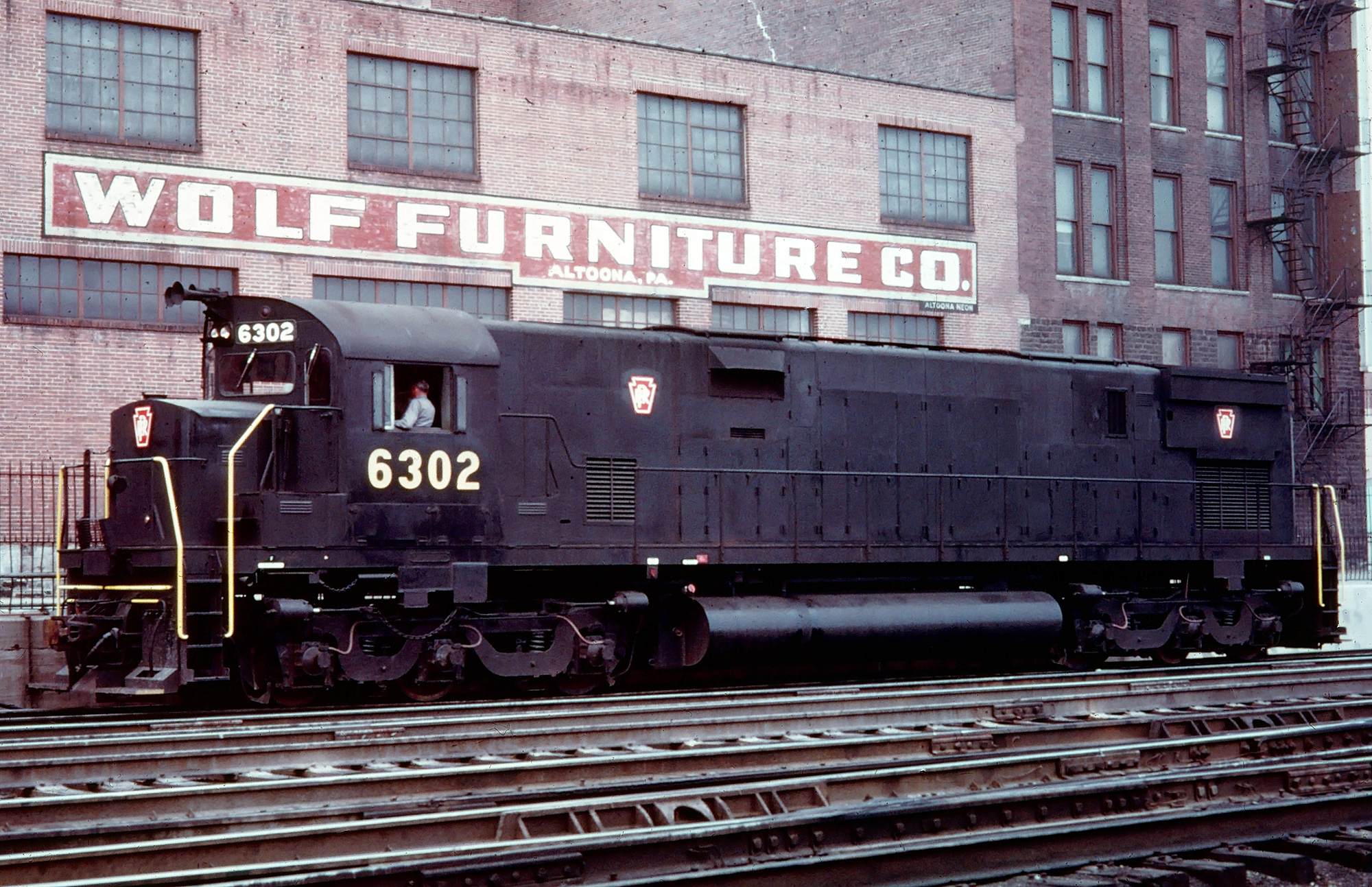
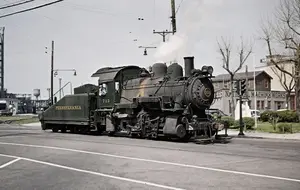
Pennsylvania Railroad C628 #6302 at Altoona, Pennsylvania, June 1965. Fred Byerly photo. American-Rails.com collection.
On this page: At a glance · Why the Century existed · Naming · Model directory · Production table · MLW and Goodwin · Schenectady closes · What still runs
At a Glance
| Item | Detail |
|---|---|
| Builder | American Locomotive Company, Schenectady, N.Y. (engines from Auburn, N.Y., for most of the run) |
| Line | Century series (C415 through C636, plus C855 and C643DH specials) |
| Launch | January 29, 1963, Chicago |
| Alco production | June 1963 – November 1968 (two T-6 switchers in January 1969 were not Centuries) |
| Prime mover family | Alco 251 (12- and 16-cylinder road units; C415 used a smaller 251) |
| Alco-built Century catalog | 665 (C415, C420, C424 Alco, C425, C430, C628, C630 Alco, C636 Alco, C855/C855B). Add 3 C643DH if you count the hydraulics. |
| First catalog trio | C420, C424, and a C624 that was dropped for the C628 before any C624 was built |
| Best-selling six-axle | C628 (186) |
| Best-selling four-axle (Alco only) | C420 (131); C424 reaches 190 only with 92 MLW units |
| Rarest road models | C430 (16), C636 (34 Alco), C415 (26), C855 (3), C643DH (3) |
| Successor family | MLW M-line (M420, M630, M636, M640) after 1969 |
Why the Century Existed
Alco was not a diesel novice in 1963. The company had pioneered the road-switcher with the RS1 in 1941, sold S-series switchers by the thousand, and held a clear second place behind Electro-Motive through the 1940s and much of the 1950s with FAs, PAs, and the RS/RSD lines. What it had not done was keep pace with EMD’s GP/SD catalog or with the electrical manufacturer that had once been its partner.
General Electric supplied generators and traction motors for Alco diesels for decades. In 1959–61 GE brought out its own Universal road locomotives, the U25B first among them, and moved into second place. Alco dropped to third. The 244-series engine of the late 1940s and 1950s had already spent goodwill with mechanical departments. The 251 was the better engine; the Century carbody and a new model-number system were supposed to make that obvious.
John Kirkland notes in The Diesel Builders, Volume Two that 251 production itself had already shifted. Twelve-cylinder 251s left Schenectady in 1961; sixteen-cylinder engines moved to Auburn, New York, the following year. Engine serials change from five digits (Schenectady) to four (Auburn). That changeover sits under the last RS11, RS36, RSD12, RS32, RS27, and early C424 orders. Century carbodies were still erected at Schenectady.
How the Names Work
Alco dropped the RS/PA letter codes for a three-part Century number:
- C = Century
- First digit = axles in the truck count that mattered for the model (4 = B-B, 6 = C-C, 8 on the C855 for its B-B+B-B arrangement)
- Last two digits = the first two figures of the horsepower rating (C420 = 2,000 hp, C628 = 2,750 hp rounded in the code, C636 = 3,600 hp)
Specification numbers stayed in the old DL series underneath: DL721A for the C420, DL640A for the C424, DL628 for the C628, DL636 for the C636, and so on. Spotters still use both.
The Models
Four-axle Centuries were the volume road-switchers. Six-axle Centuries were the drag engines. The C415 is a center-cab switcher wearing a Century number. The C855 and C643DH are one-off experiments for Union Pacific and Southern Pacific.
Four-axle road units
C420 (DL721A), 2,000 hp, 12-251C, 131 built, 1963–68. The first Century in production. Long Island took 30, including steam-generator passenger units and a late Hi-Ad batch. Other buyers included Seaboard Air Line (27), Monon, Louisville & Nashville, Lehigh Valley, and Lehigh & Hudson River. This is the Century you still see in short-line freight.
C424 (DL640A), 2,400 hp, 16-251B, 98 Alco + 92 MLW = 190, 1963–67. Cheaper stablemate of the C425. Alco’s own 98 included a large Nacionales de México order (45). MLW built 41 for Canadian National and 51 for Canadian Pacific. All rode AAR Type B trucks.
C425 (DL640B), 2,500 hp, 16-251C, 91 built, 1964–66. Alco’s answer to EMD’s GP35 and GE’s U25B. U.S. buyers only. A slightly larger radiator fan, inherited from the C628, is the spotting tell versus a C424.
C430 (DL430 2nd), 3,000 hp, 16-251E, 16 built, 1966–68. Last four-axle Century freight diesel. Reading 2, New York Central 10 (first with Hi-Ad trucks), Green Bay & Western 1, plus three demonstrators that became Seaboard Coast Line 1275–1277. GB&W #315 (February 1968) was the last C430.
Six-axle road units
Alco cataloged a C624 with the C420 and C424, then dropped it for more horsepower before any were built. The production six-axle line is C628–C630–C636.
C628 (DL628), 2,750 hp, 16-251C, 186 built, 1963–68. Alco’s best-selling six-axle Century and the replacement for the RSD-15. Atlantic Coast Line took the first production units in December 1963. Pennsylvania, Norfolk & Western, Delaware & Hudson, Southern Pacific (including the four demonstrators), and several Mexican and Australian buyers followed. Early units rode Trimounts; the carbody is the six-axle Century look everyone knows.
C630 (DL630), 3,000 hp, 16-251E, 77 Alco + 56 MLW = 133, 1965–69. Direct shot at EMD’s SD40 and GE’s U30C. Alco buyers: ACL, C&O, L&N, N&W, Pennsylvania, Reading. MLW continued the model for CN, CP, and Pacific Great Eastern after Schenectady stopped. Two stacked grilles on the intercooler box distinguish a C630 from a C636 (upper grille only).
C636 (DL636), 3,600 hp, 16-251F, 34 Alco (plus 35 Goodwin C636s), 1967–68. Most powerful single-engine Alco diesel. Aimed at the SD45. U.S. railroad buyers were only SP&S (10), Penn Central (15, a PRR order), and Illinois Central (6), plus three demonstrators. Delaware-Lackawanna #3642 is the last unrebuilt Alco C636 in service.
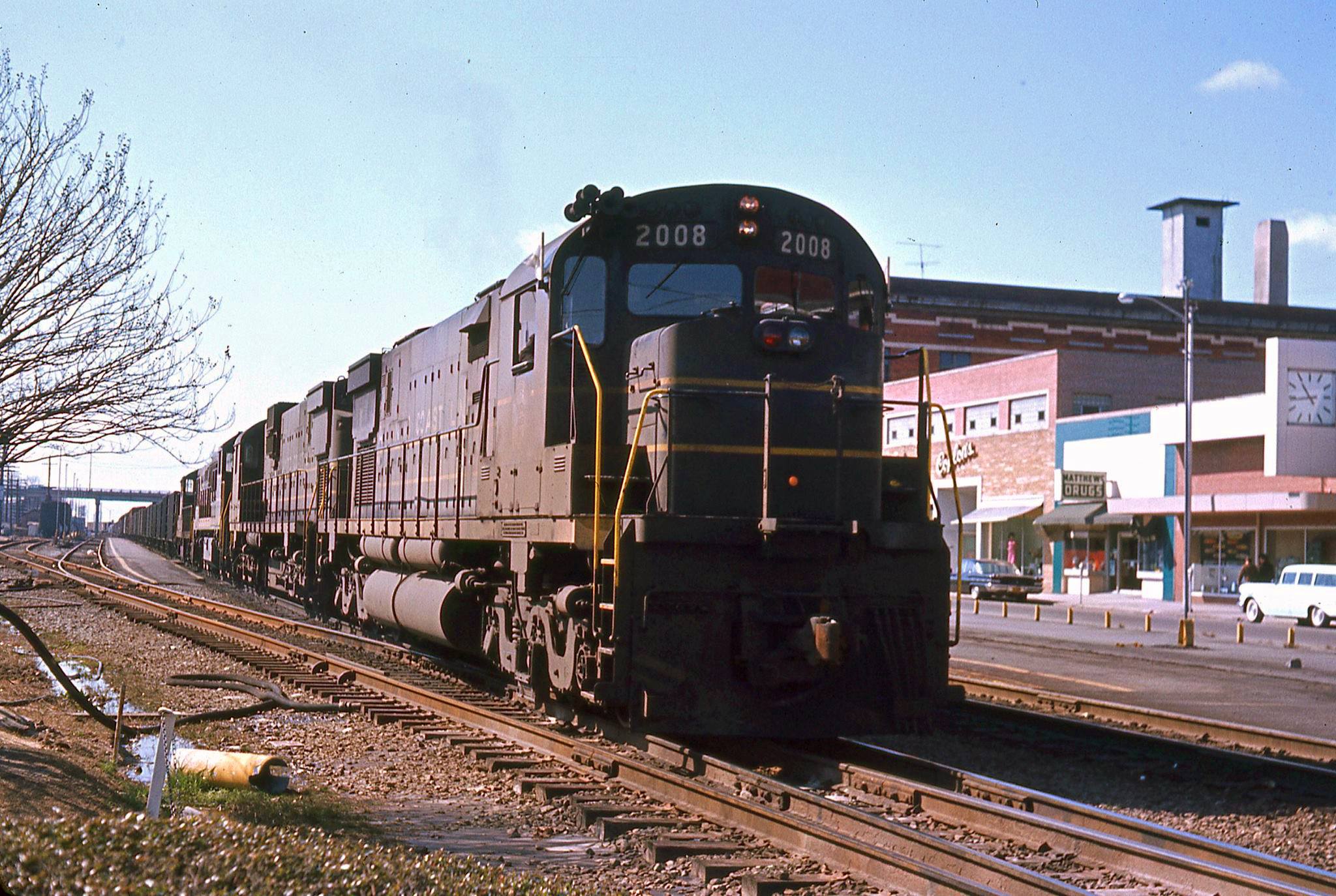
A pair of Atlantic Coast Line C628s leave Rocky Mount, North Carolina, with extra 2008 in the 1960s. Warren Calloway photo.
Switcher and specials
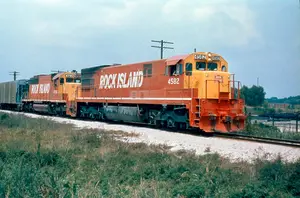
C415 (DL415), 1,500 hp, 1966–68, 26 built. Center-cab switcher with optional cab heights, not a road-switcher. Rock Island took ten, Southern Pacific ten, plus Chehalis Western, Columbia & Cowlitz, Monongahela Connecting, SP&S, and the demonstrator (later Hamersley Iron 008). Last C415s came out in December 1968, the same month as the last C636s.
C855 / C855B (DL-855 / DL-856A), 5,500 hp, 1964, 3 units for Union Pacific. Two 16-251C engines on one frame, B-B+B-B trucks, about 551,000 pounds. UP 60, 61, and booster 60B. Built to cut the number of units per train. They did not last.
C643DH (DH643), 4,300 hp hydraulic, 1964, 3 units for Southern Pacific. Twin 12-251C engines and Voith hydraulic transmission, not electric drive. SP 9018–9020. Alco’s diesel-hydraulic experiment; all were gone from SP by the early 1970s. A proposed C650DH was never built.
Production Table
Alco Schenectady figures below follow Extra 2200 South / Kirkland-style counts used on the individual model pages, aligned with the year-by-year Schenectady table that sums to 665 (C643DH counted separately). MLW and Goodwin are in their own columns so a C424 or C630 “family” total is not mistaken for Schenectady output.
| Model | Spec | Hp | Engine | Alco | MLW / other | Dates (Alco) | Notes |
|---|---|---|---|---|---|---|---|
| C415 | DL415 | 1,500 | 251 (switcher) | 26 | — | 1966–68 | Center cab |
| C420 | DL721A | 2,000 | 12-251C | 131 | — | 1963–68 | First Century in production |
| C424 | DL640A | 2,400 | 16-251B | 98 | 92 MLW | 1963–67 | Family total 190 |
| C425 | DL640B | 2,500 | 16-251C | 91 | — | 1964–66 | U.S. only |
| C430 | DL430 (2nd) | 3,000 | 16-251E | 16 | — | 1966–68 | Last four-axle Century |
| C628 | DL628 | 2,750 | 16-251C | 186 | — | 1963–68 | Best-selling six-axle Century |
| C630 | DL630 | 3,000 | 16-251E | 77 | 56 MLW | 1965–67 (MLW into 1969) | Family total 133 |
| C636 | DL636 | 3,600 | 16-251F | 34 | 35 Goodwin C636s (not M636) | 1967–68 | Not 83. M636 is a different model (111 at Montreal) |
| C643DH | DH643 | 4,300 | Two 12-251C | 3 | — | 1964 | SP hydraulic; not in the 665 electric-catalog sum |
| C855 / C855B | DL-855 / 856A | 5,500 | Two 16-251C | 3 | — | 1964 | UP 60, 61, 60B |
MLW, Goodwin, and the M-Line
Montreal had been Alco’s Canadian plant. After Studebaker-Worthington took MLW, and after Schenectady quit locomotives, MLW kept selling Century-derived six-axles as the M630 and M636, then the four-axle M420 and the one-off 4,000 hp M640. Those locomotives ride Dofasco trucks, not Alco Hi-Ads, and they are not C636s. Montreal built 111 M636s (CP 44, CN 40, Cartier 11, Ferrocarril del Pacífico 16). A.E. Goodwin in Australia built C628s and C636s under license, then M636 copies; Comeng finished the last Australian M636 in 1980.
If a roster says “C636” and the builder is MLW, it is probably an M636. Genesee Valley Transportation’s Delaware-Lackawanna fleet is the living example: one Alco C636 (#3642) among several MLW M630s and M636s.
The End at Schenectady
The C636 was Alco’s last high-horsepower Century. It was not the last Alco locomotive. November 1968 saw SP&S C636s 340–343, the three C636 demonstrators, and late C415s. The plant’s last units were Newburgh & South Shore T-6 switchers #1016 and #1017, released January 8 and 10, 1969. Alco dated the locomotive exit December 31, 1968, with those two T-6s as the short overrun. A canceled Pakistan order and a canceled Penn Central C430 follow-on (15 units) sat on the books as the shop emptied. U.S. diesel deliveries in 1968 had fallen below 1,000 in a market that had once seen 4,500 in a year.

Delaware & Hudson C628 #609 and a pair of former Erie Lackawanna U33Cs (including #701) - part of the swap with EL for the three SD45s - are in freight service at Afton, New York on August 14, 1970. Marty Bernard photo.
What Still Runs
Four-axle Centuries outlived the Class Is that bought them.
- Arkansas & Missouri still owns a large C420 fleet (ex-SAL, LV, L&HR). SD70ACes now lead most road trains; some C420s remain in the assignment. Photos from 2025 still show them on property and on extras.
- Livonia, Avon & Lakeville remains an Alco short line (C420/C425 territory).
- Delaware-Lackawanna (GVT) runs C420s, C425s, and the unique C636 #3642 out of Scranton, plus MLW six-motors on the Pocono grades.
- Adirondack Railroad took three ex-NYC C430s from Western New York & Pennsylvania in 2025.
- Apache Railway was the desert Century showplace (C420/C424) until the Snowflake mill crisis of 2012. The railroad survived; do not assume the Alco fleet is still the daily power without a current check.
Six-axle Centuries are almost gone in unrebuilt Alco form. Surviving C628s are overseas. The C630’s afterlife is mostly MLW and rebuilds. The C636’s afterlife is one locomotive in Pennsylvania and a larger family of M636s.
Related Reading on American-Rails.com
- American Locomotive Company
- Alco 251 engine
- C415 · C420 · C424 · C430
- C628 · C630 · C636
- C855
- Delaware-Lackawanna Railroad
- Diesel locomotives
Sources
- Kirkland, John F. The Diesel Builders, Volume Two: American Locomotive Company and Montreal Locomotive Works. Glendale: Interurban Press, 1989.
- Solomon, Brian. Alco Locomotives. Minneapolis: Voyageur Press, 2009.
- Diesel Era / Withers, Alco’s Century Series, Volumes 1 and 2 (four-axle and six-axle).
- The Diesel Shop, Alco Century and MLW M630/M636 production rosters (Extra 2200 South tradition).
- Individual American-Rails model pages for C415, C420, C424, C430, C628, C630, C636, C855 (serial blocks and owner totals).
Alco column totals are the Schenectady catalog. Family totals that include MLW or Goodwin are labeled as such.
Recent Articles


-
Detroit, Toledo and Ironton Diesel Roster (All-Time)
Oct 21, 26 02:55 PM
 All-time diesel roster of the Detroit, Toledo and Ironton. 119 frames, each counted once. Serials and builder order numbers included. Last steam was December 24, 1955.
 -
Detroit, Toledo and Ironton Steam Roster (Post 1900)
Oct 21, 26 02:49 PM
 Detroit, Toledo and Ironton steam locomotives built after 1900. Drury's class grid. The quantity column prints 141. Counted once, the frames are 137. Last steam was Mikado 805 on December 24, 1955.
 -
Detroit, Toledo and Ironton Railroad: Map, Roster, History
Oct 21, 26 02:40 PM
 Detroit, Toledo & Ironton, reporting mark DTI, from Detroit to Ironton, Ohio. Railway organized May 2, 1905. Railroad articles filed February 21, 1914. Henry Ford, 1920 to 1929. Steam and diesel r…
 -
Iowa, Chicago and Eastern Railroad: Roster, Map, History
Oct 21, 26 01:04 PM
 Iowa, Chicago & Eastern Railroad Corporation, reporting mark ICE. About 1,125 miles and about 275 miles of trackage rights from the I&M Rail Link. Operations at 12:01 a.m. July 30, 2002. Canad…
 -
Rapid City, Pierre & Eastern Railroad: Route, Roster, Overview
Oct 21, 26 10:16 AM
 Rapid City, Pierre & Eastern Railroad, reporting mark RCPE. Genesee & Wyoming Class II. Agreement of January 2, 2014, Finance Docket 35799. Freight service from June 1, 2014, on the Dakota, Mi…
 -
Dakota, Minnesota & Eastern Railroad: Roster, Map, History
Oct 21, 26 12:26 AM
 Dakota, Minnesota & Eastern Railroad, reporting mark DME. The July 2, 1986 Chicago & North Western sale, 826 miles and 139 miles of trackage rights. Canadian Pacific control October 30, 2008…
 -
Detroit and Mackinac Railway: Map, Roster, History
Oct 20, 26 11:58 PM
 Detroit & Mackinac Railway, the Turtle Line. Bay City to Cheboygan along Lake Huron. Incorporated December 29, 1894. Lake State Railway leased the operation in 1992 and bought the lines in 1997. E…
 -
Davenport, Rock Island and Northwestern Railroad
Oct 20, 26 11:22 PM
 Davenport, Rock Island and North Western Railway, the DRI Line. Clinton to East Moline across the Crescent Bridge. Burlington and Milwaukee. Merged into the Soo Line on June 29, 1995. Eighteen diesels…
 -
Chicago Great Western Steam Roster (Post 1900)
Oct 20, 26 11:17 PM
 Chicago Great Western steam locomotives built or rebuilt since 1900. Drury's class grid. 320 frames, each once. The quantity column prints 376 because a rebuild is listed again. Last steam in the reti…
 -
Chicago Great Western Diesel Roster (All-Time)
Oct 20, 26 10:47 PM
 All-time diesel roster of the Chicago Great Western. 157 frames, each counted once. Serials and builder order numbers included. Steam was gone by 1950. The 1963 glance figure of 141 is one year's flee…
 -
Chicago Great Western Railway: Map, Photos, History, Rosters
Oct 20, 26 10:43 PM
 The Chicago Great Western, the Corn Belt Route, linked Chicago, the Twin Cities, Omaha, and Kansas City from September 27, 1885, until the Chicago & North Western merger at 12:01 a.m. on July 1, 1968…
 -
Chicago, South Shore & South Bend Railroad: "The South Shore Line"
Oct 20, 26 05:48 PM
 Chicago South Shore & South Bend, the South Shore Line, from the 1901 Air Line through Samuel Insull's 1925 rebuild, the orange cars, the 800s, and the railroad NICTD and Anacostia still run.
 -
Northwestern Virginia Railroad: Map, History, Timetable
Oct 20, 26 04:18 PM
 Northwestern Virginia Railroad, chartered February 14, 1851, Grafton to Parkersburg, 104 miles. Opened May 1, 1857. Foreclosure sale February 15, 1865, as the Parkersburg Branch. Twenty-three tunnels…
 -
"Exposition Flyer" (Train): Consist, Timetable, History
Oct 20, 26 03:29 PM
 Exposition Flyer, Chicago to Oakland, June 10, 1939 to March 20, 1949. Burlington, Rio Grande, and Western Pacific. Heavyweight cars, then diesels and a vista-dome. Replaced by the California Zephyr.
 -
Chicago, St. Paul, Minneapolis & Omaha Railway, "The Omaha Road"
Oct 20, 26 02:13 PM
 The Omaha Road, reporting mark CMO. Formed May 26, 1880. North Western management on December 16, 1882. Leased January 1, 1957. Class K-1 No. 183 and the sublettered diesels.
 -
Chicago and Western Indiana Railroad: Map, Rosters, History
Oct 20, 26 01:17 PM
 Chicago and Western Indiana, chartered June 5, 1879. Five equal owners, Dearborn Station, and two main lines. Dolton suburban mile 16.6. Fifteen diesels. Railroad service ended in 1994. The Illinois c…
 -
Railroad Tell-Tales: Protecting The Brakeman
Oct 20, 26 12:58 PM
 Railroad tell-tales: hanging ropes that warned a man on a freight-car roof of a low bridge or tunnel. The 1897 bridge-warning report, the 1905 Wisconsin statute, retainers, and why the roof walk outla…
 -
Chicago & North Western Steam Roster (Post 1900)
Oct 20, 26 12:54 PM
 Chicago & North Western steam locomotives built since 1900, and the Omaha Road list beside it. Drury's parent quantity column sums to 1,445, with four rows left blank. The Omaha Road column sums to 24…
 -
Chicago & North Western Diesel Roster (All-Time)
Oct 20, 26 12:49 PM
 All-time diesel roster of the Chicago & North Western. 2,494 frames, each counted once, including Chicago Great Western, Minneapolis & St. Louis, and Omaha Road units that received North Western numbe…
 -
Chicago and North Western Railroad: Map, History, Logo
Oct 20, 26 12:37 PM
 The Chicago & North Western, chartered as the Galena & Chicago Union in 1836 and formed in June 1859. Granger railroad of the 400s, the Cowboy Line, and Powder River coal. Union Pacific common control…
 -
Chicago & Illinois Midland Steam Roster (Post 1900)
Oct 20, 26 12:30 AM
 Chicago & Illinois Midland steam locomotives built since 1900. Drury's class grid, 57 engines. Twenty-six 2-10-2s, including nine from the Wabash and nine from the Atlantic Coast Line. Last road steam…
 -
Chicago & Illinois Midland Diesel Roster (All-Time)
Oct 20, 26 12:20 AM
 All-time diesel roster of the Chicago & Illinois Midland. 28 frames, each counted once. Six SW1200s, five SD9s, the only two RS1325s, two SD18s, six SD38-2s, and four SD20s. Serials included.
 -
Chicago and Illinois Midland Railroad: Map, Rosters, History
Oct 20, 26 12:17 AM
 The Chicago & Illinois Midland moved Illinois coal for Commonwealth Edison, Taylorville and Springfield to Pekin, with Peoria over the Peoria & Pekin Union. The 1906 railway began operating February 1…
 -
Chicago & Eastern Illinois Diesel Roster (All-Time)
Oct 19, 26 04:23 PM
 All-time diesel roster of the Chicago & Eastern Illinois. 143 frames, each counted once. Switchers, F3s, FP7s, E7s, the BL1, and the GP7s through GP35s. Serials included.
 -
Chicago & Eastern Illinois Steam Roster (Post 1900)
Oct 19, 26 04:19 PM
Chicago & Eastern Illinois steam locomotives built or rebuilt since 1900. 146 Consolidations, 60 Mikados, and 24 Pacifics. Drury's class grid. Last steam was Mikado 1944 at Vincennes on May 5, 1950. -
Chicago and Eastern Illinois Railroad: Map, Rosters, History
Oct 19, 26 03:57 PM
 The Chicago & Eastern Illinois ran from Chicago to Evansville, St. Louis, and Thebes. First company of the name, August 28, 1877. The remainder merged into the Missouri Pacific on October 15, 1976. St…
 -
Rock Island Diesel Roser: All-Time
Oct 19, 26 11:05 AM
 Chicago, Rock Island and Pacific diesel locomotives, 1,029 frames counted once. Switchers, cab units, road-switchers, two acquired slugs, five RDCs, and bi-power 10000. Serial and order are separate c…
 -
Rock Island Steam Roster: Post 1900
Oct 19, 26 11:01 AM
Chicago, Rock Island and Pacific steam locomotives built or rebuilt since 1900. Drury's class grid, 1,482 frames counted once, including 85 4-8-4s. Last revenue steam was July 1953. -
Rock Island Railroad: Map, Pictures, Logo, History
Oct 19, 26 10:51 AM
 The Chicago, Rock Island and Pacific ran from Chicago to the Twin Cities, Denver, Tucumcari, and the Gulf. First train October 10, 1852. Directed service ended March 23, 1980. Steam and diesel rosters…
 -
EMD "F7" Locomotives: Cab, Top Speed, Specs, Rosters
Oct 19, 26 12:27 AM
 EMD F7 cab units and boosters, 1,500 horsepower, built February 1949 through December 1953. Gear ratios, specifications, and the production roster by owner, serial, and order.
 -
Harlem Transfer Company: An NYC Terminal System
Oct 19, 26 12:01 AM
 Harlem Transfer Company, the Lackawanna's offline freight terminal on the Bronx side of the Harlem River at East 135th Street. Carfloats to Hoboken, boxcab No. 2, and GE 44-tonner 53.
 -
Belpre Industrial Parkersburg Railroad: Roster, History, Photos
Oct 18, 26 11:44 PM
 Belpre Industrial Parkersburg Railroad, a Class III short line leasing about 46.9 miles of CSX track at Parkersburg since 2020. The Ohio River bridge, the Marietta Subdivision, and five GP38-3s.
 -
Chicago, Peoria & St. Louis Railroad: Map, Timetables, History
Oct 18, 26 10:57 PM
 Chicago, Peoria & St. Louis Railroad, an Illinois line from Pekin and Peoria through Springfield to Madison. Chartered in 1853. Sold in parcels on November 20, 1924. The Pekin line is today the Illino…
 -
Chicago, Burlington & Quincy Diesel Roster (All-Time)
Oct 18, 26 10:54 PM
 All-time diesel roster of the Chicago, Burlington & Quincy. 951 parent frames, 72 Colorado & Southern, and 36 Fort Worth & Denver, each counted once. Serials included.
 -
Burlington Railroad (CB&Q): Map, History, Rosters, Photos
Oct 18, 26 10:49 PM
 The Chicago, Burlington & Quincy, the Burlington Route, ran from Chicago to Denver, the Twin Cities, and the Gulf. Steam built since 1900 and the diesel fleets are companion rosters. Burlington Northe…
 -
Chicago, Burlington & Quincy Steam Roster (Post 1900)
Oct 18, 26 10:33 PM
 Chicago, Burlington & Quincy steam locomotives built or rebuilt since 1900. 429 Prairies, 383 Mikados, the Hudsons, and the O-5 4-8-4s. Drury's class grid.
 -
Virginian Railway's 2-6-6-6 Locomotives (Class AG)
Oct 18, 26 01:38 PM
 Virginian Railway class AG. Eight Lima 2-6-6-6s, Nos. 900-907, built in 1945 for the east end. Billed at 753,000 pounds. Scrapped in 1960.
 -
Pennsylvania (PRR) Steam Roster: Post 1906
Oct 18, 26 01:05 PM
ennsylvania steam after 1906—H8, H9, and H10 Consolidations, 574 L1s Mikados, 598 I1s Decapods, 425 K4s Pacifics, 301 M1 Mountains. Drury’s grid. Last steam November 30, 1957. -
Chicago, Aurora and Elgin Railroad: The "Roarin' Elgin"
Oct 18, 26 10:54 AM
The Chicago, Aurora & Elgin, the Roarin' Elgin, ran 600-volt third-rail trains from Chicago to Aurora, Batavia, and Elgin. Passenger service ended at noon on July 3, 1957. Freight ended June 11, 1959. -
Algoma Central Railway: Map, Logo, Rosters
Oct 17, 26 10:49 PM
 Algoma Central Railway, Sault Ste. Marie to Hearst. Wisconsin Central on February 1, 1995. Fifty-nine steam locomotives and forty-two diesels.
 -
Akron, Canton and Youngstown Railroad: Map, History, Rosters
Oct 17, 26 05:49 PM
 Akron, Canton and Youngstown Railroad, Mogadore to Delphos. The rails never reached Canton or Youngstown. Norfolk & Western control on October 16, 1964. Twenty-six diesels and the historical society's…
 -
Georgia Railroad: Map, History, Logo, Rosters
Oct 17, 26 12:59 PM
 Georgia Railroad, the Georgia Railroad and Banking Company, Augusta to Atlanta, with the Athens branch and the Macon Road. Mark GA. The railroad properties were sold on November 4, 1982.
 -
West Point Route (Railroad): Map, History, Logo
Oct 16, 26 11:26 PM
 The West Point Route was a trademarked name comprising the Atlanta & West Point and Western Railway of Alabama, which were controlled by the Georgia Railroad.
 -
Virginian Railway Diesel Roster (All-Time)
Oct 16, 26 11:11 PM
 All-time diesel roster of the Virginian Railway. 40 Fairbanks-Morse H16-44s, 25 H24-66 Train Masters, and one GE 44-tonner. Serials included.
 -
Virginian Railway Steam Roster (Post 1900)
Oct 16, 26 10:55 PM
 Virginian Railway steam locomotives built since 1900. Mikados, 2-8-8-2s, the Triplex, class AE 2-10-10-2s, and the 1945 2-6-6-6s.
 -
Virginian Railway: Map, Rosters, History, Electrification
Oct 16, 26 10:51 PM
 Virginian Railway, Deepwater to Norfolk. Combined in 1907 and completed in 1909. Electrified from Roanoke to Elmore. Absorbed by the Norfolk & Western on December 1, 1959.
 -
Baldwin "Centipede" Locomotives: Specs, Roster, Photos
Oct 16, 26 03:58 PM
 Baldwin DR-12-8-1500/2 Centipede—2-D+D-2, two 608SC engines, 3,000 hp. SAL 4500 from the 1943 test bed. 54 on the serial list, 52 sold. PRR BP60 then BH50. None preserved.
 -
Louisville & Nashville Class M-1 2-8-4s: The Big Emmas
Oct 16, 26 03:52 PM
Louisville & Nashville class M-1, 42 Big Emma 2-8-4s. Baldwin in 1942 and 1944, Lima in 1949. Coal trains from Neon to DeCoursey. No locomotive survives. -
Tennessee, Alabama and Georgia Railway: Map, History, Rosters
Oct 16, 26 03:21 PM
 Tennessee, Alabama and Georgia Railway, Chattanooga to Gadsden. The May 1929 card is 91.7 miles. Southern stock control closed on a January 1, 1971 schedule. Five diesels and Prince's steam list.
 -
Railroad Museums In The USA (2026): State Guides & Collections
Oct 16, 26 02:29 PM
 U.S. railroad museums—what they are vs tourist railroads, preservation history (R&LHS, NRHS, IRM, Steamtown), state guides, and destination collections. Confirm hours on each museum’s site.