Locomotive History (USA): Steam, Electric & Diesel Power
Last revised: August 13, 2026
By: Adam Burns
A locomotive is a self-propelled engine for pulling or pushing railroad cars. Behind that simple definition sits the whole story of American motive power: animals and gravity roads, then steam for nearly a century, limited but important electric main lines, and finally the diesel-electric that still hauls almost all U.S. freight. This page is the locomotives hub for American-Rails.com—a researched overview of how trains are powered and a map into the deeper steam, diesel, and electric sections (plus builders, famous classes, and related hardware).
Start here if you want the big picture. Drop into a type page when you are ready for catalogs, rosters, and model directories.
On this page: Power-type hubs · At a glance · Why motive power matters · Steam era · Electric locomotives · Diesel-electrics · Builders · Related reading
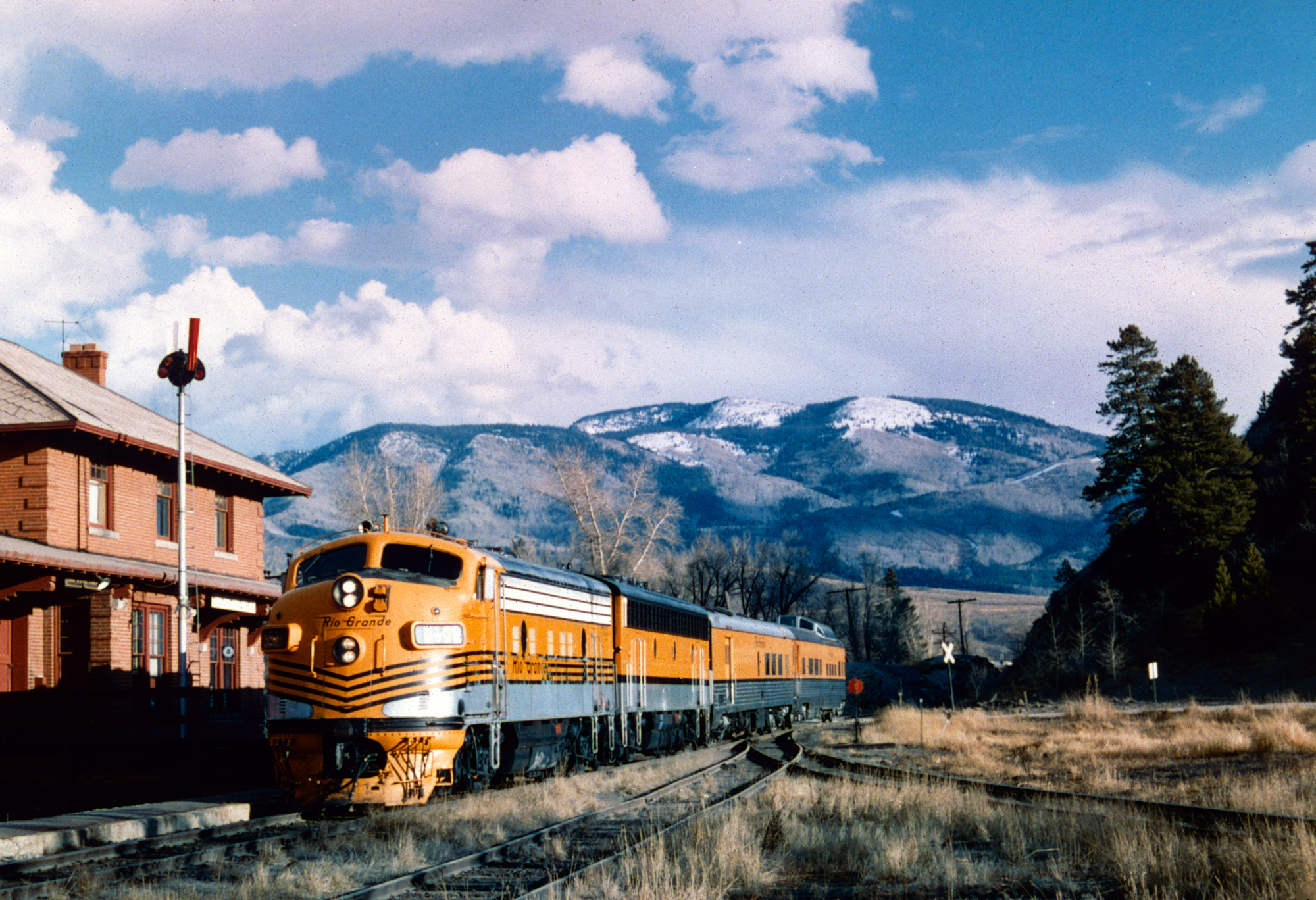
Rio Grande’s Yampa Valley, led by F9A #5771, at Steamboat Springs, Colorado, November 19, 1967. Ed Fulcomer photo. American-Rails.com collection.
Power-Type Hubs (Where to Go Next)
| Type | What you will find | Hub |
|---|---|---|
| Steam | Whyte types, Super Power, builders, how the boiler works, famous classes | Steam locomotives |
| Diesel | Diesel-electric principle, FT breakthrough, EMD vs Alco/Baldwin/FM/GE, full model directories | Diesel locomotives |
| Electric | Main-line motors, catenary and third rail, Northeast and Milwaukee electrification stories | Electric locomotives |
| Industry history | Broader U.S. railroad timeline, inventors, mileage, regulation | Railroad history |
| Passenger glamour | Named streamliners and diesel/steam passenger power in context | Streamliners |
At a Glance
| Topic | Notes |
|---|---|
| Earliest rail-like operations | English wooden-rail coal roads from ~1630 (Del Vecchio and related secondary literature) |
| Iron rails / flanged wheel | Iron rails at Whitehaven, Cumberland (~1740); William Jessop flanged-wheel advance (~1789) |
| Steam engine lineage | Newcomen (patent era 1705) improved by Watt (1769); Trevithick/Vivian locomotive patent 1802; Stephenson modern railroad era |
| Early U.S. steam milestones | Stourbridge Lion test on D&H (1829); Cooper Tom Thumb on B&O (1830); Best Friend of Charleston revenue service (1830) |
| Dominant 19th-c. wheel arrangement | 4-4-0 American type (Solomon and others) |
| Main-line electric pioneer (U.S.) | B&O Howard Street Tunnel / Baltimore Belt electrification, 1895 |
| Diesel-electric idea | Prime mover drives generator/alternator; traction motors turn the axles—an electric locomotive carrying its own power plant |
| Freight diesel breakthrough | EMC/EMD FT demonstrator national tour 1939–40 |
| Today’s new U.S. freight builders | Progress Rail (EMD heritage) and Wabtec (GE Transportation heritage) |
| Other power notes | Gensets, battery/hybrid experiments, pure electrics on selected corridors—see diesel and electric hubs |
Why Motive Power Changed the Country
Before mechanical locomotives, freight moved by wagon and canal. Railroads in the Days of Steam (American Heritage) recalls how slow pre-rail travel was: in 1756, wagons needed about three days for the ~90 miles from New York to Philadelphia. Stone roads such as the Lancaster Pike (1795) and the National Road remained scarce. Canals cut time dramatically—the Erie Canal (1825) could move a boat New York–Buffalo in days instead of weeks and collapsed freight rates—but froze in winter and could not match railroad speed or reach.
Steam on rails solved weather, distance, and cost in one package. That is why canal interests fought railroads and still lost. Horses and mules lingered on street railways long after steam proved itself on main lines, but the commercial future belonged to machines that could work year-round on iron rails.
For the full industry arc (not just locomotives), see railroad history.
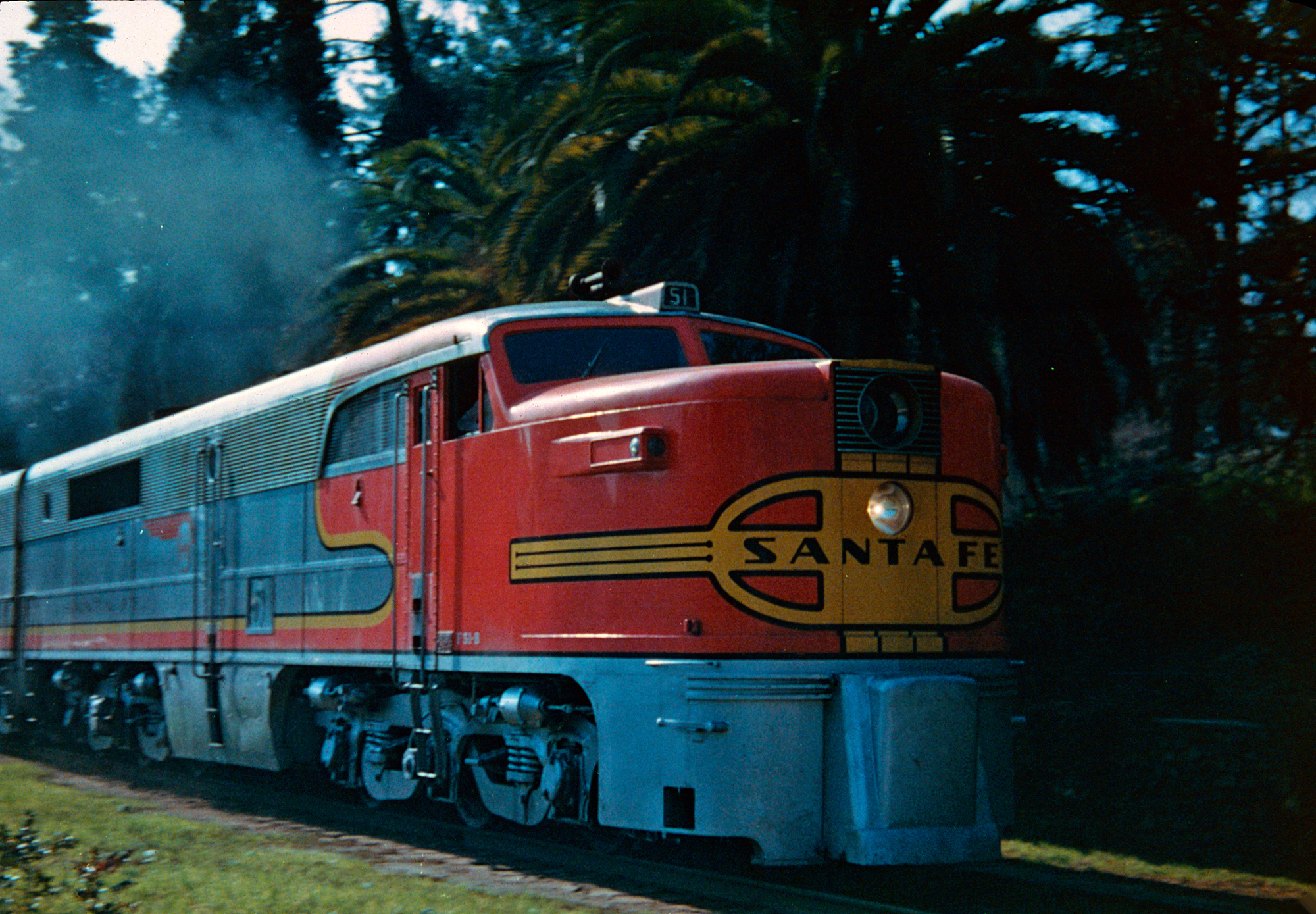
Santa Fe PA-1 #51-L at South Pasadena, California, 1948. Russ Cole photo. American-Rails.com collection.
Steam: The First Mechanical Age
England remains the cradle of the modern steam locomotive: Trevithick and Vivian’s 1802 patent and 1804 Merthyr Tydfil service; George Stephenson’s craft and the Stockton & Darlington / Rocket era that fixed the modern railroad idea. In the United States, Colonel John Stevens chartered an early New Jersey railroad project (1815) and demonstrated a “Steam Waggon” on a circular track at Hoboken in 1826. The French Cugnot steam road vehicle of 1769 (still at the Musée des Arts et Métiers in Paris) is an ancestor of self-propelled road and rail machines in spirit, though not a rail locomotive.
American steam milestones often cited on this site include the English Stourbridge Lion on Delaware & Hudson trackage (August 8, 1829—too heavy for regular service), Peter Cooper’s Tom Thumb on the Baltimore & Ohio (1830 horse race lore; experimental, not a long-lived revenue engine), and South Carolina Canal & Rail Road’s Best Friend of Charleston as an early American-built revenue passenger locomotive (December 1830).
Through the nineteenth century the 4-4-0 American became the silhouette of railroading (Brian Solomon, The Majesty of Big Steam). Later Whyte types—4-6-0, 2-8-0, 4-4-2, 2-8-2, and the Super Power generation (2-8-4, 4-8-4, 2-10-4, big articulateds)—answered heavier trains and higher speeds. Lima, Baldwin, and Alco defined the late steam marketplace; all three exited locomotive production before or around the end of the 1960s as diesel took over.
Deep dive: Steam locomotives · example class: N&W J Class 4-8-4 · hardware: Cowcatcher / pilot
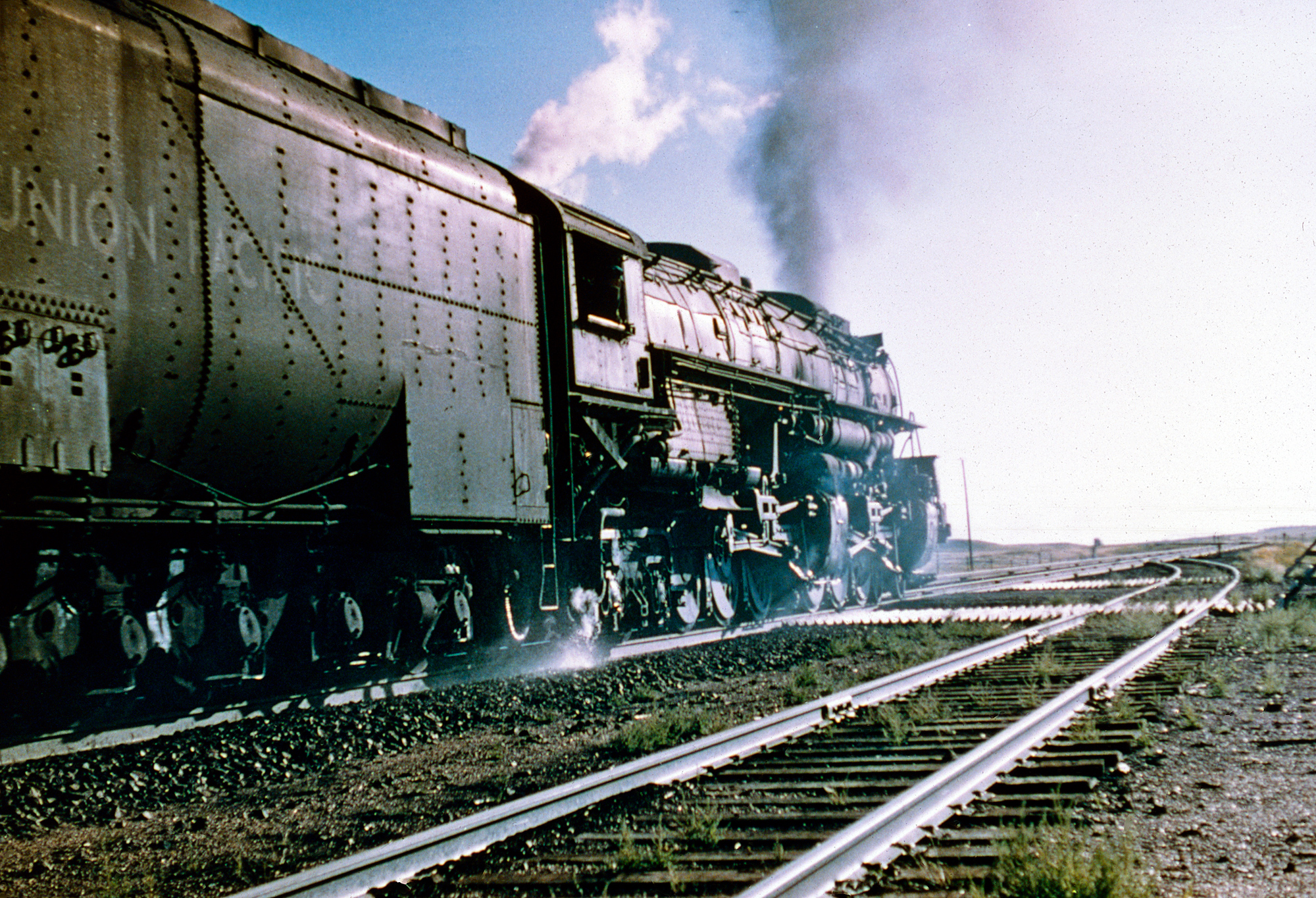
Union Pacific 4-6-6-4 #3933 with Extra 3933 westbound at Durham, Wyoming, August 31, 1955. J.E. Shaw photo. American-Rails.com collection.
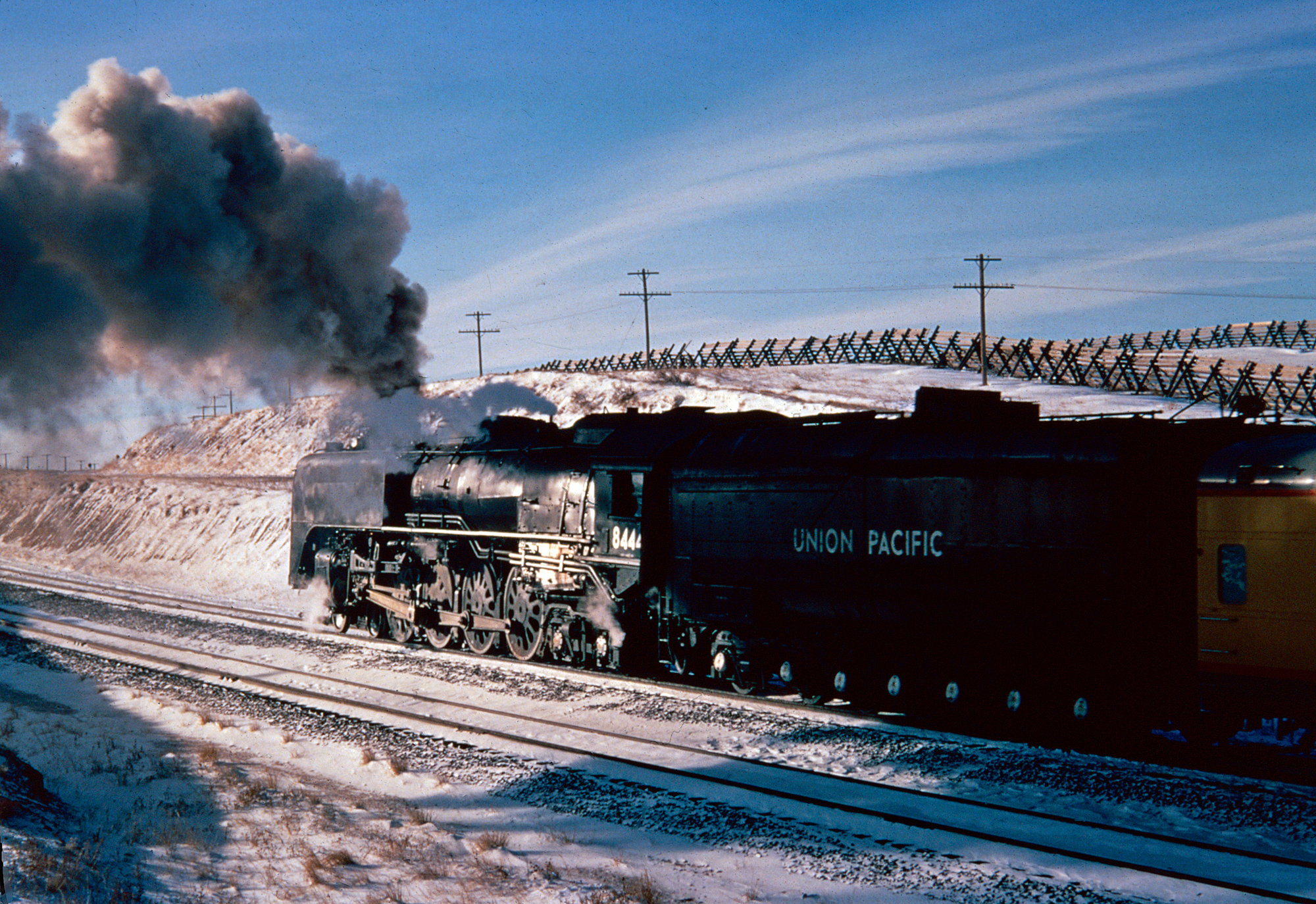
Union Pacific 4-8-4 #8444 leads a fan trip west over Sherman Hill, Wyoming, January 1972. American-Rails.com collection.
Electric Locomotives: Clean Power, High Capital Cost
Electric traction experiments reach into the 1830s (including Thomas Davenport’s toy-train demonstrations noted by Hilton and Due). Werner von Siemens demonstrated a generator-powered locomotive in Berlin in 1879; Edison tested electric propulsion at Menlo Park in 1880. Frank Sprague’s street-railway work of the mid-1880s opened the trolley and interurban age—see interurbans & streetcars.
Main-line railroad electrification in the United States is often dated from the Baltimore & Ohio’s Howard Street Tunnel / Baltimore Belt installation of 1895: about four electrified miles within a short Belt Line segment, 600-volt DC third rail, and early gearless motors. Later electrified territory appeared on the Pennsylvania, New York Central, New Haven, Illinois Central, Milwaukee Road, and others—usually where tunnels, terminals, or mountain grades justified the capital. Few roads electrified entire main lines for freight; the Milwaukee Road’s western electrification is the famous long-distance freight exception.
Electric locomotives remain ideal where traffic density or policy supports catenary or third rail. They never displaced steam nationwide because the upfront cost of power systems dwarfed the operating savings for most U.S. freights.
Deep dive: Electric locomotives
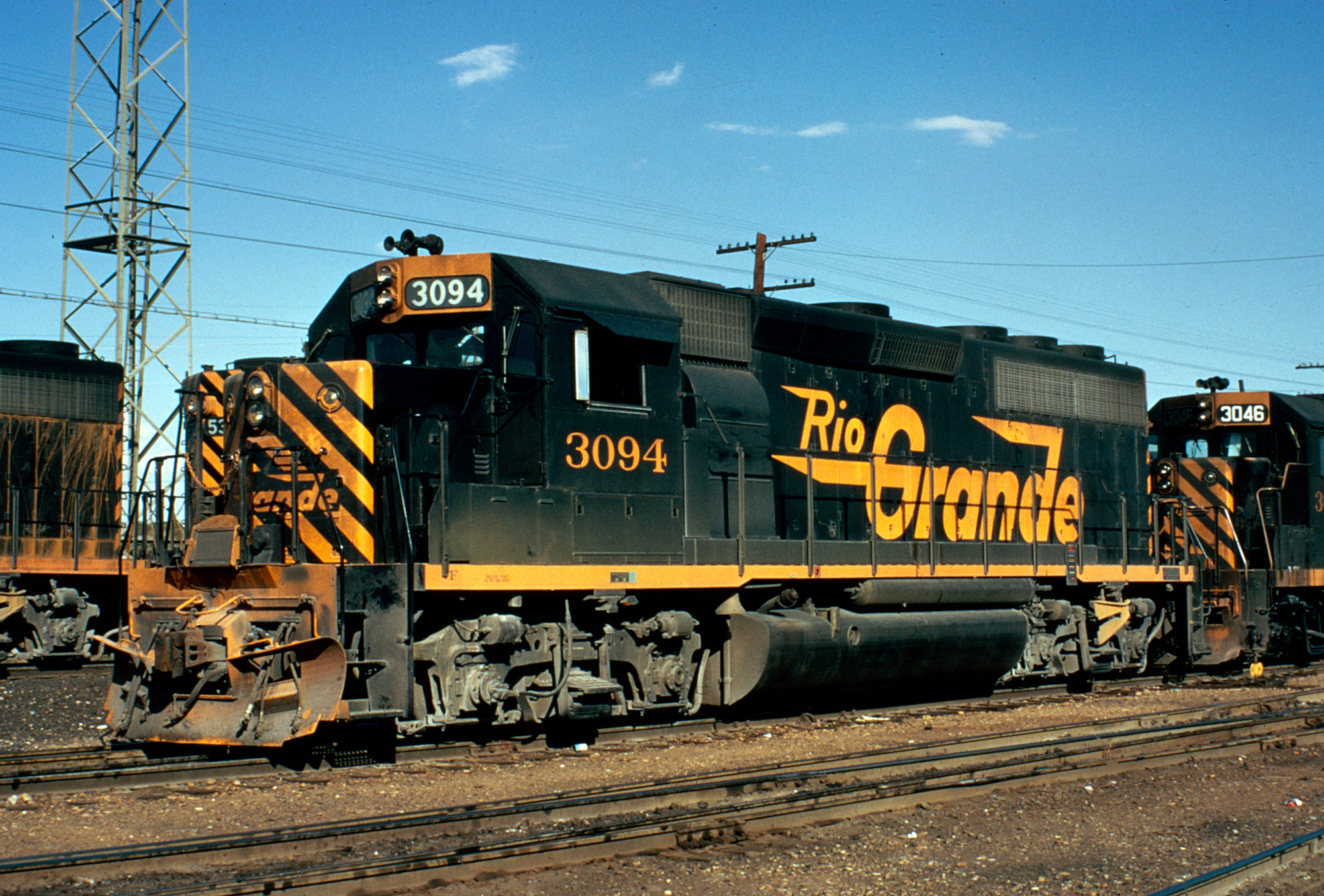
Rio Grande GP40-2 #3094 and GP35 #3046 at Pueblo Yard, Colorado, 1970s. American-Rails.com collection.
Diesel-Electrics: The Modern Standard
A common misconception is that the diesel engine turns the wheels directly. It does not. The diesel is the prime mover: it drives a generator or alternator that feeds traction motors in the trucks. In that sense a diesel-electric is an electric locomotive that carries its own power plant. A pure electric draws energy from wire or third rail; a diesel-electric makes electricity on board.
Early diesel-electric experiments include GE involvement on Southern Pacific test-bed work around 1904–05 (Solomon / Gruber accounts). GE’s 1917–18 GM-50 experiments and limited 225-hp production sold few units. The successful Alco-GE-Ingersoll-Rand 60-ton boxcab of 1923–24—sold to Central Railroad of New Jersey as #1000—proved commercial diesel switching (Jim Boyd, The American Freight Train). Railroads still distrusted diesels for main-line freight until Electro-Motive’s streamliner-era passenger units and, decisively, the FT demonstrator tour of 1939–40 (including hard service such as Tehachapi).
EMD’s E and F series, Alco road-switchers, Baldwin and Fairbanks-Morse products, and later GE’s Universal and Dash lines completed dieselization. Today new North American high-horsepower freights come primarily from Progress Rail (EMD heritage) and Wabtec (GE Transportation heritage), with AC traction, emissions tiers, and computerization layered on the same diesel-to-electric-to-wheels idea.
Deep dive: Diesel locomotives (builders, model directories, FT story, 21st century)
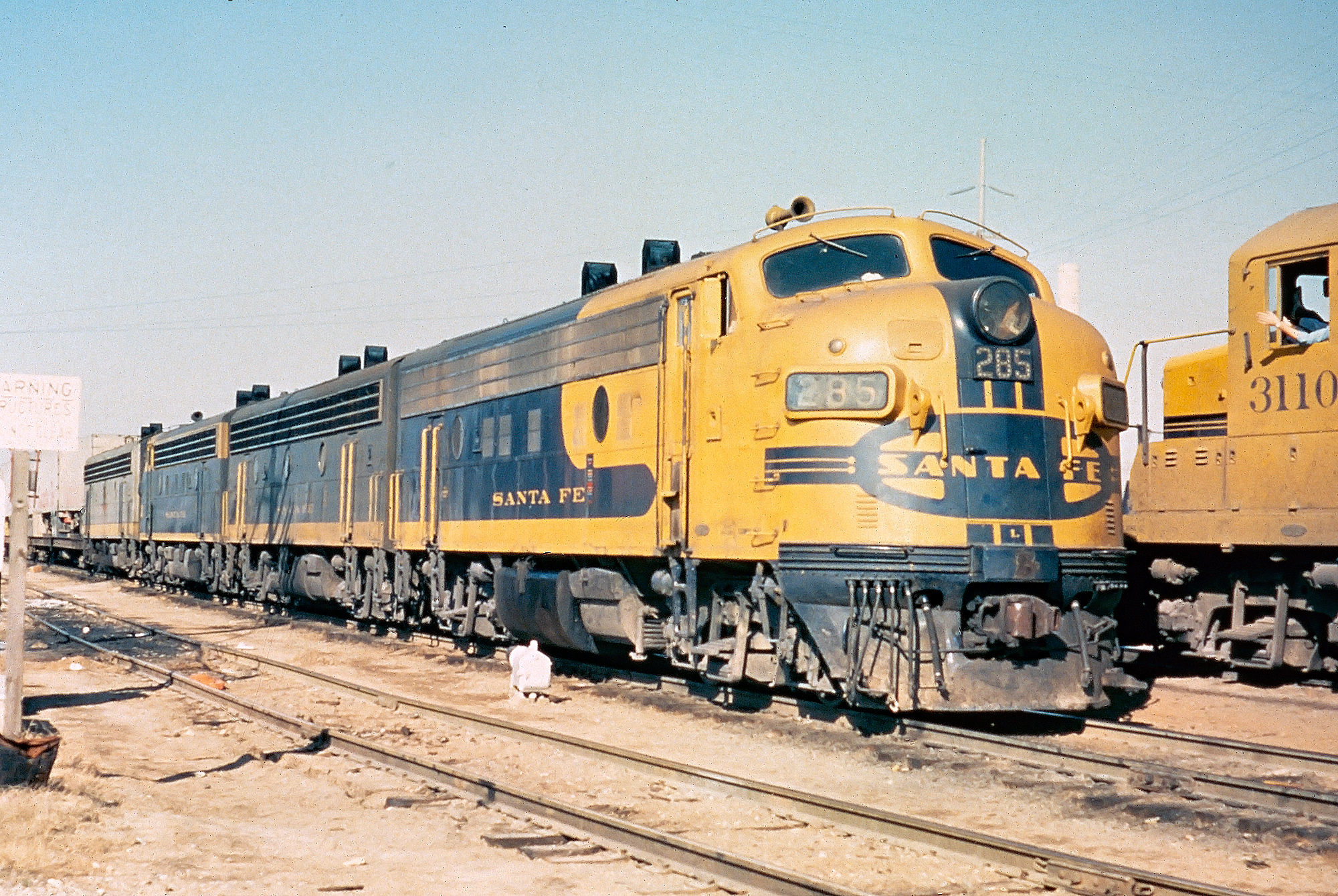
Santa Fe F9A #285-L and other Fs with trailers at Cleburne, Texas, circa 1974; GP20 #3110 on the next track. Mike Bledsoe photo. American-Rails.com collection.
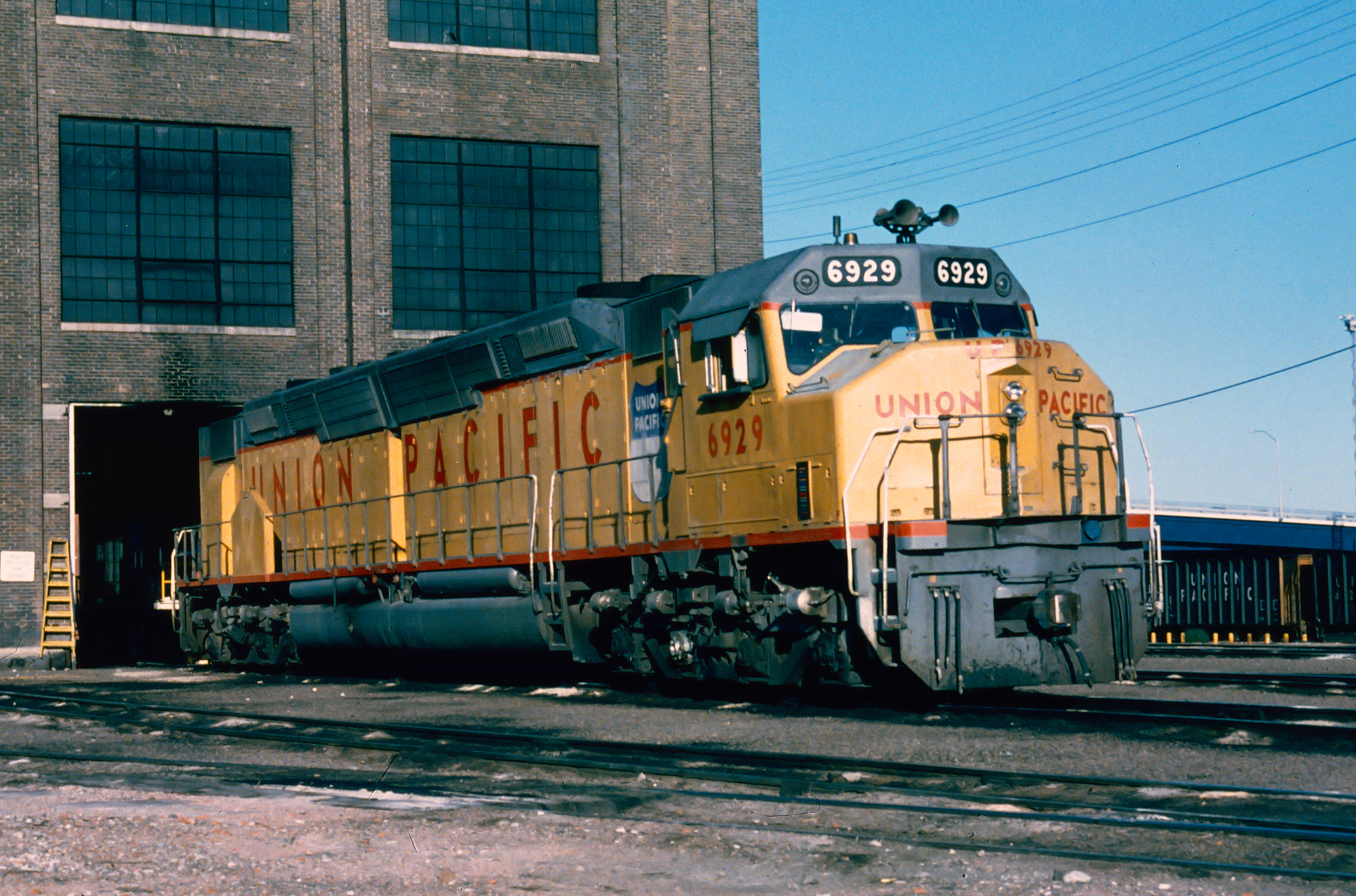
Union Pacific DDA40X Centennial #6929 outside the shops in Cheyenne, Wyoming, summer 1984. Mike Bledsoe photo. American-Rails.com collection.
Builders & Related Hardware
Steam age: Baldwin, Alco, Lima (and smaller builders). Diesel age: EMD/EMC, GE, Alco, Baldwin/BLH, Fairbanks-Morse; today Progress Rail and Wabtec. Electric: often the railroad’s own specifications with GE, Westinghouse, and others supplying equipment.
- Electro-Motive (EMD) · General Electric · Alco · Baldwin · Fairbanks-Morse · Wabtec
- Cowcatcher / pilot · Streamliners · Interurbans (electric traction cousins)
Related Reading on American-Rails.com
- Steam locomotives · Diesel locomotives · Electric locomotives
- Railroad history · Fallen flags · Landmarks
- Passenger cars · Freight cars · Railroad jobs (engineer, fireman histories)
- Works cited / resources · Home
Sources
- Del Vecchio, Mike. Railroads Across America (early rail and flanged-wheel context)
- Editors of American Heritage. Railroads in the Days of Steam (pre-rail travel and canal contrast)
- Solomon, Brian. The Majesty of Big Steam; Alco Locomotives; GE and EMD Locomotives; Electro-Motive E Units and F Units
- Shaughnessy, Jim. Delaware & Hudson (Stourbridge Lion context)
- Boyd, Jim. The American Freight Train (CNJ #1000 boxcab)
- Hilton, George W., and John F. Due. The Electric Interurban Railways in America (early electric motor context)
- B&O Railroad Museum materials on Tom Thumb / Fair of the Iron Horse replica tradition
- American-Rails.com steam, diesel, and electric hubs linked throughout
Locomotive history page rewritten August 2026 as a true Locomotives section hub: research retained (timeline, steam firsts, Howard Street electrification, diesel-electric principle, FT/EMD arc) while adding structured navigation into /steam.html, /diesel.html, /electric.html, builders, and related topics.
Recent Articles


-
The Semaphore: Railroading's Classic Signal
Sep 26, 26 11:51 AM
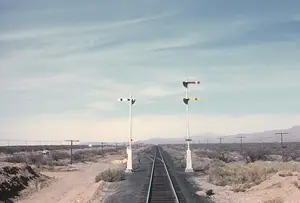
 Railroad semaphore signals: blade and spectacle, lower quadrant and upper quadrant, US&S Style B and GRS Model 2A, Robinson’s track circuit, and the last blades on the Raton Subdivision.
 -
Black Fork Grade (Western Maryland): History and Operations
Sep 26, 26 11:47 AM
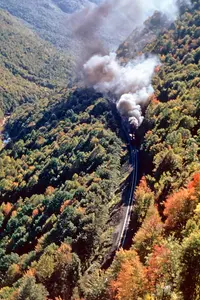
 Black Fork Grade—the Western Maryland climb through Blackwater Canyon. Thomas to Hendricks, past 3 percent, an H-9 and ten loads, helpers off at Fairfax.
 -
Western Maryland Steam Locomotives: History & Roster
Sep 26, 26 11:39 AM
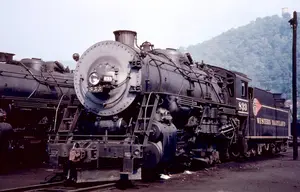
 Western Maryland steam—H-9 Consolidations, I-2 Decapods, Lima 2-8-8-2s, Baldwin Challengers, and twelve Baldwin Potomac 4-8-4s. Post-1900 roster.
 -
Western Maryland Diesel Roster: All-Time
Sep 26, 26 11:32 AM
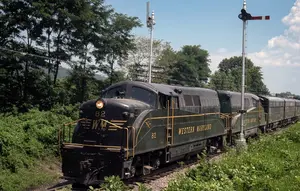
 Western Maryland diesels—S1 102 in 1941, fourteen F7 boosters, BL2s, hammerhead RS3s, Circus SD40s, and Chessie GP40-2s. Serials and order numbers.
 -
The Dutch Line (Western Maryland): History, Map, Operations
Sep 25, 26 09:38 PM
 Western Maryland Dutch Line—the Hanover Subdivision. Emory Grove to Highfield via Hanover and Gettysburg, York branch 1893, stone trains, and the route CSX still runs.
 -
The Durbin Branch (Western Maryland): History, Map, Operations
Sep 25, 26 09:13 PM
 Western Maryland Durbin Branch—the Coal & Iron Railway, 46.9 miles Elkins to Durbin, opened July 27, 1903. Mixed train until April 10, 1959. H-7B Consolidations.
 -
Western Maryland Railway: Map, Rosters, Logo, History
Sep 25, 26 10:24 AM
 Western Maryland Railway—the Fast Freight Line. Baltimore, Carroll & Frederick, May 27, 1852. Connellsville Extension 1912. Chessie, then into the B&O May 1, 1983.
 -
Illinois Dinner Train Rides (2026): A Complete Guide
Sep 25, 26 09:52 AM
 2026 Monticello Railway Museum Murder Mystery Dinner Train—June 13, July 11, August 1, and September 5 have run. Three courses, about 2 hours, $112. Confirm on mrym.org.
 -
Georgia Dinner Train Rides (2026): A Complete Guide
Sep 25, 26 12:29 AM
 2026 Azalea Sprinter dinner train from Nashville and Willacoochee, Georgia—2½ hours. Club Car adult $147, Executive adult $177. Confirm on azaleasprinter.com.
 -
Baldwin "Centipede" Locomotives: Specs, Roster, Photos
Sep 25, 26 12:02 AM
 Baldwin DR-12-8-1500/2 Centipede—2-D+D-2, two 608SC engines, 3,000 hp. SAL 4500 from the 1943 test bed. 54 on the serial list, 52 sold. PRR BP60 then BH50. None preserved.
 -
Florida Dinner Train Rides (2026): A Complete Guide
Sep 24, 26 11:56 PM
 2026 Seminole Gulf Murder Mystery Dinner Train in Fort Myers—five courses cooked onboard, 3½ hours, $129 or $135 Saturday, plus tax and gratuity. Confirm on semgulf.com.
 -
West Virginia Northern Railroad: Map, Photos, History
Sep 24, 26 11:27 PM
 West Virginia Northern—Kingwood to Tunnelton, 11 miles of Preston County coal. Narrow gauge 1888, standard gauge 1895. Last freight February 19, 1991. Consolidations 8 and 9 survive.
 -
Rutland Railroad: Map, Rosters, History, Logo
Sep 24, 26 01:18 PM
 Rutland Railroad—Follett’s Champlain & Connecticut River, November 1, 1843. Bellows Falls–Burlington December 18, 1849. Green Mountain Gateway. Last train September 25, 1961. Vermont Railway Janua…
 -
Arkansas Dinner Train Rides (2026): A Complete Guide
Sep 24, 26 01:12 PM
 2026 Eureka Springs & North Arkansas Dinner Train—Eurekan dining car, about 2 hours, $53.62 tax included, opens May 9, Tuesday, Wednesday, Friday, and Saturday. Confirm on esnarailway.com.
 -
Arizona Dinner Train Rides (2026): A Complete Guide
Sep 24, 26 01:01 PM
 2026 Arizona has no plated dinner train. Grand Canyon Railway sells snacks in the cars and meals in Williams or at the rim. Verde Canyon includes a charcuterie tray.
 -
Rail News, The Latest
Sep 24, 26 12:36 PM
This page provides a portal to the latest in rail news, from preservation and restortation subjects to other notable topics. -
Cotton Belt 819 Moved Outside at Pine Bluff for Evaluation
Sep 24, 26 12:35 PM
 Cotton Belt 819 left the Pine Bluff shop on September 22, 2026, first time outside in about 30 years. RDG Steam Services is evaluating the engine. No donation link posted.
 -
Reading Steam Locomotives: History, Roster & Photos
Sep 24, 26 12:14 PM
 Reading steam—Wootten fireboxes, Camelback Consolidations, Mallets, K-1 Santa Fes, G-3 Pacifics, T-1 4-8-4s. Post-1900 roster after Drury. Rambles ended October 17, 1964.
 -
Reading Diesel Roster: All-Time
Sep 24, 26 12:10 PM
 Reading diesel roster—AGEIR boxcabs, FTs, FA-1s, RS-3s, Train Masters, GP30s through GP39-2s. Serials and order numbers. Conrail April 1, 1976.
 -
Reading Railroad: Map, Logo, History, Rosters
Sep 24, 26 12:08 PM
 Reading Company—Philadelphia & Reading, 1833. Anthracite, Port Richmond, Reading Terminal. Operating company January 1, 1924. Conrail April 1, 1976.
 -
Nevada Dinner Train Rides (2026): A Complete Guide
Sep 24, 26 12:02 PM
 2026 Nevada Northern Taste of Italy—adults-only gala from East Ely. The September 19 date has run. Confirm any later night on nnry.com.
 -
North Carolina Dinner Train Rides (2026): A Complete Guide
Sep 24, 26 11:24 AM
 2026 North Carolina dinner trains—NCTM Wine & Dine in Spencer sold out February 13–15. GSMR First Class is the plated meal on the Nantahala Gorge excursion. Confirm on the railroad.
 -
Railway Express Agency (REA): Signs, Trucks, Logo & History
Sep 24, 26 09:40 AM
 Railway Express Agency—railroad-owned express company. Incorporated December 7, 1928. Operations March 1, 1929. Red diamond, green trucks. Last regular express November 7, 1975.
 -
Michigan Dinner Train Rides (2026): A Complete Guide
Sep 24, 26 09:28 AM
 2026 Steam Railroading Institute dining in Owosso—select evenings, no public dinner dates posted. Confirm on michigansteamtrain.com.
 -
Pittsburgh and West Virginia Railway: Map, Rosters, History
Sep 24, 26 12:24 AM
 Pittsburgh & West Virginia—the Hi-Line. Wabash-Pittsburgh Terminal 1904. Railway January 29, 1917. Connellsville February 11, 1931. N&W lease October 16, 1964. Wheeling & Lake Erie from May 17, 1990.
 -
Indiana Dinner Train Rides (2026): A Complete Guide
Sep 24, 26 12:13 AM
2026 Spirit of Jasper Ride & Dine is paused. No public trains. Depot at 201 Mill Street stays open as a rental. Confirm on spiritofjaspertrain.com. -
New Jersey Dinner Train Rides (2026): A Complete Guide
Sep 24, 26 12:01 AM
2026 Woodstown Central Dining in Motion—private table of four from $190, about an hour, Salem County. Confirm on woodstowncentral.com. -
Maryland Dinner Train Rides (2026): A Complete Guide
Sep 23, 26 05:19 PM
 2026 Western Maryland Scenic Allegheny Mountain Dinner Train—Cumberland, 3 hours, 21+, Saturday 7 p.m. Confirm on wmsr.com.
 -
Pittsburgh and Lake Erie Railroad: Map, Rosters, Photos
Sep 23, 26 03:28 PM
 Pittsburgh & Lake Erie—the Little Giant. Chartered 1875, Pittsburgh to Youngstown February 10, 1879. New York Central from 1883. Independent May 15, 1979. Last day September 11, 1992.
 -
Kansas Dinner Train Rides (2026): A Complete Guide
Sep 23, 26 01:11 PM
 2026 Abilene & Smoky Valley Smoky Valley Limited—two hours from the Rock Island Depot, about $72–$110, dates into December 31. Confirm on asvrr.org.
 -
The Belpaire Firebox: Simplicity and Greater Power
Sep 23, 26 01:03 PM
 Belpaire firebox—Alfred Belpaire, 1864. Square crown, straight staybolts at right angles. Pennsylvania standard after the 1880s. Great Northern was the other big user.
 -
Pennsylvania Railroad (PRR) Electric Roster: All Classes
Sep 23, 26 12:57 PM
Pennsylvania Railroad electrics—DD1s into Penn Station, P5s, 139 GG1s, B1 switchers, and 66 E44s. Class roster, 1905–1963. No unit-by-unit GG1 list. -
Penn Central Diesel Roster: All-Time
Sep 23, 26 12:46 PM
 Penn Central diesel roster—PRR classes on NYC, PRR, and New Haven power. New orders carry serials. GP38-2s are 7940-8162. Conrail April 1, 1976.
 -
Penn Central Railroad: Map, History, Logo
Sep 23, 26 12:32 PM
 Penn Central—Pennsylvania and New York Central merged February 1, 1968. New Haven January 1, 1969. Section 77 bankruptcy June 21, 1970. Conrail April 1, 1976.
 -
Iowa Dinner Train Rides (2026): A Complete Guide
Sep 23, 26 11:42 AM
 2026 Boone & Scenic Valley Wolf Dinner Train—Saturdays May–October, Union Pacific dining cars, Bass Point Creek High Bridge. Confirm on bsvrr.com.
 -
Pennsylvania-Reading Seashore Lines: Map, Roster, History
Sep 23, 26 12:32 AM
 Pennsylvania-Reading Seashore Lines—Atlantic City Railroad renamed July 15, 1933. Pennsylvania two-thirds, Reading one-third. Camden to Atlantic City, Cape May, and Millville. Conrail April 1, 1976.
 -
Wisconsin Dinner Train Rides (2026): A Complete Guide
Sep 23, 26 12:28 AM
2026 Wisconsin Great Northern dinner train in Trego—$105, Namekagon River, January 8–31 and May 5–December 17. Mid-Continent’s remaining 2026 calendar is snack and scenic. Confirm on the railroad. -
New Hampshire Dinner Train Rides (2026): A Complete Guide
Sep 23, 26 12:21 AM
2026 Cafe Lafayette Dinner Train in North Woodstock—five courses, 2 hours, from $125. Children under 6 not allowed. Confirm on nhdinnertrain.com. -
PRR "GG-1" Locomotives: Roster, Photos, Specs
Sep 23, 26 12:13 AM
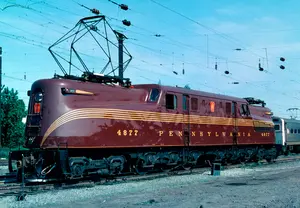
 PRR GG1 electric: 139 locomotives, 4800–4938, built 1934–1943. Specs, Loewy shell, Amtrak numbers, and the last revenue trip on October 28, 1983.
 -
Montana Dinner Train Rides (2026): A Complete Guide
Sep 23, 26 12:04 AM
2026 Charlie Russell Chew Choo from Hanover, near Lewistown—4.5 hours, prime rib, adult $151. Remaining listed dates sold out. Confirm on montanadinnertrain.com. -
Kentucky Dinner Train Rides (2026): A Complete Guide
Sep 22, 26 11:52 PM
2026 My Old Kentucky Dinner Train in Bardstown—four courses, 2.5 hours, adult $116. Confirm on kydinnertrain.com. -
Tennessee Dinner Train Rides (2026): A Complete Guide
Sep 22, 26 11:45 PM
2026 TVRM Chattanooga Dinner Train—Grand Junction, select Fri/Sat March 6–October 24, 6 p.m., from $110. Confirm on tvrail.com. -
The Trainphone: PRR's Wireless Radio System
Sep 22, 26 11:17 PM
 Pennsylvania Trainphone—Union Switch & Signal inductive telephone. Bel-Del trial 1941, Frenchtown November 29, 1943. Carriers at 88 kHz and 144 kHz. Out of service April 30, 1967.
 -
Pennsylvania (PRR) Steam Roster: Post 1906
Sep 22, 26 11:13 PM
 ennsylvania steam after 1906—H8, H9, and H10 Consolidations, 574 L1s Mikados, 598 I1s Decapods, 425 K4s Pacifics, 301 M1 Mountains. Drury’s grid. Last steam November 30, 1957.
 -
Pennsylvania Railroad (PRR) Diesel Roster: All-Time List
Sep 22, 26 10:59 PM
 Pennsylvania diesel roster—SW 3908 in June 1937, then Alco, Baldwin, EMD, Fairbanks-Morse, GE, and Lima. Serials and Alco order numbers. Penn Central February 1, 1968.
 -
Pennsylvania Railroad: Map, Logo, History, Rosters
Sep 22, 26 10:02 PM
 Pennsylvania Railroad—chartered April 13, 1846, Harrisburg–Pittsburgh, Horseshoe Curve 1854, Penn Station 1910. Standard Railroad of the World. Penn Central February 1, 1968.
 -
Pennsylvania Dinner Train Rides (2026): A Complete Guide
Sep 22, 26 04:48 PM
 2026 Pennsylvania dinner trains—Colebrookdale Dining Class in Boyertown and Strasburg Dinner on the Rails. Confirm on each railroad.
 -
New York, Ontario & Western Steam Locomotives: History & Roster
Sep 22, 26 04:40 PM
 NYO&W steam—camelback 2-8-0s and 2-6-0s, Class X Bull Moose 2-10-2s, Class Y and Y-2 Mountains. All-time class roster. Steam finished in the summer of 1948. None saved.
 -
New York, Ontario & Western Diesel Roster: All-Time
Sep 22, 26 04:36 PM
 NYO&W diesel—five GE 44-tonners 101-105, eighteen FTs, seven F3s, twenty-one NW2s. Serials and the NW2 order E824. Railroad liquidated March 29 1957.
 -
New York, Ontario & Western Railway: Map, Roster, History
Sep 22, 26 04:26 PM
 New York, Ontario & Western—New York & Oswego Midland chartered January 11 1866, O&W January 21 1880. Scranton coal, West Shore rights. Last train March 29 1957.