
The "E44": PRR's Last New Freight Electrics
Last revised: August 27, 2024
By: Adam Burns
Perhaps the last and most advanced freight electric locomotives to ever operate in the U.S. were built for the Pennsylvania Railroad by General Electric.
Dubbed E44s the electrics featured the latest technologies available and were quite efficient workhorses.
The E44s began arriving on the Pennsy in the late 1950s and eventually the motors wound up with three different owners after the Penn Central collapse of the 1970s handed them over to Conrail in 1976.
Conrail was never particularly interested in electric freight operations, especially after the North East Corridor was given to Amtrak upon the Penn Central's collapse during the 1970's.
As a result, freight operators are charged high fees to use the line, which is largely kept clear for passenger service. This decision remains bitterly opposed to this day as the corridor naturally is the best artery to transport freight between the Northeast's largest cities.
In the modern era, freight trains are primarily relegated to overnight operation.
For this reason, along with a number of other factors, Conrail gave up on electric operation in the mid-1980s. Today, one E44 stands preserved, #4465 on display inside the Railroad Museum of Pennsylvania at Strasburg.
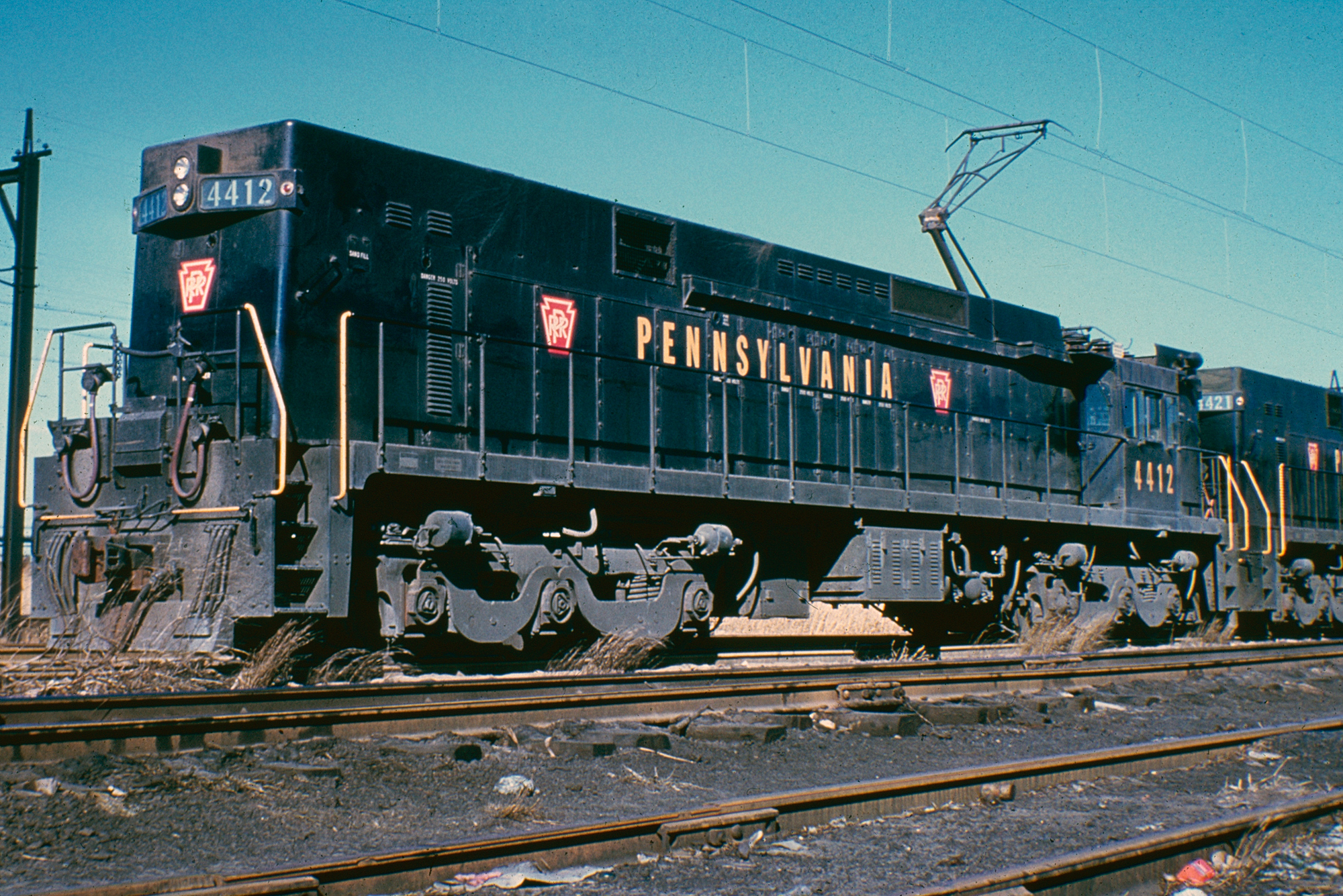 Pennsylvania E44s #4412 and #4421 at Kearney, New Jersey on January 23, 1960. American-Rails.com collection.
The E44 freight electric locomotive was an Ignitron-rectifier built by GE in 1959 as the PRR needed a new freight locomotive to replace its aging fleet of P5s and supplement its GG1s (which by the late 1950s were used in both freight and passenger service).
The new E44s employed a C-C wheel arrangement and were capable of producing 4,400 hp (thus their name E44; Electric, 4400 hp).
In total the Pennsylvania would come to own a fleet of 66 E44s, that were quite similar to the Virginian’s EL-C rectifiers, later known as E33s, albeit a bit more powerful.
Interestingly, the E44 model resembled the E33s for a very good reason, the PRR used the design as a template for its own freight motor.
By the
time the Pennsylvania began testing them they had been purchased by the
New York, New Haven & Hartford as the Virginian had been purchased
by the Norfolk & Western who no longer saw a need from them (they
soon after shutdown all of the Virginian's electrified operations).
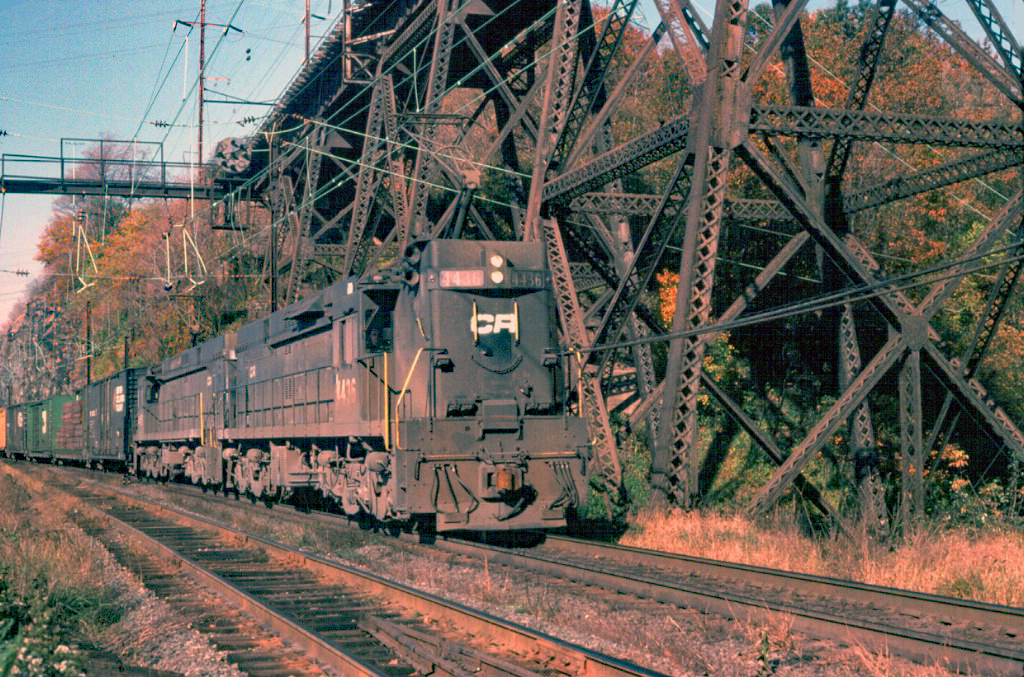 During Conrail's brief years of operating electrified freight service E44s, led by #4436, lead an eastbound/southbound consist along the Columbia & Port Deposit Branch near Safe Harbor, Pennsylvania during early November of 1977. Randy Kotuby photo.
Still practically brand new the PRR was quite impressed with the E33s and contracted with General Electric to use the design as a basis for its own new model.
From a technical standpoint the E44 used six GE Model 752 E5 traction motors. The primary difference, internally, of the E44 was its means of converting AC current to DC.
The first E44s the Pennsy received used Ignitron tubes to convert the current.
However, the last batch of locomotives used newer and less maintenance intensive, air-cooled silicon diode rectifiers. These upgraded locomotives were dubbed E44As to distinguish them from the original models.
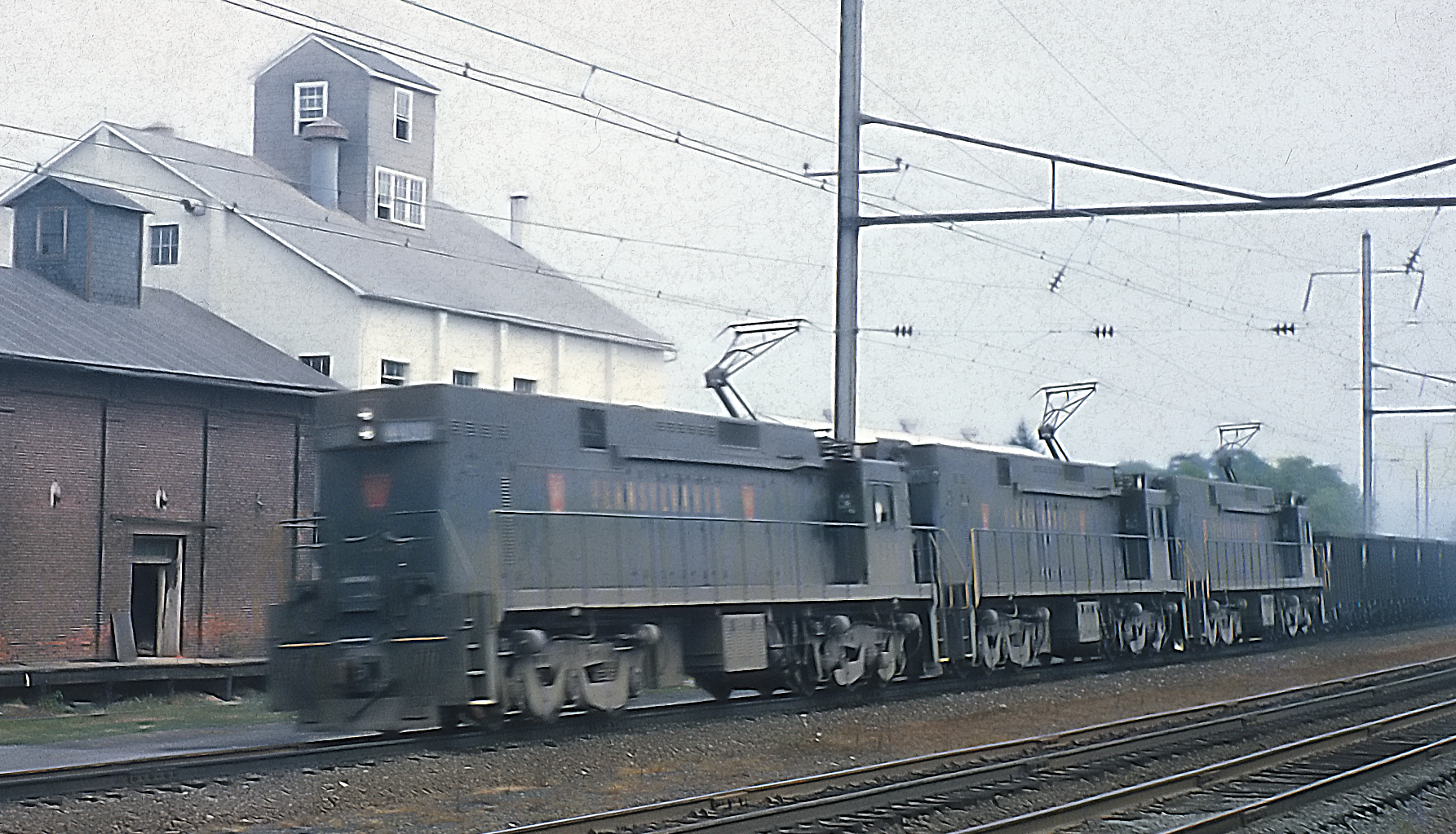 A trio of Pennsylvania's E44 electrics are westbound at Paradise, Pennsylvania - near the interchange with the Strasburg Rail Road - in September, 1964. Rick Burn photo.
The model became the face of the Pennsylvania's late electrified operations prior to the transition to Penn Central in the late 1960s.
With such a large fleet the railroad used the E44s all over its electrified lines, particularly along the Northeast Corridor.
If you were lucky at the time you could occasionally even catch the freight locomotives in passenger services, used as needed, usually zooming along in commuter service despite the fact they were not really intended for use in such a capacity.
Overall, the E44s proved to be quite reliable freight motors and while they were geared for speeds of up to 70 mph they usually operated somewhere below this threshold.
Extremely quiet in service, they effortlessly lugged freight trains down the line with relative ease.
The model was delivered to the Pennsylvania in a very standard all-black with the company's classic keystone logo in crimson red and yellow featuring the interconnected "PRR".
All 66 units were delivered between 1960 and 1963, which by that time was the railroad's final days as an independent carrier.
Too rigidly managed during times that called for change to survive in the industry, the PRR was out of money and running on borrowed time.
During early days, such as prior to World War II, the railroad would likely have purchased many more new electrics of various designs, notably for passenger service, instead of relying on its worn out fleet of GG1s.
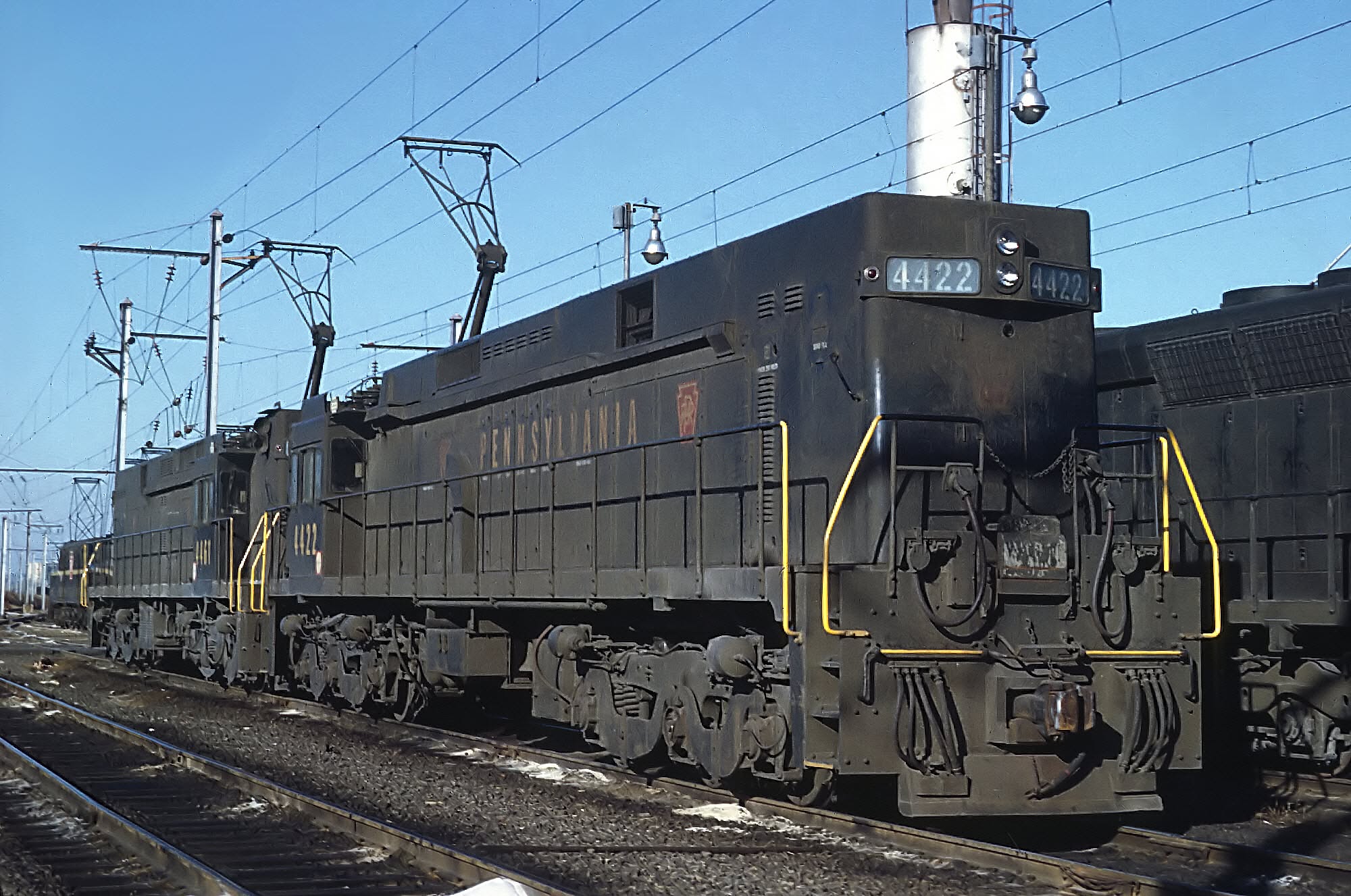 Pennsylvania E-44 #4422 and a mate layover at Potomac Yard in Alexandria, Virginia during the early Penn Central era on December 17, 1968. Marty Bernard photo.
In any event, after the collapse of the Penn Central in 1970 and the creation of Conrail in the spring of 1976 the locomotives were used sporadically until 1981 when most were stored at the PRR’s old Enola Yard.
By the mid-1980s all had been sold by Conrail, interestingly two buyers of which were Amtrak and NJ Transit, which intended to use them in passenger service.
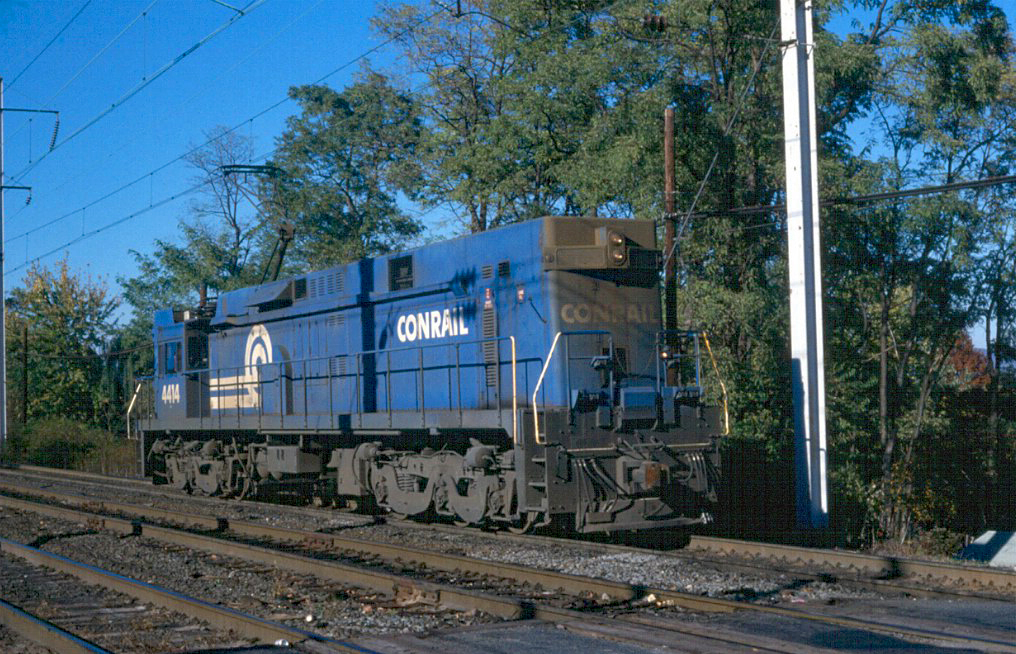 Conrail E-44 #4414 runs light between assignments near Wormleysburg, Pennsylvania during the fall of 1978. Randy Kotuby photo.
Dissatisfied with their performance both passenger carriers elected to sell them either outright or for scrap.
Unfortunately, the E44 was similar to late model steam locomotives that despite being well conceived and designed, was retired well too early.
The youngest units were barely 20 years of age before being parked. Today, at last one E44 has been preserved at the Railroad Museum of Pennsylvania near Strasburg.
Recent Articles


-
Boone & Scenic Valley Wolf Dinner Train (2026)
Sep 19, 26 08:15 PM
 2026 Boone & Scenic Valley Wolf Dinner Train—Des Moines River valley, Bass Point Creek High Bridge, Union Pacific dining cars. Confirm on bsvrr.com.
 -
C&NW 4-6-2s 1617 & 1620: Minnesota 400 Yellow Jackets
Sep 19, 26 11:28 AM
 C&NW Class E Pacifics 1617 and 1620—Alco Schenectady 1917, yellow-and-green E-4-style shrouds 1941 for the Minnesota 400. Crews called them Yellow Jackets. Renumbered 617/620. Scrapped 1956.
 -
Erie Lackawanna Diesel Roster: All-Time
Sep 19, 26 10:13 AM
 Erie Lackawanna diesel—Erie and DL&W inheritance, GP35s, U25Bs, SD45/SDP45/SD45-2, U34CH. All-time roster with serials and orders. Conrail April 1 1976.
 -
Erie Lackawanna Railway: Map, History, Logo
Sep 19, 26 10:06 AM
 Erie Lackawanna Railway—Erie and DL&W, October 17 1960–March 31 1976. Von Willer, White revival, Dereco, Agnes, Conrail. High-and-wide Chicago main. Map, logo, what remains.
 -
"Empire State Express" (1941 Train): Timetables, Route, Consist
Sep 18, 26 10:59 PM
 NYC Empire State Express—George Daniels 1891 day train, 999’s 112.5 mph claim, Budd stainless streamliner December 7 1941, Cleveland and Detroit sections, diesels, 1967 name drop. Timetables, consist…
 -
New York Central 4-6-4s 5426 & 5429: Empire State Express Hudsons
Sep 18, 26 10:32 PM
 NYC J-3a Hudsons 5426 and 5429—Alco 1937, Budd stainless shrouds 1941 for the Empire State Express. Pearl Harbor inaugural. Shrouds off by 1950. Neither preserved.
 -
"Stourbridge Lion" Locomotive: Facts, History, Photos
Sep 18, 26 10:27 PM
 Stourbridge Lion—Foster, Rastrick 0-4-0, first steam locomotive in the United States. Horatio Allen, Honesdale, August 8, 1829. Too heavy for D&H gravity track. Boiler in Baltimore; Colonie replic…
 -
Delaware & Hudson Steam Roster (Post 1900)
Sep 18, 26 10:01 PM
 Delaware & Hudson steam—Camelback 2-8-0s, Loree high-pressure compounds, Class K 4-8-4s, forty Challengers. Post-1900 class roster after Drury. Last steam July 21, 1953.
 -
Boston & Maine Steam Roster (Post 1900)
Sep 18, 26 02:57 PM
 Boston & Maine steam—B-15 Moguls, K-8 Consolidations, P-4 Lima Pacifics, T-1 Limas, R-1 Mountains. Post-1900 class roster after Drury. Last steam July 23, 1956.
 -
Boston & Maine Diesel Roster (All-Time)
Sep 18, 26 01:25 PM
 Boston & Maine diesel—boxcab 1100 1935, Flying Yankee 6000, FTs, E7s, BL2s, GP7/GP9, GP38-2s and GP40-2s. All-time roster. Last steam July 23, 1956.
 -
Mid-Continent Railway Museum Dining (2026)
Sep 18, 26 01:21 PM
 2026 Mid-Continent dining in North Freedom—select-date seated meals in luxury cars, reservations required. Pizza Limited June 28. Confirm on midcontinent.org.
 -
Bessemer & Lake Erie Steam Roster (Post 1900)
Sep 18, 26 12:11 PM
 Bessemer & Lake Erie steam—C3A 150–151, D1A/D2A Santa Fes, 47 H1 Texas types after Burlington. Post-1900 class roster after Drury. Last steam 2-8-0 156, May 14, 1953.
 -
Bessemer & Lake Erie Diesel Roster (All Time)
Sep 18, 26 12:09 PM
 Bessemer & Lake Erie diesel—Westinghouse 281 1936, Baldwin DRS-6-6-1500s, F7s 1950–53, SD7/SD9/SD18/SD38 family, RSD-15s. All-time roster. Last steam 2-8-0 156, May 14, 1953.
 -
Bangor & Aroostook Steam Roster (Post 1900)
Sep 18, 26 11:21 AM
 Bangor & Aroostook steam—Manchester Ten-Wheelers, Alco Mountains 100–109, G-2 Consolidations, Pacifics 250–254. Post-1900 class roster after Drury. Last steam Pacific 251, July 22, 1951.
 -
Bangor & Aroostook Diesel Roster (All Time)
Sep 18, 26 11:09 AM
 Bangor & Aroostook diesel—F3s 1947, eight BL2s, E7s, GP7s leased to the PRR, GP9s, GP38s. All-time roster. Last regular steam July 22, 1951.
 -
B&O Steam Locomotive Roster (Post 1900)
Sep 18, 26 10:33 AM
 Baltimore & Ohio steam—Old Maude, E-27 Consolidations, Q Mikados, Big Sixes, EM-1 Yellowstones, President Pacifics. Post-1900 class roster after Drury. Last public steam May 17, 1958.
 -
Baltimore & Ohio (B&O): Diesel Roster (All-Time)
Sep 18, 26 10:28 AM
 Baltimore & Ohio diesel—boxcab 1925, EMC 50 1935, EA 1937, FTs, F3s, F7s, FA-2s, sharks, GP7/GP9, GP30s after C&O 1963, SD50s 8576–8595 1984. All-time roster. Last steam 1958.
 -
Detroit & Toledo Shore Line Railroad: Map, Roster, History
Sep 18, 26 12:32 AM
 Detroit & Toledo Shore Line—Pleasant Bay 1898, named 1899, Detroit–Toledo freight bridge, GTW and Clover Leaf/NKP/N&W. Merged into Grand Trunk Western June 26, 1981.
 -
Lackawanna Steam Locomotives: History, Roster & Photos
Sep 18, 26 12:17 AM
 Delaware, Lackawanna & Western steam—Camelback 2-8-0s, Mikados, freight Pacifics, Poconos 4-8-4s, Hudsons. Post-1900 roster after Drury. Last steam July 13, 1953.
 -
Lackawanna (DL&W) Diesel Roster: All Time
Sep 18, 26 12:11 AM
Delaware, Lackawanna & Western diesel—boxcabs 1926, EMC SC 425–426 1935, FTs 1945, F3/F7/E8, GP7s, RS-3s, FM Train Masters. All-time roster. Last steam 1953. -
Lackawanna Railroad: Map, History, Viaducts, Rosters
Sep 18, 26 12:04 AM
 TDelaware, Lackawanna & Western—Liggett’s Gap 1832, named March 11 1853, Hoboken–Buffalo, anthracite, Phoebe Snow, Cutoff and Tunkhannock. It merged with the Erie to form Erie Lackawanna on Octobe…
 -
Rail News, The Latest
Sep 17, 26 11:56 PM
This page provides a portal to the latest in rail news, from preservation and restortation subjects to other notable topics. -
Union Pacific Big Boy 4014 Sets First Holiday Tour for Make-A-Wish
Sep 17, 26 11:54 PM
 Union Pacific Big Boy 4014’s first holiday tour: Cheyenne–Denver tickets, Nov. 21 Denver-area display, Make-A-Wish. Museum patrons Oct. 16; public Oct. 19.
 -
Conrail Diesel Roster (All Time)
Sep 17, 26 10:27 PM
Conrail diesel—~5,000 inherited 1976, Big Blue, GP15-1s, SD40-2s, SD50s, Dash-8s, SD60/60M/60I, SD80MACs. All-time CR-number roster. -
Chessie System (Railroad): The C&O, B&O, And WM
Sep 17, 26 09:38 PM
 Chessie System, Inc.—C&O, B&O, and Western Maryland. Kitten-C paint 1972, holding company February 26 1973, CSX November 1 1980, C&O into CSXT August 31 1987.
 -
Chesapeake & Ohio (C&O) Diesel Roster: All-Time
Sep 17, 26 06:01 PM
 Chesapeake & Ohio diesel—late steam, no Fairbanks-Morse, E7s 1946, GP7/GP9 flood, F7s, GP40-2s, B30-7s, SD50s 1984–85. All-time roster. Steam ended 1956.
 -
Chesapeake & Ohio (C&O) Steam Roster: Post-1900
Sep 17, 26 03:18 PM
 Chesapeake & Ohio steam—H-8 Alleghenies, K-4 Kanawhas, T-1 Texas, Greenbriers, H-6 1949 Mallets. Post-1900 class roster including Pere Marquette and Hocking Valley. Last steam 1956.
 -
Chesapeake and Ohio Railway: Map, Logo, History
Sep 17, 26 02:36 PM
 Chesapeake & Ohio Railway—Louisa Railroad 1836, named August 31 1868, Ohio River 1873. Coal, Chessie the kitten, Pere Marquette 1947, B&O control 1963, into CSX August 31 1987. Complete corporate…
 -
TVRM Valentine Train Ride (2026)
Sep 17, 26 02:31 PM
 2026 TVRM Valentine Train Ride in Chattanooga—Feb. 6–15, plated dinner, Grand Junction Depot. Confirm on tvrail.com.
 -
River Fox Train Dining (2026)
Sep 17, 26 02:29 PM
 2026 River Fox Train in West Sacramento—Brunch Train and Murder Mystery dinner. 18095 County Road 117. Confirm on riverfoxtrain.com.
 -
Weehawken Terminal, Serving The West Shore Railroad
Sep 17, 26 01:38 PM
 Weehawken Terminal—West Shore / New York Central Hudson waterfront station, opened 1884. Five ferry slips, sixteen tracks, Weehawken Tunnel 4,014 feet. Last ferry March 25, 1959. Port Imperial and HBL…
 -
West Shore Railroad: Map, History, Timetables
Sep 17, 26 01:32 PM
 West Shore Railroad—New York, West Shore & Buffalo 1880–83, Weehawken to Buffalo. PRR-backed rival to the Central. Morgan settlement, 475-year NYC lease January 1 1886. CSX River Sub today.
 -
Jersey Central Diesel Locomotives: History, Roster & Photos
Sep 17, 26 01:20 PM
 Central Railroad of New Jersey diesel—boxcab 1000, Baldwin double-enders, F3s, Train Masters, SD35s, GP40Ps. All-time roster. Steam ended July 1, 1954.
 -
Jersey Central Steam Locomotives: History, Roster & Photos
Sep 17, 26 01:17 PM
 Central Railroad of New Jersey steam—Camelback Ten-Wheelers, USRA Mikados, G-class Pacifics, suburban tanks. Post-1900 class roster after Drury. Dieselized July 1, 1954.
 -
Jersey Central Railroad (CNJ): Map, Rosters, History
Sep 17, 26 01:14 PM
 Central Railroad of New Jersey—Elizabethtown & Somerville 1831, named April 23 1849. Communipaw, anthracite, Blue Comet, Reading/B&O control. Conrail April 1 1976. Complete corporate history.
 -
Central Vermont Diesel Locomotives: History, Roster & Photos
Sep 17, 26 11:35 AM
 Central Vermont diesel—Alco S-2s 1942, RS-3s, RS-11s from DW&P, EMD GP9s 1956–57, GP38ACs 1971. All-time roster. Last steam April 4, 1957.
 -
Central Vermont Steam Locomotives: History, Roster & Photos
Sep 17, 26 11:19 AM
 Central Vermont steam—ten Alco 2-10-4s of 1928, four U-1-a Mountains, Consolidations. Post-1900 class roster after Drury. Last steam April 4, 1957.
 -
Central Vermont Railway: Map, Logo, Rosters
Sep 17, 26 11:03 AM
 Central Vermont Railway—Vermont Central charter October 1843, Bethel–White River Junction June 26, 1848. Grand Trunk 1898, CN 1923, RailTex/NECR 1995. Complete corporate history.
 -
Fitchburg Railroad: Map, History, Timetables
Sep 17, 26 10:40 AM
 Fitchburg Railroad—chartered March 3, 1842, Boston–Fitchburg March 5, 1845. Alvah Crocker, Hoosac west door, Vermont & Massachusetts, Cheshire. B&M 99-year lease July 1, 1900. Complete corpora…
 -
Steam Railroading Institute Dining (2026)
Sep 17, 26 10:30 AM
 2026 SRI Owosso dining—vintage dining cars, select evenings. 2026 dinner calendar not posted; 2025 Up In Smoke is the recent example. Confirm on michigansteamtrain.com.
 -
Canadian Pacific Railway: Map, History, Logo, Photos
Sep 17, 26 12:06 AM
 Canadian Pacific Railway—incorporated February 16, 1881. Last spike Craigellachie November 7, 1885. Soo, Milwaukee, D&H, DM&E. CPKC April 14, 2023. Complete corporate history.
 -
Canadian Pacific Diesel Locomotives: History, Roster & Photos
Sep 17, 26 12:03 AM
 Canadian Pacific diesel—E8A 1800 in 1949, FP7/FP9, FA-2, C424, SD40-2, SD40-2F Red Barns, AC4400CW, ES44AC, SD30C-ECO, SD70ACu heritage. All-time roster. Last steam November 6, 1960.
 -
Canadian Pacific Steam Locomotives: History, Roster & Photos
Sep 16, 26 11:35 PM
 Canadian Pacific steam—3,257 engines 1881–1949. D10 Ten-Wheelers, G3 Pacifics, Royal Hudsons, Selkirk 2-10-4s. Post-1900 class roster after Drury. Last steam November 6, 1960.
 -
Woodstown Central Dining in Motion (2026)
Sep 16, 26 11:31 PM
 2026 Woodstown Central Dining in Motion—Salem County table car, 50–60 minutes, private table of four from $190. Confirm on woodstowncentral.com.
 -
NCTM Wine & Dine on the Rails (2026)
Sep 16, 26 11:28 PM
 2026 NCTM Wine & Dine on the Rails in Spencer—Feb. 13–15, three-course dinner, 21+, $145/$140. Sold out. Confirm next season on nctransportationmuseum.org.
 -
Southern Railway 4-6-2 1380: The Streamlined Ps-4
Sep 16, 26 10:34 PM
 Southern Railway Ps-4 4-6-2 1380—Alco 1923, serial 64857. Otto Kuhler streamlining at Spencer 1940–41 for the Tennessean. Only streamlined steam locomotive on the Southern. Scrapped Baltimore 1953.
 -
Texas Mexican Railway: Serving The Border Since The 1880s
Sep 16, 26 09:58 PM
 Texas Mexican Railway—Corpus Christi, San Diego & Rio Grande March 1875, 3-foot. Tex-Mex June 1881, Laredo Sept 1881, Rio Grande bridge 1883. Standard gauge July 17 1902. Mexican government 1900–1…
 -
Mount Hood Railroad Dining (2026): No Plated Dinner Train This Season
Sep 16, 26 09:53 PM
 2026 Mount Hood Railroad in Hood River is scenic Fruit Loop trains with snacks and sandwiches—not a plated dinner train. Confirm on mthoodrr.com.
 -
Peoria and Eastern Railway: Map, Timetables, History
Sep 16, 26 09:39 PM
 Peoria & Eastern—Danville, Urbana, Bloomington & Pekin 1866, IB&W 1869, OI&W 1887. Incorporated Feb 21 1890, Big Four next day. NYC 1930, Conrail 1976. GP7s 5612–5625. Complete corporate history.
 -
Boston and Maine Railroad: "Route Of The Minute Man"
Sep 16, 26 11:30 AM
 Boston & Maine—Andover & Wilmington 1833, NH charter June 27 1835. Eastern, Boston & Lowell, Fitchburg/Hoosac, Concord & Montreal. Section 77 March 12 1970. Guilford June 30 1983. CSX June 1 2…
%20on%20January%2023%2C%201960.%20%20American-Rails.com%20collection.)

