GE "U25C" Locomotives: Specs, Roster, History
Last revised: January 1, 2025
By: Adam Burns
The U25C was General Electric's first entry into the six-axle locomotive
market.
The locomotive debuted in 1963 and as Brian Solomon notes in his book, "GE Locomotives," was specifically tailored for heavy freight service during an era before six-motor diesels had gained widespread popularity.
Electro-Motive and American Locomotive had cataloged six-motored variants since the early 1950's and both builders enjoyed little success.
However, sentiment within the industry changed as manufacturers uprated their models to the 3,000 horsepower during the mid-1960's. As a result, railroads began models like the SD35, SD40, U30C, and U33C by the hundreds and thousands.
The combination of high horsepower and high tractive effort proved a winning combination. After the mid-1970s nearly all domestic-built General Electric and EMD models were of the C-C variety.
Photos
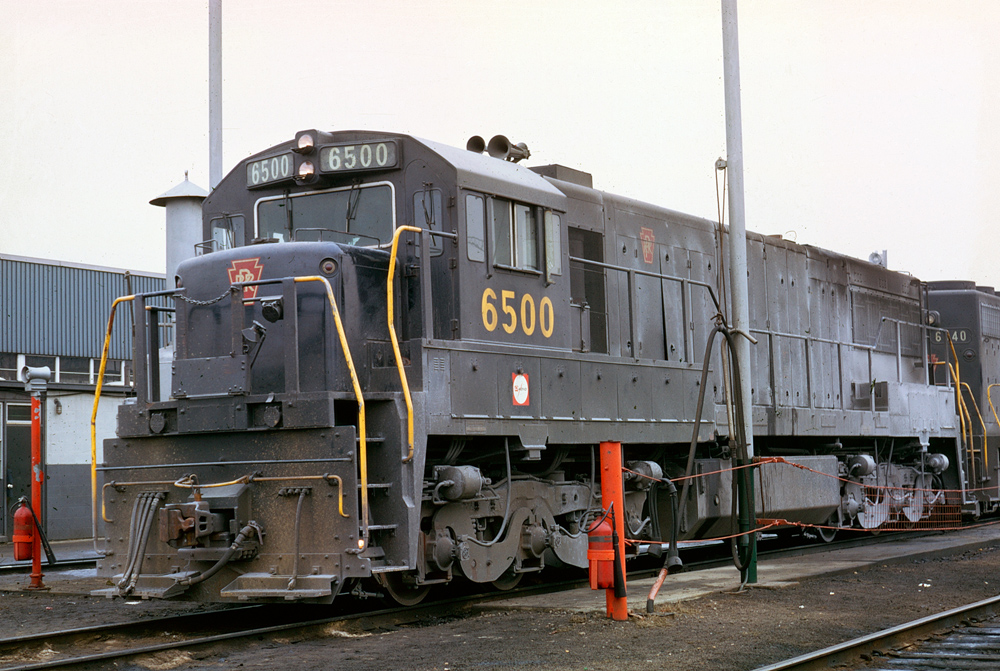 It's the early Penn Central era as a former Pennsylvania U25C, #6500, lays over at Newton, Massachusetts on March 18, 1969. The unit was about four years old in this photo. American-Rails.com collection.
History
The U25C entered production in September, 1963; the first units to roll out of Erie were four examples for the Oroville Dam project (#8010-8013).
This project was launched in 1961 to dam the Feather River east of the city of Oroville, California. The earthfill dam was built by the California Department of Water Resources (DWR).
Today, it is part of the California Aqueduct, which provides irrigation for farms in the San Joaquin Valley and supplies drinking water to Southern California.
Ultimately, the project would utilize seven U25C's and had to purchase three additional units following a deadly head-on collision on October 7, 1965 between a train of westbound empties (led by #8010-8011) and eastbound loads (led by #8016 and #8014).
The trains collided at the entrance to one of the construction tunnels causing 10,000 gallons of diesel fuel to ignite and killing four men.
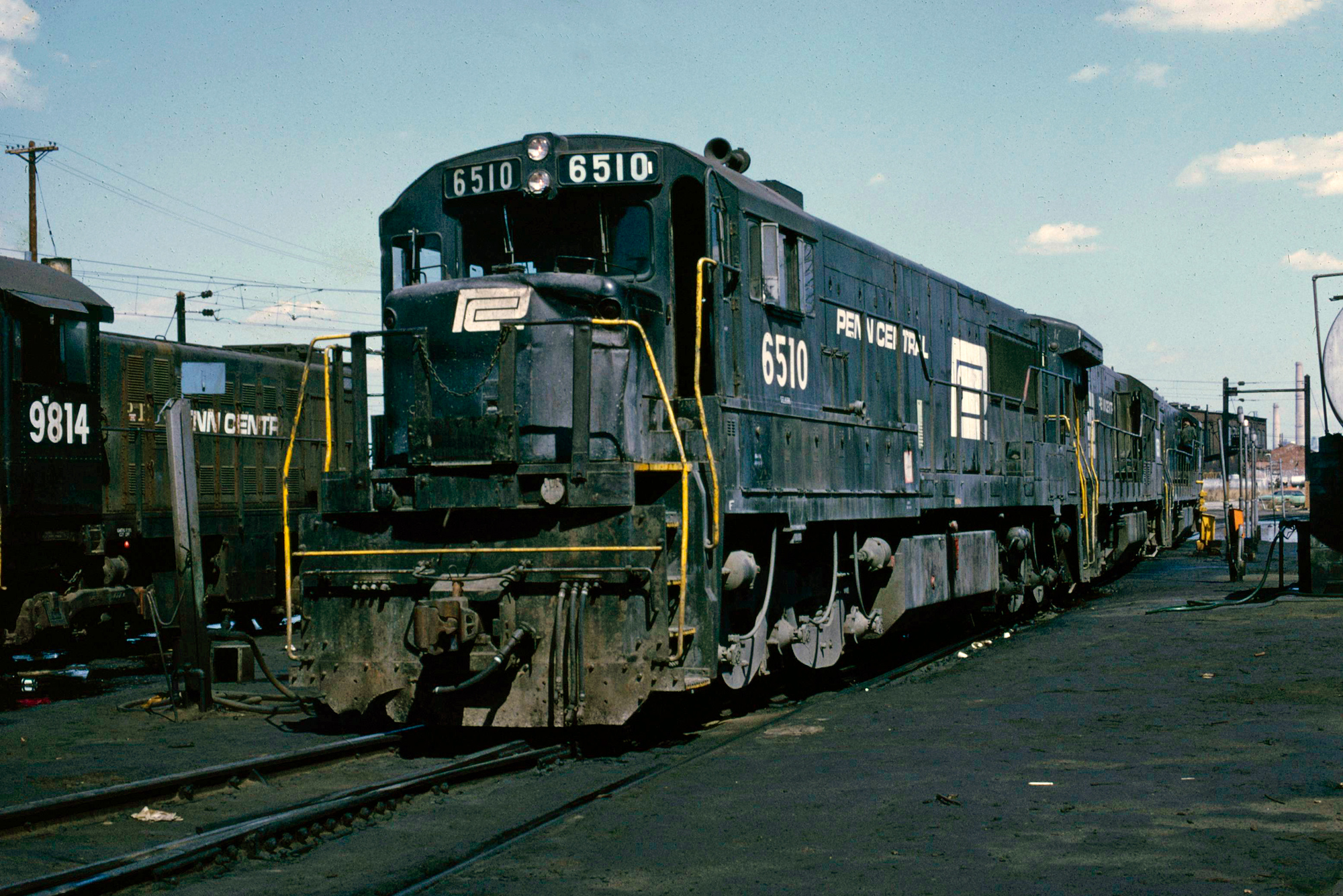 Penn Central U25C #6510, built as Pennsylvania #6510 in December, 1965, is seen here in Kearny, New Jersey in June, 1975. American-Rails.com collection.
At the time of the U25C's production most railroads remained hesitant to use six-motored locomotives in main line applications.
While GE saw lower sales of the U25C by comparison to its four-axle counterpart the builder still managed to sell 113 examples to a variety of railroads.
The U25C utilized GE's 4-cycle model 7FDL16 prime mover and could produce 2,500 horsepower. The classification for the GE's six-axle designs followed the premise of its original four-axle variant.
For instance, in the case of the U25C:
- "U" regarded the Universal line
- "25" was the first two digits of its horsepower rating, and
- "C" described its powered six-axle trucks (C-C)
All of the locomotive's internal equipment including main/auxiliary generators and traction motors were designed and manufactured by General Electric while air equipment was supplied from Westinghouse Electric.
Reception
The most noticeable benefit of the U25C was its starting tractive effort rating of 90,000 pounds, nearly 17% higher than with the U25B.
This allowed it to get heavier trains started faster than its four-axle cousin. While railroads were still reluctant to purchase six-motored locomotives, this sentiment changed when upgraded electrical components enabled traction motors to catch up with the prime movers and produce 3,000 horsepower.
GE would go on to sell many more examples of its more powerful U30C, U33C, and U36C (combined, these models would sell well over 1,000 examples).
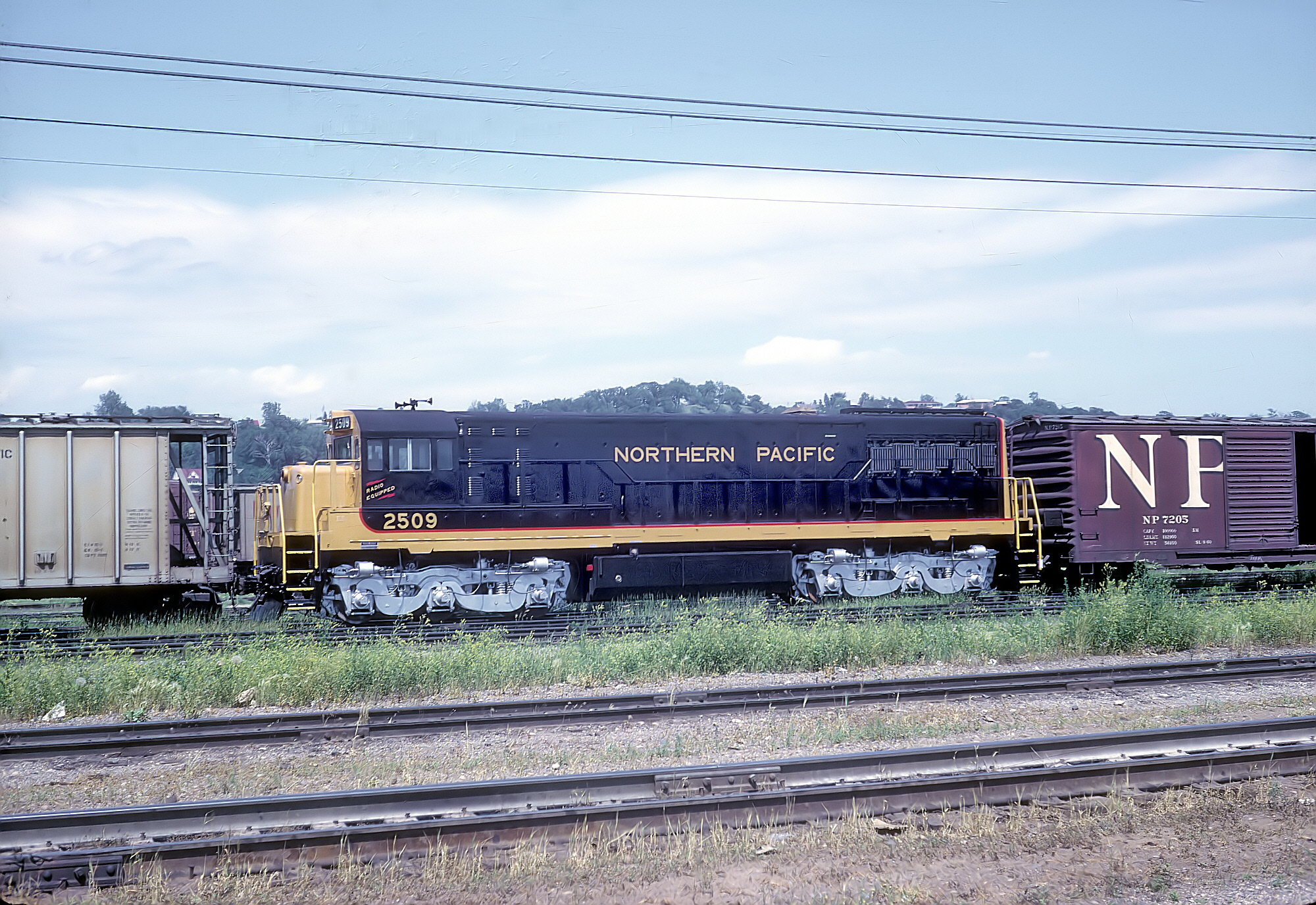 Marty Bernard caught Northern Pacific U25C #2509 - sporting a handsome set of silver trucks - being delivered by the CB&Q's Dayton's Bluff Yard in St. Paul, Minnesota on June 20, 1964. Marty Bernard photo.
Data Sheet
| Entered Production | 9/1963 (Oro Dam #8010-8013) |
| Years Produced | 9/1963 - 12/1965 |
| GE Class | U25C |
| Engine | 7FDL16 (16 cylinder) |
| Engine Builder | General Electric |
| Horsepower | 2500 |
| RPM | 1050 |
| Length | 64' 6" |
| Height (Top Of Rail To Top Of Cab) | 14' 7" |
| Width | 9' 11" |
| Weight | 348,000 Lbs |
| Fuel Capacity | 1,700 or 2,900 Gallons |
| Air Compressor | 3CDC (Westinghouse) |
| Air Brake Schedule | 26L (Westinghouse) |
| Trucks | C-C |
| Truck Type | Trimount/Adirondack |
| Truck Wheelbase | 13' 0" |
| Wheel Size | 40" |
| Traction Motors | 752 (6), GE |
| Traction Generator | GT598, GE |
| Auxiliary Generator | GY27, GE |
| MU (Multiple-Unit) | Yes |
| Dynamic Brakes | Optional |
| Gear Ratio | 74:18 |
| Tractive Effort (Starting) | 92,000 Lbs |
| Tractive Effort (Continuous) | 60,000 Lbs at 10.7 mph |
| Top Speed | 70 mph |
Production Roster
| Owner | Road Number | Serial Number | Order Number | Completion Date | Quantity |
|---|---|---|---|---|---|
| Oro Dam | 8010-8013* | 34815-34818 | 1800 | 9/1963 | 4 |
| Oro Dam | 8014-8016* | 34819-34821 | 1800 | 3/1964 | 3 |
| Atlantic Coast Line | 3000-3003 | 34969-34972 | 1810 | 12/1963 | 4 |
| Northern Pacific | 2500-2514 | 35035-35049 | 1821 | 5/1964-6/1964 | 15 |
| Pennsylvania | 6504-6509 | 35050-35055 | 1850 | 4/1965 | 6 |
| Pennsylvania | 6503 | 35056 | 1850 | 4/1965 | 1 |
| Pennsylvania | 6500-6502 | 35057-35059 | 1850 | 4/1965 | 3 |
| Lake Superior & Ishpeming | 2500 | 35062 | 1823 | 5/1964 | 1 |
| Lake Superior & Ishpeming | 2501 | 35063 | 1825 | 7/1964 | 1 |
| Atlantic Coast Line | 3004-3010 | 35064-35070 | 1845 | 11/1964 | 7 |
| Louisville & Nashville | 1500-1501 | 35545-35546 | 1855 | 5/1965 | 2 |
| Louisville & Nashville | 1502-1511 | 35548-35557 | 1855 | 5/1965-7/1965 | 10 |
| Louisville & Nashville | 1512 | 35547 | 1855 | 5/1965 | 1 |
| Louisville & Nashville | 1513-1517 | 35558-35562 | 1855 | 10/1965 | 5 |
| Oro Dam | 8017-8018* | 35563-35564 | 1896 | 12/1965 | 2 |
| Northern Pacific | 2515-2529 | 35582-35596 | 1847 | 5/1965-7/1965 | 15 |
| Chicago, Burlington & Quincy | 550-561 | 35597-35608 | 1875 | 8/1965-9/1965 | 12 |
| Atlantic Coast Line | 3011-3013** | 35609-35611 | 1875 | 11/1965 | 3 |
| Atlantic Coast Line | 3014-3020 | 35612-35618 | 1875 | 10/1965-11/1965 | 7 |
| Pennsylvania | 6510-6519 | 35619-35628 | 1895 | 11/1965-12/1965 | 10 |
| Oro Dam | 8019* | 35629 | 1896 | 12/1965 | 1 |
* Oro Dam #8010 and #8011 were involved in a head-on collision with #8016 and #8014 on October 7, 1965. #8010 and #8016 were scrapped in December that year while #8011 was rebuilt by Western Pacific's Sacramento Shops in June, 1966 and became #8020.
#8014 was also rebuilt and returned to service. #8017-8019 were purchased as replacements for the wrecked units. Louisville & Nashville ultimately acquired all of the Oro Dam U25C's in October, 1967. They became L&N #1518-1525.
** Rated at 2,800 horsepower.
Sources
- Foster, Gerald. A Field Guide To Trains. New York: Houghton Mifflin, 1996.
- Marre, Louis A. Diesel Locomotives: The First 50 Years, A Guide To Diesels Built Before 1972. Milwaukee: Kalmbach Publishing Company, 1995.
- McDonnell, Greg. U-boats. Toronto: Stoddart Publishing, 1994.
- Pinkepank, Jerry A. Diesel Spotter's Guide. Milwaukee: Kalmbach Publishing Company, 1967.
- Solomon, Brian. GE Locomotives: 110 Years Of General Electric Motive Power. St. Paul: MBI Publishing, 2003.
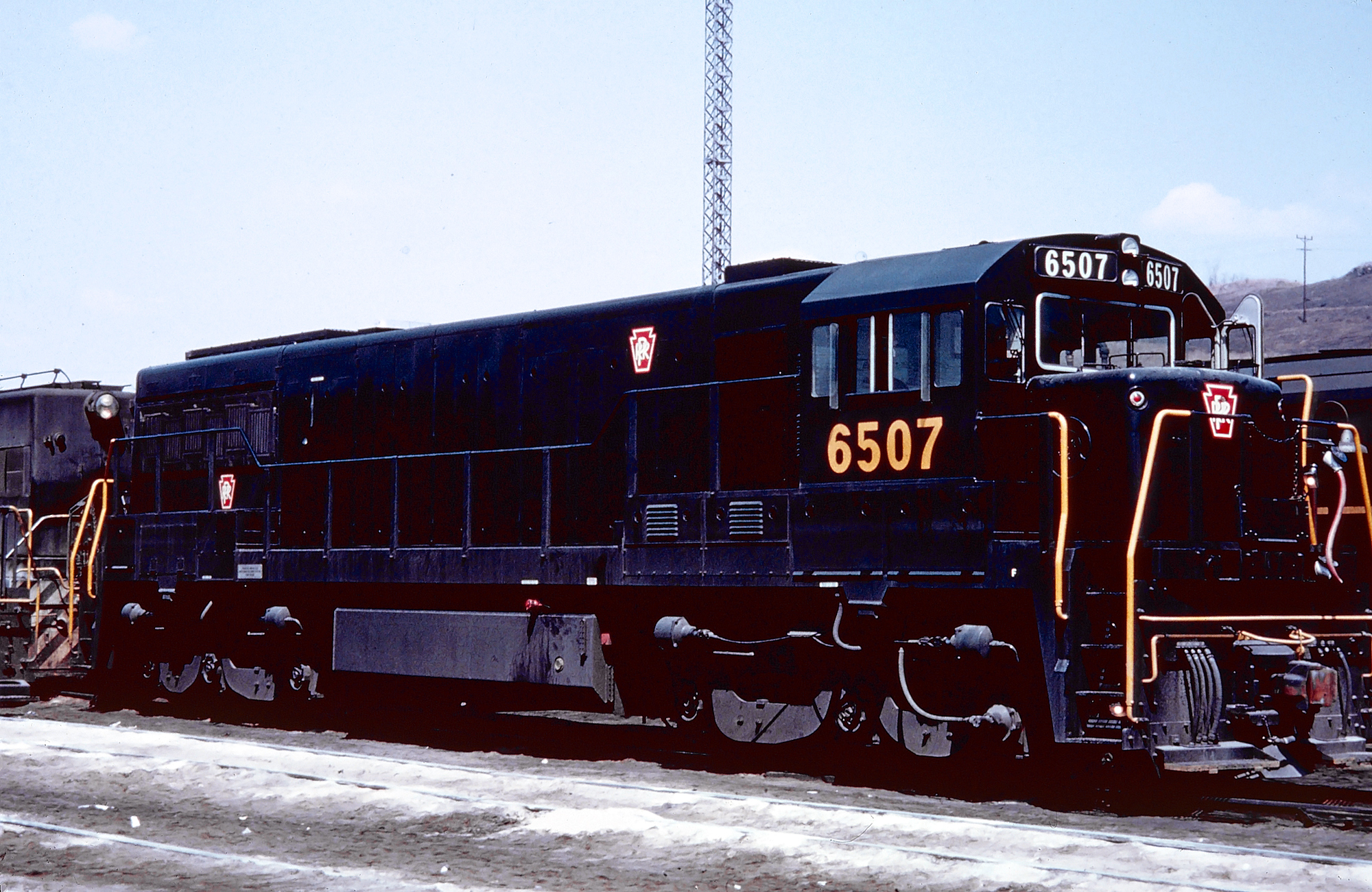 Recently delivered Pennsylvania U25C #6507 is seen here in Conway, Pennsylvania in April, 1965. Fred Byerly photo. American-Rails.com collection.
During the course of production, GE never implemented external improvements to the carbody as it had done with the U25B when the single-piece windshield (expensive to replace) was given a split windshield.
However, a few late-era U25C's, notably Atlantic Coast Line #3011-3013, were uprated to 2,800 horsepower which ushered in the U28C.
Today, at least one U25C is known to be extant; Lake Superior & Ishpeming #2501 on display at the Presque Isle Ore Dock in Marquette, Michigan.
Recent Articles


-
Boston & Maine Diesel Roster (All-Time)
Sep 18, 26 01:25 PM
 Boston & Maine diesel—boxcab 1100 1935, Flying Yankee 6000, FTs, E7s, BL2s, GP7/GP9, GP38-2s and GP40-2s. All-time roster. Last steam July 23, 1956.
 -
Mid-Continent Railway Museum Dining (2026)
Sep 18, 26 01:21 PM
 2026 Mid-Continent dining in North Freedom—select-date seated meals in luxury cars, reservations required. Pizza Limited June 28. Confirm on midcontinent.org.
 -
Bessemer & Lake Erie Steam Roster (Post 1900)
Sep 18, 26 12:11 PM
 Bessemer & Lake Erie steam—C3A 150–151, D1A/D2A Santa Fes, 47 H1 Texas types after Burlington. Post-1900 class roster after Drury. Last steam 2-8-0 156, May 14, 1953.
 -
Bessemer & Lake Erie Diesel Roster (All Time)
Sep 18, 26 12:09 PM
 Bessemer & Lake Erie diesel—Westinghouse 281 1936, Baldwin DRS-6-6-1500s, F7s 1950–53, SD7/SD9/SD18/SD38 family, RSD-15s. All-time roster. Last steam 2-8-0 156, May 14, 1953.
 -
Bangor & Aroostook Steam Roster (Post 1900)
Sep 18, 26 11:21 AM
 Bangor & Aroostook steam—Manchester Ten-Wheelers, Alco Mountains 100–109, G-2 Consolidations, Pacifics 250–254. Post-1900 class roster after Drury. Last steam Pacific 251, July 22, 1951.
 -
Bangor & Aroostook Diesel Roster (All Time)
Sep 18, 26 11:09 AM
 Bangor & Aroostook diesel—F3s 1947, eight BL2s, E7s, GP7s leased to the PRR, GP9s, GP38s. All-time roster. Last regular steam July 22, 1951.
 -
B&O Steam Locomotive Roster (Post 1900)
Sep 18, 26 10:33 AM
 Baltimore & Ohio steam—Old Maude, E-27 Consolidations, Q Mikados, Big Sixes, EM-1 Yellowstones, President Pacifics. Post-1900 class roster after Drury. Last public steam May 17, 1958.
 -
Baltimore & Ohio (B&O): Diesel Roster (All-Time)
Sep 18, 26 10:28 AM
 Baltimore & Ohio diesel—boxcab 1925, EMC 50 1935, EA 1937, FTs, F3s, F7s, FA-2s, sharks, GP7/GP9, GP30s after C&O 1963, SD50s 8576–8595 1984. All-time roster. Last steam 1958.
 -
Detroit & Toledo Shore Line Railroad: Map, Roster, History
Sep 18, 26 12:32 AM
 Detroit & Toledo Shore Line—Pleasant Bay 1898, named 1899, Detroit–Toledo freight bridge, GTW and Clover Leaf/NKP/N&W. Merged into Grand Trunk Western June 26, 1981.
 -
Lackawanna Steam Locomotives: History, Roster & Photos
Sep 18, 26 12:17 AM
 Delaware, Lackawanna & Western steam—Camelback 2-8-0s, Mikados, freight Pacifics, Poconos 4-8-4s, Hudsons. Post-1900 roster after Drury. Last steam July 13, 1953.
 -
Lackawanna (DL&W) Diesel Roster: All Time
Sep 18, 26 12:11 AM
 Delaware, Lackawanna & Western diesel—boxcabs 1926, EMC SC 425–426 1935, FTs 1945, F3/F7/E8, GP7s, RS-3s, FM Train Masters. All-time roster. Last steam 1953.
 -
Lackawanna Railroad: Map, History, Viaducts, Rosters
Sep 18, 26 12:04 AM
 TDelaware, Lackawanna & Western—Liggett’s Gap 1832, named March 11 1853, Hoboken–Buffalo, anthracite, Phoebe Snow, Cutoff and Tunkhannock. It merged with the Erie to form Erie Lackawanna on Octobe…
 -
Rail News, The Latest
Sep 17, 26 11:56 PM
This page provides a portal to the latest in rail news, from preservation and restortation subjects to other notable topics. -
Union Pacific Big Boy 4014 Sets First Holiday Tour for Make-A-Wish
Sep 17, 26 11:54 PM
 Union Pacific Big Boy 4014’s first holiday tour: Cheyenne–Denver tickets, Nov. 21 Denver-area display, Make-A-Wish. Museum patrons Oct. 16; public Oct. 19.
 -
Conrail Diesel Roster (All Time)
Sep 17, 26 10:27 PM
 Conrail diesel—~5,000 inherited 1976, Big Blue, GP15-1s, SD40-2s, SD50s, Dash-8s, SD60/60M/60I, SD80MACs. All-time CR-number roster.
 -
Chessie System (Railroad): The C&O, B&O, And WM
Sep 17, 26 09:38 PM
 Chessie System, Inc.—C&O, B&O, and Western Maryland. Kitten-C paint 1972, holding company February 26 1973, CSX November 1 1980, C&O into CSXT August 31 1987.
 -
Chesapeake & Ohio (C&O) Diesel Roster: All-Time
Sep 17, 26 06:01 PM
 Chesapeake & Ohio diesel—late steam, no Fairbanks-Morse, E7s 1946, GP7/GP9 flood, F7s, GP40-2s, B30-7s, SD50s 1984–85. All-time roster. Steam ended 1956.
 -
Chesapeake & Ohio (C&O) Steam Roster: Post-1900
Sep 17, 26 03:18 PM
 Chesapeake & Ohio steam—H-8 Alleghenies, K-4 Kanawhas, T-1 Texas, Greenbriers, H-6 1949 Mallets. Post-1900 class roster including Pere Marquette and Hocking Valley. Last steam 1956.
 -
Chesapeake and Ohio Railway: Map, Logo, History
Sep 17, 26 02:36 PM
 Chesapeake & Ohio Railway—Louisa Railroad 1836, named August 31 1868, Ohio River 1873. Coal, Chessie the kitten, Pere Marquette 1947, B&O control 1963, into CSX August 31 1987. Complete corporate…
 -
TVRM Valentine Train Ride (2026)
Sep 17, 26 02:31 PM
 2026 TVRM Valentine Train Ride in Chattanooga—Feb. 6–15, plated dinner, Grand Junction Depot. Confirm on tvrail.com.
 -
River Fox Train Dining (2026)
Sep 17, 26 02:29 PM
 2026 River Fox Train in West Sacramento—Brunch Train and Murder Mystery dinner. 18095 County Road 117. Confirm on riverfoxtrain.com.
 -
Weehawken Terminal, Serving The West Shore Railroad
Sep 17, 26 01:38 PM
 Weehawken Terminal—West Shore / New York Central Hudson waterfront station, opened 1884. Five ferry slips, sixteen tracks, Weehawken Tunnel 4,014 feet. Last ferry March 25, 1959. Port Imperial and HBL…
 -
West Shore Railroad: Map, History, Timetables
Sep 17, 26 01:32 PM
 West Shore Railroad—New York, West Shore & Buffalo 1880–83, Weehawken to Buffalo. PRR-backed rival to the Central. Morgan settlement, 475-year NYC lease January 1 1886. CSX River Sub today.
 -
Jersey Central Diesel Locomotives: History, Roster & Photos
Sep 17, 26 01:20 PM
 Central Railroad of New Jersey diesel—boxcab 1000, Baldwin double-enders, F3s, Train Masters, SD35s, GP40Ps. All-time roster. Steam ended July 1, 1954.
 -
Jersey Central Steam Locomotives: History, Roster & Photos
Sep 17, 26 01:17 PM
 Central Railroad of New Jersey steam—Camelback Ten-Wheelers, USRA Mikados, G-class Pacifics, suburban tanks. Post-1900 class roster after Drury. Dieselized July 1, 1954.
 -
Jersey Central Railroad (CNJ): Map, Rosters, History
Sep 17, 26 01:14 PM
 Central Railroad of New Jersey—Elizabethtown & Somerville 1831, named April 23 1849. Communipaw, anthracite, Blue Comet, Reading/B&O control. Conrail April 1 1976. Complete corporate history.
 -
Central Vermont Diesel Locomotives: History, Roster & Photos
Sep 17, 26 11:35 AM
 Central Vermont diesel—Alco S-2s 1942, RS-3s, RS-11s from DW&P, EMD GP9s 1956–57, GP38ACs 1971. All-time roster. Last steam April 4, 1957.
 -
Central Vermont Steam Locomotives: History, Roster & Photos
Sep 17, 26 11:19 AM
 Central Vermont steam—ten Alco 2-10-4s of 1928, four U-1-a Mountains, Consolidations. Post-1900 class roster after Drury. Last steam April 4, 1957.
 -
Central Vermont Railway: Map, Logo, Rosters
Sep 17, 26 11:03 AM
 Central Vermont Railway—Vermont Central charter October 1843, Bethel–White River Junction June 26, 1848. Grand Trunk 1898, CN 1923, RailTex/NECR 1995. Complete corporate history.
 -
Fitchburg Railroad: Map, History, Timetables
Sep 17, 26 10:40 AM
 Fitchburg Railroad—chartered March 3, 1842, Boston–Fitchburg March 5, 1845. Alvah Crocker, Hoosac west door, Vermont & Massachusetts, Cheshire. B&M 99-year lease July 1, 1900. Complete corpora…
 -
Steam Railroading Institute Dining (2026)
Sep 17, 26 10:30 AM
 2026 SRI Owosso dining—vintage dining cars, select evenings. 2026 dinner calendar not posted; 2025 Up In Smoke is the recent example. Confirm on michigansteamtrain.com.
 -
Canadian Pacific Railway: Map, History, Logo, Photos
Sep 17, 26 12:06 AM
 Canadian Pacific Railway—incorporated February 16, 1881. Last spike Craigellachie November 7, 1885. Soo, Milwaukee, D&H, DM&E. CPKC April 14, 2023. Complete corporate history.
 -
Canadian Pacific Diesel Locomotives: History, Roster & Photos
Sep 17, 26 12:03 AM
 Canadian Pacific diesel—E8A 1800 in 1949, FP7/FP9, FA-2, C424, SD40-2, SD40-2F Red Barns, AC4400CW, ES44AC, SD30C-ECO, SD70ACu heritage. All-time roster. Last steam November 6, 1960.
 -
Canadian Pacific Steam Locomotives: History, Roster & Photos
Sep 16, 26 11:35 PM
 Canadian Pacific steam—3,257 engines 1881–1949. D10 Ten-Wheelers, G3 Pacifics, Royal Hudsons, Selkirk 2-10-4s. Post-1900 class roster after Drury. Last steam November 6, 1960.
 -
Woodstown Central Dining in Motion (2026)
Sep 16, 26 11:31 PM
 2026 Woodstown Central Dining in Motion—Salem County table car, 50–60 minutes, private table of four from $190. Confirm on woodstowncentral.com.
 -
NCTM Wine & Dine on the Rails (2026)
Sep 16, 26 11:28 PM
 2026 NCTM Wine & Dine on the Rails in Spencer—Feb. 13–15, three-course dinner, 21+, $145/$140. Sold out. Confirm next season on nctransportationmuseum.org.
 -
Southern Railway 4-6-2 1380: The Streamlined Ps-4
Sep 16, 26 10:34 PM
 Southern Railway Ps-4 4-6-2 1380—Alco 1923, serial 64857. Otto Kuhler streamlining at Spencer 1940–41 for the Tennessean. Only streamlined steam locomotive on the Southern. Scrapped Baltimore 1953.
 -
Texas Mexican Railway: Serving The Border Since The 1880s
Sep 16, 26 09:58 PM
 Texas Mexican Railway—Corpus Christi, San Diego & Rio Grande March 1875, 3-foot. Tex-Mex June 1881, Laredo Sept 1881, Rio Grande bridge 1883. Standard gauge July 17 1902. Mexican government 1900–1…
 -
Mount Hood Railroad Dining (2026): No Plated Dinner Train This Season
Sep 16, 26 09:53 PM
 2026 Mount Hood Railroad in Hood River is scenic Fruit Loop trains with snacks and sandwiches—not a plated dinner train. Confirm on mthoodrr.com.
 -
Peoria and Eastern Railway: Map, Timetables, History
Sep 16, 26 09:39 PM
 Peoria & Eastern—Danville, Urbana, Bloomington & Pekin 1866, IB&W 1869, OI&W 1887. Incorporated Feb 21 1890, Big Four next day. NYC 1930, Conrail 1976. GP7s 5612–5625. Complete corporate history.
 -
Boston and Maine Railroad: "Route Of The Minute Man"
Sep 16, 26 11:30 AM
 Boston & Maine—Andover & Wilmington 1833, NH charter June 27 1835. Eastern, Boston & Lowell, Fitchburg/Hoosac, Concord & Montreal. Section 77 March 12 1970. Guilford June 30 1983. CSX June 1 2…
 -
Smoky Valley Limited Dinner Train (2026)
Sep 16, 26 11:24 AM
 2026 Abilene & Smoky Valley Smoky Valley Limited—two-hour dinner from the 1887 Rock Island Depot. Kansas catering, ~$72–$110. Confirm on asvrr.org.
 -
Canadian National Diesel Locomotives: History, Roster & Photos
Sep 16, 26 11:14 AM
 Canadian National diesel—CLC boxcabs 1929, GMD FP9 and GP9, MLW FPA-4 and RS-18, GMD1, wide-cab SD40-2W, Dash-9s, ES44AC and ET44AC. All-time roster.
 -
Canadian National Steam Locomotives: History, Roster & Photos
Sep 16, 26 10:07 AM
Canadian National steam—CGR, Canadian Northern, Grand Trunk, GTP. 4-8-4 Confederations, U-1 Mountains, J and K Pacifics. Post-1900 class roster. Last scheduled steam April 25, 1960. -
Canadian National Railway: Map, Logo, History, Photos
Sep 16, 26 08:55 AM
 Canadian National—name Dec 20 1918, incorporated June 6 1919, Grand Trunk Jan 20 1923. Crown corporation, IPO Nov 17 1995. IC, Wisconsin Central, BC Rail, EJ&E. Class I, mark CN.
 -
Buffalo, Rochester and Pittsburgh Railway: "Safety and Service"
Sep 16, 26 12:12 AM
 Buffalo, Rochester & Pittsburgh—Rochester & State Line 1869, BR&P March 12 1887. Pennsylvania coal to Buffalo and Rochester. B&O January 1 1932. All-time steam roster, LL 2-6-6-2s, XX…
 -
Buffalo Creek & Gauley Railroad: Map, Roster, Logo, Photos
Sep 15, 26 11:55 PM
 Buffalo Creek & Gauley—Elk River Coal & Lumber, April 1 1904, Dundon–Widen. Last all-steam WV coal road, February 27 1965. All-time steam roster, #4 Baldwin 59472, Majestic and Elk River diesels…
 -
Buffalo and Susquehanna Railroad: Map & History
Sep 15, 26 11:42 PM
 Buffalo & Susquehanna—Goodyear hemlock railroad, Sinnemahoning Valley December 14 1885, 1893 merger, coal to Sagamore, Buffalo extension, bankruptcy May 6 1910, B&O 1932, WAG 1956.
 -
WMSR Allegheny Mountain Dinner Train (2026): Dates & Tickets
Sep 15, 26 11:36 PM
 2026 Western Maryland Scenic Allegheny Mountain Dinner Train—Cumberland, 3 hours, 21+, Saturday 7 p.m. Confirm on wmsr.com.
 -
Boston and Albany Railroad: Map & History
Sep 15, 26 11:28 PM
 Boston & Albany Railroad—Boston & Worcester June 23 1831, Western Railroad across the Berkshires, merger 1867–70. NYC 99-year lease July 1 1900. Berkshires, New England States, CSX and MBTA today.