Lehigh Valley Railroad: Map, Roster, Logo, History
Last revised: September 21, 2026
By: Adam Burns
The Lehigh Valley was the Route of the Black Diamond: an anthracite railroad that grew into a secondary trunk line from Jersey City to Buffalo and Niagara Falls. It was never the fast way between those cities. The New York Central, the Pennsylvania, and even the Erie had easier stories to tell passengers. What the Valley had was coal, a water-level route up its namesake river, Sayre Shops, and a red paint scheme people still look for.
Asa Packer took a stalled charter and opened the original railroad in 1855. By the 1890s the map reached tidewater on the Hudson and the Niagara frontier. Anthracite made the company. When the coal trade faded, bridge freights, a Nickel Plate run-through at Buffalo, and a late burst of new diesels were not enough. The Lehigh Valley entered bankruptcy on July 24, 1970, and its last day as an operating railroad was March 31, 1976. Conrail began the next morning.
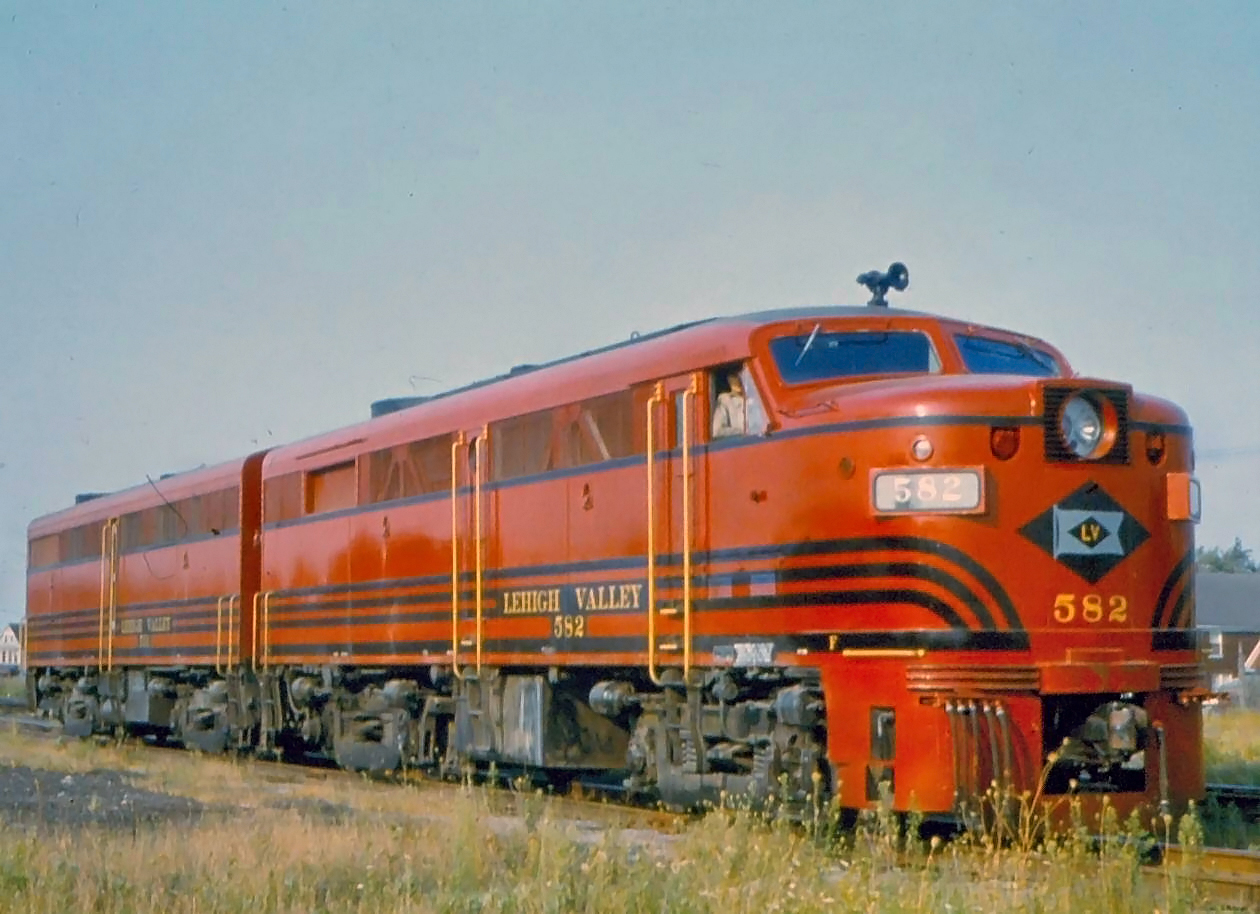
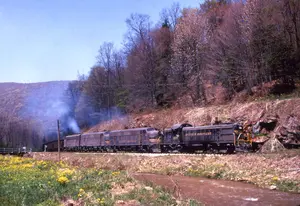
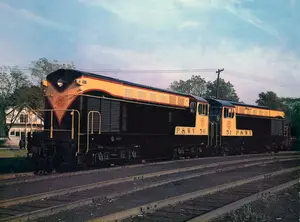
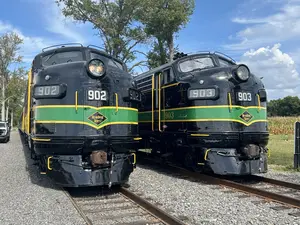
A pair of rebuilt Lehigh Valley FA-2s at the Sayre, Pennsylvania, terminal in late August 1959. American-Rails.com collection. FA-2 582, in this set’s number series, was an Alco of November 1950, serial 78277, later traded back to the builder toward the Century 628s.
On this page: At a glance · Packer and the 1855 railroad · Wilkes-Barre, Sayre, Buffalo · Perth Amboy and Jersey City · System map (1940) · Reading, Morgan, the Pennsylvania · Passenger trains · Diesel years · July 24, 1970, and Conrail · What remains
At a glance
The Lehigh Valley Railroad logo. Author’s work.
| Item | Detail |
|---|---|
| Railroad | Lehigh Valley Railroad. Mark LV. Slogan Route of the Black Diamond |
| Headquarters | New York City (143 Liberty Street) |
| States | Pennsylvania, New Jersey, New York |
| Genesis | Authorized April 21, 1846. Incorporated September 20, 1847, as the Delaware, Lehigh, Schuylkill & Susquehanna Railroad. Renamed January 7, 1853 |
| First trains | Easton–Allentown June 11, 1855. Through to Mauch Chunk September 12, 1855 |
| Dates | September 12, 1855–March 31, 1976. Conrail April 1, 1976 |
| Gauge | 4 ft 8½ in |
| Route-miles | 1,361.75 (1930). About 1,254 (1950). Jersey City–Buffalo main about 448 miles |
| Principal lines | Jersey City–Easton–Wilkes-Barre–Sayre–Geneva–Buffalo / Niagara Falls; Easton–Perth Amboy; Mountain Top–Pittston; Penn Haven Junction–Hazleton–Mount Carmel; Sayre–Fair Haven; Ithaca and Auburn branches |
| Shops | Sayre, Pennsylvania, named for chief engineer Robert H. Sayre. Locomotive shop completed 1904 |
| Last steam | September 14, 1951. Mikado 432, fire dropped at Delano, Pennsylvania |
| Last passenger | February 4, 1961. Maple Leaf into Geneva in a snowstorm. Black Diamond and Star had ended May 11, 1959 |
| Last profit | 1956 |
| Bankruptcy | July 24, 1970 |
| Successor | Conrail. Corporate liquidation plan approved July 16, 1982 |
| Rosters | Steam · Diesel |
Dates follow Hagley, the Bethlehem Area Public Library, Drury, the Lehigh Valley Railroad Historical Society, and the 1974 district-court opinion in the Valley’s reorganization. Route-miles are the long-published 1930 and 1950 figures. Information compiled September 21, 2026.
Packer, and a railroad the canal did not want
Anthracite was already moving before anyone laid an LV rail. The Lehigh Coal Mine Company dates to 1792. Josiah White’s Lehigh Coal & Navigation Company, from 1822, sent coal down the Lehigh and the Delaware by canal boat. The Delaware & Hudson Canal Company followed in 1823. A railroad parallel to the Lehigh was a direct challenge to that monopoly.
Pennsylvania authorized the company on April 21, 1846. It was incorporated on September 20, 1847, as the Delaware, Lehigh, Schuylkill & Susquehanna Railroad, with James Madison Porter as an early president. Little was built. Some grading was done near Allentown. Capital was hard to raise while the canal company opposed a rival.
Asa Packer changed that. Born December 29, 1805, in Mystic, Connecticut, he had settled at Mauch Chunk—today’s Jim Thorpe—and made his money building and running canal boats for the very company his railroad would fight. In October 1851 he took majority control, brought in money, and made Robert H. Sayre chief engineer. The legislature accepted the new name, Lehigh Valley Railroad, on January 7, 1853. Construction, which had waited four years, began in earnest.
Easton to Allentown opened June 11, 1855. Allentown to Mauch Chunk opened September 12, 1855, and that date is the railroad’s beginning: about 46 miles along the river, coal to tidewater by rail instead of boat. The first locomotive was a Norris 4-4-0, the Delaware, bought in 1855. On September 8, 1855, the Easton bridge put LV coal onto the Jersey Central at Phillipsburg for the run to Elizabethport. Phillipsburg became a five-railroad town: LV, CNJ, Lehigh & Hudson River, Lackawanna, and the Pennsylvania’s Belvidere Delaware.
Packer did not stop at the original river line. In 1864 the railroad opened above Mauch Chunk to White Haven and picked up the Beaver Meadow charter, an 1830 coal road that had never become the carrier its promoters imagined. Branches tapped Hazleton, Mount Carmel, and the other anthracite towns. In 1866 the company acquired canal property of the North Branch Division and used that easy grade north of Wilkes-Barre. Rails reached the New York state line at Waverly in 1869 and a connection with the Erie. Packer died May 17, 1879, before the Buffalo line was finished. He had already bought the Geneva, Ithaca & Sayre, Ezra Cornell’s road, in October 1876.
His other monument is still in Bethlehem. Lehigh University was chartered in 1865, named for the railroad, and endowed with hillside land and $500,000 so the Valley would have an engineering school. The university outlived the trains.
Sayre, the Finger Lakes, and Buffalo in 1892
Sayre is the place the railroad built for itself. The junction that became the town was renamed for Robert Heysham Sayre in the 1870s. Shops, a yard, and a company town followed on the flat between Athens, Pennsylvania, and Waverly, New York. The locomotive shop completed in 1904 covered 283,140 square feet. A local historical marker calls it, at completion, the second-largest locomotive shop in the world, and credits Sayre with 277 steam locomotives. The roundhouse came down in 1951. The big shop survived the railroad and was demolished in 1987 and 1988.
The passenger main north of Sayre was the hillier way: Sayre to Ithaca to Geneva, Cornell’s line, opened in pieces in the early 1870s and folded into the Valley in 1876. Local passenger service on it lasted until November 1949. The freight railroad Packer wanted was a new line, graded around the worst of that country, with a transfer yard at Manchester, New York. The whole new trackage opened in September 1892. Buffalo, at last, was on the end of an LV rail, and Niagara Falls after it. From Buffalo the Valley depended on connections. George H. Drury notes that it was the weakest of the New York–Buffalo trunk lines for that reason, and that for years its freight business was also cut down by regulation that forced the sale of the Great Lakes boats and the coal-mining subsidiary.
Drury’s grades explain the engines. Westbound, the main was held to less than one percent. Eastbound, the ruling grade was about 1.2 percent. A summit at Mountain Top, between White Haven and Wilkes-Barre, was near 1.8 percent for passenger trains and about 1.16 percent for freights that took a longer bypass. Out of Wilkes-Barre toward Penobscot the passenger grade was again near 1.8 percent. The Valley never bought a Berkshire or an articulated. It stayed with Consolidations, Mikados, a fleet of 2-10-2s, six three-cylinder Mountains, and then the 4-8-4s it named Wyomings.
Its own door to New York
Until the 1870s New York was somebody else’s railroad: CNJ from Phillipsburg, or a boat at Easton. Packer organized the Easton & Amboy in 1872, using an older Perth Amboy & Bound Brook charter. The line, about 60 miles, opened May 28, 1875, after the Pattenburg Tunnel was finished. Perth Amboy was a real tidewater terminal. It sat too far south of New York to be the only one.
In 1871 the Valley had acquired the Morris Canal, which owned waterfront in Jersey City. A branch left the main at South Plainfield and ran northeast. The pieces were later gathered as the Lehigh Valley Terminal Railway. Service reached Newark in 1891, and Oak Island Yard was laid out across the Hackensack from Jersey City. Direct rails to the Hudson opened in 1899. The Valley’s terminal stood on the north side of the Jersey Central’s. Ferries finished the trip to Manhattan. Like every New York road except the Pennsylvania and the Central, the LV’s “New York” trains were Jersey City trains.
By 1900 the system was essentially complete: on the order of 1,350 route-miles, and a main line of about 448 miles from the Hudson to Buffalo. The 1930 figure carried on this page for years is 1,361.75 route-miles. The 1950 figure is about 1,254.
System map (1940)
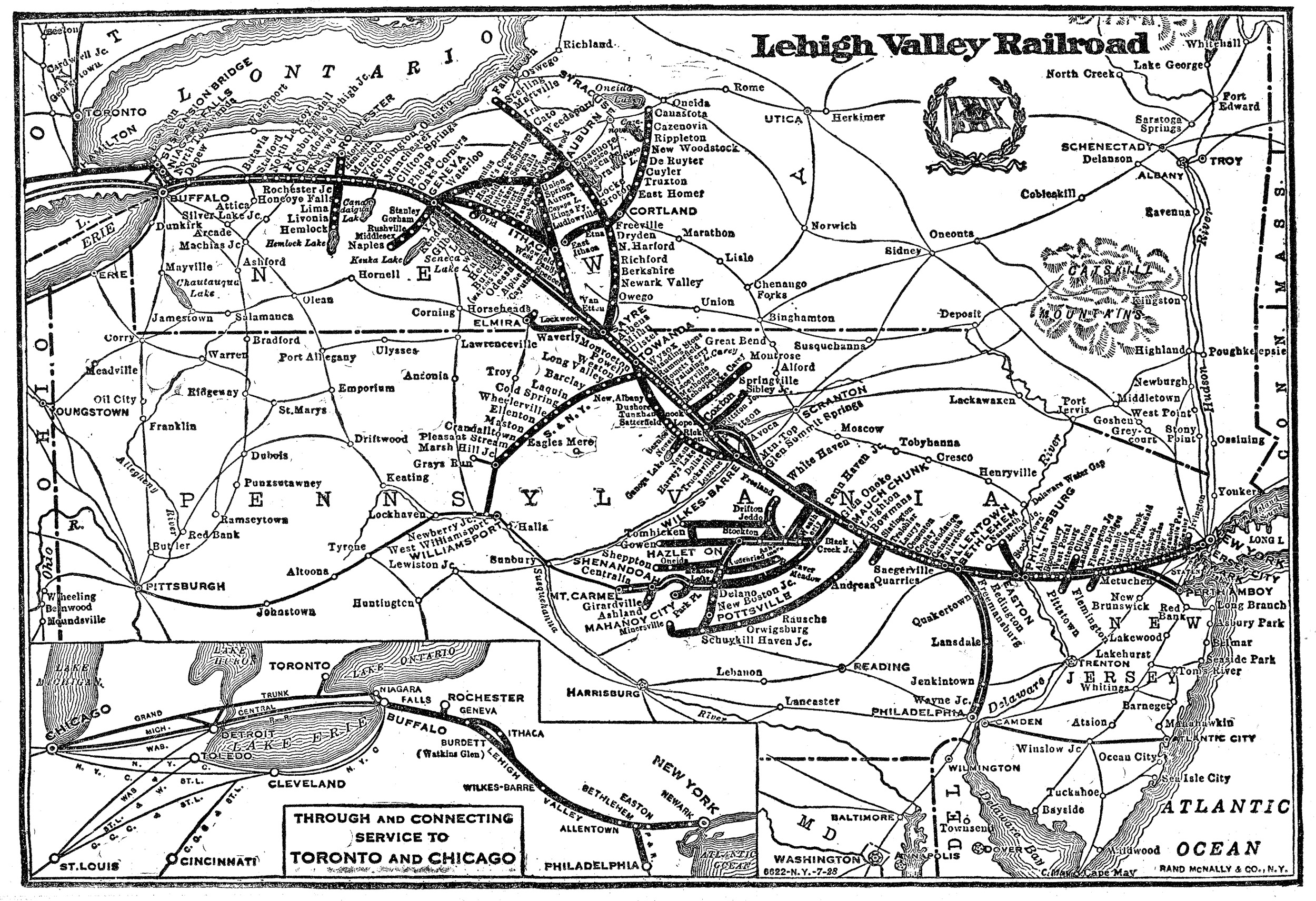
An official 1940 system map of the Lehigh Valley Railroad. Author’s collection.
Read the map from the Hudson west. Jersey City and Oak Island sit at the right edge. Perth Amboy is the southern stub in New Jersey. The main crosses the Delaware at Easton, runs the Lehigh through Bethlehem and Allentown, climbs to Mountain Top, and drops into Wilkes-Barre. North of there it follows the old canal grade through Towanda to Sayre. West of Sayre the freight main aims at Geneva and Buffalo; the Ithaca line is the older passenger way through the Finger Lakes. Fair Haven, on Lake Ontario, is the end of the Auburn branch. Hazleton and Mount Carmel are coal. Elmira, Rochester, and the short country branches are the parts Conrail mostly did not keep.
A lease, a banker, and the Pennsylvania’s stock
Packer control did not last. In the early 1890s the Philadelphia & Reading, then the richest anthracite road beside the Lackawanna, leased the Lehigh Valley in a bid to dominate the coal trade. The Panic of 1893 broke the Reading. The Valley came out of that collapse independent again. In 1897 J. P. Morgan bought the Packer estate’s holdings and the banker’s interest sat over the property for a generation. Under that ownership the railroad was, for a time, well run and profitable.
The long decline is usually dated from the stock-market break of October 1929, and from anthracite’s fall as a house fuel, which had already begun. There was an earlier wall around the company. Leonor F. Loree tried in the 1920s to assemble a New York–Chicago railroad out of the Delaware & Hudson, the Lehigh Valley, the Wabash, and the Buffalo, Rochester & Pittsburgh. Drury’s account is that in 1928 Loree lost the BR&P, and the Pennsylvania turned up holding 44 percent of the Valley. The Pennsy kept other railroads away from the LV and, for years, left the management alone.
A voting trust had held that interest since 1941. In 1962 the Pennsylvania asked the Interstate Commerce Commission for outright control, the trust came off, and the Pennsy owned 97.3 percent of LV common stock. A federal court later used that figure in the Valley’s own reorganization. From then on the LV was operated beside the Pennsylvania, and after February 1, 1968, beside the doomed Penn Central. It was not saved by either of them.
Black Diamond, John Wilkes, Maple Leaf
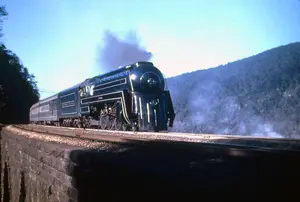
The Valley’s passenger train was the Black Diamond. It was launched as the Black Diamond Express on May 18, 1896, New York–Buffalo in the timetable and Jersey City on the ground, with a ferry at the end. It was the last of the Valley’s named trains to be dressed as a streamliner. Otto Kuhler had already styled the Asa Packer in 1938—a heavyweight train that looked streamlined, Jersey City to Mauch Chunk, behind a bullet-nosed Pacific in Cornell Red and black—and the John Wilkes in June 1939, Jersey City to Wilkes-Barre and Pittston. The Diamond followed in 1940, part lightweight equipment and part cars Sayre rebuilt from older heavyweights. The Star was the other New York–Buffalo name.
The Maple Leaf was the international train, inaugurated in 1937 as a renaming of the Toronto, handed to Canadian National beyond the Niagara frontier, and timed in and out of Pennsylvania Station by way of the Pennsy’s Hudson tubes in the later schedules. Eastbound and westbound did not even use the same LV hills: one skipped Wilkes-Barre, the other skipped Ithaca. It was a handsome train and a slow one.
The Lehigh Valley Railroad Historical Society dates the last Black Diamond and the last Star to May 11, 1959. What remained was the Maple Leaf, the John Wilkes, and a rail-diesel-car connection between Lehighton and Hazleton. Early on February 4, 1961, the Maple Leaf reached Geneva in a snowstorm. That was the end of LV passenger service. The railroad was the third large U.S. carrier, after the Minneapolis & St. Louis and the Maine Central, to go freight-only.
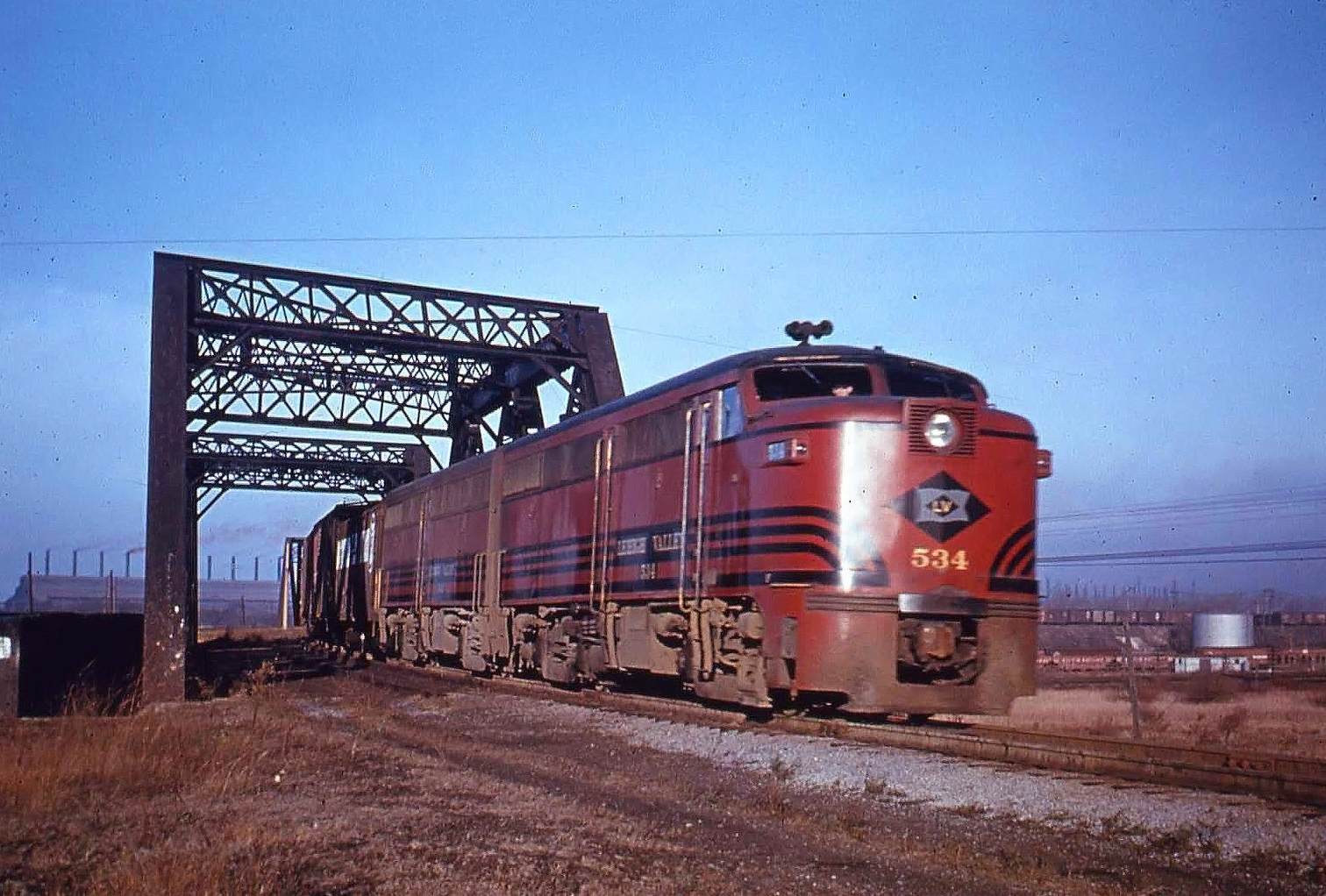
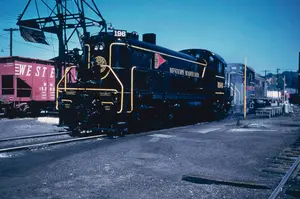
FA-1 534 and an FB-1, in Cornell Red, pass over the Nickel Plate, the New York Central, and the Erie at Lackawanna, New York, in the 1950s. Photographer unknown.
Cornell Red, and a railroad that dieselized in six years
Sayre was still overhauling steam when the first road freight diesels arrived: four two-unit EMD FTs in January 1945, bought as helpers. Alco PA-1s, fourteen of them, 601–614, came in the spring of 1948 and took the passenger trains. The Valley had tested a PA as early as June 26, 1946. Between 1948 and 1951 the road bought F3s, F7s, FA-1s and FA-2s, Baldwin road-switchers and switchers, and Alco RS-2s and RS-3s in a rush Drury summarizes in a sentence. On September 14, 1951, Mikado 432 dropped her fire at Delano. That was the last steam.
The company showed a profit for the last time in 1956. It kept trying. Bridge traffic moved with the Delaware & Hudson. A run-through with the Nickel Plate began at Buffalo in 1964. Some territory was coordinated with the Jersey Central to cut duplicate cost. Piggyback trains ran under names such as Apollo and Mercury. None of it replaced anthracite, and none of it offset what the Pennsylvania, and then Penn Central, was doing to the Valley’s interline accounts.
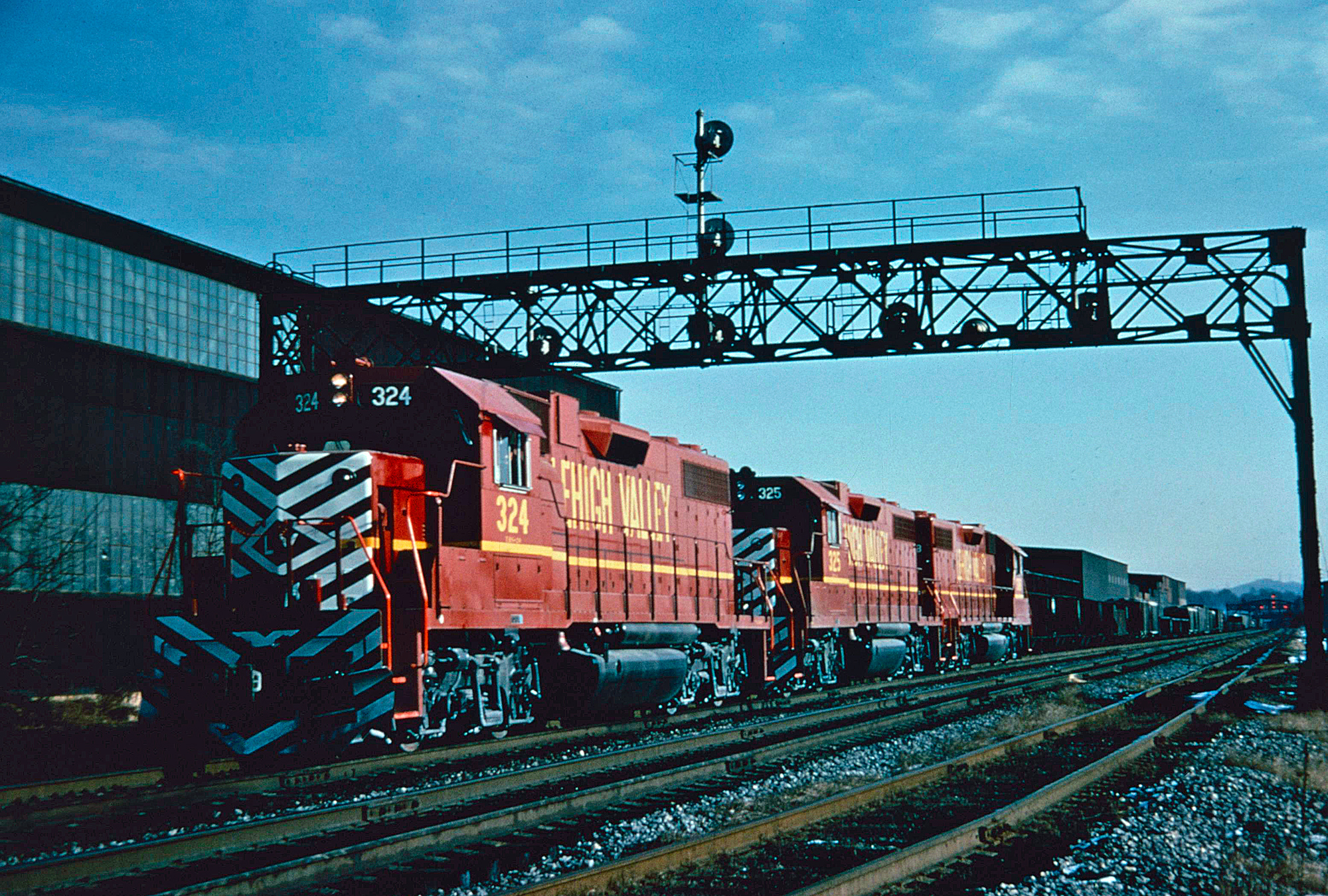
Three new GP38-2s, part of 314–325, lead an eastbound manifest past Steel Tower in Bethlehem, Pennsylvania, in December 1972. Photographer unknown. American-Rails.com collection. They were among the last new locomotives the Valley bought.
July 24, 1970
Penn Central entered reorganization on June 21, 1970. The court fights that followed turned on interline balances: what one bankrupt railroad owed another for cars and joint facilities. As of July 31, 1970, the Valley owed Penn Central on the order of $16.4 million, some of it unpaid since 1967, and Penn Central’s bankruptcy had frozen the traffic-balance money the LV itself needed. The Lehigh Valley filed on July 24, 1970. Robert F. Archer’s history gives June 24. The case in the Eastern District of Pennsylvania, and the court’s later opinions, give July 24. July 24 is the date.
The railroad kept running. In 1972 it took over the Jersey Central’s remaining operations in Pennsylvania. In January 1975 it acquired the Lehigh & New England lines the CNJ had bought after that road closed on October 31, 1961. The story of that short anthracite carrier is its own page. New power still arrived: four GP38ACs in December 1971, twelve GP38-2s in 1972, twelve GE U23Bs in November 1974. They were bought for a railroad everyone expected to hand to someone else.
When the Penn Central merger was being arranged, the Valley was the sort of Buffalo connection regulators hoped a solvent railroad would take. Norfolk & Western and the Chessie roads were the names usually mentioned. Both declined. The United States Railway Association did not build a second Northeast system around the LV, the Reading, the CNJ, and the Erie Lackawanna. Conrail was the one system. It started at 12:01 a.m. on April 1, 1976.
Hagley’s summary of the estate is the clean one: the viable lines east of Waverly went to Conrail; most of the rest were abandoned. A reorganization plan approved July 16, 1982, liquidated what was left of the corporation. The operating railroad had already been gone for six years.
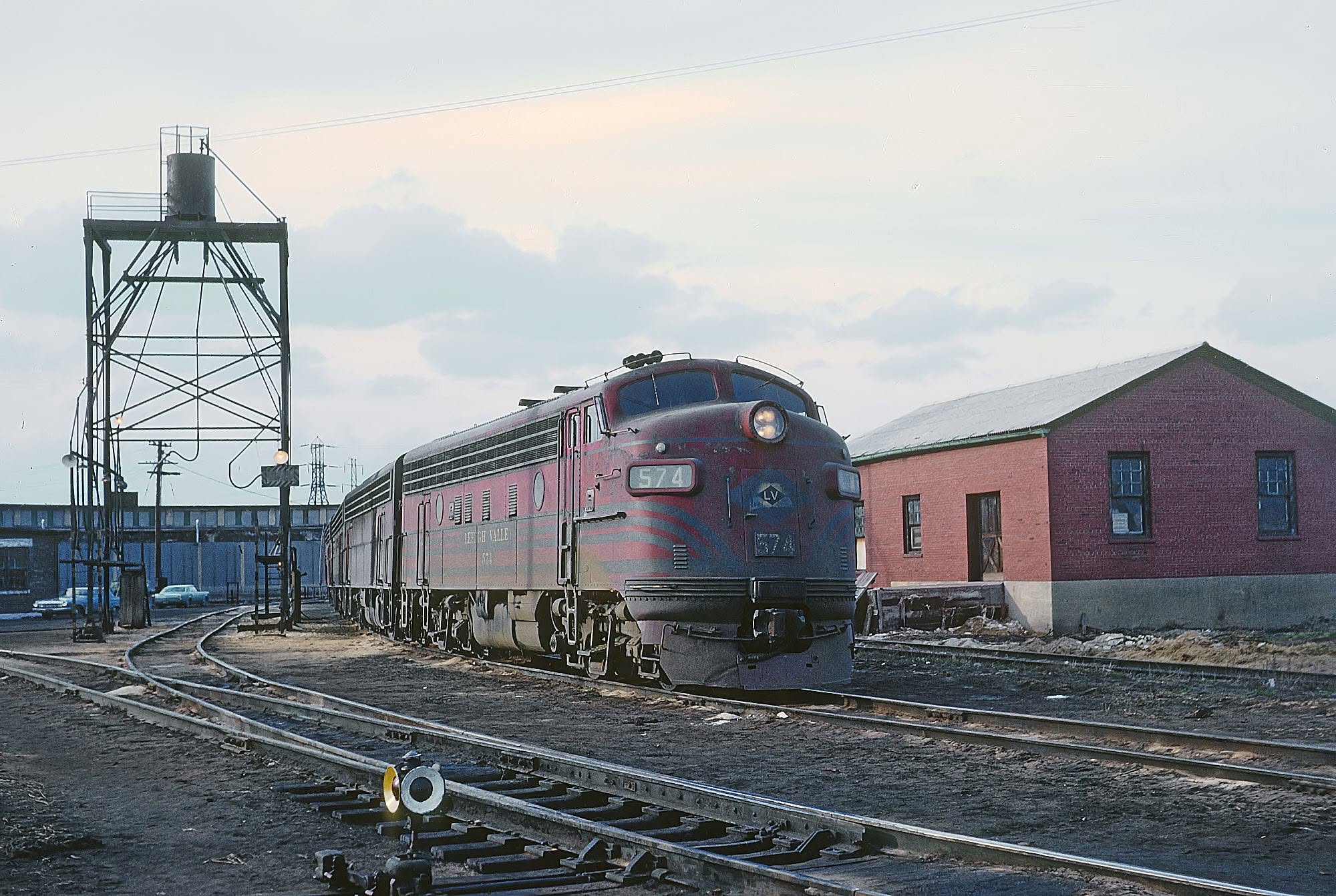
Lehigh Valley F7A #574 and other Fs layover at Manchester, New York in April, 1966. Pete Kladder photo, Rick Burn collection.
What remains
Norfolk Southern still uses former LV iron on the Lehigh Line between northern New Jersey and the Allentown–Bethlehem country, Oak Island included. Reading & Northern operates significant former Valley and Jersey Central track in the anthracite region, and its Lehigh Gorge passenger trains out of Jim Thorpe ride the river the 1855 railroad was built to follow. West of Sayre and Waverly, the Buffalo main is largely gone. The Ithaca–Geneva passenger line was lifted in the early 1960s. Sayre yard survived long enough to be a Conrail, then a Norfolk Southern, facility of a different size. The 1904 shop did not.
The engines are on the other two pages. The steam roster is Drury’s post-1900 class grid, from Camelback Consolidations through the Wyomings. The diesel roster is the all-time diesel-electric list, with builder serials and order numbers.
Related reading
- Lehigh Valley steam roster · Lehigh Valley diesel roster
- Black Diamond · Maple Leaf
- Jersey Central · Lehigh & New England · Lehigh & Hudson River · Lackawanna
- Reading · Pennsylvania Railroad · Penn Central · Conrail
- Erie · Erie Lackawanna · Delaware & Hudson · Reading & Northern
Sources
- George H. Drury, Guide to North American Steam Locomotives, revised edition, Lehigh Valley chapter, pp. 197–200.
- Hagley Museum and Library, Lehigh Valley Railroad Company records, historical note (charter, name, 1855, bankruptcy, Conrail).
- Bethlehem Area Public Library, local-history note: authorized April 21, 1846; renamed January 7, 1853.
- Lehigh Valley Railroad Historical Society, Finger Lakes line notes and the February 4, 1961, Maple Leaf.
- In re Lehigh Valley Railroad Company, E.D. Pa. (1974): 97.3 percent, Penn Central June 21, 1970, LV July 24, 1970, interline balances.
- Mike Schafer, More Classic American Railroads; the site’s Black Diamond and Maple Leaf pages for the named trains.
- Trains, “Lehigh Valley Railroad remembered” (last profit 1956; freight-only February 4, 1961).
Recent Articles


-
Greenbrier, Cheat & Elk Railroad: Western Maryland's Logging Line
Sep 26, 26 11:59 PM
 Greenbrier, Cheat and Elk—the logging railroad the Western Maryland bought in 1927. Cass to Spruce, Summit Cut at 4,066.6 feet, Elk River Branch, Laurel Bank.
 -
Elkins (Western Maryland): Yard, History, Operations
Sep 26, 26 11:56 PM
 Western Maryland at Elkins—the Elkins Division yard, roundhouse, and wash rack. Belington, Durbin, Black Fork, and the Elk River branches met here.
 -
B&O's "Cincinnatian" (Train): Route, Consist, Timetable
Sep 26, 26 11:51 PM
 B&O Cincinnatian—Mount Clare five-car streamliner, January 19, 1947, trains 75 and 76. P-7d Pacifics 5301–5304. Detroit–Cincinnati from June 25, 1950, trains 53 and 54. Last run April 30, 1971.
 -
The Semaphore: Railroading's Classic Signal
Sep 26, 26 11:51 AM
 Railroad semaphore signals: blade and spectacle, lower quadrant and upper quadrant, US&S Style B and GRS Model 2A, Robinson’s track circuit, and the last blades on the Raton Subdivision.
 -
Black Fork Grade (Western Maryland): History and Operations
Sep 26, 26 11:47 AM
 Black Fork Grade—the Western Maryland climb through Blackwater Canyon. Thomas to Hendricks, past 3 percent, an H-9 and ten loads, helpers off at Fairfax.
 -
Western Maryland Steam Locomotives: History & Roster
Sep 26, 26 11:39 AM
 Western Maryland steam—H-9 Consolidations, I-2 Decapods, Lima 2-8-8-2s, Baldwin Challengers, and twelve Baldwin Potomac 4-8-4s. Post-1900 roster.
 -
Western Maryland Diesel Roster: All-Time
Sep 26, 26 11:32 AM
 Western Maryland diesels—S1 102 in 1941, fourteen F7 boosters, BL2s, hammerhead RS3s, Circus SD40s, and Chessie GP40-2s. Serials and order numbers.
 -
The Dutch Line (Western Maryland): History, Map, Operations
Sep 25, 26 09:38 PM
 Western Maryland Dutch Line—the Hanover Subdivision. Emory Grove to Highfield via Hanover and Gettysburg, York branch 1893, stone trains, and the route CSX still runs.
 -
The Durbin Branch (Western Maryland): History, Map, Operations
Sep 25, 26 09:13 PM
 Western Maryland Durbin Branch—the Coal & Iron Railway, 46.9 miles Elkins to Durbin, opened July 27, 1903. Mixed train until April 10, 1959. H-7B Consolidations.
 -
Western Maryland Railway: Map, Rosters, Logo, History
Sep 25, 26 10:24 AM
 Western Maryland Railway—the Fast Freight Line. Baltimore, Carroll & Frederick, May 27, 1852. Connellsville Extension 1912. Chessie, then into the B&O May 1, 1983.
 -
Illinois Dinner Train Rides (2026): A Complete Guide
Sep 25, 26 09:52 AM
 2026 Monticello Railway Museum Murder Mystery Dinner Train—June 13, July 11, August 1, and September 5 have run. Three courses, about 2 hours, $112. Confirm on mrym.org.
 -
Georgia Dinner Train Rides (2026): A Complete Guide
Sep 25, 26 12:29 AM
 2026 Azalea Sprinter dinner train from Nashville and Willacoochee, Georgia—2½ hours. Club Car adult $147, Executive adult $177. Confirm on azaleasprinter.com.
 -
Baldwin "Centipede" Locomotives: Specs, Roster, Photos
Sep 25, 26 12:02 AM
 Baldwin DR-12-8-1500/2 Centipede—2-D+D-2, two 608SC engines, 3,000 hp. SAL 4500 from the 1943 test bed. 54 on the serial list, 52 sold. PRR BP60 then BH50. None preserved.
 -
Florida Dinner Train Rides (2026): A Complete Guide
Sep 24, 26 11:56 PM
 2026 Seminole Gulf Murder Mystery Dinner Train in Fort Myers—five courses cooked onboard, 3½ hours, $129 or $135 Saturday, plus tax and gratuity. Confirm on semgulf.com.
 -
West Virginia Northern Railroad: Map, Photos, History
Sep 24, 26 11:27 PM
 West Virginia Northern—Kingwood to Tunnelton, 11 miles of Preston County coal. Narrow gauge 1888, standard gauge 1895. Last freight February 19, 1991. Consolidations 8 and 9 survive.
 -
Rutland Railroad: Map, Rosters, History, Logo
Sep 24, 26 01:18 PM
 Rutland Railroad—Follett’s Champlain & Connecticut River, November 1, 1843. Bellows Falls–Burlington December 18, 1849. Green Mountain Gateway. Last train September 25, 1961. Vermont Railway Janua…
 -
Arkansas Dinner Train Rides (2026): A Complete Guide
Sep 24, 26 01:12 PM
 2026 Eureka Springs & North Arkansas Dinner Train—Eurekan dining car, about 2 hours, $53.62 tax included, opens May 9, Tuesday, Wednesday, Friday, and Saturday. Confirm on esnarailway.com.
 -
Arizona Dinner Train Rides (2026): A Complete Guide
Sep 24, 26 01:01 PM
 2026 Arizona has no plated dinner train. Grand Canyon Railway sells snacks in the cars and meals in Williams or at the rim. Verde Canyon includes a charcuterie tray.
 -
Rail News, The Latest
Sep 24, 26 12:36 PM
This page provides a portal to the latest in rail news, from preservation and restortation subjects to other notable topics. -
Cotton Belt 819 Moved Outside at Pine Bluff for Evaluation
Sep 24, 26 12:35 PM
 Cotton Belt 819 left the Pine Bluff shop on September 22, 2026, first time outside in about 30 years. RDG Steam Services is evaluating the engine. No donation link posted.
 -
Reading Steam Locomotives: History, Roster & Photos
Sep 24, 26 12:14 PM
 Reading steam—Wootten fireboxes, Camelback Consolidations, Mallets, K-1 Santa Fes, G-3 Pacifics, T-1 4-8-4s. Post-1900 roster after Drury. Rambles ended October 17, 1964.
 -
Reading Diesel Roster: All-Time
Sep 24, 26 12:10 PM
 Reading diesel roster—AGEIR boxcabs, FTs, FA-1s, RS-3s, Train Masters, GP30s through GP39-2s. Serials and order numbers. Conrail April 1, 1976.
 -
Reading Railroad: Map, Logo, History, Rosters
Sep 24, 26 12:08 PM
 Reading Company—Philadelphia & Reading, 1833. Anthracite, Port Richmond, Reading Terminal. Operating company January 1, 1924. Conrail April 1, 1976.
 -
Nevada Dinner Train Rides (2026): A Complete Guide
Sep 24, 26 12:02 PM
 2026 Nevada Northern Taste of Italy—adults-only gala from East Ely. The September 19 date has run. Confirm any later night on nnry.com.
 -
North Carolina Dinner Train Rides (2026): A Complete Guide
Sep 24, 26 11:24 AM
 2026 North Carolina dinner trains—NCTM Wine & Dine in Spencer sold out February 13–15. GSMR First Class is the plated meal on the Nantahala Gorge excursion. Confirm on the railroad.
 -
Railway Express Agency (REA): Signs, Trucks, Logo & History
Sep 24, 26 09:40 AM
 Railway Express Agency—railroad-owned express company. Incorporated December 7, 1928. Operations March 1, 1929. Red diamond, green trucks. Last regular express November 7, 1975.
 -
Michigan Dinner Train Rides (2026): A Complete Guide
Sep 24, 26 09:28 AM
 2026 Steam Railroading Institute dining in Owosso—select evenings, no public dinner dates posted. Confirm on michigansteamtrain.com.
 -
Pittsburgh and West Virginia Railway: Map, Rosters, History
Sep 24, 26 12:24 AM
 Pittsburgh & West Virginia—the Hi-Line. Wabash-Pittsburgh Terminal 1904. Railway January 29, 1917. Connellsville February 11, 1931. N&W lease October 16, 1964. Wheeling & Lake Erie from May 17, 1990.
 -
Indiana Dinner Train Rides (2026): A Complete Guide
Sep 24, 26 12:13 AM
2026 Spirit of Jasper Ride & Dine is paused. No public trains. Depot at 201 Mill Street stays open as a rental. Confirm on spiritofjaspertrain.com. -
New Jersey Dinner Train Rides (2026): A Complete Guide
Sep 24, 26 12:01 AM
2026 Woodstown Central Dining in Motion—private table of four from $190, about an hour, Salem County. Confirm on woodstowncentral.com. -
Maryland Dinner Train Rides (2026): A Complete Guide
Sep 23, 26 05:19 PM
 2026 Western Maryland Scenic Allegheny Mountain Dinner Train—Cumberland, 3 hours, 21+, Saturday 7 p.m. Confirm on wmsr.com.
 -
Pittsburgh and Lake Erie Railroad: Map, Rosters, Photos
Sep 23, 26 03:28 PM
 Pittsburgh & Lake Erie—the Little Giant. Chartered 1875, Pittsburgh to Youngstown February 10, 1879. New York Central from 1883. Independent May 15, 1979. Last day September 11, 1992.
 -
Kansas Dinner Train Rides (2026): A Complete Guide
Sep 23, 26 01:11 PM
 2026 Abilene & Smoky Valley Smoky Valley Limited—two hours from the Rock Island Depot, about $72–$110, dates into December 31. Confirm on asvrr.org.
 -
The Belpaire Firebox: Simplicity and Greater Power
Sep 23, 26 01:03 PM
 Belpaire firebox—Alfred Belpaire, 1864. Square crown, straight staybolts at right angles. Pennsylvania standard after the 1880s. Great Northern was the other big user.
 -
Pennsylvania Railroad (PRR) Electric Roster: All Classes
Sep 23, 26 12:57 PM
Pennsylvania Railroad electrics—DD1s into Penn Station, P5s, 139 GG1s, B1 switchers, and 66 E44s. Class roster, 1905–1963. No unit-by-unit GG1 list. -
Penn Central Diesel Roster: All-Time
Sep 23, 26 12:46 PM
 Penn Central diesel roster—PRR classes on NYC, PRR, and New Haven power. New orders carry serials. GP38-2s are 7940-8162. Conrail April 1, 1976.
 -
Penn Central Railroad: Map, History, Logo
Sep 23, 26 12:32 PM
 Penn Central—Pennsylvania and New York Central merged February 1, 1968. New Haven January 1, 1969. Section 77 bankruptcy June 21, 1970. Conrail April 1, 1976.
 -
Iowa Dinner Train Rides (2026): A Complete Guide
Sep 23, 26 11:42 AM
 2026 Boone & Scenic Valley Wolf Dinner Train—Saturdays May–October, Union Pacific dining cars, Bass Point Creek High Bridge. Confirm on bsvrr.com.
 -
Pennsylvania-Reading Seashore Lines: Map, Roster, History
Sep 23, 26 12:32 AM
 Pennsylvania-Reading Seashore Lines—Atlantic City Railroad renamed July 15, 1933. Pennsylvania two-thirds, Reading one-third. Camden to Atlantic City, Cape May, and Millville. Conrail April 1, 1976.
 -
Wisconsin Dinner Train Rides (2026): A Complete Guide
Sep 23, 26 12:28 AM
2026 Wisconsin Great Northern dinner train in Trego—$105, Namekagon River, January 8–31 and May 5–December 17. Mid-Continent’s remaining 2026 calendar is snack and scenic. Confirm on the railroad. -
New Hampshire Dinner Train Rides (2026): A Complete Guide
Sep 23, 26 12:21 AM
2026 Cafe Lafayette Dinner Train in North Woodstock—five courses, 2 hours, from $125. Children under 6 not allowed. Confirm on nhdinnertrain.com. -
PRR "GG-1" Locomotives: Roster, Photos, Specs
Sep 23, 26 12:13 AM
 PRR GG1 electric: 139 locomotives, 4800–4938, built 1934–1943. Specs, Loewy shell, Amtrak numbers, and the last revenue trip on October 28, 1983.
 -
Montana Dinner Train Rides (2026): A Complete Guide
Sep 23, 26 12:04 AM
2026 Charlie Russell Chew Choo from Hanover, near Lewistown—4.5 hours, prime rib, adult $151. Remaining listed dates sold out. Confirm on montanadinnertrain.com. -
Kentucky Dinner Train Rides (2026): A Complete Guide
Sep 22, 26 11:52 PM
2026 My Old Kentucky Dinner Train in Bardstown—four courses, 2.5 hours, adult $116. Confirm on kydinnertrain.com. -
Tennessee Dinner Train Rides (2026): A Complete Guide
Sep 22, 26 11:45 PM
2026 TVRM Chattanooga Dinner Train—Grand Junction, select Fri/Sat March 6–October 24, 6 p.m., from $110. Confirm on tvrail.com. -
The Trainphone: PRR's Wireless Radio System
Sep 22, 26 11:17 PM
 Pennsylvania Trainphone—Union Switch & Signal inductive telephone. Bel-Del trial 1941, Frenchtown November 29, 1943. Carriers at 88 kHz and 144 kHz. Out of service April 30, 1967.
 -
Pennsylvania (PRR) Steam Roster: Post 1906
Sep 22, 26 11:13 PM
 ennsylvania steam after 1906—H8, H9, and H10 Consolidations, 574 L1s Mikados, 598 I1s Decapods, 425 K4s Pacifics, 301 M1 Mountains. Drury’s grid. Last steam November 30, 1957.
 -
Pennsylvania Railroad (PRR) Diesel Roster: All-Time List
Sep 22, 26 10:59 PM
 Pennsylvania diesel roster—SW 3908 in June 1937, then Alco, Baldwin, EMD, Fairbanks-Morse, GE, and Lima. Serials and Alco order numbers. Penn Central February 1, 1968.
 -
Pennsylvania Railroad: Map, Logo, History, Rosters
Sep 22, 26 10:02 PM
 Pennsylvania Railroad—chartered April 13, 1846, Harrisburg–Pittsburgh, Horseshoe Curve 1854, Penn Station 1910. Standard Railroad of the World. Penn Central February 1, 1968.
 -
Pennsylvania Dinner Train Rides (2026): A Complete Guide
Sep 22, 26 04:48 PM
 2026 Pennsylvania dinner trains—Colebrookdale Dining Class in Boyertown and Strasburg Dinner on the Rails. Confirm on each railroad.