
- Home ›
- Fallen Flags ›
- Wabash
Wabash Railroad: Map, Rosters, History, Logo
Last revised: October 16, 2024
By: Adam Burns
While it was only a Midwestern bridge line the Wabash Railroad carried a fascinating heritage. It earned pop culture status thanks to the folk song "The Wabash Cannonball" (which eventually led to a train of the same name) and flew a legendary logo with the slogan, "Follow The Flag."
Its corporate history was a roller-coaster affair of prosperity and struggle. During its formative years the company did relatively well until Jay Gould gained control in the late 1870's.
This ruthless speculator tried to incorporate it into his planned transcontinental system but the scheme failed when overextended financing led to bankruptcy.
Gould retained ownership and his son later inherited the empire in 1896. When George also ran into monetary trouble, just over a decade later, the family's involvement forever ended.
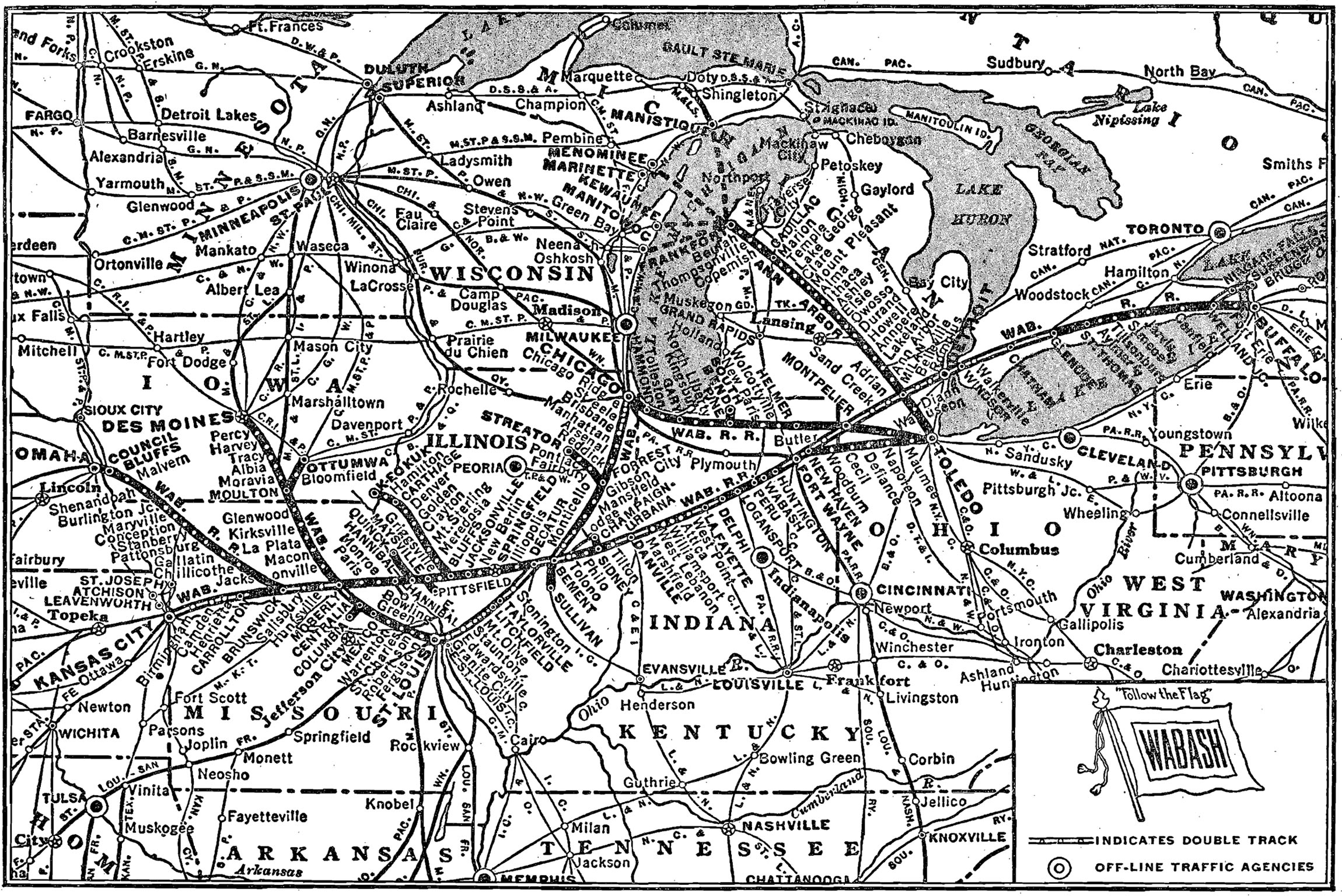
The Wabash prospered after this time thanks to its many key corridors which handled a diversified traffic base. Its modern network was slightly over 2,000 route miles reaching Detroit, Chicago, St. Louis, Kansas City, Omaha, and even Buffalo thanks to a trackage rights agreement.
The mighty Pennsylvania Railroad (PRR) acquired stock ownership during the depression era whereupon the Wabash remained a subsidiary until Norfolk & Western's takeover in 1964. Today, many of its principal routes remain in use.
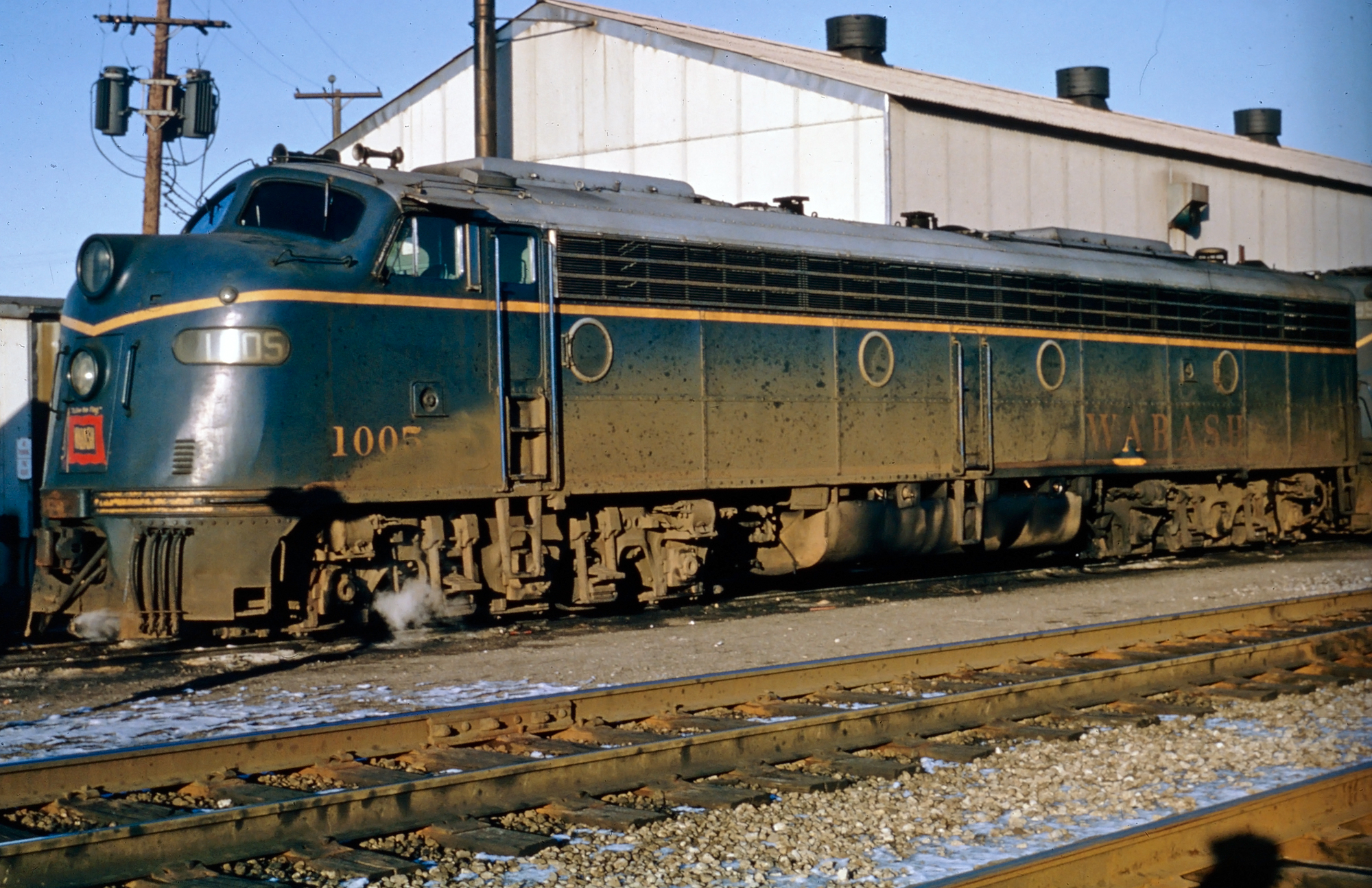 Wabash E8A #1005, in need of a bath, at Melvindale, Michigan on January 3, 1965. Photographer unknown. American-Rails.com collection.
History
Their stories may have been very different but the Wabash and New York, Chicago & St. Louis (Nickel Plate Road) were quite similar; they were roughly the same size, served many of the same markets, and prospered during the 20th century.
In addition, both wound up as components of a greatly expanded Norfolk & Western during the mid-1960's. For the Wabash, its path to success was far rockier and uncertain.
Things began amid great fervor when Illinois passed a transportation improvement act during 1837 which sought to interlink the state with 1,342 miles of new railroad at a cost of $10 million.
At A Glance
2,524.20 (1930) 2,393 (1950) | |
Buffalo, New York - Detroit, Michigan - Fort Wayne, Indiana - Decatur, Illinois - Springfield, Missouri - Moberly, Missouri - St. Louis Chicago - Decatur - St. Louis St. Louis - Moberly - Des Moines, Iowa Brunswick, Missouri - Council Bluffs, Iowa/Omaha, Nebraska Toledo, Ohio - Chicago Bluffs, Illinois - Keokuk, Iowa Toledo, Ohio - Frankfort, Michigan Fort Wayne, Indiana - Toledo Frankfort - Manitowoc/Kewaunee/Menominee/Manistique, Wisconsin (car ferry service across Lake Michigan) |
|
Freight Cars: 14,240 Passenger Cars: 126 | |
One part of this endeavor was the Northern Cross Railroad, projected to connect Quincy and the Indiana state line at Danville, via Springfield and Decatur. The entire scheme was a dismal failure although it did manage to complete 56 miles between Meredosia and Springfield by October of 1841 before money ran out.
According to historian Mike Schafer's book, "More Classic American Railroads," a little 4-2-0 named Rogers was the first locomotive to operate in Illinois when it rumbled over the initial 8 miles between Meredosia and Morgan City on November 8, 1838.
As the Northern Cross struggled the state decided to lease the property in hopes of turning around its fortunes. Private interests took over in May of 1842 but, unfortunately, their efforts also proved futile. With the no relief in sight it was sold on April 26, 1847 to Nicholas Ridgely, a successful Springfield speculator.
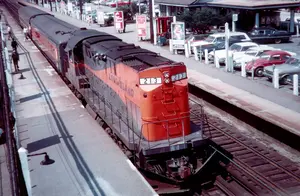
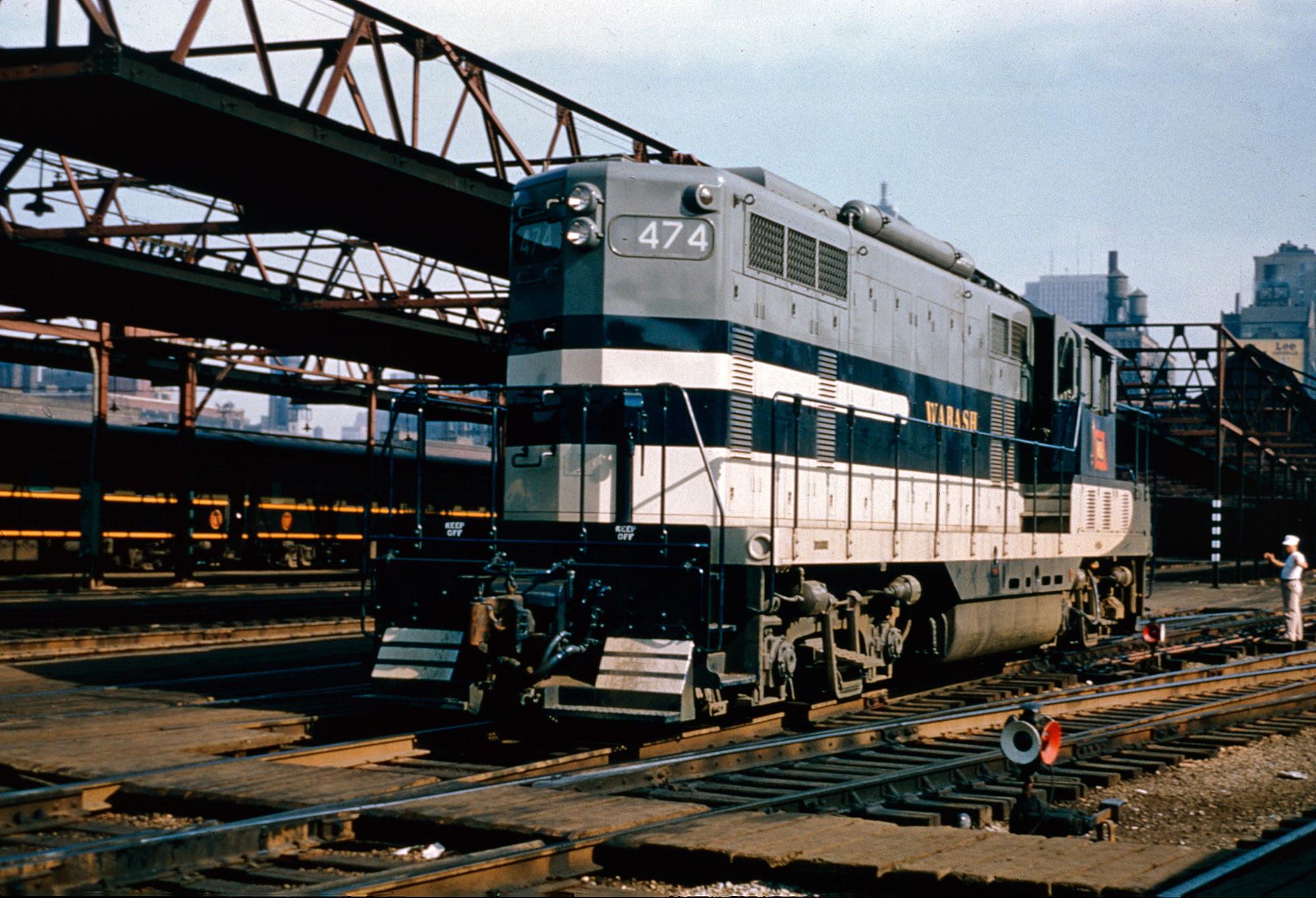 Wabash GP7 #474 navigates the lead tracks at Chicago's Dearborn Station on February 10, 1955. This unit was equipped with a steam generator for passenger service. American-Rails.com collection.
Although he played a rather inconsequential role in the company's history, he is credited with providing it a solid financial footing. He subsequently sold part of his interest to businessmen Thomas Mather of Springfield and James Dunlap of Jacksonville who reorganized it as the Sangamon & Morgan Railroad.
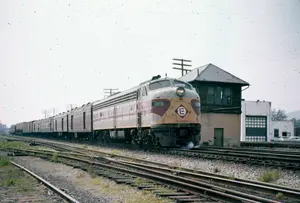
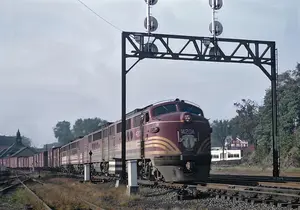
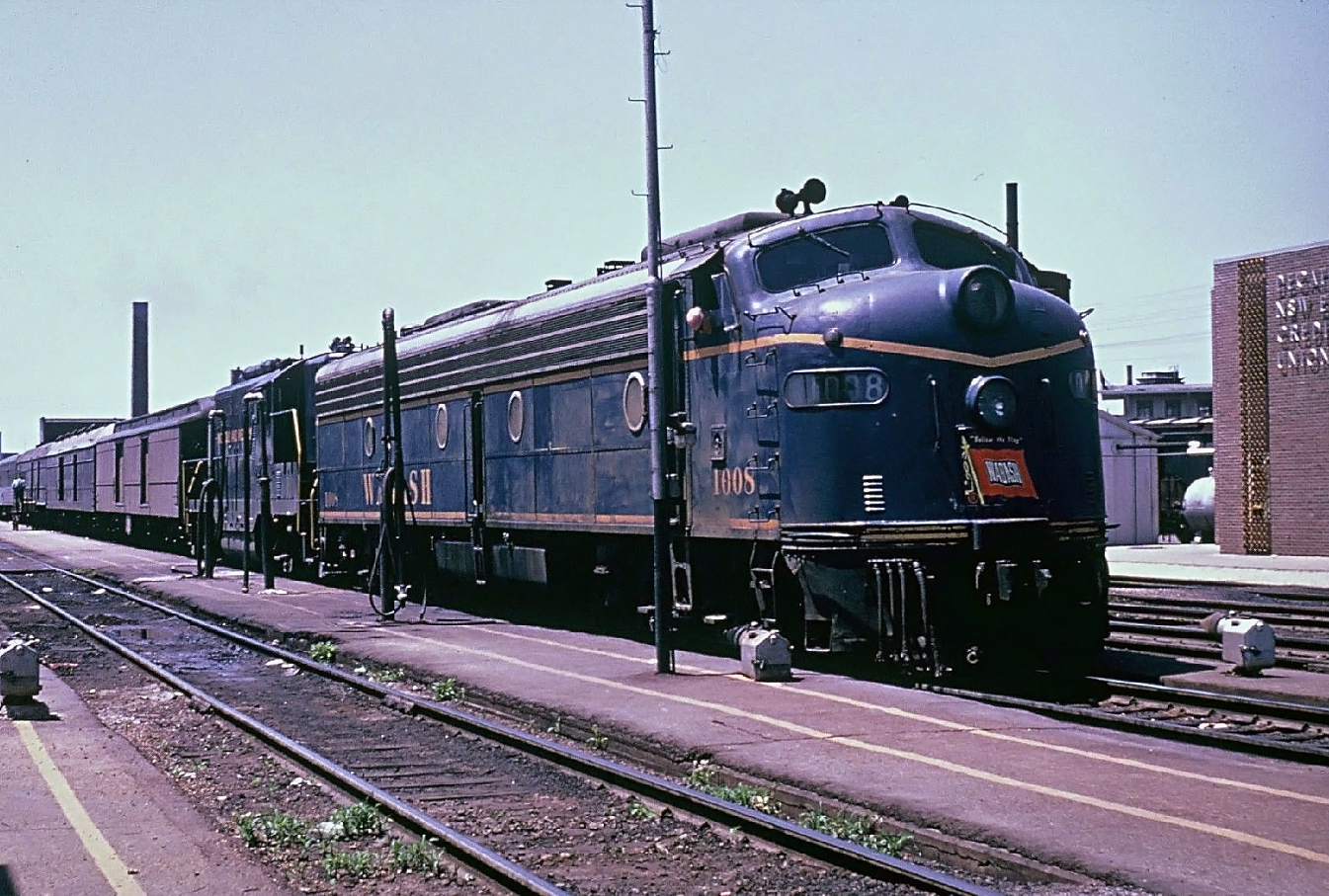 Wabash E8A #1008 is ahead of the "Detroit Limited" (St. Louis - Detroit) at Decatur, Illinois during June of 1966.
They spent considerable money to restore rail service and then sold their stake to New York City investors for $100,000.
On July 22, 1849 trains began running once more while the western rail-head was extended from Meredosia to nearby Naples. On February 13, 1853 another reorganization took place, this time as the Great Western Railroad.
It was under this title that considerable expansion occurred; by November of 1856 rails had reached Danville, as well as connections with the Illinois Central, (then the country's largest railroad) which opened new traffic opportunities.
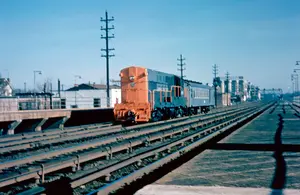
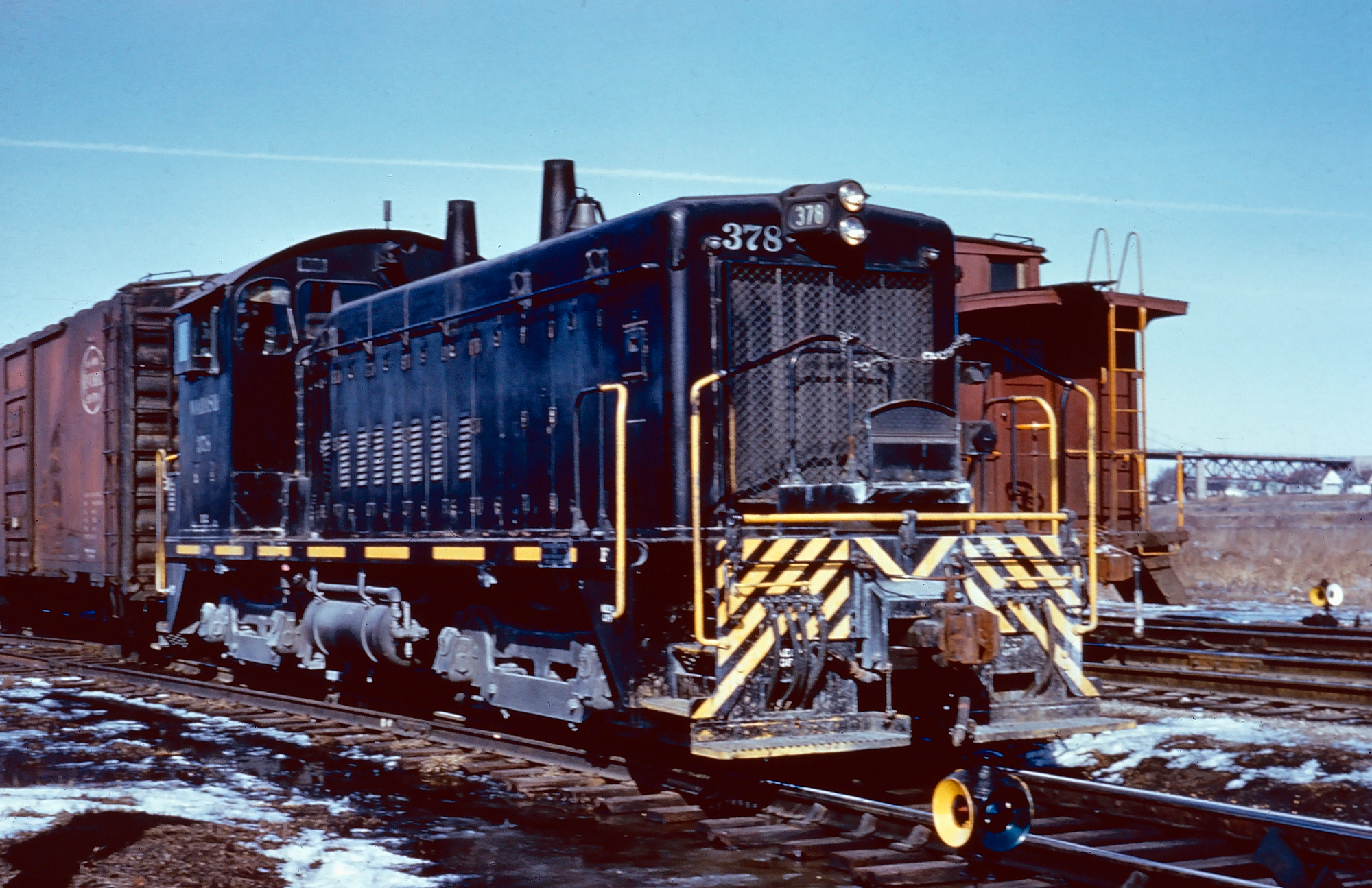 Wabash SW1200 #378 was photographed here in Toledo, Ohio on February 12, 1962. Photographer unknown. American-Rails.com collection.
Just as things were looking up the financial Panic of 1857 led to another reorganization as the Great Western Rail Road (GWRR).
This latest entity had only been in operation for a few years when it merged with the Toledo & Western Rail Road (T&W) in June of 1865 to create the Toledo, Wabash & Western Railway (TW&W).
The T&W was a consolidation itself that had been formed on October 8, 1858; by connecting with the Great Western at the Illinois/Indiana state line the TW&W boasted a 522-mile network stretching from Quincy and Keokuk, Iowa (reached through GWRR's lease of the Illinois & Southern Iowa Rail Road) to Toledo, Ohio.
Notable intermediate towns included Lafayette, Peru and Fort Wayne, Indiana. As author H. Roger Grant points out in his authoritative title, "'Follow The Flag,' A History Of The Wabash Railroad Company," the TW&W was an immediate success thanks to the region's rich agriculture opportunities and rapidly expanding population.
It carried no outstanding debt and grossed more than $4 million by 1868. With so much cash available it's not surprising that further growth was soon in order.
In 1869 it began laying sections of steel rail, in place of iron, and then acquired the Decatur & East St. Louis Rail Road during August of 1870. This 109-mile carrier connected its namesake cities and provided access into the important gateway city of St. Louis.
Logo
Origins of the Wabash logo date back to 1886 when the railroad began featuring a flag and banner in red with the words "The Wabash Line" displayed in gold, encompassed within a smaller blue rectangle.
It proclaimed itself "the Banner Line of the Central States" which was later shortened to "the Banner Route" during the 1890's.
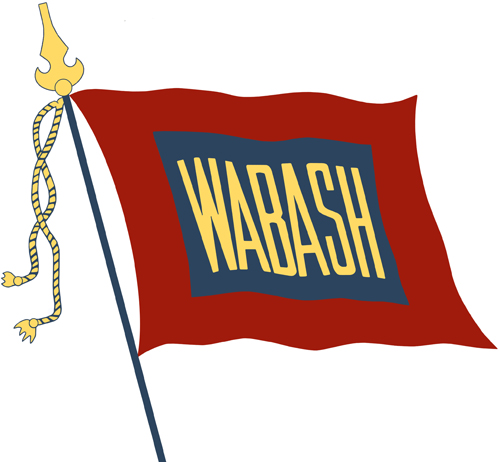
In 1912 the company adopted the now widely-recognized slogan "Follow The Flag." While the phrase is most commonly thought to straightforwardly mean use the railroad for all one's shipping and travel needs, Mr. Grant points out it may actually have origins dating back to a 19th century predecessor, the North Missouri Railroad.
According to the Wabash, "An engine carrying what was known as a pay flag went over the road just the day ahead of the pay car...[for] the purpose of letting all employees know the pay car would come the next day. From the fact that the pay followed the flag, came the coining of the remark, 'follow the flag.'"
Whatever may have been the case it was a simple but brilliant marketing tactic which certainly earned the Wabash arguably the most innovative logo and slogan of all time.
Another important lease was the Hannibal & Naples Railroad which reached Hannibal, Missouri along the west bank of the Mississippi River.
From here, points further west could be accessed. Once more, just as the railroad seemed poised for greatness, bankruptcy occurred during February of 1875 as a result of 1873's financial panic.
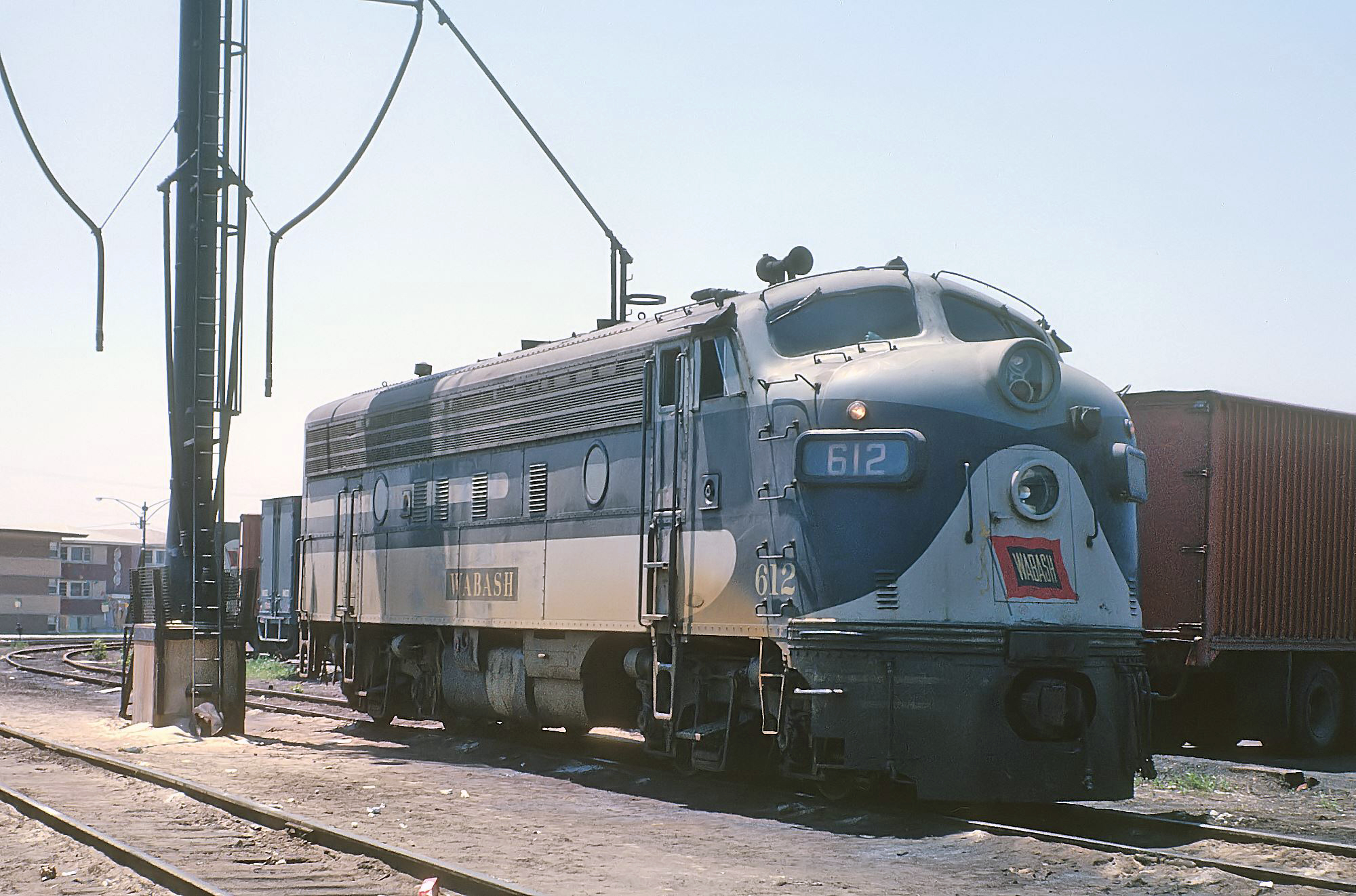 Wabash F7A #612 at Landers Yard in Chicago; June, 1963. Rick Burn photo.
Expansion
Because it was so well positioned and still garnering respectable business the reorganization was brief. It emerged on January 10, 1877 as the Wabash Railway, the first of many similar names it would carry during next half-century. What followed was a whirlwind of activity that saw Jay Gould gain control.
It all began when Cornelius "Commodore" Kingsland Garrison acquired the St. Louis, Kansas City & Northern (StLKC&N) in early 1877. This 582-mile property connected St. Louis with Kansas City while a northern branch from Moberly reached Ottumwa, Iowa.
Just a year later, in November of 1878, he added the Wabash. During his brief stint, Garrison did much for both railroads. By 1879 Gould had acquired a rather substantial block of Wabash stock and then convinced Garrison to sell him the rest while picking up the StLKC&N in the process.
 Wabash FA-2 #820 and other power layover between assignments at Decatur, Illinois on May 20, 1964. As the Alco's nose states, "Follow The Flag." Dick Wallin photo.
For the man's many shortcomings Gould's efforts created much of the modern Wabash system. After establishing control of both properties he merged them into the new, 1,400-mile Wabash, St. Louis & Pacific (WStL&P) during November of 1879.
A year later the Wabash got into Chicago when it opened a 90-mile extension north of Strawn, built as the Chicago & Strawn Railway.
Below this point the previous Wabash Railway had picked up the small Chicago & Paducah Railroad in 1877 that was working on a route from Streator to Effingham (via Strawn), crossing its main line at Bement.
System Map (1950s)
To reach Chicago's downtown the Chicago & Western Indiana was utilized, which provided access into Dearborn Station (a facility shared with the Santa Fe, Chesapeake & Ohio, Chicago & Eastern Illinois, Erie Railroad, Grand Trunk Western, and Chicago, Indianapolis & Louisville Railway [Monon]). The first passenger train from Chicago to St. Louis was inaugurated on August 9, 1880.
As the WStL&P built eastward it also looked to the west and the Council Bluffs/Omaha gateway. An interchange with the transcontinental Union Pacific was a goal for many Midwestern lines and the WStL&P was no different. It opened just such a connection in October of 1879 through a combination of lease and new construction.
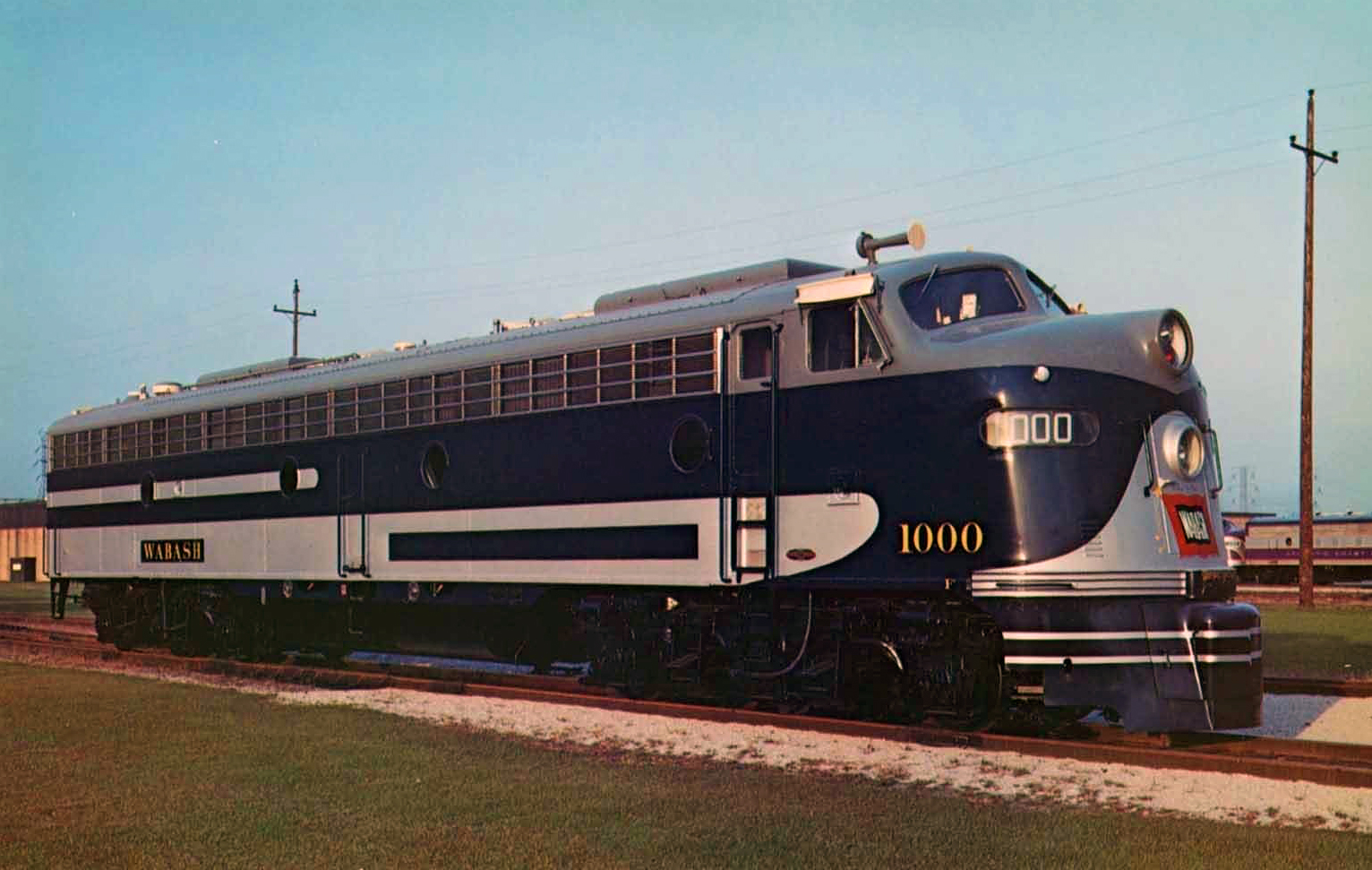 An Electro-Motive company photo of Wabash E8A #1000 during October of 1951; the unit was originally an E7A outshopped in 1946 but returned to EMD and rebuilt to E8 specifications. Note the new Atlantic Coast Line covered wagons in the background. Author's collection.
While all of this was ongoing an extension to Detroit was also underway. First, the 93-mile Eel River Railroad, connecting Logansport with Butler, Indiana, was leased in 1879. Then, the Detroit, Butler & St. Louis was incorporated to finish the remaining 114 miles into Detroit.
The work was finished in short order and the new corridor formally opened on August 14, 1881. As Gould rapidly expanded the Wabash, mostly by leasing smaller carriers (one particularly notable addition was the Des Moines & St. Louis Railroad, which provided access to Iowa's capital of Des Moines), it ballooned into a major 3,549-mile operation by 1884.
Unfortunately, in his quest to establish a true coast-to-coast system, he overextended his finances. One-by-one they fell into bankruptcy, including the WStL&P on May 28, 1884.
In the aftermath, nearly all of his leased holdings reverted back to their original owners while the core network serving Kansas City, Omaha, St. Louis, Chicago, Toledo, and Detroit was retained.
The company emerged from receivership on May 15, 1889 as the Wabash Railroad and in typical Gould fashion, the shrewd railroader managed to retain control.
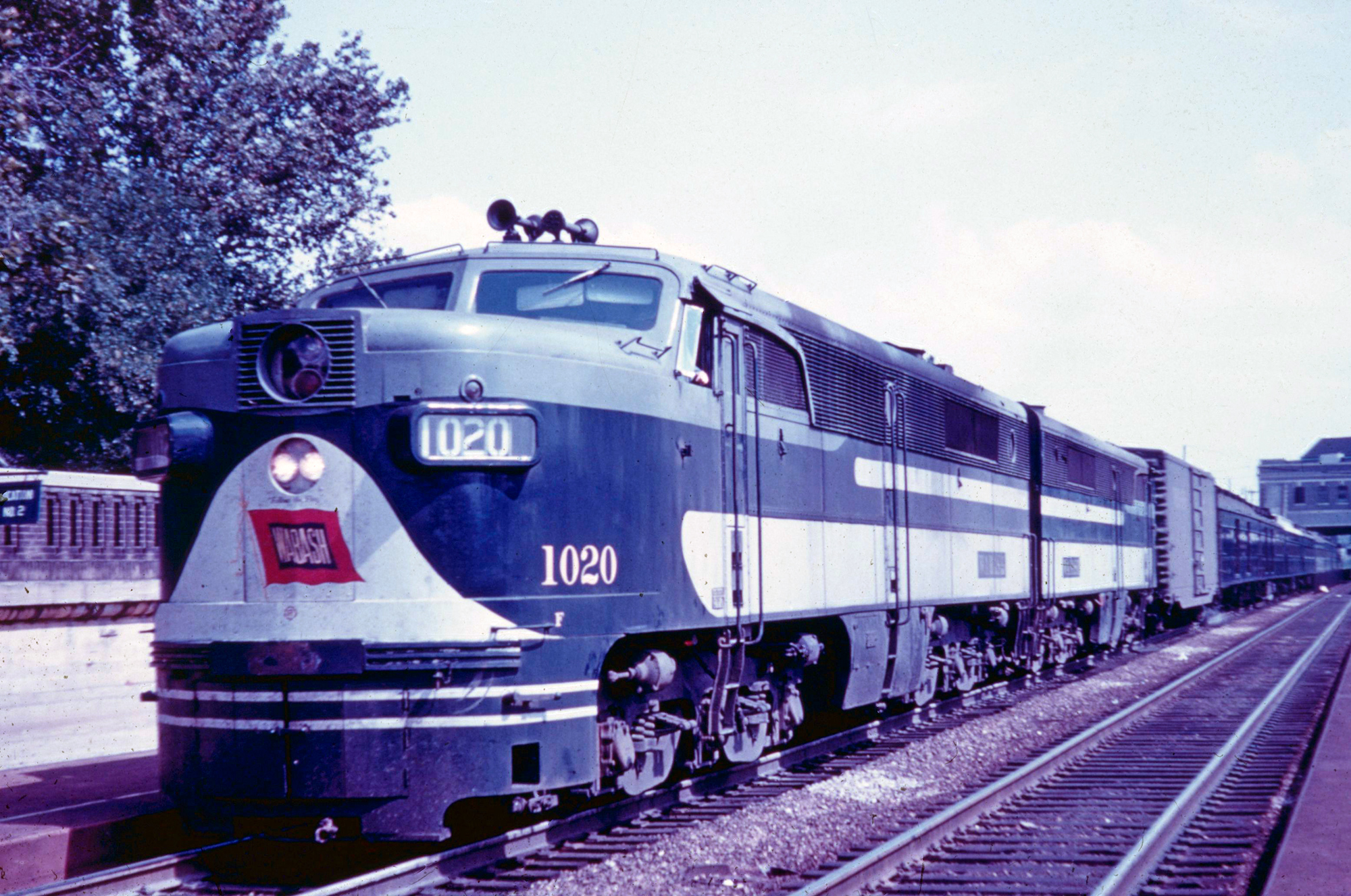 A pair of handsome Wabash PA-1's are stopped at Delmar Station in University City, Missouri (St. Louis) with a northbound/westbound passenger train, circa 1960. American-Rails.com collection.
In 1896, Gould's empire was handed over to his son, George, who continued his father's transcontinental ambitions. By the early 20th century the younger tycoon had, once again, nearly accomplished the feat through control of the Missouri Pacific, Western Pacific, Denver & Rio Grande Western, Western Maryland, and Wheeling & Lake Erie along with the Wabash.
After finishing the W&LE as far as Wheeling, West Virginia, and then extending it eastward into Pittsburgh as the Wabash-Pittsburgh Terminal Railway (completed in 1904), all that remained was a 50-mile segment from Pittsburgh to Connellsville (later built by the Pittsburgh & West Virginia).
In an ironic twist of fate, the younger Gould also overstretched his available capital and his empire collapsed (the Wabash entered receivership once more on December 26, 1911).
George's time at the helm did produce two noteworthy legacies, an improved Chicago corridor and access into Buffalo.
The former was launched in 1891 as the Montpelier & Chicago Rail Road to build a direct route between Detroit/Toledo and Chicago.
This 150-mile connector split from the Detroit main line at Montpelier, Indiana and officially opened on April 21, 1893. In the process, long-time trackage rights over the Erie's Chicago & Atlantic were eliminated.
Reaching Buffalo involved almost no new construction as an agreement was worked out with the Grand Trunk Railway of Canada on January 24, 1898 to lease 230 miles of its system through southern Ontario. Over time, this trackage became a vital component of the Wabash network.
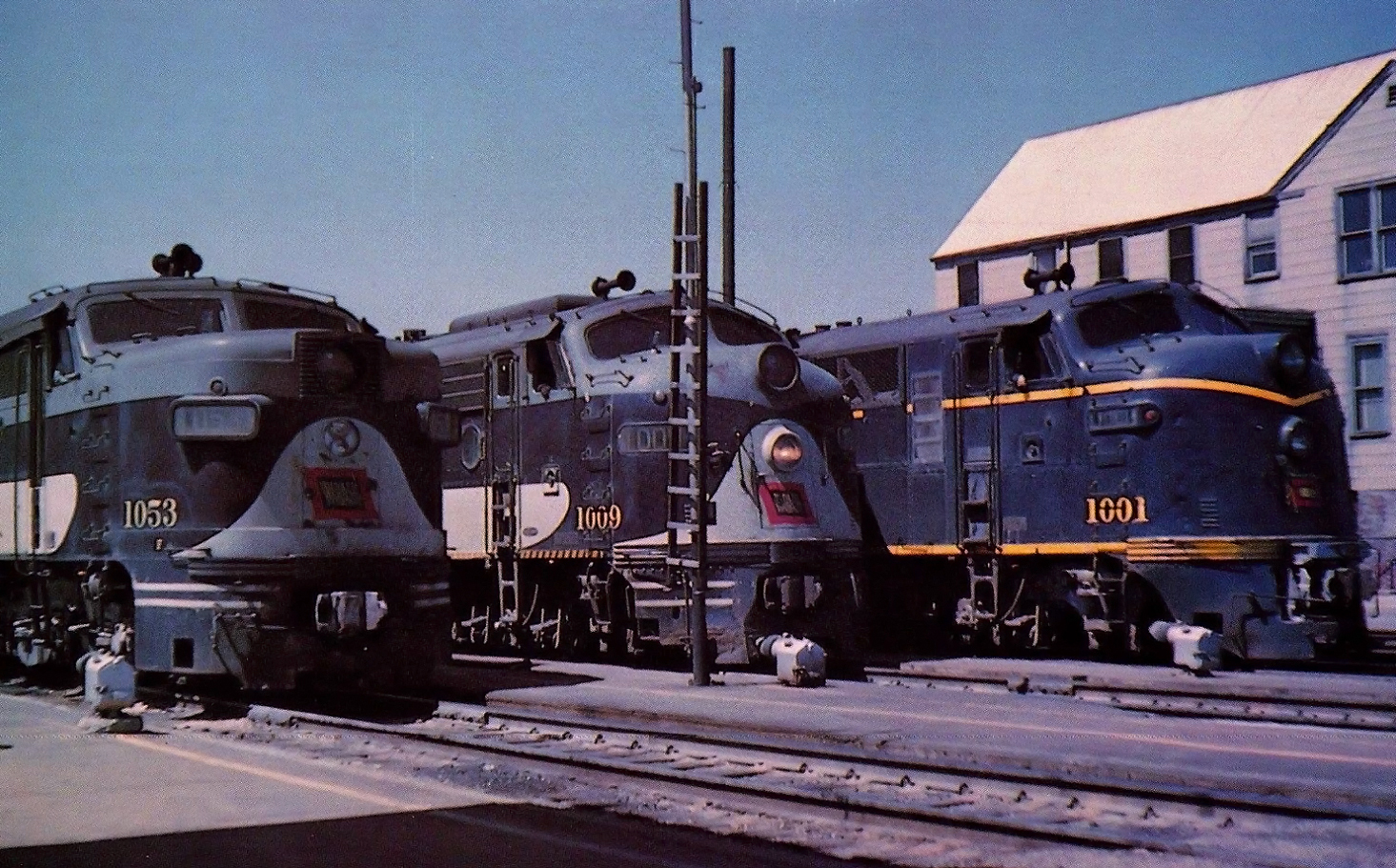 Wabash PA-1 #1053, E8A #1009, and E7A #1001 await their next assignment in Decatur, Illinois in May, 1962. Richard Wallin photo.
Modern Network
With George's financial ruin, Gould involvement ended for good. The railroad was subsequently sold at foreclosure and reorganized as the Wabash Railway on October 22, 1915. It contained 2,033 route miles, 321 miles of secondary mileage, and 476 miles of trackage rights.
Once free from the Goulds' influence the Wabash reached new heights. It achieved operating revenues of more than $40 million just prior to World War I, thanks, in part, to Detroit's expanding automotive industry. Some of this newfound income was used to bolster infrastructure and purchase new locomotives.
Then, the United States Railroad Administration took over the national industry, made effective at noon on December 28, 1917.
The directive was ordered by President Woodrow Wilson in response to fears of national gridlock. Unfortunately, the government did no better at maintaining fluid operations than the private sector; during this time equipment was rundown and infrastructure inadequately maintained to meet the crushing demand.
The Wabash survived this ordeal better than most and was returned to private ownership on February 28, 1920 following passage of the Transportation Act. That decade was generally good (net operating income reached $12.2 million by 1925) and witnessed a series of interesting events unfold.
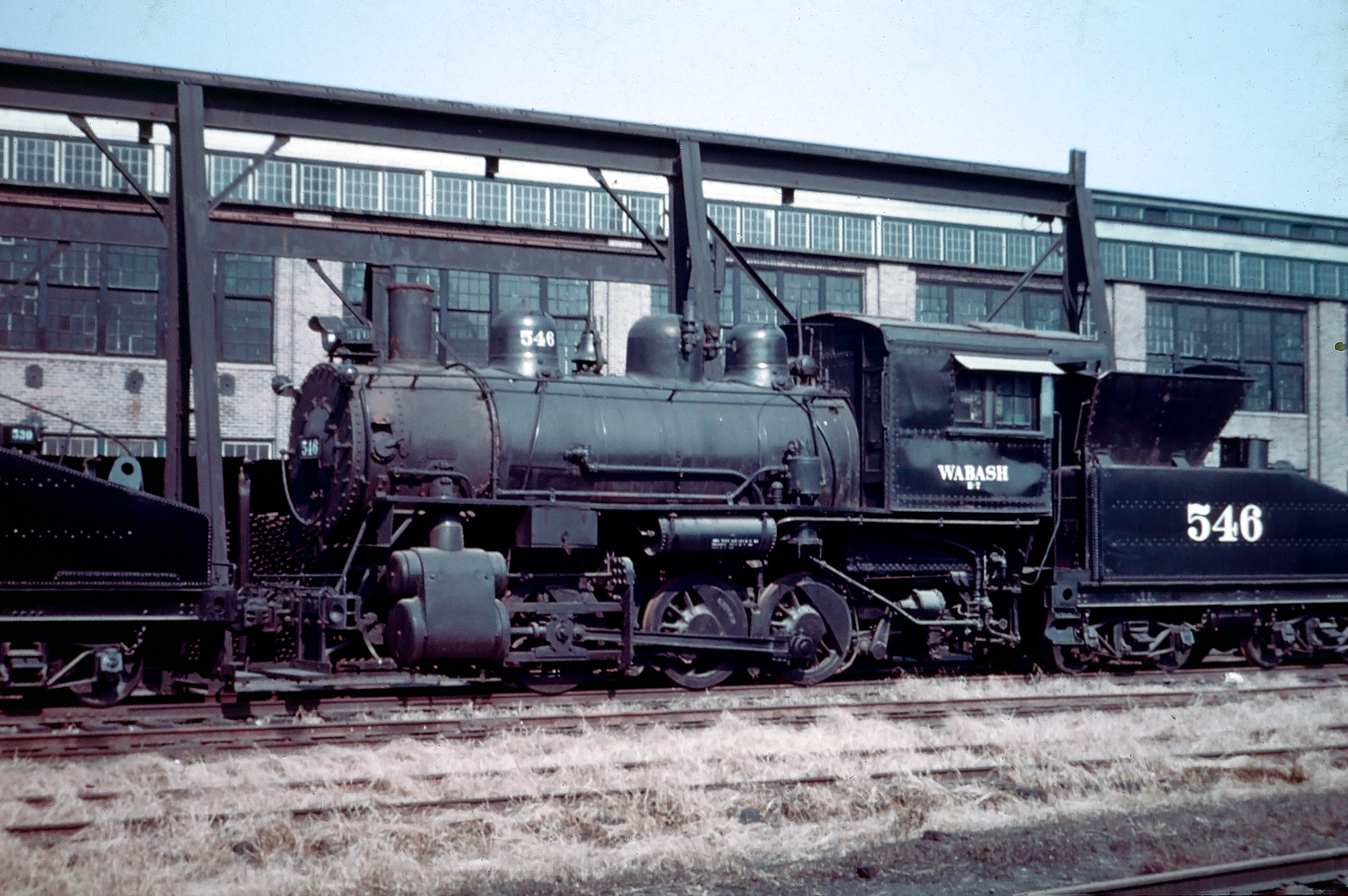 Wabash 0-6-0 #546 (Class B-7), one of the road's many switchers of this wheel arrangement, awaits its fate at the shops in Decatur, Illinois in late 1952. The locomotive, built by Baldwin in October, 1907 (serial 31865) was scrapped in April, 1953. Fred Byerly photo. American-Rails.com collection.
First, it acquired stock control of the 292-mile Ann Arbor Railroad in 1925, which maintained a linear route between Detroit and the Lake Michigan car-ferry terminal of Frankfort, Michigan (by 1930 it owned more than 99% of Ann Arbor's stock).
This was all part of a larger effort by board chairman William Williams and Delaware & Hudson president Leonor Loree to create the so-called "Fifth System," a giant Midwestern carrier to rival trunk lines Baltimore & Ohio, Pennsylvania, and New York.
This wasn't a new concept and actually fell in line with the Interstate Commerce Commission's plan then to merge all eastern systems (outside of New England) into a handful of large mega-railroads. The group which actually came closest to achieving this was the Van Sweringen brothers.
Using the New York, Chicago & St. Louis (Nickel Plate Road) as the nucleus their effort involved forming a 9,200-mile railroad, the so-called "Greater Nickel Plate System."
As for Loree and Williams, their plan included the Wabash, D&H, Ann Arbor, Lehigh Valley, Pittsburgh & West Virginia, Western Maryland, and Buffao, Rochester & Pittsburgh to create a 7,000+ mile network. Unfortunately, the Fifth System fell through when the ICC refused D&H control of the BR&P.
In addition, the PRR, which had once oddly endorsed the plan, suddenly turned against it and over time acquired stock control of the Wabash (as well as the LV).
This takeover led to a bitter court battle, which saw the PRR victorious when a deadlocked Supreme Court on March 19, 1934 stayed an earlier Third Circuit Court of Appeals decision that Penny's takeover would not lessen competition.
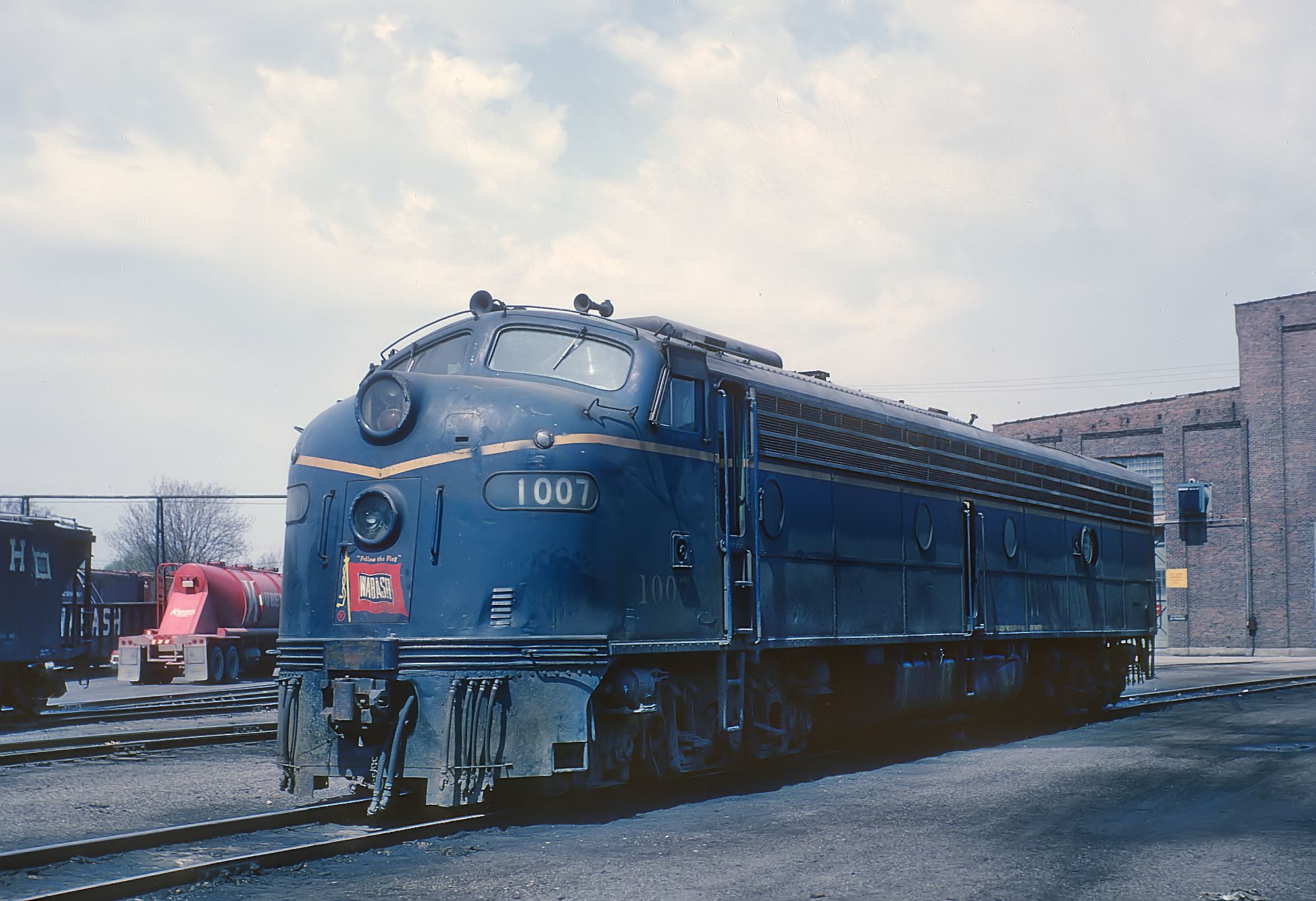 Wabash E8A #1007 lays over at the Decatur Shops in Decatur, Illinois in May, 1966. Rick Burn photo.
In the end, the PRR largely stayed out of Wabash affairs enabling its prominent rise into an important and profitable Midwestern bridge line.
It suffered one last financial setback, however, when the Great Depression plunged it back into bankruptcy on December 1, 1931. In 1928 the company enjoyed a net income of more than $11.9 million.
Alas, this melted to a staggering net lose of $7.05 million by the end of 1931. While reorganization would require more than a decade the railroad slowly rebounded as the economy recovered; from an operating income that stood at a low of $31.691 million in 1931 the Wabash showed a strengthening bottom line over the next few years.
It reached $46.133 million in 1937, dipped to just over $40 million a year later, and then boasted a net income of $1.067 million during the first quarter of 1942. With a bright outlook, it was officially reorganized as the Wabash Railroad Company on January 1, 1942.
The World War II years witnessed bountiful business, peaking in 1943 when it enjoyed a net income of $8.758 million. These strong numbers continued in the postwar years as this figure had jumped to $10.997 million by 1948.
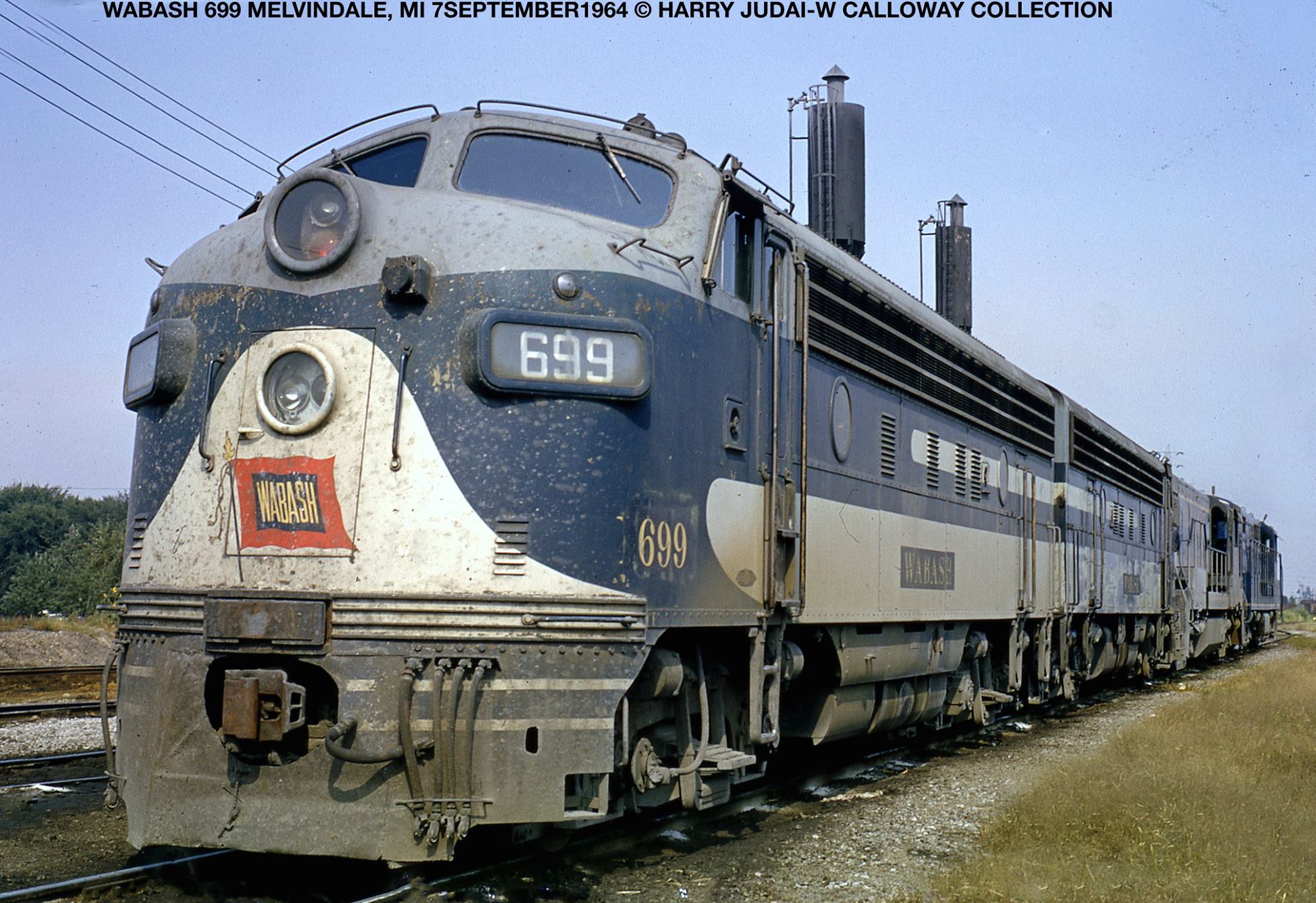 Wabash F7s and other power layover in Melvindale, Michigan on September 7, 1964. Harry Judai photo/Warren Calloway collection.
The Wabash used its healthy earnings to further infrastructure improvements and sought retirement of the steam locomotive, a process completed on July 28, 1955.
A few years earlier it had also taken part in another industrial transformation, the streamliner, by introducing the City of Kansas City on November 24, 1947.
It was a daytime train between Kansas City and St. Louis featuring new lightweight equipment from American Car & Foundry that included a standard baggage, baggage-mail, diner, coffee-shop coach, two standard coaches, and an observation parlor car all powered by Electro-Motive's new E7 diesels.
Passenger Trains
Banner Blue: (Chicago - St. Louis)
Blue Bird: (Chicago - St. Louis)
City of Kansas City: (St. Louis - Kansas City)
City of St. Louis: (St. Louis - Denver - Cheyenne - Los Angeles)
Des Moines Limited: (St. Louis - Des Moines)
Detroit Arrow: (Chicago - Detroit)
Detroit Limited: (St. Louis - Detroit)
Kansas City Express: (St. Louis - Kansas City)
Midnight Limited: (St. Louis - Kansas City)
Omaha Limited: (St. Louis - Omaha)
Pacific Coast Special: (St. Louis - Pacific Coast)
Red Bird: (Chicago - Detroit)
St. Louis Limited: (Detroit - St. Louis)
St. Louis Limited: (Des Moines/Omaha - St. Louis)
St. Louis Special: (Kansas City - St. Louis)
The Midnight: (Chicago - St. Louis)
"Wabash Cannon Ball": (St. Louis - Detroit)
 A quartet of Wabash F7As hustle away from Marty Bernard as the train is about to duck under the South Shore Line overpass at Hegewisch in Chicago, Illinois on January 27, 1964.
Another popular daytime service was the Blue Bird, launched on February 26, 1950 to work the Chicago-St. Louis market. The train featured a sleek set of Budd-built equipment including a combination baggage-buffet-lounge, three dome chair cars, diner lounge, and dome parlor-observation.
Ironically, the railroad's most legendary train wasn't even born until February 26, 1950 when, thanks to the popularity of the folk classic "The Wabash Cannonball," the railroad introduced a train by that name serving St. Louis and Detroit.
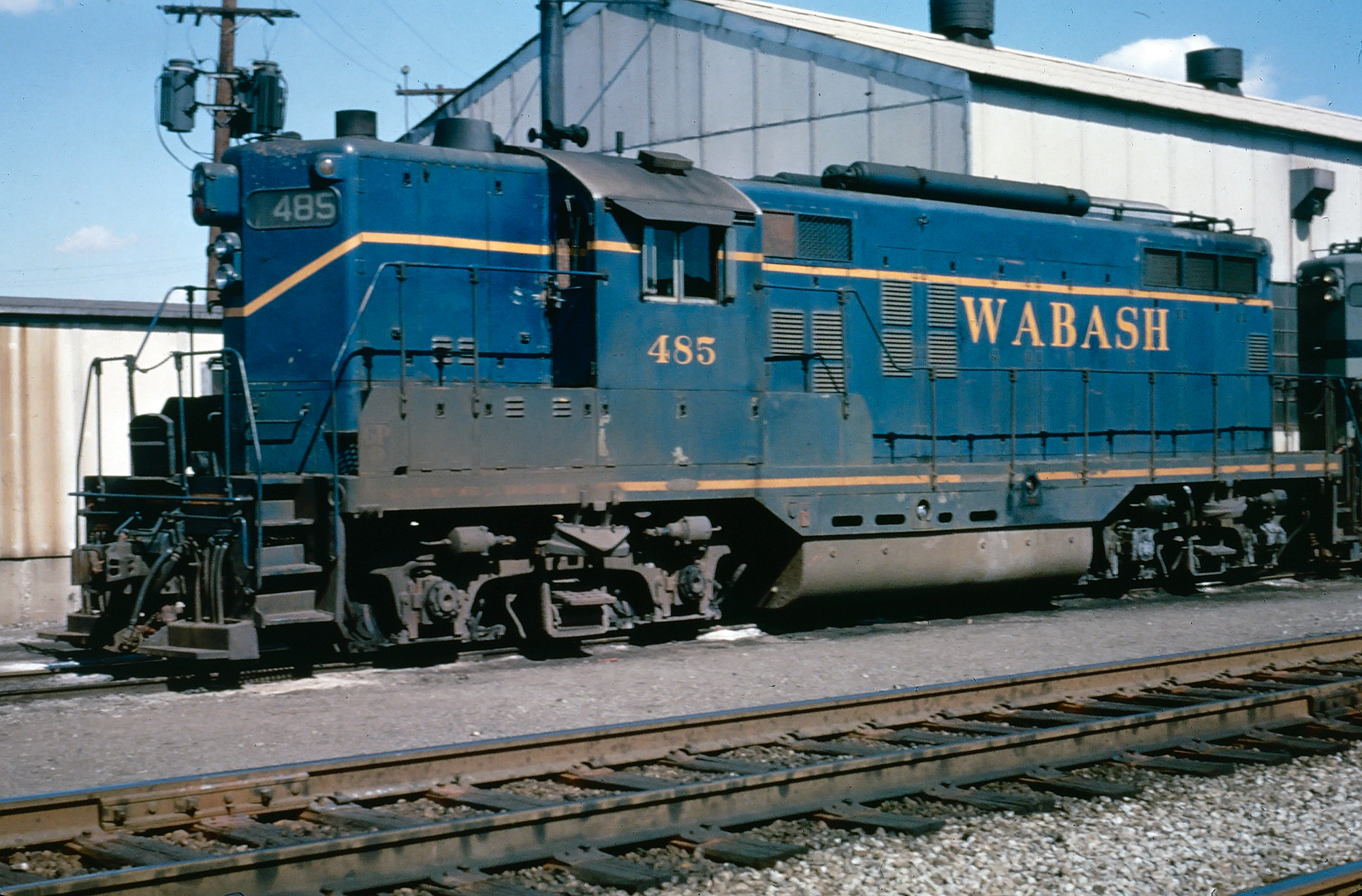 Wabash GP9 #485 was photographed here at the road's engine terminal in Melvindale, Michigan on March 15, 1964. Photographer unknown. American-Rails.com collection.
Diesel Roster
Alco
| Builder | Model | Original Number(s) | Class | Norfolk & Western Number | Serial Number | Completion Date | Disposition |
|---|---|---|---|---|---|---|---|
| Alco | HH600 | 100, 150 | D-6 | - | 69083, 69254 | 4/1939, 3/1940 | Scrapped: 4/1966, 12/1966 |
| Alco | S1 | 1 (Acquired 1/1962) | D-6 | - | 69190 | 5/1940 | Ex-Des Moines Union #1, scrapped 10/1962. |
| Alco | S1 | 2 (Acquired 1961) | D-6 | - | 69196 | 6/1940 | Ex-New Jersey, Indiana & Illinois Railroad #1, scrapped 12/1966. |
| Alco | S1 | 151-152 | D-6 | - | 69495, 69607 | 7/1941, 1/1942 | Retired, 11/1966-12/1966. |
| Alco | S1 | 153 | D-6 | - | 72695 | 9/1944 | Sold to Precision Engine Company in 1966. |
| Alco | S1 | 154 | D-6 | - | 72696 | 9/1944 | Retired, 9/1966. |
| Alco | S1 | 155 | D-6 | - | 72839 | 9/1944 | Retired, 5/1966. |
| Alco | S1 | 156 | D-6 | - | 75127 | 2/1947 | Sold, 3/1962, to Birmingham Rail & Locomotive Company. |
| Alco | S1 | 157 | D-6 | - | 75128 | 2/1947 | Retired, 9/1966. |
| Alco | S1 | 158 | D-6 | - | 75646 | 3/1948 | Sold, 3/1962, to Birmingham Rail & Locomotive Company. |
| Alco | S1 | 159 | D-6 | - | 75647 | 3/1948 | Sold, 3/1962, to Birmingham Rail & Locomotive Company. |
| Alco | S2 | 310 | D-10 | - | 69910 | 8/1942 | Retired, 7/1966. |
| Alco | S2 | 311 | D-10 | - | 69911 | 8/1942 | Retired, 12/1966. |
| Alco | S2 | 312 | D-10 | - | 70226 | 11/1943 | Retired, 1966. |
| Alco | S2 | 313 | D-10 | - | 70245 | 4/1944 | Retired, 11/1966. |
| Alco | S2 | 314 | D-10 | - | 70201 | 4/1944 | Retired, 4/1967. |
| Alco | S2 | 315 | D-10 | - | 70202 | 3/1944 | Retired, 9/1968. |
| Alco | S2 | 316 | D-10 | - | 72063 | 6/1944 | Retired, 11/1966. |
| Alco | S2 | 317 | D-10 | - | 72064 (Alco's 1000th diesel completed.) | 6/1944 | Retired, 7/1966. |
| Alco | S2 | 318 | D-10 | - | 74491 | 7/1946 | Retired, 12/1966. |
| Alco | S2 | 319 | D-10 | - | 74492 | 7/1946 | - |
| Alco | S2 | 320 | D-10 | 3320 | 76762 | 5/1949 | - |
| Alco | S2 | 321 | D-10 | 3321 | 76763 | 5/1949 | - |
| Alco | S4 | 322 | D-10 | 3322 | 80610 | 6/1953 | - |
| Alco | S4 | 323 | D-10 | 3323 | 80611 | 6/1953 | - |
| Alco | S4 | 324 | D-10 | 3324 | 80612 | 6/1953 | - |
| Alco | S2 | 325 | D-10 | - | 69928 | 7/1942 | Former Nickel Plate Road #5 acquired in 5/1964. Retired 3/1966. |
| Alco | FB-1 | 1200B-1204B | D-15 | 800-804: Renumbered 1961 | 76712, 76724-76726, 76866 | 2/1949-3/1949 | Traded to GE between 3/1962-4/1962. Trucks reused on new U25Bs. |
| Alco | FA-1 | 1200-1204 | D-15 | 805-813 (Odds): Renumbered 1961 | 76664, 76696, 76698, 76700, 76702 | 1/1949-3/1949 | Traded to GE between 3/1962-4/1962. Trucks reused on new U25Bs. |
| Alco | FA-1 | 1200A-1204A | D-15 | 806-814 (Evens): Renumbered 1961 | 76665, 76697, 76699, 76701, 76703 | 1/1949-3/1949 | Traded to GE between 3/1962-4/1962. Trucks reused on new U25Bs. |
| Alco | FA-2 | 820-823 | D-16 | - | 78384, 78480, 78380, 78479 | 12/1950 | Ex-Ann Arbor #52A, #55A, #50A, and #55. Acquired in 1963 and traded to Alco in 7/1965. |
| Alco | PA-2 | 1020, 1020A, 1021, 1021A | D-20 | 1050-1053 (1961 renumbering) | 77081-77084 | 5/1949 | - |
| Alco | C424 | B900-B906 | D-24 | 3900/421-3901/422, 3903/423-3906/426 | 3372-01 thru 3372-07 | 3/1964 | B902 wrecked in 10/1964, scrapped. |
* Wabash ordered C425s as #582-589 but these units were completed as Norfolk & Western 1000-1007.
Baldwin Locomotive Works
| Builder | Model | Original Number(s) | Class | Norfolk & Western Number | Serial Number | Completion Date | Disposition |
|---|---|---|---|---|---|---|---|
| Baldwin | VO660 | 200 | D-6 | - | 62497 | 7/1941 | Leased to the Lake Erie & Fort Wayne Railroad (#1) in 1965. Retired 5/1968. |
| Baldwin | DS-4-4-660 | 201 | D-6 | - | 73363 | 2/1947 | Retired 3/1964. |
| Baldwin | DS-4-4-660 | 202 | D-6 | - | 73364 | 3/1947 | Retired 3/1964. |
| Baldwin | VO-1000 | 300 | D-10 | - | 64425 | 9/1942 | Retired 3/1964. |
| Baldwin | VO-1000 | 301 | D-10 | - | 70151 | 2/1944 | Retired 3/1964. |
| Baldwin | VO-1000 | 302 | D-10 | - | 70152 | 2/1944 | Retired 9/1966. |
| Baldwin | VO-1000 | 303 | D-10 | - | 72229 | 6/1946 | Retired 11/1966. |
| Baldwin | DS-4-4-1000 | 304 | D-10 | - | 73955 | 1/1949 | Wrecked and rebuilt into cabless booster. Retired 3/1964. |
EMD
| Builder | Model | Original Number(s) | Class | Norfolk & Western Number | Serial Number | Completion Date | Disposition | |
|---|---|---|---|---|---|---|---|---|
| EMC | SW1 | 101 | D-6 | - | 880 | 4/1939 | Sold to Peabody Coal Company (#101) in 1960. | |
| EMC | SW1 | 102 | D-6 | - | 881 | 6/1939 | Sold to Bonhomie & Hattiesburg Southern (#2) in 10/1961. | |
| EMC | SW1 | 103 | D-6 | - | 882 | 6/1939 | Sold to Bonhomie & Hattiesburg Southern (#1) in 10/1961. | |
| EMD | SW1 | 104 | D-6 | - | 1024 | 2/1940 | Sold to Peabody Coal Company (#104) in 7/1960. | |
| EMD | SW1 | 105 | D-6 | - | 1075 | 5/1940 | Sold to Tulsa-Sapulpa Union Railway (#105) in 3/1960. | |
| EMD | SW1 | 106 | D-6 | - | 1197 | 11/1940 | Sold to Granite City Steel (#106) in 7/1961. | |
| EMD | SW1 | 107 | D-6 | - | 1388 | 11/1945 | Sold to Granite City Steel (#602) in 8/1961. | |
| EMD | SW1 | 108 | D-6 | - | 4730 | 4/1947 | Sold to Tulsa-Sapulpa Union Railway (#108) in 4/1964. | |
| EMD | SW1 | 109 | D-6 | 3109 | 7533 | 6/1949 | - | |
| EMD | SW1 | 110 | D-6 | 3110 | 7741 | 6/1949 | Sold to the Anderson Corporation (Bayport, Minnesota). | |
| EMD | SW1 | 111 | D-6 | - | 7742 | 6/1949 | Sold to Granite City Steel (#111) in July, 1964. | |
| EMD | SW8 | 120 | D-8 | 3120 | 9045 | 10/1950 | - | |
| EMD | SW8 | 121 | D-8 | 3121 | 9046 | 10/1950 | - | |
| GMD | SW8 | 122 | D-8 | 3122 | A-145 | 12/1950 | - | |
| GMD | SW8 | 123 | D-8 | 3123 | A-146 | 12/1950 | - | |
| GMD | SW8 | 124 | D-8 | 3124 | A-147 | 1/1951 | - | |
| EMD | SW8 | 125 | D-8 | 3125 | 14418 | 9/1951 | - | |
| EMD | SW8 | 126 | D-8 | 3126 | 14419 | 9/1951 | - | |
| GMD | SW8 | 127 | D-8 | 3127 | A-278 | 1/1951 | - | |
| EMD | SW8 | 128 | D-8 | 3128 | 17589 | 2/1953 | - | |
| EMD | SW8 | 129 | D-8 | 3129 | 17590 | 2/1953 | - | |
| EMD | SW8 | 130 | D-8 | 3130 | 17591 | 2/1953 | - | |
| EMD | SW8 | 131 | D-8 | 3131 | 17592 | 2/1953 | - | |
| EMD | SW8 | 132 | D-8 | 3132 | 17593 | 2/1953 | - | |
| EMD | NW2 | 346 | D-10 | - | 1423 | 8/1941 | Ex-Nickel Plate Road #98, nee-Wheeling & Lake Erie #D-4 | |
| EMD | NW2 | 347 | D-10 | - | 998 | 4/1940 | Ex-Nickel Plate Road #95, nee-Wheeling & Lake Erie #D-1 | |
| EMD | NW2 | 348 | D-10 | 3348 | 1089 | 7/1940 | Ex-Nickel Plate Road #96, nee-Wheeling & Lake Erie #D-2. Sold to Island Creek Coal in 3/1968. | |
| EMD | NW2 | 349 | D-10 | 3349 | 1422 | 6/1941 | Ex-Nickel Plate Road #97, nee-Wheeling & Lake Erie #D-3. Sold to the Celanese Company in 10/1966. | |
| EMD | NW2 | 350 | D-10 | 3350 | 4159 | 12/1946 | Transferred to Des Moines Union (#7) in 10/1966. | |
| EMD | NW2 | 351 | D-10 | 3351 | 7531 | 7/1949 | - | |
| EMD | NW2 | 352 | D-10 | 3352 | 7532 | 7/1949 | - | |
| EMD | NW2 | 353 | D-10 | - | 7531 | 5/1948 | Built as Indiana Northern #100; sold to New Jersey, Indiana & Illinois Railroad (#2) in 1961. | |
| EMD | SW7 | 355-362 | D-12 | 3355-3362 | 9037-9044 | 7/1950 | - | |
| EMD | SW9 | 363-374 | D-12 | 3363-3374 | 12622-12625, 15058-15062, 17580-17582 | 4/1951-3/1953 | - | |
| EMD | SW1200 | 375-379 | D-12 | 3375-3379 | 18877-18880, 23297 | 1/1957 | - | |
| EMD | GP7 | 450-452 | D-15 | 3450-3452 | 11993-11995 | 8/1950-9/1950 | - | |
| GMD | GP7 | 453 | D-15 | 3453 | A-148 | 1/1951 | - | |
| EMD | GP7 | 454 | D-15 | - | 14408 | 7/1951 | Wrecked 8/1959. Scrapped 6/1960. | |
| EMD | GP7 | 455-483 | D-15 | 3455-3483 | 14409-14417, 15048-15057, 17080, 17076, 17077-17079, 17571-17575 | 7/1951-1/1953 | - | |
| EMD | GP9 | 484-495 | D-17 | - | 3484-3495 | 1/1954-4/1956 | - | |
| EMD | GP35 | 540-547 | D-25 | 3540/2911-3547/2918 | 29468-29469, 29471-29476 | 4/1964 | - | |
| EMD | GP35 | (548-554) | D-25 | 1302-1308 | 29658-29664 | 11/1964 | Ordered as Wabash 548-554 and completed as N&W 1302-1308. | |
| EMD | E7A | 1000, 1001A, 1001-1002 | D-20 | - | 3226, 4085, 4084, 6499 | 8/1946-3/1949 | #1000 renumbered 1002A then as #1017 in 1961. #1001A renumbered 1016 in 1961. | |
| EMD | E8A | 1000, 1003-1015 | D-20 | 3800, 3803-3812, 3815 | 15063, 7812-7817, 14420-14424, 17565-17566 | 11/1949-1/1953 | #1013-1014 wrecked in 8/1961. | |
| EMD | F7B | 1100B-1108B | D-15 | 600-608: Renumbered 1961 | 7616-7618, 7621, 7615, 7628-7630, 11295 | 8/1949-6/1950 | - | |
| EMD | F7A | 1100-1108 | D-15 | 609-625 (Odds): Renumbered 1961 | 7609, 7611, 7613, 7619, 7607, 7622, 7624, 7626, 9061 | 8/1949-6/1950 | #1101B sold to Ann Arbor in 10/1963. | |
| EMD | F7A | 1100A-1108A | D-15 | 610-626 (Evens): Renumbered 1961 | 7610, 7612, 7614, 7620, 7608, 7623, 7625, 7627, 9062 | 8/1949-6/1950 | #1102A and #1105A sold to Ann Arbor in 10/1963. | |
| EMD | F7A | 1140-1154 | D-15 | 627-655 (Odds): Renumbered 1961 | 9047-9073 (Odds), 11293, 12305 | 6/1950-7/1950 | - | |
| EMD | F7A | 1140A-1154A | D-15 | 628-656 (Evens): Renumbered 1961 | 9048-9074 (Evens), 11294, 12306 | 6/1950-7/1950 | - | |
| GMD | F7A | 1155-1158 | D-15 | 657-663 (Odds): Renumbered 1961 | A125-A131 (Odds) | 12/1950-1/1951 | - | |
| GMD | F7A | 1155A-1157A | D-15 | 658-662 (Evens): Renumbered 1961 | A126-A130 (Evens) | 12/1950 | - | |
| GMD | F7A | 1159-1164 | D-15 | 665-675 (Odds): Renumbered 1961 | A133-A143 (Odds) | 1/1951 | - | |
| GMD | F7A | 1158A-1164A | D-15 | 664-676 (Evens): Renumbered 1961 | A132-A144 (Evens) | 1/1951 | - | |
| EMD | F7A | 1165-1188 | D-15 | 677-723 (Odds): Renumbered 1961 | 9020-9036 (Evens), 12613-12617 (Odds), 15036-15046 (Evens), 17068-17074 (Evens), 17576-17578 (Evens) | 6/1951-1/1953 | See Note A. | |
| EMD | F7A | 1165A-1188A | D-15 | 678-724 (Evens): Renumbered 1961 | 9021-9035 (Odds), 12612-12618 (Evens), 15037-15047 (Odds), 17069-17075 (Odds), 17577-17579 (Odds) | 6/1951-1/1953 | See Note A. | |
| GMD | F7A | 1189-1189A | D-15 | 725-726: Renumbered 1961 | A-487, A-488 | 4/1953 | - | |
| EMC | Doodlebug | 4000-4001 | - | - | 140, 139 | 2/1926, 1/1926 | 4000 rebuilt into MOW car 4297 in 1937. 4001 sold to Consolidated Railway Equipment in 1956. |
Note A:
- #1168, #1170, and #1180A wrecked in 4/1965.
- #1172A wrecked, and then scrapped in 11/1959. This unit would have became #692.
- #1183 sold to Ann Arbor in 11/1963.
- #689-690, #697, #703, #705, #712, #714-#715, and #717-718 leased to CNJ.
Fairbanks-Morse
| Builder | Model | Original Number(s) | Class | Norfolk & Western Number | Serial Number | Completion Date | Disposition |
|---|---|---|---|---|---|---|---|
| FM | H10-44 | 380 | D-10 | 3380 | L1021 | 11/1946 | Retired 3/1966. |
| FM | H10-44 | 381 | D-10 | 3381 | L1022 | 11/1946 | Retired 6/1966. |
| FM | H10-44 | 382 | D-10 | 3382 | 10L101 | 3/1949 | Retired 1970. |
| FM | H10-44 | 383 | D-10 | 3383 | 10L102 | 3/1949 | Retired 6/1966. |
| FM | H12-44 | 384-386 | D-12 | 3384-3386 | 12L744-12L746 | 3/1953 | Retired 1970-1971. |
| FM | H24-66 (Train Master) | 550-551 (ex-Demonstrators TM-1 and TM-2) | D-24 | 3598-3599 | 24L730-24L731 | 4/1953 | Renumbered 598-599 in 1964. |
| FM | H24-66 (Train Master) | 552/552A, 553/553A, 554/554A | D-24 | 3592-3597 | 24L891-24L896 | 4/1956-5/1956 | Renumbered 592, 595, 593, 596, 594, 597 between 1961-1964. |
General Electric
| Builder | Model | Original Number(s) | Class | Norfolk & Western Number | Serial Number | Completion Date | Disposition |
|---|---|---|---|---|---|---|---|
| GE | 44-Ton | 51 | D-3 | - | 12496 | 7/1939 | Sold to Merrilees Equipment Company in 1961. |
| GE | U25B | 500-503 | D-25 | 3529/8152, 3522/8145, 3520/8143, 3518/8141 | 34254, 34522, 34256-34257 | 5/1962-8/1962 | - |
| GE | U25B | 504-514 | D-25 | 3517/8140, 3524/8147, 3526/8149, 3523/8146, 3521/8144, 3516/8139, 3525/8148, 3528/8151, 3519/8142, 3527/8150 | 34258-34259, 34519-34521, 34524, 34523, 34525-34527, 34255 | 5/1962-8/1962 | 512 wrecked in 10/1964, scrapped. |
| GE | U25B | 512 (2nd) | D-25 | 3515/8138 | 35581 | 2/1965 | Replaced original 512. |
Lima-Hamilton
| Builder | Model | Original Number(s) | Class | Norfolk & Western Number | Serial Number | Completion Date | Disposition |
|---|---|---|---|---|---|---|---|
| LH | 1000 HP Switcher | 400 (ex-Demonstrator #1002, rebuilt to 1,200 horsepower) | D-10 | - | 9395 | 3/1950 | - |
| LH | 1200 HP Switcher | 401 | D-12 | - | 9417 | 4/1950 | Rebuilt 1,200 horsepower Alco engine. Retired 10/1965. |
| LH | 1200 HP Switcher | 402 | D-12 | - | 9418 | 4/1950 | Rebuilt 1,200 horsepower Alco engine. Retired 5/1965. |
| LH | 1200 HP Switcher | 403 | D-12 | - | 9419 | 4/1950 | Rebuilt 1,200 horsepower Alco engine. Retired 2/1966. |
| LH | 1200 HP Switcher | 404 | D-12 | - | 9420 | 5/1950 | Rebuilt 1,200 horsepower Alco engine. Retired 2/1966. |
| LH | 1200 HP Switcher | 405 | D-12 | - | 9421 | 5/1950 | Rebuilt 1,200 horsepower Alco engine. Retired 2/1966. |
| LH | 1200 HP Switcher | 406 | D-12 | - | 9422 | 5/1950 | Rebuilt 1,200 horsepower Alco engine. Retired 2/1966. |
| LH | 1200 HP Switcher | 407 (Ex-Demonstrator #1003) | D-12 | - | 9397 | 8/1950 | Rebuilt 1,200 horsepower Alco engine. Retired 2/1966. |
| LH | 1200 HP Switcher | 408 | D-12 | - | 9508 | 11/1950 | Rebuilt 1,200 horsepower Alco engine. Retired 9/1965. |
| LH | 1200 HP Switcher | 409 | D-12 | - | 9509 | 11/1950 | Rebuilt 1,200 horsepower Alco engine. Retired 7/1965. |
| LH | 1200 HP Switcher | 410 | D-12 | - | 9510 | 11/1950 | Rebuilt 1,200 horsepower Alco engine. Retired 7/1965. |
| LH | 1200 HP Switcher | 411 | D-12 | - | 9511 | 11/1950 | Rebuilt 1,200 horsepower Alco engine. Retired 2/1966. |
All-Time Steam Locomotive Roster After 1897 (Abbreviated)
Switchers
| Road Number(s) | Class | Arrangement | Builder | Date Built/Notes |
|---|---|---|---|---|
| 78-81 | A-1 | 0-4-0 | Toledo, Wabash & Western | 1871 |
| 356-358 | A-2 | 0-4-0 | Pittsburgh | 6/1880 |
| 2 | A-3 | 0-4-0 | Moberly Shops | 1888 |
| 7, 11, 15, 28, 30, 34-37 | A-3 | 0-4-0 | Wabash Railroad | 1881-1887 |
| 40, 54, 56-57, 80-81 | A-3 | 0-4-0 | Wabash Railroad | 1884-1891 |
| 103, 106, 112, 114-117 | A-3 | 0-4-0 | Wabash Railroad | 1883-1889 |
| 119-120, 157, 159, 178 | A-3 | 0-4-0 | Wabash Railroad | 1887-1889 |
| 192-194 | A-3 | 0-4-0 | Wabash Railroad | 1880-1883 |
| 218, 223 | B-1 | 0-6-0 | Wabash, St. Louis & Pacific | 1880-1882 |
| 4, 22, 32, 105,108-111 | B-2 | 0-6-0 | Rhode Island | 10/1888-6/1891 |
| 146, 162, 197-198, 202 | B-2 | 0-6-0 | Rhode Island | 4/1892 |
| 215, 228, 431-435 | B-2 | 0-6-0 | Rhode Island | 10/1888-12/1892 |
| 268-276 | B-3 | 0-6-0 | Rebuilt From 2-6-0's (F-2) | - |
| 300 | B-3 | 0-6-0 | Pittsburgh | 2/1898 |
| 1219-1222, 219-222 | B-4 | 0-6-0 | Rhode Island | 3/1889-4/1889 |
| 501-504 | B-5 | 0-6-0 | Rhode Island | 11/1899 |
| 505-508 | B-5 | 0-6-0 | Alco/Richmond | 1901 |
| 509-524 | B-6 | 0-6-0 | Baldwin | 10/1903-6/1904 |
| 525-536, 547-554 | B-7 | 0-6-0 | Rhode Island | 8/1906-10/1906 |
| 537-546, 555-566 | B-7 | 0-6-0 | Baldwin | 9/1907-5/1912 |
| 481-499 | B-8 | 0-6-0 | Wabash Railroad | 1/1917-1923 |
| 1501-1502 | C-1 | 0-8-0 | Rebuilt From 2-8-0's (I-2) | 12/1917 |
| 1520-1521 | C-2 | 0-8-0 | Alco/Brooks | 9/1920 |
| 1525-1544 | C-3 | 0-8-0 | Alco | 9/1923 |
| 1545-1569 | C-4 | 0-8-0 | Lima | 3/1923-4/1926 |
Freight Locomotives
| Road Number(s) | Class | Arrangement | Builder | Date Built/Notes |
|---|---|---|---|---|
| 1016-1017, 1024-1025 | F-1 | 2-6-0 | Rome | 11/1884-12/1884 |
| 1133-1138, 1143 | F-1 | 2-6-0 | Rome | 12/1884-1/1885 |
| 1005, 1025, 1029, 1032 | F-2 | 2-6-0 | Baldwin | 10/1884-11/1884 |
| 1101-1102, 1104, 1107 | F-2 | 2-6-0 | Baldwin | 11/1884 |
| 1113, 1187, 1204, 1214 | F-2 | 2-6-0 | Baldwin | 11/1884 |
| 1225, 1576 | F-2 | 2-6-0 | Baldwin | 12/1884 |
| 225 | F-3 | 2-6-0 | Baldwin | Rebuilt From #1225 |
| 582, 569, 588, 583 | F-4 | 2-6-0 | Rhode Island | 9/1899-10/1899 |
| 574-575, 580, 584, 587 | F-4 | 2-6-0 | Rhode Island | 9/1899-10/1899 |
| 585, 589-590 | F-4 | 2-6-0 | Rhode Island | 10/1899 |
| 576, 578, 581 | F-4 | 2-6-0 | Richmond | 1899 |
| 591-594 | F-4 | 2-6-0 | Richmond | 1899 |
| 596-599 | F-4 | 2-6-0 | Baldwin | 7/1899-9/1899 |
| 586, 579, 573 | F-5 | 2-6-0 | Rhode Island | 10/1899-11/1899 |
| 571 | F-5 | 2-6-0 | Richmond | 1899 |
| 801-834 | F-6 | 2-6-0 | Alco/Richmond | 1901 |
| 835-866 | F-6 | 2-6-0 | Alco/Richmond | 7/1903-11/1903 |
| 867-903*** | F-7 | 2-6-0 | Baldwin | 6/1904-7/1904 |
| 2001-2030 | G-1 | 2-6-2 | Baldwin | 8/1906-9/1906 |
| 2031-2090 | G-1 | 2-6-2 | Alco/Rogers | 9/1907-11/1907 |
| 266-267** | I-1 | 2-8-0 | Rhode Island | 11/1895-1/1896 |
| 2150-2166 | I-2 | 2-8-0 | Alco/Brooks | 8/1905 |
| 2301-2330**** | I-3 | 2-8-0 | Baldwin | 9/1906-11/1906 |
| 2170-2178 | I-4 | 2-8-0 | Alco | 10/1908 |
| 2180-2183 | I-5 | 2-8-0 | Alco | 12/1909 |
| 2350-2352 | I-6 | 2-8-0 | Alco/Brooks | 1912 |
| 2139-2142 | I-7 | 2-8-0 | Baldwin | 7/1895-12/1895 |
| 2375 | I-8 | 2-8-0 | Baldwin | 2/1892 |
| 2401-2415 | K-1 | 2-8-2 | Alco/Richmond | 2/1912 |
| 2416-2443 | K-1 | 2-8-2 | Baldwin | 5/1912-6/1912 |
| 2444-2463 | K-1 | 2-8-2 | Alco/Pittsburgh | 12/1912 |
| 2201-2220 | K-2 | 2-8-2 | Alco | 11/1918 |
| 2213-2215, 2218-2219 | K-2 | 2-8-2 | Baldwin | 12/1918****** |
| 2250-2274 | K-3 | 2-8-2 | Alco | 12/1923 |
| 2275-2279 | K-3b | 2-8-2 | Alco | 12/1923 |
| 2700-2719 | K-4b | 2-8-2 | Alco | 2/1925 |
| 2720-2744 | K-4 | 2-8-2 | Alco | 1/1925 |
| 2600-2604 | K-5 | 2-8-2 | Alco | 2/1925 |
| 2480-2482 | K-6 | 2-8-2 | Alco/Brooks | 12/1916 |
| 2490-2494 | K-7 | 2-8-2 | Alco/Brooks | 7/1923-10/1923 |
| 2501-2525 | L-1 | 2-10-2 | Alco/Brooks | 7/1917 |
| 2550-2553 | L-2 | 2-10-2 | Baldwin | 9/1919 |
| 2900-2924 | O-1 | 4-8-4 | Baldwin | 8/1930-1/1931 |
Passenger Locomotives
| Road Number(s) | Class | Arrangement | Builder | Date Built/Notes |
|---|---|---|---|---|
| 601-605 (1st) | E-1 | 4-4-2 | Baldwin | 3/1898 |
| 606-611 (1st) | E-2 | 4-4-2 | Alco/Richmond | 1901 |
| 612-623 | E-3 | 4-4-2 | Alco/Brooks | 1903 |
| 602-611 (2nd) | E-4 | 4-4-2 | Baldwin | 7/1904 |
| 1610-1613 | E-5 | 4-4-2 | Alco | 11/1907 |
| 1614 | E-6 | 4-4-2 | Alco | 6/1909 |
| 376-381 | H-1 | 4-6-0 | Rogers | 2/1881-3/1881 |
| 390, 1351, 1353, 1354 | H-2 | 4-6-0 | Rhode Island | 6/1880-1/1881 |
| 1383, 1481, 1563 | H-2 | 4-6-0 | Rhode Island | 12/1880-3/1882 |
| 8-9, 27, 203, 205, 229 | H-3 | 4-6-0 | Wabash, St. Louis & Pacific | 1887-1889 |
| 246-247 | H-3 | 4-6-0 | Wabash, St. Louis & Pacific | 1887 |
| 23, 95, 1144-1145 | H-4 | 4-6-0 | Springfield Shops | 1890-9/1891 |
| 257-261** | H-5 | 4-6-0 | Baldwin | 12/1898 |
| 345-350, 1351, 352 | H-6 | 4-6-0 | Rhode Island | 2/1880-6/1880 |
| 1353-1354, 355, 382 | H-6 | 4-6-0 | Rhode Island | 6/1880-12/1880 |
| 1383, 384-391, 477-480 | H-6 | 4-6-0 | Rhode Island | 12/1880-7/1881 |
| 1481, 482, 556-562, 1563 | H-6 | 4-6-0 | Rhode Island | 3/1882 |
| 5, 26, 29, 58, 101-102, 107 | H-7 | 4-6-0 | Rhode Island | 6/1890 |
| 113, 123, 141, 147, 158, 160 | H-7 | 4-6-0 | Rhode Island | 9/1890-9/1891 |
| 714-720 | H-7 | 4-6-0 | Richmond | 1898 |
| 164, 168, 172, 233-236 | H-7 | 4-6-0 | Rhode Island | 9/1891-5/1892 |
| 423-430 | H-7 | 4-6-0 | Rhode Island | 9/1892 |
| 347, 391 | H-8 | 4-6-0 | Moberly Shops | 6/1899, 8/1899 |
| 701-705 | H-9 | 4-6-0 | Baldwin | 3/1898 |
| 706-710 | H-9 | 4-6-0 | Pittsburgh | 3/1898 |
| 711 | H-9 | 4-6-0 | Pittsburgh | 1898 |
| 712-713 | H-10 | 4-6-0 | Richmond | 1898 |
| 1630-1635 | H-11 | 4-6-0 | Alco/Richmond | 1901 |
| 636-645 | H-12 | 4-6-0 | Baldwin | 8/1904 |
| 660-669 | J-1 | 4-6-2 | Alco/Richmond | 2/1912 |
| 670-675 | J-1 | 4-6-2 | Baldwin | 5/1912 |
| 1676-1681***** | J-2 | 4-6-2 | Wabash Railway | 10/1916-12/1917 |
| 683-699***** | J-2 | 4-6-2 | Wabash Railway | 5/1916-11/1926 |
| 700-706 | P-1 | 4-6-4 | Decatur Shops | 8/1943-1947 |
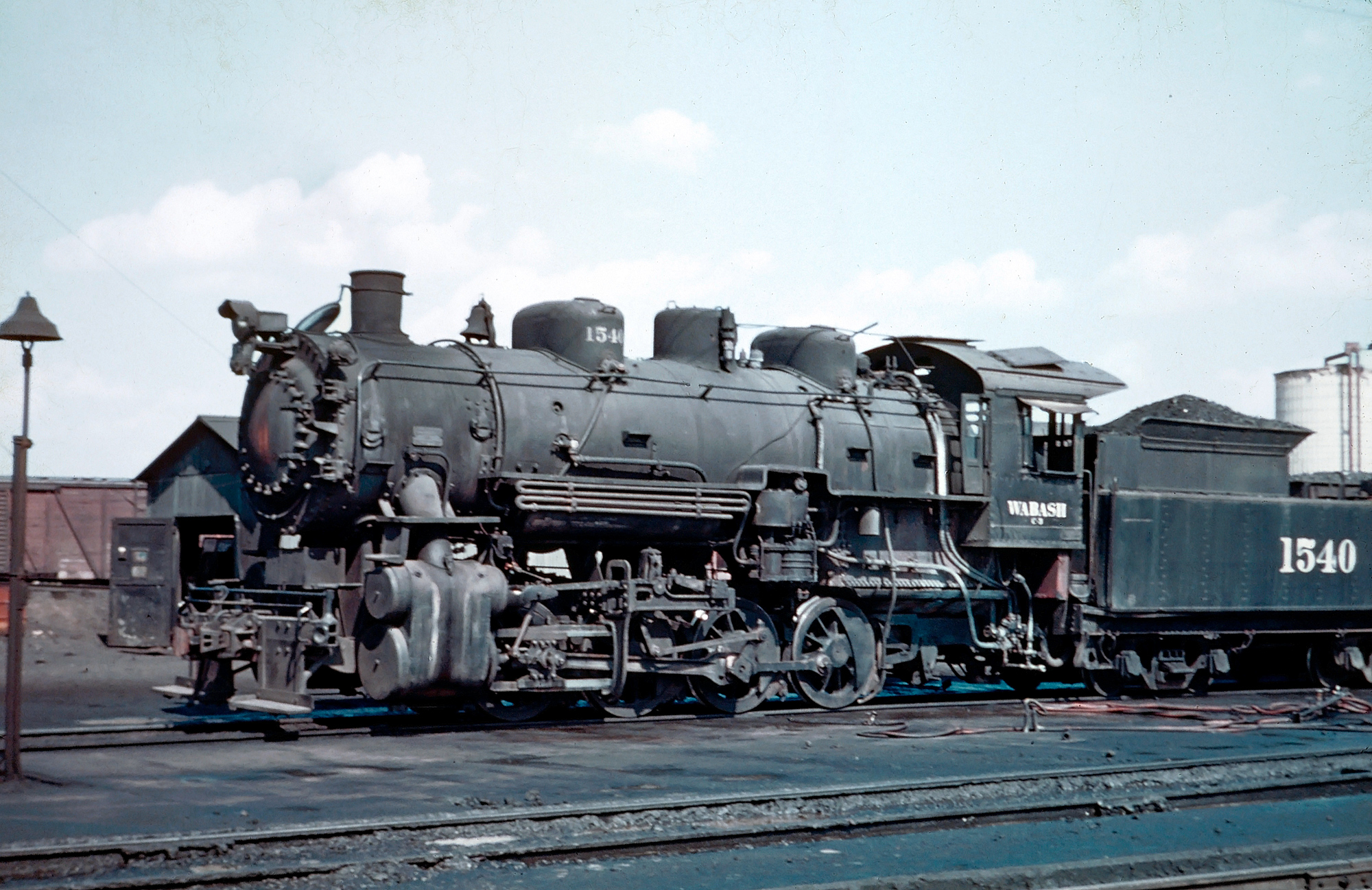 One of the Wabash's Class C-3 0-8-0 switchers, #1540, is seen here in Decatur, Illinois, circa 1950. Fred Byerly photo. American-Rails.com collection.
Dual Service
| Road Number(s) | Class | Arrangement | Builder | Date Built/Notes |
|---|---|---|---|---|
| 253-254* | D-1 | 4-4-0 | W.H. Bailey | 12/1877-2/1878 |
| 18 ("Camilla") | D-2 | 4-4-0 | Mason | 8/1855 |
| 55 ("Maumee") | D-2 | 4-4-0 | Mason | 6/1866 |
| 238-240 | D-2 | 4-4-0 | Mason | 4/1867-5/1867 |
| 83-87, 90-91 | D-3 | 4-4-0 | Rogers | 7/1871 |
| 257-265 | D-3 | 4-4-0 | Rogers | 2/1868-9/1869 |
| 273-288 | D-3 | 4-4-0 | Rogers | 2/1870-4/1870 |
| 368-370 | D-3 | 4-4-0 | Rogers | 5/1873 |
| 59-62, 64-68 | D-4 | 4-4-0 | Pittsburgh | 8/1869-3/1871 |
| 70, 72, 76 | D-4 | 4-4-0 | Pittsburgh | 4/1871-5/1871 |
| 186, 189-191 | D-4 | 4-4-0 | Pittsburgh | 7/1873-8/1873 |
| 173, 179-180 | D-5 | 4-4-0 | Schenectady | 8/1871 |
| 199 | D-6 | 4-4-0 | Cooke | 9/1873 |
| 98-100 | D-7 | 4-4-0 | Mason | 4/1872 |
| 163, 169-170 | D-7 | 4-4-0 | Mason | 4/1871-6/1871 |
| 201 | D-7 | 4-4-0 | Mason | 5/1872 |
| 241-244, 248-249 | D-7 | 4-4-0 | Mason | 5/1867-8/1867 |
| 359-363 | D-8 | 4-4-0 | Hinkley | 1880 |
| 181, 183 | D-9 | 4-4-0 | Pittsburgh | 8/1873 |
| 46 ("John Rose") | D-10 | 4-4-0 | Mason | 7/1863 |
| 155-156 | D-10 | 4-4-0 | Mason | 8/1870-9/1870 |
| 97, 188 | D-11 | 4-4-0 | Pittsburgh | 1/1872-7/1873 |
| 73, 75, 410 | D-12 | 4-4-0 | Wabash Railway | 1879 |
| 1082 | D-12 | 4-4-0 | Rome | 1885 |
| 88-89, 20, 167 | D-12 | 4-4-0 | Wabash, St. Louis & Pacific | 1885-1886 |
| 230 ("Hercules") | D-13 | 4-4-0 | Schenectady | 9/1860 |
| 232 ("US Grant") | D-13 | 4-4-0 | Schenectady | 1/1865 |
| 49/1049, 53/1053 | D-14 | 4-4-0 | Wabash Railway | 1878-1879 |
| 245/1245 | D-15 | 4-4-0 | Wabash Railway | 1879 |
| 226-227, 231 | D-16 | 4-4-0 | Schenectady | 3/1872 |
| 294, 296, 298-303 | D-17 | 4-4-0 | Rhode Island | 7/1872 |
| 304-311 | D-18 | 4-4-0 | Baldwin | 1/1877-7/1877 |
| 140, 142 | D-19 | 4-4-0 | Cooke | 1866 |
| 164 | D-19 | 4-4-0 | Mason | 4/1871 |
| 10, 237, 6, 251 | D-20 | 4-4-0 | Wabash, St. Louis & Pacific | 1883-1887 |
| 151 | D-21 | 4-4-0 | Rome | 1885 |
| 152 | D-21 | 4-4-0 | Wabash Railway | 1879 |
| 38, 42, 1050, 51, 52, 77 | D-22 | 4-4-0 | Wabash, St. Louis & Pacific | 1879-1880 |
| 125-129, 31, 132, 206 | D-22 | 4-4-0 | Wabash, St. Louis & Pacific | 1880-1881 |
| 124, 130-131, 12-14, 63 | D-22 | 4-4-0 | Wabash, St. Louis & Pacific | 1883-1884 |
| 69, 71, 93-94, 96, 139 | D-22 | 4-4-0 | Wabash, St. Louis & Pacific | 1884 |
| 92 | D-22 | 4-4-0 | Rome | 1885 |
| 153, 1185, 154, 184, 1195 | D-22 | 4-4-0 | Wabash, St. Louis & Pacific | 1885-1886 |
| 200, 1030-1031,150 | D-22 | 4-4-0 | Wabash, St. Louis & Pacific | 1861-1887 |
| 182, 74, 19, 161, 176, 1032 | D-22 | 4-4-0 | Wabash, St. Louis & Pacific | 1887-1889 |
| 3, 1 | D-22 | 4-4-0 | Moberly Shops | 1889-1890 |
| 12 | D-22 | 4-4-0 | Wabash Railroad | 1891 |
| 324, 326, 328-340 | D-23 | 4-4-0 | Rogers | 6/1880-7/1880 |
| 364-365, 466 | D-24 | 4-4-0 | Hinkley | 1880-1881 |
| 403-406, 467-468 | D-25 | 4-4-0 | Manchester | 8/1880-3/1881 |
| 471, 473, 475-476 | D-25 | 4-4-0 | Manchester | 6/1881-9/1881 |
| 564-568, 1569, 570 | D-26 | 4-4-0 | Rhode Island | 3/1882-5/1882 |
| 1571-1573, 574, 1575 | D-26 | 4-4-0 | Rhode Island | 5/1882-10/1882 |
| 262-265 | D-27 | 4-4-0 | Wabash | 1894 Rebuilds (D-26) |
| 342-344, 394 | D-28 | 4-4-0 | Rhode Island | 1/1880-2/1880 |
| 579 | D-28 | 4-4-0 | Rhode Island | 12/1879 |
| 174, 118, 177 | D-29 | 4-4-0 | Fort Wayne Shops | 2/1892-8/1892 |
| 214, 216, 224 | D-29 | 4-4-0 | Moberly Shops | 1/1892-9/1892 |
| 175, 325, 327 | D-29 | 4-4-0 | Springfield Shops | 12/1891-8/1892 |
| 411-422 | D-29 | 4-4-0 | Rhode Island | 10/1892-11/1892 |
| 651 | D-30 | 4-4-0 | Springfield Shops | 3/1899 |
| 652-654 | D-30 | 4-4-0 | Rhode Island | 8/1899-9/1899 |
| 655-659 | D-30 | 4-4-0 | Baldwin | 7/1899-12/1899 |
| 255-256** | D-31 | 4-4-0 | Wabash Railroad | 11/1899 |
| 2800-2824 | M-1 | 4-8-2 | Baldwin | 1/1930-3/1930 |
* These two were rebuilt from former Havana, Rantoul & Eastern 4-4-0's, a narrow-gauge property leased to the Wabash, St. Louis & Pacific in May of 1880. They were rebuilt in 1888.
** Ex-Omaha & St. Louis Railroad
*** Some units were later renumbered 1868-1878, 1884, 1885-1887, 1889-1890, 1892, 1894, 1899-1901.
**** Ex-Wheeling & Lake Erie Railway.
***** Rebuilt from 2-6-2's (G-1).
****** Ex-Western Pacific.
This roster includes only those locomotives which the Wabash officially classified after 1897; not every single unit ever-operated is included (such as early predecessor examples, narrow-gauge locomotives, and subsidiaries).
Thanks to Donald Heimburger's book, "Wabash," for help regarding much of the above steam and diesel roster information.
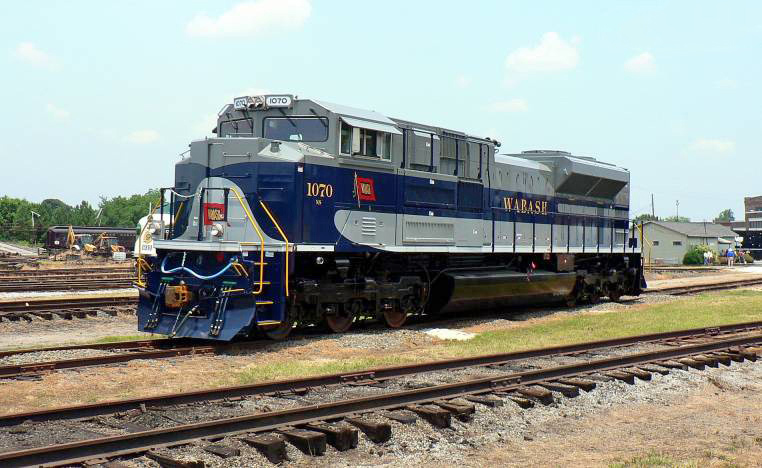 Norfolk Southern's Wabash heritage unit, SD70ACe #1070, at the North Carolina Transportation Museum in Spencer during July, 2012. Dan Robie photo.
Norfolk & Western Acquisition
The Wabash spent its final decade continuing to provide high quality freight service while angling to cut money-losing passenger trains wherever and whenever possible. As the industry found itself in increasingly uncertain times, particularly in the east, the Wabash suddenly realized its future was in doubt.
The 1950s proved a watershed as railroads struggled to sustain profitability due to increased competition, suffocating government regulation, and an inability to shed unprofitable branches and secondary lines.
Talks of merger sprang up here and there although it was the Pennsylvania and New York Central which made national headlines by announcing just such an intention in 1957. As part of this endeavor the PRR had to relinquish control of its Norfolk & Western interests, then working on a merger with the Nickel Plate Road.
In addition, all parties agreed to have the Wabash included within the N&W-NKP union, made official on December 1, 1960. As part of the deal the Wabash sold its interest in the Ann Arbor and officially joined the Norfolk & Western-Nickel Plate consortium at 12:01 AM on October 16, 1964.
The Wabash was a fascinating railroad with a fascinating culture and even more interesting history. It became widely recognized as a high-speed Midwestern artery with a highly diversified traffic base ranging from auto parts to produce, a trait for which it is remember today.
Photos
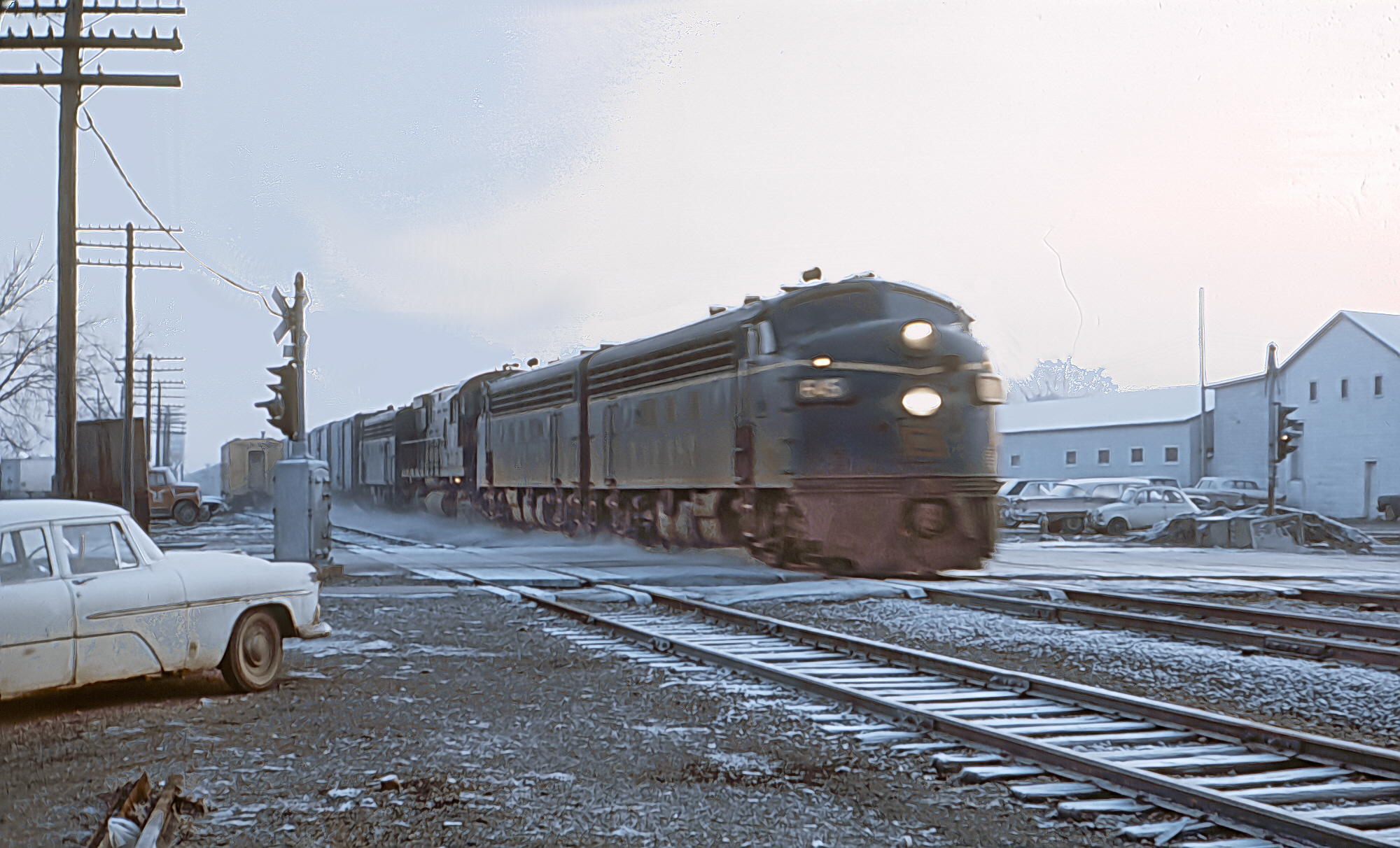 Wabash F7A #654 kicks up the snow as it leads a freight through the Chicago suburb of Oak Lawn, Illinois on December 31, 1964. Marty Bernard photo.
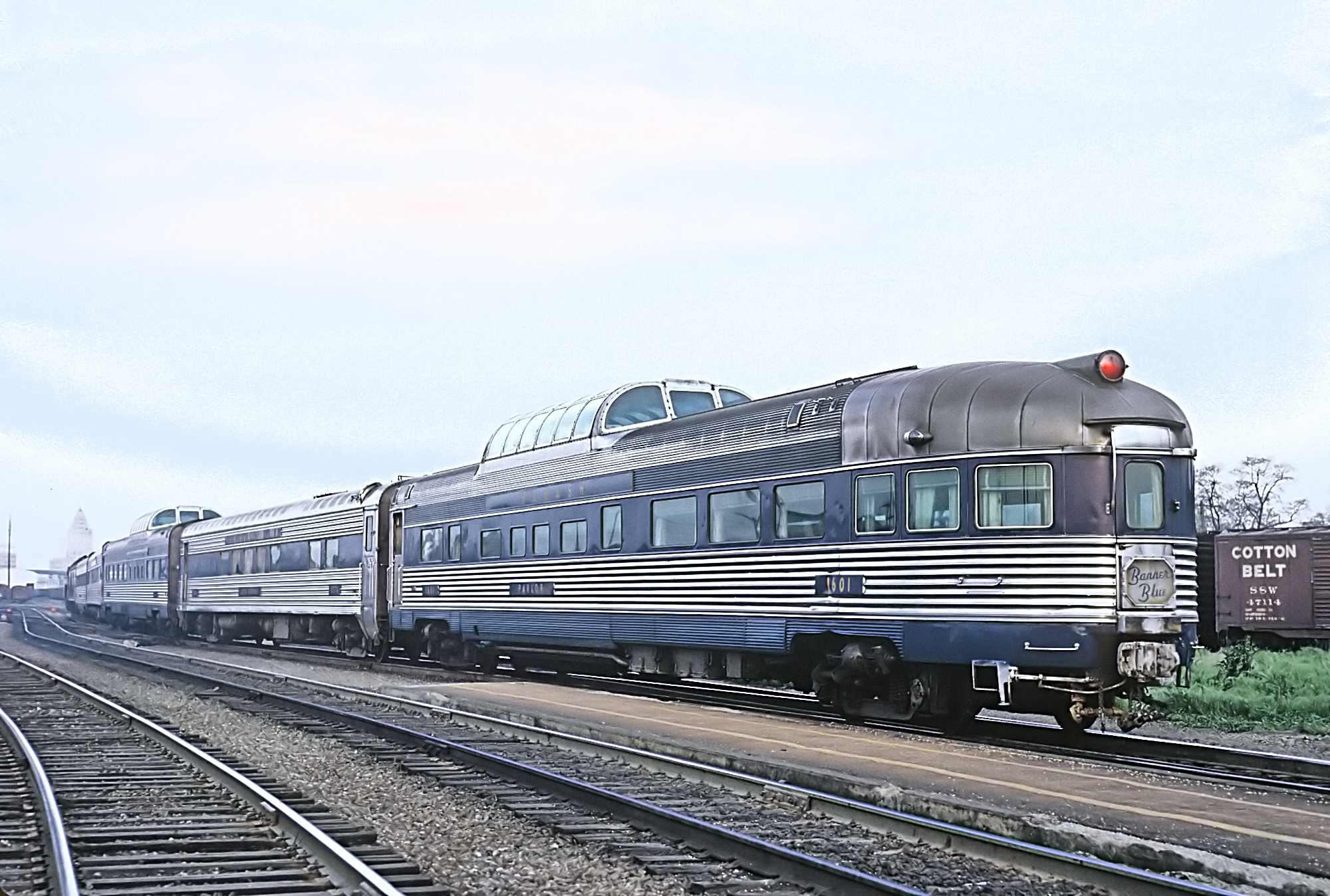 What was then Norfolk & Western's train 110, the domeliner "Banner Blue," departs from Decatur, Illinois on May 7, 1966. Bringing up the tail end of the train is parlor-observation #1601. Roger Puta photo.
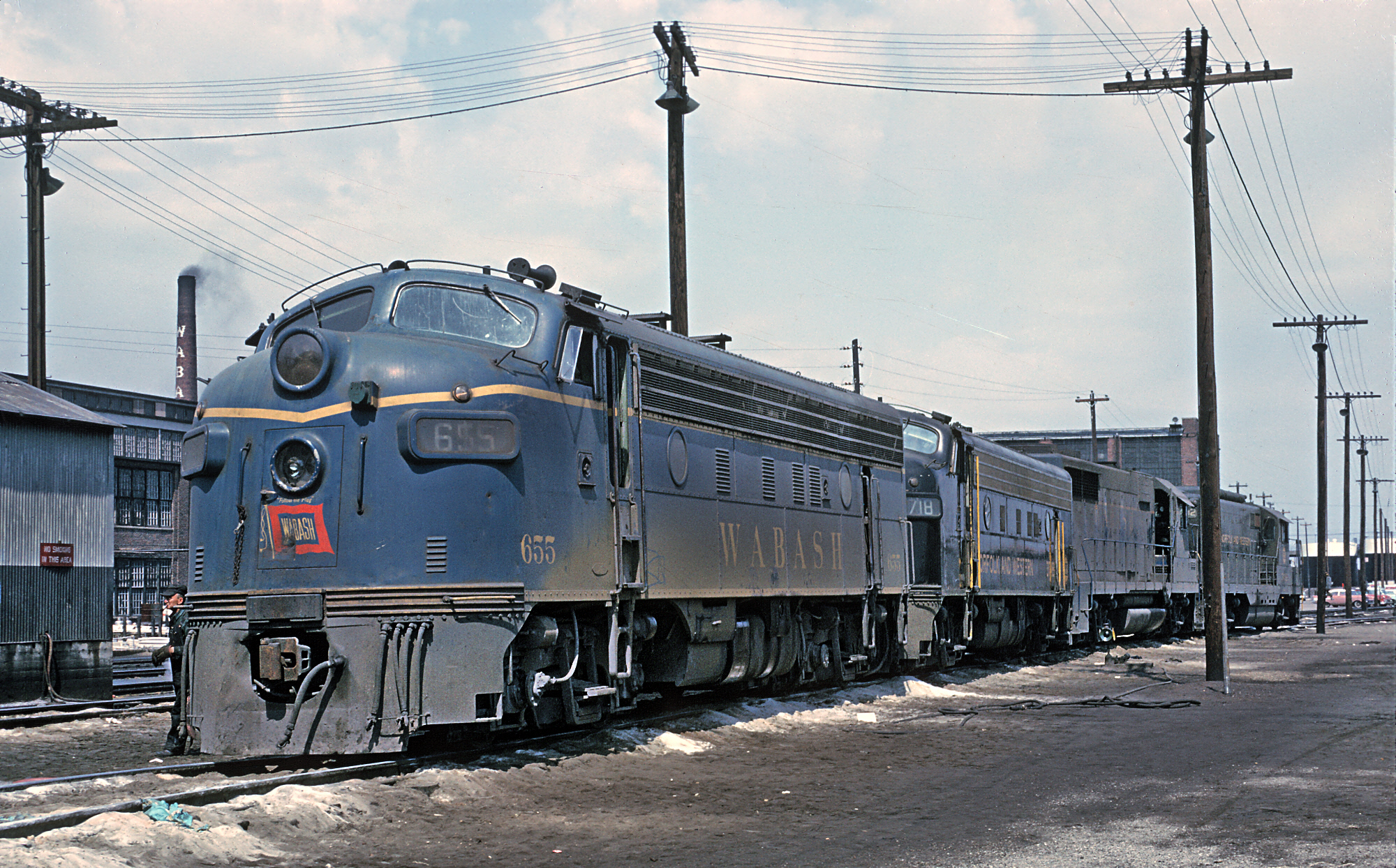 Former Wabash power, including F7A #655 and #3718, layover at the Decatur Shops a few years after the Norfolk & Western merger on May 7, 1966. Roger Puta photo.
Recent Articles


-
Maryland and Pennsylvania Railroad: Map, Roster, Logo
Sep 22, 26 12:14 AM
 Ma & Pa—Peach Bottom 1868, Maryland & Pennsylvania February 12 1901, Baltimore to York. Last steam November 29 1956. York Railway December 1 1999.
 -
New York Dinner Train Rides (2026): A Complete Guide
Sep 21, 26 11:59 PM
 2026 New York dinner train—Adirondack Dinner Train from Utica, 6 p.m., about 3 hours, First Class from $139. Arcade & Attica mystery dinner is served at Curriers. Confirm on the railroad.
 -
California Dinner Train Rides (2026): A Complete Guide
Sep 21, 26 11:49 PM
 2026 California dinner trains—Napa Valley Wine Train plated meals, River Fox brunch and mystery dinner, Roaring Camp barbecue at camp. Confirm on each railroad.
 -
Roaring Camp Starlight Dinner Party (2026)
Sep 21, 26 11:33 PM
 2026 Roaring Camp Starlight Dinner Party—Beach Train from the Santa Cruz Boardwalk, barbecue at Felton, ride back after dark. Confirm on roaringcamp.com.
 -
Long Island Rail Road Steam Locomotives: History, Roster & Photos
Sep 21, 26 11:29 PM
 Long Island steam—G5s 20–50, H10s 101–119, last steam at Hicksville October 8, 1955. Post-1898 class roster.
 -
Long Island Rail Road Diesel Roster: All-Time
Sep 21, 26 11:24 PM
 Long Island diesel—boxcab 401 in 1925, FM C-Liners, RS-3s, C-420s, GP38-2s, DE30AC and DM30AC. All-time roster with serials and orders.
 -
Long Island Rail Road: Map, History, Pictures, Logo
Sep 21, 26 08:27 PM
 Long Island Rail Road—Brooklyn & Jamaica 1836, Greenport 1844, Pennsylvania control 1900, Penn Station 1910. MTA since 1968. Steam and diesel rosters.
 -
Oregon Coast Scenic Railroad (2026): Sunset Dinner and Moonlight
Sep 21, 26 02:40 PM
 2026 Oregon Coast Scenic does not post the old four-course Sunset Dinner. The evening ride is the 21+ Moonlight Excursion from Garibaldi, with pre-ordered sandwiches. Confirm on oregoncoastscenic.org.
 -
Adirondack Dinner Train (2026): Dates, Tickets & What to Expect
Sep 21, 26 01:38 PM
 2026 Adirondack Dinner Train—Utica Union Station, 6 p.m., about 3 hours to Remsen. First Class from $139. Chef Patrick O’Connor. Confirm on adirondackrr.com.
 -
Lehigh Valley Steam Locomotives: History, Roster & Photos
Sep 21, 26 01:31 PM
 Lehigh Valley steam—Camelback Consolidations, 2-10-2s, K-class Pacifics, six Mountains, Wyoming 4-8-4s. Post-1900 roster after Drury. Last steam September 14, 1951.
 -
Lehigh Valley Diesel Roster: All-Time
Sep 21, 26 01:23 PM
 Lehigh Valley diesel—boxcabs 1926, FTs 1945, F3/F7, FA/PA, C628 Snowbirds, GP38-2s, U23Bs. All-time roster with serials and orders. Last steam September 14, 1951.
 -
Lehigh Valley Railroad: Map, Roster, Logo, History
Sep 21, 26 01:09 PM
 Lehigh Valley—DLS&S 1847, named January 7 1853, Mauch Chunk–Easton September 12 1855. Route of the Black Diamond. Jersey City–Buffalo. Conrail April 1 1976.
 -
Wisconsin Great Northern Dinner Train (2026)
Sep 21, 26 12:47 PM
2026 Wisconsin Great Northern dinner train—Trego, $105, Namekagon River. January 8–31 and May 5–December 17. Confirm on spoonertrainride.com. -
Lehigh and New England Railroad: Map, Rosters, History
Sep 21, 26 12:33 AM
 Lehigh & New England—South Mountain & Boston 1873, named April 2 1895. Anthracite, cement, Maybrook. Last Camelbacks, Alco FAs. Voluntary shutdown October 31 1961.
 -
TVRM Chattanooga Dinner Train (2026): Dates, Tickets & What to Expect
Sep 21, 26 12:20 AM
 2026 TVRM Chattanooga Dinner Train Experience—Grand Junction, select Fri/Sat March 6–October 24, three-course, 2–3 hours, from $110. Confirm on tvrail.com.
 -
Lehigh and Hudson River Railroad: Map, Rosters, History
Sep 20, 26 11:55 PM
 Lehigh & Hudson River—Warwick Valley 1860, Railway April 1 1882. Easton–Maybrook bridge road, Alphabet Route, Alco RS-3s and C420s. Conrail April 1 1976.
 -
Royal Gorge First Class Dinner Train (2026)
Sep 20, 26 11:47 PM
 2026 Royal Gorge Route First Class Lunch & Dinner—Cañon City, about 2 hours, from $199+, 12+. Confirm on royalgorgeroute.com.
 -
GE "44-Tonner" Locomotives: Roster, Specs, History
Sep 20, 26 11:09 PM
 GE 44-ton switcher—90,000-pound rule, Caterpillar D17000 center-cab, Sept 4 1940 CB&Q 9103 through Oct 1956 Dansville & Mount Morris 1. Phases, serial roster, PRR 46.
 -
Strasburg Rail Road Dining (2026): Dinner on the Rails & Elegant Expre
Sep 20, 26 11:00 PM
2026 Strasburg Rail Road seated meals—Dinner on the Rails, Elegant Express, Valentine dinner. Lee E. Brenner diner. Confirm on strasburgrailroad.com. -
International-Great Northern Railroad: Map, History, Timetables
Sep 20, 26 10:43 PM
 International–Great Northern—Houston & Great Northern 1866, International Railroad 1870, merged Sept 30 1873. Palestine, Longview–Laredo, Gould, Missouri Pacific March 1 1956.
 -
Nevada Northern Taste of Italy Dinner Train (2026)
Sep 20, 26 03:25 PM
 2026 Nevada Northern Taste of Italy—adults-only multi-course Italian dinner, steam when healthy, East Ely. Sep. 19 gala listed. Confirm on nnry.com.
 -
Cape Cod Dinner Train (2026): Dates, Tickets & What to Expect
Sep 20, 26 02:53 PM
 Cape Cod Central Dinner Train—Hyannis, Buzzards Bay, and Falmouth. Four-course, 3–3½ hours, from $99.99. Confirm on capetrain.com.
 -
Erie Steam Locomotives: History, Roster & Photos
Sep 20, 26 11:55 AM
 Erie Railroad steam—Camelback 2-8-0s, 155 N-1 Mikados, 105 Berkshires, K-class Pacifics, Triplexes. Post-1900 roster after Drury. Last steam March 17, 1954.
 -
Erie Railroad Diesel Roster: All-Time
Sep 20, 26 11:47 AM
 Erie Railroad diesel—boxcabs 1926, FTs 1944, F3/F7, FA/PA, GP7/GP9, Baldwins, Limas. All-time roster with serials, orders, classes. Last steam March 17 1954. EL October 17 1960.
 -
Erie Railroad: Map, Passenger Trains, Logo, History
Sep 20, 26 11:44 AM
 Erie Railroad—New York & Erie 1832, Piermont–Dunkirk May 14 1851, six-foot then standard June 1880, Chicago 1883. High-and-wide fourth way. Erie Lackawanna October 17 1960.
 -
Colebrookdale Railroad Dining (2026): Secret Valley Dinner Train
Sep 20, 26 11:36 AM
 2026 Colebrookdale Railroad dinner in Boyertown—Secret Valley Dining Class, about 2 hours. Saturday evenings. Confirm on colebrookdalerailroad.com.
 -
Boone & Scenic Valley Wolf Dinner Train (2026)
Sep 19, 26 08:15 PM
 2026 Boone & Scenic Valley Wolf Dinner Train—Des Moines River valley, Bass Point Creek High Bridge, Union Pacific dining cars. Confirm on bsvrr.com.
 -
C&NW 4-6-2s 1617 & 1620: Minnesota 400 Yellow Jackets
Sep 19, 26 11:28 AM
 C&NW Class E Pacifics 1617 and 1620—Alco Schenectady 1917, yellow-and-green E-4-style shrouds 1941 for the Minnesota 400. Crews called them Yellow Jackets. Renumbered 617/620. Scrapped 1956.
 -
Erie Lackawanna Diesel Roster: All-Time
Sep 19, 26 10:13 AM
 Erie Lackawanna diesel—Erie and DL&W inheritance, GP35s, U25Bs, SD45/SDP45/SD45-2, U34CH. All-time roster with serials and orders. Conrail April 1 1976.
 -
Erie Lackawanna Railway: Map, History, Logo
Sep 19, 26 10:06 AM
 Erie Lackawanna Railway—Erie and DL&W, October 17 1960–March 31 1976. Von Willer, White revival, Dereco, Agnes, Conrail. High-and-wide Chicago main. Map, logo, what remains.
 -
"Empire State Express" (1941 Train): Timetables, Route, Consist
Sep 18, 26 10:59 PM
 NYC Empire State Express—George Daniels 1891 day train, 999’s 112.5 mph claim, Budd stainless streamliner December 7 1941, Cleveland and Detroit sections, diesels, 1967 name drop. Timetables, consist…
 -
New York Central 4-6-4s 5426 & 5429: Empire State Express Hudsons
Sep 18, 26 10:32 PM
NYC J-3a Hudsons 5426 and 5429—Alco 1937, Budd stainless shrouds 1941 for the Empire State Express. Pearl Harbor inaugural. Shrouds off by 1950. Neither preserved. -
"Stourbridge Lion" Locomotive: Facts, History, Photos
Sep 18, 26 10:27 PM
 Stourbridge Lion—Foster, Rastrick 0-4-0, first steam locomotive in the United States. Horatio Allen, Honesdale, August 8, 1829. Too heavy for D&H gravity track. Boiler in Baltimore; Colonie replic…
 -
Delaware & Hudson Steam Roster (Post 1900)
Sep 18, 26 10:01 PM
 Delaware & Hudson steam—Camelback 2-8-0s, Loree high-pressure compounds, Class K 4-8-4s, forty Challengers. Post-1900 class roster after Drury. Last steam July 21, 1953.
 -
Boston & Maine Steam Roster (Post 1900)
Sep 18, 26 02:57 PM
 Boston & Maine steam—B-15 Moguls, K-8 Consolidations, P-4 Lima Pacifics, T-1 Limas, R-1 Mountains. Post-1900 class roster after Drury. Last steam July 23, 1956.
 -
Boston & Maine Diesel Roster (All-Time)
Sep 18, 26 01:25 PM
 Boston & Maine diesel—boxcab 1100 1935, Flying Yankee 6000, FTs, E7s, BL2s, GP7/GP9, GP38-2s and GP40-2s. All-time roster. Last steam July 23, 1956.
 -
Mid-Continent Railway Museum Dining (2026)
Sep 18, 26 01:21 PM
 2026 Mid-Continent dining in North Freedom—select-date seated meals in luxury cars, reservations required. Pizza Limited June 28. Confirm on midcontinent.org.



%20at%20Decatur%2C%20Illinois%20during%20June%20of%201966.)


%20with%20a%20northbound%2Fwestbound%20passenger%20train%2C%20circa%201960.%20American-Rails.com%20collection.)

%2C%20one%20of%20the%20road's%20many%20switchers%20of%20this%20wheel%20arrangement%2C%20awaits%20its%20fate%20at%20the%20shops%20in%20Decatur%2C%20Illinois%20in%20late%201952.%20%20The%20locomotive%2C%20built%20by%20Baldwin%20in%20October%2C%201907%20(serial%2031865)%20was%20scrapped%20in%20April%2C%201953.%20%20Fred%20Byerly%20photo.%20%20American-Rails.com%20collection.)


