
- Home ›
- Diesel Locomotives ›
- PA
Alco "PA" Locomotives: Restoration, Specs, Engine, Rosters
Last revised: February 21, 2025
By: Adam Burns
Alco's PA series has often been regarded as the most beautiful and aesthetically pleasing diesel ever built. There is no doubt that when one combs the library of diesel designs over the years the PA at the very least ranks as one of the best ever purely on its aesthetics.
The model was designed for passenger service and meant to compete with the Electro-Motive's highly successful E series that had debuted some years earlier. Unfortunately, the PA never sold well for Alco as the original prime mover the builder employed was simply unreliable and problematic.
Initial sales proved promising but after these issues cropped up most shied away from later variants. Today, Doyle McCormack has successful restored former Santa Fe PA-1 #62-L into Nickel Plate Road #190. The locomotive lovingly brought back to life has since been sold (March, 2023) to Genesee Valley Transportation of Pennsylvania, which plans to use the locomotive in excursion service. Additionally, the shell of another former Santa Fe PA is being restored in Texas.
Photos
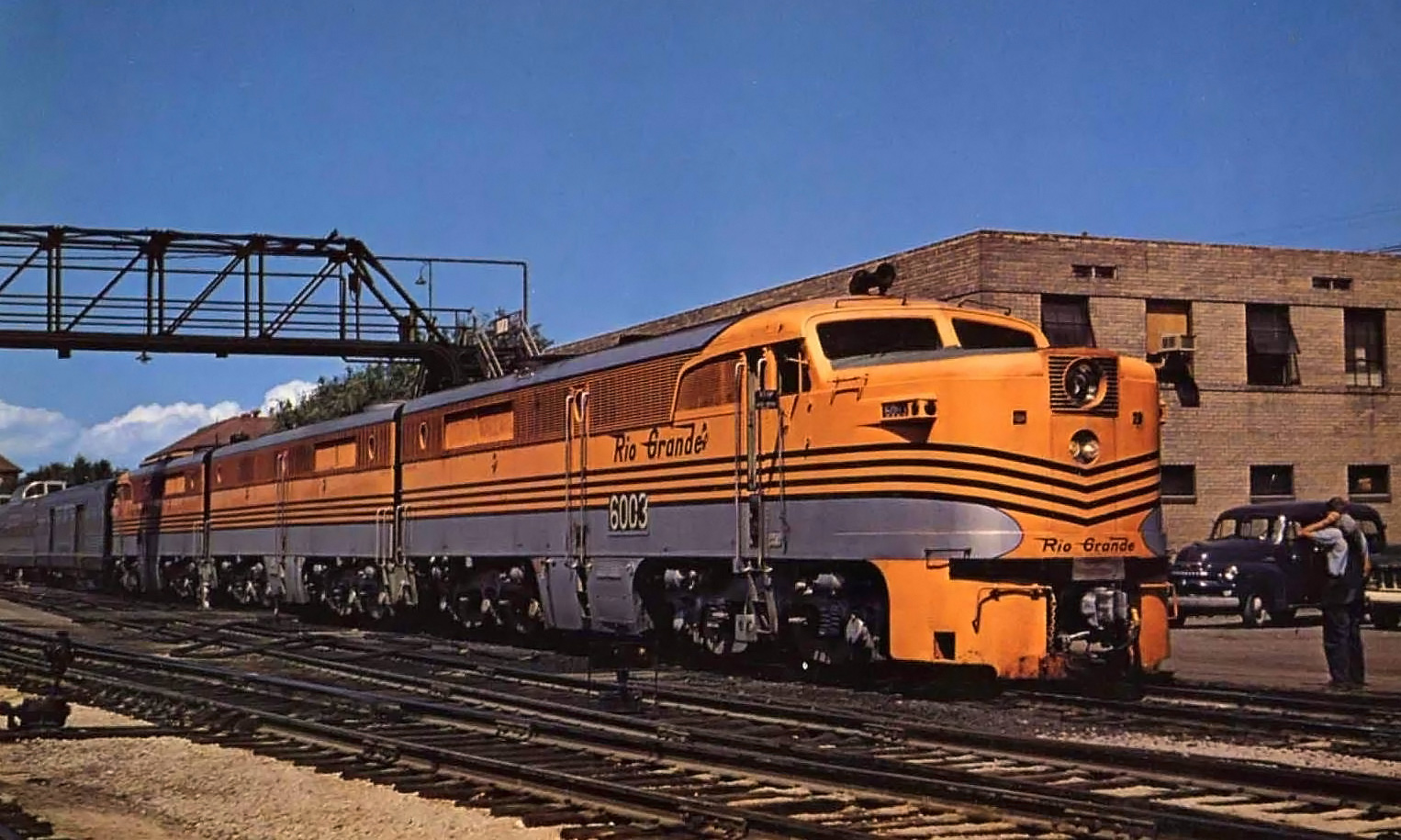 A sharp Rio Grande PA-PB-PA set has train #18, the eastbound "California Zephyr," at Grand Junction, Colorado on September 13, 1956. Jackson Thode photo.
Overview
The original Alco PA (the P stood for Passenger and A referred to the unit having a cab) was built right after World War II in 1946 and was rated at 2,000 horsepower (later upgraded models were carried 2,250 horsepower).
The model was also cataloged with cabless streamlined units known as PBs (or just "Bs" as most referred to them), which matched the PAs and increased the horsepower rating.
When the PA was released Alco was already in catchup mode racing to release a competing model to EMD's revolutionary E series that had originally debuted before World War II in 1937 beginning with the EA (Baltimore & Ohio, E1 (Santa Fe), and E2 (Union Pacific).
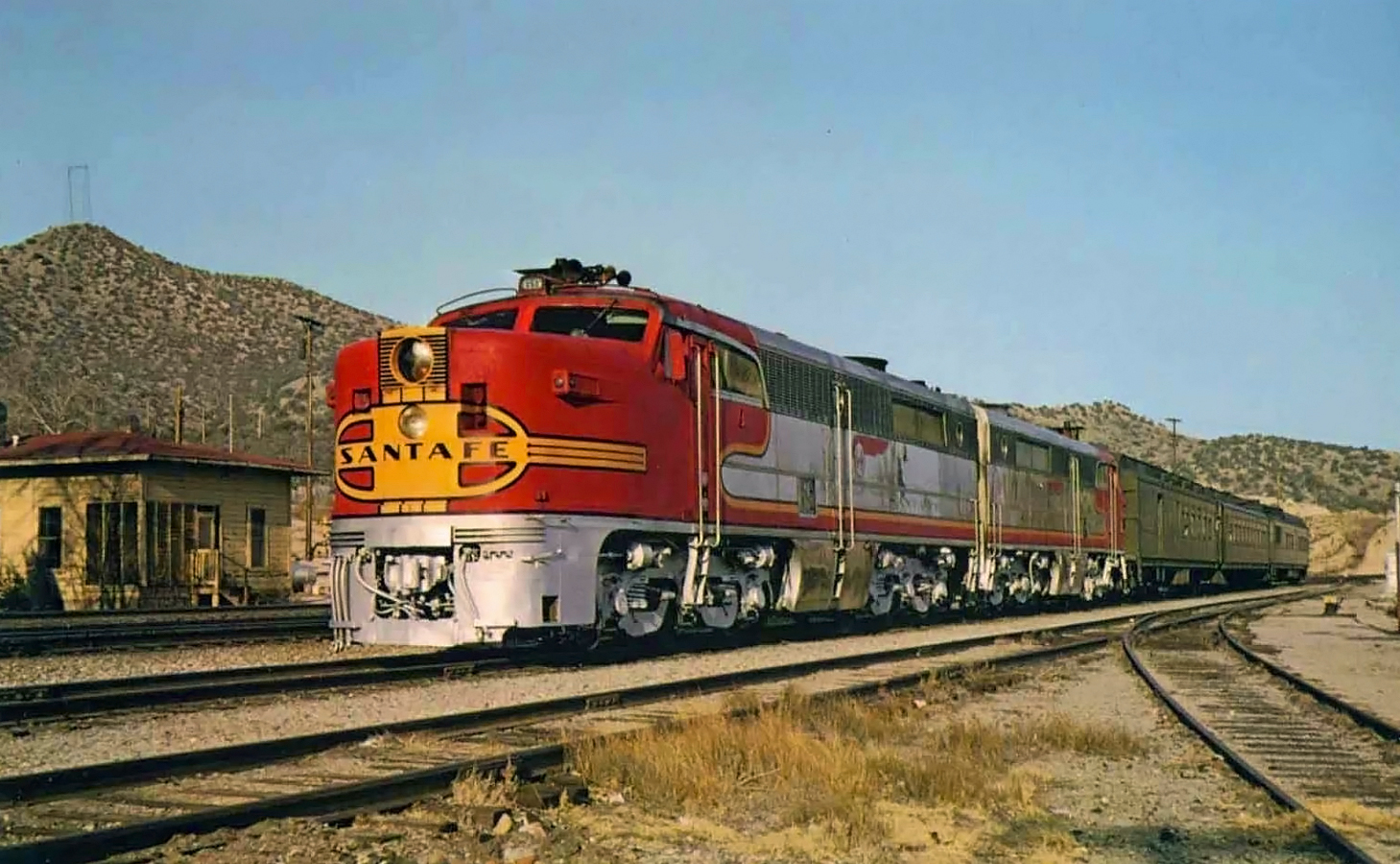 A pair of Santa Fe PA-1s, led by #69-L, are at the summit of Cajon Pass with a fan trip in early 1964. Roy Gabriel photo.
Wartime restrictions prevented Alco from any significant work during the war but worked feverishly to catch up after the conflict had ended. This, unfortunately, hurt the builder immensely staying level with Electro-Motive.
Working in conjunction with General Electric on the model, the company used GE's Ray Patten to give the locomotive a fine exterior appearance (Patten also designed the PA's freight counterpart, the FA) and he unveiled an incredibly stunning carbody.
However, Alco rushed the development of its new model 244 prime mover giving its engineers just a year after the war ended to work out any issues with engine.
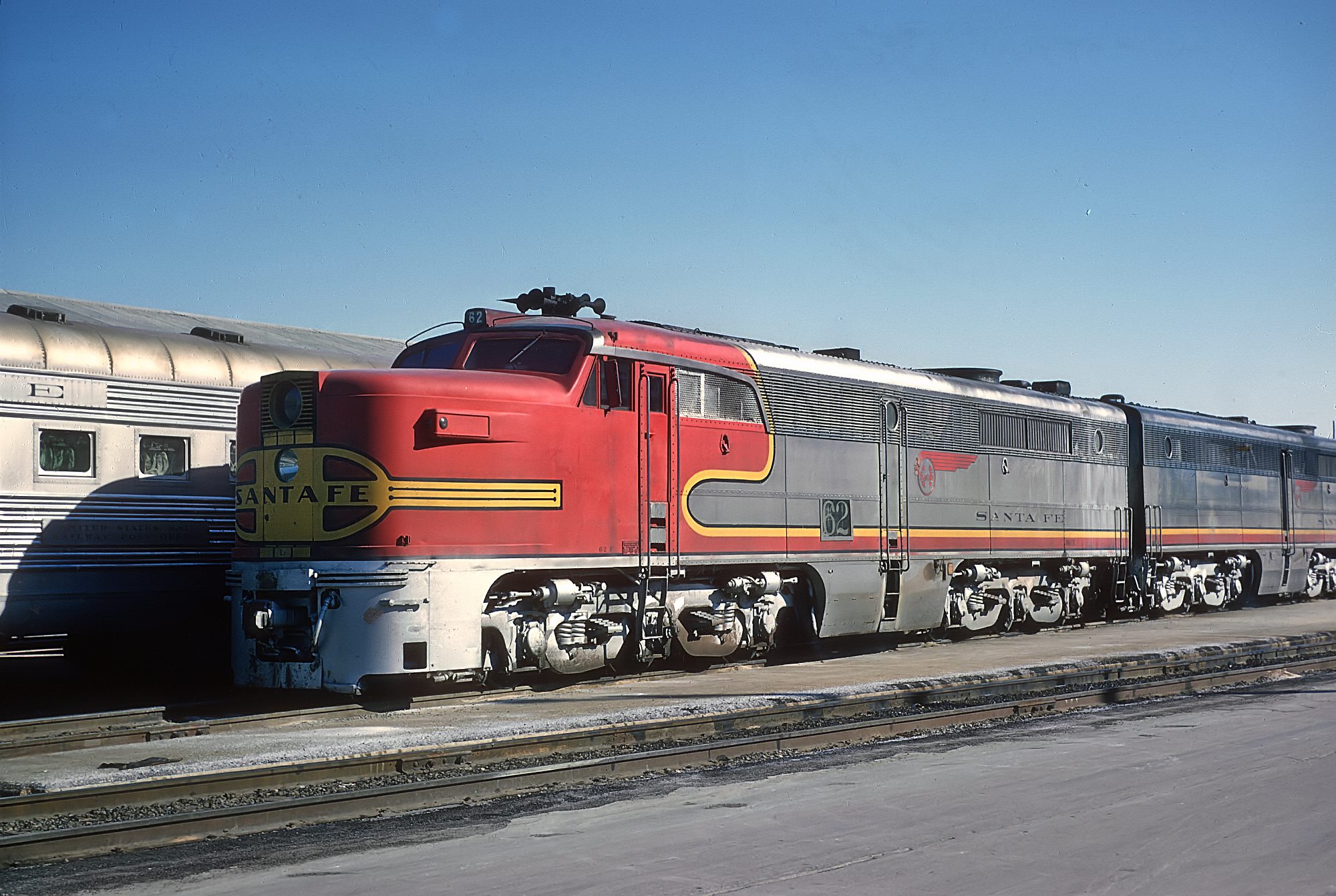 A pair of handsome Santa Fe PA-1s, with #62-L closest to the photographer, is seen here in Fort Worth, Texas in January, 1964. This unit would go on to become Delaware & Hudson #18 before being sent to Mexico. Today, it is restored as Nickel Plate Road #190 and owned by the Genesee Valley Transportation. Dennis E. Conniff III photo, Rick Burn collection.
Initially, the problems of the 244 were masked by Alco's then-excellent reputation as a locomotive builder.
The company had also used the 244, quite successfully, in the production of small switcher and road-switcher designs although the prime mover simply wasn't ready for heavy, main line applications.
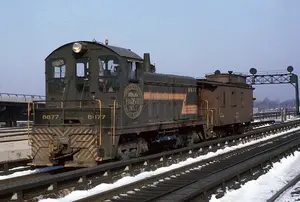
In June of 1946 the PA began testing on the Lehigh Valley clad in a beautiful demonstrator livery of maroon with silver trim with the combined GE/Alco livery adorned on the nose and carbody (the units were numbered 9077 and 9078).
The Santa Fe was immediately pleased with the new model and ordered twenty-eight PA-1s and sixteen PB-1s between September of 1946 and December of1948. Other railroads soon followed and Alco would eventually sell 170 total PA-1s and PB-1s.
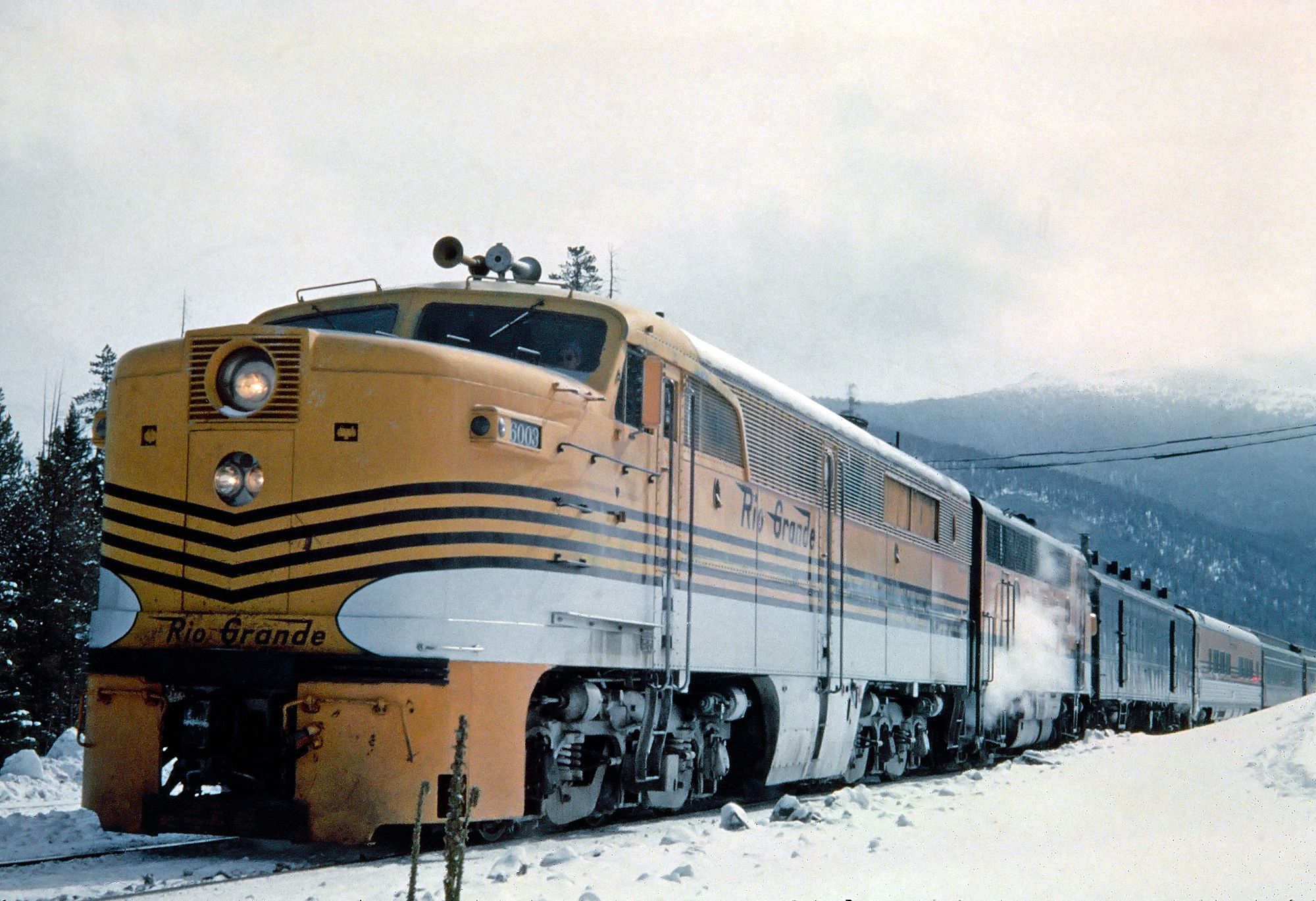 Rio Grande PA-1 #6003 and an F3A with the westbound "Yampa Valley" stopped at Winter Park, Colorado, circa 1965. American-Rails.com collection.
Reception
The PA-1 could produce 2,000 horsepower and provide 30,500 pound of continuous tractive effort using an A1A-A1A truck design (two outside powered axles with an unpowered center axle).
The locomotive was 65 feet, 8 inches long and its most stunning feature was its sweeping, streamlined nose and raked front windshields (the PA was nearly 10 feet longer than its FA counterpart).
As problems mounted with the PA-1 Alco rushed to correct the problem building an entirely new prime mover in the process, the model 251. This new engine proved much more reliable but was not available in time for the PA series.
Data Sheets
| Alco Class | 606-DL-319 |
| Entered Production | 9/19/1946 |
| Years Produced | 9/1946-11/1949 |
| Model Specification | DL-304/A/B |
| Engine | 244, V-16 |
| Turbocharger | General Electric RD1 |
| Horsepower | 2,000 |
| Carbody Styling | General Electric's Engineering Department |
| Length (Between Coupler Faces) | 65' 8" |
| Weight | 303,000 lbs. (Optional ballast to 319,000 lbs.) |
| Dynamic Brakes | Yes (Optional) |
| Trucks | A1A-A1A |
| Truck Type | Trimount |
| Wheelbase | 15' 6" |
| Wheel Size | 42" (40" Optional) |
| Traction Motors | GE 746A2 (4): Upgraded to GE 752 (4) with DL304A variant. |
| Traction Generator | GT566C1 |
| Gear Ratio | 64:19 (80 MPH), 62:21 (92 MPH), 64:23 (100 MPH), 60:23 (104 MPH), 58:25 (117 MPH) |
| Tractive Effort Rating | 30,500 lbs. at 20 MPH with 62:21 gearing. |
| Top Speed | 117 MPH |
| Alco Class | 606-DL-314 |
| Entered Production | 9/19/1946 |
| Years Produced | 9/1946-11/1949 |
| Model Specification | DL-305/A/B |
| Engine | 244, V-16 |
| Turbocharger | General Electric RD1 |
| Horsepower | 2,000 |
| Carbody Styling | General Electric's Engineering Department |
| Length (Between Coupler Faces) | 63' 6" |
| Weight | 300,000 lbs. (Optional ballast to 314,000 lbs.) |
| Dynamic Brakes | Yes (Optional) |
| Trucks | A1A-A1A |
| Truck Type | Trimount |
| Wheelbase | 15' 6" |
| Wheel Size | 42" (40" Optional) |
| Traction Motors | GE 746A2 (4): Upgraded to GE 752 (4) with DL304A variant. |
| Traction Generator | GT566C1 |
| Gear Ratio | 64:19 (80 MPH), 62:21 (92 MPH), 64:23 (100 MPH), 60:23 (104 MPH), 58:25 (117 MPH) |
| Tractive Effort Rating | 30,500 lbs. at 20 MPH with 62:21 gearing. |
| Top Speed | 117 MPH |
| Alco Class | 606-DL-319 |
| Entered Production | 3/31/1950 |
| Years Produced | 3/1950-12/1953 |
| Model Specification | DL-304C/D |
| Engine | 244, V-16 |
| Turbocharger | General Electric |
| Horsepower | 2,250 |
| Carbody Styling | General Electric's Engineering Department |
| Length (Between Coupler Faces) | 65' 8" |
| Weight | 303,000 lbs. (Optional ballast to 319,000 lbs.) |
| Dynamic Brakes | Yes (Optional) |
| Trucks | A1A-A1A |
| Truck Type | Trimount |
| Wheelbase | 15' 6" |
| Wheel Size | 42" (40" Optional) |
| Traction Motors | GE 752 (4) |
| Traction Generator | GT566D1 (Upgraded to model GT586 in DL-304D variant.) |
| Gear Ratio | 64:19 (80 MPH), 62:21 (92 MPH), 64:23 (100 MPH), 60:23 (104 MPH), 58:25 (117 MPH) |
| Tractive Effort Rating | 37,000 lbs. at 19 MPH with 62:21 gearing. |
| Top Speed | 117 MPH |
| Alco Class | 606-DL-319 |
| Entered Production | 3/31/1950 |
| Years Produced | 3/1950-12/1953 |
| Model Specification | DL-305C/D |
| Engine | 244, V-16 |
| Turbocharger | General Electric |
| Horsepower | 2,250 |
| Carbody Styling | General Electric's Engineering Department |
| Length (Between Coupler Faces) | 63' 6" |
| Weight | 300,000 lbs. (Optional ballast to 314,000 lbs.) |
| Dynamic Brakes | Yes (Optional) |
| Trucks | A1A-A1A |
| Truck Type | Trimount |
| Wheelbase | 15' 6" |
| Wheel Size | 42" (40" Optional) |
| Traction Motors | GE 752 (4) |
| Traction Generator | GT566D1 (Upgraded to model GT586 in DL-304D variant.) |
| Gear Ratio | 64:19 (80 MPH), 62:21 (92 MPH), 64:23 (100 MPH), 60:23 (104 MPH), 58:25 (117 MPH) |
| Tractive Effort Rating | 37,000 lbs. at 19 MPH with 62:21 gearing. |
| Top Speed | 117 MPH |
There has been confusion over the years with the so-called "PA-3" variant. It appears some railfans came up with this designation in reference to the PA-2/PB-2, DL-304D and DL-305D variants, that included upgraded engine components including:
- Water-Cooled Turbocharger (In place of the air-cooled design used on early versions.)
- New fuel injection system to reduce smoke emissions.
- Improvements to the exhaust manifold to improve its service life.
- Hardened crankshaft to reduce failures.
- Upgrade to GE's model GT586 traction generator.
According to John Kirkland's book mentioned above, Alco never cataloged a PA-3 model, referring only to the PA-1/PB-1 and PA-2/PB-2, along with their variants.
Interestingly, Alco initially never even cataloged a PA-2/PB-2. Instead, these were simply referred to by their PA-1/PB-1 model designation; DL-304C/D and DL-305C/D.
It was only after production ended that Alco subcategorized these as PA-2's/PB-2's. In addition, information came to light some 12 years after production had ended, in November, 1965, that Alco did indeed intend to produce a PA-3/PB-3 if the passenger market had warranted such.
These were to carry specifications DL-304E/DL-305E but, of course, never entered production.
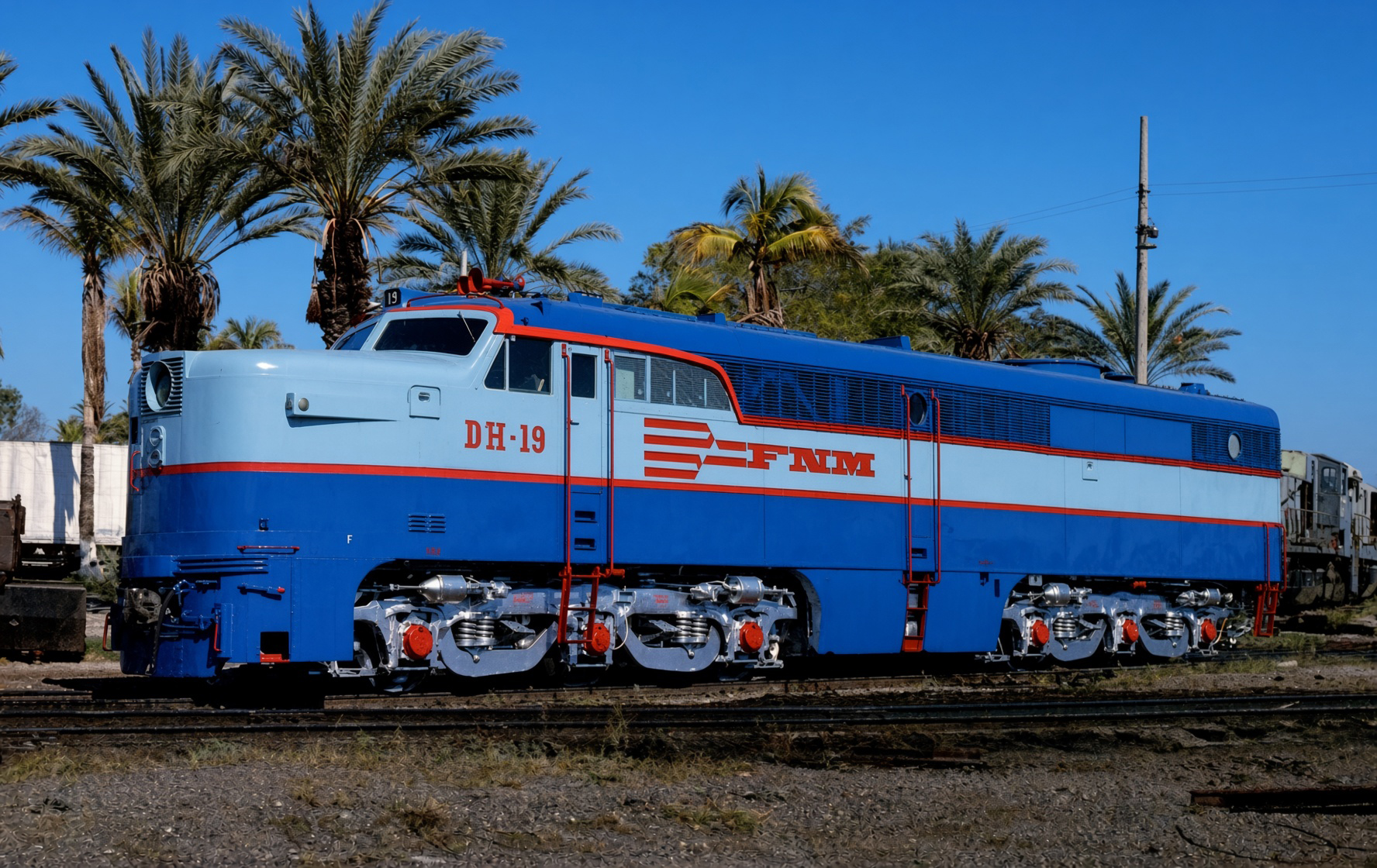 Ferrocarriles Nacionales de México (FNM) PA-4 'DH-19' (built as Santa Fe #54B, later renumbered 66L, and finally wore D&H #19 before being transferred to Meixco) is seen here at the Empalme, Sonora shops following her rebuild for "Star Service" (Servicio Estrella) on January 23, 1989. This premium service was launched in 1987 as FNM tried to upgrade long-distance passenger trains with Pullman sleeping cars, dining cars, observation/bar cars, air conditioning, and more personalized service — marketed as a “luxury adventure.” Named trains under the banner included El Tapatío, El Regiomontano, El Purépecha, El Jarocho, El Oaxaqueño, and others. John Benson photo.
After witnessing initial sales of 170 units with its first PA-1 design the later PA-2 models sold a combined total of 77 units by the time production had officially ended in December of 1953.
These numbers were a mere fraction when compared to EMD's E and F series, which together sold thousands by the time the models were no longer cataloged in the 1950s and early 1960s.
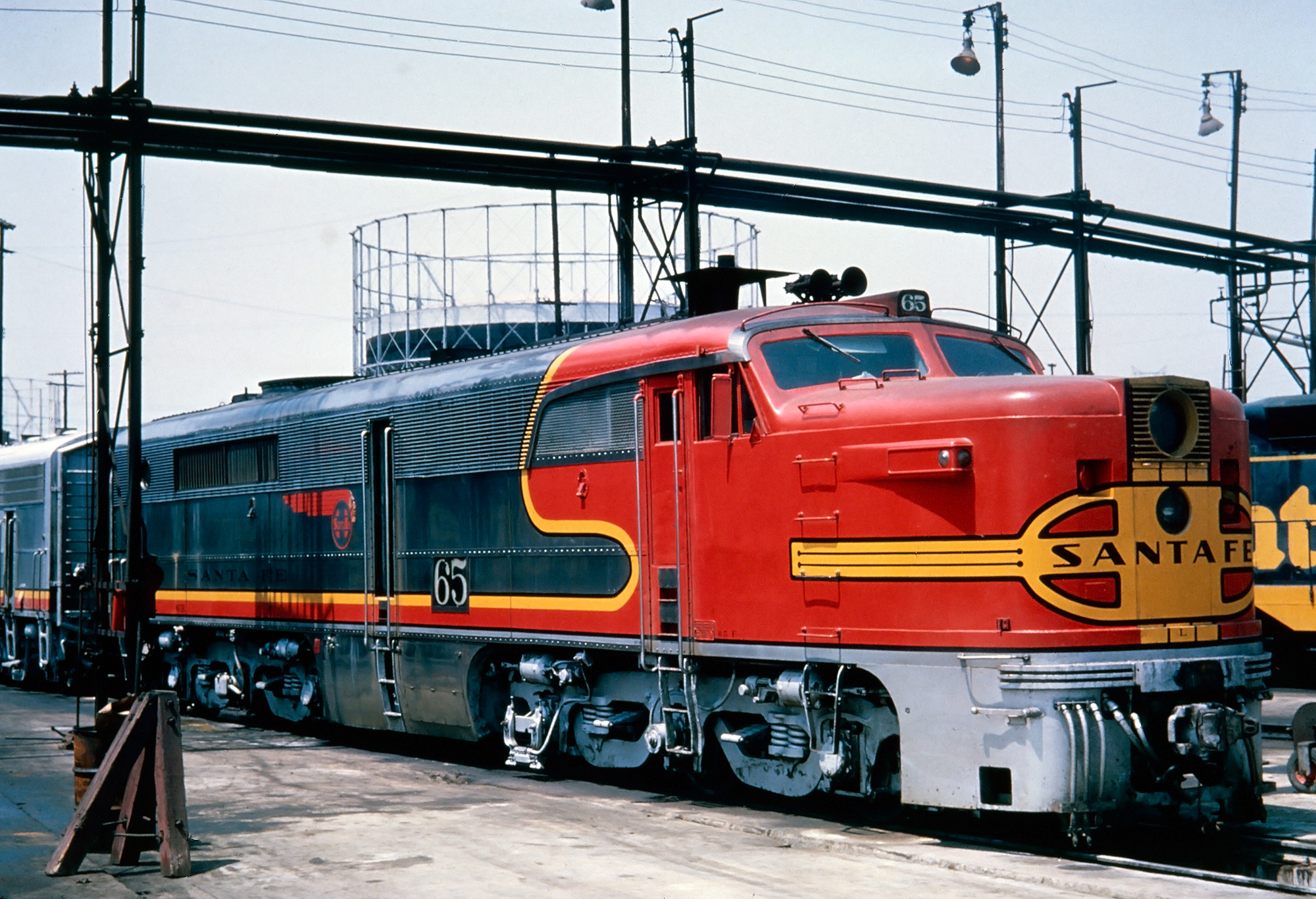
While Alco’s PA was unpopular with most railroads it gained instant celebrity status with the railfan community. A big reason for the model’s popularity, besides its good looks was the fact that it went extinct.
After the last PA ended its career with the Delaware & Hudson (whose PAs were originally owned by the Santa Fe) in 1978 and left for Mexico none remained on U.S. soil for nearly 25 years.
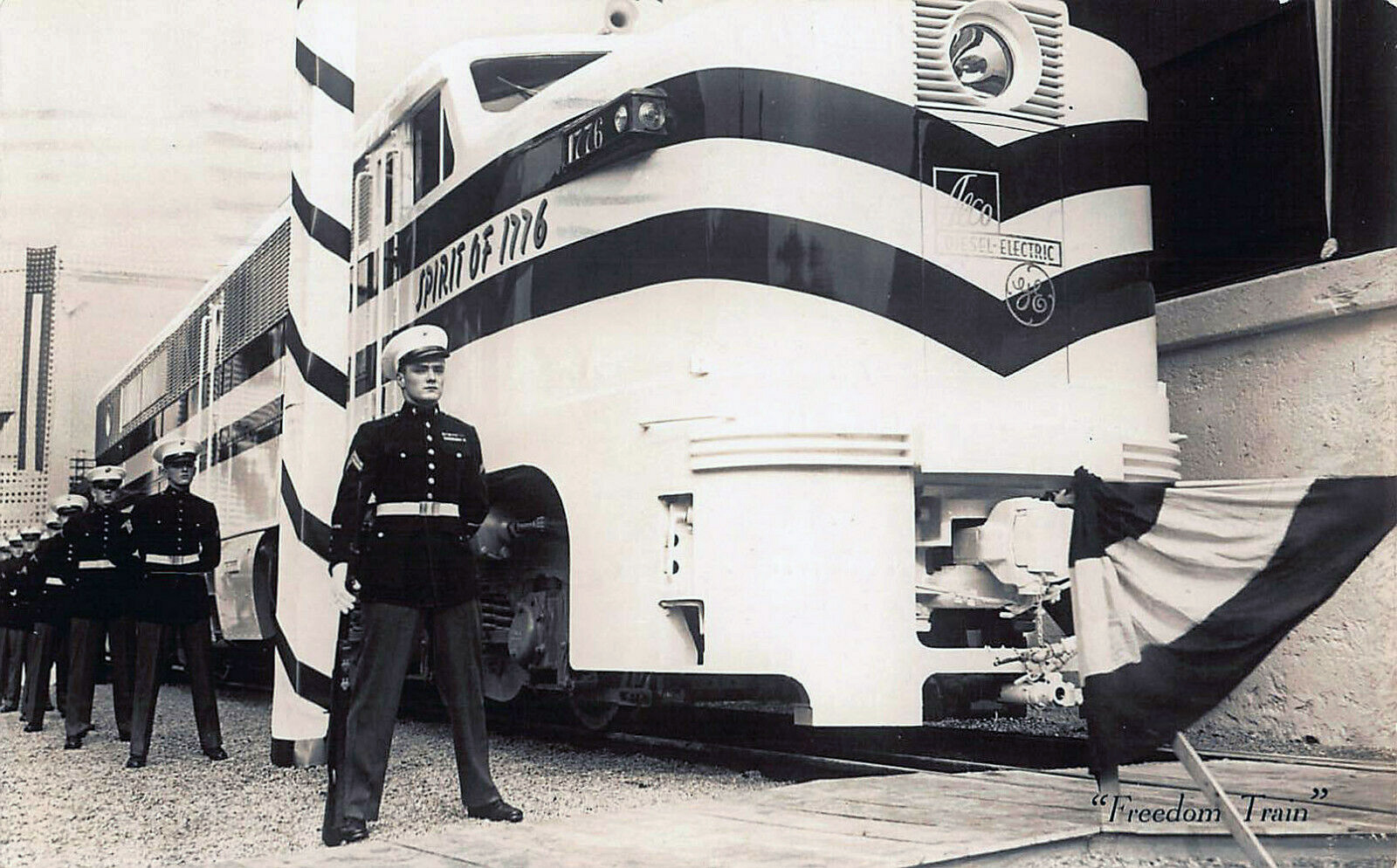 American Locomotive PA-1 #1776, the "Spirit Of 1776," built for 1947's "Freedom Train" is seen here on display at unknown location. The locomotive went on to become Gulf, Mobile & Ohio #292.
Nickel Plate 190
Then, two PAs made their way back in 2002; one was acquired by the Smithsonian for restoration and the other went to renowned locomotive restorationist Doyle McCormack.
McCormack spent nearly 20 years restoring what was originally Santa Fe #62-L into Nickel Plate Road's "Bluebird" passenger livery and given #190. Its prime mover was started for the first time in October, 2013 although the locomotive still required a bit of work to begin operating under its own power.
The restoration of NKP #190 (originally AT&SF #62-L) is a near miracle; it took several years just to negotiate the locomotives’ return to the United States and by that point nothing was left but the carbody shell.
Production Rosters
PA-1
Total Built = 169
| Owner | Original Road Number(s) | Serial Number(s) | Date Built |
|---|---|---|---|
| Alco (Freedom Train)* | 1776 | 74696 | 8/1947 |
| Alco (Demonstrator) | 9077, 9078** | 75791, 75792 | 12/1949 |
| Santa Fe | 51L, 51B | 75000, 75002 | 9/1946 |
| Santa Fe | 52L, 52B | 75003, 75005 | 12/1946 |
| Santa Fe | 53L, 53B-55L, 55B | 75315-75320 | 4/1947 - 6/1947 |
| Santa Fe | 56L, 56B | 74688, 75322 | 7/1947 |
| Santa Fe | 57L, 57B | 75321, 74689 | 7/1947 |
| Santa Fe | 58L, 58B | 74690, 74691 | 8/1947 |
| Santa Fe | 59L, 59B-62L, 62B | 76535-76542 | 10/1948 - 12/1948 |
| Santa Fe | 70L-73L | 76087-76090 | 2-3/48 |
| Denver & Rio Grande Western | 6001, 6003 | 74684, 74685 | 1/1947, 2/1947 |
| Denver & Rio Grande Western | 6011, 6013 | 74686, 74687 | 4/1947 |
| Erie Railroad | 850-854 | 76908-76912 | 4/1949 |
| Erie Railroad | 855-857 | 77103-77105 | 9/1949 |
| Erie Railroad | 858-859 | 77501-77502 | 9/1949 |
| Erie Railroad | 860-861 | 75793-75794 | 11/1949 |
| Gulf, Mobile & Ohio | 290-291 | 74682-74683 | 11/1946 - 12/1946 |
| Lehigh Valley | 601, 602 | 75458, 75459 | 3/1948 |
| Lehigh Valley | 603-606 | 75460-75463 | 4/1948 |
| Lehigh Valley | 607-612 | 75775-75780 | 4/1948 |
| Lehigh Valley | 613-614 | 75781-75782 | 5/1948 |
| Missouri-Kansas-Texas (Katy) | 151A, 151C | 76917-76918 | 4/1949 |
| Missouri-Kansas-Texas (Katy) | 152A, 152C | 76919-76920 | 5/1949 |
| Missouri Pacific | 8001-8008 | 77503-77510 | 10/1949 |
| New York Central | 4200-4201 | 75328-75329 | 1/1947 |
| New York Central | 4202 | 76086 | 1/1948 |
| New York Central | 4203 | 76307 | 12/1948 |
| New York Central | 4204-4207 | 76913-76916 | 4/1949 |
| New York, Chicago & St. Louis (Nickel Plate Road) | 180-186 | 75330-75336 | 12/1947 |
| New York, Chicago & St. Louis (Nickel Plate Road) | 187-190 | 75454-75457 | 3/1948 |
| New York, New Haven & Hartford | 0760-0769 | 76076-76085 | 8/1948 - 9/1948 |
| New York, New Haven & Hartford | 0770-0784 | 76312-76326 | 1/1949 - 3/1949 |
| New York, New Haven & Hartford | 0785-0786 | 76906-76907 | 3/1949 |
| Pennsylvania | 5750A-5754A | 74697-74701 | 10/1947 - 11/1947 |
| Pennsylvania | 5755A-5759A | 75323-75327 | 11/1947 - 12/1947 |
| St. Louis-Southwestern Railway (Cotton Belt) | 300-301 | 77511-77512 | 11/1949 |
| Southern Pacific | 6005A, 6005C | 75783-75784 | 5/1948 |
| Southern Pacific | 6006A, 6006C | 76072-76073 | 6/1948 |
| Southern Pacific | 6007A, 6007C | 76074-76075 | 7/1948 |
| Southern Pacific | 6008A, 6008C-6010A, 6010C | 77097-77102 | 8/49 |
| Texas & New Orleans (Southern Pacific) | 200A, 200B - 202A, 200B | 77085-77090 | 6/1949 |
| Texas & New Orleans (Southern Pacific) | 203A, 203B | 77091, 77092 | 7/1949 |
| Texas & New Orleans (Southern Pacific) | 204A, 204B - 205A, 205B | 77093-77096 | 8/1949 |
| Union Pacific | 604-607 | 76308-76311 | 1/1949 |
| Union Pacific | 994A-997A | 74692-74695 | 8/1947 |
| Wabash | 1020, 1020A | 77081-77082 | 5/1949 |
| Wabash | 1021, 1021A | 77083-77084 | 5/1949 |
* Became Gulf, Mobile & Ohio #292.
** Demonstrated in Canadian National colors. Later became Missouri-Kansas-Texas (Katy) PA-2s #59A and #59C.
PB-1
Total Built = 39
| Owner | Original Road Number(s) | Serial Number(s) | Date Built |
|---|---|---|---|
| Santa Fe | 51A, 52A | 75001, 75004 | 10/1946, 12/1946 |
| Santa Fe | 53A-56A | 75337-75340 | 4/1947 - 6/1947 |
| Santa Fe | 57A, 58A | 74704-74705 | 7/1947, 8/1947 |
| Santa Fe | 59A-62A | 76543-76546 | 10/1948 - 12/1948 |
| Santa Fe | 70A-73A | 76091-76094 | 2/1948 - 3/1948 |
| Denver & Rio Grande Western | 6002, 6012 | 74702-74703 | 2/1947, 4/1947 |
| New York Central | 4300, 4301 | 75605, 75606 | 1/1948 |
| New York Central | 4302, 4303 | 75610-75611 | 12/1948 |
| Pennsylvania | 5750B, 5752B | 75343-75344 | 10/1947 |
| Pennsylvania | 5754B, 5756B | 75345-75346 | 11/1947 |
| Pennsylvania | 5758B | 75347 | 12/1947 |
| Southern Pacific | 6005B-6007B | 75607-75609 | 5/1948 - 6/1948 |
| Southern Pacific | 6008B-6010B | 75786-75788 | 8/1949 |
| Union Pacific | 604B-606B | 75612-75614 | 1/1949 |
| Union Pacific | 607B | 75785 | 1/1949 |
| Union Pacific | 998B, 999B | 75341-75342 | 9/1947 |
PA-2
Total Built = 81
| Owner | Original Road Number(s) | Serial Number(s) | Date Built |
|---|---|---|---|
| Alco/Demonstrator ("More Power for America") | 8375 (became New York Central #4212) | 75790 | 3/1950 |
| Erie Railroad | 862, 863 | 78732-78733 | 4/51 |
| Missouri-Kansas-Texas (Katy) | 154A, 154C | 78349-78350 | 11/1950 |
| Missouri-Kansas-Texas (Katy) | 155A, 155C-157A, 157C | 78726-78731 | 3/1951 - 5/1951 |
| Missouri Pacific | 8009-8012 | 78135-78138 | 4/1950 |
| Missouri Pacific | 8013-8018 | 78734-78739 | 5/1951 - 6/1951 |
| Missouri Pacific | 8019-8022 | 79042-79045 | 5/1952 - 6/1952 |
| Missouri Pacific | 8023-8026 | 78208-78211 | 6/1952 |
| Missouri Pacific | 8027-8030 | 78957-78960 | 7/1952 - 8/1952 |
| Missouri Pacific | 8031-8036 | 80045-80050 | 8/1952 - 9/1952 |
| New York Central | 4208-4211 | 78204-78207 | 6/1950 |
| New York Central | 4213-4214 | 79040-79041 | 5/1952 |
| Southern Railway | 6900-6903 | 80846-80849 | 10/1953 - 11/1953 |
| Southern Railway | 6904-6905 | 81081-81082 | 12/1953 |
| Southern Pacific | 6019-6020 | 77999-78000 | 8/1950 |
| Southern Pacific | 6021-6022 | 78001-78002 | 9/1950 |
| Southern Pacific | 6023 | 78740 | 4/1952 |
| Southern Pacific | 6024-6027 | 79036-79039 | 4/1952 - 5/1952 |
| Southern Pacific | 6028-6033 | 80434-80439 | 5/1953 - 6/1953 |
| Southern Pacific | 6034 | 80443 | 9/1953 |
| Southern Pacific | 6035-6045 | 80835-80845 | 9/1953 - 10/1953 |
Export
| Owner | Original Road Number(s) | Serial Number(s) | Date Built |
|---|---|---|---|
| Paulista Railway (Brazil) | 900-902 | 80440-80442 | 10/1953 |
PB-2
| Owner | Original Road Number(s) | Serial Number(s) | Date Built |
|---|---|---|---|
| Alco ("More Power for America") | 8375B (became New York Central #4304) | 75789 | 3/1950 |
| Southern Pacific | 5918-5919 | 78219-78220 | 8/1950 - 9/1950 |
| Southern Pacific | 5920-5921 | 78212-78213 | 4/1952 |
| Southern Pacific | 5922-5924 | 80607-80609 | 5/1953 - 6/1953 |
Total Built = 8
PA-4
Total Built = 4
Morrison-Knudsen Rebuilds
| Owner | Original Road Number(s) | Serial Number(s) | Date Built | Heritage |
|---|---|---|---|---|
| Delaware & Hudson | 16 | 76535 | 10/1948 | Santa Fe 59L |
| Delaware & Hudson | 17 | 76537 | 11/1948 | Santa Fe 60L |
| Delaware & Hudson | 18 | 76541 | 12/1948 | Santa Fe 62L |
| Delaware & Hudson | 19 | 75318 | 5/1947 | Santa Fe 54B, later 66L |
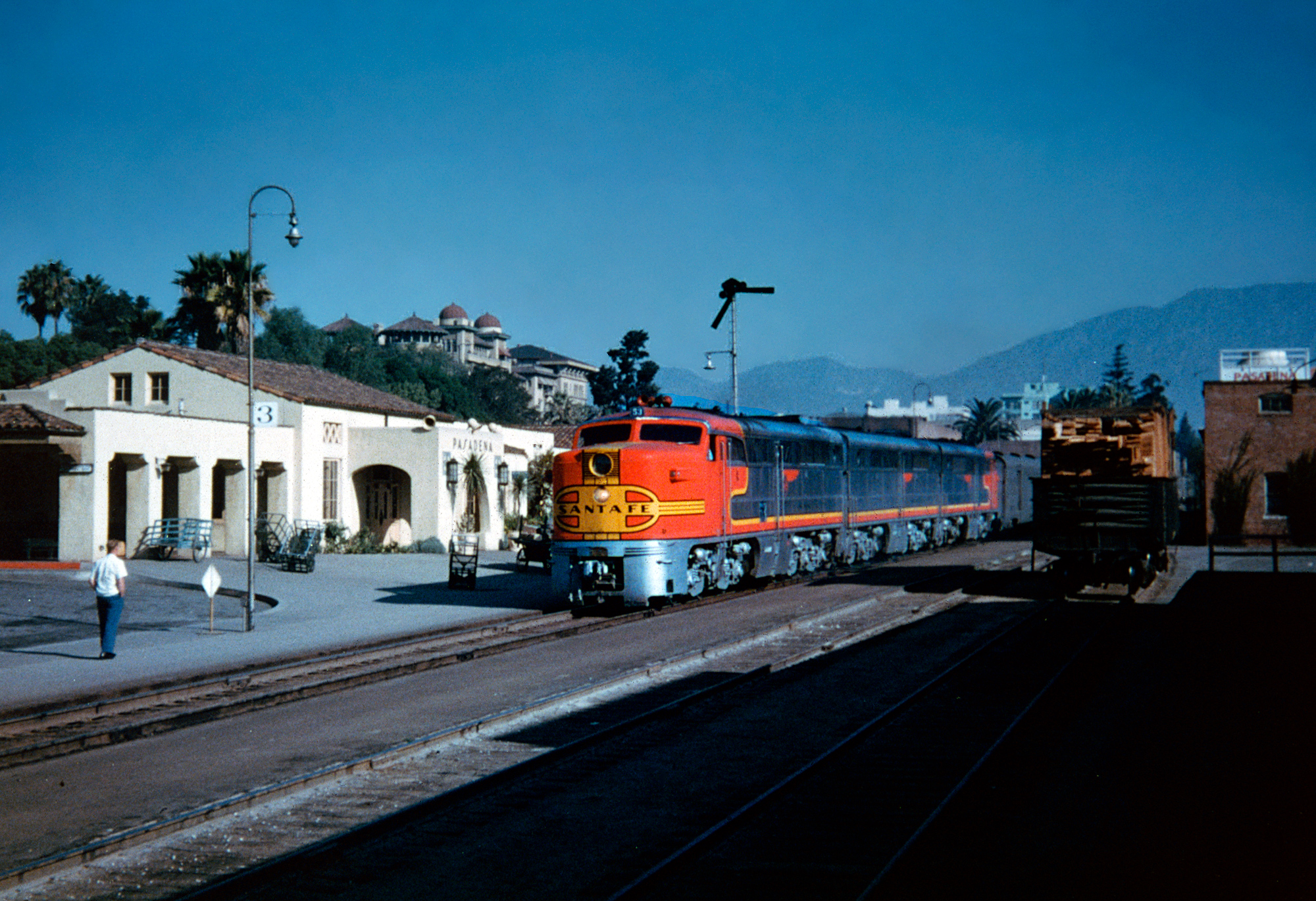 A handsome Santa Fe PA-PB-PA set has arrived in Pasadena, California with train #17, the westbound "Super Chief," in 1948. Russ Cole photo. American-Rails.com collection.
Preservation
While #190 does not have all original PA equipment since much of it no longer exists, many parts are of Alco origin. The Smithsonian's Alco PA, former AT&SF #59-L, has since been donated to the Museum of the American Railroad in Texas.
The goal now of the museum is to fully, cosmetically restore the locomotive (currently only an empty shell as well) back into its original AT&SF "Warbonnet" livery as #59-L. Later restoration efforts may also completely return the locomotive to operational status.
Like a lot of folks, I have always had a soft spot for Alcos, especially their PA so it will be great to see #190 and #59-L roll out of the shop for the final time either fully or cosmetically restored.
It was announced on March 2, 2023 that Nickel Plate #190 had been sold to Genesee Valley Transportation for operation on the company's Delaware-Lackawanna Railroad based in Scranton, Pennsylvania. Shop forces will inspect the PA and carry out whatever remaining work is needed to allow the locomotive to begin leading excursions along the former Delaware & Hudson line in Northeastern Pennsylvania.
In any event, more information about the PA series can be found above regarding which railroads purchased the model. Finally, while not listed there was also the Alco PA-4 model. This was simply a rebuild (by Morrison-Knudsen) of four former AT&SF PA-1s, all of which went to the Delaware & Hudson in the 1970s.
They were renumbered 16-18 and retrofitted with Alco's much more reliable model 251 prime mover. They paraded around the D&H system for years before being sold to a Mexican railway and are the two that returned to the States in the early 2000s.
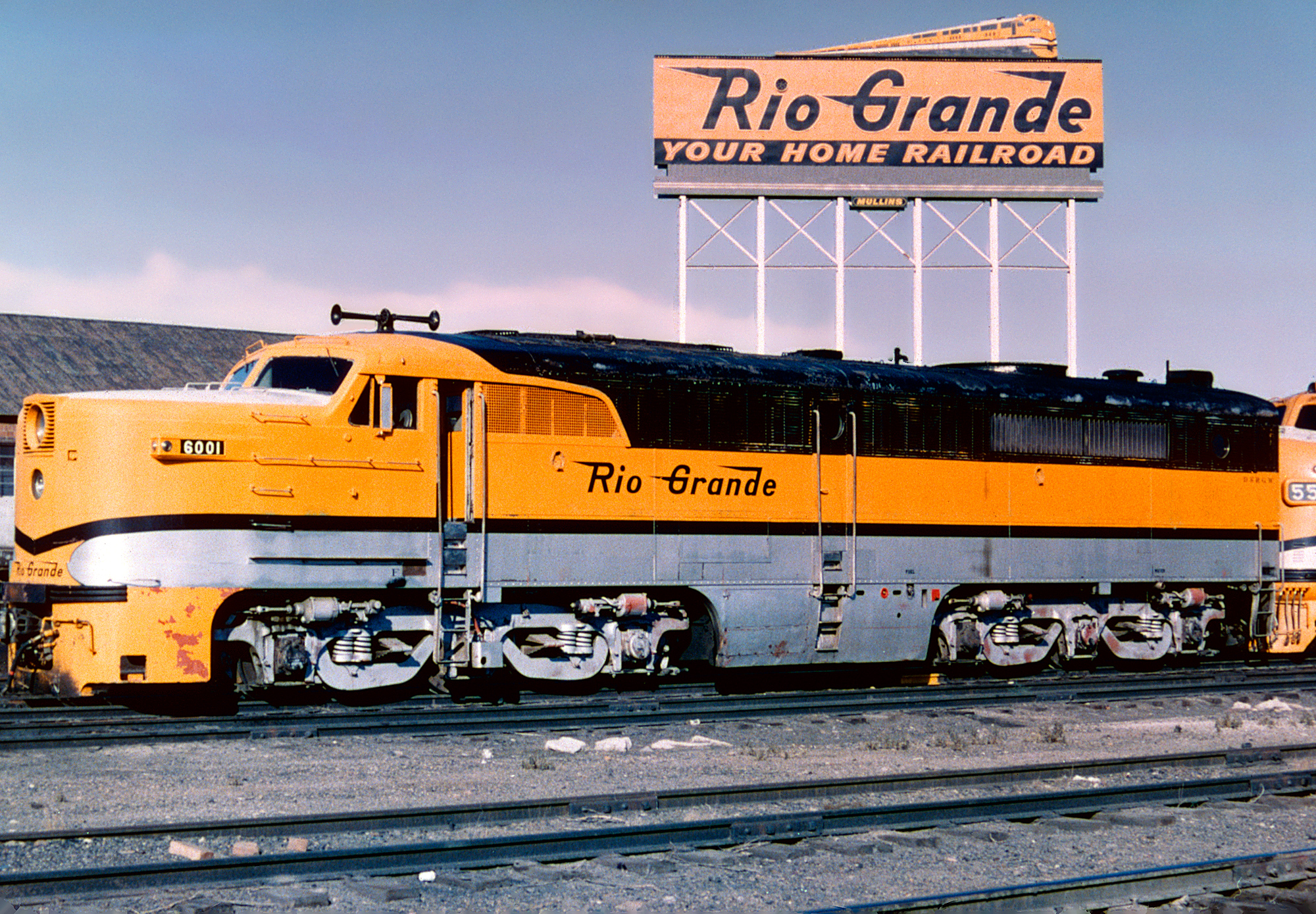 Rio Grande PA-1 #6001 in Denver, Colorado; July 1, 1961. Ed Fulcomer photo. American-Rails.com collection.
Sources
- Foster, Gerald. A Field Guide To Trains. New York: Houghton Mifflin, 1996.
- Kirkland, John F. Diesel Builders, The: Volume Two, American Locomotive Company And Montreal Locomotive Works. Glendale: Interurban Press, 1989.
- Pinkepank, Jerry A. Diesel Spotter's Guide. Milwaukee: Kalmbach Publishing Company, 1967.
- Schafer, Mike. Vintage Diesel Locomotives. Osceola: MBI Publishing, 1998.
Recent Articles


-
Milwaukee Road Diesel Roster: (All Time)
Oct 26, 26 01:44 PM
 All-time diesel roster of the Milwaukee Road. 1,208 locomotives, each frame once. Alco, Baldwin, Davenport, EMD, Fairbanks-Morse, General Electric, and Whitcomb, with builder numbers.
 -
Milwaukee Road Steam Roster (All-Time): Post-1900
Oct 26, 26 01:38 PM
 Milwaukee Road steam locomotives built since 1900. Prairies, Mikados, the N-class articulateds, the S-class 4-8-4s, and the Hiawatha Atlantics and Hudsons. Quantity column 1,974. Unique frames 1,951.
 -
Milwaukee Road: Map, Electrification, Logo, History
Oct 26, 26 01:20 PM
 The Milwaukee Road, from the Milwaukee & Mississippi of 1850 to the Pacific Coast Extension, the Hiawathas, and the Soo Line sale. Why Lines West should have stayed.
 -
Lake Superior & Ishpeming Railroad: Map, Roster, History
Oct 25, 26 11:38 PM
 Lake Superior & Ishpeming Railroad, reporting mark LSI, from the Marquette Range to the Presque Isle ore dock. The 1954 steam list and the diesels the railroad owned.
 -
Kansas City Southern Steam Roster (Built Since 1900)
Oct 25, 26 09:09 PM
 Steam locomotives of the Kansas City Southern built since 1900, with the Louisiana & Arkansas and the Texas company.
 -
Kansas City Southern Diesel Roster (Built New)
Oct 25, 26 11:46 AM
All-time diesel roster of the Kansas City Southern. E units, F units, Geeps, SD40s through SD70ACes, Fairbanks-Morse, Baldwin, Alco, and General Electric, with serials and order numbers. -
Kansas City Southern Railway: Map, Photos, History
Oct 25, 26 12:24 AM
 The Kansas City Southern, from Arthur Stilwell's Gulf line to Canadian Pacific Kansas City on April 14, 2023. Steam and diesel rosters, the Southern Belle, and the Louisiana & Arkansas.
 -
Indiana Harbor Belt Diesel Roster (All-Time)
Oct 25, 26 12:17 AM
 All-time diesel roster of the Indiana Harbor Belt. 202 locomotive frames, each counted once. NW2s, SW7s, SW1500s, road switchers, and gensets. Slugs and boosters are outside the count.
 -
Indiana Harbor Belt Steam Roster (Built Since 1900)
Oct 25, 26 12:13 AM
 Steam locomotives of the Indiana Harbor Belt built since 1900. 182 engines, each counted once. 0-6-0s, 2-6-0s, 0-8-0s, and 2-8-2s. The three U-4a switchers are three-cylinder Brooks engines of 1927.
 -
Indiana Harbor Belt Railroad: Map, Rosters, History
Oct 25, 26 12:00 AM
 Indiana Harbor Belt, the inner belt across the Calumet, from the East Chicago Belt of May 16, 1896. Renamed June 29, 1907. Still operating, headquarters Hammond. Steam roster is the companion, 182 loc…
 -
NYC's "P Motor" Electric Locomotives
Oct 24, 26 11:43 PM
 New York Central P motors: 22 Alco-GE 2-C+C-2 electrics, Cleveland Union Terminal 1050–1071, class P-1a. 3,030 hp one-hour on 3,000-volt DC catenary, then 660-volt third rail as P-2a and P-2b.
 -
Illinois Terminal Car Roster
Oct 24, 26 11:40 PM
 Illinois Terminal cars. Mainline motors, the 1948 streamliners, sleepers, Alton and Valley Division cars, express motors, and the line cars rebuilt from pull cars.
 -
Illinois Terminal Diesel Roster
Oct 24, 26 09:31 PM
 All-time Illinois Terminal diesels, 62 frames. Alco S-2s and RS-1s, EMD switchers, GP7s, SD39s, GP38-2s, and the two GP20s. Serial numbers from the 1989 roster.
 -
Illinois Terminal Electric Locomotives
Oct 24, 26 08:22 PM
 Illinois Terminal electric locomotives, 57 frames. Class A through Class D, the Decatur-built motors, and the battery locomotives. Class D is the same five Class C frames, rebuilt.
 -
Illinois Terminal Steam Roster
Oct 24, 26 07:37 PM
 Illinois Terminal steam locomotives, 36 frames. Baldwin Moguls, three Class 30 Mikados, Florida East Coast 0-8-0s, and 2-6-0 No. 21, the last fire on June 30, 1950.
 -
Illinois Terminal Railroad: Map, Roster, Photos, History
Oct 24, 26 07:32 PM
Illinois Terminal, McKinley's Illinois Traction System, from the Danville coal towns to St. Louis. The McKinley Bridge, the sleeping cars, the 1937 break with the power company, the 1948 streamliners… -
Southern Railway Diesel Roster (All-Time)
Oct 23, 26 11:00 PM
 All-time diesel roster of the Southern Railway. 2,505 locomotives in the system number series, from the 1939 demonstrator FT to GP50s and B30-7A1s. Serials included.
 -
Illinois Central Diesel Roster (All-Time)
Oct 23, 26 04:06 PM
 Illinois Central and Illinois Central Gulf diesel locomotives, each frame once. The quantity column is 886. Serials and order numbers from Electro-Motive's builder lists. Paducah rebuilds and Gulf, Mo…
 -
Illinois Central Gulf Diesel Roster
Oct 23, 26 04:02 PM
 Illinois Central Gulf operating numbers from August 10, 1972, to February 29, 1988. New frames stay on the Illinois Central diesel roster. Gulf, Mobile and Ohio frames stay on that roster. No Gulf fle…
 -
Illinois Central Railroad: Map, Logo, History
Oct 23, 26 03:50 PM
Illinois Central, the Main Line of Mid-America, from the 1850 land grant to Canadian National control on July 1, 1999. Charter lines, Cairo bridge, Paducah, and the Illinois Central Gulf. Steam quanti… -
Grand Trunk Western Diesel Roster (All-Time)
Oct 23, 26 12:53 PM
 Grand Trunk Western diesel locomotives, each frame once. The quantity column is 377. Serials are filled for the Detroit, Toledo and Ironton and Detroit and Toledo Shore Line engines the railroad kept…
 -
Grand Trunk Western Steam Roster
Oct 23, 26 12:14 PM
 Grand Trunk Western steam locomotives in service about 1937 to 1942, from Richard Leonard's class list. Drury has no chapter. The quantity column is the counted Grand Trunk Western rows. Two mixed Gra…
 -
Grand Trunk Western Railroad: Map, Roster, History
Oct 23, 26 12:09 PM
 Grand Trunk Western, reporting mark GTW, Canadian National's railroad between Port Huron and Chicago. Trade name adopted in 1923. Steam class list quantity 232. Diesel quantity column 377. Identity in…
 -
Green Bay and Western Railroad: Map, Rosters, History
Oct 22, 26 11:18 PM
 Green Bay & Western, the Green Bay Route, reporting mark GBW. From Kewaunee to Winona. Mailer's steam and diesel rosters, and the August 1993 sale to Fox Valley & Western.
 -
Chicago & North Western Class E-4: Streamlined 4-6-4 Hudsons
Oct 22, 26 10:28 PM
 C&NW Class E-4, nine streamlined 4-6-4s, 4001–4009, Alco 1938. 84-inch drivers, 25-by-29 cylinders, 300 psi. Conventional Chicago–Omaha trains. Oil in 1947–48. Retired 1953–1956.
 -
Gateway Western Railway: Map, Roster, History
Oct 22, 26 02:43 PM
 Gateway Western Railway, reporting mark GWWR. Class II from Kansas City to East St. Louis. Kansas City Southern control May 5, 1997. The 1992 diesel fleet, with serials and order numbers.


%2C%20circa%201965.%20%20American-Rails.com%20collection.)

