- Home ›
- Diesel Locomotives ›
- PA
Alco "PA" Locomotives: Restoration, Specs, Engine, Rosters
Last revised: October 26, 2026
By: Adam Burns
Alco’s PA has a claim on being the best-looking diesel ever built in this country. The long nose, the raked windshields, and the smooth flank were the work of Ray Patten at General Electric, the same hand that shaped the freight FA. Railfans still argue the ranking. The railroads that had to keep the locomotives in daily passenger service made up their minds on a different question, which was whether the engine inside that nose would stay together.
The PA was built to take the passenger trains Electro-Motive had been winning since the EA of 1937, the E1 on the Santa Fe, and the E2 on the Union Pacific. A 16-cylinder model 244, rated at 2,000 horsepower in the PA-1 and 2,250 in the PA-2, rode on A1A trucks with a steam generator for the train. The turbo lagged, the stack went black when the engineer opened the throttle, and the crankshafts broke. Electro-Motive’s E units, two 567s and a parts department that showed up, took the business.
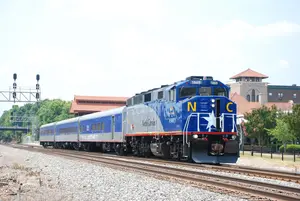
American Locomotive and General Electric built 297 of them at Schenectady from the summer of 1946 through December 1953: 169 PA-1s, 39 PB-1s, 81 PA-2s, and 8 PB-2s. The last new cabs were Southern Railway 6904 and 6905. A quarter century later the only PAs still working in the United States were four ex-Santa Fe engines on the Delaware & Hudson. In 1978 those four went to Mexico. One of them, Santa Fe 62L, came home as a shell, was finished as Nickel Plate Road 190, and on July 11, 2025 led an excursion out of Scranton. It was the first PA to run in this country since 1978.
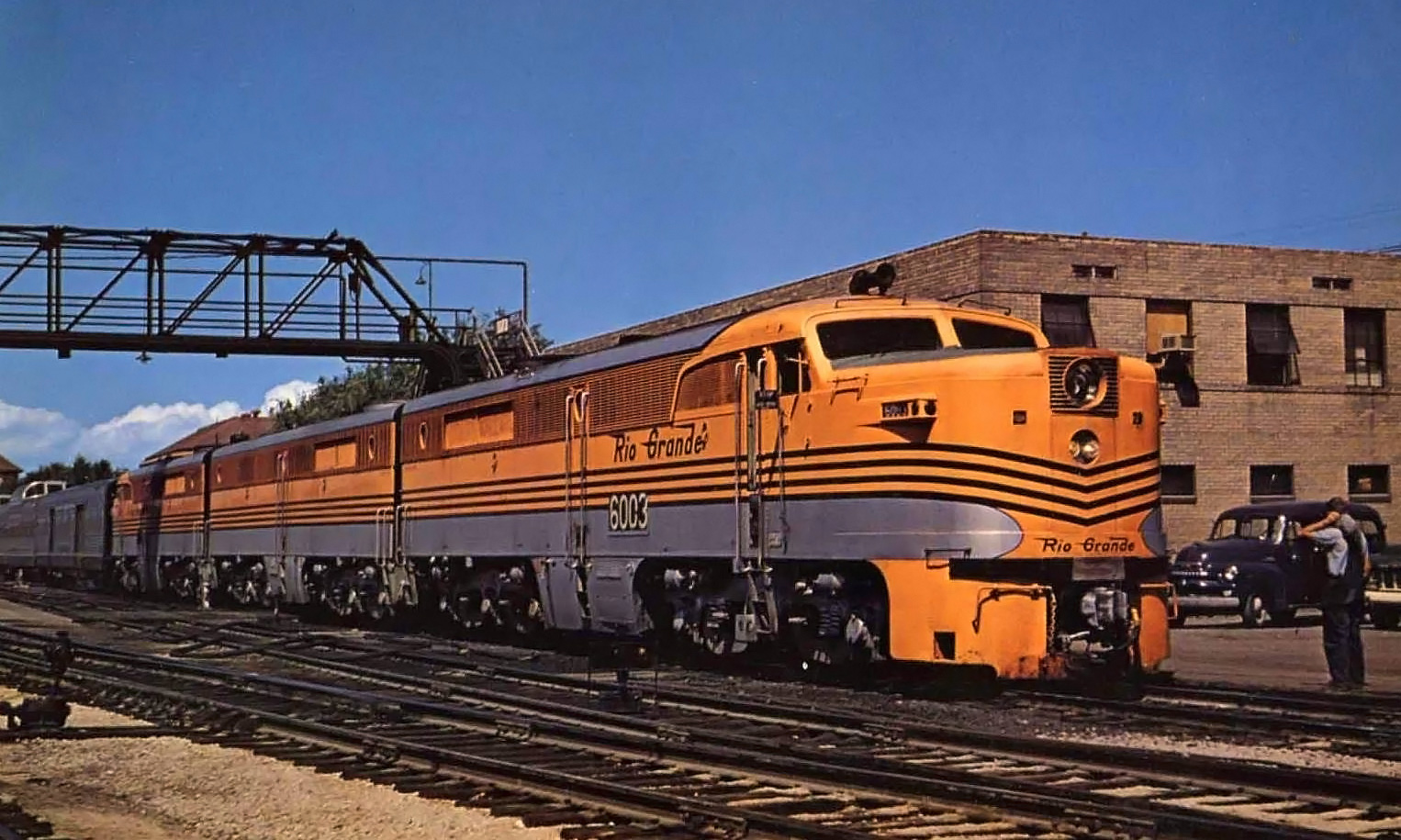
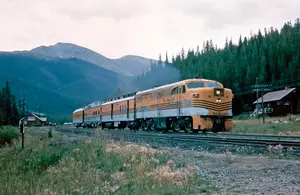
A Rio Grande PA-PB-PA set has train 18, the eastbound "California Zephyr," at Grand Junction, Colorado, on September 13, 1956. Jackson Thode photo.
On this page: At a glance · The carbody · The 244 · Demonstrators · Who bought them · What Alco called them · Data sheets · Production roster · Delaware & Hudson · Nickel Plate 190
At a glance
| Item | Detail |
|---|---|
| Builders | American Locomotive Company and General Electric, Schenectady, New York |
| Models | PA-1 and PB-1, 2,000 horsepower. PA-2 and PB-2, 2,250 horsepower. P is passenger. A is a cab. B is a booster |
| Styling | Ray Patten, General Electric. The same office shaped the FA |
| Engine | Alco 244, V-16. The four PA-4 rebuilds of 1975 received a 12-cylinder 251F |
| Trucks | A1A-A1A Trimount. Four traction motors. The center axle of each truck is an idler |
| Length | PA, 65 feet 8 inches over the couplers. PB, 63 feet 6 inches |
| Production | Road tests in June 1946. Catalog production from September 19, 1946, through December 1953 |
| Quantity | 297 locomotives. PA-1, 169. PB-1, 39. PA-2, 81. PB-2, 8 |
| PA-4 | Four Morrison-Knudsen rebuilds, 1975. The same Santa Fe frames, already inside the 169 |
| Last new cabs | Southern Railway 6904 and 6905, December 1953 |
| Operating survivor | Nickel Plate Road 190, on the Delaware-Lackawanna. Excursion debut July 11, 2025 |
The carbody
Patten’s office gave the passenger unit the same face as the FA and then stretched the body to make room for a steam generator and the water that went with it. A cab measured 65 feet 8 inches between coupler faces. A booster was two feet shorter, 63 feet 6 inches, because it had no cab. Both rode on a pair of Trimount A1A trucks, wheelbase 15 feet 6 inches, with 42-inch wheels and a 40-inch wheel offered as an option. Four General Electric traction motors did the work. The middle axle on each truck carried weight and kept the rail load down for a passenger locomotive that was expected to run fast.
Santa Fe’s lettering is the one that confuses a roster. On an A-B-A set the two cabs were L and B and the booster was A, so 51L and 51B are the cabs and 51A is the booster. The Southern Pacific and the Katy used A and C for the two cabs of a pair. The Rio Grande gave the odd numbers to the cabs and the even numbers to the boosters, which is why 6001 and 6003 are PA-1s and 6002 is the PB-1 that ran between them.
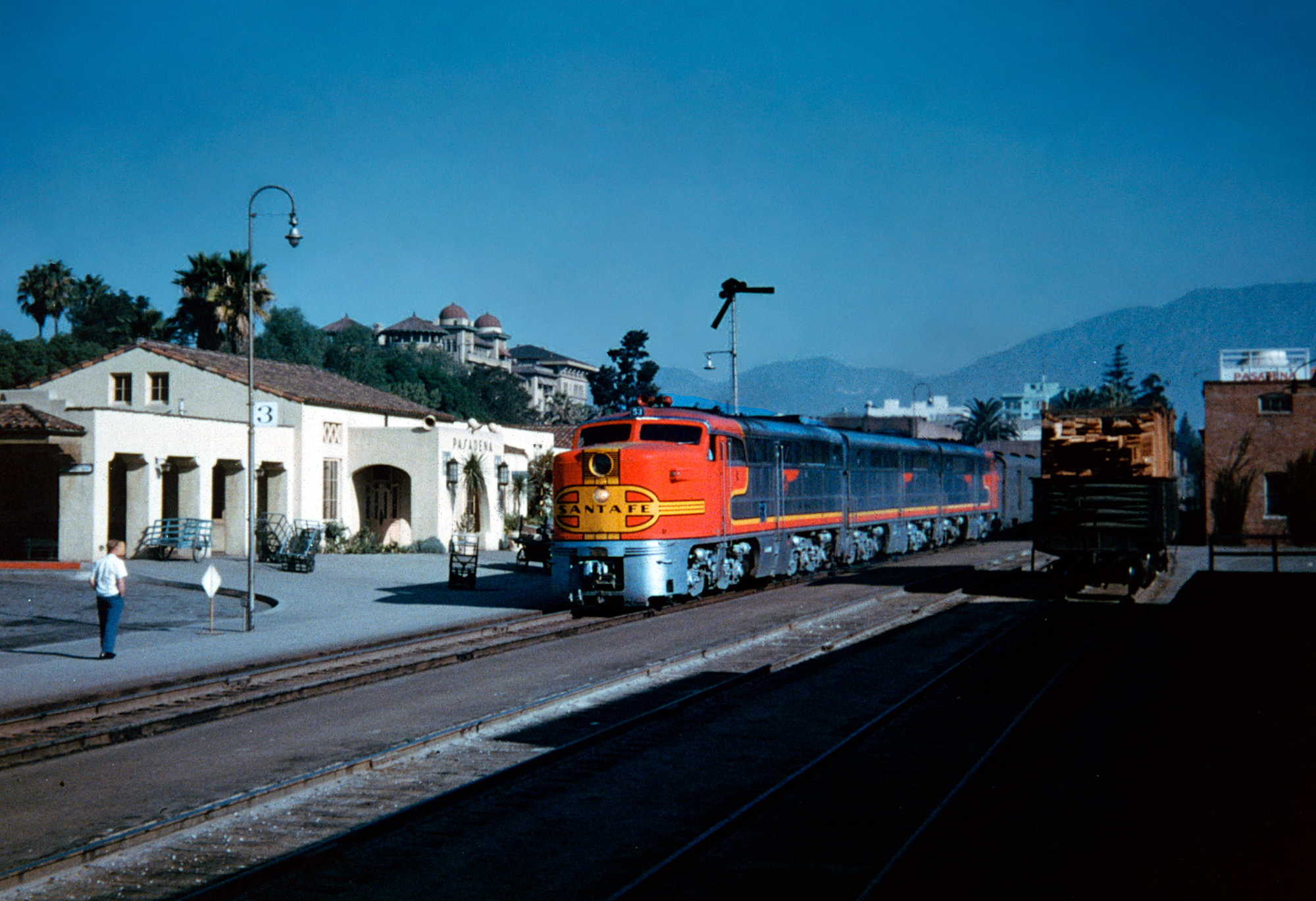
A Santa Fe PA-PB-PA set has arrived in Pasadena, California, with train 17, the westbound "Super Chief," in 1948. Russ Cole photo. American-Rails.com collection.
The gear chart offered five ratios, from 64:19 at 80 miles an hour up to 58:25 at 117. Those figures are the catalog speeds for the gearing. A PA in the warbonnet on the Super Chief, or a Rio Grande set on the California Zephyr, was bought for the 90- and 100-mile-an-hour gears. Continuous tractive effort on the PA-1, with the common 62:21 gearing, was 30,500 pounds at 20 miles an hour. The PA-2, same gearing, was rated 37,000 pounds at 19. A freight diesel on B trucks would outpull either one. That was the bargain. The idler axles were there so the locomotive could carry a passenger train, not so it could start a coal drag.
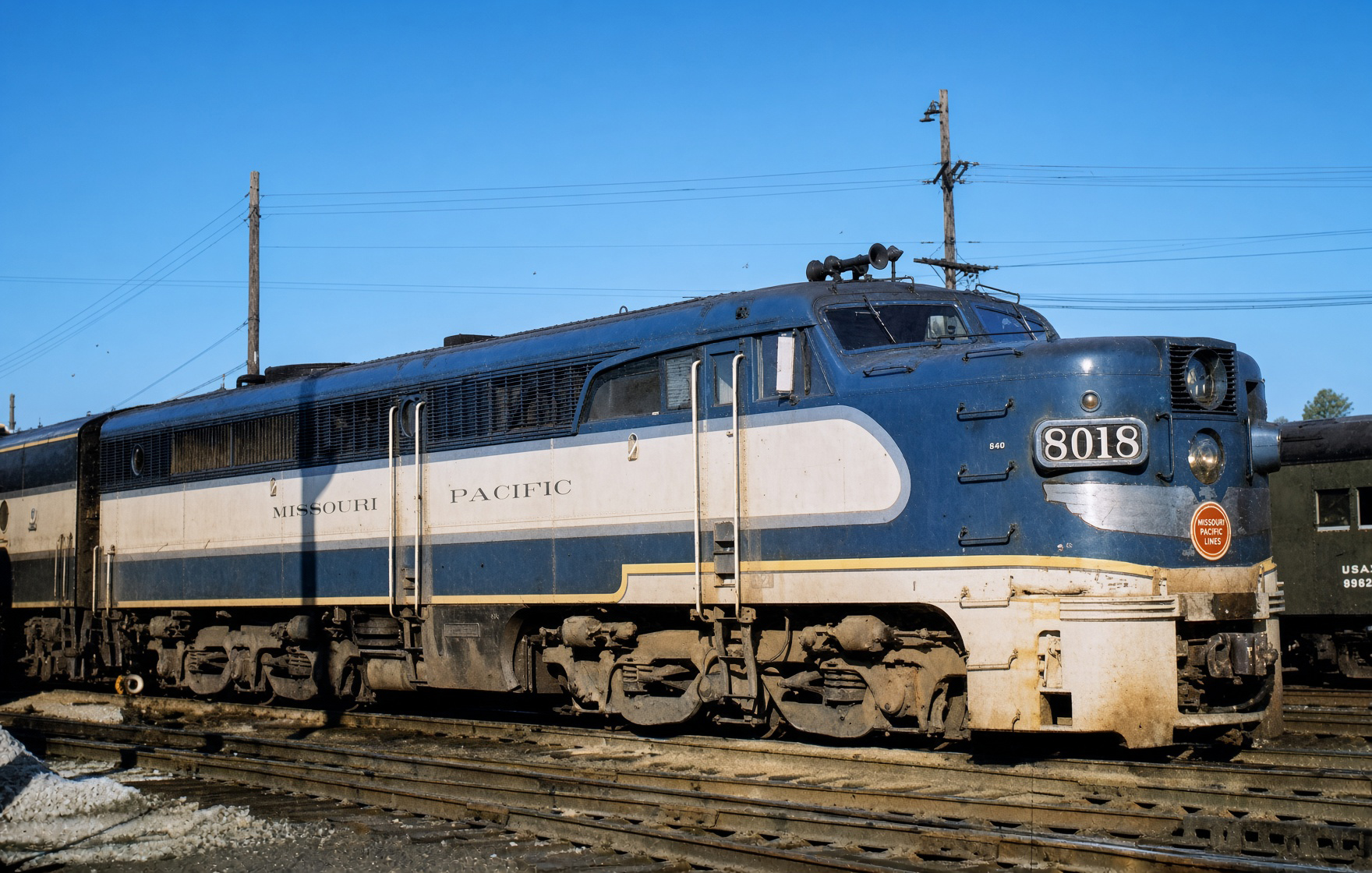
Missouri Pacific PA-2 #8018 is seen here in Kansas City in June, 1961. The MoPac was a loyal customer of the PA series, acquiring PA-1s #8001–8008 in 1949 and purchased another twenty-eight examples of the PA-2, #8009-8036 between 1950-1952. Richard Wallin photo.
The 244
Alco had come out of the war behind Electro-Motive and was told to catch up. Senior management wanted a new engine and a line of road locomotives in production before the end of 1946. The 16-cylinder 244 was on the test stand in January of that year. By June the first passenger units were out for a month of road tests on the Lehigh Valley. Catalog production is dated from September 19, 1946. The engineers had been given a year.
The 244 was a turbocharged four-stroke, and General Electric’s RD1 turbocharger fed the PA-1. Put in a 2,000-horsepower passenger locomotive and asked to accelerate a heavy train and then hold speed for hours, it showed the troubles that defined the model: turbo lag and the black smoke that went with it, exhaust manifolds that cracked, and crankshafts that failed. Photographers learned to wait for the smoke. Master mechanics learned to budget for it. John Kirkland’s builder history is the account of how Alco then tried to engineer its way out, and of how the passenger market had already moved on.
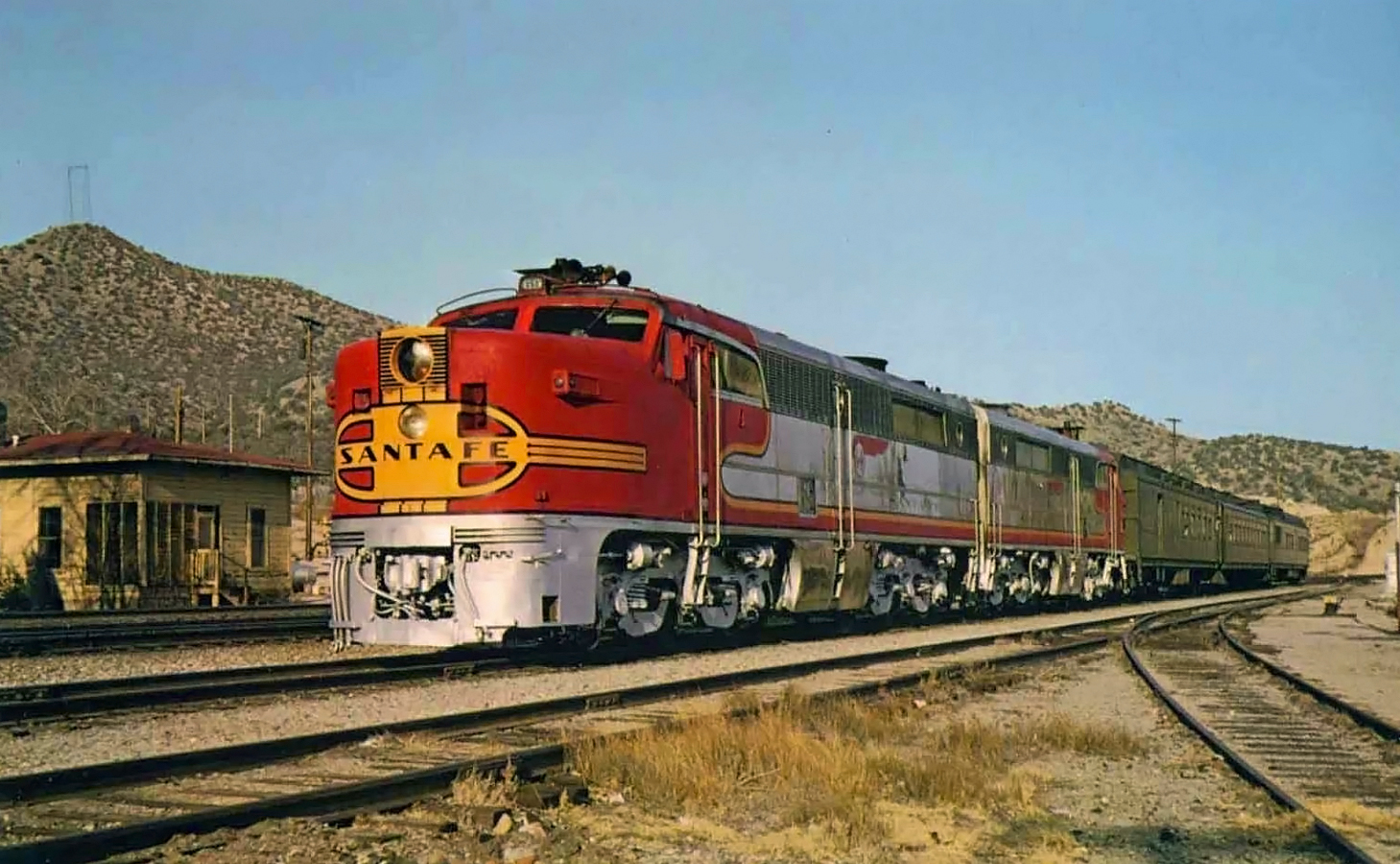
Santa Fe PA-1s, led by 69-L, at the summit of Cajon Pass with a fan trip in early 1964. Roy Gabriel photo.
Santa Fe, which owned more of the early engines than anyone, tried one other cure. In August 1954 a set was repowered with Electro-Motive 16-567C engines rated at 1,750 horsepower. The roof took on EMD fans and a blister to clear them. The conversion did not pay, and the rest of the Santa Fe fleet kept the 244 until the locomotives were sold or scrapped. The reliable Alco engine, the 251, arrived too late for the PA catalog. It reached these carbodies only in 1975, when Morrison-Knudsen put 12-cylinder 251Fs into the four Delaware & Hudson survivors.
Demonstrators
The June 1946 Lehigh Valley test is the start of the story. The numbers 9077 and 9078 belong to the end of PA-1 production. Those two, serials 75791 and 75792, were finished in December 1949. They were the last PA-1s built. Alco painted them in Canadian National green and gold, put Montreal Locomotive Works and General Electric on the nose, and sent them north to see whether a Canadian road would order the passenger cab that MLW might then have built. They ran on the Canadian National from February through May 1950. No Canadian order came. Montreal never built a PA. The Katy bought the pair and rebuilt them as PA-2s 59A and 59C. They are two of the 169 PA-1s, counted once.
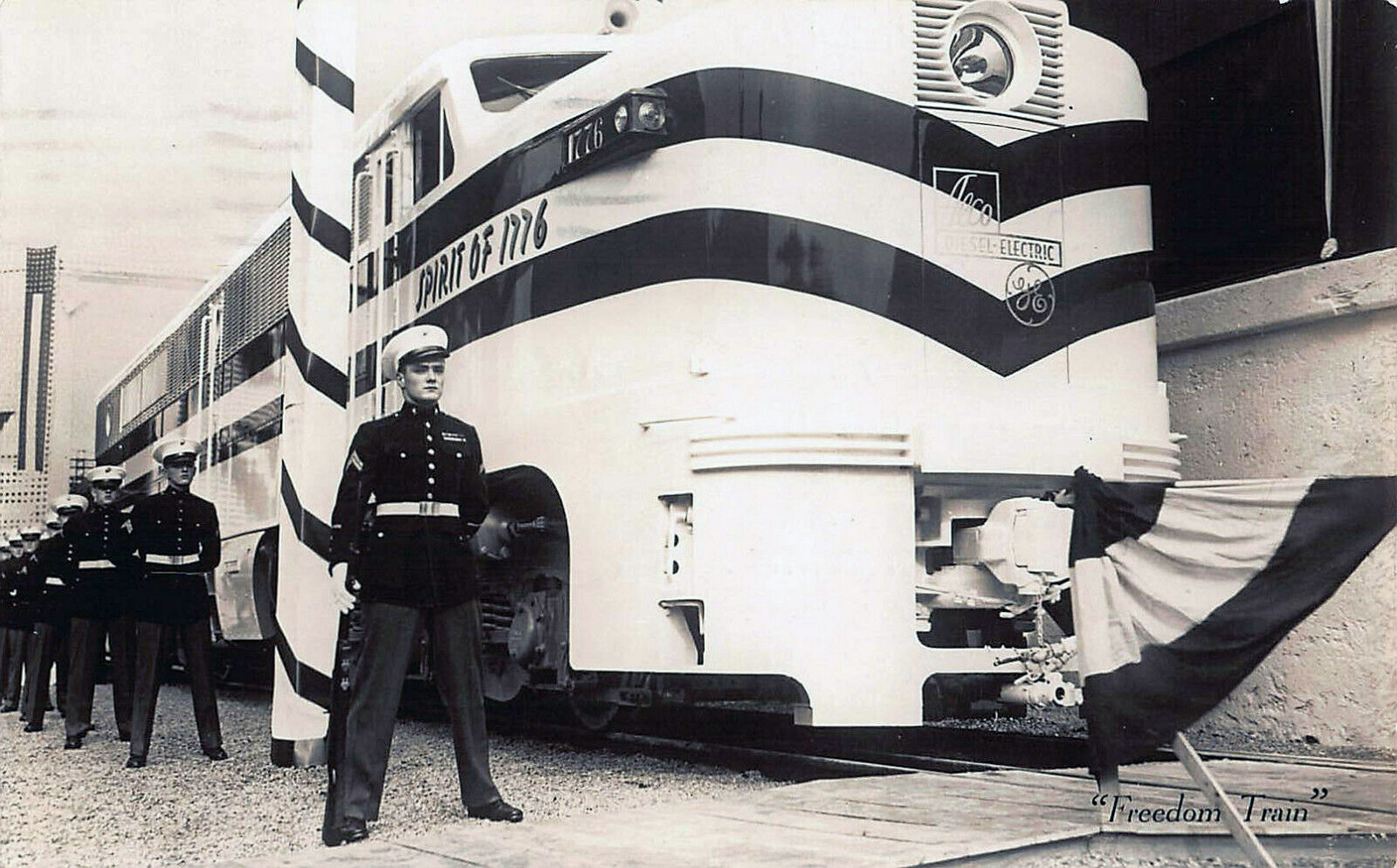
Alco PA-1 1776, the "Spirit of 1776," built for the 1947 Freedom Train. The place of this photograph was not recorded. The locomotive became Gulf, Mobile & Ohio 292.
The Freedom Train cab was earlier than those two. In August 1947 Alco finished serial 74696 and numbered it 1776 for the Freedom Train, in red, white, and blue. It was a production PA-1 from the middle of the order book, not the first one. Santa Fe 51L and 51B, September 1946, were already in service, and Gulf, Mobile & Ohio 290 and 291 had been delivered at the end of 1946. When the Freedom Train was done, 1776 became GM&O 292 and joined those two.
The PA-2 had its own show pair. In March 1950 Alco sent out cab 8375 and booster 8375B in the "More Power for America" scheme, serials 75790 and 75789. Both went to the New York Central as 4212 and 4304. They sit in the PA-2 and PB-2 counts.
Who bought them
Santa Fe wrote the first production check and the biggest early one: 28 PA-1s and 16 PB-1s, September 1946 through December 1948, in the warbonnet. No other railroad bought as many of the 2,000-horsepower cabs. The New Haven’s 27 PA-1s, 0760 through 0786, were the next group, and that railroad took no boosters. The New Haven units were gone early. One of them, 0783, went to the Delaware & Hudson in February 1968 and was cut up for parts in 1972.
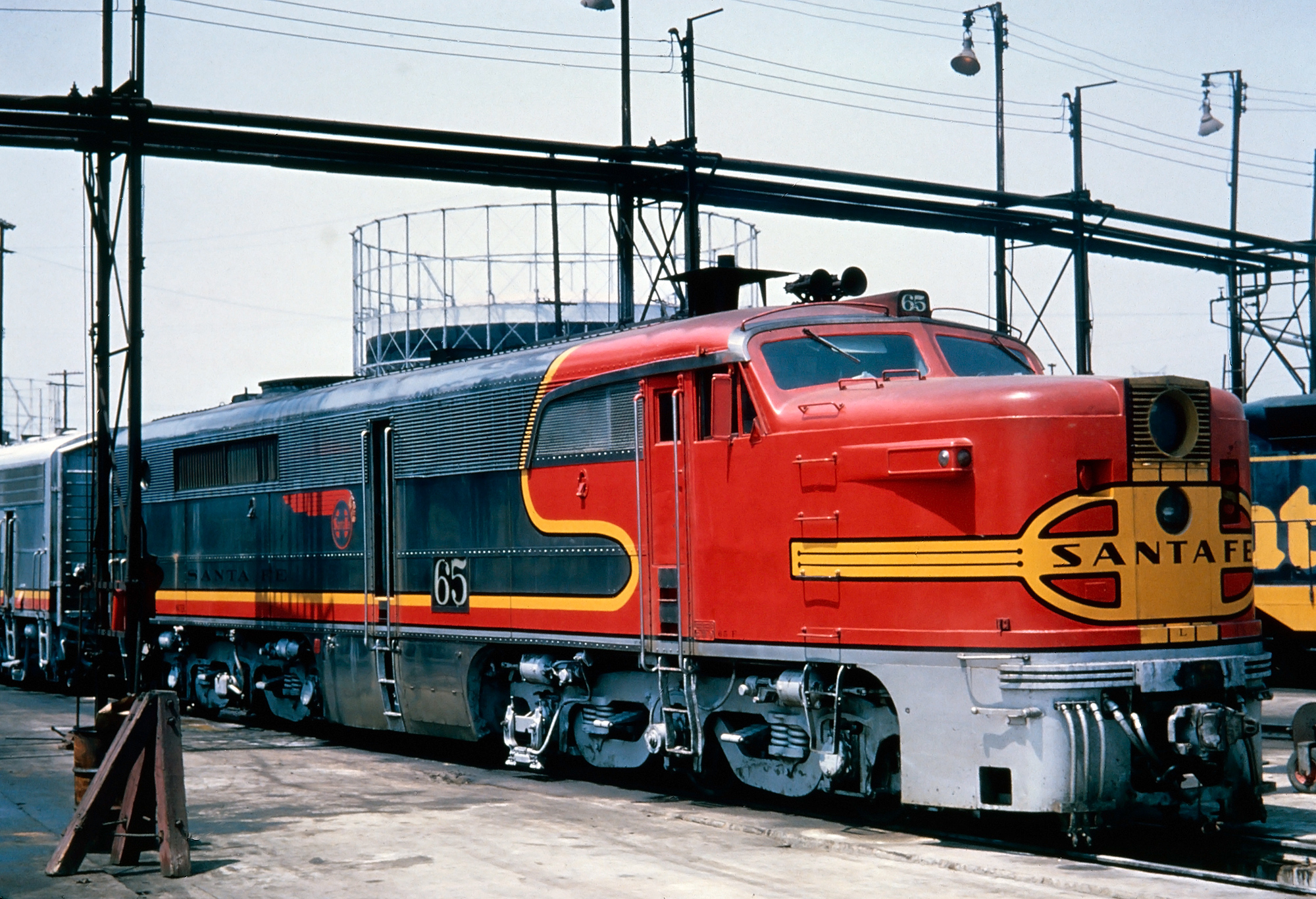
Santa Fe PA-1 65-L at Redondo Junction, Los Angeles, circa 1965. American-Rails.com collection.
Count every cab and the order changes. The Southern Pacific, including the Texas & New Orleans, finished with 51 cabs and 13 boosters: 24 PA-1s, 27 PA-2s, 6 PB-1s, and 7 PB-2s. The Cotton Belt’s two PA-1s, 300 and 301, were a separate railroad and are not in that 51. The Missouri Pacific took 36 cabs and no boosters, 8001 through 8036. Inside that list, 8011 and 8012 were delivered to the International-Great Northern. Santa Fe’s 28 cabs and the New Haven’s 27 follow. Nobody else is close.
The Rio Grande bought four PA-1s and two PB-1s and then stopped. They were enough for the railroad’s share of the California Zephyr and, later, for the Yampa Valley. The odd-numbered cabs and the even-numbered boosters stayed on those trains into the middle 1960s, which is why so many of the famous pictures are Rio Grande pictures. The Nickel Plate bought eleven cabs, 180 through 190, and no boosters, in late 1947 and early 1948. Every one of those eleven was scrapped. The 190 at Scranton wears the number and the Bluebird paint. It is Santa Fe 62L.
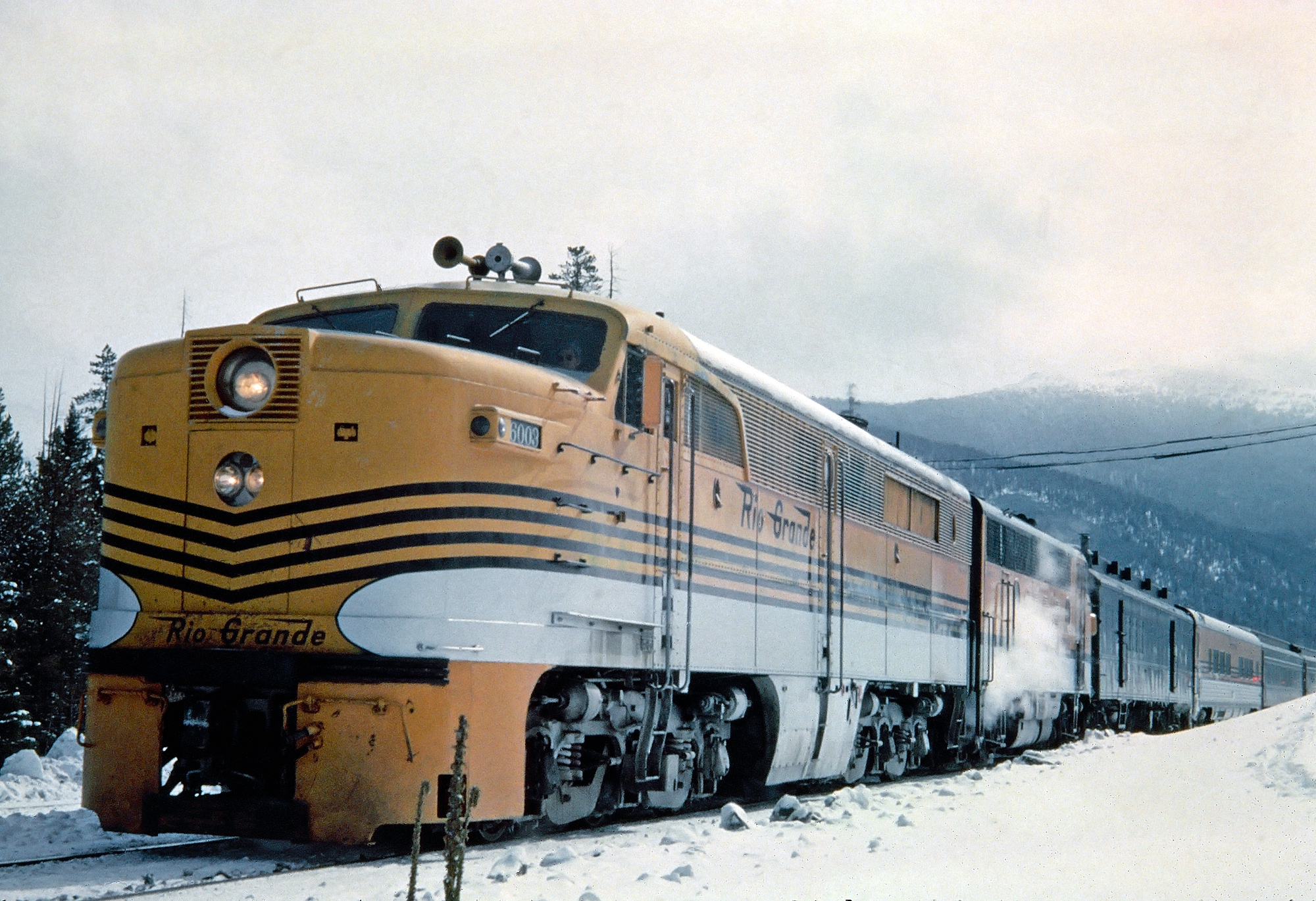
Rio Grande PA-1 6003 and an F3A with the westbound "Yampa Valley" at Winter Park, Colorado, circa 1965. American-Rails.com collection.
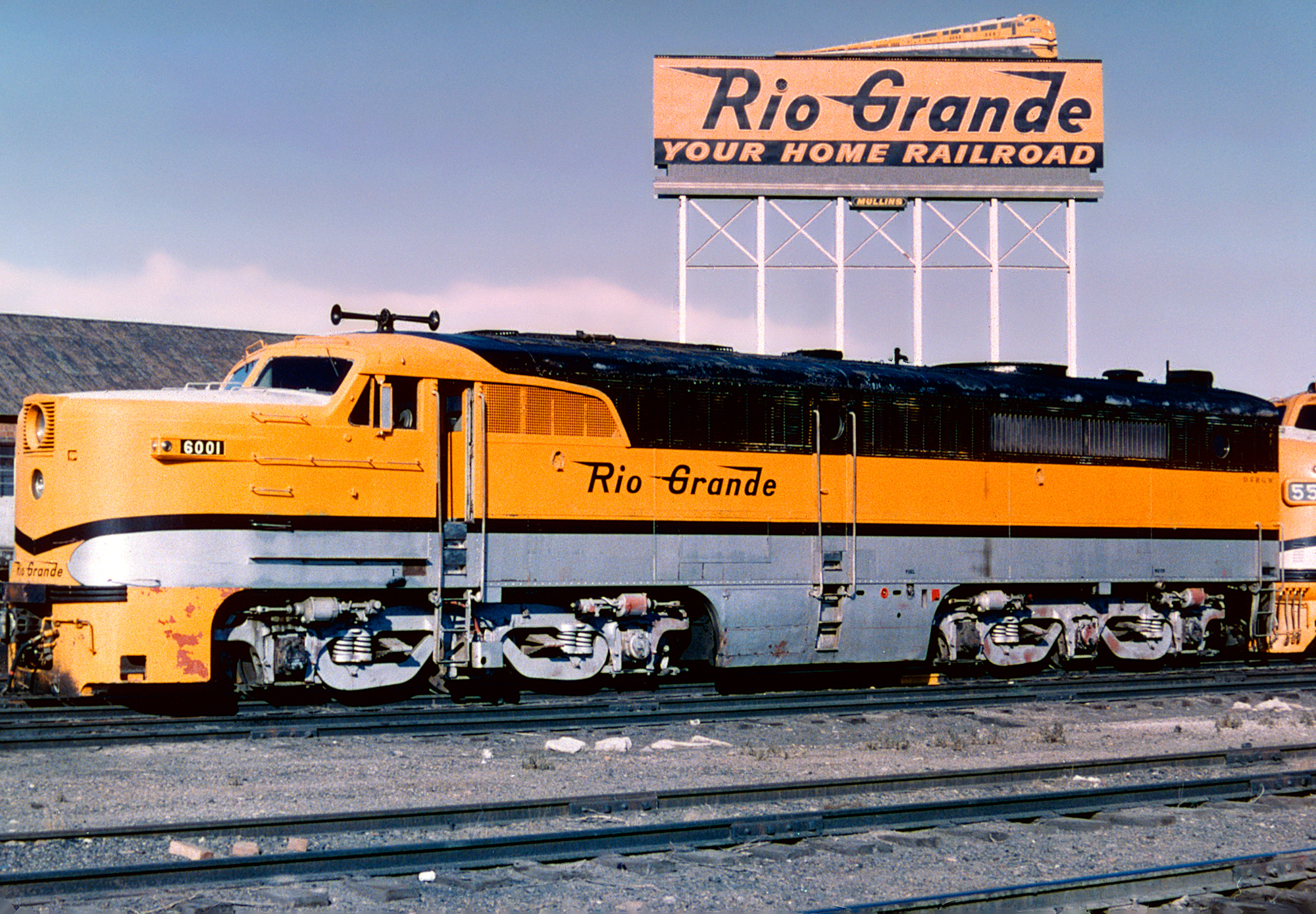
Rio Grande PA-1 6001 at Denver, Colorado, on July 1, 1961. Ed Fulcomer photo. American-Rails.com collection.
The other original owners were the Erie, fourteen cabs in all; the Lehigh Valley, fourteen PA-1s; the Pennsylvania, ten cabs and five boosters; the Union Pacific, eight cabs and six boosters; the New York Central system, eight PA-1s and four PB-1s plus later PA-2s, with 4204 through 4207 and 4213 and 4214 lettered for the Pittsburgh & Lake Erie; the Katy; the Wabash; the Southern, whose six PA-2s of late 1953 closed the catalog; and the Companhia Paulista in Brazil. The Paulista engines, 900 through 902, were PA-2s built to 5 feet 3 inches in October 1953. They are three of the 81. Boosters, apart from the one New York Central demonstrator, went to Santa Fe, the Rio Grande, the New York Central, the Pennsylvania, the Southern Pacific, and the Union Pacific. The Southern Pacific was the only railroad that bought the PB-2.
What Alco called them
The specification numbers came first. A cab was a DL-304 and a booster was a DL-305, with a letter after the number as the equipment changed. Alco sold the later, 2,250-horsepower engines as further DL-304s and DL-305s. The names PA-2 and PB-2 were applied after the fact, once the parts no longer matched and the shop forces needed a way to tell the locomotives apart. Kirkland’s account is plain on the next point. Alco never cataloged a PA-3.
What railfans came to call a PA-3 was the DL-304D cab and the DL-305D booster. Those were PA-2s and PB-2s with a list of improvements: a water-cooled turbocharger in place of the air-cooled one, a new fuel-injection system aimed at the smoke, a tougher exhaust manifold, a hardened crankshaft, and General Electric’s GT586 main generator in place of the GT566D1. The same file, turned up in November 1965, twelve years after the last locomotive, shows that Alco had written specifications DL-304E and DL-305E for a PA-3 and a PB-3 if anyone still wanted a passenger cab. No one did. The sheets were never built.
Data sheets
PA-1
| Item | Detail |
|---|---|
| Alco class | 606-DL-319 |
| Specification | DL-304, with A and B variants |
| Entered production | September 19, 1946. Built through December 1949 |
| Engine | 244, V-16, 2,000 horsepower. General Electric RD1 turbocharger |
| Length | 65 feet 8 inches between coupler faces |
| Weight | 303,000 pounds. Optional ballast to 319,000 |
| Trucks | A1A-A1A Trimount. Wheelbase 15 feet 6 inches. Wheels 42 inches, 40 inches optional |
| Electrical | Four GE 746A2 traction motors. Later variant, four GE 752 motors. Generator GT566C1 |
| Gear ratios | 64:19 (80 mph), 62:21 (92), 64:23 (100), 60:23 (104), 58:25 (117) |
| Tractive effort | 30,500 pounds continuous at 20 mph with 62:21 gearing |
| Dynamic brakes | Optional |
PB-1
| Item | Detail |
|---|---|
| Alco class | 606-DL-314 |
| Specification | DL-305, with A and B variants |
| Entered production | September 19, 1946. Built through August 1949 |
| Engine | 244, V-16, 2,000 horsepower. General Electric RD1 turbocharger |
| Length | 63 feet 6 inches between coupler faces |
| Weight | 300,000 pounds. Optional ballast to 314,000 |
| Trucks | A1A-A1A Trimount. Wheelbase 15 feet 6 inches. Wheels 42 inches, 40 inches optional |
| Electrical | Four GE 746A2 traction motors. Later variant, four GE 752 motors. Generator GT566C1 |
| Gear ratios | 64:19 (80 mph), 62:21 (92), 64:23 (100), 60:23 (104), 58:25 (117) |
| Tractive effort | 30,500 pounds continuous at 20 mph with 62:21 gearing |
| Dynamic brakes | Optional |
PA-2
| Item | Detail |
|---|---|
| Alco class | 606-DL-319 |
| Specification | DL-304C and DL-304D |
| Entered production | March 31, 1950. Built through December 1953 |
| Engine | 244, V-16, 2,250 horsepower. General Electric turbocharger |
| Length | 65 feet 8 inches between coupler faces |
| Weight | 303,000 pounds. Optional ballast to 319,000 |
| Trucks | A1A-A1A Trimount. Wheelbase 15 feet 6 inches. Wheels 42 inches, 40 inches optional |
| Electrical | Four GE 752 traction motors. Generator GT566D1. The DL-304D used the GT586 |
| Gear ratios | 64:19 (80 mph), 62:21 (92), 64:23 (100), 60:23 (104), 58:25 (117) |
| Tractive effort | 37,000 pounds continuous at 19 mph with 62:21 gearing |
| Dynamic brakes | Optional |
PB-2
| Item | Detail |
|---|---|
| Alco class | 606-DL-319 |
| Specification | DL-305C and DL-305D |
| Entered production | March 31, 1950. Built through June 1953 |
| Engine | 244, V-16, 2,250 horsepower. General Electric turbocharger |
| Length | 63 feet 6 inches between coupler faces |
| Weight | 300,000 pounds. Optional ballast to 314,000 |
| Trucks | A1A-A1A Trimount. Wheelbase 15 feet 6 inches. Wheels 42 inches, 40 inches optional |
| Electrical | Four GE 752 traction motors. Generator GT566D1. The DL-305D used the GT586 |
| Gear ratios | 64:19 (80 mph), 62:21 (92), 64:23 (100), 60:23 (104), 58:25 (117) |
| Tractive effort | 37,000 pounds continuous at 19 mph with 62:21 gearing |
| Dynamic brakes | Optional |
Production roster
The four tables are the locomotives as built. A later number in the notes is the same frame. The Katy’s 59A and 59C are 9077 and 9078. New York Central 4212 and 4304 are the "More Power for America" pair. The four PA-4s are four of the Santa Fe PA-1s. Adding any of those numbers again would count an engine twice.
PA-1
169 locomotives.
| Owner | Road Numbers | Qty | Serial | Built | Notes |
|---|---|---|---|---|---|
| Alco, Freedom Train | 1776 | 1 | 74696 | 8/1947 | Became Gulf, Mobile & Ohio 292. |
| Alco, demonstrator | 9077, 9078 | 2 | 75791, 75792 | 12/1949 | Last PA-1s. Canadian National demonstration, February through May 1950. Rebuilt as Katy PA-2s 59A and 59C. |
| Santa Fe | 51L, 51B | 2 | 75000, 75002 | 9/1946 | — |
| Santa Fe | 52L, 52B | 2 | 75003, 75005 | 12/1946 | — |
| Santa Fe | 53L, 53B–55L, 55B | 6 | 75315–75320 | 4/1947–6/1947 | 54B, serial 75318, later 66L and Delaware & Hudson 19. |
| Santa Fe | 56L, 56B | 2 | 74688, 75322 | 7/1947 | — |
| Santa Fe | 57L, 57B | 2 | 75321, 74689 | 7/1947 | — |
| Santa Fe | 58L, 58B | 2 | 74690, 74691 | 8/1947 | — |
| Santa Fe | 59L, 59B–62L, 62B | 8 | 76535–76542 | 10/1948–12/1948 | 59L, 60L, and 62L became Delaware & Hudson 16, 17, and 18. |
| Santa Fe | 70L–73L | 4 | 76087–76090 | 2/1948–3/1948 | — |
| Denver & Rio Grande Western | 6001, 6003 | 2 | 74684, 74685 | 1/1947, 2/1947 | — |
| Denver & Rio Grande Western | 6011, 6013 | 2 | 74686, 74687 | 4/1947 | — |
| Erie | 850–854 | 5 | 76908–76912 | 4/1949 | — |
| Erie | 855–857 | 3 | 77103–77105 | 9/1949 | — |
| Erie | 858–859 | 2 | 77501–77502 | 9/1949 | — |
| Erie | 860–861 | 2 | 75793–75794 | 11/1949 | — |
| Gulf, Mobile & Ohio | 290–291 | 2 | 74682–74683 | 11/1946–12/1946 | — |
| Lehigh Valley | 601, 602 | 2 | 75458, 75459 | 3/1948 | — |
| Lehigh Valley | 603–606 | 4 | 75460–75463 | 4/1948 | — |
| Lehigh Valley | 607–612 | 6 | 75775–75780 | 4/1948 | — |
| Lehigh Valley | 613–614 | 2 | 75781–75782 | 5/1948 | — |
| Missouri-Kansas-Texas | 151A, 151C | 2 | 76917–76918 | 4/1949 | — |
| Missouri-Kansas-Texas | 152A, 152C | 2 | 76919–76920 | 5/1949 | — |
| Missouri Pacific | 8001–8008 | 8 | 77503–77510 | 10/1949 | — |
| New York Central | 4200–4201 | 2 | 75328–75329 | 1/1947 | — |
| New York Central | 4202 | 1 | 76086 | 1/1948 | — |
| New York Central | 4203 | 1 | 76307 | 12/1948 | — |
| New York Central | 4204–4207 | 4 | 76913–76916 | 4/1949 | Pittsburgh & Lake Erie. |
| Nickel Plate Road | 180–186 | 7 | 75330–75336 | 12/1947 | — |
| Nickel Plate Road | 187–190 | 4 | 75454–75457 | 3/1948 | These four were scrapped. The 190 at Scranton is Santa Fe 62L. |
| New Haven | 0760–0769 | 10 | 76076–76085 | 8/1948–9/1948 | — |
| New Haven | 0770–0784 | 15 | 76312–76326 | 1/1949–3/1949 | 0783, serial 76325, to the Delaware & Hudson in February 1968 for parts. Scrapped 1972. |
| New Haven | 0785–0786 | 2 | 76906–76907 | 3/1949 | — |
| Pennsylvania | 5750A–5754A | 5 | 74697–74701 | 10/1947–11/1947 | — |
| Pennsylvania | 5755A–5759A | 5 | 75323–75327 | 11/1947–12/1947 | — |
| St. Louis Southwestern | 300–301 | 2 | 77511–77512 | 11/1949 | Cotton Belt. |
| Southern Pacific | 6005A, 6005C | 2 | 75783–75784 | 5/1948 | — |
| Southern Pacific | 6006A, 6006C | 2 | 76072–76073 | 6/1948 | — |
| Southern Pacific | 6007A, 6007C | 2 | 76074–76075 | 7/1948 | — |
| Southern Pacific | 6008A, 6008C–6010A, 6010C | 6 | 77097–77102 | 8/1949 | — |
| Texas & New Orleans | 200A, 200B–202A, 202B | 6 | 77085–77090 | 6/1949 | Southern Pacific. |
| Texas & New Orleans | 203A, 203B | 2 | 77091, 77092 | 7/1949 | — |
| Texas & New Orleans | 204A, 204B–205A, 205B | 4 | 77093–77096 | 8/1949 | — |
| Union Pacific | 604–607 | 4 | 76308–76311 | 1/1949 | — |
| Union Pacific | 994A–997A | 4 | 74692–74695 | 8/1947 | — |
| Wabash | 1020, 1020A | 2 | 77081–77082 | 5/1949 | — |
| Wabash | 1021, 1021A | 2 | 77083–77084 | 5/1949 | — |
PB-1
39 locomotives.
| Owner | Road Numbers | Qty | Serial | Built | Notes |
|---|---|---|---|---|---|
| Santa Fe | 51A, 52A | 2 | 75001, 75004 | 10/1946, 12/1946 | — |
| Santa Fe | 53A–56A | 4 | 75337–75340 | 4/1947–6/1947 | — |
| Santa Fe | 57A, 58A | 2 | 74704–74705 | 7/1947, 8/1947 | — |
| Santa Fe | 59A–62A | 4 | 76543–76546 | 10/1948–12/1948 | — |
| Santa Fe | 70A–73A | 4 | 76091–76094 | 2/1948–3/1948 | — |
| Denver & Rio Grande Western | 6002, 6012 | 2 | 74702–74703 | 2/1947, 4/1947 | — |
| New York Central | 4300, 4301 | 2 | 75605, 75606 | 1/1948 | — |
| New York Central | 4302, 4303 | 2 | 75610–75611 | 12/1948 | — |
| Pennsylvania | 5750B, 5752B | 2 | 75343–75344 | 10/1947 | — |
| Pennsylvania | 5754B, 5756B | 2 | 75345–75346 | 11/1947 | — |
| Pennsylvania | 5758B | 1 | 75347 | 12/1947 | — |
| Southern Pacific | 6005B–6007B | 3 | 75607–75609 | 5/1948–6/1948 | — |
| Southern Pacific | 6008B–6010B | 3 | 75786–75788 | 8/1949 | — |
| Union Pacific | 604B–606B | 3 | 75612–75614 | 1/1949 | — |
| Union Pacific | 607B | 1 | 75785 | 1/1949 | — |
| Union Pacific | 998B, 999B | 2 | 75341–75342 | 9/1947 | — |
PA-2
81 locomotives, including the demonstrator and the three Paulista cabs.
| Owner | Road Numbers | Qty | Serial | Built | Notes |
|---|---|---|---|---|---|
| Alco, demonstrator | 8375 | 1 | 75790 | 3/1950 | "More Power for America." Became New York Central 4212. |
| Erie | 862, 863 | 2 | 78732–78733 | 4/1951 | — |
| Missouri-Kansas-Texas | 154A, 154C | 2 | 78349–78350 | 11/1950 | — |
| Missouri-Kansas-Texas | 155A, 155C–157A, 157C | 6 | 78726–78731 | 3/1951–5/1951 | — |
| Missouri Pacific | 8009–8012 | 4 | 78135–78138 | 4/1950 | 8011 and 8012 were delivered to the International-Great Northern. |
| Missouri Pacific | 8013–8018 | 6 | 78734–78739 | 5/1951–6/1951 | — |
| Missouri Pacific | 8019–8022 | 4 | 79042–79045 | 5/1952–6/1952 | — |
| Missouri Pacific | 8023–8026 | 4 | 78208–78211 | 6/1952 | — |
| Missouri Pacific | 8027–8030 | 4 | 78957–78960 | 7/1952–8/1952 | — |
| Missouri Pacific | 8031–8036 | 6 | 80045–80050 | 8/1952–9/1952 | — |
| New York Central | 4208–4211 | 4 | 78204–78207 | 6/1950 | — |
| New York Central | 4213–4214 | 2 | 79040–79041 | 5/1952 | Pittsburgh & Lake Erie. |
| Southern Railway | 6900–6903 | 4 | 80846–80849 | 10/1953–11/1953 | — |
| Southern Railway | 6904–6905 | 2 | 81081–81082 | 12/1953 | Last PA cabs built. |
| Southern Pacific | 6019–6020 | 2 | 77999–78000 | 8/1950 | — |
| Southern Pacific | 6021–6022 | 2 | 78001–78002 | 9/1950 | — |
| Southern Pacific | 6023 | 1 | 78740 | 4/1952 | — |
| Southern Pacific | 6024–6027 | 4 | 79036–79039 | 4/1952–5/1952 | — |
| Southern Pacific | 6028–6033 | 6 | 80434–80439 | 5/1953–6/1953 | — |
| Southern Pacific | 6034 | 1 | 80443 | 9/1953 | — |
| Southern Pacific | 6035–6045 | 11 | 80835–80845 | 9/1953–10/1953 | — |
| Companhia Paulista | 900–902 | 3 | 80440–80442 | 10/1953 | Brazil. Five-foot, three-inch gauge. |
PB-2
8 locomotives.
| Owner | Road Numbers | Qty | Serial | Built | Notes |
|---|---|---|---|---|---|
| Alco, demonstrator | 8375B | 1 | 75789 | 3/1950 | "More Power for America." Became New York Central 4304. |
| Southern Pacific | 5918–5919 | 2 | 78219–78220 | 8/1950–9/1950 | — |
| Southern Pacific | 5920–5921 | 2 | 78212–78213 | 4/1952 | — |
| Southern Pacific | 5922–5924 | 3 | 80607–80609 | 5/1953–6/1953 | — |
Delaware & Hudson
In December 1967 the Delaware & Hudson bought four Santa Fe PA-1s for the Laurentian and the Montreal Limited, the daytime trains between Albany and Montreal. They were Santa Fe 59L, 60L, 62L, and 54B, the last of those renumbered 66L on the Santa Fe. On the D&H they became 16, 17, 18, and 19, and they wore blue, yellow, and silver on the warbonnet outline. A fifth carbody, New Haven 0783, arrived in February 1968 and existed to be taken apart.
Amtrak ended those D&H passenger trains in 1971. The four cabs were traded in to General Electric and then taken back under president C. B. Sterzing Jr., who used them on excursions. In 1974 New York State and Amtrak put the Adirondack on the same Albany–Montreal route, and the state paid to rebuild the locomotives. Morrison-Knudsen did the work at Boise in 1975. Each engine bay lost the 16-cylinder 244 and received a 12-cylinder 251F, rated at 2,400 horsepower. Alco was gone by then. The railroad called the rebuilds PA-4s. No. 19 was released in February, 16 in May, 18 in August, and 17 in October.
Amtrak replaced them with Turboliners. After Sterzing left, the four were stored in May 1977, leased briefly to the MBTA for Boston commuter trains, and sold in 1978 to Ferrocarriles Nacionales de México. DH-19 was still in passenger work a decade later. On January 23, 1989 it stood at the Empalme shops in Sonora after a rebuild for Servicio Estrella, the Star Service FNM had launched in 1987 with sleepers, diners, and named trains that included El Tapatío, El Regiomontano, El Purépecha, El Jarocho, and El Oaxaqueño. Nos. 17 and 19 remain in Mexico. The other two came home as shells.
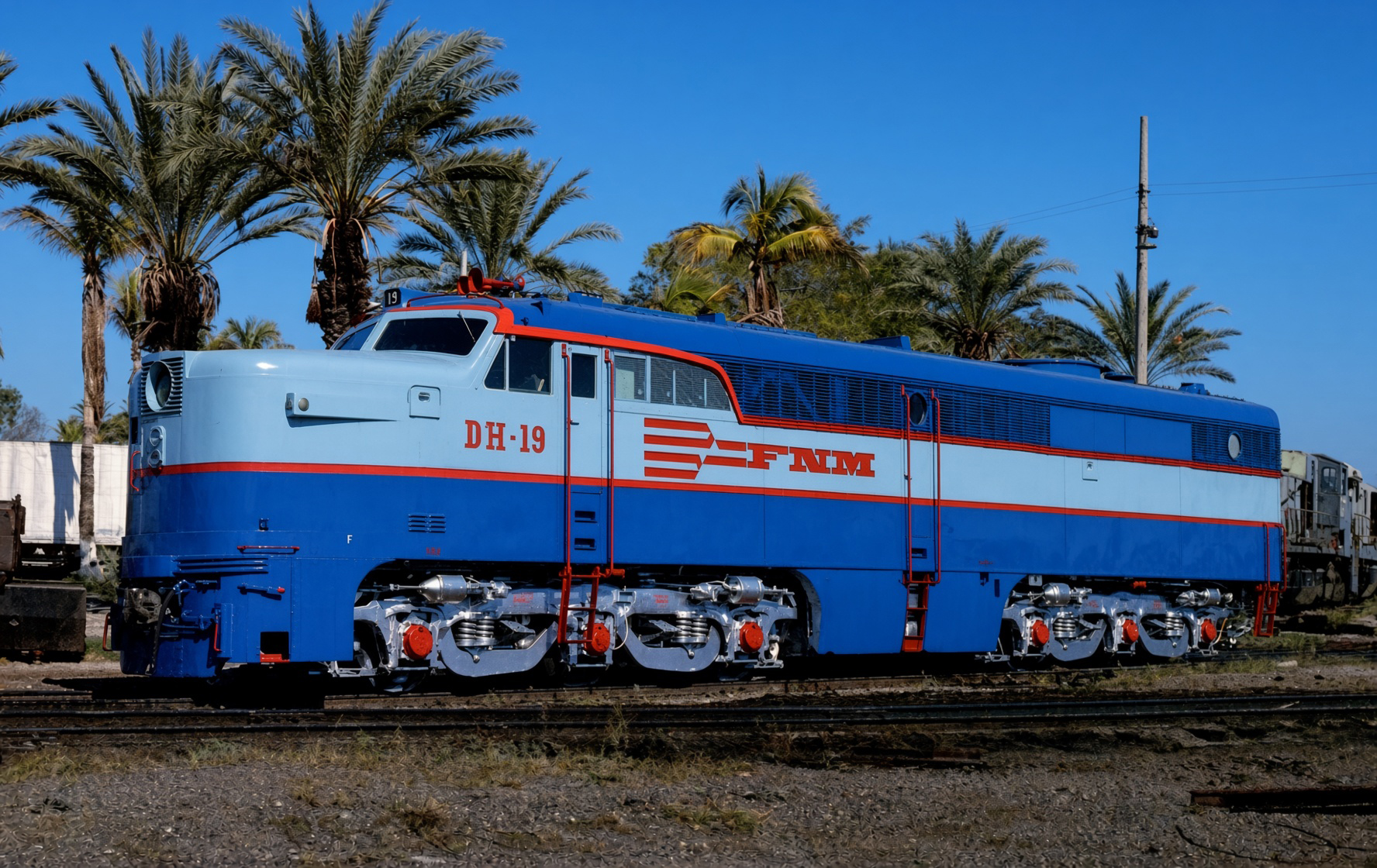
Ferrocarriles Nacionales de México PA-4 DH-19, built as Santa Fe 54B and later Delaware & Hudson 19, at the Empalme, Sonora shops on January 23, 1989, after its rebuild for Star Service. John Benson photo.
| D&H | Serial | Built | Santa Fe | PA-4 rebuild | Where it is |
|---|---|---|---|---|---|
| 16 | 76535 | 10/1948 | 59L | May 1975 | Shell at the Museum of the American Railroad, Frisco, Texas, since 2011. Cosmetic restoration as Santa Fe 59L. |
| 17 | 76537 | 11/1948 | 60L | October 1975 | Remains in Mexico. |
| 18 | 76541 | 12/1948 | 62L | August 1975 | Nickel Plate Road 190. Operating on the Delaware-Lackawanna. |
| 19 | 75318 | 5/1947 | 54B, later 66L | February 1975 | Remains in Mexico. |
The full Delaware & Hudson diesel list, and the class P-20 line for these four, is on the D&H roster.
Nickel Plate 190
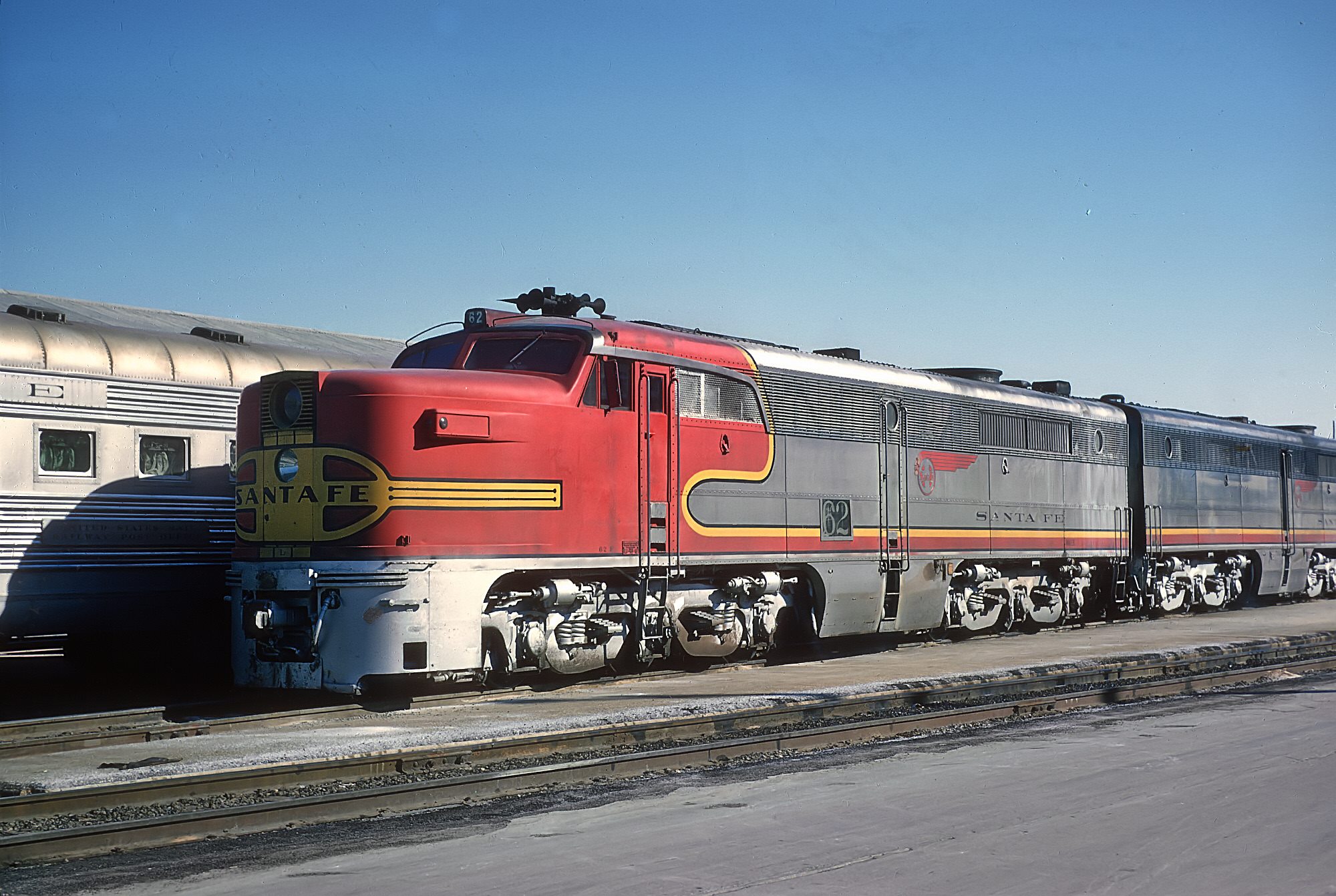
Santa Fe PA-1 62-L, closest to the camera, at Fort Worth, Texas, in January 1964. This cab became Delaware & Hudson 18 and, much later, Nickel Plate Road 190. Dennis E. Conniff III photo. Rick Burn collection.
Getting a PA back took longer than building one. Smithsonian curator William Withuhn spent years on a cultural exchange with Mexico. The agreement was signed in March 1999. The two damaged carbodies, little more than frames, left the old Chihuahua Pacific shops in Sonora that October and reached Albany, Oregon, in April 2000. Gulf & Ohio’s Pete Claussen, Steamtown engineer Seth Corwin, and Doyle McCormack put up the money when the museum appropriation was gone. One shell was headed for the Smithsonian and is now at the Museum of the American Railroad in Frisco, Texas, where the work in hand is a cosmetic restoration as Santa Fe 59L. McCormack kept the other, Santa Fe 62L.
He told Trains in 2000 why the number had to be 190. "When I was a boy, my dad worked for the Nickel Plate, and the first diesel I ever rode on was PA 190. The Nickel Plate became my passion, and that’s why a fully functional Nickel Plate PA is going to rise again." The original 190 was long gone. What he had was an empty Santa Fe carbody. Trucks came from a Fairbanks-Morse Erie-built that had ended its days on a welded-rail train in Canada. The prime mover was started in October 2013. The outside of the locomotive was finished in time for Streamliners at Spencer in 2014, while the machinery inside was still being assembled.
On March 1, 2023 McCormack sold 190 to the Genesee Valley Transportation Company. The announcement came the next day. The locomotive moved to GVT’s Von Storch shops at Scranton, on the Delaware-Lackawanna, which still runs a fleet of Alcos and which operates a piece of the old Delaware & Hudson. Shop forces finished the electrical work. On July 11, 2025, with McCormack at the throttle, 190 took an invitation train from Scranton to Mount Pocono and back, and it did the same the next day. A Delaware & Hudson RS-3 was in the consist. It had been forty-seven years since a PA had turned a wheel in revenue or excursion service in the United States.
The locomotive is a PA-4 in the mechanical sense. The carbody, the number, and the Bluebird paint are the railroad McCormack grew up with. Both things are true, and the separate Nickel Plate 190 page follows the engine itself. Of 297 PAs and PBs, this is the one that runs. Santa Fe 59L is the other one in the United States, a shell in Texas. Two more, 17 and 19, are still in Mexico.
Related reading
- Nickel Plate Road 190 · Delaware & Hudson · D&H diesel roster
- Alco FA · Alco 251 · Nickel Plate Road
- Rio Grande · California Zephyr · Yampa Valley · Super Chief
- Southern Pacific · New Haven · Missouri Pacific · Southern Railway
Sources
- Kirkland, John F. The Diesel Builders: Volume Two, American Locomotive Company and Montreal Locomotive Works. Glendale: Interurban Press, 1989. The specification sequence, and the unbuilt DL-304E and DL-305E.
- Pinkepank, Jerry A. Diesel Spotter’s Guide. Milwaukee: Kalmbach, 1967.
- Foster, Gerald. A Field Guide to Trains. New York: Houghton Mifflin, 1996.
- Schafer, Mike. Vintage Diesel Locomotives. Osceola: MBI Publishing, 1998.
- Extra 2200 South. Builder list of road numbers, serials, and dates.
- Trains. Doyle McCormack, interviewed in 2000. The repatriation dates, and the July 11, 2025 debut.
- Railfan & Railroad, July 12, 2025, and September 16, 2025. The Scranton trips, and D&H 17 and 19 remaining in Mexico.
- Bridge Line Historical Society. Delaware & Hudson PA-1 and PA-4 roster, including the 1975 rebuild months.
Recent Articles


-
Atlanta, Birmingham & Coast Railroad: Map, History, Roster
Nov 05, 26 12:03 PM
 Atlanta, Birmingham & Coast, from Brunswick and Waycross to Atlanta and Birmingham. Atlantic Coast Line control at the close of 1926. Merged in January 1946 as the Western Division. Steam roster of th…
-
El Paso & Southwestern Railroad: Map, History, Logo
Nov 05, 26 12:00 PM
 The El Paso & Southwestern, the Phelps Dodge copper railroad from Tucson to the Rock Island at Tucumcari. Southern Pacific control on October 31, 1924.
-
Brightline Says Orlando Service Has Resumed
Nov 05, 26 11:55 AM
 Brightline said on November 5, 2026, that trains to and from Orlando have resumed after weather suspensions in Brevard County. Later that morning the departures page still showed the Orlando segment s…
-
Metra Customers Must Sign Up Again
Nov 05, 26 11:43 AM
 Metra says customers who want service alerts must sign up again at metratracker.com. The November 2 story says the new system has launched and the old email list is shut down. A notice on the same pag…
-
Norfolk Southern Packs Six Projects Into One Window
Nov 05, 26 11:38 AM
 Norfolk Southern used one 26-hour window on the W Line for six projects in Indiana and Kentucky, including three bridge replacements. The October 27 account does not give the calendar day of the work.
-
CSX: More Time to Comment on an Inspection Waiver
Nov 05, 26 11:29 AM
 The Federal Railroad Administration extended comments on a CSX petition for relief from some qualified mechanical inspector rules until December 2, 2026. The November 2 notice does not grant the waive…
-
Brightline Expects Orlando Service on Thursday
Nov 05, 26 09:21 AM
 Brightline said on November 4, 2026, that it expects trains to and from Orlando to resume on Thursday, November 5. South Florida stations kept running. The departures page still showed the Orlando seg…
-
Union Pacific: More Time to Comment on an Inspection Waiver
Nov 05, 26 09:15 AM
The Federal Railroad Administration extended comments on a Union Pacific petition for relief from some qualified mechanical inspector rules until December 2, 2026. The November 2 notice does not grant… -
Wisconsin Opens Comments on the 2027 Freight Plan
Nov 05, 26 09:03 AM
 WisDOT opened the draft 2027 State Freight Plan for comment through December 1, 2026. The plan covers freight rail with highways, harbors, aviation, and intermodal links. Completion is expected in sum…
-
U.S. Rail Traffic Rose 3.5 Percent in the Week Ending October 31
Nov 05, 26 08:52 AM
U.S. railroads moved 514,080 carloads and intermodal units in the week ending October 31, 2026, up 3.5 percent from a year earlier, the Association of American Railroads said on November 4. -
Muni and Bay Area Transit Measures Pass
Nov 05, 26 08:49 AM
 San Francisco Municipal Transportation Agency said on November 4, 2026 that Proposition H and a regional transit measure passed. Proposition H is about 160 million dollars a year for Muni. The regiona…
-
Ground Rules Set for Responsive Applications
Nov 05, 26 08:47 AM
Decision No. 46, served November 4, 2026, denies a request to add Walsenburg to the Union Pacific interchange list and sets what CPKC and CN must include in responsive applications. Four CPKC proposal… -
Video of the Vena Address Must Be Released
Nov 05, 26 08:42 AM
The Surface Transportation Board on November 4, 2026 denied the Union Pacific appeal and ordered the March 17 shipper-conference recording released to the parties by 5:00 p.m. Eastern on November 5. C… -
Chicago & North Western Iron Ore C628s
Nov 04, 26 11:47 PM
 Chicago and North Western C628s 6701-6730, the ex-Norfolk and Western high-hoods, in Upper Peninsula iron-ore service from the mid-1970s until December 21, 1986, and what happened to each unit.
-
Warrenton Railroad: Serving Warrenton, NC (1884-1985)
Nov 04, 26 10:33 PM
 The three-mile Warrenton Railroad, from Warren Plains to the North Carolina county seat. Chartered January 28, 1871. First train November 8, 1884. Closed in 1985.
-
Rio Grande Steam Locomotives (Since 1900)
Nov 04, 26 11:40 AM
 Denver & Rio Grande Western steam locomotives built since 1900. Standard gauge quantity 435 and narrow gauge 48. Challengers, 2-8-8-2s, Mountains, Northerns, and the K-27, K-28, K-36, and K-37.
-
Rio Grande Diesel Locomotives (All-Time)
Nov 04, 26 11:39 AM
 Denver & Rio Grande Western diesel locomotives, each frame once. 554 units, from the 1941 NW2 through the 1990 GP60s. FT, F3, F7, and F9 sets are not counted again under their 1950 numbers.
-
Rio Grande Railroad: Map, Logo, History, Rosters
Nov 04, 26 11:34 AM
 Denver & Rio Grande Western history, from William Jackson Palmer and the October 27, 1870 charter through the Royal Gorge, the Moffat route, the California Zephyr, and Union Pacific common control…
-
Lindblom Gift Expands the Fort Wayne Restoration Shop
Nov 04, 26 11:14 AM
 Art Lindblom gave the Fort Wayne Railroad Historical Society more than $1.4 million, its largest single gift, to expand the New Haven shop. The addition is planned for late 2026 and early 2027. A sepa…
-
Design Contract Awarded for the Forest Park Branch
Nov 04, 26 11:09 AM
The Chicago Transit Board approved a design contract for about 13 miles of Blue Line track from the Illinois Medical District to the I-290 Bridge. The release summary calls it a $17 million contract… -
Kanawha River Railroad: The Norfolk Southern Lease Is Renewed
Nov 04, 26 10:51 AM
 Kanawha River Railroad filed to keep leasing 309.45 miles from Norfolk Southern in West Virginia and Ohio. The second amendment is dated August 17, 2026. The Board has not set the date the exemption t…
-
Short Line Center Awarded a $5.625 Million Grant
Nov 04, 26 10:35 AM
The American Short Line and Regional Railroad Association received a $5.625 million CRISI grant on October 20, 2026, for the Short Line Training Center. A 25 percent match brings the project to $7.5 m… -
Palestine and Rusk Track Rebuild Finishes Its First Phase
Nov 04, 26 09:13 AM
 The Texas & Eastern Railroad has finished the first phase of a roughly $30 million track project between Palestine and Rusk. Phase I used a $13.4 million CRISI grant. Phase II, at $8.54 million, adds…
-
Manhattan, Brooklyn, Queens, and the Bronx Get Subway Power Design
Nov 04, 26 09:12 AM
STV said on November 2, 2026, that MTA Construction and Development selected the firm to manage design of 10 subway substations and 12 circuit breaker houses in four New York boroughs. No contract pri… -
Chicago's Regional Transit Budget Goes Out for Comment
Nov 04, 26 09:07 AM
The Northern Illinois Transit Authority opened its first regional budget for comment through December 4, 2026. The proposal is $5.04 billion for 2027 operations and $9.73 billion in capital work throu… -
VIA Rail Finishes the Toronto Maintenance Centre
Nov 04, 26 09:05 AM
VIA Rail completed a four-year modernization of its Toronto Maintenance Centre on November 2, 2026. The Government of Canada invested $310 million. The shop supports 32 Corridor trainsets and will sus… -
Brightline Suspends Orlando Service for High Water
Nov 04, 26 09:02 AM
Brightline suspended trains between Orlando and West Palm Beach on November 2, 2026, because of high water in Brevard County. A later post the same day kept the suspension until 2:00 p.m. on November… -
Hiawatha West Draws Federal Funding Toward Madison
Nov 04, 26 08:58 AM
 Amtrak welcomed a CRISI selection for Hiawatha West, extending Chicago-Milwaukee service toward Madison, Watertown, and Pewaukee. Wisconsin said on October 16 that the award is over $218 million.
-
Seattle's Train Maintenance Facility Opens for Airo Trains
Nov 04, 26 08:56 AM
 Amtrak cut the ribbon October 23, 2026, on a $250 million Seattle shop for Airo trains on the Cascades route. The building came in on time and $50 million under budget and opens in phases through the…
-
Aberdeen Carolina and Western Wins a $19.9 Million Grant
Nov 04, 26 08:46 AM
 The Aberdeen Carolina and Western Railway won a $19.9 million CRISI grant for about 30 miles of welded rail in Montgomery and Stanly counties. The railroad and NCDOT are putting up a 52 percent match…
-
Alco "C628" Locomotives: Roster, Data Sheet, Specs
Nov 03, 26 07:57 PM
 Alco Century C628: 2,750 hp C-C road switcher, 186 built from December 1963 to December 1968. Production roster, specs, and where the high-hood Norfolk and Western units went.
-
Santa Fe Railroad (AT&SF): Diesel Roster (All-Time)
Nov 03, 26 12:54 PM
 Santa Fe diesel locomotives, each new frame once, with construction numbers and order numbers. The counted total is 3,964, from the 1935 boxcabs through the SD75Ms.
-
Metra Holiday Trains Return on Six Lines
Nov 03, 26 11:40 AM
 Metra holiday trains will run on six lines in December, with tickets on sale at noon November 16 for $10. The Chicago Transit Authority and Pace are fielding holiday buses in the same regional announc…
-
Amtrak Encourages Early Booking for Thanksgiving
Nov 03, 26 11:39 AM
 Amtrak is asking travelers to book Thanksgiving trips early. The railroad carried more than 1.2 million customer trips over the 2025 holiday and expects another record, with extra Northeast Regional s…
-
Channel Pacific Keeps Its West Sacramento Exemption
Nov 03, 26 11:26 AM
The Surface Transportation Board denied a West Sacramento challenge to Channel Pacific Railroad’s exemption to operate about 2,132 feet of terminal track. The exemption took effect in June 2026. -
DART Marks One Year of the Silver Line
Nov 03, 26 11:22 AM
 DART marked one year of Silver Line service linking seven North Texas cities and DFW Airport. The 26-mile regional rail line opened October 25, 2025, as the agency’s first rail expansion in a decade.
-
Massachusetts Breaks Ground for the Berkshire Flyer
Nov 03, 26 10:07 AM
Massachusetts broke ground October 29 in Pittsfield on track work meant to support permanent seasonal Berkshire Flyer service. MassDOT has $31 million for the project in its 2027-2031 capital plan. -
Cheraw Scrapyard Closed After a Search for CSX Rail
Nov 03, 26 10:02 AM
Chesterfield County deputies, CSX police, and state agents searched Cheraw Iron and Metal on October 27 and closed the yard after finding CSX rail and telephone wire. -
Union Pacific Urges the Board to Keep a Speech Video Confidential
Nov 03, 26 09:53 AM
Union Pacific on October 30 asked the Surface Transportation Board to keep a recording of Jim Vena’s shipper speech confidential while it appeals. BNSF on November 2 asked the board to deny that… -
Enfield Station Construction Begins on the Hartford Line
Nov 03, 26 09:39 AM
 Connecticut has started a $125.3 million Enfield station on the Hartford Line, restoring passenger service for the first time since 1986. The state expects construction to finish in fall 2030.
-
Santa Fe Steam Roster (Built Since 1900)
Nov 03, 26 09:30 AM
 Featured here is the Santa Fe's all-time steam roster after 1900. The railroad operated a wide and varied collection of wheel arrangements.
-
Santa Fe Railroad: Map, Logo, History, Rosters
Nov 03, 26 09:16 AM
 History of the Atchison, Topeka and Santa Fe, from Cyrus Holliday’s 1859 charter to the Burlington Northern merger on December 31, 1996. The Warbonnet, the Super Chief, and the Chicago to Los An…
-
Asheville Rail Corridor Gets $35.8 Million
Nov 03, 26 12:18 AM
The U.S. Department of Transportation awarded North Carolina $35.8 million for development, design, and construction on the Salisbury to Asheville corridor, including more than 40 crossing-signal syst… -
Le Mars Transload Center Expands on Canadian National
Nov 03, 26 12:06 AM
Burlington Junction Railway has expanded the Le Mars Transload Center beside Canadian National and U.S. Highway 75. A zero-interest Iowa DOT loan paid for part of the work. The center and industrial p… -
Lehigh Gorge Trains Move to Nesquehoning
Nov 02, 26 11:48 PM
Reading and Northern has moved Lehigh Gorge Scenic Railway trips to Nesquehoning after the October 31 rockslide west of Jim Thorpe. Trains leave at 11 a.m., 1 p.m., and 3 p.m. through Sunday, November… -
Texas Transit Agency Breaks Ground on TEXRail
Nov 02, 26 11:40 PM
 Trinity Metro broke ground October 29, 2026, on a $270 million, 2.1-mile TEXRail extension from Fort Worth T&P Station to a new Near Southside station on land donated by Baylor Scott and White Hea…
-
Lake Front Depot: The C&NW's Milwaukee Terminal
Nov 02, 26 09:40 PM
 The Chicago and North Western Lake Front Depot at 915 East Wisconsin Avenue, Milwaukee. Charles Sumner Frost, 1889. Last train May 15, 1966. Clock tower down May 7, 1968.
-
Canal Street Maintenance Plan Will Get an FRA Review
Nov 02, 26 01:48 PM
The Federal Railroad Administration will prepare an environmental assessment of Amtrak Canal Street maintenance plans in Chicago after adding 17 viaduct repairs to a project that had a categorical exc… -
Durango & Silverton Repairs Track After Continued Flooding
Nov 02, 26 01:40 PM
 Durango & Silverton crews are repairing flood damage after the Animas hit 11,200 cfs on October 23. The Highline Express ran October 27 through November 1. Polar Express trains remain listed from…
-
Middle Georgia Megasite Will Host the First Audi Plant in the U.S.
Nov 02, 26 01:35 PM
 Audi will build its first U.S. plant at the Norfolk Southern-served Middle Georgia Megasite in Peach County, about $4 billion and about 4,500 jobs. Audi and Norfolk Southern publish different construc…