The "Southern Belle": KCS's Flagship Train
Last revised: August 24, 2024
By: Adam Burns
The Southern Belle was the Kansas City Southern’s very
belated entrance into the streamliner revolution that had hit the
nation’s railroad industry beginning in the mid-1930s.
While up until the time of the Belle’s debut the KCS had offered merely second-rate passenger service its flagship train plied a route that was very lucrative, making it a household name in the markets it served.
While the Bell was discontinued two years prior to the start of Amtrak it lives on today through KCS’s business train.
Many Class I's have run similar trains over the years; both the Southern (and later Norfolk Southern) were famous for this and Union Pacific continues to field a near-replica of its City fleet.
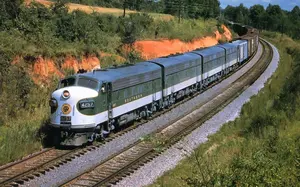
Kansas City Southern's train closely mimics its flagship, right down to the original Brunswick Green (which carries a black appearance due to its very dark pigment) livery with yellow and red trim.
Even the car roofs are silver like the original consist. In the case of KCS, its current roster is largely not original; much of it was sold off following its discontinuance in 1969.
Photos
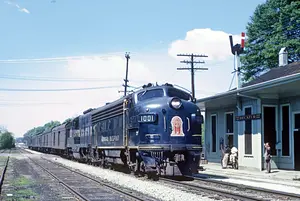
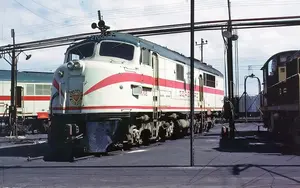
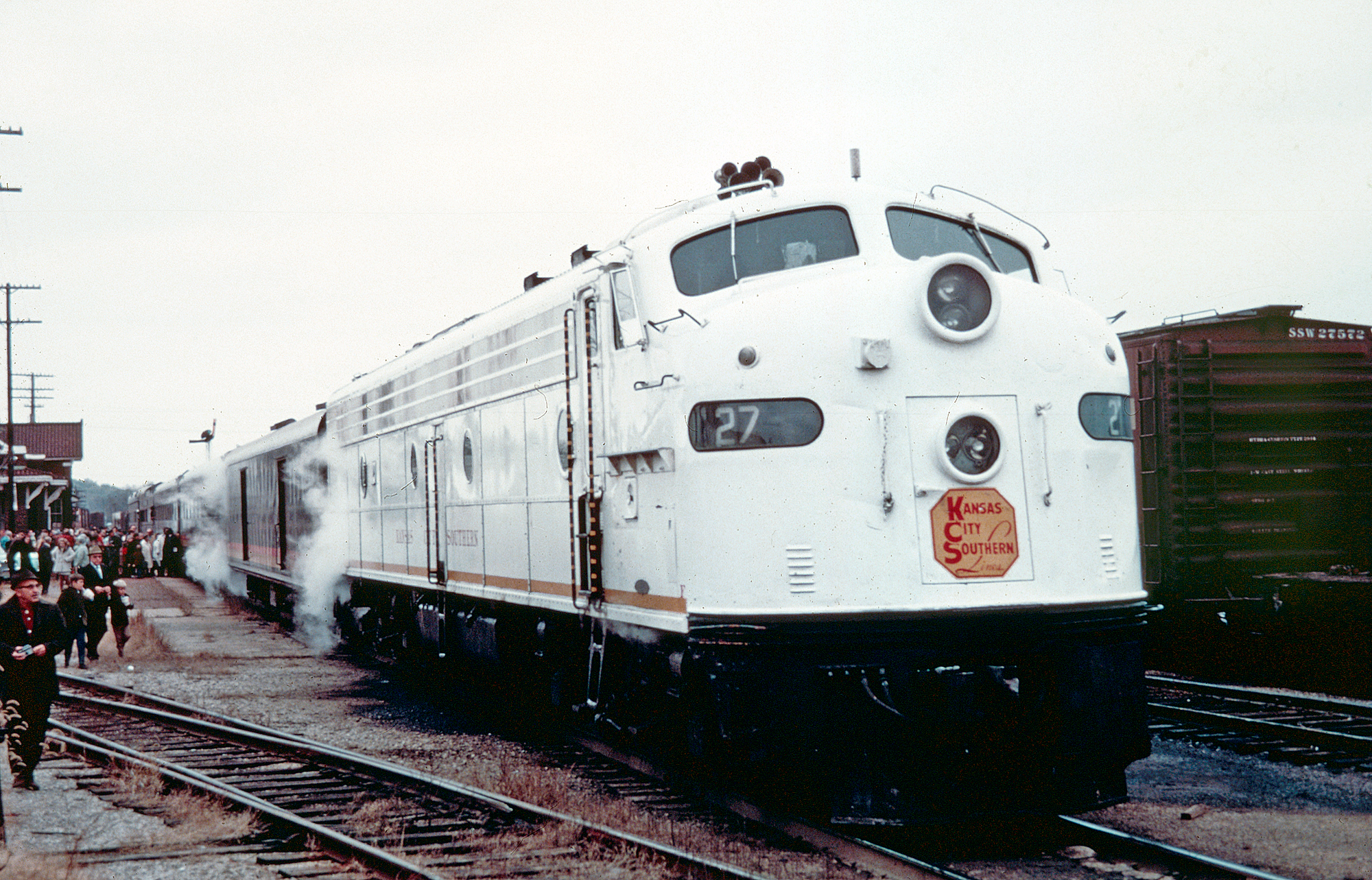 Kansas City Southern E8A #27 has the final "Southern Belle" stopped at Neosho, Missouri on November 2, 1969. Mac Owen photo. American-Rails.com collection.
History
The Kansas City Southern Railway, better known as simply the KCS may currently be our country’s smallest Class I railroad in terms or route miles, surrounded by the other four American giants Union Pacific, BNSF Railway, CSX Transportation, and Norfolk Southern.
However, the railroad is the second oldest still carrying its original name next to the UP, and its history dates back to the late 19th century.
For roughly the first half of the 20th century the KCS prospered, earning considerable profits on a railroad system that was less than 1,000 total miles in length.
However, beginning in the late 1950s the railroad would once again go through a period of hard times, much like its early days.
Things got so bad by the early 1970s (mostly a result of deferred maintenance) that derailments became commonplace across the entire system.
Timetable (1952)
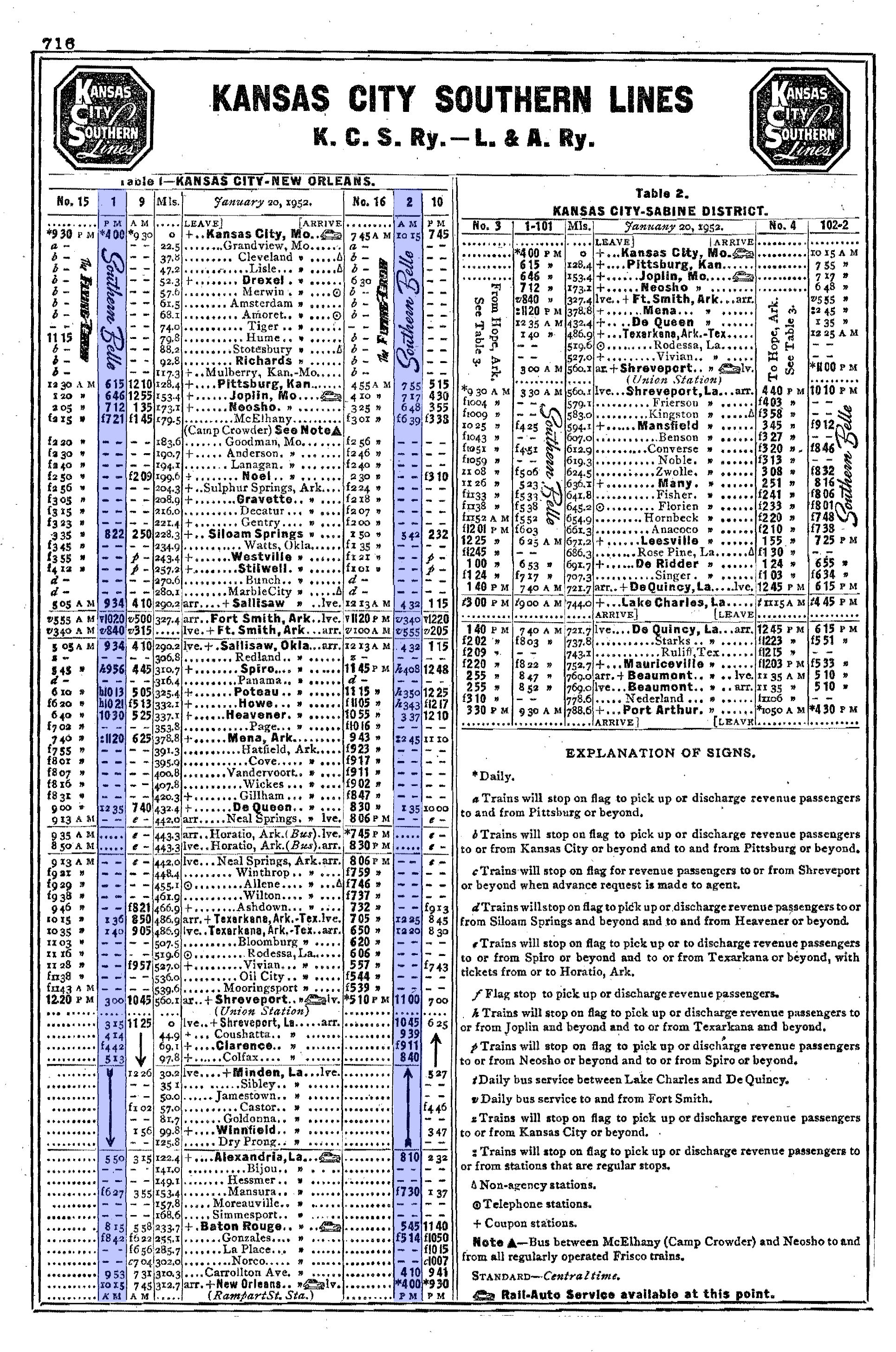
If it were not for record volumes of traffic continuing to pour over the KCS during this time the railroad could have faced a serious problem, similar to its northern neighbor, the Rock Island.
The Belle began, interestingly enough, as a publicity campaign by the Kansas City Southern. Looking for a beautiful young lady to model for the train as “Miss Southern Belle” the winner eventually chosen was Margaret Landry.
The train itself was inaugurated on September 2, 1940 and Miss Landry traveled on the train during a 10-day publicity tour to showcase the new service.
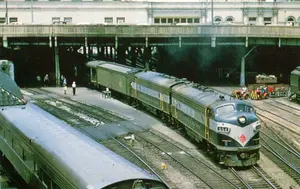
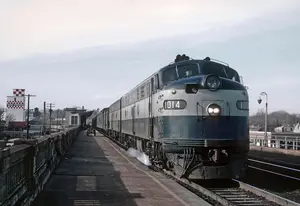
 Kansas City Southern's train #1, the southbound "Southern Belle" is seen here at Pittsburg, Kansas on August 31, 1964. Roy Gabriel photo.
The route the Belle followed was north-south connecting Kansas City with New Orleans, a bit unconventional as far as rail operations are concerned, which usually travel east-west.
In any event, this mattered little as the train turned out to be quite successful being that the southern regions the Belle traveled through offered little in the way of reliable roadways.
At A Glance
1 (Southbound) 2 (Northbound) | |
Union Station (Kansas City) 705 South Rampart Street (New Orleans): 1940 - 1954 Union Passenger Terminal (New Orleans): 1954 - 1969 |
Listed as Trains #1 and #2 on the KCS timetable the Belle could make the jaunt between Kansas City and New Orleans in about 21 1/2 hours (by the 1960s the railroad had shaved about an hour from this time) and could carry an average train speed of between 40 and 42 mph. The Belle featured almost entirely all sleepers along with diner-lounges and "De Luxe" chair cars.
Timetable (1941)
| Read Down Time/Leave (Train #1) | Milepost | Location | Read Up Time/Arrive (Train #2) |
|---|---|---|---|
| 10:00 AM (Dp) | 0.0 | 7:55 PM (Ar) | |
| 12:15 PM (Ar) | 128.4 | 5:28 PM (Dp) | |
| 12:18 PM (Dp) | 128.4 | 5:26 PM (Ar) | |
| 12:53 PM | 153.4 | 4:51 PM | |
| 1:21 PM | 173.1 | 4:20 PM | |
| 2:42 PM | 228.3 | 3:02 PM | |
| 2:52 PM | 234.9 | 2:51 PM | |
| 4:01 PM | 290.2 | F 1:46 PM | |
| 4:45 PM | 325.4 | 12:59 PM | |
| 4:53 PM | 332.1 | F 12:51 PM | |
| 5:01 PM | 337.1 | 12:42 PM | |
| 6:01 PM | 378.8 | 11:40 AM | |
| 7:15 PM | 432.4 | 10:25 AM | |
| F 8:04 PM | 466.9 | F 9:43 AM | |
| 8:35 PM (Ar) | 486.9 | 9:15 AM (Dp) | |
| 8:55 PM (Dp) | 486.9 | 9:05 AM (Ar) | |
| F 9:29 PM | 519.6 | F 8:24 AM | |
| F 9:38 PM | 527.0 | F 8:15 AM | |
| 10:30 PM (Ar) | 560.1 | 7:30 AM (Dp) | |
| 11:00 PM (Dp) | 560.1 | 7:00 AM (Ar) | |
| 12:17 AM | 604.5 | 5:31 AM | |
| 12:51 AM | 628.8 | 4:59 AM | |
| 1:31 AM | 657.5 | 4:12 AM | |
| 2:15 AM | 682.1 | 3:35 AM | |
| 3:01 AM | 713.0 | 2:44 AM | |
| 5:45 AM | 789.2 | 12:10 AM | |
| F 6:09 AM | 810.6 | F 11:38 PM | |
| F 6:42 AM | 841.2 | F 11:06 PM | |
| 7:12 AM | 865.9 | 10:38 PM | |
| 7:30 AM (Ar) | 868.1 | 10:30 PM (Dp) |
The coming of World War II only increased passenger traffic for the Kansas City Southern between New Orleans and Kansas City, which was partly helped by the fact that the railroad served a number of bases between the two cities.
Consist (1952)
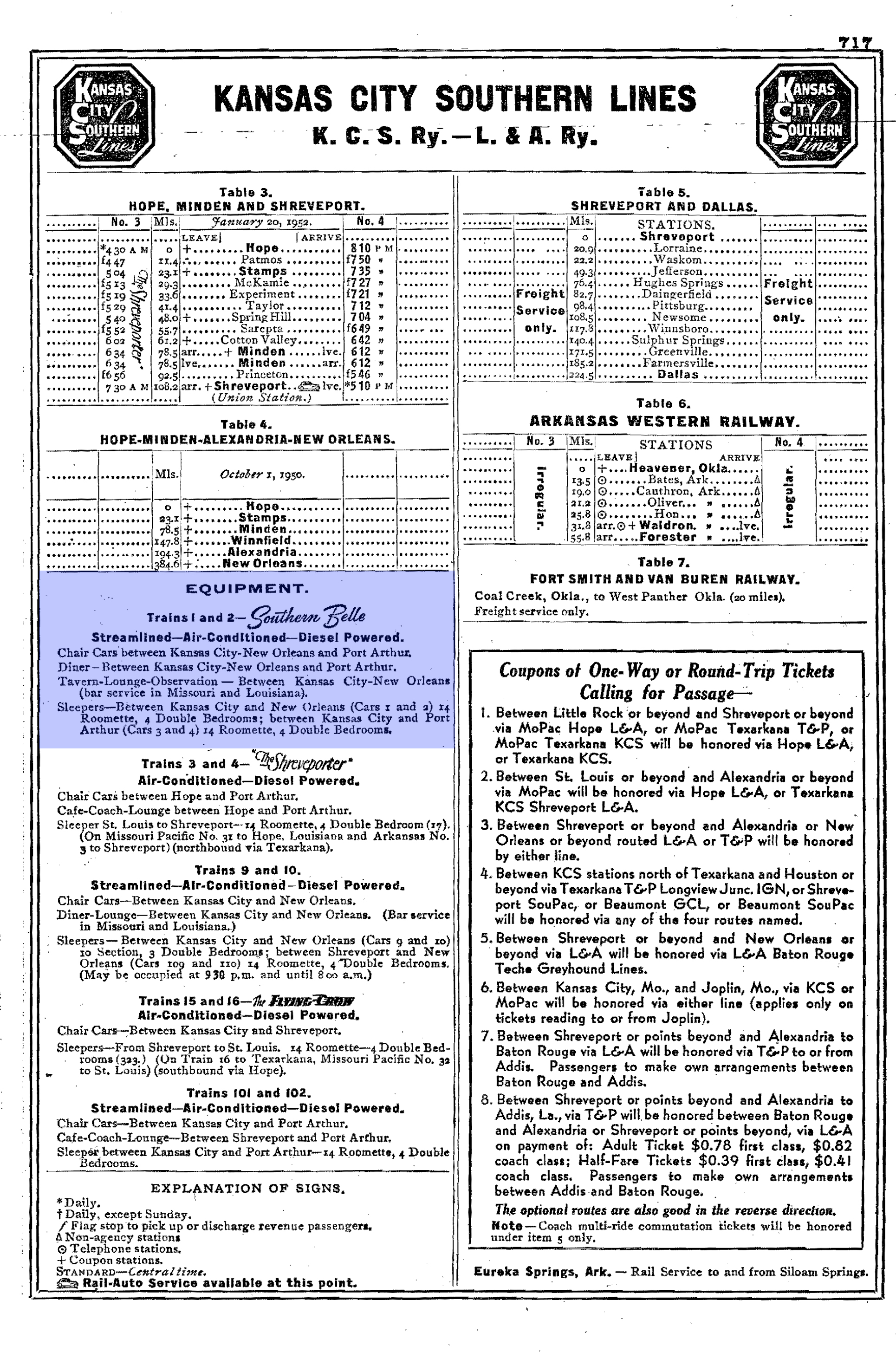
Interestingly enough, the region and Belle proved to be so lucrative for the KCS that the railroad continued to order new equipment from Pullman-Standard through 1965 (passenger traffic had actually jumped during the mid-1960s from its levels at the beginning of the decade).
Interestingly, this purchase was the last new passenger equipment acquired by a private railroad before the days of Amtrak, which began May 1, 1971.
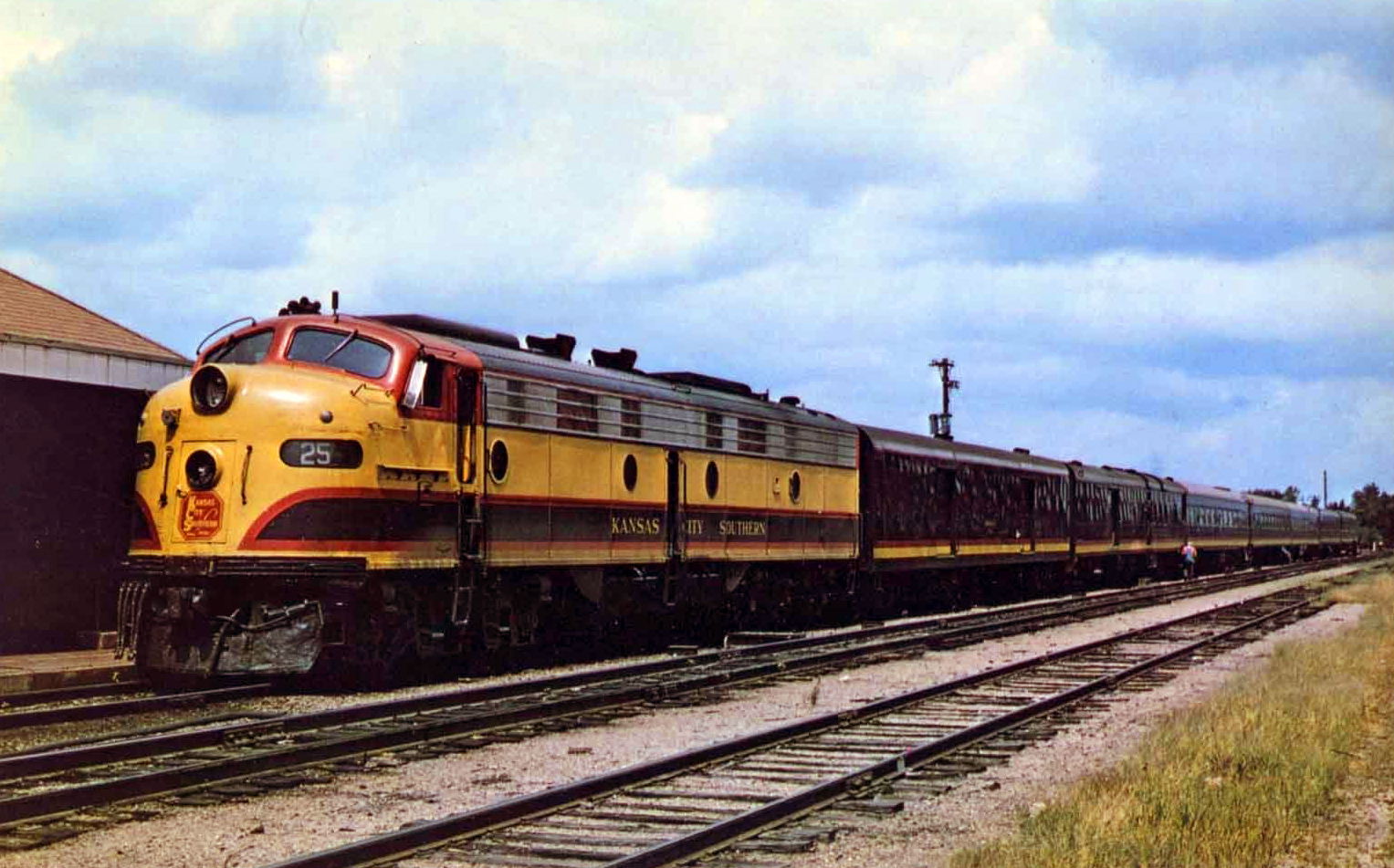
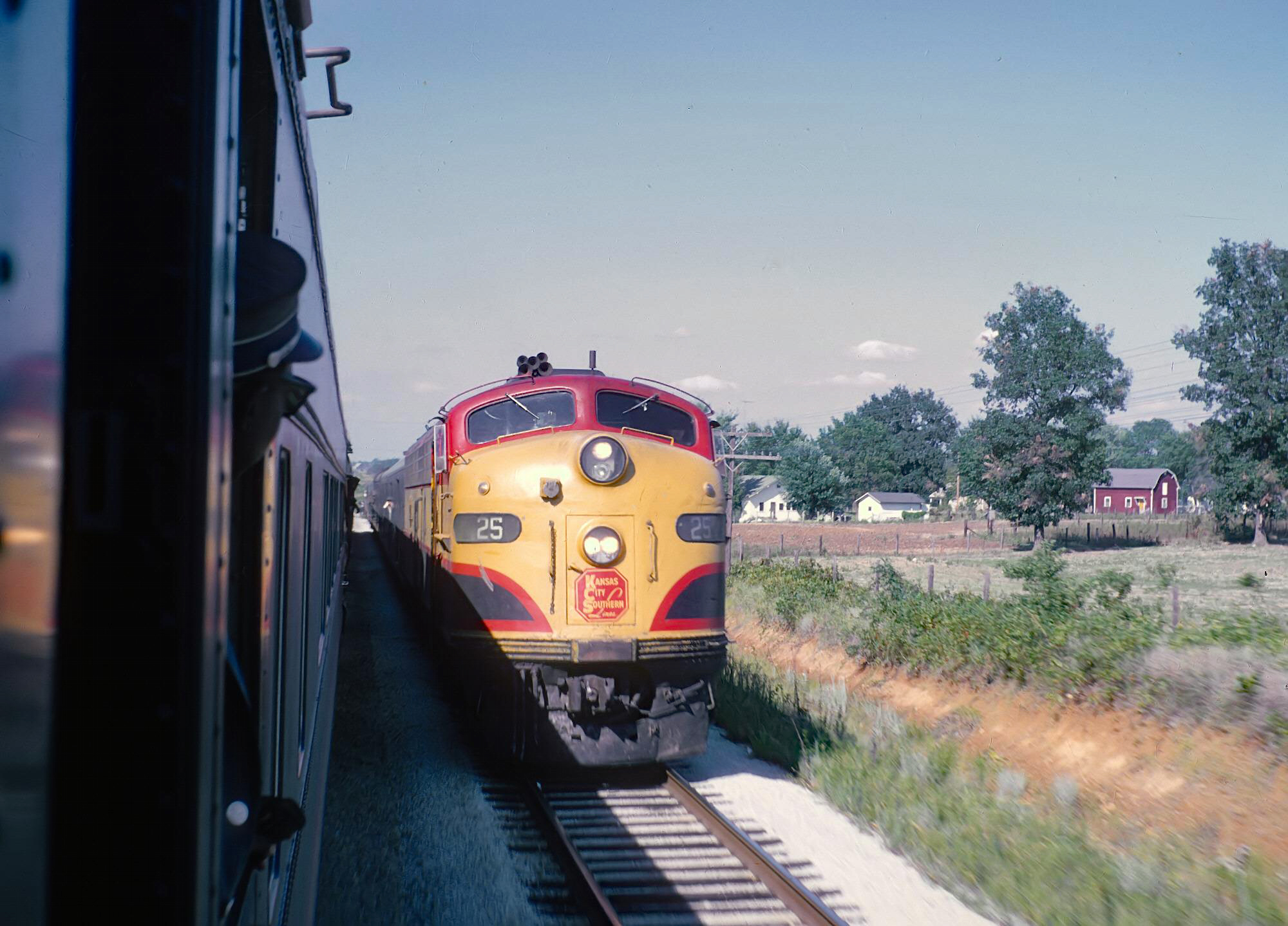 Kansas City Southern E9Am #25 (an E6A rebuild) is ahead of train #1, the "Southern Belle" at Westville, Oklahoma in September, 1965. Rick Burn photo.
Final Years
It would be the discontinuance of the US Postal Service’s mail contracts in 1967, along with a cutback in feeder trains to the main line services that ultimately did in not only the Belle but also nearly all passenger trains offered by Kansas City Southern.
In just three years since the railroad had ordered new equipment from Pullman it discontinued the Bell on November 2, 1969.
Today, however, you can still catch a version of the Southern Belle in the way of the railroad’s business train, which has brought back its old livery and pulls the train with a matching A-B-A set of FP9s (all units, of which, are ex-Canadian National).
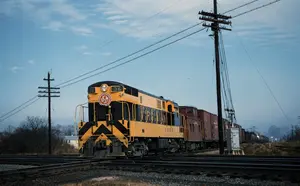
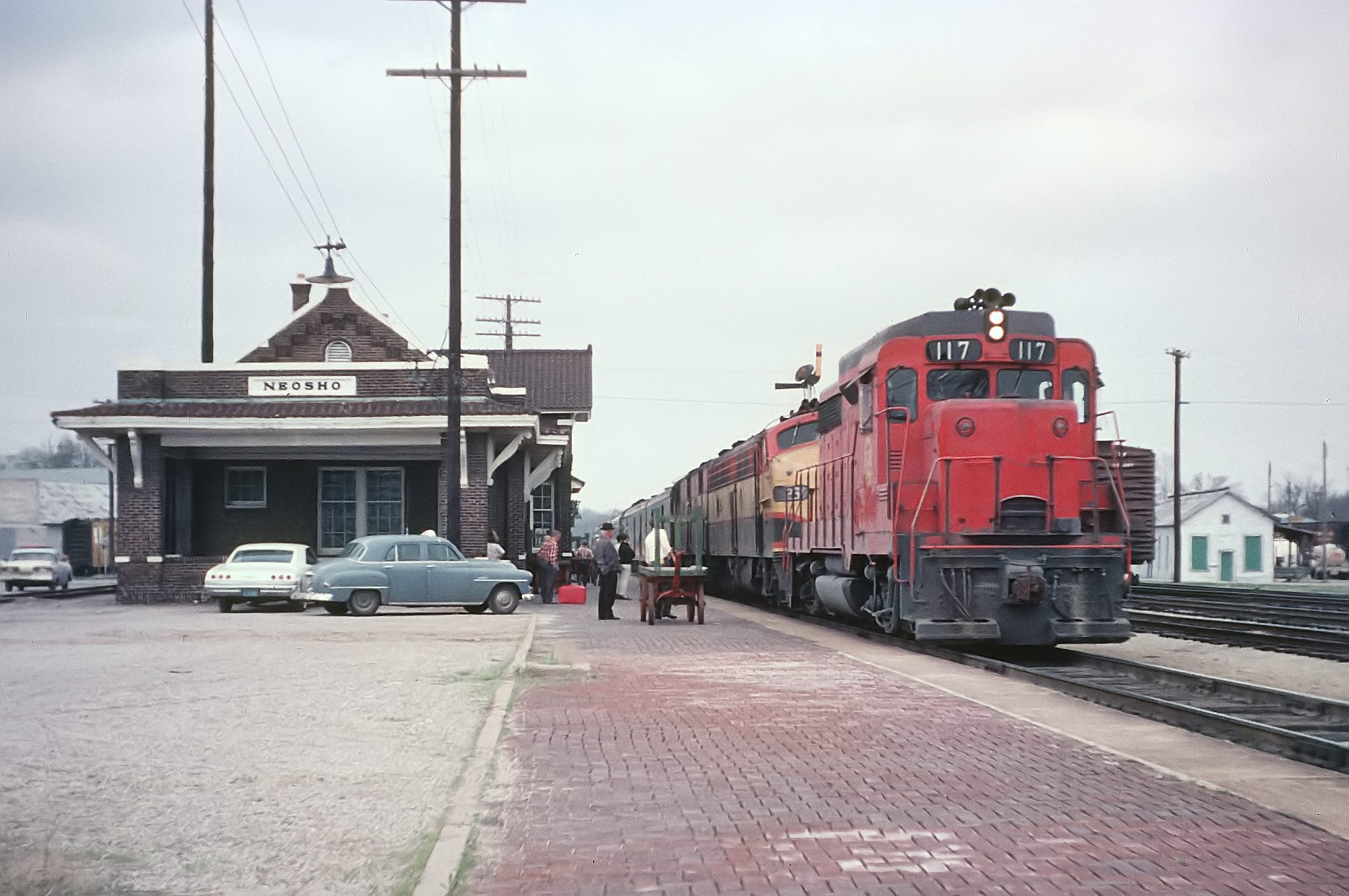 Kansas City Southern GP30 #117 with Train #1, the "Southern Belle," at Neosho, Missouri in April, 1967. Unknown photographer, Rick Burn collection.
Sources
- Boyd, Jim. Kansas City Southern, In Color: The Era Of Streamlined Hospitality, 1940-1970. Scotch Plains: Morning Sun Books, 2003.
- Schafer, Mike. More Classic American Railroads. Osceola: MBI Publishing, 2000.
- Schafer, Mike and Welsh, Joe. Streamliners, History of a Railroad Icon. St. Paul: MBI Publishing, 2003.
Recent Articles


-
Chicago & Illinois Midland Steam Roster (Post 1900)
Oct 20, 26 12:30 AM
 Chicago & Illinois Midland steam locomotives built since 1900. Drury's class grid, 57 engines. Twenty-six 2-10-2s, including nine from the Wabash and nine from the Atlantic Coast Line. Last road steam…
 -
Chicago & Illinois Midland Diesel Roster (All-Time)
Oct 20, 26 12:20 AM
 All-time diesel roster of the Chicago & Illinois Midland. 28 frames, each counted once. Six SW1200s, five SD9s, the only two RS1325s, two SD18s, six SD38-2s, and four SD20s. Serials included.
 -
Chicago and Illinois Midland Railroad: Map, Rosters, History
Oct 20, 26 12:17 AM
 The Chicago & Illinois Midland moved Illinois coal for Commonwealth Edison, Taylorville and Springfield to Pekin, with Peoria over the Peoria & Pekin Union. The 1906 railway began operating February 1…
 -
Chicago & Eastern Illinois Diesel Roster (All-Time)
Oct 19, 26 04:23 PM
 All-time diesel roster of the Chicago & Eastern Illinois. 143 frames, each counted once. Switchers, F3s, FP7s, E7s, the BL1, and the GP7s through GP35s. Serials included.
 -
Chicago & Eastern Illinois Steam Roster (Post 1900)
Oct 19, 26 04:19 PM
Chicago & Eastern Illinois steam locomotives built or rebuilt since 1900. 146 Consolidations, 60 Mikados, and 24 Pacifics. Drury's class grid. Last steam was Mikado 1944 at Vincennes on May 5, 1950. -
Chicago and Eastern Illinois Railroad: Map, Rosters, History
Oct 19, 26 03:57 PM
 The Chicago & Eastern Illinois ran from Chicago to Evansville, St. Louis, and Thebes. First company of the name, August 28, 1877. The remainder merged into the Missouri Pacific on October 15, 1976. St…
 -
Rock Island Diesel Roser: All-Time
Oct 19, 26 11:05 AM
 Chicago, Rock Island and Pacific diesel locomotives, 1,029 frames counted once. Switchers, cab units, road-switchers, two acquired slugs, five RDCs, and bi-power 10000. Serial and order are separate c…
 -
Rock Island Steam Roster: Post 1900
Oct 19, 26 11:01 AM
 Chicago, Rock Island and Pacific steam locomotives built or rebuilt since 1900. Drury's class grid, 1,482 frames counted once, including 85 4-8-4s. Last revenue steam was July 1953.
 -
Rock Island Railroad: Map, Pictures, Logo, History
Oct 19, 26 10:51 AM
 The Chicago, Rock Island and Pacific ran from Chicago to the Twin Cities, Denver, Tucumcari, and the Gulf. First train October 10, 1852. Directed service ended March 23, 1980. Steam and diesel rosters…
 -
EMD "F7" Locomotives: Cab, Top Speed, Specs, Rosters
Oct 19, 26 12:27 AM
 EMD F7 cab units and boosters, 1,500 horsepower, built February 1949 through December 1953. Gear ratios, specifications, and the production roster by owner, serial, and order.
 -
Harlem Transfer Company: An NYC Terminal System
Oct 19, 26 12:01 AM
 Harlem Transfer Company, the Lackawanna's offline freight terminal on the Bronx side of the Harlem River at East 135th Street. Carfloats to Hoboken, boxcab No. 2, and GE 44-tonner 53.
 -
Belpre Industrial Parkersburg Railroad: Roster, History, Photos
Oct 18, 26 11:44 PM
 Belpre Industrial Parkersburg Railroad, a Class III short line leasing about 46.9 miles of CSX track at Parkersburg since 2020. The Ohio River bridge, the Marietta Subdivision, and five GP38-3s.
 -
Chicago, Peoria & St. Louis Railroad: Map, Timetables, History
Oct 18, 26 10:57 PM
 Chicago, Peoria & St. Louis Railroad, an Illinois line from Pekin and Peoria through Springfield to Madison. Chartered in 1853. Sold in parcels on November 20, 1924. The Pekin line is today the Illino…
 -
Chicago, Burlington & Quincy Diesel Roster (All-Time)
Oct 18, 26 10:54 PM
 All-time diesel roster of the Chicago, Burlington & Quincy. 951 parent frames, 72 Colorado & Southern, and 36 Fort Worth & Denver, each counted once. Serials included.
 -
Burlington Railroad (CB&Q): Map, History, Rosters, Photos
Oct 18, 26 10:49 PM
 The Chicago, Burlington & Quincy, the Burlington Route, ran from Chicago to Denver, the Twin Cities, and the Gulf. Steam built since 1900 and the diesel fleets are companion rosters. Burlington Northe…
 -
Chicago, Burlington & Quincy Steam Roster (Post 1900)
Oct 18, 26 10:33 PM
 Chicago, Burlington & Quincy steam locomotives built or rebuilt since 1900. 429 Prairies, 383 Mikados, the Hudsons, and the O-5 4-8-4s. Drury's class grid.
 -
Virginian Railway's 2-6-6-6 Locomotives (Class AG)
Oct 18, 26 01:38 PM
 Virginian Railway class AG. Eight Lima 2-6-6-6s, Nos. 900-907, built in 1945 for the east end. Billed at 753,000 pounds. Scrapped in 1960.
 -
Pennsylvania (PRR) Steam Roster: Post 1906
Oct 18, 26 01:05 PM
 ennsylvania steam after 1906—H8, H9, and H10 Consolidations, 574 L1s Mikados, 598 I1s Decapods, 425 K4s Pacifics, 301 M1 Mountains. Drury’s grid. Last steam November 30, 1957.
 -
Chicago, Aurora and Elgin Railroad: The "Roarin' Elgin"
Oct 18, 26 10:54 AM
 The Chicago, Aurora & Elgin, the Roarin' Elgin, ran 600-volt third-rail trains from Chicago to Aurora, Batavia, and Elgin. Passenger service ended at noon on July 3, 1957. Freight ended June 11, 1959.
 -
Algoma Central Railway: Map, Logo, Rosters
Oct 17, 26 10:49 PM
 Algoma Central Railway, Sault Ste. Marie to Hearst. Wisconsin Central on February 1, 1995. Fifty-nine steam locomotives and forty-two diesels.
 -
Akron, Canton and Youngstown Railroad: Map, History, Rosters
Oct 17, 26 05:49 PM
 Akron, Canton and Youngstown Railroad, Mogadore to Delphos. The rails never reached Canton or Youngstown. Norfolk & Western control on October 16, 1964. Twenty-six diesels and the historical society's…
 -
Georgia Railroad: Map, History, Logo, Rosters
Oct 17, 26 12:59 PM
 Georgia Railroad, the Georgia Railroad and Banking Company, Augusta to Atlanta, with the Athens branch and the Macon Road. Mark GA. The railroad properties were sold on November 4, 1982.
 -
West Point Route (Railroad): Map, History, Logo
Oct 16, 26 11:26 PM
 The West Point Route was a trademarked name comprising the Atlanta & West Point and Western Railway of Alabama, which were controlled by the Georgia Railroad.
 -
Virginian Railway Diesel Roster (All-Time)
Oct 16, 26 11:11 PM
 All-time diesel roster of the Virginian Railway. 40 Fairbanks-Morse H16-44s, 25 H24-66 Train Masters, and one GE 44-tonner. Serials included.
 -
Virginian Railway Steam Roster (Post 1900)
Oct 16, 26 10:55 PM
 Virginian Railway steam locomotives built since 1900. Mikados, 2-8-8-2s, the Triplex, class AE 2-10-10-2s, and the 1945 2-6-6-6s.
 -
Virginian Railway: Map, Rosters, History, Electrification
Oct 16, 26 10:51 PM
 Virginian Railway, Deepwater to Norfolk. Combined in 1907 and completed in 1909. Electrified from Roanoke to Elmore. Absorbed by the Norfolk & Western on December 1, 1959.
 -
Baldwin "Centipede" Locomotives: Specs, Roster, Photos
Oct 16, 26 03:58 PM
 Baldwin DR-12-8-1500/2 Centipede—2-D+D-2, two 608SC engines, 3,000 hp. SAL 4500 from the 1943 test bed. 54 on the serial list, 52 sold. PRR BP60 then BH50. None preserved.
 -
Louisville & Nashville Class M-1 2-8-4s: The Big Emmas
Oct 16, 26 03:52 PM
Louisville & Nashville class M-1, 42 Big Emma 2-8-4s. Baldwin in 1942 and 1944, Lima in 1949. Coal trains from Neon to DeCoursey. No locomotive survives. -
Tennessee, Alabama and Georgia Railway: Map, History, Rosters
Oct 16, 26 03:21 PM
 Tennessee, Alabama and Georgia Railway, Chattanooga to Gadsden. The May 1929 card is 91.7 miles. Southern stock control closed on a January 1, 1971 schedule. Five diesels and Prince's steam list.
 -
Railroad Museums In The USA (2026): State Guides & Collections
Oct 16, 26 02:29 PM
 U.S. railroad museums—what they are vs tourist railroads, preservation history (R&LHS, NRHS, IRM, Steamtown), state guides, and destination collections. Confirm hours on each museum’s site.
 -
Wyoming Railroad Museums (2026): A Complete Guide
Oct 16, 26 02:26 PM
 Wyoming railroad museums—the Cheyenne Depot, Burlington 5633 at Douglas, Big Boy 4004, and the Laramie depot. Confirm hours and which locomotive is on the property.
 -
West Virginia Railroad Museums (2026): A Complete Guide
Oct 16, 26 12:52 PM
 West Virginia railroad museums—Cass Scenic’s geared steam, the Hinton C&O collection, and the Martinsburg B&O roundhouse. Confirm hours and which locomotive is assigned.
 -
Washington Railroad Museums (2026): A Complete Guide
Oct 16, 26 12:46 PM
 Washington railroad museums—Snoqualmie, Elbe, Chehalis, Reardan, and the Northern Pacific depot at Toppenish. Confirm hours and which locomotive is assigned.
 -
Vermont Railroad Museums (2026): A Complete Guide
Oct 16, 26 12:42 PM
 Vermont railroad museums—the Shelburne Museum’s 1890 station, Central Vermont No. 220, and the private car Grand Isle. Confirm hours on the site.
 -
Tennessee Central Railway: Map, Logo, Rosters, History
Oct 16, 26 11:32 AM
 Tennessee Central Railway, Harriman to Hopkinsville. Reorganized January 26, 1922. Last day August 31, 1968. Thirty-one diesels and the railroad's steam roster.
 -
Southern Railway Steam Roster (Post 1900)
Oct 16, 26 09:40 AM
Southern Railway steam locomotives built since 1900. Ps-4 Pacifics, Ts Mountains, USRA Santa Fes, and the subsidiary grids for the CNO&TP, Alabama Great Southern, and New Orleans and Northeastern. -
Southern Railway (USA): Map, Locomotives, Logo, History
Oct 16, 26 09:28 AM
 The Southern Railway, formed July 1, 1894 from the Richmond and Danville and the East Tennessee, Virginia and Georgia. Washington. Norfolk Southern Railway on December 31, 1990.
 -
Seaboard Coast Line Diesel Roster (All-Time)
Oct 15, 26 04:21 PM
 All-time diesel roster of the Seaboard Coast Line. Inherited Coast Line and Seaboard locomotives, then 623 new locomotives in the printed orders, plus 28 acquired from other railroads.
 -
Seaboard Coast Line Railroad: Map, History, Photos
Oct 15, 26 04:17 PM
 The Seaboard Coast Line, formed July 1, 1967 from the Atlantic Coast Line and the Seaboard Air Line. Jacksonville. Family Lines, then the Seaboard System on December 29, 1982.
 -
South Carolina Railroad Museums (2026): A Complete Guide
Oct 15, 26 02:54 PM
 South Carolina railroad museums—Winnsboro’s Rockton & Rion line, Spartanburg’s Hub City depot, Greenwood’s Baldwin No. 19, and the Best Friend replica. Confirm hours on each site.
 -
South Dakota Railroad Museums (2026): A Complete Guide
Oct 15, 26 10:55 AM
 South Dakota railroad museums—the Hill City museum beside the 1880 Train, and Prairie Village at Madison. Confirm hours, and confirm whether Hill City is still open.
 -
Seaboard Air Line Diesel Roster (All-Time)
Oct 15, 26 10:46 AM
 All-time diesel roster of the Seaboard Air Line. 734 locomotives: E4s in 1938, Centipedes, Alco road switchers, and GP40s through February 1967. Serials included.
 -
Seaboard Air Line Steam Roster (Post 1900)
Oct 15, 26 10:39 AM
 Seaboard Air Line steam locomotives built since 1900. Mikados, Russian Decapods, 2-10-2s, and the 2-6-6-4s sold to the Baltimore and Ohio in 1947. Drury's class grid.
 -
Seaboard Air Line Railroad: Map, Rosters, History
Oct 15, 26 10:34 AM
 The Seaboard Air Line, chartered in the Portsmouth and Roanoke of 1832 and formed July 1, 1900. Inland route to Florida. Merged into the Seaboard Coast Line on July 1, 1967.
 -
Utah Railroad Museums (2026): A Complete Guide
Oct 15, 26 12:04 AM
 Utah railroad museums—Ogden Union Station, Golden Spike at Promontory, the Helper mining museum, and the Heber Valley Railroad. Confirm hours on each site.
 -
Escanaba & Lake Superior Diesel Roster (All-Time)
Oct 14, 26 10:44 PM
All-time diesel roster of the Escanaba & Lake Superior. 30 locomotives: Baldwin switchers and RS-12s, two RF16s, three GP38s, three SD40-2s, and the Reserve Mining units. Serials and order numbers. -
Escanaba & Lake Superior Railroad: In Service Since 1898
Oct 14, 26 09:04 PM
 Escanaba & Lake Superior Railroad, chartered November 17, 1898, and still operating from Wells, Michigan. Logging line to Channing, the Milwaukee Road lines, and the diesel roster.
 -
Richmond, Fredericksburg & Potomac Diesel Roster (All-Time)
Oct 14, 26 08:49 PM
All-time diesel roster of the Richmond, Fredericksburg and Potomac. 107 locomotives: 22 Alco S2s, one SW1, and an Electro-Motive road fleet from E8s to GP40-2s. Serials and order numbers. -
Richmond, Fredericksburg & Potomac Steam Roster (Since 1900)
Oct 14, 26 08:46 PM
 Richmond, Fredericksburg and Potomac steam locomotives built since 1900. Pacifics, Mountains, Berkshire-type 2-8-4s, and the named 4-8-4s. Last revenue run December 17, 1954.
 -
Richmond, Fredericksburg and Potomac Railroad: Map, Rosters, Logo
Oct 14, 26 08:36 PM
 The Richmond, Fredericksburg and Potomac, chartered February 25, 1834. A 113-mile Richmond–Washington bridge line. Named 4-8-4s, Potomac Yard, and the CSX sale of October 10, 1991.