UP's "City of Portland" (Train): Consist, Route, Schedule
Last revised: February 24, 2025
By: Adam Burns
The City of Portland was one of the Union Pacific's very first streamliners in its City fleet. The railroad hosted an entire array of other plush City trains including the City of Angeles, City of Denver, City of Salina (the original M-10000), City of St. Louis, City of San Francisco).
The Portland became a highly successful streamliner following its debut as an semi-articulated trainset and convinced the UP that offering numerous on board amenities along with a sleek-looking train was the future of passenger rail travel.
History
Today, the City fleet can still be witnessed, in a manner of speaking, as the UP’s official business train is not only decorated in the Cities’ classic livery but also includes the original equipment from them, right down to the two E9A and E9B diesel locomotives that power it!
Union Pacific, the largest and most powerful railroad in the country, has been with us since 1862. Its creation is thanks to President Abraham Lincoln and Congress's efforts to build a transcontinental railroad.
The company is far older than any other American Class I railroad today with the Kansas City Southern in a nearby second.
Photos
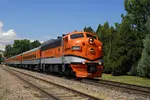
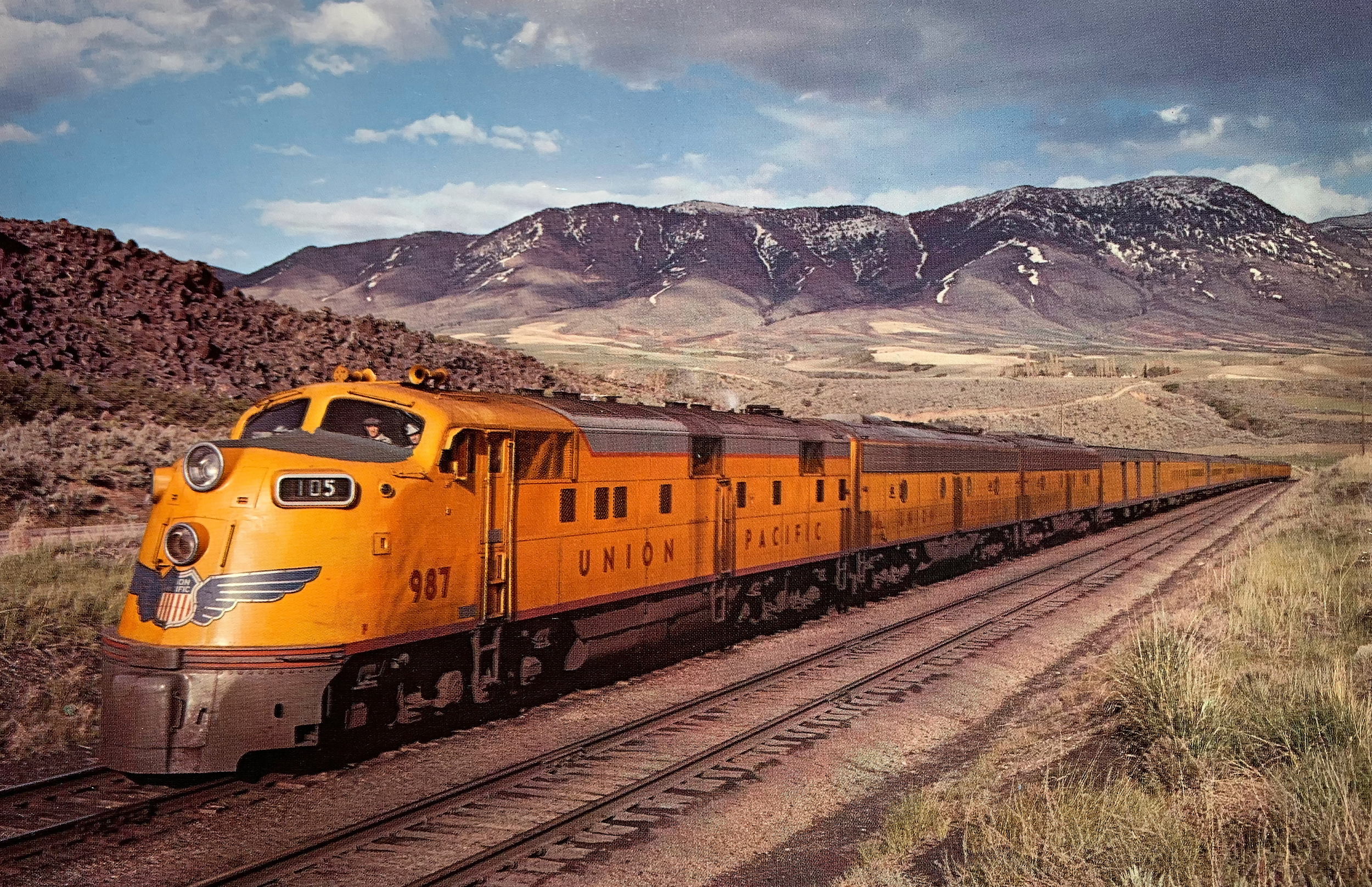 A Union Pacific publicity photo featuring train #105, the westbound "City of Portland," posed along the main line between McCammon and Pocatello, Idaho during the summer of 1953. American-Rails.com collection.
In that time UP has become not only one of the most highly respected institutions in the nation but also has seen nearly every major railroading event in our country’s history, and accordingly has a very long and storied history.
Initially launched on May 5, 1935, the City of Portland was Union Pacific’s gateway to the Pacific Northwest, although, because it operated a more southerly routing than famed Northwestern passenger trains like the Great Northern’s Empire Builder or Northern Pacific’s North Coast Limited the train is sometimes forgotten about or overlooked.
Like the City of Los Angeles, for the first twenty years or so of the train’s existence it was operated in conjunction with the Chicago & North Western Railway which ferried the Portland from Omaha, eastward to Chicago.
At A Glance
40 Hours, 45 Minutes (Westbound) 40 Hours, 30 Minutes (Eastbound) |
|
105 (Westbound) 106 (Eastbound) | |
Union Station (Chicago) Union Station (Portland) |
This setup lasted until 1955 when the UP, dissatisfied with the services C&NW was providing handed the train over to rival Milwaukee Road, a partnership that would last until the train’s end.
While the Empire Builder and North Coast Limited may go down in history as the most famous Northwestern passenger trains, the Portland carries several historical distinctions:
- Firstly, the train was the very first streamlined transcontinental passenger train to operate when it took to the rails in the spring of 1935, known on the UP as the M-10001 it was a semi-articulated trainset with a five-car consist.
- Secondly, the Portland was the first to offer dining and sleeping services. The train was also the first to feature the now-classic round-end observation.
Along with the City of Los Angeles, the Portland was Union Pacific’s premier passenger operation and the railroad spared no expense on the train.
While the City of Portland's routing offered a bit less scenery over the prairies and foothills of the famed Overland Route between Omaha, Nebraska and Granger, Wyoming the train featured accommodations as fine as anything one could find nationwide.
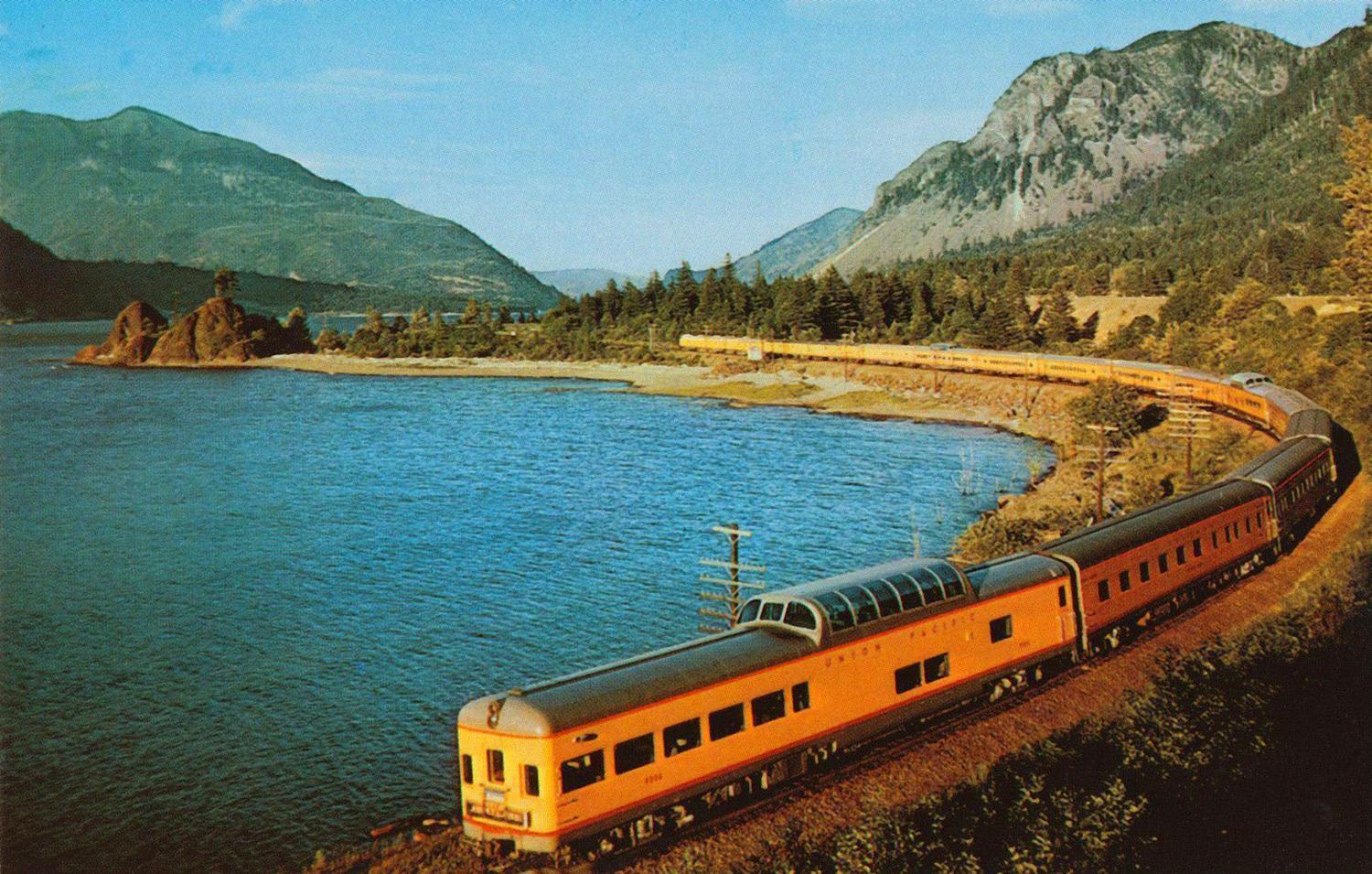 The famous publicity photo of the "City of Portland" features the train skirting the Columbia River Gorge east of Portland. The scene dates to no earlier than 1954-1955 when Union Pacific acquired its 35 lightweight, streamlined cars from American Car & Foundry. Bringing up the train's tail end is Astra-Dome, blunt-end observation lounge #9006. There were five built for the train.
With the railroad receiving upgraded equipment from both Pullman-Standard, American Car & Foundry, and EMD following World War II, the Portland the train was completely reequipped with new lightweight, streamlined equipment and in the 1950s received Domeliners.
Timetable (June, 1956)
| Read Down Time/Leave (Train #105/Milwaukee Road) | Milepost | Location | Read Up Time/Arrive (Train #106/Milwaukee Road) |
|---|---|---|---|
| 4:45 PM (Dp) | 0.0 | 11:30 AM (Ar) | |
| 5:25 PM | 37 | 10:35 AM | |
| 80 | 9:57 AM | ||
| 6:56 PM (Ar) | 138 | 9:02 AM (Dp) | |
| 7:03 PM (Dp) | 138 | 8:55 AM (Ar) | |
| 8:31 PM | 227 | 7:34 AM | |
| 10:35 AM (Ar) | 362 | 5:26 AM (Dp) | |
| 10:40 AM (Dp) | 362 | 5:21 AM (Ar) | |
| 423 | 4:27 AM | ||
| 1:00 AM (Ar) | 487 | 3:15 AM (Dp) | |
| Time/Leave (Train #105/Union Pacific) | Milepost | Location | Time/Arrive (Train #106/Union Pacific) |
| 1:10 AM (Dp) | 487 | 3:05 AM (Ar) | |
| F | 525 | F | |
| F | 570 | F | |
| 3:14 AM (Ar) | 632 | 12:55 AM (Dp) | |
| 3:15 AM (Dp) | 632 | 12:54 AM (Ar) | |
| F | 674 | F | |
| 5:05 AM (Ar) | 769 | 11:03 PM (Dp) | |
| 4:10 AM (Dp) | 769 | 9:58 PM (Ar) | |
| 5:52 AM (Ar) | 893 | 8:17 PM (Dp) | |
| 5:53 AM (Dp) | 893 | 8:16 PM (Ar) | |
| 7:35 AM (Ar) | 995 | 6:55 PM (Dp) | |
| 7:45 AM (Dp) | 995 | 6:54 PM (Ar) | |
| 9:09 AM (Ar) | 1051 | 5:25 PM (Dp) | |
| 9:10 AM (Dp) | 1051 | 5:24 PM (Ar) | |
| 11:04 AM (Ar) | 1168 | 3:35 PM (Dp) | |
| 11:05 AM (Dp) | 1168 | 3:34 PM (Ar) | |
| F 12:55 PM | 1287 | F 1:35 PM | |
| 1:25 PM (Ar) | 1302 | 1:15 PM (Dp) | |
| 1:35 PM (Dp) | 1302 | 1:00 PM (Ar) | |
| F 2:47 PM | 1372 | F 11:40 AM | |
| 4:05 PM | 1447 | 10:20 AM | |
| 5:45 PM (Ar) | 1546 | 8:30 AM (Dp) | |
| 5:55 PM (Dp) | 1546 | 8:20 AM (Ar) | |
| 6:46 PM | 1605 | 7:24 AM | |
| 7:32 PM | 1654 | 6:40 AM | |
| 7:48 PM | 1670 | 6:22 AM | |
| 8:25 PM | 1706 | 5:45 AM | |
| 8:56 PM | 1734 | 5:13 AM | |
| 9:40 PM | 1781 | 4:30 AM | |
| 10:08 PM | 1800 | 4:06 AM | |
| 10:17 PM | 1809 | 3:50 AM | |
| 10:37 PM | 1832 | 3:29 AM | |
| 10:48 PM | 1842 | 3:17 AM | |
| 11:08 PM | 1859 | 2:59 AM | |
| 11:40 PM (Ar) | 1882 | 2:35 AM (Dp) | |
| 10:40 PM (Dp) | 1882 | 1:35 AM (Ar) | |
| 11:53 PM | 1930 | 12:10 AM | |
| 1:05 AM | 1982 | 11:10 PM | |
| 3:10 AM | 2056 | 9:08 PM | |
| 3:50 AM (Ar) | 2088 | 8:30 PM (Dp) | |
| 3:55 AM (Dp) | 2088 | 8:25 PM (Ar) | |
| 5:30 AM | 2188 | 6:50 PM | |
| F 6:01 AM | 2209 | F 6:18 PM | |
| 7:30 AM (Ar) | 2272 | 5:00 PM (Dp) |
The new equipment, as the original streamliners that had debuted in the mid-1930s, was also adorned in a striking livery of Armour yellow and light gray with red trim, a paint scheme still in use today on the Union Pacific.
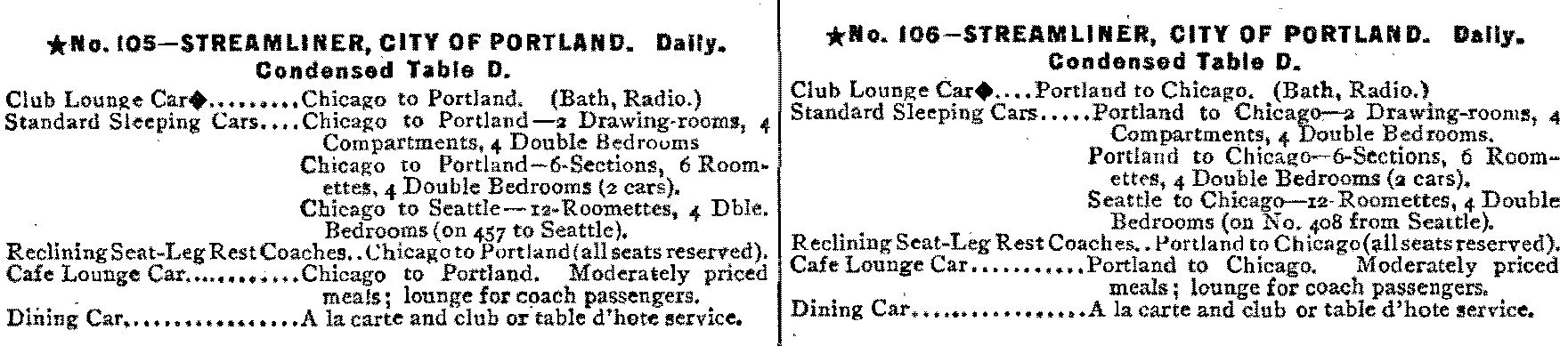
Consist (1952)
Consist (1958)
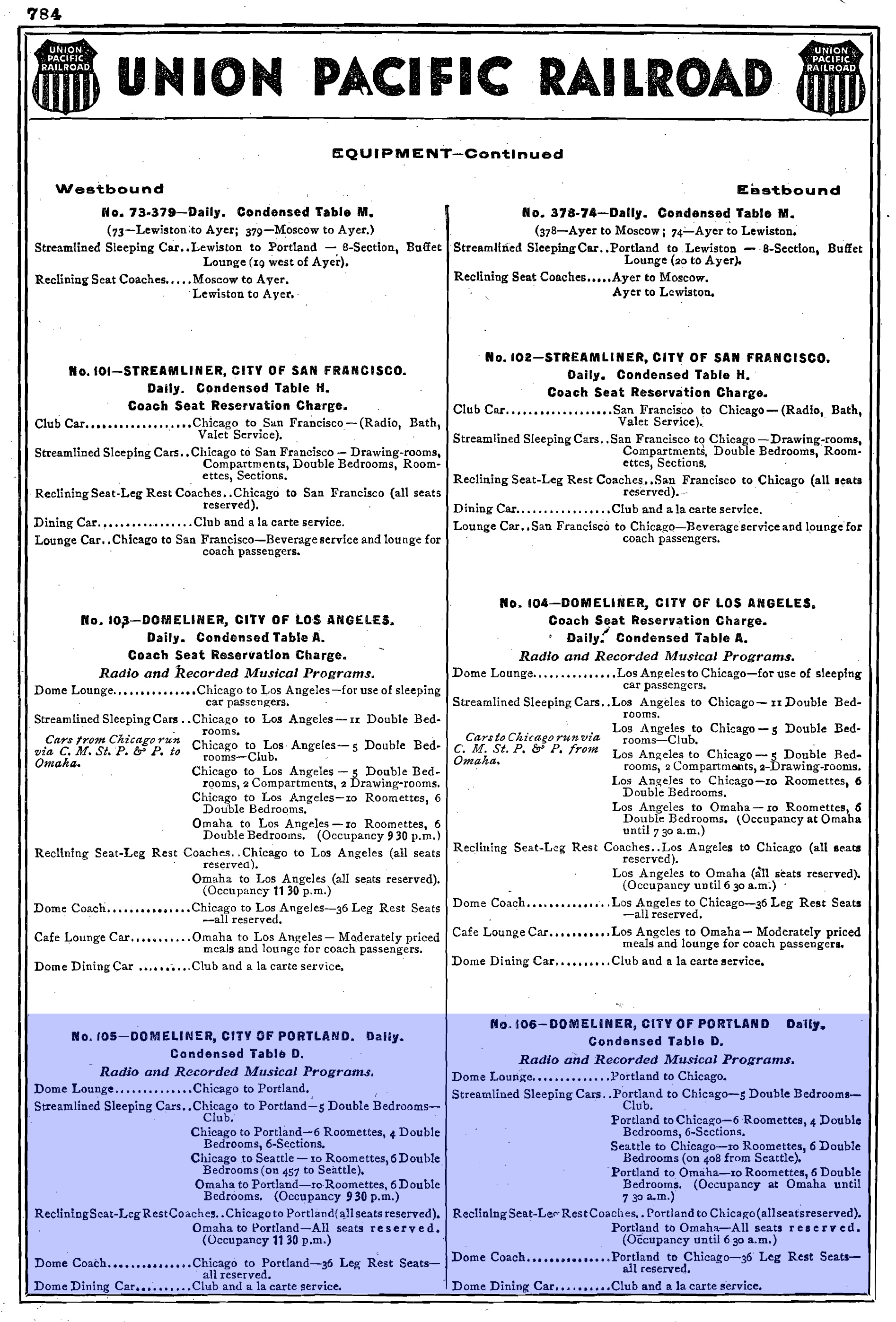
Overall, on a typical Portland
train one could expect to find four Pullman sleepers, café-lounge, dome
lounge-observation, dome coach, and a dome diner (in total the train's
consist included about 13 cars).
For power the train featured E7s on the point, and later used both E8s and E9s (the last two E series models EMD ever produced).
Interestingly, despite the City of Los Angeles and City of San Francisco normally receiving the most attention by historians, UP always considered the City of L.A. and City of Portland its two, premier streamliners, providing them with the newest and best equipment as it became available.
Menus
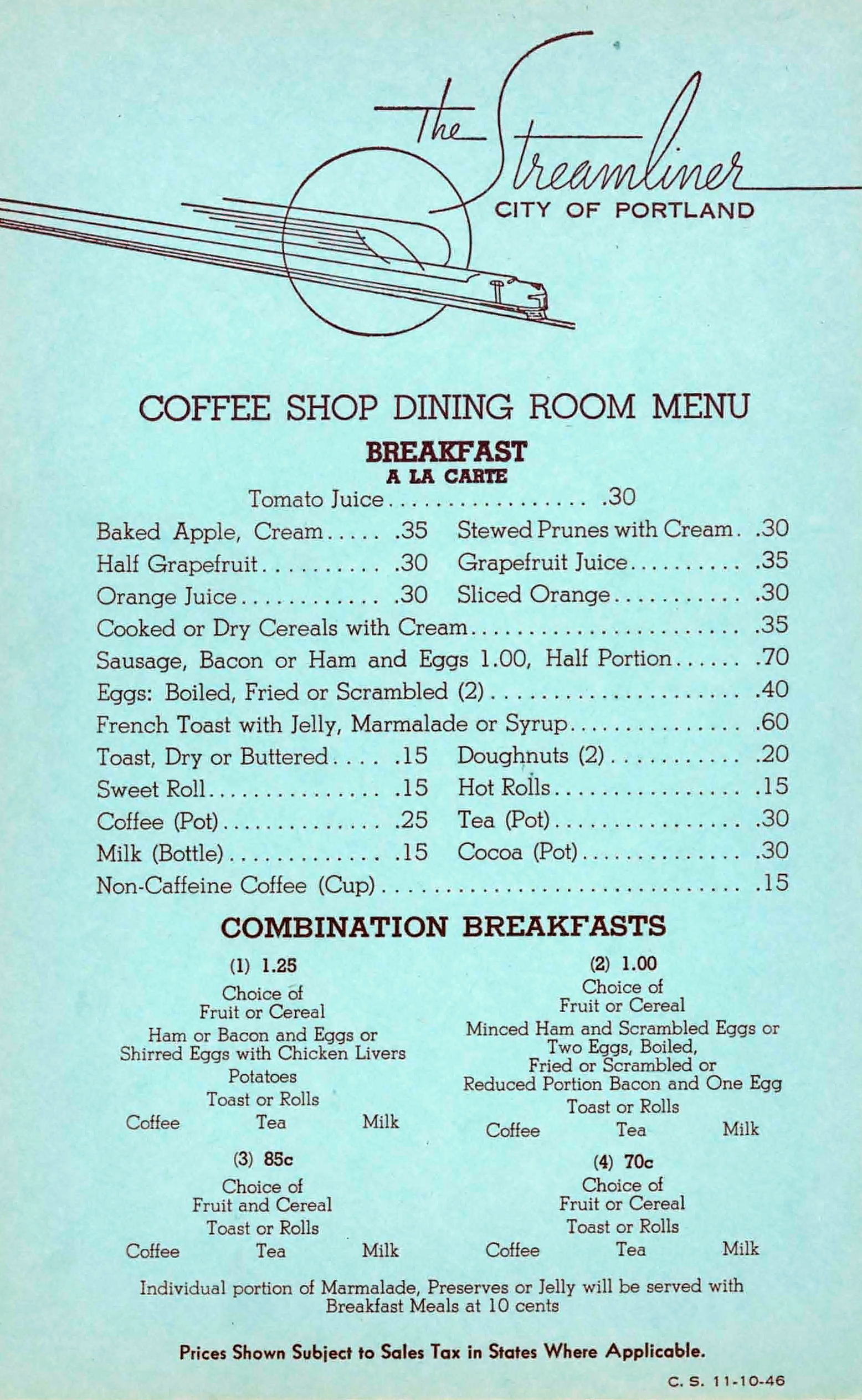
Breakfast (1946)
Lunch (1959)
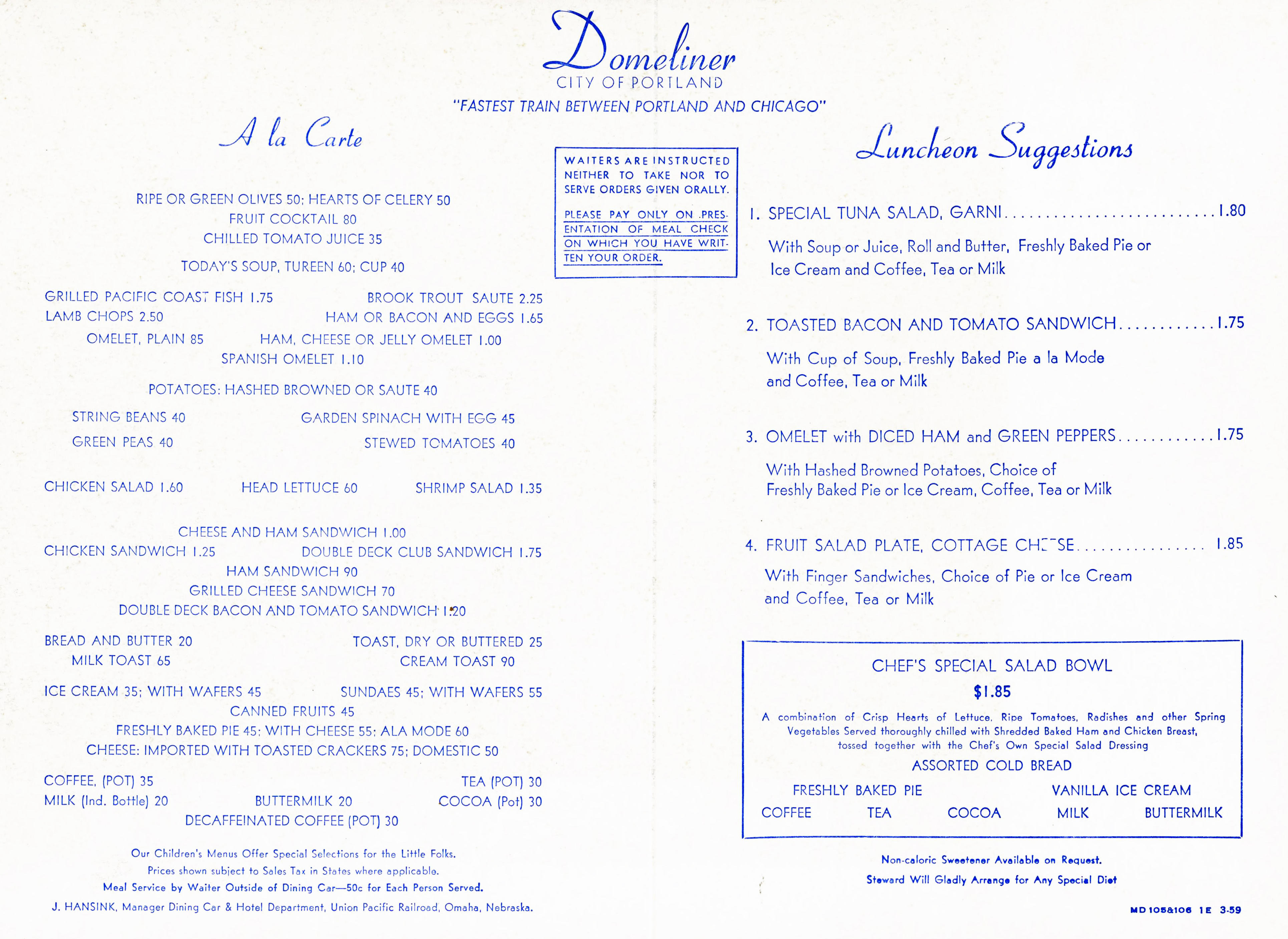
Dinner (1959)
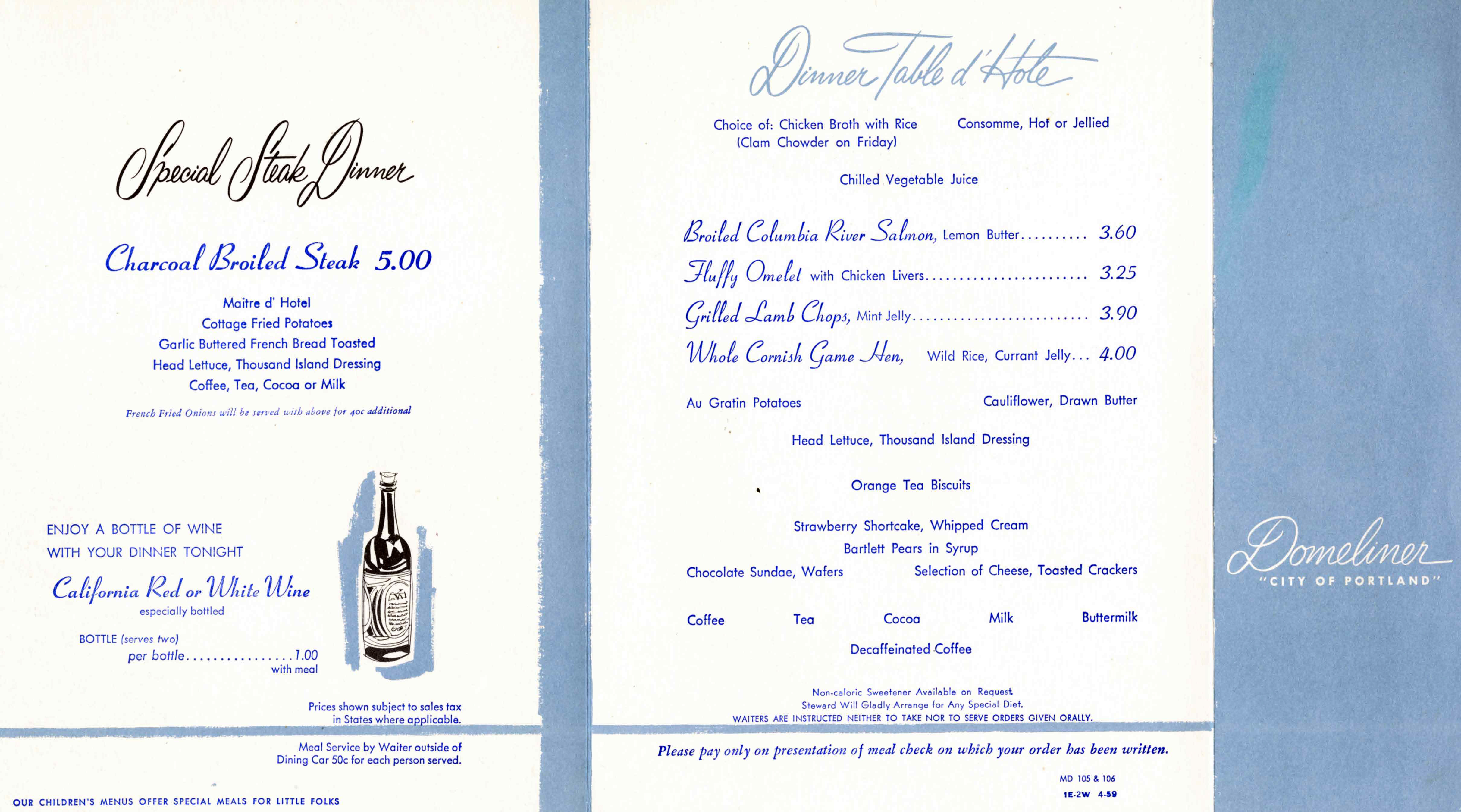
To provide passengers with the best viewing experience aboard the Portland the Union Pacific scheduled the train to run through darkness, as much as possible, east of Cheyenne, Wyoming so that patrons could enjoy the breathtaking views of the mountain ranges through western Wyoming, Idaho, and Oregon.
Timetable (1958)
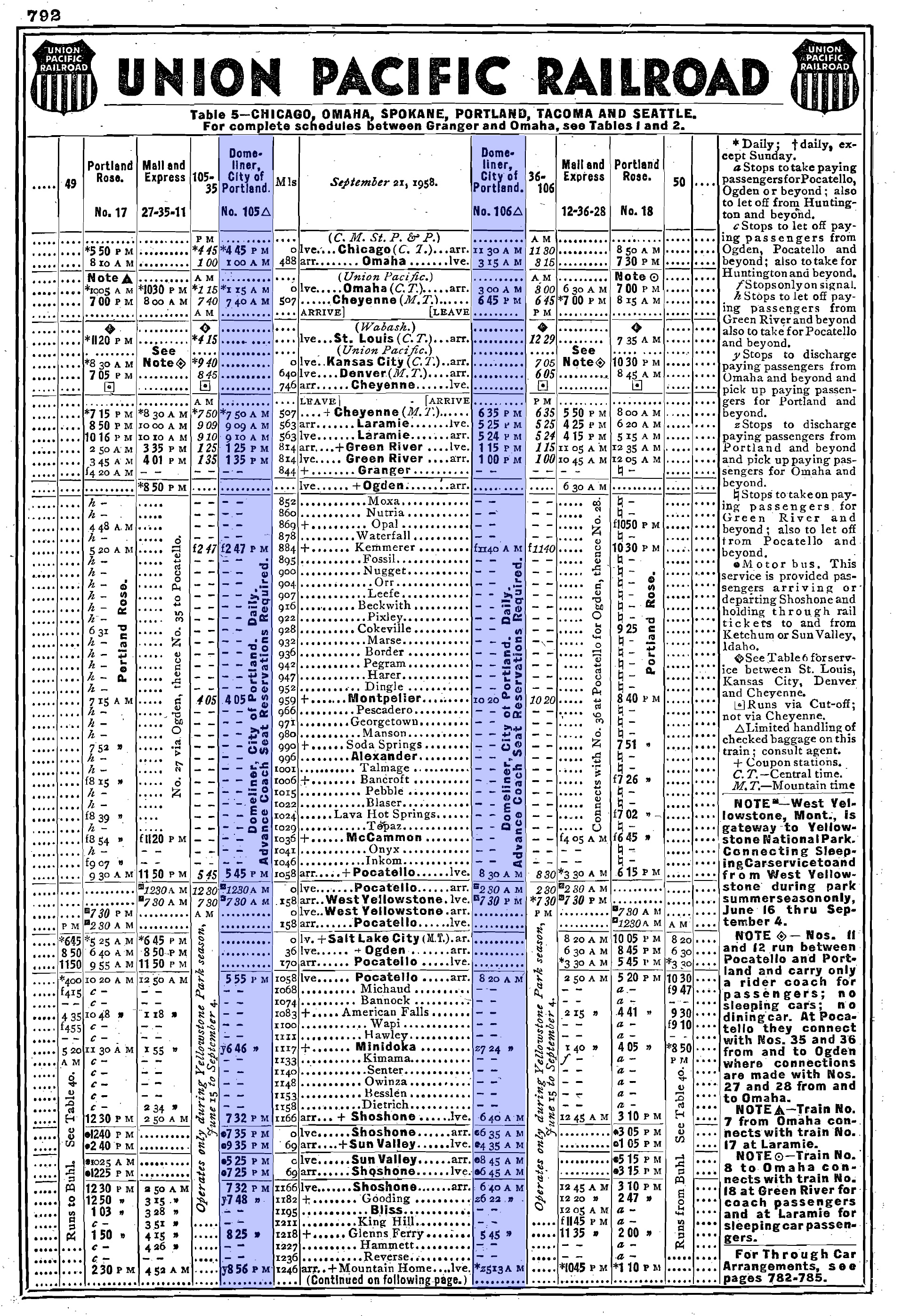
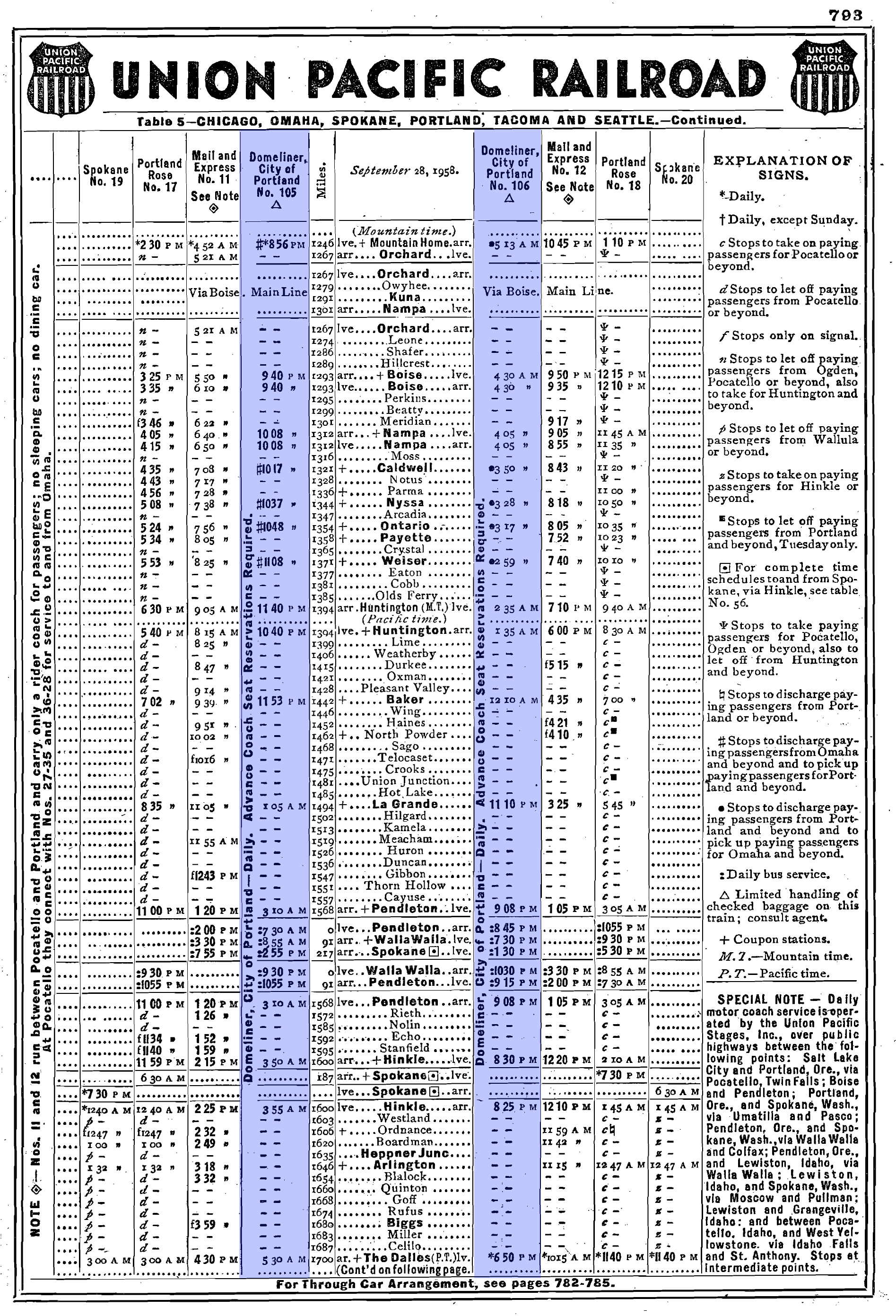
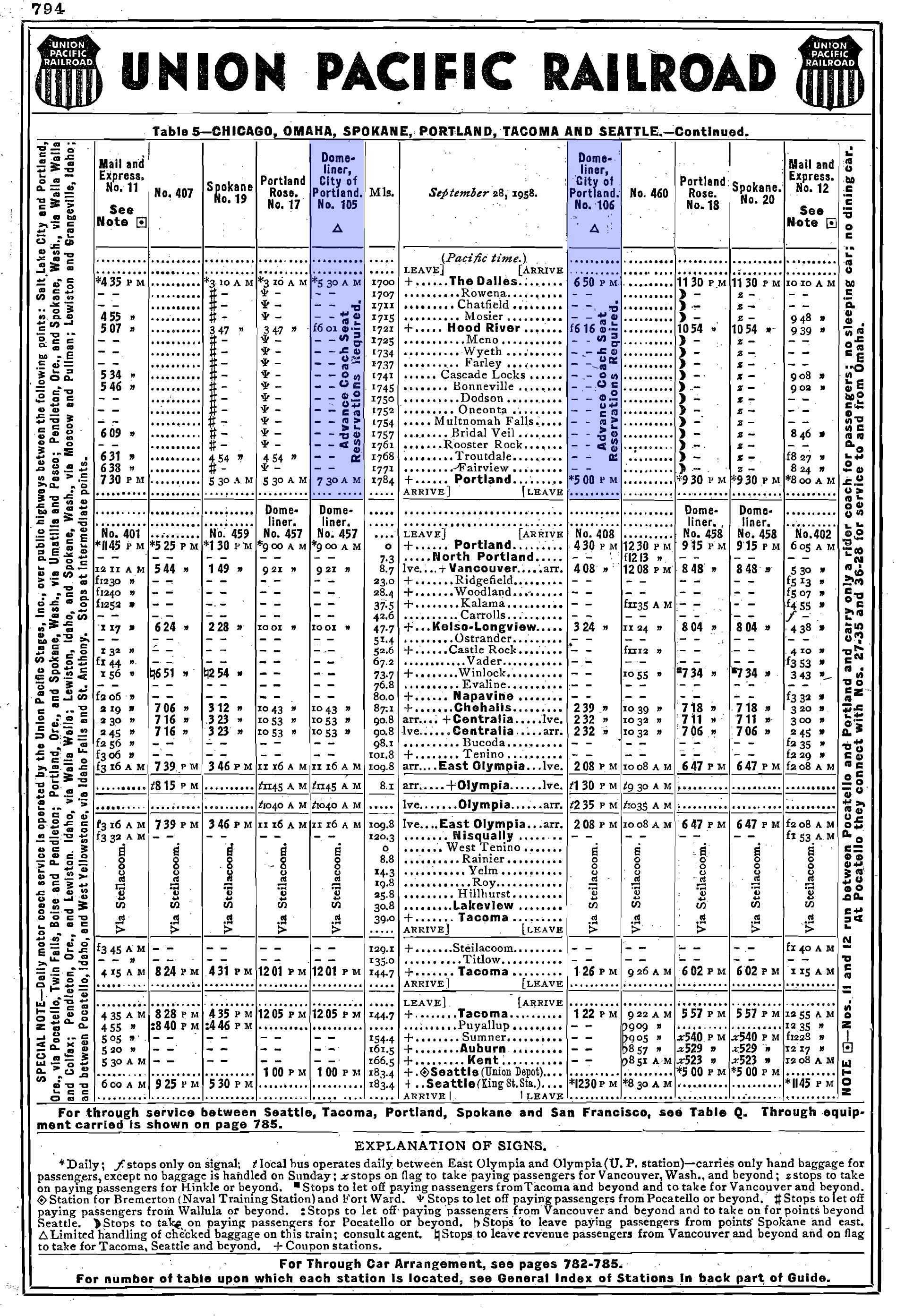
Listed as Trains #105 (westbound) and #106 (eastbound) on Union Pacific's official timetable, the Portland would leave Chicago Union Station around 5 pm in the evening and be handed off to the UP at Omaha around 1 am early the following morning.
From there patrons could wake up to breakfast at Cheyenne and see the gorgeous mountain views for the rest of the day, having dinner that evening in south-central Idaho as the continued westward.
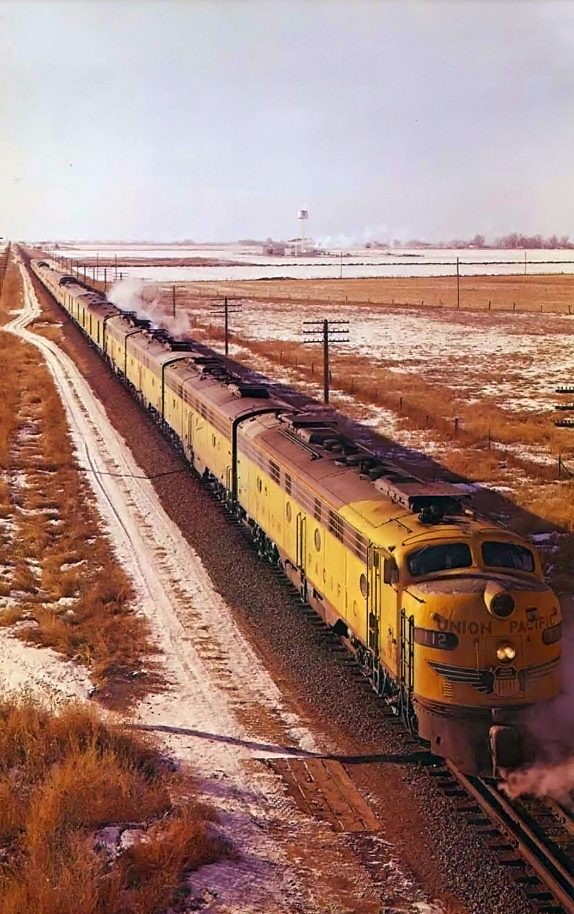 Union Pacific's combined "City of Denver"/"City of Portland" is eastbound at Gilcrest, Colorado circa 1961.
Final Years
Heading to bed that night passengers could then wake up early the next morning ready to de-board at Portland although the train did offer through sleeper service to Seattle.
Overall the trip would normally take just under 41 hours with UP able to carry an average train speed of nearly 56 mph (quite fast for the rugged country in which the railroad operated!).
Through the end the City of Portland, along with her sister City trains, remained a top-notch, all matching consist operation by Union Pacific although by the 1960s the railroad had combined most of its City fleet east of Wyoming.
While service remained at a high level this, however, did not secure the Portland or other City trains’ futures as they were all discontinued with the startup of Amtrak in the spring of 1971. Today, the trains live on in memory only and UP's official business train.
Recent Articles


-
Wisconsin BBQ Tasting Train Rides
Mar 12, 26 10:57 PM
 The Wisconsin Great Northern Railroad will once again welcome passengers aboard its popular Spring BBQ Dinner Train in 2026.
 -
Connecticut DOT Awards $20 Million In Railroad Grants
Mar 12, 26 01:19 PM
 The Connecticut Department of Transportation (CTDOT) has announced a new round of funding aimed at improving the safety, reliability, and capacity of the state’s freight rail network.
 -
California's Beer Tasting Train Rides
Mar 12, 26 12:59 PM
 While the Niles Canyon Railway is known for family-friendly weekend excursions and seasonal classics, one of its most popular grown-up offerings is Beer on the Rails.
 -
Reading & Northern Unveils Semiquincentennial 1776
Mar 12, 26 12:48 PM
In November 2025, the Reading, Blue Mountain & Northern Railroad (RBMN)—commonly known as the Reading & Northern—announced the debut of a striking patriotic locomotive commemorating the upcoming 250th… -
New Jersey's Beer Tasting Train Rides
Mar 12, 26 11:35 AM
 On select dates, the Woodstown Central Railroad pairs its scenery with one of South Jersey’s most enjoyable grown-up itineraries: the Brew to Brew Train.
 -
Florida BBQ Tasting Train Rides
Mar 12, 26 11:28 AM
 While Florida does not currently offer any BBQ train rides the Florida Railroad Museum does host a similar event, a campfire experience!
 -
Texas "Murder Mystery" Dinner Train Rides
Mar 12, 26 10:40 AM
 Here’s a comprehensive look into the world of murder mystery dinner trains in Texas.
 -
Connecticut's Murder Mystery Dinner Train Rides
Mar 12, 26 10:36 AM
 All aboard the intrigue express! One location in Connecticut typically offers a unique and thrilling experience for both locals and visitors alike, murder mystery trains.
 -
Missouri's Wine Tasting Train Rides
Mar 12, 26 10:33 AM
 The fusion of scenic vistas, historical charm, and exquisite wines is beautifully encapsulated in Missouri's wine tasting train experiences.
 -
Minnesota's Wine Tasting Train Rides
Mar 12, 26 10:28 AM
 This article takes you on a journey through Minnesota's wine tasting trains, offering a unique perspective on this novel adventure.
 -
Charlotte Approves $37.9M For "Red Line" To Lake Norman
Mar 11, 26 02:18 PM
 The Charlotte City Council has approved $37.9 million in funding for the next phase of design work on the long-planned Red Line commuter rail project.
 -
NS, Progress Rail Announce SD70ICC Modernization
Mar 11, 26 12:15 PM
 Norfolk Southern Railway has announced a significant locomotive modernization initiative in partnership with Progress Rail Services Corporation that will rebuild 96 existing road locomotives into a ne…
 -
Colorado Seeks Input On Proposed Front Range Passenger Train Name
Mar 11, 26 11:55 AM
 Colorado officials are inviting the public to help name a proposed passenger train that could one day connect major cities along the state’s heavily traveled Interstate 25 corridor.
 -
Virginia Whiskey Train Rides
Mar 11, 26 11:22 AM
 Among the Virginia Scenic Railway's most popular specialty excursions is the “Bourbon & BBQ” tasting train, an adults-oriented rail journey that pairs scenic views of the Shenandoah Valley with guided…
 -
Minnesota's Beer Tasting Train Rides
Mar 11, 26 10:32 AM
 Among the North Shore Scenic Railroad's special events, one consistently rises to the top for adults looking for a lively night out: the Beer Tasting Train.
 -
New Mexico's Beer Tasting Train Rides
Mar 11, 26 10:23 AM
 Sky Railway's New Mexico Ale Trail Train is the headliner: a 21+ excursion that pairs local brewery pours with a relaxed ride on the historic Santa Fe–Lamy line.
 -
Indiana's Murder Mystery Dinner Train Rides
Mar 11, 26 10:19 AM
 This piece explores the allure of murder mystery trains and why they are becoming a must-try experience for enthusiasts and casual travelers alike.
 -
Ohio's Murder Mystery Dinner Train Rides
Mar 11, 26 10:02 AM
 The murder mystery dinner train rides in Ohio provide an immersive experience that combines fine dining, an engaging narrative, and the beauty of Ohio's landscapes.
 -
Kentucky Easter Train Rides
Mar 10, 26 11:39 AM
 The Bluegrass State is home to beautiful rolling farms and the western Appalachian Mountain chain, which comes alive each spring. A few railroad museums host Easter-themed events during this time.
 -
California Easter Train Rides
Mar 10, 26 10:26 AM
 California is home to many tourist railroads and museums; several offer Easter-themed train rides for the entire family.
 -
NS Faces Multiple Derailments Near Historic Horseshoe Curve
Mar 10, 26 10:15 AM
One of America’s most famous railroad landmarks, the legendary Horseshoe Curve west of Altoona, Pennsylvania, has recently been the site of multiple freight-train derailments involving Norfolk Souther… -
Oregon's Beer Tasting Train Rides
Mar 10, 26 10:11 AM
 If your idea of a perfect night out involves craft beer, scenery, and the gentle rhythm of jointed rail, Santiam Excursion Trains delivers a refreshingly different kind of “brew tour.”
 -
Arizona's Beer Tasting Train Rides
Mar 10, 26 09:57 AM
 Verde Canyon Railroad’s signature fall celebration—Ales On Rails—adds an Oktoberfest-style craft beer festival at the depot before you ever step aboard.
 -
Connecticut's Wine Tasting Train Rides
Mar 10, 26 09:54 AM
 If you’re looking for a signature “special occasion” experience, the Essex Steam Train's Wine & Chocolate Dinner Train stands out as a decadent, social, and distinctly memorable take on dinner on…
 -
Massachusetts Wine Tasting Train Rides
Mar 10, 26 09:37 AM
 This article dives into some of the alluring aspects of wine by rail in Massachusetts, currently offered by the Cape Cod Central Railroad.
 -
Union Pacific Restores Rail Bridge Service in Lincoln
Mar 09, 26 11:34 PM
Union Pacific crews have successfully restored freight rail service across a key bridge in Lincoln, Nebraska, completing a rapid reconstruction effort in just a few weeks. -
TVRM To Assist In Gas-Powered Locomotive's Restoration
Mar 09, 26 11:15 PM
The Tennessee Valley Railroad Museum has announced it is assisting in the eventual cosmetic restoration of a former gas powered locomotive used in the logging industry. -
Michigan's Easter Train Rides
Mar 09, 26 10:37 AM
 Spring sometimes comes late to Michigan but this doesn't stop a handful of the state's heritage railroads from hosting Easter-themed rides.
 -
Pennsylvania's Easter Train Rides
Mar 09, 26 10:05 AM
Pennsylvania is home to many tourist trains and several host Easter-themed train rides. Learn more about these special events here. -
Tennessee's Whiskey Tasting Train Rides
Mar 09, 26 09:33 AM
 Here’s what to know, who to watch, and how to plan an unforgettable rail-and-whiskey experience in the Volunteer State.
 -
Michigan's Whiskey Tasting Train Rides
Mar 09, 26 09:07 AM
 There's a unique thrill in combining the romance of train travel with the rich, warming flavors of expertly crafted whiskeys.
 -
Massachusetts Wine Tasting Train Rides
Mar 09, 26 08:56 AM
This article dives into some of the alluring aspects of wine by rail in Massachusetts, currently offered by the Cape Cod Central Railroad. -
Maryland Wine Tasting Train Rides
Mar 09, 26 08:37 AM
 This article delves into the enchanting world of wine tasting train experiences in Maryland, providing a detailed exploration of their offerings, history, and allure.
 -
New York's Whiskey Tasting Train Rides
Mar 08, 26 10:16 AM
 For those keen on embarking on such an adventure, the Arcade & Attica offers a unique whiskey tasting train at the end of each summer!
 -
Florida's Whiskey Tasting Train Rides
Mar 08, 26 10:15 AM
 If you’re dreaming of a whiskey-forward journey by rail in the Sunshine State, here’s what’s available now, what to watch for next, and how to craft a memorable experience of your own.
 -
Colorado Wine Tasting Train Rides
Mar 08, 26 10:14 AM
 To truly savor these local flavors while soaking in the scenic beauty of Colorado, the concept of wine tasting trains has emerged, offering both locals and tourists a luxurious and immersive indulgenc…
 -
Iowa Wine Tasting Train Rides
Mar 08, 26 10:13 AM
 The state not only boasts a burgeoning wine industry but also offers unique experiences such as wine by rail aboard the Boone & Scenic Valley Railroad.
 -
Northern Pacific 4-6-0 1356 Receives Cosmetic Restoration
Mar 07, 26 02:19 PM
 A significant preservation effort is underway in Missoula, Montana, where volunteers and local preservationists have begun a cosmetic restoration of Northern Pacific Railway steam locomotive No. 1356.
 -
New York's Beer Tasting Train Rides
Mar 07, 26 02:08 PM
 Among the Adirondack Railroad's most popular special outings is the Beer & Wine Train Series, an adult-oriented excursion built around the simple pleasures of rail travel.
 -
Kentucky's Whiskey Tasting Train Rides
Mar 07, 26 10:17 AM
Whether you’re a curious sipper planning your first bourbon getaway or a seasoned enthusiast seeking a fresh angle on the Kentucky Bourbon Trail, a train excursion offers a slow, scenic, and flavor-fo… -
Ohio's Whiskey Tasting Train Rides
Mar 07, 26 10:15 AM
 LM&M's Bourbon Train stands out as one of the most distinctive ways to enjoy a relaxing evening out in southwest Ohio: a scenic heritage train ride paired with curated bourbon samples and onboard refr…
 -
Georgia 'Wine Tasting' Train Rides In Cordele
Mar 07, 26 10:13 AM
 While the railroad offers a range of themed trips throughout the year, one of its most crowd-pleasing special events is the Wine & Cheese Train—a short, scenic round trip designed to feel…
 -
Arizona Wine Tasting Train Rides
Mar 07, 26 10:12 AM
 For those who want to experience the charm of Arizona's wine scene while embracing the romance of rail travel, wine tasting train rides offer a memorable journey through the state's picturesque landsc…
 -
Massachusetts's Beer Tasting Train Rides
Mar 06, 26 09:00 AM
 Among Cape Cod Central's lineup of specialty trips, the railroad’s Rails & Ales Beer Tasting Train stands out as a “best of both worlds” event.
 -
Pennsylvania's Beer Tasting Train Rides
Mar 06, 26 08:57 AM
 Today, EBT’s rebirth has introduced a growing lineup of experiences, and one of the most enticing for adult visitors is the Broad Top Brews Train.
 -
Indiana's Whiskey Tasting Train Rides
Mar 06, 26 08:55 AM
 Among IRE’s most talked-about offerings is the Wine & Whiskey Train—an adults-only, evening-style trip that leans into the best parts of classic rail travel: atmosphere, comfort, and a little cele…
 -
North Carolina's Whiskey Tasting Train Rides
Mar 06, 26 08:53 AM
 One of the GSMR's most distinctive special events is Spirits on the Rail, a bourbon-focused dining experience built around curated drinks and a chef-prepared multi-course meal.
 -
Arkansas Wine Tasting Train Rides
Mar 06, 26 08:50 AM
 This article takes you through the experience of wine tasting train rides in Arkansas, highlighting their offerings, routes, and the delightful blend of history, scenery, and flavor that makes them so…
 -
California Wine Tasting Train Rides
Mar 06, 26 08:49 AM
 This article explores the charm, routes, and offerings of these unique wine tasting trains that traverse California’s picturesque landscapes.
 -
Construction Continues On Railroad Museum Of Pennsylvania Roundhouse
Mar 05, 26 01:52 PM
 Construction is underway on a long-anticipated roundhouse exhibit building at the Railroad Museum of Pennsylvania in Strasburg, a project designed to preserve several of the most historically signific…