Construction Continues On Railroad Museum Of Pennsylvania Roundhouse
Published: March 16, 2026
By: Adam Burns
New Roundhouse Will Protect Six Historic PRR Steam Locomotives
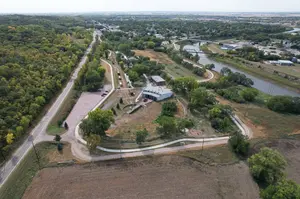
Construction continues on a long-anticipated roundhouse exhibit building at the Railroad Museum of Pennsylvania in Strasburg, a project designed to preserve several of the most historically significant steam locomotives from the Pennsylvania Railroad collection.
The 16,000-square-foot, six-stall structure broke ground in 2025 and is expected to be completed in late 2026 or early 2027. Once finished, the facility will house six massive locomotives that have spent decades exposed to the elements in the museum’s outdoor yard.
Designed with a classic fan-shaped layout reminiscent of traditional railroad engine terminals, the roundhouse will feature brick, steel, and glass construction, a clerestory roof for natural lighting, and a renovated 1928 turntable that will allow locomotives to be positioned just as they once were in steam-era servicing facilities.
The primary purpose of the building is preservation. For decades, several large locomotives in the museum’s collection have deteriorated due to weather exposure. The new climate-controlled space will stabilize these artifacts and allow them to be exhibited in a more historically authentic setting.
In a Facebook post from March 4, 2026 the museum provided an update on the project, featuring photos of foundation work ongoing. They went on to say: "The grade beams are mostly complete, so the enormous footprint of the building is now clearly visible. Contractors are working their way around the interior of the foundation to complete the rail walls, or the massive steel and concrete supports underneath the location of each track. These will help support the tremendous weight of the locomotives resting on each track."
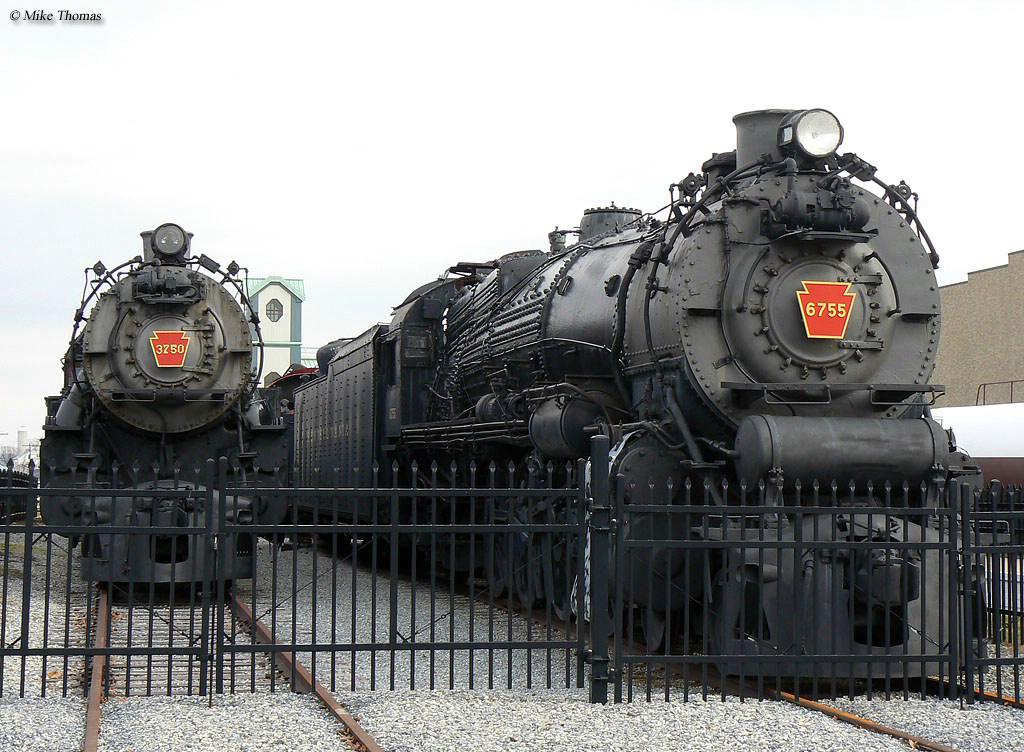 Sitting outside on the museum's grounds are a pair of Pennsy steamers; Class K-4s 4-6-2 Pacific #3750 on the left and Class M-1b 4-8-2 Mountain #6755 on the right. Both engines will be displayed in the new roundhouse. Mike Thomas photo.
The Six Locomotives Destined for the Roundhouse
The new building will display six important steam locomotives that illustrate the development of Pennsylvania Railroad power during the early twentieth century. If you would like to donate towards the stabilization of these locomotives the museum states you may do so here at their website.
PRR B6sb No. 1670 (0-6-0)
One of the smallest locomotives in the lineup will be No. 1670, a B6sb-class 0-6-0 switching locomotive built in 1916.
Switcher locomotives like the B6sb were essential in railroad yards, assembling freight trains and moving cars between classification tracks. Although small compared with mainline locomotives, they were among the hardest-working engines on the railroad.
The B6sb class was widely used across the PRR system for decades. No. 1670 represents the railroad’s standard yard switcher during the peak years of steam operation. Stabilization work and cosmetic restoration have already begun to prepare the locomotive for indoor exhibition in the roundhouse.
PRR H10s No. 7688 (2-8-0)
Another locomotive scheduled for the roundhouse is H10s No. 7688, a 2-8-0 “Consolidation” type freight locomotive built in 1915. The H-class Consolidations were among the most successful freight locomotives used by the Pennsylvania Railroad. Designed for medium-duty freight service, they hauled countless trains across the railroad’s vast network during the early 20th century.
Hundreds of these engines were constructed between 1907 and 1916, becoming the PRR’s standard light freight locomotive before larger Mikado and Decapod types took over heavier assignments. No. 7688 survives today as an important example of the type of locomotive that handled the majority of everyday freight traffic on the railroad.
PRR L1s No. 520 (2-8-2)
Representing heavier freight power will be L1s No. 520, a 2-8-2 “Mikado” type locomotive built by the Baldwin Locomotive Works in December 1916.
The L1s class was designed to handle increasingly heavy freight traffic across the PRR system. With large 62-inch drivers and a tractive effort exceeding 60,000 pounds, these locomotives were capable of hauling long freight trains across the railroad’s mountain grades.
No. 520 is one of the few surviving examples of this class and is preserved today at the museum as a representative of the PRR’s heavy freight era.
PRR K4s No. 3750 (4-6-2)
One of the roundhouse’s most historically significant locomotives will be K4s No. 3750, a 4-6-2 “Pacific” type passenger locomotive built in 1920 at the railroad’s famed Pennsylvania Railroad Altoona Works. The K4s class was the Pennsylvania Railroad’s standard passenger locomotive for decades, handling trains across the system’s busiest routes. These engines hauled everything from secondary passenger runs to prestigious mainline trains.
No. 3750 is particularly notable because it has been designated—along with sister locomotive No. 1361—as the official state steam locomotive of Pennsylvania. After many years displayed outdoors at the museum, the locomotive is expected to undergo cosmetic restoration before taking its place inside the new roundhouse.
PRR M1b No. 6755 (4-8-2)
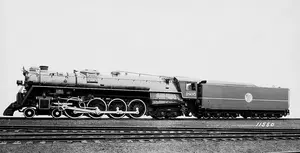
The largest locomotive scheduled for the roundhouse is M1b No. 6755, a 4-8-2 “Mountain” type dual-service locomotive built in June 1930 at Altoona. The M1 class was designed to handle both heavy passenger and fast freight trains, making it one of the most versatile locomotives on the Pennsylvania Railroad. With 72-inch drivers and nearly 70,000 pounds of tractive effort, these powerful engines could handle demanding assignments across the system. No. 6755 is the only surviving M1-class locomotive, making it one of the most important artifacts in the museum’s collection.
PRR E6s No. 460 (4-4-2)
Completing the lineup will be E6s No. 460, a classic 4-4-2 “Atlantic” type passenger locomotive built in 1914. Nicknamed the “Lindbergh Engine,” the locomotive gained fame for hauling a special train carrying aviation hero Charles Lindbergh during a 1927 goodwill tour celebrating his transatlantic flight.
Unlike the other locomotives destined for the roundhouse, No. 460 has already undergone an extensive cosmetic restoration and is currently displayed inside the museum’s Rolling Stock Hall. It will eventually join the other engines as part of the roundhouse exhibit illustrating the evolution of PRR steam locomotive design.
A New Era for the Museum
The roundhouse project marks one of the most significant developments in the history of the Railroad Museum of Pennsylvania since the opening of its expanded Rolling Stock Hall in the 1990s. By providing sheltered display space for these six locomotives, the museum will finally be able to halt decades of weather-related deterioration and begin a more comprehensive program of preservation and restoration.
When completed, visitors will be able to see the locomotives arranged around the historic turntable—recreating the appearance of a working steam-era engine terminal and offering a dramatically improved interpretation of Pennsylvania Railroad history. For railroad historians and enthusiasts alike, the new roundhouse will ensure that some of the most important surviving examples of Pennsylvania Railroad steam power are preserved and displayed in a setting worthy of their historic significance.
Recent Articles


-
Alton Railroad: Map, History, Timetables
Oct 09, 26 10:31 PM
 Alton Railroad, chartered February 27, 1847 as the Alton & Sangamon. Chicago, St. Louis, and Kansas City, the 1937 Official Guide, and the May 31, 1947 merger into the Gulf, Mobile & Ohio.
 -
Mobile & Ohio Steam Roster (Post 1900)
Oct 09, 26 12:26 PM
 Mobile & Ohio steam since 1900. Drury's class grid: 48 six-wheel switchers, 107 Ten-Wheelers, 15 Consolidations, 58 Mikados, and 14 Pacifics. Last revenue steam October 7, 1949.
 -
Mobile & Ohio Railroad: History, Map, Timetable
Oct 09, 26 11:31 AM
 Mobile & Ohio Railroad, chartered in 1848. Columbus on April 22, 1861, the Cairo & St. Louis, the March 1940 Official Guide, and the September 13, 1940 merger into the Gulf, Mobile & Ohio.
 -
Gulf, Mobile & Northern Steam Roster (Post 1900)
Oct 09, 26 10:42 AM
 Gulf, Mobile & Northern steam since 1900. Drury's class grid: Ten-Wheelers, Mikados, Russian Decapods, Pacifics 425 and 426, and three light 4-8-2s. Last revenue steam October 7, 1949.
 -
Gulf, Mobile & Ohio Diesel Roster (All-Time)
Oct 09, 26 10:41 AM
 Gulf, Mobile & Ohio diesel roster, all-time. The 1935 boxcab, DL-107s, 55 FA-1s, F3s and F7s, the Ingalls 4-S, GP30s through GP38-2s, and 21 SD40s. Serials and order numbers.
 -
Gulf, Mobile & Northern Railroad: History, Rebel Route
Oct 09, 26 10:36 AM
 Gulf, Mobile & Northern, from the 1890 Mobile, Jackson & Kansas City to the Rebel and the September 13, 1940 merger into the Gulf, Mobile & Ohio. Steam roster is the companion page.
 -
Gulf, Mobile & Ohio Railroad: Map, Photos, Trains, History
Oct 08, 26 11:48 PM
 Gulf, Mobile & Ohio, chartered in 1938 and merged September 13, 1940. The Mobile & Ohio, the Alton on May 31, 1947, the Rebel Route, and Illinois Central Gulf on August 10, 1972.
 -
New Jersey Railroad Museums (2026): A Complete Guide
Oct 08, 26 11:37 PM
 New Jersey railroad museums—Whippany, Maywood, Pine Creek, Mahwah’s Erie depot, Phillipsburg, and Boonton. Confirm hours on each site.
 -
New Hampshire Railroad Museums (2026): A Complete Guide
Oct 08, 26 11:34 PM
 New Hampshire railroad museums—North Conway, the Flying Yankee, Ashland, Gorham, Raymond, and Sandown. Confirm hours on each site.
 -
Missouri Railroad Museums (2026): A Complete Guide
Oct 08, 26 11:00 PM
 Missouri railroad museums—the National Museum of Transportation, Patee House, Frisco 4524, the Chicago & Alton depot, and Marceline. Confirm hours on each site.
 -
Milwaukee Road X3800: Deer Lodge’s Shop Goat
Oct 08, 26 04:28 PM
 Milwaukee Road X3800, the a home-built shop goat that served the Deer Lodge, MT yard. It was a 220-volt DC switcher, powered through an extension cord that moved electrics into a roundhouse where the…
 -
Key West Extension (Overseas Railroad): History, Construction, Decline
Oct 08, 26 03:59 PM
 Henry Flagler's Overseas Railroad, Miami to Key West, 1905–1935. The Seven Mile Bridge, the 1935 Labor Day Hurricane, and the road that became U.S. 1.
 -
Florida East Coast Steam Roster (Post 1900)
Oct 08, 26 02:34 PM
 Florida East Coast steam since 1897. Seventeen Ten-Wheelers, twenty Atlantics, eighty-seven Pacifics, ninety Mountains, fifteen Mikados, and the switchers.
 -
Florida East Coast Diesel Roster (All-Time)
Oct 08, 26 02:12 PM
 Florida East Coast diesel roster, all-time. E units from 1939, F3s, BL2s, GP7s and GP9s, the GP40-2 orders, 22 SD40-2s, and 24 ES44C4s. Serials and EMD order numbers.
 -
Florida East Coast Railway: Map, History, Rosters
Oct 08, 26 01:46 PM
 Florida East Coast Railway, Henry Flagler's line from Jacksonville to Miami and Key West. Receivership in 1931, the 1963 strike, Grupo México in 2017, and Brightline on the same track.
 -
Minnesota Railroad Museums (2026): A Complete Guide
Oct 08, 26 10:32 AM
Minnesota railroad museums—the Lake Superior Railroad Museum, Two Harbors, Jackson Street, Willmar’s Great Northern 2523, and Currie. Confirm hours on each site. -
Maine Railroad Museums (2026): A Complete Guide
Oct 08, 26 09:24 AM
 Maine railroad museums—Seashore Trolley, the two-foot lines at Portland, Alna, and Phillips, Boothbay, and the Bangor & Aroostook depots. Confirm hours on each site.
 -
Massachusetts Railroad Museums (2026): A Complete Guide
Oct 08, 26 12:08 AM
 Massachusetts railroad museums—Berkshire Scenic at Lenox, Shelburne Falls trolley No. 10, Edaville, Chatham’s 1887 depot, and Lowell. Confirm hours on each site.
 -
Clinchfield Steam Roster (Post 1900)
Oct 07, 26 12:09 PM
 Clinchfield steam since 1900. Fifteen H-4 Consolidations, K-1 Mikados, M-2 and M-3 Mallets, L-class 2-8-8-2s, eighteen Challengers. Class grid after Drury. Last steam April 16, 1954.
 -
Clinchfield Diesel Roster (All-Time)
Oct 07, 26 12:05 PM
 Clinchfield diesel roster, all-time. F3A 800, FP7 200, the F7s, GP7s, 25 SD40s, 18 SD45-2s, seven U36Cs, and the Family Lines hoods. Serials and EMD order numbers.
 -
Clinchfield Railroad: Map, Steam Locomotives, Roster, Logo
Oct 07, 26 12:02 PM
 Clinchfield Railroad, Elkhorn City to Spartanburg. George L. Carter, the Carolina, Clinchfield & Ohio, the 1924 lease, coal, the loops, and CSX. Steam and diesel rosters are companion pages.
 -
Kentucky Railroad Museums (2026): A Complete Guide
Oct 07, 26 11:39 AM
 Kentucky railroad museums—the Kentucky Railway Museum, Bowling Green’s L&N depot, Paducah, Versailles, and Covington. Confirm hours on each site.
 -
Kansas Railroad Museums (2026): A Complete Guide
Oct 07, 26 11:26 AM
 Kansas railroad museums—Santa Fe 3768 at Wichita, Santa Fe 132 in Topeka, the Great Overland Station, and Abilene. Confirm hours on each site.
 -
Cincinnati, New Orleans and Texas Pacific Diesel Roster (All-Time)
Oct 07, 26 10:38 AM
 All-time diesel roster of Southern locomotives lettered for the Cincinnati, New Orleans and Texas Pacific. Serials, order numbers, and builder dates.
 -
Cincinnati, New Orleans and Texas Pacific Railway
Oct 07, 26 10:31 AM
 Cincinnati, New Orleans and Texas Pacific Railway, incorporated September 8, 1881, to lease Cincinnati’s railroad to Chattanooga. Queen and Crescent route, Rathole, and the 2024 sale to Norfolk Southe…
 -
Indiana Railroad Museums (2026): A Complete Guide
Oct 07, 26 12:26 AM
 Indiana railroad museums—Nickel Plate 765, Elkhart’s New York Central collection, French Lick, Linden’s junction depot, and Haley Tower. Confirm hours on each site.
 -
"Triplex" Steam Locomotive: Specs, History, Photos
Oct 06, 26 11:52 PM
 Erie class P-1 Triplex 2-8-8-8-2s. Three Baldwin compounds, 2603–2605, later 5014–5016, built 1914 and 1916. Matt H. Shay, the 1930 class card, and Virginian XA 700.
 -
Illinois Railroad Museums (2026): A Complete Guide
Oct 06, 26 11:47 PM
 Illinois railroad museums—the Illinois Railway Museum, Monticello, the Pioneer Zephyr, Galesburg’s Burlington 3006, and the depots. Confirm hours on each site.
 -
Iowa Railroad Museums (2026): A Complete Guide
Oct 06, 26 11:41 PM
 Iowa railroad museums—the Union Pacific Railroad Museum, RailsWest, Sioux City, Boone, and the National Hobo Museum in Britt. Confirm hours on each site.
 -
Charleston and Western Carolina Diesel Roster (All-Time)
Oct 06, 26 11:29 PM
Charleston and Western Carolina diesel roster. Twenty-one GP7s, two SW7s, two SW9s, and six F7As, all built 1950–1952. Serials, order numbers, and ACL and SCL numbers. -
Charleston and Western Carolina Railway: Map, History, Timetables
Oct 06, 26 11:18 PM
 Charleston and Western Carolina Railway, incorporated September 16, 1896. Port Royal to Spartanburg, with branches to Anderson and Greenville. Merged into the Atlantic Coast Line on December 31, 1959.
 -
Central of Georgia Steam Roster (Post 1900)
Oct 06, 26 04:00 PM
 Central of Georgia steam since 1900. Cooke Consolidations, Harriman Mikados, 32 Mountains, and eight Lima 4-8-4s. Class grid after Drury. Last steam May 1953.
 -
Central of Georgia Diesel Roster (All-Time)
Oct 06, 26 03:44 PM
 Central of Georgia diesel roster. SW1 No. 1 in 1939, E7s and E8s, nine F3As, 39 RS3s, GP7s through SD35s. Serials and order numbers.
 -
Central of Georgia Railway: Map, Logo, History, Rosters
Oct 06, 26 03:42 PM
 Central of Georgia Railway, from the 1833 Savannah charter to Southern control on June 17, 1963. Map, logos, Nancy Hanks II, and links to the steam and diesel rosters.
 -
Georgia Railroad Museums (2026): A Complete Guide
Oct 06, 26 03:33 PM
Georgia railroad museums—Savannah’s Central shops, Duluth, the General at Kennesaw, the Texas in Atlanta, Tifton, Waycross, and Albany. Confirm hours on each site. -
Florida Railroad Museums (2026): A Complete Guide
Oct 06, 26 03:18 PM
 Florida railroad museums—Boca Raton, Winter Garden, Whitehall, the Gold Coast, Parrish, Fort Myers, Milton, and Plant City. Confirm hours on each site.
 -
Connecticut Railroad Museums (2026): A Complete Guide
Oct 06, 26 01:05 PM
 Connecticut railroad museums—the Shore Line Trolley, East Windsor, the Naugatuck Railroad, Danbury Union Station, Willimantic, and the SoNo tower. Confirm hours on each site.
 -
Colorado Railroad Museums (2026): A Complete Guide
Oct 06, 26 12:47 PM
 Colorado railroad museums—Golden, the Forney’s Big Boy 4005, Pueblo’s Santa Fe 2912, and the depots at Castle Rock, Limon, and Ridgway. Confirm hours on each site.
 -
Atlantic Coast Line Steam Roster (Post 1900)
Oct 06, 26 12:44 PM
 Atlantic Coast Line steam since 1900. Copper Head Ten-Wheelers, 235 P-5 Pacifics, Q-1 Santa Fes, twelve R-1 4-8-4s. Class grid after Drury. Last steam June 30, 1955.
 -
Atlantic Coast Line Diesel Roster (All-Time)
Oct 06, 26 11:57 AM
 Atlantic Coast Line diesel roster. HH660 1900 in 1939, E3s for the Champion, FTs and F2s, GP7s 100–279, GP30s, U25Cs, and the 1967 SCL numbers. Serials and orders.
 -
Atlantic Coast Line Railroad: "Standard Railroad of the South"
Oct 06, 26 11:53 AM
 Atlantic Coast Line, the Standard Railroad of the South. April 21, 1900 to July 1, 1967. Plant System, L&N, Clinchfield, the Champion, and the Seaboard Coast Line merger.
 -
California Railroad Museums (2026): A Complete Guide
Oct 06, 26 09:50 AM
California railroad museums—the California State Railroad Museum, Perris, Portola, Railtown 1897, and the depots that still stand. Confirm hours on each site. -
Arizona Railroad Museums (2026): A Complete Guide
Oct 06, 26 09:46 AM
Arizona railroad museums—the Arizona Railway Museum in Chandler, Southern Pacific 1673 at Tucson, and the McCormick-Stillman park in Scottsdale. -
Arkansas Railroad Museums (2026): A Complete Guide
Oct 06, 26 09:07 AM
 Arkansas railroad museums—Cotton Belt 819 at Pine Bluff, the Fort Smith trolley, the Mammoth Spring depot, and the Eureka Springs railway.
 -
Alabama Railroad Museums (2026): A Complete Guide
Oct 06, 26 09:03 AM
Alabama railroad museums—Heart of Dixie at Calera, the North Alabama museum at Chase, Huntsville’s 1860 depot, and Fort Payne. Confirm hours on each site. -
Pennsylvania Railroad Museums (2026): A Complete Guide
Oct 06, 26 12:09 AM
 Pennsylvania railroad museums—Strasburg, Steamtown, the Horseshoe Curve, the East Broad Top, and the depots and towers in between. Confirm hours on each site.
 -
Maryland Railroad Museums (2026): A Complete Guide
Oct 05, 26 11:53 PM
 Maryland railroad museums—the Baltimore roundhouse, Ellicott City station, Bowie, Gaithersburg’s Buffalo Creek & Gauley 14, and the Western Maryland collections.
 -
Ohio Railroad Museums (2026): A Complete Guide
Oct 05, 26 05:51 PM
 Ohio railroad museums—the Age of Steam Roundhouse, Bellevue, Worthington, Conneaut’s Nickel Plate 755, and the Dennison depot. Confirm hours on each site.
 -
Delaware Railroad Museums (2026): A Complete Guide
Oct 05, 26 02:43 PM
 Delaware railroad museums—Wilmington & Western at Greenbank, the Harrington tower and N5 caboose, Felton's 1868 depot, and the Selbyville station museum.
 -
C&O's M-1 Steam Turbine Locomotives: Specs, Roster, History
Oct 05, 26 12:13 PM
 Chesapeake & Ohio Class M-1 steam-turbine-electrics. Three Baldwin-Westinghouse locomotives, 500–502, built 1947–48 for The Chessie. Specs, the 2-C1+2-C1-B arrangement, and a roster. All scrapped…