Bangor & Aroostook Steam Roster (Post 1900)
Last revised: September 18, 2026
By: Adam Burns
The Bangor & Aroostook never needed a trunk-line engine. Potatoes peaked in winter. Paper and pulpwood ran south to the Maine Central at Northern Maine Junction and to tidewater at Searsport. The worst grades were the watershed between Millinocket and Brownville. Manchester Ten-Wheelers did the everyday work. Alco Consolidations dragged the extras. Ten home-road Mountains and five small 1927 Pacifics were as modern as the roster got.
George H. Drury, in Guide to North American Steam Locomotives, is a good start when discussing the railroad's steam fleet. An Electro-Motive F3 demonstrator worked freight and passenger trains in July 1946; a three-unit diesel pulled almost twice what the 4-8-2s could, and two units on a passenger train burned about a gallon a mile. By 1949 the railroad was dieselized except for winter peaks. Last steam was Pacific 251 on trains 9 and 12, Derby to Greenville, July 22, 1951. The table below is Drury’s post-1900 class grid.

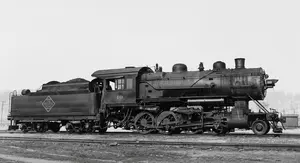
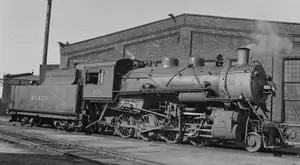
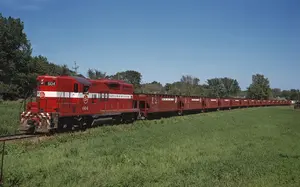
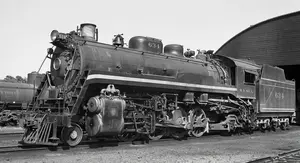
Bangor & Aroostook 4-4-0 #213 (Class K) at Derby, Maine, on August 5, 1930. Manchester Locomotive Works, August 1893, construction number 1595. Sold September 1936 to the Belfast & Moosehead Lake as that road’s second #16. The post-1900 class table starts with engines built, or rebuilt at Derby, from 1900 on; this American is the shop town in steam.
On this page: At a glance · Consolidations and Mountains · Ten-Wheelers and Pacifics · Switchers · July 22, 1951 · All-time roster (built since 1900)
At a glance
| Item | Detail |
|---|---|
| Railroad | Bangor & Aroostook. Mark BAR. Company Bangor & Aroostook |
| This roster | Classes built since 1900, after Drury, pages 80–81. Pre-1900 Americans and Moguls in the narrative. Photo: Class K #213, 1893 |
| Map | Brownville north into Aroostook County; Van Buren on the border; Searsport 1905. Interchange with Maine Central at Northern Maine Junction. Bangor–Van Buren 236 miles |
| Everyday power | Manchester (Alco) 4-6-0s. C-1 and F-1 on passenger until 1927; D-1, D-2a, D-3, Ea on mixed and freight |
| Heavy freight | Rhode Island GA 170–172 (1907, ordered for the Pittsburgh, Binghamton & Eastern); sixteen Schenectady G 180–195 (1914–24); G-2 400–405 (1937 and 1945) |
| Pacifics | Five class F, 250–254, Schenectady 1927. 237,000 lb. 69-inch drivers. Aroostook Flyer and Potatoland Special |
| Mountains | Ten class M, 100–109, Alco 1929–45. 315,300 lb. 63-inch drivers, 49,200 lb tractive effort. Five ex-NYO&W M-1s, 120–124 |
| Last steam | Pacific 251, trains 9 and 12, Derby–Greenville, July 22, 1951. Last scrap July 1956, G-2 400 and 403 |
| Shops | Derby, Maine |
| Survivors | None |
Class table follows Drury, Guide to North American Steam Locomotives (revised edition), pages 80–81. Works numbers and a few unit dates follow Jerry Angier and Herb Cleaves. Information compiled September 18, 2026.
Rhode Island leftovers, sixteen Schenectady copies, then Mountains that were still small
Drury’s freight chapter opens on Manchester. When the BAR leased the Bangor & Piscataquis in 1892 it picked up eight 4-4-0s built between 1864 and 1888, some of them secondhand. Between 1893 and 1907 the road bought 4-4-0s, 2-6-0s, 4-6-0s, and 0-6-0s from Manchester Locomotive Works, later Alco’s Manchester plant. Those Americans and Moguls are mostly pre-1900. Hero 213 is one of them.
In 1907 Rhode Island delivered three Consolidations, class GA 170–172. They had been proposed for the Pittsburgh, Binghamton & Eastern, a Pennsylvania road that laid about as many miles of paper as of track before it died in 1914. BAR must have liked them. Schenectady sent sixteen more of the same dimensions—57-inch drivers, 23 × 30 cylinders—as class G 180–195 between 1914 and 1924. Helpers were necessary on the longest potato trains over the Millinocket–Brownville divide. Number 180 was wrecked in March 1945. The rest came off in 1947–51.
Seven Alco 4-8-2s in 1929 and 1930, class M 100–106, replaced the Consolidations in through freight. Larger firebox, 63-inch drivers, four-wheel lead truck. They still weighed only 315,300 pounds and pulled 49,200 pounds—six tons lighter than a USRA light Mountain, almost 5,000 pounds less tractive effort. Main rods connected to the third drivers, the usual mark of a low-drivered 4-8-2. A booster on the trailing truck helped 100 get a train started. Two more Mountains, 107–108, arrived in 1935. Elesco feedwater heaters and thermic siphons were on the class. None survive.
In 1937 Alco delivered five Consolidations, G-2 400–404, for freight on the north end. The 2-8-0 was not new technology. Nothing that was would fit the job and the railroad. Number 404 had a front-end throttle. Cylinder and driver sizes matched the Mountains. BAR’s last two new steam locomotives came in 1945: Mountain 109 and Consolidation 405, one more of each previous order.
In 1946 the railroad went shopping in the used-locomotive market. Two Boston & Maine 2-8-0s became G-1A 196–197. Four B&M 0-8-0s became S-2A 335–338. Five 16-year-old New York, Ontario & Western 4-8-2s became M-1 120–124. The O&W engines were near-duplicates of New York Central L-2 Mohawks: 69-inch drivers, 360,000 pounds. B&M and the O&W had begun dieselization. BAR was about to. The M-1s were gone by 1949.
C-1s and F-1s, then five small Pacifics
Passenger service was two or three trains a day on the 236-mile Bangor–Van Buren main, plus locals and mixed trains on the branches. Class C-1 and F-1 Ten-Wheelers were the mainstay until 1927. The two F-1s, 234–235, were gone by 1926. The C-1s lasted; 243 was still on the roster in 1951.
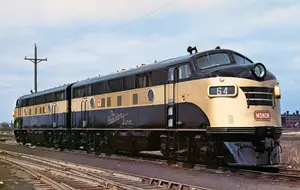
Five class F Pacifics, 250–254, arrived from Schenectady in 1927. Small engines: 237,000 pounds, 40,000 less than a USRA light Pacific. Sixty-nine-inch drivers gave them pulling power instead of great speed. Horizontal-bar pilots and outside lead-truck journals gave them a Canadian National look. They took the afternoon Aroostook Flyer and the overnight Potatoland Special until F3s with steam generators took the varnish on May 14, 1948, and the E7As followed in April 1949. Number 252 was scrapped in March 1945. 251 made the last steam run, then went with 250, 253, and 254 in 1953.
In 1915 Derby rebuilt three Manchester Moguls of 1895–96 into class K-1 Americans 214–216. They were gone by 1923–24. The photograph at the top of this page is an older sister, Class K 213, still in steam at Derby in 1930.
Six-wheel, then eight-wheel
Six class P 0-6-0s, 320–325, were scrapped in the mid-1930s, not long after three 0-8-0s arrived from Alco: SA 330 in 1928 and S-1A 340–341 in 1931. Two earlier Manchester 0-6-0s, class M 310–311, had already been sold in 1916–17. The letter M was reused on the 4-8-2s without embarrassment. A 600-mile road can do that.
The four Boston & Maine 0-8-0s of February 1946, S-2A 335–338, arrived just before management decided to dieselize. 336 was gone by 1949; the others by 1950. 340 and 341 lasted until 1953, among the last steam cut up.
Pacific 251, trains 9 and 12
By 1949 BAR was dieselized except for winter-season peaks. The road leased new diesels to the Pennsylvania Railroad from May to November for the ore docks at Erie, Pennsylvania; the units came home for the potato rush. Drury puts the last BAR steam on July 22, 1951: Pacific 251, trains 9 and 12, a round trip from Derby to Greenville. Stored engines still covered extras into the mid-1950s. G-2s 400 and 403 were cut up in July 1956. The diesels that replaced this fleet—F3s, eight BL2s, the GP7s on the Pennsylvania lease—are the diesel roster.
All-time roster (built since 1900)
Drury’s grid is classes built from 1900 on. Quantities are his. Retirement years are the span he prints. Builder “Manchester” is Manchester Locomotive Works, then Alco’s Manchester plant; “Schenectady” and “Rhode Island” are Alco works. Pre-1900 4-4-0s, including hero 213, and the 1890s Moguls are in the paragraphs above. K-1 214–216 are 1915 Derby rebuilds of 1895–96 2-6-0s; Drury puts them in the table. Works numbers follow Angier and Cleaves.
| Type | Class | Numbers | Qty | Builder | Built | Retired | Notes |
|---|---|---|---|---|---|---|---|
| 0-6-0 | M | 310, 311 | 2 | Manchester | 1900–1901 | Sold 1917, 1916 | Letter later reused on the 4-8-2s |
| 0-6-0 | P | 320–325 | 6 | Manchester | 1905–1908 | 1935–1937 | |
| 0-8-0 | SA | 330 | 1 | Alco | 1928 | 1951 | Works 67669 |
| 0-8-0 | S-1A | 340, 341 | 2 | Alco | 1931 | 1953 | Works 68599–68600 |
| 0-8-0 | S-2A | 335–338 | 4 | Alco | 1922 | 1949–1950 | Ex-B&M. Purchased 2/1946 |
| 2-8-0 | GA | 170–172 | 3 | Rhode Island | 1907 | 1949–1951 | Proposed for Pittsburgh, Binghamton & Eastern. 57-inch drivers, 23 × 30 |
| 2-8-0 | G | 180–195 | 16 | Schenectady | 1914–1924 | 1947–1951 | Same dimensions as GA. 180 wrecked 3/1945 |
| 2-8-0 | G-1A | 196, 197 | 2 | Baldwin, Alco | 1913 | 1950, 1947 | Ex-B&M. Purchased 1946 |
| 2-8-0 | G-2 | 400–405 | 6 | Alco | 1937, 1945 | 1951–1956 | 400–404 1937; 405 1945. Same cylinders and drivers as the 4-8-2s. 404 front-end throttle. 400 and 403 last BAR steam cut up, 7/1956 |
| 4-4-0 | K-1 | 214–216 | 3 | BAR | 1915 | 1923–1924 | Rebuilt from 2-6-0s |
| 4-6-0 | C-1 | 240–243 | 4 | Manchester | 1902 | 1928–1951 | Passenger mainstay with F-1 until 1927. 243 built 1907 |
| 4-6-0 | D-1 | 54–78 | 25 | Manchester | 1901–1907 | 1927–1952 | 71 is ex-78. Several sold to Belfast & Moosehead Lake |
| 4-6-0 | D-2a | 82–87 | 6 | Manchester | 1907 | 1935–1951 | |
| 4-6-0 | D-3 | 90–95 | 6 | Manchester | 1911 | 1951–1952 | Superheated. On the Greenville Branch at the end |
| 4-6-0 | Ea | 140–142 | 3 | Rhode Island | 1906 | 1947–1951 | |
| 4-6-0 | F-1 | 234, 235 | 2 | Manchester | 1907 | 1926 | Passenger with C-1 until the Pacifics. Not class F |
| 4-6-2 | F | 250–254 | 5 | Schenectady | 1927 | 1945–1953 | 237,000 lb. 69-inch drivers. 251 last steam, July 22, 1951, trains 9 and 12 |
| 4-8-2 | M | 100–109 | 10 | Alco | 1929–1945 | 1950–1953 | 315,300 lb. 63-inch drivers, 49,200 lb TE. 100–106 1929–30; 107–108 1935; 109 1945. Main rods to third drivers |
| 4-8-2 | M-1 | 120–124 | 5 | Alco | 1929 | 1948–1949 | Ex-NYO&W. Near-duplicates of NYC L-2 Mohawks; 69-inch drivers, 360,000 lb |
Related reading on American-Rails.com
- Bangor & Aroostook · BAR diesel roster · EMD BL2
- Aroostook Flyer · Potatoland Special
- 4-8-2 Mountain · 4-6-2 Pacific · Feedwater heaters
- Maine Central · Montreal, Maine & Atlantic · Maine railroads
Sources
- Drury, George H. Guide to North American Steam Locomotives, revised edition, pp. 80–81. Post-1900 class table; F3 demonstrator July 1946; last steam Pacific 251, trains 9 and 12, Derby–Greenville, July 22, 1951; Mountain weight and tractive effort; G-2 404 front-end throttle; NYO&W as NYC L-2 copies; recommended Angier and Cleaves
- Angier, Jerry, and Herb Cleaves. Bangor and Aroostook: The Maine Railroad. Flying Yankee Enterprises, 1986. ISBN 0-9615574-2-5. Pages 253–261, unit dates and works numbers. Drury’s recommended reading
- Railroad magazine. Published BAR rosters: February 1935, p. 88; January 1950, p. 104. Railway & Locomotive Historical Society Bulletin No. 53, p. 42
- Trains. “Bangor & Aroostook Railroad remembered.” Last steam July 22, 1951, Greenville Branch; GP7s shared with the Pennsylvania
- Llanso, Steve. Locobase. Class M Mountains (Locobase 192, 16524); G-2 and G-class Consolidations. BAR diagram books via Allen Stanley
- American-Rails.com, Bangor & Aroostook. F3 passenger debut May 14, 1948; winter potato extras into the mid-1950s
- American-Rails.com, Aroostook Flyer and Potatoland Special. Pacifics, then F3s and E7As on the named trains
- American-Rails.com, BAR diesel roster. GP7 lease and the dates that closed steam
Recent Articles


-
Baldwin "Baby Face" Locomotives: Specs, Photos, Roster
Oct 30, 26 11:01 PM
 Baldwin's Babyface cab on the early road diesels: 50 short-cab units, 1946-1948, plus the related Centipede. Construction numbers, specs, and the sharknose that followed.
-
California High-Speed Rail Chief Resigns
Oct 30, 26 08:36 PM
 Ian Choudri resigned October 28, 2026 as chief executive of the California High-Speed Rail Authority. The board named Joe Stephenshaw interim chief executive.
-
The 1910 Portal Bridge Is Handed Over for Demolition
Oct 30, 26 04:03 PM
 Amtrak handed the 1910 Portal Bridge over for demolition on October 29, 2026, during the final cutover to Portal North. Regular NJ Transit and Amtrak schedules are expected November 15.
-
Union Pacific-Norfolk Southern Merger Review Runs to 2027
Oct 30, 26 03:59 PM
 Union Pacific says the Surface Transportation Board's review of the Norfolk Southern merger gathers information through May 28, 2027. A closing still depends on board approval.
-
Amtrak Board Will Hear Restructuring Comments on November 10
Oct 30, 26 03:41 PM
 Amtrak's board will hear public comments on its restructuring on November 10, 2026, from 2 to 3 p.m. Eastern. Written comments were due October 30. A proposal goes to the board in December.
-
Canadian Pacific Selkirk 5931 Restored in Calgary
Oct 30, 26 01:36 PM
 Heritage Park in Calgary unveiled a cosmetic restoration of Canadian Pacific 2-10-4 No. 5931 on October 27, 2026. One of two surviving Selkirks. It stays on display.
-
Gettysburg Railway to Host Steam for Lincoln
Oct 30, 26 01:18 PM
 Northern Central Railway of York No. 17 will recreate Lincoln's arrival at Gettysburg on November 18, 2026, with public steam trips November 19-21.
-
NC&StL No. 576 to Steam for the Public in Nashville
Oct 30, 26 01:00 PM
 Nashville Steam will fire NC&StL 4-8-4 No. 576 for the public on November 7, 2026, 9 a.m. to 3 p.m., at 220 Willow Street. Admission is free.
-
Pennsylvania Railroad E8s Join the T1 Trust
Oct 30, 26 12:38 PM
 The T1 Trust has acquired former Pennsylvania Railroad E8A diesels 5702A and 5761A from the Fort Wayne Railroad Historical Society. They are bound for Cumberland.
-
Ligonier Valley Railroad: History, Roster, Timetable
Oct 30, 26 12:03 PM
 The Ligonier Valley Railroad ran 10.5 miles from Latrobe to Ligonier, Pennsylvania. Opened December 1, 1877. Last day August 31, 1952.
-
Toledo, Peoria & Western Diesel Roster (All-Time)
Oct 30, 26 10:25 AM
 Toledo, Peoria & Western diesel locomotives, each frame once. Thirteen Alcos, three Lima-Hamilton switchers, and 26 Electro-Motive units.
-
Toledo, Peoria & Western Steam Roster
Oct 30, 26 09:14 AM
 Toledo, Peoria & Western steam locomotives from the Rogers Consolidations of 1895 through the 4-8-4s of 1937
-
Toledo, Peoria & Western Railway: Map, Roster, History
Oct 29, 26 11:12 PM
 History of the Toledo, Peoria & Western. The Peoria & Oquawka, George P. McNear, the Santa Fe and Pennsylvania years, and the railroad that came back in 1989.
-
Cotton Belt Diesel Roster (All-Time)
Oct 29, 26 07:58 PM
 St. Louis Southwestern diesel locomotives, each frame once. Baldwin switchers, F units, and new Cotton Belt-lettered power through the GP60s of May 1990.
-
Cotton Belt Steam Roster (Built Since 1900)
Oct 29, 26 06:52 PM
 St. Louis Southwestern steam locomotives built since 1900. Consolidations, Ten-Wheelers, and twenty class L-1 4-8-4s. The quantity column is 297.
-
Cotton Belt Railroad: Map, Logo, History, Rosters
Oct 29, 26 10:56 AM
 History of the St. Louis Southwestern, the Cotton Belt Route. The Tyler Tap, Paramore's silver spike, the Thebes Bridge, the Blue Streak, and Southern Pacific control. Steam and diesel rosters are sep…
-
Pere Marquette Steam Roster (Built Since 1900)
Oct 28, 26 11:54 PM
 Pere Marquette steam locomotives built since 1900. Consolidations, Mikados, Pacifics, and 39 Berkshires. The quantity column is 503.
-
Pere Marquette Diesel Roster (All-Time)
Oct 28, 26 11:48 PM
 Pere Marquette diesel locomotives, each frame once. Two SW1s, 14 NW2s, three GE 70-tonners, eight E7As, and six BL2s delivered lettered Chesapeake and Ohio. The quantity column is 33.
-
Pere Marquette Railway: Map, Logo, Rosters, History
Oct 28, 26 11:44 PM
 History of the Pere Marquette Railway. Timber roads, the Prince years, the Van Sweringens, the Ludington car ferries, and the Chesapeake and Ohio merger of June 6, 1947.
-
Nickel Plate Road (Railroad): Map, History, Rosters
Oct 28, 26 10:51 PM
 History of the Nickel Plate Road, the New York, Chicago and St. Louis. The Seney syndicate, the Van Sweringens, the Berkshires, and the Norfolk and Western absorption at 12:01 a.m. on October 16, 1964…
-
Nickel Plate Diesel Roster (All-Time)
Oct 28, 26 10:48 PM
 Nickel Plate diesel locomotives, each frame once. Alco switchers and PAs, GP7s and GP9s, and the GP30s. The quantity column is 440. The 1950 fleet was 117.
-
Nickel Plate Steam Roster (Built Since 1900)
Oct 28, 26 10:43 PM
 Nickel Plate steam locomotives built since 1900, including the Lake Erie and Western, the Clover Leaf, and the Wheeling engines that took Nickel Plate numbers. The quantity column is 786.
-
EMD "E9" Locomotives: Specs, Roster, History
Oct 28, 26 10:37 PM
 EMD E9 cab units and boosters, 2,400 horsepower, built April 1954 through January 1964. Gear ratios, specifications, and the production roster by owner, serial, and order.
-
NYC 4-6-4 #5344, "Commodore Vanderbilt"
Oct 28, 26 04:31 PM
 NYC J-1e Hudson 5344, the Commodore Vanderbilt. Alco, November 1931. Carl Kantola’s shroud, December 1934, then a Dreyfuss bullet nose in 1939. Scrapped at Collinwood in 1954.
-
New Jersey, Indiana & Illinois Railroad: A South Bend Shortline
Oct 28, 26 11:05 AM
 The New Jersey, Indiana & Illinois, the Jersey Line, ran from South Bend to Pine. Singer built it in 1905. Wabash stock control came in 1926. Two diesels, and the steam the record names.
-
Monon Diesel Roster (All-Time)
Oct 28, 26 10:13 AM
 Monon diesel locomotives, each frame once. F3s, nine BL2s, the C420s, and eight U23Bs. The quantity column is 96. The 1951 fleet was 57.
-
Monon Steam Roster (Built Since 1900)
Oct 28, 26 10:09 AM
 Monon steam locomotives built since 1900. Twelve-Wheelers, Mikados, light Pacifics, and thirteen six-wheel switchers. The quantity column is 148.
-
Monon Railroad: Map, Photos, History, Logo
Oct 28, 26 09:55 AM
 History of the Monon, the Hoosier Line. The New Albany & Salem, the X at Monon, Barriger's streamliners, and the Louisville & Nashville merger of July 31, 1971.
-
Missouri-Kansas-Texas Diesel Roster (All-Time)
Oct 28, 26 09:48 AM
 All-time diesel roster of the Missouri-Kansas-Texas. 406 locomotives, each frame once. Baldwin switchers, Alco cab units, F units, Geeps, and the SD40-2s.
-
Missouri-Kansas-Texas Steam Roster (Built Since 1900)
Oct 28, 26 09:43 AM
 Missouri-Kansas-Texas steam locomotives built since 1900. Moguls, Mikados, Pacifics, and the narrow-gauge shop tanks. The quantity column is 715.
-
Missouri-Kansas-Texas Railroad (Katy): Map, History, Rosters
Oct 27, 26 11:02 PM
 History of the Missouri-Kansas-Texas, the Katy. The race into Indian Territory, Gould, the 1923 railroad, the Texas Special, and the 1988 sale. Steam and diesel rosters are linked.
-
Soo Line Diesel Roster (All-Time)
Oct 27, 26 10:55 PM
 All-time diesel roster of the Soo Line and the Wisconsin Central. 786 locomotives, each frame once. Cab units, Geeps, the Milwaukee Road engines, and the SD60s. The South Shore's 24 stay on that page.
-
Soo Line Steam Roster (Built Since 1900)
Oct 27, 26 10:49 PM
 Soo Line and Wisconsin Central steam locomotives built since 1900. Consolidations, Mikados, Pacifics, 21 Mountains, and four Lima 4-8-4s.
-
Soo Line Railroad: Map, Logo, History, Rosters
Oct 27, 26 10:24 PM
 The Soo Line, from the flour millers' railroad around Chicago to the Sault, the Wisconsin Central, and the Milwaukee Road. Steam quantity 422. Diesels 786. Canadian Pacific took full control in 1990.
-
Minneapolis, Northfield and Southern Railway: Map, History, Rosters
Oct 27, 26 10:32 AM
 The Minneapolis, Northfield & Southern, the Dan Patch Line that became a Twin Cities belt. Steam, gas-electric mules, motor cars, and the 22 diesels, through the Soo Line.
-
Minneapolis & St. Louis Diesel Roster (All-Time)
Oct 27, 26 10:27 AM
 All-time diesel roster of the Minneapolis & St. Louis. 97 locomotives, each frame once. Switchers from 1938, 35 RS-1s, the FT and F-unit cabs, two SD7s, and 23 GP9s. Builder numbers included.
-
Minneapolis & St. Louis Steam Roster (Post 1900)
Oct 27, 26 10:25 AM
Minneapolis & St. Louis steam locomotives built since 1900. Moguls, Consolidations, 35 Mikados, and five Pacifics. -
Minneapolis and St Louis Railway: "The Peoria Gateway"
Oct 27, 26 09:52 AM
 The Minneapolis & St. Louis, the Tootin' Louie, from the 1870 charter to the Peoria Gateway and the Chicago & North Western sale on November 1, 1960.
-
Alco "PA" Locomotives: Restoration, Specs, Engine, Rosters
Oct 27, 26 12:12 AM
 Alco's PA passenger cab, 297 locomotives built from 1946 to 1953. The 244 engine, the production roster, the Delaware & Hudson PA-4s, and Nickel Plate Road 190.
-
Milwaukee Road Diesel Roster: (All Time)
Oct 26, 26 01:44 PM
 All-time diesel roster of the Milwaukee Road. 1,208 locomotives, each frame once. Alco, Baldwin, Davenport, EMD, Fairbanks-Morse, General Electric, and Whitcomb, with builder numbers.
-
Milwaukee Road Steam Roster (All-Time): Post-1900
Oct 26, 26 01:38 PM
 Milwaukee Road steam locomotives built since 1900. Prairies, Mikados, the N-class articulateds, the S-class 4-8-4s, and the Hiawatha Atlantics and Hudsons. Quantity column 1,974. Unique frames 1,951.
-
Milwaukee Road: Map, Electrification, Logo, History
Oct 26, 26 01:20 PM
 The Milwaukee Road, from the Milwaukee & Mississippi of 1850 to the Pacific Coast Extension, the Hiawathas, and the Soo Line sale. Why Lines West should have stayed.
-
Lake Superior & Ishpeming Railroad: Map, Roster, History
Oct 25, 26 11:38 PM
 Lake Superior & Ishpeming Railroad, reporting mark LSI, from the Marquette Range to the Presque Isle ore dock. The 1954 steam list and the diesels the railroad owned.
-
Kansas City Southern Steam Roster (Built Since 1900)
Oct 25, 26 09:09 PM
 Steam locomotives of the Kansas City Southern built since 1900, with the Louisiana & Arkansas and the Texas company.
-
Kansas City Southern Diesel Roster (Built New)
Oct 25, 26 11:46 AM
All-time diesel roster of the Kansas City Southern. E units, F units, Geeps, SD40s through SD70ACes, Fairbanks-Morse, Baldwin, Alco, and General Electric, with serials and order numbers. -
Kansas City Southern Railway: Map, Photos, History
Oct 25, 26 12:24 AM
The Kansas City Southern, from Arthur Stilwell's Gulf line to Canadian Pacific Kansas City on April 14, 2023. Steam and diesel rosters, the Southern Belle, and the Louisiana & Arkansas. -
Indiana Harbor Belt Diesel Roster (All-Time)
Oct 25, 26 12:17 AM
 All-time diesel roster of the Indiana Harbor Belt. 202 locomotive frames, each counted once. NW2s, SW7s, SW1500s, road switchers, and gensets. Slugs and boosters are outside the count.
-
Indiana Harbor Belt Steam Roster (Built Since 1900)
Oct 25, 26 12:13 AM
 Steam locomotives of the Indiana Harbor Belt built since 1900. 182 engines, each counted once. 0-6-0s, 2-6-0s, 0-8-0s, and 2-8-2s. The three U-4a switchers are three-cylinder Brooks engines of 1927.
-
Indiana Harbor Belt Railroad: Map, Rosters, History
Oct 25, 26 12:00 AM
 Indiana Harbor Belt, the inner belt across the Calumet, from the East Chicago Belt of May 16, 1896. Renamed June 29, 1907. Still operating, headquarters Hammond. Steam roster is the companion, 182 loc…
-
NYC's "P Motor" Electric Locomotives
Oct 24, 26 11:43 PM
 New York Central P motors: 22 Alco-GE 2-C+C-2 electrics, Cleveland Union Terminal 1050–1071, class P-1a. 3,030 hp one-hour on 3,000-volt DC catenary, then 660-volt third rail as P-2a and P-2b.