Alco "RSD-1" Locomotives: Specs, Roster, Photos, History
Last revised: December 27, 2024
By: Adam Burns
The RSD-1 was the first road switcher of its kind to feature
six-axles. However, when the model debuted railroads
had yet to embrace the diesel locomotive for main line service, let alone show interest in a six-axle curiosity whose benefits had yet to be understood.
The American Locomotive Company's six-axle RS1 came in two variations, the six-motored RSD-1 (C-C) and six-axled RSC-1 (A1A-A1A).
While the RSD-1 saw roughly half the sales of its four-axle counterpart it was beloved by the US Army, who interestingly ended up as Alco's only customer for the model.
Today, nearly a dozen RSD-1s are preserved around the country while a few are still operational including U.S. Army #8652 at the North Alabama Railway Museum (Huntsville) and former Tennessee Coal & Iron Railroad #601 (built as U.S. Army #8009) at the Orange Empire Railway Museum in Perris, California.
Photos
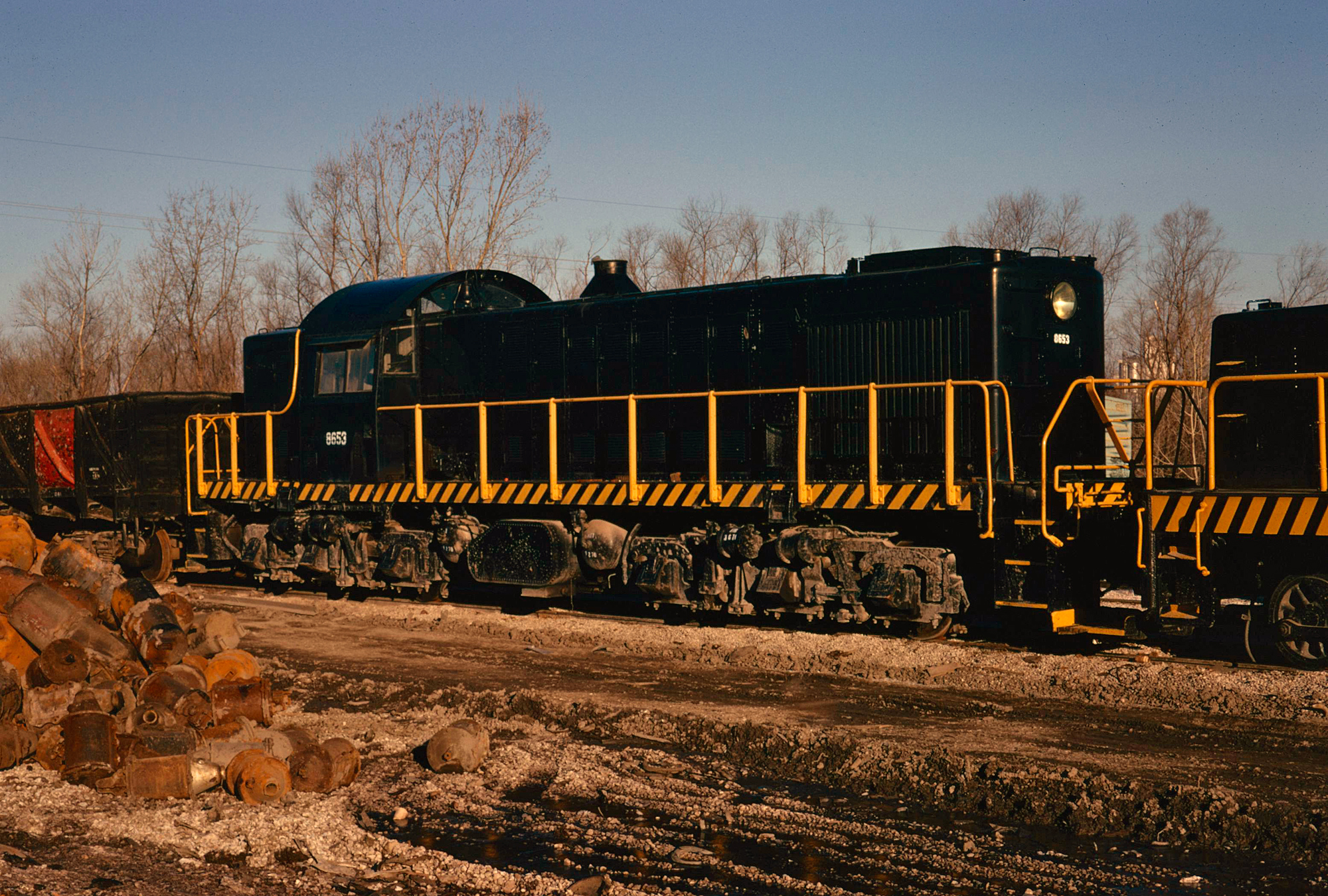 A former U.S. Army RSD-1, #8653, in service; March 17, 1973. Location not listed. Vincent Porreca photo. American-Rails.com collection.
Overview
While historians and railfans often index the six-axle RS-1 model as either an RSD-1 or RSC-1, Alco itself made no such distinction. The builder cataloged them all as RS-1s and only differentiated the three by their designation numbers.
This is further reinforced in John Kirkland's book, "The Diesel Builder's: Volume Two." It appears railfans came up with the separate designations on their own after studying Alco construction files. Ironically, this work was even provided to Alco department heads in 1965, for reference use only.
According to Brian Solomon's "The American Diesel Locomotive" the three were classified as follows:
- RS-1's as E1640, E1641, E1641A
- RSD-1's as E1645, E1646, E1647
- RSC-1's as E1651
Alco's use of only designation numbers can likely be explained by the fact that the builder never really intended to develop a six-axle RS-1 and did so only upon request
from the Department of Defense.
The Army liked the RS-1 for its light weight and sufficient horsepower, allowing it to be used in switching applications on bases while handling heavy loads.
With World War II's onset, the Army wondered if a six-motored design would not only offer more tractive effort but could also handle Europe's lighter rails more effectively as the locomotive's axle loading would be reduced.
Data Sheet and Specifications
(Original 13, #8000-#8012)
| Alco Class | 606-DL-319 |
| Entered Production | 11/1942 |
| Years Produced | 11/1942-2/1943 |
| Model Specification | E1640 |
| Engine | 539T, 6-Cylinder In-Line, Turbocharged |
| Engine Builder | McIntosh & Seymour |
| Horsepower | 1,000 |
| Carbody Styling | Alco/U.S. Army |
| Length (Between Coupler Faces) | 55' 11.75" |
| Weight | 257,000 Lbs. |
| Dynamic Brakes | Yes |
| Trucks | C-C |
| Truck Type | Trimount* |
| Wheelbase | 11' 3" |
| Wheel Size | 40" |
| Traction Motors | GE 731 (6) |
| Traction Generator | GT533 |
| Gear Ratio | 16:75 |
| Tractive Effort Rating | 34,000 Lbs. at 8 MPH; up to 43,000 Lbs. at 5.5 MPH. |
| Top Speed | 60 MPH |
* These appear to be a version of the Trimount and probably developed by James G. Blunt based on the large journals utilized. This truck was never replicated, even on standard production RSD-1's.
It was used solely on the original thirteen RS-1's requisitioned by the War Department since Alco had to retrofit C-C trucks on a frame designed for only four-axles.
(#8013-#8056), Construction Numbers 70634-70677
| Alco Class | 606-DL-319 |
| Entered Production | 11/1942 |
| Years Produced | 11/1942-2/1943 |
| Model Specification | E1645 |
| Engine | 539T, 6-Cylinder In-Line, Turbocharged |
| Engine Builder | McIntosh & Seymour |
| Horsepower | 1,000 |
| Carbody Styling | Alco/U.S. Army |
| Length (Between Coupler Faces) | 55' 11.75" |
| Weight | 261,000 Lbs. |
| Dynamic Brakes | Yes |
| Trucks | C-C |
| Truck Type | Trimount* |
| Wheelbase | 11' 3" |
| Wheel Size | 40" |
| Traction Motors | GE 731 (6) |
| Traction Generator | GT533 |
| Gear Ratio | 16:75 |
| Tractive Effort Rating | 34,000 Lbs. at 8 MPH; up to 43,000 Lbs. at 5.5 MPH. |
| Top Speed | 60 MPH |
(#8000-#8099), Construction Numbers 72073-72172
| Alco Class | 606-DL-319 |
| Entered Production | 10/1944 |
| Years Produced | 10/1944-8/1945 |
| Model Specification | E1646 |
| Engine | 539T, 6-Cylinder In-Line, Turbocharged |
| Engine Builder | McIntosh & Seymour |
| Horsepower | 1,000 |
| Carbody Styling | Alco/U.S. Army |
| Length (Between Coupler Faces) | 55' 11.75" |
| Weight | 286,000 Lbs. |
| Dynamic Brakes | Yes |
| Trucks | C-C |
| Truck Type | Trimount* |
| Wheelbase | 11' 3" |
| Wheel Size | 40" |
| Traction Motors | GE 731 (6) |
| Traction Generator | GT533 |
| Gear Ratio | 16:75 |
| Tractive Effort Rating | 34,000 Lbs. at 8 MPH; up to 43,000 Lbs. at 5.5 MPH. |
| Top Speed | 60 MPH |
The first 70 locomotives in this batch, #8600-8669, were built to a broad, 5-foot gauge for operation in Russia. In all, there were 144 RSD-1's built new, in addition to the 13 RS-1's requisitioned and converted into RSD-1's, for a total of 157 units built domestically.
It proved quite successful and the Army ordered several batches of RSD-1's beginning in 1942. Interestingly, with World War II ongoing and in desperate need of locomotives, the Army requisitioned the first 13 RS-1s built for the Rock Island, Milwaukee Road, New York, Susquehanna & Western, Atlanta & St. Andrews Bay, and Tennessee Coal, Iron & Railroad and had Alco convert them all into RSD-1's.
Internally, the RSD1 was identical to the RS1 featuring the turbocharged McIntosh & Seymore model 539T prime mover and the same length.
Alco went on to produce several version of its Road Switcher models in either six axles or six motors, such as the RSC-2, RSD-5, RSD-7, RSD-12, and RSD-15.
Prior to the start of World War II there were thirteen RS1's produced for five different railroads. Please refer to the table below. These locomotives were later requisitioned by the U.S. Army for use on the Trans-Iranian Railway to supply Russia with war materiel during the conflict.
New locomotives were later built for the original railroads (paid for by the U.S. government) to replace those requisitioned, in April and May of 1943 (1946 for the Tennessee Coal, Iron & Railroad).
Original 13 (Requisitioned By U.S. Army)
| Railroad | Road Number | Construction Number | Date Built | Date Rebuilt | U.S. War Department Number | Replacement Construction Number |
|---|---|---|---|---|---|---|
| Rock Island | 748 | 69424 | 3/1941 | 11/1942 | 8005 | 70816 |
| Rock Island | 749 | 69425 | 3/1941 | 12/1942 | 8006 | 70817 |
| Atlanta & St. Andrews Bay | 901 | 69426 | 3/1941 | 1/1943 | 8010 | 70810 |
| Atlanta & St. Andrews Bay | 902 | 69427 | 3/1941 | 1/1943 | 8011 | 70811 |
| Tennessee Coal, Iron & Railroad | 600 | 69428 | 4/1941 | 12/1942 | 8008 | 75203 |
| Tennessee Coal, Iron & Railroad | 601 | 69566 | 4/1941 | 1/1943 | 8009 | 75204 |
| Milwaukee Road | 1678 | 69567 | 6/1941 | 11/1942 | 8002 | 70814 |
| Milwaukee Road | 1679 | 69568 | 6/1941 | 11/1942 | 8003 | 70815 |
| Rock Island | 746 | 69569 | 8/1941 | 12/1942 | 8007 | 70818 |
| Rock Island | 747 | 69570 | 8/1941 | 11/1942 | 8004 | 70819 |
| Atlanta & St. Andrews Bay | 903 | 69800 | 6/1942 | 1/1943 | 8012 | 70821 |
| New York, Susquehanna & Western | 231 | 69992 | 6/1942 | 11/1942 | 8000 | 70812 |
| New York, Susquehanna & Western | 233 | 69993 | 6/1942 | 11/1942 | 8001 | 70813 |
Production Rosters
RSD-1
Total Built = 150
| Owner | Road Numbers | Serial Numbers | Date Built |
|---|---|---|---|
| U.S. Army | 8013-8033 | 70634-70654 | 11/1942 - 12/1942 |
| U.S. Army | 8034-8056 | 70655-70677 | 1/1943 - 2/1943 |
| U.S. Army | 8600-8649 | 72073-72122 | 10/1944 - 1/1945 |
| U.S. Army | 8650-8679 | 72123-72142 | 1/1945 - 2/1945 |
| U.S. Army | 8680-8699 | 72143-72172 | 2/1945 - 3/1945 |
| Ferrocarriles Nacionales de México | 5700-5705 | 74671-74676 | 1/1946, 4/1946, 5/1946 |
RSX-4 (MRS-1)
Total Built = 83
| Owner | Road Number(s) | Serial Number(s) | Date Built |
|---|---|---|---|
| U.S. Army | B-2041, B-2042 | 80357-80358 | 4/1953 |
| U.S. Army | B-2043 | 80359 | 4/1953 |
| U.S. Army | B-2044 | 80360 | 4/1953 |
| U.S. Army | B-2045 thru B-2047 | 80361-80363 | 4/1953 |
| U.S. Army | B-2048 | 80364 | 4/1953 |
| U.S. Army | B-2049, B-2050 | 80365-80366 | 4/1953 |
| U.S. Army | B-2051 | 80367 | 4/1953 |
| U.S. Army | B-2052 | 80368 | 4/1953 |
| U.S. Army | B-2053 thru B-2055 | 80369-80371 | 4/1953 |
| U.S. Army | B-2056 | 80372 | 4/1953 |
| U.S. Army | B-2057 | 80373 | 4/1953 |
| U.S. Army | B-2058 | 80374 | 4/1953 |
| U.S. Army | B-2059 | 80375 | 4/1953 |
| U.S. Army | B-2060 | 80376 | 4/1953 |
| U.S. Army | B-2061 | 80377 | 4/1953 |
| U.S. Army | B-2062 | 80378 | 4/1953 |
| U.S. Army | B-2063 | 80379 | 4/1953 |
| U.S. Army | B-2064 | 80380 | 4/1953 |
| U.S. Army | B-2065 | 80381 | 4/1953 |
| U.S. Army | B-2066 | 80382 | 4/1953 |
| U.S. Army | B-2067 | 80383 | 4/1953 |
| U.S. Army | B-2068 | 80384 | 4/1953 |
| U.S. Army | B-2069 | 80385 | 4/1953 |
| U.S. Army | B-2070 | 80386 | 4/1953 |
| U.S. Army | B-2071 thru B-2072 | 80387-80388 | 4/1953 |
| U.S. Army | B-2073 | 80389 | 4/1953 |
| U.S. Army | B-2074 | 80390 | 4/1953 |
| U.S. Army | B-2075 | 80391 | 4/1953 |
| U.S. Army | B-2076 | 80392 | 4/1953 |
| U.S. Army | B-2077 | 80393 | 4/1953 |
| U.S. Army | B-2078 | 80394 | 4/1953 |
| U.S. Army | B-2079 | 80395 | 4/1953 |
| U.S. Army | B-2080 | 80396 | 4/1953 |
| U.S. Army | B-2081 | 80397 | 4/1953 |
| U.S. Army | B-2082 thru B-2084 | 80398-30400 | 4/1953 |
| U.S. Army | B-2085 | 80401 | 10/1953 |
| U.S. Army | B-2086 | 80402 | 10/1953 |
| U.S. Army | B-2087 thru B-2090 | 80403-80406 | 10/1953 |
| U.S. Army | 2091 | 80324 | 10/1953 |
| U.S. Army | 2092 to 2094 | 80325-80327 | 4/1953 |
| U.S. Army | 2095 | 80328 | 4/1853 |
| U.S. Army | 2096 | 80329 | 4/1953 |
| U.S. Army | 2097 | 80330 | 4/1953 |
| U.S. Army | 2098 | 80331 | 3/1953 |
| U.S. Army | 2099 | 80332 | 6/1953 |
| U.S. Army | 2100 | 80333 | 4/1953 |
| U.S. Army | 2101 | 80334 | 4/1953 |
| U.S. Army | 2102 | 80335 | 4/1953 |
| U.S. Army | 2103 | 80336 | 4/1953 |
| U.S. Army | 2104 | 80336 | 4/1953 |
| U.S. Army | 2105 | 80337 | 4/1953 |
| U.S. Army | 2106 thru 2108 | 80335-80337 | 4/1953 |
| U.S. Army | 2109 | 80338 | 4/1953 |
| U.S. Army | 2107 thru 2116 | 80339-80349 | 4/1953 |
| U.S. Army | 2117 | 80350 | 4/1953 |
| U.S. Army | 2118 | 80351 | 4/1953 |
| U.S. Army | 2119 | 80352 | 6/1953 |
| U.S. Army | 2120 | 80353 | 6/1953 |
| U.S. Army | 2121 | 80354 | 6/1953 |
| U.S. Army | 2122 | 80355 | 6/1953 |
| U.S. Army | 2123 | 80356 | 6/1953 |
RSC-1
Total Built = 4
| Owner | Road Numbers | Serial Numbers | Date Built | Sao Paulo Railway (Brazil) | 500-503 | 75006-75009 | 9/1946 |
|---|
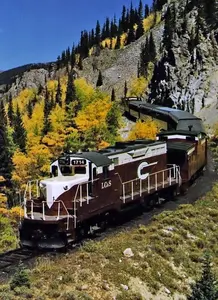
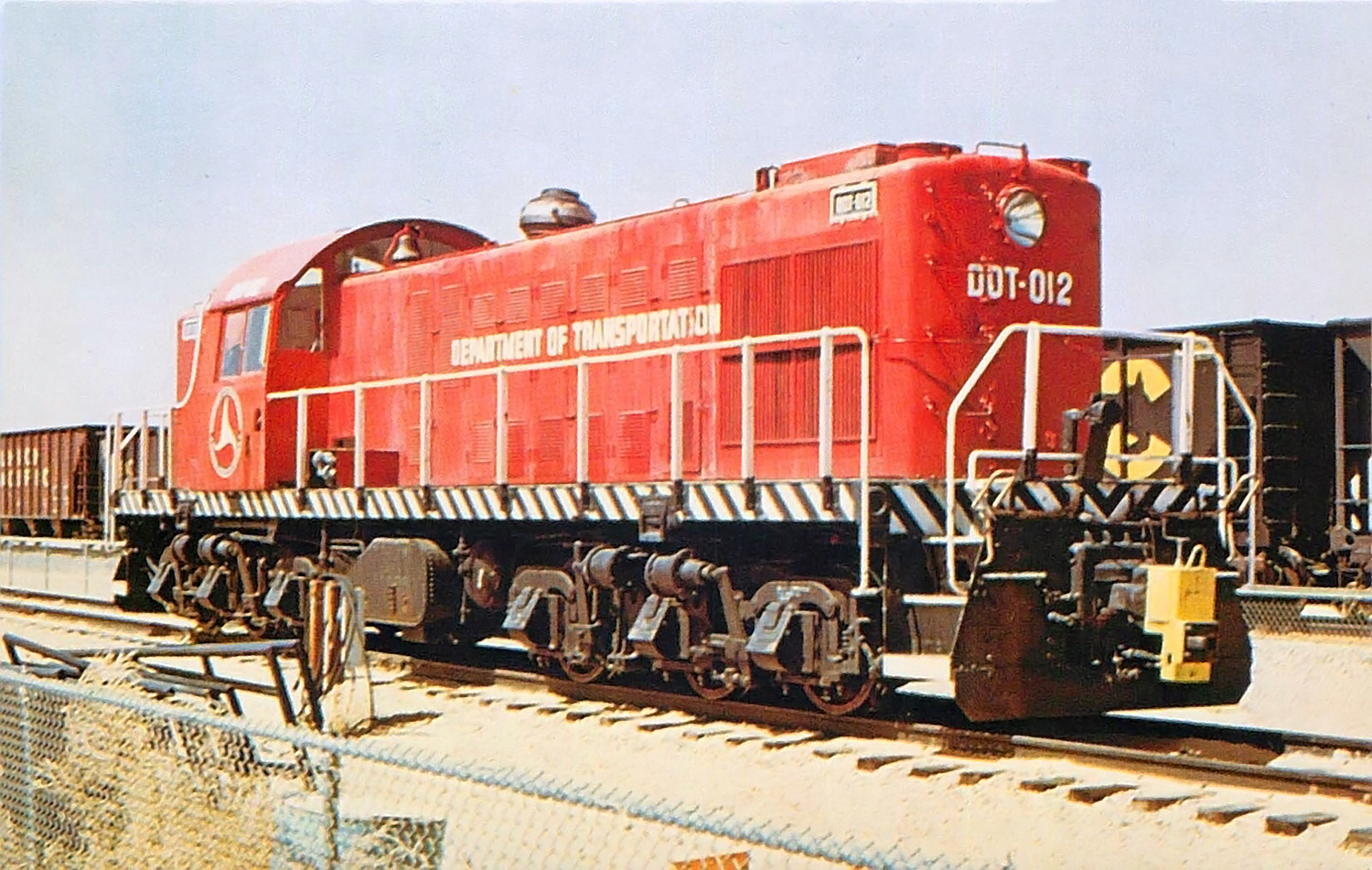 Department of Transportation RSD-1 #012 is seen here on the test track in Pueblo, Colorado on April 18, 1980. This unit was built as Tennessee Coal & Iron #801, circa 1941, and later became U.S. Army #8009. Robert Harmen photo.
In all, over 154 six-axle RS-1's were produced; 146 for the U.S. Army, six for National de Mexico, and four RSC-1s for Sao Paulo Railway of Brazil.
More information about these locomotives can be found in the production roster listed above. Of the dozen units preserved four are known to be operational:
- U.S. Army #8018 at the Orange Empire Railway Museum
- U.S. Army RSD-1 #8652 at the North Alabama Railroad Museum
- U.S. Army #8669 and #8677 at the Tennessee Valley Railroad Museum.
Sources
- Foster, Gerald. A Field Guide To Trains. New York: Houghton Mifflin, 1996.
- Kirkland, John F. Diesel Builders, The: Volume Two, American Locomotive Company And Montreal Locomotive Works. Glendale: Interurban Press, 1989.
- Pinkepank, Jerry A. Diesel Spotter's Guide. Milwaukee: Kalmbach Publishing Company, 1967.
Recent Articles


-
California Easter Train Rides
Mar 01, 26 10:11 AM
 California is home to many tourist railroads and museums; several offer Easter-themed train rides for the entire family.
 -
North Carolina Easter Train Rides
Mar 01, 26 10:09 AM
 The springs are typically warm and balmy in the Tarheel State and a few tourist trains here offer Easter-themed train rides.
 -
Maryland Murder Mystery Dinner Train Rides
Mar 01, 26 10:05 AM
 Maryland is known for its scenic landscapes, historical landmarks, and vibrant culture, but did you know that it’s also home to some of the most thrilling murder mystery dinner trains?
 -
Minnesota Murder Mystery Dinner Train Rides
Mar 01, 26 10:03 AM
 Murder mystery dinner trains offer an enticing blend of suspense, culinary delight, and perpetual motion, where passengers become both detectives and dining companions on an unforgettable journey.
 -
Indiana Wine Tasting Train Rides
Mar 01, 26 10:01 AM
 In this article, we'll delve into the experience of wine tasting trains in Indiana, exploring their routes, services, and the rising popularity of this unique adventure.
 -
South Dakota Wine Tasting Train Rides
Mar 01, 26 09:58 AM
 For wine enthusiasts and adventurers alike, South Dakota introduces a novel way to experience its local viticulture: wine tasting aboard the Black Hills Central Railroad.
 -
Metro-North Unveils Veterans Heritage Locomotive
Feb 28, 26 11:02 PM
 The Metro-North Railroad marked Veterans Day 2025 with the unveiling of a striking new heritage locomotive honoring the service and sacrifice of America’s military veterans.
 -
Pennsylvania's Whiskey Tasting Train Rides
Feb 28, 26 08:46 AM
 For whiskey aficionados and history buffs alike, a train ride through the Keystone State offering such spirits provides a unique and memorable experience.
 -
Alabama's Whiskey Tasting Train Rides
Feb 28, 26 08:44 AM
 With a little planning, you can build a memorable whiskey-and-rails getaway in the Heart of Dixie.
 -
Georgia Murder Mystery Dinner Train Rides
Feb 28, 26 08:43 AM
 In the heart of the Peach State, a unique form of entertainment combines the thrill of a murder mystery with the charm of a historic train ride.
 -
Colorado Murder Mystery Dinner Train Rides
Feb 28, 26 08:40 AM
 Nestled among the breathtaking vistas and rugged terrains of Colorado lies a unique fusion of theater, gastronomy, and travel—a murder mystery dinner train ride.
 -
New Mexico Wine Tasting Train Rides
Feb 28, 26 08:37 AM
 For oenophiles and adventure seekers alike, wine tasting train rides in New Mexico provide a unique opportunity to explore the region's vineyards in comfort and style.
 -
Ohio Wine Tasting Train Rides
Feb 28, 26 08:35 AM
 Among the intriguing ways to experience Ohio's splendor is aboard the wine tasting trains that journey through some of Ohio's most picturesque vineyards and wineries.
 -
KC Streetcar Ridership Surges With Opening of Main Street Extension
Feb 27, 26 11:24 AM
 Kansas City’s investment in modern urban rail transit is already paying dividends, especially following the opening of the Main Street Extension.
 -
“Auburn Road Special” Excursions To Aid URHS
Feb 27, 26 09:04 AM
 The United Railroad Historical Society of New Jersey (URHS) and the Finger Lakes Railway have jointly announced a special series of rare-mileage passenger excursions scheduled for April 18–19, 2026.
 -
New Jersey Easter Train Rides
Feb 27, 26 08:53 AM
 New Jersey is home to several museums and a few heritage railroads that vividly illustrate its long history with the iron horse. A few host special events for the Easter holiday.
 -
Washington Easter Train Rides
Feb 27, 26 08:49 AM
 You can find many heritage railroads in Washington State which illustrates its rich history with the iron horse. A few host Easter-themed events each spring.
 -
South Dakota Murder Mystery Dinner Train Rides
Feb 27, 26 08:46 AM
 While the state currently does not offer any murder mystery dinner train rides, the popular 1880 Train at the Black Hills Central recently hosted these popular trips!
 -
Wisconsin Murder Mystery Dinner Train Rides
Feb 27, 26 08:42 AM
 Whether you're a fan of mystery novels or simply relish a night of theatrical entertainment, Wisconsin's murder mystery dinner trains promise an unforgettable adventure.
 -
Pennsylvania Wine Tasting Train Rides
Feb 27, 26 08:38 AM
Wine tasting trains are a unique and enchanting way to explore the state’s burgeoning wine scene while enjoying a leisurely ride through picturesque landscapes. -
West Virginia Wine Tasting Train Rides
Feb 27, 26 08:37 AM
 West Virginia, often celebrated for its breathtaking landscapes and rich history, offers visitors a unique way to explore its rolling hills and picturesque vineyards: wine tasting trains.
 -
Nebraska Lawmakers Advance UP Tax Incentive Bill
Feb 27, 26 08:31 AM
 Nebraska lawmakers are advancing new economic development legislation designed in large part to ensure that Union Pacific Railroad maintains its historic corporate headquarters in Omaha.
 -
UP And NS Ask FRA To Waive Cab-Signals For Big Boy 4014
Feb 26, 26 01:44 PM
 Union Pacific’s famed 4-8-8-4 “Big Boy” No. 4014 could see new eastern mileage on Norfolk Southern in 2026—but first, the two railroads are asking federal regulators for help bridging a technology gap…
 -
Cando Rail & Terminals to Acquire Savage Rail
Feb 26, 26 11:29 AM
Cando Rail & Terminals has signed a definitive agreement to acquire Savage Rail, the U.S. rail-services business of Savage Enterprises LLC. -
Dollywood To Convert Steam Locomotives From Coal To Oil
Feb 26, 26 09:20 AM
 Dollywood’s most recognizable moving landmark—the Dollywood Express—will soon look and feel a little different.
 -
Missouri Murder Mystery Dinner Train Rides
Feb 26, 26 09:10 AM
 Missouri, with its rich history and scenic landscapes, is home to one location hosting these unique excursion experiences.
 -
Washington Murder Mystery Dinner Train Rides
Feb 26, 26 09:08 AM
 This article delves into what makes murder mystery dinner train rides in Washington State such a captivating experience.
 -
Utah Wine Tasting Train Rides
Feb 26, 26 09:04 AM
 Utah, a state widely celebrated for its breathtaking natural beauty and dramatic landscapes, is also gaining recognition for an unexpected yet delightful experience: wine tasting trains.
 -
Vermont Wine Tasting Train Rides
Feb 26, 26 09:02 AM
 Known for its stunning green mountains, charming small towns, and burgeoning wine industry, Vermont offers a unique experience that seamlessly blends all these elements: wine tasting train rides.
 -
Amtrak San Joaquins Becomes Gold Runner
Feb 26, 26 08:59 AM
 California’s busy state-supported rail link between the Bay Area and the Central Valley entered a new chapter in early November 2025, when the familiar Amtrak San Joaquins name was officially retired.
 -
Canadian National Marks 30 Years Since Privatization
Feb 25, 26 02:07 PM
 Canadian National Railway marked a milestone last fall that helped redefine not only the company, but the modern Canadian freight-rail landscape: 30 years since CN went private.
 -
Western Rail Coalition: Returning Passenger Trains To Colorado
Feb 25, 26 11:48 AM
 Colorado’s passenger-rail conversation is often framed as two separate stories: a Front Range “spine” along I-25, and a harder, longer-term quest to offer real alternatives to the I-70 mountain drive.
 -
Union Pacific Unveils Full Schedule For Big Boy 4014
Feb 25, 26 09:24 AM
 Union Pacific Railroad has released the complete western leg schedule for its groundbreaking 2026 Big Boy No. 4014 Coast-to-Coast Tour.
 -
Kentucky Murder Mystery Dinner Train Rides
Feb 25, 26 08:55 AM
 In the realm of unique travel experiences, Kentucky offers an enchanting twist that entices both locals and tourists alike: murder mystery dinner train rides.
 -
Utah Murder Mystery Dinner Train Rides
Feb 25, 26 08:53 AM
 This article highlights the murder mystery dinner trains currently avaliable in the state of Utah!
 -
Rhode Island Wine Tasting Train Rides
Feb 25, 26 08:50 AM
 It may the smallest state but Rhode Island is home to a unique and upscale train excursion offering wide aboard their trips, the Newport & Narragansett Bay Railroad.
 -
Oregon Wine Tasting Train Rides
Feb 25, 26 08:45 AM
 For those looking to explore this wine paradise in style and comfort, Oregon's wine tasting trains offer a unique and enjoyable way to experience the region's offerings.
 -
Amtrak Posts Record Ridership and Revenue in Fiscal Year 2025
Feb 24, 26 11:22 PM
 Amtrak, the national passenger rail operator, has announced historic results for Fiscal Year 2025 (FY25), reporting the highest ridership and revenue in its history as demand for train travel across t…
 -
NC By Train Posts Busiest Month In 35-year History
Feb 24, 26 06:17 PM
 North Carolina’s state-supported passenger rail service, marketed under the NC By Train brand, reached a milestone last fall.
 -
Northern Pacific 4-6-0 No. 1364 Returns To Life
Feb 24, 26 11:12 AM
The whistle of Northern Pacific steam returned to the Yakima Valley in a big way this month as Northern Pacific 4-6-0 No. 1364 moved under its own power for the first time in 73 years. -
CSX’s 2025 Santa Train: 83 Years of Holiday Cheer
Feb 24, 26 10:38 AM
 On Saturday, November 22, 2025, CSX’s iconic Santa Train completed its 83rd annual run, again turning a working freight railroad into a rolling holiday tradition for communities across central Appalac…
 -
Alabama Murder Mystery Dinner Train Rides
Feb 24, 26 09:25 AM
 There is currently one location in the state offering a murder mystery dinner experience, the Wales West Light Railway!
 -
Rhode Island Murder Mystery Dinner Train Rides
Feb 24, 26 09:21 AM
 Let's dive into the enigmatic world of murder mystery dinner train rides in Rhode Island, where each journey promises excitement, laughter, and a challenge for your inner detective.
 -
Virginia Wine Tasting Train Rides
Feb 24, 26 09:20 AM
Wine tasting trains in Virginia provide just that—a unique experience that marries the romance of rail travel with the sensory delights of wine exploration. -
Tennessee Wine Tasting Train Rides
Feb 24, 26 09:17 AM
 One of the most unique and enjoyable ways to savor the flavors of Tennessee’s vineyards is by train aboard the Tennessee Central Railway Museum.
 -
Southeast Wisconsin Eyes New Lakeshore Passenger Rail Link
Feb 23, 26 11:26 PM
 Leaders in southeastern Wisconsin took a formal first step in December 2025 toward studying a new passenger-rail service that could connect Milwaukee, Racine, Kenosha, and Chicago.
 -
MBTA Sees Over 29 Million Trips in 2025
Feb 23, 26 11:14 PM
 In a milestone year for regional public transit, the Massachusetts Bay Transportation Authority (MBTA) reported that its Commuter Rail network handled more than 29 million individual trips during 2025…
 -
Historic Blizzard Paralyzes the U.S. Northeast, Halts Rail Traffic
Feb 23, 26 05:10 PM
A powerful winter blizzard sweeping the northeastern United States on Monday, February 23, 2026, has brought transportation networks to a near standstill. -
Mt. Rainier Railroad Moves to Buy Tacoma’s Mountain Division
Feb 23, 26 02:27 PM
 A long-idled rail corridor that threads through the foothills of Mount Rainier could soon have a new owner and operator.
 -
BNSF Activates PTC on Former Montana Rail Link Territory
Feb 23, 26 01:15 PM
 BNSF Railway has fully implemented Positive Train Control (PTC) on what it now calls the Montana Rail Link (MRL) Subdivision.