
The "Black Diamond": LV's First Class Buffalo-NJ Service
Last revised: August 24, 2024
By: Adam Burns
Due to its small size and operations in a market dominated by larger railroads like the New York Central; Pennsylvania Railroad; Erie; and even the Delaware, Lackawanna & Western; the Lehigh Valley is not well remembered for its passenger services.
However, it did have one notable train that has left its mark over the years and was part of the railroad’s slogan, “Route of the Black Diamond,” the Black Diamond. The train operated between New York and Buffalo and was initially streamlined in 1940.
History
Due to stiff competition, and slower running times, the Lehigh Valley, a marginal railroad after World War II, bowed out of the passenger business by the early 1960's. Today, the Diamond is long gone as is most of the LV's New York-Buffalo main line.
In the modern era it is often fascinating to play "what ifs" with so many railroads abandoned since the 1970's.
There are several corridors which could likely still be profitable today but alas, the LV is unlikely one of them. There were numerous systems serving the same market and many boasted better routes.
Photos
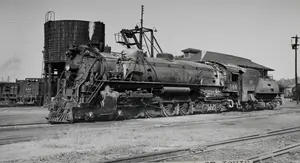
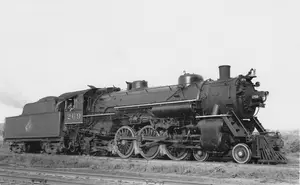
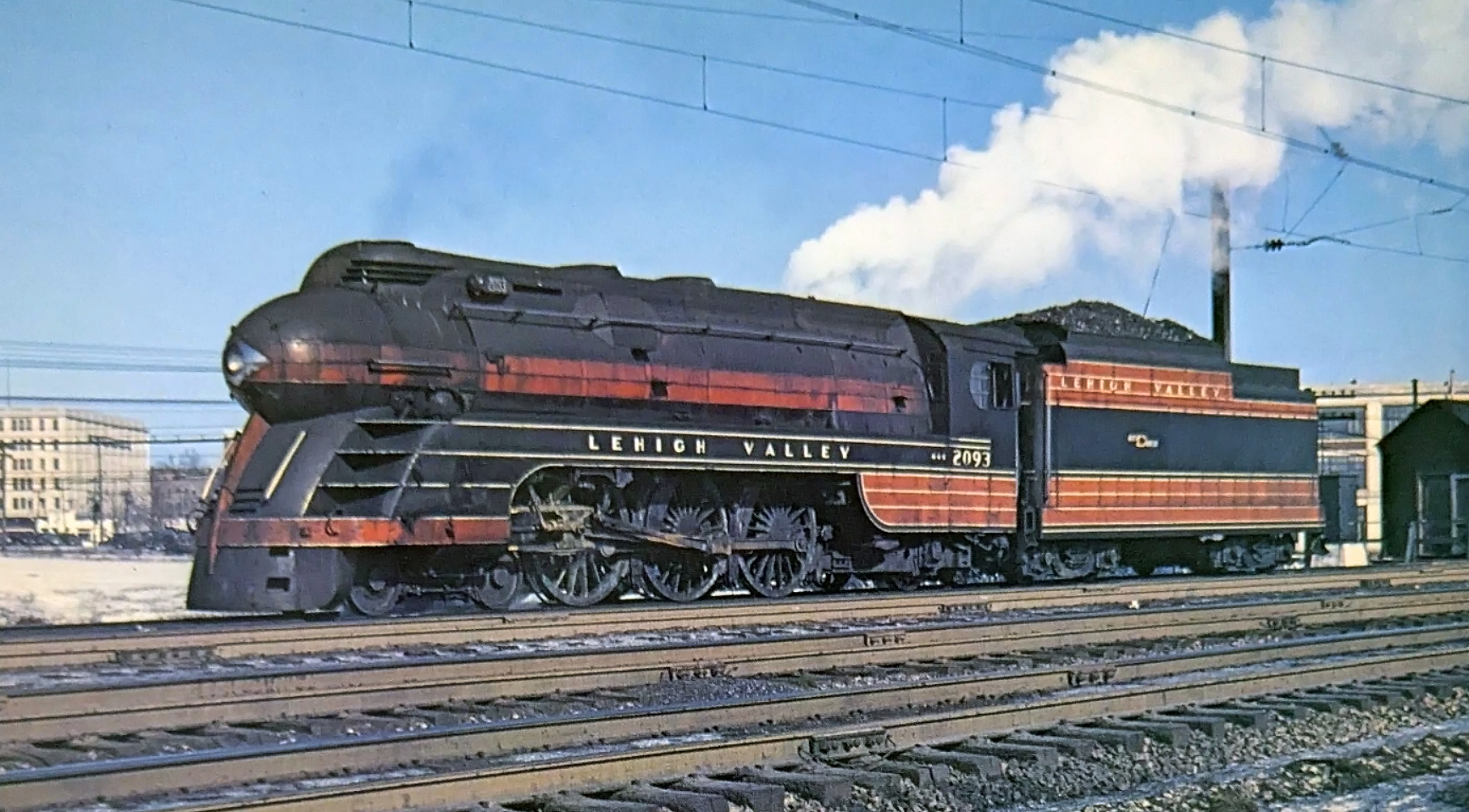 Lehigh Valley 4-6-2 #2093 waits for its train at Newark, New Jersey along the PRR on February 1, 1941. Postcard from the Richard Kindig collection. American-Rails.com collection.
The Lehigh Valley may have been the smallest railroad to serve the Buffalo-New York market. However, it is one of the most fondly remembered with its colorful locomotives, fascinating history, and local appeal for the communities it served.
The LV was one of the many anthracite railroads which popped up in eastern Pennsylvania, New Jersey, and southern New York looking to tap the rich clean coal this region had to offer.
For years the railroad, which dated back to 1853, profited quite nicely from this traffic. The coal was highly sought for residential and commercial heating due to its clean burning properties.
Timetable And Consist (1952)
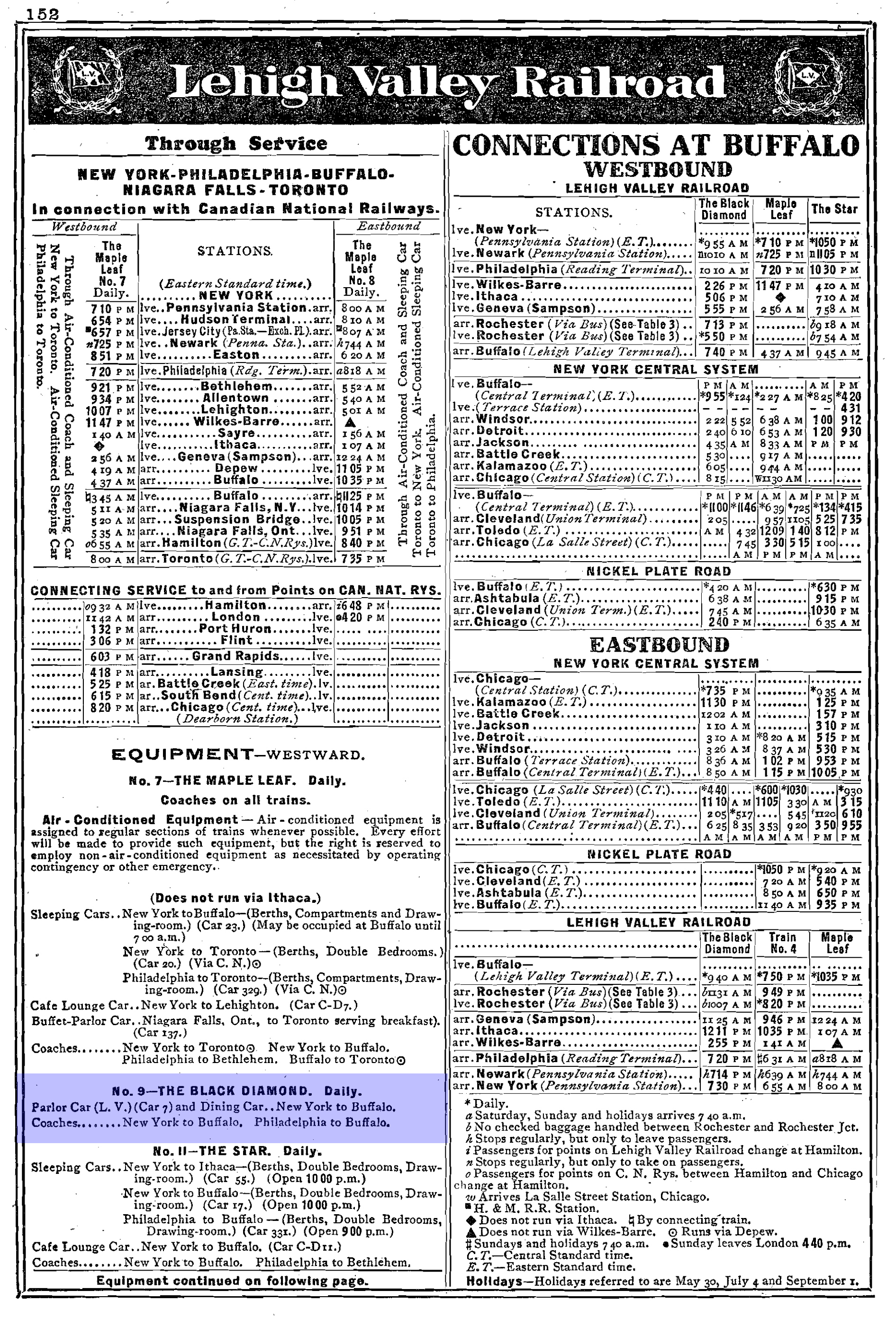
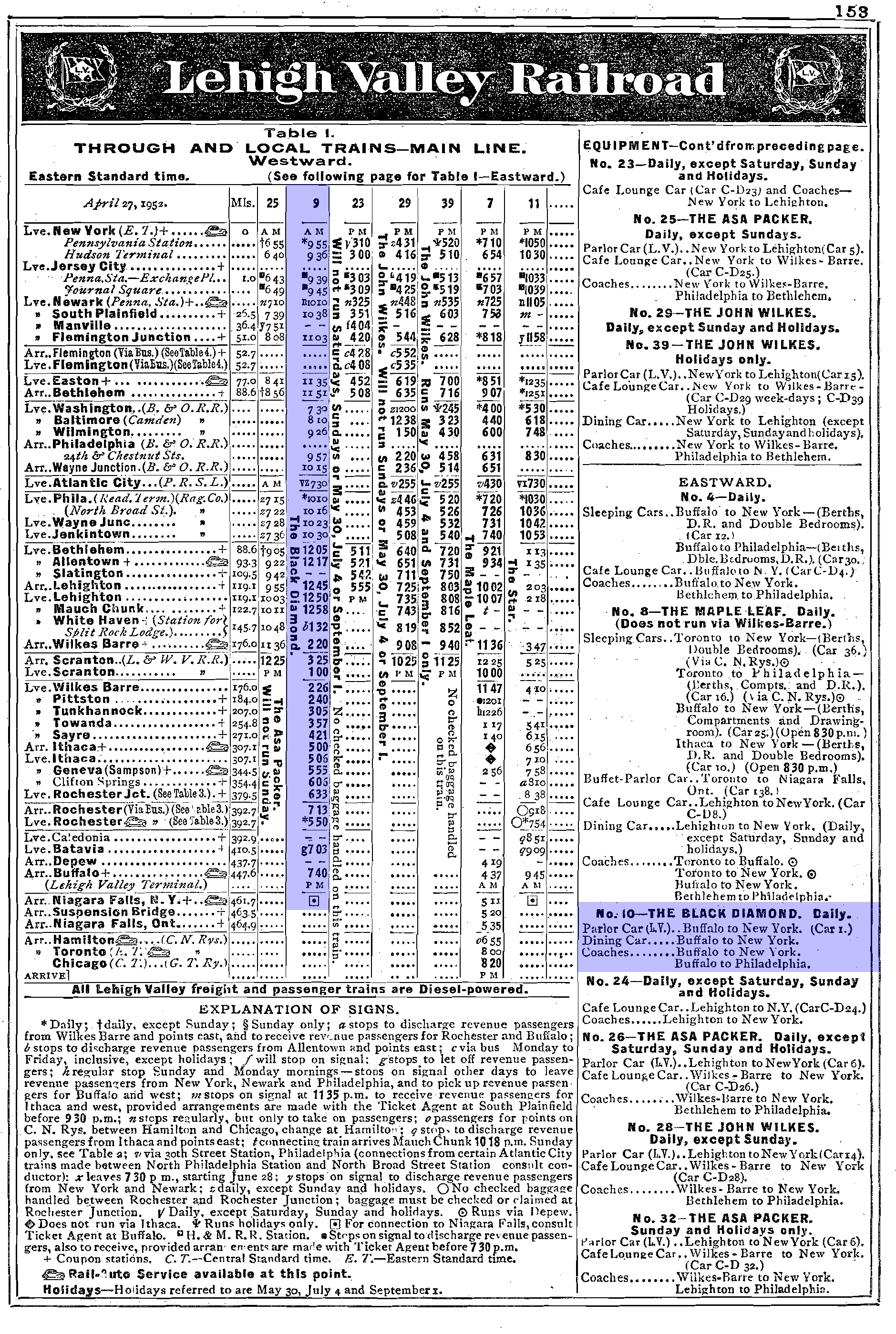
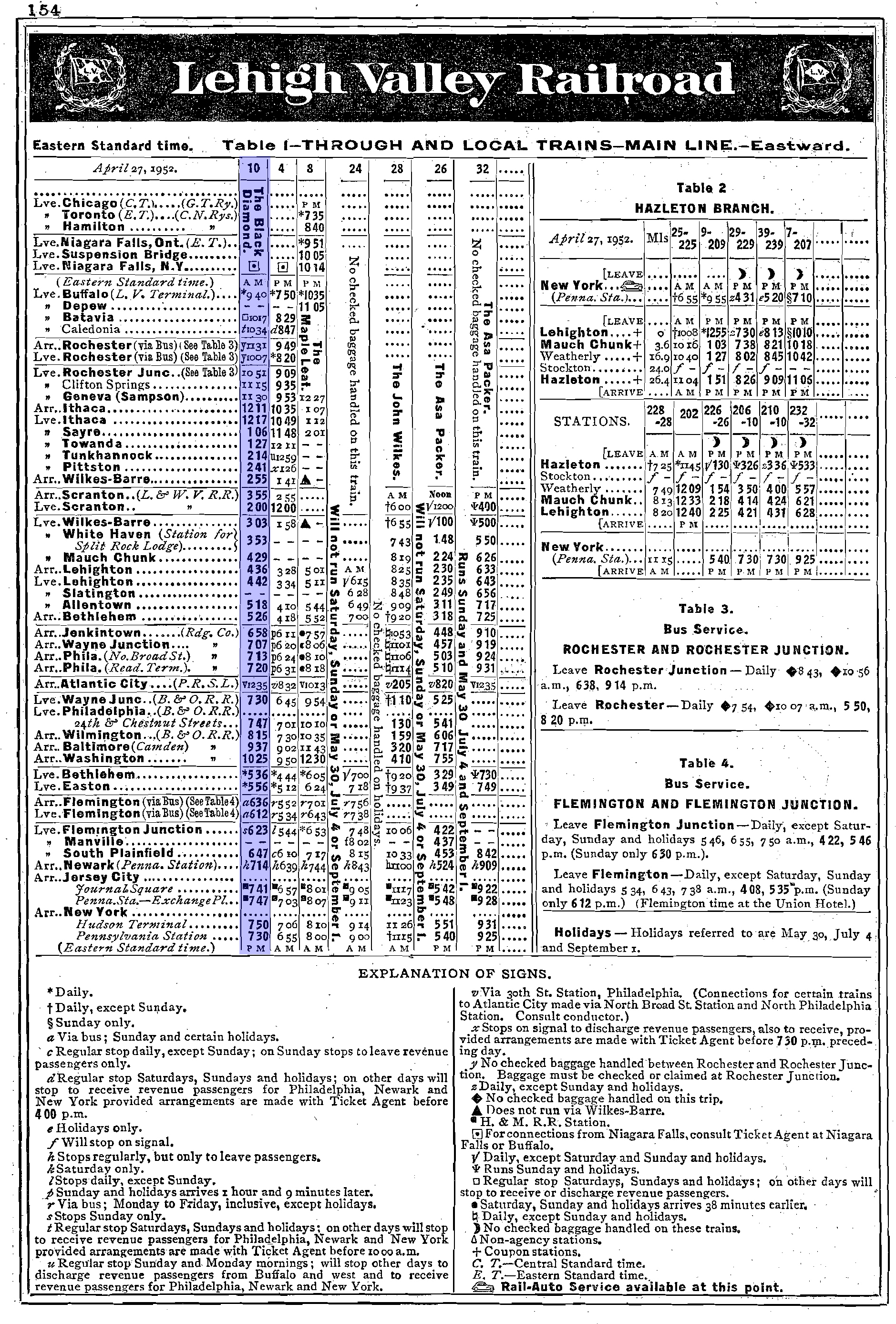
However, demand for anthracite began a steep decline after World War II and a result, roads that heavily depended on the commodity suffered. By 1956 the LV would show its final annual profit.
With a main line that simply could not compete with nearby competitors like the Pennsylvania, New York Central, and even the Erie/Erie-Lackawanna it was finally forced into bankruptcy in the early 1970s and absorbed into the Conrail system in 1976.
Today, almost nothing remains of the original LV. Despite the railroad's weak position this did not stop it from competing in the passenger market. The company even jumped into the streamliner fray when the craze hit in the 1930s.
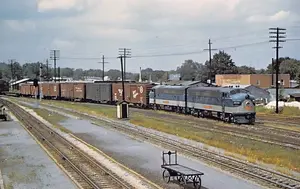
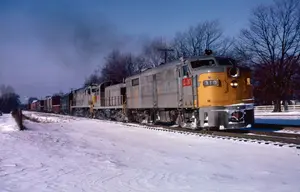
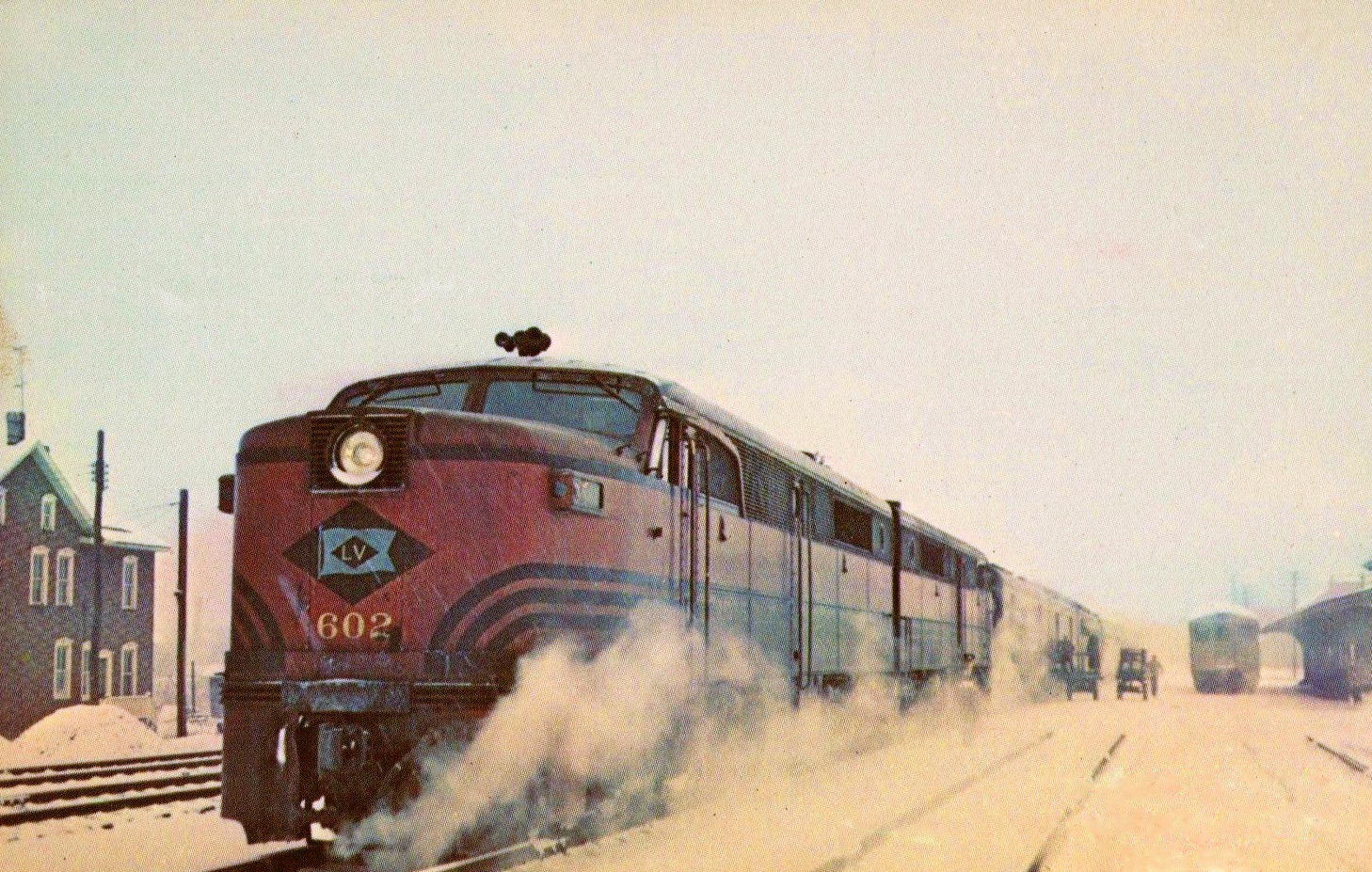 Lehigh Valley PA-1's have the westbound flagship "Black Diamond" (New York/Jersey City - Buffalo) at Lehighton, Pennsylvania during a cold, wintry day in 1959. Note that the RDC connection for the Hazleton Branch can be seen at right. Doug Wornom photo.
The Black Diamond enjoyed a long history, originally launched as the Black Diamond Express on May 18, 1896. While the railroad always boasted the service as a New York - Buffalo service, in reality it went no further east than Jersey City.
From that point it relied on ferries across the Hudson River to reach downtown Manhattan. This was not unique to the LV as every other carrier, aside from the Pennsylvania and New York Central, was forced into a similar situation.
The Black Diamond was not the only notable passenger train the LV operated and was actually the last to receive streamlining.
As Bob Johnston, Joe Welsh, and Mike Schafer note in their book, "The Art Of The Streamliner," Lehigh Valley delved into the streamliner market in 1938.
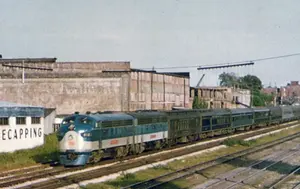
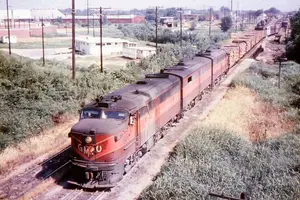
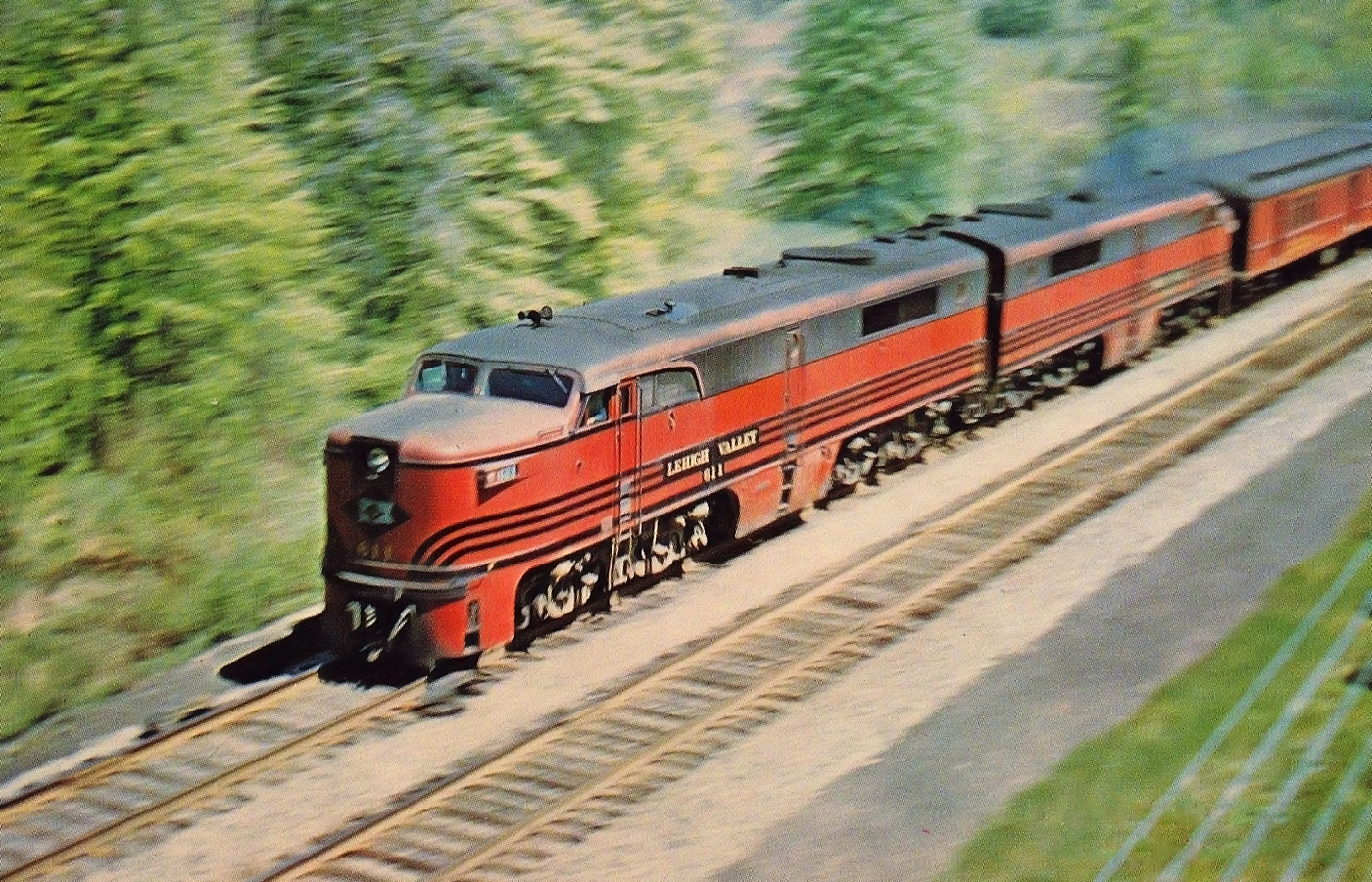 A pair of Lehigh Valley PA-1's race westbound through Clark Township, New Jersey with train #9, the "Black Diamond," on May 12, 1955. Joe Stark photo.
The railroad's financial state meant it had little cash available. Nevertheless, it hired noted industrial designer Otto Kuhler to modernize its services.
It began with the Asa Packer, a train which had the appearance of a streamliner but was actually a heavyweight consist. It served the Jersey City - Mauch Chunk (Jim Thorpe) market and featured a dazzling livery of black and Cornell red, led by a bullet-nosed 4-6-2 Pacific.
In June, 1939 Kuhler and LV introduced a similar train, the John Wilkes between Jersey City and Wilkes-Barre/Pittston. After seeing the success of these efforts the LV decided to go all out on the Black Diamond.
Timetable (October, 1940)
| Read Down Time/Leave (Train #9) | Milepost | Location | Read Up Time/Arrive (Train #10) |
|---|---|---|---|
| 11:05 AM (Dp) | 0.0 | 8:20 PM (Ar) | |
| 11:50 AM | 26.5 | 7:34 PM | |
| 12:49 PM | 77.0 | 6:33 PM | |
| 1:05 PM (Ar) | 88.6 | 6:13 PM (Dp) | |
| Time/Leave (Train #317/Reading, Philadelphia Section) | Milepost | Location | Time/Arrive (Train #328/Reading, Philadelphia Section) |
| 11:20 AM (Dp) | 0.0 | 8:10 PM (Ar) | |
| 11:26 AM | 2.9 | 8:02 PM | |
| 11:31 AM | 5.1 | 7:58 PM | |
| 11:40 AM | 10.8 | 7:49 PM | |
| 11:59 AM | 24.4 | 7:30 PM | |
| 12:03 PM | 27.1 | 7:24 PM | |
| 12:07 PM | 29.6 | 7:19 PM | |
| 12:10 PM | 30.9 | 7:15 PM | |
| 12:15 PM | 33.6 | 7:10 PM | |
| 12:19 PM | 35.0 | 7:07 PM | |
| 12:29 PM | 40.2 | 6:57 PM | |
| 12:55 PM (Ar) | 56.6 | 6:30 PM (Dp) | |
| Time/Leave (Train #9) | Milepost | Location | Time/Arrive (Train #10) |
| 1:14 PM (Dp) | 88.6 | 6:04 PM (Ar) | |
| 1:26 PM | 93.3 | 5:56 PM | |
| 2:09 PM | 122.7 | 5:13 PM | |
| 145.7 | 4:28 PM | ||
| 3:40 PM | 176.0 | 3:32 PM | |
| 3:56 PM | 184.0 | 3:09 PM | |
| 4:28 PM | 207.0 | 2:40 PM | |
| 5:18 PM | 254.8 | 1:48 PM | |
| 5:47 PM (Ar) | 271.0 | 1:20 PM (Dp) | |
| 5:52 PM (Dp) | 271.0 | 1:15 PM (Dp) | |
| 6:49 PM | 307.1 | 12:25 PM | |
| 7:45 PM | 344.5 | 11:31 AM | |
| 7:59 PM | 354.4 | 11:16 AM | |
| 8:33 PM | 379.5 | 10:46 AM | |
| 392.9 | F 10:30 AM | ||
| F 9:08 PM | 410.5 | F 10:11 AM | |
| 9:50 PM (Ar) | 447.6 | 9:30 AM (Ar) |
While the LV did purchase a small fleet of lightweight, streamlined equipment for the Diamond, many of the cars were built by its own shop forces from older heavyweight equipment.
The original version of the Black Diamond featured a handsomely streamlined 4-6-2 steam locomotive bedecked in a striking livery of Cornell red and black, similar to the other trains and played on the theme of the railroad’s anthracite coal business.
The interior likewise featured themes of coal and "black diamonds" and was quite classy; onboard attendants even wore uniforms with the name of the train and the diamond logo.
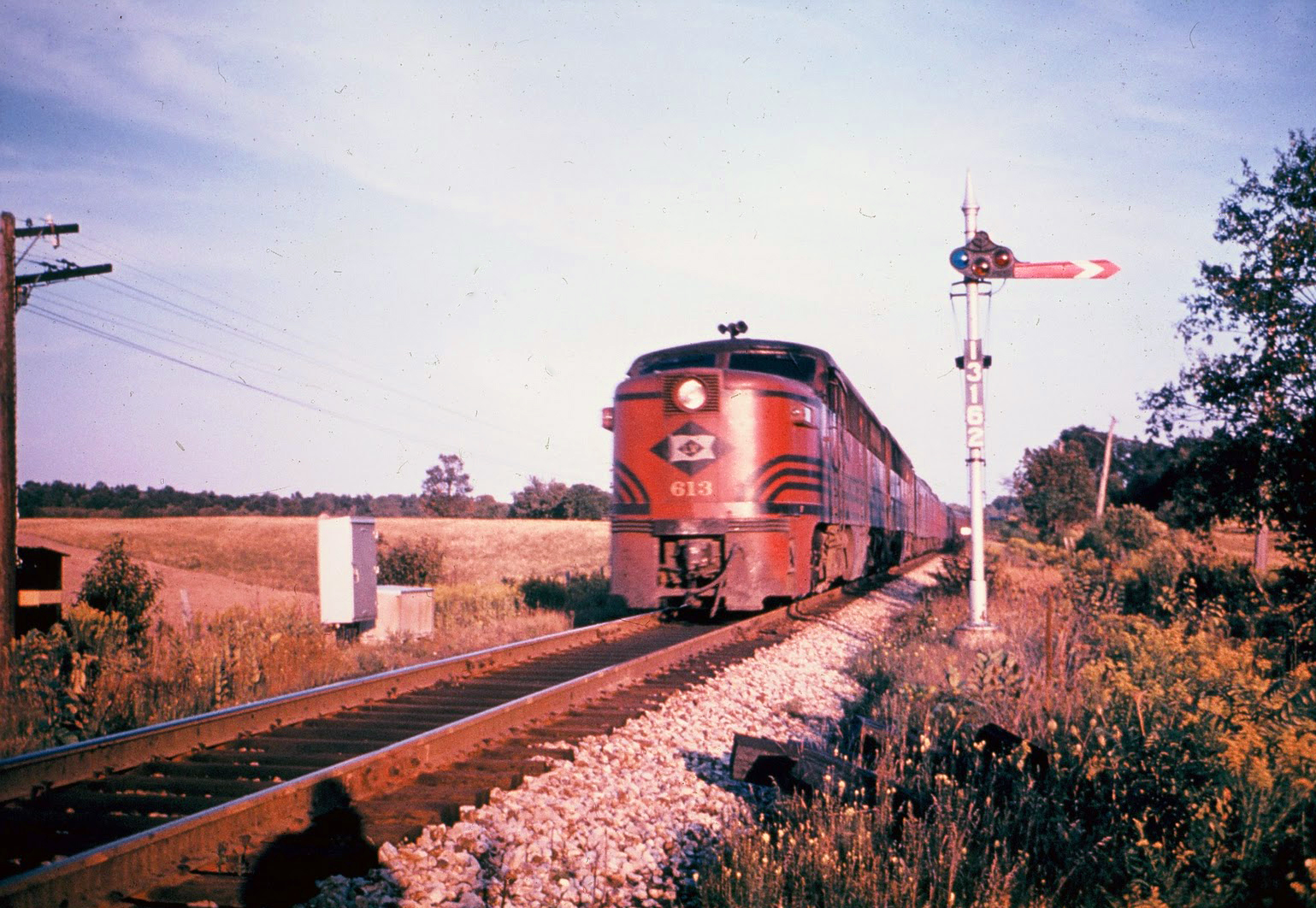 Lehigh Valley PA-1 #613 has the "Black Diamond" (New York - Buffalo) near Trumansburg, New York circa 1959. The train's accommodations at this time included a parlor, cafe diner, and coaches. Today, this section of the old LV main line is abandoned.
Final Years
In 1948, the LV upgraded power for the Diamond with American Locomotive's beautiful new PA passenger diesels; the LV had even been the first railroad to test this locomotive on June 26, 1946.
The PAs were adorned in a striking new version of LV’s Cornell red passenger livery (red replaced black as the dominate color, with the latter used in a pinstriping pattern similar to the “cat whiskers” adorning Pennsylvania's GG1s and other cab models).
These locomotives included a fleet of fourteen, numbered 601-614. As competition grew from other transportation modes, and the LV began to sink further into red ink, the company petitioned the Interstate Commerce Commission for approval to discontinue the train.
The ICC eventually granted LV's requested and the all passenger services were discontinued in 1961.
Recent Articles


-
Original Norfolk Southern Diesel Roster (All-Time)
Oct 14, 26 12:40 PM
 All-time diesel roster of the original Norfolk Southern Railway. 59 locomotives: Baldwin switchers and AS-416s, three GE 70-tonners, 17 GP18s, and seven GP38s. Serials and order numbers.
 -
Original Norfolk Southern Railway: Map, Rosters, History
Oct 14, 26 10:09 AM
 The original Norfolk Southern Railway, chartered in 1870 as the Elizabeth City & Norfolk. Norfolk to Charlotte. Merged into the Southern Railway on January 1, 1974. Baldwin diesels and the GP18s and G…
 -
Nebraska Railroad Museums (2026): A Complete Guide
Oct 14, 26 10:00 AM
 Nebraska railroad museums—the Durham Museum, Kenefick Park, Cody Park, and the Golden Spike Tower over Bailey Yard. Confirm hours on each site.
 -
Nevada Railroad Museums (2026): A Complete Guide
Oct 14, 26 09:51 AM
 Nevada railroad museums—Carson City, Boulder City, the Nevada Northern at East Ely, and the Virginia City depot. Confirm hours on each site.
 -
Montana Railroad Museums (2026): A Complete Guide
Oct 14, 26 12:17 AM
 Montana railroad museums—the Livingston depot, Fort Missoula’s Willamette, the Harlowton Milwaukee depot, and the Whitefish station. Confirm hours on each site.
 -
"Jawn Henry" Locomotive: Specs, Diagram, Photos
Oct 14, 26 12:03 AM
 Norfolk & Western No. 2300, class TE-1, the steam turbine-electric Jawn Henry. Baldwin-Lima-Hamilton, Westinghouse, and Babcock & Wilcox, May 1954. Specifications, the road tests, and the Dece…
 -
Atlantic and Danville Railway: Serving Southern VA
Oct 13, 26 04:32 PM
 Atlantic and Danville Railway, chartered in 1882, incorporated September 1883. Three-foot line to Claremont, then Norfolk to Danville. Southern lease from September 1, 1899, to July 1, 1949. Alco RS2s…
 -
Norfolk, Franklin and Danville Railroad: Map, Roster, History
Oct 13, 26 04:26 PM
 Norfolk, Franklin and Danville Railway, chartered October 2, 1962, and operating from November 1, 1962. Norfolk to Danville, 210.8 miles. Two Alco RS36s and four RS11s. Merged into the N&W on December…
 -
Norfolk & Western Diesel Roster (All-Time)
Oct 12, 26 11:59 PM
 Norfolk & Western diesel roster, all-time. 1,464 locomotives built new for the railroad, from the 1955 GP9s and RS-3s through the C36-7s, plus the merger fleets.
 -
Norfolk & Western Steam Roster (Post 1900)
Oct 12, 26 11:52 PM
 Norfolk & Western steam since 1898. The Roanoke grid: 1,266 locomotives, the J, the A, and the Y, and the last road steam on May 7, 1960.
 -
Norfolk & Western Railway: Map, Logo, Rosters, History
Oct 12, 26 11:45 PM
 The Norfolk & Western, from the City Point Railroad of 1838 to Norfolk Southern. Pocahontas coal, Roanoke steam, and the 1964 expansion.
 -
Louisiana Railroad Museums (2026): A Complete Guide
Oct 12, 26 11:24 PM
 Louisiana railroad museums—the DeQuincy depot, the Long Leaf sawmill, Jackson’s model railroad, and Southern Pacific 745. Confirm hours on each site.
 -
Michigan Railroad Museums (2026): A Complete Guide
Oct 12, 26 11:14 PM
 Michigan railroad museums—Pere Marquette 1225 at Owosso, Durand Union Station, The Henry Ford, and the Mount Clemens depot. Confirm hours on each site.
 -
Mississippi Railroad Museums (2026): A Complete Guide
Oct 12, 26 10:52 PM
 Mississippi railroad museums—McComb’s rebuilt Illinois Central depot and Illinois Central 2542, and the Casey Jones museum at Water Valley. Confirm hours on each site.
 -
The "E2b": PRR's Experimental Freight Electrics
Oct 12, 26 10:33 PM
 PRR class E2b: six GE B-B freight electrics, 4939–4944, 2,500 hp, 11 kV AC. Specifications, roster, and the 1964 scrap.
 -
Alaska Railroad Museums (2026): A Complete Guide
Oct 12, 26 10:10 PM
 Alaska railroad museums—the Museum of Alaska in Wasilla, Tanana Valley No. 1 at Pioneer Park, and the Engine 557 shop. Confirm hours on each site.
 -
Western and Atlantic Railroad: Map, History, Timetables
Oct 12, 26 09:55 PM
 The Western & Atlantic Railroad of the State of Georgia, authorized December 21, 1836, from Atlanta to Chattanooga. The state still owns the 137.33-mile line. CSX leases it. The through railroad opene…
 -
Nashville, Chattanooga & St. Louis Steam Roster (Post 1900)
Oct 12, 26 09:52 PM
 Nashville, Chattanooga & St. Louis steam since 1900. Drury's class grid: Consolidations, 51 Mikados, three 2-8-8-2s, Pacifics, and 25 4-8-4s. Last steam was January 4, 1953.
 -
Nashville, Chattanooga & St. Louis Diesel Roster (All-Time)
Oct 12, 26 09:27 PM
 Nashville, Chattanooga & St. Louis diesel roster, all-time. Switchers from 1941, 37 GP7s, and the F3s and F7s. The quantity column totals 132 locomotives.
 -
Nashville, Chattanooga and St. Louis Railway: Map, History, Logo
Oct 12, 26 08:41 PM
 The Nashville, Chattanooga & St. Louis, the Dixie Line. Charter of December 11, 1845, the Cumberland tunnel, and the Louisville & Nashville merger of August 30, 1957.
 -
Idaho Railroad Museums (2026): A Complete Guide
Oct 12, 26 02:44 PM
Idaho railroad museums—Nampa’s 1903 depot, Wallace’s Northern Pacific depot, and Boise’s 1925 Union Pacific depot. Confirm hours on each site. -
Hawaii Railroad Museums (2026): A Complete Guide
Oct 12, 26 12:50 PM
Hawaii railroad museums—the Hawaiian Railway Society at Ewa Beach and the Laupahoehoe Train Museum on the Big Island. Confirm hours on each site. -
Marietta and Cincinnati Railroad: Map, History, Timetable
Oct 12, 26 11:44 AM
 Marietta and Cincinnati Railroad, chartered March 8, 1845 as the Belpre & Cincinnati. Opened in April 1857, sold under foreclosure December 9, 1882, and succeeded by the Baltimore & Ohio Southwestern…
 -
Tennessee Railroad Museums (2026): A Complete Guide
Oct 12, 26 11:39 AM
 Tennessee railroad museums—TVRM and Southern 4501 in Chattanooga, the Tennessee Central museum in Nashville, Casey Jones in Jackson, and the depots at Cookeville, Cowan, and Townsend.
 -
Virginia Railroad Museums (2026): A Complete Guide
Oct 12, 26 09:40 AM
 Virginia railroad museums—Roanoke’s Virginia Museum of Transportation and the O. Winston Link Museum, the C&O center at Clifton Forge, and the depots in Richmond, Fairfax Station, Suffolk, Parksley, a…
 -
Louisville & Nashville Diesel Roster (All-Time)
Oct 12, 26 12:15 AM
 Louisville & Nashville diesel roster, all-time. Switchers from 1939, the cab units, and EMD, Alco, and GE hoods through the SD50s. The quantity column totals 1948 locomotives, plus 29 yard slugs.
 -
Louisville & Nashville Steam Roster (Post 1900)
Oct 11, 26 05:44 PM
Louisville & Nashville steam since 1900. Drury's class grid: Consolidations, 165 heavy Mikados, 42 Big Emma 2-8-4s, Pacifics, and 22 Mountains. Last steam January 1957. -
Louisville and Nashville Railroad: Map, Rosters, History
Oct 11, 26 05:39 PM
 Louisville & Nashville, the Old Reliable. Charter of March 5, 1850, Milton H. Smith, the 921-mile main line, Big Emma, and the December 29, 1982 merger. Steam and diesel rosters are companion pages.
 -
Oregon Railroad Museums (2026): A Complete Guide
Oct 11, 26 05:19 PM
 Oregon railroad museums—the Oregon Rail Heritage Center, Brooks trolleys, Canby’s 1891 depot, Medford’s Willamette, and Train Mountain. Confirm hours on each site.
 -
Texas Railroad Museums (2026): A Complete Guide
Oct 11, 26 05:15 PM
 Texas railroad museums—Frisco’s Big Boy 4018, Galveston’s Santa Fe depot, Temple’s 1911 station, Plano’s interurban, and Fort Worth & Denver 304. Confirm hours on each site.
 -
Wisconsin Railroad Museums (2026): A Complete Guide
Oct 10, 26 11:51 PM
Wisconsin railroad museums—Green Bay’s Big Boy 4017 and Eisenhower’s A4, Mid-Continent at North Freedom, East Troy’s interurban, and the Riverside & Great Northern. Confirm hours on each site. -
Interstate Railroad (Virginia): Map, Roster, Logo, History
Oct 10, 26 11:22 PM
 Interstate Railroad, a Virginia coal road chartered February 18, 1896. Andover shops. Ten Alco RS3s, 30–39. Southern control in 1961. The company ended October 31, 1985.
 -
North Carolina Railroad Museums (2026): A Complete Guide
Oct 10, 26 11:16 PM
North Carolina railroad museums—Spencer Shops, Wilmington’s Atlantic Coast Line 250, Hamlet’s Seaboard depot, and the New Hope Valley Railway. Confirm hours on each site. -
New Mexico Railroad Museums (2026): A Complete Guide
Oct 10, 26 10:54 PM
 New Mexico railroad museums—Santa Fe 2926 in Albuquerque, the Clovis depot, Alamogordo’s Toy Train Depot, and Belen. Confirm hours on each site.
 -
New York Railroad Museums (2026): A Complete Guide
Oct 10, 26 09:33 PM
 New York railroad museums—Phoenicia, Medina’s New York Central freight house, the Transit Museum, Long Island 35 and 39, and GG1 4933. Confirm hours on each site.
 -
Columbia, Newberry & Laurens Railroad: History, Timetable, Roster
Oct 10, 26 09:08 PM
 Columbia, Newberry & Laurens Railroad, Columbia to Laurens, 75 miles. Chartered in 1885. Five Atlantic Coast Line GP7s, 100–104. Merged into the Seaboard System on April 30, 1984.
 -
New Haven Diesel Roster (All-Time)
Oct 10, 26 06:35 PM
 New Haven diesel roster, all-time. 558 road numbers: 60 DL-109s, 30 FA-1s, 27 PA-1s, 60 FL9s, and the switchers from HH600 0900. Serials and order numbers.
 -
New Haven Steam Roster (Post 1900)
Oct 10, 26 06:31 PM
 New Haven steam since 1900. Drury's class grid: 226 Moguls, 33 Mikados, 50 Santa Fes, 70 Mountains, 141 Pacifics, and 10 Hudsons. Last fan trip July 19, 1953.
 -
New Haven Railroad: Rosters, Map, Logo, History, Trains
Oct 10, 26 06:26 PM
 New York, New Haven and Hartford. The Shore Line, Hell Gate, the 1952 map at 1,838.89 miles, and the railroad Penn Central took at 11:59:59 p.m. on December 31, 1968.
 -
C&O's 4-6-4 "Hudson" Locomotives (Class L): Specs, Roster, History
Oct 10, 26 05:36 PM
 Chesapeake & Ohio Class L 4-6-4 Hudsons. Eight L-2s, five L-1 rebuilds, five L-2-As. Specs, Baldwin works numbers, and the roster. No. 490 survives.
 -
Alton Railroad: Map, History, Timetables
Oct 09, 26 10:31 PM
 Alton Railroad, chartered February 27, 1847 as the Alton & Sangamon. Chicago, St. Louis, and Kansas City, the 1937 Official Guide, and the May 31, 1947 merger into the Gulf, Mobile & Ohio.
 -
Mobile & Ohio Steam Roster (Post 1900)
Oct 09, 26 12:26 PM
 Mobile & Ohio steam since 1900. Drury's class grid: 48 six-wheel switchers, 107 Ten-Wheelers, 15 Consolidations, 58 Mikados, and 14 Pacifics. Last revenue steam October 7, 1949.
 -
Mobile & Ohio Railroad: History, Map, Timetable
Oct 09, 26 11:31 AM
 Mobile & Ohio Railroad, chartered in 1848. Columbus on April 22, 1861, the Cairo & St. Louis, the March 1940 Official Guide, and the September 13, 1940 merger into the Gulf, Mobile & Ohio.
 -
Gulf, Mobile & Northern Steam Roster (Post 1900)
Oct 09, 26 10:42 AM
 Gulf, Mobile & Northern steam since 1900. Drury's class grid: Ten-Wheelers, Mikados, Russian Decapods, Pacifics 425 and 426, and three light 4-8-2s. Last revenue steam October 7, 1949.
 -
Gulf, Mobile & Ohio Diesel Roster (All-Time)
Oct 09, 26 10:41 AM
 Gulf, Mobile & Ohio diesel roster, all-time. The 1935 boxcab, DL-107s, 55 FA-1s, F3s and F7s, the Ingalls 4-S, GP30s through GP38-2s, and 21 SD40s. Serials and order numbers.
 -
Gulf, Mobile & Northern Railroad: History, Rebel Route
Oct 09, 26 10:36 AM
 Gulf, Mobile & Northern, from the 1890 Mobile, Jackson & Kansas City to the Rebel and the September 13, 1940 merger into the Gulf, Mobile & Ohio. Steam roster is the companion page.
 -
Gulf, Mobile & Ohio Railroad: Map, Photos, Trains, History
Oct 08, 26 11:48 PM
 Gulf, Mobile & Ohio, chartered in 1938 and merged September 13, 1940. The Mobile & Ohio, the Alton on May 31, 1947, the Rebel Route, and Illinois Central Gulf on August 10, 1972.
 -
New Jersey Railroad Museums (2026): A Complete Guide
Oct 08, 26 11:37 PM
 New Jersey railroad museums—Whippany, Maywood, Pine Creek, Mahwah’s Erie depot, Phillipsburg, and Boonton. Confirm hours on each site.
 -
New Hampshire Railroad Museums (2026): A Complete Guide
Oct 08, 26 11:34 PM
 New Hampshire railroad museums—North Conway, the Flying Yankee, Ashland, Gorham, Raymond, and Sandown. Confirm hours on each site.
 -
Missouri Railroad Museums (2026): A Complete Guide
Oct 08, 26 11:00 PM
 Missouri railroad museums—the National Museum of Transportation, Patee House, Frisco 4524, the Chicago & Alton depot, and Marceline. Confirm hours on each site.


%20at%20Lehighton%2C%20Pennsylvania%20during%20a%20cold%2C%20wintry%20day%20in%201959.%20Note%20that%20the%20RDC%20connection%20for%20the%20Hazleton%20Branch%20can%20be%20seen%20at%20right.%20Doug%20Wornom%20photo.)

%20near%20Trumansburg%2C%20New%20York%20circa%201959.%20The%20train's%20accommodations%20at%20this%20time%20included%20a%20parlor%2C%20cafe%20diner%2C%20and%20coaches.%20Today%2C%20this%20section%20of%20the%20old%20LV%20main%20line%20is%20abandoned.)