The "Spirit of St. Louis": One Of PRR's Top Trains
Last revised: August 25, 2024
By: Adam Burns
The Spirit of St. Louis was a train born primarily out of
marketing as it replaced two former trains of the Pennsylvania Railroad
and looked to capitalize on the recent success of Charles Lindbergh by
naming a train in honor of his airplane that traveled across the
Atlantic Ocean between New York and Paris.
When the Spirit entered service in the late 1920s it featured heavyweight equipment and steam locomotives for power although later was an all streamlined affair as one of the PRR's flagship runs between the Atlantic Coast and Midwest.
The train remained on the railroad's timetable through the New York Central merger, forming Penn Central (February 1, 1968).
Alas, like most trains around the country the Spirit had lost a great deal of its on-board accommodations by that time. In addition, Penn Central's inability to maintain equipment to proper standards only worsened the situation.
Under Amtrak management the train survived for a few months until it was discontinued entirely as the carrier consolidated and streamlined operations.
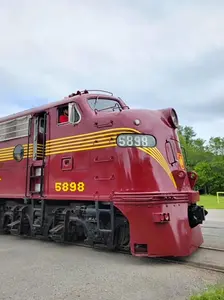
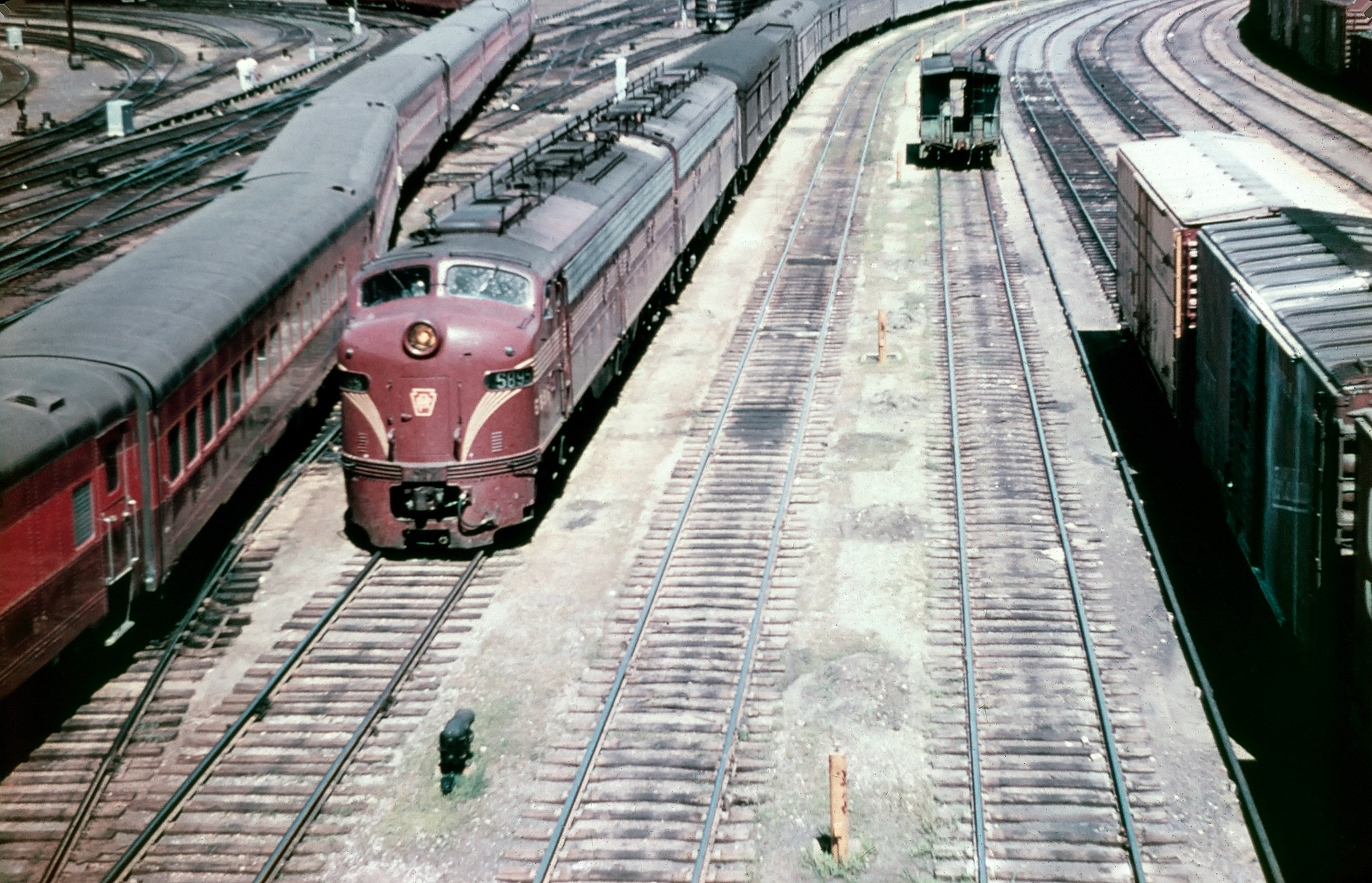 A pair of handsome Pennsylvania E8A's, led by #5895, have arrived at a busy St. Louis Union Station with train #31, the westbound "Spirit of St. Louis," on June 23, 1957. American-Rails.com collection.
History
The Spirit was certainly not the first Pennsy passenger train to serve New York and St. Louis. The train replaced the railroad's earlier runs between the two cities named the New Yorker and St. Louisan (the eastbound version of this train remained as a secondary run to St. Louis for many years), renaming them as the Spirit on June 15, 1927.
The public had been awed by Lindbergh's accomplishment and the PRR spent a great deal of effort to market the event and its new train.
As it turns out the idea to have the pilot's mother christen the new train (since Lindbergh himself was far too busy with publicity requests at the time) proved far more successful than perhaps even the PRR could have hoped resulting in thousands attending the event and forcing New York City planners to use hundreds of police offers to keep order.
Consist (1952)
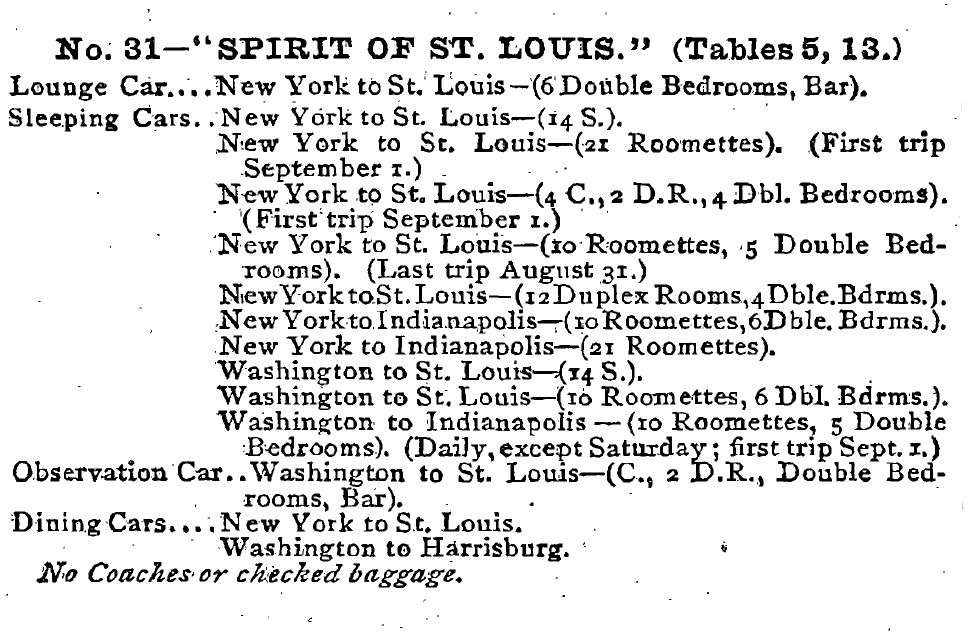
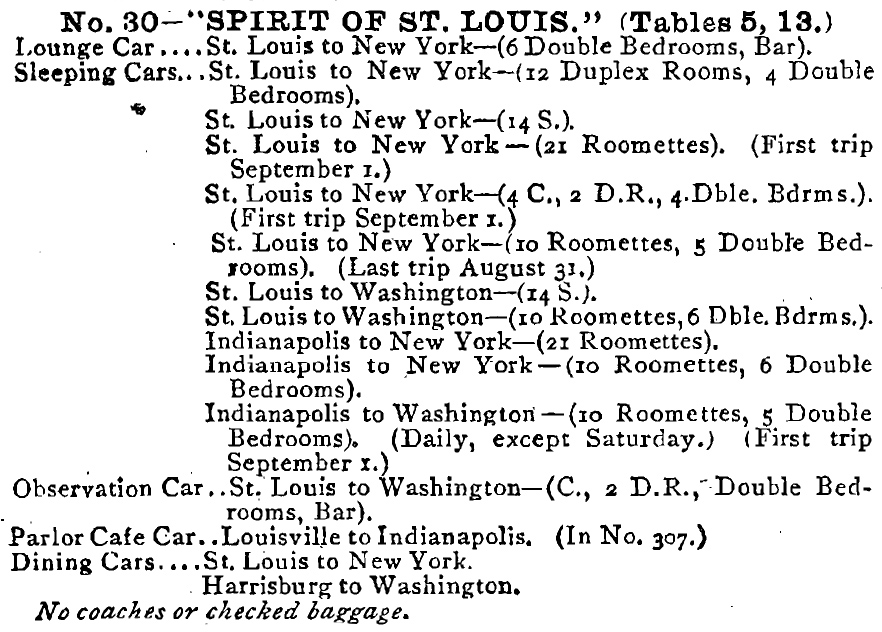
While the Spirit was initially used all heavyweight cars and Class K 4-6-2 Pacific type steam locomotives for power it did not remain this way for long.
When it came to streamliners the Pennsylvania Railroad was somewhat conservative to the new fad in passenger trail travel.
However, unwilling to let its fierce rival New York Central gain the upper hand the Pennsy spent quite a bit of resources upgrading its most popular long distance runs like the Broadway Limited, which entered service as a streamliner the same day as the 20th Century Limited on June 15, 1938.
The Broadway featured equipment from Pullman-Standard, which in total included 52 cars the railroad had ordered to also partially upgrade other trains to streamliner status including the Spirit of St. Louis, General, and Liberty Limited.
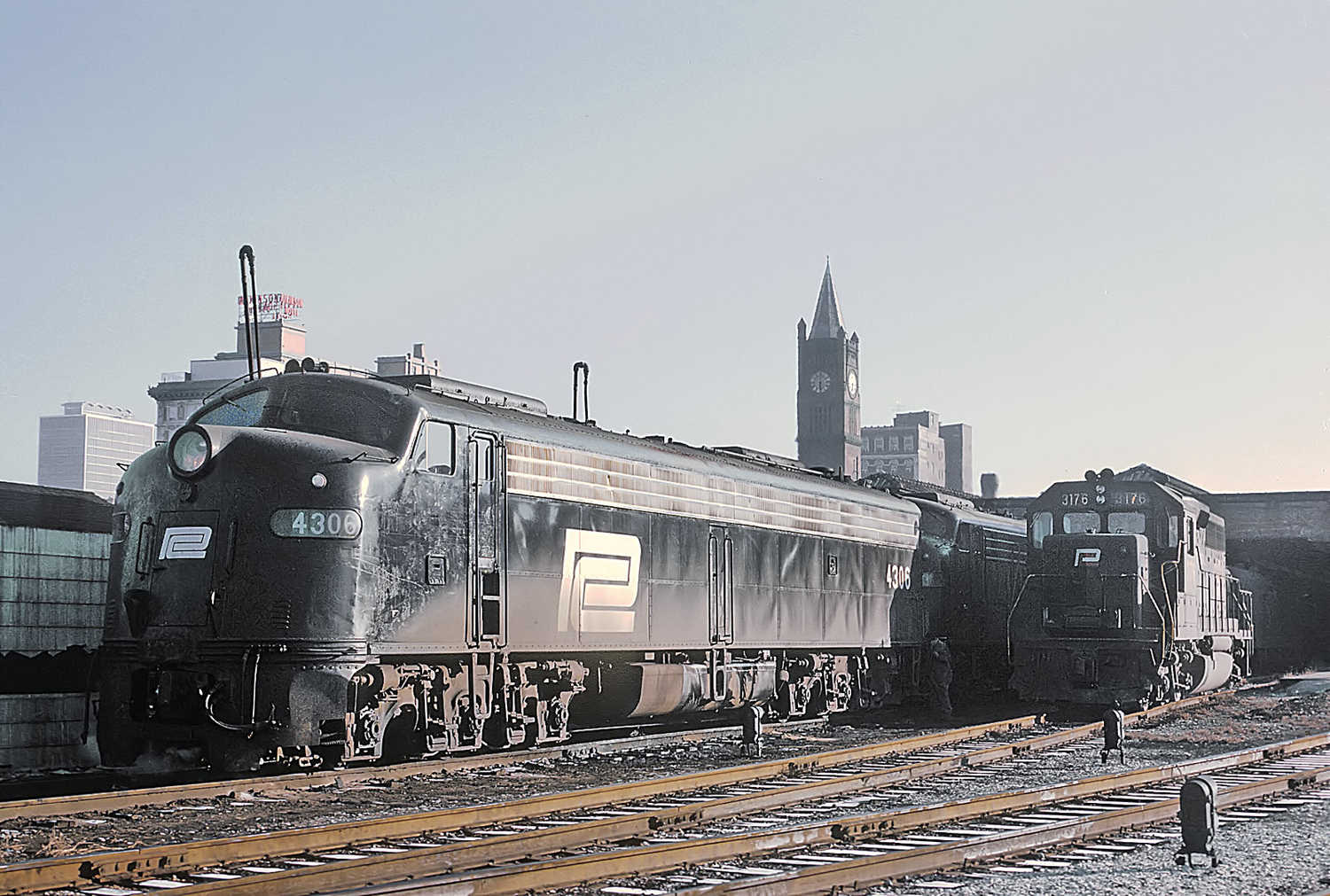 Penn Central E8A #4306 has train #31, the "Spirit of St. Louis," at Indianapolis, Indiana on December 14, 1970. On the next track over is GP40 #3176. Roger Puta photo.
These trains were noted for their interior and exterior beauty thanks to noted industrial designer Raymond Loewy who was employed by the Pennsy to work on many various projects.
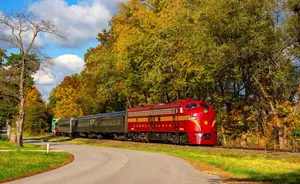
In general the trains featured a classic Tuscan red livery with gold pinstripes and an interior that was a decorated and yellows and blues. Just as the NYC called its new streamliners the Great Steel Fleet, the PRR marketed its three trains mentioned above as its new Fleet of Modernism.
And the name was certainly not only a way to denote the trains as the railroad spent a significant amount of money marketing the term by producing numerous brochures and booklets letting the public know about all of the features its streamliners offered.
Timetable (April, 1948)
| Read Down Time/Leave (Train #31) | Milepost | Location | Read Up Time/Arrive (Train #30) |
|---|---|---|---|
| 6:05 PM (Dp) | 0.0 | 9:05 AM (Ar) | |
| 6:19 PM | 10.0 | 9:34 AM | |
| 58.1 | 8:48 AM | ||
| 7:38 PM | 85.9 | 8:21 AM | |
| 8:03 PM | 111.4 | 7:53 AM | |
| 8:46 PM | 159.3 | 7:07 AM | |
| 9:20 PM (Ar) | 194.6 | 6:28 AM (Dp) | |
| Time/Leave (Washington Section) | Milepost | Location | Time/Arrive (Washington Section) |
| 6:20 PM (Dp) | 0.0 | 10:10 AM (Ar) | |
| 7:00 PM (Ar) | 40.1 | 9:28 AM (Dp) | |
| 7:05 PM (Dp) | 40.1 | 9:23 AM (Ar) | |
| 8:35 PM | 96.3 | 7:42 AM | |
| 9:16 PM (Ar) | 123.4 | 7:05 AM (Dp) | |
| Time/Leave (Train #31) | Milepost | Location | Time/Arrive (Train #30) |
| 9:20 PM (Dp) | 194.6 | 6:28 AM (Ar) | |
| 11:48 PM | 325.4 | 4:06 AM | |
| 2:18 AM | 439.3 | 1:31 AM | |
| 482.5 | F 12:19 AM | ||
| 597.1 | 10:10 PM | ||
| 6:17 AM | 630.2 | 9:20 PM | |
| 7:39 AM | 700.9 | 7:56 PM | |
| 7:32 AM | 742.4 | 6:05 PM | |
| 8:50 AM (Ar) | 810.6 | 4:50 PM (Dp) | |
| 10:19 AM | 882.6 | 3:22 PM | |
| 11:24 AM | 950.5 | ||
| F 12:57 PM | 1047.3 | F 1:15 PM | |
| 1:15 PM (Ar) | 1050.6 | 12:30 PM (Dp) |
From the summer of 1938 through the spring of 1941 the PRR continued to upgrade its long distance passenger fleet with rebuilt heavyweight equipment until its initial four trains that were part of the Fleet of Modernism were completely equipped to full streamliner status (the railroad would continue to add more, particularly after the war).
After World War II the Pennsy continued to upgrade its fleet although this time it purchased brand new equipment from Pullman-Standard. From an exterior standpoint these new cars featured the classic Tuscon red livery, gold pinstriping, and black roofs.
The late 1940s also saw the PRR switch from steam to diesel power outside of its electrified lines east of Harrisburg, Pennsylvania. Models the railroad purchased for its passenger trains included Alco's PAs, Baldwin's DR-6-4-2000s, and EMD E7s (and later E8s).
Timetable (1952)
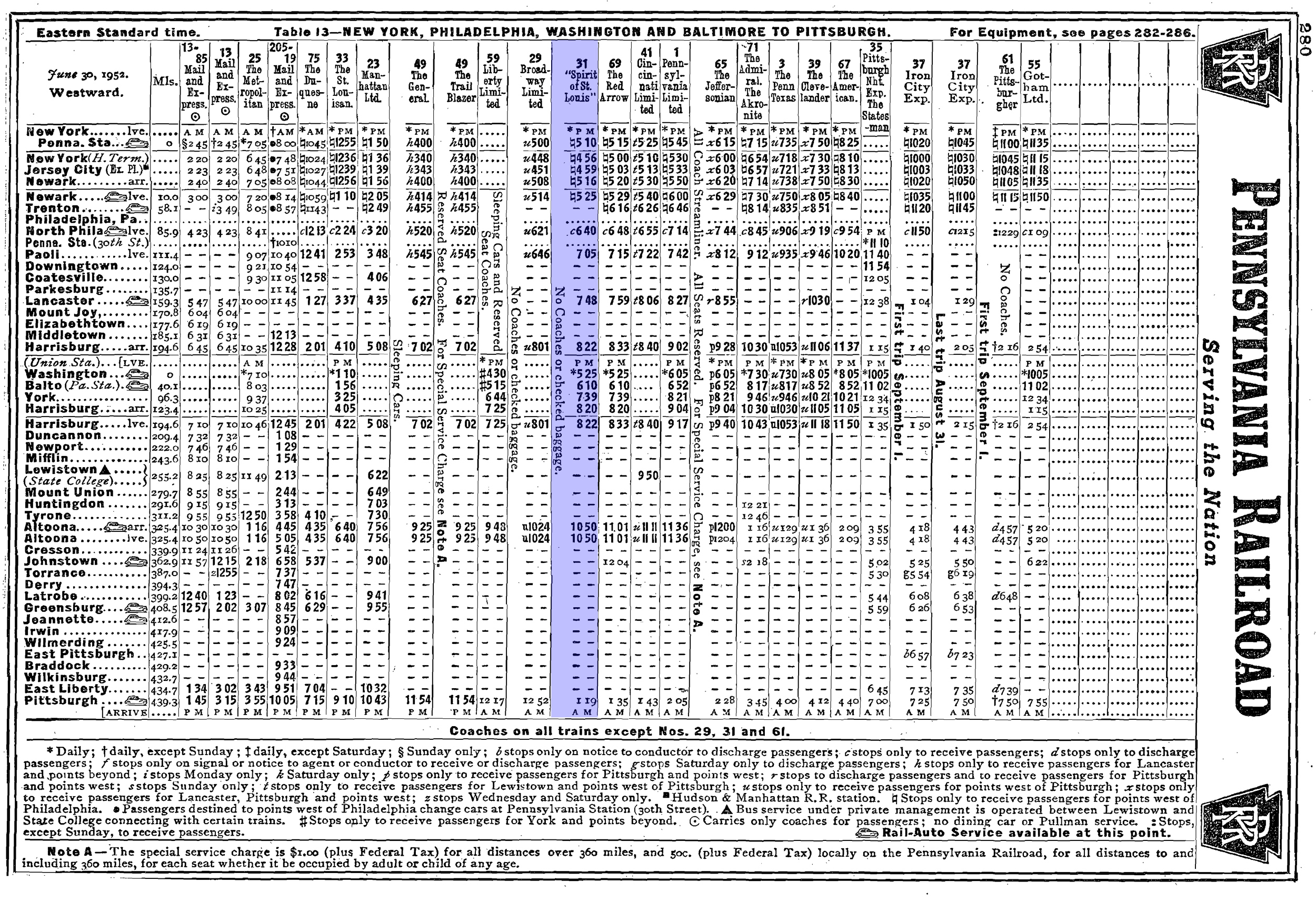
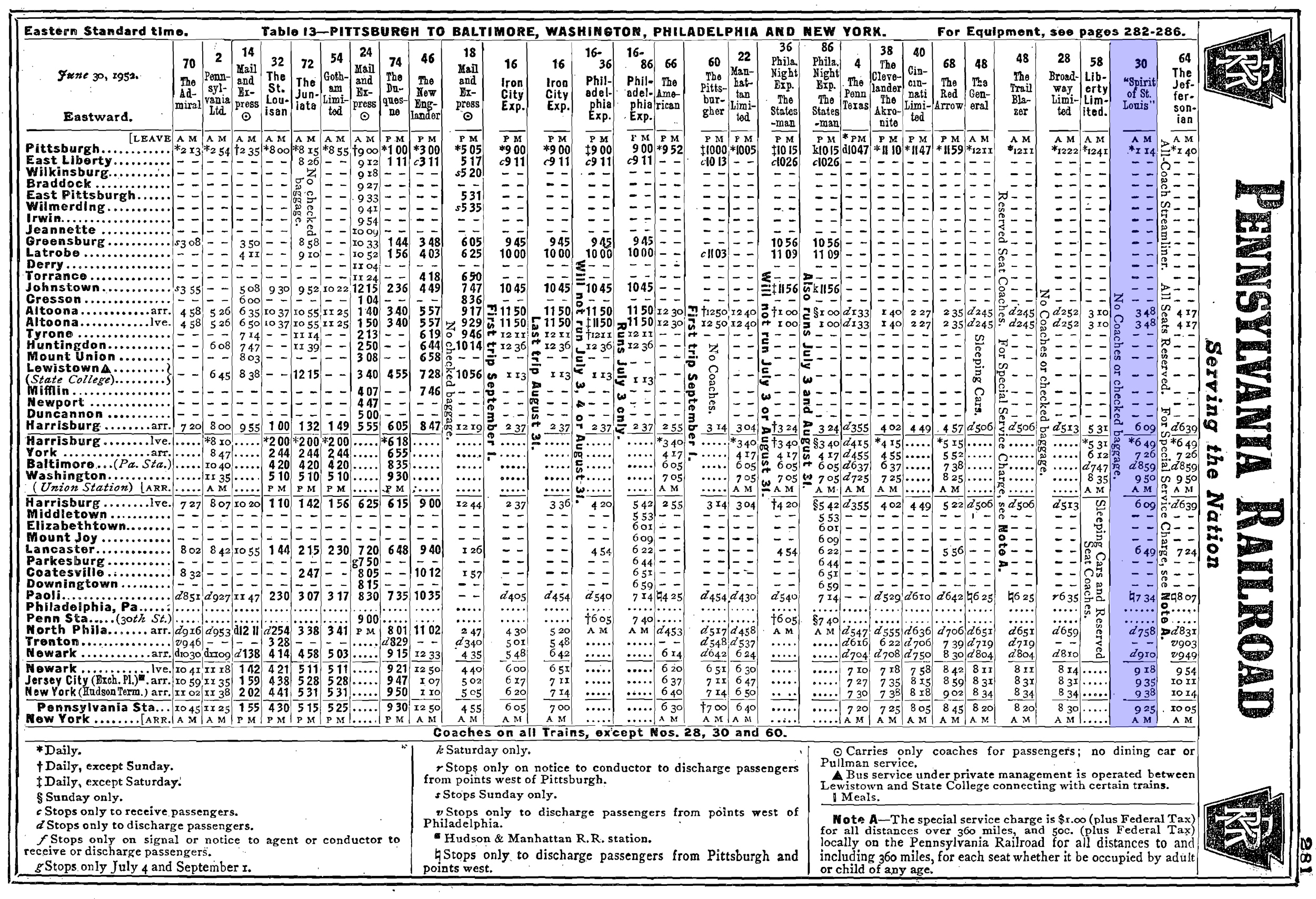
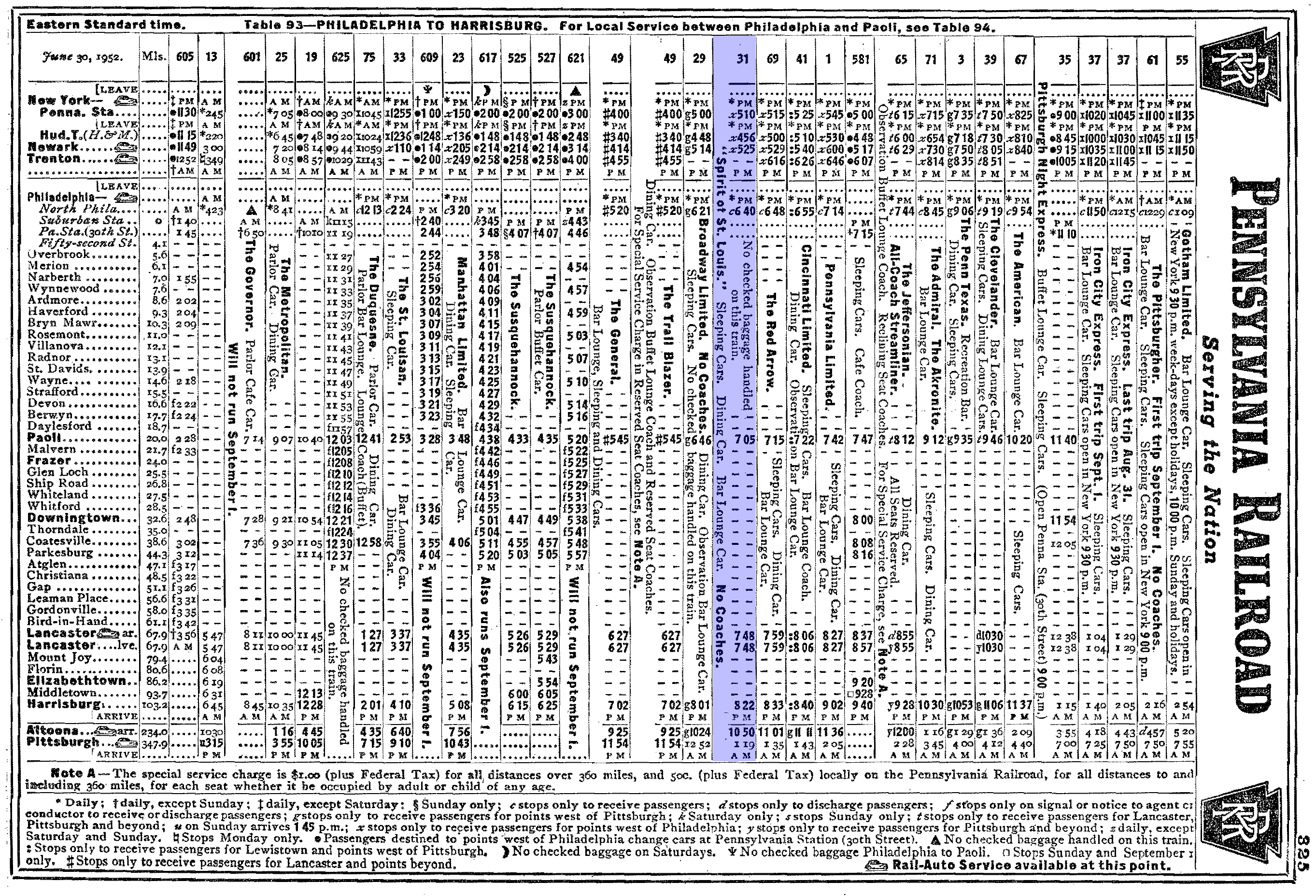
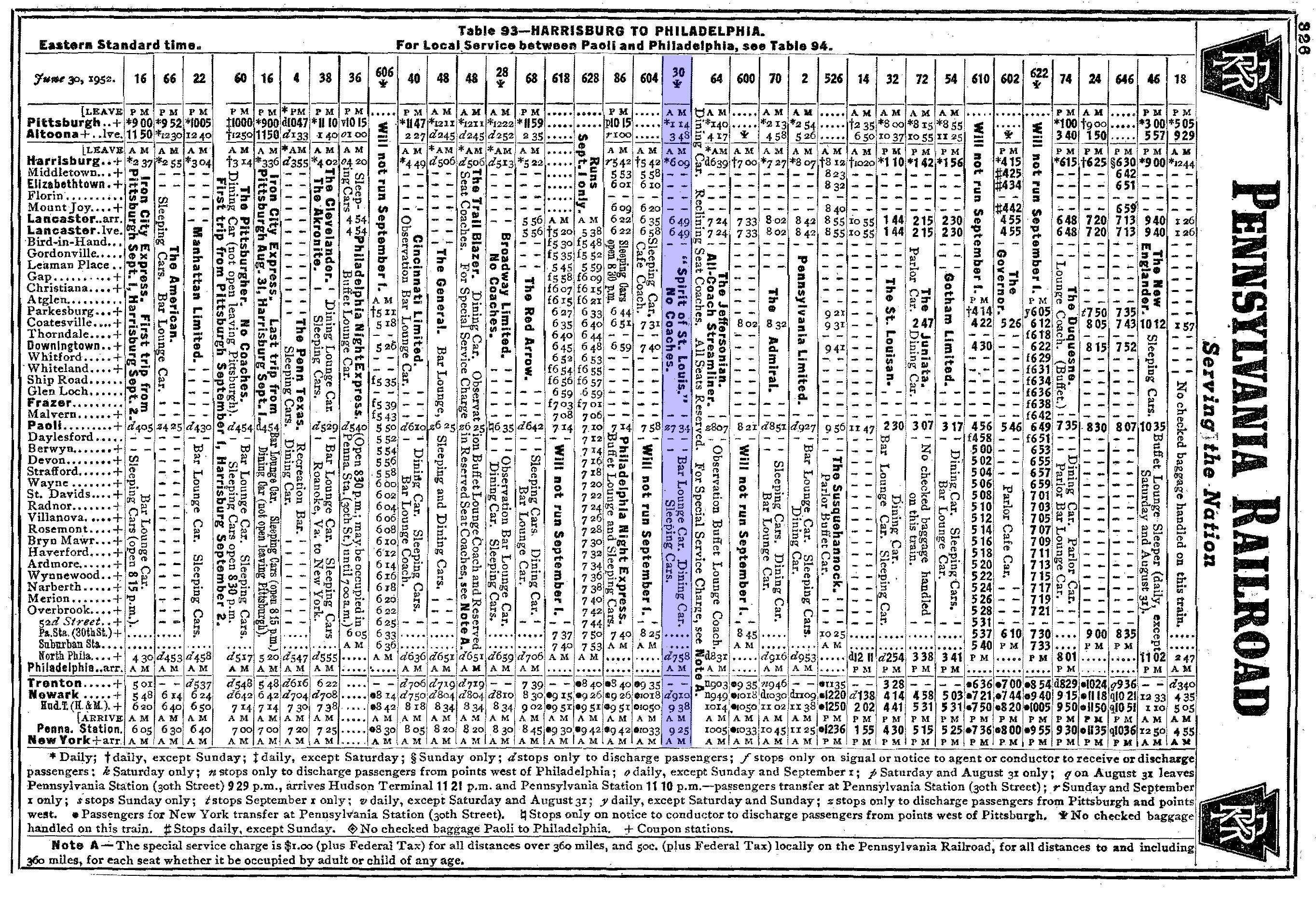
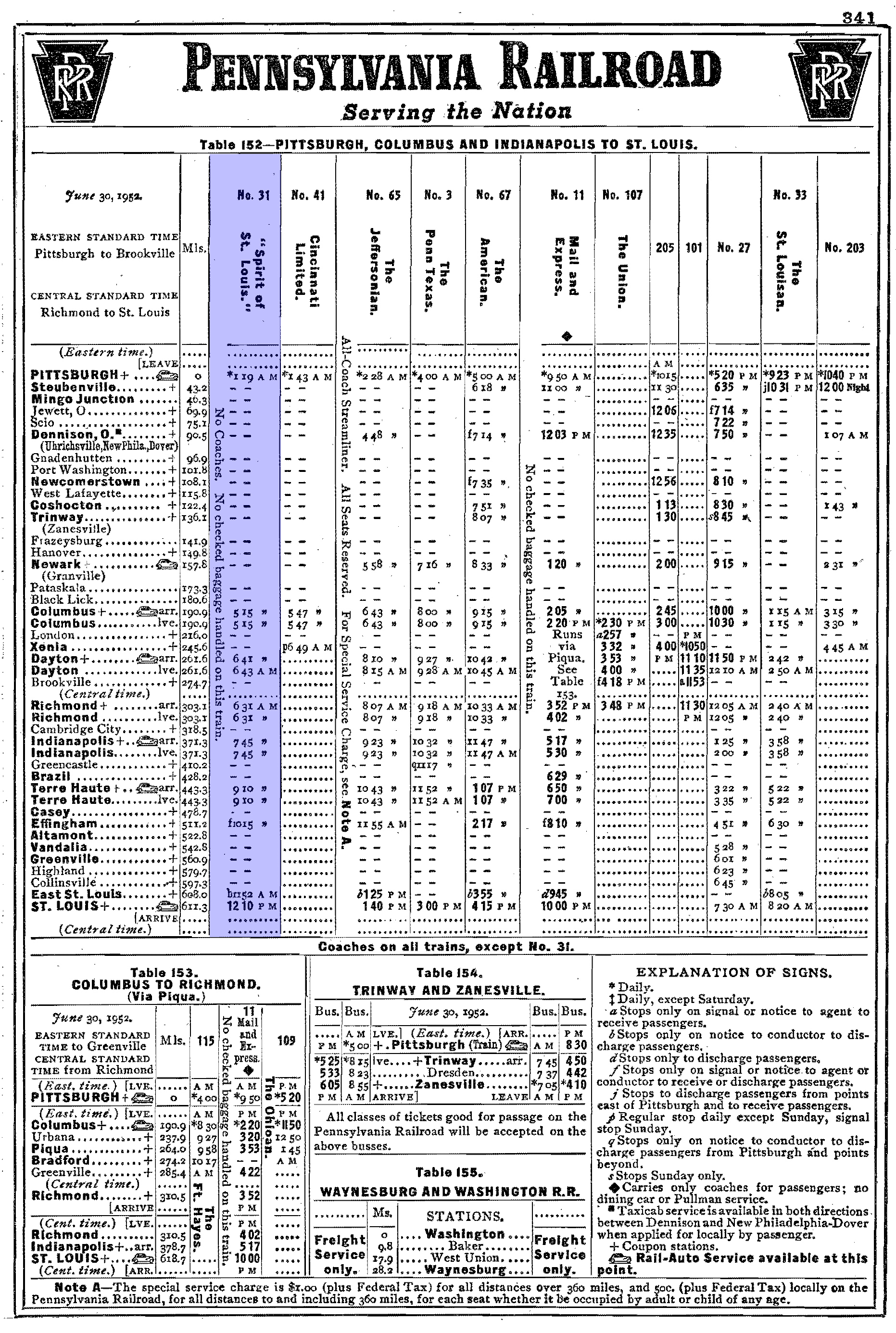
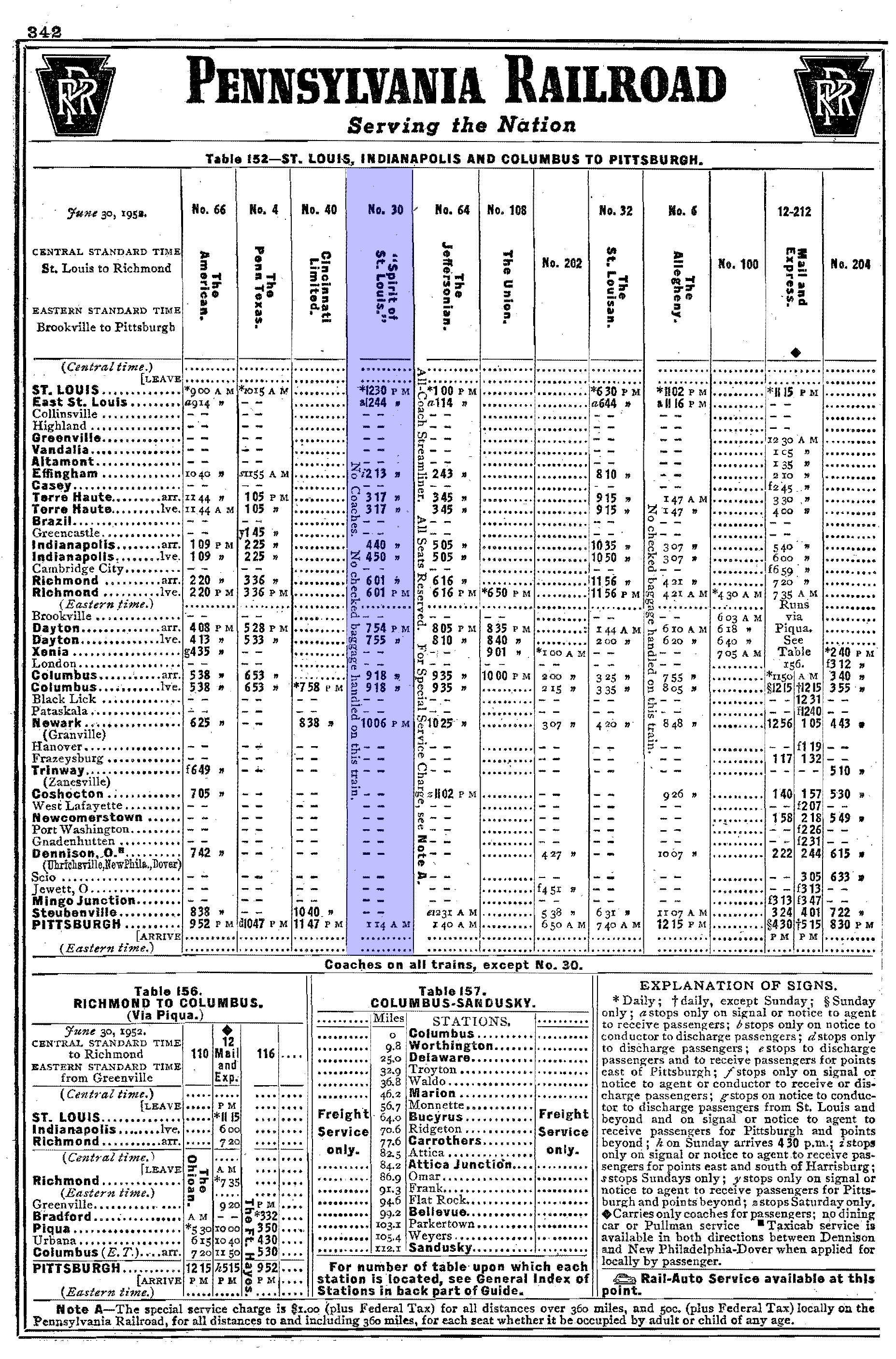
This era of the late 1940s and early 1950s was the pinnacle of the railroad's passenger fleet with matching locomotives and equipment. For instance, the Tuscan red and whisker pinstripes on locomotives like the Alco's PA leading a completely matching long distance train was quite a sight to behold.
In 1953 the Spirit achieved all-Pullman status when it picked up the equipment of the Jeffersonian, which had been discontinued in the spring of that year. This short-lived, first-class, all-coach service was inaugurated in April, 1941. It quietly disappeared from the PRR's timetable on April 25, 1953.
Throughout the 1950s and 1960s consolidations and cancellations occurred all across the Pennsylvania's passenger fleet as patronage rapidly declined.
The Spirit survived through the Penn Central era, albeit as a shadow of its former self. Initially, Amtrak even retained the train until discontinuing it permanently after a months of operation in July, 1971 (the B&O's former National Limited took its place). Along with the Broadway Limited it was the only Midwestern PRR train retained by Amtrak upon its startup.
Recent Articles


-
Delaware-Lackawanna Unveils Heritage M630 1776
May 28, 26 01:32 PM
 Genesee Valley Transportation Co., Inc. and “the” Delaware-Lackawanna Railroad Co. Inc. are proud to debut the historic repaint of locomotive #1776, at the D-L’s Von Storch shop in Scranton Pennsylvan…
 -
Michigan Independence Day Train Rides
May 28, 26 01:11 PM
 Each year on Independence Day, the Crossroads Village/Huckleberry Railroad comes alive with a special celebration that blends patriotism, family fun, and old-fashioned charm.
 -
Maryland Independence Day Train Rides
May 28, 26 11:37 AM
 The Walkersville Southern Railroad delivers a charming slice of railroad history through scenic excursions and themed special events. One of its most anticipated annual highlights is the Fireworks Tra…
 -
Kentucky "Wild West" Train Rides
May 28, 26 11:20 AM
 One of KRM’s most crowd-pleasing themed events is “The Outlaw Express,” a Wild West train robbery ride built around family-friendly entertainment and a good cause.
 -
Pennsylvania 'Wild West' Train Rides
May 28, 26 11:10 AM
 The Keystone State is home to a variety of historical attractions, but few experiences can rival the excitement and nostalgia of a Wild West train ride.
 -
Florida 'Wild West' Train Rides
May 28, 26 11:06 AM
 This article delves into wild west rides throughout Florida, the historical context surrounding them, and their undeniable charm.
 -
STB Accepts Revised Union Pacific-Norfolk Merger Application
May 28, 26 11:03 AM
 In a significant development for the U.S. freight rail industry, the Surface Transportation Board (STB) today accepted for consideration the revised major merger application filed by Union Pacific Cor…
 -
West Virginia 'Wild West' Train Rides
May 27, 26 01:26 PM
 While D&GV is known for several different excursions across the region, one of the most entertaining rides on its calendar is the Greenbrier Express Wild West Special.
 -
Arizona 'Wild West' Train Rides
May 27, 26 01:22 PM
 Let's delve into the captivating world of Arizona's Wild West train adventures, currently offered at the popular Grand Canyon Railway.
 -
Michigan 'Wild West' Train Rides
May 27, 26 01:18 PM
 While the term 'wild west' often conjures up images of dusty plains and expansive deserts, Michigan offers its own unique take on this thrilling period of history.
 -
Wisconsin 'Wild West' Train Rides
May 27, 26 01:15 PM
Through a unique blend of interactive entertainment and historical reverence, Wisconsin offers a captivating glimpse into the past with its Wild West train rides. -
Missouri "Father's Day" Train Rides
May 27, 26 01:01 PM
 If you're looking for a unique way to honor your dad this year, why not consider a scenic and historical train ride?
 -
Maryland "Father's Day" Train Rides
May 27, 26 11:38 AM
 Maryland offers some unique and picturesque train rides, including the Walkersville Southern that celebrates dad each June!
 -
Northwestern Steel & Wire: 1936 - 2001
May 26, 26 10:52 PM
 Northwestern Steel & Wire was a major steel manufacturer located in Sterling, Illinois operating from 1936-2001. It was also well known for its extensive industrial railroad, operating steam until 198…
 -
Amtrak Timetables (May, 1972)
May 26, 26 12:32 PM
 Presented here is Amtrak's complete timetable listing from the May, 1972 edition of "The Official Guide Of The Railways."
 -
Georgia 'Wild West' Train Rides
May 26, 26 12:22 PM
Nestled within its lush hills and historic towns, the Peach State offers unforgettable train rides that channel the spirit of the Wild West. -
New Hampshire Independence Day Train Rides
May 26, 26 12:17 PM
Climb aboard Granite State Railway's Firecracker Trains—a patriotic, family-friendly fireworks spectacular rolling right through the heart of New Hampshire's Lakes Region. -
Utah Independence Day Train Rides
May 26, 26 12:14 PM
 Every July, as America celebrates its birthday, the Heber Valley Railroad in Heber City, Utah, rolls out a special tradition: the Freedom Train.
 -
North Carolina "Wild West" Train Rides
May 26, 26 12:12 PM
 North Carolina, a state known for its diverse landscapes ranging from serene beaches to majestic mountains, offers a unique blend of history and adventure through its Wild West train rides.
 -
Pennsylvania 'Wild West' Train Rides
May 26, 26 12:00 PM
 The Keystone State is home to a variety of historical attractions, but few experiences can rival the excitement and nostalgia of a Wild West train ride.
 -
Maine "Father's Day" Train Rides
May 26, 26 11:46 AM
 This year for Father's Day, why not trade the conventional gifts and barbeque in for something exceptional—a scenic train ride across the beautiful state of Maine.
 -
Minnesota "Father's Day" Train Rides
May 26, 26 11:43 AM
 If you're in Minnesota and looking for a unique way to spend this day with your dad, consider taking a scenic train ride.
 -
Pennsylvania Independence Day Train Rides
May 25, 26 11:58 AM
 Pennsylvania’s rich railroad heritage comes alive every Independence Day, but 2026—the nation’s semiquincentennial—offers extra patriotic flair.
 -
Ohio 'Wild West' Train Rides
May 25, 26 11:40 AM
 For those enamored with tales of the Old West, Ohio's railroad experiences offer a unique blend of history, adventure, and natural beauty.
 -
New York 'Wild West' Train Rides
May 25, 26 11:37 AM
Join us as we explore wild west train rides in New York, bringing history to life and offering a memorable escape to another era. -
Kentucky "Father's Day" Train Rides
May 25, 26 11:34 AM
 Kentucky offers a variety of historic and scenic train excursions that provide an unforgettable way to honor and spend quality time with fathers.
 -
Kansas "Father's Day" Train Rides
May 25, 26 11:33 AM
In this guide, we'll explore some of the best train rides available for Father's Day in Kansas. -
Vermont Independence Day Train Rides
May 25, 26 11:21 AM
 On Independence Day, elements come together to offer a unique experience in Vermont: train rides that combine scenic beauty with patriotic celebrations.
 -
Georgia Independence Day Train Rides
May 24, 26 12:26 PM
 As the 4th of July approaches in 2026, the Blue Ridge Scenic Railway in Blue Ridge, Georgia, invites you to celebrate America in true patriotic style aboard its Firecracker Special.
 -
Illinois Independence Day Train Rides
May 24, 26 11:58 AM
 As America gears up for the 4th of July in 2026, the Illinois Railway Museum (IRM) in Union, Illinois, offers the perfect blend of patriotic festivities, family-friendly excitement, and living railroa…
 -
Alabama Independence Day Train Rides
May 24, 26 11:55 AM
 For those seeking a unique way to celebrate the Fourth of July, Alabama offers a distinctive experience: honoring veterans and active military personnel on Independence Day by train.
 -
Ohio Independence Day Train Rides
May 24, 26 11:47 AM
 In this guide, we will explore some of the best Independence Day train ride experiences available in Ohio.
 -
Alabama 'Wild West' Train Rides
May 24, 26 11:45 AM
 Although Alabama isn't the traditional setting for Wild West tales, the state provides its own flavor of historic rail adventures that draw enthusiasts year-round.
 -
Missouri 'Wild West' Train Rides
May 24, 26 11:29 AM
 In Missouri, a state rich in history and natural beauty, you can experience the thrill of a bygone era through the scenic and immersive Wild West train rides.
 -
Indiana 'Wild West' Train Rides
May 24, 26 11:27 AM
 Indiana offers a unique opportunity to experience the thrill of the Wild West through its captivating train rides.
 -
Independence Day Train Rides (2026): A Complete Guide
May 24, 26 11:25 AM
 Americans celebrate Independence Day with fireworks, barbecues, and parades, but there's another unique way to experience the spirit of freedom: train rides.
 -
Illinois 'Father's Day' Train Rides
May 24, 26 11:23 AM
 If you're in Illinois and searching for something distinctive, consider taking your dad on a train ride through the picturesque landscapes of the Prairie State.
 -
Florida 'Father's Day' Train Rides
May 24, 26 11:21 AM
 For those looking for something a little different this year, why not consider celebrating dad on Father's Day by train?
 -
South Dakota 'Beer Tasting' Train Rides
May 23, 26 12:51 PM
 While the 1880 Train's regular runs are a treat in any season, the Oktoberfest Express adds an extra layer of fun: German-inspired food, seasonal beer, and live polka set against the sound and spectac…
 -
Michigan 'Beer Tasting' Train Rides
May 23, 26 12:49 PM
 If you’re looking for a pure slice of autumn in West Michigan, the Coopersville & Marne Railway (C&M) has a themed excursion that fits the season perfectly: the Oktoberfest Exp…
 -
Indiana 'Murder Mystery' Dinner Train Rides
May 23, 26 12:47 PM
 This piece explores the allure of murder mystery trains and why they are becoming a must-try experience for enthusiasts and casual travelers alike.
 -
Maryland 'Ice Cream' Tasting Train Rides
May 23, 26 12:46 PM
 Among WMSR's shorter outings, one event punches well above its “simple fun” weight class: the Ice Cream Train.
 -
Colorado 'Father's Day' Train Rides
May 23, 26 12:43 PM
 With its rugged mountains, rich railroading history, and picturesque landscapes, Colorado sets the perfect stage for a memorable Father's Day outing aboard a vintage train.
 -
California 'Father's Day' Train Rides
May 23, 26 12:41 PM
 Celebrate and honor dad by train on a scenic rail experience! Find out which locations in California host these unique trips.
 -
Kentucky 'Wine Tasting' Train Rides
May 23, 26 12:40 PM
 Kentucky, often celebrated for its rolling pastures, thoroughbred horses, and bourbon legacy, has been cultivating another gem in its storied landscapes; enjoying wine by rail.
 -
Florida 'Wine Tasting' Train Rides
May 23, 26 11:56 AM
 Wine by train not only showcases the beauty of Florida's lesser-known regions but also celebrate the growing importance of local wineries and vineyards.
 -
Southern 2-8-2 4501 Debuts In "Virginia Green"
May 23, 26 11:54 AM
 Southern Railway 2-8-2 #4501 debuted in its return to Virginia Green at the Tennessee Valley Railroad Museum today, May 23, 2026.
 -
NS Unveils First America250 Locomotive: 1776, "The Bell"
May 22, 26 11:15 PM
 On May 22, 2026 Norfolk Southern unveiled its first in the America250 heritage locomotives series, 1776, "The Bell".
 -
Reading & Northern Issues Safety Directive Ahead Of 4014 Visit
May 22, 26 12:01 PM
 With thousands of tickets sold for its upcoming series of Semiquincentennial Steam Celebration excursions, Reading & Northern Railroad is also anticipating thousands more trackside spectators to bear…
 -
Ohio 'Murder Mystery' Dinner Train Rides
May 22, 26 11:36 AM
The murder mystery dinner train rides in Ohio provide an immersive experience that combines fine dining, an engaging narrative, and the beauty of Ohio's landscapes.