
"Sunset Limited" (Train): Route, Timetables, 1993 Crash
Last revised: August 25, 2024
By: Adam Burns
The Southern Pacific Railroad is lauded for the vast and illustrious passenger services it offered over the years and the Sunset Limited was another of these fabled trains.
Along with the Sunset other well-known "Espee" passenger trains include the legendary Daylights, the Lark, Imperial, Del Monte, Starlight, and the joint Rock Island Golden State among many others.
The Sunset was the Espee's premier train serving Los Angeles and the Deep South at New Orleans; the train remained part of the railroad's passenger fleet through the end and was retained by Amtrak when the carrier began service in 1971.
The Sunset, when inaugurated by the SP was the oldest named train in the country and today has long outlived its creator.
For many years Amtrak had extended the Sunset from New Orleans into Florida's western panhandle. However, after significant damage following Hurricane Katrina this leg to the Sunshine State has yet to be reinstated.
Much like the Pennsylvania Railroad was to the State of Pennsylvania so was the Southern Pacific to the State of California, an institutional icon.
Also just like the Pennsy the Southern Pacific (also referred to affectionately as the “Espee” by railfans and historians after its SP reporting marks) has such a history that entire libraries of books could be written on the differing aspects of the railroad.
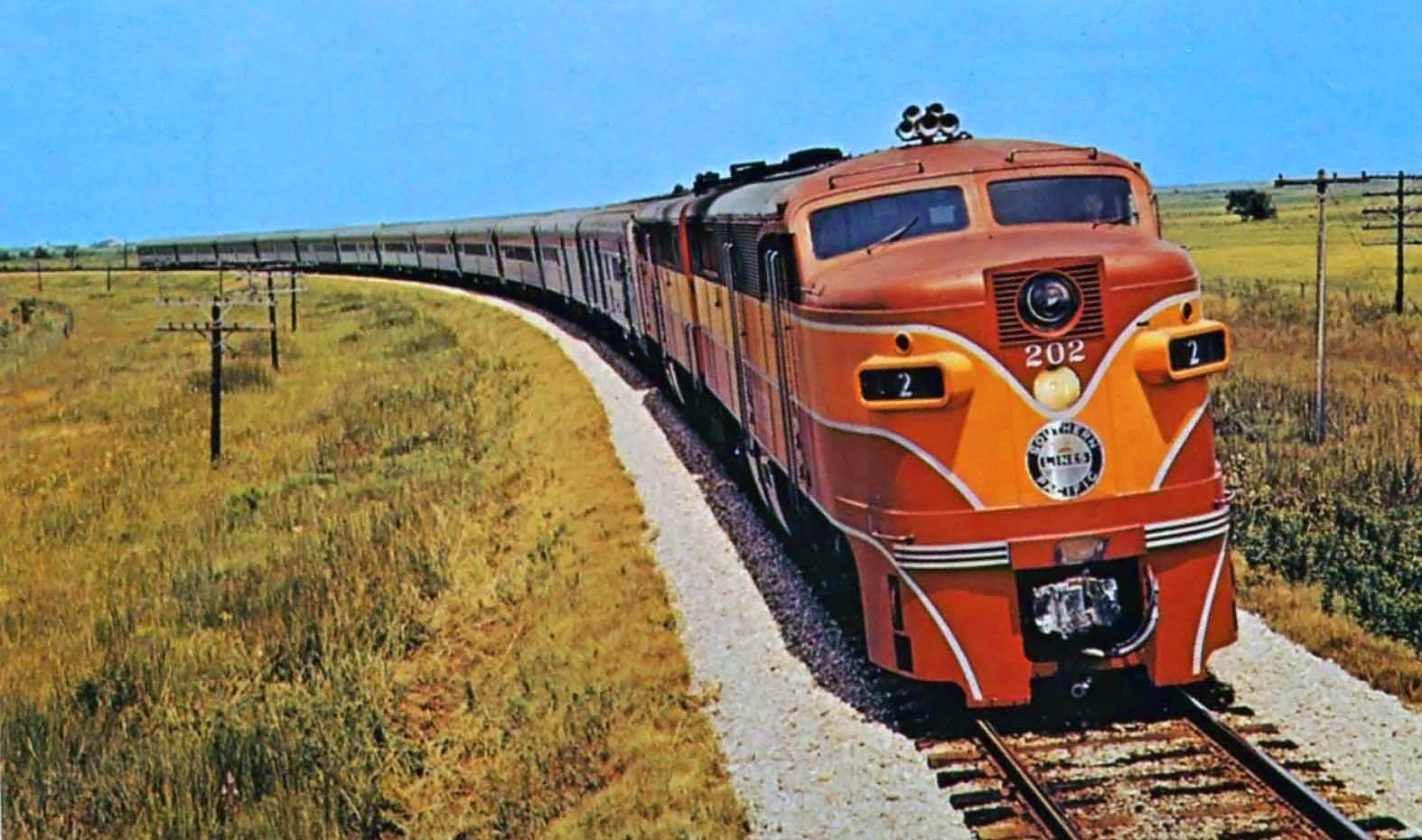 A Southern Pacific publicity photo of train #2, the eastbound "Sunset Limited" somewhere in Louisiana during the 1950s.
History
The SP was by far our country’s single largest classic railroad (i.e., before the modern-day merger movement began in the 1950s), spanning over 15,000 miles and reaching from the stretches of northwest Oregon to southeast Louisiana!
The Southern Pacific Railroad has a whole host of renowned achievements it is credited with, far too many to go into detail here.
At A Glance
1894 - April 30, 1971 (Southern Pacific) May 1, 1971 - Present (Amtrak) |
|
1 (Westbound) 2 (Eastbound) | |
Union Station (New Orleans) Terminal Passenger Terminal (Los Angeles) |
However, to name a few it had three important main lines which continue as important arteries under Union Pacific today, the Overland Route (San Francisco to the Midwest), the Golden State Route (the Southwest to Kansas City), and the Sunset Route (the Pacific Coast to the Gulf Coast).
The Southern Pacific’s Sunset dates all of the way back to the 19th century when the railroad inaugurated the train in 1894 to serve a corridor across the vast reaches of its system, connecting Los Angeles with New Orleans.
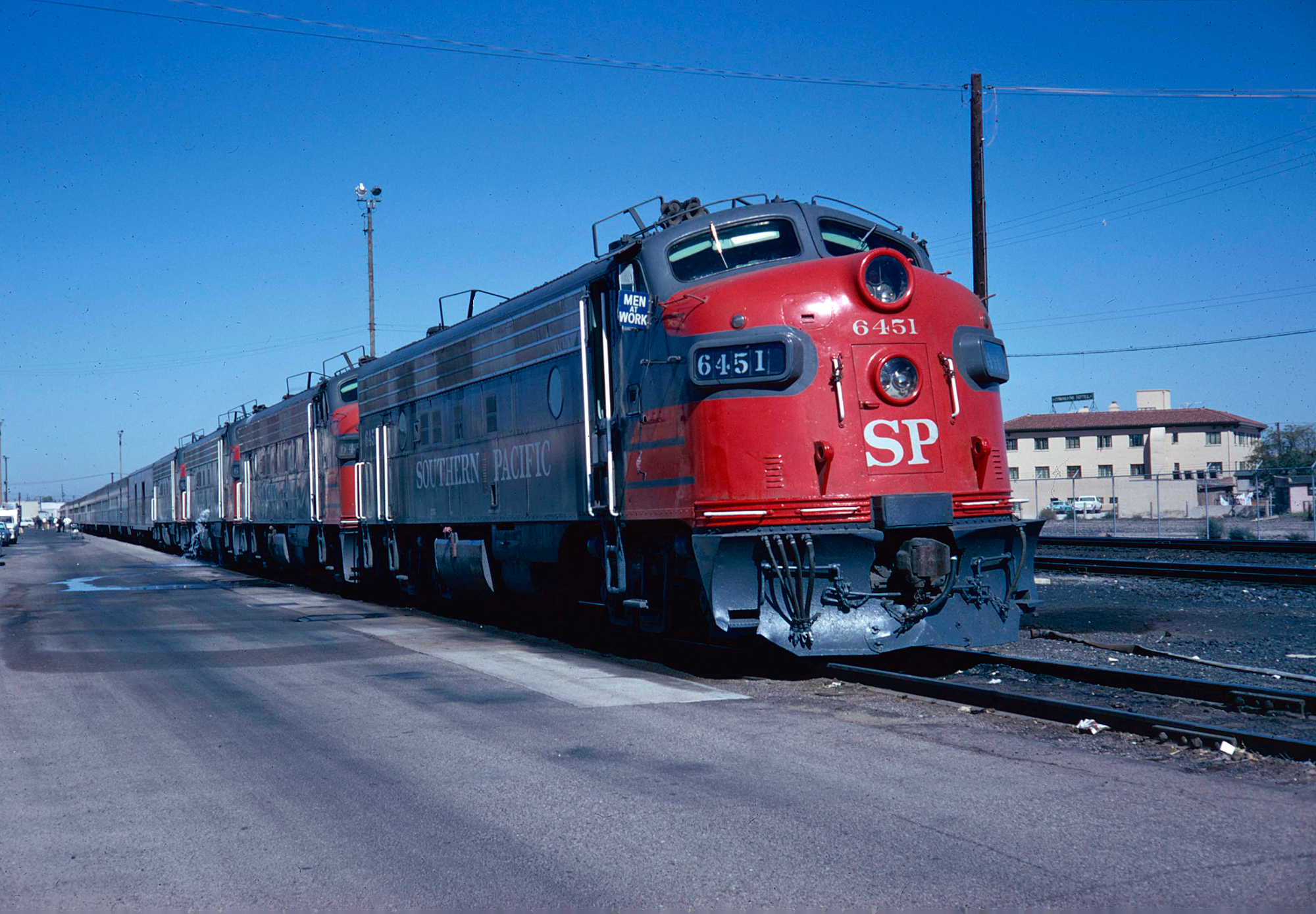 Southern Pacific FP7 #6451 is stopped at Tucson, Arizona with train #2, the eastbound "Sunset Limited," on the morning of October 14, 1970. Leo Caloia photo. American-Rails.com collection.
The Sunset remained a respectable, yet low-key operation on the SP for the first 50+ years of its life using heavyweight, non-streamlined equipment.
However, this all changed in 1950 when the train was upgraded with shiny stainless-steel equipment from the Budd Company (over 70 new cars worth about $15 million), complete with EMD E-series diesel locomotives for power which were clad in the Espee’s very popular Daylight livery (later, FP7s took over the train sporting the SP’s red and gray livery).
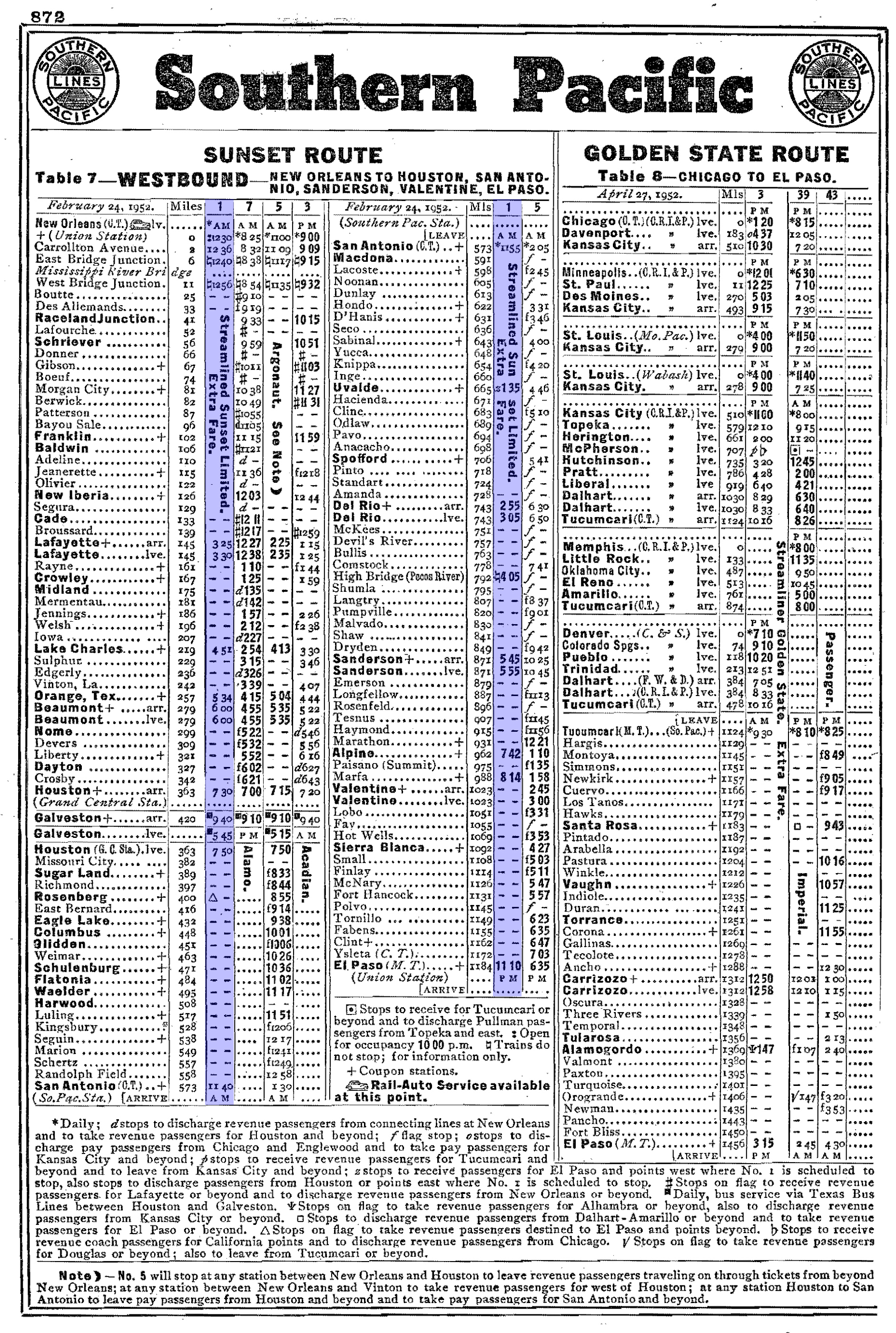
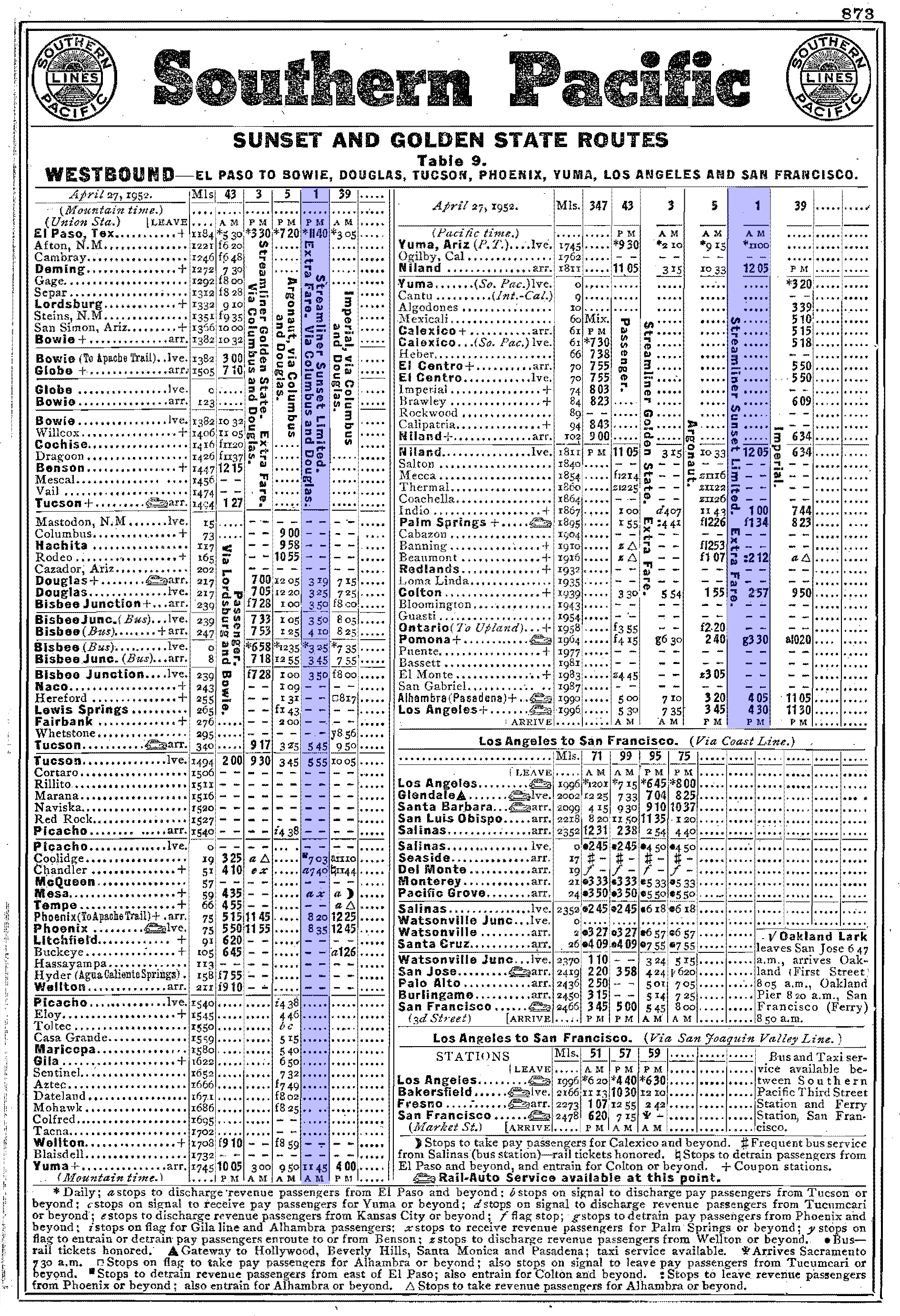
Timetable (1952)
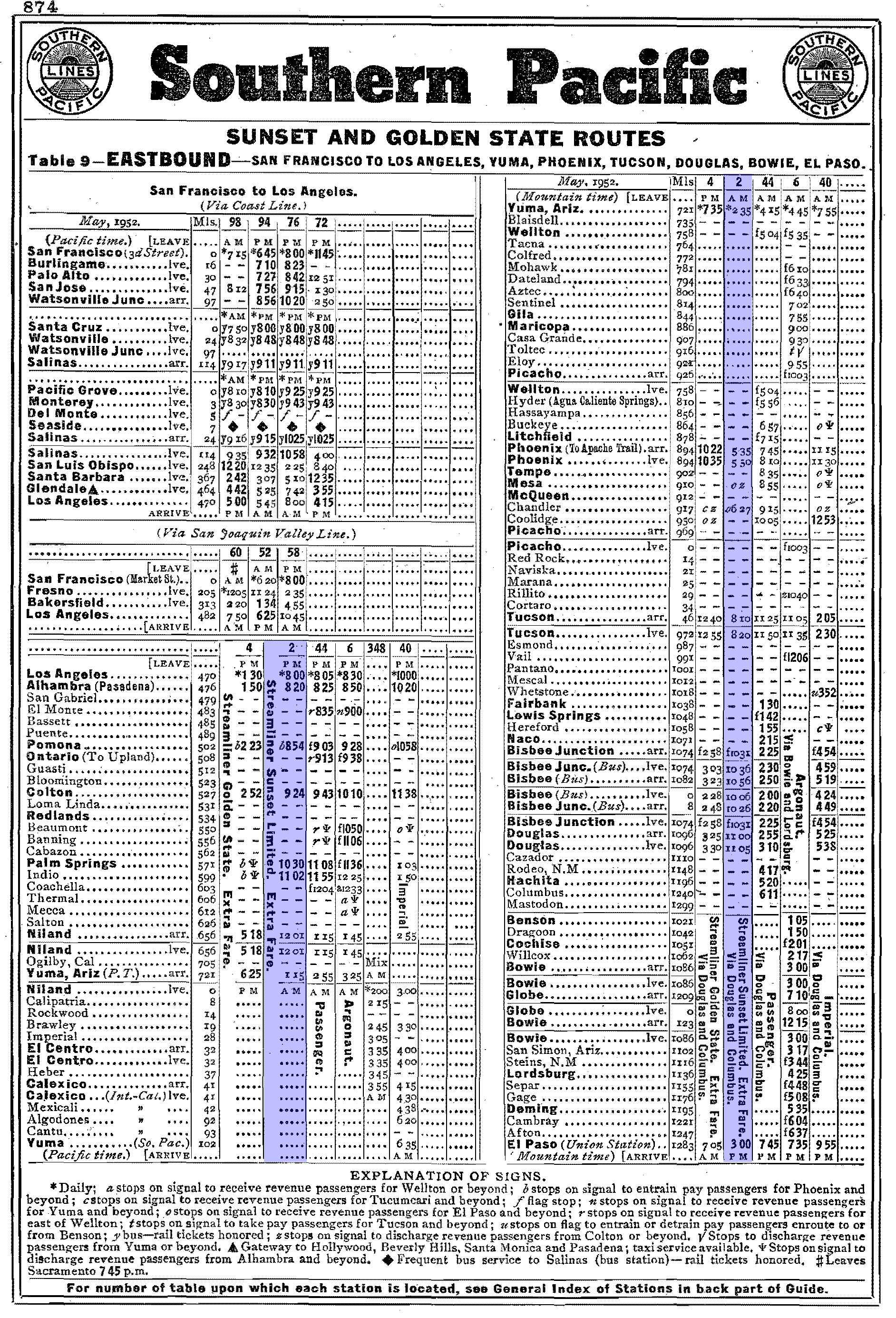
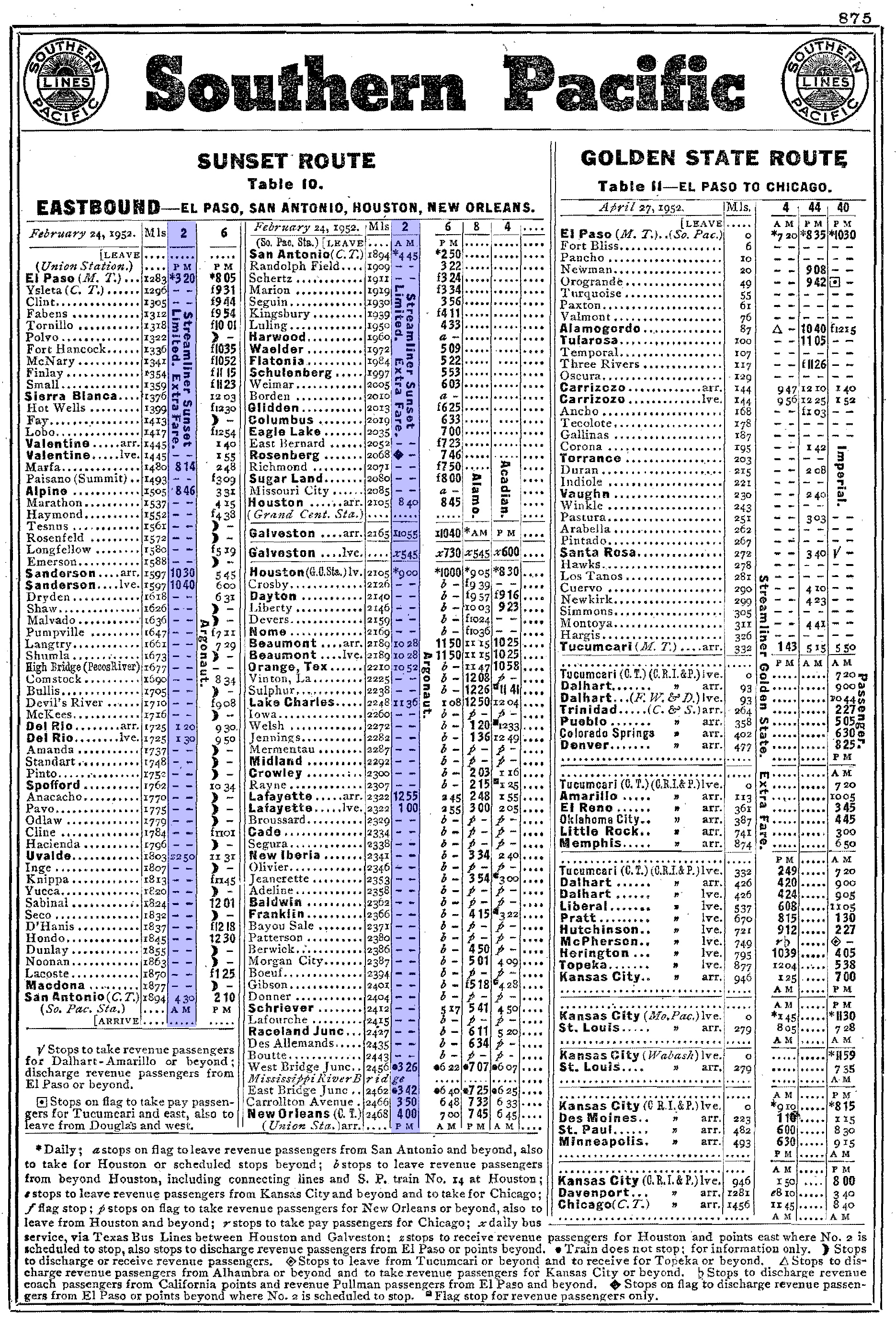
The on board accommodations were quite classy although never quite as luxurious as rival western trains like the Super Chief or City of San Francisco.
Still, like its sister long distance train, the Shasta Daylight, the Sunset featured themes of the regions in which it operated such as a lounge car highlighting the French Quarter in New Orleans.
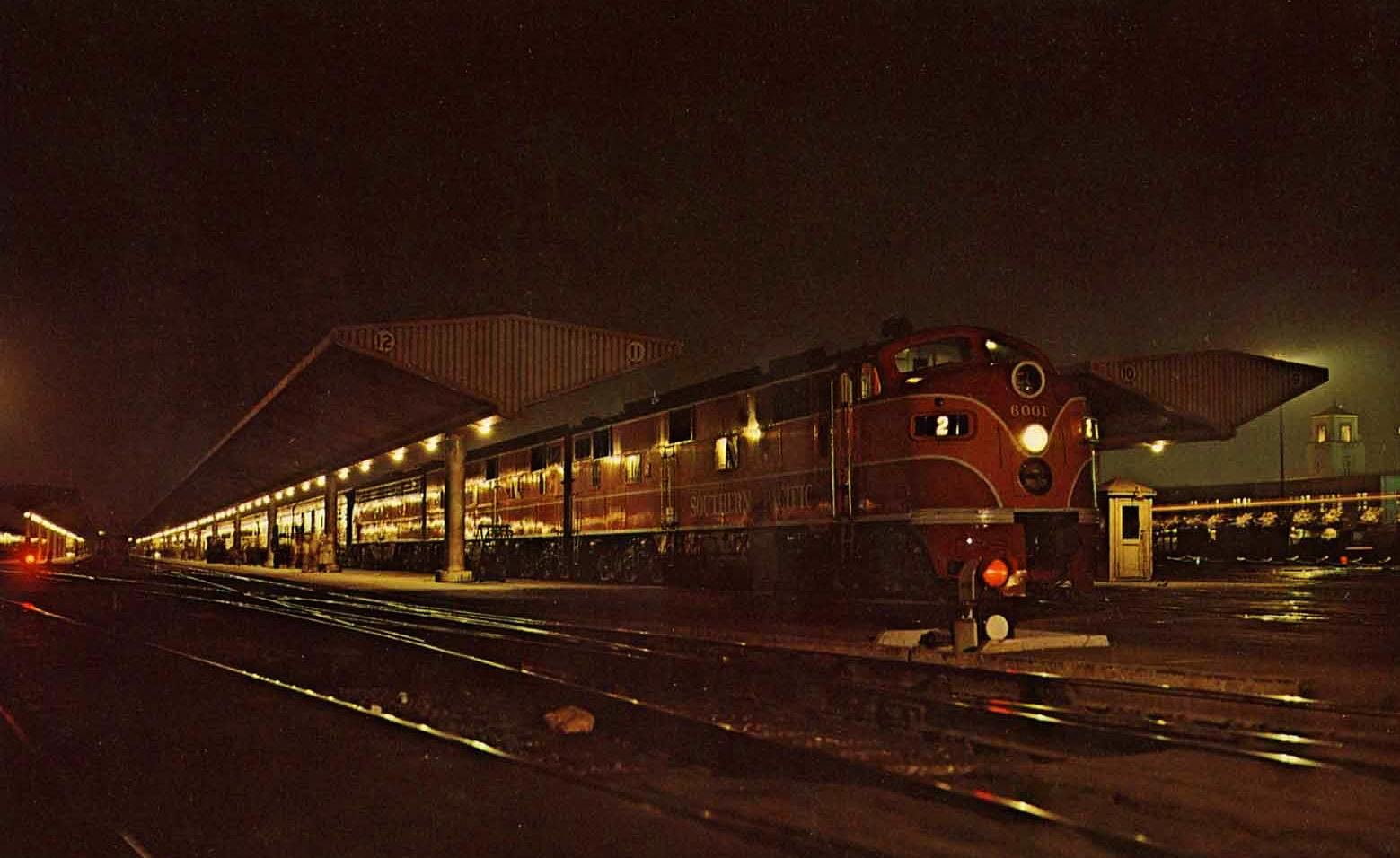 Southern Pacific's train #2, the eastbound "Sunset Limited" (Los Angeles - New Orleans), awaits departure from Track #11 at Los Angeles Union Passenger Terminal during an August evening in 1954. Don Sims photo.
While the inherent drawback of the Sunset was its rather bland scenery of flat deserts in the west and swampy buoys in the Deep South, the train still turned out to be quite successful, no doubt in part due to the fact that it reached New Orleans and covered a distance of over 2,000 miles!
Listed as trains #1 (westbound) and #2 (eastbound) on Southern Pacific's official timetable the Sunset could make the run between New Orleans and Los Angeles in 42 hours flat carrying an average train speed of nearly 50 mph.
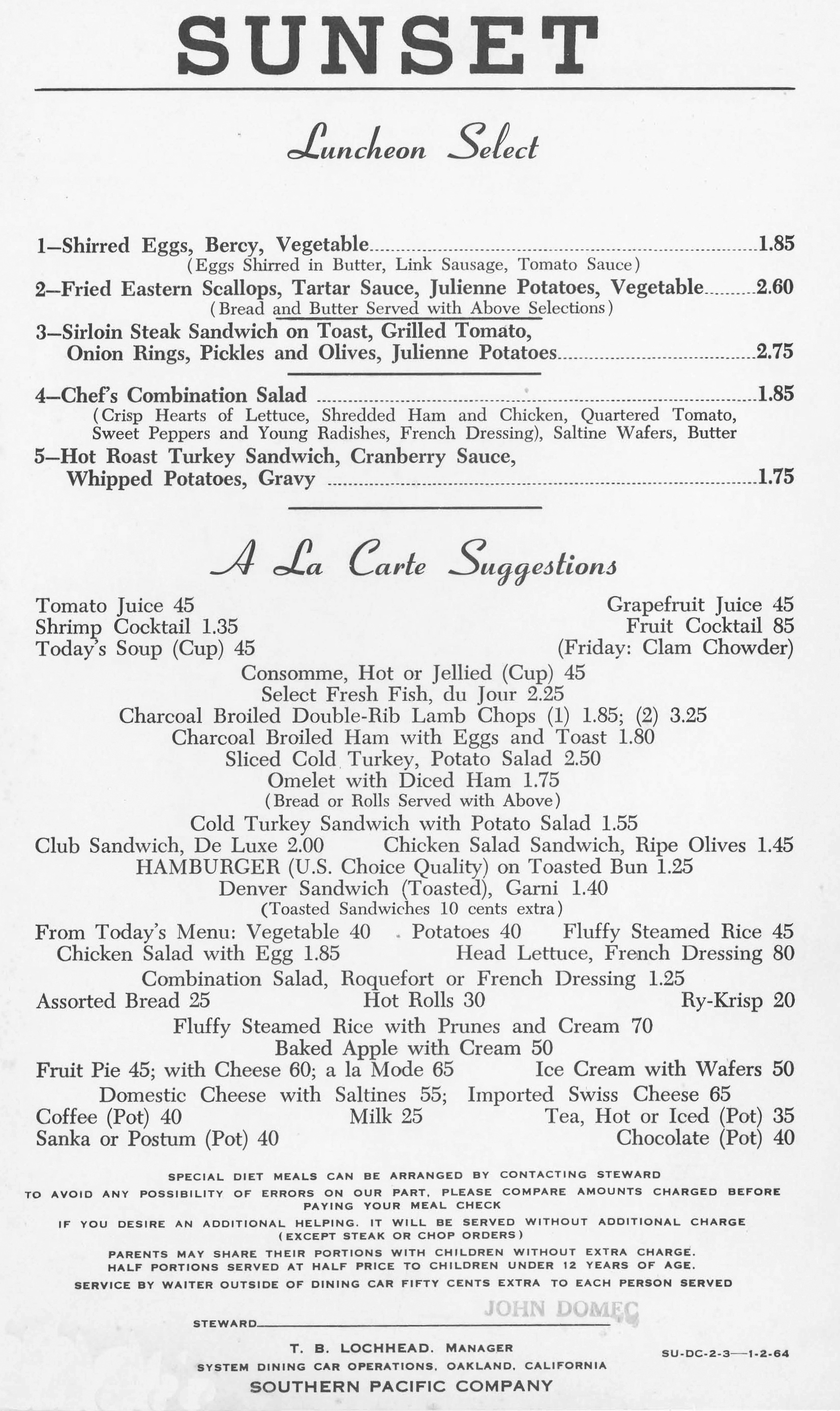
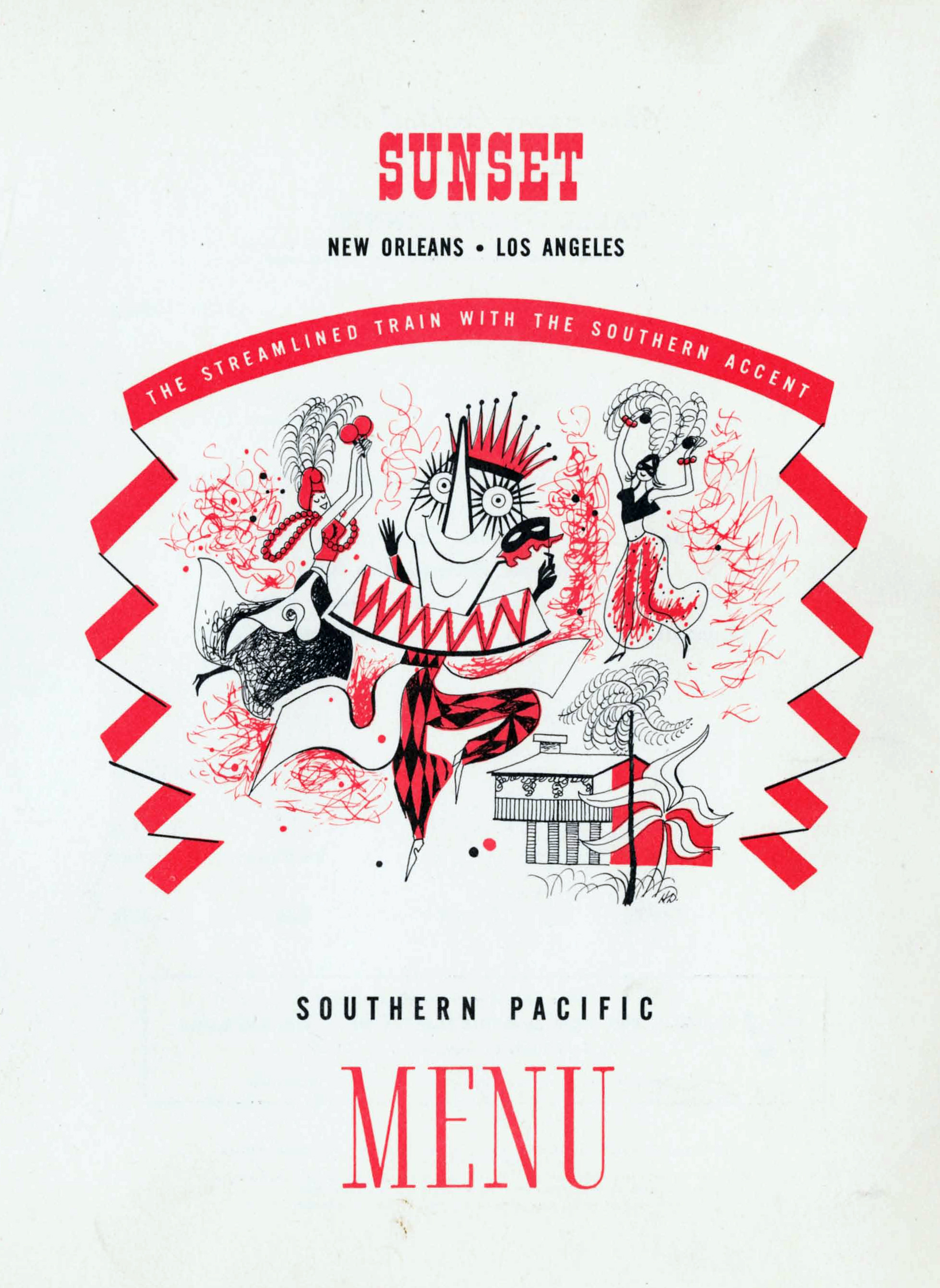
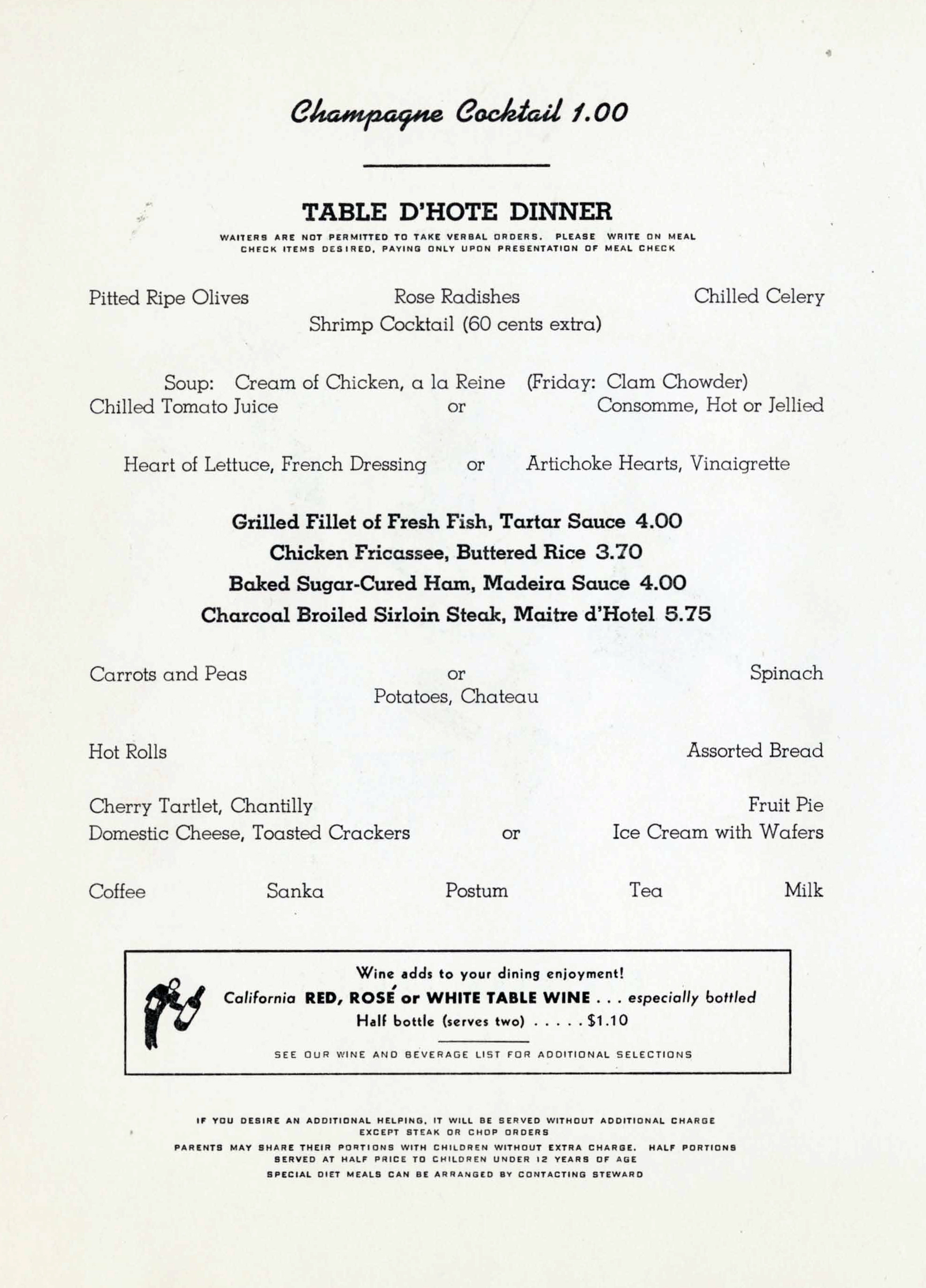
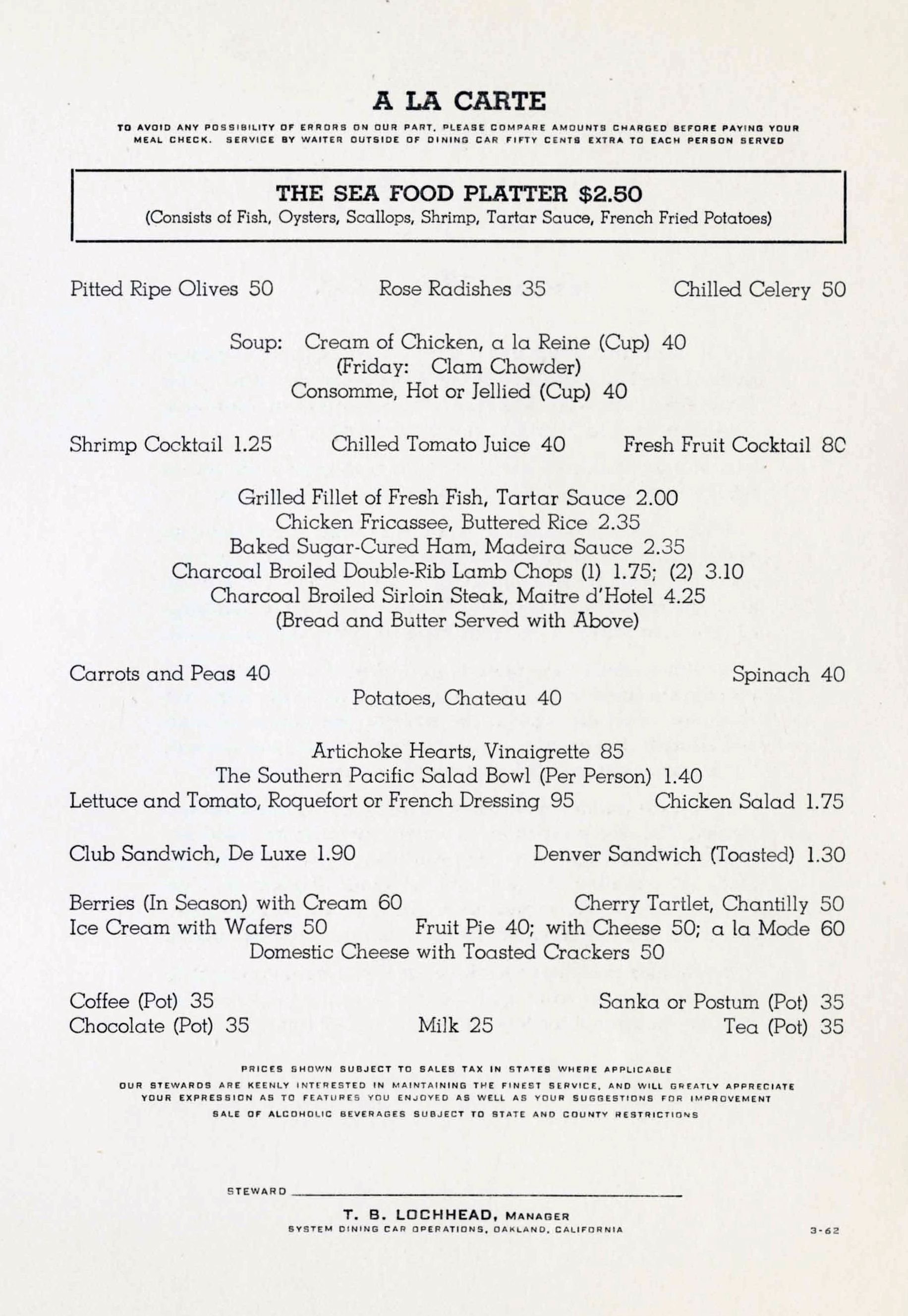
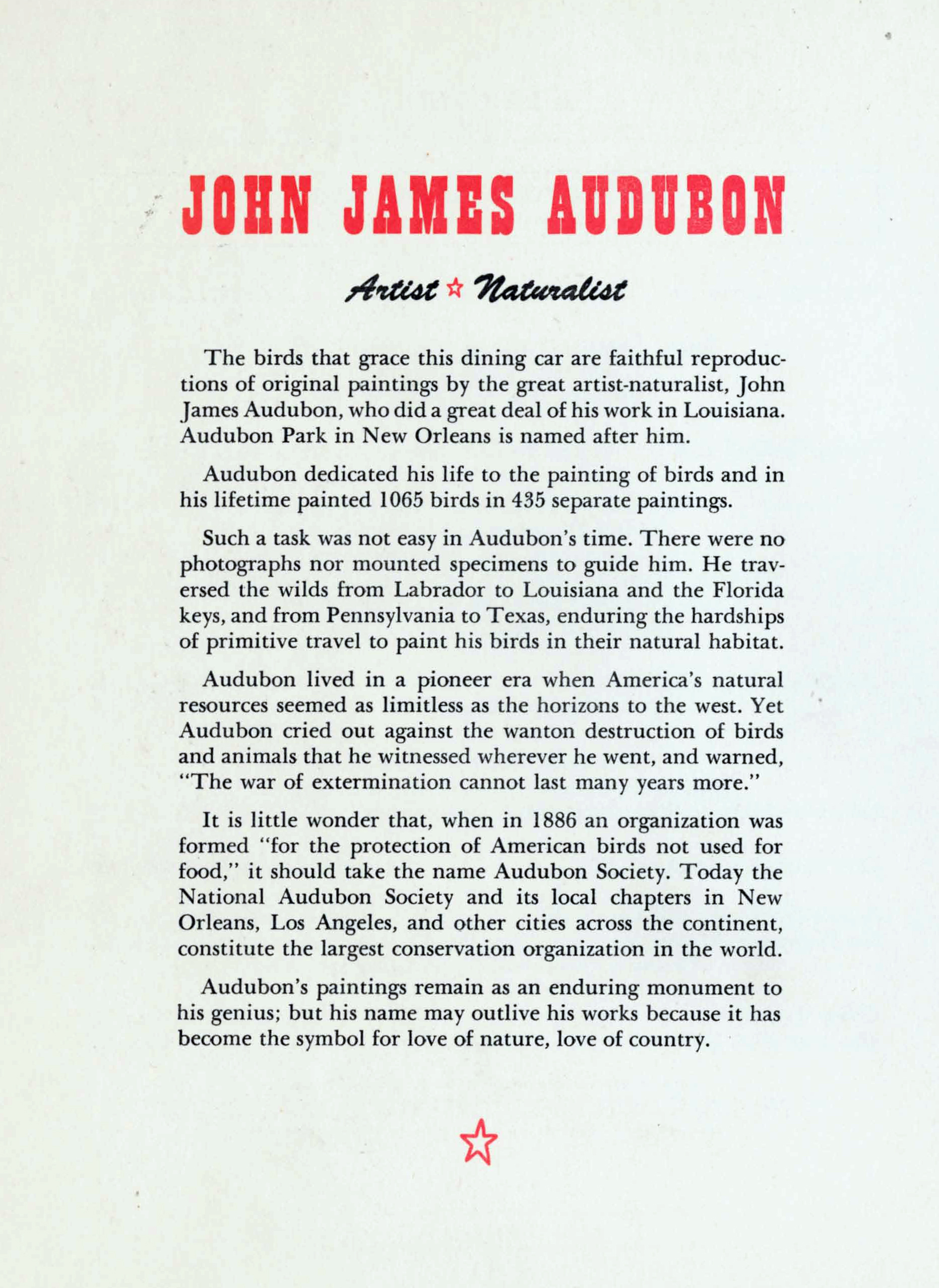
Menu (1964)
Lunch
Dinner
1993 Crash
Amtrak's suffered its deadliest accident and the worst rail accident since 1958's Newark Bay Bridge disaster when the Sunset Limited derailed on the Big Bayou Canot Bridge near Mobile, Alabama on September 22, 1993.
The incident was caused when the pilot of the towboat Mauvilla (owned by Warrior & Gulf Navigation of Chickasaw, Alabama) became lost in the fog and turned off an unnavigable channel of water.
The towboat and its barges would eventually strike the Big Bayou Canot Bridge, knocking it three feet out of alignment. At 2:53 AM, Amtrak's eastbound Sunset Limited immediately derailed; ultimately, 47 people were killed and 103 were injured.
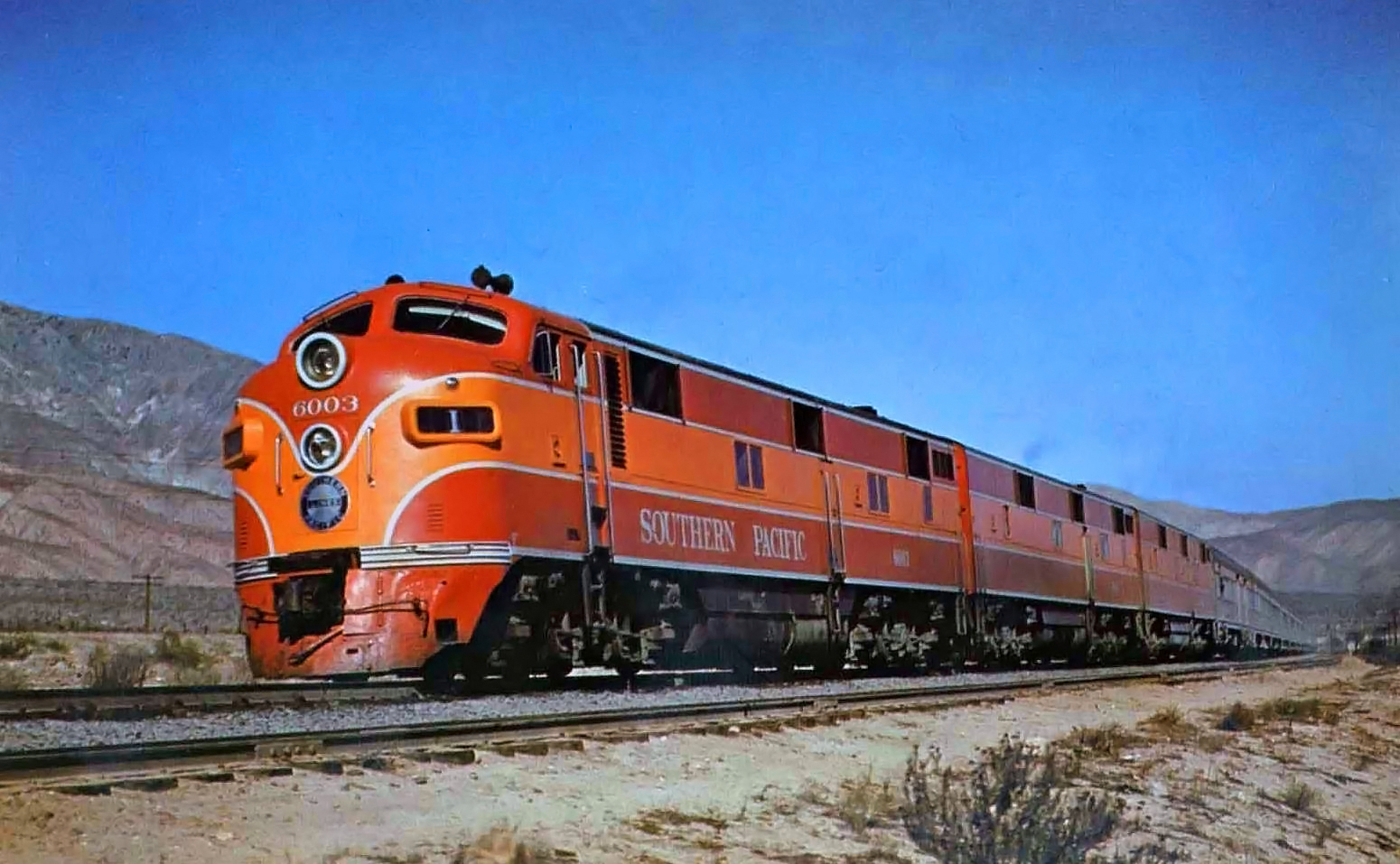 In this Southern Pacific publicity photo train #1, the "Sunset Limited" (New Orleans - Los Angeles) rolls westward up the eastern side of Beaumont Pass just outside of Palm Springs, California in the early 1950s.
The train was one of the few transcontinental southwest trains to offer through sleeper service as far east as New York City via the Southern Railway, Louisville & Nashville, West Point Route, and Pennsylvania Railroad. If one chose to reach NYC in this manner they could expect an additional 17-hour train ride.
Consist (1952)
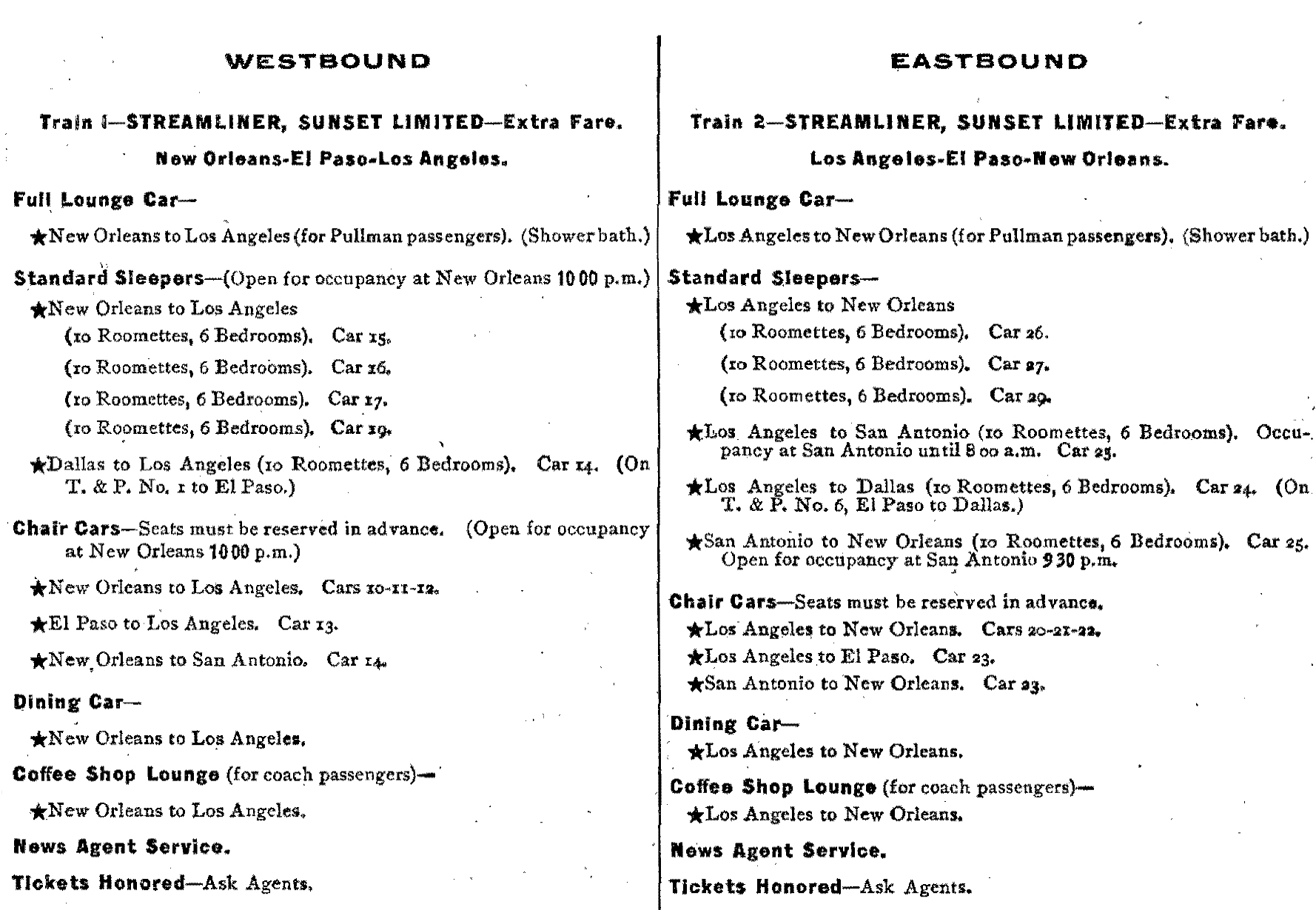
A typical consist for the Sunset Limited included reclining-seat coaches, a lounge, several sleepers (due to through service), a diner, coffee shop lounge (later this was switched to a hamburger grill lounge), and round-ended observation.
By the late 1960s the SP was having the same problems with its Sunset as were virtually all other railroads with their long-distance, first class train; an increasing loss of ridership due to automobiles and airplanes.
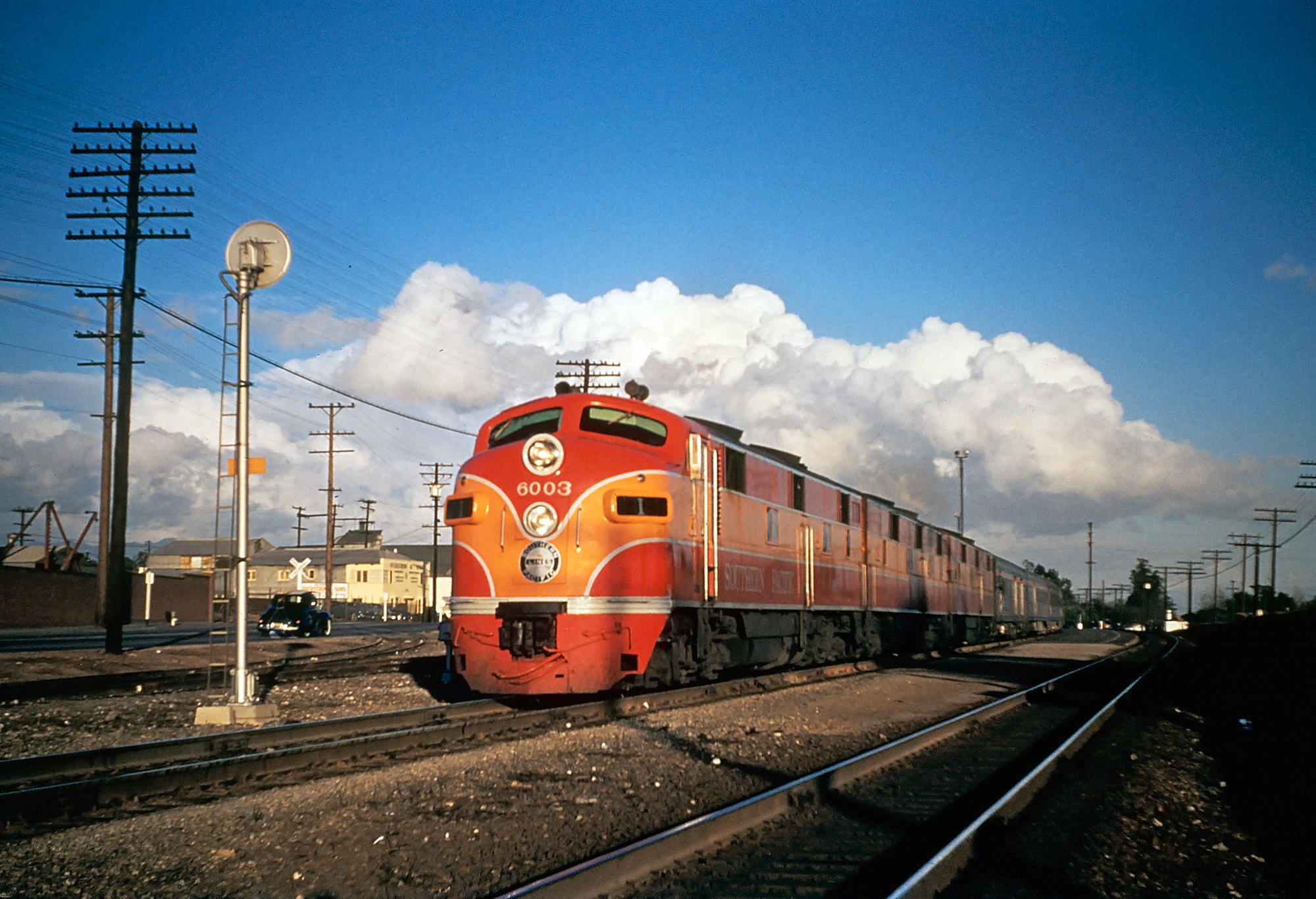 A handsome, A-B-B set of Southern Pacific E7's, led by #6003, near the conclusion of their 1,996-mile run from New Orleans with train #1, the westbound "Sunset Limited," in Los Angeles, circa 1955. Gordon Glattenberg photo. American-Rails.com collection.
While the train was briefly cut down to humiliating coach-only status (with a semblance of dining service) it was reinstated to tri-weekly status with lounges and sleepers upon the urging of the ICC.
During the final years the train featured baggage, reclining-seat coaches, and an automatic buffet car. For more reading and information about the train please click here.
Timetable and Schedule (August, 1950)
| Read Down Time/Leave (Train #1) | Milepost | Location | Read Up Time/Arrive (Train #2) |
|---|---|---|---|
| 12:30 AM (Dp) | 0.0 | 4:00 PM (Ar) | |
| 12:36 AM | 2 | 3:50 PM | |
| 12:40 AM | 6 | 3:42 PM | |
| 12:56 AM | 11 | 3:26 PM | |
| 3:25 AM (Ar) | 145 | 1:00 PM (Dp) | |
| 3:30 AM (Dp) | 145 | 12:55 PM (Ar) | |
| 4:51 AM | 219 | 11:36 AM | |
| 5:36 AM | 257 | 10:52 AM | |
| 6:00 AM | 279 | 10:28 AM | |
| 7:30 AM (Ar) | 363 | 9:00 AM (Dp) | |
| 7:50 AM (Dp) | 363 | 8:40 AM (Ar) | |
| F | 400 | ||
| 11:40 AM (Ar) | 573 | 4:45 AM (Dp) | |
| 11:55 AM (Dp) | 573 | 4:30 AM (Ar) | |
| 2:55 PM (Ar) | 743 | 1:30 AM (Dp) | |
| 3:05 PM (Dp) | 743 | 1:10 AM (Ar) | |
| 792 | |||
| 5:45 PM (Ar) | 871 | 10:40 PM (Dp) | |
| 5:55 PM (Dp) | 871 | 10:30 PM (Ar) | |
| 7:42 PM | 962 | 8:46 PM | |
| 8:14 PM | 988 | 8:14 PM | |
| 11:10 PM (Ar) | 1184 | 3:20 PM (Dp) | |
| 11:40 PM (Dp) | 1184 | 3:00 PM (Ar) | |
| 3:25 AM (Ar) | 1401 | 11:05 AM (Dp) | |
| 3:32 AM (Dp) | 1401 | 11:00 AM (Ar) | |
| 3:57 AM | 1423 | F 10:31 AM | |
| 5:45 AM (Ar) | 1524 | 8:25 AM (Dp) | |
| 5:55 AM (Dp) | 1524 | 8:10 AM (Ar) | |
| F 7:40 AM | 1621 | F 6:27 AM | |
| F | 1629 | F | |
| 8:20 AM (Ar) | 1645 | 5:50 AM (Dp) | |
| 8:35 AM (Dp) | 1645 | 5:40 AM (Ar) | |
| 11:40 AM (Ar) | 1818 | 2:35 AM (Dp) | |
| 10:55 AM (Dp) | 1818 | 1:15 AM (Ar) | |
| F 12:02 PM | 1884 | F 11:49 PM | |
| 12:58 PM | 1940 | 10:57 PM | |
| F 1:35 PM | 1968 | F 10:26 PM | |
| F | 1989 | ||
| 3:00 PM | 2012 | 9:22 PM | |
| 3:30 PM | 2037 | F 8:50 PM | |
| 4:05 PM | 2063 | 8:18 PM | |
| 4:30 PM (Ar) | 2069 | 8:00 PM (Dp) |
Amtrak
Needless to say, during these last days before Amtrak the Southern Pacific had all but given up on passenger service, a sad end to a once proud tradition on the railroad.
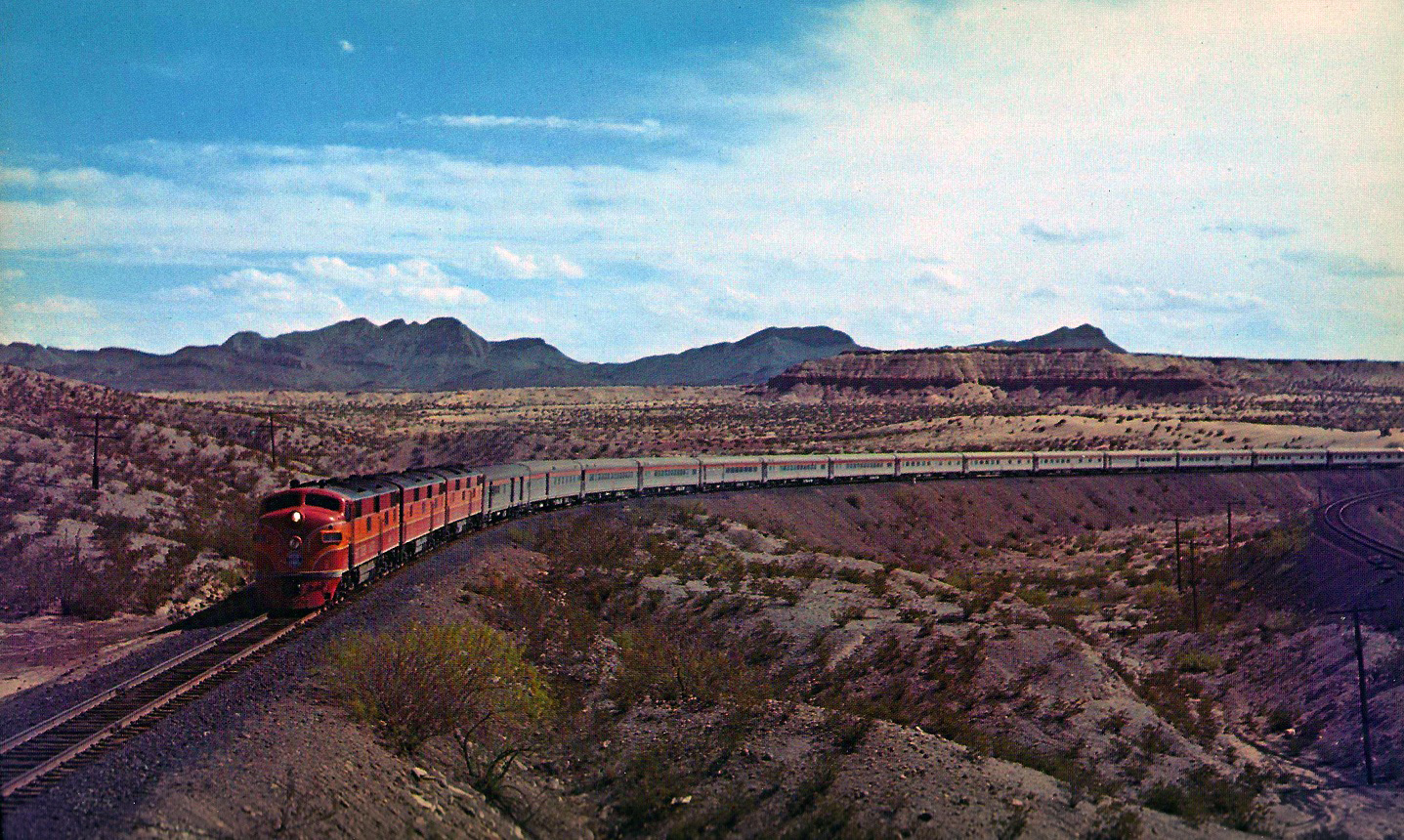
The Sunset remained under this light setup until Amtrak, when the carrier kept the train as part of its new system.
Today, the Sunset Limited remains a popular train under Amtrak although its regard has diminished somewhat after the carrier has chosen not to reinstate the train’s original route (under Amtrak) to Tallahassee, Florida for unknown reasons after
Hurricane Katrina had knocked out the line for some time. it remains to be seen whether Amtrak will eventually reinstate the train's service all of the way to Florida as it was one of the carrier's most popular under such a routing.
Photo Gallery
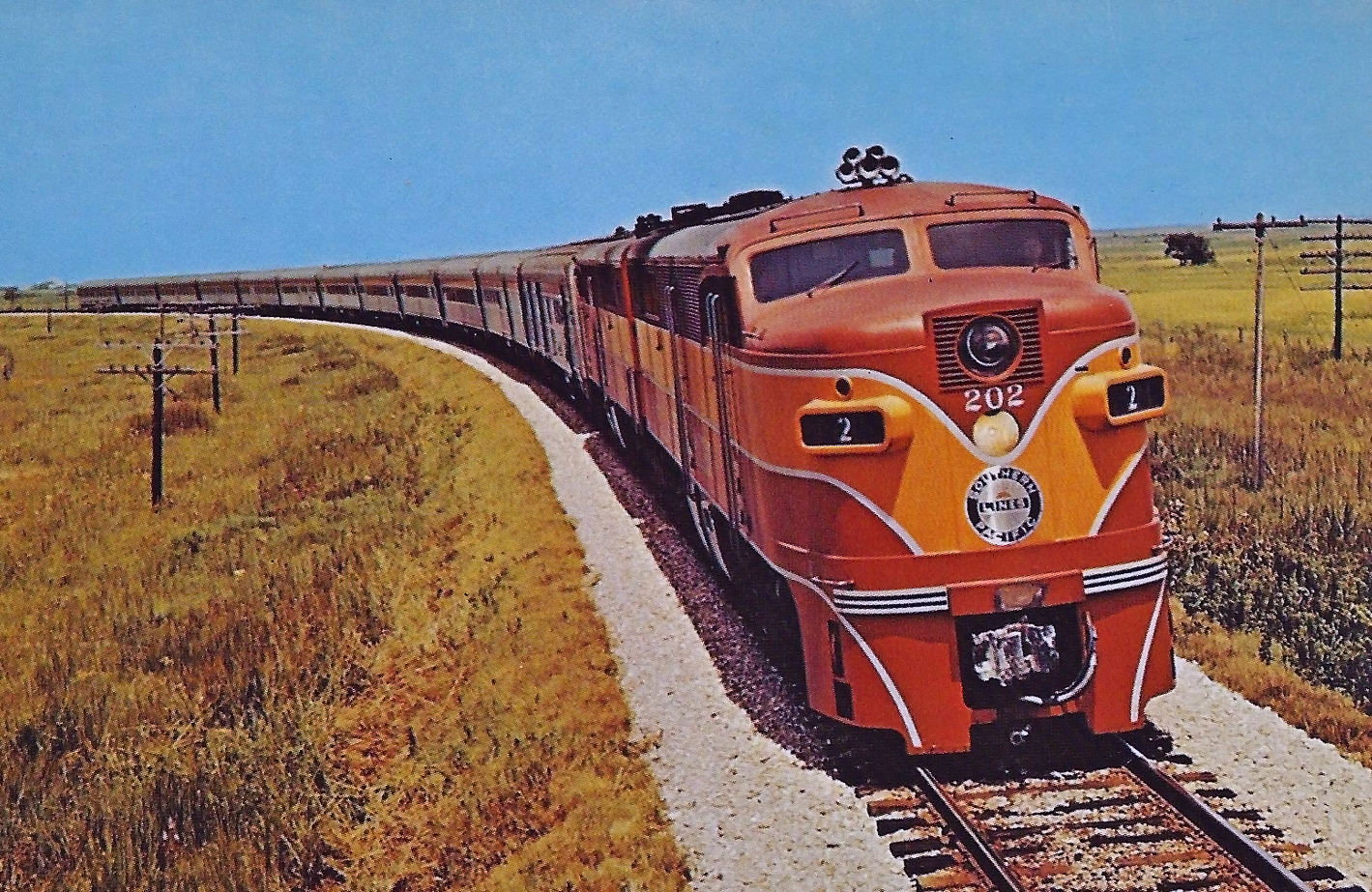 A Southern Pacific publicity photo of PA-1s - led by Texas & New Orleans #202 - ahead of train #2, the eastbound "Sunset Limited" somewhere in Louisiana, circa 1952.
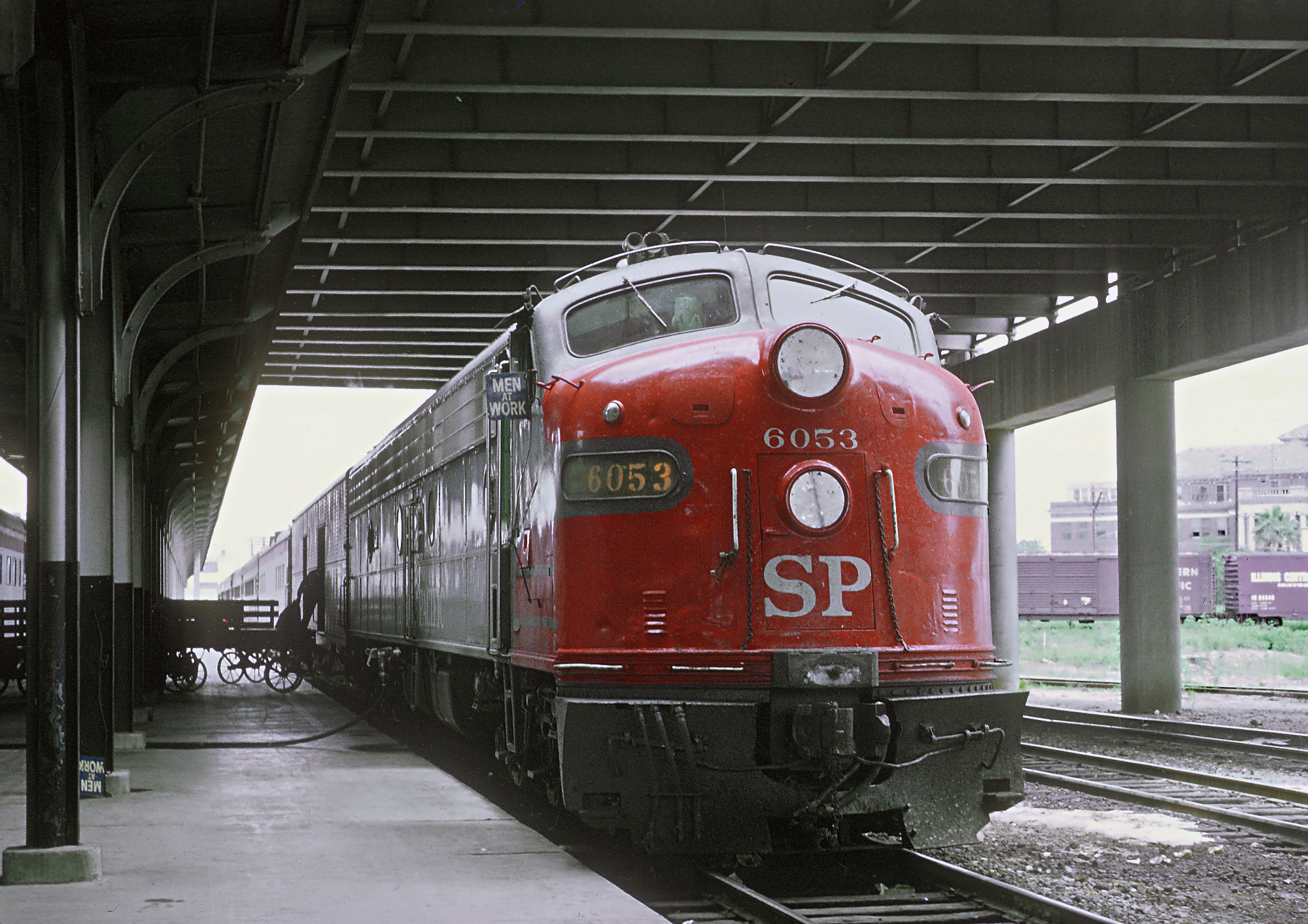 Southern Pacific E9A #6053 is ahead of train #2, the eastbound "Sunset Limited," boarding at its station in Houston, Texas on June 5, 1969 (the SP maintained its own station here). The train on this run featured five coaches and the much disliked "Automat" car for snacks/beverages. Roger Puta photo.
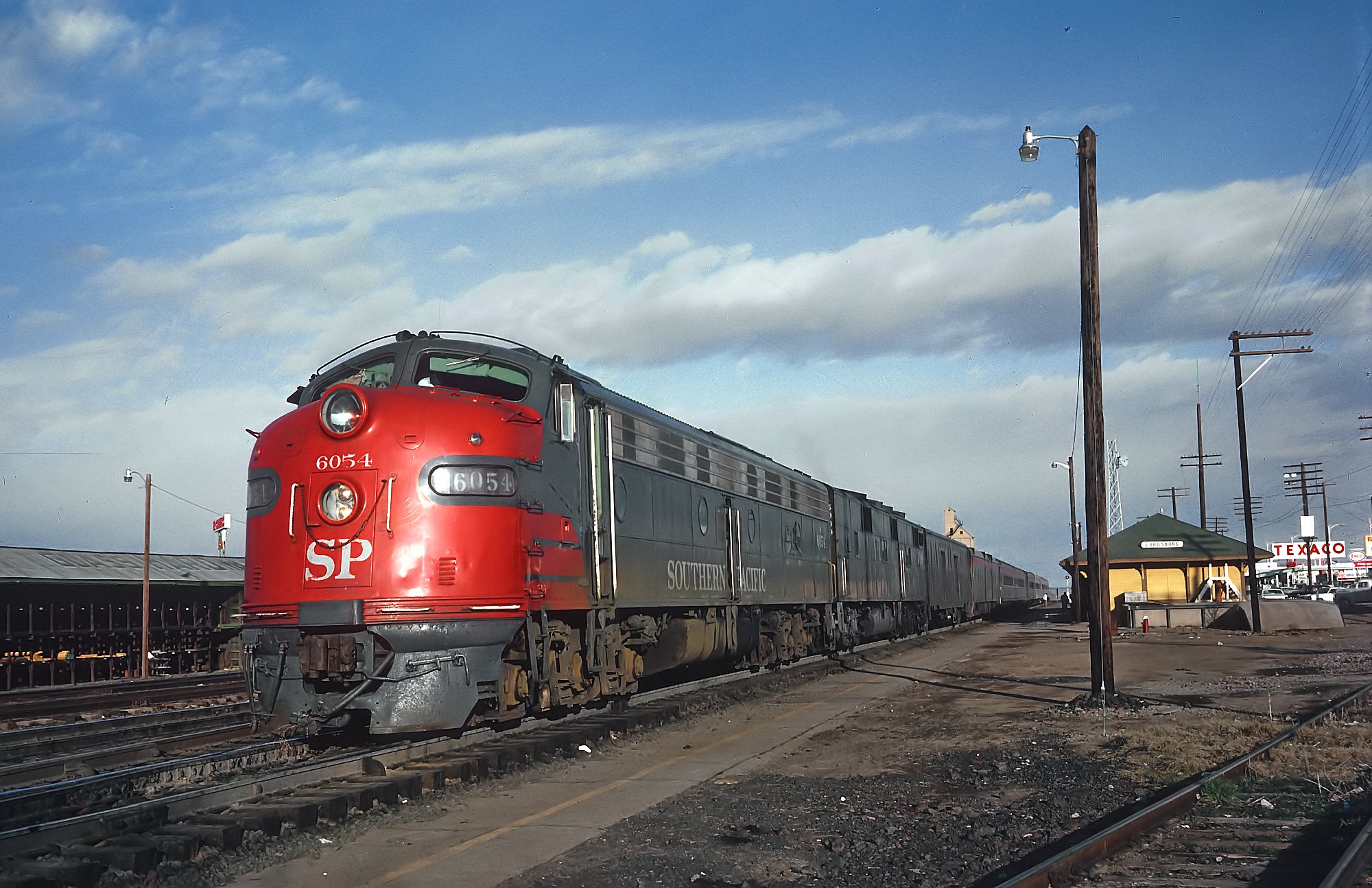 Southern Pacific E9A #6054 is ahead of the "Sunset Limited" at Lordsburg, New Mexico on March 21, 1968. Photographer unknown, Rick Burn collection.
Recent Articles


-
Scenic Train Rides (USA 2026): State Guide to Tourist Railroads
Oct 04, 26 12:17 AM
 Scenic and tourist train rides in all 50 states for 2026. Colorado narrow gauge, Pennsylvania steam, Alaska’s White Pass, and the states with no full-size ride this month. Confirm on the railroad.
 -
Wyoming Scenic Train Rides (2026): A Complete Guide
Oct 03, 26 12:07 AM
 Wyoming has no full-size tourist railroad on the calendar in October 2026. Cheyenne Depot Museum and Douglas Railroad Museum are static. Union Pacific 4014’s posted public trip is a November run to De…
 -
Washington Scenic Train Rides (2026): A Complete Guide
Oct 02, 26 11:53 PM
 Washington tourist trains in 2026—Mount Rainier Scenic at Elbe, the Northwest Railway Museum, and Chehalis-Centralia. Lake Whatcom has no 2026 date on its ticket page.
 -
Wisconsin Scenic Train Rides (2026): A Complete Guide
Oct 02, 26 11:48 PM
 Wisconsin tourist trains in 2026—Wisconsin Great Northern, Osceola & St. Croix Valley, Mid-Continent, East Troy, and the National Railroad Museum.
 -
Pennsylvania Railroad Class Q2 4-4-6-4: Specs, Roster, History
Oct 02, 26 11:28 PM
 Pennsylvania Railroad Class Q2 4-4-6-4 duplexes. Twenty-six engines, 6131 and 6175–6199, Altoona 1944–45. Form 109-J specs, the 7,987 hp test of 6175, and a roster. All scrapped.
 -
Utah Scenic Train Rides (2026): A Complete Guide
Oct 02, 26 11:18 PM
 Utah tourist trains in 2026—Heber Valley Railroad from Heber City. Golden Spike at Promontory is a locomotive demonstration, not a line-haul ride.
 -
South Dakota Scenic Train Rides (2026): A Complete Guide
Oct 02, 26 11:06 PM
 South Dakota’s 2026 scenic train is the Black Hills Central 1880 Train, Hill City to Keystone. Steam is the summer assignment. Confirm the engine.
 -
Oregon Scenic Train Rides (2026): A Complete Guide
Oct 02, 26 11:04 PM
 Oregon tourist trains in 2026—Oregon Coast Scenic from Rockaway Beach, Mount Hood at Hood River, Eagle Cap from Elgin, and the Oregon Rail Heritage Center in Portland.
 -
Oklahoma Scenic Train Rides (2026): A Complete Guide
Oct 02, 26 10:36 PM
 Oklahoma has no full-size scenic railroad on an October 2026 calendar. Oklahoma Railway Museum Halloween and Polar trains, the El Reno trolley, and the Heartland Flyer.
 -
North Dakota Scenic Train Rides (2026): A Complete Guide
Oct 02, 26 01:14 PM
North Dakota has no tourist railroad on a 2026 calendar. Ride Amtrak’s daily Empire Builder. The Fort Lincoln Trolley in Mandan is not a current ticket. -
Nebraska Scenic Train Rides (2026): A Complete Guide
Oct 02, 26 10:11 AM
 Nebraska has no full-size scenic railroad in 2026. The Omaha Zoo Railroad runs weekends through October 4. Ride Amtrak’s California Zephyr across the state.
 -
Missouri Scenic Train Rides (2026): A Complete Guide
Oct 02, 26 09:56 AM
 Missouri tourist trains in 2026—Branson Scenic Railway and the St. Louis, Iron Mountain & Southern at Jackson. Belton has no 2026 schedule posted.
 -
Minnesota Scenic Train Rides (2026): A Complete Guide
Oct 02, 26 09:52 AM
 Minnesota tourist trains in 2026—North Shore Scenic Railroad in Duluth, the Duluth River Train, and the Como-Harriet streetcar.
 -
Kansas Scenic Train Rides (2026): A Complete Guide
Oct 02, 26 09:32 AM
 Kansas tourist trains in 2026—the Abilene & Smoky Valley Railroad. Santa Fe 3415 is in overhaul. Midland Railway at Baldwin City is closed.
 -
Iowa Scenic Train Rides (2026): A Complete Guide
Oct 02, 26 08:41 AM
 Iowa tourist trains in 2026—Boone & Scenic Valley across the Bass Point Creek High Bridge, and Midwest Central’s December North Pole trains
 -
Indiana Scenic Train Rides (2026): A Complete Guide
Oct 02, 26 08:35 AM
 Indiana tourist trains in 2026—French Lick Scenic Railway, Nickel Plate Express, Hoosier Valley, and Hesston. Whitewater Valley is suspended.
 -
Illinois Scenic Train Rides (2026): A Complete Guide
Oct 02, 26 12:28 AM
 Illinois tourist trains in 2026—Illinois Railway Museum, Monticello Railway Museum, Fox River Trolley, and Silver Creek & Stephenson.
 -
Texas Scenic Train Rides (2026): A Complete Guide
Oct 02, 26 12:14 AM
 Texas tourist trains in 2026—Texas State Railroad, Grapevine Vintage Railroad, Austin Steam Train's Hill Country Flyer, and the Galveston Railroad Museum.
 -
Tennessee Scenic Train Rides (2026): A Complete Guide
Oct 02, 26 12:03 AM
Tennessee tourist trains in 2026—Tennessee Valley Railroad Museum, Dollywood Express, Three Rivers Rambler Christmas trains, and the Tennessee Central Railway Museum. -
South Carolina Scenic Train Rides (2026): A Complete Guide
Oct 01, 26 11:52 PM
 South Carolina's tourist train is the South Carolina Railroad Museum in Winnsboro—Blue Granite Express, pumpkin trains, and Santa trains on the old Rockton & Rion.
 -
Mississippi Scenic Train Rides (2026): A Complete Guide
Oct 01, 26 11:38 PM
 Mississippi has no regular tourist railroad in 2026. Ride Amtrak through the state, or book the excursion lines in Alabama, Tennessee, Louisiana, or Arkansas.
 -
Louisiana Scenic Train Rides (2026): A Complete Guide
Oct 01, 26 02:52 PM
 Louisiana has no regular full-size tourist railroad in 2026. New Orleans Polar Express returns December 11–31. Museums at Long Leaf, DeQuincy, and Jackson.
 -
Kentucky Scenic Train Rides (2026): A Complete Guide
Oct 01, 26 02:45 PM
 Kentucky tourist trains in 2026—Big South Fork Scenic Railway, Bluegrass Scenic Railroad, Kentucky Railway Museum, and My Old Kentucky Dinner Train.
 -
Georgia Scenic Train Rides (2026): A Complete Guide
Oct 01, 26 02:27 PM
 Georgia tourist trains in 2026—Blue Ridge Scenic Railway, SAM Shortline, Azalea Sprinter, Savannah shop rides, and what to confirm at Stone Mountain.
 -
Arkansas Scenic Train Rides (2026): A Complete Guide
Oct 01, 26 01:02 PM
 Arkansas tourist trains in 2026—Arkansas & Missouri through the Boston Mountains, and the Eureka Springs & North Arkansas dinner and excursion trains.
 -
Alabama Scenic Train Rides (2026): A Complete Guide
Oct 01, 26 12:59 PM
Alabama tourist trains in 2026—Heart of Dixie Railroad Museum at Calera, North Alabama Railroad Museum at Chase, and the Wales West Light Railway at Silverhill. -
The Circus Train: How Such Attractions Reached Distant Cities
Oct 01, 26 12:22 PM
 How circuses moved by rail: Coup's 1872 flats, the Ringling train's sections and car counts, the 1918 Hammond wreck, and the last show on May 21, 2017.
 -
West Virginia Halloween Train Rides (2026)
Oct 01, 26 12:19 PM
 2026 West Virginia Halloween train. Cass Scenic Halloween Train, October 30 and 31, steam, 5:00 p.m. from Cass Depot. Adult $75. About two hours to Whittaker. Family ride.
 -
Wisconsin Halloween Train Rides (2026)
Oct 01, 26 12:11 PM
2026 Wisconsin Halloween trains. Mid-Continent Pumpkin Special October 24–25, adult $24, pumpkins extra. Halloween Flyer October 24 at 4:30 p.m., adult $30. Osceola Pumpkin Express boards in Osceola… -
Utah Halloween Train Rides (2026)
Oct 01, 26 12:00 PM
 2026 Utah Halloween trains at Heber Valley Railroad. Pumpkin Train, about 40 minutes, with a cookie and a pumpkin. Halloween Express, about 90 minutes to Grim Hollow, Monday, Thursday, and Friday even…
 -
Texas Halloween Train Rides (2026)
Oct 01, 26 11:28 AM
 2026 Texas Halloween train. Texas State Railroad Spooky Special, adult-only, October 24. Boards Palestine at 5:00 p.m. About five hours to Rusk and back. Dinner on the grounds. Not steam. No fare on t…
 -
Tennessee Halloween Train Rides (2026)
Oct 01, 26 12:15 AM
 2026 Tennessee Halloween trains. Tennessee Valley Railroad Museum Rails, Wizards & Spells, selected days September 18 through October 25, from $35, about 2.5 hours. Spells & Potions tea from $60. The…
 -
Frisco's "Firefly" (Train): Consist, Route, Timetable
Sep 30, 26 11:37 PM
 Frisco Firefly—daylight streamliner, Kansas City to Tulsa and Oklahoma City. Trains 117 and 118. Pacifics 1018, 1026, and 1031. Last run May 22, 1960.
 -
South Carolina Halloween Train Rides (2026)
Sep 30, 26 11:29 PM
 2026 South Carolina Halloween train. South Carolina Railroad Museum Pumpkin Patch Express, the two Saturdays before Halloween. About three miles to the Greenbriar pavilion. Pumpkin for children 12 and…
 -
Oregon Halloween Train Rides (2026)
Sep 30, 26 08:10 PM
2026 Oregon Halloween train. Sumpter Valley Railroad Halloween Express at the Sumpter Depot, calendar window October 31 at 11:00 a.m. through November 1 at 12:30 p.m. Fare and the individual clocks ar… -
Oklahoma Halloween Train Rides (2026)
Sep 30, 26 03:45 PM
2026 Oklahoma Halloween train. Oklahoma Railway Museum, October 30 and 31, from Oakwood Station in Oklahoma City. Adults $15, children 3–12 $8. A candy bag with the ride. -
McCloud River Railroad: Serving The Timber Industry (1897-2009)
Sep 30, 26 03:37 PM
 McCloud River Railroad—Mount Shasta City to McCloud, Hambone, and Burney. Opened August 1, 1897. Alco No. 25 and EMD SD38s. Dinner train through January 2010. Railbikes in 2026; a dinner train is stil…
 -
Nevada Halloween Train Rides (2026)
Sep 30, 26 03:30 PM
2026 Nevada Halloween trains in Ely. Nevada Northern Pumpkin Patch Caper and Haunted Ghost Train. Adult tickets start at $45. Dates are on the railroad’s ticket calendar. Boulder City stays off until… -
Missouri Halloween Train Rides (2026)
Sep 30, 26 11:12 AM
 2026 Missouri Halloween trains. St. Louis Iron Mountain & Southern Pumpkin Patch Train on October 3, 4, 10, and 11, and Halloween Express on October 31 at 1:00 p.m. Jackson depot. No fare on the sched…
 -
Minnesota Halloween Train Rides (2026)
Sep 30, 26 11:06 AM
 2026 Minnesota Halloween trains. North Shore Scenic Great Pumpkin Train in Duluth, October 15–18. Everyone gets a pumpkin. Terror Train is October 30, an adult costume party, about three hours. Fares…
 -
Maryland Halloween Train Rides (2026)
Sep 30, 26 10:42 AM
 2026 Maryland Halloween trains. Western Maryland Scenic Pumpkin Patch Limited, October 17, 18, 24, and 25, $14. Colesville Trolleyween October 24, 25, and 31.
 -
West Side Lumber Company Railroad: Roster, History, Lines
Sep 30, 26 09:45 AM
 West Side Lumber at Tuolumne, California. Three-foot Shay and Heisler logging railroad. Lima shop numbers, builder specs, and where the engines are in 2026.
 -
Kansas Halloween Train Rides (2026)
Sep 30, 26 09:41 AM
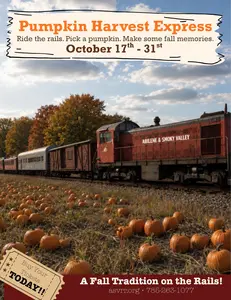
 2026 Kansas Halloween train. Abilene & Smoky Valley Pumpkin Harvest Express, October 17 through 31. About one hour. Shop prices $35.56 to $41.02. Everyone picks a pumpkin.
 -
Iowa Halloween Train Rides (2026)
Sep 29, 26 11:58 PM
2026 Iowa Halloween train. Boone & Scenic Valley Pumpkin Express, October 10, 10:00 a.m. from 225 10th Street. About 1 hour 15 minutes. Children pick a pumpkin. -
Arizona Halloween Train Rides (2026)
Sep 29, 26 11:43 PM
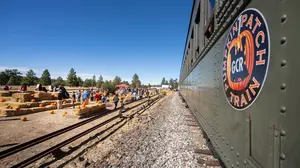
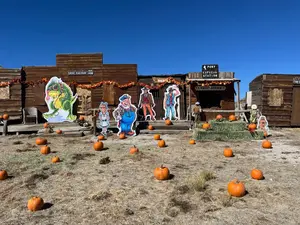
 2026 Arizona Halloween train. Grand Canyon Railway Pumpkin Patch Train from Williams, $39 with a pumpkin included. Select October dates on the ticket calendar. Haunted train cars are optional.
 -
Nevada Northern Halloween Trains (2026)
Sep 29, 26 06:18 PM
Nevada Northern 2026 Halloween trains in Ely. Pumpkin Patch Caper to Keystone Gulch and the Haunted Ghost Train. Adult tickets start at $45. Dates are on the railroad’s calendar. Confirm on nnry.com. -
Grand Canyon Railway Pumpkin Patch Train (2026)
Sep 29, 26 02:42 PM
Grand Canyon Railway Pumpkin Patch Train—select October 2026 dates from Williams, $39 with a pumpkin included. Haunted train cars are optional. Days are on the ticket calendar. Confirm on thetrain.com… -
Cass Scenic Railroad Halloween Trains (2026)
Sep 29, 26 02:37 PM
 Cass Scenic Halloween Trains—October 30 and 31, 2026, steam, 5:00 p.m. from Cass Depot. About two hours to Whittaker. Adult $75. Candy for every child. Confirm on mountainrailwv.com.
 -
Halloween Train Rides (2026): Pumpkin Patch, Haunted & Spooky Trips
Sep 29, 26 11:26 AM
 2026 Halloween train rides in nine checked states. Conway Scenic Halloween Express October 24–25. Strasburg’s three fall tickets. Great Smoky Mountains Railroad’s October trains are the gorge and rive…
 -
Maine Halloween Train Rides (2026)
Sep 29, 26 11:08 AM
 2026 Maine Halloween trains. Seashore Pumpkin Patch Trolley through October 18, adult $17. Happy Trolleyween October 23–25 at $15. WW&F Pumpkin Pickin’ October 3, 12, 17, and 24. Downeast’s booking it…




%2C%20awaits%20departure%20from%20Track%20%2311%20at%20Los%20Angeles%20Union%20Passenger%20Terminal%20during%20an%20August%20evening%20in%201954.%20Don%20Sims%20photo.)


%20rolls%20westward%20up%20the%20eastern%20side%20of%20Beaumont%20Pass%20just%20outside%20of%20Palm%20Springs%2C%20California%20in%20the%20early%201950s.)


