
Colorado and Southern Railway: Logo, Map, History
Last revised: July 24, 2024
By: Adam Burns
The Colorado and Southern Railway
is one of the West's most fabled lines even though it spent much of its
existence as a subsidiary of the much larger Chicago, Burlington &
Quincy system. However, it has a very complicated and interesting
background.
The C&S began as a means to reorganize and takeover a number of bankrupt operations which radiated west, north, and south of Denver, much of which was originally controlled by the Union Pacific.
The C&S instantly became a rather sizable Class I once it gained control of the the UP's interests and later the Fort Worth & Denver City, which connected most of Texas' largest cities.
While most of the C&S's narrow-gauge operations have long since been abandoned many of its through routes, especially across Colorado and into Texas remain in operation under successor and Class I, BNSF Railway, today.
Photos
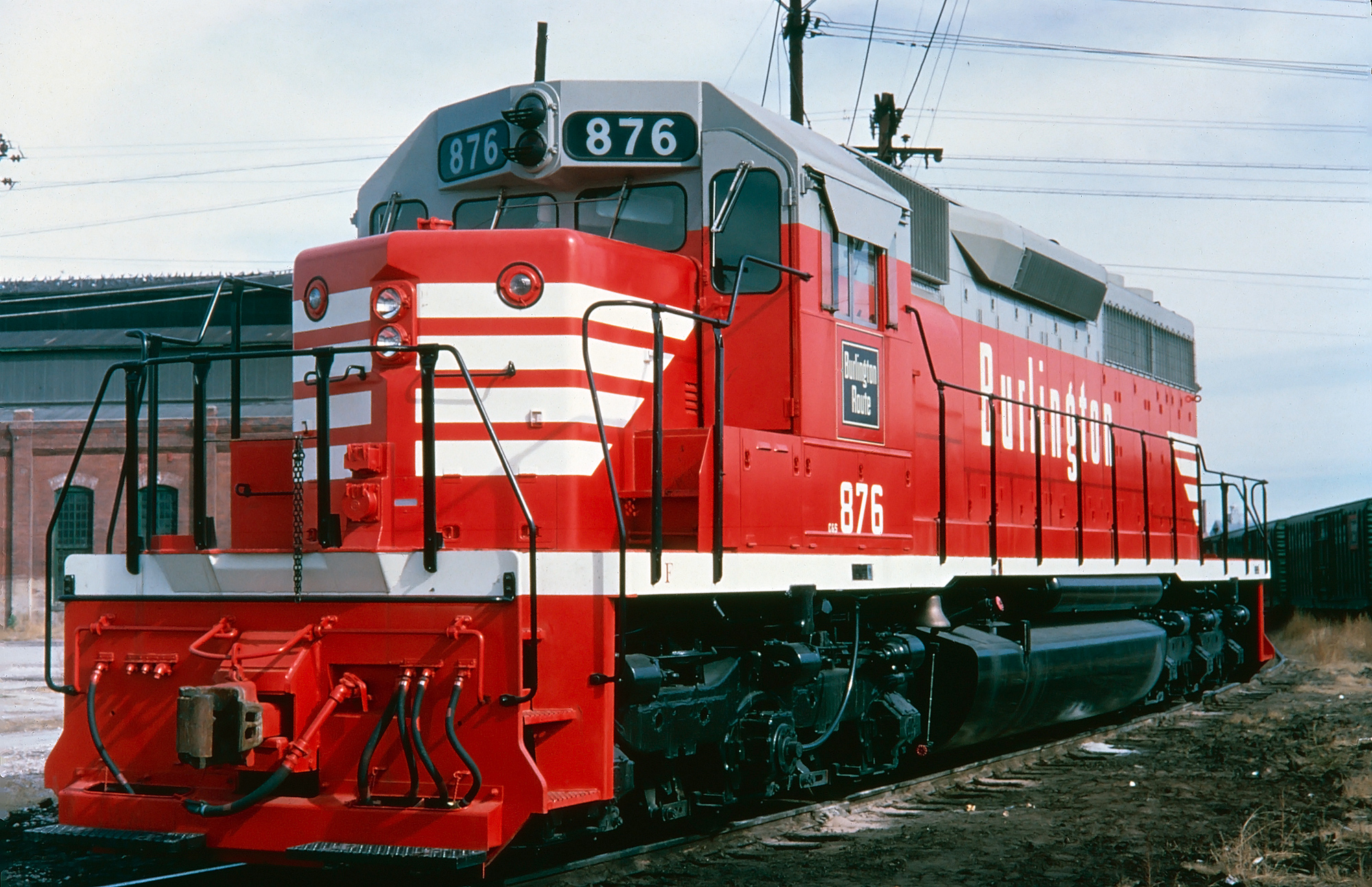 Recently-delivered Colorado & Southern (Burlington) SD40 #876 at Rice Yard in Denver; October, 1967. American-Rails.com collection.
History
The C&S was officially incorporated on December 19, 1898 as a means to bring stability to several bankrupt railroads in the region. The C&S's earliest predecessor was the Colorado & Clear Creek Railroad, which was chartered on February 9, 1865 as a narrow-gauge mining railroad.
This company went through a few name changes before becoming the Colorado Central Railway in January, 1868. Winding through the rugged Rocky Mountains west of Denver the railroad finally reached Georgetown in August, 1877.
The railroad reached its final length in 1884 when it chartered the Georgetown, Breckenridge & Leadville Railway to stretch west of Georgetown and the small mining town of Graymont.
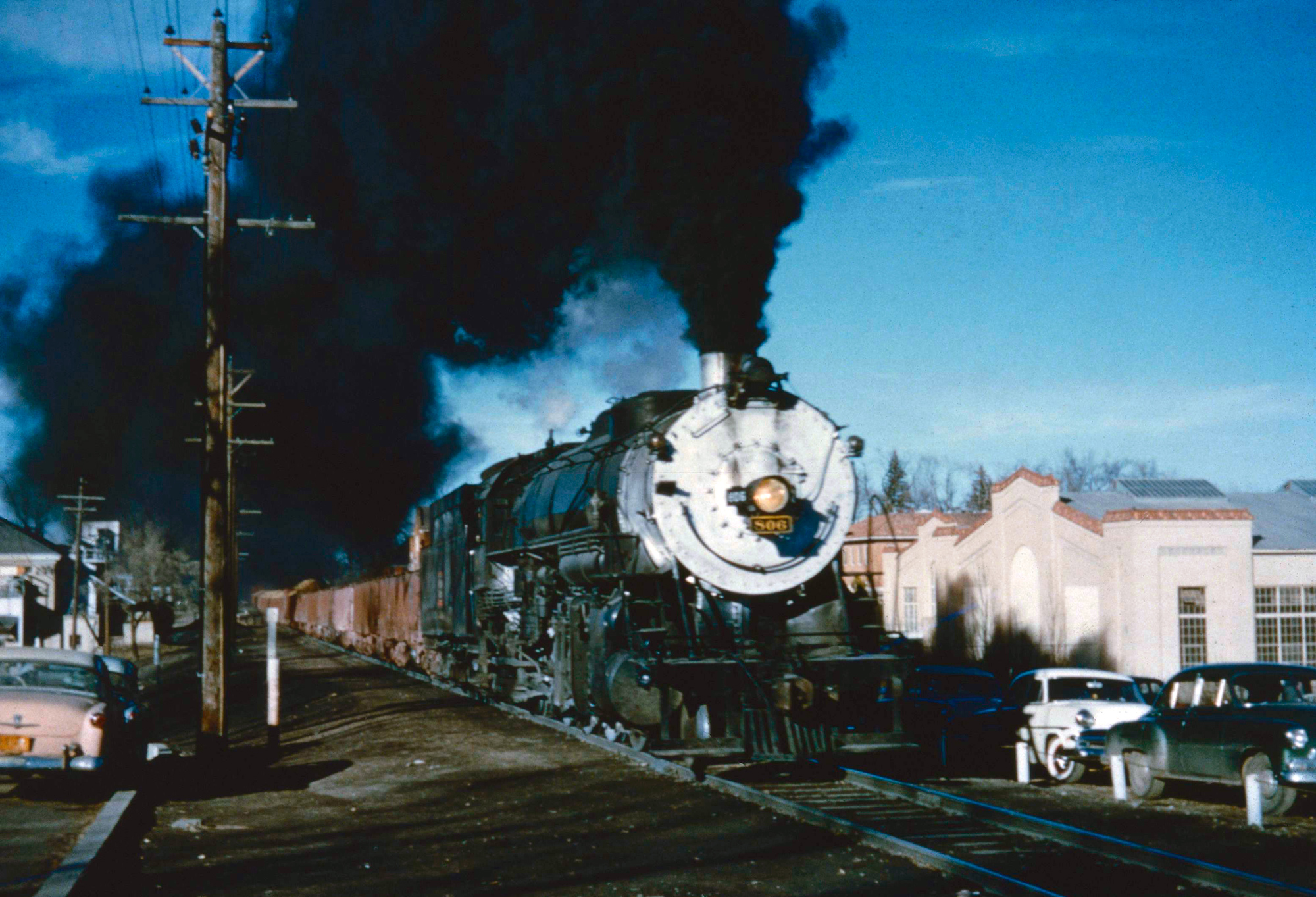 Colorado & Southern 2-8-2 #806 steams through Fort Collins, Colorado on December 22, 1957. Author's collection.
The other initial component of the C&S was the Cheyenne & Northern Railway, chartered in 1886 and which became a property of the Union Pacific after it completed its initial 125-mile main line between Cheyenne and Wendover, Wyoming. After UP took over the line in 1887 it continued it northward to Orin Junction.
Four years later in 1891 the UP created the Union Pacific, Denver & Gulf Railway to combine several railroads it controlled including the Cheyenne & Northern; Colorado Central, and Denver, Texas & Gulf; Denver, Texas & Fort Worth; and Fort Worth & Denver City.
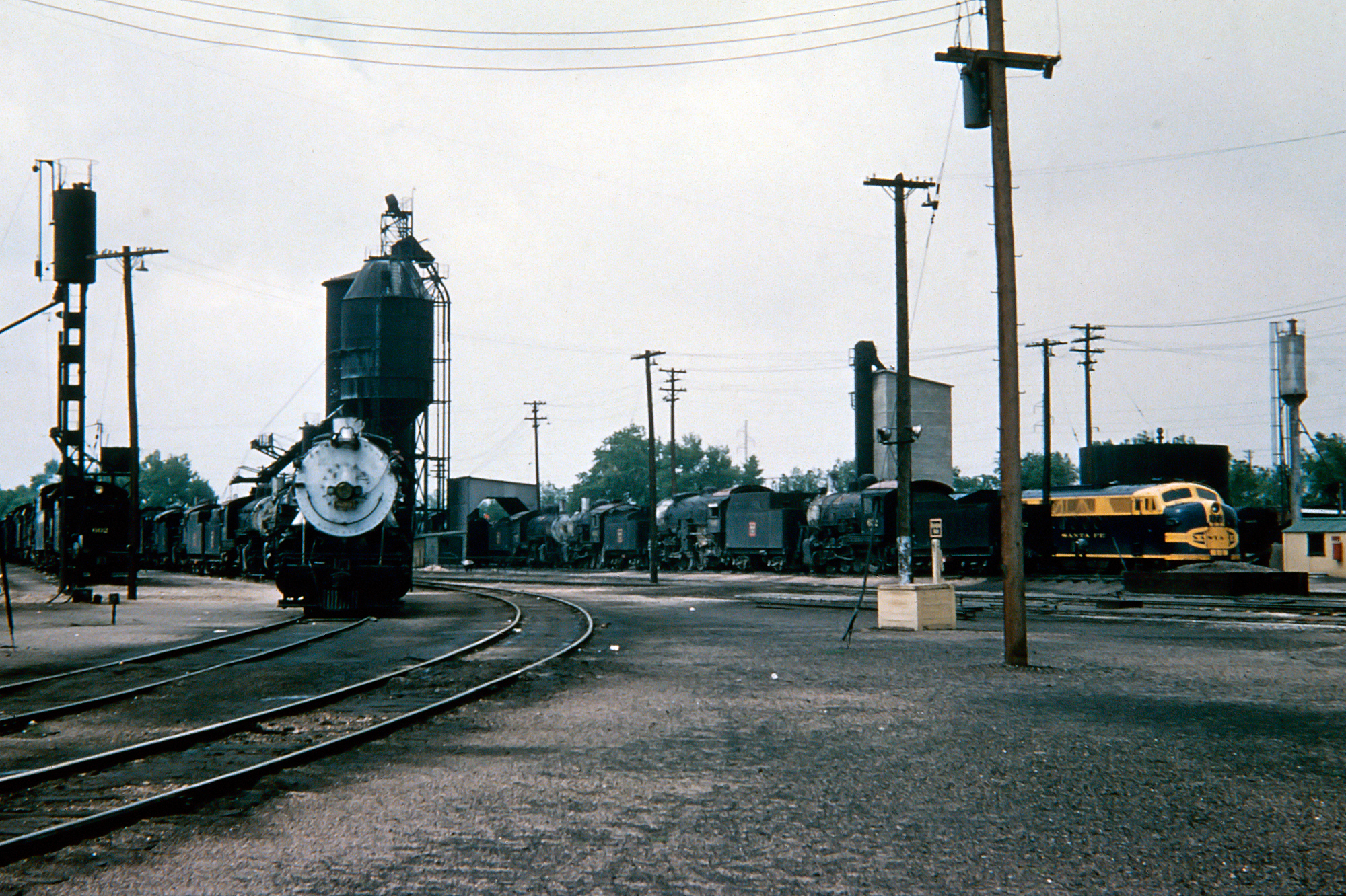 A myriad of Colorado & Southern steam locomotives, some of which appear to be in storage, are seen here at the railroad's Rice Yard in Denver, Colorado circa 1950. Also note Santa Fe FTA #172 at right. The AT&SF shared this facility with the C&S. American-Rails.com collection.
The latter three companies mentioned above operated in southern Colorado and through most of Texas. The Denver, Texas & Gulf had been incorporated on March 18, 1886 to takeover the bankrupt operation of the Denver & New Orleans Railroad, which had constructed a 125-mile line between Denver and Pueblo.
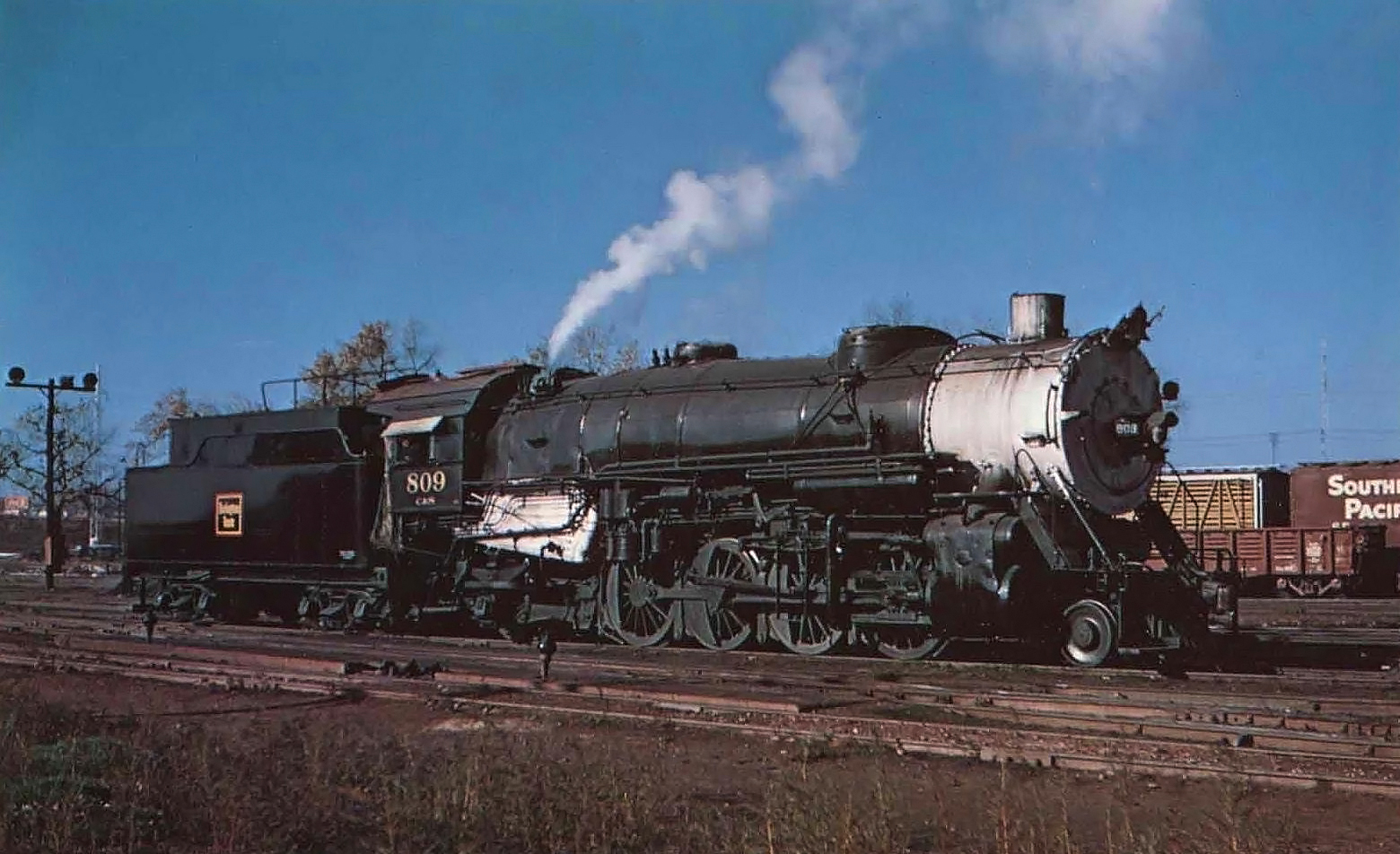 Colorado & Southern 2-8-2 #809, a heavy USRA Mikado built by Baldwin in 1919, performs switching work in Denver on November 9, 1957. Richard Kindig photo.
At A Glance
4 Feet, 8 ½ Inches 3 Feet (Colorado Lines) |
|
Fort Worth & Denver City Wichita Valley Railway |
|
Denver - Cheyenne, Wyoming - Billings/Huntley, Montana Frannie - Cody, Wyoming Denver - Dallas/Fort Worth |
|
Denver - Idaho Springs - Georgetown - Silver Plume (Loop Line) Denver - Black Hawk - Central City Denver - Como - Alma Denver - Como - Leadville |
|
Galveston - Houston - TeagueTeague - Waxahachie Teague - Cleburne Estelline - Dimmitt Silverton - Sterley - Lubbock |
|
Wichita Falls, Texas - Waukeria, Oklahoma Wichita Falls - Abilene Stamford - Spur |
|
Soon after that line was completed a new railroad was chartered; the Denver, Texas & Fort Worth on April 12, 1887, to continue the line southeast and a connection with the Fort Worth & Denver City (which was renamed the Fort Worth & Denver in 1951) at Union Park, New Mexico Territory which was completed in March, 1888.
The DT&FW gained controlled of both the FW&DC and DT&G and all three were operated as a single system. The Colorado and Southern Railway came about because of the bankruptcy of the Union Pacific on October 13, 1893.
Due to the UP's receivership it was forced to divest itself of its ownership of the Union Pacific, Denver & Gulf Railway; a rather large system for its day, it spanned from Dallas, Texas to Orin Junction, Wyoming connecting cities like Denver, Pueblo, Cheyenne, Amarillo and others along the way.
Logo
Officially, the C&S was born on December 19, 1898 to take over not only the Union Pacific, Denver & Gulf Railway but also the narrow-gauge operations it held (all mentioned above and including the Denver, Leadville & Gunnison Railway, which operated the former lines of the famed Denver, South Park & Pacific Railway).
In all, these narrow-gauge lines connected many of Colorado's mining towns like Georgetown, Silver Plume, Climax, Leadville, Golden and Gunnison. The final, but short-lived component of the original C&S was the Colorado Springs & Cripple Creek District Railway, which connected its namesake cities, along with the town of Victor.
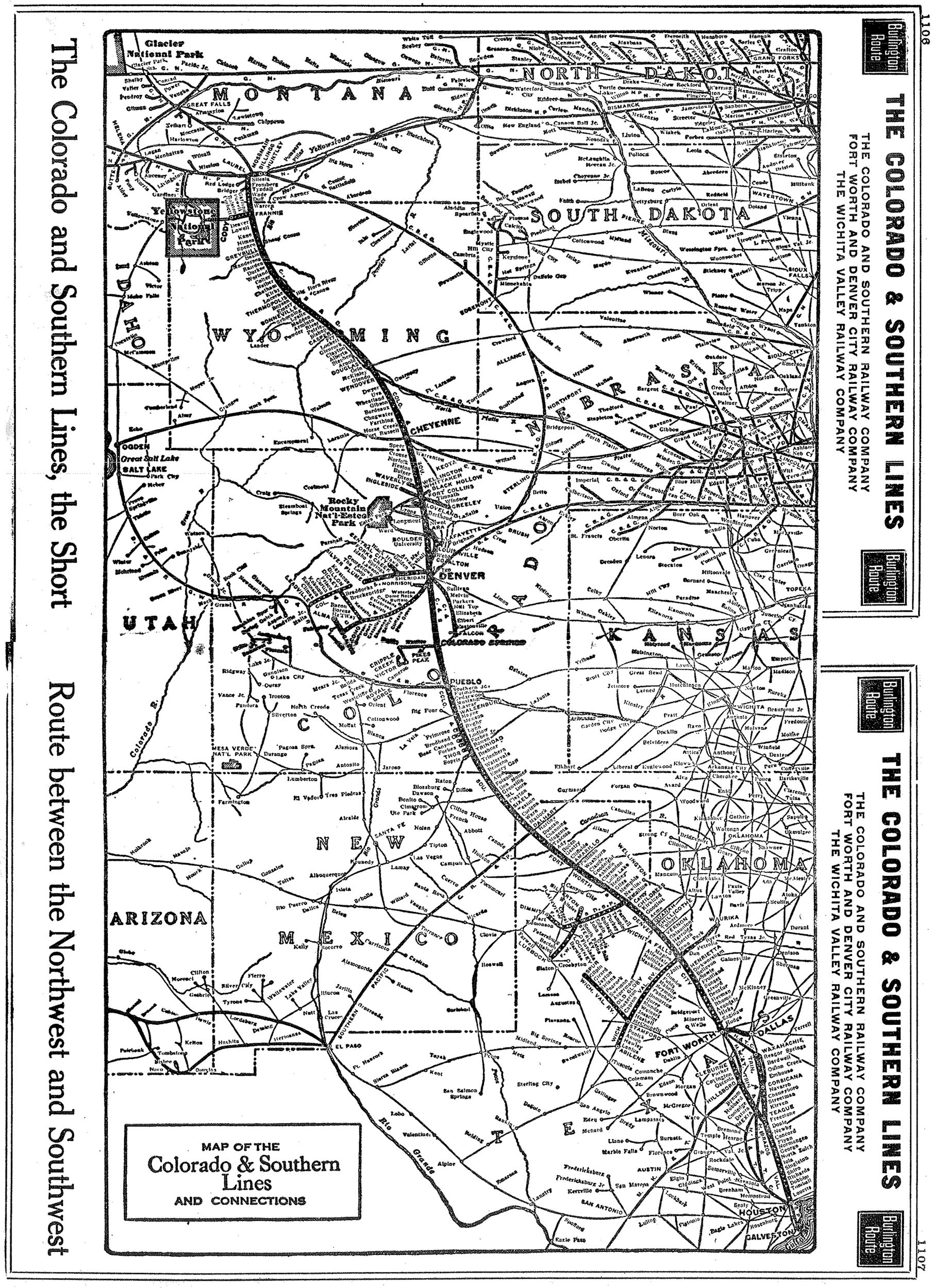
System Map (1930)
Chicago, Burlington & Quincy Acquisition
The CS&CCD was a standard-gauge operation but like the narrow-gauge lines to north its primary function was to serve the region's mining interests.
It only remained a part of the C&S from 1904 through 1911 before leasing the line to the Florence & Cripple Creek Railway. The CS&CCD operated for just nine more years before abandoning operations in 1920.
The C&S itself operated for only ten years as a independent company before being purchased by the Chicago, Burlington & Quincy in 1908 hoping to tap the large cities and markets the C&S served.
For the Colorado & Southern's part it remained a separate entity from the CB&Q and operated independently, partly due to the fact that Texas law required such and that all railroads operating within its borders be headquartered within the state.
Timetables (1940)
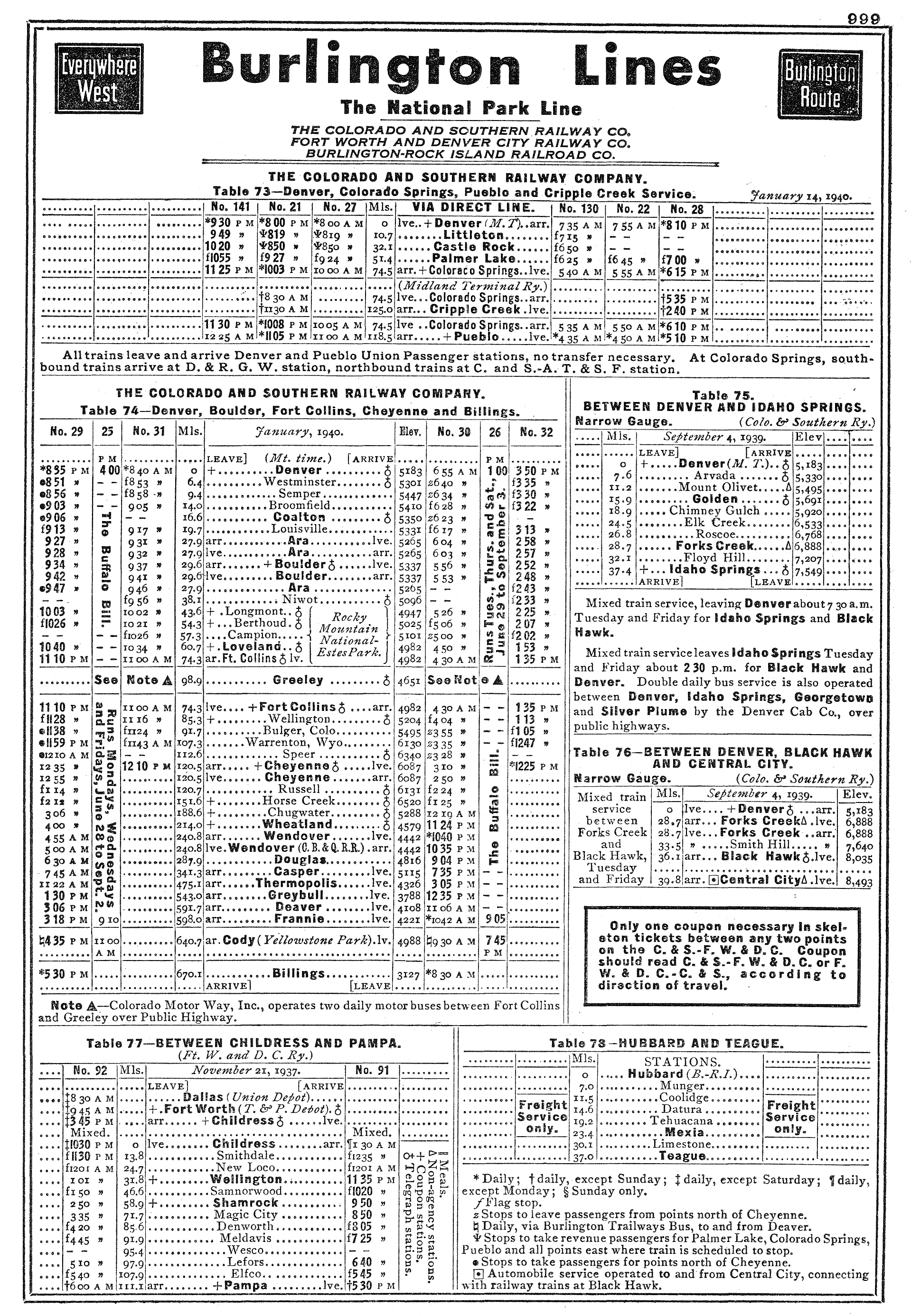
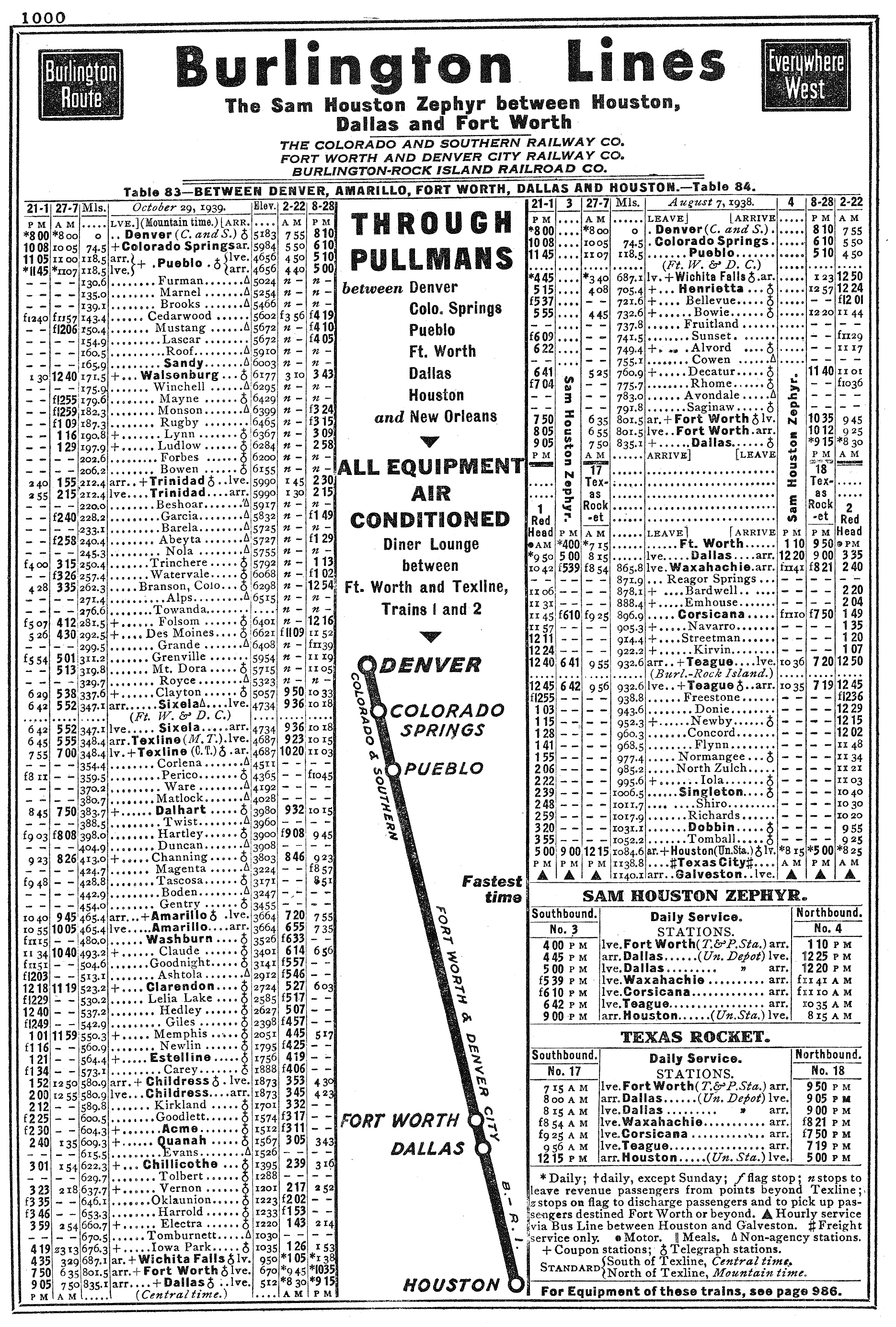
Most of the C&S's growth after CB&Q ownership took place along its Texas lines operated by the Fort Worth & Denver City. The FW&DC continued to build or takeover railroads in Texas all of the way through the 1930s with the financial backing of the CB&Q.
It leased several railroads including:
- The Fort Worth & Denver South Plains (completed in 1928, it connected Estelline, Dimmitt, Silverton, and Lubbock).
- The Fort Worth & Denver Northern (completed in 1932 it connected Childress and Pampa).
- The Fort Worth & Denver Terminal (this line provided for yards and terminals in the Fort Worth area).
- The Wichita Valley Railway (this railroad leased numerous other smaller lines including the Wichita Valley Railroad, Abilene & Northern, Stamford & Northwestern, and the Wichita Falls & Oklahoma all of which connected Wichita Falls with Stamford, Spur, and Abilene to the south). The new line was completed by 1884.
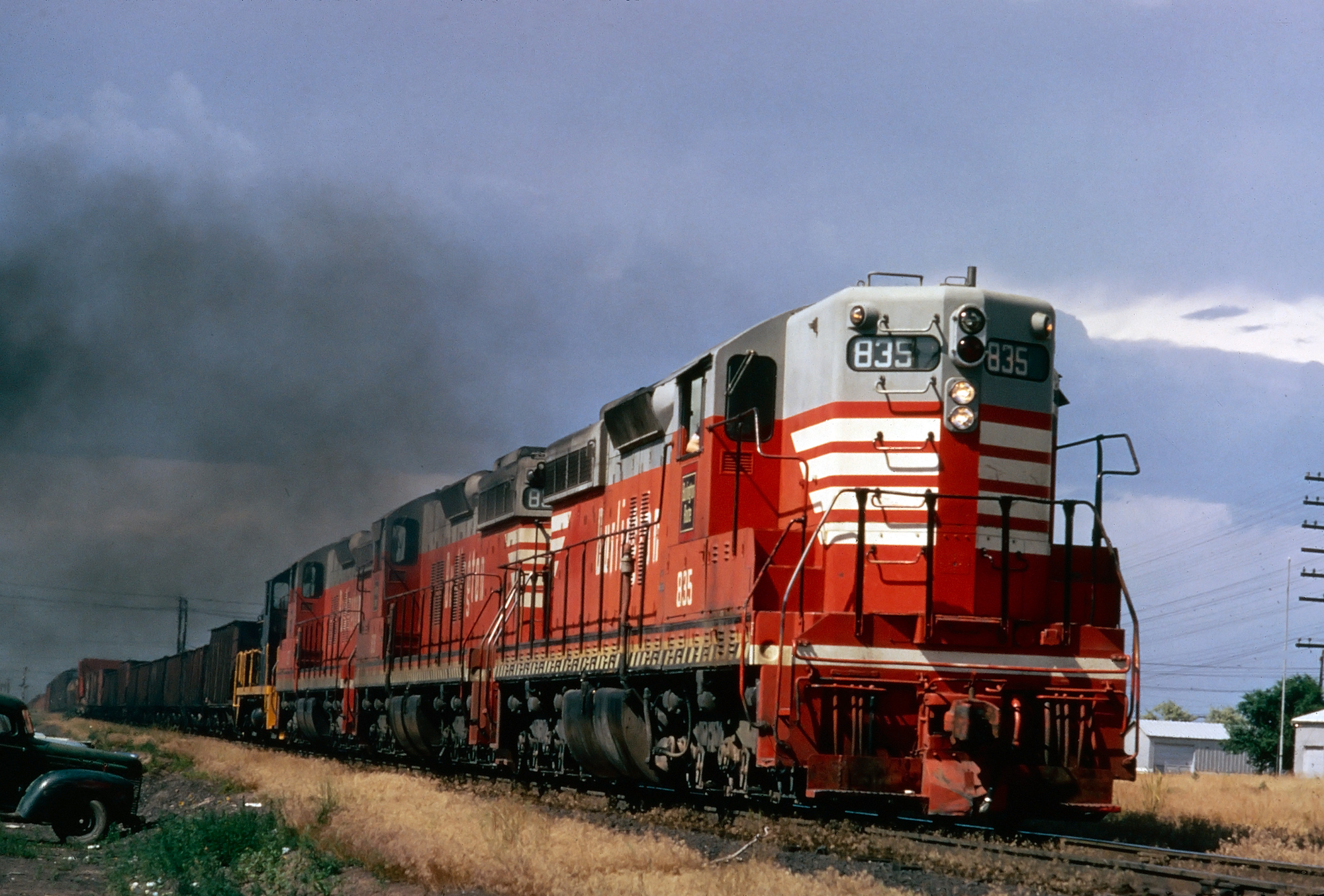 Burlington SD9's (and an unidentified unit) somewhere along the Colorado & Southern during the 1960s. American-Rails.com collection.
The final component of the now quite large Colorado and Southern Railway system was the Burlington-Rock Island Railroad.
The B-RI came about due to the reorganization of the Trinity & Brazos Valley Railway (better known as the "Boll Weevil") and was 50% owned by the Fort Worth & Denver City and the Chicago, Rock Island & Pacific (Rock Island).
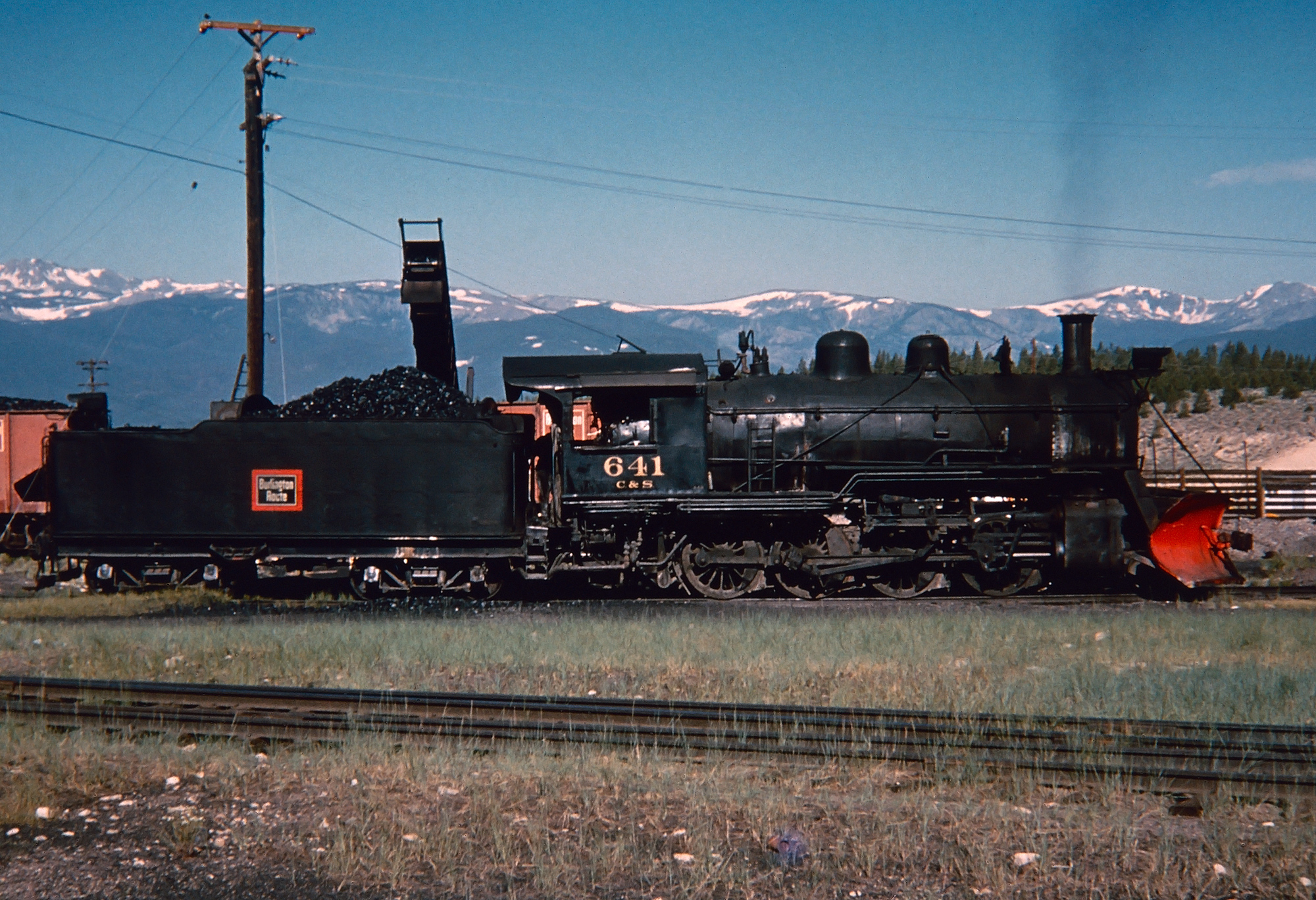 Colorado & Southern 2-8-0 #641 (built by Alco's Brooks Works in 1906), sporting a big pilot plow for winter snows, is seen here at work in Leadville, Colorado. Bob Le Massena photo. American-Rails.com collection.
The route extended southward from Dallas to Houston and Galveston, and while the FW&DC did not have direct rail access between Forth Worth and Dallas it gained trackage rights via the Rock Island.
The Burlington-Rock Island fell into receivership in 1964 with its parent companies picking up the line and continuing to operate it, continuing the 50% interest partnership. However, with the CRI&P's bankruptcy in 1980 the line reverted solely to then Burlington Northern ownership.
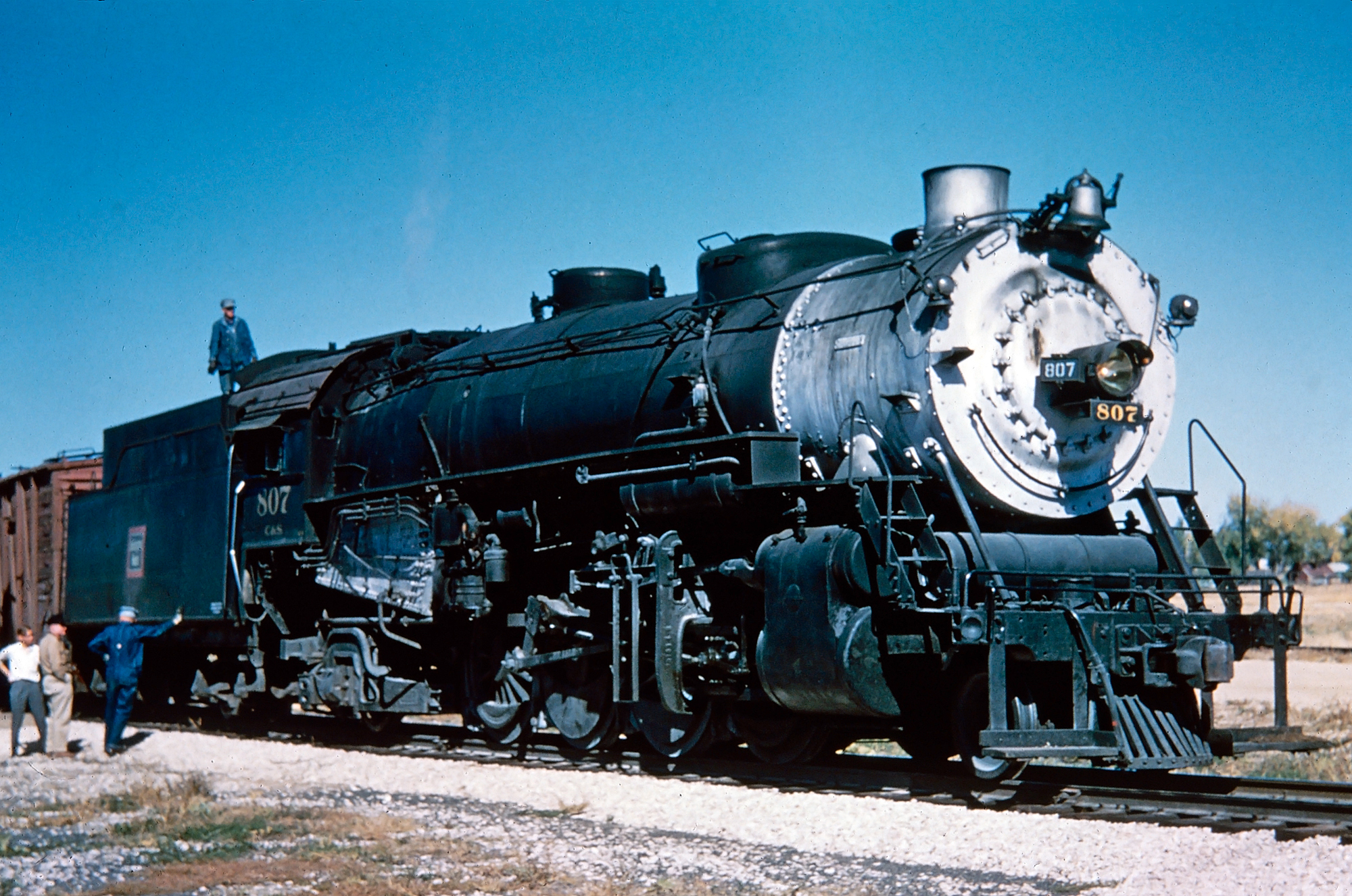 Colorado & Southern 2-8-2 #807 (built by Baldwin as Burlington #5508 in March, 1919) is seen here in service near Denver, Colorado, circa 1955. American-Rails.com collection.
Diesel Roster
Obviously, by the diesel era the C&S was a wholly owned
subsidiary of the Burlington, who simply sublettered locomotives as the
C&S. Still, for posterity and reference purposes, these units are
included here.
Electro-Motive Corporation/Electro-Motive Division
| Model Type | Road Number | Date Built | Quantity |
|---|---|---|---|
| NW2 | 150-153 | 1947-1948 | 4 |
| SW7 | 154 | 1950 | 1 |
| SW1200 | 156-160 | 1959 | 5 |
| F7A | 700A-702A, 700D-702D | 1950 | 6 |
| F7B | 700B-702B, 700C-702C | 1950 | 6 |
| F9A | 700D (Second) | 1959 | 1 |
| SD7 | 810-819 | 1953 | 10 |
| SD9 | 820-842 | 1957-1959 | 23 |
| SD45 | 868-874 | 1971 | 7 |
| SD40 | 875-887 | 1967-1968 | 13 |
| SD40-2 | 900-925, 930-961, 980, 996 | 1972-1977 | 60 |
| E5A | 9950A | 1940 | 1 |
| E5B | 9950B | 1940 | 1 |
General Electric
| Model Type | Road Number | Date Built | Quantity |
|---|---|---|---|
| U30C | 890-893 | 1968 | 4 |
Steam Roster
| Class | Type | Wheel Arrangement |
|---|---|---|
| A-3 (Various) | Switcher | 0-6-0 |
| B-3 (Various) | Mogul | 2-6-0 |
| B-4 (Various) | Consolidation | 2-8-0 |
| A-3 (Various) | Switcher | 0-6-0 |
| C-2 (Various) | American | 4-4-0 |
| C-3 (Various) | Ten-Wheeler | 4-6-0 |
| E-4 (Various) | Mikado | 2-8-2 |
| E-5-A/B/C | Santa Fe | 2-10-2 |
| F-3-A | Pacific | 4-6-2 |
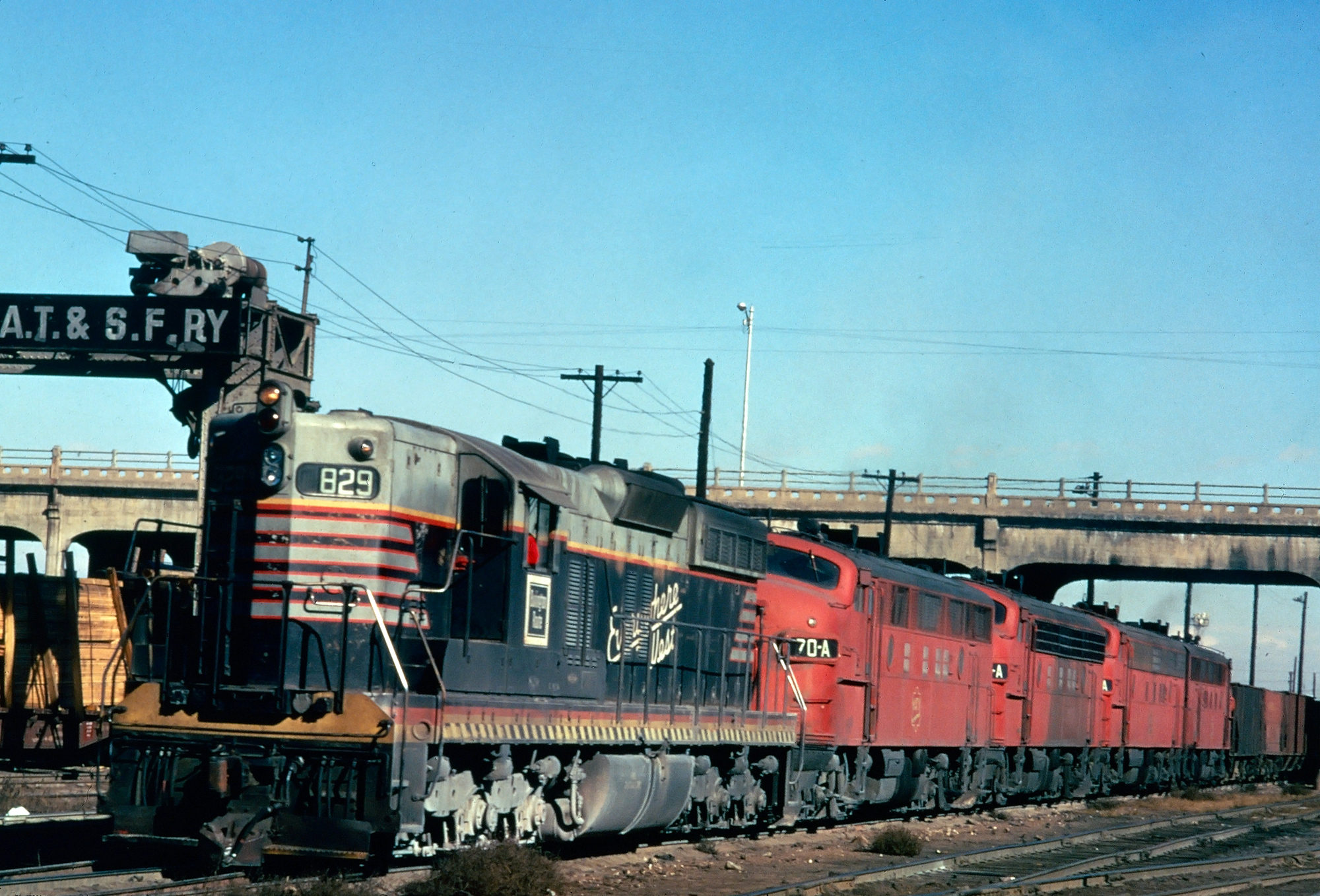 Colorado & Southern SD9 #829, and a trio of "F" units on lease from the Missouri-Kansas-Texas (Katy), are seen here at work in Denver, circa 1969. American-Rails.com collection.
Burlington Northern
Due to the narrow-gauge operations becoming less and less profitable the railroad slowly sold off or abandoned the network piecemeal until the final leg, still in operation to Golden, Colorado, was converted to standard gauge in 1943.
Today this section is still operated to serve the Coors Brewery located there although virtually all of the rest of the C&S's once vast narrow-gauge operations are but a memory.
The lone exception is a small, 4.5-mile section of the line around Georgetown which today operates as the Georgetown Loop Railroad during the summer months of the year.
The C&S remained an independent operation through the first eight decades of the 20th century before it was finally merged into the Burlington Northern on December 31, 1981. Ironically, the C&S's subsidiary, the Fort Worth & Denver remained on the books for two more years before being folded into BN on December 31, 1982.
Today, much of the original Colorado and Southern Railway main line through Texas, New Mexico, Colorado, and Wyoming remains in operation by successor and Class I BNSF Railway.
Recent Articles


-
Brightline Unveils ‘Freedom Express’ To Commemorate America’s 250th
Feb 20, 26 11:36 AM
 Brightline, the privately operated passenger railroad based in Florida, this week unveiled its new Freedom Express train to honor the nation's 250th anniversary.
 -
Age of Steam Roundhouse Adds C&O No. 1308
Feb 20, 26 10:53 AM
 In late September 2025, the Age of Steam Roundhouse Museum in Sugarcreek, Ohio, announced it had acquired Chesapeake & Ohio 2-6-6-2 No. 1308.
 -
Reading & Northern Announces 2026 Excursions
Feb 20, 26 10:08 AM
 Immediately upon the conclusion of another record-breaking year of ridership in 2025, the Reading & Northern Passenger Department has already begun its 2026 schedule of all-day rail excursion.
 -
Siemens Mobility Tapped To Modernize Tri-Rail Fleet
Feb 20, 26 09:47 AM
 South Florida’s Tri-Rail commuter service is preparing for a significant motive-power upgrade after the South Florida Regional Transportation Authority (SFRTA) announced it has selected Siemens Mobili…
 -
Reading T-1 No. 2100 Restoration Progress
Feb 20, 26 09:36 AM
 One of the most famous survivors of Reading Company’s big, fast freight-era steam—4-8-4 T-1 No. 2100—is inching closer to an operating debut after a restoration that has stretched across a decade and…
 -
C&O Kanawha No. 2716: A Third Chance at Steam
Feb 20, 26 09:32 AM
 In the world of large, mainline-capable steam locomotives, it’s rare for any one engine to earn a third operational career. Yet that is exactly the goal for Chesapeake & Ohio 2-8-4 No. 2716.
 -
Missouri Wine Tasting Train Rides
Feb 20, 26 09:29 AM
 The fusion of scenic vistas, historical charm, and exquisite wines is beautifully encapsulated in Missouri's wine tasting train experiences.
 -
Minnesota Wine Tasting Train Rides
Feb 20, 26 09:26 AM
 This article takes you on a journey through Minnesota's wine tasting trains, offering a unique perspective on this novel adventure.
 -
Kansas Murder Mystery Dinner Train Rides
Feb 20, 26 09:23 AM
 Kansas, known for its sprawling wheat fields and rich history, hides a unique gem that promises both intrigue and culinary delight—murder mystery dinner trains.
 -
Florida Murder Mystery Dinner Train Rides
Feb 20, 26 09:20 AM
 Florida, known for its vibrant culture, dazzling beaches, and thrilling theme parks, also offers a unique blend of mystery and fine dining aboard its murder mystery dinner trains.
 -
NC&StL “Dixie” No. 576 Nears Steam Again
Feb 20, 26 09:15 AM
 One of the South’s most famous surviving mainline steam locomotives is edging closer to doing what it hasn’t done since the early 1950s, operate under its own power.
 -
Frisco 2-10-0 No. 1630 Continues Overhaul
Feb 19, 26 03:58 PM
In late April 2025, the Illinois Railway Museum (IRM) made a difficult but safety-minded call: sideline its famed St. Louis–San Francisco Railway (Frisco) 2-10-0 No. 1630. -
PennDOT Pushes Forward Scranton–New York Passenger Rail Plan
Feb 19, 26 12:14 PM
 Pennsylvania’s long-discussed idea of restoring passenger trains between Scranton and New York City is moving into a more formal planning phase.
 -
CSX Advances Locomotive Technology to Cut Fuel Use and Emissions
Feb 19, 26 09:43 AM
 CSX recently highlighted major progress on its ongoing efforts to reduce fuel consumption, cut greenhouse-gas emissions, and improve operational efficiency across its freight rail network through adva…
 -
Ohio Railway Museum Unveils “Vision for the Future” Plan
Feb 19, 26 09:39 AM
 The Ohio Railway Museum (ORM), one of the nation’s oldest all-volunteer rail preservation organizations, has laid out an ambitious blueprint aimed at transforming its organization.
 -
B&O Railroad Museum Unveils $38M Expansion
Feb 19, 26 09:24 AM
 Western Maryland Railway F7 236 points towards the Mount Clare Roundhouse in Baltimore as part of the B&O Museum.
 -
Cuyahoga Valley Scenic To Repower Two FPA4s
Feb 19, 26 09:21 AM
 A pair of classic, streamlined Alco/MLW FPA4 locomotives that have become signature power on the Cuyahoga Valley Scenic Railroad (CVSR) are slated for a major mechanical transformation.
 -
Ohio's Dinner Train Rides At The CVSR
Feb 19, 26 09:18 AM
While the railroad is well known for daytime sightseeing and seasonal events, one of its most memorable offerings is its evening dining program—an experience that blends vintage passenger-car ambience… -
Indiana Dinner Train Rides In Jasper
Feb 19, 26 09:16 AM
 In the rolling hills of southern Indiana, the Spirit of Jasper offers one of those rare attractions that feels equal parts throwback and treat-yourself night out: a classic excursion train paired with…
 -
New Hampshire Murder Mystery Dinner Train Rides
Feb 19, 26 09:12 AM
 The state's murder mystery trains stand out as a captivating blend of theatrical drama, exquisite dining, and scenic rail travel.
 -
New York Murder Mystery Dinner Train Rides
Feb 19, 26 09:07 AM
 New York State, renowned for its vibrant cities and verdant countryside, offers a plethora of activities for locals and tourists alike, including murder mystery train rides!
 -
UP, NS Set April 30 Date To Refile Merger Application
Feb 18, 26 04:36 PM
 Union Pacific and Norfolk Southern have told federal regulators they will submit a revised merger application on April 30, restarting the formal review process for what would become one of the most co…
 -
CTDOT May Swap Shore Line East’s Electrics For Diesels
Feb 18, 26 04:20 PM
 Connecticut’s Shore Line East (SLE) commuter rail service—one of the state’s most scenic and strategically important passenger corridors—could soon see a major operational change.
 -
NPS Awards $1.93M To Sioux City Railroad Museum
Feb 18, 26 01:21 PM
 The Sioux City Railroad Museum has received a $1.93 million National Park Service grant aimed at pushing the museum’s long recovery from the June 2024 flooding.
 -
$1.3M Mott Foundation Grant To Help Rebuild Rio Grande 2-8-2 No. 464
Feb 18, 26 09:43 AM
 A $1.3 million grant from the Charles Stewart Mott Foundation will fund critical work on steam locomotive No. 464, the railroad’s 1903-built 2-8-2 “Mikado” that has been out of service awaiting heavy…
 -
NS Unveils Third “Landmark Series” Locomotive
Feb 18, 26 09:38 AM
 Norfolk Southern has officially introduced ES44AC No. 8184, the third locomotive in its new “Landmark Series,” a program that spotlights the historic rail cities and communities that helped shape both…
 -
WMSR's Georges Creek Division: Reviving A Long-Dormant Line
Feb 18, 26 09:34 AM
 In 2024 the WMSR announced it was rebuilding part of the old WM. The Georges Creek Division will provide both heritage passenger service and future freight potential in a region once defined by coal…
 -
Chesapeake & Ohio 614 Restoration Pushes Forward
Feb 18, 26 09:32 AM
 One of the most recognizable mainline steam locomotives to survive the post–steam era, C&O 614, is steadily moving through an intensive return-to-service overhaul.
 -
Montana Dinner Train Rides Near Lewistown
Feb 18, 26 09:30 AM
 The Charlie Russell Chew Choo turns an ordinary rail trip into an evening event: scenery, storytelling, live entertainment, and a hearty dinner served as the train rumbles across trestles and into a t…
 -
Wisconsin Dinner Train Rides In North Freedom
Feb 18, 26 09:18 AM
 Featured here is a practical guide to Mid-Continent’s dining train concept—what the experience is like, the kinds of menus the museum has offered, and what to expect when you book.
 -
Pennsylvania Murder Mystery Dinner Train Rides
Feb 18, 26 09:09 AM
Pennsylvania, steeped in history and industrial heritage, offers a prime setting for a unique blend of dining and drama: the murder mystery dinner train ride. -
New Jersey Murder Mystery Dinner Train Rides
Feb 18, 26 09:06 AM
There are currently no murder mystery dinner trains available in New Jersey although until 2023 the Cape May Seashore Lines offered this event. Perhaps they will again soon! -
Huckleberry Railroad: Riding Narrow-Gauge Steam In Michigan!
Feb 18, 26 09:03 AM
 The Huckleberry Railroad is a tourist attraction that is part of the Crossroads Village & Huckleberry Railroad Park located in Flint, Michigan featuring several operating steam locomotives.
 -
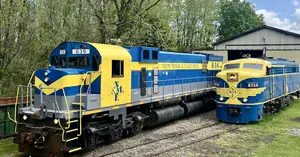
New York & Lake Erie Unveils M636 No. 636 In New Colors (2025)
Feb 17, 26 02:05 PM
 In mid-May 2025, railfans along the former Erie rails in Western New York were treated to a sight that feels increasingly rare in North American railroading: a big M636 in new paint.
 -
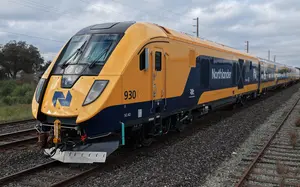
First Siemens “Northlander” Trainset Arrives In Ontario
Feb 17, 26 11:46 AM
 Ontario’s long-awaited return of the Northlander passenger train took a major step forward this winter with the arrival of the first brand-new Siemens-built trainset in the province.
 -
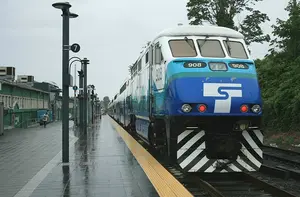
Sound Transit Set to Launch Cross-Lake Service
Feb 17, 26 10:09 AM
 For the first time in the region’s modern transit era, Sound Transit light rail trains will soon carry passengers directly across Lake Washington
 -
Michigan’s Old Road Dinner Train Still Seeks New Home
Feb 17, 26 10:04 AM
In May, 2025 it was announced that Michigan's Old Road Dinner Train was seeking a new home to continue operations. As of this writing that search continues. -
WMSR Acquires Conemaugh & Black Lick SW7 No. 111
Feb 17, 26 10:00 AM
 In a notable late-summer preservation move, the Western Maryland Scenic Railroad (WMSR) announced in August 2025 that it had acquired former Conemaugh & Black Lick Railroad (C&BL) EMD SW7 No. 111.
 -
MBTA Unveils New Haven-Inspired Locomotive
Feb 17, 26 09:58 AM
he Massachusetts Bay Transportation Authority has pulled back the curtain on its newest heritage locomotive, F40PH-3C No. 1071, wearing a bold, New Haven–inspired paint scheme that pays tribute to the… -
Missouri Dinner Train Rides In Branson
Feb 17, 26 09:53 AM
 Nestled in the heart of the Ozarks, the Branson Scenic Railway offers one of the most distinctive rail experiences in the Midwest—pairing classic passenger railroading with sweeping mountain scenery a…
 -
Texas Murder Mystery Dinner Train Rides
Feb 17, 26 09:49 AM
 Here’s a comprehensive look into the world of murder mystery dinner trains in Texas.
 -
Connecticut Murder Mystery Dinner Train Rides
Feb 17, 26 09:48 AM
 All aboard the intrigue express! One location in Connecticut typically offers a unique and thrilling experience for both locals and visitors alike, murder mystery trains.
 -
RTA To Become The Northern Illinois Transit Authority
Feb 16, 26 12:49 PM
 Later this year, the Regional Transportation Authority (RTA)—the umbrella agency that plans and funds public transportation across the Chicago region—will be reorganized into a new entity: the Norther…
 -
CPKC Holiday Train Sets New Record In 2025
Feb 16, 26 11:06 AM
 Canadian Pacific Kansas City’s (CPKC) beloved Holiday Train wrapped up its 2025 tour with a milestone that underscores just how powerful a community tradition can become.
 -
Historic Izaak Walton Inn Slated To Close
Feb 16, 26 10:51 AM
 A storied rail-side landmark in northwest Montana—the Izaak Walton Inn in Essex—appears headed for an abrupt shutdown, with employees reportedly told their work will end “on or about March 6, 2026.”
 -
B&O Railroad Museum Unveils Restored American Freedom Train No. 1
Feb 16, 26 10:31 AM
 The B&O Railroad Museum has completed a comprehensive cosmetic restoration of American Freedom Train No. 1, the patriotic 4-8-4 steam locomotive that helped pull the famed American Freedom Train durin…
 -
Union Pacific, Wabtec Ink $1.2B Deal To Modernize AC4400 Fleet
Feb 16, 26 10:25 AM
 Union Pacific has signed a $1.2 billion agreement with Wabtec to modernize a significant portion of its GE AC4400 fleet, doubling down on the strategy of rebuilding proven high-horsepower road units r…
 -
CSX Taps Wabtec For $670M Locomotive And Digital Upgrade
Feb 16, 26 10:19 AM
CSX Transportation says it is moving to refresh and standardize a major piece of its operating fleet, announcing a $670 million agreement with Wabtec. -
New Mexico "Dinner" Train Rides
Feb 16, 26 10:15 AM
 If your heart is set on clinking glasses while the desert glows at sunset, you can absolutely do that here—just know which operator offers what, and plan accordingly.
 -
West Virginia's Dinner Train Rides In Elkins
Feb 16, 26 10:13 AM
 The D&GV offers the kind of rail experience that feels purpose-built for railfans and casual travelers.


%20SD40%20%23876%20at%20Rice%20Yard%20in%20Denver%3B%20October%2C%201967.%20American-Rails.com%20collection.)


%20somewhere%20along%20the%20Colorado%20%26%20Southern%20during%20the%201960s.%20%20American-Rails.com%20collection.)
%2C%20sporting%20a%20big%20pilot%20plow%20for%20winter%20snows%2C%20is%20seen%20here%20at%20work%20in%20Leadville%2C%20Colorado.%20Bob%20Le%20Massena%20photo.%20%20American-Rails.com%20collection.)
%20is%20seen%20here%20in%20service%20near%20Denver%2C%20Colorado%2C%20circa%201955.%20%20American-Rails.com%20collection.)
%2C%20are%20seen%20here%20at%20work%20in%20Denver%2C%20circa%201969.%20%20American-Rails.com%20collection.)