
Norfolk & Western Railway: Map, Logo, Rosters, History
Last revised: November 5, 2024
By: Adam Burns
The Norfolk and Western’s merger with the Southern in
1982 was fitting for two railroads which spent most of the 20th century as efficient, profitable operations.
From a history tracing back to the 1830s the N&W did not blossom into a great American success story until after 1900.
It acted a conveyor belt of coal moving black diamonds from mines located in southern West Virginia and southwestern Virginia to Norfolk/Newport News.
Before expanding rapidly after the late 1950's its original network contained only slightly more than 2,000 route miles connecting Norfolk with Cincinnati and Columbus.
Historically, the railroad is remembered for many things ranging from its staunch support of the steam locomotive to legendary photographer O. Winston Link who captured its final days of steam in stunning black and white photography.
His work is now considered all but priceless works of art. Today, the N&W's principal lines remain in use under successor Norfolk Southern.
Its once lucrative coal business is not the juggernaut of yore but still sustains the "Thoroughbred Route" through modern times.
Photos
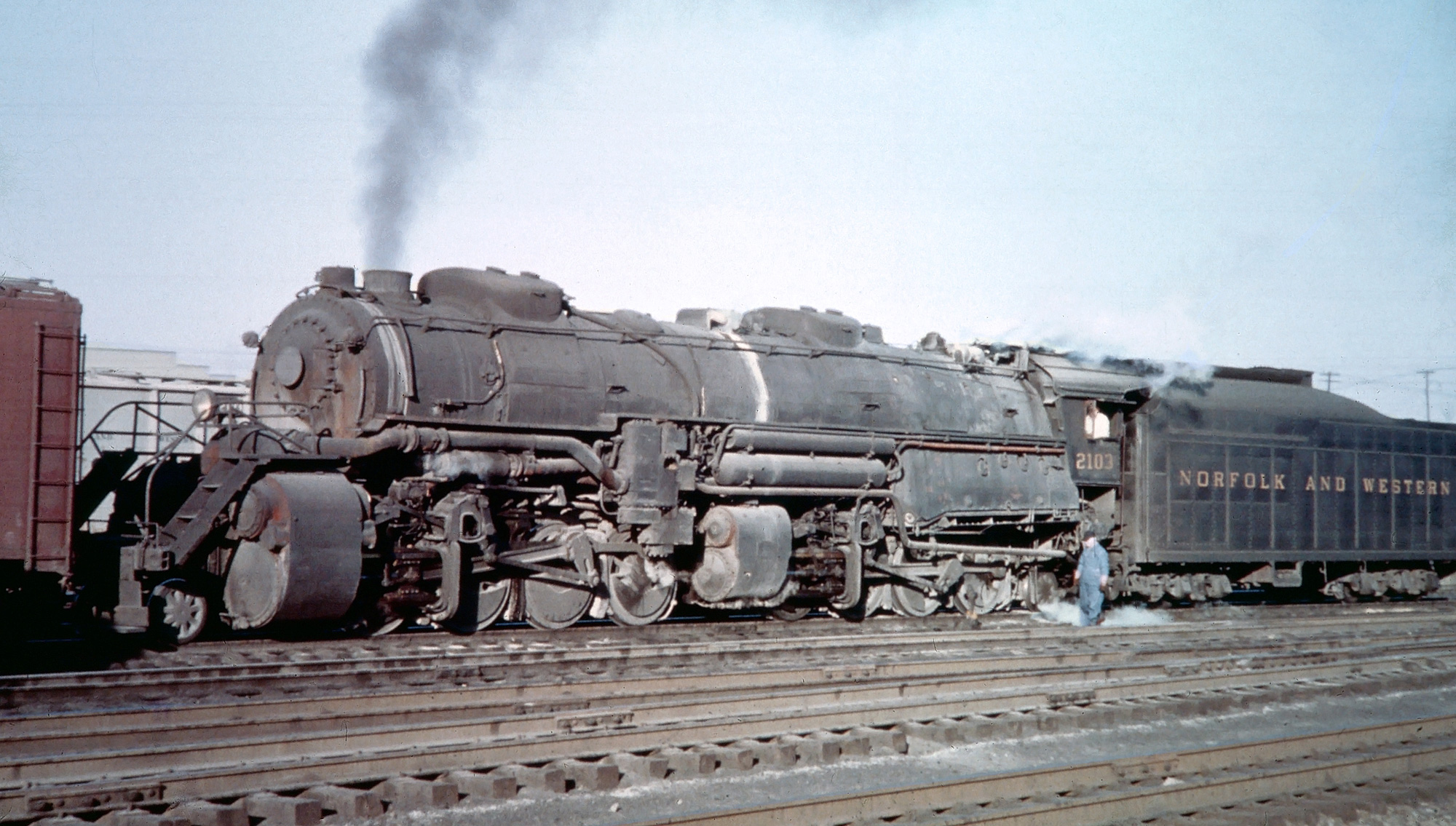 Norfolk & Western 2-8-8-2 #2103 (Y-4a) at Roanoke, Virginia, circa 1950. Fred Byerly photo. American-Rails.com collection.
History
The origins of the mighty Norfolk & Western begin quite humbly in far eastern Virginia when the General Assembly chartered the City Point Railroad during early 1836. The early industry was still learning its trade and steam power was rudimentary.
However, railroads were proving their worth up and down the east coast from the South Carolina Canal & Rail Road Company serving Charleston, South Carolina to the Baltimore & Ohio linking Baltimore, Maryland.
At A Glance
2128.85 (1952) 8,029 (1965) | |
Lambert's Point (Norfolk), Virginia - Columbus, Ohio Portsmouth - Cincinnati, Ohio Lynchburg, Virginia - Durham, North Carolina Roanoke - Hagerstown, Maryland Roanoke - Winston-Salem, North Carolina Walton - Bristol, Virginia Bluefield, Virginia - Norton, Virginia |
|
Freight Cars: 75,621 Passenger Cars: 251 | |
The City Point opened on September 7, 1838 between its hometown (now known as Hopewell) on the James River to nearby Petersburg, a distance of 9 miles.
During a period in which efficient transportation was limited primarily to slow-moving waterways the new railroad could move freight and passengers at unheard of speeds.
In 1847 the City Point was reorganized as the Appomattox Railroad and acquired by the Southside Railroad (SRR) in 1854.
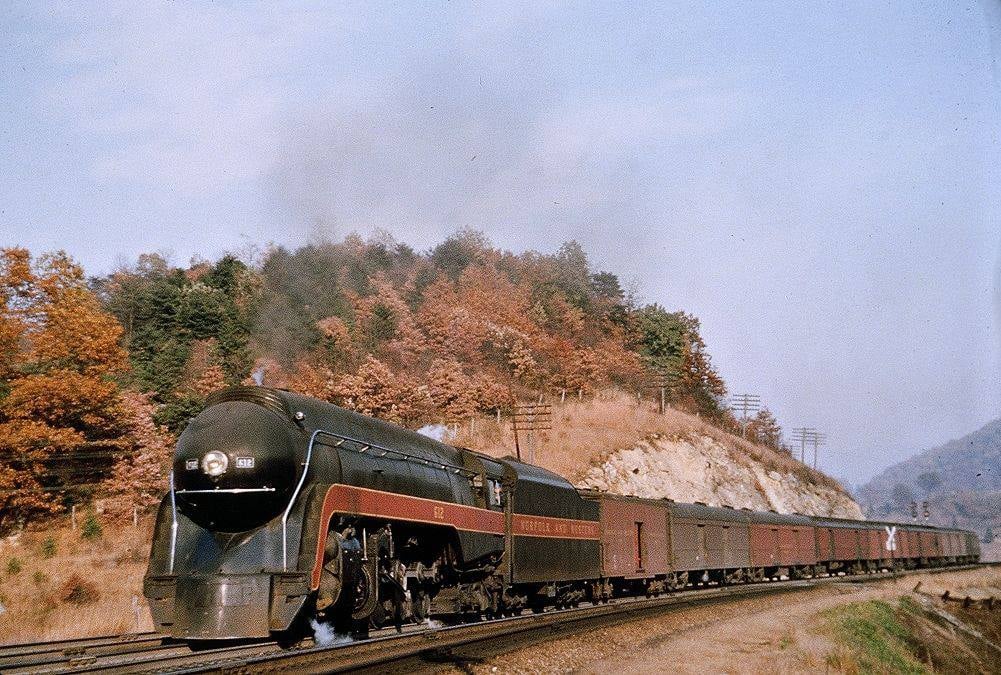 Norfolk & Western 4-8-4 #612 has train #15, the westbound "Cavalier," crossing Friendship Road outside of Shawsville, Virginia on October 23, 1952.
The latter carrier had been chartered in 1846, initially to build from Petersburg to what is now Blackstone.
According to C. Nelson Harris’s book, “Norfolk & Western Railway Stations And Depots,” the Southside was given its name because its right-of-way traveled south of the James River.
It began construction in 1849 and by 1852 had reached Burkeville, providing an interchange there with the Richmond & Danville (later, Southern Railway).
As the Southside continued westward, intent on reaching Lynchburg, it was faced with a choice of grading a southerly route with easier grades or follow a more circuitous and rugged northerly extension. In another case of money dictating logic the latter corridor was ultimately chosen.
The reasoning was not entirely without merit; the railroad needed funding and the northerly route was enticing because the town of Farmville offered financial incentives to connect their town (common in those times when communities recognized the economic opportunities a railroad brought).
The line was forced to cross the wide Appomattox River, which required a massive span. The High Bridge, completed in 1852, was 2,440 feet in length and rose 125 feet above the water line (today it is part of the High Bridge Trail between Burkeville and Pamplin). The Southside would finish its line to Lynchburg two years later in 1854.
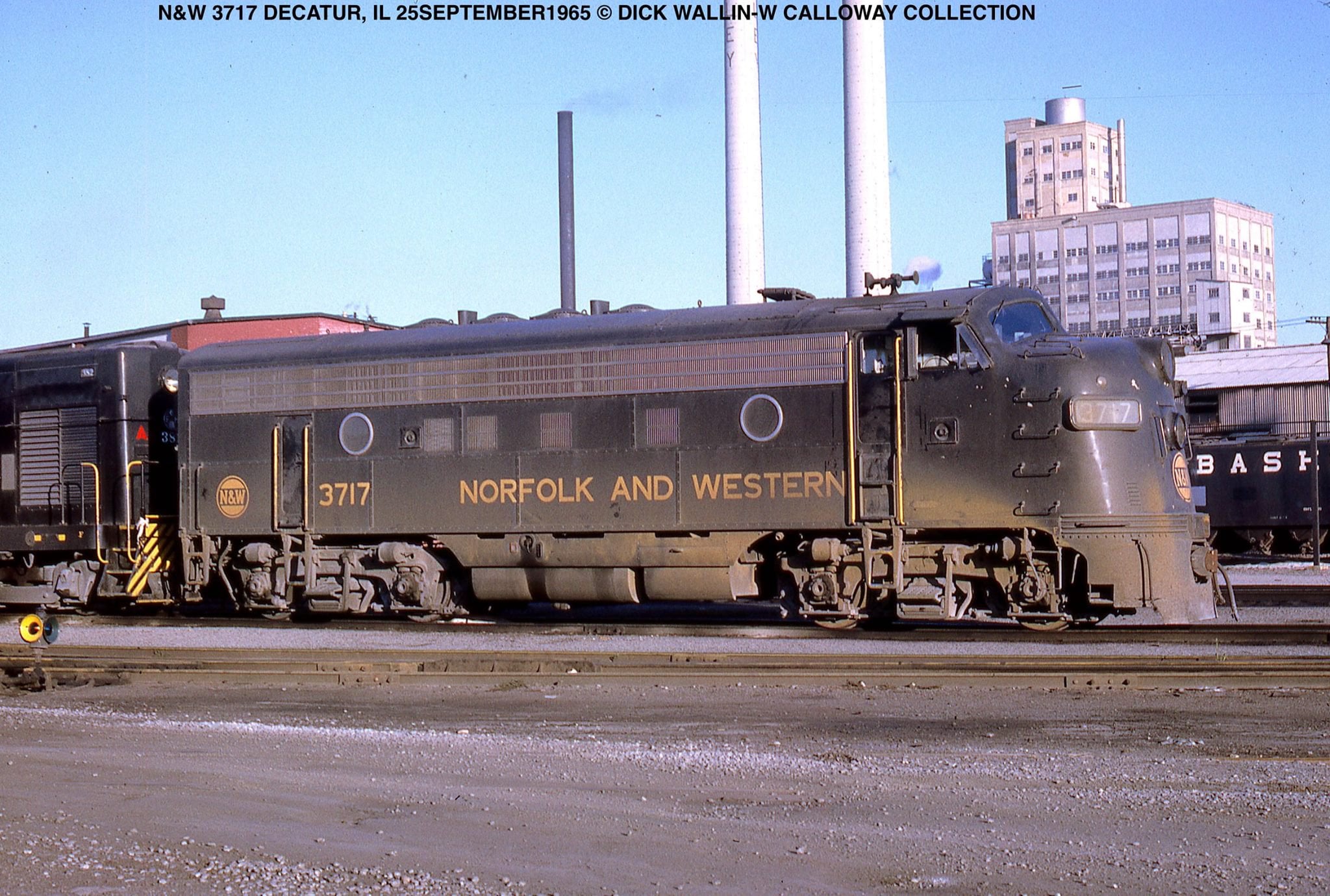 Norfolk & Western F7A #3717 (ex-Wabash #1185) is seen here in Decatur, Illinois on September 25, 1965. The N&W never purchased its own cab units; all were acquired through the 1964 Wabash Railroad merger. Dick Wallin photo/Warren Calloway collection.
Expansion
Two other noteworthy components included the Norfolk & Petersburg (opened between its namesake cities in 1858) and the Virginia & Tennessee (completed between Lynchburg and Bristol, Virginia in 1856).
After recovering from damage caused during the "War Between The States" (the South's term for the Civil War) the N&P, V&T, and SRR merged in 1870 to form the 408-mile Atlantic, Mississippi & Ohio Railroad. This short-lived company struggled during the financial Panic of 1873 and was forced into bankruptcy.
It was then reorganized as the Norfolk & Western Railroad during May of 1881. Another financial panic in 1893 thrust it into bankruptcy once more.
After a final reorganization the Norfolk & Western Railway was born on September 24, 1896. Prior to this last reorganization coal was already proving its most valuable commodity.
Logos
As Eric Grubb notes in his article, "Coal Supports The Norfolk & Western" from the November, 1947 issue of Trains Magazine, it all began in 1881 when vice-president of a young N&W, F.J. Kimball, firmly believed rich seams of bituminous were located in southwestern Virginia despite geologists proclaiming otherwise.
Kimball went on to discover the rich Pocahontas #3 seam and the railroad quickly pushed into the region.
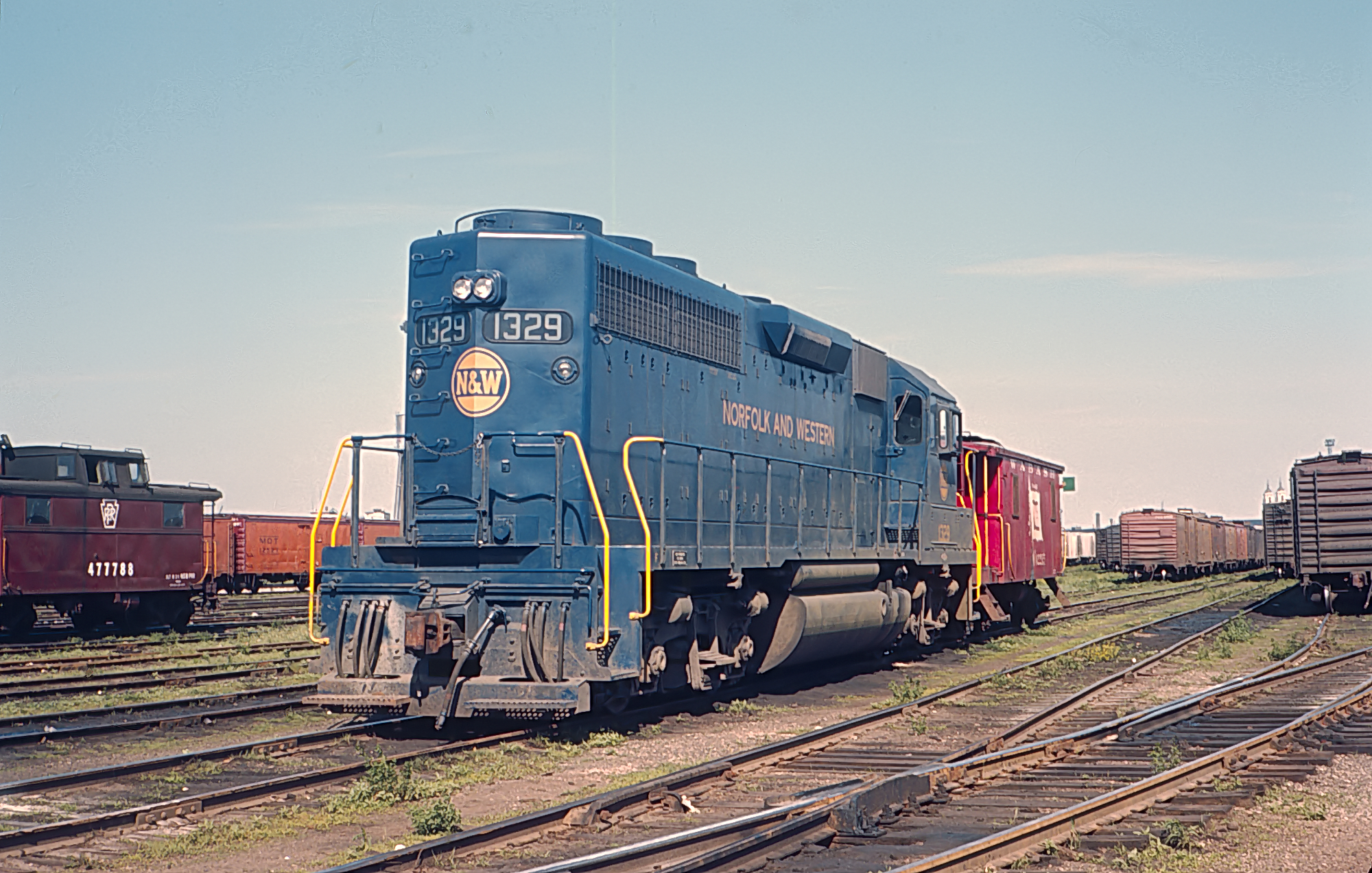 Norfolk & Western GP40 #1329 and a former Wabash caboose was photographed here by Marty Bernard at C&NW's Wood Street Yard in Chicago on June 11, 1966.
According to Jim Cox’s book, “Rails Across Dixie: A History Of Passenger Trains In The American South,” the N&W took ownership of the unfinished New River Railroad and shipped out the first loads of coal from Pocahontas, Virginia on March 12, 1883.
The line, running via Bluefield, West Virginia and New River, Virginia officially opened a few months later on May 21st. Its first carloads totaled 54,500 tons that year but by 1887 had blossomed to roughly 1 million.
In the coming years this number steadily rose as the road expanded. Throughout the end of the 19th century the N&W continued extending its reach.
During 1896 it acquired the Lynchburg & Durham running between those two cities while the Roanoke & Southern allowed access to Winston-Salem via Roanoke.
This latter city became N&W’s headquarters and primary terminal. Its storied shops here went on to produce some of the finest steam locomotives ever built. In 1901 the N&W expanded to Cincinnati by purchasing the Cincinnati, Portsmouth & Virginia.
There were other important interchange points; two most noteworthy include Hagerstown, Maryland and Columbus, Ohio. The former offered connections with the Western Maryland, Pennsylvania and Baltimore & Ohio while the latter provided a link with the B&O, PRR, Chesapeake & Ohio and New York Central.
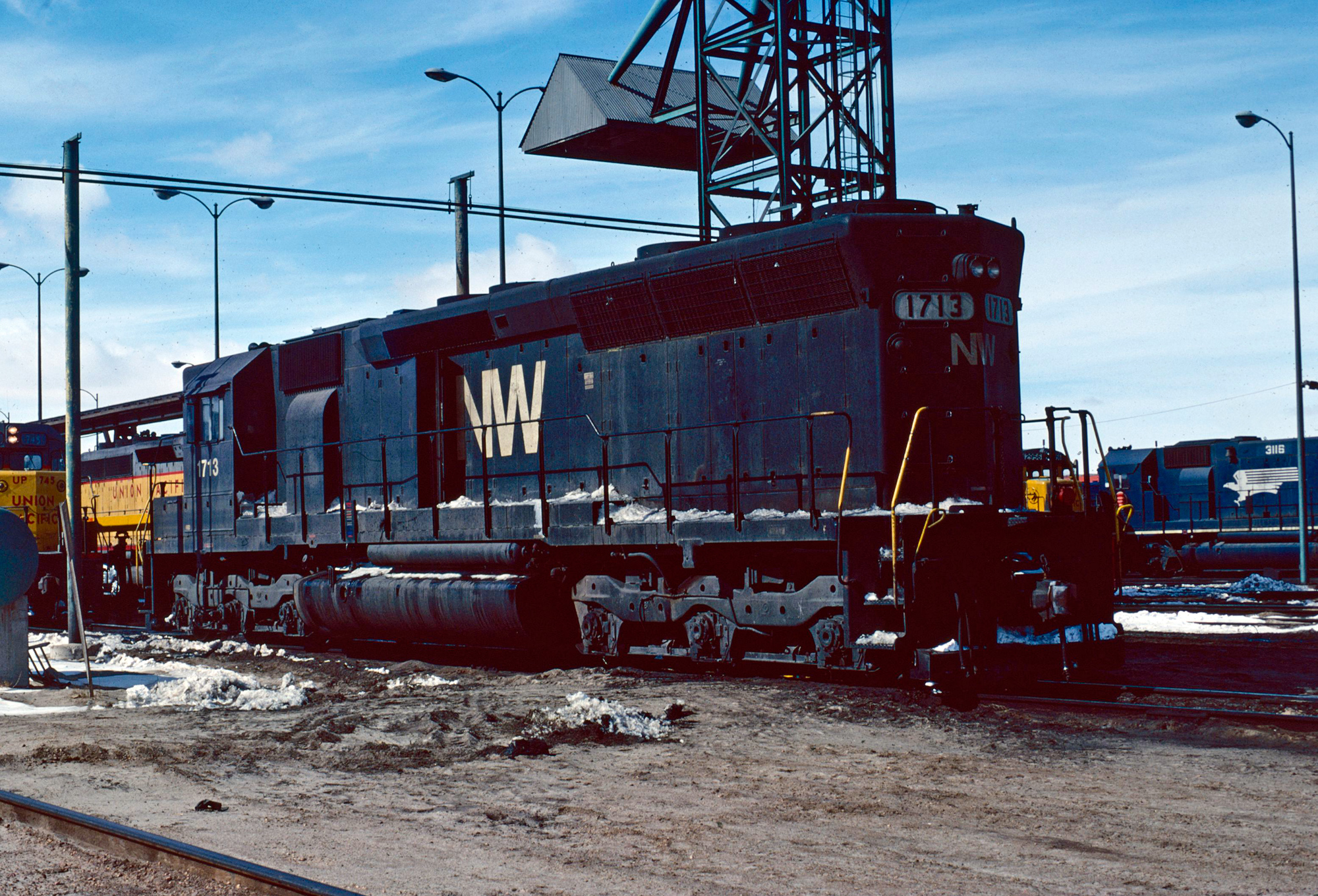 Norfolk & Western SD45 #1713 receives attention on March 4, 1977. Location not listed. Vincent Porreca photo. American-Rails.com collection.
At the turn of the 20th century the N&W's modern system, prior to postwar mergers, was essentially in place. At its peak size it consisted of just over 2,100 route miles, relatively small for a Class I carrier even then. Its total trackage, as of 1947, consisted of 4,543 miles.
It stretched from the tidewater port area of Norfolk/Portsmouth, Virginia to Cincinnati and Columbus, Ohio, which covered a distance of 663 miles. While the N&W did move a variety of freight ranging from agriculture to merchandise, black diamonds were its mainstay.
While it is recognized for moving coal shipments predominantly eastbound from "Tipple to Tidewater" some of this traffic was also handled through its Midwestern gateway at Columbus.
According to Mike Schafer’s book, “Classic American Railroads – Volume III,” even during the early 1980s, just prior to the merger with the Southern, coal still comprised over 60% of its annual tonnage. It was so wealthy the company had paid an annual dividend since 1901 and continued to do so for decades.
Such prosperity was common through the 1920s but rare after the stock market crash in October of 1929. Many railroads struggled through the 1930s, but not the N&W.
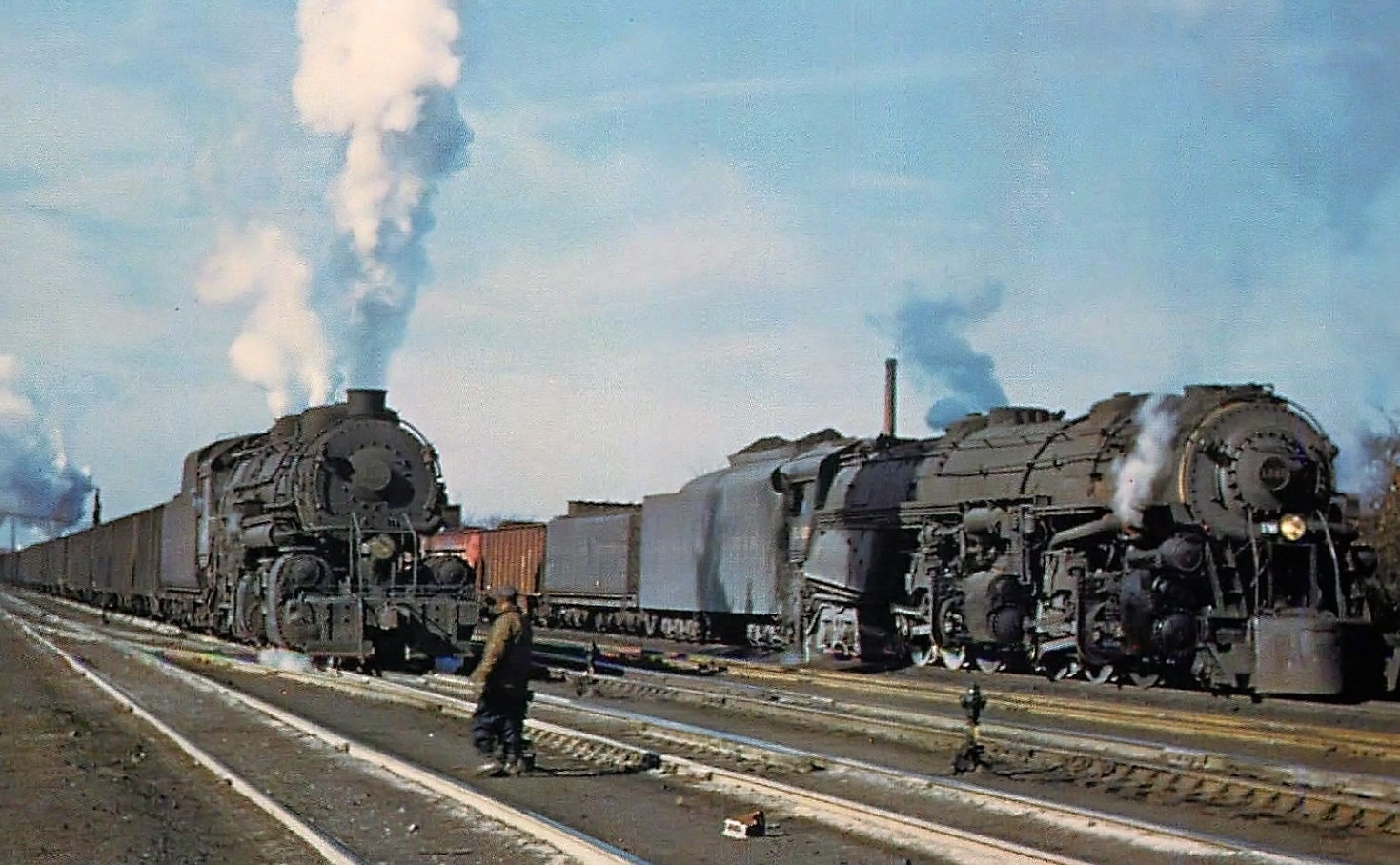 A Norfolk & Western 2-6-6-2 (Z1-b) and 2-6-6-4 (A) at work in Norfolk, Virginia during 1956. Clarence Cade photo.
Electrification
When the N&W acquired the Virginian Railway in 1959 it inherited a road that was largely electrified west of Roanoke, Virginia. However, the Roanoke Road had operated its own section of energized territory for some time.
In 1913 the railroad embarked upon an electrification program to overcome the stiff grades on Elkhorn Mountain, west of Bluefield, West Virginia. Moving heavy freight over this stretch required the use of many 2-6-6-2 (Z-1) compound Mallets.
As Mr. Grubb's article notes the N&W worked with Westinghouse to implement the electrification, eventually opening 36.18 miles from Bluefield to Farm (near Vivian) in 1914. The system carried 11,000 volts at 25hz with substations located at Bluefield, Vivian, Maybeury, and North Fork.
Big boxcabs, classed as LC-1 (twelve units) and LC-2 (four additional units picked up in 1925) were tasked with moving the trains.
The primary power plant was situated at Bluestone, West Virginia. As coal demand spiked during World War I the system was extended 16.23 miles to Iaeger. Altogether, the main line here was energized across 52.41 miles.
There were also an additional 17 miles of coal branches electrified. After World War II the N&W carried out a nearly $12 million capital improvement program to eliminate the grades by constructing a 5-mile, double-tracked bypass. It opened on June 26, 1950 and the electrics were retired shortly thereafter.
System Map (1955)
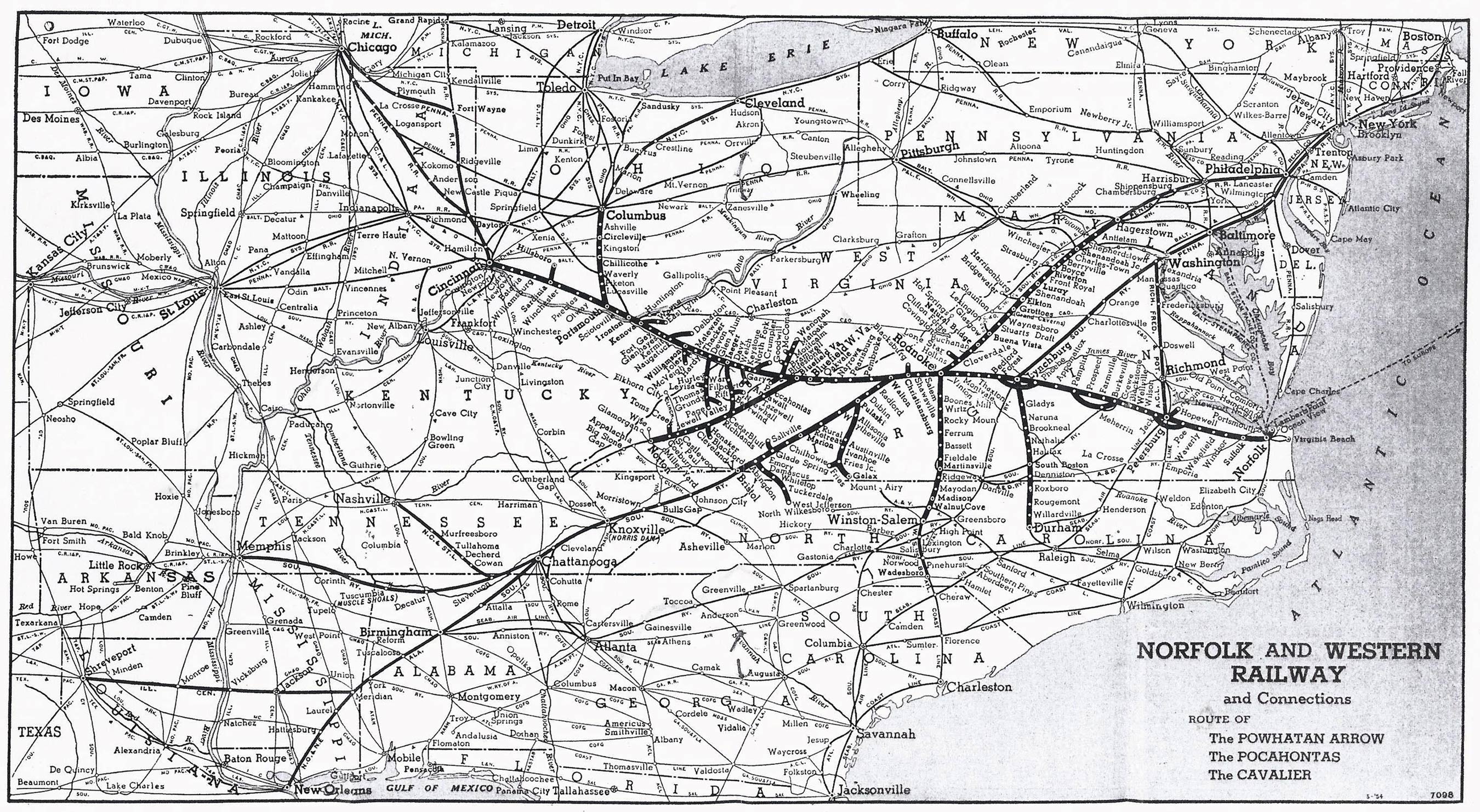
The company's exemplary management wisely invested surplus income into the railroad's physical plant. Mr. Grubb notes that by the late 1940's, 72% of its network had been laid with heavy, 130-pound rail or greater.
In addition, key corridors were double-tracked, terminals were modernized, classification yards expanded, new steam designs developed, and by 1958 it boasted 46.7% of its network protected by Centralized Traffic Control (CTC).
The rest was guarded with automatic block signals according to Frank Shaffer's article, "Stuart Saunders And His Moneymaking Machine" from the February, 1963 issue of Trans Magazine.
"Precision Transportation" was not just a slogan, the company lived by this creed on a daily basis. During 1959 the N&W began the first of several takeovers by acquiring the nearby Virginian Railway.
This pesky little road was equally wealthy and electrified west of Roanoke. It competed for the same coal that also shipped eastward to Norfolk. In the 1960s its portfolio grew three-fold when it picked up the small Atlantic & Danville (1962), much larger Nickel Plate Road (1964) and Wabash (1964). Finally, former interurban Illinois Terminal was added in 1981.
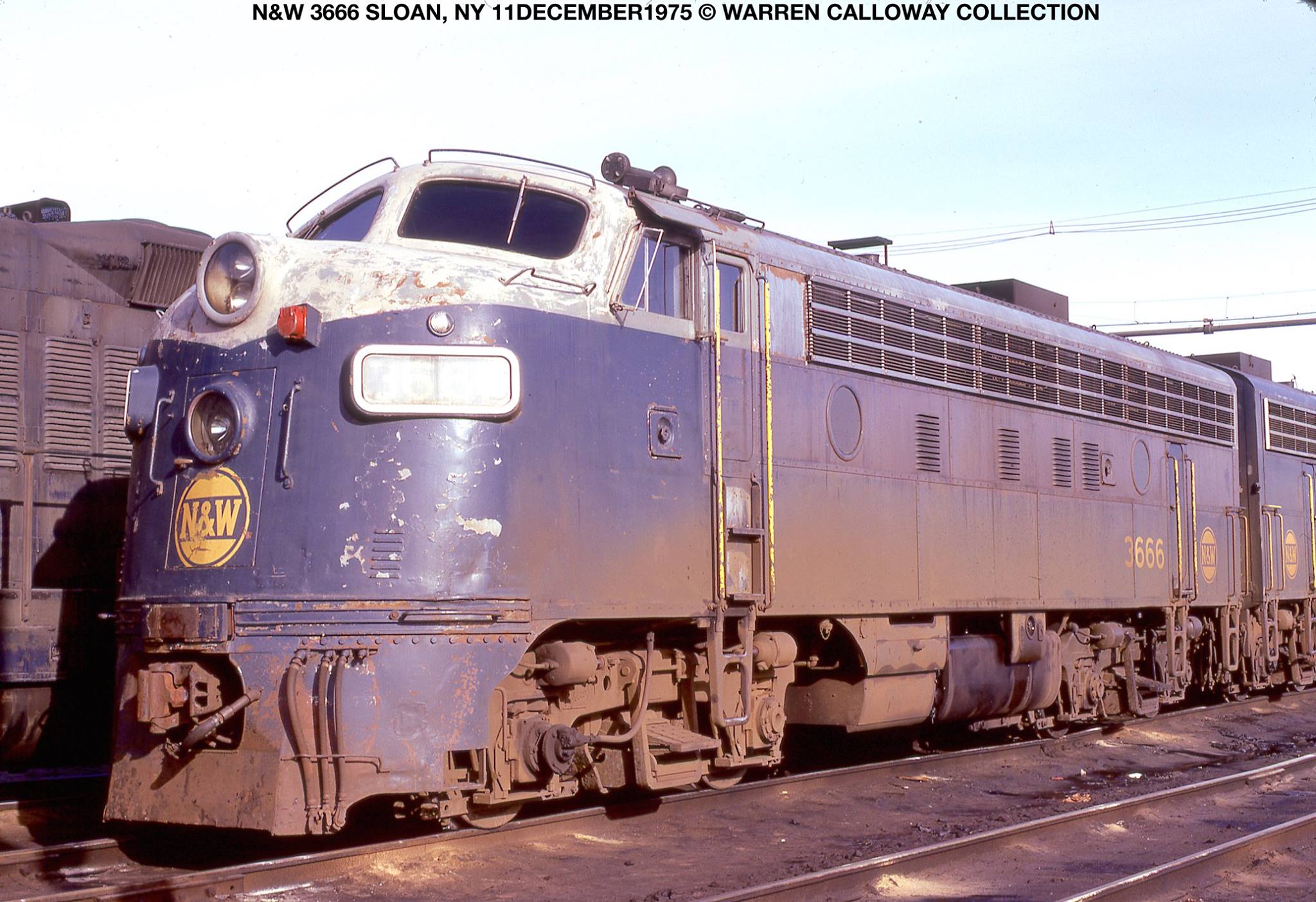 Norfolk & Western F7A #3666, a former Wabash unit (#1159-A), is seen here in Sloan, New York on December 11, 1975. Warren Calloway collection.
O. Winston Link
Ogle Winston Link, more commonly known as O. Winston Link, was a famous professional photographer who eloquently captured the last days of steam on the Norfolk & Western. He began his career shortly after graduation from Polytechnic Institute in Brooklyn, New York.
Always carrying a great interest in railroads he captured his first night scene of N&W operations near Waynesboro, Virginia on January 21, 1955. Over the next few years, Link took hundreds of photos featuring N&W's last days of steam.
While an adept day photographer he became particularly famous for his dramatic night shots, which sometimes required hours of preparation and a single chance to get it right.
The trains, particularly the locomotives, were usually the focal point but not always. One of his most famous pieces was entitled "Hotshot Eastbound" as an A Class 2-6-6-4 speeds behind a drive-in theater in Iaeger, West Virginia as folks enjoy the picture.
This was typical of Link's work which often invoked the human element alongside these great machines of commerce.
Over the years there have been many books showcasing his photography. Link passed away on January 30, 2001. Today, you can also see his work at the O. Winston Link Museum in Roanoke, Virginia.
Steam Fleet
Within the industry and among historians the N&W is widely recognized for its use of steam power. The company was arguably better at designing and building the locomotives than even noted manufacturers like Baldwin and the American Locomotive Company (Alco).
The fabled Roanoke Shops rolled out hundreds over the years with such classic designs as the 4-8-4 "J," 2-6-6-4 "A," and 2-8-8-2 "Y."
The railroad was relentless in its pursuit of power and efficiency, doing whatever it could to squeeze out further improvements. In the postwar years the Shops were still rolling out new units even as many counterparts retired theirs in favor of diesels.
As the company perfected the technology new maintenance facilities were constructed to quickly overhaul locomotives (notorious for their maintenance-intensive nature).
One of the most interesting was the "Lubritorium." Unique to the N&W these small structures swiftly serviced steamers for their next assignment. The railroad became so adept at the practice motive power could be turned and ready to go within an hour!
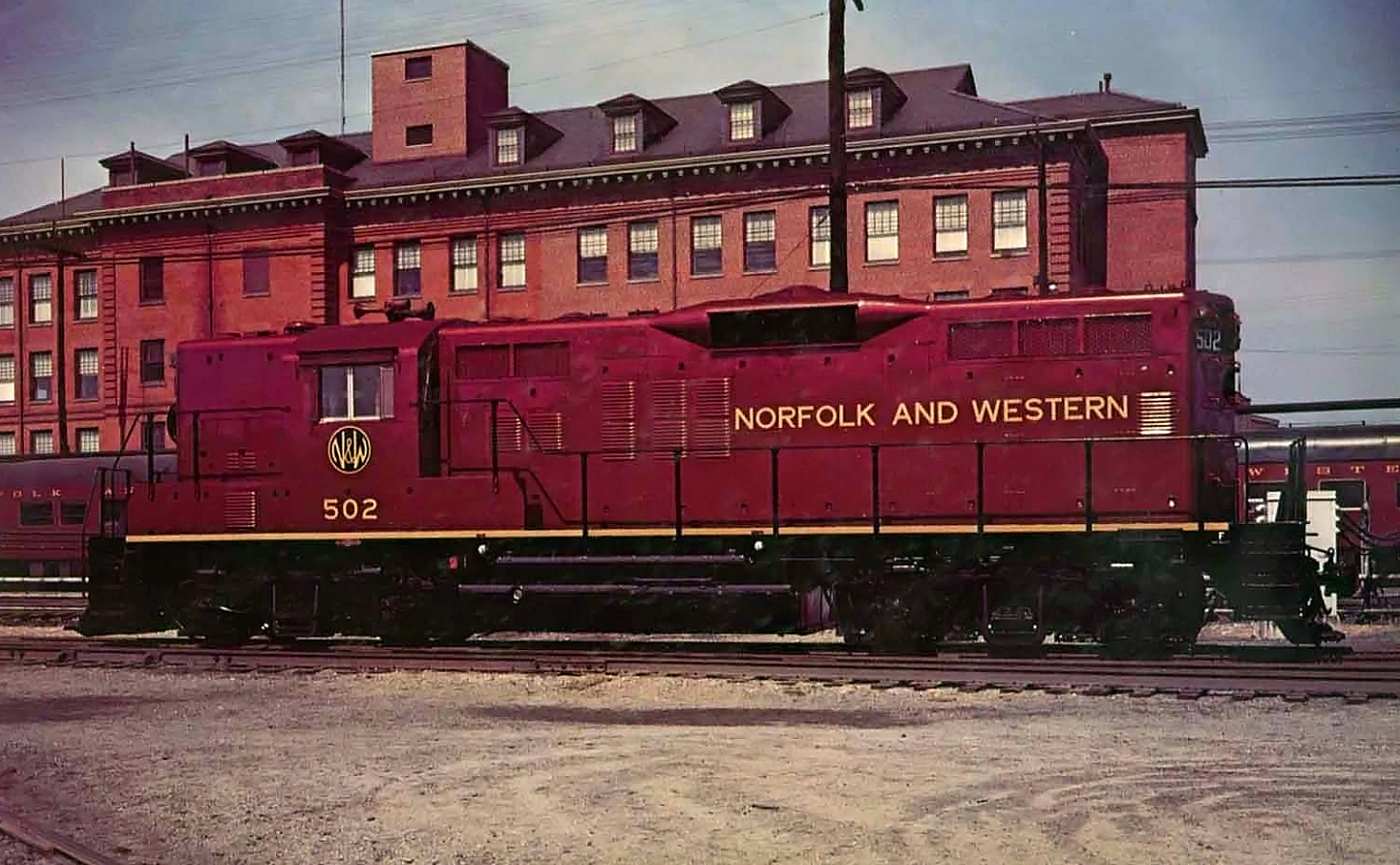 After holding out well into the 1950s, master steam builder Norfolk & Western finally broke down and began ordering large batches of road-switchers from Electro-Motive and the American Locomotive Company beginning in 1955. In this publicity photo GP9 #502 (built as #764 in 1957) sits in Roanoke, Virginia during March of 1959.
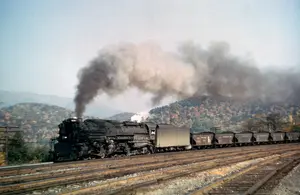
Steam remained in regular service until the mid-1950s, which signaled its technological peak. No other system operated such advanced designs as the Roanoke Road. Its locomotives carried such features as roller-bearings on all axles, high capacity boilers, superheaters, and automatic lubricators.
The big 2-8-8-2 compounds (Y's) handled the heavy drag assignments, muscling over the mountainous territory on the Pocahontas Division while 2-6-6-4's (A's) could speed time freights up to 70 mph on gentler grades. These latter units could also work duel assignments in passenger service.
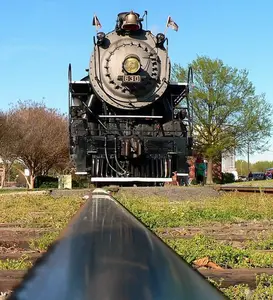
Finally, the powerful 4-8-4's (J) and their smaller counterparts, 4-8-2's (K), generally handled the passenger trains although these locomotives could handle freight work as well.
The N&W reluctantly began purchasing diesels in 1955 when the first GP9's arrived on the property (ironically, that same year the company unveiled its last new steamers when it outshopped a batch of 0-8-0 switchers).
Despite president Robert H. Smith's love for the steamer and belief in the motive power it simply could not compete against the diesel's operational efficiency. In addition, rising labor costs factored in as did the difficulty in locating components and spare parts.
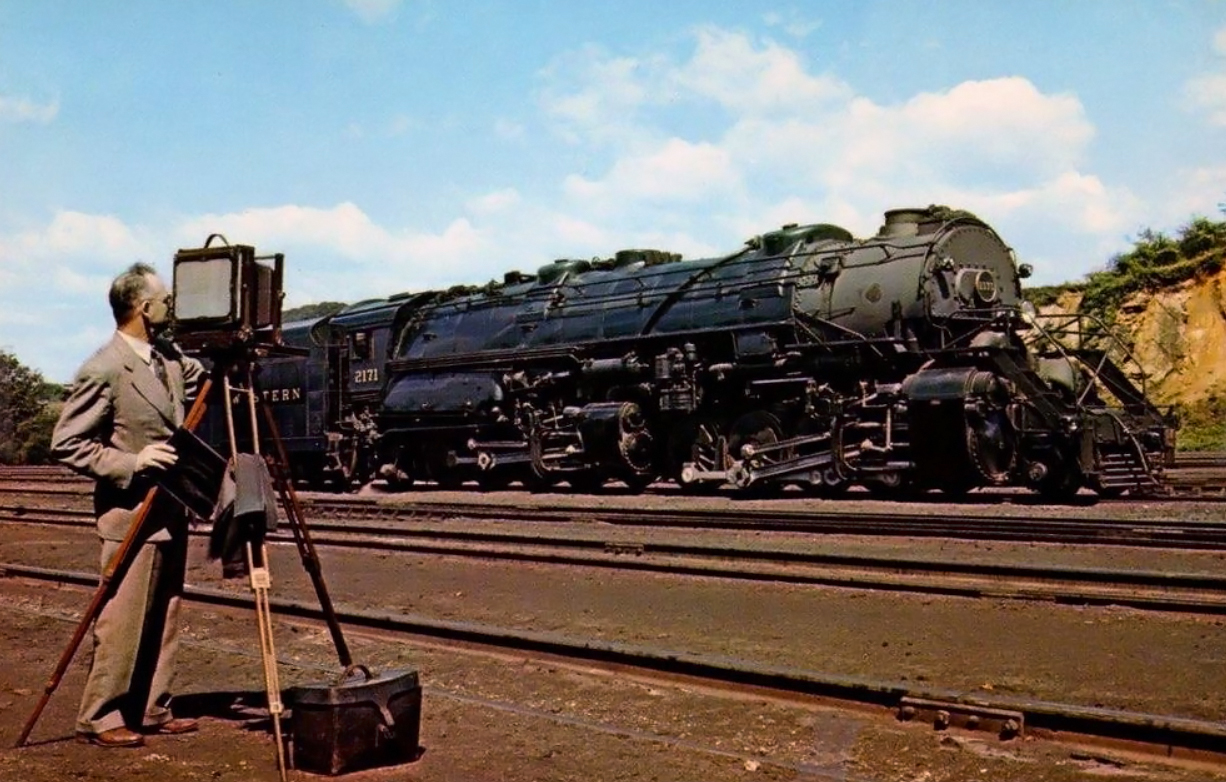 Photographing the photographer who is preparing to document recently completed Norfolk & Western 2-8-8-2 #2171 (Y-6b) circa 1948. These were the last of N&W's big compounds, products of the Roanoke Shops, and are regarded as the best in the series.
Final Years
Stuart Saunders, who replaced Smith in 1958, saw no use for the steam locomotive as Rush Loving, Jr. notes in his book, "The Men Who Loved Trains."
Among his other initiatives he quickly purchased diesels and had completed the switch within a few years. The N&W's late era steam fleet was memorialized and captured on film prior to its retirement by renowned photographer O. Winston Link.
There have been many excellent and famous photographers throughout the years although Mr. Link is perhaps the most celebrated due to his subject matter and exquisite work.
In addition to the mergers mentioned above, the N&W added the Delaware & Hudson and Erie Lackawanna on July 1, 1968 as part of an agreement which included them under the company name Dereco, Inc.
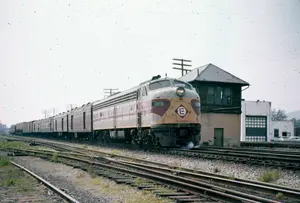
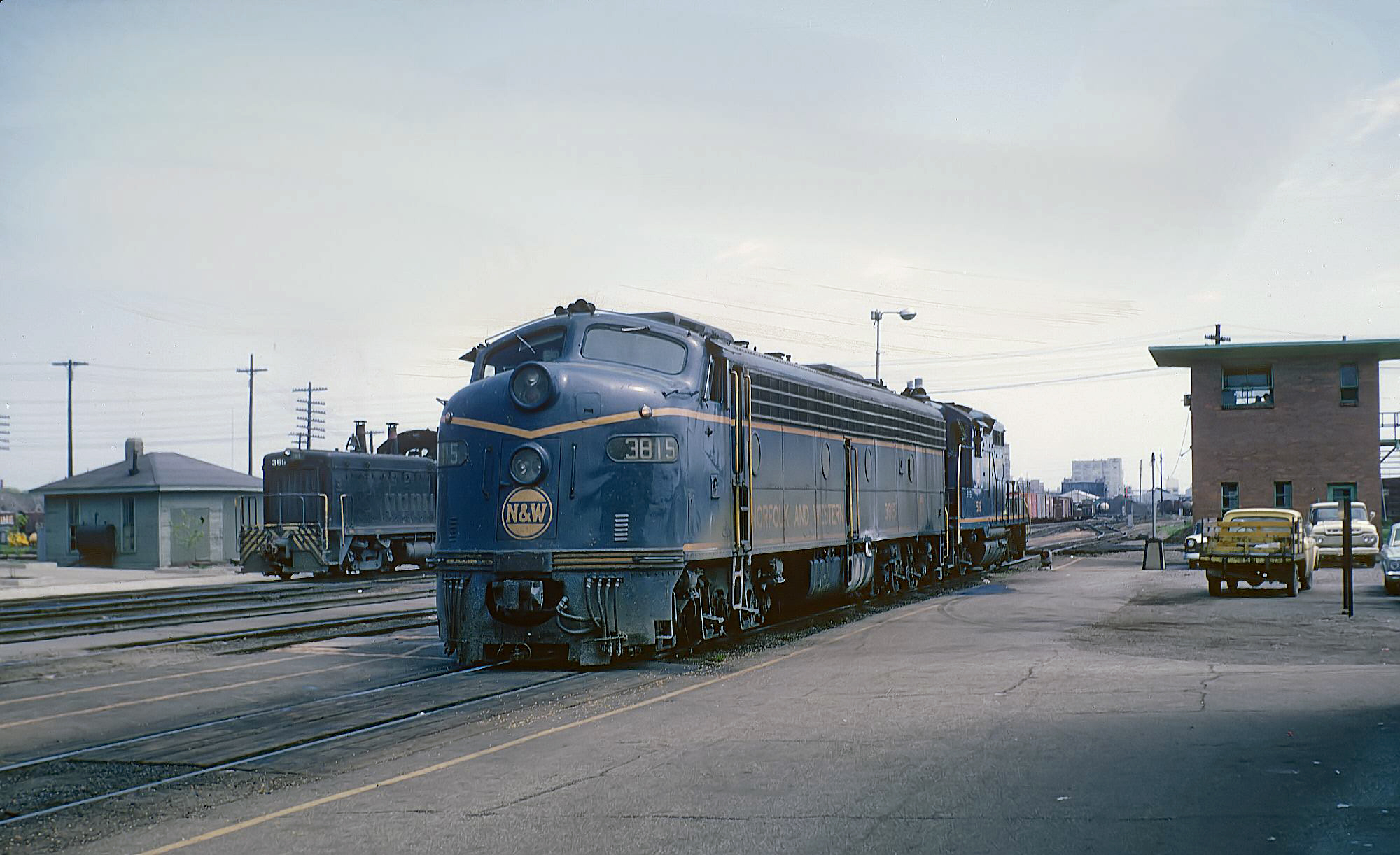 Norfolk & Western E8A #3815 and a Geep at WABIC Tower in Decatur, Illinois; May, 1966. The WaBash and Illinois Central crossed at this location. Rick Burn photo.
Passenger Trains
After a quick look at the N&W’s balance sheets it is clear the railroad never derived a large percentage of its revenue from passenger service which made up less than 3% of its total in the postwar period according to David P. Morgan's article, "Fine New Feathers" from the February, 1950 issue of Trains Magazine.
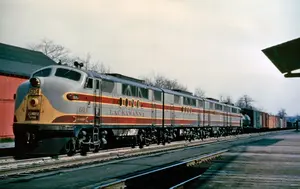
However, the road operated a fine assortment of long-distance trains spearheaded by the Powhatan Arrow and Pocahontas.
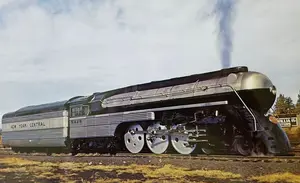
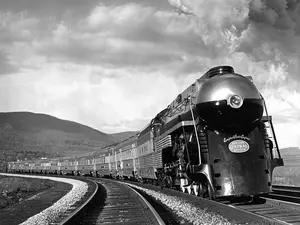
These trains, adorned in a beautiful maroon and gold livery, were pulled by the famously streamlined 4-8-4, J Class locomotives. The N&W also participated in through movements with the Southern Railway.
Birmingham Special: Operated between New York and Birmingham, Alabama in conjunction with the Pennsylvania Railroad and Southern Railway with the N&W carrying it between Lynchburg and Bristol.
Cannon Ball: Operated between Norfolk and New York in conjunction with the Atlantic Coast Line Railroad and Richmond, Fredericksburg & Potomac with the N&W carrying it between Norfolk and Petersburg.
Cavalier: (Norfolk - Cincinnati)
Pelican: Operated between New York and New Orleans in conjunction with the Pennsylvania Railroad and Southern Railway with the N&W carrying it between Lynchburg and Bristol.
Pocahontas: (Norfolk - Cincinnati/Columbus)
Powhatan Arrow: (Norfolk - Cincinnati)
Tennessean: Operated between New York and Memphis in conjunction with the Pennsylvania Railroad and Southern Railway with the N&W carrying it between Lynchburg and Bristol.
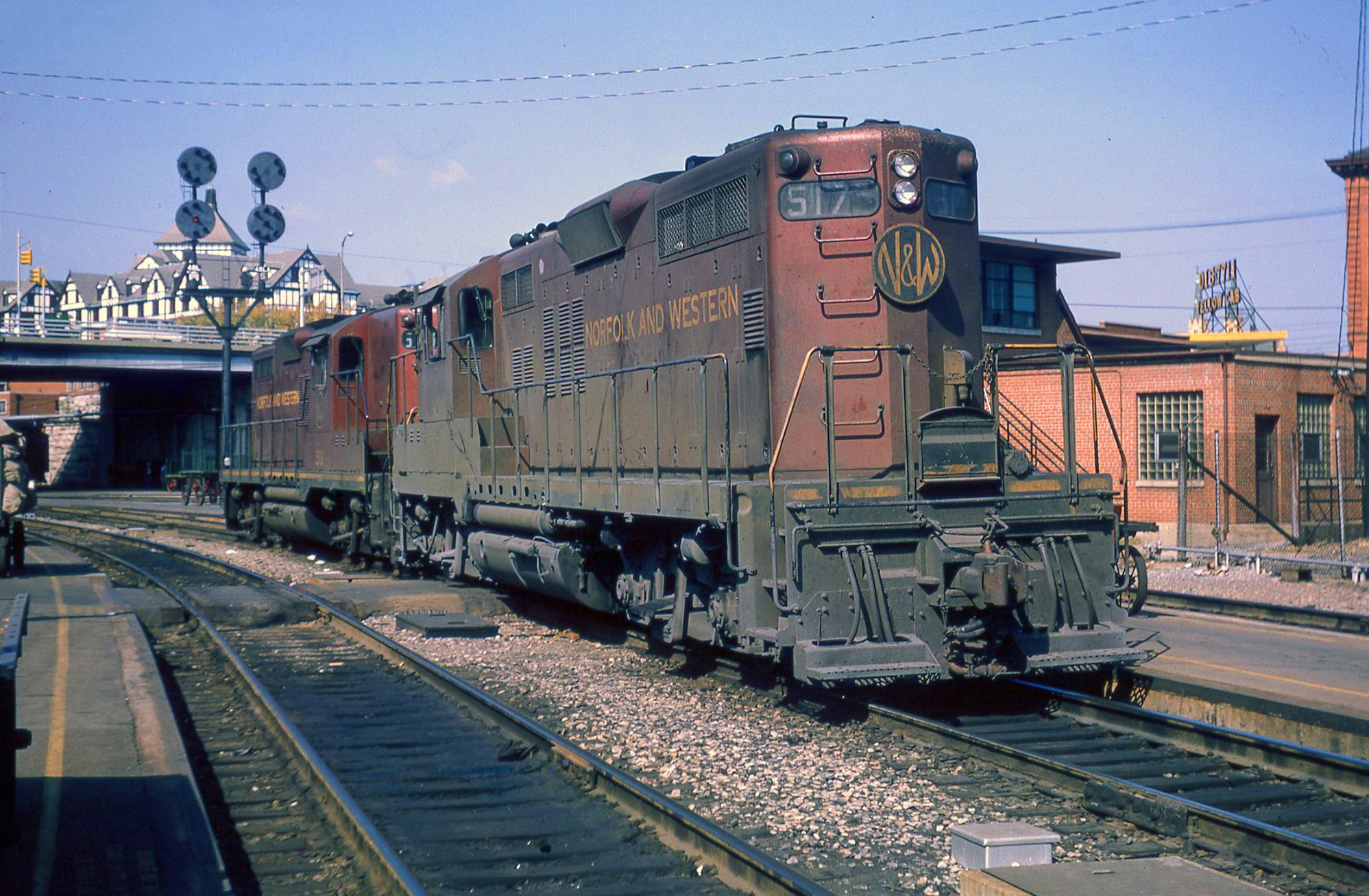 A pair of Norfolk & Western GP9's assigned to passenger service are seen here in Roanoke, Virginia in October of 1965. Wiley Bryan photo/Warren Calloway collection.
The paper company was entirely a protective nature carried out by Roanoke to protect itself from the EL's fragile financial state. In a related corporate move the N&W had recently gained its independence when the Pennsylvania Railroad was forced to divest its holdings due to the impending merger with New York Central.
Try as it might the EL, headed by N&W management, could not overcome its problems ranging from debt to a crumbling situation in the Northeast as Penn Central fell apart.
Diesel Roster
American Locomotive Company
| Model Type | Road Number | Date Built | Quantity |
|---|---|---|---|
| T6 | 10-49 | 1959 | 40 |
| RS3 | 300-307 | 1955-1956 | 8 |
| RS11 | 308-406 | 1956-1961 | 99 |
| RS36 | 407-412 | 1962 | 6 |
| C420 | 413-420 | 1964 | 8 |
| C425 | 1000-1017 | 1964-1965 | 18 |
| C628 | 1100-1129 | 1965-1966 | 30 |
| C630 | 1130-1139 | 1966-1967 | 10 |
Electro-Motive Division
| Model Type | Road Number | Date Built | Quantity |
|---|---|---|---|
| GP9 | 10-13, 506-521, 620-699, 714-914 | 1955-1959 | 301 |
| GP35 | 200-239, 1300-1328 | 1963-1965 | 69 |
| GP30 | 522-565 | 1962 | 44 |
| GP18 | 915-962 | 1960-1961 | 48 |
| GP40 | 1329-1388 | 1966-1967 | 60 |
| SD35 | 1500-1579 | 1965 | 80 |
| SD40 | 1580-1624 | 1966-1971 | 45 |
| SD40-2 | 1625-1652, 6073-6207 | 1973-1980 | 163 |
| SD45 | 1700-1814 | 1966-1970 | 115 |
| GP38AC | 4100-4159 | 1971 | 60 |
| SD50S | 6500-6505 | 1980 | 6 |
General Electric
| Model Type | Road Number | Date Built | Quantity |
|---|---|---|---|
| U28B | 1900-1929 | 1966 | 30 |
| U30B | 1930-1965, 8465-8539 | 1965 | 111 |
| U25B | 3515 | 1965 | 1 |
| C30-7 | 8003-8082 | 1978-1979 | 80 |
| U30C | 8300-8302 | 1974 | 3 |
| C36-7 | 8500-8530 | 1981-1982 | 31 |
Steam Roster
Few other railroads developed steam technology to the extent of the Norfolk & Western Railway. At the turn of the 20th century the system primarily relied on 2-8-0s for general freight service.
Although Consolidations remained a staple of the N&W's fleet, in the modern steam era the railroad primarily relied on large 2-8-8-2s and 2-6-6-4s for freight operations while 4-6-2s and 4-8-4s generally handled passenger assignments.
In many cases, the Roanoke Shops directly produced new steam locomotives, especially after 1930 with modern technologies such as Timken roller bearings, automatic lubricators, and automatic stokers.
During the 1940s the N&W developed what it called the "Lubritorium," a modern, brightly lit engine facility which could fully service a steam locomotive in just 90 minutes or less. These facilities were located at Shaffers Crossing (Roanoke), Bluefield, Williamson, Portsmouth, and Pulaski.
The N&W was a pioneering force in locomotive technology, especially steam. It engineered some of the most advanced steam locomotives, including the renowned J-class and Y-class, which exemplified power and efficiency.
These iron horses became the backbone of its freight operations, hauling staggering volumes of coal with a distinctive efficiency that the N&W was celebrated for.
World War II bolstered the N&W's significance, as coal demand surged, cementing its status as a logistical powerhouse. Despite the national trend towards dieselization in the post-war years, the N&W held out, committing to steam well into the 1950s, epitomized by their slogan "Precision Transportation." Modernization eventually necessitated change, and by 1960, the N&W completed its shift to diesel.
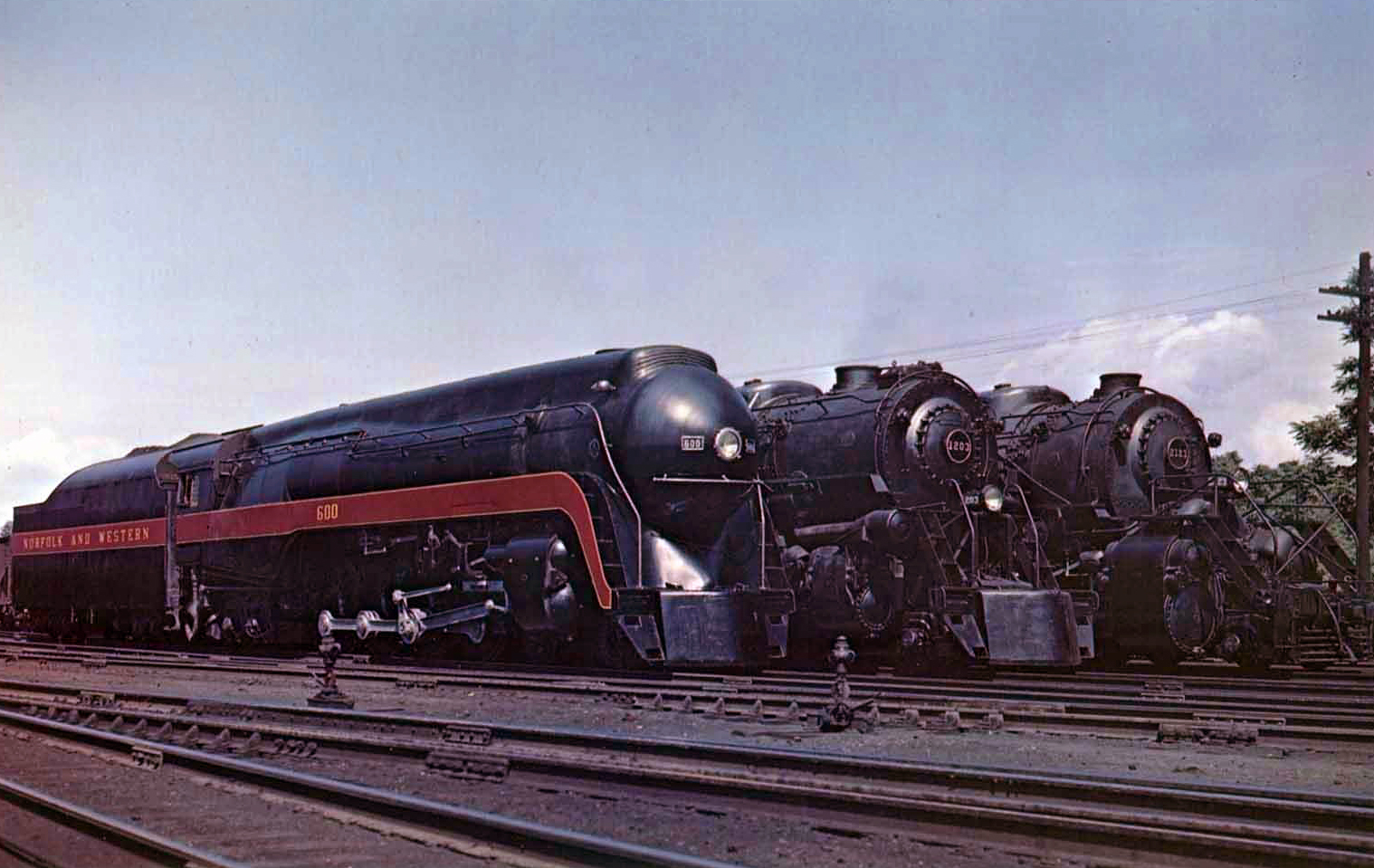 The pride of Roanoke; Norfolk & Western 4-8-4 #600 (J), 2-6-6-4 #1203 (A), and compound 2-8-8-2 #2133 (Y-6) pose together at Shaffer's Crossing, Virginia (Roanoke) in 1945.
Switchers
| Wheel Arrangement | Class | Road Number(s) | Quantity | Builder(s) | Completion Date | Retirement Date | Notes |
|---|---|---|---|---|---|---|---|
| 0-8-0 | S1 | 255-284 | 30 | Baldwin | 1948 | 1958-1960 | ex-Chesapeake & Ohio #255-284. |
| 0-8-0 | S1a | 200-244 | 45 | N&W | 1951-1953 | 1958-1960 | - |
Passenger Locomotives
| Wheel Arrangement | Class | Road Number(s) | Quantity | Builder(s) | Completion Date | Retirement Date | Notes |
|---|---|---|---|---|---|---|---|
| 4-8-2 | K2 | 116-125 | 10 | Brooks (Alco) | 1919 | 1957-1959 | - |
| 4-8-2 | K2a | 126-137 | 12 | Baldwin | 1923 | 1958-1959 | - |
| 4-8-2 | K3 | 200-209 | 10 | N&W | 1926 | Sold (1944-1945) | - |
| 4-4-2 | J | 600-606 | 7 | Baldwin | 1903-1904 | 1931-1935 | - |
| 4-6-0 | V | 950-961 | 12 | Baldwin | 1900 | 1929-1948 | - |
| 4-6-0 | V-1 | 962-966 | 5 | Richmond (Alco) | 1902 | 1929-1933 | - |
| 4-6-0 | A | 86-90 | 5 | Baldwin | 1902-1904 | 1928 | - |
| 4-6-2 | EE | 595-599 | 5 | Richmond (Alco) | 1905 | 1934-1939 | - |
| 4-6-2 | E1 | 580-594 | 15 | Baldwin | 1907 | 1931-1938 | - |
| 4-6-2 | E2 | 564-579 | 16 | Richmond (Alco) | 1910 | 1938-1958 | - |
| 4-6-2 | E2a | 553-563 | 10 | Baldwin | 1912 | 1940-1958 | - |
| 4-6-2 | E2b | 543-552 | 10 | N&W | 1913-1914 | 1938-1955 | - |
| 4-6-2 | E3 | 500-504 | 5 | Baldwin | 1913 | 1946-1947 | ex-PRR Class K3s |
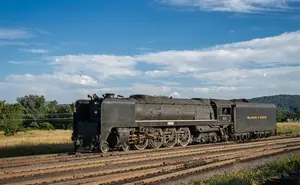
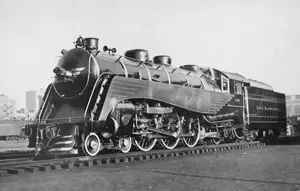
| 4-8-4 | J | 600-604 | 5 | N&W | 1941-1942 | 1958-1959 | Streamlined |
| 4-8-4 | J-1 | 605-610 | 6 | N&W | 1943 | 1959 | Streamlined in 1945-1947, reclassed as J. |
| 4-8-4 | J | 611-613 | 3 | N&W | 1950 | 1959 | Streamlined |
| 4-8-2 | K1 | 1000-1015 | 16 | N&W | 1916-1917 | 1957-1958 | - |
Class J (4-8-4)
Freight Locomotives
| Wheel Arrangement | Class | Road Number(s) | Quantity | Builder(s) | Completion Date | Retirement Date | Notes |
|---|---|---|---|---|---|---|---|
| 2-8-0 | W | 800-829 | 30 | Baldwin | 1898-1899 | 1926-1934 | Rebuilt as Class W-1. |
| 2-8-0 | W1 | 830-842, 844-865 | 34 | N&W, Baldwin, Richmond (Alco) | 1900-1901 | 1926-1934 | 5 were rebuilt to 0-8-0T. |
| 2-8-0 | W2 | 673-799 | 212 | N&W, Baldwin | 1901-1905 | 1926-1952 | - |
| 2-8-0 | B | 61-70 | 10 | Baldwin | 1898-1904 | 1933-1934 | Cross-compound designs; they were later simpled between 1909-1912. |
| 4-8-0 | M | 375-499 | 125 | Richmond (Alco), BLW | 1906-1907 | 1926-1958 | - |
| 4-8-0 | M1 | 1000-1099 | 100 | Richmond (Alco), BLW | 1907 | 1926-1947 | - |
| 4-8-0 | M2 | 1100-1149 | 50 | Baldwin | 1910 | 1950-1957 | - |
| 4-8-0 | M2a | 1150-1152 | 3 | N&W | 1911 | 1950-1956 | - |
| 4-8-0 | M2b | 1153-1154 | 2 | N&W | 1911 | 1950-1956 | - |
| 4-8-0 | M2c | 1155-1160 | 6 | N&W | 1911-1912 | 1952-1957 | - |
Class K (4-8-2)
Articulated Designs
| Wheel Arrangement | Class | Road Number(s) | Quantity | Builder(s) | Completion Date | Retirement Date | Notes |
|---|---|---|---|---|---|---|---|
| 0-8-8-0 | X1 | 990-994 | 5 | Schenectady (Alco) | 1910 | 1934 | - |
| 2-6-6-2 | Z1 | 1300-1314 | 15 | Richmond (Alco) | 1912 | 1934 | - |
| 2-6-6-2 | Z1a | 1315-1489 | 175 | Richmond (Alco), Baldwin | 1912-1918 | 1934-1958 | 1331-1489 were rebuilt as Class Z1b. |
| 2-6-6-2 | Z2 | 1399 | 1 | Richmond (Alco) | 1928 | 1958 | Rebuilt from Class Z1a. |
| 2-6-6-4 | A | 1200-1209 | 10 | N&W | 1936-1937 | 1958-1959 | - |
| 2-6-6-4 | A | 1210-1224 | 15 | N&W | 1943 | 1959-1961 | - |
| 2-6-6-4 | A | 1225-1234 | 10 | N&W | 1944 | 1958-1959 | - |
| 2-6-6-4 | A | 1235-1242 | 8 | N&W | 1949-1950 | 1958-1959 | - |
| 2-8-8-2 | Y2 | 995-999 | 5 | Baldwin | 1910 | 1924 | All examples were rebuilt and classed as Y2a. |
| 2-8-8-2 | Y2 | 1700-1704 | 5 | N&W | 1918-1921 | 1946-1951 | All examples were rebuilt and classed as Y2a. |
| 2-8-8-2 | Y2a | 1705-1710 | 6 | N&W | 1924 | 1948-1949 | - |
| 2-8-8-2 | Y2 | 1711-1730 | 20 | Baldwin | 1919 | 1948-1951 | All examples were rebuilt and classed as Y2a. |
| 2-8-8-2 | Y3 | 2000-2044 | 45 | Schenectady (Alco) | 1919 | 1957-1958 | - |
| 2-8-8-2 | Y3 | 2045-2049 | 5 | Baldwin | 1919 | 1957-1958 | - |
| 2-8-8-2 | Y3a | 2050-2079 | 30 | Richmond (Alco) | 1923 | 1958-1959 | - |
| 2-8-8-2 | Y3b | 2080-2089 | 10 | Richmond (Alco) | 1927 | 1958 | Reclassed as Y4. |
| 2-8-8-2 | Y4 | 2090-2109 | 20 | N&W | 1930-1932 | 1958-1960 | Reclassed as Y5. |
| 2-8-8-2 | Y5 | 2120-2154 | 35 | N&W | 1936-1940 | 1958-1960 | |
| 2-8-8-2 | Y6a | 2155-2170 | 16 | N&W | 1942 | 1958-1960 | - |
| 2-8-8-2 | Y6b | 2171-2187 | 17 | N&W | 1948-1949 | 1959-1960 | - |
| 2-8-8-2 | Y6b | 2188-2194 | 7 | N&W | 1950-1951 | 1959-1960 | - |
| 2-8-8-2 | Y6b | 2195-2200 | 6 | N&W | 1951-1952 | 1959-1960 | - |
Class A (2-6-6-4)
Class Z (2-6-6-2)
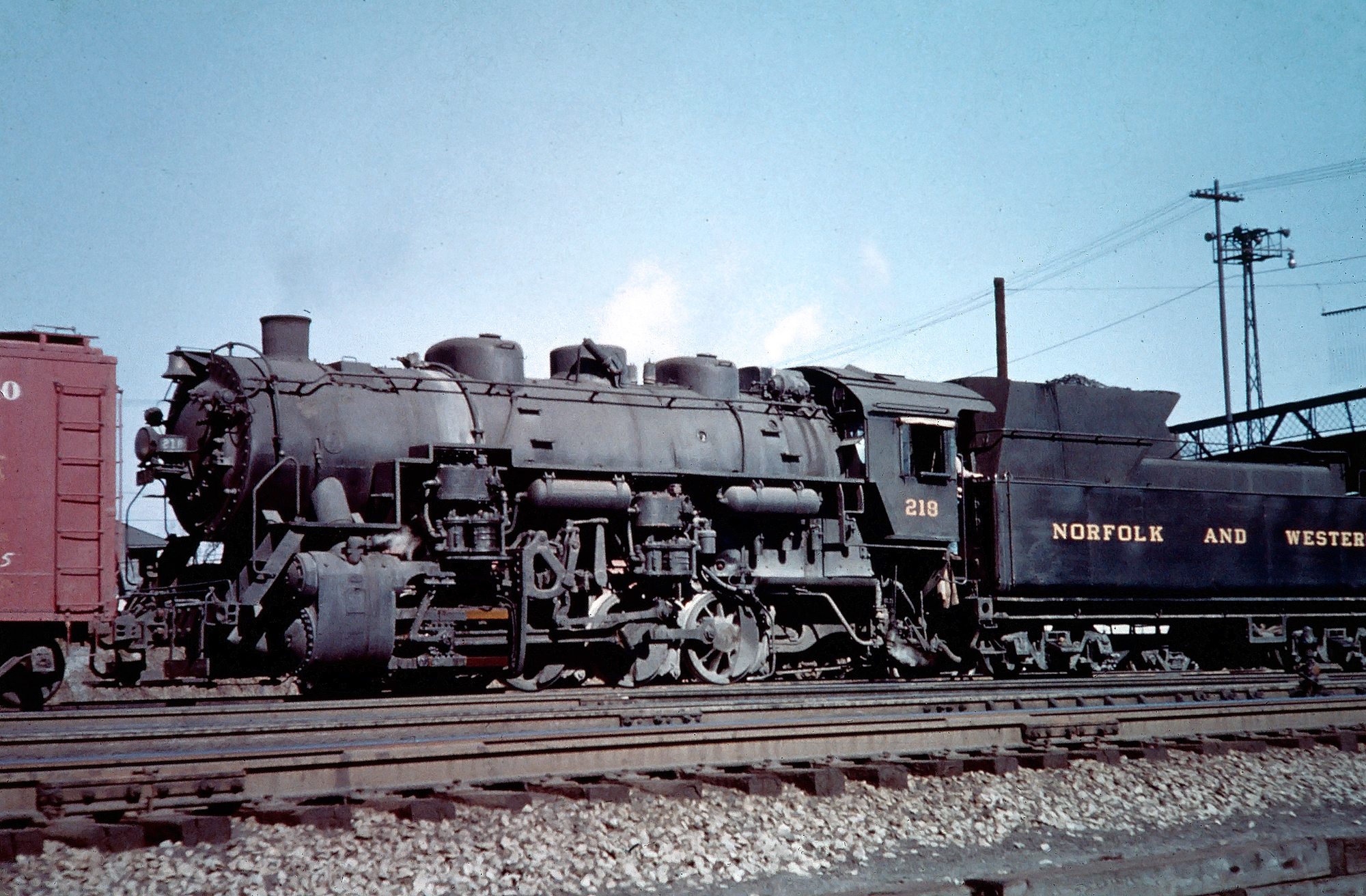 One of the Norfolk & Western's big 0-8-0 switchers, #218, is seen here at work in Roanoke, Virginia, circa 1950. Fred Byerly photo. American-Rails.com collection.
Norfolk Southern
After Hurricane Agnes dealt heavy flooding to the region and forced EL into bankruptcy N&W sold off its interests in the railroad. For the Norfolk & Western its end began in 1980 when merger proceedings began with the nearby Southern Railway.
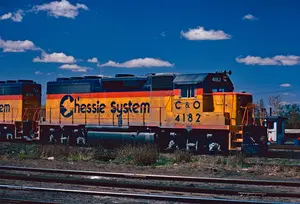
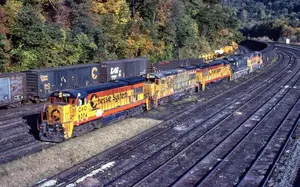
They had been taken aback by the new CSX Corporation (of which the railroad arm became CSX Transportation) formed that year between Chessie System, Seaboard Coast Line, and several smaller carriers. Now dwarfed by the new conglomerate the two carriers realized their best chance for survival was through merger.
The union was approved by the Interstate Commerce Commission in 1982. The newly created Norfolk Southern Corporation today carries on the fine traditions set forth by its predecessors. The company is still renowned for its sound management and business practices.
It continually ranks at the top of the industry in annual revenue and a low operating ratio. During the 1990s another fight broke out between NS and CSX, this time for control of Conrail. In the end the two agreed to split Big Blue with NS gaining a 58% stake in the company.
Recent Articles


-
Boone & Scenic Valley Wolf Dinner Train (2026)
Sep 19, 26 08:15 PM
 2026 Boone & Scenic Valley Wolf Dinner Train—Des Moines River valley, Bass Point Creek High Bridge, Union Pacific dining cars. Confirm on bsvrr.com.
 -
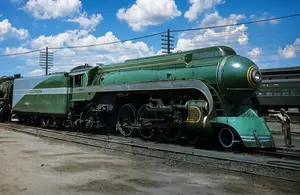
C&NW 4-6-2s 1617 & 1620: Minnesota 400 Yellow Jackets
Sep 19, 26 11:28 AM
 C&NW Class E Pacifics 1617 and 1620—Alco Schenectady 1917, yellow-and-green E-4-style shrouds 1941 for the Minnesota 400. Crews called them Yellow Jackets. Renumbered 617/620. Scrapped 1956.
 -
Erie Lackawanna Diesel Roster: All-Time
Sep 19, 26 10:13 AM
 Erie Lackawanna diesel—Erie and DL&W inheritance, GP35s, U25Bs, SD45/SDP45/SD45-2, U34CH. All-time roster with serials and orders. Conrail April 1 1976.
 -
Erie Lackawanna Railway: Map, History, Logo
Sep 19, 26 10:06 AM
 Erie Lackawanna Railway—Erie and DL&W, October 17 1960–March 31 1976. Von Willer, White revival, Dereco, Agnes, Conrail. High-and-wide Chicago main. Map, logo, what remains.
 -
"Empire State Express" (1941 Train): Timetables, Route, Consist
Sep 18, 26 10:59 PM
 NYC Empire State Express—George Daniels 1891 day train, 999’s 112.5 mph claim, Budd stainless streamliner December 7 1941, Cleveland and Detroit sections, diesels, 1967 name drop. Timetables, consist…
 -
New York Central 4-6-4s 5426 & 5429: Empire State Express Hudsons
Sep 18, 26 10:32 PM
 NYC J-3a Hudsons 5426 and 5429—Alco 1937, Budd stainless shrouds 1941 for the Empire State Express. Pearl Harbor inaugural. Shrouds off by 1950. Neither preserved.
 -
"Stourbridge Lion" Locomotive: Facts, History, Photos
Sep 18, 26 10:27 PM
 Stourbridge Lion—Foster, Rastrick 0-4-0, first steam locomotive in the United States. Horatio Allen, Honesdale, August 8, 1829. Too heavy for D&H gravity track. Boiler in Baltimore; Colonie replic…
 -
Delaware & Hudson Steam Roster (Post 1900)
Sep 18, 26 10:01 PM
 Delaware & Hudson steam—Camelback 2-8-0s, Loree high-pressure compounds, Class K 4-8-4s, forty Challengers. Post-1900 class roster after Drury. Last steam July 21, 1953.
 -
Boston & Maine Steam Roster (Post 1900)
Sep 18, 26 02:57 PM
 Boston & Maine steam—B-15 Moguls, K-8 Consolidations, P-4 Lima Pacifics, T-1 Limas, R-1 Mountains. Post-1900 class roster after Drury. Last steam July 23, 1956.
 -
Boston & Maine Diesel Roster (All-Time)
Sep 18, 26 01:25 PM
 Boston & Maine diesel—boxcab 1100 1935, Flying Yankee 6000, FTs, E7s, BL2s, GP7/GP9, GP38-2s and GP40-2s. All-time roster. Last steam July 23, 1956.
 -
Mid-Continent Railway Museum Dining (2026)
Sep 18, 26 01:21 PM
 2026 Mid-Continent dining in North Freedom—select-date seated meals in luxury cars, reservations required. Pizza Limited June 28. Confirm on midcontinent.org.
 -
Bessemer & Lake Erie Steam Roster (Post 1900)
Sep 18, 26 12:11 PM
 Bessemer & Lake Erie steam—C3A 150–151, D1A/D2A Santa Fes, 47 H1 Texas types after Burlington. Post-1900 class roster after Drury. Last steam 2-8-0 156, May 14, 1953.
 -
Bessemer & Lake Erie Diesel Roster (All Time)
Sep 18, 26 12:09 PM
 Bessemer & Lake Erie diesel—Westinghouse 281 1936, Baldwin DRS-6-6-1500s, F7s 1950–53, SD7/SD9/SD18/SD38 family, RSD-15s. All-time roster. Last steam 2-8-0 156, May 14, 1953.
 -
Bangor & Aroostook Steam Roster (Post 1900)
Sep 18, 26 11:21 AM
 Bangor & Aroostook steam—Manchester Ten-Wheelers, Alco Mountains 100–109, G-2 Consolidations, Pacifics 250–254. Post-1900 class roster after Drury. Last steam Pacific 251, July 22, 1951.
 -
Bangor & Aroostook Diesel Roster (All Time)
Sep 18, 26 11:09 AM
 Bangor & Aroostook diesel—F3s 1947, eight BL2s, E7s, GP7s leased to the PRR, GP9s, GP38s. All-time roster. Last regular steam July 22, 1951.
 -
B&O Steam Locomotive Roster (Post 1900)
Sep 18, 26 10:33 AM
 Baltimore & Ohio steam—Old Maude, E-27 Consolidations, Q Mikados, Big Sixes, EM-1 Yellowstones, President Pacifics. Post-1900 class roster after Drury. Last public steam May 17, 1958.
 -
Baltimore & Ohio (B&O): Diesel Roster (All-Time)
Sep 18, 26 10:28 AM
 Baltimore & Ohio diesel—boxcab 1925, EMC 50 1935, EA 1937, FTs, F3s, F7s, FA-2s, sharks, GP7/GP9, GP30s after C&O 1963, SD50s 8576–8595 1984. All-time roster. Last steam 1958.
 -
Detroit & Toledo Shore Line Railroad: Map, Roster, History
Sep 18, 26 12:32 AM
 Detroit & Toledo Shore Line—Pleasant Bay 1898, named 1899, Detroit–Toledo freight bridge, GTW and Clover Leaf/NKP/N&W. Merged into Grand Trunk Western June 26, 1981.
 -
Lackawanna Steam Locomotives: History, Roster & Photos
Sep 18, 26 12:17 AM
 Delaware, Lackawanna & Western steam—Camelback 2-8-0s, Mikados, freight Pacifics, Poconos 4-8-4s, Hudsons. Post-1900 roster after Drury. Last steam July 13, 1953.
 -
Lackawanna (DL&W) Diesel Roster: All Time
Sep 18, 26 12:11 AM
Delaware, Lackawanna & Western diesel—boxcabs 1926, EMC SC 425–426 1935, FTs 1945, F3/F7/E8, GP7s, RS-3s, FM Train Masters. All-time roster. Last steam 1953. -
Lackawanna Railroad: Map, History, Viaducts, Rosters
Sep 18, 26 12:04 AM
 TDelaware, Lackawanna & Western—Liggett’s Gap 1832, named March 11 1853, Hoboken–Buffalo, anthracite, Phoebe Snow, Cutoff and Tunkhannock. It merged with the Erie to form Erie Lackawanna on Octobe…
 -
Rail News, The Latest
Sep 17, 26 11:56 PM
This page provides a portal to the latest in rail news, from preservation and restortation subjects to other notable topics. -
Union Pacific Big Boy 4014 Sets First Holiday Tour for Make-A-Wish
Sep 17, 26 11:54 PM
 Union Pacific Big Boy 4014’s first holiday tour: Cheyenne–Denver tickets, Nov. 21 Denver-area display, Make-A-Wish. Museum patrons Oct. 16; public Oct. 19.
 -
Conrail Diesel Roster (All Time)
Sep 17, 26 10:27 PM
Conrail diesel—~5,000 inherited 1976, Big Blue, GP15-1s, SD40-2s, SD50s, Dash-8s, SD60/60M/60I, SD80MACs. All-time CR-number roster. -
Chessie System (Railroad): The C&O, B&O, And WM
Sep 17, 26 09:38 PM
 Chessie System, Inc.—C&O, B&O, and Western Maryland. Kitten-C paint 1972, holding company February 26 1973, CSX November 1 1980, C&O into CSXT August 31 1987.
 -
Chesapeake & Ohio (C&O) Diesel Roster: All-Time
Sep 17, 26 06:01 PM
 Chesapeake & Ohio diesel—late steam, no Fairbanks-Morse, E7s 1946, GP7/GP9 flood, F7s, GP40-2s, B30-7s, SD50s 1984–85. All-time roster. Steam ended 1956.
 -
Chesapeake & Ohio (C&O) Steam Roster: Post-1900
Sep 17, 26 03:18 PM
 Chesapeake & Ohio steam—H-8 Alleghenies, K-4 Kanawhas, T-1 Texas, Greenbriers, H-6 1949 Mallets. Post-1900 class roster including Pere Marquette and Hocking Valley. Last steam 1956.
 -
Chesapeake and Ohio Railway: Map, Logo, History
Sep 17, 26 02:36 PM
 Chesapeake & Ohio Railway—Louisa Railroad 1836, named August 31 1868, Ohio River 1873. Coal, Chessie the kitten, Pere Marquette 1947, B&O control 1963, into CSX August 31 1987. Complete corporate…
 -
TVRM Valentine Train Ride (2026)
Sep 17, 26 02:31 PM
 2026 TVRM Valentine Train Ride in Chattanooga—Feb. 6–15, plated dinner, Grand Junction Depot. Confirm on tvrail.com.
 -
River Fox Train Dining (2026)
Sep 17, 26 02:29 PM
 2026 River Fox Train in West Sacramento—Brunch Train and Murder Mystery dinner. 18095 County Road 117. Confirm on riverfoxtrain.com.
 -
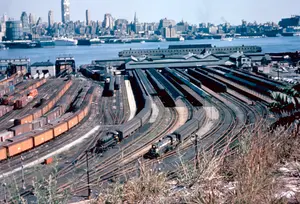
Weehawken Terminal, Serving The West Shore Railroad
Sep 17, 26 01:38 PM
 Weehawken Terminal—West Shore / New York Central Hudson waterfront station, opened 1884. Five ferry slips, sixteen tracks, Weehawken Tunnel 4,014 feet. Last ferry March 25, 1959. Port Imperial and HBL…
 -
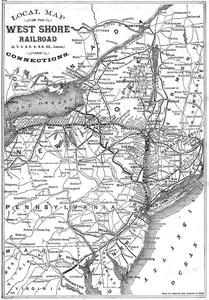
West Shore Railroad: Map, History, Timetables
Sep 17, 26 01:32 PM
 West Shore Railroad—New York, West Shore & Buffalo 1880–83, Weehawken to Buffalo. PRR-backed rival to the Central. Morgan settlement, 475-year NYC lease January 1 1886. CSX River Sub today.
 -
Jersey Central Diesel Locomotives: History, Roster & Photos
Sep 17, 26 01:20 PM
 Central Railroad of New Jersey diesel—boxcab 1000, Baldwin double-enders, F3s, Train Masters, SD35s, GP40Ps. All-time roster. Steam ended July 1, 1954.
 -
Jersey Central Steam Locomotives: History, Roster & Photos
Sep 17, 26 01:17 PM
 Central Railroad of New Jersey steam—Camelback Ten-Wheelers, USRA Mikados, G-class Pacifics, suburban tanks. Post-1900 class roster after Drury. Dieselized July 1, 1954.
 -
Jersey Central Railroad (CNJ): Map, Rosters, History
Sep 17, 26 01:14 PM
 Central Railroad of New Jersey—Elizabethtown & Somerville 1831, named April 23 1849. Communipaw, anthracite, Blue Comet, Reading/B&O control. Conrail April 1 1976. Complete corporate history.
 -
Central Vermont Diesel Locomotives: History, Roster & Photos
Sep 17, 26 11:35 AM
 Central Vermont diesel—Alco S-2s 1942, RS-3s, RS-11s from DW&P, EMD GP9s 1956–57, GP38ACs 1971. All-time roster. Last steam April 4, 1957.
 -
Central Vermont Steam Locomotives: History, Roster & Photos
Sep 17, 26 11:19 AM
 Central Vermont steam—ten Alco 2-10-4s of 1928, four U-1-a Mountains, Consolidations. Post-1900 class roster after Drury. Last steam April 4, 1957.
 -
Central Vermont Railway: Map, Logo, Rosters
Sep 17, 26 11:03 AM
 Central Vermont Railway—Vermont Central charter October 1843, Bethel–White River Junction June 26, 1848. Grand Trunk 1898, CN 1923, RailTex/NECR 1995. Complete corporate history.
 -
Fitchburg Railroad: Map, History, Timetables
Sep 17, 26 10:40 AM
 Fitchburg Railroad—chartered March 3, 1842, Boston–Fitchburg March 5, 1845. Alvah Crocker, Hoosac west door, Vermont & Massachusetts, Cheshire. B&M 99-year lease July 1, 1900. Complete corpora…
 -
Steam Railroading Institute Dining (2026)
Sep 17, 26 10:30 AM
 2026 SRI Owosso dining—vintage dining cars, select evenings. 2026 dinner calendar not posted; 2025 Up In Smoke is the recent example. Confirm on michigansteamtrain.com.
 -
Canadian Pacific Railway: Map, History, Logo, Photos
Sep 17, 26 12:06 AM
 Canadian Pacific Railway—incorporated February 16, 1881. Last spike Craigellachie November 7, 1885. Soo, Milwaukee, D&H, DM&E. CPKC April 14, 2023. Complete corporate history.
 -
Canadian Pacific Diesel Locomotives: History, Roster & Photos
Sep 17, 26 12:03 AM
 Canadian Pacific diesel—E8A 1800 in 1949, FP7/FP9, FA-2, C424, SD40-2, SD40-2F Red Barns, AC4400CW, ES44AC, SD30C-ECO, SD70ACu heritage. All-time roster. Last steam November 6, 1960.
 -
Canadian Pacific Steam Locomotives: History, Roster & Photos
Sep 16, 26 11:35 PM
 Canadian Pacific steam—3,257 engines 1881–1949. D10 Ten-Wheelers, G3 Pacifics, Royal Hudsons, Selkirk 2-10-4s. Post-1900 class roster after Drury. Last steam November 6, 1960.
 -
Woodstown Central Dining in Motion (2026)
Sep 16, 26 11:31 PM
 2026 Woodstown Central Dining in Motion—Salem County table car, 50–60 minutes, private table of four from $190. Confirm on woodstowncentral.com.
 -
NCTM Wine & Dine on the Rails (2026)
Sep 16, 26 11:28 PM
 2026 NCTM Wine & Dine on the Rails in Spencer—Feb. 13–15, three-course dinner, 21+, $145/$140. Sold out. Confirm next season on nctransportationmuseum.org.
 -
Southern Railway 4-6-2 1380: The Streamlined Ps-4
Sep 16, 26 10:34 PM
 Southern Railway Ps-4 4-6-2 1380—Alco 1923, serial 64857. Otto Kuhler streamlining at Spencer 1940–41 for the Tennessean. Only streamlined steam locomotive on the Southern. Scrapped Baltimore 1953.
 -
Texas Mexican Railway: Serving The Border Since The 1880s
Sep 16, 26 09:58 PM
 Texas Mexican Railway—Corpus Christi, San Diego & Rio Grande March 1875, 3-foot. Tex-Mex June 1881, Laredo Sept 1881, Rio Grande bridge 1883. Standard gauge July 17 1902. Mexican government 1900–1…
 -
Mount Hood Railroad Dining (2026): No Plated Dinner Train This Season
Sep 16, 26 09:53 PM
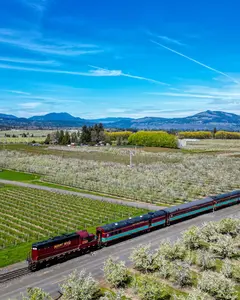
 2026 Mount Hood Railroad in Hood River is scenic Fruit Loop trains with snacks and sandwiches—not a plated dinner train. Confirm on mthoodrr.com.
 -
Peoria and Eastern Railway: Map, Timetables, History
Sep 16, 26 09:39 PM
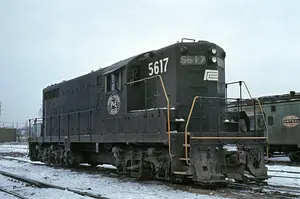
 Peoria & Eastern—Danville, Urbana, Bloomington & Pekin 1866, IB&W 1869, OI&W 1887. Incorporated Feb 21 1890, Big Four next day. NYC 1930, Conrail 1976. GP7s 5612–5625. Complete corporate history.
 -
Boston and Maine Railroad: "Route Of The Minute Man"
Sep 16, 26 11:30 AM
 Boston & Maine—Andover & Wilmington 1833, NH charter June 27 1835. Eastern, Boston & Lowell, Fitchburg/Hoosac, Concord & Montreal. Section 77 March 12 1970. Guilford June 30 1983. CSX June 1 2…
%20at%20Roanoke%2C%20Virginia%2C%20circa%201950.%20Fred%20Byerly%20photo.%20American-Rails.com%20collection.)


%20and%202-6-6-4%20(A)%20at%20work%20in%20Norfolk%2C%20Virginia%20during%201956.%20Clarence%20Cade%20photo.)

%20sits%20in%20Roanoke%2C%20Virginia%20during%20March%20of%201959.)
%20circa%201948.%20These%20were%20the%20last%20of%20N%26W's%20big%20compounds%2C%20products%20of%20the%20Roanoke%20Shops%2C%20and%20are%20regarded%20as%20the%20best%20in%20the%20series.)
%2C%202-6-6-4%20%231203%20(A)%2C%20and%20compound%202-8-8-2%20%232133%20(Y-6)%20pose%20together%20at%20Shaffer's%20Crossing%2C%20Virginia%20(Roanoke)%20in%201945.)
