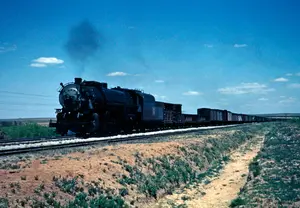
N&W 2-6-6-2 Locomotives (Class Z): Specs, Roster, History
Last revised: October 5, 2026
By: Adam Burns
The Norfolk & Western’s Class Z was a compound 2-6-6-2, 190 engines numbered 1300–1489, built from 1912 through 1918. Fifteen of them, the Z-1s, came from Alco’s Richmond works with Walschaerts valve gear. The other 175, the Z-1as, came from Richmond, from Baldwin, and from Alco’s Schenectady works, with Baker valve gear. High-pressure cylinders were 22 by 32 inches. Low-pressure cylinders were 35 by 32 inches. The railroad rated the class at 75,830 pounds of tractive effort compound, and 90,996 pounds in simple, at 225 pounds of boiler pressure.
They were the articulated that settled into road service. Five 0-8-8-0s and five 2-8-8-2s had come in 1910, and the 2-6-6-2 is what the railroad then bought in quantity. Ron Rosenberg’s table still shows 116 of them on the roster in 1942 and again in 1944, against an all-time maximum of 190. The last retirement on the diagram record is April 1958. None was saved. The later articulateds are the Class Y 2-8-8-2s and the Class A 2-6-6-4s.

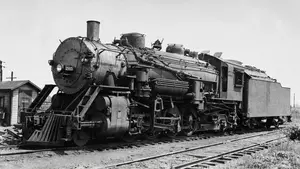
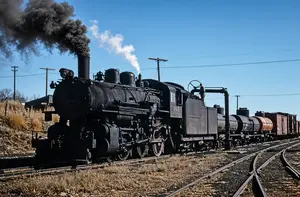
Norfolk & Western 2-6-6-2 No. 1444, the tender lettered Norfolk and Western, in a 1940s yard view. Number 1444 was built by Alco-Schenectady in the 1915–16 group, engines 1420–1449, and the roster at the end of 1942 carries it as a Z-1b. Photographer unknown.
On this page: At a glance · 1910, and a borrowed 2-6-6-2 · One hundred ninety engines · The 1929 diagram · Three tenders · On the road in 1913 · The Z-1b · One simple engine · Roster · Who left, and when
At a glance
| Item | Detail |
|---|---|
| Railroad | Norfolk & Western. Letter classes. This one is Z |
| Whyte | 2-6-6-2 compound Mallet. High-pressure engine under the cab. Low-pressure engine in front, hinged to the boiler |
| Quantity | 190 locomotives, 1300–1489 |
| Subclasses as built | Z-1, 1300–1314, fifteen, Richmond, 1912, Walschaerts. Z-1a, 1315–1489, 175, Richmond, Baldwin, and Schenectady, 1912–1918, Baker |
| Cylinders | High pressure 22 × 32 in. Low pressure 35 × 32 in. Low-pressure valves were D-slide valves as built |
| Boiler | Delivered at 200 psi. Soon raised to 225 psi. Superheated from the start |
| Drivers | 56½ in on the railroad’s class figures. The 1929 diagram prints 57 in for the Alco engines and 56 in for the Baldwins |
| Tractive effort | 75,830 lb compound. 90,996 lb simple. Both figures are the railroad’s rating at 225 psi |
| Weight, as diagrammed in 1929 | Alco engine 427,000 lb, with 354,500 on the drivers. Baldwin engine 408,000 lb, with 339,000 on the drivers |
| Grate | 72.2 sq ft |
| Z-1b | 74 engines rebuilt in the late 1920s and early 1930s. Piston valves on the low-pressure cylinders, and a Worthington BL feedwater heater. Engine weight 440,000 lb |
| Z-2 | 1399 only. Rebuilt simple at Roanoke in 1928. Rated 93,342 lb. Retired about 1934 |
| Retired | The fifteen Z-1s in 1934. The last of the class in April 1958. All scrapped |
Card dimensions are the Norfolk & Western diagram of December 1929 and the diagram book of March 1955, as compiled by Steve Llanso on Locobase from Allen Stanley’s Rail Data Exchange copies. The 75,830- and 90,996-pound ratings, the 56½-inch class figure, and the Z-2’s 93,342 pounds are the all-time roster compiled with the help of the Norfolk & Western Historical Society, and they agree with the railroad’s own magazine figures for the Z-1a. Service counts for 1942 and 1944 are Ron Rosenberg. Information compiled October 5, 2026.
1910, and a borrowed 2-6-6-2
The first articulateds on the property were a pair of five-engine trials in 1910. Class X-1 was five 0-8-8-0s, numbers 990–994, built by Alco at Schenectady with Walschaerts gear. With no leading truck and no trailing truck they were a poor fit for road service. The railroad superheated them, raised the boiler to 230 pounds, and finished them as hump switchers. They were retired in 1934.
Class Y-1 was five Baldwin 2-8-8-2s, numbers 995–999, the same year. They worked out of Bluefield and between Roanoke and Crewe. The boiler was a separable design, and the engines were the first of the early articulateds to go. The Class Y page dates that retirement to 1924. The 2-8-8-2 returned in 1918 as a different machine, and Roanoke was still building Ys in 1952. That later fleet is a separate story from the five engines of 1910.
The 2-6-6-2 the railroad then bought was the Chesapeake & Ohio’s machine. Richmond had built the C&O’s H-2s in 1911, twenty-four compound 2-6-6-2s with cylinders of 22 and 35 by 32 inches, a grate of 72.2 square feet, and an engine wheelbase of 48 feet 10 inches. Those three figures are the Z’s figures. A 2022 Classic Trains account of the USRA 2-6-6-2 says the Norfolk & Western borrowed one of the 1911 C&O engines and ran it against a Y-1, and that a man who knew the tests reportedly said the C&O engine ran circles around the Y-1. The first Norfolk & Western copies were ordered from the same Richmond works and went into service in April and May 1912.
One hundred ninety engines
The fifteen Z-1s, 1300–1314, are Richmond works numbers 51011–51025, built March through May 1912. They are the only engines in the class with Walschaerts gear. From September 1912 Richmond added the Z-1a, the same wheel arrangement with Baker-Pilliod valve gear. Twenty-five engines, works 51469–51493, came in September, October, and November 1912. Forty more, works 53591–53630, came in May 1913. Those eighty Richmond engines are 1300–1379.
Baldwin built the next forty at Eddystone in the summer of 1914. Works numbers run 41483–41486 and 41508–41511 in June, the July blocks 41520–41529, 41531–41536, 41545–41549, and 41556–41558, and 41569–41576 in August. Their road numbers are 1380–1419. The Baldwin boiler was the smaller one. The specification left out nineteen flues at the bottom of the barrel and braced the space they would have occupied, so the Baldwin engines have 224 tubes against the Alco’s 243. The first twenty-five Baldwins were delivered with Street stokers. The last fifteen were delivered with Hanna stokers, which the railway supplied.
Schenectady closed the class. Thirty engines, works 55575–55604, December 1915 through February 1916, are the 1420–1449 group, and 1444 is one of them. Twenty more, works 56456–56475, December 1916 and January 1917, are 1450–1469. The last twenty, works 59869–59888, July 1918, are 1470–1489. Alco’s two works together built 150. Baldwin built 40. The class is 190.
By 1918 the same principal dimensions had gone into the United States Railroad Administration light 2-6-6-2. That engine has 57-inch drivers, a 225-pound boiler, and cylinders of 23 by 32 and 35 by 32. The high-pressure cylinder is an inch larger than the Z’s. Thirty were built, for the Chesapeake & Ohio, as class H-5, and for the Wheeling & Lake Erie. The Norfolk & Western’s own 2-6-6-2s remained the 190 engines in the table below. The C&O fleet, H-1 through the last Baldwin H-6s of 1949, is the Chesapeake & Ohio 2-6-6-2 page.
The 1929 diagram
The figures below are the railroad’s diagram of December 1929, Alco and Baldwin in separate columns, and the later state in the diagram book of March 1955. Both 1912–14 batches left the builders at 200 pounds. The setting was soon raised to 225, and 225 is the pressure under the tractive-effort rating. The class was superheated from the start. The firebox area includes a long combustion chamber, 134 square feet on the Alco engines, and the arch tubes.
Driver diameter is the line on which the documents disagree, and both numbers belong on the page. The 1929 diagram prints 57 inches for the Alco engines and 56 inches for the Baldwins. The Norfolk & Western Magazine reprint, and the all-time roster, use 56½ inches for the class and pair that diameter with 75,830 pounds compound. A computation that uses the diagram’s 57 inches comes out at 74,498 pounds. The rating used here is the railroad’s 75,830, and the simple rating that sits beside it is 90,996.
| Specification | Alco, December 1929 | Baldwin, December 1929 | Later diagram, March 1955 |
|---|---|---|---|
| Class as built | Z-1 and Z-1a, Richmond and Schenectady | Z-1a, Eddystone | Z-1a, as still diagrammed |
| Road numbers | 1300–1379 and 1420–1489 | 1380–1419 | Engines still in the 1955 book |
| Whyte | 2-6-6-2 compound | 2-6-6-2 compound | 2-6-6-2 compound |
| Drivers | 57 in | 56 in | 57 in |
| Cylinders | 22 × 32 in and 35 × 32 in | 22 × 32 in and 35 × 32 in | 22 × 32 in and 35 × 32 in |
| Valve gear | Walschaerts on 1300–1314. Baker on the Z-1a | Baker | Baker |
| Boiler pressure | 225 psi, after delivery at 200 | Delivered at 200 psi, then raised with the class to 225 | 225 psi |
| Driver wheelbase | 20 ft | 20 ft | 20 ft |
| Engine wheelbase | 48.83 ft | 48.83 ft | 48.83 ft |
| Engine and tender wheelbase | 79.21 ft | 79.21 ft | 87.46 ft |
| Weight on drivers | 354,500 lb | 339,000 lb | See the Z-1b weight below |
| Engine weight | 427,000 lb | 408,000 lb | Z-1b rebuilds, 440,000 lb |
| Maximum axle load | 62,600 lb | — | — |
| Tubes | 243, at 2¼ in | 224, at 2¼ in | 213, at 2¼ in |
| Flues | 36, at 5½ in | 36, at 5½ in | 36, at 5½ in |
| Tube length | 24 ft | 24 ft | 24 ft |
| Firebox | 369 sq ft, including 134 in the combustion chamber and 22 in arch tubes | 374.8 sq ft, including 134 in the combustion chamber and 28.8 in arch tubes | 391 sq ft |
| Grate | 72.2 sq ft | 72.2 sq ft | 72.2 sq ft |
| Evaporative heating surface | 5,048 sq ft | 4,742 sq ft | 4,629 sq ft |
| Superheater | 971 sq ft | 1,022 sq ft | 971 sq ft |
| Combined heating surface | 6,019 sq ft | 5,764 sq ft | 5,600 sq ft |
| Tractive effort, compound | 75,830 lb at 225 psi, the railroad’s rating for Z-1 and Z-1a | ||
| Tractive effort, simple | 90,996 lb, the railroad’s simple rating for the same engines | ||
Alco evaporative surface and superheater add to 6,019. Baldwin’s 4,742 and 1,022 add to 5,764. The later 4,629 and 971 add to 5,600. The engine wheelbase, 48.83 feet, is the 48 feet 10 inches of the Chesapeake & Ohio H-2.
Three tenders
The diagrams record three tenders behind the compounds, and a fourth behind the simple rebuild.
| Tender | Water | Coal | Loaded weight | Engine and tender wheelbase |
|---|---|---|---|---|
| As built, 1929 diagram | 9,000 gallons | 14 tons | 167,500 lb | 79.21 ft |
| Later tender on the Alco record | 12,000 gallons | 20 tons | — | — |
| March 1955 diagram | 20,000 gallons | 16 tons | 212,000 lb | 87.46 ft |
| Z-2 1399 | 16,000 gallons | 23 tons | 286,530 lb | 94.56 ft |
The as-built Alco engine at 427,000 pounds plus the 167,500-pound tender is 594,500. The Baldwin engine at 408,000 plus the same tender is 575,500. The 1955 tender behind a 427,000-pound engine is 639,000 for engine and tender. The coal figures, 14 tons, then 20, then 16, are three different tenders on the drawings.
On the road in 1913
Railway Age Gazette for May 9, 1913, described what the first of these engines were bought to do. The point was to raise the maximum train load. Pusher service stayed. On the Pocahontas Division, between Eckman, West Virginia, and Bluefield, the railroad was using its five 0-8-8-0s, its five 2-8-8-2s, and fifteen of the new 2-6-6-2s, in both road and pusher service.
On the Radford Division, Bluefield to Roanoke, 105 miles, five of the new engines were in road service. The profile included forty miles of 0.4 percent and ten miles of 1.0 percent. On that ten-mile grade the 2-6-6-2 helpers raised the train from 2,800 tons to 4,000. The Gazette’s summary for the division is a 79 percent increase in train load.
Twenty more were road engines between Roanoke and Crewe, 130 miles, and the Gazette says the terminals and the road on that division let them do their best work. A 5,000-ton train left Roanoke with one of the Mallets double-headed by a 4-8-0. Those two engines took the train nine miles to Bonsack, over broken grades. At Bonsack a second Mallet coupled on behind and pushed six miles to Blue Ridge, the ruling grade there 1.2 percent. The pusher cut off at Blue Ridge and returned light to Bonsack. From Blue Ridge the two leading engines hauled 56 miles to Phoebe, broken grades with eight miles of 0.5 percent in them. At Phoebe the 4-8-0 came off, waited for a westbound empty, and double-headed back toward Roanoke. The one Mallet went on to Crewe, 59 miles, broken grade except the 16 miles from Farmville to Burkeville, a continuous 0.45 percent where a 4-8-0 pushed.
On that accounting the Roanoke Division’s train loads were up 43 percent. The forty Mallets in the article, fifteen plus five plus twenty, had taken the place of fifty-seven locomotives, and the number of freight trains on the divisions was down by a quarter. The article is about those forty engines in the spring of 1913. Richmond was then delivering the May 1913 batch, and Baldwin’s forty and all seventy Schenectady engines were still ahead.
The Z-1b
The Z-1a’s low-pressure cylinders were built with slide valves. In the late 1920s and early 1930s Roanoke rebuilt 74 of the Z-1as into class Z-1b, seventeen of them Baldwin engines and fifty-seven Alco. The new low-pressure valves were 14-inch piston valves, inside admission, and the engines received a Worthington BL feedwater heater. The all-time roster puts the air pumps on the right side and the engine weight at 440,000 pounds. The fifteen original Z-1s, still on Walschaerts gear, were not in that program. They were retired in 1934.
Ed King’s warning about the class letter is worth keeping next to the count. A Z-1b shows two changes at once. The valve gear was altered on both engines, so the combination lever hangs from the valve stem, and the Worthington heater is on the boiler. Three Z-1as, 1322, 1396, and 1438, were given outside-admission piston valves on the low-pressure cylinders as a trial, the valve travel left as it had been on the slide valves, and the gear left alone. None of the three received a feedwater heater at that time. King reads the trial as a follow-on to Y-2 1700, which had been built with outside-admission piston valves. Number 1438, a Schenectady engine of January 1916, was later finished as a real Z-1b. A photograph at Portsmouth shows it in that form shortly before retirement. Numbers 1322 and 1396 were never converted. King notes that 1322 went to the Interstate Railroad and 1396 to the Tennessee Central still carrying the trial cylinders.
The 74 is Locobase’s count of engines that received both the piston valves and the heater. Many Z-1as ran out their lives with the slide valves they were built with.
One simple engine
In 1928 Roanoke took Z-1a 1399, a Baldwin engine of 1914 from the 1380–1419 group, and rebuilt it as a simple articulated. All four cylinders were high pressure, 22 by 32 inches. The class letter was Z-2. Valve gear stayed Baker. The rebuild carried a double stack. On the 1955 diagram the drivers are 56½ inches, the boiler is at 225 pounds, the engine weighs 441,000 pounds with 377,825 on the drivers, and the tender holds 16,000 gallons and 23 tons at 286,530 pounds. Engine and tender together are 727,530 pounds, on a wheelbase of 94.56 feet. The boiler figures match the later compound diagram: 213 tubes, 391 square feet of firebox, 4,629 evaporative, 971 of superheater, 5,600 combined.
The all-time roster rates that engine at 93,342 pounds. E. W. King, in George H. Drury’s Guide to North American Steam Locomotives, gives the reason it stayed one engine. The boiler was too small to supply four high-pressure cylinders, and the engine was too light for the adhesion the simple arrangement asked of it. It was retired six years after the rebuild, which places the date at 1934, the same year as the original Z-1s.
The simple articulated Roanoke did build, beginning in 1936, was a new design on a new wheel arrangement. Class A is forty-three 2-6-6-4s, numbers 1200–1242, built in the railroad’s own shops through 1950. One survives, No. 1218, at the Virginia Museum of Transportation in Roanoke. The class is the Class A page.
Roster
| Class as built | Numbers | Qty | Builder | Works numbers | Built | Notes |
|---|---|---|---|---|---|---|
| Z-1 | 1300–1314 | 15 | Alco, Richmond | 51011–51025 | March–May 1912 | Walschaerts. In service April–May 1912. Retired 1934. None rebuilt to Z-1b |
| Z-1a | 1315–1339 | 25 | Alco, Richmond | 51469–51493 | September–November 1912 | Baker. First Z-1as |
| Z-1a | 1340–1379 | 40 | Alco, Richmond | 53591–53630 | May 1913 | Baker. Completes the Richmond 80, numbers 1300–1379 |
| Z-1a | 1380–1419 | 40 | Baldwin, Eddystone | 41483–41486, 41508–41511, 41520–41529, 41531–41536, 41545–41549, 41556–41558, 41569–41576 | June–August 1914 | Smaller boiler, 224 tubes. Street stokers on the first 25, Hanna on the last 15. 1399 rebuilt to Z-2 in 1928 |
| Z-1a | 1420–1449 | 30 | Alco, Schenectady | 55575–55604 | December 1915–February 1916 | Includes 1444. Number 1438 is the January 1916 engine later finished as a Z-1b |
| Z-1a | 1450–1469 | 20 | Alco, Schenectady | 56456–56475 | December 1916–January 1917 | 1453 and 1457 sold to the Denver & Rio Grande Western |
| Z-1a | 1470–1489 | 20 | Alco, Schenectady | 59869–59888 | July 1918 | Last engines of the class |
The seven rows are the 190 locomotives. Richmond built 80, Baldwin 40, and Schenectady 70. Of the 175 Z-1as, one became the Z-2 and 74 became Z-1bs. The rest of the class stayed compound Z-1as, slide valves and all, until sale or scrap.
Named engines
| No. | Built as | What happened |
|---|---|---|
| 1300–1314 | Z-1, Richmond, 1912 | Retired in 1934. The Walschaerts engines were not rebuilt |
| 1322 | Z-1a, Richmond | Trial outside-admission piston valves on the low-pressure cylinders. Never a Z-1b. Sold to the Interstate Railroad |
| 1396 | Z-1a, Baldwin, 1914 | The same trial cylinders. Never a Z-1b. Sold to the Tennessee Central |
| 1399 | Z-1a, Baldwin, 1914 | Rebuilt at Roanoke in 1928 as simple class Z-2. Retired about 1934. One engine |
| 1438 | Z-1a, Schenectady, January 1916 | Third engine with the trial low-pressure piston valves. Later completed as a Z-1b |
| 1444 | Z-1a, Schenectady, 1915–16 group | Carried as a Z-1b on the roster at the end of 1942. The engine in the photograph |
| 1453 | Z-1a, Schenectady, 1916 | Sold in 1942. Became Denver & Rio Grande Western 3350, class L-76. Scrapped July 1952 |
| 1457 | Z-1a, Schenectady, 1916 | Sold in 1942. Became Denver & Rio Grande Western 3351, class L-76. Scrapped May 1950 |
The two Rio Grande engines worked mine runs out of Helper, Utah. They were on the Rio Grande’s books by 1943. No other Z is identified here by a second owner. King’s notes on 1322 and 1396 do not give the year of sale.
Who left, and when
Rosenberg’s count, in Norfolk & Western Steam (The Last 25 Years), puts the 2-6-6-2 line at 116 engines in 1942 and 116 again in 1944. His all-time maximum for the same line is 190. The original fifteen and the Z-2 were already gone by then. The 116 is what remained of the Z-1as and Z-1bs. His table keeps both letters on one line.
Heavier power had taken the heaviest coal drags. The Ys, and from 1936 the Class A, were the main-line articulateds. The Zs that stayed worked secondary coal trains and yard jobs. Before the S-class 0-8-0s, the railroad’s heavy switching was still in the hands of 4-8-0s, 2-8-0s, and these 2-6-6-2s. Number 1321, a Z-1a, was photographed at Joyce Avenue Yard in Columbus in September 1952.
The diagram record’s last retirement for the class is April 1958. Every engine was scrapped. Nothing of the 190 survives. What the railroad kept in articulated steam is a Class A, 1218, and, from the 2-8-8-2s, Y-3a 2050 and Y-6a 2156. The passenger engine that outlasted the steam program in preservation is Class J 611.
Sources
- Norfolk & Western. Locomotive diagram, December 1929, and locomotive class book, October 1929. Allen Stanley, Rail Data Exchange, copies supplied to Steve Llanso in May 2005 and published as Locobase 1467 (Alco Z-1 and Z-1a) and Locobase 14233 (Baldwin Z-1a). Wheel arrangement, cylinders, valve gear, the 200-pound delivery pressure and the rise to 225, driver diameters of 57 and 56 inches, heating surfaces, grate, weights, tenders, and the Richmond, Baldwin, and Schenectady works numbers. Baldwin’s omitted bottom flues, and the Street and Hanna stokers, are the DeGolyer specification, Volume 50, as used in Locobase 14233.
- Norfolk & Western. Locomotive diagram book, March 1955. The same Rail Data Exchange copies, published as Locobase 14232 and Locobase 7824. The later tube count, firebox, tender of 20,000 gallons and 16 tons, and the Z-1b conversion: 74 engines, 17 Baldwin and 57 Alco, 14-inch piston valves, Worthington feedwater heaters, engine weight 440,000 pounds. Last retirement of the class, April 1958. The Z-2 diagram: four 22-by-32-inch cylinders, 441,000-pound engine, 16,000-gallon tender, 94.56-foot wheelbase.
- Norfolk & Western Historical Society. All-time steam roster compiled with the Society’s help, as published on the railmaster roster. Z-1 and Z-1a: 56½-inch drivers, 75,830 pounds compound, 90,996 pounds simple, 427,000 pounds, slide valves on the low-pressure cylinders, Walschaerts on the Z-1 and Baker on the Z-1a. Z-1b: piston valves on all cylinders, Worthington BL feedwater heater, Baker valve gear, air pumps on the right side, 440,000 pounds. Z-2: 1399, 93,342 pounds, 441,000 pounds, double stack, rebuilt from a Z-1a in 1928.
- Railway Age Gazette, May 9, 1913, pp. 1025–1026. Quoted in the Brotherhood of Locomotive Engineers and Brotherhood of Locomotive Firemen and Enginemen compilation Evolution of Increased Power and Tonnage (1913), pp. 15–16, and transcribed by Locobase 1467. Pocahontas, Radford, and Roanoke–Crewe assignments, the 2,800-to-4,000-ton helper figure, the 79 percent and 43 percent load increases, and the forty Mallets in place of fifty-seven locomotives. A companion period account, cited by the same Locobase entry and not quoted here, is “Mallet Locomotives on the Norfolk & Western Railway,” Railway and Engineering Review, Vol. 53, No. 23 (June 14, 1913), pp. 558–559.
- Norfolk & Western Magazine, pictorial review reprinted in the Norfolk & Western Historical Society Arrow. Class Z-1a: 22- and 35-by-32-inch cylinders, 56½-inch drivers, 427,000 pounds, 225 pounds, 75,830 pounds tractive effort. Class Y-1: Baldwin, 1910, five engines, Bluefield and the Roanoke–Crewe freight. Class X-1: 1910, later hump service, scrapped 1934.
- King, Ed. Comment on the Norfolk & Western Historical Society question-and-answer page “N&W Steam Roster as of 1942.” The difference between a Z-1b and the three Z-1as, 1322, 1396, and 1438, that received outside-admission low-pressure piston valves without a valve-gear change or a feedwater heater. Sale of 1322 to the Interstate and of 1396 to the Tennessee Central. Number 1438 later a Z-1b, photographed at Portsmouth. Arthur Bixby’s roster, as King cites it, leaves 1322 and 1396 unconverted. The same page prints Nigel Misso’s reading of Ron Rosenberg, Norfolk & Western Steam (The Last 25 Years), pp. 2 and 43: 116 of the 2-6-6-2s in 1942, 116 in 1944, all-time maximum 190.
- King, E. W. Norfolk & Western chapter in Drury, George H. Guide to North American Steam Locomotives. Kalmbach, 1993. As quoted by Locobase 7824. The Z-2 rebuild of one compound was not repeated. The boiler could not supply four high-pressure cylinders, the engine was light for the adhesion, and 1399 was retired six years after the 1928 rebuild.
- Classic Trains Presents, Steam’s Lost Empire III (2022). The Norfolk & Western borrowed a Chesapeake & Ohio 2-6-6-2 of the 1911 order to compare with a Y-1. The USRA light 2-6-6-2 followed the same principal dimensions. USRA figures used beside that account: 57-inch drivers, 225 psi, cylinders 23 by 32 and 35 by 32, thirty locomotives.
- Denver & Rio Grande Western. Class L-76, DRGW.net: 3350 was Norfolk & Western 1453, and 3351 was 1457, both Schenectady, 1916, sold in 1942. Scrapped July 1952 and May 1950. The Rio Grande motive-power chronology at utahrails.net lists the two engines among the 1943 steam additions. Mine-run service out of Helper is the note on the D&RGW scenic-line steam roster.
- Llanso, Steve. Locobase 13802, class X-1. Alco-Schenectady, 1910, numbers 990–994, five 0-8-8-0s. Retired in 1934 after hump service. The Y-1 road numbers 995–999 and the separable-boiler note are the same writer’s Norfolk & Western 2-8-8-2 compilation, Locobase 10991.
Recent Articles


-
Illinois Terminal Electric Locomotives
Oct 24, 26 08:22 PM
 Illinois Terminal electric locomotives, 57 frames. Class A through Class D, the Decatur-built motors, and the battery locomotives. Class D is the same five Class C frames, rebuilt.
-
Illinois Terminal Steam Roster
Oct 24, 26 07:37 PM
 Illinois Terminal steam locomotives, 36 frames. Baldwin Moguls, three Class 30 Mikados, Florida East Coast 0-8-0s, and 2-6-0 No. 21, the last fire on June 30, 1950.
-
Illinois Terminal Railroad: Map, Roster, Photos, History
Oct 24, 26 07:32 PM
 Illinois Terminal, McKinley's Illinois Traction System, from the Danville coal towns to St. Louis. The McKinley Bridge, the sleeping cars, the 1937 break with the power company, the 1948 streamliners…
-
Southern Railway Diesel Roster (All-Time)
Oct 23, 26 11:00 PM
 All-time diesel roster of the Southern Railway. 2,505 locomotives in the system number series, from the 1939 demonstrator FT to GP50s and B30-7A1s. Serials included.
-
Illinois Central Diesel Roster (All-Time)
Oct 23, 26 04:06 PM
 Illinois Central and Illinois Central Gulf diesel locomotives, each frame once. The quantity column is 886. Serials and order numbers from Electro-Motive's builder lists. Paducah rebuilds and Gulf, Mo…
-
Illinois Central Gulf Diesel Roster
Oct 23, 26 04:02 PM
 Illinois Central Gulf operating numbers from August 10, 1972, to February 29, 1988. New frames stay on the Illinois Central diesel roster. Gulf, Mobile and Ohio frames stay on that roster. No Gulf fle…
-
Illinois Central Railroad: Map, Logo, History
Oct 23, 26 03:50 PM
Illinois Central, the Main Line of Mid-America, from the 1850 land grant to Canadian National control on July 1, 1999. Charter lines, Cairo bridge, Paducah, and the Illinois Central Gulf. Steam quanti… -
Grand Trunk Western Diesel Roster (All-Time)
Oct 23, 26 12:53 PM
 Grand Trunk Western diesel locomotives, each frame once. The quantity column is 377. Serials are filled for the Detroit, Toledo and Ironton and Detroit and Toledo Shore Line engines the railroad kept…
-
Grand Trunk Western Steam Roster
Oct 23, 26 12:14 PM
 Grand Trunk Western steam locomotives in service about 1937 to 1942, from Richard Leonard's class list. Drury has no chapter. The quantity column is the counted Grand Trunk Western rows. Two mixed Gra…
-
Grand Trunk Western Railroad: Map, Roster, History
Oct 23, 26 12:09 PM
 Grand Trunk Western, reporting mark GTW, Canadian National's railroad between Port Huron and Chicago. Trade name adopted in 1923. Steam class list quantity 232. Diesel quantity column 377. Identity in…
-
Green Bay and Western Railroad: Map, Rosters, History
Oct 22, 26 11:18 PM
 Green Bay & Western, the Green Bay Route, reporting mark GBW. From Kewaunee to Winona. Mailer's steam and diesel rosters, and the August 1993 sale to Fox Valley & Western.
-
Chicago & North Western Class E-4: Streamlined 4-6-4 Hudsons
Oct 22, 26 10:28 PM
 C&NW Class E-4, nine streamlined 4-6-4s, 4001–4009, Alco 1938. 84-inch drivers, 25-by-29 cylinders, 300 psi. Conventional Chicago–Omaha trains. Oil in 1947–48. Retired 1953–1956.
-
Gateway Western Railway: Map, Roster, History
Oct 22, 26 02:43 PM
 Gateway Western Railway, reporting mark GWWR. Class II from Kansas City to East St. Louis. Kansas City Southern control May 5, 1997. The 1992 diesel fleet, with serials and order numbers.
-
Duluth, Winnipeg & Pacific Railway: Roster, Map, History
Oct 22, 26 01:51 PM
 Duluth, Winnipeg & Pacific, the Peg, reporting mark DWP. From the Rainy River to Duluth. CNRHA steam list 36. Fifteen RS-11s. Merged into Wisconsin Central Ltd. on December 31, 2011.
-
Elgin, Joliet and Eastern Diesel Roster (All-Time)
Oct 22, 26 01:35 PM
 All-time diesel roster of the Elgin, Joliet and Eastern.
-
Elgin, Joliet and Eastern Steam Roster
Oct 22, 26 01:25 PM
 Elgin, Joliet and Eastern steam locomotives of the final decade, which largely comprised switcher types, 2-8-0s, and a large fleet of Mikados.
-
Elgin, Joliet and Eastern Railway: Map, Roster, History
Oct 22, 26 12:32 PM
 Elgin, Joliet & Eastern, the outer arc around Chicago, from the Joliet, Aurora & Northern of April 30, 1884. Illinois company March 18, 1887. Merged December 4, 1888. Principal lines sold Janu…
-
Denver and Salt Lake Railway: History, Roster, Timetable
Oct 22, 26 09:47 AM
 Denver & Salt Lake, the Moffat Road, from Denver to Craig. Tunnel opened February 26, 1928. Dotsero Cutoff dedicated June 16, 1934. Merged April 11, 1947. Steam locomotives 59.
-
Duluth, Missabe and Iron Range Diesel Roster (All-Time)
Oct 22, 26 09:43 AM
 All-time diesel roster of the Duluth, Missabe and Iron Range. 148 owned frames, each counted once. SW9s, SD9s, SD18s, SD38s, RSD-15s, and C630s. Serials and builder order numbers included. Helm SD40-3…
-
Duluth, Missabe and Iron Range Steam Locomotives (Since 1900)
Oct 22, 26 09:22 AM
 Duluth, Missabe & Iron Range steam locomotives built since 1900. Duluth & Iron Range, Duluth, Missabe & Northern, and later DM&IR acquisitions. Quantity column 252. Yellowstones 220-23…
-
Duluth, Missabe and Iron Range Railway: Roster, Map, Logo
Oct 22, 26 09:17 AM
Duluth, Missabe & Iron Range, reporting mark DMIR, from the Mesabi and the Vermilion to the Lake Superior docks. Formed July 1, 1937. Steam quantity 252. Owned diesels 148. On paper through Decemb… -
Duluth, South Shore, and Atlantic Railway: Map, Roster, Timetables
Oct 21, 26 11:21 PM
 Duluth, South Shore & Atlantic Railway, the South Shore. Marquette to the Sault, St. Ignace, Houghton, and Duluth-Superior. Soo Line on January 1, 1961. Twenty-four diesels.
-
Detroit, Toledo and Ironton Diesel Roster (All-Time)
Oct 21, 26 02:55 PM
 All-time diesel roster of the Detroit, Toledo and Ironton. 119 frames, each counted once. Serials and builder order numbers included. Last steam was December 24, 1955.
-
Detroit, Toledo and Ironton Steam Roster (Post 1900)
Oct 21, 26 02:49 PM
 Detroit, Toledo and Ironton steam locomotives built after 1900. Drury's class grid. The quantity column prints 141. Counted once, the frames are 137. Last steam was Mikado 805 on December 24, 1955.
-
Detroit, Toledo and Ironton Railroad: Map, Roster, History
Oct 21, 26 02:40 PM
 Detroit, Toledo & Ironton, reporting mark DTI, from Detroit to Ironton, Ohio. Railway organized May 2, 1905. Railroad articles filed February 21, 1914. Henry Ford, 1920 to 1929. Steam and diesel r…
-
Iowa, Chicago and Eastern Railroad: Roster, Map, History
Oct 21, 26 01:04 PM
 Iowa, Chicago & Eastern Railroad Corporation, reporting mark ICE. About 1,125 miles and about 275 miles of trackage rights from the I&M Rail Link. Operations at 12:01 a.m. July 30, 2002. Canad…
-
Rapid City, Pierre & Eastern Railroad: Route, Roster, Overview
Oct 21, 26 10:16 AM
 Rapid City, Pierre & Eastern Railroad, reporting mark RCPE. Genesee & Wyoming Class II. Agreement of January 2, 2014, Finance Docket 35799. Freight service from June 1, 2014, on the Dakota, Mi…
-
Dakota, Minnesota & Eastern Railroad: Roster, Map, History
Oct 21, 26 12:26 AM
 Dakota, Minnesota & Eastern Railroad, reporting mark DME. The July 2, 1986 Chicago & North Western sale, 826 miles and 139 miles of trackage rights. Canadian Pacific control October 30, 2008…
-
Detroit and Mackinac Railway: Map, Roster, History
Oct 20, 26 11:58 PM
 Detroit & Mackinac Railway, the Turtle Line. Bay City to Cheboygan along Lake Huron. Incorporated December 29, 1894. Lake State Railway leased the operation in 1992 and bought the lines in 1997. E…
-
Davenport, Rock Island and Northwestern Railroad
Oct 20, 26 11:22 PM
 Davenport, Rock Island and North Western Railway, the DRI Line. Clinton to East Moline across the Crescent Bridge. Burlington and Milwaukee. Merged into the Soo Line on June 29, 1995. Eighteen diesels…
-
Chicago Great Western Steam Roster (Post 1900)
Oct 20, 26 11:17 PM
 Chicago Great Western steam locomotives built or rebuilt since 1900. Drury's class grid. 320 frames, each once. The quantity column prints 376 because a rebuild is listed again. Last steam in the reti…
-
Chicago Great Western Diesel Roster (All-Time)
Oct 20, 26 10:47 PM
All-time diesel roster of the Chicago Great Western. 157 frames, each counted once. Serials and builder order numbers included. Steam was gone by 1950. The 1963 glance figure of 141 is one year's flee… -
Chicago Great Western Railway: Map, Photos, History, Rosters
Oct 20, 26 10:43 PM
 The Chicago Great Western, the Corn Belt Route, linked Chicago, the Twin Cities, Omaha, and Kansas City from September 27, 1885, until the Chicago & North Western merger at 12:01 a.m. on July 1, 1968…
-
Chicago, South Shore & South Bend Railroad: "The South Shore Line"
Oct 20, 26 05:48 PM
 Chicago South Shore & South Bend, the South Shore Line, from the 1901 Air Line through Samuel Insull's 1925 rebuild, the orange cars, the 800s, and the railroad NICTD and Anacostia still run.
-
Northwestern Virginia Railroad: Map, History, Timetable
Oct 20, 26 04:18 PM
 Northwestern Virginia Railroad, chartered February 14, 1851, Grafton to Parkersburg, 104 miles. Opened May 1, 1857. Foreclosure sale February 15, 1865, as the Parkersburg Branch. Twenty-three tunnels…
-
"Exposition Flyer" (Train): Consist, Timetable, History
Oct 20, 26 03:29 PM
 Exposition Flyer, Chicago to Oakland, June 10, 1939 to March 20, 1949. Burlington, Rio Grande, and Western Pacific. Heavyweight cars, then diesels and a vista-dome. Replaced by the California Zephyr.
-
Chicago, St. Paul, Minneapolis & Omaha Railway, "The Omaha Road"
Oct 20, 26 02:13 PM
 The Omaha Road, reporting mark CMO. Formed May 26, 1880. North Western management on December 16, 1882. Leased January 1, 1957. Class K-1 No. 183 and the sublettered diesels.
-
Chicago and Western Indiana Railroad: Map, Rosters, History
Oct 20, 26 01:17 PM
 Chicago and Western Indiana, chartered June 5, 1879. Five equal owners, Dearborn Station, and two main lines. Dolton suburban mile 16.6. Fifteen diesels. Railroad service ended in 1994. The Illinois c…
-
Railroad Tell-Tales: Protecting The Brakeman
Oct 20, 26 12:58 PM
 Railroad tell-tales: hanging ropes that warned a man on a freight-car roof of a low bridge or tunnel. The 1897 bridge-warning report, the 1905 Wisconsin statute, retainers, and why the roof walk outla…
-
Chicago & North Western Steam Roster (Post 1900)
Oct 20, 26 12:54 PM
 Chicago & North Western steam locomotives built since 1900, and the Omaha Road list beside it. Drury's parent quantity column sums to 1,445, with four rows left blank. The Omaha Road column sums to 24…
-
Chicago & North Western Diesel Roster (All-Time)
Oct 20, 26 12:49 PM
 All-time diesel roster of the Chicago & North Western. 2,494 frames, each counted once, including Chicago Great Western, Minneapolis & St. Louis, and Omaha Road units that received North Western numbe…
-
Chicago and North Western Railroad: Map, History, Logo
Oct 20, 26 12:37 PM
 The Chicago & North Western, chartered as the Galena & Chicago Union in 1836 and formed in June 1859. Granger railroad of the 400s, the Cowboy Line, and Powder River coal. Union Pacific common control…
-
Chicago & Illinois Midland Steam Roster (Post 1900)
Oct 20, 26 12:30 AM
 Chicago & Illinois Midland steam locomotives built since 1900. Drury's class grid, 57 engines. Twenty-six 2-10-2s, including nine from the Wabash and nine from the Atlantic Coast Line. Last road steam…
-
Chicago & Illinois Midland Diesel Roster (All-Time)
Oct 20, 26 12:20 AM
 All-time diesel roster of the Chicago & Illinois Midland. 28 frames, each counted once. Six SW1200s, five SD9s, the only two RS1325s, two SD18s, six SD38-2s, and four SD20s. Serials included.
-
Chicago and Illinois Midland Railroad: Map, Rosters, History
Oct 20, 26 12:17 AM
 The Chicago & Illinois Midland moved Illinois coal for Commonwealth Edison, Taylorville and Springfield to Pekin, with Peoria over the Peoria & Pekin Union. The 1906 railway began operating February 1…
-
Chicago & Eastern Illinois Diesel Roster (All-Time)
Oct 19, 26 04:23 PM
 All-time diesel roster of the Chicago & Eastern Illinois. 143 frames, each counted once. Switchers, F3s, FP7s, E7s, the BL1, and the GP7s through GP35s. Serials included.
-
Chicago & Eastern Illinois Steam Roster (Post 1900)
Oct 19, 26 04:19 PM
Chicago & Eastern Illinois steam locomotives built or rebuilt since 1900. 146 Consolidations, 60 Mikados, and 24 Pacifics. Drury's class grid. Last steam was Mikado 1944 at Vincennes on May 5, 1950. -
Chicago and Eastern Illinois Railroad: Map, Rosters, History
Oct 19, 26 03:57 PM
 The Chicago & Eastern Illinois ran from Chicago to Evansville, St. Louis, and Thebes. First company of the name, August 28, 1877. The remainder merged into the Missouri Pacific on October 15, 1976. St…
-
Rock Island Diesel Roser: All-Time
Oct 19, 26 11:05 AM
Chicago, Rock Island and Pacific diesel locomotives, 1,029 frames counted once. Switchers, cab units, road-switchers, two acquired slugs, five RDCs, and bi-power 10000. Serial and order are separate c… -
Rock Island Steam Roster: Post 1900
Oct 19, 26 11:01 AM
Chicago, Rock Island and Pacific steam locomotives built or rebuilt since 1900. Drury's class grid, 1,482 frames counted once, including 85 4-8-4s. Last revenue steam was July 1953.