
Chicago Great Western Railway: Map, Photos, History, Rosters
Last revised: October 12, 2024
By: Adam Burns
The Chicago Great Western Railway was a somewhat obscure Midwestern granger, operating in the shadows of the much larger Chicago & North Western, Burlington, Rock Island, and Milwaukee Road.
It largely kept to itself with a focus towards customer service and modernity to maintain an efficient, profitable business. The 1,500-mile carrier was a David among Goliath's surrounding by roads nearly or over 10,000 route miles in length.
While its system was not large it did reach many notable markets such as Chicago, St. Paul/Minneapolis, Omaha, and Kansas City. What the railroad lacked in size it more than made up for in customer service.
Always the innovator the CGW was constantly looking to reach new customers, streamline operations, cut costs, and generally carry out any measure possible to grow business.
Alas, its small size coupled with stifling federal regulations, rising costs, and competition from other transportation modes eventually brought about its end.
The much larger C&NW, in an effort to reach the Kansas City gateway, purchased the Corn Belt Route in the late 1960's and set about abandoning much of its network.
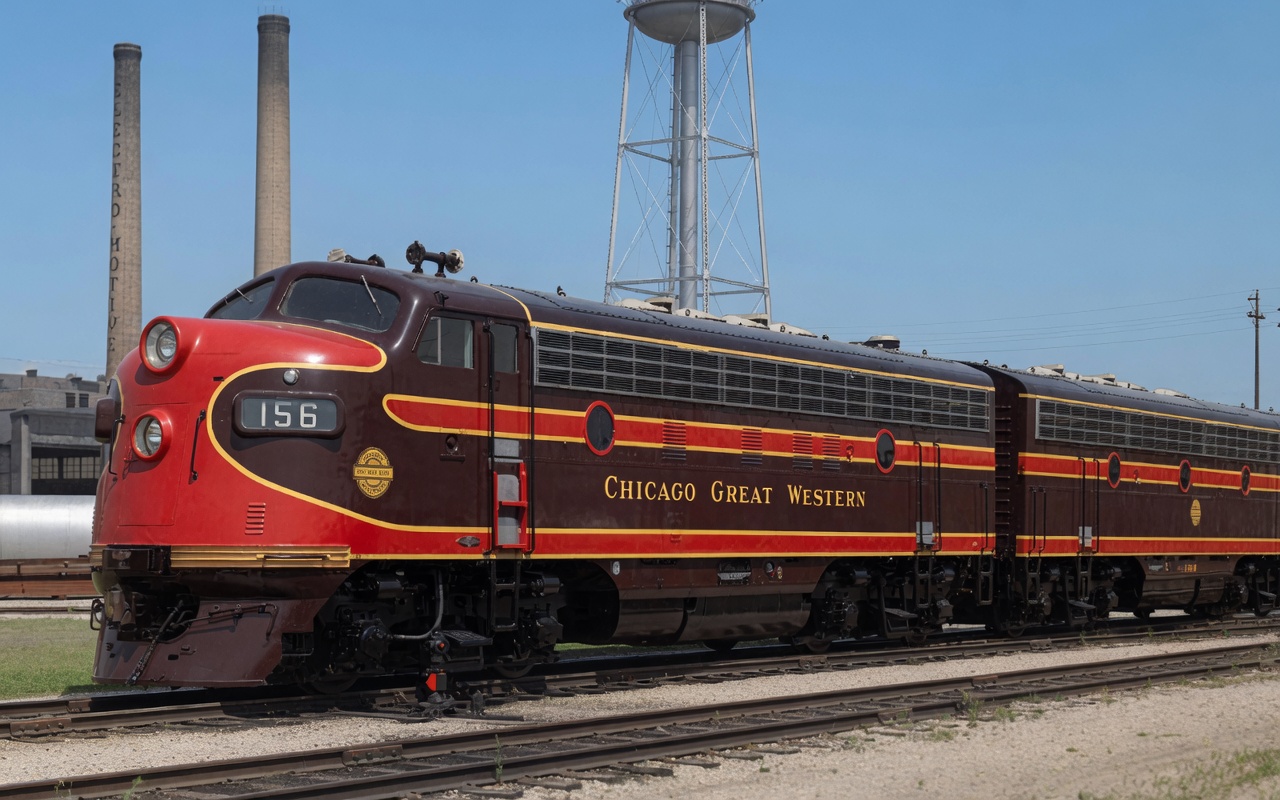 A manufacturer's photo of new Chicago Great Western covered wagons featuring F7A #156 and an F7B at Electro-Motive's plant in Illinois, in June, 1949.
History
What became one of the great Midwestern railroads would not have happened without the vision and hard work of Alpheus Beede (A.B.) Stickney.
Predecessors
While the Chicago Great Western's immediate heritage begins during the 1880's the company's earliest roots date back to the Chicago, St. Charles & Mississippi Air Line Railroad (CStC&MAL) organized in 1850 to link Chicago with the Mississippi River.
There was some grading carried out by this predecessor but ultimately it never secured the financial backing needed to actually begin construction.
There were many such projects launched around this time in an effort to reach Chicago, such as early components of the C&NW, Milwaukee Road, and Burlington.
Hopeful visionaries not only realized the growing importance of this city but also the Midwest's traffic potential in agriculture and natural resources (timber and iron ore to the north, and coal to the south).
With the CStC&MAL project going nowhere the Minnesota & Northwestern Railroad (M&NW) was granted a charter by the Minnesota state legislature on March 4, 1854.
According to historian H. Roger Grant's authoritative book, "The Corn Belt Route: A History Of The Chicago Great Western Railroad Company," the M&NW was to build:
"...from a point on the North West shore of Lake Superior...by St. Anthony and St. Paul...to such a point on the northern boundary of the State of Iowa - as the board of Directors may designate; which shall be selected with reference to the best route to the City of Dubuque."
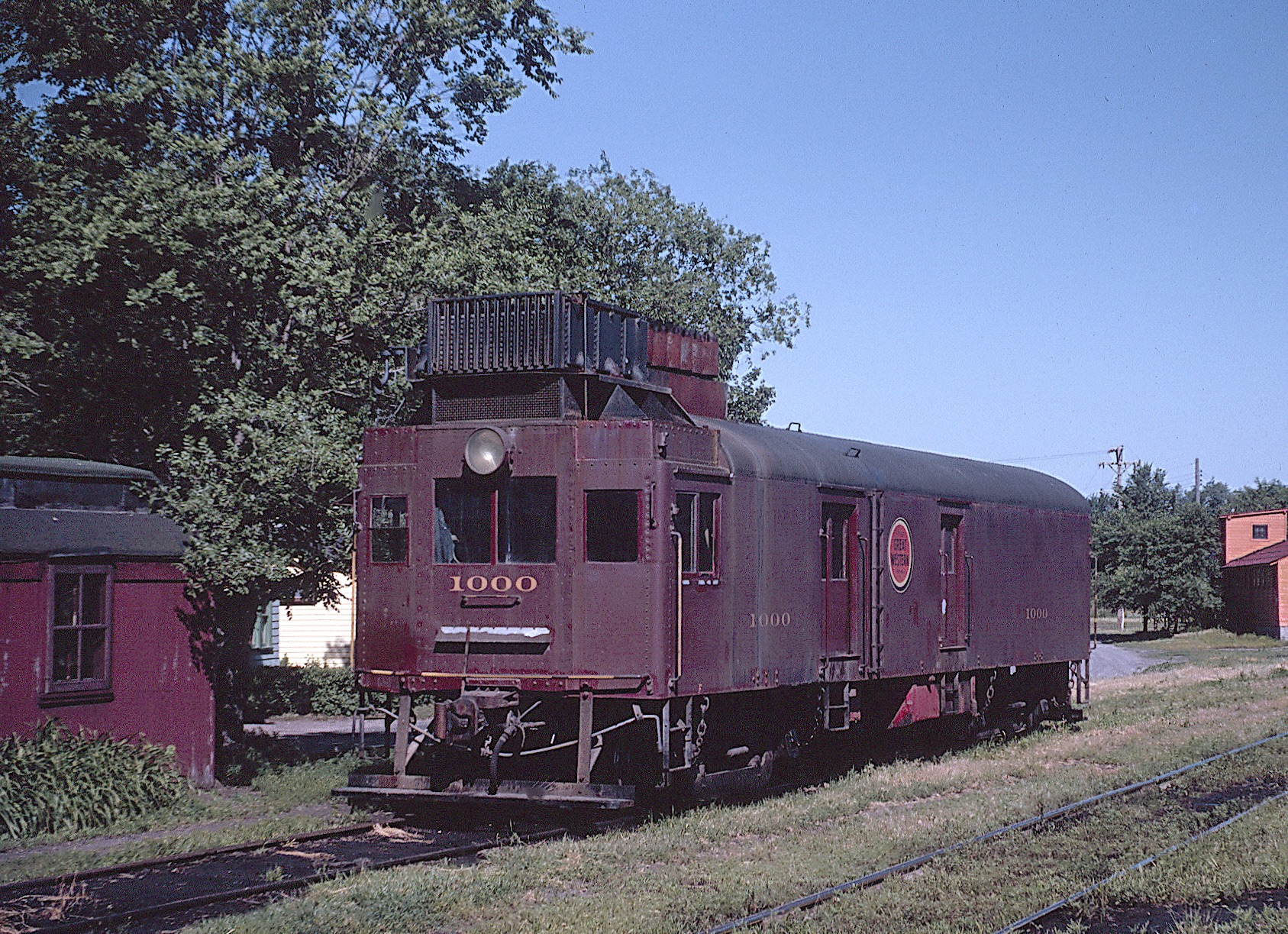 Chicago Great Western motorcar #1000, built by McKeen in 1910 and later repowered by EMC, is seen here at the end of the Winona Branch in Winona, Minnesota on June 24, 1952. Roger Puta photo.
A.B. Stickney
This project also ran into trouble although it may have experienced greater success had it not been for the financial Panic of 1857. As with the CStC&MAL nothing more happened with the M&NW project until A.B. Stickney got involved.
Along with business partner and investor William Marshall the two purchased the company's 10,000 shares outstanding believing it could be turned into a successful operation.
Logos
By then, Stickney was no stranger to the railroad industry. He was born in Maine on June 17, 1840 and became interested in the railroad industry after the Civil War.
The energetic and sharp young man worked his way up through ranks with several different railroads; he helped build predecessors of the Chicago & North Western and then went to work for James J. Hill's, St. Paul, Minneapolis & Manitoba Railway (early component of the Empire Builder's later Great Northern Railway).
He later found top positions at Canadian Pacific and another Midwestern granger, the Minneapolis & St. Louis Railway ("The Peoria Gateway"), before going off on his own with the Minnesota & Northwestern.
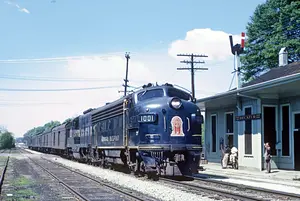
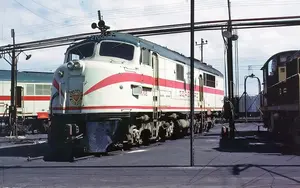
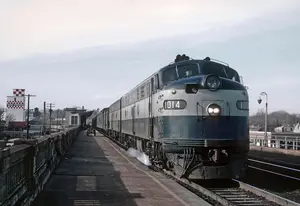
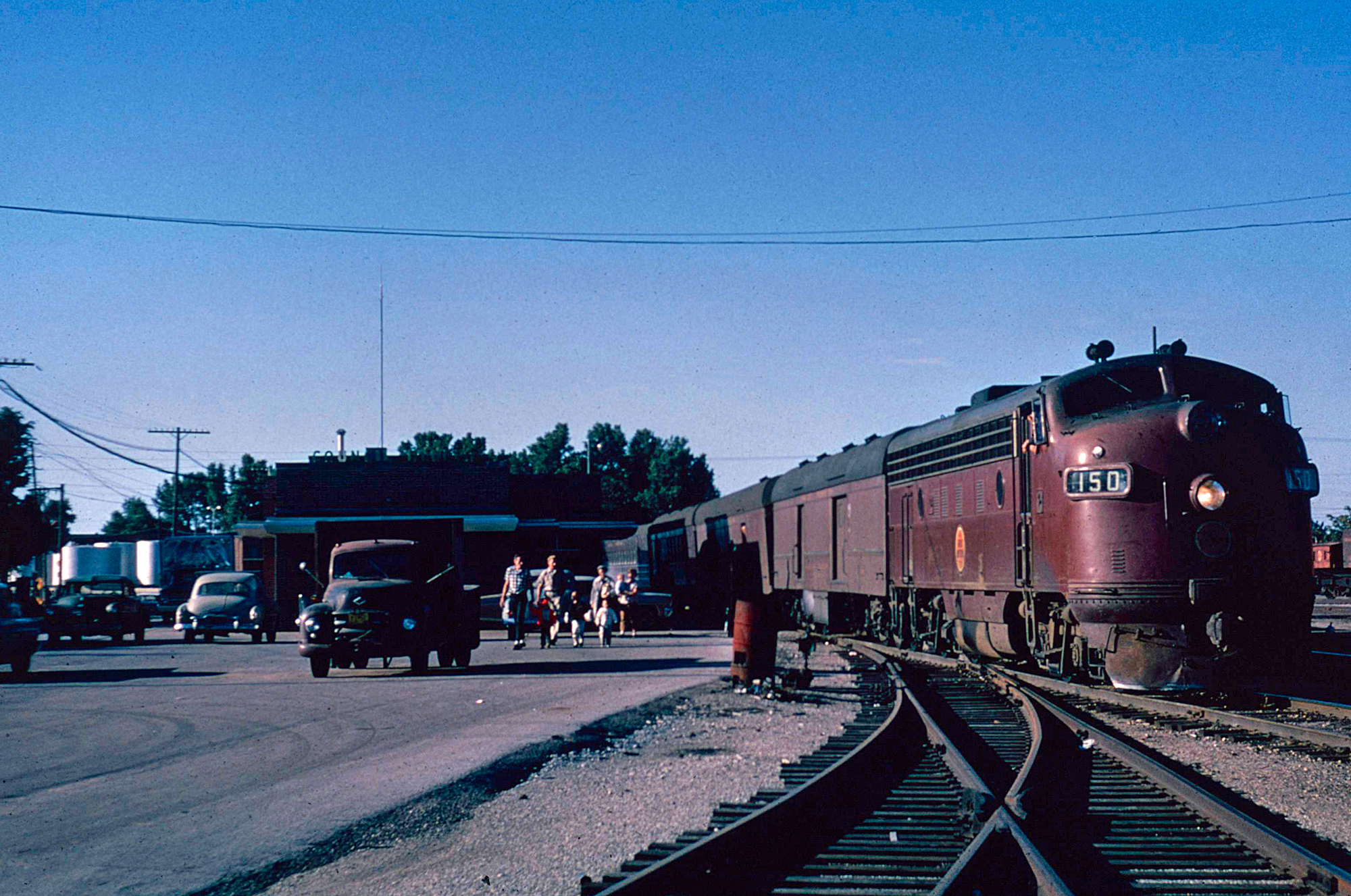 Chicago Great Western F3A #150 has arrived at the railroad's small depot in Council Bluffs, Iowa (situated near South 3rd Street and 16th Avenue) with train #13, the overnight run from Minneapolis, circa 1957. American-Rails.com collection.
Expansion
Now heading his own company, Stickney's project quickly took off as he began track surveys for a 110-mile line from St. Paul to Mona, Iowa where a connection would be established with the Cedar Falls & Minnesota (leased by the Illinois Central).
Actual construction of the route began in 1884 and was officially ready for service on September 27, 1885. Having a great deal of experience in both managing and building railroads, particularly within the hotly contested Midwestern market, Stickney realized for his venture to sustain long term success it must link the largest cities.
There was none larger, of course, than Chicago and he quickly made reaching America's railroad capital a top priority.
During May of 1885, Stickney acquired the assets of the Dubuque & Northwestern Railroad (D&NW) for this purpose, a system originally incorporated on June 20, 1883 as a narrow-gauge to connect Dubuque with an unspecified northwesterly point ("...to run in a northwestern direction into Minnesota and Dakota and connect with the Northern Pacific...").
Before any construction could take place the road encountered financial troubles which allowed Stickney to become involved.
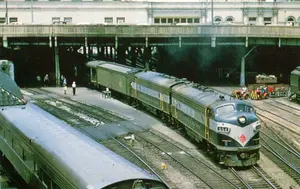
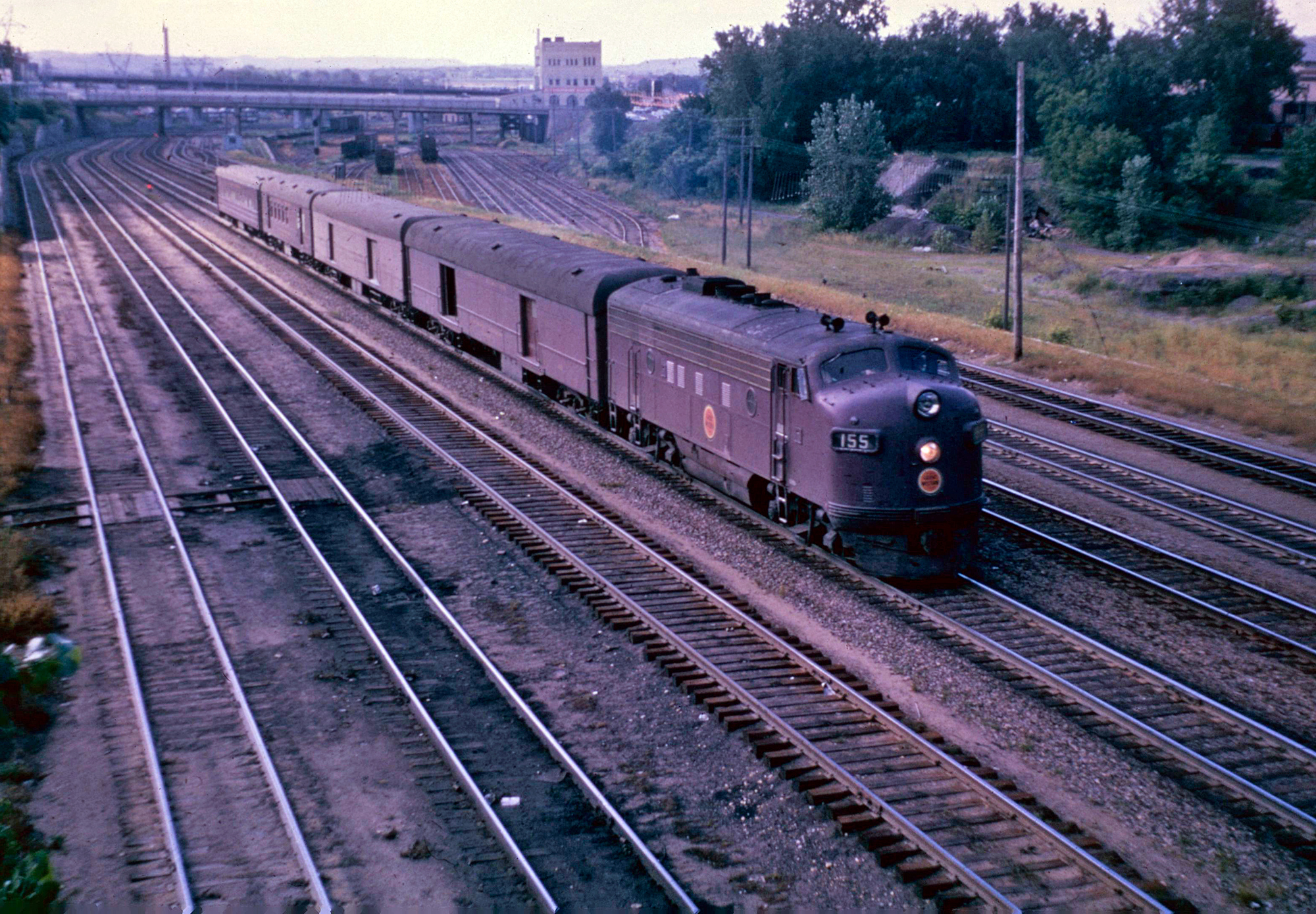 Chicago Great Western F7A #155 departs St. Paul, Minnesota during the early 1960s. American-Rails.com collection.
It would build a 50-mile line west from Dubuque to reach Compton (near Lamont). From there, another new segment would branch from the existing M&NW at Hayfield and run in a southeasterly direction. The D&NW began construction on July 29, 1885 with the first eight miles opening to Durango by year's end.
Into 1886 work quickened while at the same time the M&NW began construction of its section. On October 20, 1886 a through route from Dubuque, along the Mississippi River, to St. Paul was completed and ready for service.
The 253-mile pike was still a relatively small operation in comparison to the surrounding Chicago & North Western, Rock Island, Burlington, and Milwaukee Road.
However, considering the relatively late time period in which he began it is rather incredible Stickney accomplished what he did.
This is because that while the 1880's witnessed more trackage laid across the country than during any other decade, the big grangers mentioned above used a great deal of resources to keep out potential new threats.
At A Glance
1,495.27 (1930) 1,458 (1950) | |
Chicago - Oelwein, Iowa - Minneapolis Oelwein - Des Moines, Iowa - Kansas City Oelwein - Clarion, Iowa Minneapolis - Mason City, Iowa - Fort Dodge, Iowa - Omaha, Nebraska Randolph, Minnesota - Mankato Randolph - Red Wing - Rochester, Minnesota - McIntire, Iowa Rochester - Winona | |
Freight Cars: 4,490 Passenger Cars: 33 | |
While the D&NW/M&NW projects were under way Stickney established a new system, the Minnesota & Northwestern Railroad Company of Illinois.
It was officially incorporated on February 25, 1886 and would build a direct link into Chicago via Dubuque. Once again he wasted little time as construction commenced that same July.
The line would not actually reach downtown Chicago but the nearby suburb of Forest Home (Forest Park) and then utilize trackage rights over what later became the Baltimore & Ohio Chicago Terminal (B&OCT).
By February of 1887 the 97-mile line from Forest Home to South Freeport was finished although regular service did not commence until later that summer.
Part of the route, which included 27 miles from Forest Home to St. Charles, utilized the grading work of the moribund Chicago, St. Charles & Mississippi Air Line previously mentioned.
To reach home rails into Dubuque, trackage rights were initially secured over the Illinois Central before construction of this final extension began in March of 1887. After only a year the 50-mile line was completed in early 1888 and opened for service on February 9th.
Timetables (1930)
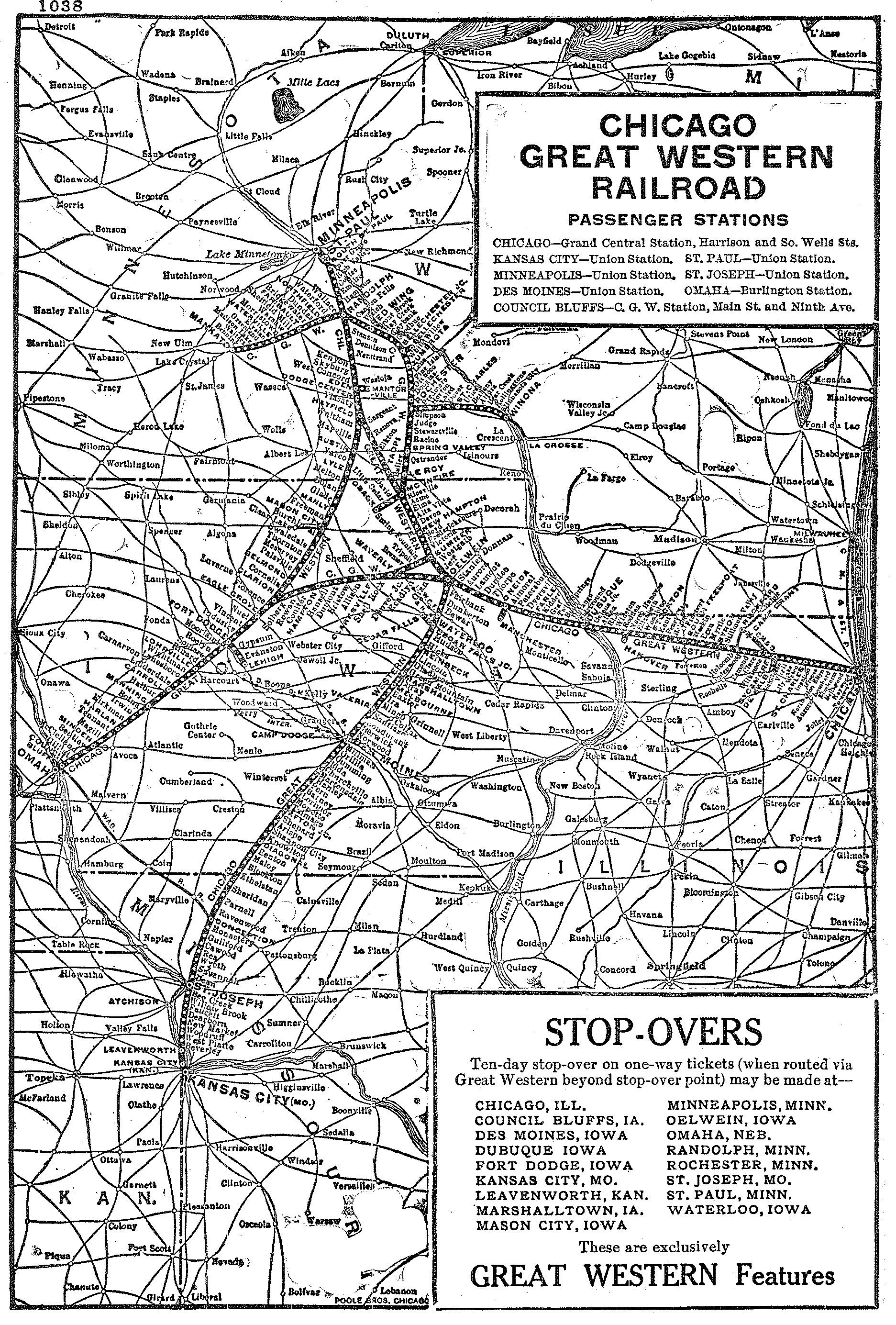
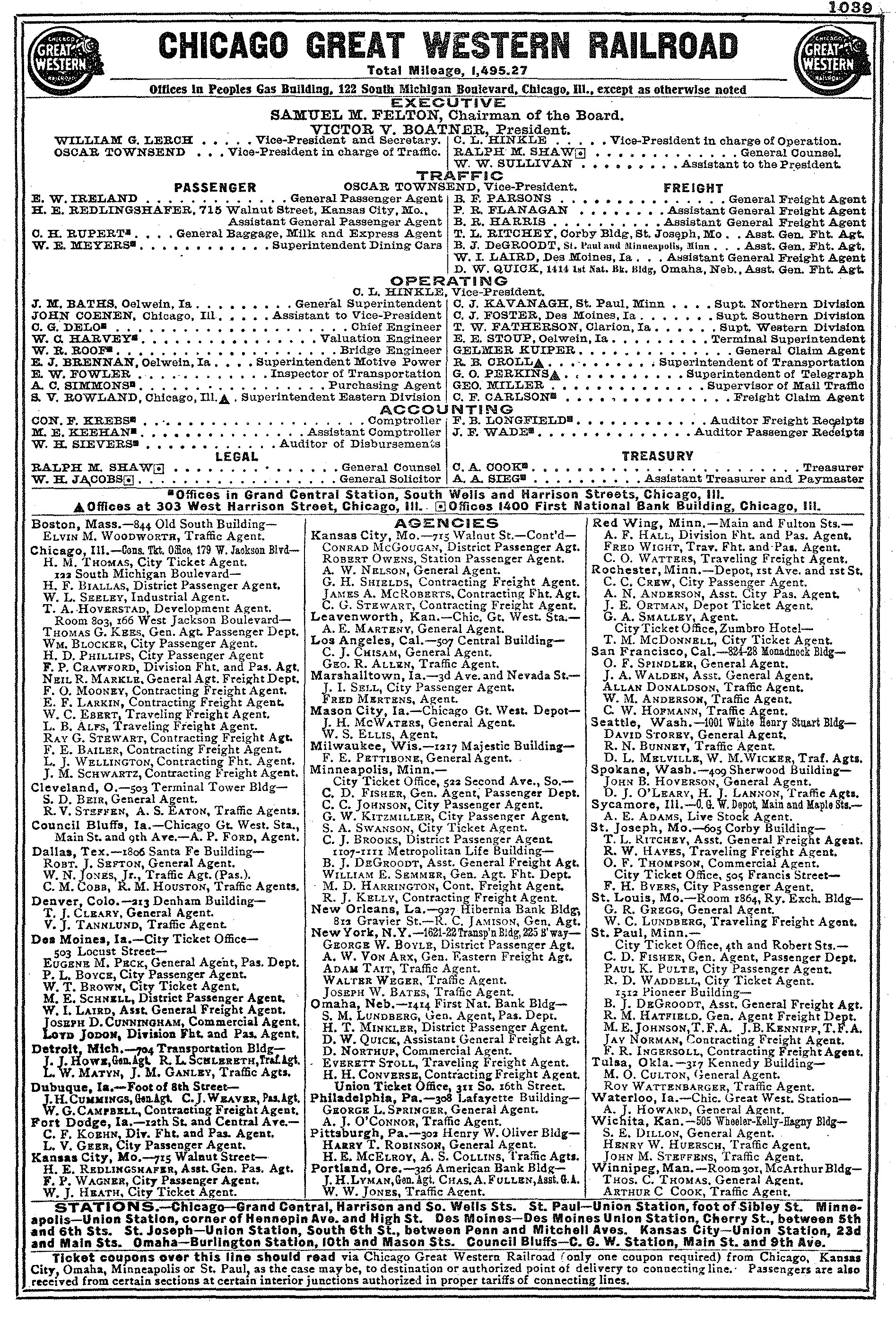
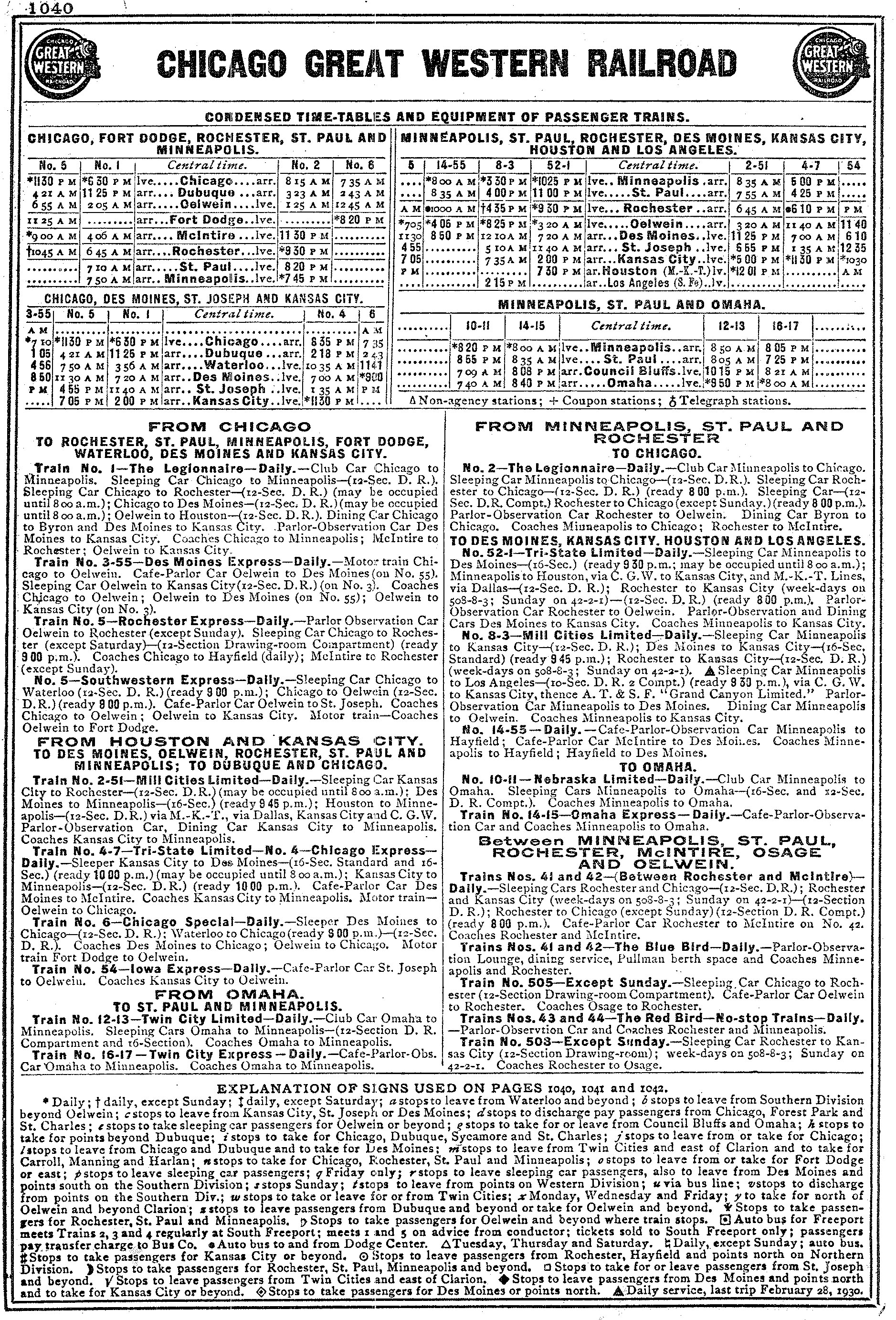
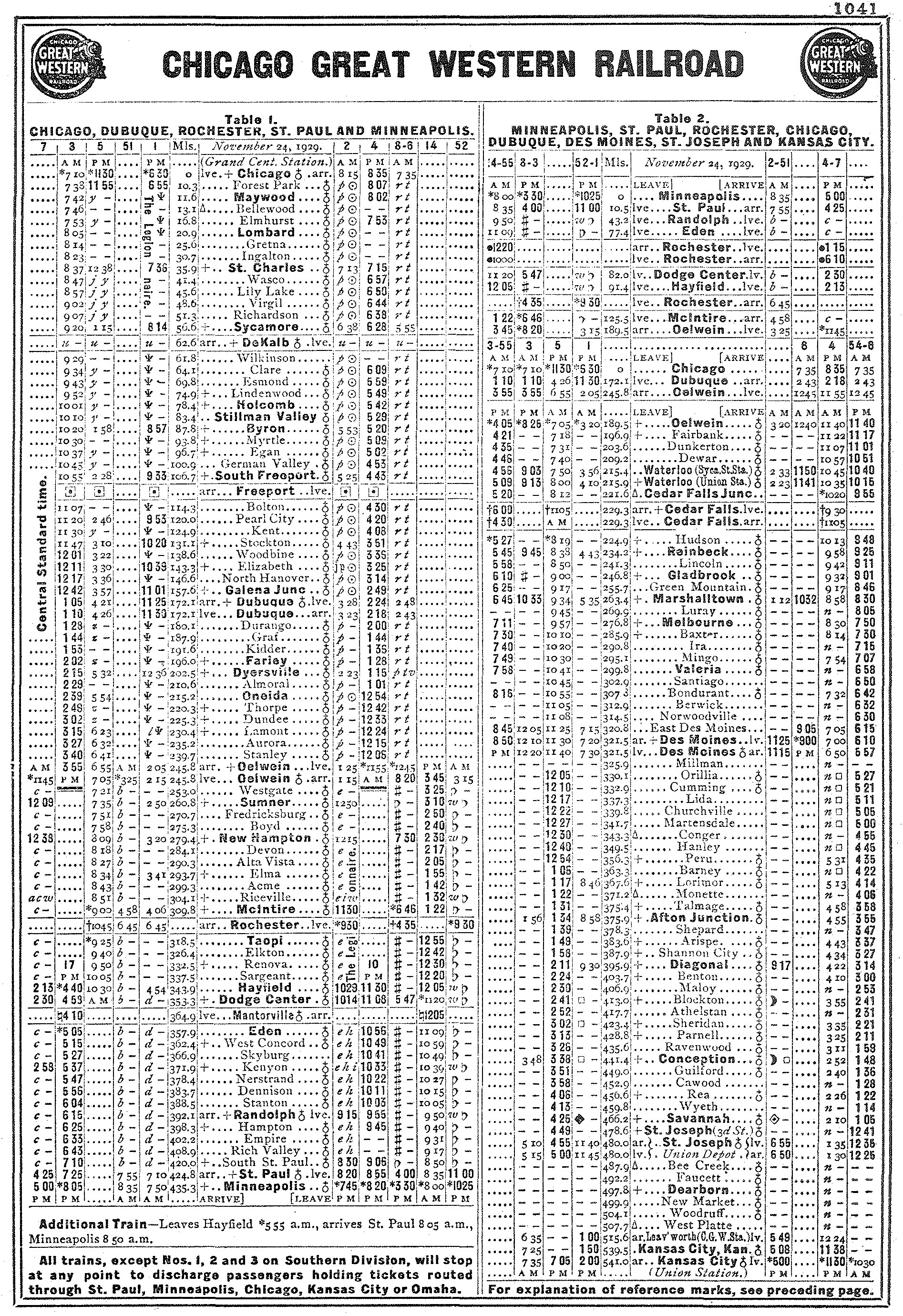
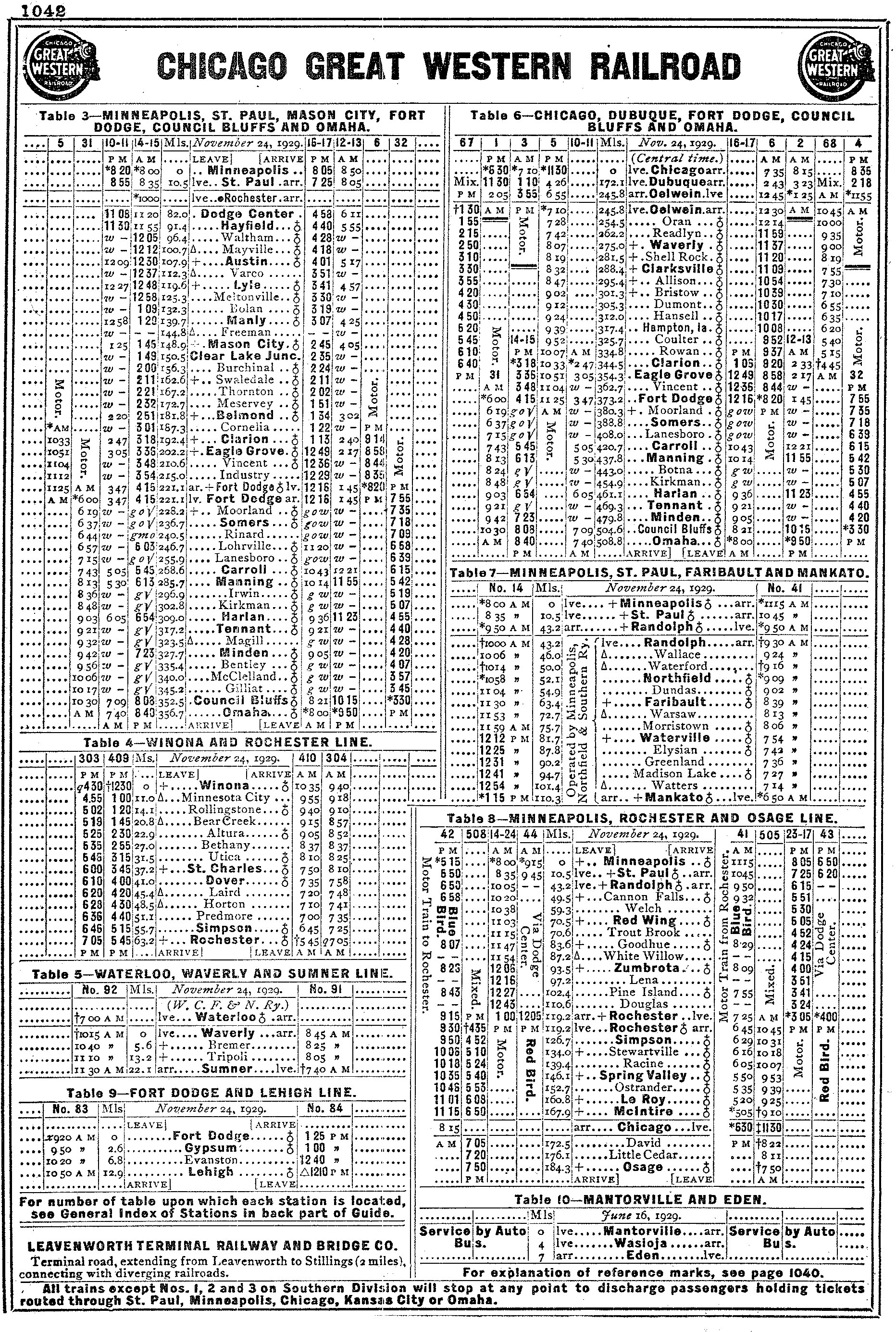
The Chicago main line contained one notable infrastructure project, the 2,493-foot Winston Tunnel. It proved an expensive and contentious operational problem throughout its history.
The bore was completed in early 1888 but the unstable blue clay through which it was built required extensive maintenance over the years and major rebuilds at various times.
As the route was being finished three significant events occurred during 1887: first, Stickney acquired the small Dubuque & Dakota on January 19th which branched from the M&NW at Sumner, reached Waverly, and extended as far west as Hampton; later that year he added the Wisconsin, Iowa & Nebraska, which had opened a section of track from Waterloo to Des Moines, Iowa (as well as a branch to Cedar Falls).
He connected it to Oelwein and then pushed southward into Kansas City reaching as far as St. Joseph in May of 1888.
From there, a new company was chartered, the Leavenworth & St. Joseph which was completed to Beverly along the east bank of the Missouri River in December of 1890.
To reach Kansas City directly, trackage rights were carried out over the Rock Island, Union Pacific, and Kansas City, Wyandotte & Northwestern (Missouri Pacific).
Finally, while all of this was ongoing his entire enterprise was renamed the Chicago, St. Paul & Kansas City Railroad in December of 1887 to better reflect the company's future intentions.
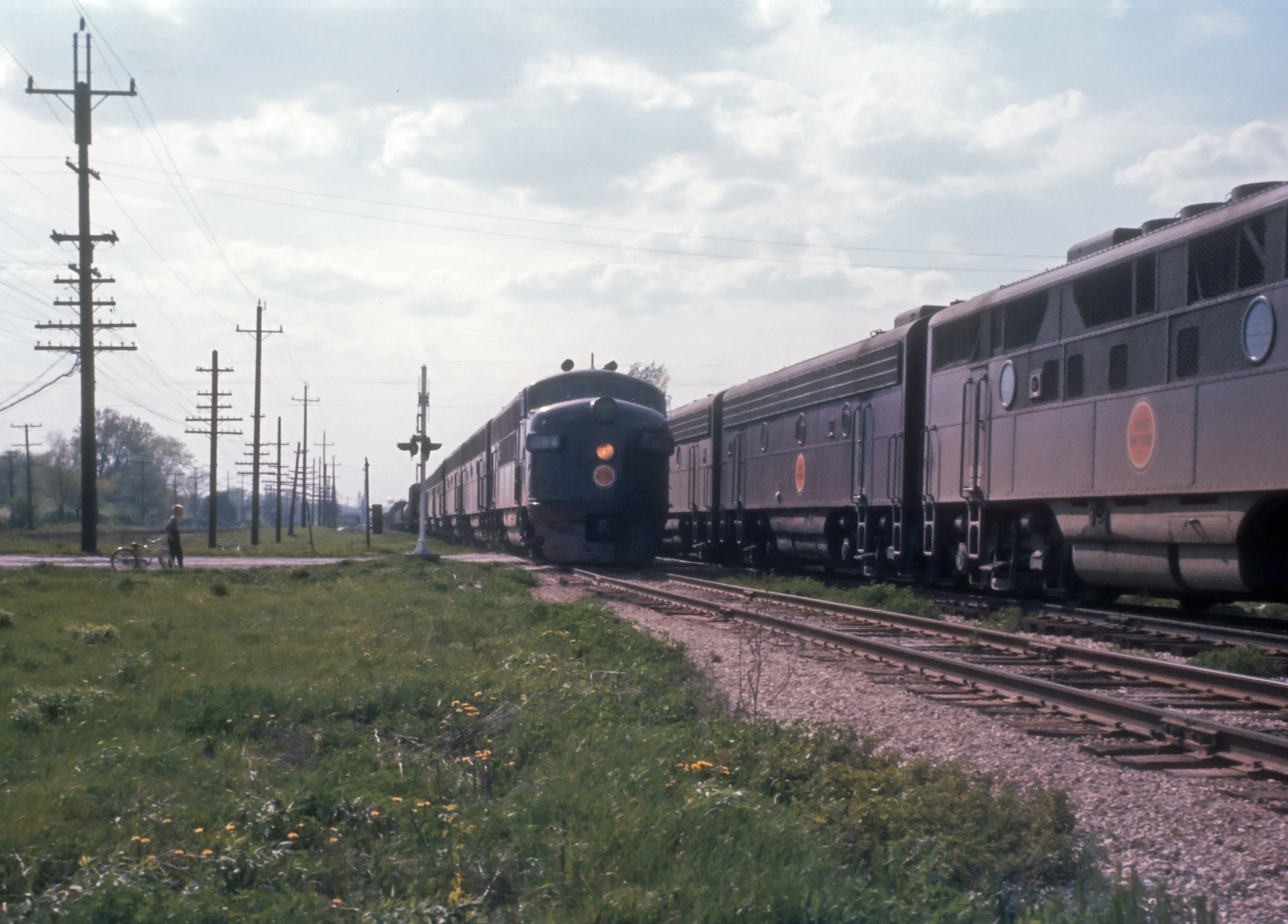 Chicago Great Western freights meet at Poplar Avenue in Elmhurst, Illinois in May, 1960. Rick Burn photo.
Creation
As Stickney eyed a westward extension towards the important western gateway of Omaha, where interchange could be established with the transcontinental Union Pacific, his railroad ran into financial issues and entered receivership on January 16, 1892.
The bankruptcy was short-lived, however, and assets of the CStP&KC were acquired (initially via lease, the CStP&KC was later dissolved in 1893) by the newly formed Chicago Great Western Railway on July 1st of that same year with Stickney remaining in control.
Interestingly, while the company weathered the crippling financial Panic of 1893 the troubled economic conditions warranted no further expansion at that time.
One notable event which took place was moving the primary shops from South St. Paul to Oelwein, Iowa. This town was situated exactly in the center of the Great Western system, making it an ideal location for such facilities.
The Oelwein Shops opened in April of 1899 containing locomotive and car repair shops, back shops, store house, and other buildings related to maintaining the company's equipment and infrastructure. They were expanded a few years later when a large 40-stall roundhouse opened in 1904.
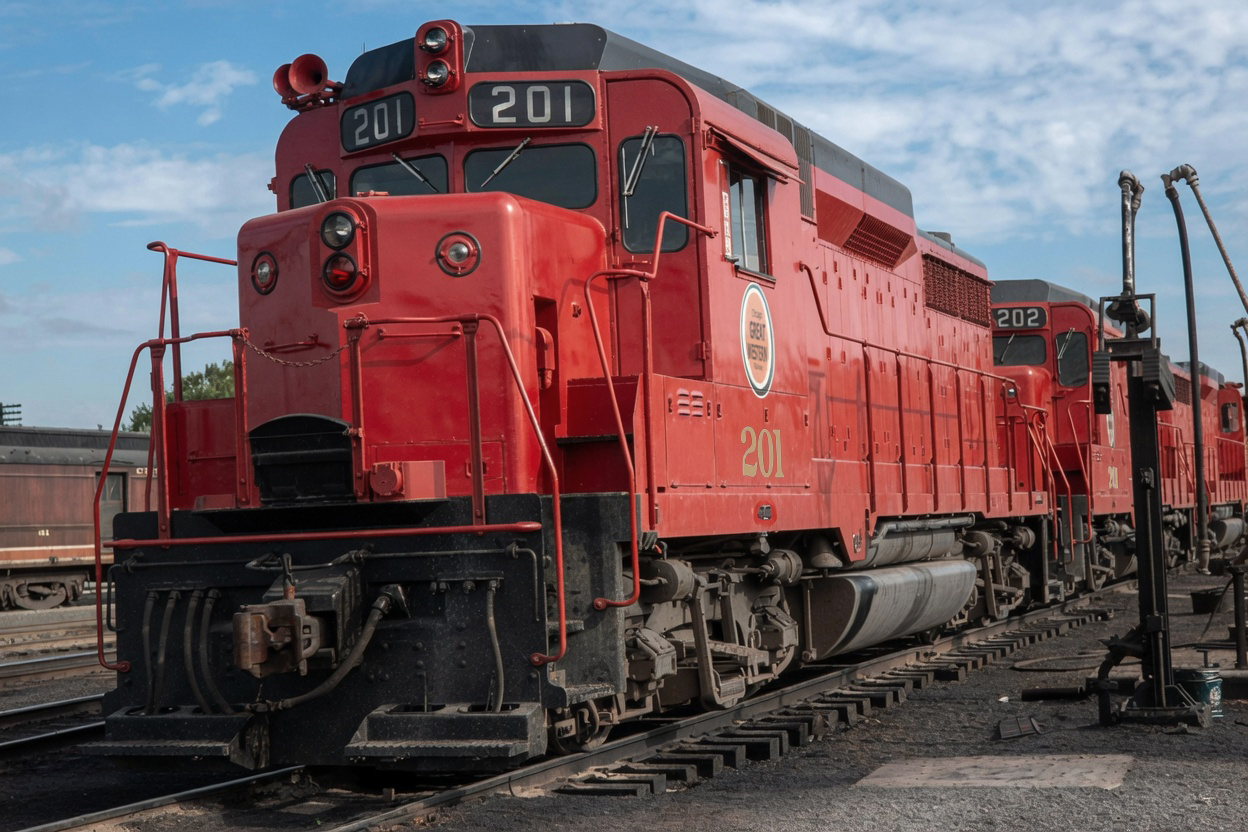 Recently delivered Chicago Great Western GP30's, including #201 and #202 closest to the photographer, at Oelwein, Iowa in July, 1963. American-Rails.com collection.
By the early 20th century the railroad's financial situation had greatly improved as Stickney sought another round of expansion. The railroad had already opened its only branch in Illinois to DeKalb, a 6-mile spur running via Sycamore completed in October of 1895 via subsidiary DeKalb & Great Western Railway.
It also began branching out to the east and west of its Twin Cities main line during the 1890's, a process which continued into the early 1900's. Most of this trackage came through acquisition of the Wisconsin, Minnesota & Pacific in 1899 which by 1903 connected Mankato to the west, crossed the Great Western at Randolph, then proceed south to link Red Wing, Bellechester (via a short branch), and Rochester.
The latter town also contained a westward spur running back to the CGW main line at Dodge Center. Finally, an extension from Rochester headed east to Winona and south to another CGW connection at McIntire, Iowa before terminating at Osage. The last significant Great Western component was the extension into Omaha.
System Map (1943)
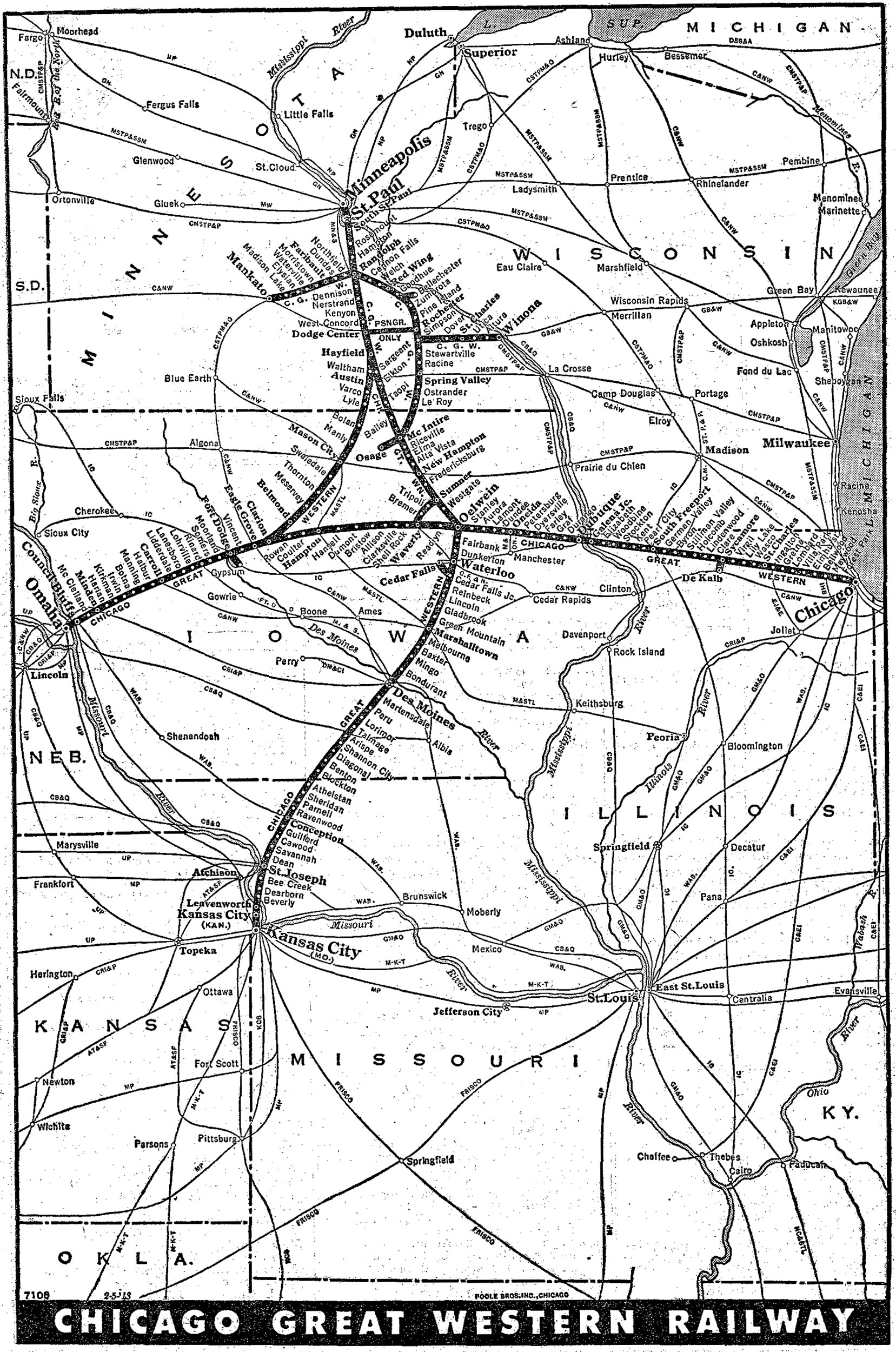
It began with the takeover of the Mason City & Fort Dodge in March of 1901, sold by close friend James J. Hill. The small line was originally completed between its namesake cities on October 24, 1886 and once under Chicago Great Western control, Stickney pushed for Omaha.
First, the 9 miles from Manly to Mason City had to be closed and this segment was ready for service by November 1, 1901. Then, new construction was carried out west of Dodge City in August of 1901. Passing through small agricultural communities like Carroll and Minden it opened to Council Bluffs in the late summer of 1903.
Finally, a trackage rights agreement was secured with Union Pacific later that November to cross its Missouri River bridge and reach Omaha Union Station. With this the Chicago Great Western Railway was complete, operating a network of 1,458 route miles. The system was the classic granger, relying heavily on agricultural traffic.
However, the road did handle other freight including cement, aggregates, manufacturing, various less-than-carload movements, and interchange business (of note was the CGW's openness to work with local interurban carriers, an industry most other large railroads shunned).
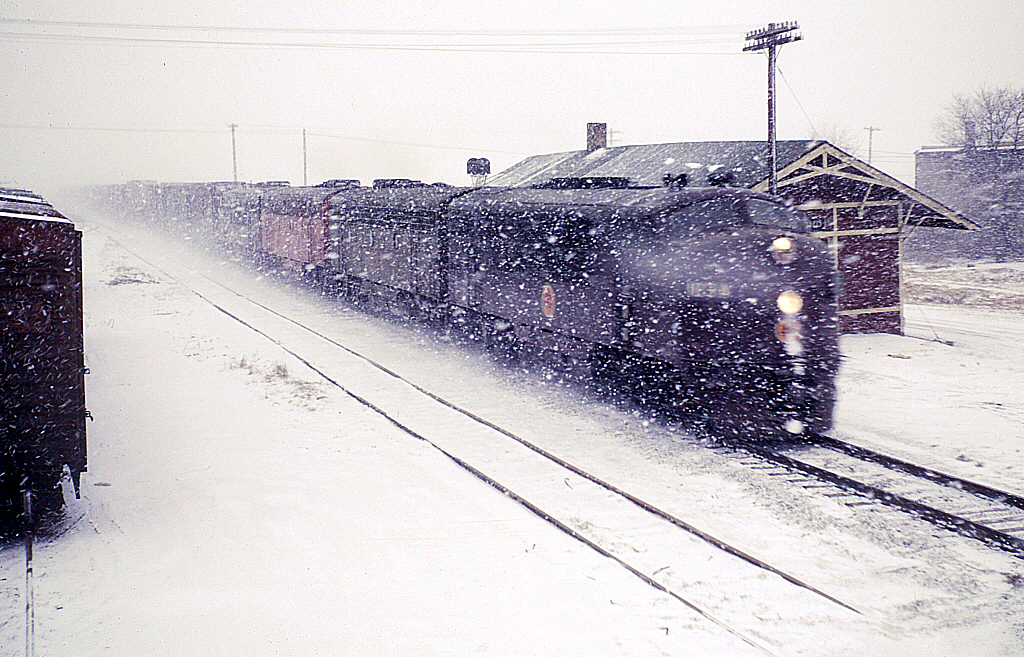 Chicago Great Western F3A #103-A leads a long freight through heavy snow and past the depot at Esmond, Illinois in December, 1965. Rick Burn photo.
The Modern "Corn Belt Route"
The 20th century got off to a rocky start as the CGW entered receivership once more during 1908; an aging Stickney, despite being named a co-receiver of the bankrupt property, quietly resigned on December 21st, electing instead to allow others to run the railroad which he had built.
The reorganization was again brief as the Chicago Great Western Railroad took over the Chicago Great Western Railway's assets on August 19, 1909.
The new CGW saw heavy traffic during World War I when it was operated by the government through the United States Railroad Administration (USRA). The 1920's were a generally good decade until the market crash.
The company's innovation also shown through at this time when it placed gas-electric "Doodlebugs" and streamlined McKeen Cars in service between Chicago and Omaha in 1924, the purpose of which was to cut costs on lightly-patronized trains.
The good times of the "Roarin '20's" would not last, however, as the Great Depression of October, 1929 hit the country, and railroad industry, quite hard. The Great Western at first weathered the troubles but eventually slipped into bankruptcy once more on February 28, 1935.
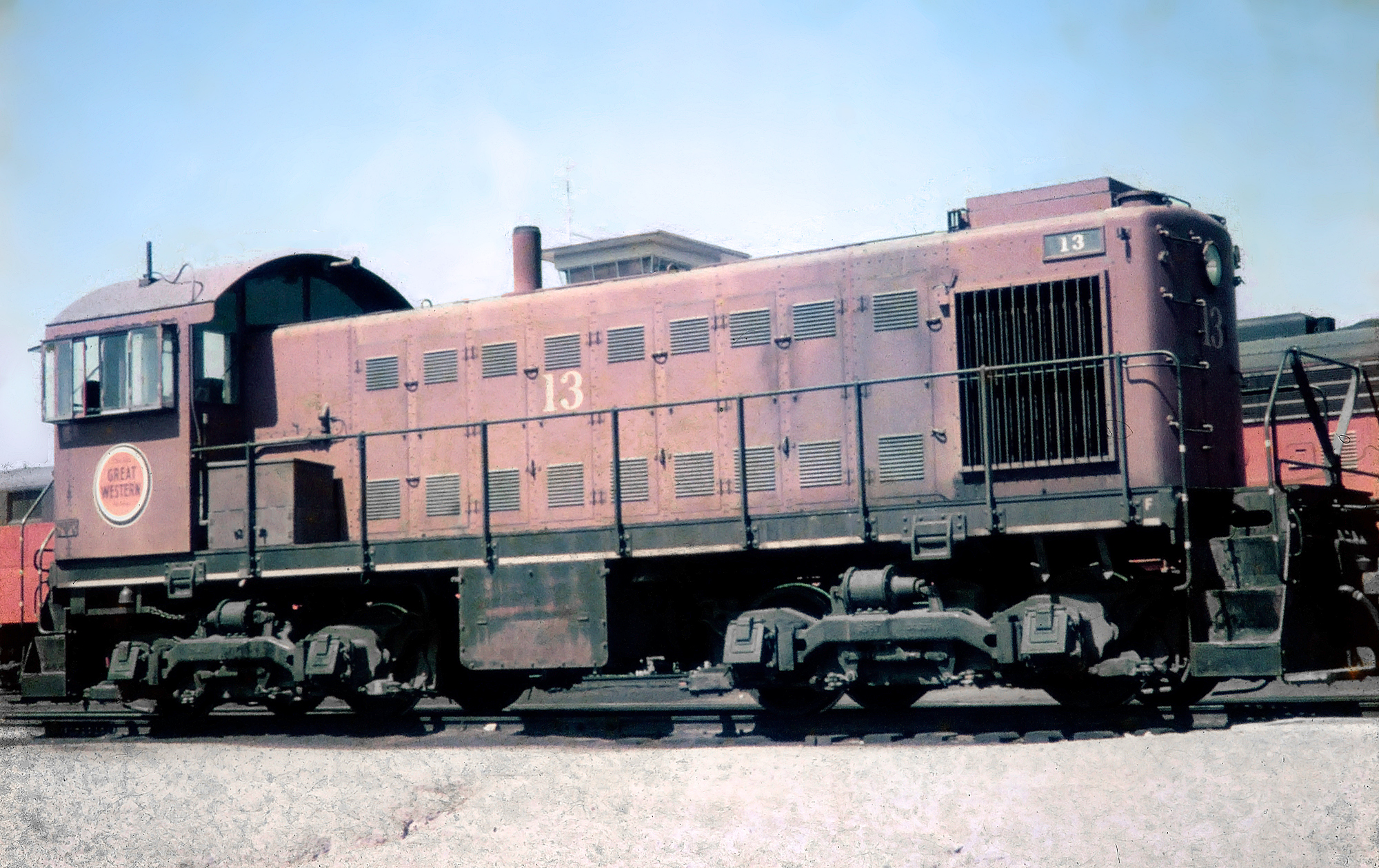 Chicago Great Western S1 #13 at the road's terminal in Oelwein, Iowa, circa 1965. American-Rails.com collection.
This time the reorganization required much longer due to the economic troubles of the 1930's. However, in comparison to some roads, which spent more than a decade dealing with such proceedings, the CGW was back on its feet before World War II. Its final bankruptcy ended on February 19, 1941 when it became the Chicago Great Western Railway once more.
Given its size and the intensely competitive markets in which it operated the modern CGW was a respectable system boasting a stretch of double-tracked territory extending out of Chicago, hosting one of the earliest trailer-on-flatcar (TOFC) services in 1936, and completely dieselizing its motive power fleet by 1949.
While these first-generation models wore an attractive two-tone burgundy/red livery the railroad never bothered with the streamliner craze and instead focused all of its efforts on business development and customer service.
It is interesting that despite Stickney early in the company's history the innovated and resourceful management practices he implemented forever endured.
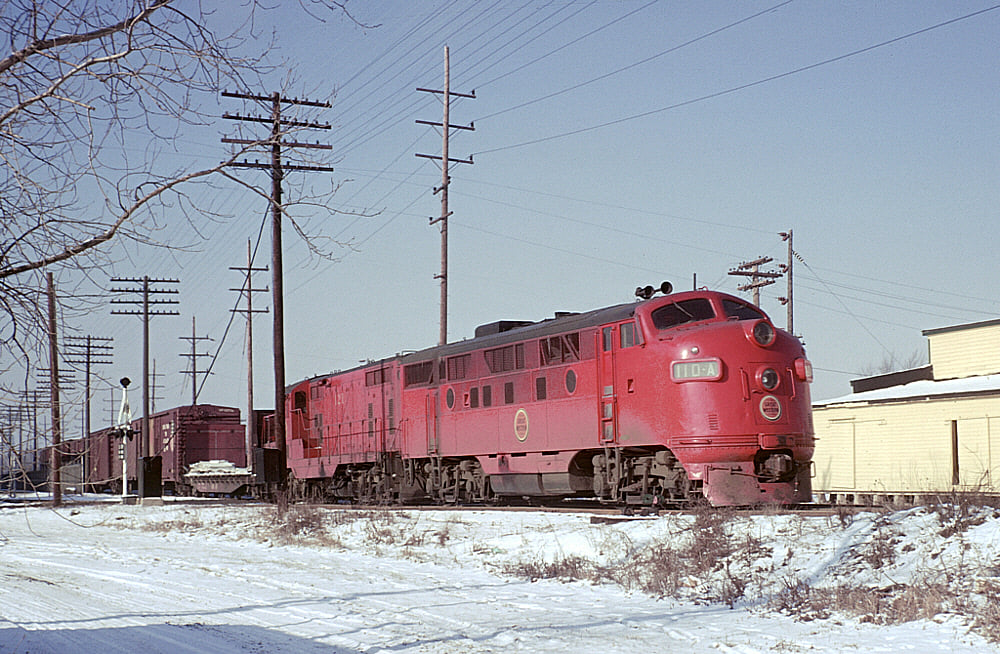 Chicago Great Western F3A 110-A leads a freight train at Villa Park, Illinois in January, 1968. Rick Burn photo.
Passenger Trains
Blue Bird: (Twin Cities - Rochester)
Bob-O-Link: (Chicago - Rochester)
Great Western Limited: (Chicago - Twin Cities)
Legionnaire: (Chicago - Twin Cities)
Mills Cities Limited: (Kansas City - Twin Cities)
Minnesotan: (Chicago - Twin Cities)
Nebraska Limited: (Twin Cities - Omaha)
Omaha Express: (Twin Cities - Omaha)
Omaha Limited: (Twin Cities - Omaha)
Rochester Special: (Twin Cities - Rochester)
Red Bird: (Twin Cities - Rochester)
Twin Cities Express: (Twin Cities - Omaha)
Twin Cities Limited: (Omaha - Twin Cities)
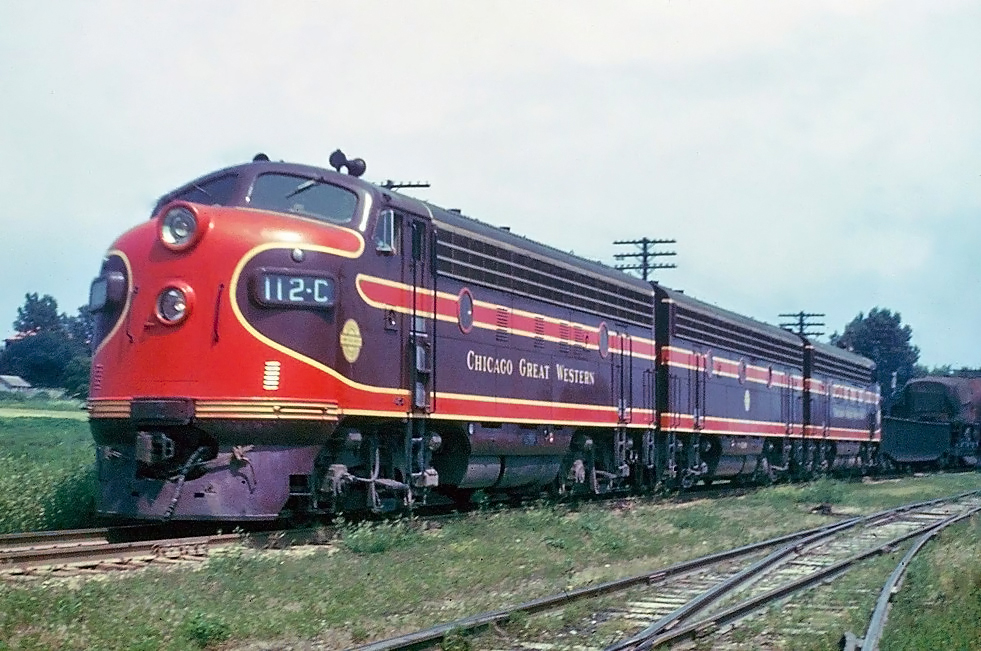 A matching A-B-A set of new Chicago Great Western F3s, led by #112-C and wearing the road's attractive original livery, are seen here at Oelwein, Iowa on August 22, 1948. The locomotives were about five months old in this scene. Photographer unknown.
Into the 1950's, under President William N. Deramus III, the CGW launched efforts to significantly cut back its modest passenger services, ending locals and reducing as many through trains as possible. It realized competition from the highways and other railroads proved the concept fruitless.
According to Mike Schafer's book, "More Classic American Railroads," by 1956 there were only two through trains remaining, the Twin Cities - Kansas City, Mills Cities Limited, and Twin Cities - Omaha, Nebraska Limited/Twin City Limited.
The company also took steps to reduce operating costs associated with depots by demolishing these structures for ugly but utilitarian cinder-block buildings.
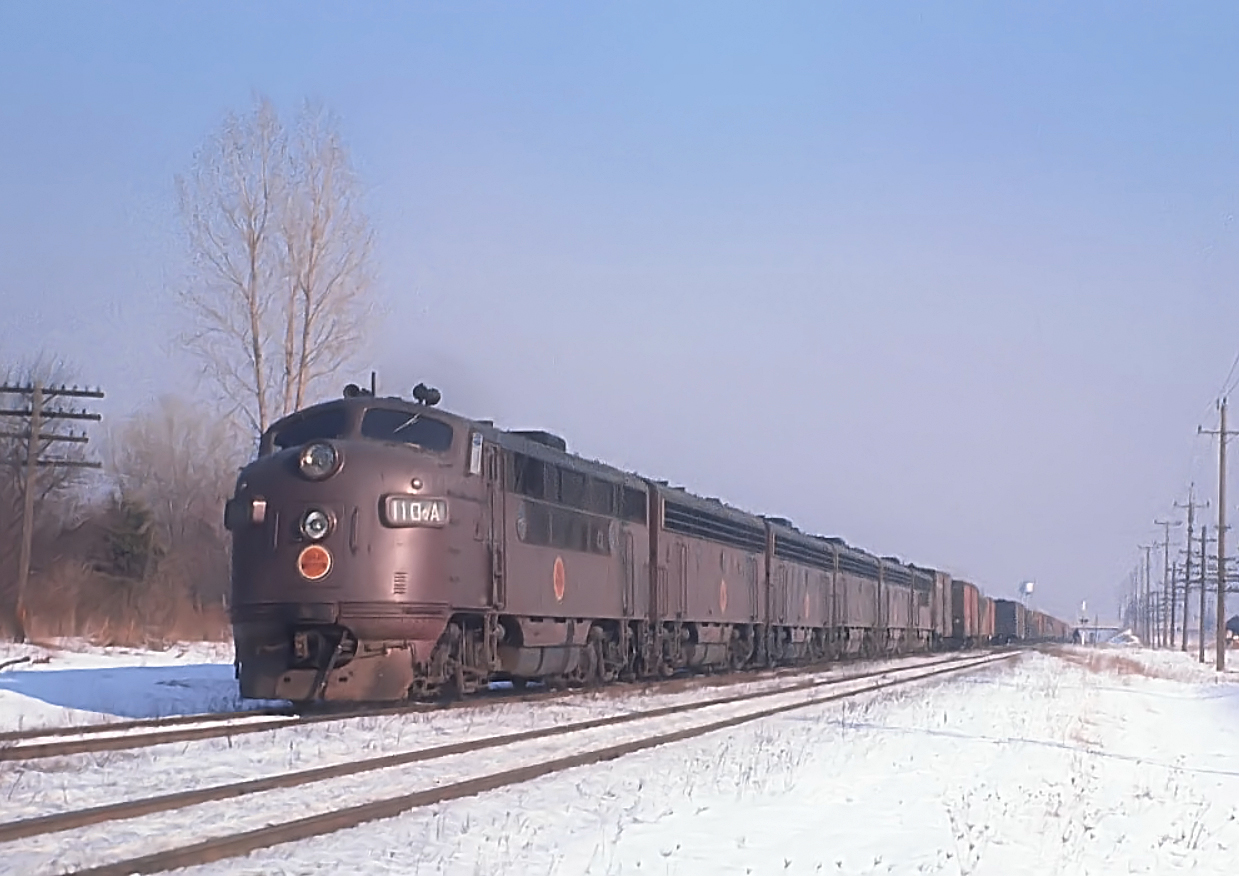 One of the CGW's classic long freights between Popular Avenue and York Streets at Elmhurst, Illinois in February, 1962. Rick Burn photo.
The Twin Cities - Kansas City ended on April 27, 1962 when trains #6 (northbound) and #5 (southbound) made their final runs while the Twin Cities - Omaha serviced lasted a bit longer until September 29, 1965 when eastbound/northbound train #14 departed Omaha's Burlington Station for the final time.
The focus then rested squarely on freight where the railroad became famous for its propensity to operate extremely long, 200-car consists.
According to Mr. Grant this was actually a long-held practice on CGW to increase efficiency and reduce operating costs, dating back to October, 1894 when it had tested an 84-car consist between St. Paul and Oelwein.
 Chicago Great Western RS2 #56 switches the Hormel plant in Austin, Minnesota in February, 1964. Rick Burn photo.
Diesel Roster
American Locomotive Company
| Model Type | Road Number | Date Built | Quantity |
|---|---|---|---|
| S2 | 8-10 | 1947 | 3 |
| S1 | 11-15 | 1948 | 5 |
| RS2 | 50-57 | 1949 | 8 |
Baldwin Locomotive Works
| Model Type | Road Number | Date Built | Quantity |
|---|---|---|---|
| DS-4-4-1000 | 32-41 | 1949 | 10 |
Electro-Motive Division
| Model Type | Road Number | Date Built | Quantity |
|---|---|---|---|
| SC | 5-7 | 1936 | 3 |
| SW900 | 5 | 1957 | 1 |
| NW2 | 16-31, 42 | 1948-1949 | 17 |
| TR2 | 58A-66A, 58B-66B | 1948-1949 | 18 |
| F3A | 101A-115A, 101C-115C, 150-152 | 1946-1949 | 33 |
| F3B | 101B-112B, 101D-104D | 1947-1949 | 16 |
| F7B | 113B-116B, 108D-116D, 116E, 116F, 116G | 1949-1951 | 16 |
| GP7 | 120-121 | 1951 | 2 |
| GP9 | 120 | 1956 | 1 |
| F7A | 153-156 | 1949 | 4 |
| GP30 | 201-208 | 1963 | 8 |
| SD40 | 401-409 | 1966 | 9 |
Steam Roster
| Class | Type | Wheel Arrangement |
|---|---|---|
| B-3 Through B-8 | Switcher | 0-6-0 |
| C-8 Through C-14 | American | 4-4-0 |
| D-1 Through D-4 | Mogul | 2-6-0 |
| E-1 Through E-7 | Ten-Wheeler | 4-6-0 |
| F-2 Through F-7b | Prairie | 2-6-2 |
| G-1 Through G-4 | Consolidation | 2-8-0 |
| H-1, J-2 Through J-2s | Switcher | 0-8-0 |
| K-1 Through K-6 | Pacific | 4-6-2 |
| L-1 Through L-3 | Mikado | 2-8-2 |
| M-1 | Santa Fe | 2-10-2 |
| T-1 Through T-3 | Texas | 2-10-4 |
 A quartet of Chicago Great Western GP30s, led by #201, are at Fair Avenue in Elmhurst, Illinois in February, 1966. Rick Burn photo.
Chicago & North Western Merger
During January of 1957 the Great Western's final president took the helm, Edward Reidy. He did his best to maintain a quality railroad by acquiring new second-generation diesels, maintaining a conservative stance towards spending, offering high top notch customer service, and operating freights as long and as fast as possible.
Alas, government regulations, rising costs, the surrounding competition, and other issues made a regional carrier like the Great Western quite vulnerable.
During the postwar years it had considered several different mergers with the St. Louis-San Francisco Railway (Frisco), Missouri-Kansas-Texas (Katy), Chicago & Eastern Illinois, Kansas City Southern, Rock Island, and Soo Line.
In hindsight, any of those choices would likely have been better than its ultimate choice, the Chicago & North Western. The merger was finalized on July 1, 1968 and the C&NW, already in a weak financial condition, wanted only the Great Western's Kansas City gateway.
Much of the rest was promptly abandoned, a fact greatly resented by CGW employees. The Chicago Great Western was certainly one of the more interesting granger roads and will forever be remembered for its innovation and commitment to not only itself but also the customers it served.
Photos
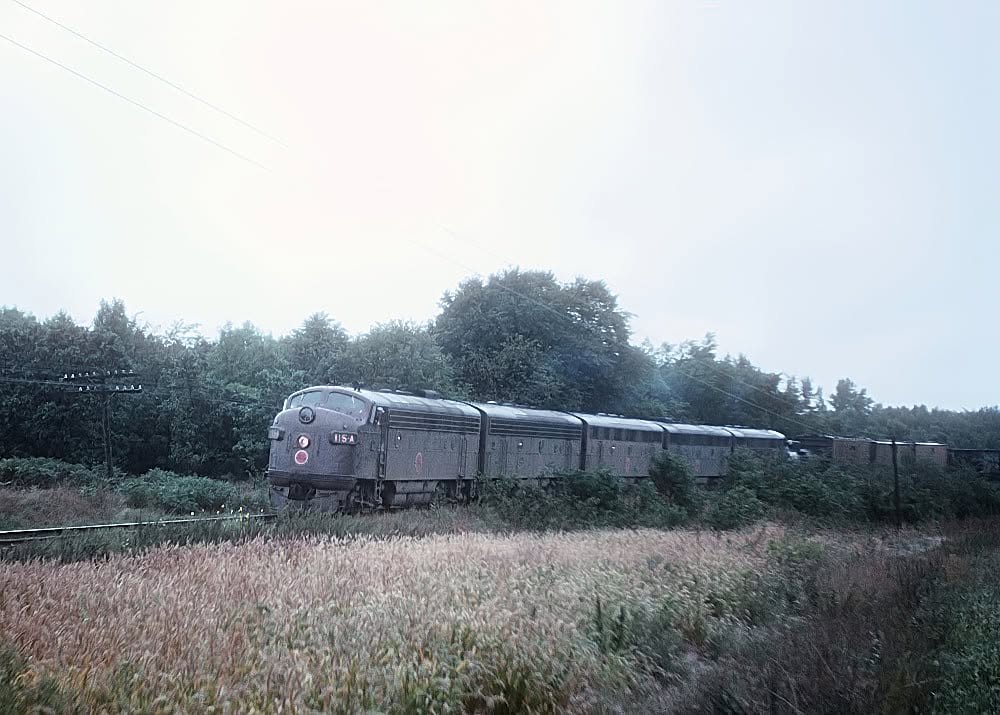 Chicago Great Western F3A #115-A leads a freight just south of Randolph, Minnesota in September, 1962. Rick Burn photo.
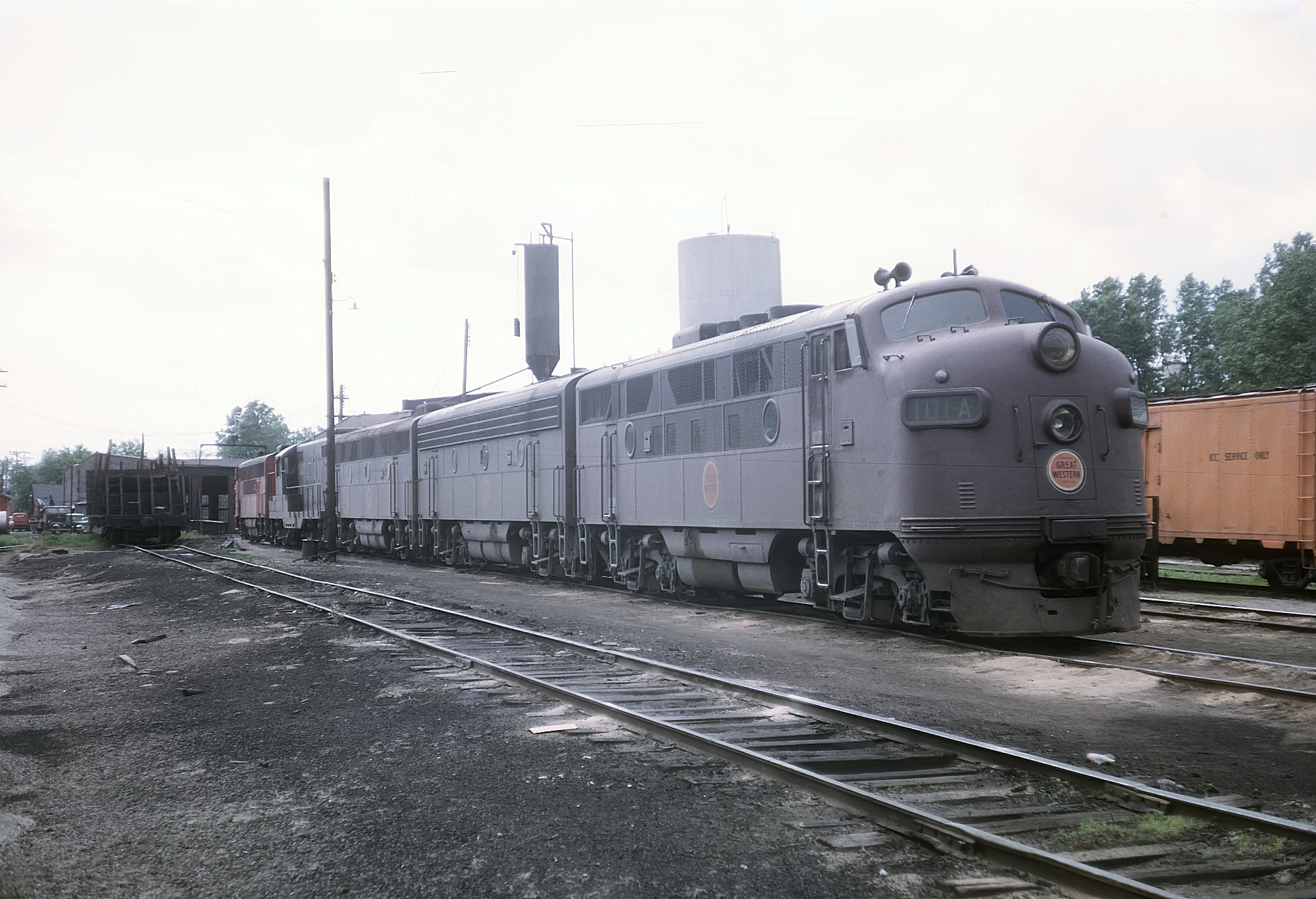 Chicago Great Western F3A #101-A, other Fs, and a Geep, layover at the railroad's small engine terminal at South Park in South St. Paul, Minnesota in the summer of 1960. Marty Bernard photo.
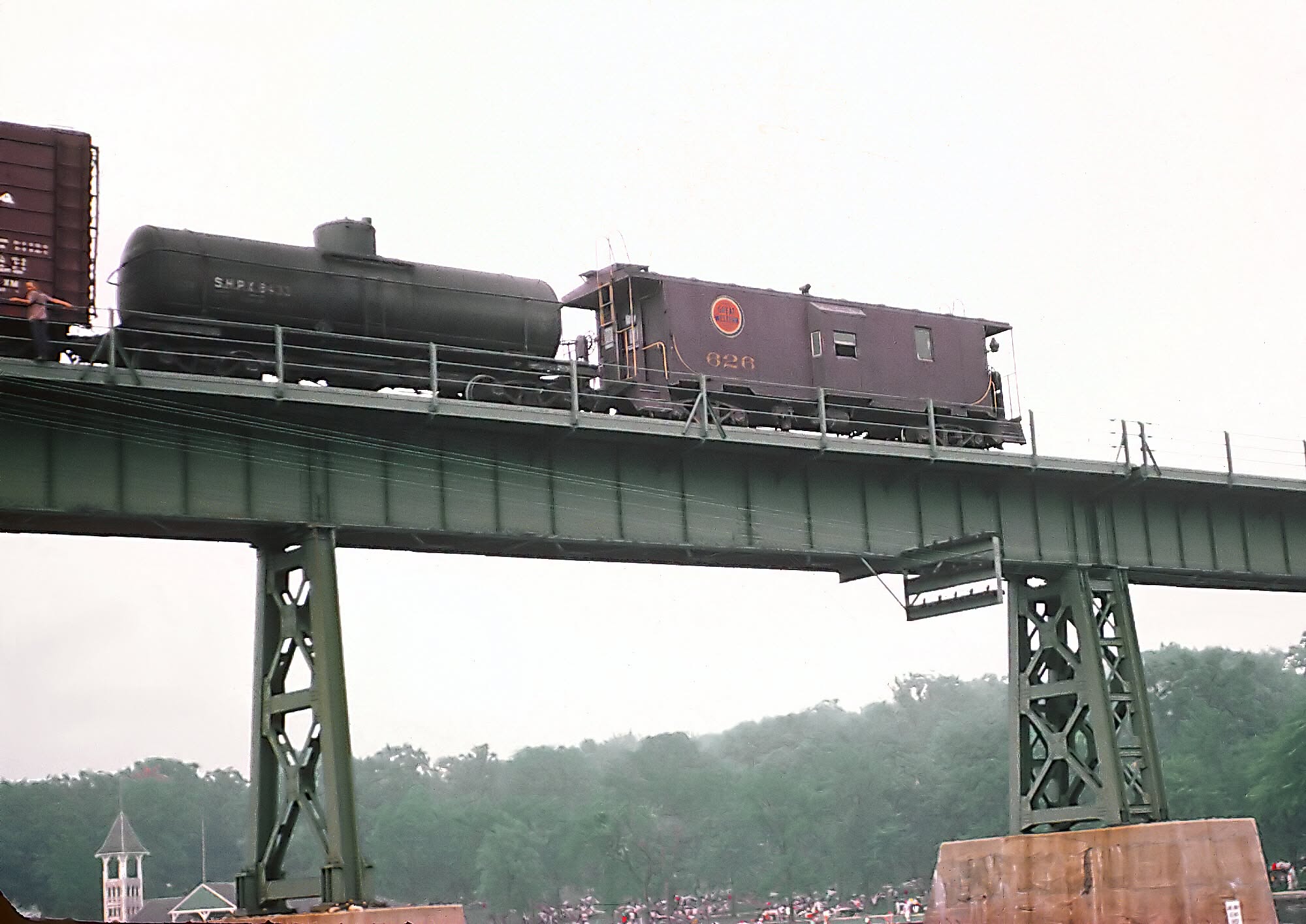 Chicago Great Western caboose 626 brings up the tail end of westbound freight #143 crossing over the Fox River at St. Charles, Illinois on July 4, 1962. F3A #115-A was leading this train. Roger Puta photo.
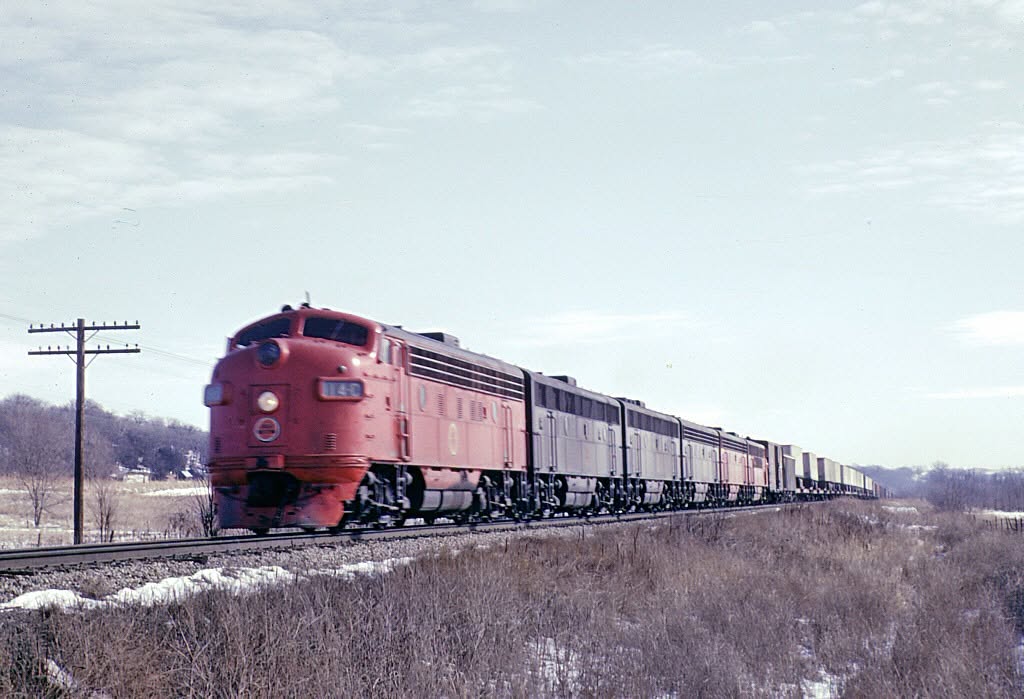 Chicago Great Western F3A #114C and several other 'F' units lead trailers at East Dubuque, Illinois in February, 1967. Rick Burn photo.
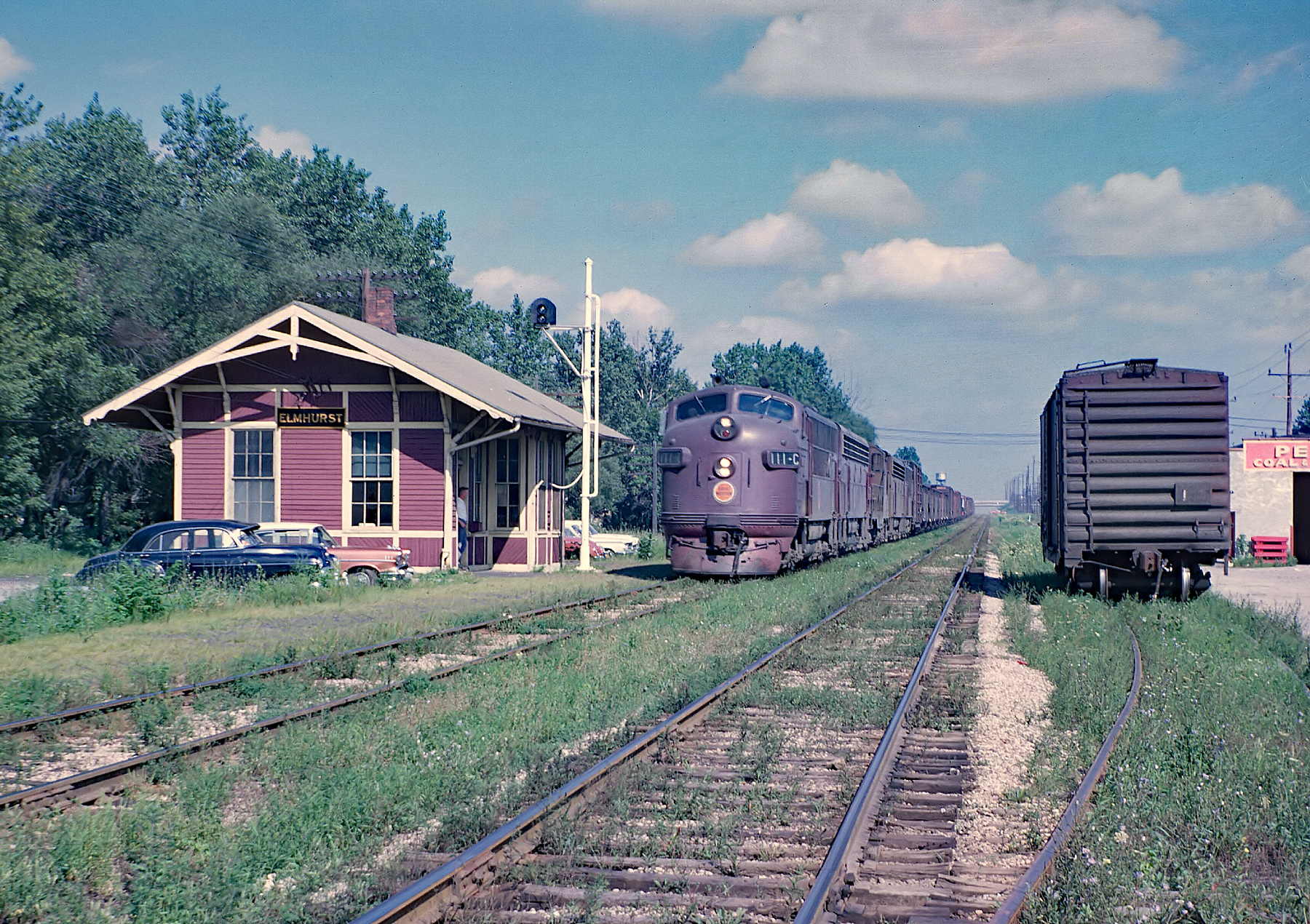 With the operator providing a roll-by inspection, Chicago Great Western F3A #111-C leads a long freight train westbound past the quaint little depot at Elmhurst, Illinois station on August 14, 1962. Roger Puta photo.
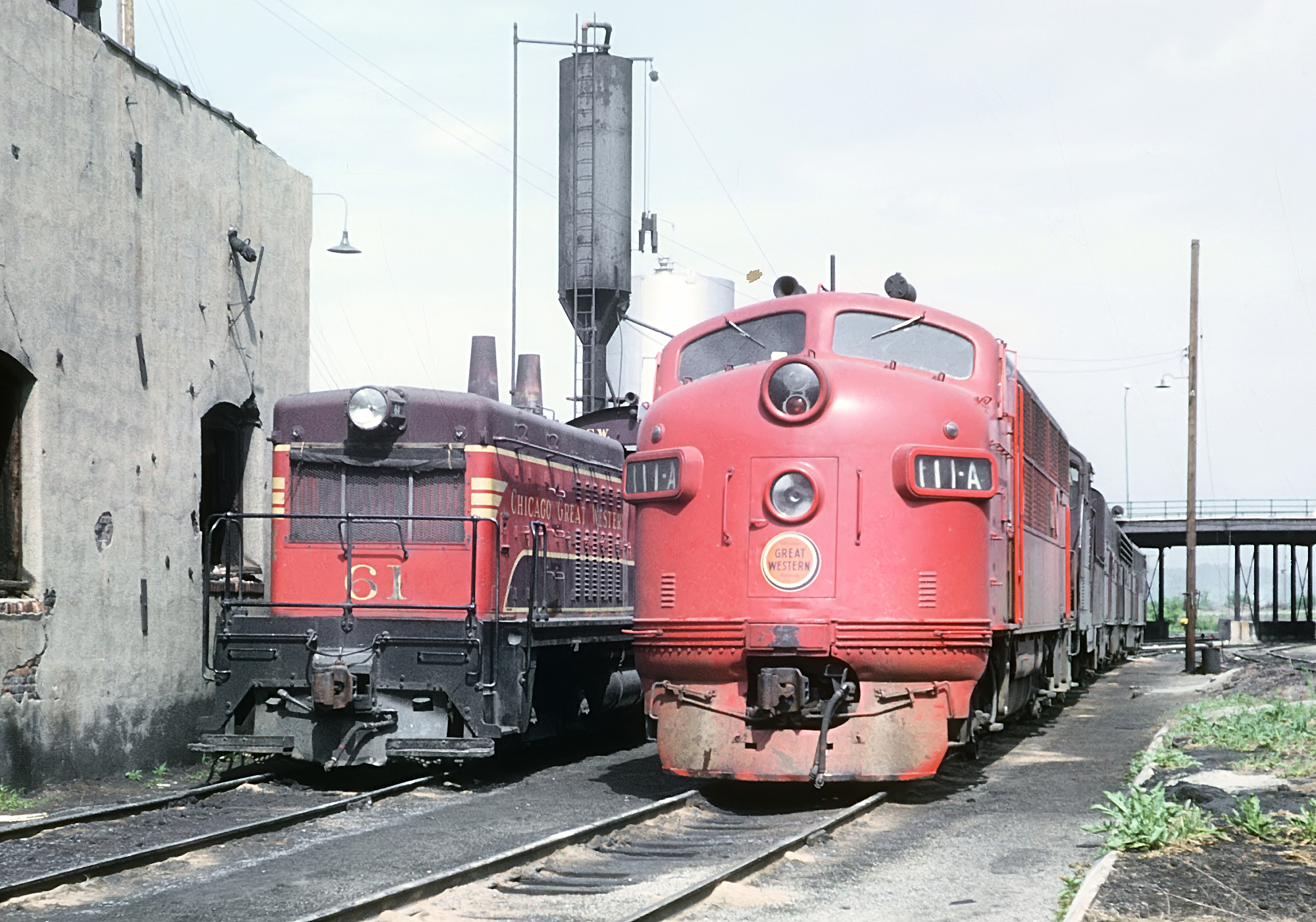 Chicago Great Western F3A 111A and TR2 61 layover in St. Paul, Minnesota on June 2, 1964. The F3A became C&NW 209 and was traded to EMD in December, 1975. Marty Bernard photo.
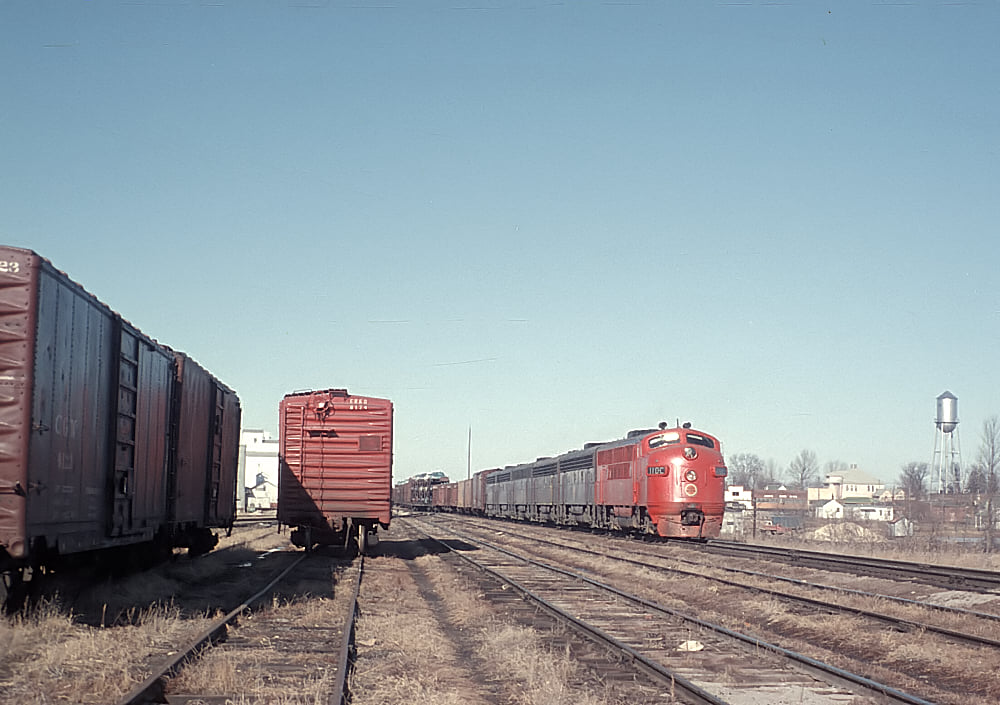 Chicago Great Western F3A #110-C with southbound freight 43 passing the small yard in Hayfield, Minnesota; February, 1964. The "Corn Belt Route" has all but been erased here today. Rick Burn photo.
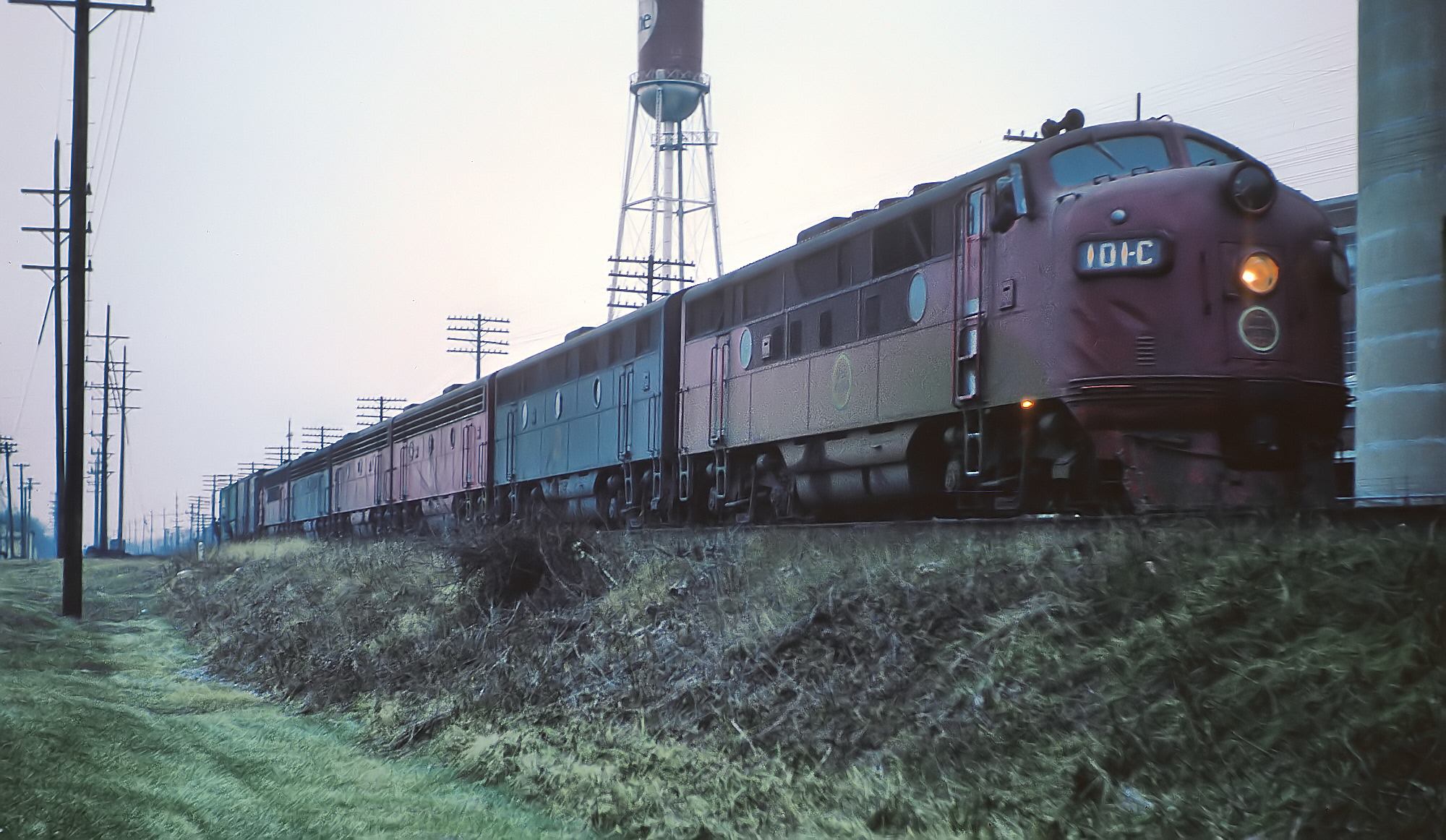 A long string of Chicago Great Western "F" units, led by F3A 101-C, are switching the Ovaltine plant in Villa Park, Illinois in January, 1965. Rick Burn photo.
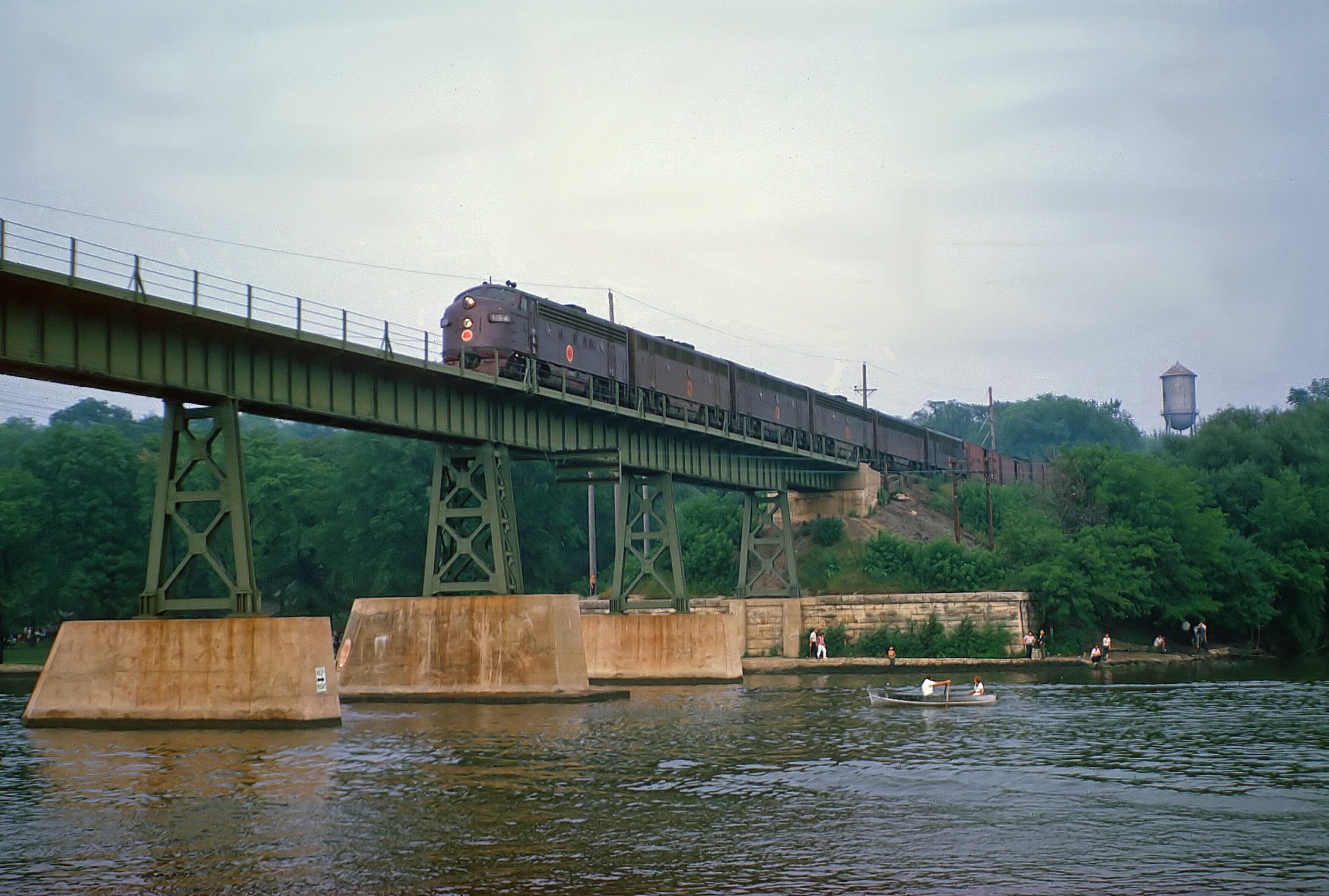 Chicago Great Western F3A #115-A, and a long string of other covered wagons, lead westbound freight #143 across the Fox River at St. Charles, Illinois on Independence Day, 1962. Roger Puta photo.
 A group of Chicago Great Western 'F' units, led by F3A #103C have a long freight at Fair Street in Elmhurst, Illinois in February, 1961. Note the GP7 wedged in and the North Shore Line right-of-way at left. Rick Burn photo.
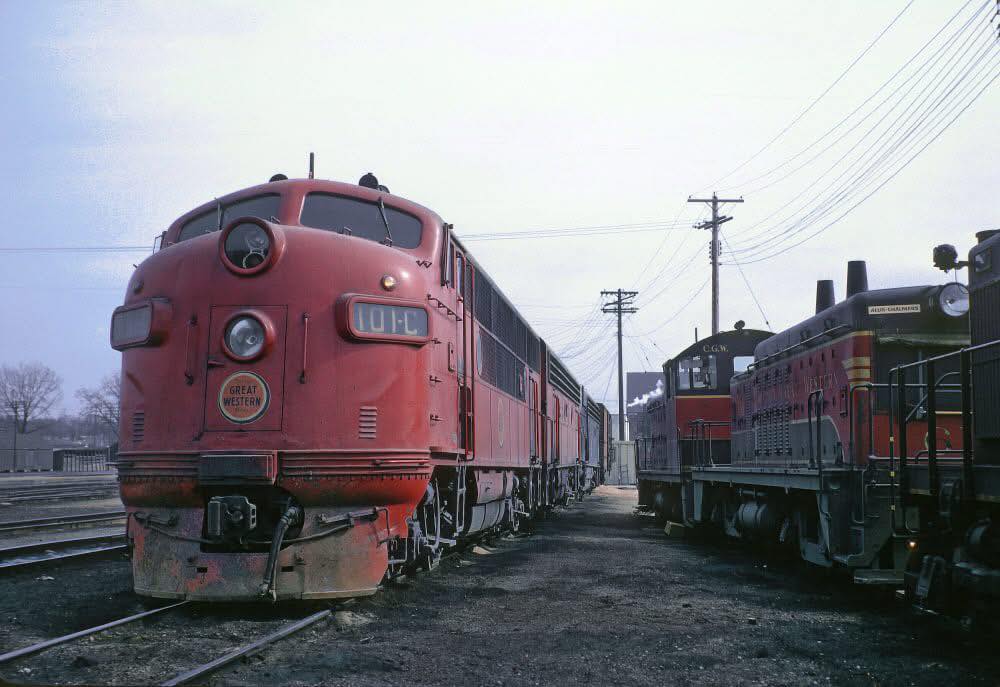 Classic CGW power, with F3A #101-C closest to the photographer, layover at the Oelwein Shops in Iowa in March, 1967. Little remains of CGW's most important maintenance facility today. Rick Burn photo.
Recent Articles


-
Virginian Railway's 2-6-6-6 Locomotives (Class AG)
Oct 18, 26 01:38 PM
 Virginian Railway class AG. Eight Lima 2-6-6-6s, Nos. 900-907, built in 1945 for the east end. Billed at 753,000 pounds. Scrapped in 1960.
 -
Pennsylvania (PRR) Steam Roster: Post 1906
Oct 18, 26 01:05 PM
 ennsylvania steam after 1906—H8, H9, and H10 Consolidations, 574 L1s Mikados, 598 I1s Decapods, 425 K4s Pacifics, 301 M1 Mountains. Drury’s grid. Last steam November 30, 1957.
 -
Chicago, Aurora and Elgin Railroad: The "Roarin' Elgin"
Oct 18, 26 10:54 AM
 The Chicago, Aurora & Elgin, the Roarin' Elgin, ran 600-volt third-rail trains from Chicago to Aurora, Batavia, and Elgin. Passenger service ended at noon on July 3, 1957. Freight ended June 11, 1959.
 -
Algoma Central Railway: Map, Logo, Rosters
Oct 17, 26 10:49 PM
 Algoma Central Railway, Sault Ste. Marie to Hearst. Wisconsin Central on February 1, 1995. Fifty-nine steam locomotives and forty-two diesels.
 -
Akron, Canton and Youngstown Railroad: Map, History, Rosters
Oct 17, 26 05:49 PM
 Akron, Canton and Youngstown Railroad, Mogadore to Delphos. The rails never reached Canton or Youngstown. Norfolk & Western control on October 16, 1964. Twenty-six diesels and the historical society's…
 -
Georgia Railroad: Map, History, Logo, Rosters
Oct 17, 26 12:59 PM
 Georgia Railroad, the Georgia Railroad and Banking Company, Augusta to Atlanta, with the Athens branch and the Macon Road. Mark GA. The railroad properties were sold on November 4, 1982.
 -
West Point Route (Railroad): Map, History, Logo
Oct 16, 26 11:26 PM
 The West Point Route was a trademarked name comprising the Atlanta & West Point and Western Railway of Alabama, which were controlled by the Georgia Railroad.
 -
Virginian Railway Diesel Roster (All-Time)
Oct 16, 26 11:11 PM
 All-time diesel roster of the Virginian Railway. 40 Fairbanks-Morse H16-44s, 25 H24-66 Train Masters, and one GE 44-tonner. Serials included.
 -
Virginian Railway Steam Roster (Post 1900)
Oct 16, 26 10:55 PM
 Virginian Railway steam locomotives built since 1900. Mikados, 2-8-8-2s, the Triplex, class AE 2-10-10-2s, and the 1945 2-6-6-6s.
 -
Virginian Railway: Map, Rosters, History, Electrification
Oct 16, 26 10:51 PM
 Virginian Railway, Deepwater to Norfolk. Combined in 1907 and completed in 1909. Electrified from Roanoke to Elmore. Absorbed by the Norfolk & Western on December 1, 1959.
 -
Baldwin "Centipede" Locomotives: Specs, Roster, Photos
Oct 16, 26 03:58 PM
 Baldwin DR-12-8-1500/2 Centipede—2-D+D-2, two 608SC engines, 3,000 hp. SAL 4500 from the 1943 test bed. 54 on the serial list, 52 sold. PRR BP60 then BH50. None preserved.
 -
Louisville & Nashville Class M-1 2-8-4s: The Big Emmas
Oct 16, 26 03:52 PM
Louisville & Nashville class M-1, 42 Big Emma 2-8-4s. Baldwin in 1942 and 1944, Lima in 1949. Coal trains from Neon to DeCoursey. No locomotive survives. -
Tennessee, Alabama and Georgia Railway: Map, History, Rosters
Oct 16, 26 03:21 PM
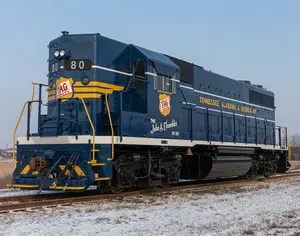
 Tennessee, Alabama and Georgia Railway, Chattanooga to Gadsden. The May 1929 card is 91.7 miles. Southern stock control closed on a January 1, 1971 schedule. Five diesels and Prince's steam list.
 -
Railroad Museums In The USA (2026): State Guides & Collections
Oct 16, 26 02:29 PM
 U.S. railroad museums—what they are vs tourist railroads, preservation history (R&LHS, NRHS, IRM, Steamtown), state guides, and destination collections. Confirm hours on each museum’s site.
 -
Wyoming Railroad Museums (2026): A Complete Guide
Oct 16, 26 02:26 PM
 Wyoming railroad museums—the Cheyenne Depot, Burlington 5633 at Douglas, Big Boy 4004, and the Laramie depot. Confirm hours and which locomotive is on the property.
 -
West Virginia Railroad Museums (2026): A Complete Guide
Oct 16, 26 12:52 PM
 West Virginia railroad museums—Cass Scenic’s geared steam, the Hinton C&O collection, and the Martinsburg B&O roundhouse. Confirm hours and which locomotive is assigned.
 -
Washington Railroad Museums (2026): A Complete Guide
Oct 16, 26 12:46 PM
 Washington railroad museums—Snoqualmie, Elbe, Chehalis, Reardan, and the Northern Pacific depot at Toppenish. Confirm hours and which locomotive is assigned.
 -
Vermont Railroad Museums (2026): A Complete Guide
Oct 16, 26 12:42 PM
 Vermont railroad museums—the Shelburne Museum’s 1890 station, Central Vermont No. 220, and the private car Grand Isle. Confirm hours on the site.
 -
Tennessee Central Railway: Map, Logo, Rosters, History
Oct 16, 26 11:32 AM
 Tennessee Central Railway, Harriman to Hopkinsville. Reorganized January 26, 1922. Last day August 31, 1968. Thirty-one diesels and the railroad's steam roster.
 -
Southern Railway Steam Roster (Post 1900)
Oct 16, 26 09:40 AM
Southern Railway steam locomotives built since 1900. Ps-4 Pacifics, Ts Mountains, USRA Santa Fes, and the subsidiary grids for the CNO&TP, Alabama Great Southern, and New Orleans and Northeastern. -
Southern Railway (USA): Map, Locomotives, Logo, History
Oct 16, 26 09:28 AM
 The Southern Railway, formed July 1, 1894 from the Richmond and Danville and the East Tennessee, Virginia and Georgia. Washington. Norfolk Southern Railway on December 31, 1990.
 -
Seaboard Coast Line Diesel Roster (All-Time)
Oct 15, 26 04:21 PM
 All-time diesel roster of the Seaboard Coast Line. Inherited Coast Line and Seaboard locomotives, then 623 new locomotives in the printed orders, plus 28 acquired from other railroads.
 -
Seaboard Coast Line Railroad: Map, History, Photos
Oct 15, 26 04:17 PM
 The Seaboard Coast Line, formed July 1, 1967 from the Atlantic Coast Line and the Seaboard Air Line. Jacksonville. Family Lines, then the Seaboard System on December 29, 1982.
 -
South Carolina Railroad Museums (2026): A Complete Guide
Oct 15, 26 02:54 PM
 South Carolina railroad museums—Winnsboro’s Rockton & Rion line, Spartanburg’s Hub City depot, Greenwood’s Baldwin No. 19, and the Best Friend replica. Confirm hours on each site.
 -
South Dakota Railroad Museums (2026): A Complete Guide
Oct 15, 26 10:55 AM
 South Dakota railroad museums—the Hill City museum beside the 1880 Train, and Prairie Village at Madison. Confirm hours, and confirm whether Hill City is still open.
 -
Seaboard Air Line Diesel Roster (All-Time)
Oct 15, 26 10:46 AM
 All-time diesel roster of the Seaboard Air Line. 734 locomotives: E4s in 1938, Centipedes, Alco road switchers, and GP40s through February 1967. Serials included.
 -
Seaboard Air Line Steam Roster (Post 1900)
Oct 15, 26 10:39 AM
 Seaboard Air Line steam locomotives built since 1900. Mikados, Russian Decapods, 2-10-2s, and the 2-6-6-4s sold to the Baltimore and Ohio in 1947. Drury's class grid.
 -
Seaboard Air Line Railroad: Map, Rosters, History
Oct 15, 26 10:34 AM
 The Seaboard Air Line, chartered in the Portsmouth and Roanoke of 1832 and formed July 1, 1900. Inland route to Florida. Merged into the Seaboard Coast Line on July 1, 1967.
 -
Utah Railroad Museums (2026): A Complete Guide
Oct 15, 26 12:04 AM
 Utah railroad museums—Ogden Union Station, Golden Spike at Promontory, the Helper mining museum, and the Heber Valley Railroad. Confirm hours on each site.
 -
Escanaba & Lake Superior Diesel Roster (All-Time)
Oct 14, 26 10:44 PM
All-time diesel roster of the Escanaba & Lake Superior. 30 locomotives: Baldwin switchers and RS-12s, two RF16s, three GP38s, three SD40-2s, and the Reserve Mining units. Serials and order numbers. -
Escanaba & Lake Superior Railroad: In Service Since 1898
Oct 14, 26 09:04 PM
 Escanaba & Lake Superior Railroad, chartered November 17, 1898, and still operating from Wells, Michigan. Logging line to Channing, the Milwaukee Road lines, and the diesel roster.
 -
Richmond, Fredericksburg & Potomac Diesel Roster (All-Time)
Oct 14, 26 08:49 PM
 All-time diesel roster of the Richmond, Fredericksburg and Potomac. 107 locomotives: 22 Alco S2s, one SW1, and an Electro-Motive road fleet from E8s to GP40-2s. Serials and order numbers.
 -
Richmond, Fredericksburg & Potomac Steam Roster (Since 1900)
Oct 14, 26 08:46 PM
 Richmond, Fredericksburg and Potomac steam locomotives built since 1900. Pacifics, Mountains, Berkshire-type 2-8-4s, and the named 4-8-4s. Last revenue run December 17, 1954.
 -
Richmond, Fredericksburg and Potomac Railroad: Map, Rosters, Logo
Oct 14, 26 08:36 PM
 The Richmond, Fredericksburg and Potomac, chartered February 25, 1834. A 113-mile Richmond–Washington bridge line. Named 4-8-4s, Potomac Yard, and the CSX sale of October 10, 1991.
 -
North Dakota Railroad Museums (2026): A Complete Guide
Oct 14, 26 08:29 PM
North Dakota railroad museums—Mandan’s state museum, the Railroad Museum of Minot, and Bonanzaville’s Northern Pacific 684. Confirm hours on each site. -
Oklahoma Railroad Museums (2026): A Complete Guide
Oct 14, 26 08:02 PM
Oklahoma railroad museums—the Oklahoma Railway Museum, Enid’s Frisco 1519, Waynoka’s Harvey House, and El Reno’s Rock Island depot. Confirm hours on each site. -
Oneida & Western Railroad: Map, History, Timetable
Oct 14, 26 06:47 PM
Oneida & Western Railroad, a Tennessee short line from Oneida to Jamestown. Chartered in 1912, opened to East Jamestown in 1921, and to Jamestown on December 10, 1930. Last revenue train March 4, 1954… -
Oneida and Western Railroad (Shamrock Coal Company)
Oct 14, 26 03:20 PM
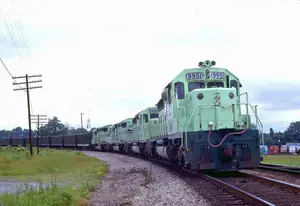
 Shamrock Coal's mint-green coal trains, 1979–1987. Eight EMD SD40-2s, OWTX 9950–9957, order 786246. Two 72-car gondola sets. Louisville & Nashville, then CSX. Sold to BC Rail.
 -
Rhode Island Railroad Museums (2026): A Complete Guide
Oct 14, 26 03:03 PM
 Rhode Island railroad museums—the Friends’ museum in the 1875 Kingston depot, on the old New York, Providence and Boston. Confirm what is on view.
 -
Original Norfolk Southern Diesel Roster (All-Time)
Oct 14, 26 12:40 PM
 All-time diesel roster of the original Norfolk Southern Railway. 59 locomotives: Baldwin switchers and AS-416s, three GE 70-tonners, 17 GP18s, and seven GP38s. Serials and order numbers.
 -
Original Norfolk Southern Railway: Map, Rosters, History
Oct 14, 26 10:09 AM
 The original Norfolk Southern Railway, chartered in 1870 as the Elizabeth City & Norfolk. Norfolk to Charlotte. Merged into the Southern Railway on January 1, 1974. Baldwin diesels and the GP18s and G…
 -
Nebraska Railroad Museums (2026): A Complete Guide
Oct 14, 26 10:00 AM
 Nebraska railroad museums—the Durham Museum, Kenefick Park, Cody Park, and the Golden Spike Tower over Bailey Yard. Confirm hours on each site.
 -
Nevada Railroad Museums (2026): A Complete Guide
Oct 14, 26 09:51 AM
 Nevada railroad museums—Carson City, Boulder City, the Nevada Northern at East Ely, and the Virginia City depot. Confirm hours on each site.
 -
Montana Railroad Museums (2026): A Complete Guide
Oct 14, 26 12:17 AM
 Montana railroad museums—the Livingston depot, Fort Missoula’s Willamette, the Harlowton Milwaukee depot, and the Whitefish station. Confirm hours on each site.
 -
"Jawn Henry" Locomotive: Specs, Diagram, Photos
Oct 14, 26 12:03 AM
 Norfolk & Western No. 2300, class TE-1, the steam turbine-electric Jawn Henry. Baldwin-Lima-Hamilton, Westinghouse, and Babcock & Wilcox, May 1954. Specifications, the road tests, and the Dece…
 -
Atlantic and Danville Railway: Serving Southern VA
Oct 13, 26 04:32 PM
 Atlantic and Danville Railway, chartered in 1882, incorporated September 1883. Three-foot line to Claremont, then Norfolk to Danville. Southern lease from September 1, 1899, to July 1, 1949. Alco RS2s…
 -
Norfolk, Franklin and Danville Railroad: Map, Roster, History
Oct 13, 26 04:26 PM
 Norfolk, Franklin and Danville Railway, chartered October 2, 1962, and operating from November 1, 1962. Norfolk to Danville, 210.8 miles. Two Alco RS36s and four RS11s. Merged into the N&W on December…
 -
Norfolk & Western Diesel Roster (All-Time)
Oct 12, 26 11:59 PM
 Norfolk & Western diesel roster, all-time. 1,464 locomotives built new for the railroad, from the 1955 GP9s and RS-3s through the C36-7s, plus the merger fleets.
 -
Norfolk & Western Steam Roster (Post 1900)
Oct 12, 26 11:52 PM
 Norfolk & Western steam since 1898. The Roanoke grid: 1,266 locomotives, the J, the A, and the Y, and the last road steam on May 7, 1960.
 -
Norfolk & Western Railway: Map, Logo, Rosters, History
Oct 12, 26 11:45 PM
 The Norfolk & Western, from the City Point Railroad of 1838 to Norfolk Southern. Pocahontas coal, Roanoke steam, and the 1964 expansion.


%20with%20train%20%2313%2C%20the%20overnight%20run%20from%20Minneapolis%2C%20circa%201957.%20American-Rails.com%20collection.)


