Chesapeake & Ohio 2-6-6-2 Steam Locomotives: History, Roster & Specifications
Published: July 25, 2026
By: Adam Burns
Of all the railroads that experimented with compound articulated steam, few made the 2-6-6-2 as central to daily operations as the Chesapeake & Ohio. Chessie’s “Mallet Moguls” were built for one job above all others: grinding coal out of the hollows of West Virginia and eastern Kentucky on heavily graded, tightly curved branch lines where a rigid-frame Consolidation could not match both power and flexibility.
From the first Alco compounds of 1910 through the final Baldwin H-6s of 1949—the last new steam locomotives Baldwin built for a U.S. railroad—the C&O assembled one of the largest 2-6-6-2 fleets in North America. This article covers the type’s purpose on Chessie, class-by-class development, a complete post-1900 roster summary, full specifications for classes H-1 through H-6, and the two engines that survive today.

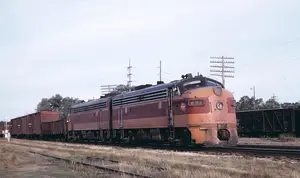
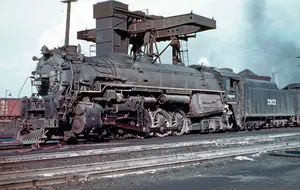
Chesapeake & Ohio 2-6-6-2s #1490 and #1332 were photographed here between assignments on the Piney Creek Subdivision at Beckley, West Virginia on May 17, 1951. Bob Collins photo. American-Rails.com collection.
Why the 2-6-6-2 Fit the C&O
The Mallet design—two engine units under one boiler, with compound high- and low-pressure cylinders—arrived in the United States when Alco built Baltimore & Ohio 0-6-6-0 No. 2400 in 1904. The 2-6-6-2 (leading truck, two sets of six drivers, trailing truck) followed as a more stable, road-worthy evolution. On paper many roads later preferred simple articulateds; on the C&O coal branches, compound 2-6-6-2s remained practical for decades.
Chessie’s mountain coal country demanded high adhesion and the ability to negotiate sharp curves. A 2-6-6-2 could out-haul double-headed 2-8-0s on many mine runs while burning less coal, and the independently pivoting front engine unit tracked curves that long rigid wheelbases fought. Typical assignments included mine runs, branch coal drags, and helper service into the larger main-line network that would later be dominated by 2-8-8-2s, 2-10-4s, Kanawhas, and Alleghenies.
Class Development: From 1910 Experiments to 1949’s Last Baldwin
Classes H-1 and H-2 (1910–1911)
The C&O ordered its first purpose-built 2-6-6-2 from Alco’s Schenectady Works in 1910 as class H-1 No. 1301. A second early engine, classed H-3 No. 1300, was acquired used from the Chicago & Alton (Brooks, 1910). In 1911 Alco’s Richmond Works delivered the first production group, class H-2 Nos. 1302–1325.
These pioneer compounds were relatively light by later Chessie standards—on the order of 200 tons for the locomotive alone on the earliest examples—but they proved the wheel arrangement for coal-branch work. Most of the early light group left the roster by the mid-1930s as heavier successors arrived.
Class H-4 (1912–1918) — The Backbone Fleet
Class H-4 was the definitive C&O 2-6-6-2 of the teens: roughly 150 locomotives numbered in the 1325–1474 block, built by Alco at Richmond and Schenectady between 1912 and 1918. They were substantially heavier and more powerful than the first H-1/H-2 engines and became the everyday face of Chessie compound power on coal branches through the steam era’s peak.
H-4s were the design foundation that later influenced USRA light Mallet thinking. When the United States Railroad Administration standardized a 2-6-6-2 during World War I, the resulting light Mallet was a direct development of C&O H-2/H-4 practice.
Class H-3 — Hocking Valley Inheritance
When the C&O absorbed the Hocking Valley Railway, it inherited a fleet of HV 2-6-6-2s built by Alco in 1917–1918. On Chessie they became class H-3 Nos. 1275–1299 (ex-HV 200–224). These engines worked into the 1930s–1950s depending on individual careers and were part of the broader C&O compound family rather than a radical new design.
Class H-5 — USRA Light Mallets (1919)
Under USRA allocation, the C&O received 20 standardized light 2-6-6-2s. Originally numbered in the 875–894 series, they later became class H-5 Nos. 1520–1539. Builders included Alco (Schenectady) and Baldwin. The USRA design used 56¼-inch drivers, 210 psi boiler pressure, 22×32-inch high-pressure and 35×32-inch low-pressure cylinders, and about 77,900 pounds of compound tractive effort—figures that would echo in later Chessie H-6 construction.
Contemporary accounts suggest Chessie was less enthusiastic about the H-5s than about its home-grown H-4s and follow-on H-6s, but the class remained in service into the early 1950s.
Class H-6 — Alco Copies (1920–1923) and Baldwin Finals (1949)
Pleased with compound performance in coal service, the C&O continued the line with class H-6 Nos. 1475–1519 (45 engines) from Alco Richmond and Schenectady in 1920–1923. These postwar (World War I) copies refined the USRA/H-4 formula and became highly regarded mine-run engines, with tractive efforts in the roughly 70,000–78,000-pound compound range depending on exact rating and condition.
Then came the surprise of 1948–1949. With dieselization already under way industry-wide, Chessie ordered a final batch of compound 2-6-6-2s from Baldwin. Coal strikes and soft traffic cut the order from a planned 25 to ten locomotives, Nos. 1300–1309, delivered in 1949 and also classed H-6. They reused the 1300-series numbers long associated with Chessie’s earliest Mallets after those engines had left the roster.
The 1949 H-6s incorporated late-steam improvements such as roller bearings and improved lubrication while retaining compound cylinders and roughly 56-inch drivers. No. 1309 was the last steam locomotive Baldwin built for a U.S. railroad. The ten engines spent their short careers primarily out of Peach Creek / Logan, West Virginia, coal service and were retired by about 1956–1957 as GP7s and GP9s took over.
Complete Roster Summary (C&O 2-6-6-2 Classes)
The following summary follows the post-1900 C&O steam roster published on American-Rails.com. Individual renumberings, second-hand acquisitions, and scrap dates varied by unit; class blocks are the standard reference for the fleet as a whole.
| Class | Road Numbers | Qty | Builder(s) | Built | Retired (approx.) | Notes |
|---|---|---|---|---|---|---|
| H-1 | 1301 | 1 | Alco (Schenectady) | 1910 | 1930 | First C&O-built 2-6-6-2 |
| H-2 | 1302–1325 | 24 | Alco (Richmond) | 1911 | By ~1935 | First production group |
| H-3 | 1300 | 1 | Alco (Brooks) | 1910 | — | ex-Chicago & Alton |
| H-3 | 1275–1299 | 25 | Alco (Schenectady, Richmond) | 1917–1918 | 1935–1952 | ex-Hocking Valley 200–224 |
| H-4 | 1325–1474 | 150 | Alco (Richmond, Schenectady) | 1912–1918 | 1930–1955 | Largest C&O 2-6-6-2 class; fleet backbone |
| H-5 | 1520–1539 | 20 | Alco (Schenectady), Baldwin | 1919 | By ~1952 | USRA Light Mallet; earlier 875–894 series |
| H-6 | 1475–1519 | 45 | Alco (Richmond, Schenectady) | 1920–1923 | 1952–1957 | Post-USRA compound copies |
| H-6 | 1300–1309 | 10 | Baldwin | 1949 | ~1956–1957 | Final U.S. Baldwin steam; Nos. 1308–1309 preserved |
Approximate fleet total: about 275–280 classed 2-6-6-2s over the life of the design on C&O rails (including Hocking Valley and second-hand units), with the H-4 group alone accounting for roughly half of all Chessie Mallets of this wheel arrangement. Exact simultaneous ownership peaked lower as early engines were scrapped while later classes arrived.
Numbering note: The 1300-series was used more than once. Early H-1/H-2/H-3 engines occupied 1300–1325; decades later the 1949 Baldwin H-6s reused 1300–1309 after the original occupants were gone. Always check build date and class when identifying a photograph of a “C&O 1300.”
Complete Specifications by Class (H-1 through H-6)
Figures below are drawn primarily from C&O locomotive diagrams (notably the September 1936 set), contemporary builder and trade-press descriptions, USRA standards, and the SteamLocomotive.com Locobase class studies based on those sources. Weights and heating surfaces shifted with tenders, superheater upgrades, and in-service modifications—use class tables as the authoritative pattern, not every individual engine’s as-built card.
Unless noted, all classes are standard-gauge compound articulateds (Mallet): high-pressure cylinders on the rear engine unit, low-pressure cylinders on the front engine unit, Walschaerts valve gear (Baker on H-5), coal fuel.
Class comparison overview
| Class | Built | Qty | Drivers | Boiler | HP / LP cylinders | TE (compound) | Engine wt (approx.) |
|---|---|---|---|---|---|---|---|
| H-1 | 1910 | 1 | 56 in | Saturated (as built) | 22″×32″ / 35″×32″ | ~70,000+ lbf class range | Heavier than Alton sample; see below |
| H-2 | 1911 | 24 | 56 in | Superheated | 22″×32″ / 35″×32″ | ~70,000–74,000 lbf | Production series (see H-2) |
| H-3 | 1917–18 | 26 | 56¼ in | 220 psi | 22″×32″ / 35″×32″ | 73,814 lbf | 437,000 lb |
| H-4 | 1912–18 | 150 | 56¼ in | 200 psi (typ.) | 22″×32″ / 35″×32″ | ~74,000 lbf class range | ~434,000–448,000 lb |
| H-5 | 1919 | 20 | 57 in | 225 psi as built* | 23″×32″ / 35″×32″ | 79,336 lbf | 448,000 lb |
| H-6 (Alco) | 1920–23 | 45 | 56¼ in | 200 psi as built | 22″×32″ / 35″×32″ | ~74,000–78,000 lbf | ~434,000–448,000 lb |
| H-6 (Baldwin) | 1949 | 10 | 56 in | 210 psi | 22″×32″ / 35″×32″ | 77,900 lbf | 434,900 lb |
*H-5 boiler pressure was later cut to 210 psi and then to 200 psi in C&O service.
Class H-1 — Alco Schenectady, 1910 (No. 1301)
Single “sample” road engine that sold Chessie on the 2-6-6-2 for coal service. Built as C&O No. 751 (works no. 48061, August 1910); later renumbered 1301. Contemporary trade coverage treated it as a full road-service Mallet test, not a yard switcher.
| Builder / works | Alco Schenectady, works 48061 (August 1910) |
| Road numbers | 751 (as built) / 1301 |
| Quantity | 1 |
| Wheel arrangement | 2-6-6-2 compound Mallet |
| Boiler | Saturated as built; 401 tubes, 2¼ in diameter |
| Combustion chamber | 78 in long (firebox behind rear drivers for deeper grate / better combustion) |
| Drivers | 56 in (class family standard) |
| Cylinders | HP 22 in × 32 in (rear); LP 35 in × 32 in (front) |
| Trailing truck | Radial design with outside bearings (patterned on C&O Pacific practice) |
| Adhesive weight | About 39,000 lb more on drivers than the lighter ex-C&A sample (Alton engine ~285,000 lb on drivers) — roughly 324,000 lb on drivers for 1301 |
| Service design target | 3,000 tons on 0.4% grade at 15 mph; 12 mph on 0.57% |
| Test performance (1910) | Within six months: 3,492 tons eastbound over the division; 3,033 tons at 20–24 mph on 0.36% |
| Retired | ~1930 |
The related ex-Chicago & Alton Brooks engine (C&O H-3 No. 1300) was lighter on the drivers (~285,000 lb) with a smaller boiler and served as a comparative second-hand sample rather than the production pattern.
Class H-2 — Alco Richmond, 1911 (Nos. 1302–1325)
First production series after the H-1 tests. Superheated from new; 24 engines (works 49386–49409 and related Richmond numbers, March–April 1911, with additional Richmond engines in 1912 commonly associated with the expanded early program). Trade-press accounts credited superheating with better high-speed cylinder economy and reported roughly 43% coal savings versus the Consolidations the Mallets replaced for equal or greater work.
| Builder | Alco Richmond (primary production) |
| Road numbers | 1302–1325 (24) |
| Built | 1911 (production group) |
| Wheel arrangement | 2-6-6-2 compound Mallet |
| Drivers | 56 in |
| Boiler | Superheated (production change from H-1 saturation) |
| Cylinders | HP 22 in × 32 in; LP 35 in × 32 in |
| Arch tubes (firebox) | 23 sq ft |
| Heating surface emphasis | Long combustion chamber + firetube superheater; contemporary reports cited ~5,071 sq ft “actual” heating surface for ample evaporative capacity |
| Tractive effort | On the order of 70,000–74,000 lbf compound (class family) |
| Road-service notes | Average speeds comparable to Consolidations; capable of ~45 mph; firemen reported easier firing than many 2-8-0s despite higher output |
| Later history | Rebuilt to H-4 standards (1916); in the 1924 renumbering plan they held 1302–1325 as H-4s |
| Original group retired / rebuilt | Light H-2 configuration short-lived; successors carried the work into the 1930s–1950s as H-4s |
Class H-3 — Hocking Valley / C&O (Nos. 1275–1299; also ex-C&A 1300)
Twenty-five engines built for the Hocking Valley (Alco Schenectady 5 in 1917; Richmond 20 in 1918) became C&O H-3 Nos. 1275–1299 (ex-HV 200–224). Diagram data below reflect the 1936 C&O sheets for this group. HV specified 220 psi—higher than most pure C&O H-4s at 200 psi.
| Builder / works | Alco Schenectady 57284–57288 (May 1917); Alco Richmond 60210–60229 (1918) |
| Road numbers (C&O) | 1275–1299 (25); plus second-hand Brooks H-3 No. 1300 (ex-C&A) |
| Wheel arrangement | 2-6-6-2 compound Mallet |
| Driver diameter | 56¼ in |
| Boiler pressure | 220 psi |
| High-pressure cylinders | 22 in × 32 in (rear engine) |
| Low-pressure cylinders | 35 in × 32 in (front engine) |
| Valve gear | Walschaerts; 12 in piston valves (HP), slide valves (LP) |
| Tractive effort (compound) | 73,814 lbf |
| Factor of adhesion | ~4.97 |
| Locomotive weight | 437,000 lb |
| Adhesive weight | 367,000 lb |
| Tender weight (loaded, typ.) | 187,400 lb |
| Engine + tender | 624,400 lb |
| Tender water | 9,000 U.S. gal |
| Tender coal | ~22 tons (HV tenders larger than many C&O assignments) |
| Grate area | 72.6 sq ft |
| Firebox heating surface | 370 sq ft (includes 25 sq ft arch tubes) |
| Evaporative heating surface | 4,902 sq ft |
| Superheater | 975 sq ft |
| Combined evaporative + superheater | 5,877 sq ft |
| Tubes / flues | 234 × 2¼ in tubes; 36 × 5½ in flues; 24 ft length |
| Engine wheelbase | 48.83 ft |
| Retired (C&O service) | Generally 1935–1952 by unit |
By 1936 many similar Chessie 2-6-6-2s trailed 9RB/RC/RD tenders of about 168,500 lb loaded, pushing some engine-and-tender combinations near 593,500 lb depending on assignment.
Class H-4 — Alco Richmond & Schenectady, 1912–1918 (Nos. 1325–1474)
The backbone class: about 150 new engines plus rebuilt H-2s folded into H-4 practice. Original road numbers ran in the 725–874 series before the mid-1920s renumbering into 1325–1474 (with H-2 rebuilds as 1302–1325). Specs evolved slightly over six years of production.
| Builder | Alco Richmond (1912–1914, 1918); Alco Schenectady (1915–1917) |
| Road numbers (final block) | 1325–1474 (new H-4s); 1302–1325 (ex-H-2 rebuilds to H-4) |
| Quantity | ~150 new + 24 rebuilt H-2s in H-4 configuration |
| Built | 1912–1918 (new); H-2 rebuilds 1916 |
| Wheel arrangement | 2-6-6-2 compound Mallet |
| Driver diameter | 56¼ in |
| Boiler pressure | Typically 200 psi (C&O practice; lower than HV H-3 at 220) |
| High-pressure cylinders | 22 in × 32 in |
| Low-pressure cylinders | 35 in × 32 in |
| Valves | 12 in piston valves (HP); slide valves (LP) |
| Valve gear | Walschaerts |
| Arch tubes | 25 sq ft in firebox heating surface |
| Superheater | ~17% of combined heating surface (diagram-era ratio) |
| Tractive effort (compound) | About 74,000 lbf class range at 200 psi |
| Weight trend over production | Axle load up to +3,300 lb; adhesion up to +4½ short tons; engine weight up to +6 short tons from first to last orders |
| Engine weight (typical mature engines) | ~434,000–448,000 lb |
| Adhesive weight (typical) | ~366,000–376,000 lb |
| Engine + tender (heavy assignments) | Up to ~644,100 lb; some 8,000–10,000 lb more with largest tenders |
| Combustion chamber | Later shortened about 4.3 in on some engines |
| Tenders | Grew substantially in service; heaviest ~25 tons more than first tenders |
| Retired | Roughly 1930–1955 by unit |
H-4-A note: In 1927 C&O converted one H-4 (No. 1470) to simple expansion with a Type E superheater, Elesco feedwater heater, 12 in piston valves on the former LP cylinders, +10 psi boiler pressure, and a larger tender. Tractive effort landed only halfway between compound and full simple H-4 ratings; the experiment was not repeated. No. 1470 was scrapped in March 1947—earlier than many compounds.
Class H-5 — USRA Light Mallet, 1919 (Nos. 1520–1539)
Twenty USRA standardized light 2-6-6-2s (originally 875–894). Fifteen from Alco Schenectady and five from Baldwin. Chessie found them less satisfactory than home-grown H-4/H-6 designs (ashpans, cab layout, and the road’s evolving tonnage needs were frequent complaints), and reduced boiler pressure in steps during their careers.
| Builder / works | Alco Schenectady 59838–59852 (1919); Baldwin 52055, 52105, 52125, 52176–52177 (July–August 1919) |
| Road numbers | 875–894 (as delivered) / 1520–1539 (later) |
| Quantity | 20 |
| Wheel arrangement | 2-6-6-2 compound Mallet (USRA Light) |
| Driver diameter | 57 in |
| Trailing-truck wheels | 45 in (USRA pattern) |
| Boiler pressure | 225 psi as designed; reduced in C&O service to 210 psi, then 200 psi |
| High-pressure cylinders | 23 in × 32 in |
| Low-pressure cylinders | 35 in × 32 in |
| Valve gear | Baker |
| Tractive effort (compound, diagram) | 79,336 lbf |
| Factor of adhesion | ~4.51 |
| Locomotive weight | 448,000 lb |
| Adhesive weight | 358,000 lb |
| Tender weight (loaded) | 206,500 lb |
| Engine + tender | 654,500 lb |
| Tender water | 12,000 U.S. gal |
| Tender coal | 16 tons |
| Grate area | 76.3 sq ft |
| Firebox heating surface | 416 sq ft (long combustion chamber + 34 sq ft arch tubes) |
| Combustion chamber | USRA standard 84 in; C&O diagrams show 94 in on some sheets |
| Evaporative heating surface | 5,443 sq ft |
| Superheater | 1,292 sq ft |
| Combined evaporative + superheater | 6,735 sq ft |
| Tubes / flues | 247 × 2¼ in; 45 × 5½ in; 24 ft |
| Engine wheelbase | 49.75 ft |
| Retired | By about 1952 |
USRA standard catalog figures sometimes list 56¼ in drivers, 210 psi, 22×32 / 35×32 cylinders, 77,900 lbf TE, and ~449,000 / 376,500 lb engine/adhesive weights—the generic light-Mallet card. The C&O diagram set above (23 in HP cylinders, 57 in drivers, 225 psi as-built) is the Chessie-specific H-5 reference.
Class H-6 (Alco) — 1920–1923 (Nos. 1475–1519)
Forty-five engines continuing Chessie’s preferred compound pattern after the USRA experiment. Alco Richmond delivered 895–914 in 1920–1921 (later renumbered into the 1475+ block); Schenectady added 915–939 in 1923. All four cylinders used 12 in piston valves—an advance over H-4 slide valves on the LP ends.
| Builder / works | Alco Richmond 62177–62196 (1920–1921); Alco Schenectady 64101–64124 (April 1923) |
| Road numbers | Originally ~895–939; later 1475–1519 (45) |
| Built | 1920–1923 |
| Wheel arrangement | 2-6-6-2 compound Mallet |
| Driver diameter | 56¼ in (H-3/H-4 family) |
| Boiler pressure (as delivered) | 200 psi |
| High-pressure cylinders | 22 in × 32 in |
| Low-pressure cylinders | 35 in × 32 in |
| Valves | 12 in piston valves on all four cylinders |
| Valve gear | Walschaerts |
| Combustion chamber | 78 in |
| Tubes | 24 ft long (plus combustion chamber) |
| Arch tubes | 25 sq ft in firebox heating surface |
| Adhesive weight | 368,500–376,500 lb (varied by engine) |
| Locomotive weight | Typically in the mid-430,000s to upper-440,000s lb |
| Tractive effort (compound) | About 74,000–78,000 lbf depending on pressure rating and diagram |
| Service reputation | Highly regarded mine-run / coal-drag engines; direct ancestors of the 1949 Baldwins |
| Retired | Generally 1952–1957 |
Class H-6 (Baldwin) — 1949 (Nos. 1300–1309)
Final C&O 2-6-6-2s and Baldwin’s last commercial steam for a U.S. railroad. Order cut from 25 to 10 after 1949 coal strikes. Assigned almost exclusively to Peach Creek / Logan, W.Va. Not pure duplicates of 1923 Alcos: roller bearings, forced lubrication, modern steels, 90 in combustion chamber (12 in longer, with tubes shortened accordingly), and slightly lower weight.
| Builder / works | Baldwin Locomotive Works 74269–74278 (1949); order 48001 |
| Road numbers | 1300–1309 (10) |
| Built | 1949 (No. 1309 outshopped September–November 1949 as class last) |
| Wheel arrangement | 2-6-6-2 compound Mallet |
| Driver diameter | 56 in |
| Leading wheels | 30 in |
| Trailing wheels | 44 in |
| Boiler pressure | 210 psi |
| Boiler diameter | 96 in |
| High-pressure cylinders | 22 in × 32 in (rear) |
| Low-pressure cylinders | 35 in × 32 in (front) |
| Valves | 12 in piston valves, all four cylinders; 6½ in HP valve travel |
| Valve gear | Walschaerts |
| Tractive effort (compound) | 77,900 lbf |
| Locomotive weight | 434,900 lb |
| Adhesive weight | 366,700 lb |
| Tender weight | ~208,200 lb (12-RC type) |
| Engine + tender | ~643,100 lb |
| Tender coal | 15 short tons |
| Tender water | 12,000 U.S. gal |
| Grate area | 72.2 sq ft |
| Firebox heating surface | 363 sq ft |
| Tubes and flues | 4,436 sq ft |
| Total evaporative heating surface | 4,825 sq ft |
| Superheater | Type A, 975 sq ft |
| Combustion chamber | 90 in (vs. 78 in on 1923 Alco H-6s) |
| Engine wheelbase | ~48.8 ft |
| Overall length | ~99.7 ft |
| Height | 15 ft |
| Minimum curve | 20° |
| Notable equipment | Roller bearings; forced lubrication; dual cross-compound air pumps on smokebox (“C&O look”) |
| Retired | ~1956–1957 |
| Preserved | 1308 (Age of Steam Roundhouse, 2025 acquisition); 1309 (Western Maryland Scenic Railroad, operational) |
How the classes compare in service terms
- H-1 / H-2 — Proved the type; superheating made the H-2 a genuine road engine, but low drivers and relatively light construction meant short first lives before rebuild or scrap.
- H-3 / H-4 / Alco H-6 — The classic Chessie compound: ~56 in drivers, 22/35 × 32 in cylinders, ~200–220 psi, ~74,000 lbf compound TE, ~367,000 lb on drivers. H-4 quantity made this the everyday face of C&O mine-run steam.
- H-5 — Slightly different USRA package (57 in drivers, 23 in HP cylinders, Baker gear, higher as-built pressure). Adequate but never Chessie’s favorite.
- Baldwin H-6 — Same compound arithmetic as the mature family, with 1949 detailing and 210 psi; last of the line and the only 2-6-6-2s left to preserve.
Service requirements for mid-century C&O coal Mallets often aimed at multi-thousand-ton cuts over mountain branches at low speed (on the order of 15 mph on the heaviest grades) without helpers—the niche that kept compounds on Chessie long after many railroads had abandoned the type.
Operations and Decline
Through the 1920s–1940s, 2-6-6-2s blanketed C&O coal country: Logan, Peach Creek, the New River and Kanawha districts, and countless tipple branches. Larger articulateds and simple 2-8-4 Kanawhas took over main-line coal drags, but the compact Mallet remained ideal where curvature and light branch rail limited what a heavy Allegheny or simple 2-8-8-2 could do.
Dieselization after World War II was decisive. Electro-Motive GP7s and GP9s, Chessie’s preferred first-generation road-switchers, replaced steam on both main lines and branches. Even the almost-new 1949 H-6s lasted only about eight years. By 1956–1957 the 2-6-6-2 story on the C&O was effectively over.
Preservation
Only two C&O 2-6-6-2s survive—both from the final Baldwin H-6 order:
- C&O No. 1309 — Restored to operation on the Western Maryland Scenic Railroad (Cumberland–Frostburg, Maryland). Returned to steam in 2020–2021 after a multi-year restoration; today one of the largest operating compound articulateds in the United States. See also our dedicated feature: C&O 2-6-6-2 No. 1309.
- C&O No. 1308 — Long displayed in the Huntington, West Virginia, area under care associated with the Collis P. Huntington Chapter NRHS; reported acquired by the Age of Steam Roundhouse Museum (Sugarcreek, Ohio) in 2025 for its growing collection.
No H-1, H-2, H-3, H-4, or H-5 engines are known to survive. For that reason, 1308 and 1309 represent not only the last Baldwin H-6s but the entire surviving C&O 2-6-6-2 lineage.
Legacy
The C&O 2-6-6-2 fleet is a reminder that “obsolete” technology can remain economically rational in a specialized service. Chessie kept compounding and the 2-6-6-2 arrangement alive from the Taft administration to the Eisenhower years because the engines matched the physical plant of Appalachian coal branches. When Baldwin closed out U.S. commercial steam production with Nos. 1300–1309, it was fitting that the customer was the railroad that had trusted the type longest.
Related reading on American-Rails.com:
- Chesapeake & Ohio Railway
- C&O Steam Roster: Post-1900
- C&O 2-6-6-2 No. 1309
- Western Maryland Scenic Railroad – 2026 Guide
- Steam Locomotives
- Norfolk & Western 2-6-6-2 Class Z (another major eastern Mallet operator)
Primary roster source for class blocks: American-Rails.com C&O post-1900 steam roster. Class specifications: C&O 1936 locomotive diagrams (via SteamLocomotive.com Locobase studies by Steve Llanso), USRA standards, contemporary American Engineer / Railway & Engineering Review reports on the 1910–1912 Mallets, and published H-6 / Nos. 1308–1309 data. Weights, pressures, and heating surfaces changed with tenders, rebuilds, and pressure reductions—class tables describe the pattern, not every individual engine. Totals and dates can vary slightly by secondary source due to renumberings.
Recent Articles


-
Bessemer & Lake Erie Railroad: "The Bessemer Road"
Sep 15, 26 05:20 PM
 Bessemer & Lake Erie—Bear Creek 1865, Carnegie 1897, U.S. Steel 1901. Ore south from Conneaut, coal north. 2-10-4s, Missabe sister road. CN May 10, 2004. Complete corporate history.
 -
Bangor and Aroostook Railroad: "Serving Northern Maine"
Sep 15, 26 05:05 PM
 Bangor & Aroostook—chartered February 13, 1891, first trains January 1, 1894. Potatoes, paper, Searsport, State of Maine reefers. MM&A 2003, Lac-Mégantic 2013, CP 2020, CPKC today. Complete co…
 -
Baltimore & Ohio Chicago Terminal Railroad: Map and History
Sep 15, 26 03:11 PM
 B&OCT—formed January 6, 1910 to buy Chicago Terminal Transfer. Grand Central, Barr Yard, 78 route-miles. Assigned B&O steam. Complete diesel roster. CSX paper subsidiary, mark BOCT.
 -
The "Alphabet Route" (Railroad): Photos and History
Sep 15, 26 02:53 PM
 Alphabet Route—eight railroads, not one company. P&WV to Connellsville February 11, 1931. Alpha Jets Chicago/St. Louis–New York/Boston. NKP, W&LE, P&WV, WM, Reading, CNJ, L&HR, New Hav…
 -
Milwaukee Road Livestock Operations: Cattle, Dakotas & Montana
Sep 15, 26 02:36 PM
 Milwaukee Road livestock traffic—Dakota and Montana cattle, Iowa hogs, Chicago markets, 28-hour law, head-end stock cars. By 1974 mostly Montana. Rick Burn’s Helena speech. Operations history, not the…
 -
Spirit of Jasper Ride & Dine (2026): Season Pause
Sep 15, 26 02:29 PM
 Spirit of Jasper Ride & Dine in Jasper, Indiana—seated meal on board. Operator: not running public trains for 2026. Depot remains open as a rental. Confirm on spiritofjaspertrain.com.
 -
South Carolina Canal & Rail Road Company: Map and History
Sep 15, 26 01:59 PM
 South Carolina Canal & Rail Road—chartered December 19, 1827. Best Friend of Charleston, 136 miles Charleston–Hamburg October 1833, Aiken inclined plane. South Carolina Railroad 1844, Southern 189…
 -
The Practice of Double-Heading: The Steam Era
Sep 15, 26 01:43 PM
 Doubleheading—two locomotives on the point, each with its own steam crew. Not a rear helper, not diesel MU. How it worked, PRR 1877, mountain grades, and what MU ended.
 -
Mohawk and Hudson Railroad: Map, Pictures, Locomotives
Sep 15, 26 01:20 PM
 Mohawk & Hudson Railroad—New York’s first railroad, chartered April 17, 1826. DeWitt Clinton, inclined planes, Albany & Schenectady 1847, first New York Central May 17, 1853. Complete corporat…
 -
Essex Clipper Dinner Train (2026): Dates, Tickets & What to Expect
Sep 15, 26 01:09 PM
 2026 Essex Clipper Dinner Train in Essex, CT—2.5 hours, four-course meal $129.99, 18+. Fall dates through Oct. 25. Confirm on essexsteamtrain.com.
 -
Camden & Amboy Railroad: Map, History, Photos
Sep 15, 26 12:53 PM
 Camden & Amboy Railroad—chartered February 4, 1830. Joint Companies monopoly with the Delaware & Raritan Canal, John Bull, T-rail. United New Jersey 1872, PRR 999-year lease 1871. Complete corpora…
 -
Cafe Lafayette Dinner Train (2026): Dates, Tickets & What to Expect
Sep 15, 26 12:47 PM
2026 Cafe Lafayette Dinner Train in North Woodstock, NH—2 hours, 20 miles, five-course meal from $125. May–October. Confirm on nhdinnertrain.com. -
Christmas Train Ride Locations (2026): A Complete Guide
Sep 15, 26 10:47 AM
 2026 Christmas train rides by state—Santa, North Pole Express, and holiday trains. Not Polar Express. State guides and product pages. Confirm dates on each railroad.
 -
Baltimore & Ohio Railroad: Linking 13 Great States With The Nation
Sep 15, 26 10:22 AM
 Baltimore & Ohio Railroad—first U.S. common carrier, chartered February 28, 1827. Wheeling 1853, Chicago 1874, C&O control 1963, Chessie 1973, into CSX April 30, 1987. Complete corporate history.
 -
Delaware & Hudson Railway: The Bridge Line
Sep 15, 26 09:59 AM
 Delaware & Hudson Railway—Wurts brothers canal 1823, gravity railroad 1829, Stourbridge Lion, Bridge Line to Montreal. Guilford 1984, CP 1991, NS south line 2015, CPKC north.
 -
Delaware & Hudson Diesel Roster (All-Time)
Sep 15, 26 12:17 AM
 All-time Delaware & Hudson diesel roster—Alco S-2s through C-628s and PA-4s, GE U-boats, Baldwin RF-16s, EMD SD45s and GP38-2/GP39-2s. Serials, dates, dispositions.
 -
Granite Railway, Our Country's First Railroad
Sep 14, 26 11:28 PM
 Granite Railway of Quincy, Massachusetts—chartered March 4, 1826, opened October 7, 1826. Gridley Bryant, 5-foot gauge, horses, Bunker Hill Monument stone. First commercial U.S. railroad.
 -
Milwaukee Road Skytop Lounges: History, Specs & Floor Plans
Sep 14, 26 11:09 PM
 Milwaukee Road Skytop observation cars—Brooks Stevens, 1948. Four Rapids parlor-lounges from Milwaukee Shops, six Creek sleeper-lounges from Pullman-Standard. Floor plans, roster, preservation.
 -
West Virginia Christmas Train Rides (2026): A Complete Guide
Sep 14, 26 11:02 PM
2026 West Virginia Christmas trains—Potomac Eagle North Pole Express in Romney and Christmas at Cass. Not Polar Express. Elkins Polar is not listed for 2026. -
Railroads Of Today: Class I Map, PSR & the 2026 Industry
Sep 14, 26 10:30 PM
 U.S. freight rail in 2026—six Class I railroads on a nearly 140,000-mile network. PSR as everyday practice, how the STB works, traffic mix, short lines and regionals.
 -
Railroad History (USA): Timeline, Facts & How the Network Was Built
Sep 14, 26 10:03 PM
 Full U.S. railroad history hub—origins and inventors, Golden Age peak mileage, Civil War and transcontinental, streamliners, ICC regulation, Penn Central and Conrail, Staggers Act, PSR, and today’s Cl…
 -
Railroads In The 2020s: CPKC, East Palestine & the UP–NS Case
Sep 14, 26 09:51 PM
 U.S. railroads 2020–2026—Class I mileage 91,773 in 2020. COVID traffic drop, CPKC April 14 2023, East Palestine Feb. 3 2023, UP–NS $85 billion case still before the STB.
 -
Railroads In The 2010s: PSR, Coal’s Decline & Positive Train Control
Sep 14, 26 03:51 PM
 U.S. railroads 2010–2020—Class I mileage 95,573 to 91,773. Buffett closed BNSF Feb. 12 2010, Harrison at CP June 29 2012 and CSX 2017, PTC deadline Dec. 31 2018.
 -
Virginia Christmas Train Rides (2026): A Complete Guide
Sep 14, 26 03:46 PM
 2026 Virginia Christmas trains—Virginia Scenic Railway Santa Express from Staunton, about 60 minutes. Confirm dates. Not Polar Express.
 -
MARC Train: Maryland Commuter Rail History, Lines & Roster
Sep 14, 26 01:16 PM
 MARC Train history—Maryland Rail Commuter 1984, B&O and PRR corridors, Penn/Camden/Brunswick lines, Silver Spring 1996, all-time locomotive roster.
 -
Railroads In The 2000s: Merger Freeze, Wisconsin Central & Buffett
Sep 13, 26 07:57 AM
 U.S. railroads 2000–2010—Class I mileage 99,250 to 95,573. STB merger freeze March 17 2000, CN–WC Oct. 9 2001, BNSF Railway Jan. 24 2005, Buffett Nov. 3 2009.
 -
Railroads In The 1990s: Mega-Mergers, Conrail’s Split & the STB
Sep 13, 26 12:13 AM
 U.S. railroads 1990–2000—Class I mileage 119,758 to 99,250. BNSF Sept. 22 1995, UP–SP Sept. 11 1996, Conrail split June 1 1999, ICC Termination Dec. 29 1995.
 -
Railroads In The 1980s: Staggers, Mega-Mergers & Conrail’s IPO
Sep 12, 26 11:12 PM
 U.S. railroads 1980–1990—Class I mileage 164,822 to 119,758. Staggers Oct. 14 1980, CSX and Norfolk Southern, UP–Missouri Pacific–Western Pacific, Conrail IPO March 26 1987.
 -
Wabash Class O-1 4-8-4s: History, Roster & Specifications
Sep 12, 26 11:01 PM
 Wabash Class O-1 4-8-4s—Baldwin 1930–31, twenty-five engines 2900–2924. Fast freight, complete roster, specifications. None preserved.
 -
Staggers Rail Act of 1980: Statute, Contract Rates & the ICC
Sep 10, 26 11:23 PM
 Staggers Rail Act, Pub. L. 96-448, signed October 14, 1980. Harley Staggers, S.1946, contract rates, 180% variable-cost test, abandonments, short lines.
 -
Rock Island E8A 652: Bicentennial Independence Paint & History
Sep 10, 26 10:42 PM
 Rock Island E8A 652—EMD March 1952, serial 15199. 20th Century Railroad Club Independence bicentennial scheme, Peoria and Quad Cities Rockets, Midland Railway, Manly Junction Museum.
 -
Vermont Christmas Train Rides (2026): A Complete Guide
Sep 10, 26 10:37 PM
2026 Vermont Christmas trains—Okemo Valley Holiday Express from Chester Depot Dec. 19–20. Polar is Burlington Dec. 5–6 only. -
Railroads In The 1970s: Penn Central, Amtrak & Conrail
Sep 10, 26 10:18 AM
 U.S. railroads 1970–1980—196,479 miles at the decade’s start. Penn Central bankruptcy June 21 1970, Amtrak May 1 1971, 3R/4R Acts, Conrail April 1 1976, Rock Island 1975, Milwaukee 1977.
 -
Railroads In The 1960s: Mergers, Passenger Collapse & Penn Central
Sep 10, 26 10:03 AM
 U.S. railroads 1960–1970—207,334 to 196,479 miles. Erie Lackawanna 1960, C&O–B&O 1963, N&W–Nickel Plate 1964, SCL 1967, Penn Central Feb. 1 1968.
 -
South Carolina Christmas Train Rides (2026): A Complete Guide
Sep 10, 26 08:36 AM
 2026 South Carolina Christmas trains—South Carolina Railroad Museum Santa Train in Winnsboro. Confirm December dates. Not Polar Express. Drop light-festival padding.
 -
Steam Locomotive Feedwater Heaters: Elesco, Coffin & Worthington
Sep 10, 26 08:29 AM
 Steam locomotive feedwater heaters—open Worthington vs closed Elesco and Coffin. How they work, how to identify them on a smokebox, and why not every engine had one.
 -
Oregon Christmas Train Rides (2026): A Complete Guide
Sep 10, 26 08:22 AM
2026 Oregon Christmas trains—Portland Holiday Express, Garibaldi Candy Cane Express, Sumpter Valley Christmas Trains Dec. 11–13. Polar is Mount Hood. -
Lake Shore & Michigan Southern: Map, History, Timetables
Sep 10, 26 08:12 AM
 Lake Shore & Michigan Southern Railway—Erie & Kalamazoo 1833, Michigan Southern to Chicago 1852, LS&MS April 6 1869, Vanderbilt, Ashtabula 1876, NYC merger Dec. 22 1914. 1910 map and Official Guide.
 -
Big Four Route (CCC&StL): Map, History
Sep 10, 26 12:19 AM
Cleveland, Cincinnati, Chicago & St. Louis Railway—Bee Line 1868, Ingalls’s first Big Four 1880, CCC&StL June 30, 1889, NYC lease Feb. 1, 1930. 1910 and 1930 maps, what still runs. -
Railroads In The 1950s: Diesel, the Interstate & Passenger Collapse
Sep 10, 26 12:15 AM
 U.S. railroads 1950–1960—223,779 to 211,459 miles. Interstate June 29, 1956, dieselization, passenger collapse, TOFC, 1957–58 recession, NYO&W 1957, N&W–Virginian 1959.
 -
New Jersey Christmas Train Rides (2026): A Complete Guide
Sep 10, 26 12:06 AM
 2026 New Jersey Christmas trains—Black River & Western Santa Express from Flemington and Pine Creek Christmas trains in Wall Township. Polar is Whippany and Phillipsburg.
 -
New Mexico Christmas Train Rides (2026): A Complete Guide
Sep 09, 26 11:57 PM
 2026 New Mexico Christmas trains—Cumbres & Toltec Santa’s Holiday Express from Chama Dec. 5–6 (and Antonito, Colo., Dec. 12–13). Coach $25/$15. Not Polar Express.
 -
Grand Trunk Railway: Map, History, Timetables
Sep 09, 26 11:47 PM
 Grand Trunk Railway of Canada—charter Nov. 10, 1852, Montreal–Toronto 1856, Portland, Sarnia, Victoria Bridge, St. Clair Tunnel 1891, Great Western 1882, GTPR, CN Jan. 20, 1923. 1893 map and Official…
 -
Troop Trains In World War II: Sleepers, Kitchen Cars & Movements
Sep 09, 26 11:42 PM
 WWII U.S. troop trains—almost 44 million armed-services passengers, Pullman troop sleepers, ACF kitchen cars, hospital trains, monthly movement tables 1942–45. Not the Military Railway Service. ODT an…
 -
Railroads In The 1940s: War Traffic, Last Steam & the Diesel Flood
Sep 09, 26 11:37 PM
 U.S. railroads 1940–1950—233,670 to 223,779 miles. World War II as the decade’s center, last new steam, diesel flood after V-J Day, 1945 car orders, California Zephyr 1949.
 -
Railroads In World War II: ODT, Record Traffic & Private Operation
Sep 09, 26 03:00 PM
 U.S. railroads in World War II—Lend-Lease freight, Pearl Harbor, Office of Defense Transportation, 1944 peak ~740 billion ton-miles, Dec. 1943–Jan. 1944 seizure. Private operation, not a USRA sequel.
 -
Montana Christmas Train Rides (2026): A Complete Guide
Sep 09, 26 02:54 PM
2026 Montana Christmas trains—Charlie Russell Chew Choo North Pole Adventure from Hanover/Lewistown, Nov. 27–Dec. 19, $71, about 1.5 hours. Not Polar Express. -
Railroads In The 1930s: Depression, Streamliners & the FT
Sep 09, 26 09:32 AM
 U.S. railroads 1930–1940—249,052 to 233,670 miles. Section 77, Eastman, Motor Carrier Act, M-10000 and Pioneer Zephyr 1934, EMC FT 1939. Decade frame, not the streamliner encyclopedia.
 -
Sugar Cane Train (Lahaina): LK&P History, Roster & 2026 End
Sep 09, 26 08:19 AM
 Lahaina, Kaanapali & Pacific Sugar Cane Train—3-foot tourist line 1970–2014. Anaka, Myrtle, 2023 and 2025 fires, September 2026 scrapping. Roster, Hahakea trestle, Pioneer Mill corridor.
 -
Massachusetts Christmas Train Rides (2026): A Complete Guide
Sep 09, 26 08:16 AM
 2026 Massachusetts Christmas trains—Shelburne Falls Moonlight Magic Friday Nov. 27; Edaville Festival of Lights in Carver. Polar is Cape Cod Central in Buzzards Bay.