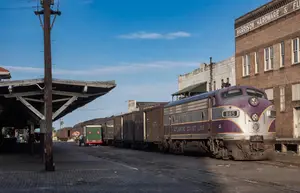
New Jersey, Indiana & Illinois Railroad: A South Bend Shortline
Published: April 9, 2026
By: Adam Burns
Despite its grand-sounding name, the New Jersey, Indiana & Illinois Railroad (NJI&I) was one of the smallest yet most fascinating industrial railroads in the United States. Stretching barely more than 11 miles across northern Indiana, the line served a highly specialized purpose: linking the manufacturing might of South Bend with the broader national rail network. Known affectionately as the “Jersey Line,” its history reflects the rise and fall of American industrial giants, the changing nature of railroad economics, and the gradual disappearance of the short industrial carriers that once dotted the Midwest.
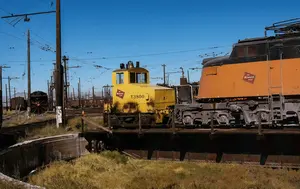
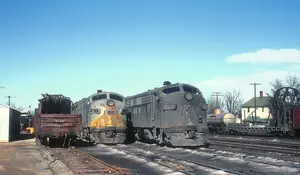
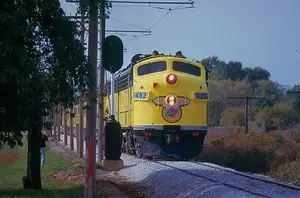
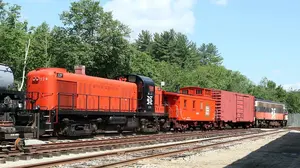
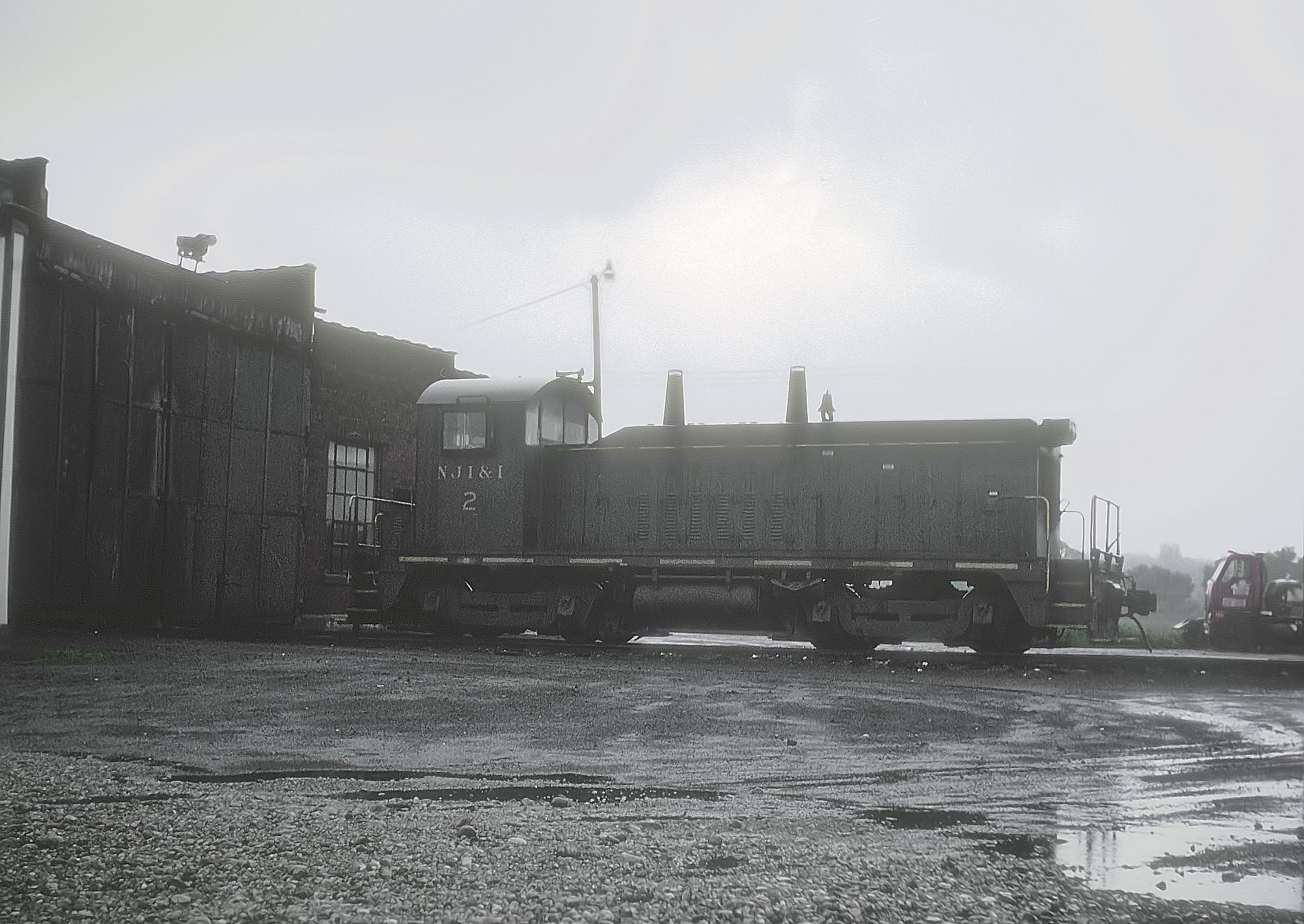 New Jersey, Illinois & Indiana NW2 #2 lays over the road's small roundhouse in South Bend, Indiana in September, 1974. Rick Burn photo.
Origins and Purpose
The NJI&I owed its existence entirely to industrial necessity. It was incorporated on October 27, 1902, at the behest of the Singer Manufacturing Company, which operated a major factory in South Bend, Indiana.
At the turn of the 20th century, Singer grew increasingly dissatisfied with the rail service available from existing carriers. To ensure reliable transportation for its products, the company took the unusual step of creating its own railroad. The name—New Jersey, Indiana & Illinois—did not reflect the railroad’s geographic reach, but rather the locations of Singer’s key manufacturing facilities across those three states.
Construction began in the early 1900s and was completed by 1904–1905. The line extended approximately 11.4 miles from South Bend southward to Pine, Indiana, where it connected with the Wabash Railroad.
From the outset, the NJI&I was essentially a single-purpose industrial branch line. Its primary role was to move finished sewing machines and raw materials between the Singer plant and the national rail system via the Wabash. Yet, like many industrial lines of the era, it quickly evolved into something slightly more complex.
Early Operations
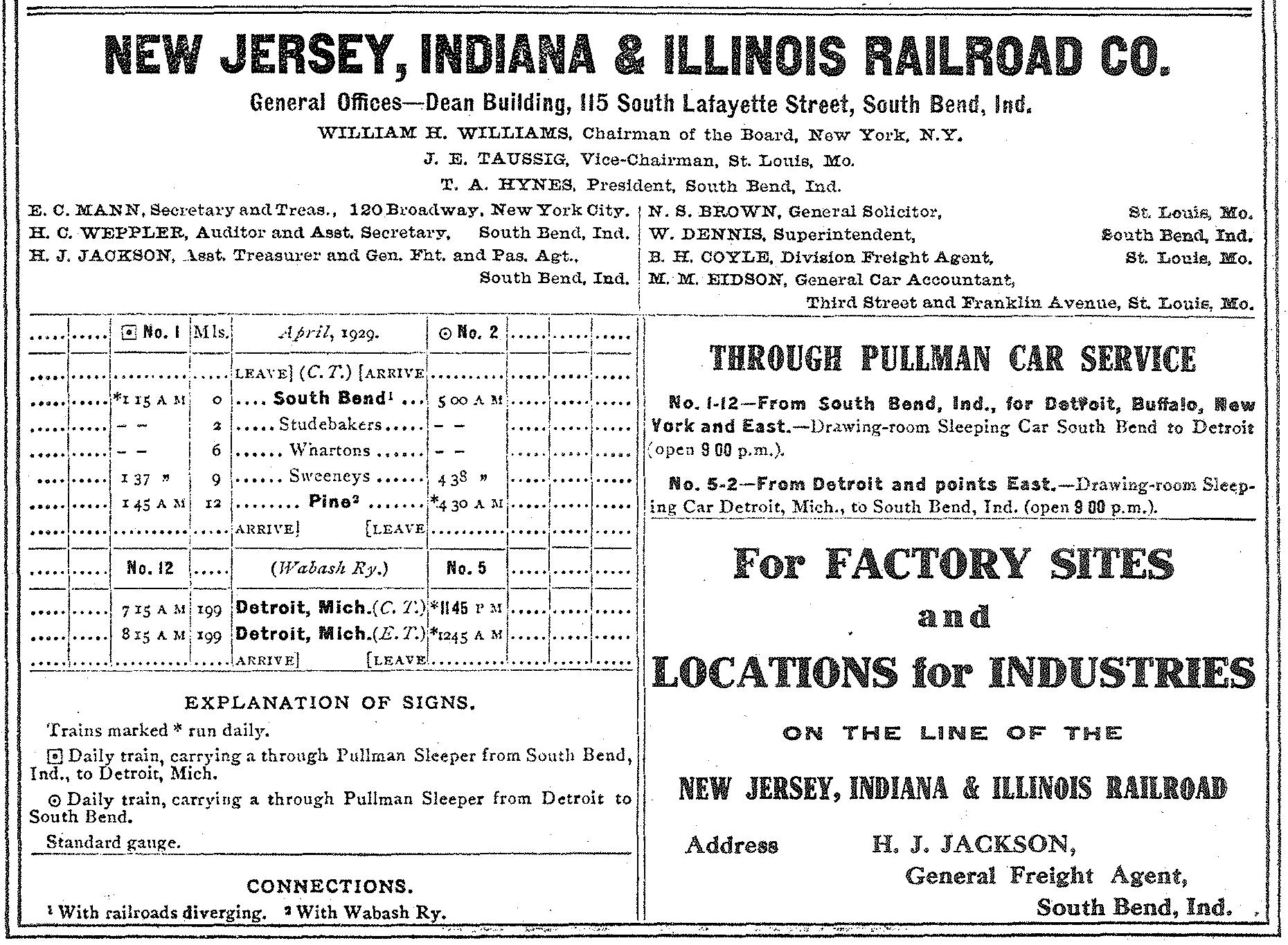
Although built for freight, the NJI&I briefly offered passenger service in its early years. During the 1910s, the railroad operated two round-trip passenger trains daily, connecting South Bend with Detroit via the Wabash system.
This service reflected a broader trend among small railroads: even industrial carriers often provided passenger operations when demand existed. However, the NJI&I’s passenger service was always secondary to its freight mission. By the 1930s—amid declining ridership and the growing dominance of the automobile—passenger operations were discontinued.
Despite its modest size, the railroad played a vital role in the regional economy. South Bend was a major industrial center, and the NJI&I became an essential artery linking local factories with national markets.
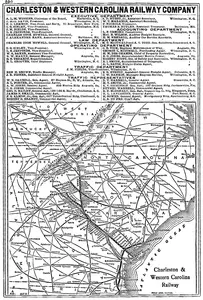
Timetable (1929)
Expansion
While Singer was the railroad’s founding customer, it was far from the only one. The NJI&I soon attracted additional industries along its route, most notably the Studebaker Corporation, whose massive automobile works in South Bend became one of the line’s largest sources of traffic.
The railroad also served a variety of smaller industrial customers, effectively functioning as a switching and transfer line. It handled inbound raw materials—steel, coal, and parts—as well as outbound finished goods. Its connection with the Wabash allowed these shipments to move seamlessly across the Midwest and beyond.
In essence, the NJI&I became a classic “feeder” railroad: small in size but critical in function. Its fortunes were closely tied to the industries it served, a dependency that would ultimately shape its fate.
Acquisition by the Wabash Railroad
In 1926, the Wabash Railroad acquired the NJI&I. Interestingly, despite the acquisition, the line continued to operate under its original name for decades. This arrangement was not uncommon in the railroad industry, where larger systems often maintained subsidiary lines as separate entities for accounting or operational reasons.
Under Wabash ownership, the NJI&I benefited from improved integration with a larger rail network. The Wabash itself was a significant Midwestern carrier, connecting Detroit, Chicago, St. Louis, and Kansas City. For the NJI&I, this meant enhanced access to markets and more efficient freight interchange. However, it also meant that the line’s independence—and its identity as a company railroad—gradually diminished.
Motive Power and Operations
For much of its early history, the NJI&I operated with steam locomotives, typical of short industrial lines of the era. By the late 1940s, it transitioned to diesel power, reflecting industry-wide trends toward more efficient and economical operations.
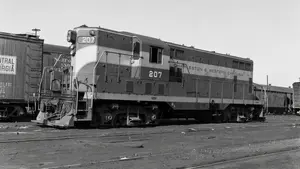
Its roster remained small, usually consisting of a handful of switchers suited to the line’s short-haul, industrial switching duties. Among these were an Alco S-1 and an EMD NW2—both standard diesel switchers widely used across North America.
Operations were straightforward but essential. Crews worked the line daily, moving cars between industrial sidings and the interchange at Pine. The railroad’s limited length meant that operations were highly localized, with an emphasis on switching rather than long-distance hauling.
Decline of Core Industries
The NJI&I’s fortunes began to decline in the mid-20th century, largely due to the struggles of its primary customers. The first major blow came in 1954, when the Singer Manufacturing Company closed its South Bend plant. This closure removed the very reason the railroad had been created. While other industries helped offset some of the lost traffic, the impact was significant.
A second—and even more devastating—blow came with the decline of the Studebaker Corporation. In December 1963, Studebaker shut down its South Bend automobile assembly plant, followed by the closure of its engine foundry in 1964.
Although the company briefly continued operations in Canada, its eventual exit from the automobile business in 1966 marked the end of an era. For the NJI&I, the loss of Studebaker meant the disappearance of one of its largest and most consistent sources of traffic.
These industrial closures were part of a broader trend affecting many Midwestern cities during the mid-20th century. As manufacturing declined or relocated, the railroads that depended on it faced shrinking traffic and uncertain futures.
Transition to Norfolk & Western and Norfolk Southern
In 1964, the Norfolk & Western Railway absorbed the Wabash Railroad, bringing the NJI&I under its control. Under Norfolk & Western—and later Norfolk Southern Railway—the line continued to operate as a local industrial branch. While traffic levels were reduced, the railroad still served remaining customers in the South Bend area. By this point, however, the NJI&I was no longer a distinct railroad in practice. It functioned as part of a larger system, its identity gradually fading even as its physical infrastructure remained in use.
Final Years
The NJI&I formally ceased to exist as an independent entity in 1982, when it was fully absorbed into the Norfolk Southern system.
Operations continued on portions of the line for some time, but the railroad’s original route began to shrink. Changes in routing and the consolidation of rail traffic allowed Norfolk Southern to serve many customers via alternative lines, reducing the need for the NJI&I’s original trackage.
By the late 1990s, the main line from South Bend to Pine had been largely abandoned and removed, with only short segments remaining to serve local industries. Today, remnants of the NJI&I survive in fragmented form, still used by Norfolk Southern for local switching operations. The line’s former right-of-way, once vital to South Bend’s industrial economy, has largely disappeared or been repurposed.
Legacy
Though small in size, the New Jersey, Indiana & Illinois occupies a unique place in American railroad history. It stands as a classic example of an industrial railroad, created by a corporation to meet its own logistical needs. Unlike larger common carriers, the NJI&I existed primarily to serve specific industries, and its success—and eventual decline—was closely tied to their fortunes.
The railroad also illustrates the broader economic transformations of the 20th century. Its rise coincided with the peak of American industrial manufacturing, while its decline mirrored the contraction of that sector in the postwar era.
Physical remnants of the line are scarce, though a few structures—such as its former headquarters in South Bend—still stand as quiet reminders of its past. Among rail enthusiasts, the NJI&I remains a subject of fascination. Its unusual name, compact size, and close association with iconic American companies like Singer and Studebaker make it a compelling case study in the diversity of railroad operations.
Recent Articles


-
Wisconsin Railroad Museums (2026): A Complete Guide
Oct 10, 26 11:51 PM
Wisconsin railroad museums—Green Bay’s Big Boy 4017 and Eisenhower’s A4, Mid-Continent at North Freedom, East Troy’s interurban, and the Riverside & Great Northern. Confirm hours on each site. -
Interstate Railroad (Virginia): Map, Roster, Logo, History
Oct 10, 26 11:22 PM
 Interstate Railroad, a Virginia coal road chartered February 18, 1896. Andover shops. Ten Alco RS3s, 30–39. Southern control in 1961. The company ended October 31, 1985.
 -
North Carolina Railroad Museums (2026): A Complete Guide
Oct 10, 26 11:16 PM
 North Carolina railroad museums—Spencer Shops, Wilmington’s Atlantic Coast Line 250, Hamlet’s Seaboard depot, and the New Hope Valley Railway. Confirm hours on each site.
 -
New Mexico Railroad Museums (2026): A Complete Guide
Oct 10, 26 10:54 PM
 New Mexico railroad museums—Santa Fe 2926 in Albuquerque, the Clovis depot, Alamogordo’s Toy Train Depot, and Belen. Confirm hours on each site.
 -
New York Railroad Museums (2026): A Complete Guide
Oct 10, 26 09:33 PM
 New York railroad museums—Phoenicia, Medina’s New York Central freight house, the Transit Museum, Long Island 35 and 39, and GG1 4933. Confirm hours on each site.
 -
Columbia, Newberry & Laurens Railroad: History, Timetable, Roster
Oct 10, 26 09:08 PM
 Columbia, Newberry & Laurens Railroad, Columbia to Laurens, 75 miles. Chartered in 1885. Five Atlantic Coast Line GP7s, 100–104. Merged into the Seaboard System on April 30, 1984.
 -
New Haven Diesel Roster (All-Time)
Oct 10, 26 06:35 PM
 New Haven diesel roster, all-time. 558 road numbers: 60 DL-109s, 30 FA-1s, 27 PA-1s, 60 FL9s, and the switchers from HH600 0900. Serials and order numbers.
 -
New Haven Steam Roster (Post 1900)
Oct 10, 26 06:31 PM
 New Haven steam since 1900. Drury's class grid: 226 Moguls, 33 Mikados, 50 Santa Fes, 70 Mountains, 141 Pacifics, and 10 Hudsons. Last fan trip July 19, 1953.
 -
New Haven Railroad: Rosters, Map, Logo, History, Trains
Oct 10, 26 06:26 PM
 New York, New Haven and Hartford. The Shore Line, Hell Gate, the 1952 map at 1,838.89 miles, and the railroad Penn Central took at 11:59:59 p.m. on December 31, 1968.
 -
C&O's 4-6-4 "Hudson" Locomotives (Class L): Specs, Roster, History
Oct 10, 26 05:36 PM
 Chesapeake & Ohio Class L 4-6-4 Hudsons. Eight L-2s, five L-1 rebuilds, five L-2-As. Specs, Baldwin works numbers, and the roster. No. 490 survives.
 -
Alton Railroad: Map, History, Timetables
Oct 09, 26 10:31 PM
 Alton Railroad, chartered February 27, 1847 as the Alton & Sangamon. Chicago, St. Louis, and Kansas City, the 1937 Official Guide, and the May 31, 1947 merger into the Gulf, Mobile & Ohio.
 -
Mobile & Ohio Steam Roster (Post 1900)
Oct 09, 26 12:26 PM
 Mobile & Ohio steam since 1900. Drury's class grid: 48 six-wheel switchers, 107 Ten-Wheelers, 15 Consolidations, 58 Mikados, and 14 Pacifics. Last revenue steam October 7, 1949.
 -
Mobile & Ohio Railroad: History, Map, Timetable
Oct 09, 26 11:31 AM
 Mobile & Ohio Railroad, chartered in 1848. Columbus on April 22, 1861, the Cairo & St. Louis, the March 1940 Official Guide, and the September 13, 1940 merger into the Gulf, Mobile & Ohio.
 -
Gulf, Mobile & Northern Steam Roster (Post 1900)
Oct 09, 26 10:42 AM
 Gulf, Mobile & Northern steam since 1900. Drury's class grid: Ten-Wheelers, Mikados, Russian Decapods, Pacifics 425 and 426, and three light 4-8-2s. Last revenue steam October 7, 1949.
 -
Gulf, Mobile & Ohio Diesel Roster (All-Time)
Oct 09, 26 10:41 AM
 Gulf, Mobile & Ohio diesel roster, all-time. The 1935 boxcab, DL-107s, 55 FA-1s, F3s and F7s, the Ingalls 4-S, GP30s through GP38-2s, and 21 SD40s. Serials and order numbers.
 -
Gulf, Mobile & Northern Railroad: History, Rebel Route
Oct 09, 26 10:36 AM
 Gulf, Mobile & Northern, from the 1890 Mobile, Jackson & Kansas City to the Rebel and the September 13, 1940 merger into the Gulf, Mobile & Ohio. Steam roster is the companion page.
 -
Gulf, Mobile & Ohio Railroad: Map, Photos, Trains, History
Oct 08, 26 11:48 PM
 Gulf, Mobile & Ohio, chartered in 1938 and merged September 13, 1940. The Mobile & Ohio, the Alton on May 31, 1947, the Rebel Route, and Illinois Central Gulf on August 10, 1972.
 -
New Jersey Railroad Museums (2026): A Complete Guide
Oct 08, 26 11:37 PM
 New Jersey railroad museums—Whippany, Maywood, Pine Creek, Mahwah’s Erie depot, Phillipsburg, and Boonton. Confirm hours on each site.
 -
New Hampshire Railroad Museums (2026): A Complete Guide
Oct 08, 26 11:34 PM
 New Hampshire railroad museums—North Conway, the Flying Yankee, Ashland, Gorham, Raymond, and Sandown. Confirm hours on each site.
 -
Missouri Railroad Museums (2026): A Complete Guide
Oct 08, 26 11:00 PM
 Missouri railroad museums—the National Museum of Transportation, Patee House, Frisco 4524, the Chicago & Alton depot, and Marceline. Confirm hours on each site.
 -
Milwaukee Road X3800: Deer Lodge’s Shop Goat
Oct 08, 26 04:28 PM
 Milwaukee Road X3800, the a home-built shop goat that served the Deer Lodge, MT yard. It was a 220-volt DC switcher, powered through an extension cord that moved electrics into a roundhouse where the…
 -
Key West Extension (Overseas Railroad): History, Construction, Decline
Oct 08, 26 03:59 PM
 Henry Flagler's Overseas Railroad, Miami to Key West, 1905–1935. The Seven Mile Bridge, the 1935 Labor Day Hurricane, and the road that became U.S. 1.
 -
Florida East Coast Steam Roster (Post 1900)
Oct 08, 26 02:34 PM
 Florida East Coast steam since 1897. Seventeen Ten-Wheelers, twenty Atlantics, eighty-seven Pacifics, ninety Mountains, fifteen Mikados, and the switchers.
 -
Florida East Coast Diesel Roster (All-Time)
Oct 08, 26 02:12 PM
 Florida East Coast diesel roster, all-time. E units from 1939, F3s, BL2s, GP7s and GP9s, the GP40-2 orders, 22 SD40-2s, and 24 ES44C4s. Serials and EMD order numbers.
 -
Florida East Coast Railway: Map, History, Rosters
Oct 08, 26 01:46 PM
 Florida East Coast Railway, Henry Flagler's line from Jacksonville to Miami and Key West. Receivership in 1931, the 1963 strike, Grupo México in 2017, and Brightline on the same track.
 -
Minnesota Railroad Museums (2026): A Complete Guide
Oct 08, 26 10:32 AM
Minnesota railroad museums—the Lake Superior Railroad Museum, Two Harbors, Jackson Street, Willmar’s Great Northern 2523, and Currie. Confirm hours on each site. -
Maine Railroad Museums (2026): A Complete Guide
Oct 08, 26 09:24 AM
 Maine railroad museums—Seashore Trolley, the two-foot lines at Portland, Alna, and Phillips, Boothbay, and the Bangor & Aroostook depots. Confirm hours on each site.
 -
Massachusetts Railroad Museums (2026): A Complete Guide
Oct 08, 26 12:08 AM
 Massachusetts railroad museums—Berkshire Scenic at Lenox, Shelburne Falls trolley No. 10, Edaville, Chatham’s 1887 depot, and Lowell. Confirm hours on each site.
 -
Clinchfield Steam Roster (Post 1900)
Oct 07, 26 12:09 PM
 Clinchfield steam since 1900. Fifteen H-4 Consolidations, K-1 Mikados, M-2 and M-3 Mallets, L-class 2-8-8-2s, eighteen Challengers. Class grid after Drury. Last steam April 16, 1954.
 -
Clinchfield Diesel Roster (All-Time)
Oct 07, 26 12:05 PM
 Clinchfield diesel roster, all-time. F3A 800, FP7 200, the F7s, GP7s, 25 SD40s, 18 SD45-2s, seven U36Cs, and the Family Lines hoods. Serials and EMD order numbers.
 -
Clinchfield Railroad: Map, Steam Locomotives, Roster, Logo
Oct 07, 26 12:02 PM
 Clinchfield Railroad, Elkhorn City to Spartanburg. George L. Carter, the Carolina, Clinchfield & Ohio, the 1924 lease, coal, the loops, and CSX. Steam and diesel rosters are companion pages.
 -
Kentucky Railroad Museums (2026): A Complete Guide
Oct 07, 26 11:39 AM
 Kentucky railroad museums—the Kentucky Railway Museum, Bowling Green’s L&N depot, Paducah, Versailles, and Covington. Confirm hours on each site.
 -
Kansas Railroad Museums (2026): A Complete Guide
Oct 07, 26 11:26 AM
 Kansas railroad museums—Santa Fe 3768 at Wichita, Santa Fe 132 in Topeka, the Great Overland Station, and Abilene. Confirm hours on each site.
 -
Cincinnati, New Orleans and Texas Pacific Diesel Roster (All-Time)
Oct 07, 26 10:38 AM
 All-time diesel roster of Southern locomotives lettered for the Cincinnati, New Orleans and Texas Pacific. Serials, order numbers, and builder dates.
 -
Cincinnati, New Orleans and Texas Pacific Railway
Oct 07, 26 10:31 AM
 Cincinnati, New Orleans and Texas Pacific Railway, incorporated September 8, 1881, to lease Cincinnati’s railroad to Chattanooga. Queen and Crescent route, Rathole, and the 2024 sale to Norfolk Southe…
 -
Indiana Railroad Museums (2026): A Complete Guide
Oct 07, 26 12:26 AM
Indiana railroad museums—Nickel Plate 765, Elkhart’s New York Central collection, French Lick, Linden’s junction depot, and Haley Tower. Confirm hours on each site. -
"Triplex" Steam Locomotive: Specs, History, Photos
Oct 06, 26 11:52 PM
 Erie class P-1 Triplex 2-8-8-8-2s. Three Baldwin compounds, 2603–2605, later 5014–5016, built 1914 and 1916. Matt H. Shay, the 1930 class card, and Virginian XA 700.
 -
Illinois Railroad Museums (2026): A Complete Guide
Oct 06, 26 11:47 PM
 Illinois railroad museums—the Illinois Railway Museum, Monticello, the Pioneer Zephyr, Galesburg’s Burlington 3006, and the depots. Confirm hours on each site.
 -
Iowa Railroad Museums (2026): A Complete Guide
Oct 06, 26 11:41 PM
 Iowa railroad museums—the Union Pacific Railroad Museum, RailsWest, Sioux City, Boone, and the National Hobo Museum in Britt. Confirm hours on each site.
 -
Charleston and Western Carolina Diesel Roster (All-Time)
Oct 06, 26 11:29 PM
Charleston and Western Carolina diesel roster. Twenty-one GP7s, two SW7s, two SW9s, and six F7As, all built 1950–1952. Serials, order numbers, and ACL and SCL numbers. -
Charleston and Western Carolina Railway: Map, History, Timetables
Oct 06, 26 11:18 PM
 Charleston and Western Carolina Railway, incorporated September 16, 1896. Port Royal to Spartanburg, with branches to Anderson and Greenville. Merged into the Atlantic Coast Line on December 31, 1959.
 -
Central of Georgia Steam Roster (Post 1900)
Oct 06, 26 04:00 PM
 Central of Georgia steam since 1900. Cooke Consolidations, Harriman Mikados, 32 Mountains, and eight Lima 4-8-4s. Class grid after Drury. Last steam May 1953.
 -
Central of Georgia Diesel Roster (All-Time)
Oct 06, 26 03:44 PM
 Central of Georgia diesel roster. SW1 No. 1 in 1939, E7s and E8s, nine F3As, 39 RS3s, GP7s through SD35s. Serials and order numbers.
 -
Central of Georgia Railway: Map, Logo, History, Rosters
Oct 06, 26 03:42 PM
 Central of Georgia Railway, from the 1833 Savannah charter to Southern control on June 17, 1963. Map, logos, Nancy Hanks II, and links to the steam and diesel rosters.
 -
Georgia Railroad Museums (2026): A Complete Guide
Oct 06, 26 03:33 PM
Georgia railroad museums—Savannah’s Central shops, Duluth, the General at Kennesaw, the Texas in Atlanta, Tifton, Waycross, and Albany. Confirm hours on each site. -
Florida Railroad Museums (2026): A Complete Guide
Oct 06, 26 03:18 PM
 Florida railroad museums—Boca Raton, Winter Garden, Whitehall, the Gold Coast, Parrish, Fort Myers, Milton, and Plant City. Confirm hours on each site.
 -
Connecticut Railroad Museums (2026): A Complete Guide
Oct 06, 26 01:05 PM
 Connecticut railroad museums—the Shore Line Trolley, East Windsor, the Naugatuck Railroad, Danbury Union Station, Willimantic, and the SoNo tower. Confirm hours on each site.
 -
Colorado Railroad Museums (2026): A Complete Guide
Oct 06, 26 12:47 PM
 Colorado railroad museums—Golden, the Forney’s Big Boy 4005, Pueblo’s Santa Fe 2912, and the depots at Castle Rock, Limon, and Ridgway. Confirm hours on each site.
 -
Atlantic Coast Line Steam Roster (Post 1900)
Oct 06, 26 12:44 PM
 Atlantic Coast Line steam since 1900. Copper Head Ten-Wheelers, 235 P-5 Pacifics, Q-1 Santa Fes, twelve R-1 4-8-4s. Class grid after Drury. Last steam June 30, 1955.
 -
Atlantic Coast Line Diesel Roster (All-Time)
Oct 06, 26 11:57 AM
 Atlantic Coast Line diesel roster. HH660 1900 in 1939, E3s for the Champion, FTs and F2s, GP7s 100–279, GP30s, U25Cs, and the 1967 SCL numbers. Serials and orders.