Ligonier Valley Railroad: History, Roster, Timetable
Published: October 30, 2026
By: Adam Burns
The Ligonier Valley Railroad was the Mellon short line up Loyalhanna Creek, from the Pennsylvania Railroad at Latrobe to the town of Ligonier, running 10.5 miles. The company began as the Latrobe and Ligonier Rail Road, chartered in April 1853. In May 1871 it became the Ligonier Valley Rail Road Company. Judge Thomas Mellon contracted in August 1877 to finish the grade, and the first train ran on December 1, 1877. People in the valley called it the Liggie. The reporting mark was LGV.
J. R. Mellon was president in December 1929, and the operating offices were in Ligonier. Passenger trains ran for the whole life of the road. The last Ligonier Valley operations were on August 31, 1952. The Pennsylvania Railroad kept the track from Latrobe to Kingston for the plants along it. The steam roster coverd 22 engines. Four railcars covered the later passenger trips. The railroad owned no diesel locomotives.

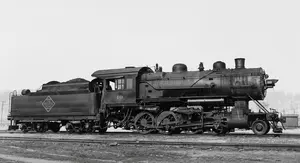
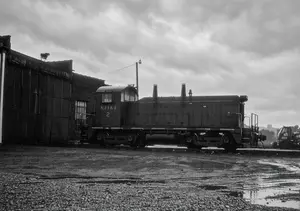
Ligonier Valley 2-8-0 No. 594 at the short line’s yard in Ligonier, Pennsylvania, on August 22, 1950. Alco-Richmond built it in June 1906 as Southern Railway 594. The Ligonier Valley bought it in February 1950.
On this page: December 1, 1877 · At a glance · Three feet, then standard · Idlewild · December 15, 1929 · Wilpen · August 31, 1952 · Locomotives · Railcars
December 1, 1877
The Pennsylvania Railroad opened through Latrobe in 1852. In April 1853 the Assembly chartered the Latrobe and Ligonier Rail Road Company, and surveys followed in 1853 and 1854. The money ran out. Further acts of the legislature changed the company without finishing the track. In May 1871 the name became the Ligonier Valley Rail Road Company. The location was set by April 1872. Grading and the bridges were mostly in by the end of 1873, laid out for standard gauge, 4 feet 8½ inches. The Pennsylvania Railroad was asked to operate the line and declined.
James, Thomas, Andrew, and Richard Mellon wanted the railroad built. James Mellon’s son William, then nine, stood near Kingston and counted the wagons and buggies in the gorge, what they carried, and how many people were in them. In August 1877 Judge Thomas Mellon, their father, contracted to finish the line and run it, so that Andrew and Richard could learn a business. He had the track put down to a gauge of 3 feet. A narrow-gauge railroad cost less to finish than the standard-gauge grade already in the ground. A small secondhand engine and a few used cars were enough to open.
Sixty days after the first spike, the first train left Latrobe for Ligonier on December 1, 1877. The train was an engine, one freight car, and one secondhand coach. Richard B. Mellon was the conductor. Charley Kuhns was the brakeman. Samuel L. French was the engineer, and he stayed with the railroad about twenty years. Judge Mellon and his wife rode in the coach. Thomas A. Mellon rode with them. The station at Ligonier was still unpainted. A quarter century had passed since the 1853 charter.
Richard B. Mellon stayed with the work. He was general freight agent. He also handled baggage, sold tickets, and worked the telegraph. A buggy from Ligonier to Latrobe took about four hours. The train made the same trip in about forty minutes, and Ligonier to Pittsburgh in about two hours.
At a glance
| Item | Figure |
|---|---|
| Headquarters | Ligonier, Pennsylvania |
| Reporting mark | LGV |
| Charter | April 1853, Latrobe and Ligonier Rail Road Company |
| Ligonier Valley Rail Road | Name adopted May 1871 |
| Opened | December 1, 1877 |
| Gauge | 3 feet from 1877. Standard gauge, 4 feet 8½ inches, from 1882 |
| Main line | Latrobe to Ligonier, 10.5 miles, on the December 15, 1929 table |
| President, December 15, 1929 | J. R. Mellon. Operating offices at Ligonier |
| Idlewild | Opened in 1878 on about 350 acres |
| Traffic, 1877–1952 | 32 million tons. 9 million passengers |
| Last day | August 31, 1952 |
| Afterward | Pennsylvania Railroad kept Latrobe to Kingston |
| Steam locomotives | 22 |
| Railcars | 4. No diesel locomotives |
Three feet, then standard
For five years every car bound for the Pennsylvania Railroad had to be unloaded at Latrobe. In 1878 the Ligonier Valley put Robert H. Ramsey’s car transfer to work inside the wye there, the first use of the device. A Pennsylvania car had its standard-gauge trucks taken off. Narrow-gauge trucks went on, and the car ran through to Ligonier. On the return the trucks were changed back. The transfer sat inside the wye. It was still a slow way to interchange a car.
In 1882 the railroad was converted to standard gauge. The three narrow-gauge engines left with the change. No. 1 was a 12-ton engine, on the property from about September 1877, and No. 2 was a 13-ton engine bought in 1878. No. 3 was a Grice & Long 0-2-4, builder’s number 17, built in 1864 for the Pittsburgh, Oakland & East Liberty Passenger Railway and bought in 1881. Nos. 1 and 2 were retired in December 1882. No. 3 lasted until March 1883.
The main line was single track, with team tracks and industrial spurs where the plants needed them. Long sidings west of Millbank, in the flat near the later entrance to Idlewild, held the excursion trains. Baker’s Siding crossed the Loyalhanna on a deck-girder bridge to a quarry on the south bank. Just west of Oakville the single track became two. A third track appeared at St. Clair Street, and a fourth, with the scales, just east of the Main Street crossing. The wye at Latrobe was the interchange. Four tracks lay on the east leg and two on the west. After the Pennsylvania raised its own tracks at Latrobe in the early 1900s, Ligonier Valley trains used the Pennsylvania station.
Idlewild
The Mellons opened Idlewild, first called Idle Park, in 1878, to give the passenger trains a destination. William M. Darlington agreed that year to let the company use about 350 acres of his land in Ligonier Township as picnic grounds, the timber left standing. On the Fourth of July, and on community picnic days, the railroad added as many as eight or ten round trips between Ligonier and Latrobe and held the freight. Pennsylvania Railroad excursions came up in the summer with Pennsylvania crews and a Ligonier Valley pilot. The trains laid over on the sidings near the later Story Book Forest while the engines went on to Ligonier to be turned and serviced. In the 1920s a summer Ligonier Express, Pennsylvania equipment, ran through between Pittsburgh and Ligonier.
Stations and shelters stood at Ligonier, Bells, Millbank, Idlewild, Darlington, Long Bridge, Kingston, Osborne, Oakville, and Latrobe. The passenger trains also carried express and the mail, in closed pouches, for Ligonier and the communities along the creek. On an ordinary weekday the card ran from three to five round trips, with a Sunday train as well.
Freight paid the bills. Stone, coal, coke, and lumber were the loads. The Coal Pit Branch, about half a mile, dated from the first years. S. H. Baker, an early president, was a principal of the Loyalhanna Coal and Coke Company. Loyalhanna No. 2, a shaft mine, sat opposite the later Lincoln Road shopping center. Other mines worked around Long Bridge and Darlington, and around Oakville and Osborne. The Elizabeth plant, south of Osborne, was a mine and 100 coke ovens, the only ovens on the main line. Booth & Flinn opened a quarry on the south side of the Loyalhanna gorge in 1882. The Ligonier Stone Block Company opened on the north side in 1884. Stone from that quarry for the Conemaugh Dam was the last heavy freight the railroad had.
Lumber moved while the Byers-Allen mill and the Pittsburgh, Westmoreland & Somerset were cutting. The Pittsburgh, Westmoreland & Somerset was a logging railroad from Ligonier toward Somerset, a feeder, with its own geared engines. More lumber came from the Ligonier Lumber Company mill at Oak Grove. By 1930 that business was gone. In Latrobe the short line switched the plants along its own track: Railway Steel Springs, Latrobe Steel, Vulcan Mold, Stupakoff, and Latrobe Foundry and Machine. From 1877 through 1952 the railroad moved 32 million tons and carried 9 million passengers.
December 15, 1929

Public timetable of December 15, 1929, from the January 1930 Official Guide. Latrobe to Ligonier is 10.5 miles. J. R. Mellon was president, and the operating offices were at Ligonier. The times above Latrobe are Pennsylvania Railroad connections.
The sheet is headed Ligonier Valley Railroad. J. R. Mellon is president. Thomas A. Mellon is vice president. R. B. Mellon, Richard Beatty Mellon, is secretary. R. K. Mellon, Richard King Mellon, is treasurer. Jos. P. Gochnour, Jr., is general manager. H. M. Johnson is auditor. The operating offices are at Ligonier. A star marks a daily train, a dagger a train that runs daily except Sunday, and a dollar sign a Sunday-only train. The time is Eastern standard.
The condensed columns are Latrobe, Oakville, Kingston, Long Bridge, Darlington, Millbank, and Ligonier. Bells, Idlewild, and Osborne had shelters of their own. The clock times printed above Latrobe, for Pittsburgh, Greensburg, Altoona, and Johnstown, are Pennsylvania Railroad connections.
| Station | Miles |
|---|---|
| Latrobe | 0 |
| Oakville | 1.1 |
| Kingston | 3.5 |
| Long Bridge | 6.6 |
| Darlington | 7.4 |
| Millbank | 8.2 |
| Ligonier | 10.5 |
Reading down the sheet, four trains leave Latrobe for Ligonier. Reading up, five trains leave Ligonier for Latrobe. The run took 25 to 29 minutes. Train 11 is the Sunday edition of the 4:40 p.m. departure from Ligonier, beside train 7.
| Train | Days | Leave Latrobe | Arrive Ligonier |
|---|---|---|---|
| 8–12 | Daily | 6:00 p.m. | 6:25 p.m. |
| 6 | Daily except Sunday | 5:20 p.m. | 5:46 p.m. |
| 4–10 | Daily | 9:20 a.m. | 9:46 a.m. |
| 2 | Daily except Sunday | 7:15 a.m. | 7:41 a.m. |
| Train | Days | Leave Ligonier | Arrive Latrobe |
|---|---|---|---|
| 1 | Daily except Sunday | 6:20 a.m. | 6:49 a.m. |
| 3–9 | Daily | 8:00 a.m. | 8:26 a.m. |
| 5 | Daily except Sunday | 1:00 p.m. | 1:26 p.m. |
| 7 | Daily except Sunday | 4:40 p.m. | 5:06 p.m. |
| 11 | Sunday only | 4:40 p.m. | 5:06 p.m. |
Wilpen
The Mill Creek branch left Ligonier and ran north through North Ligonier and Hannah’s Run to the coal town of Wilpen, and on toward Fort Palmer. A connection at Bolivar, which would have met the Pennsylvania Railroad again, was never finished. After the turn of the century most of the coal and coke on the main line originated on this branch.
On Friday, July 5, 1912, a passenger train and a coal train met on the only blind curve, about a mile and a half from Ligonier, near the Wilpen fairgrounds. The passenger train had left Ligonier about 3:25 p.m., five minutes late. A combination baggage-and-passenger car rode ahead of engine 10, which was pushing. Conductor Charles Kuhn and Engineman Dunlap had the train. The freight had left Wilpen at 3:20 p.m. with 14 loaded cars, engines 7 and 14, Conductor Knox, and enginemen Beatie and McConnoughey, running about 20 to 25 miles an hour. There were no written orders and no block signals. The collision came between 3:30 and 3:40 p.m. George Senft, of Ligonier, was president.
The Interstate Commerce Commission’s report of the collision records the death of 3 employees and 16 passengers, and injury to 4 employees and 24 passengers. One of the injured employees and three of the injured passengers died afterward. Engine 10 was slightly damaged and stayed on the roster until 1917–1918. Engines 7 and 14 were the freight engines. No. 7 was the Ten-wheeler named R.B. Mellon.
August 31, 1952
By the 1930s the timber and the coal and coke were gone. What remained was the Latrobe switching, the stone, and a passenger schedule the railcars could cover. The state was preparing to take the line through the Loyalhanna gorge for the westbound lanes of U.S. 30, the Lincoln Highway. The last Ligonier Valley operations were on August 31, 1952. Passenger service had lasted from the first day to the last. Shortly before the end, a Pennsylvania Railroad diesel special reached Idlewild.
The Pennsylvania Railroad kept Latrobe to Kingston, 3.5 miles on the 1929 table, and switched the plants that had grown up along the Liggie. The industrial service lasted into the Conrail years and has since ended. Much of the right of way through the gorge became those westbound lanes of U.S. 30. The Darlington station is the museum of the Ligonier Valley Rail Road Association.
The railroad was still buying steam at the end. Southern 2-8-0 No. 807 arrived in October 1948. Southern 594, the engine in the photograph, arrived in February 1950. An Army 0-6-0, No. 4025, was already on the property in 1948. The Consolidations the company had bought new, Nos. 12, 15, 18, and 19, had been retired in 1949.
Locomotives
The steam list is 22 locomotives, each frame once. Number 13 was left vacant. The two engines numbered 10 are different locomotives. The three narrow-gauge engines are on the list with the standard-gauge power that followed them. The four railcars are in the next table.
| No. | Type | Qty | Builder | Builder No. | Built | Acquired | Retired | Notes |
|---|---|---|---|---|---|---|---|---|
| 1 | 12-ton | 1 | Unknown | — | — | ca. 9/1877 | 12/1882 | Narrow gauge. Cost $3,500 |
| 2 | 13-ton | 1 | Unknown | — | — | 1878 | 12/1882 | Narrow gauge. Cost $3,500 |
| 3 | 0-2-4 | 1 | Grice & Long | 17 | 1864 | 1881 | 3/1883 | Narrow gauge. From the Pittsburgh, Oakland & East Liberty Passenger Railway. Cost $5,700 |
| 4 | 4-4-0 | 1 | Unknown | — | — | 1882 | ca. 1889 | 20-ton, secondhand. Cost $2,900 |
| 5 | 4-4-0 | 1 | Unknown | — | — | 1882/1883 | ca. 1889 | 10-ton, secondhand |
| 6 | 2-6-0 | 1 | Baldwin | 9222 | 5/1888 | 1888 | 1911–1913 | Named Idlewild. Built new |
| 7 | 4-6-0 | 1 | Baldwin | 10045 | 6/1889 | 1889 | 1912–1913 | Named R.B. Mellon. Built new. In the July 5, 1912 wreck. May not have returned to service |
| 8 | 4-4-0 | 1 | Altoona | 37 | 9/1869 | 11/8/1893 | ca. 1911 | Named Ligonier. Ex-Pennsylvania 172, class C. Cost $1,500 |
| 9 | 2-8-0 | 1 | Altoona | 1392 | 4/27/1889 | 12/17/1905 | 1912–1913 | Named Latrobe. Ex-Pennsylvania 1760, class H3. Cost $4,250 |
| 10 (1st) | 4-4-0 | 1 | Altoona | 811 | 6/29/1883 | 5/10/1906 | 1910 | Ex-Pennsylvania 1048, class D8a |
| 10 (2nd) | 4-4-0 | 1 | Altoona | 1323 | 9/25/1888 | 2/2/1910 | 1917–1918 | Ex-Pennsylvania 1246, class D11. Pushed the passenger train in the July 5, 1912 wreck. Slightly damaged |
| 11 | — | 1 | Unknown | — | — | 2/13/1907 | 1914–1915 | Arrived February 13, 1907, to replace No. 6. The Ligonier Echo called it a large four-wheeler |
| 12 | 2-8-0 | 1 | Baldwin | 33352 | 4/1909 | 4/30/1909 | 1949 | Built new. Rebuilt in 1921 |
| 14 | 2-8-0 | 1 | Altoona | 1338 | 11/21/1888 | 2/16/1912 | 1916–1917 | Ex-Pennsylvania 696, class H3. Cost $2,700. In the July 5, 1912 wreck. May not have returned to service |
| 15 | 2-8-0 | 1 | Baldwin | 38185 | 8/1912 | 9/1912 | 1949 | Built new. Cost $15,000 |
| 16 | 2-8-0 | 1 | Baldwin | 40944 | 11/1913 | 12/3/1913 | 3/21/1933 | Built new. Cost $15,786. Sold to the Artemus-Jellico, Artemus, Kentucky, as No. 16 |
| 17 | 4-4-0 | 1 | Baldwin | 41306 | 4/1914 | 1914 | 1932 | Built new |
| 18 | 2-8-0 | 1 | Baldwin | 42630 | 11/1915 | 11/1915 | 1949 | Built new. Cost $15,600 |
| 19 | 2-8-0 | 1 | Baldwin | 43284 | 5/1916 | 5/1916 | 1949 | Built new. Cost $17,150 |
| 594 | 2-8-0 | 1 | Alco-Richmond | 39311 | 6/1906 | 2/1950 | 1952 | Ex-Southern 594. The engine in the photograph |
| 807 | 2-8-0 | 1 | Baldwin | 35669 | 12/1910 | 10/1948 | 1952 | Ex-Southern 807 |
| 4025 | 0-6-0 | 1 | Alco-Schenectady | 70404 | 9/1942 | 1948 | 1952 | U.S. Army Transportation Corps 4025. Sold in December 1947 through the Railway Accessories Company |
Railcars
Four railcars finished the passenger work. People on the line called them doodlebugs. They covered the schedule through the last two decades. Brill model 55 No. M10 arrived in 1928 from the Punxsutawney Coal Company. The December 1929 card prints the trains and leaves the equipment unnamed. M21 arrived in 1937 from the St. Louis Southwestern, where it had been No. 21. In November 1943 the railroad bought two Electro-Motive gas-electrics from the Boston & Maine and kept their numbers, 1150 and 1152. All four lasted until August 31, 1952. No. 17, the last passenger engine bought new, had already been retired in 1932.
| No. | Type | Qty | Builder | Builder No. | Built | Acquired | Retired | Notes |
|---|---|---|---|---|---|---|---|---|
| M10 | Brill model 55, gas-mechanical | 1 | Brill | 22097 | 1924 | 1928 | 1952 | From the Punxsutawney Coal Company |
| M21 | Brill model 55, gas-mechanical | 1 | Brill | 22751 | 1929 | 1937 | 1952 | From St. Louis Southwestern 21 |
| 1150 | EMC model 106, gas-electric | 1 | EMC/St. Louis | 127 | 7/1926 | 11/12/1943 | 1952 | From the Boston & Maine |
| 1152 | EMC model 106, gas-electric | 1 | EMC/St. Louis | 129 | 7/1926 | 11/12/1943 | 1952 | From the Boston & Maine |
Related reading
Sources
- Jim Aldridge, “A Brief History of the Mainline of the Ligonier Valley Rail Road,” Ligonier Valley Rail Road Association, March 2006. The 1853 charter, the May 1871 name, the August 1877 contract, December 1, 1877, the 3-foot gauge and the 1882 change, Ramsey’s transfer in 1878, the stations, Idlewild, the freight plants, the Mill Creek branch, and the last day, August 31, 1952. The Pennsylvania Railroad kept Latrobe to Kingston.
- James M. Myers, “The Ligonier Valley Rail Road as it Touched the Life of Latrobe,” Western Pennsylvania Historical Magazine (March 1955). The first train on December 1, 1877: one engine, one freight car, and one secondhand coach. Richard B. Mellon, conductor. Charley Kuhns, brakeman. Samuel L. French, engineer. Sixty days from the first spike.
- Ligonier Valley Rail Road Association, motive-power roster, JRA, November 2010, drawn from Baldwin, Alco, and Pennsylvania Railroad records, with Thomas T. Taber III and James Madison Myers, The Ligonier Valley Rail Road and Its Communities (Pittsburgh, 1955). The steam and railcar tables on this page.
- Ligonier Valley Railroad table in the January 1930 Official Guide, dated December 15, 1929 and reproduced here. Officers, the 10.5 miles, the station miles, and trains 8–12, 6, 4–10, 2, 1, 3–9, 5, 7, and 11.
- Interstate Commerce Commission accident report, Ligonier Valley Railroad, July 5, 1912. The Wilpen collision, the trains, and the toll.
- The Official Railway Equipment Register (Railway Equipment and Publication Company, June 1917), p. 292. Reporting mark LGV.
- Robert D. Stutzman, interview, Tribune-Review, February 28, 2014, “Author’s book examines Ligonier Valley Rail Road.” William Mellon at Kingston. Richard B. Mellon as general freight agent, conductor, and, at times, engineer. Idlewild on about 350 acres in 1878. About four hours by buggy from Ligonier to Latrobe, about forty minutes by train, and about two hours from Ligonier to Pittsburgh.
- Pennsylvania Center for the Book, “Idlewild: Pennsylvania’s Mountain Playground.” William M. Darlington’s 1878 agreement for picnic grounds on about 350 acres in Ligonier Township, the timber left standing.
- Pittsburgh Post-Gazette, September 2, 2010, “New Ligonier museum a hit with train buffs.” Nine million passengers and 32 million tons, 1877–1952. The Darlington station as the association museum.
- Trains, June 25, 2014, review of Robert D. Stutzman, The Ligonier Valley Rail Road. Secondhand steam as late as 1950. A Pennsylvania Railroad diesel special to Idlewild shortly before the end. Daily passenger trains through the last day.
Recent Articles


-
NC&StL No. 576 to Steam for the Public in Nashville
Oct 30, 26 01:00 PM
 Nashville Steam will fire NC&StL 4-8-4 No. 576 for the public on November 7, 2026, 9 a.m. to 3 p.m., at 220 Willow Street. Admission is free.
-
Pennsylvania Railroad E8s Join the T1 Trust
Oct 30, 26 12:38 PM
 The T1 Trust has acquired former Pennsylvania Railroad E8A diesels 5702A and 5761A from the Fort Wayne Railroad Historical Society. They are bound for Cumberland.
-
Ligonier Valley Railroad: History, Roster, Timetable
Oct 30, 26 12:03 PM
 The Ligonier Valley Railroad ran 10.5 miles from Latrobe to Ligonier, Pennsylvania. Opened December 1, 1877. Last day August 31, 1952.
-
Toledo, Peoria & Western Diesel Roster (All-Time)
Oct 30, 26 10:25 AM
 Toledo, Peoria & Western diesel locomotives, each frame once. Thirteen Alcos, three Lima-Hamilton switchers, and 26 Electro-Motive units.
-
Toledo, Peoria & Western Steam Roster
Oct 30, 26 09:14 AM
 Toledo, Peoria & Western steam locomotives from the Rogers Consolidations of 1895 through the 4-8-4s of 1937
-
Toledo, Peoria & Western Railway: Map, Roster, History
Oct 29, 26 11:12 PM
 History of the Toledo, Peoria & Western. The Peoria & Oquawka, George P. McNear, the Santa Fe and Pennsylvania years, and the railroad that came back in 1989.
-
Cotton Belt Diesel Roster (All-Time)
Oct 29, 26 07:58 PM
 St. Louis Southwestern diesel locomotives, each frame once. Baldwin switchers, F units, and new Cotton Belt-lettered power through the GP60s of May 1990.
-
Cotton Belt Steam Roster (Built Since 1900)
Oct 29, 26 06:52 PM
 St. Louis Southwestern steam locomotives built since 1900. Consolidations, Ten-Wheelers, and twenty class L-1 4-8-4s. The quantity column is 297.
-
Cotton Belt Railroad: Map, Logo, History, Rosters
Oct 29, 26 10:56 AM
 History of the St. Louis Southwestern, the Cotton Belt Route. The Tyler Tap, Paramore's silver spike, the Thebes Bridge, the Blue Streak, and Southern Pacific control. Steam and diesel rosters are sep…
-
Pere Marquette Steam Roster (Built Since 1900)
Oct 28, 26 11:54 PM
 Pere Marquette steam locomotives built since 1900. Consolidations, Mikados, Pacifics, and 39 Berkshires. The quantity column is 503.
-
Pere Marquette Diesel Roster (All-Time)
Oct 28, 26 11:48 PM
 Pere Marquette diesel locomotives, each frame once. Two SW1s, 14 NW2s, three GE 70-tonners, eight E7As, and six BL2s delivered lettered Chesapeake and Ohio. The quantity column is 33.
-
Pere Marquette Railway: Map, Logo, Rosters, History
Oct 28, 26 11:44 PM
 History of the Pere Marquette Railway. Timber roads, the Prince years, the Van Sweringens, the Ludington car ferries, and the Chesapeake and Ohio merger of June 6, 1947.
-
Nickel Plate Road (Railroad): Map, History, Rosters
Oct 28, 26 10:51 PM
 History of the Nickel Plate Road, the New York, Chicago and St. Louis. The Seney syndicate, the Van Sweringens, the Berkshires, and the Norfolk and Western absorption at 12:01 a.m. on October 16, 1964…
-
Nickel Plate Diesel Roster (All-Time)
Oct 28, 26 10:48 PM
 Nickel Plate diesel locomotives, each frame once. Alco switchers and PAs, GP7s and GP9s, and the GP30s. The quantity column is 440. The 1950 fleet was 117.
-
Nickel Plate Steam Roster (Built Since 1900)
Oct 28, 26 10:43 PM
 Nickel Plate steam locomotives built since 1900, including the Lake Erie and Western, the Clover Leaf, and the Wheeling engines that took Nickel Plate numbers. The quantity column is 786.
-
EMD "E9" Locomotives: Specs, Roster, History
Oct 28, 26 10:37 PM
 EMD E9 cab units and boosters, 2,400 horsepower, built April 1954 through January 1964. Gear ratios, specifications, and the production roster by owner, serial, and order.
-
NYC 4-6-4 #5344, "Commodore Vanderbilt"
Oct 28, 26 04:31 PM
 NYC J-1e Hudson 5344, the Commodore Vanderbilt. Alco, November 1931. Carl Kantola’s shroud, December 1934, then a Dreyfuss bullet nose in 1939. Scrapped at Collinwood in 1954.
-
New Jersey, Indiana & Illinois Railroad: A South Bend Shortline
Oct 28, 26 11:05 AM
 The New Jersey, Indiana & Illinois, the Jersey Line, ran from South Bend to Pine. Singer built it in 1905. Wabash stock control came in 1926. Two diesels, and the steam the record names.
-
Monon Diesel Roster (All-Time)
Oct 28, 26 10:13 AM
 Monon diesel locomotives, each frame once. F3s, nine BL2s, the C420s, and eight U23Bs. The quantity column is 96. The 1951 fleet was 57.
-
Monon Steam Roster (Built Since 1900)
Oct 28, 26 10:09 AM
 Monon steam locomotives built since 1900. Twelve-Wheelers, Mikados, light Pacifics, and thirteen six-wheel switchers. The quantity column is 148.
-
Monon Railroad: Map, Photos, History, Logo
Oct 28, 26 09:55 AM
 History of the Monon, the Hoosier Line. The New Albany & Salem, the X at Monon, Barriger's streamliners, and the Louisville & Nashville merger of July 31, 1971.
-
Missouri-Kansas-Texas Diesel Roster (All-Time)
Oct 28, 26 09:48 AM
 All-time diesel roster of the Missouri-Kansas-Texas. 406 locomotives, each frame once. Baldwin switchers, Alco cab units, F units, Geeps, and the SD40-2s.
-
Missouri-Kansas-Texas Steam Roster (Built Since 1900)
Oct 28, 26 09:43 AM
 Missouri-Kansas-Texas steam locomotives built since 1900. Moguls, Mikados, Pacifics, and the narrow-gauge shop tanks. The quantity column is 715.
-
Missouri-Kansas-Texas Railroad (Katy): Map, History, Rosters
Oct 27, 26 11:02 PM
 History of the Missouri-Kansas-Texas, the Katy. The race into Indian Territory, Gould, the 1923 railroad, the Texas Special, and the 1988 sale. Steam and diesel rosters are linked.
-
Soo Line Diesel Roster (All-Time)
Oct 27, 26 10:55 PM
 All-time diesel roster of the Soo Line and the Wisconsin Central. 786 locomotives, each frame once. Cab units, Geeps, the Milwaukee Road engines, and the SD60s. The South Shore's 24 stay on that page.
-
Soo Line Steam Roster (Built Since 1900)
Oct 27, 26 10:49 PM
 Soo Line and Wisconsin Central steam locomotives built since 1900. Consolidations, Mikados, Pacifics, 21 Mountains, and four Lima 4-8-4s.
-
Soo Line Railroad: Map, Logo, History, Rosters
Oct 27, 26 10:24 PM
 The Soo Line, from the flour millers' railroad around Chicago to the Sault, the Wisconsin Central, and the Milwaukee Road. Steam quantity 422. Diesels 786. Canadian Pacific took full control in 1990.
-
Minneapolis, Northfield and Southern Railway: Map, History, Rosters
Oct 27, 26 10:32 AM
 The Minneapolis, Northfield & Southern, the Dan Patch Line that became a Twin Cities belt. Steam, gas-electric mules, motor cars, and the 22 diesels, through the Soo Line.
-
Minneapolis & St. Louis Diesel Roster (All-Time)
Oct 27, 26 10:27 AM
 All-time diesel roster of the Minneapolis & St. Louis. 97 locomotives, each frame once. Switchers from 1938, 35 RS-1s, the FT and F-unit cabs, two SD7s, and 23 GP9s. Builder numbers included.
-
Minneapolis & St. Louis Steam Roster (Post 1900)
Oct 27, 26 10:25 AM
Minneapolis & St. Louis steam locomotives built since 1900. Moguls, Consolidations, 35 Mikados, and five Pacifics. -
Minneapolis and St Louis Railway: "The Peoria Gateway"
Oct 27, 26 09:52 AM
 The Minneapolis & St. Louis, the Tootin' Louie, from the 1870 charter to the Peoria Gateway and the Chicago & North Western sale on November 1, 1960.
-
Alco "PA" Locomotives: Restoration, Specs, Engine, Rosters
Oct 27, 26 12:12 AM
 Alco's PA passenger cab, 297 locomotives built from 1946 to 1953. The 244 engine, the production roster, the Delaware & Hudson PA-4s, and Nickel Plate Road 190.
-
Milwaukee Road Diesel Roster: (All Time)
Oct 26, 26 01:44 PM
 All-time diesel roster of the Milwaukee Road. 1,208 locomotives, each frame once. Alco, Baldwin, Davenport, EMD, Fairbanks-Morse, General Electric, and Whitcomb, with builder numbers.
-
Milwaukee Road Steam Roster (All-Time): Post-1900
Oct 26, 26 01:38 PM
 Milwaukee Road steam locomotives built since 1900. Prairies, Mikados, the N-class articulateds, the S-class 4-8-4s, and the Hiawatha Atlantics and Hudsons. Quantity column 1,974. Unique frames 1,951.
-
Milwaukee Road: Map, Electrification, Logo, History
Oct 26, 26 01:20 PM
 The Milwaukee Road, from the Milwaukee & Mississippi of 1850 to the Pacific Coast Extension, the Hiawathas, and the Soo Line sale. Why Lines West should have stayed.
-
Lake Superior & Ishpeming Railroad: Map, Roster, History
Oct 25, 26 11:38 PM
 Lake Superior & Ishpeming Railroad, reporting mark LSI, from the Marquette Range to the Presque Isle ore dock. The 1954 steam list and the diesels the railroad owned.
-
Kansas City Southern Steam Roster (Built Since 1900)
Oct 25, 26 09:09 PM
 Steam locomotives of the Kansas City Southern built since 1900, with the Louisiana & Arkansas and the Texas company.
-
Kansas City Southern Diesel Roster (Built New)
Oct 25, 26 11:46 AM
All-time diesel roster of the Kansas City Southern. E units, F units, Geeps, SD40s through SD70ACes, Fairbanks-Morse, Baldwin, Alco, and General Electric, with serials and order numbers. -
Kansas City Southern Railway: Map, Photos, History
Oct 25, 26 12:24 AM
The Kansas City Southern, from Arthur Stilwell's Gulf line to Canadian Pacific Kansas City on April 14, 2023. Steam and diesel rosters, the Southern Belle, and the Louisiana & Arkansas. -
Indiana Harbor Belt Diesel Roster (All-Time)
Oct 25, 26 12:17 AM
 All-time diesel roster of the Indiana Harbor Belt. 202 locomotive frames, each counted once. NW2s, SW7s, SW1500s, road switchers, and gensets. Slugs and boosters are outside the count.
-
Indiana Harbor Belt Steam Roster (Built Since 1900)
Oct 25, 26 12:13 AM
 Steam locomotives of the Indiana Harbor Belt built since 1900. 182 engines, each counted once. 0-6-0s, 2-6-0s, 0-8-0s, and 2-8-2s. The three U-4a switchers are three-cylinder Brooks engines of 1927.
-
Indiana Harbor Belt Railroad: Map, Rosters, History
Oct 25, 26 12:00 AM
 Indiana Harbor Belt, the inner belt across the Calumet, from the East Chicago Belt of May 16, 1896. Renamed June 29, 1907. Still operating, headquarters Hammond. Steam roster is the companion, 182 loc…
-
NYC's "P Motor" Electric Locomotives
Oct 24, 26 11:43 PM
 New York Central P motors: 22 Alco-GE 2-C+C-2 electrics, Cleveland Union Terminal 1050–1071, class P-1a. 3,030 hp one-hour on 3,000-volt DC catenary, then 660-volt third rail as P-2a and P-2b.
-
Illinois Terminal Car Roster
Oct 24, 26 11:40 PM
 Illinois Terminal cars. Mainline motors, the 1948 streamliners, sleepers, Alton and Valley Division cars, express motors, and the line cars rebuilt from pull cars.
-
Illinois Terminal Diesel Roster
Oct 24, 26 09:31 PM
 All-time Illinois Terminal diesels, 62 frames. Alco S-2s and RS-1s, EMD switchers, GP7s, SD39s, GP38-2s, and the two GP20s. Serial numbers from the 1989 roster.
-
Illinois Terminal Electric Locomotives
Oct 24, 26 08:22 PM
 Illinois Terminal electric locomotives, 57 frames. Class A through Class D, the Decatur-built motors, and the battery locomotives. Class D is the same five Class C frames, rebuilt.
-
Illinois Terminal Steam Roster
Oct 24, 26 07:37 PM
 Illinois Terminal steam locomotives, 36 frames. Baldwin Moguls, three Class 30 Mikados, Florida East Coast 0-8-0s, and 2-6-0 No. 21, the last fire on June 30, 1950.
-
Illinois Terminal Railroad: Map, Roster, Photos, History
Oct 24, 26 07:32 PM
Illinois Terminal, McKinley's Illinois Traction System, from the Danville coal towns to St. Louis. The McKinley Bridge, the sleeping cars, the 1937 break with the power company, the 1948 streamliners… -
Southern Railway Diesel Roster (All-Time)
Oct 23, 26 11:00 PM
 All-time diesel roster of the Southern Railway. 2,505 locomotives in the system number series, from the 1939 demonstrator FT to GP50s and B30-7A1s. Serials included.
-
Illinois Central Diesel Roster (All-Time)
Oct 23, 26 04:06 PM
Illinois Central and Illinois Central Gulf diesel locomotives, each frame once. The quantity column is 886. Serials and order numbers from Electro-Motive's builder lists. Paducah rebuilds and Gulf, Mo…