Chicago Great Western Steam Roster (Post 1900)
Published: October 20, 2026
By: Adam Burns
The Chicago Great Western’s modern steam was a freight fleet, built for a railroad that sat between larger grangers and made its name on long trains. George H. Drury’s table of locomotives built or rebuilt since 1900 prints a quantity column of 376. A rebuild is the same frame, and that frame is listed on the new row as well as the old one.
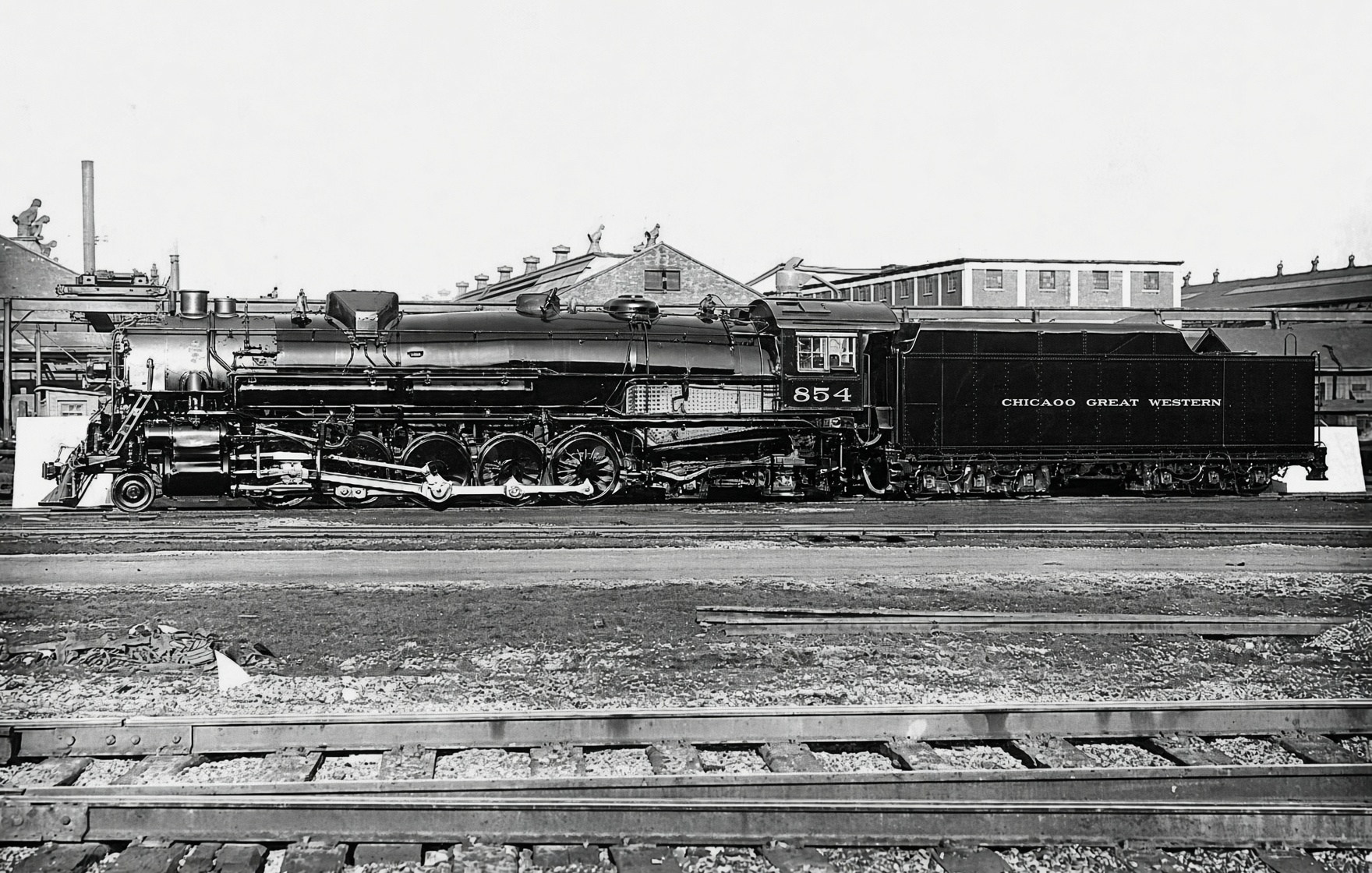
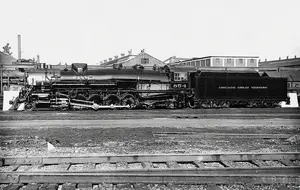
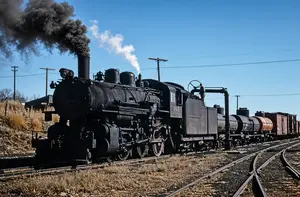
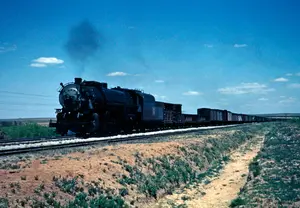
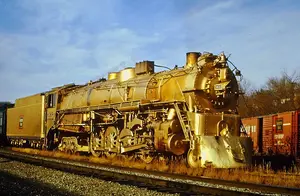
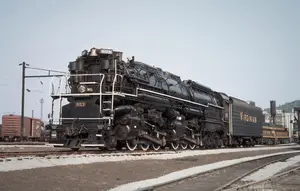
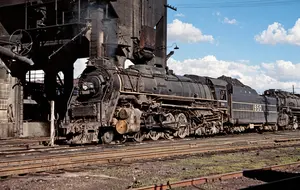
Chicago Great Western 2-10-4 #854 is seen here at the railroad's Oelwein, Iowa shops in 1930. This engine was part of the railroad's T-1 Class, built by Lima that year.
On this page: At a glance · Prairies and Pacifics · Consolidations and Mikados · Texas types · Switchers · Roster
At a glance
| Item | Detail |
|---|---|
| Railroad | Chicago Great Western. Mark CGW. Company history |
| This table | Steam locomotives built or rebuilt since 1900, in Drury’s class order. A rebuild is the same frame |
| Prairies | 95, in six classes. Brooks built 63. Rhode Island built 32. F-1 and F-6 became Pacifics. Three F-3s became the shop-built Mallets, and all six F-3s ended as Pacifics |
| Consolidations | 50 frames. G-1, G-2, and G-3. The 12 G-4s are G-3s rebuilt at Oelwein |
| Mikados | 40. L-1 10, L-1a 10, L-2 10, L-3 10. The L-1b and L-2b numbers in the notes are the same frames |
| Santa Fe type | 7. Class M-1, 800–806, Baldwin, 1916 |
| Texas type | 36. Lima 21 and Baldwin 15, classes T-1, T-2, and T-3, built in 1930 and 1931 |
| Articulated | 10 Baldwin 2-6-6-2s, class H-1, sold to the Clinchfield in 1916. The three H-2s are Prairie frames |
| Ten-Wheelers | 27. Classes E-3 through E-7 |
| Pacifics | The quantity column lists 37. Eight Baldwin K-5s are frames of their own. The rest are rebuilt Prairies, or the three Mallets taken apart and rebuilt again |
| Switchers | 40 six-wheel switchers. The eight-wheel quantity column lists 14, and 12 of those are Consolidation frames. Baldwin 17 and 18 are the two additional engines |
| Moguls | 5. Class D-3, 12–16, from the St. Paul Bridge & Terminal |
| Quantity column | 376 |
| Frames, each once | 320 |
| Last steam | The retirement column closes in 1950 |
Prairies and Pacifics
Within a year of discovering the 2-6-2, the railroad had 95 Prairies in six classes. Brooks built 63 of them and Rhode Island built 32. F-1 and F-6 were the passenger engines, with 73-inch and 68-inch drivers, and both classes were rebuilt as Pacifics. F-2 through F-5 were freight engines with 63-inch drivers. F-2 and F-4 were built as compounds and later simpled. Most of the F-4s and F-5s received superheaters, piston valves, and Walschaerts valve gear and were reclassed F-7a and F-7b. Those rebuilds stay on the F-4 and F-5 rows. Eleven F-4s became F-7a. Ten F-5s became F-7b. The F-7s still in service after 1932 lasted until 1950.
F-1 numbers 180–182, Brooks engines of 1902, were rebuilt as 4-6-2s 921–923, class K-4, in 1911 and 1912. F-6 numbers 901–920 became classes K-1, K-2, and K-3 between 1910 and 1917 and kept their numbers. The differences among those Pacifics were mainly cylinder size and boiler pressure. They kept the 68-inch drivers they had carried as Prairies. Superheaters came on after the conversion and brought further reclassification. At least one member of each class was later a K-2a. Most were scrapped between 1929 and 1932. The six that lasted through the Second World War were all K-2a engines.
Light Pacific 905 shows the sequence in one engine. Brooks built it in 1903 as a 2-6-2. Oelwein rebuilt it as a Pacific in 1911 and gave it a British look in 1923: a capped stack, curved running boards, a single step, and no outside plumbing. Several of the road’s Pacifics were painted red and lined in gold for the Twin Cities–Rochester Red Bird of 1925. Disk main drivers appeared on Pacifics, and on Ten-Wheelers and Prairies as well.
Three F-3s, 247, 248, and 250, were rebuilt at Oelwein in 1910 into 2-6-6-2s 650–652, class H-2. The front section of the boiler on those homemade Mallets was a feedwater heater. The railroad soon took them apart and, in 1916–1918, rebuilt them as Pacifics 950–952. The other three F-3s, 249, 251, and 252, became Pacifics 953–955 in the same years. Both K-6 rows are those six Prairie frames.
Baldwin delivered five Pacifics in 1913, numbers 925–929, and three more, 930–932, in 1916. Class K-5 is those eight engines. They were about the size of a United States Railroad Administration light Pacific. Numbers 925–927 were scrapped in 1932. The other five lasted until 1950.
Consolidations and Mikados
The ten G-1 Consolidations of 1900 were Vauclain compounds with 55-inch drivers, and they were converted to single expansion between 1905 and 1907. The G-2s, Rhode Island engines of 1901, were the same size, about 180,000 pounds, and they too were cross-compounds. In 1909 and 1910 the whole G-2 class, numbers 310–319, was simpled and rebuilt into J-2 eight-wheel switchers. G-1 numbers 303 and 308 became J-1 switchers and kept their numbers. The table dates those two rebuilds to 1909 and 1917.
The G-3s were the next size up: 63-inch drivers, 24 by 30 cylinders, and 222,450 pounds total weight. Baldwin built thirty of them in 1909 and 1910, numbers 320–359. Between 1927 and 1930 Oelwein rebuilt twelve with larger fireboxes and 26-inch cylinders, a gain of about 18,000 pounds, and reclassed them G-4, numbers 600–611. The G-4 row is those twelve frames.
Baldwin’s L-1 Mikados of 1912, numbers 700–709, had 63-inch drivers, 27 by 30 cylinders, and weighed 283,000 pounds. The ten L-2s of 1916, numbers 710–719, used the same principal dimensions and weighed about 2,900 pounds more. Between 1937 and 1939 the Oelwein Shops rebuilt six L-1s with stokers, new frames, and disk main drivers, classed them L-1b, and added 30 to the numbers: 703 and 705–709 became 733 and 735–739. The L-2 note records 710, 712, and 716 rebuilt as L-2b numbers 740–742.
In 1918 the United States Railroad Administration assigned ten light Mikados, class L-3, numbers 750–759. When the railroad went back to Baldwin in 1920 for ten more 2-8-2s, it asked for the 1912 design. Numbers 720–729 are class L-1a. The Mikados are 40.
The seven Santa Fe types, class M-1, numbers 800–806, came from Baldwin in 1916. They weighed almost as much as a United States Railroad Administration light 2-10-2. Boiler pressure was 180 pounds, and tractive effort was 43,440 pounds, less than any of the road’s Mikados. The table retires the class across 1936–1950. Five were scrapped in 1936 and a sixth in 1938. Number 800 lasted until 1950.
Texas types
The 2-10-4s were the fast freight engines, and they were unusual in the upper Midwest. In 1929 the railroad ordered fifteen from Lima. In 1930 it ordered six more from Lima and fifteen from Baldwin. The table accounts for all 36: Lima T-1s 850–864 in 1930 and 880–882 in 1931, Baldwin T-2s 865–873 in 1930, Baldwin T-3s 874–879 in 1930, and Lima T-3s 883–885 in 1931. Drivers were 63 inches.
They followed the Texas & Pacific 2-10-4 in the large things and differed in the details. They burned coal. A second sand dome sat behind the steam dome. The feedwater heater was a Coffin or a Worthington. Classes T-1 and T-2 carried Bethlehem auxiliary engines. Class T-3 carried a conventional trailing-truck booster, working two axles of the rear tender truck. The engines were assigned to the fast freights from Oelwein to Chicago, St. Paul, and Kansas City. The E-7 Ten-Wheelers could not support a Texas type on the Missouri River bridge, and older power went into storage as the 2-10-4s arrived. The table has the Texas types gone by 1948–1950.
Ten low-drivered 2-6-6-2s, class H-1, numbers 600–609, came from Baldwin in 1910. They proved unsuitable. By the time they were sold to the Clinchfield in 1916, twenty Mikados had joined the roster. The three H-2s, described with the Prairies above, were taken apart and rebuilt as Pacifics.
The Ten-Wheelers in this table are 27. The E-3s, Rhode Island engines of 1900, numbers 235–244, were dual-service locomotives with 63-inch drivers and were sold in 1917. The six E-4s of 1901 were passenger engines with 68-inch drivers. The single E-5, Baldwin 1902, was sold in 1916. The E-6s and E-7s, Baldwin engines of 1909 and 1910, had 73-inch drivers. The E-6s were scrapped in 1930 and 1931. The E-7s were given stokers and lasted until the end of steam.
Switchers
The largest group of six-wheel switchers was class B-5, fifteen Baldwin engines of 1915 and 1916, numbers 465–479. They had 51-inch drivers, piston valves, and an engine weight of 156,620 pounds. The five B-6s, 480–484, were the United States Railroad Administration 0-6-0s, built at Pittsburgh in 1919. The three B-7s, 485–487, came from Baldwin in 1921. They were about 5,000 pounds lighter than the Administration engines, with boiler pressure ten pounds lower, cylinder diameter an inch greater, and piston stroke two inches less. Tractive force worked out about the same.
When the Chicago Great Western leased the St. Paul Bridge & Terminal in 1924 it acquired B-8 switchers 10 and 11, Alco engines of 1907, and the five D-3 Moguls, 12–16, Alco engines of 1914–1917. Two large Baldwin eight-wheel switchers came with the same lease. Number 17, class J-3, was built in 1925, and number 18, class J-4, was built in 1926. They were chunky machines, with large air reservoirs on the pilot beam and Elesco feedwater heaters hung out ahead of the smokebox. Both lasted until 1950. The footnote on Drury’s table expands StPB&T as the St. Paul Bridge & Terminal.
Roster
The quantity column sums to 376. Counted once, the frames are 320. A blank cell is empty. Pittsburgh is the builder name on the B-6 row. Rhode Island is printed in full.
| Type | Class | Numbers | Qty | Builder | Built | Retired | Notes |
|---|---|---|---|---|---|---|---|
| 0-6-0 | B-3 | 450–454 | 5 | Brooks | 1902 | 1936, 1948 | |
| 0-6-0 | B-4 | 455–464 | 10 | Baldwin | 1911 | 1935, 1948 | |
| 0-6-0 | B-5 | 465–479 | 15 | Baldwin | 1915, 1916 | 1949–1950 | |
| 0-6-0 | B-6 | 480–484 | 5 | Pittsburgh | 1919 | 1949–1950 | USRA |
| 0-6-0 | B-7 | 485–487 | 3 | Baldwin | 1921 | 1936, 1950 | |
| 0-6-0 | B-8 | 10, 11 | 2 | Alco | 1907 | 1948 | Ex-St. Paul Bridge & Terminal |
| 0-8-0 | J-1 | 303, 308 | 2 | CGW | 1909, 1917 | 1932, 1930 | Rebuilt from G-1 2-8-0s |
| 0-8-0 | J-2 | 310–319 | 10 | CGW | 1910 | 1930–1932 | |
| 0-8-0 | J-3 | 17 | 1 | Baldwin | 1925 | 1950 | Ex-St. Paul Bridge & Terminal |
| 0-8-0 | J-4 | 18 | 1 | Baldwin | 1926 | 1950 | Ex-St. Paul Bridge & Terminal |
| 2-6-0 | D-3 | 12–16 | 5 | Alco | 1914–1917 | 1948, 1950 | Ex-St. Paul Bridge & Terminal |
| 2-6-2 | F-1 | 180–182 | 3 | Brooks | 1902 | 1929–1930 | Rebuilt to 4-6-2s 921–923 |
| 2-6-2 | F-2 | 221–246 | 26 | Rhode Island | 1902 | ||
| 2-6-2 | F-3 | 247–252 | 6 | Rhode Island | 1902 | 247, 248, and 250 rebuilt to 2-6-6-2s 650–652 in 1910. 249, 251, and 252 rebuilt to 4-6-2s 953–955 in 1916–1918 | |
| 2-6-2 | F-4 | 253–272 | 20 | Brooks | 1902 | 1929–1932, 1950 | 11 rebuilt to F-7a |
| 2-6-2 | F-5 | 273–292 | 20 | Brooks | 1903 | 1929–1932, 1950 | 10 rebuilt to F-7b |
| 2-6-2 | F-6 | 901–920 | 20 | Brooks | 1903 | Rebuilt to K-1, K-2, and K-3 4-6-2s | |
| 2-8-0 | G-1 | 300–309 | 10 | Baldwin | 1900 | 1930–1933 | 2 rebuilt to J-1 0-8-0s |
| 2-8-0 | G-2 | 310–319 | 10 | Rhode Island | 1901 | All rebuilt to J-2 | |
| 2-8-0 | G-3 | 320–359 | 30 | Baldwin | 1909–1910 | 1930–1950 | 12 rebuilt to G-4 |
| 2-8-0 | G-4 | 600–611 | 12 | CGW | 1927–1930 | 1949–1950 | Rebuilt from G-3 |
| 2-8-2 | L-1 | 700–709 | 10 | Baldwin | 1912 | 1949–1950 | 703, 705–709 rebuilt to L-1b 733, 735–739 |
| 2-8-2 | L-1a | 720–729 | 10 | Baldwin | 1920 | 1942–1950 | |
| 2-8-2 | L-2 | 710–719 | 10 | Baldwin | 1916 | 1950 | 710, 712, 716 rebuilt to L-2b 740–742 |
| 2-8-2 | L-3 | 750–759 | 10 | Baldwin | 1918 | 1939–1950 | USRA |
| 2-10-2 | M-1 | 800–806 | 7 | Baldwin | 1916 | 1936–1950 | |
| 2-10-4 | T-1 | 850–864 | 15 | Lima | 1930 | 1948–1950 | |
| 2-10-4 | T-1 | 880–882 | 3 | Lima | 1931 | 1948–1950 | |
| 2-10-4 | T-2 | 865–873 | 9 | Baldwin | 1930 | 1948–1950 | |
| 2-10-4 | T-3 | 874–879 | 6 | Baldwin | 1930 | 1948–1949 | |
| 2-10-4 | T-3 | 883–885 | 3 | Lima | 1931 | 1948–1949 | |
| 2-6-6-2 | H-1 | 600–609 | 10 | Baldwin | 1910 | Sold to the Clinchfield in 1916 | |
| 2-6-6-2 | H-2 | 650–652 | 3 | CGW | 1910 | Rebuilt to 4-6-2s 950–952 in 1916–1918 | |
| 4-6-0 | E-3 | 235–244 | 10 | Rhode Island | 1900 | Sold 1917 | |
| 4-6-0 | E-4 | 170–175 | 6 | Richmond | 1901 | 1914–1921 | |
| 4-6-0 | E-5 | 220 | 1 | Baldwin | 1902 | Sold 1916 | |
| 4-6-0 | E-6 | 500–503 | 4 | Baldwin | 1909 | 1930–1931 | |
| 4-6-0 | E-7 | 504–509 | 6 | Baldwin | 1910 | 1950 | |
| 4-6-2 | K-1, K-2, K-3 | 901–920 | 20 | CGW | 1910–1917 | 1932–1950 | |
| 4-6-2 | K-4 | 921–923 | 3 | CGW | 1911–1912 | 1932 | Rebuilt from 2-6-2s 180–182 |
| 4-6-2 | K-5 | 925–932 | 8 | Baldwin | 1913, 1916 | 1932, 1950 | 925–929 in 1913. 930–932 in 1916. 925–927 scrapped in 1932 |
| 4-6-2 | K-6 | 950–952 | 3 | CGW | 1915 | 1932 | Rebuilt from 2-6-6-2s 650–652 |
| 4-6-2 | K-6 | 953–955 | 3 | CGW | 1916–1918 | 1932 | Rebuilt from 2-6-2s 249, 251, and 252 |
Related reading on American-Rails.com
- Chicago Great Western · Diesel roster
- Legionnaire · Chicago & North Western
- Steam Locomotives · Fallen Flags
Sources
- George H. Drury, Guide to North American Steam Locomotives, revised edition, the Chicago Great Western chapter, pp. 128–129, and the table of steam locomotives built since 1900. The class grid above, including builders, dates, quantities, and notes. The 95 Prairies, 63 by Brooks and 32 by Rhode Island. Driver diameters and the compound and superheater history of the Prairies. Pacific 905, the British styling of 1923, and the red-and-gold Red Bird Pacifics of 1925. G-3 weight, 222,450 pounds, and the G-4 rebuild. L-1 dimensions, 63-inch drivers, 27 by 30 cylinders, 283,000 pounds, and the six L-1b rebuilds of 1937–1939. M-1 pressure, 180 pounds, and tractive effort, 43,440 pounds. The Texas-type order, the coal fuel, the second sand dome, the Coffin and Worthington heaters, and the boosters. Ten Baldwin 2-6-6-2s sold to the Clinchfield in 1916, and three shop-built H-2s. B-5 weight, 156,620 pounds, and the B-6 and B-7 comparison. The St. Paul Bridge & Terminal engines acquired with the 1924 lease. Drury’s source note names the Chicago & North Western Historical Society, www.cnwhs.org; Railroad History No. 154, page 86; and Railroad Magazine, July 1929, page 121.
- The company page holds the corporate history, the mileage, and the merger at 12:01 a.m. on July 1, 1968.
Recent Articles


-
Detroit and Mackinac Railway: Map, Roster, History
Oct 20, 26 11:58 PM
 Detroit & Mackinac Railway, the Turtle Line. Bay City to Cheboygan along Lake Huron. Incorporated December 29, 1894. Lake State Railway leased the operation in 1992 and bought the lines in 1997. E…
-
Davenport, Rock Island and Northwestern Railroad
Oct 20, 26 11:22 PM
 Davenport, Rock Island and North Western Railway, the DRI Line. Clinton to East Moline across the Crescent Bridge. Burlington and Milwaukee. Merged into the Soo Line on June 29, 1995. Eighteen diesels…
-
Chicago Great Western Steam Roster (Post 1900)
Oct 20, 26 11:17 PM
 Chicago Great Western steam locomotives built or rebuilt since 1900. Drury's class grid. 320 frames, each once. The quantity column prints 376 because a rebuild is listed again. Last steam in the reti…
-
Chicago Great Western Diesel Roster (All-Time)
Oct 20, 26 10:47 PM
 All-time diesel roster of the Chicago Great Western. 157 frames, each counted once. Serials and builder order numbers included. Steam was gone by 1950. The 1963 glance figure of 141 is one year's flee…
-
Chicago Great Western Railway: Map, Photos, History, Rosters
Oct 20, 26 10:43 PM
 The Chicago Great Western, the Corn Belt Route, linked Chicago, the Twin Cities, Omaha, and Kansas City from September 27, 1885, until the Chicago & North Western merger at 12:01 a.m. on July 1, 1968…
-
Chicago, South Shore & South Bend Railroad: "The South Shore Line"
Oct 20, 26 05:48 PM
 Chicago South Shore & South Bend, the South Shore Line, from the 1901 Air Line through Samuel Insull's 1925 rebuild, the orange cars, the 800s, and the railroad NICTD and Anacostia still run.
-
Northwestern Virginia Railroad: Map, History, Timetable
Oct 20, 26 04:18 PM
 Northwestern Virginia Railroad, chartered February 14, 1851, Grafton to Parkersburg, 104 miles. Opened May 1, 1857. Foreclosure sale February 15, 1865, as the Parkersburg Branch. Twenty-three tunnels…
-
"Exposition Flyer" (Train): Consist, Timetable, History
Oct 20, 26 03:29 PM
 Exposition Flyer, Chicago to Oakland, June 10, 1939 to March 20, 1949. Burlington, Rio Grande, and Western Pacific. Heavyweight cars, then diesels and a vista-dome. Replaced by the California Zephyr.
-
Chicago, St. Paul, Minneapolis & Omaha Railway, "The Omaha Road"
Oct 20, 26 02:13 PM
 The Omaha Road, reporting mark CMO. Formed May 26, 1880. North Western management on December 16, 1882. Leased January 1, 1957. Class K-1 No. 183 and the sublettered diesels.
-
Chicago and Western Indiana Railroad: Map, Rosters, History
Oct 20, 26 01:17 PM
 Chicago and Western Indiana, chartered June 5, 1879. Five equal owners, Dearborn Station, and two main lines. Dolton suburban mile 16.6. Fifteen diesels. Railroad service ended in 1994. The Illinois c…
-
Railroad Tell-Tales: Protecting The Brakeman
Oct 20, 26 12:58 PM
 Railroad tell-tales: hanging ropes that warned a man on a freight-car roof of a low bridge or tunnel. The 1897 bridge-warning report, the 1905 Wisconsin statute, retainers, and why the roof walk outla…
-
Chicago & North Western Steam Roster (Post 1900)
Oct 20, 26 12:54 PM
 Chicago & North Western steam locomotives built since 1900, and the Omaha Road list beside it. Drury's parent quantity column sums to 1,445, with four rows left blank. The Omaha Road column sums to 24…
-
Chicago & North Western Diesel Roster (All-Time)
Oct 20, 26 12:49 PM
 All-time diesel roster of the Chicago & North Western. 2,494 frames, each counted once, including Chicago Great Western, Minneapolis & St. Louis, and Omaha Road units that received North Western numbe…
-
Chicago and North Western Railroad: Map, History, Logo
Oct 20, 26 12:37 PM
 The Chicago & North Western, chartered as the Galena & Chicago Union in 1836 and formed in June 1859. Granger railroad of the 400s, the Cowboy Line, and Powder River coal. Union Pacific common control…
-
Chicago & Illinois Midland Steam Roster (Post 1900)
Oct 20, 26 12:30 AM
 Chicago & Illinois Midland steam locomotives built since 1900. Drury's class grid, 57 engines. Twenty-six 2-10-2s, including nine from the Wabash and nine from the Atlantic Coast Line. Last road steam…
-
Chicago & Illinois Midland Diesel Roster (All-Time)
Oct 20, 26 12:20 AM
 All-time diesel roster of the Chicago & Illinois Midland. 28 frames, each counted once. Six SW1200s, five SD9s, the only two RS1325s, two SD18s, six SD38-2s, and four SD20s. Serials included.
-
Chicago and Illinois Midland Railroad: Map, Rosters, History
Oct 20, 26 12:17 AM
 The Chicago & Illinois Midland moved Illinois coal for Commonwealth Edison, Taylorville and Springfield to Pekin, with Peoria over the Peoria & Pekin Union. The 1906 railway began operating February 1…
-
Chicago & Eastern Illinois Diesel Roster (All-Time)
Oct 19, 26 04:23 PM
 All-time diesel roster of the Chicago & Eastern Illinois. 143 frames, each counted once. Switchers, F3s, FP7s, E7s, the BL1, and the GP7s through GP35s. Serials included.
-
Chicago & Eastern Illinois Steam Roster (Post 1900)
Oct 19, 26 04:19 PM
Chicago & Eastern Illinois steam locomotives built or rebuilt since 1900. 146 Consolidations, 60 Mikados, and 24 Pacifics. Drury's class grid. Last steam was Mikado 1944 at Vincennes on May 5, 1950. -
Chicago and Eastern Illinois Railroad: Map, Rosters, History
Oct 19, 26 03:57 PM
 The Chicago & Eastern Illinois ran from Chicago to Evansville, St. Louis, and Thebes. First company of the name, August 28, 1877. The remainder merged into the Missouri Pacific on October 15, 1976. St…
-
Rock Island Diesel Roser: All-Time
Oct 19, 26 11:05 AM
 Chicago, Rock Island and Pacific diesel locomotives, 1,029 frames counted once. Switchers, cab units, road-switchers, two acquired slugs, five RDCs, and bi-power 10000. Serial and order are separate c…
-
Rock Island Steam Roster: Post 1900
Oct 19, 26 11:01 AM
Chicago, Rock Island and Pacific steam locomotives built or rebuilt since 1900. Drury's class grid, 1,482 frames counted once, including 85 4-8-4s. Last revenue steam was July 1953. -
Rock Island Railroad: Map, Pictures, Logo, History
Oct 19, 26 10:51 AM
 The Chicago, Rock Island and Pacific ran from Chicago to the Twin Cities, Denver, Tucumcari, and the Gulf. First train October 10, 1852. Directed service ended March 23, 1980. Steam and diesel rosters…
-
EMD "F7" Locomotives: Cab, Top Speed, Specs, Rosters
Oct 19, 26 12:27 AM
 EMD F7 cab units and boosters, 1,500 horsepower, built February 1949 through December 1953. Gear ratios, specifications, and the production roster by owner, serial, and order.
-
Harlem Transfer Company: An NYC Terminal System
Oct 19, 26 12:01 AM
 Harlem Transfer Company, the Lackawanna's offline freight terminal on the Bronx side of the Harlem River at East 135th Street. Carfloats to Hoboken, boxcab No. 2, and GE 44-tonner 53.
-
Belpre Industrial Parkersburg Railroad: Roster, History, Photos
Oct 18, 26 11:44 PM
 Belpre Industrial Parkersburg Railroad, a Class III short line leasing about 46.9 miles of CSX track at Parkersburg since 2020. The Ohio River bridge, the Marietta Subdivision, and five GP38-3s.
-
Chicago, Peoria & St. Louis Railroad: Map, Timetables, History
Oct 18, 26 10:57 PM
 Chicago, Peoria & St. Louis Railroad, an Illinois line from Pekin and Peoria through Springfield to Madison. Chartered in 1853. Sold in parcels on November 20, 1924. The Pekin line is today the Illino…
-
Chicago, Burlington & Quincy Diesel Roster (All-Time)
Oct 18, 26 10:54 PM
 All-time diesel roster of the Chicago, Burlington & Quincy. 951 parent frames, 72 Colorado & Southern, and 36 Fort Worth & Denver, each counted once. Serials included.
-
Burlington Railroad (CB&Q): Map, History, Rosters, Photos
Oct 18, 26 10:49 PM
 The Chicago, Burlington & Quincy, the Burlington Route, ran from Chicago to Denver, the Twin Cities, and the Gulf. Steam built since 1900 and the diesel fleets are companion rosters. Burlington Northe…
-
Chicago, Burlington & Quincy Steam Roster (Post 1900)
Oct 18, 26 10:33 PM
 Chicago, Burlington & Quincy steam locomotives built or rebuilt since 1900. 429 Prairies, 383 Mikados, the Hudsons, and the O-5 4-8-4s. Drury's class grid.
-
Virginian Railway's 2-6-6-6 Locomotives (Class AG)
Oct 18, 26 01:38 PM
 Virginian Railway class AG. Eight Lima 2-6-6-6s, Nos. 900-907, built in 1945 for the east end. Billed at 753,000 pounds. Scrapped in 1960.
-
Pennsylvania (PRR) Steam Roster: Post 1906
Oct 18, 26 01:05 PM
ennsylvania steam after 1906—H8, H9, and H10 Consolidations, 574 L1s Mikados, 598 I1s Decapods, 425 K4s Pacifics, 301 M1 Mountains. Drury’s grid. Last steam November 30, 1957. -
Chicago, Aurora and Elgin Railroad: The "Roarin' Elgin"
Oct 18, 26 10:54 AM
The Chicago, Aurora & Elgin, the Roarin' Elgin, ran 600-volt third-rail trains from Chicago to Aurora, Batavia, and Elgin. Passenger service ended at noon on July 3, 1957. Freight ended June 11, 1959. -
Algoma Central Railway: Map, Logo, Rosters
Oct 17, 26 10:49 PM
 Algoma Central Railway, Sault Ste. Marie to Hearst. Wisconsin Central on February 1, 1995. Fifty-nine steam locomotives and forty-two diesels.
-
Akron, Canton and Youngstown Railroad: Map, History, Rosters
Oct 17, 26 05:49 PM
 Akron, Canton and Youngstown Railroad, Mogadore to Delphos. The rails never reached Canton or Youngstown. Norfolk & Western control on October 16, 1964. Twenty-six diesels and the historical society's…
-
Georgia Railroad: Map, History, Logo, Rosters
Oct 17, 26 12:59 PM
 Georgia Railroad, the Georgia Railroad and Banking Company, Augusta to Atlanta, with the Athens branch and the Macon Road. Mark GA. The railroad properties were sold on November 4, 1982.
-
West Point Route (Railroad): Map, History, Logo
Oct 16, 26 11:26 PM
 The West Point Route was a trademarked name comprising the Atlanta & West Point and Western Railway of Alabama, which were controlled by the Georgia Railroad.
-
Virginian Railway Diesel Roster (All-Time)
Oct 16, 26 11:11 PM
 All-time diesel roster of the Virginian Railway. 40 Fairbanks-Morse H16-44s, 25 H24-66 Train Masters, and one GE 44-tonner. Serials included.
-
Virginian Railway Steam Roster (Post 1900)
Oct 16, 26 10:55 PM
 Virginian Railway steam locomotives built since 1900. Mikados, 2-8-8-2s, the Triplex, class AE 2-10-10-2s, and the 1945 2-6-6-6s.
-
Virginian Railway: Map, Rosters, History, Electrification
Oct 16, 26 10:51 PM
 Virginian Railway, Deepwater to Norfolk. Combined in 1907 and completed in 1909. Electrified from Roanoke to Elmore. Absorbed by the Norfolk & Western on December 1, 1959.
-
Baldwin "Centipede" Locomotives: Specs, Roster, Photos
Oct 16, 26 03:58 PM
 Baldwin DR-12-8-1500/2 Centipede—2-D+D-2, two 608SC engines, 3,000 hp. SAL 4500 from the 1943 test bed. 54 on the serial list, 52 sold. PRR BP60 then BH50. None preserved.
-
Louisville & Nashville Class M-1 2-8-4s: The Big Emmas
Oct 16, 26 03:52 PM
Louisville & Nashville class M-1, 42 Big Emma 2-8-4s. Baldwin in 1942 and 1944, Lima in 1949. Coal trains from Neon to DeCoursey. No locomotive survives. -
Tennessee, Alabama and Georgia Railway: Map, History, Rosters
Oct 16, 26 03:21 PM
 Tennessee, Alabama and Georgia Railway, Chattanooga to Gadsden. The May 1929 card is 91.7 miles. Southern stock control closed on a January 1, 1971 schedule. Five diesels and Prince's steam list.
-
Railroad Museums In The USA (2026): State Guides & Collections
Oct 16, 26 02:29 PM
 U.S. railroad museums—what they are vs tourist railroads, preservation history (R&LHS, NRHS, IRM, Steamtown), state guides, and destination collections. Confirm hours on each museum’s site.
-
Wyoming Railroad Museums (2026): A Complete Guide
Oct 16, 26 02:26 PM
 Wyoming railroad museums—the Cheyenne Depot, Burlington 5633 at Douglas, Big Boy 4004, and the Laramie depot. Confirm hours and which locomotive is on the property.
-
West Virginia Railroad Museums (2026): A Complete Guide
Oct 16, 26 12:52 PM
 West Virginia railroad museums—Cass Scenic’s geared steam, the Hinton C&O collection, and the Martinsburg B&O roundhouse. Confirm hours and which locomotive is assigned.
-
Washington Railroad Museums (2026): A Complete Guide
Oct 16, 26 12:46 PM
 Washington railroad museums—Snoqualmie, Elbe, Chehalis, Reardan, and the Northern Pacific depot at Toppenish. Confirm hours and which locomotive is assigned.
-
Vermont Railroad Museums (2026): A Complete Guide
Oct 16, 26 12:42 PM
 Vermont railroad museums—the Shelburne Museum’s 1890 station, Central Vermont No. 220, and the private car Grand Isle. Confirm hours on the site.
-
Tennessee Central Railway: Map, Logo, Rosters, History
Oct 16, 26 11:32 AM
 Tennessee Central Railway, Harriman to Hopkinsville. Reorganized January 26, 1922. Last day August 31, 1968. Thirty-one diesels and the railroad's steam roster.
-
Southern Railway Steam Roster (Post 1900)
Oct 16, 26 09:40 AM
Southern Railway steam locomotives built since 1900. Ps-4 Pacifics, Ts Mountains, USRA Santa Fes, and the subsidiary grids for the CNO&TP, Alabama Great Southern, and New Orleans and Northeastern.