Chicago, St. Paul, Minneapolis & Omaha Railway: History, Map, Timetables
Last revised: October 20, 2026
By: Adam Burns
The Chicago, St. Paul, Minneapolis & Omaha Railway was the Omaha Road. Reporting mark CMO. It was a Wisconsin corporation, with its principal office at Hudson and its general offices at St. Paul. An agreement of May 25, 1880, filed the next day, consolidated the Chicago, St. Paul & Minneapolis and the North Wisconsin. The Interstate Commerce Commission recorded that consolidation as effective May 28, 1880. In November 1882 the Chicago & North Western bought a majority of the stock. Management passed to the parent on December 16, 1882. The Omaha kept its own officers, its own numbers, its own rule book, and right-hand running. The North Western leased the property on January 1, 1957. The separate corporation was removed in 1972.
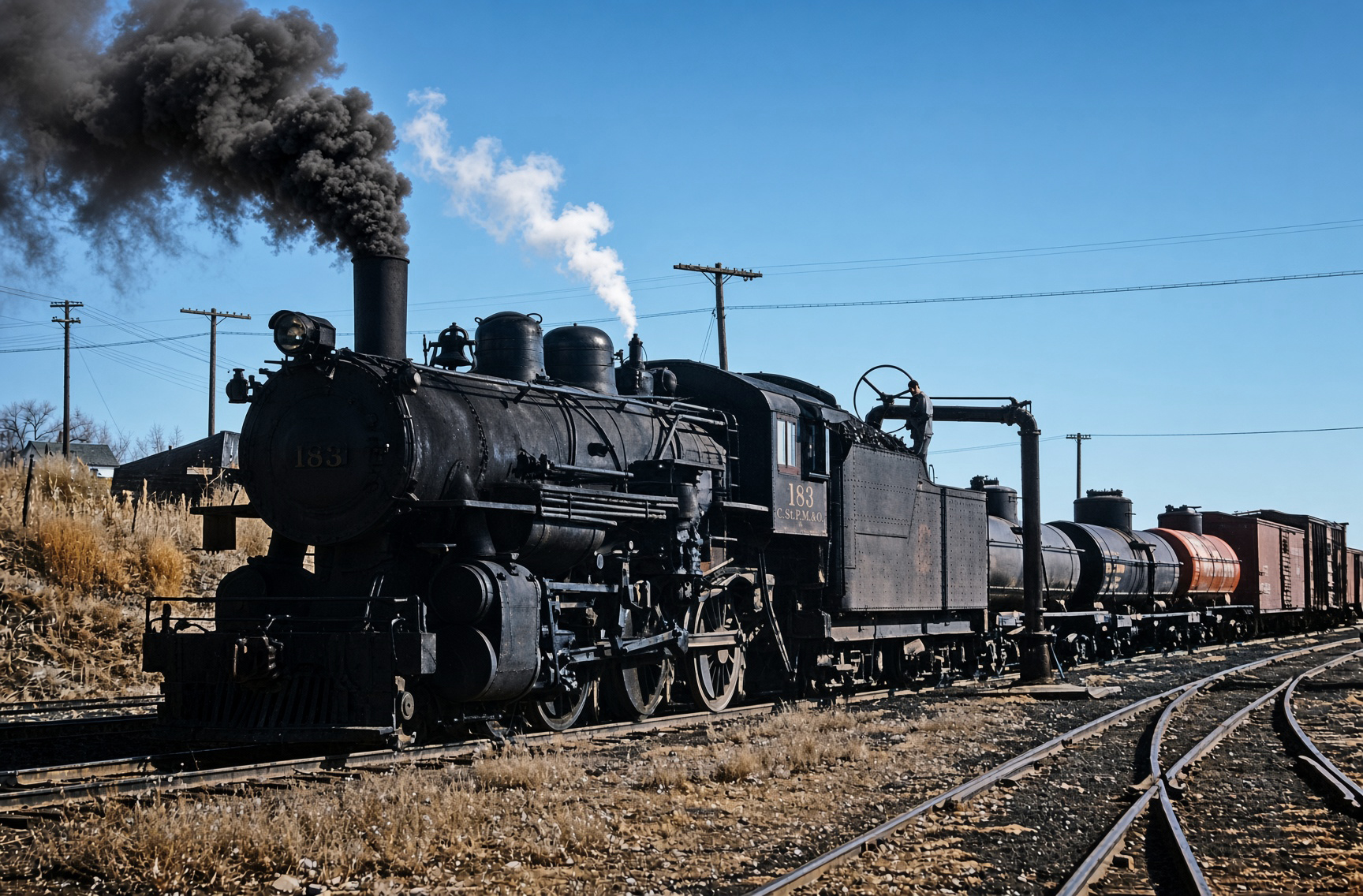
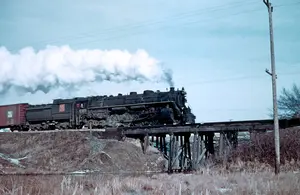
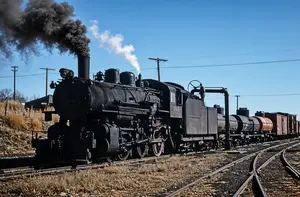
Omaha Road class K-1 4-6-0 No. 183 at Emerson, Nebraska, on March 24, 1956. The cab is lettered C. St. P. M. & O. Emerson was a junction on the Nebraska Division, where the line from Omaha to Sioux City met a line west toward Norfolk.
On this page: Its own railroad · May 1880 · The 1882 purchase · Main lines · Emerson · 1909 public sheets · At a glance · Lease and after · Steam · Sublettered diesels · Omaha numbers
Its own railroad
After the stock purchase the Omaha kept its own timetable, its own locomotive numbers, and its own operating rules. The Chicago & North Western Historical Society’s capsule, drawn from the society’s archives, lists what the subsidiary kept: its own president and departments, offices in St. Paul, freight and passenger cars, locomotive classes, diagram books, rule book, and ICC valuation sections. Reporting marks were CMO. Equipment numbers generally sat below the parent’s, in a series of their own. The Omaha ran right-handed. Diesels were sublettered for the subsidiary even when the carbody matched a North Western order. Maps handed to shippers showed one system. The public sheets on this page carry both names, The North Western Line and the Chicago, St. Paul, Minneapolis & Omaha, on the same page.
The Commission, at its valuation, put the same fact in one sentence. The property had been operated by the Omaha’s own organization throughout its life to that date. The parent controlled the company by a majority of the capital stock. The Omaha, in turn, held pieces of five terminal properties. Those terminals operated the track:
| Company | Omaha share | Held with |
|---|---|---|
| Lake Superior Terminal and Transfer | 16.66% | Duluth, South Shore & Atlantic; Great Northern; Northern Pacific |
| Minnesota Transfer Railway | 11.11% | Eight other Twin Cities roads, including the Milwaukee Road, the Great Northern, the Northern Pacific, and the Minneapolis & St. Louis |
| Minneapolis Eastern Railway | 50% | Milwaukee Road |
| Saint Paul Union Depot | 11.11% | The same Twin Cities group as the Minnesota Transfer |
| Sioux City Bridge | 50% | Chicago & North Western |
On the November 7, 1909, public sheet the officers still sat in both cities. Marvin Hughitt was chairman of the executive committee, in Chicago. W. A. Gardner was president, in Chicago. James T. Clark was second vice-president at St. Paul, A. W. Trenholm was general manager at St. Paul, and T. A. Polleys was secretary at Hudson, the principal office. The passenger department’s general agent, J. A. O’Brien, was at 600 Nicollet Avenue in Minneapolis.
May 1880
Two Wisconsin companies went into the consolidation. The Chicago, St. Paul & Minneapolis was incorporated April 30, 1878. It was the reorganization of the West Wisconsin, which entered receivership on June 1, 1877, was sold at foreclosure on March 1, 1878, and was acquired on May 2, 1878. That road had begun as the Tomah & Lake St. Croix, incorporated April 1, 1863, and took the West Wisconsin name by a resolution of June 4, 1867. Its line was the eastern stem, St. Paul to the North Western at Elroy. The North Wisconsin was incorporated November 17, 1871. It was the road toward Bayfield and Superior.
The St. Paul & Sioux City came in the next year. The Minnesota Valley, incorporated March 4, 1864, took that name on June 7, 1870, and was sold to the Omaha on May 9, 1881. Its main line ran from the Twin Cities through Mankato and Worthington to Le Mars, Iowa. Sioux City was reached by trackage rights. On October 1, 1872, through trains were already running from St. Paul to Sioux City, using the Iowa Falls & Sioux City, an Illinois Central predecessor, from Le Mars to the Missouri River. Minneapolis itself remained a trackage-rights terminal. The Commission’s description of the finished road names five main lines: St. Paul to Elroy; Eau Claire to Duluth; Northline to Bayfield; Merriam, Minnesota, to Le Mars; and South Sioux City to Omaha.
The 1882 purchase
Albert Keep, president of the Chicago & North Western, reported the purchase in the fiscal year that ended May 31, 1883. In November of 1882 the company bought a majority of the Omaha’s common and preferred stock, with delivery and payment arranged for the summer of 1883. Management was reorganized and placed under the North Western on December 16, 1882. The block was 93,200 shares of common, at an average of $48.40 and a fraction, and 53,800 shares of preferred, at an average of $104.04 and a fraction. Cost, including interest to the day of delivery, was $10,503,959.90. Keep put the railroad then embraced by the Omaha at 1,147 miles, from the Twin Cities southeast to Elroy, northwest to Bayfield and Superior, and southwest to Sioux City, eastern Nebraska, and Omaha.
The purchase gave the North Western a second path to the Twin Cities, the Lake Superior ore docks, and a line of its own toward the Omaha gateway, and it kept that map out of the hands of the Rock Island. A minority of the shares stayed outside the North Western’s block, and the Omaha remained a separate corporation.
Main lines
At the valuation the Commission inventoried 1,665.680 miles of road the Omaha wholly owned, and 2,516.315 miles of all tracks wholly owned. Joint ownership with other carriers added 6.581 undivided miles of road. 183.610 miles was double track. The long double-track stretch was St. Paul to Wyeville. Principal branches in that report ran from Tuscobia to Park Falls, Lake Crystal to Elmore, Fairchild to Mondovi, Chippewa Falls to Hughey, and Wakefield to Crofton.
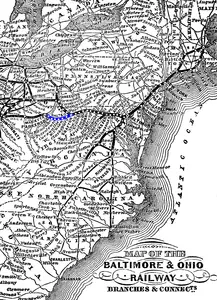
The public map on this page is a different count, from a different year. It is page 681 of a Poole Bros. North Western Lines sheet, the map the 1909 timetable tells the reader to see on pages 680–681. The plate is undated. Its mileage table credits the Omaha Road with 1,738.81 route miles. The same box lists the Chicago & North Western, the Pierre, Rapid City & North Western, and the Wyoming & North Western. The combined total printed there is above 9,600 miles. The legend marks double track and lines then under construction.

North Western Lines map, Poole Bros., Chicago, page 681. The mileage table credits the Chicago, St. Paul, Minneapolis & Omaha with 1,738.81 route miles. The sheet is the map cited by the 1909 public tables. Author’s collection.
After 1911 the North Western’s Adams Cutoff, from Milwaukee to Wyeville, gave Chicago–St. Paul trains a faster path onto the Omaha. The Twin Cities 400, launched January 2, 1935, used that cutoff. Trains also continued to use the older connection at Elroy, the route of the North Western Limited in its earlier years. Freight moved on the triangle Keep had bought: grain toward the Twin Cities mills, flour and merchandise back toward Chicago, and lumber off the northern Wisconsin lines. The Minnesota Transfer and the Minneapolis Eastern were how the Omaha reached the milling district without owning every spur.
Emerson
The line in the photograph was the Nebraska Division, South Sioux City to Omaha. It began as the Omaha & Northwestern, chartered November 30, 1869, and built north from Omaha. That company was sold at foreclosure on October 24, 1878, and passed to the Omaha & Northern Nebraska. On February 11, 1880, the property was sold to the Sioux City & Nebraska. Part of it went to the St. Paul & Sioux City on March 2, 1880. The remainder was sold to the Omaha Road on May 16, 1881, July 2, 1883, and December 18, 1883.
Emerson was laid out as a junction in 1881. The town had been Kennesaw Junction, and it was renamed for Ralph Waldo Emerson because a Kennesaw already existed in Nebraska. Trains left in three directions: south to Omaha, east to Sioux City, and west toward Norfolk, with Wakefield and Concord on that western line. The railroad kept a roundhouse there. A Dixon County history records the last train through Emerson in 1977. The Nebraska Division, Sioux City to Omaha, was afterward abandoned. That 1977 figure is the county history’s last-train year. The certificate day for the line in the photograph lies outside the records opened for this account.
1909 public sheets
The three tables are North Western Lines public sheets for the Omaha Road. Hughitt and Gardner head the officer list. Table 67 is Minneapolis, St. Paul, Milwaukee, and Chicago, and the foot of that page sends the reader to the map on pages 680–681. Nos. 17 and 18 on the Marshfield branch carried a sleeper and a chair car between Minneapolis and Fond du Lac.

North Western Lines public sheet. Table 67, Minneapolis, St. Paul, Milwaukee, and Chicago, with the Marshfield and Stillwater branches. Marvin Hughitt, chairman. W. A. Gardner, president. Author’s collection.

Tables 74 and 78, dated November 7, 1909. Minneapolis and St. Paul to Lake Superior, and Duluth and Superior toward Chicago, through Spooner. Author’s collection.

Table 84, dated September 12, 1909. Minneapolis, St. Paul, Omaha, and Kansas City, with St. Paul, Savage, Shakopee, and Merriam on the opening rows. Author’s collection.
At a glance
| Common name | Omaha Road |
| Reporting mark | CMO |
| Gauge | 4 feet 8½ inches |
| Principal office | Hudson, Wisconsin |
| General offices | St. Paul, Minnesota |
| Incorporated | May 26, 1880. Consolidation effective May 28, 1880 |
| North Western control | Majority purchased November 1882. Management, December 16, 1882 |
| Miles at that purchase | 1,147 |
| Owned road, ICC inventory | 1,665.680 miles |
| All tracks wholly owned | 2,516.315 miles |
| Public-sheet route miles | 1,738.81, on the Poole map |
| Running | Right-hand |
| Lease to the North Western | January 1, 1957 |
| Separate corporation | Removed in 1972 |
| Steam since 1900 | 241 on the North Western steam roster. Class K-1, including No. 183, stands outside that table |
| Sublettered diesels | 34 North Western units, listed below |
| Omaha-numbered diesels | 29 on the second diesel table |
Lease and after
On January 1, 1957, the North Western leased the Omaha Road and took over the offices and the operation. Ben W. Heineman had come to the parent the year before. The historical society treats that lease as the practical end of the Omaha as a separate railroad. In 1972 the parent removed the remaining paper corporation. The employee-owned Chicago & North Western Transportation Company dates from June 1, 1972. Those are two transactions in the same year.
Two main lines remain in the Union Pacific, which took common control of the North Western effective April 6, 1995: Wyeville to St. Paul, and St. Paul to Sioux City. Between Spooner and Trego, a piece of the old Northern Division is used by the Wisconsin Great Northern. The Nebraska Division is gone.
Steam
Post-1900 steam that Drury listed for the Omaha is a separate table on the Chicago & North Western steam roster. The quantity column there sums to 241. That table is the parent’s second grid, kept apart from the parent’s 1,445. Its Ten-Wheelers are class F-1 No. 220, seven class F-2 engines, and class I-1, sixty-seven engines described as the same design as the North Western’s class R-1. No. 183 stands outside that list.
No. 183 is an Omaha Road class K-1, a superheated 4-6-0 built by Alco at Schenectady. The K-1s followed the I-1s. Cylinders were 23 by 26 inches, drivers 63 inches, boiler pressure 180 pounds, and tractive effort about 33,400 pounds. Lou Schmitz’s roster in North Western Lines for Fall 1995 lists twenty-seven road numbers in three groups. The 1913 group is serials 52621–52630. In the order those works numbers are paired with road numbers, No. 183 falls at 52623. The next engine, No. 184, is Schenectady 52624, built in February 1913, and No. 203 is 52626, also February 1913. The photograph shows No. 183 still at work on March 24, 1956, lettered for the Omaha on the cab.
| Year | Road numbers | Builder | Serial |
|---|---|---|---|
| 1911 | 107, 108, 112, 231, 232 | Alco-Schenectady | — |
| 1912 | 235–246 | Alco-Schenectady | — |
| 1913 | 110, 125, 183, 184, 201, 203, 204, 249, 261, 262 | Alco-Schenectady | 52621–52630 |
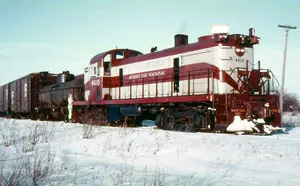
Parent engines assigned to the Omaha carried the subsidiary’s initials under the cab number. The diesels in the next table are the North Western units the parent roster marks as sublettered for the Omaha. They kept North Western numbers. No. 183 was built for the Omaha and numbered in the Omaha series.
Sublettered diesels
Thirty-four North Western diesel units are marked on the parent diesel roster as sublettered for the Chicago, St. Paul, Minneapolis & Omaha. Twelve are F7A cab units. Eleven are GP7s, numbers 151–161. Six are Alco RS3s, numbers 162–167. Five are Fairbanks-Morse H16-66s, numbers 168–172. A later GP7R number is the same frame, rebuilt. Ten of the GP7s returned in 1979 as GP7Rs 4466–4475. The parent roster gives 4467 as the later number of 161. No. 160’s later number is blank on that roster. No. 167 carried a steam generator. The H16-66 serial cells on that roster are blank. Order numbers are blank throughout.
| Qty | Model | Builder | Road numbers | Built | Serial | Order | Notes |
|---|---|---|---|---|---|---|---|
| 6 | F7A | EMD | 6500A, 6500C–6502A, 6502C | December 1949 | 8578–8583 | — | Sublettered for the CStPM&O. |
| 6 | F7A | EMD | 6503A, 6503C–6505A, 6505C | April 1950 | 10558–10563 | — | Sublettered for the CStPM&O. |
| 6 | GP7 | EMD | 151–156 | July–August 1951 | 14667–14672 | — | Sublettered for the CStPM&O. Later GP7R numbers 4473, 4472, 4475, 4474, 4471, 4470. |
| 3 | GP7 | EMD | 157–159 | June 1952 | 16891–16893 | — | Sublettered for the CStPM&O. Later GP7R numbers 4469, 4468, 4466. |
| 2 | GP7 | EMD | 160–161 | August 1952 | 16894–16895 | — | Sublettered for the CStPM&O. 4467 is the later GP7R number of 161. |
| 3 | RS3 | Alco | 162–164 | July–August 1952 | 80137–80139 | — | Sublettered for the CStPM&O. |
| 3 | RS3 | Alco | 165–167 | July 1953 | 80519–80521 | — | Sublettered for the CStPM&O. No. 167 equipped with a steam generator. |
| 5 | H16-66 | FM | 168–172 | July 1953 | — | — | Sublettered for the CStPM&O. |
Omaha numbers
A second group was numbered for the Omaha Road itself. Reporting marks on those units were CMO, and the numbers sat in the subsidiary’s own series. They later appear on the North Western diesel roster as frames built for the subsidiary. The quantity column below sums to 29. The 29 stands beside the 34 sublettered units. A renumber on the parent roster is the same frame. No. 68 is printed on that roster as two Baldwin serials under one road number, and the quantity cell there is 2. Switcher 150 is a Fairbanks-Morse H16-66, serial 16L278, distinct from the sublettered 168–172.
| Qty | Model | Builder | Omaha numbers | Built | Serial | Order | Notes |
|---|---|---|---|---|---|---|---|
| 1 | 44-ton | Whitcomb | 10 | June 1943 | 60284 | — | Built as CStPM&O 10. |
| 1 | SW1 | EMD | 55 | October 1940 | 1194 | — | Later North Western 1207, second. The same frame is among the four units renumbered 615–618. |
| 2 | S1 | Alco | 56–57 | November 1944 | 72842–72843 | — | 56 later 1224, second. |
| 2 | VO-660 | Baldwin | 58–59 | June 1945 | 71572–71573 | — | Later 146–147. Rebuilt with EMD 8-567 prime movers in 1959. |
| 2 | VO-660 | Baldwin | 68 | July 1945 | 71542–71543 | — | Rebuilt with an EMD 567 in December 1958. The parent roster prints these two serials against number 68. |
| 1 | NW2 | EMD | 70 | December 1940 | 1195 | — | Built as CStPM&O 70. |
| 1 | DS-4-4-660 | Baldwin | 71 | May 1949 | 73904 | — | Built as CStPM&O 71. |
| 3 | VO-1000 | Baldwin | 87–89 | March 1944 and July 1945 | 70149, 72027–72028 | — | Rebuilt with EMD 12-567 engines in 1958. |
| 1 | S2 | Alco | 90 | October 1940 | 69216 | — | Built as CStPM&O 90. |
| 3 | S2 | Alco | 91–93 | April–May 1944 | 72205–72206, 72049 | — | Built as CStPM&O 91–93. |
| 1 | H10-44 | FM | 94 | January 1947 | L1171 | — | Later North Western 1058. |
| 4 | H10-44 | FM | 95–98 | February 1948 | — | — | Later 1062–1063 and 1066–1067. |
| 2 | DS-4-4-1000 | Baldwin | 99–100 | February 1949 | 74088–74089 | — | No. 99 rebuilt with an EMD 8-567 in May 1960. |
| 4 | SW8 | EMD | 126–129 | September 1951 | 14663–14666 | — | Built as CStPM&O 126–129. |
| 1 | H16-66 | FM | 150 | February 1951 | 16L278 | — | Built as CStPM&O 150. |
Related reading
- Chicago & North Western
- Chicago & North Western steam roster
- Chicago & North Western diesel roster
- North Western Limited
- Twin Cities 400
- Illinois Central
- Milwaukee Road
- Minneapolis & St. Louis
- Union Pacific
- Fallen Flags
Sources
- Interstate Commerce Commission, Valuation Reports, vol. 137, Chicago, Saint Paul, Minneapolis and Omaha Railway Company. Wisconsin corporation. Principal office at Hudson. General offices at St. Paul. Agreement dated May 25, 1880, filed May 26, 1880. Consolidation effective May 28, 1880, with the consolidating companies’ books continued through May 31, 1880. Operated by its own organization throughout its life to the valuation date. Wholly owned road inventoried at 1,665.680 miles. All tracks wholly owned, 2,516.315 miles. Double track, 183.610 miles, chiefly St. Paul to Wyeville. Main lines: St. Paul–Elroy, Eau Claire–Duluth, Northline–Bayfield, Merriam–Le Mars, and South Sioux City–Omaha. Minneapolis and Sioux City reached by trackage rights. Joint holdings: Lake Superior Terminal and Transfer, 16.66 percent; Minnesota Transfer and the Saint Paul Union Depot, 11.11 percent each; Minneapolis Eastern, 50 percent with the Milwaukee Road; Sioux City Bridge, 50 percent with the North Western. Corporate chart for the West Wisconsin, the North Wisconsin, the St. Paul & Sioux City sale of May 9, 1881, and the Omaha & Northwestern chain into the Nebraska Division.
- Albert Keep, presidential report for the fiscal year June 1, 1882, to May 31, 1883, printed in Yesterday and Today: A History of the Chicago and North Western Railway System. Majority of Omaha common and preferred purchased in November 1882, delivery and payment during the following summer, management placed under the North Western on December 16, 1882. 93,200 common shares and 53,800 preferred shares. Cost including interest, $10,503,959.90. The system at purchase, 1,147 miles.
- Joe Piersen, “Chicago St. Paul Minneapolis & Omaha: A Capsule History,” Chicago & North Western Historical Society, compiled from the society’s archives, H. Roger Grant’s The North Western, and Stennett’s Yesterday and Today. Reporting mark CMO. Right-hand running. Own officers, rule book, and valuation sections. Diesels sublettered for the subsidiary. Adams Cutoff completed in 1911. Lease by the North Western on January 1, 1957. Paper corporation removed in 1972.
- North Western Lines public sheets reproduced here. Officer list headed by Marvin Hughitt and W. A. Gardner. Table 74 dated November 7, 1909. Table 84 dated September 12, 1909. Map, Poole Bros., Chicago, page 681, Omaha route miles 1,738.81. The Chicago table tells the reader the map is on pages 680–681.
- H. Roger Grant, Minnesota’s Good Railroad: The Omaha Road, as cited on this site’s Chicago & North Western history for the 1880–1881 formation and the November 1882 stock control.
- Lou Schmitz, “Omaha Class I-1 and K-1 4-6-0 Roster,” North Western Lines, Fall 1995, p. 37. Class K-1 road numbers, and the 1913 Alco-Schenectady serials 52621–52630. Class dimensions shared with the Mailer roster captions: 23 by 26 inch cylinders, 63-inch drivers, 180 pounds pressure, tractive effort about 33,400 pounds.
- Mailer locomotive-roster captions for Omaha Road Ten-Wheelers. No. 184, class K-1, Schenectady 52624, February 1913. No. 203, class K-1, Schenectady 52626, February 1913.
- George H. Drury, Guide to North American Steam Locomotives, revised edition. The Omaha table on this site’s Chicago & North Western steam roster. Quantity 241. Class I-1 described as the same design as the parent’s class R-1. No. 183 is outside that table.
- This site’s Chicago & North Western diesel roster. The thirty-four units noted as sublettered for the CStPM&O, and the frames noted as built for the subsidiary. A renumber is one frame. GP7Rs 4466–4475, rebuilt in 1979, are former Omaha GP7s 151–159 and 161.
- “Railroads and Depots in Dixon County,” Mid-Continent Region, National Model Railroad Association. Emerson established as a junction in 1881, formerly Kennesaw Junction. Trains south to Omaha, east to Sioux City, and west toward Norfolk. The last train through town in 1977.
- This site’s Chicago & North Western history. Twin Cities 400 launched January 2, 1935. Employee-owned Chicago & North Western Transportation Company, June 1, 1972. Union Pacific common control effective April 6, 1995.
Recent Articles


-
Kansas City Southern Steam Roster (Built Since 1900)
Oct 25, 26 11:50 AM
Steam locomotives of the Kansas City Southern built since 1900, with the Louisiana & Arkansas and the Texas company. -
Kansas City Southern Diesel Roster (Built New)
Oct 25, 26 11:46 AM
 All-time diesel roster of the Kansas City Southern. E units, F units, Geeps, SD40s through SD70ACes, Fairbanks-Morse, Baldwin, Alco, and General Electric, with serials and order numbers.
 -
Kansas City Southern Railway: Map, Photos, History
Oct 25, 26 12:24 AM
 The Kansas City Southern, from Arthur Stilwell's Gulf line to Canadian Pacific Kansas City on April 14, 2023. Steam and diesel rosters, the Southern Belle, and the Louisiana & Arkansas.
 -
Indiana Harbor Belt Diesel Roster (All-Time)
Oct 25, 26 12:17 AM
 All-time diesel roster of the Indiana Harbor Belt. 202 locomotive frames, each counted once. NW2s, SW7s, SW1500s, road switchers, and gensets. Slugs and boosters are outside the count.
 -
Indiana Harbor Belt Steam Roster (Built Since 1900)
Oct 25, 26 12:13 AM
 Steam locomotives of the Indiana Harbor Belt built since 1900. 182 engines, each counted once. 0-6-0s, 2-6-0s, 0-8-0s, and 2-8-2s. The three U-4a switchers are three-cylinder Brooks engines of 1927.
 -
Indiana Harbor Belt Railroad: Map, Rosters, History
Oct 25, 26 12:00 AM
 Indiana Harbor Belt, the inner belt across the Calumet, from the East Chicago Belt of May 16, 1896. Renamed June 29, 1907. Still operating, headquarters Hammond. Steam roster is the companion, 182 loc…
 -
NYC's "P Motor" Electric Locomotives
Oct 24, 26 11:43 PM
 New York Central P motors: 22 Alco-GE 2-C+C-2 electrics, Cleveland Union Terminal 1050–1071, class P-1a. 3,030 hp one-hour on 3,000-volt DC catenary, then 660-volt third rail as P-2a and P-2b.
 -
Illinois Terminal Car Roster
Oct 24, 26 11:40 PM
 Illinois Terminal cars. Mainline motors, the 1948 streamliners, sleepers, Alton and Valley Division cars, express motors, and the line cars rebuilt from pull cars.
 -
Illinois Terminal Diesel Roster
Oct 24, 26 09:31 PM
 All-time Illinois Terminal diesels, 62 frames. Alco S-2s and RS-1s, EMD switchers, GP7s, SD39s, GP38-2s, and the two GP20s. Serial numbers from the 1989 roster.
 -
Illinois Terminal Electric Locomotives
Oct 24, 26 08:22 PM
 Illinois Terminal electric locomotives, 57 frames. Class A through Class D, the Decatur-built motors, and the battery locomotives. Class D is the same five Class C frames, rebuilt.
 -
Illinois Terminal Steam Roster
Oct 24, 26 07:37 PM
 Illinois Terminal steam locomotives, 36 frames. Baldwin Moguls, three Class 30 Mikados, Florida East Coast 0-8-0s, and 2-6-0 No. 21, the last fire on June 30, 1950.
 -
Illinois Terminal Railroad: Map, Roster, Photos, History
Oct 24, 26 07:32 PM
 Illinois Terminal, McKinley's Illinois Traction System, from the Danville coal towns to St. Louis. The McKinley Bridge, the sleeping cars, the 1937 break with the power company, the 1948 streamliners…
 -
Southern Railway Diesel Roster (All-Time)
Oct 23, 26 11:00 PM
 All-time diesel roster of the Southern Railway. 2,505 locomotives in the system number series, from the 1939 demonstrator FT to GP50s and B30-7A1s. Serials included.
 -
Illinois Central Diesel Roster (All-Time)
Oct 23, 26 04:06 PM
 Illinois Central and Illinois Central Gulf diesel locomotives, each frame once. The quantity column is 886. Serials and order numbers from Electro-Motive's builder lists. Paducah rebuilds and Gulf, Mo…
 -
Illinois Central Gulf Diesel Roster
Oct 23, 26 04:02 PM
 Illinois Central Gulf operating numbers from August 10, 1972, to February 29, 1988. New frames stay on the Illinois Central diesel roster. Gulf, Mobile and Ohio frames stay on that roster. No Gulf fle…
 -
Illinois Central Railroad: Map, Logo, History
Oct 23, 26 03:50 PM
Illinois Central, the Main Line of Mid-America, from the 1850 land grant to Canadian National control on July 1, 1999. Charter lines, Cairo bridge, Paducah, and the Illinois Central Gulf. Steam quanti… -
Grand Trunk Western Diesel Roster (All-Time)
Oct 23, 26 12:53 PM
 Grand Trunk Western diesel locomotives, each frame once. The quantity column is 377. Serials are filled for the Detroit, Toledo and Ironton and Detroit and Toledo Shore Line engines the railroad kept…
 -
Grand Trunk Western Steam Roster
Oct 23, 26 12:14 PM
 Grand Trunk Western steam locomotives in service about 1937 to 1942, from Richard Leonard's class list. Drury has no chapter. The quantity column is the counted Grand Trunk Western rows. Two mixed Gra…
 -
Grand Trunk Western Railroad: Map, Roster, History
Oct 23, 26 12:09 PM
 Grand Trunk Western, reporting mark GTW, Canadian National's railroad between Port Huron and Chicago. Trade name adopted in 1923. Steam class list quantity 232. Diesel quantity column 377. Identity in…
 -
Green Bay and Western Railroad: Map, Rosters, History
Oct 22, 26 11:18 PM
 Green Bay & Western, the Green Bay Route, reporting mark GBW. From Kewaunee to Winona. Mailer's steam and diesel rosters, and the August 1993 sale to Fox Valley & Western.
 -
Chicago & North Western Class E-4: Streamlined 4-6-4 Hudsons
Oct 22, 26 10:28 PM
 C&NW Class E-4, nine streamlined 4-6-4s, 4001–4009, Alco 1938. 84-inch drivers, 25-by-29 cylinders, 300 psi. Conventional Chicago–Omaha trains. Oil in 1947–48. Retired 1953–1956.
 -
Gateway Western Railway: Map, Roster, History
Oct 22, 26 02:43 PM
 Gateway Western Railway, reporting mark GWWR. Class II from Kansas City to East St. Louis. Kansas City Southern control May 5, 1997. The 1992 diesel fleet, with serials and order numbers.
 -
Duluth, Winnipeg & Pacific Railway: Roster, Map, History
Oct 22, 26 01:51 PM
 Duluth, Winnipeg & Pacific, the Peg, reporting mark DWP. From the Rainy River to Duluth. CNRHA steam list 36. Fifteen RS-11s. Merged into Wisconsin Central Ltd. on December 31, 2011.
 -
Elgin, Joliet and Eastern Diesel Roster (All-Time)
Oct 22, 26 01:35 PM
 All-time diesel roster of the Elgin, Joliet and Eastern.
 -
Elgin, Joliet and Eastern Steam Roster
Oct 22, 26 01:25 PM
 Elgin, Joliet and Eastern steam locomotives of the final decade, which largely comprised switcher types, 2-8-0s, and a large fleet of Mikados.
 -
Elgin, Joliet and Eastern Railway: Map, Roster, History
Oct 22, 26 12:32 PM
 Elgin, Joliet & Eastern, the outer arc around Chicago, from the Joliet, Aurora & Northern of April 30, 1884. Illinois company March 18, 1887. Merged December 4, 1888. Principal lines sold Janu…
 -
Denver and Salt Lake Railway: History, Roster, Timetable
Oct 22, 26 09:47 AM
 Denver & Salt Lake, the Moffat Road, from Denver to Craig. Tunnel opened February 26, 1928. Dotsero Cutoff dedicated June 16, 1934. Merged April 11, 1947. Steam locomotives 59.
 -
Duluth, Missabe and Iron Range Diesel Roster (All-Time)
Oct 22, 26 09:43 AM
 All-time diesel roster of the Duluth, Missabe and Iron Range. 148 owned frames, each counted once. SW9s, SD9s, SD18s, SD38s, RSD-15s, and C630s. Serials and builder order numbers included. Helm SD40-3…
 -
Duluth, Missabe and Iron Range Steam Locomotives (Since 1900)
Oct 22, 26 09:22 AM
 Duluth, Missabe & Iron Range steam locomotives built since 1900. Duluth & Iron Range, Duluth, Missabe & Northern, and later DM&IR acquisitions. Quantity column 252. Yellowstones 220-23…
 -
Duluth, Missabe and Iron Range Railway: Roster, Map, Logo
Oct 22, 26 09:17 AM
Duluth, Missabe & Iron Range, reporting mark DMIR, from the Mesabi and the Vermilion to the Lake Superior docks. Formed July 1, 1937. Steam quantity 252. Owned diesels 148. On paper through Decemb… -
Duluth, South Shore, and Atlantic Railway: Map, Roster, Timetables
Oct 21, 26 11:21 PM
 Duluth, South Shore & Atlantic Railway, the South Shore. Marquette to the Sault, St. Ignace, Houghton, and Duluth-Superior. Soo Line on January 1, 1961. Twenty-four diesels.
 -
Detroit, Toledo and Ironton Diesel Roster (All-Time)
Oct 21, 26 02:55 PM
 All-time diesel roster of the Detroit, Toledo and Ironton. 119 frames, each counted once. Serials and builder order numbers included. Last steam was December 24, 1955.
 -
Detroit, Toledo and Ironton Steam Roster (Post 1900)
Oct 21, 26 02:49 PM
 Detroit, Toledo and Ironton steam locomotives built after 1900. Drury's class grid. The quantity column prints 141. Counted once, the frames are 137. Last steam was Mikado 805 on December 24, 1955.
 -
Detroit, Toledo and Ironton Railroad: Map, Roster, History
Oct 21, 26 02:40 PM
 Detroit, Toledo & Ironton, reporting mark DTI, from Detroit to Ironton, Ohio. Railway organized May 2, 1905. Railroad articles filed February 21, 1914. Henry Ford, 1920 to 1929. Steam and diesel r…
 -
Iowa, Chicago and Eastern Railroad: Roster, Map, History
Oct 21, 26 01:04 PM
 Iowa, Chicago & Eastern Railroad Corporation, reporting mark ICE. About 1,125 miles and about 275 miles of trackage rights from the I&M Rail Link. Operations at 12:01 a.m. July 30, 2002. Canad…
 -
Rapid City, Pierre & Eastern Railroad: Route, Roster, Overview
Oct 21, 26 10:16 AM
 Rapid City, Pierre & Eastern Railroad, reporting mark RCPE. Genesee & Wyoming Class II. Agreement of January 2, 2014, Finance Docket 35799. Freight service from June 1, 2014, on the Dakota, Mi…
 -
Dakota, Minnesota & Eastern Railroad: Roster, Map, History
Oct 21, 26 12:26 AM
 Dakota, Minnesota & Eastern Railroad, reporting mark DME. The July 2, 1986 Chicago & North Western sale, 826 miles and 139 miles of trackage rights. Canadian Pacific control October 30, 2008…
 -
Detroit and Mackinac Railway: Map, Roster, History
Oct 20, 26 11:58 PM
 Detroit & Mackinac Railway, the Turtle Line. Bay City to Cheboygan along Lake Huron. Incorporated December 29, 1894. Lake State Railway leased the operation in 1992 and bought the lines in 1997. E…
 -
Davenport, Rock Island and Northwestern Railroad
Oct 20, 26 11:22 PM
 Davenport, Rock Island and North Western Railway, the DRI Line. Clinton to East Moline across the Crescent Bridge. Burlington and Milwaukee. Merged into the Soo Line on June 29, 1995. Eighteen diesels…
 -
Chicago Great Western Steam Roster (Post 1900)
Oct 20, 26 11:17 PM
Chicago Great Western steam locomotives built or rebuilt since 1900. Drury's class grid. 320 frames, each once. The quantity column prints 376 because a rebuild is listed again. Last steam in the reti… -
Chicago Great Western Diesel Roster (All-Time)
Oct 20, 26 10:47 PM
All-time diesel roster of the Chicago Great Western. 157 frames, each counted once. Serials and builder order numbers included. Steam was gone by 1950. The 1963 glance figure of 141 is one year's flee… -
Chicago Great Western Railway: Map, Photos, History, Rosters
Oct 20, 26 10:43 PM
 The Chicago Great Western, the Corn Belt Route, linked Chicago, the Twin Cities, Omaha, and Kansas City from September 27, 1885, until the Chicago & North Western merger at 12:01 a.m. on July 1, 1968…
 -
Chicago, South Shore & South Bend Railroad: "The South Shore Line"
Oct 20, 26 05:48 PM
 Chicago South Shore & South Bend, the South Shore Line, from the 1901 Air Line through Samuel Insull's 1925 rebuild, the orange cars, the 800s, and the railroad NICTD and Anacostia still run.
 -
Northwestern Virginia Railroad: Map, History, Timetable
Oct 20, 26 04:18 PM
 Northwestern Virginia Railroad, chartered February 14, 1851, Grafton to Parkersburg, 104 miles. Opened May 1, 1857. Foreclosure sale February 15, 1865, as the Parkersburg Branch. Twenty-three tunnels…
 -
"Exposition Flyer" (Train): Consist, Timetable, History
Oct 20, 26 03:29 PM
 Exposition Flyer, Chicago to Oakland, June 10, 1939 to March 20, 1949. Burlington, Rio Grande, and Western Pacific. Heavyweight cars, then diesels and a vista-dome. Replaced by the California Zephyr.
 -
Chicago, St. Paul, Minneapolis & Omaha Railway, "The Omaha Road"
Oct 20, 26 02:13 PM
 The Omaha Road, reporting mark CMO. Formed May 26, 1880. North Western management on December 16, 1882. Leased January 1, 1957. Class K-1 No. 183 and the sublettered diesels.
 -
Chicago and Western Indiana Railroad: Map, Rosters, History
Oct 20, 26 01:17 PM
 Chicago and Western Indiana, chartered June 5, 1879. Five equal owners, Dearborn Station, and two main lines. Dolton suburban mile 16.6. Fifteen diesels. Railroad service ended in 1994. The Illinois c…
 -
Railroad Tell-Tales: Protecting The Brakeman
Oct 20, 26 12:58 PM
 Railroad tell-tales: hanging ropes that warned a man on a freight-car roof of a low bridge or tunnel. The 1897 bridge-warning report, the 1905 Wisconsin statute, retainers, and why the roof walk outla…
 -
Chicago & North Western Steam Roster (Post 1900)
Oct 20, 26 12:54 PM
 Chicago & North Western steam locomotives built since 1900, and the Omaha Road list beside it. Drury's parent quantity column sums to 1,445, with four rows left blank. The Omaha Road column sums to 24…
 -
Chicago & North Western Diesel Roster (All-Time)
Oct 20, 26 12:49 PM
 All-time diesel roster of the Chicago & North Western. 2,494 frames, each counted once, including Chicago Great Western, Minneapolis & St. Louis, and Omaha Road units that received North Western numbe…