The "Havana Special": Serving Key West Until 1935
Last revised: August 25, 2024
By: Adam Burns
The Florida East Coast Railway is fondly remembered for the numerous streamliners it either owned and operated itself (like the Dixie Flagler) or those which it ferried to cities like Miami and Fort Lauderdale (such as the City of Miami, Silver Meteor, Champion, and many others).
However, its most exotic train was not even a streamliner at all and is usually forgotten, the fabled Havana Special. This train offered passengers the chance to visit the most tropical region in the continental United States as well as the most southern point in the country.
This was also possible thanks to the efforts of Henry Flagler and his Key West Extension, constructed during the early 20th century.
But its purpose was not solely for passenger transportation; it was built specifically to handle a deep water port which never materialized into a booming trade center as Flagler had hoped.
Unfortunately, the Labor Day Hurricane of 1935 destroyed the extension as well as rail service to the islands. However, it's likely a safe assumption that had the line survived into the streamliner era, those trains mentioned above would have continued further south than Miami.
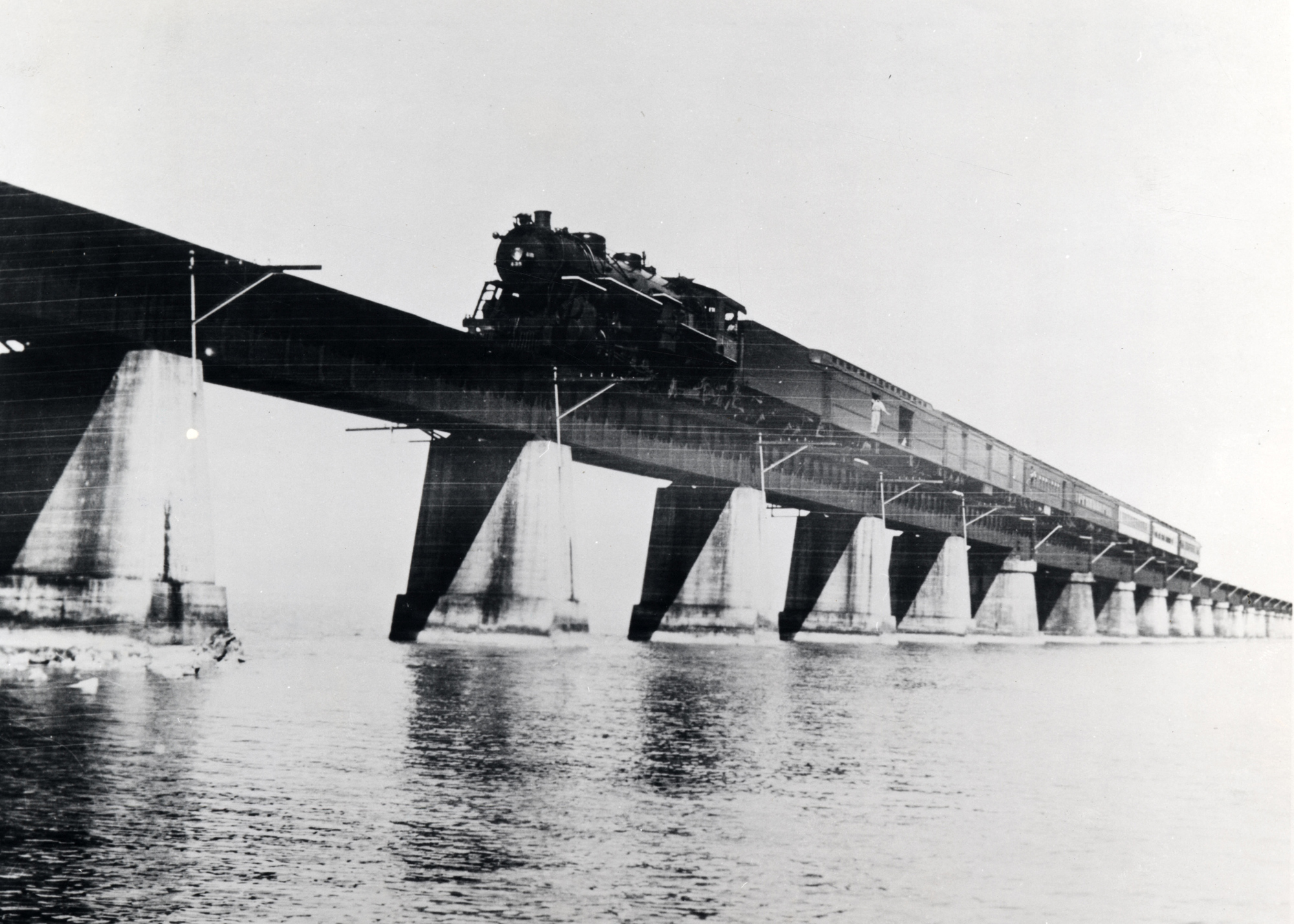 In this postcard, a Florida East Coast passenger consist on Seven Mile Bridge along the Key West Extension.
History
The Florida East Coast's Havana Special has a history that is directly tied to its Key West Extension, also known as the Florida Overseas Railroad. The idea of the FEC's president, Henry Flagler, to construct such a massive project was not for passenger services to the island chain but freight.
In 1905 the United States government announced that a new canal would be constructed in Panama to link the Atlantic and Pacific Oceans, thus opening a new trade route. Flager thus hoped to tap shipments head to and from the canal via a new port in Key West as well as to Cuba and Latin America.
Seven years after that announcement, Seth Bramson notes in his book, "Speedway To Sunshine: The Story Of The Florida East Coast Railway," the first train, carrying Mr. Flagler, arrived in Key West on January 22, 1912 and the great extension was officially opened for service soon afterwards.
In conjunction with this event, the railroad launched the Havana Special, at first a local train serving the FEC's home territory.
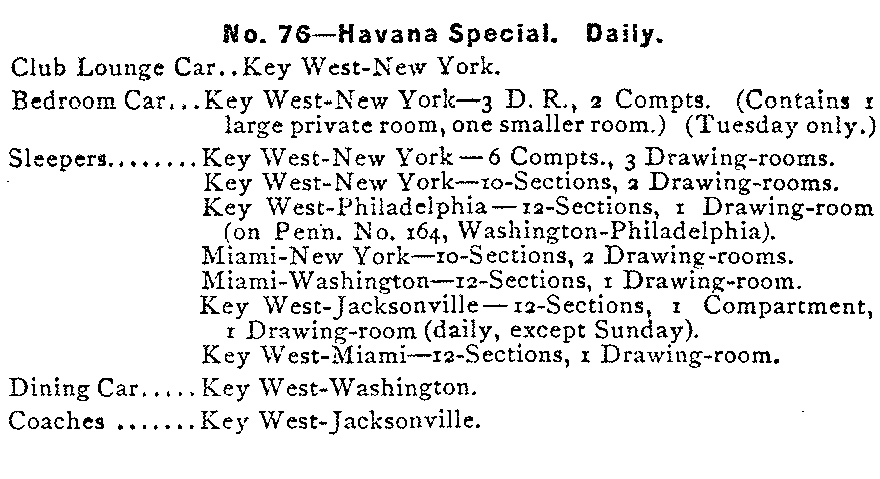
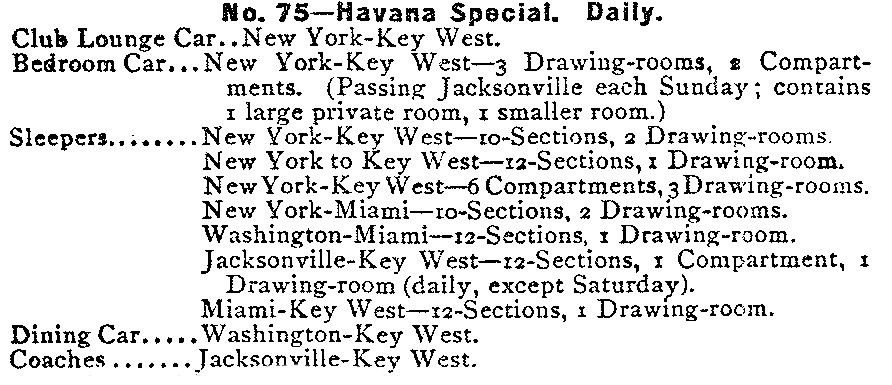
Consist (1930)
Key West Extension
The Special, however, was not meant as a regional train serving only the east coast of Florida between Key West and Jacksonville. The FEC intended the train to operate up and down the U.S. eastern seaboard, almost literally the entire length.
To do so required a partnership with other lines including the Atlantic Coast Line (between Jacksonville and Richmond, Virginia), Richmond Fredericksburg & Potomac (between Richmond and Washington, D.C.), and the Pennsylvania Railroad (to New York City).
Additionally, the train offered connecting service northward to Boston and even to Havana, Cuba via the Peninsular & Occidental Steamship Company (which was also owned by Flagler).
The entire route covered 1,523 miles to Key West and 1,596 to Havana with a complete trip requiring 42 hours either aboard train or ship (the steamships operated out of both Miami as well as Port Tampa, Key West to Havana) making the Special the longest East Coast passenger route.
Its exotic nature also made the train quite successful due both to the fact that rail service was still the most efficient means of transportation at the time and the Florida East Coast spared no expense in making sure it was a magnificent operation providing top level service.
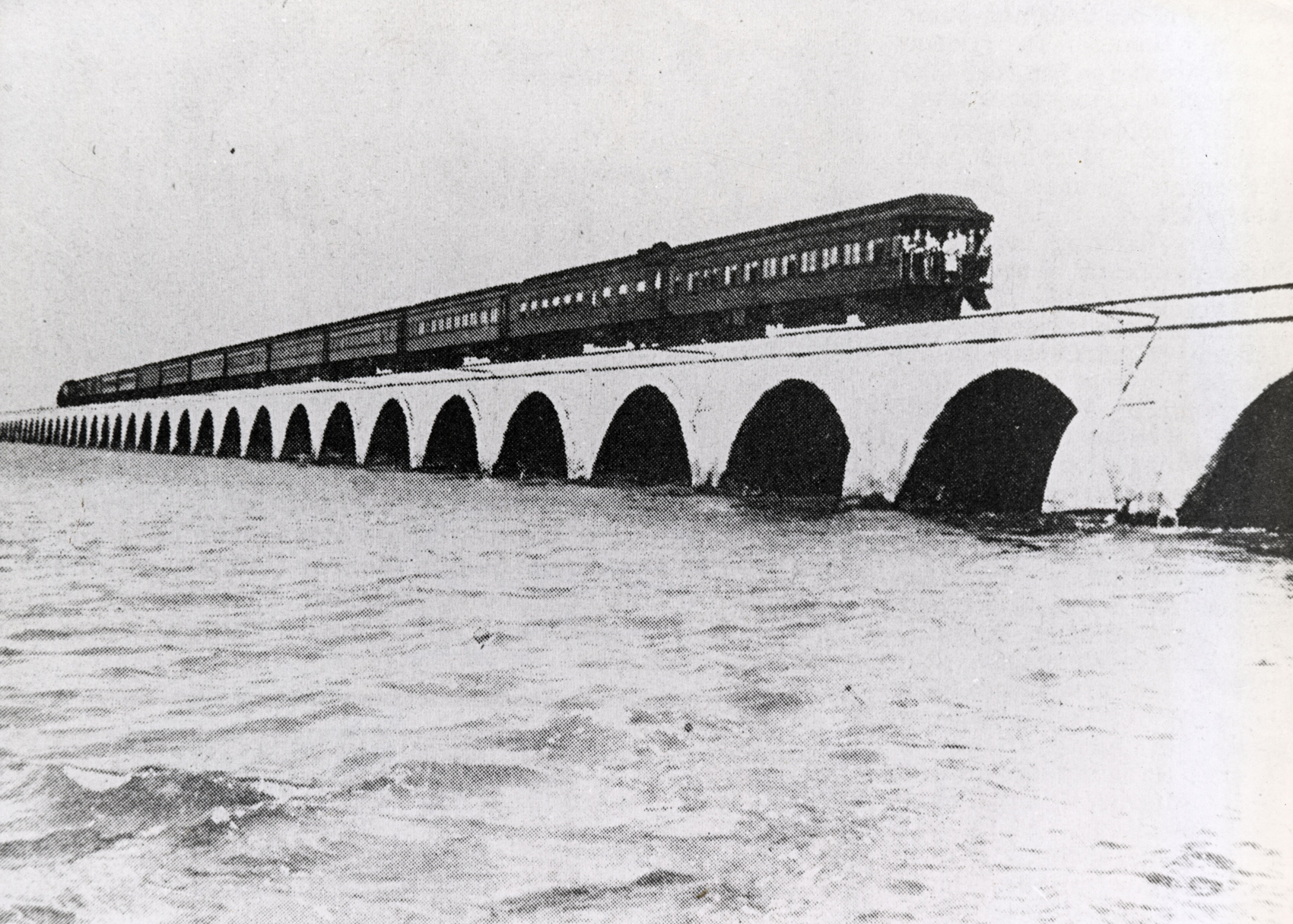 Another postcard featuring a Florida East Coast passenger train running the Key West Extension as it crosses Long Key Viaduct.
For instance, it was an all-Pullman affair all of the way to and from New York City with a typical consist including coaches, a lounge, a diner, six sleepers, and a parlor-observation (this varied somewhat with the other lines).
Some of the Special's on board amenities included fine dining from the tropics such as fresh citrus fruits, local seafood, and other delicacies. The lounge car, located within the center of the train was perhaps the most interesting in the consist; it offered separate areas for men and women to relax and even included baths.
Despite the fact that this was during the era of heavyweight, non-streamlined trains the Special was certainly one-of-a-kind. In the 84th volume/73rd annual issue of Railway Age & Railway View (covering the period from January 1, 1928 through June 30, 1928) through service on the Havana Special, from New York to Key West, began in 1924.
In 1930, a few years after this event, travelers were given the additional option of traveling by plane to Havana and other Caribbean destinations as the FEC worked in conjunction with the Pan American airlines to provide this service via both Miami and Key West.
Timetable (January 14, 1933)
| Read Up Time/Leave (Train #141/PRR) | Milepost | Location | Read Down Time/Arrive (Train #110/PRR) |
|---|---|---|---|
| 10:05 PM (Dp) | 0.0 | 6:45 AM (Ar) | |
| 10:27 PM | 10 | 6:19 AM | |
| 11:23 PM | 58 | ||
| 11:55 PM | 85 | 4:49 AM | |
| 12:05 AM (Ar) | 91 | 4:39 AM (Dp) | |
| 12:07 AM (Dp) | 91 | 4:38 AM (Ar) | |
| 12:41 AM | 118 | F 4:05 AM | |
| 1:44 AM | 166 | ||
| 2:14 PM | 186 | 2:43 AM | |
| 3:10 AM | 226 | 1:45 AM (Dp) | |
| Time/Leave (Train #75/RF&P) | Milepost | Location | Time/Arrive (Train #76/RF&P) |
| 3:35 AM (Dp) | 226 | 1:05 AM (Ar) | |
| 4:58 AM | 280 | 11:36 PM (Ar) | |
| 6:20 AM (Ar) | 340 | 10:15 PM (Dp) | |
| Time/Leave (Train #75/ACL) | Milepost | Location | Time/Arrive (Train #76/ACL) |
| 6:35 AM (Dp) | 340 | 10:00 PM (Ar) | |
| 9:15 AM (Ar) | 465 | 7:15 PM (Dp) | |
| 9:20 AM (Dp) | 465 | 7:10 PM (Ar) | |
| 9:40 AM | 480 | ||
| 11:15 AM | 554 | 5:20 PM | |
| 12:57 PM (Ar) | 637 | 3:40 PM (Dp) | |
| 1:05 PM (Dp) | 637 | 3:32 PM (Ar) | |
| 2:55 PM | 732 | 1:27 PM | |
| 797 | 12:13 PM | ||
| F | 814 | ||
| F | 828 | 12:13 PM | |
| 5:17 PM (Ar) | 849 | 11:05 AM (Dp) | |
| 5:25 PM (Dp) | 849 | 10:57 AM (Ar) | |
| 6:32 PM (Ar) | 905 | 9:42 AM (Dp) | |
| 905 | 9:38 AM (Ar) | ||
| 7:07 PM | 934 | 9:07 AM | |
| 8:45 PM (Ar) | 1001 | 7:50 AM (Dp) | |
| Time/Leave (Train #75/ACL/Tampa Sec.) | Milepost | Location | Time/Arrive (Train #76/ACL/Tampa Sec.) |
| 10:25 PM (Dp) | 1001 | 7:00 AM (Ar) | |
| 10:50 PM | 1014 | 6:24 AM | |
| 11:00 PM | 1021 | 6:11 AM | |
| 11:15 PM | 1030 | 5:51 AM | |
| 11:33 PM | 1041 | 5:34 AM | |
| 11:41 PM | 1046 | 5:24 AM | |
| 11:55 PM | 1055 | 5:10 AM | |
| 12:18 AM | 1070 | 4:42 AM | |
| 12:25 AM | 1074 | 4:34 AM | |
| 12:28 AM | 1076 | 4:30 AM | |
| 12:38 AM | 1084 | 4:18 AM | |
| 12:45 AM | 1090 | 4:09 AM | |
| 12:51 AM | 1094 | 3:59 AM | |
| 12:58 AM | 1100 | 3:50 AM | |
| 1:02 AM | 1103 | 3:45 AM | |
| 1:09 AM | 1107 | 3:35 AM | |
| 1:22 AM | 1113 | 3:24 AM | |
| F | 1121 | F | |
| 1:50 AM (Ar) | 1125 | 3:00 AM (Dp) | |
| 2:00 AM (Dp) | 1125 | 2:50 AM (Ar) | |
| 2:15 AM | 1135 | ||
| 2:20 AM | 1138 | ||
| 1140 | 2:25 AM | ||
| 2:30 AM | 1143 | 2:10 AM | |
| 2:55 AM | 1147 | 1:45 AM | |
| 3:22 AM | 1165 | 1:17 AM | |
| 3:40 AM | 1177 | 12:59 AM | |
| F | 1182 | ||
| 3:53 AM | 1187 | 12:40 AM | |
| 4:15 AM | 1193 | 12:15 AM | |
| 4:22 AM | 1198 | 12:08 AM | |
| 4:45 AM (Ar) | 1208 | 11:50 PM (Dp) | |
| 5:00 AM (Dp) | 1208 | 11:40 PM (Ar) | |
| 5:25 AM | 1219 | 11:21 PM | |
| 5:37 AM | 1225 | ||
| F | 1228 | ||
| 6:15 AM (Ar) | 1240 | 10:45 PM (Dp) | |
| Time/Leave (Train #375/ACL/Sarasota Sec.) | Milepost | Location | Time/Arrive (Train #376/ACL/Sarasota Sec.) |
| 6:50 AM (Dp) | 1240 | 10:00 PM (Ar) | |
| 6:58 AM | 1244 | 9:43 PM | |
| 7:14 AM | 1252 | 9:26 PM | |
| 7:27 AM | 1262 | 9:13 PM | |
| 7:47 AM | 1274 | 8:55 PM | |
| 8:00 AM | 1279 | 8:43 PM | |
| 8:07 AM | 1280 | 8:35 PM | |
| 8:15 AM | 1285 | 8:27 PM | |
| 8:21 AM | 1288 | 8:22 PM | |
| 8:30 AM (Ar) | 1293 | 8:15 PM (Dp) | |
| Time/Leave (Train #37/ACL/St. Petersburg Sec.) | Milepost | Location | Time/Arrive (Train #38/ACL/St. Petersburg Sec.) |
| 10:00 PM (Dp) | 1001 | 7:05 AM (Ar) | |
| F | 1020 | F | |
| F | 1039 | F | |
| F | 1043 | F | |
| 10:56 PM | 1046 | 5:49 AM | |
| 11:05 PM | 1053 | 5:40 AM | |
| F | 1059 | F | |
| F | 1062 | F | |
| F | 1065 | F | |
| F | 1069 | F | |
| 11:40 PM | 1072 | 5:05 AM | |
| F | 1076 | F | |
| F | 1082 | F | |
| 12:07 AM | 1086 | 4:30 AM | |
| F | 1096 | F | |
| F | 1101 | F | |
| F | 1104 | F | |
| F | 1105 | F | |
| 12:56 AM | 1107 | 3:39 AM | |
| F | 1108 | F | |
| F | 1109 | F | |
| F | 1113 | F | |
| F | 1116 | F | |
| F | 1119 | F | |
| F | 1122 | F | |
| 1:53 AM | 1127 | 2:50 AM | |
| 2:16 AM | 1141 | 2:16 AM | |
| 2:23 AM | 1144 | 2:09 AM | |
| 2:29 AM | 1146 | 2:03 AM | |
| 2:35 AM | 1149 | 1:58 AM | |
| 2:45 AM | 1153 | 1:48 AM | |
| 2:55 AM | 1158 | 1:40 AM | |
| 3:07 AM | 1161 | 1:30 AM | |
| 3:17 AM | 1167 | 1:17 AM | |
| 3:37 AM | 1176 | 1:00 AM | |
| 3:47 AM | 1180 | 12:51 AM | |
| F | 1186 | F | |
| 4:17 AM | 1191 | 12:26 AM | |
| 4:35 AM (Ar) | 1200 | 12:10 AM (Dp) | |
| 4:40 AM (Dp) | 1200 | 12:05 AM (Ar) | |
| 5:01 AM | 1212 | 11:41 PM | |
| F | 1215 | F | |
| 5:22 AM | 1224 | 11:18 PM | |
| 5:42 AM | 1234 | 10:58 PM | |
| F | 1238 | F | |
| 6:00 AM | 1245 | 10:36 PM | |
| F | 1248 | F | |
| 6:15 AM | 1250 | 10:23 PM | |
| 6:26 AM | 1255 | 10:14 PM | |
| 6:33 AM | 1258 | 10:06 PM | |
| 6:43 AM | 1259 | 9:56 PM | |
| 6:55 AM | 1263 | 9:42 PM | |
| F | 1267 | F | |
| 7:05 AM | 1269 | 9:31 PM | |
| F | 1272 | F | |
| 7:25 AM (Ar) | 1263 | 9:15 PM (Dp) | |
| Time/Leave (Train #75/FEC) | Milepost | Location | Time/Arrive (Train #76/FEC) |
| 9:30 PM (Dp) | 1001 | 7:15 AM (Ar) | |
| 10:20 PM | 1038 | 6:20 AM | |
| 10:59 PM | 1088 | 5:32 AM | |
| 11:21 PM | 1105 | ||
| 11:39 PM | 1111 | 4:56 AM | |
| 12:05 AM (Ar) | 1126 | 4:30 AM (Dp) | |
| 12:15 AM (Dp) | 1126 | 4:20 AM (Ar) | |
| F | 1155 | 3:31 AM | |
| 1:20 AM | 1175 | 3:01 AM | |
| 1:51 AM | 1195 | 2:32 AM | |
| 1229 | 1:47 AM | ||
| 3:10 AM | 1243 | 1:25 AM | |
| F | 1262 | 12:47 AM | |
| F | 1276 | 12:26 AM | |
| 4:30 AM (Ar) | 1300 | 11:55 PM (Dp) | |
| 4:40 AM (Dp) | 1300 | 11:45 PM (Ar) | |
| F | 1307 | 11:30 PM | |
| F | 1318 | 11:13 PM | |
| 5:20 AM | 1326 | 11:01 PM | |
| 5:43 AM | 1342 | 10:39 PM | |
| 5:58 AM | 1349 | 10:27 PM | |
| 6:30 AM (Ar) | 1367 | 10:00 PM (Dp) | |
| 7:15 AM (Dp) | 1367 | 9:30 PM (Dp) | |
| 7:25 AM | 1372 | 9:14 PM | |
| 7:30 AM | 1375 | 9:07 PM | |
| 7:45 AM | 1383 | 8:52 PM | |
| 7:54 AM | 1387 | 8:42 PM | |
| 7:59 AM | 1389 | 8:36 PM | |
| 8:04 AM | 1390 | 8:30 PM | |
| 8:10 AM | 1393 | 8:24 PM | |
| 8:18 AM (Begin Key West Extension) | 1395 | 8:20 PM (End Key West Extension) | |
| 8:22 AM | 1397 | 8:10 PM | |
| 8:38 AM | 1409 | 7:54 PM | |
| 8:49 AM (Leave Mainland) | 1416 | 8:10 PM (Enter Mainland) | |
| 8:52 AM (Enter Florida Keys) | 1418 | 7:42 PM (Leave Florida Keys) | |
| 9:02 AM | 1425 | 7:29 PM | |
| 9:12 AM | 1432 | 7:19 PM | |
| 9:17 AM | 1435 | 7:14 PM | |
| 9:26 AM | 1441 | 7:05 PM | |
| 9:47 AM | 1452 | 6:44 PM | |
| 9:57 AM | 1458 | 6:34 PM | |
| 10:22 AM | 1475 | 6:12 PM | |
| 10:30 AM | 1479 | 6:00 PM | |
| 10:54 AM | 1493 | 5:38 PM | |
| 11:00 AM | 1498 | 5:32 PM | |
| 11:10 AM | 1504 | 5:25 PM | |
| 11:15 AM | 1507 | 5:20 PM | |
| 11:45 AM (Ar) | 1523 | 5:00 PM (Dp) | |
| Time/Leave (Peninsular & Occidental Steamship Company) | Milepost | Location | Time/Arrive (Peninsular & Occidental Steamship Company) |
| 12:20 PM (Dp) | 3:15 PM (Ar) | ||
| 6:20 PM (Ar) | 9:00 AM (Dp) | ||
| Time/Leave (Pan American Airways) | Milepost | Location | Time/Arrive (Pan American Airways) |
| 8:00 AM (Dp) | 5:00 PM (Ar) | ||
| 10:15 AM (Ar) | 2:45 PM (Dp) |
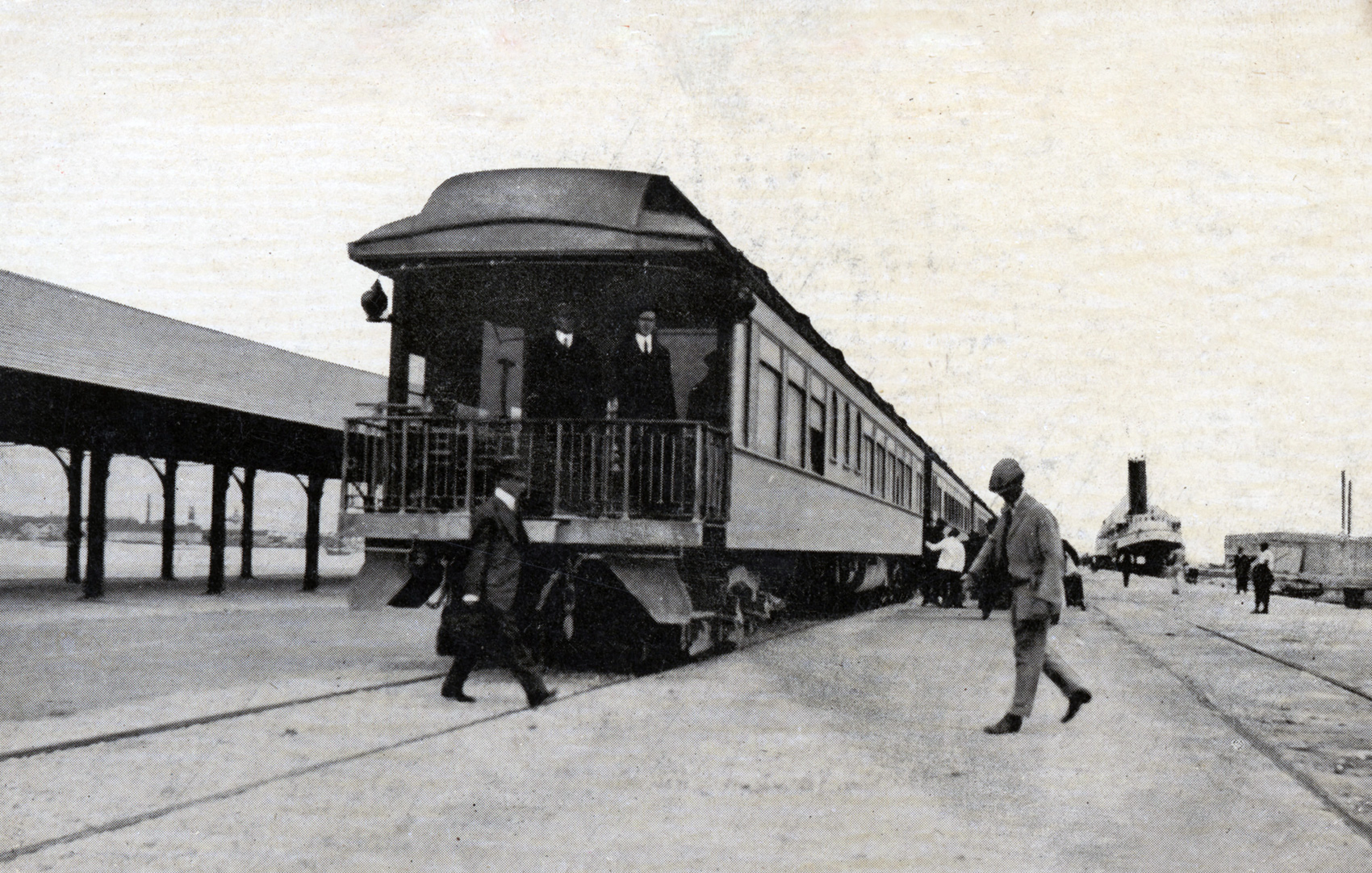 A postcard featuring the north end of FEC's Trumbo Island Terminal in Key West, Florida during the 1920s. Trains met ships here for passengers to continue on to Havana, Cuba.
1935 Labor Day Hurricane
The Special lost much of its glamorous allure when the 1935 Labor Day Hurricane destroyed the extension forcing the train to be cutback to Miami.
According to the book, "When the Railroad Leaves Town: American Communities In The Age Of Rail Line Abandonment (Eastern United States," by author Joseph P. Schwieterman, for a time after the hurricane FEC continued dispatching the Havana Special to Key West via car ferry.
However, air and ship service continued on for 25 additional years until Fidel Castro took over the Cuban government in 1960 forcing both to be discontinued. Diesel power replaced the Class P-5a 4-6-2 Pacifics in 1942 as the FEC purchased new EMD E6s and later E7s for passenger services.
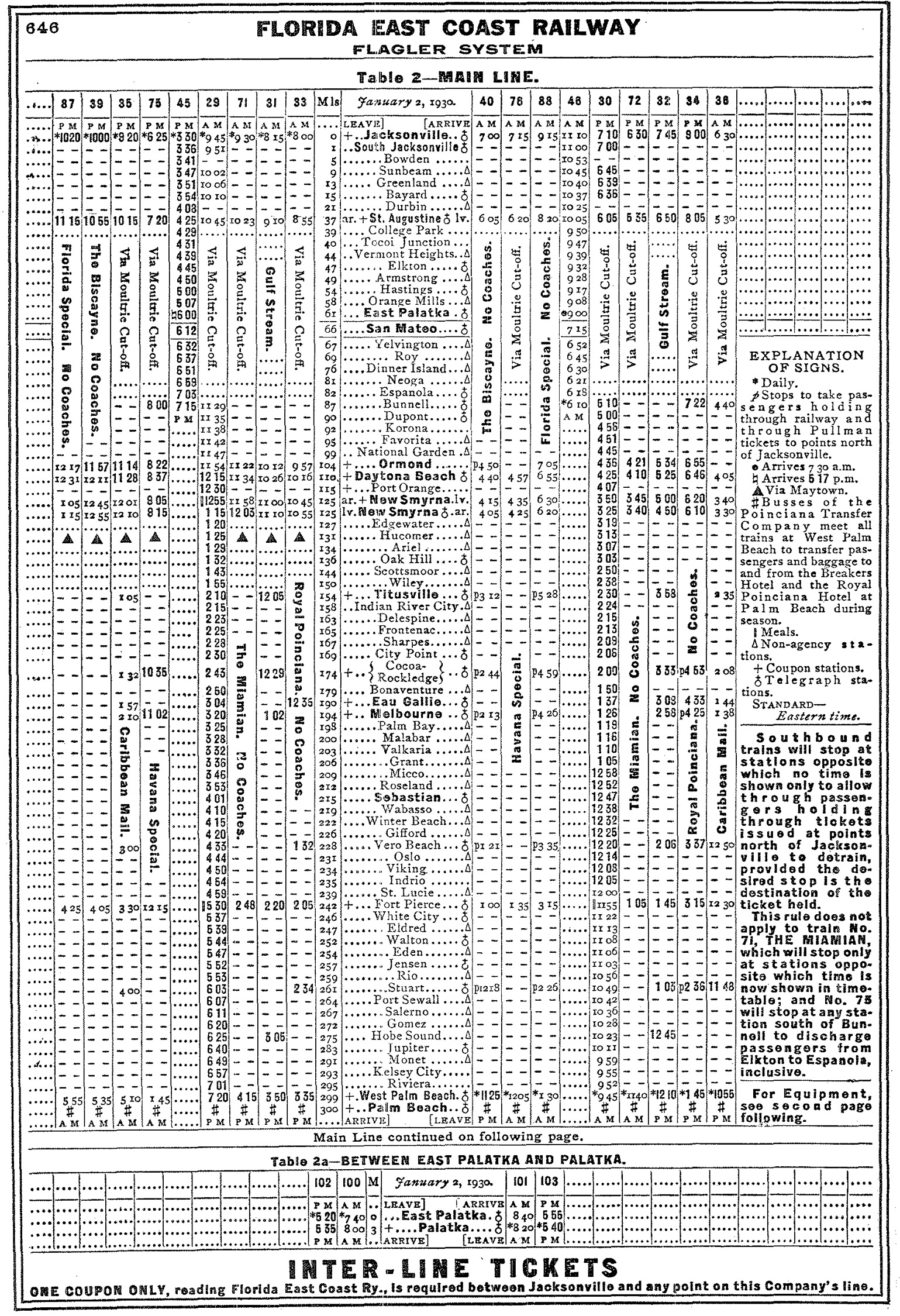
Timetable (1930)
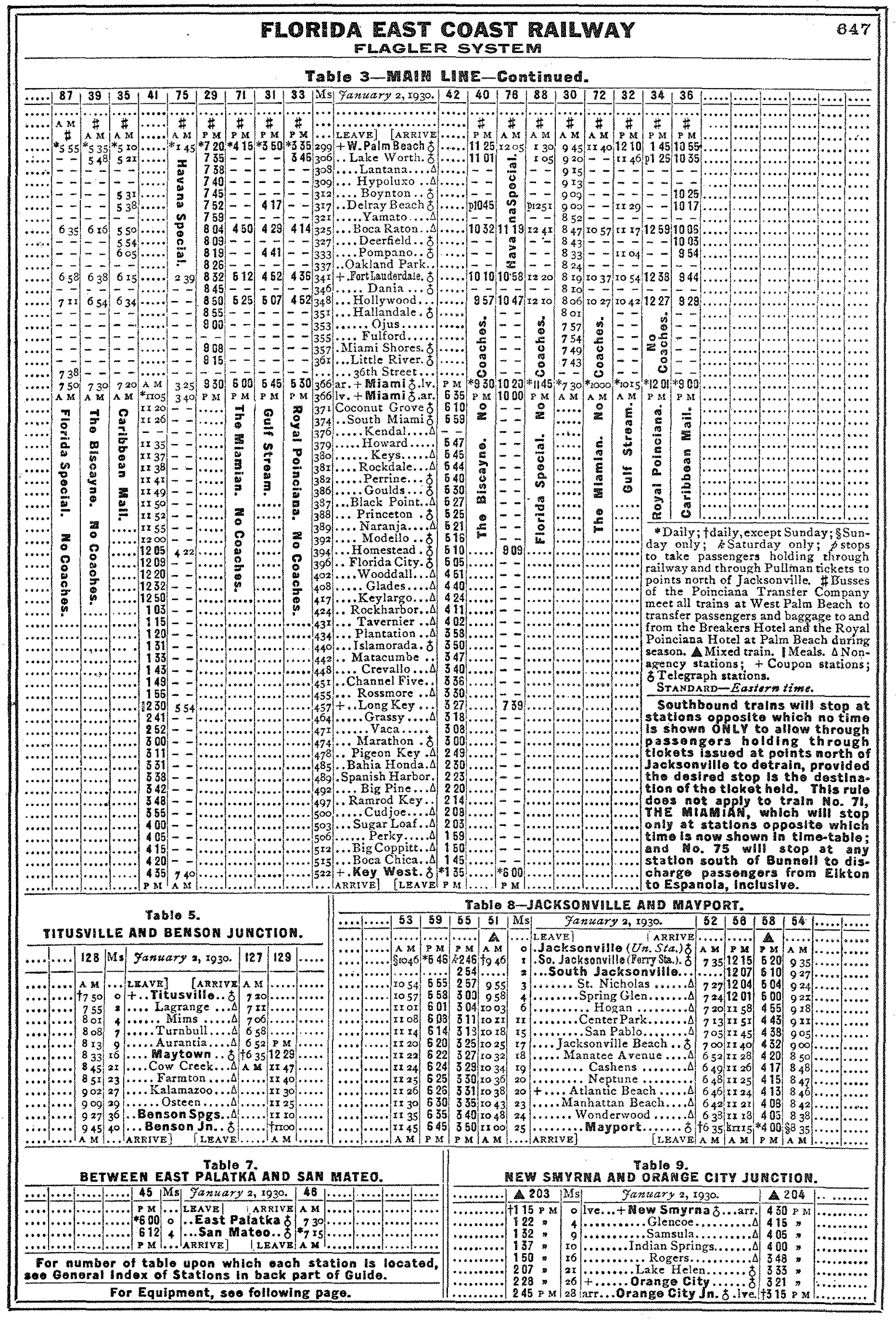
On October 27, 1962, what remained of the Havana Special was renamed as the East Coast Special since the train no longer offered connections to Cuba.
The name survived for only a few months for on January 23, 1963 a nasty strike was carried out by FEC's operating unions. It paralyzed the railroad and resulted in all passenger services being discontinued.
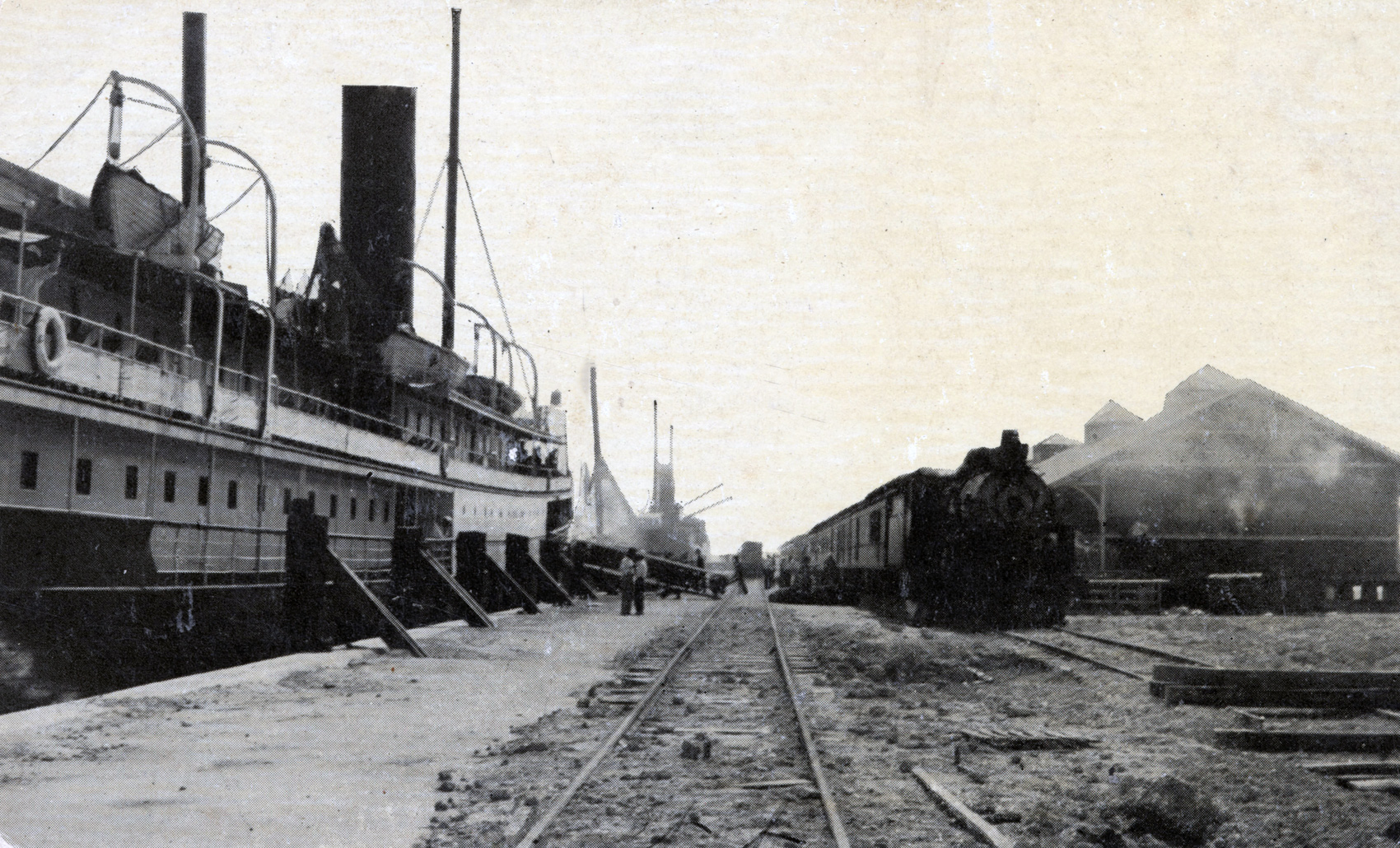 A postcard of Florida East Coast's main terminal at Trumbo Island in Key West, Florida where trains met ships at the dock.
Final Years
These trains returned briefly when the FEC was required to reinstate trains between Jacksonville and North Miami on August 2 1965 but this lasted only until July 31, 1968 when service ceased forever. It's interesting to wonder how this train would have fared had the extension survived.
For instance, consider that the Seaboard Air Line's Silver Meteor, Atlantic Coast Line's Champion, and even the Pennsylvania Railroad's South Wind all saw relatively high patronage through the 1960s with their connections to warm and sunny climate of Miami. Could the Extension have witnessed similarly strong ridership?
Even so, vacationers would not have been able to sustain the route, financially. If some other means of traffic (i.e., freight) had not been found (unlikely) the Extension probably would have been abandoned even if a major hurricane, such as the 1935 storm, had not severely damaged the line. Finally, for a history of the Key West Extension please click here.
Recent Articles


-
Northern Pacific 4-6-0 No. 1364 Returns To Life
Feb 24, 26 11:12 AM
The whistle of Northern Pacific steam returned to the Yakima Valley in a big way this month as Northern Pacific 4-6-0 No. 1364 moved under its own power for the first time in 73 years. -
CSX’s 2025 Santa Train: 83 Years of Holiday Cheer
Feb 24, 26 10:38 AM
 On Saturday, November 22, 2025, CSX’s iconic Santa Train completed its 83rd annual run, again turning a working freight railroad into a rolling holiday tradition for communities across central Appalac…
 -
Alabama Murder Mystery Dinner Train Rides
Feb 24, 26 09:25 AM
 There is currently one location in the state offering a murder mystery dinner experience, the Wales West Light Railway!
 -
Rhode Island Murder Mystery Dinner Train Rides
Feb 24, 26 09:21 AM
 Let's dive into the enigmatic world of murder mystery dinner train rides in Rhode Island, where each journey promises excitement, laughter, and a challenge for your inner detective.
 -
Virginia Wine Tasting Train Rides
Feb 24, 26 09:20 AM
 Wine tasting trains in Virginia provide just that—a unique experience that marries the romance of rail travel with the sensory delights of wine exploration.
 -
Tennessee Wine Tasting Train Rides
Feb 24, 26 09:17 AM
 One of the most unique and enjoyable ways to savor the flavors of Tennessee’s vineyards is by train aboard the Tennessee Central Railway Museum.
 -
Southeast Wisconsin Eyes New Lakeshore Passenger Rail Link
Feb 23, 26 11:26 PM
 Leaders in southeastern Wisconsin took a formal first step in December 2025 toward studying a new passenger-rail service that could connect Milwaukee, Racine, Kenosha, and Chicago.
 -
MBTA Sees Over 29 Million Trips in 2025
Feb 23, 26 11:14 PM
 In a milestone year for regional public transit, the Massachusetts Bay Transportation Authority (MBTA) reported that its Commuter Rail network handled more than 29 million individual trips during 2025…
 -
Historic Blizzard Paralyzes the U.S. Northeast, Halts Rail Traffic
Feb 23, 26 05:10 PM
A powerful winter blizzard sweeping the northeastern United States on Monday, February 23, 2026, has brought transportation networks to a near standstill. -
Mt. Rainier Railroad Moves to Buy Tacoma’s Mountain Division
Feb 23, 26 02:27 PM
 A long-idled rail corridor that threads through the foothills of Mount Rainier could soon have a new owner and operator.
 -
BNSF Activates PTC on Former Montana Rail Link Territory
Feb 23, 26 01:15 PM
 BNSF Railway has fully implemented Positive Train Control (PTC) on what it now calls the Montana Rail Link (MRL) Subdivision.
 -
Cincinnati Scenic Railway To Acquire B&O GP30
Feb 23, 26 12:17 PM
 The Cincinnati Scenic Railway, through an agreement with the Raritan Central Railway, to acquire former B&O GP30 #6923, currently lettered as RCRY #5.
 -
Texas Dinner Train Rides On The TSR
Feb 23, 26 11:54 AM
 Today, TSR markets itself as a round-trip, four-hour, 25-mile journey between Palestine and Rusk—an easy day trip (or date-night centerpiece) with just the right amount of history baked in.
 -
Iowa Dinner Train Rides On The B&SV
Feb 23, 26 11:53 AM
 If you’ve ever wished you could pair a leisurely rail journey with a proper sit-down meal—white tablecloths, big windows, and countryside rolling by—the Boone & Scenic Valley Railroad & Museum in Boon…
 -
North Carolina Wine Tasting Train Rides
Feb 23, 26 11:48 AM
 A noteworthy way to explore North Carolina's beauty is by hopping aboard the Great Smoky Mountains Railroad and sipping fine wine!
 -
Nevada Wine Tasting Train Rides
Feb 23, 26 11:43 AM
 While it may not be the first place that comes to mind when you think of wine, you can sip this delight by train in Nevada at the Nevada Northern Railway.
 -
Reading & Northern Surpasses 1M Tons Of Coal For 3rd Year
Feb 22, 26 11:57 PM
 Reading & Northern Railroad (R&N), the largest privately owned railroad in Pennsylvania, has shipped more than one million tons of Anthracite coal for the third straight year. This was an impressive f…
 -
Minnesota's Northstar Commuter Rail Ends Service
Feb 22, 26 11:43 PM
 Metro Transit has confirmed that Northstar service between downtown Minneapolis (Target Field Station) and Big Lake has ceased, with expanded bus service along the corridor beginning Jan. 5, 2026.
 -
Tri-Rail Sets New Ridership Record in 2025
Feb 22, 26 11:24 PM
 South Florida’s commuter rail service Tri-Rail has achieved a new annual ridership milestone, carrying more than 4.5 million passengers in calendar year 2025.
 -
CSX Completes Major Upgrades at Willard Yard
Feb 22, 26 11:14 PM
 In a significant boost to freight rail operations in the Midwest, CSX Transportation announced in January that it has finished a comprehensive series of infrastructure improvements at its Willard Yard…
 -
New Hampshire Wine Tasting Train Rides
Feb 22, 26 09:39 AM
 This article details New Hampshire's most enchanting wine tasting trains, where every sip is paired with breathtaking views and a touch of adventure.
 -
New Jersey Wine Tasting Train Rides
Feb 22, 26 09:37 AM
 If you're seeking a unique outing or a memorable way to celebrate a special occasion, wine tasting train rides in New Jersey offer an experience unlike any other.
 -
Nevada Murder Mystery Dinner Train Rides
Feb 22, 26 09:36 AM
Seamlessly blending the romance of train travel with the allure of a theatrical whodunit, these excursions promise suspense, delight, and an unforgettable journey through Nevada’s heart. -
West Virginia Murder Mystery Dinner Train Rides
Feb 22, 26 09:34 AM
 For those looking to combine the allure of a train ride with an engaging whodunit, the murder mystery dinner trains offer a uniquely thrilling experience.
 -
New York Central 4-8-2 #3001 To Be Restored
Feb 22, 26 12:29 AM
New York Central 4-8-2 No. 3001—an L-3a “Mohawk”—is the centerpiece of a major operational restoration effort being led by the Fort Wayne Railroad Historical Society (FWRHS) and its American Locomotiv… -
Norfolk Southern To Buy 40 New Wabtec ES44ACs
Feb 21, 26 11:52 PM
 Norfolk Southern has announced it will acquire 40 brand-new Wabtec ES44AC locomotives, marking the Class I railroad’s first purchase of new locomotives since 2022.
 -
CPKC To Buy 65 New Progress Rail SD70ACe-T4s
Feb 21, 26 11:28 PM
 Canadian Pacific Kansas City (CPKC) is moving to refresh and expand its road fleet with a new-build order from Progress Rail, announcing an agreement for 65 EMD SD70ACe-T4 Tier 4 diesel-electric freig…
 -
Ohio Rail Commission Approves Two Projects
Feb 21, 26 11:09 PM
 At its January 22 bi-monthly meeting, the Ohio Rail Development Commission approved grant funding for two rail infrastructure projects that together will yield nearly $400,000 in investment to improve…
 -
CSX Completes Avon Yard Hump Lead Extension
Feb 21, 26 03:38 PM
 CSX says it has finished a key infrastructure upgrade at its Avon Yard in Indianapolis, completing the “cutover” of a newly extended hump lead that the railroad expects will improve yard fluidity.
 -
Pinsly Restores Freight Service On Alabama Short Line
Feb 21, 26 12:55 PM
 After more than a year without trains, freight rail service has returned to a key industrial corridor in southern Alabama.
 -
Phoenix City Council Pulls the Plug on Capitol Light Rail Extension
Feb 21, 26 12:19 PM
In a pivotal decision that marks a dramatic shift in local transportation planning, the Phoenix City Council voted to end the long-planned Capitol light rail extension project. -
Norfolk Southern Unveils Advanced Wheel Integrity System
Feb 21, 26 11:06 AM
 In a bid to further strengthen rail safety and defect detection, Norfolk Southern Railway has introduced a cutting-edge Wheel Integrity System, marking what the Class I carrier calls a significant bre…
 -
CPKC Sets New January Grain-Haul Record
Feb 21, 26 10:31 AM
 Canadian Pacific Kansas City (CPKC) says it has opened 2026 with a new benchmark in Canadian grain transportation, announcing that the railway moved a record volume of grain and grain products in Janu…
 -
New Documentary Charts Iowa Interstate's History
Feb 21, 26 12:40 AM
A newly released documentary is shining a spotlight on one of the Midwest’s most distinctive regional railroads: the Iowa Interstate Railroad (IAIS). -
LA Metro’s A Line Extension Study Forecasts $1.1B in Economic Output
Feb 21, 26 12:38 AM
The next eastern push of LA Metro’s A Line—extending light-rail service beyond Pomona to Claremont—has gained fresh momentum amid new economic analysis projecting more than $1.1 billion in economic ou… -
Age of Steam Acquires B&LE 2-10-4 No. 643 (2025)
Feb 21, 26 12:33 AM
 When the Age of Steam Roundhouse Museum rolled out B&LE 2-10-4 No. 643 for public viewing in 2025, it wasn’t simply a new exhibit debuting under roof—it was the culmination of one of preservation’s lo…
 -
NCDOT Study: Restoring Asheville Passenger Rail Offers Economic Lift
Feb 21, 26 12:26 AM
 A revived passenger rail connection between Salisbury and Asheville could do far more than bring trains back to the mountains for the first time in decades could offer considerable economic benefits.
 -
Brightline Unveils ‘Freedom Express’ To Commemorate America’s 250th
Feb 20, 26 11:36 AM
 Brightline, the privately operated passenger railroad based in Florida, this week unveiled its new Freedom Express train to honor the nation's 250th anniversary.
 -
Age of Steam Roundhouse Adds C&O No. 1308
Feb 20, 26 10:53 AM
 In late September 2025, the Age of Steam Roundhouse Museum in Sugarcreek, Ohio, announced it had acquired Chesapeake & Ohio 2-6-6-2 No. 1308.
 -
Reading & Northern Announces 2026 Excursions
Feb 20, 26 10:08 AM
Immediately upon the conclusion of another record-breaking year of ridership in 2025, the Reading & Northern Passenger Department has already begun its 2026 schedule of all-day rail excursion. -
Siemens Mobility Tapped To Modernize Tri-Rail Fleet
Feb 20, 26 09:47 AM
 South Florida’s Tri-Rail commuter service is preparing for a significant motive-power upgrade after the South Florida Regional Transportation Authority (SFRTA) announced it has selected Siemens Mobili…
 -
Reading T-1 No. 2100 Restoration Progress
Feb 20, 26 09:36 AM
 One of the most famous survivors of Reading Company’s big, fast freight-era steam—4-8-4 T-1 No. 2100—is inching closer to an operating debut after a restoration that has stretched across a decade and…
 -
C&O Kanawha No. 2716: A Third Chance at Steam
Feb 20, 26 09:32 AM
 In the world of large, mainline-capable steam locomotives, it’s rare for any one engine to earn a third operational career. Yet that is exactly the goal for Chesapeake & Ohio 2-8-4 No. 2716.
 -
Missouri Wine Tasting Train Rides
Feb 20, 26 09:29 AM
 The fusion of scenic vistas, historical charm, and exquisite wines is beautifully encapsulated in Missouri's wine tasting train experiences.
 -
Minnesota Wine Tasting Train Rides
Feb 20, 26 09:26 AM
 This article takes you on a journey through Minnesota's wine tasting trains, offering a unique perspective on this novel adventure.
 -
Kansas Murder Mystery Dinner Train Rides
Feb 20, 26 09:23 AM
 Kansas, known for its sprawling wheat fields and rich history, hides a unique gem that promises both intrigue and culinary delight—murder mystery dinner trains.
 -
Florida Murder Mystery Dinner Train Rides
Feb 20, 26 09:20 AM
 Florida, known for its vibrant culture, dazzling beaches, and thrilling theme parks, also offers a unique blend of mystery and fine dining aboard its murder mystery dinner trains.
 -
NC&StL “Dixie” No. 576 Nears Steam Again
Feb 20, 26 09:15 AM
 One of the South’s most famous surviving mainline steam locomotives is edging closer to doing what it hasn’t done since the early 1950s, operate under its own power.
 -
Frisco 2-10-0 No. 1630 Continues Overhaul
Feb 19, 26 03:58 PM
In late April 2025, the Illinois Railway Museum (IRM) made a difficult but safety-minded call: sideline its famed St. Louis–San Francisco Railway (Frisco) 2-10-0 No. 1630. -
PennDOT Pushes Forward Scranton–New York Passenger Rail Plan
Feb 19, 26 12:14 PM
 Pennsylvania’s long-discussed idea of restoring passenger trains between Scranton and New York City is moving into a more formal planning phase.