
B&O's Thomas Viaduct (Bridge): History and Photos
Last revised: March 1, 2025
By: Adam Burns
Thomas Viaduct was part of the B&O's realignment of its main line in the mid-1830s to a more southerly heading that would eventually connect to Washington, D.C., officially known as the Washington Branch (it technically did not become part of the railroad's through main line until the late 1860s).
Despite being completed in 1835, the Thomas Viaduct is still in operational condition today—a testament to the visionaries behind its inception and the strength of the materials used in its formation.
Such was the agricultural and commercial significance of the Thomas Viaduct that it was fiercely protected during the Civil War. The Union forces recognized its strategic importance, thus heavily guarding it from potential attacks by Confederate sympathizers.
The viaduct is the oldest multi-span masonry arch bridge of its kind and one of the oldest railroad bridges that is still in use today, carrying countless CSX Transportation freight and MARC commuter trains daily. Today, the viaduct has received the rare honor as a National Historic Landmark.
Publicly, Thomas Viaduct became one of the most famous location along the fabled B&O. The railroad regularly used it for marketing purposes, such as in the photo below.
In one particularly noteworthy setting, the "Royal Blue" was posed alongside Britain's "Coronation Scot," led by 4-6-2 #6229, the "Duchess of Hamilton." This locomotive was owned by the London Midland & Scottish Railway and still survives today.
While the B&O always kept the bridge maintained to very high standards, including its wrought-iron railing, this attention to detail faded as the years passed.
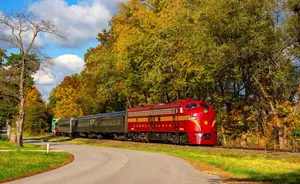
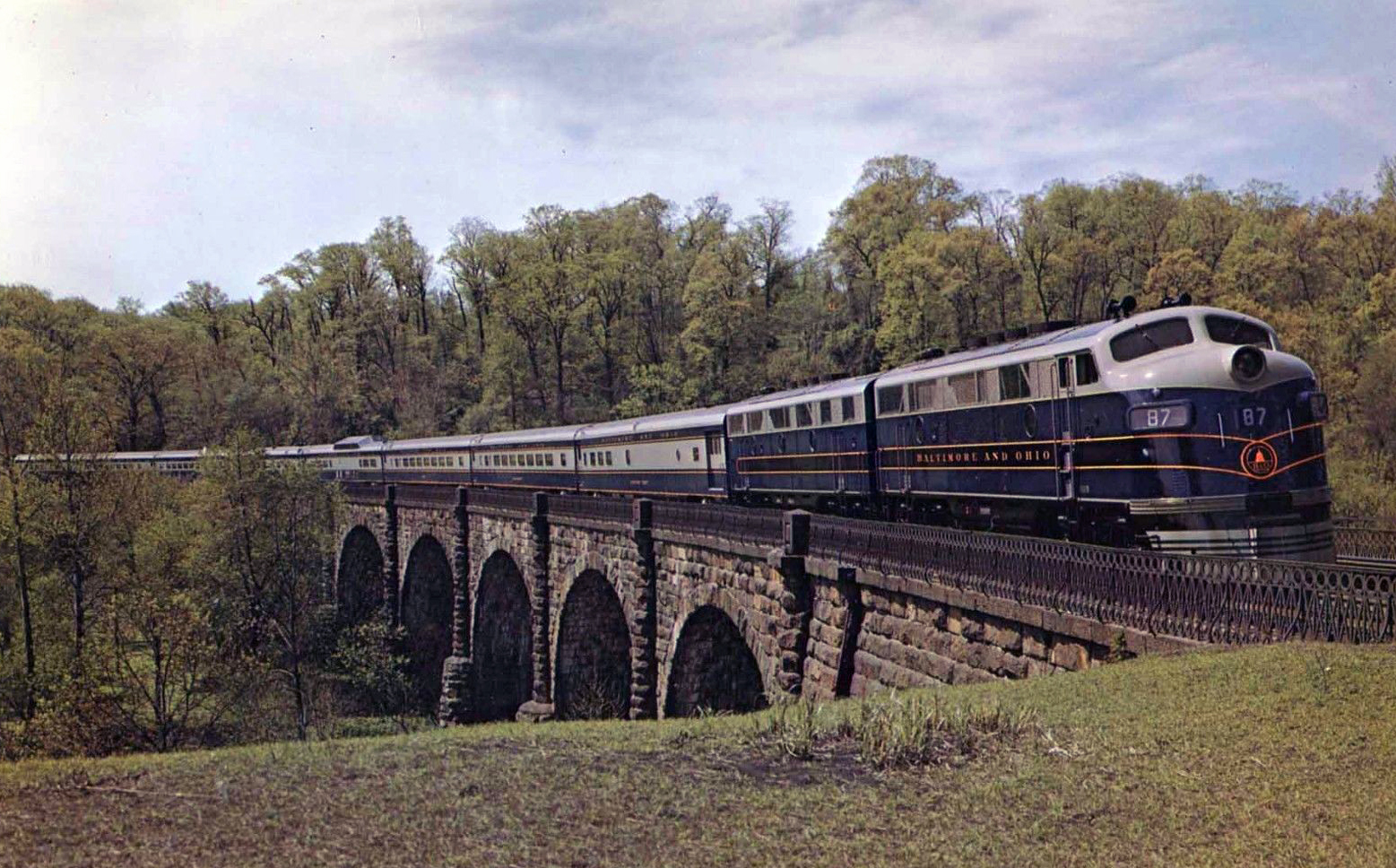 In this Baltimore & Ohio company photo the newly reequipped "Columbian," powered by an A-B- set of F3's (note the new Strata-Dome mid-train), poses on historic Thomas Viaduct (Maryland) spanning the Patapsco River during the spring of 1949.
Baltimore & Ohio
After the being was acquired by the Chesapeake & Ohio and then joined the Chessie System consortium in 1972, company policy shifted away from maintaining property to such high standards.
Unfortunately, this was not isolated to the B&O; the industry, in general, lost interest. There were several factors involved, from declining revenues to the discontinuance of passenger trains.
Today, CSX has been criticized several times for its maintenance of this National Historic Landmark; trees and shrubs grow from crevices in the stone and the railing is in desperate need of repair and overhaul. The viaduct was the first major project on the Baltimore & Ohio's recently planned Washington Branch to connect the nation's capital.
The line diverged at Relay, Maryland and less than a mile away was the Patapsco River and Patapsco Valley, both of which need to be crossed. At the time construction commenced on the bridge on July, 4 1833 the Baltimore & Ohio had yet to reach Harpers Ferry, Virginia.
History
The B&O sought a sturdy and lasting structure to transport locomotives and carriages safely across the Patapsco River Valley. The viaduct served as an essential component of the railway network—facilitating consistency in the smooth flow of goods and passengers.
However, the railroad was in money trouble during the bridge's construction. It had virtually used up all of its funding to date and had yet to not only reach Cumberland, Maryland but also to establish any viable means of traffic.
Benjamin Henry Latrobe
To construct this notable structure, locally quarried granite was predominantly used. The durable material's presence greatly contributed to the viaduct's longevity and resilience throughout the years. The bridge requirements dictated an estimated 24,476 tons (22,195 metric tons) of this granite to be utilized during its construction.
The viaduct was designed by Benjamin Henry Latrobe, Jr. with actual construction carried out by contractor John McCartney (McCartney was ultimately awarded the job to build the the viaduct since he had successfully built the nearby Patterson Viaduct a few years earlier).
The major issue in building the bridge was the curve required, which had never been attempted before in American history. To accomplish the task the seven piers carried a wedge shape to compensate for the 4 degrees of curvature needed.
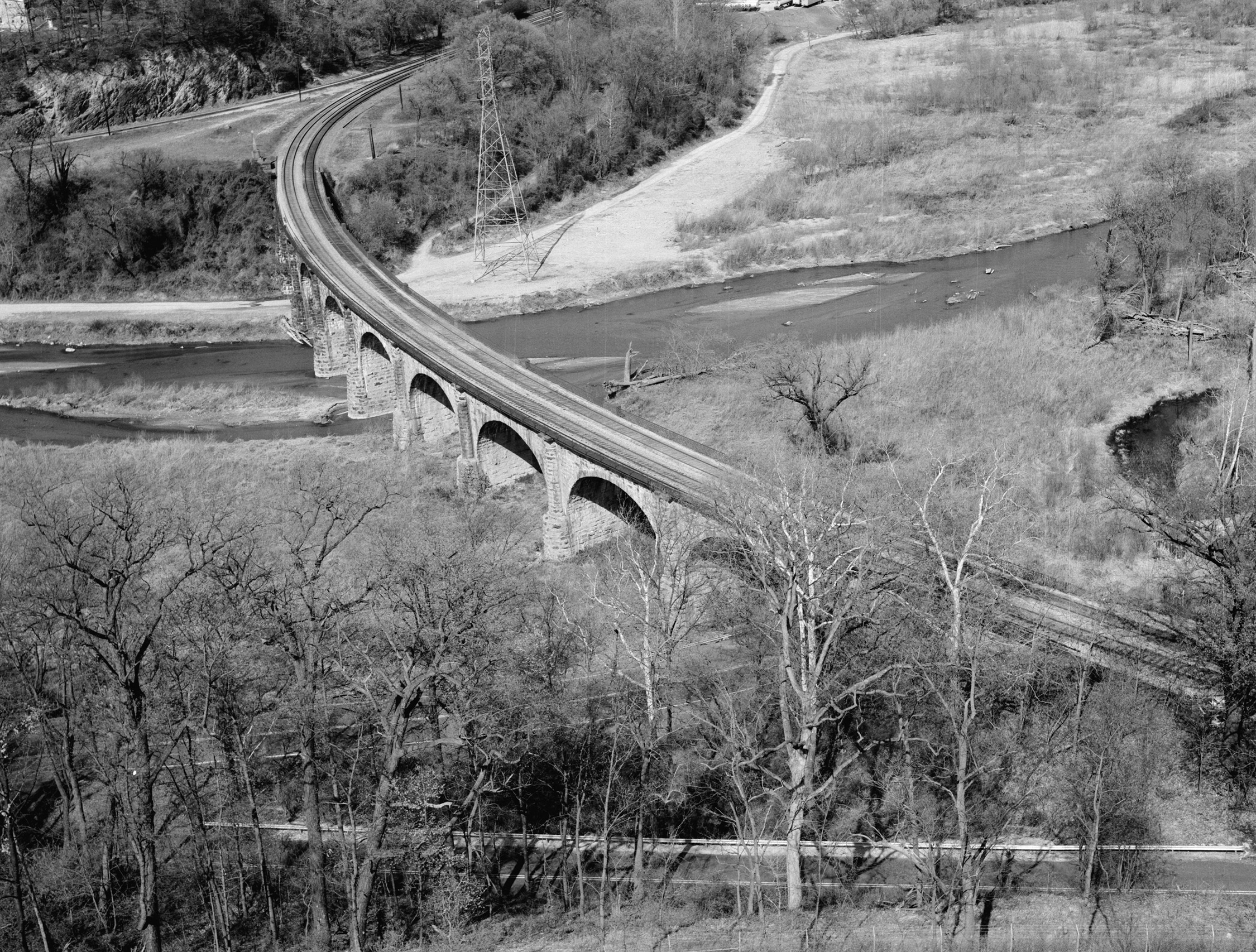 An aerial view of Thomas Viaduct, looking towards the northeast, as it appeared in April, 1971. Note that the Baltimore & Ohio's main line, bound for points east and west, can be seen in the background. Jack Boucher photo.
Construction
When construction of the bridge was finished, officially on July 4, 1835, it rose to a height of 59 feet (18 meters) above the Patapsco River and was 612 feet in length (187 meters).
Furthermore, it spans a width of approximately 26.5 feet (8 meters), making for a notable sight nestled in the landscape. At the time it was the longest stone-arch masonry bridge.
It featured eight arches, which were 59-feet in length and was wide enough (roughly 26-feet) to accommodate two tracks, which it still carries today. The bridge received its name, Thomas Viaduct, after the B&O's first president, Phillip Thomas.
During its initial years, skeptics doubted the viaduct's durability, predicting that it would collapse under the heavy weight of the locomotives. The structure's first crossing by a train—a locomotive chaperoned by Latrobe himself—put these doubts to rest, demonstrating the viaduct's resilience and strength.
Publicity Photos
Over the years, and especially during the streamliner age, the B&O regularly used the structure to stage publicity photos of its latest trains or notable locomotives such as the fabled Royal Blue (Washington/Baltimore - New York), Capitol Limited (New York - Chicago), and the first streamlined diesel locomotive for regular, main line service, Electro-Motive's stylish "EA."
Location
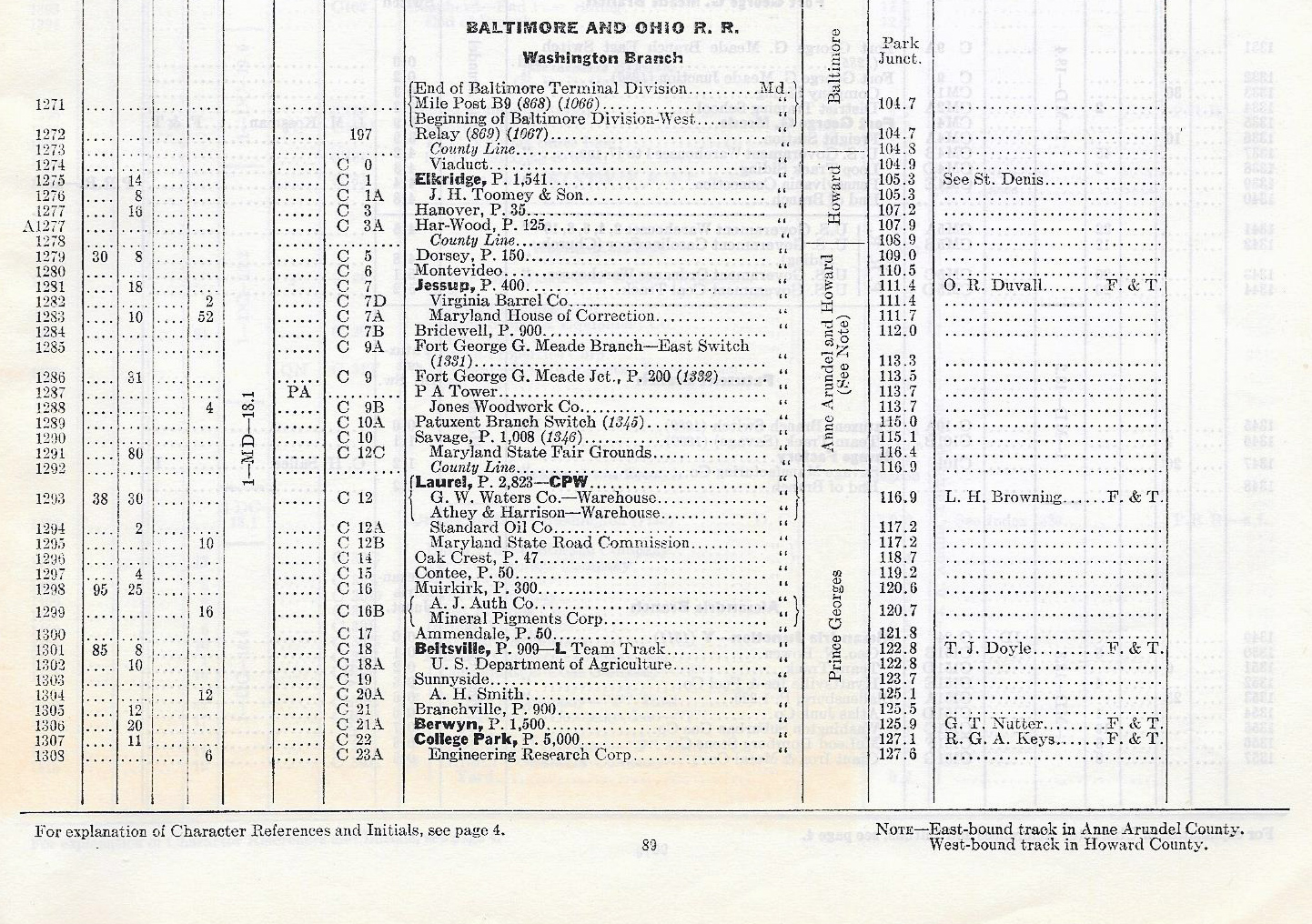 From the Baltimore & Ohio's 1948 "Official List" you can see the location of what was named only as "Viaduct" on the Washington Branch. Author's collection.
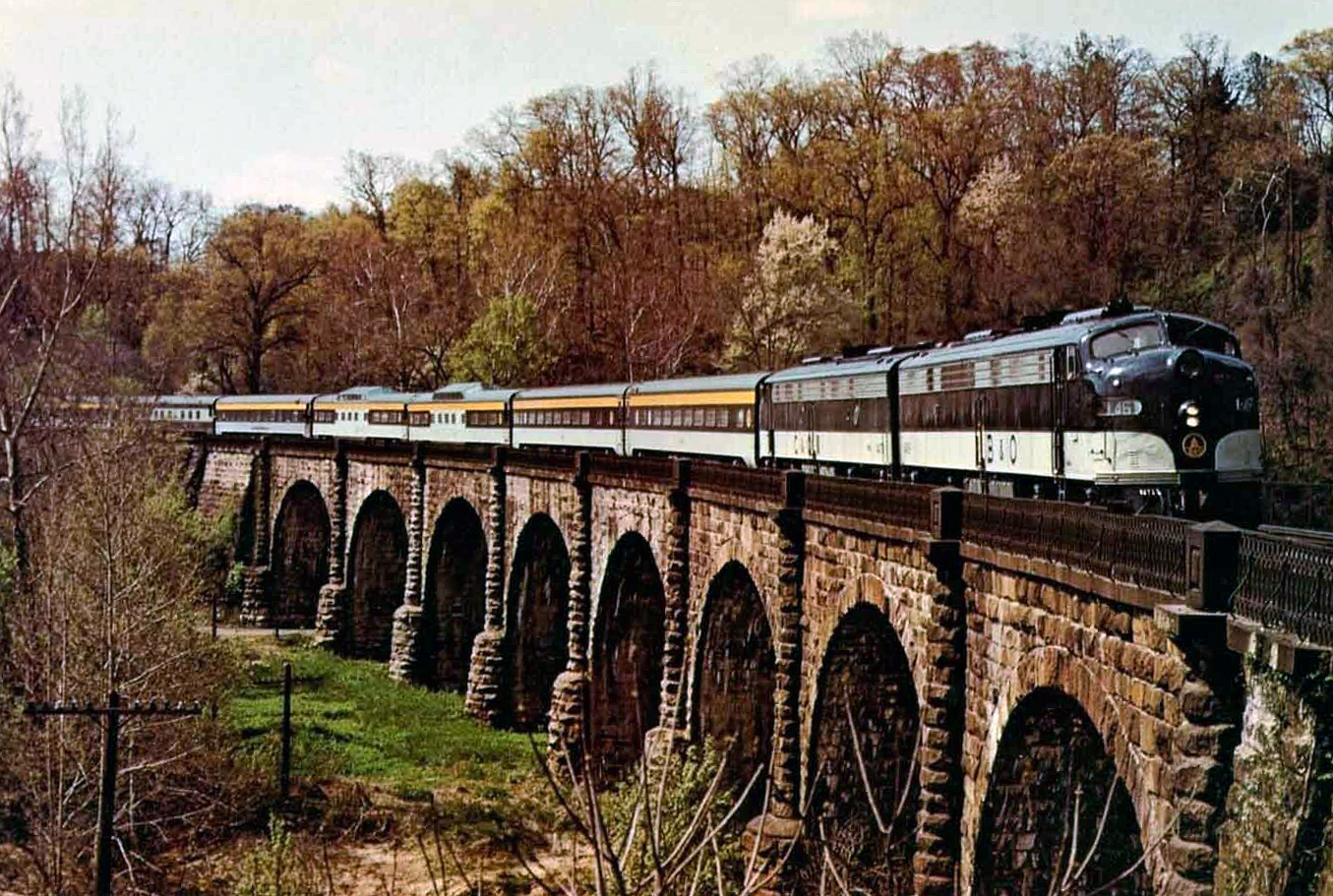 The Baltimore & Ohio was always very cognizant of its storied history. Here, the final "Capitol Limited" is posed on Thomas Viaduct on May 1, 1971. James Jeffrey photo.
Today
To honor the completion of the bridge, the contractor John McCartney, had a 15-foot obelisk built with the names of the builder, chief engineer, superintendent, board of directors and designer inscribed on the monument. The original obelisk has since been destroyed but a replacement now stands in its place.
In the summer of 2010 the viaduct celebrated its 175th anniversary and in conjunction with the milestone it has become known that two preservationists, John Slater and Jim Dilts, are spearheading an effort to create the Thomas Viaduct Park to help maintain the bridge and make visitors aware of the structure's historic and engineering noteworthiness.
Legacy
Today, the Thomas Viaduct is considered a historic civil engineering landmark by the American Society of Civil Engineers. A testament to its enduring significance and innovative construction techniques.
Throughout the years, the viaduct has undergone minor modifications to accommodate the evolving railroad technology. Yet, it largely remains in its original state, bearing witness to the engineering prowess of its builders.
Its construction was a significant event of its time, employing a large number of people over a period of two years. The workers, mainly Irish immigrants, were subject to harsh conditions yet persevered to successfully build the marvel we see today.
The viaduct was notable for its economic impact. The speed and efficiency it offered revolutionized transportation, setting the stage for industrial growth in the city of Baltimore and beyond.
The Thomas Viaduct serves as an icon of the early days of American railroad transportation. Its endurance throughout the years is testament to its design, construction methodologies, and the materials used. It stands as a physical reminder of USA's industrial age.
Today, the Thomas Viaduct continues to be a popular tourist spot. Visitors flock to see this historic structure, hiking the trails, picnicking in the parkland that surrounds it, or just admiring the strength and beauty of the granite structure.
In 1964, the Thomas Viaduct was designated a National Historic Landmark. It can also be found on the National Register of Historic Places since 1966—an honor that validates its historic significance.
The Thomas Viaduct has seen the evolution of locomotives—from the early days of steam engines to today's high-speed electric trains—demonstrating its adaptability and resilience.
Despite its historical significance, care must be taken to maintain and preserve the Thomas Viaduct. Various rehabilitation projects have taken place, ensuring the structure's continued service and its protected status.
The Thomas Viaduct is an outstanding example of early 19th-century innovation in civil engineering. The use of stone as a material for construction, at a time when wood was predominantly used, shows the groundbreaking nature of this structure.
In conclusion, the Thomas Viaduct with its aesthetic appeal, historic significance, and enduring functionality stands as an admirable testament to successful early engineering.
Its influence can be seen in the many stone viaducts that followed its design. Today, as it continues its role in modern railroad transportation, it is undoubtedly a pertinent landmark in the annals of American civil engineering and transportation history.
Recent Articles


-
Scenic Train Rides (USA 2026): State Guide to Tourist Railroads
Oct 04, 26 12:17 AM
 Scenic and tourist train rides in all 50 states for 2026. Colorado narrow gauge, Pennsylvania steam, Alaska’s White Pass, and the states with no full-size ride this month. Confirm on the railroad.
 -
Wyoming Scenic Train Rides (2026): A Complete Guide
Oct 03, 26 12:07 AM
 Wyoming has no full-size tourist railroad on the calendar in October 2026. Cheyenne Depot Museum and Douglas Railroad Museum are static. Union Pacific 4014’s posted public trip is a November run to De…
 -
Washington Scenic Train Rides (2026): A Complete Guide
Oct 02, 26 11:53 PM
 Washington tourist trains in 2026—Mount Rainier Scenic at Elbe, the Northwest Railway Museum, and Chehalis-Centralia. Lake Whatcom has no 2026 date on its ticket page.
 -
Wisconsin Scenic Train Rides (2026): A Complete Guide
Oct 02, 26 11:48 PM
 Wisconsin tourist trains in 2026—Wisconsin Great Northern, Osceola & St. Croix Valley, Mid-Continent, East Troy, and the National Railroad Museum.
 -
Pennsylvania Railroad Class Q2 4-4-6-4: Specs, Roster, History
Oct 02, 26 11:28 PM
 Pennsylvania Railroad Class Q2 4-4-6-4 duplexes. Twenty-six engines, 6131 and 6175–6199, Altoona 1944–45. Form 109-J specs, the 7,987 hp test of 6175, and a roster. All scrapped.
 -
Utah Scenic Train Rides (2026): A Complete Guide
Oct 02, 26 11:18 PM
 Utah tourist trains in 2026—Heber Valley Railroad from Heber City. Golden Spike at Promontory is a locomotive demonstration, not a line-haul ride.
 -
South Dakota Scenic Train Rides (2026): A Complete Guide
Oct 02, 26 11:06 PM
 South Dakota’s 2026 scenic train is the Black Hills Central 1880 Train, Hill City to Keystone. Steam is the summer assignment. Confirm the engine.
 -
Oregon Scenic Train Rides (2026): A Complete Guide
Oct 02, 26 11:04 PM
 Oregon tourist trains in 2026—Oregon Coast Scenic from Rockaway Beach, Mount Hood at Hood River, Eagle Cap from Elgin, and the Oregon Rail Heritage Center in Portland.
 -
Oklahoma Scenic Train Rides (2026): A Complete Guide
Oct 02, 26 10:36 PM
 Oklahoma has no full-size scenic railroad on an October 2026 calendar. Oklahoma Railway Museum Halloween and Polar trains, the El Reno trolley, and the Heartland Flyer.
 -
North Dakota Scenic Train Rides (2026): A Complete Guide
Oct 02, 26 01:14 PM
North Dakota has no tourist railroad on a 2026 calendar. Ride Amtrak’s daily Empire Builder. The Fort Lincoln Trolley in Mandan is not a current ticket. -
Nebraska Scenic Train Rides (2026): A Complete Guide
Oct 02, 26 10:11 AM
 Nebraska has no full-size scenic railroad in 2026. The Omaha Zoo Railroad runs weekends through October 4. Ride Amtrak’s California Zephyr across the state.
 -
Missouri Scenic Train Rides (2026): A Complete Guide
Oct 02, 26 09:56 AM
 Missouri tourist trains in 2026—Branson Scenic Railway and the St. Louis, Iron Mountain & Southern at Jackson. Belton has no 2026 schedule posted.
 -
Minnesota Scenic Train Rides (2026): A Complete Guide
Oct 02, 26 09:52 AM
 Minnesota tourist trains in 2026—North Shore Scenic Railroad in Duluth, the Duluth River Train, and the Como-Harriet streetcar.
 -
Kansas Scenic Train Rides (2026): A Complete Guide
Oct 02, 26 09:32 AM
 Kansas tourist trains in 2026—the Abilene & Smoky Valley Railroad. Santa Fe 3415 is in overhaul. Midland Railway at Baldwin City is closed.
 -
Iowa Scenic Train Rides (2026): A Complete Guide
Oct 02, 26 08:41 AM
 Iowa tourist trains in 2026—Boone & Scenic Valley across the Bass Point Creek High Bridge, and Midwest Central’s December North Pole trains
 -
Indiana Scenic Train Rides (2026): A Complete Guide
Oct 02, 26 08:35 AM
 Indiana tourist trains in 2026—French Lick Scenic Railway, Nickel Plate Express, Hoosier Valley, and Hesston. Whitewater Valley is suspended.
 -
Illinois Scenic Train Rides (2026): A Complete Guide
Oct 02, 26 12:28 AM
 Illinois tourist trains in 2026—Illinois Railway Museum, Monticello Railway Museum, Fox River Trolley, and Silver Creek & Stephenson.
 -
Texas Scenic Train Rides (2026): A Complete Guide
Oct 02, 26 12:14 AM
 Texas tourist trains in 2026—Texas State Railroad, Grapevine Vintage Railroad, Austin Steam Train's Hill Country Flyer, and the Galveston Railroad Museum.
 -
Tennessee Scenic Train Rides (2026): A Complete Guide
Oct 02, 26 12:03 AM
Tennessee tourist trains in 2026—Tennessee Valley Railroad Museum, Dollywood Express, Three Rivers Rambler Christmas trains, and the Tennessee Central Railway Museum. -
South Carolina Scenic Train Rides (2026): A Complete Guide
Oct 01, 26 11:52 PM
 South Carolina's tourist train is the South Carolina Railroad Museum in Winnsboro—Blue Granite Express, pumpkin trains, and Santa trains on the old Rockton & Rion.
 -
Mississippi Scenic Train Rides (2026): A Complete Guide
Oct 01, 26 11:38 PM
 Mississippi has no regular tourist railroad in 2026. Ride Amtrak through the state, or book the excursion lines in Alabama, Tennessee, Louisiana, or Arkansas.
 -
Louisiana Scenic Train Rides (2026): A Complete Guide
Oct 01, 26 02:52 PM
 Louisiana has no regular full-size tourist railroad in 2026. New Orleans Polar Express returns December 11–31. Museums at Long Leaf, DeQuincy, and Jackson.
 -
Kentucky Scenic Train Rides (2026): A Complete Guide
Oct 01, 26 02:45 PM
 Kentucky tourist trains in 2026—Big South Fork Scenic Railway, Bluegrass Scenic Railroad, Kentucky Railway Museum, and My Old Kentucky Dinner Train.
 -
Georgia Scenic Train Rides (2026): A Complete Guide
Oct 01, 26 02:27 PM
 Georgia tourist trains in 2026—Blue Ridge Scenic Railway, SAM Shortline, Azalea Sprinter, Savannah shop rides, and what to confirm at Stone Mountain.
 -
Arkansas Scenic Train Rides (2026): A Complete Guide
Oct 01, 26 01:02 PM
 Arkansas tourist trains in 2026—Arkansas & Missouri through the Boston Mountains, and the Eureka Springs & North Arkansas dinner and excursion trains.
 -
Alabama Scenic Train Rides (2026): A Complete Guide
Oct 01, 26 12:59 PM
Alabama tourist trains in 2026—Heart of Dixie Railroad Museum at Calera, North Alabama Railroad Museum at Chase, and the Wales West Light Railway at Silverhill. -
The Circus Train: How Such Attractions Reached Distant Cities
Oct 01, 26 12:22 PM
 How circuses moved by rail: Coup's 1872 flats, the Ringling train's sections and car counts, the 1918 Hammond wreck, and the last show on May 21, 2017.
 -
West Virginia Halloween Train Rides (2026)
Oct 01, 26 12:19 PM
 2026 West Virginia Halloween train. Cass Scenic Halloween Train, October 30 and 31, steam, 5:00 p.m. from Cass Depot. Adult $75. About two hours to Whittaker. Family ride.
 -
Wisconsin Halloween Train Rides (2026)
Oct 01, 26 12:11 PM
2026 Wisconsin Halloween trains. Mid-Continent Pumpkin Special October 24–25, adult $24, pumpkins extra. Halloween Flyer October 24 at 4:30 p.m., adult $30. Osceola Pumpkin Express boards in Osceola… -
Utah Halloween Train Rides (2026)
Oct 01, 26 12:00 PM
 2026 Utah Halloween trains at Heber Valley Railroad. Pumpkin Train, about 40 minutes, with a cookie and a pumpkin. Halloween Express, about 90 minutes to Grim Hollow, Monday, Thursday, and Friday even…
 -
Texas Halloween Train Rides (2026)
Oct 01, 26 11:28 AM
 2026 Texas Halloween train. Texas State Railroad Spooky Special, adult-only, October 24. Boards Palestine at 5:00 p.m. About five hours to Rusk and back. Dinner on the grounds. Not steam. No fare on t…
 -
Tennessee Halloween Train Rides (2026)
Oct 01, 26 12:15 AM
 2026 Tennessee Halloween trains. Tennessee Valley Railroad Museum Rails, Wizards & Spells, selected days September 18 through October 25, from $35, about 2.5 hours. Spells & Potions tea from $60. The…
 -
Frisco's "Firefly" (Train): Consist, Route, Timetable
Sep 30, 26 11:37 PM
 Frisco Firefly—daylight streamliner, Kansas City to Tulsa and Oklahoma City. Trains 117 and 118. Pacifics 1018, 1026, and 1031. Last run May 22, 1960.
 -
South Carolina Halloween Train Rides (2026)
Sep 30, 26 11:29 PM
 2026 South Carolina Halloween train. South Carolina Railroad Museum Pumpkin Patch Express, the two Saturdays before Halloween. About three miles to the Greenbriar pavilion. Pumpkin for children 12 and…
 -
Oregon Halloween Train Rides (2026)
Sep 30, 26 08:10 PM
2026 Oregon Halloween train. Sumpter Valley Railroad Halloween Express at the Sumpter Depot, calendar window October 31 at 11:00 a.m. through November 1 at 12:30 p.m. Fare and the individual clocks ar… -
Oklahoma Halloween Train Rides (2026)
Sep 30, 26 03:45 PM
2026 Oklahoma Halloween train. Oklahoma Railway Museum, October 30 and 31, from Oakwood Station in Oklahoma City. Adults $15, children 3–12 $8. A candy bag with the ride. -
McCloud River Railroad: Serving The Timber Industry (1897-2009)
Sep 30, 26 03:37 PM
 McCloud River Railroad—Mount Shasta City to McCloud, Hambone, and Burney. Opened August 1, 1897. Alco No. 25 and EMD SD38s. Dinner train through January 2010. Railbikes in 2026; a dinner train is stil…
 -
Nevada Halloween Train Rides (2026)
Sep 30, 26 03:30 PM
2026 Nevada Halloween trains in Ely. Nevada Northern Pumpkin Patch Caper and Haunted Ghost Train. Adult tickets start at $45. Dates are on the railroad’s ticket calendar. Boulder City stays off until… -
Missouri Halloween Train Rides (2026)
Sep 30, 26 11:12 AM
 2026 Missouri Halloween trains. St. Louis Iron Mountain & Southern Pumpkin Patch Train on October 3, 4, 10, and 11, and Halloween Express on October 31 at 1:00 p.m. Jackson depot. No fare on the sched…
 -
Minnesota Halloween Train Rides (2026)
Sep 30, 26 11:06 AM
 2026 Minnesota Halloween trains. North Shore Scenic Great Pumpkin Train in Duluth, October 15–18. Everyone gets a pumpkin. Terror Train is October 30, an adult costume party, about three hours. Fares…
 -
Maryland Halloween Train Rides (2026)
Sep 30, 26 10:42 AM
 2026 Maryland Halloween trains. Western Maryland Scenic Pumpkin Patch Limited, October 17, 18, 24, and 25, $14. Colesville Trolleyween October 24, 25, and 31.
 -
West Side Lumber Company Railroad: Roster, History, Lines
Sep 30, 26 09:45 AM
 West Side Lumber at Tuolumne, California. Three-foot Shay and Heisler logging railroad. Lima shop numbers, builder specs, and where the engines are in 2026.
 -
Kansas Halloween Train Rides (2026)
Sep 30, 26 09:41 AM
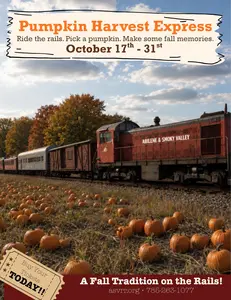
 2026 Kansas Halloween train. Abilene & Smoky Valley Pumpkin Harvest Express, October 17 through 31. About one hour. Shop prices $35.56 to $41.02. Everyone picks a pumpkin.
 -
Iowa Halloween Train Rides (2026)
Sep 29, 26 11:58 PM
2026 Iowa Halloween train. Boone & Scenic Valley Pumpkin Express, October 10, 10:00 a.m. from 225 10th Street. About 1 hour 15 minutes. Children pick a pumpkin. -
Arizona Halloween Train Rides (2026)
Sep 29, 26 11:43 PM
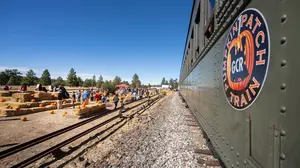
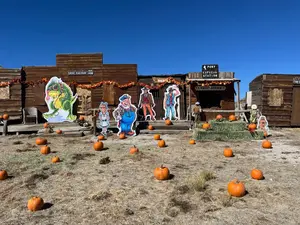
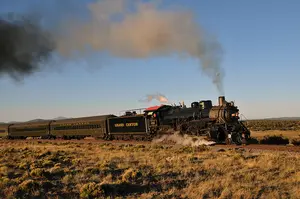
 2026 Arizona Halloween train. Grand Canyon Railway Pumpkin Patch Train from Williams, $39 with a pumpkin included. Select October dates on the ticket calendar. Haunted train cars are optional.
 -
Nevada Northern Halloween Trains (2026)
Sep 29, 26 06:18 PM
Nevada Northern 2026 Halloween trains in Ely. Pumpkin Patch Caper to Keystone Gulch and the Haunted Ghost Train. Adult tickets start at $45. Dates are on the railroad’s calendar. Confirm on nnry.com. -
Grand Canyon Railway Pumpkin Patch Train (2026)
Sep 29, 26 02:42 PM
Grand Canyon Railway Pumpkin Patch Train—select October 2026 dates from Williams, $39 with a pumpkin included. Haunted train cars are optional. Days are on the ticket calendar. Confirm on thetrain.com… -
Cass Scenic Railroad Halloween Trains (2026)
Sep 29, 26 02:37 PM
 Cass Scenic Halloween Trains—October 30 and 31, 2026, steam, 5:00 p.m. from Cass Depot. About two hours to Whittaker. Adult $75. Candy for every child. Confirm on mountainrailwv.com.
 -
Halloween Train Rides (2026): Pumpkin Patch, Haunted & Spooky Trips
Sep 29, 26 11:26 AM
 2026 Halloween train rides in nine checked states. Conway Scenic Halloween Express October 24–25. Strasburg’s three fall tickets. Great Smoky Mountains Railroad’s October trains are the gorge and rive…
 -
Maine Halloween Train Rides (2026)
Sep 29, 26 11:08 AM
 2026 Maine Halloween trains. Seashore Pumpkin Patch Trolley through October 18, adult $17. Happy Trolleyween October 23–25 at $15. WW&F Pumpkin Pickin’ October 3, 12, 17, and 24. Downeast’s booking it…




%2C%20poses%20on%20historic%20Thomas%20Viaduct%20(Maryland)%20spanning%20the%20Patapsco%20River%20during%20the%20spring%20of%201949.)


