Alco "RS1" Locomotives: Roster, Specs, Data Sheet
Last revised: December 27, 2024
By: Adam Burns
The American Locomotive Company (Alco) could seemingly never outdo the Electro-Motive Division for dominance in the early diesel locomotive market.
Despite this, the company would develop one of the most important layouts for how all future diesel locomotives would be built; the RS1, which pioneered the original road-switcher design.
Not only would EMD go on to use the carbody style in its later General Purpose (GP) series but also the offset cab layout is still used today by General Electric and successor Electro-Motive Diesel.
The RS1 was in production longer than any other model at the time, remaining in Alco's catalog for nearly 20 years. Today, you can still find a handful of these rugged workhorses preserved at various museums around the country - some of which are even still operational.
Photos
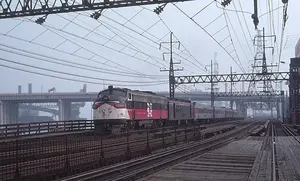
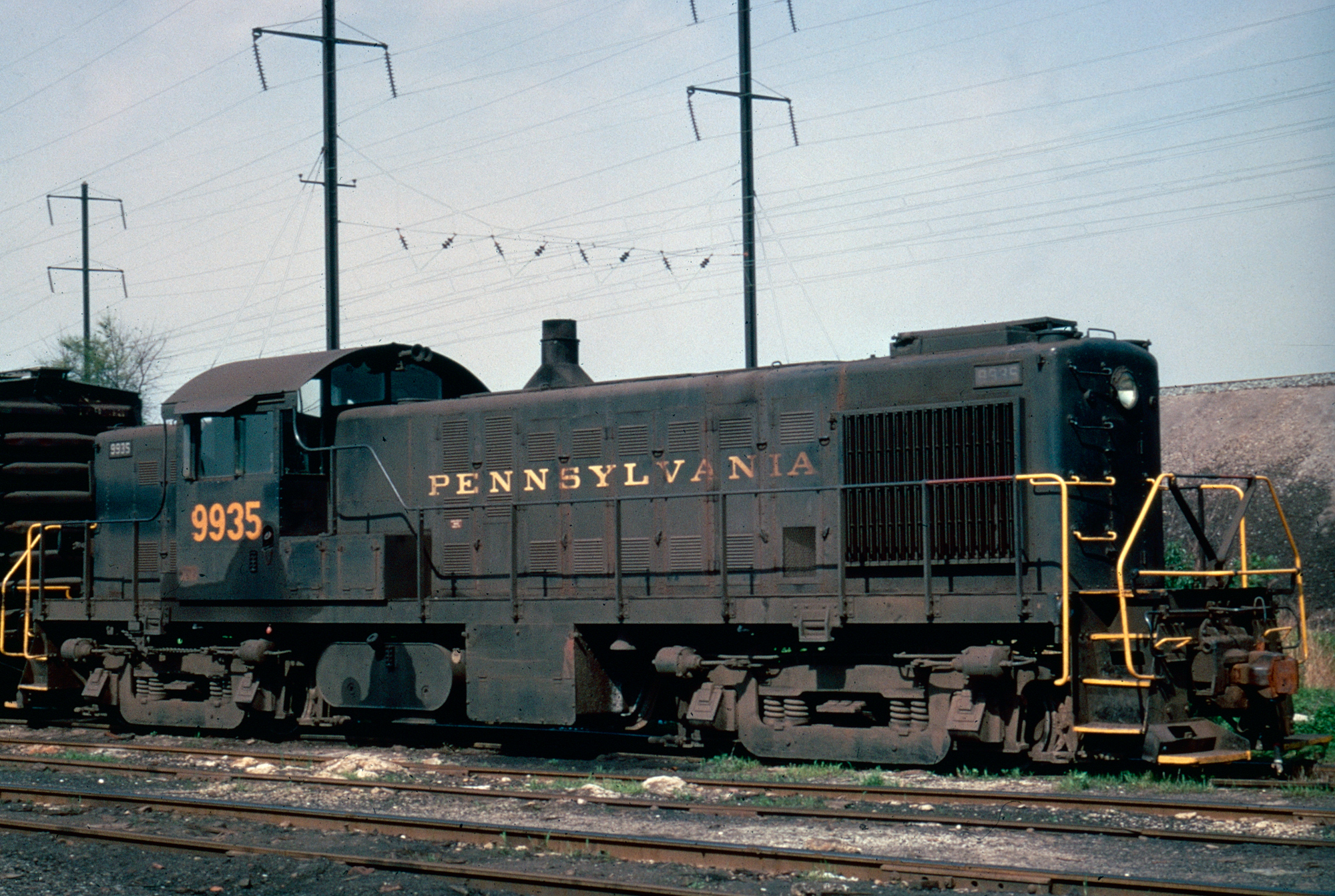 It's the early Penn Central era as a former Pennsylvania RS-1 lays over in Bristol, Pennsylvania along the Northeast Corridor during the spring of 1968. Photographer unknown. American-Rails.com collection.
The RS1 was released by the builder in early 1941; it was the first in a long line of Road Switcher models that ended in 1963 with the RS36. It is also recognized as the first, true road-switcher ever cataloged by a locomotive manufacturer. Alco's history with its early, cataloged diesel switchers dated all of the way back to its demonstrator HH300 models (High Hood) of the early 1930s.
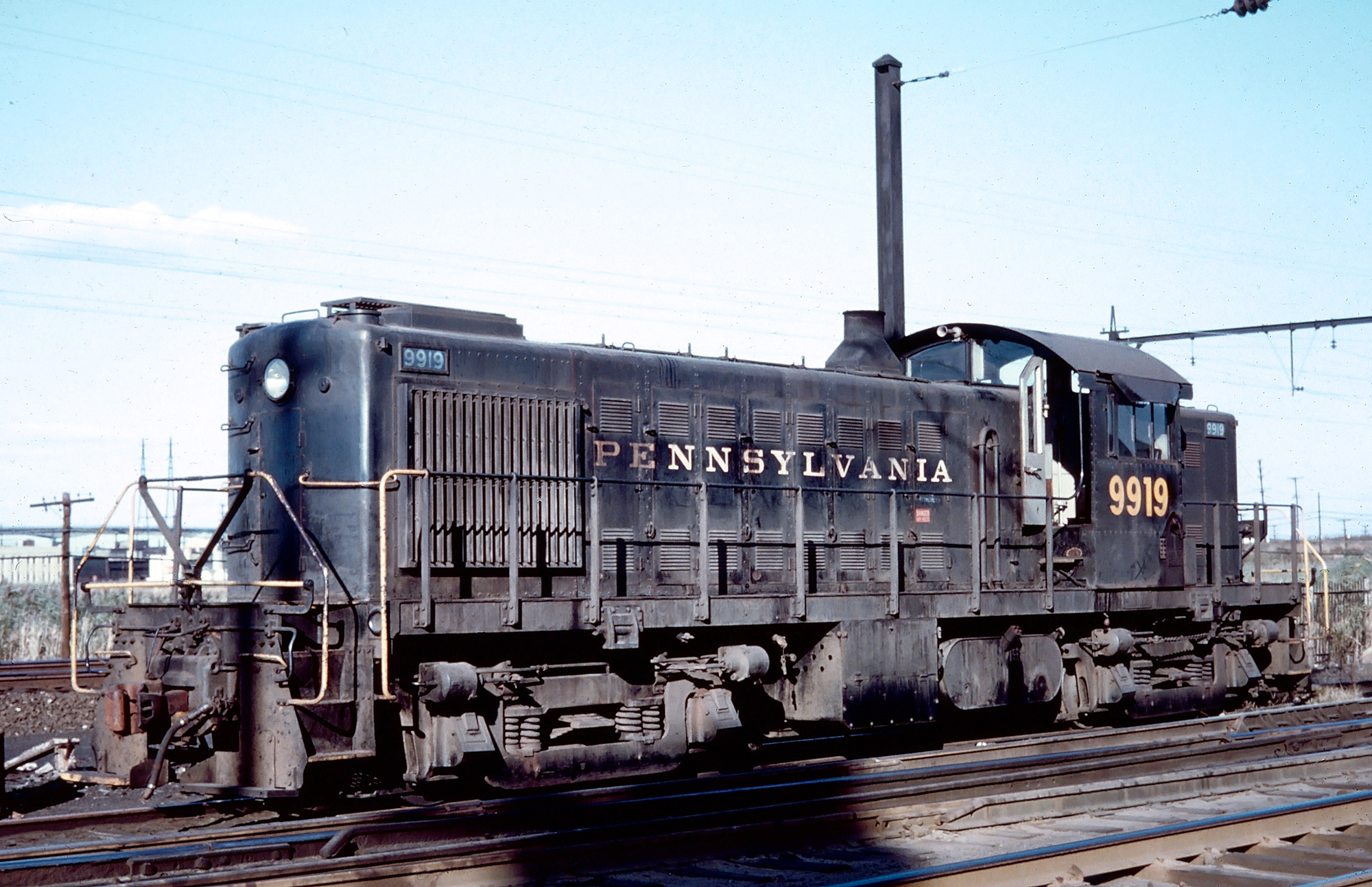 Pennsylvania RS1 #9919 at Meadows Yard in Kearny, New Jersey, circa 1967. Fred Byerly photo. American-Rails.com collection.
However, the company's history with diesel locomotive technology goes back even further to a testbed switcher outshopped in July, 1925 in conjunction with General Electric and Ingersoll-Rand. In his book, "The Diesel Builders, Volume Two: American Locomotive Company and Montreal Locomotive Works," author John Kirkland notes this 300 horsepower, 60-ton unit was completed as Alco order S1484, construction number 65979.
The early "HH" series models were essentially prototypes themselves, built in conjunction with Westinghouse and McIntosh & Seymore, and sold to a handful of railroads. Interestingly, as Kirkland points out, Alco never actually cataloged these switchers as "High Hood," designs. This was yet another term later coined by railfans.
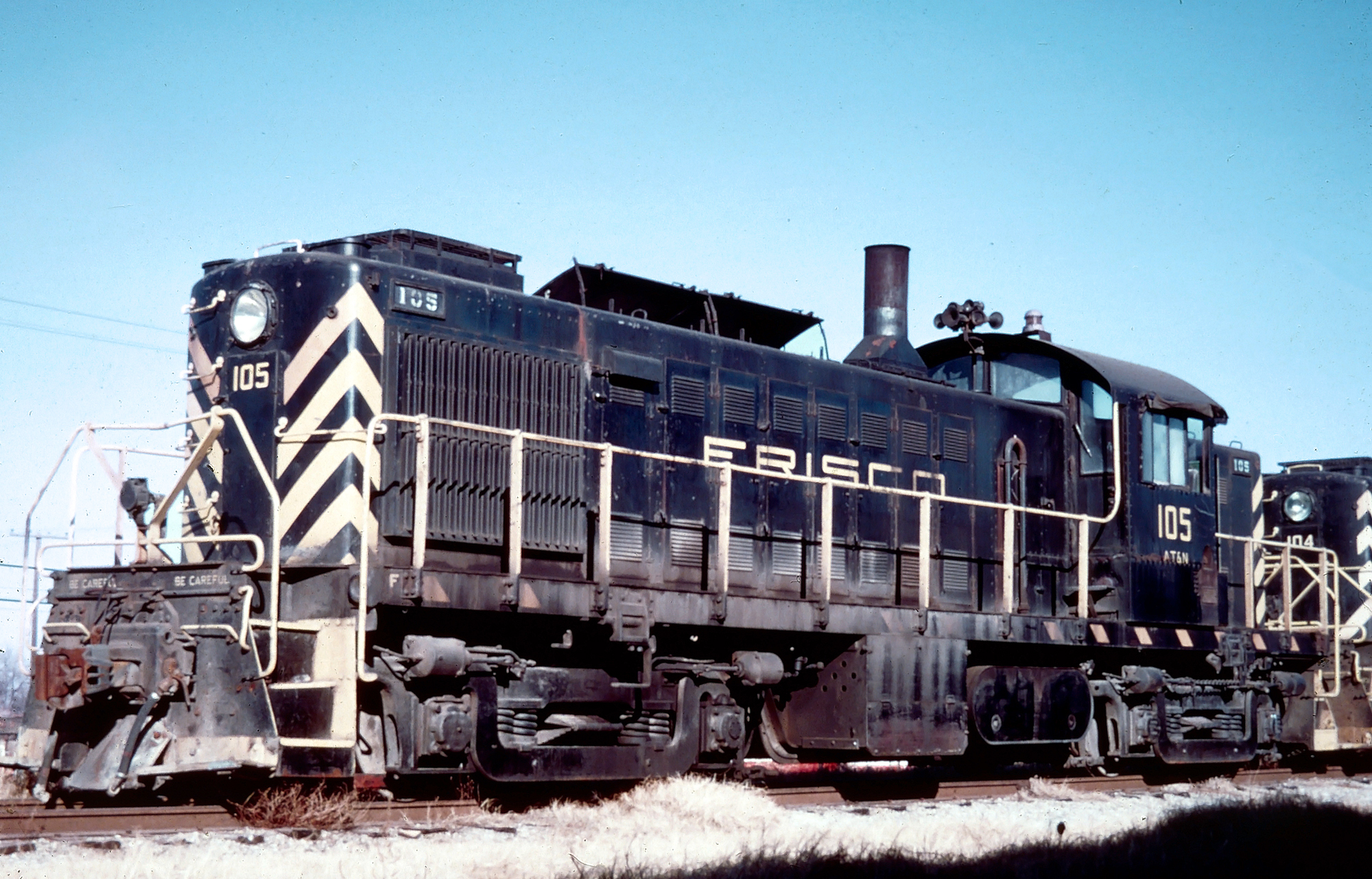 St. Louis-San Francisco Railway RS-1 #105, sub-lettered for subsidiary Alabama, Tennessee & Northern, is seen here in Springfield, Missouri, circa 1965. Mac Owen photo. American-Rails.com collection.
The RS1, a design requested at the behest of Rock Island's chief operating officer, J.D. Farrington for use in passenger service along its lightly populated branch lines in the Midwest. In addition to passenger assignments consisting of only one or two cars, railroads soon found the RS1 could handle both light freight duties and switching assignments.
The RS1 was given slight design features from famed industrial designer Otto Kuhler. Most noteworthy is that they were the first to employ raised cabs for better visibility, so commonly employed in today's locomotives. Designed by Westinghouse as the "visibility cab", they were normally wider and taller than the engine hood providing crews with better visibility featuring an arched roof line.
 Spokane, Portland & Seattle RS1 #54 at Portland, Oregon; August, 1965. Fred Byerly photo. American-Rails.com collection.
As such, it featured a long hood to house the 539T power plant, a McIntosh & Seymore with a cab was placed offset on the frame. This setup gave the locomotive a short hood at one end, used to house a steam generator for passenger service.
Data Sheet and Specifications
1941-1942
| Alco Class | 404-DL-240 |
| Entered Production | 3/14/1941 |
| Years Produced | 3/1941-6/1942 |
| Model Specification | E1640 |
| Engine | 539T, 6-Cylinder In-Line, Turbocharged |
| Engine Builder | Alco/McIntosh & Seymour |
| Horsepower | 1,000 |
| Carbody Styling | Alco |
| Length (Between Coupler Faces) | 55' 11 ¾" |
| Height (Top of Rail to Top of Cab) | 14' 6" |
| Width | 10' 0" |
| Weight | 240,000 Lbs |
| Dynamic Brakes | Yes |
| Air Brake Schedule | 14EL |
| Trucks | B-B |
| Truck Type | Swing Bolster, Drop-Side Equalizer (AAR Type-B) |
| Wheelbase | 9' 4" |
| Wheel Size | 40" |
| Traction Motors | GE 731 (4) |
| Traction Generator | GT533 |
| Gear Ratio | 75:16 |
| Tractive Effort Rating (Starting) | 72,000 Lbs (at 30% adhesion) |
| Tractive Effort Rating | 34,000 Lbs at 8 MPH |
| Top Speed | 60 MPH |
Post World War II
| Alco Class | 404-DL-240 |
| Entered Production | 3/14/1941 |
| Years Produced | 1945-11/1957 |
| Model Specification | E1641/A |
| Engine | 539T, 6-Cylinder In-Line, Turbocharged |
| Engine Builder | Alco/McIntosh & Seymour |
| Horsepower | 1,000 |
| Carbody Styling | Alco |
| Length (Between Coupler Faces) | 55' 11 ¾" |
| Height (Top of Rail to Top of Cab) | 14' 6" |
| Width | 10' 0" |
| Weight | 240,000 Lbs |
| Dynamic Brakes | Yes (Optional) |
| Air Brake Schedule | 14EL |
| Trucks | B-B |
| Truck Type | Swing Bolster, Drop-Side Equalizer (AAR Type-B) |
| Wheelbase | 9' 4" |
| Wheel Size | 40" |
| Traction Motors | GE 731D (4) |
| Traction Generator | GT553A |
| Gear Ratio | 75:16 |
| Tractive Effort Rating (Starting) | 72,000 Lbs (at 30% adhesion) |
| Tractive Effort Rating (Continuous) | 34,000 Lbs at 8 MPH |
| Top Speed | 60 MPH |
Prior to the start of World War II there were thirteen RS1's produced for five different railroads. Please refer to the table below. These locomotives were later requisitioned by the U.S. Army for use on the Trans-Iranian Railway to supply Russia with war materiel during the conflict.
The locomotives were based out of the Port of Bandar Shahpur on the Persian Gulf, running 685 miles largely through an arid, desert environment before entering elevations of 7,000 feet.
The Army had Alco retrofit the units with tapered cabs and change the roof line to meet tunnel clearances. In addition, the B-B, four-axle trucks were swapped out for C-C, six-axle trucks (all-powered). These were essentially the first "RSD-1" models.
New locomotives were later built for the original railroads (paid by the U.S. government) to replace those requisitioned, in April and May of 1943 (1946 for the Tennessee Coal, Iron & Railroad).
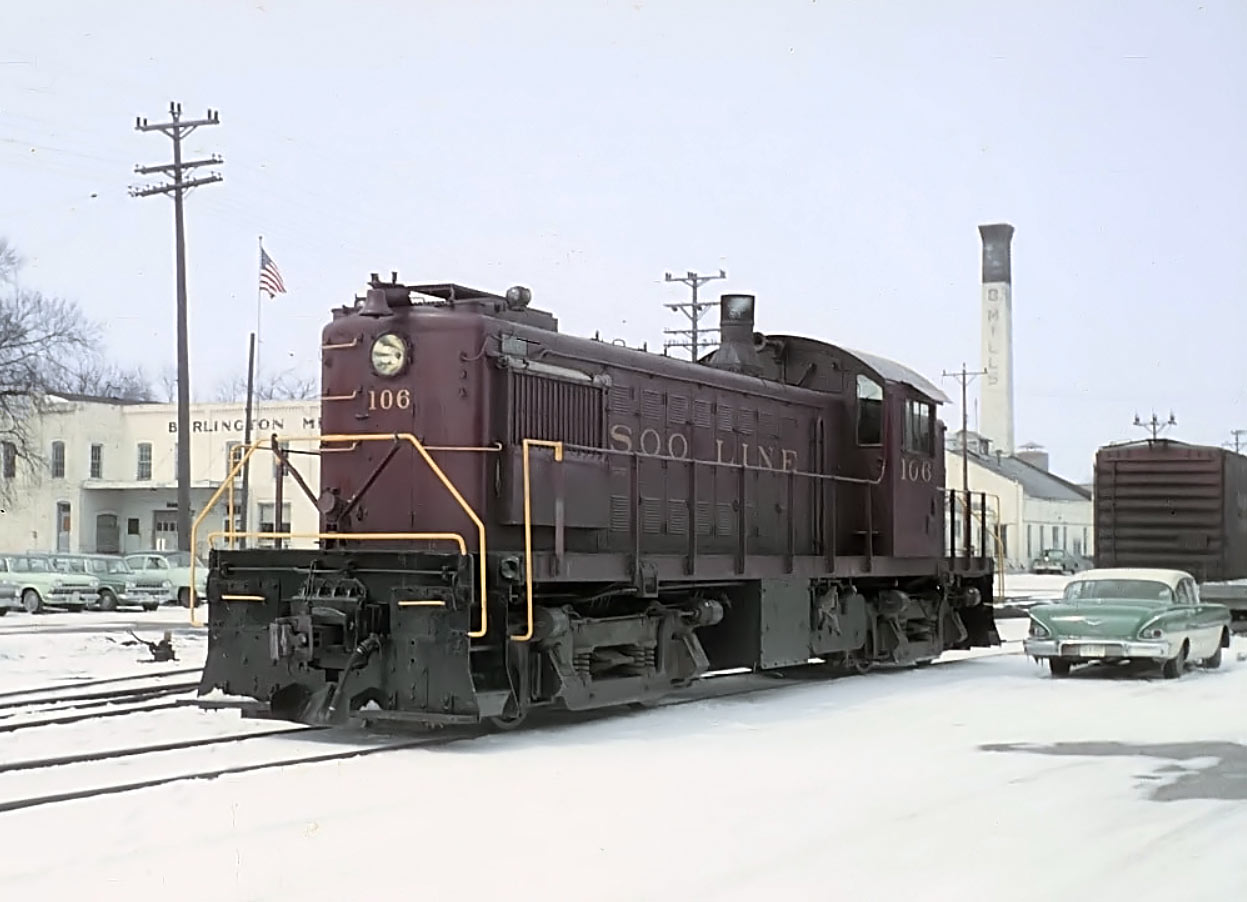 One of the Soo Line's rugged RS1s, #106 (built as Duluth, South Shore & Atlantic #106), is tied down at Burlington, Wisconsin in April, 1964. Rick Burn photo.
Production Rosters
Pre-War Production Board (WPB) Units
These RS1s were completed before the War Production Board (WPB) took control of manufacturing throughout the nation and imposed restrictions on new diesels produced. This went into effect on April 4, 1942.
Total Built = 13
| Railroad | Road Number | Construction Number | Date Built | Date Rebuilt (Army) | U.S. War Department Number | Replacement Construction Number (RR) | Date Rebuilt For Railroads | New Road Number |
|---|---|---|---|---|---|---|---|---|
| Rock Island | 748 | 69424 | 3/1941 | 11/1942 | 8005 | 70816 | 5/1943 | 742 |
| Rock Island | 749 | 69425 | 3/1941 | 12/1942 | 8006 | 70817 | 5/1943 | 743 |
| Atlanta & St. Andrews Bay | 901 | 69426 | 3/1941 | 1/1943 | 8010 | 70810 | 4/1943 | 904 |
| Atlanta & St. Andrews Bay | 902 | 69427 | 3/1941 | 1/1943 | 8011 | 70811 | 4/1943 | 904 |
| Tennessee Coal, Iron & Railroad | 600 | 69428 | 4/1941 | 12/1942 | 8008 | 75203 | 10/1946 | 602 |
| Tennessee Coal, Iron & Railroad | 601 | 69566 | 4/1941 | 1/1943 | 8009 | 75204 | 10/1946 | 603 |
| Milwaukee Road | 1678 | 69567 | 6/1941 | 11/1942 | 8002 | 70814 | 4/1943 | 1676 |
| Milwaukee Road | 1679 | 69568 | 6/1941 | 11/1942 | 8003 | 70815 | 4/1943 | 1677 |
| Rock Island | 746 | 69569 | 8/1941 | 12/1942 | 8007 | 70818 | 5/1943 | 744 |
| Rock Island | 747 | 69570 | 8/1941 | 11/1942 | 8004 | 70819 | 5/1943 | 745 |
| Atlanta & St. Andrews Bay | 903 | 69800 | 6/1942 | 1/1943 | 8012 | 70821 | 4/1943 | 906 |
| New York, Susquehanna & Western | 231 | 69992 | 6/1942 | 11/1942 | 8000 | 70812 | 4/1943 | 231 |
| New York, Susquehanna & Western | 233 | 69993 | 6/1942 | 11/1942 | 8001 | 70813 | 4/1943 | 233 |
The six-axle version came in either a C-C or A1A-A1A truck setup. The standard RS1 came in a B-B truck setup (four axles) and could produce 34,000 pounds of tractive effort with a top speed of 60 mph (although it rarely ever reached such speeds). It was quite short at just 54 feet, 11 inches and also featured a very low profile.
Overall, the model weighed just 120 tons and featured electrical and other components from both General Electric and Westinghouse. With the Rock Island's original request it was one of the initial railroads to receive the model when the first batches were completed in March of 1941, delivered to:
- Tennessee Coal & Iron
- Milwaukee Road
- New York, Susquehanna & Western
- Atlanta & St. Andrews Bay Railroad
Post World War II
Total Built = 340
| Owner | Road Number(s) | Construction Number(s) | Completion Date |
|---|---|---|---|
| Akron, Canton & Youngstown | D-2 | 74323 | 10/1945 |
| Alabama, Tennessee & Northern | 101, 102 | 71435, 73096 | 11/1944, 12/1944 |
| Alabama, Tennessee & Northern | 103, 104 | 73326, 73327 | 3/1945 |
| Alabama, Tennessee & Northern | 105, 106 | 73758, 74321 | 6/1945, 10/1945 |
| Alabama, Tennessee & Northern | 107-109 | 75110-75112 | 5/1946 - 6/1946 |
| Alabama, Tennessee & Northern | 110, 111 | 75480, 75481 | 8/1947 |
| Alaska Railroad | 1000, 1001 | 71319, 71320 | 5/1944 |
| Alton Railroad | 50 | 74322 | 10/1945 |
| Alton Railroad | 51-53 | 74494-74496 | 11/1945 |
| Alton Railroad | 54-58 | 74677-74681 | 11/1945 |
| Alton Railroad | 59 | 74823 | 12/1945 |
| Ann Arbor | 20, 21 | 78374, 78375 | 11/1950 |
| Santa Fe | 2385-2387 | 75391-75393 | 6/1947 - 7/1947 |
| Santa Fe | 2388 | 75482 | 8/1947 |
| Santa Fe | 2394, 2395 | 78115, 77838 | 8/1950, 12/1949 |
| Atlanta & St. Andrews Bay | 904, 905 | 70810, 70811 | 4/1943 |
| Atlanta & St. Andrews Bay | 906 | 70821 | 4/1943 |
| Atlanta & St. Andrews Bay | 907, 908 | 70809, 70822 | 11/1943 |
| Atlanta & St. Andrews Bay | 909 | 72812 | 6/1944 |
| Atlanta & St. Andrews Bay | 910, 911 | 73332, 73333 | 4/1945 |
| Atlanta & St. Andrews Bay | 912, 913 | 75559, 77848 | 10/1947, 2/1950 |
| Atlantic & East Carolina | 500 | 79047 | 4/1951 |
| Bamberger Railroad | 570 | 70820 | 5/1943 |
| Central Railroad of New Jersey | 1200-1204 | 78095-78099 | 6/1950 |
| Central Railroad of New Jersey | 1205 | 79234 | 9/1951 |
| Chesapeake & Ohio | 5114, 5115 | 80851, 80852 | 9/1953 |
| Chicago & Eastern Illinois | 115-118 | 73328-73331 | 4/1945 |
| Chicago & North Western | 1066 | 79589 | 9/1953 |
| Chicago & North Western | 1067, 1068 | 79590, 79591 | 8/1953 |
| Chicago & North Western | 1069 | 80850 | 9/1953 |
| Chicago & North Western | 1080 | 72816 | 8/1944 |
| Chicago & North Western | 1081 (1st) | 72921 | 9/1944 |
| Chicago & Western Indiana | 252, 253 | 76799, 76800 | 7/1949 |
| Chicago & Western Indiana | 254-257 | 77172-77175 | 10/1949 - 11/1949 |
| Chicago & Western Indiana | 258, 259 | 77836, 77837 | 12/1949 |
| Chicago & Western Indiana | 260-263 | 77849-77852 | 2/1950 |
| Milwaukee Road | 961-963 | 77469-77471 | 3/1950 |
| Milwaukee Road | 1676, 1677 | 70814, 70815 | 4/1943 |
| Rock Island | 735-739 | 71312-71316 | 1/1944 - 2/1944 |
| Rock Island | 740, 741 | 70823, 70824 | 11/1943 |
| Rock Island | 742-745 | 70816-70819 | 5/1943 |
| Duluth, South Shore & Atlantic (Soo Line) | 100, 101 | 73753, 73760 | 5/1945, 6/1945 |
| Duluth, South Shore & Atlantic (Soo Line) | 102 | 75215 | 12/1946 |
| Duluth, South Shore & Atlantic (Soo Line) | 103-105 | 75217-75219 | 1-2/1947 |
| Duluth, South Shore & Atlantic (Soo Line) | 106, 107 | 75389, 78376 | 5/1947, 1/1951 |
| DuPont | 105-108 | 79050-79053 | 6-7/1951 |
| Gaylord Container | 302, 303 | 75842, 75843 | 5/1948 |
| GE-Atomic Energy Commission | 39-3729, 39-3730 | 75844, 76206 | 6/1948 |
| GE-Atomic Energy Commission | 39-3731, 39-3732 | 76210, 76211 | 10/1948 |
| Genesee & Wyoming | 25, 30 | 79580, 81345 | 1/1952, 5/1955 |
| Grand Trunk Western | 1950, 1951 | 82355, 82356 | 11/1957 |
| Great Northern | 182, 183 | 72922, 72923 | 9/1944 |
| Great Northern | 184, 185 | 72924, 71433 | 11/1944, 10/1944 |
| Gulf, Mobile & Ohio | 1102 | 71438 | 11/1944 |
| Gulf, Mobile & Ohio | 1103, 1104 | 73094, 73095 | 12/1944 |
| Gulf, Mobile & Ohio | 1105-1107 | 73335-73337 | 4/1945 |
| Gulf, Mobile & Ohio | 1108, 1109 | 73573, 73574 | 5/1945 |
| Gulf, Mobile & Ohio | 1110 | 73752 | 5/1945 |
| Gulf, Mobile & Ohio | 1111, 1112 | 74910, 74911 | 1/1946, 4/1946 |
| Gulf, Mobile & Ohio | 1113 | 75216 | 1/1947 |
| Gulf, Mobile & Ohio | 1114, 1115 | 75220, 75221 | 2/1947 |
| Gulf, Mobile & Ohio | 1116, 1117 | 75223, 75224 | 3/1947 |
| Gulf, Mobile & Ohio | 1120 | 76219 | 12/1948 |
| Gulf, Mobile & Ohio | 1121, 1122 | 76624, 76625 | 1/1949 |
| Gulf, Mobile & Ohio | 1123-1125 | 76629-76631 | 3/1949 - 4/1949 |
| Gulf, Mobile & Ohio | 1126, 1127 | 76796, 76798 | 4/1949, 5/1949 |
| Illinois Terminal | 750-752 | 75839-75841 | 5/1948 |
| Illinois Terminal | 754 | 77855 | 3/1950 |
| Illinois Terminal | 755, 756 | 77069, 77070 | 3/1950 |
| Kansas City Southern | 1110-1113 | 70825-70828 | 11/1943 - 12/1943 |
| Lake Erie, Franklin & Clarion | 20, 21 | 76797, 78241 | 4/1949, 8/1950 |
| Lake Superior & Ishpeming | 1001-1003 | 79576-79578 | 11/1951 - 12/1951 |
| Long Island Railroad | 461, 462 | 76220, 76622 | 12/1948, 1/1949 |
| Long Island Railroad | 463-465 | 76626-76628 | 2/1949 - 3/1949 |
| Long Island Railroad | 466-469 | 77475-77478 | 4/1950 |
| Midland Continental Railroad | 401, 402 | 74912, 79579 | 4/1946, 12/1951 |
| Minneapolis & St. Louis | 244 | 71317 | 2/1944 |
| Minneapolis & St. Louis | 744, 944 | 71434, 71436 | 7/1944, 9/1944 |
| Minneapolis & St. Louis | 1044, 1144 | 73093, 79097 | 10/1944, 11/1944 |
| Minneapolis & St. Louis | 645, 745 | 73334, 73759 | 6/1945, 7/1945 |
| Minneapolis & St. Louis | 845, 945 | 74317, 74318 | 8/1945, 9/1945 |
| Minneapolis &a St. Louis | 146, 246 | 74821, 74822 | 1/1946, 2/1946 |
| Minneapolis & St. Louis | 346, 446 | 74824, 74909 | 3/1946, 4/1946 |
| Minneapolis & St. Louis | 546, 646 | 75113, 75114 | 5/1946, 6/1946 |
| Minneapolis & St. Louis | 746, 846 | 75115, 75116 | 7/1946, 8/1946 |
| Minneapolis & St. Louis | 946, 1046 | 75117, 75118 | 9/1946, 10/1946 |
| Minneapolis & St. Louis | 547 | 75390 | 5/1947 |
| Minneapolis & St. Louis | 948, 1048 | 76207, 76208 | 9/1948, 10/1948 |
| Minneapolis & St. Louis | 1148 | 76209 | 11/1948 |
| Minneapolis & St. Louis | 849, 949 | 77842, 77843 | 8/1949, 9/1949 |
| Minneapolis & St. Louis | 1049, 1149 | 77844, 77845 | 10/1949, 11/1949 |
| Minneapolis & St. Louis | 1249 | 77846 | 12/1959 |
| Minneapolis & St. Louis | 950, 1050 | 78243, 78244 | 9/1950, 10/1950 |
| Minneapolis & St. Louis | 1150, 1250 | 78245, 78373 | 11/1950, 12/1950 |
| Minneapolis & St. Louis | 751 | 79235 | 7/1951 |
| Minneapolis & St. Louis | 851, 951 | 79346, 79347 | 8/1951, 9/1951 |
| Minneapolis, St. Paul & Sault Ste Marie (Soo Line) | 350, 351 | 80853, 80854 | 12/1954 |
| Minneapolis, St. Paul & Sault Ste Marie (Soo Line) | 352, 353 | 80978, 80979 | 12/1954 |
| New York Central | 8100 | 75825 | 2/1948 |
| New York Central | 8101-8105 | 75680-75684 | 1/1948 - 2/1948 |
| New York Central | 8106-8108 | 75826-75828 | 2/1948 - 3/1948 |
| New York Central | 8109-8111 | 77986-77988 | 4/1950 |
| New York Central | 8112, 8113 | 78090, 78091 | 5/1950 |
| New Haven | 0660-0669 | 75829-75838 | 3/1948 - 4/1948 |
| New Haven | 0670, 0671 | 76212, 76213 | 11/1948 |
| New York, Susquehanna & Western | 230 | 71437 | 11/1944 |
| New York, Susquehanna & Western | 231, 233 (2nd) | 70812, 70813 | 4/1943 |
| New York, Susquehanna & Western | 232-236 (Evens) | 73098-73100 | 1/1945 |
| New York, Susquehanna & Western | 238, 240 | 73568, 73569 | 4/1945 |
| New York, Susquehanna & Western | 242, 244 | 73754, 73755 | 5/1945 |
| New York, Susquehanna & Western | 246-252 (Evens) | 75555-75558 | 9/1947 - 10/1947 |
| New York, Susquehanna & Western | 254, 256 | 79584, 79585 | 6/1953 |
| Northern Pacific | 155 | 73761 | 6/1945 |
| Northern Pacific | 156 | 74316 | 10/1945 |
| Northern Pacific | 157, 158 | 73765, 73766 | 8/1945 |
| Oregon Electric Railway | 52-54 | 73570-73572 | 4/1945 - 5/1945 |
| Oregon Electric Railway | 55 | 73756 | 6/1945 |
| Pennsylvania Railroad | 5619, 5620 | 78106, 78107 | 6/1950 |
| Pennsylvania Railroad | 5621-5624 | 78110-78113 | 6/1950 - 7/1950 |
| Pennsylvania Railroad | 5625-5628 | 78100-78103 | 6/1950 |
| Pennsylvania Railroad | 5629 | 78114 | 8/1950 |
| Pennsylvania Railroad | 5630, 5631 | 78116, 78117 | 8/1950 |
| Pennsylvania Railroad | 5632-5636 | 78159-78163 | 8/1950 |
| Pennsylvania Railroad | 5637, 5638 | 78104, 78105 | 6/1950 |
| Pennsylvania Railroad | 5639, 5640 | 78108, 78109 | 6/1950 |
| Pennsylvania Railroad | 5906 | 76214 | 12/1948 |
| Pennsylvania Railroad | 8485, 8486 | 79582, 79583 | 5/1952 |
| Pennsylvania Railroad | 8857, 8858 | 78377, 79046 | 4/1951 |
| Rutland Railway | 400, 401 | 79349, 79350 | 10/1951 |
| Rutland Railway | 402-405 | 79572-79575 | 10/1951 - 11/1951 |
| Spokane International | 200-205 | 77166-77171 | 9/1949 - 10/1949 |
| Spokane International | 206-208 | 77839-77841 | 12/1949 |
| Spokane International | 209-211 | 79586-79588 | 7/1953 - 8/1953 |
| Spokane, Portland & Seattle | 50, 51 | 73757, 73762 | 6/1945, 7/1945 |
| Tennessee Coal & Iron | 602, 603 | 75203, 75204 | 10/1946 |
| Tennessee Coal & Iron | 604 | 75484 | 9/1947 |
| U.S. Navy | 6 | 72817 | 9/1944 |
| Washington Terminal | 40 | 71318 | 3/1944 |
| Washington Terminal | 41-43 | 72813-72815 | 6/1944 - 7/1944 |
| Washington Terminal | 44, 45 | 73763, 73764 | 7/1945, 8/1945 |
| Washington Terminal | 46, 47 | 74314, 74315 | 9/1945 |
| Washington Terminal | 48, 49 | 74319, 74320 | 10/1945 |
| Washington Terminal | 50-54 | 75560-75564 | 11/1947 - 12/1947 |
| Washington Terminal | 55 | 75679 | 12/1947 |
| Washington Terminal | 56-59 | 76215-76218 | 12/1948 |
| Washington Terminal | 60-62 | 77472-77474 | 3/1950 |
| Washington Terminal | 63, 64 | 79048, 79049 | 5/1951 |
| Wisconsin Central (Soo Line) | 2360, 2361 | 77853, 77854 | 2/1950, 3/1950 |
| Wisconsin Central (Soo Line) | 2362 | 78242 | 8/1950 |
| Wisconsin Central (Soo Line) | 2363, 2364 | 79054, 79055 | 8/1951 |
| Wisconsin Central (Soo Line) | 2365-2367 | 79231-79233 | 9/1951 |
| Wisconsin Central (Soo Line) | 2368 | 79581 | 3/1952 |
Export
Total Built = 116
| Owner | Road Number(s) | Construction Number(s) | Completion Date |
|---|---|---|---|
| Arabian-American Oil Company (Saudi Arabia) | A11x50, A11x51 | 75222, 75488 | 2/1947, 9/1947 |
| Arabian-American Oil Company (Saudi Arabia) | 1002 | 76623 | 1/1949 |
| Arabian-American Oil Company (Saudi Arabia) | 1003, 1004 | 77071, 77072 | 3/1950 |
| Arabian-American Oil Company (Saudi Arabia) | 1005 | 79348 | 10/1951 |
| Central Railway of Brazil | 3100-3119 | 71413-71432 | 4/1945 - 10/1945 |
| Central Railway of Brazil | 3120-3133 | 73703-73716 | 10/1945 - 1/1946 |
| Central Railway of Brazil | 3134, 3135 | 75924, 75925 | 7/1948 |
| Central Railway of Brazil | 3136, 3137 | 75930, 75931 | 8/1948, 9/1948 |
| São Paulo Railway (Brazil) | 504-507 | 75926-75929 | 8/1948 |
| São Paulo Railway (Brazil) | 508, 509 | 75932, 75933 | 9/1948 |
| Estrada de Ferro Santos-Jundiaí (Brazil) | 510, 511 | 81346, 82018 | 4/1956, 12/1956 |
| Ferrocarriles Nacionales de México (Mexico) | 5606, 5607 | 77847, 77073 | 2/1950, 3/1950 |
| Ferrocarriles Nacionales de México (Mexico) | 5608, 5609 | 77989, 77990 | 4/1950 |
| Ferrocarriles Nacionales de México (Mexico) | 5610-5618 | 78033-78041 | 4/1950 - 5/1950 |
| Ferrocarriles Nacionales de México (Mexico) | 5619 (1st) | 78042 | 5/1950 |
| Ferrocarriles Nacionales de México (Mexico) | 5620, 5621 (1st) | 78088, 78089 | 5/1950 |
| Ferrocarriles Nacionales de México (Mexico) | 5619-5621 (2nd) [MLW] | 76430-76432 | 4/1954 |
| Ferrocarriles Nacionales de México (Mexico) | 5622-5624 (1st) | 78092-78094 | 5/1950 |
| Ferrocarriles Nacionales de México (Mexico) | 5622-5624 (2nd) | 81347-81349 | 10/1956 |
| Ferrocarriles Nacionales de México (Mexico) | 5625-5631 | 82011-82017 | 10/1956 - 11/1956 |
| Ferrocarriles Nacionales de México (Mexico) | 5632-5638 | 82019-82025 | 12/1956 - 1/1957 |
| Ferrocarriles Nacionales de México (Mexico) | 5639-5643 | 82343-82347 | 1/1957 - 2/1957 |
| Ferrocarriles Nacionales de México (Mexico) | 5644-5650 | 82348-82354 | 7/1957 - 8/1957 |
| Ferrocarriles Nacionales de México (Mexico) | 5651 | 82357 | 5/1958 |
| Ferrocarriles Nacionales de México (Mexico) | 5652-5656 | 82923-82927 | 12/1958 |
| Ferrocarriles Nacionales de México (Mexico) | 5657-5662 | 83619-83624 | 12/1959 - 1/1960 |
| Ferrocarriles Nacionales de México (Mexico) | 5663 (Final RS1 built) | 83680 | 3/1960 |
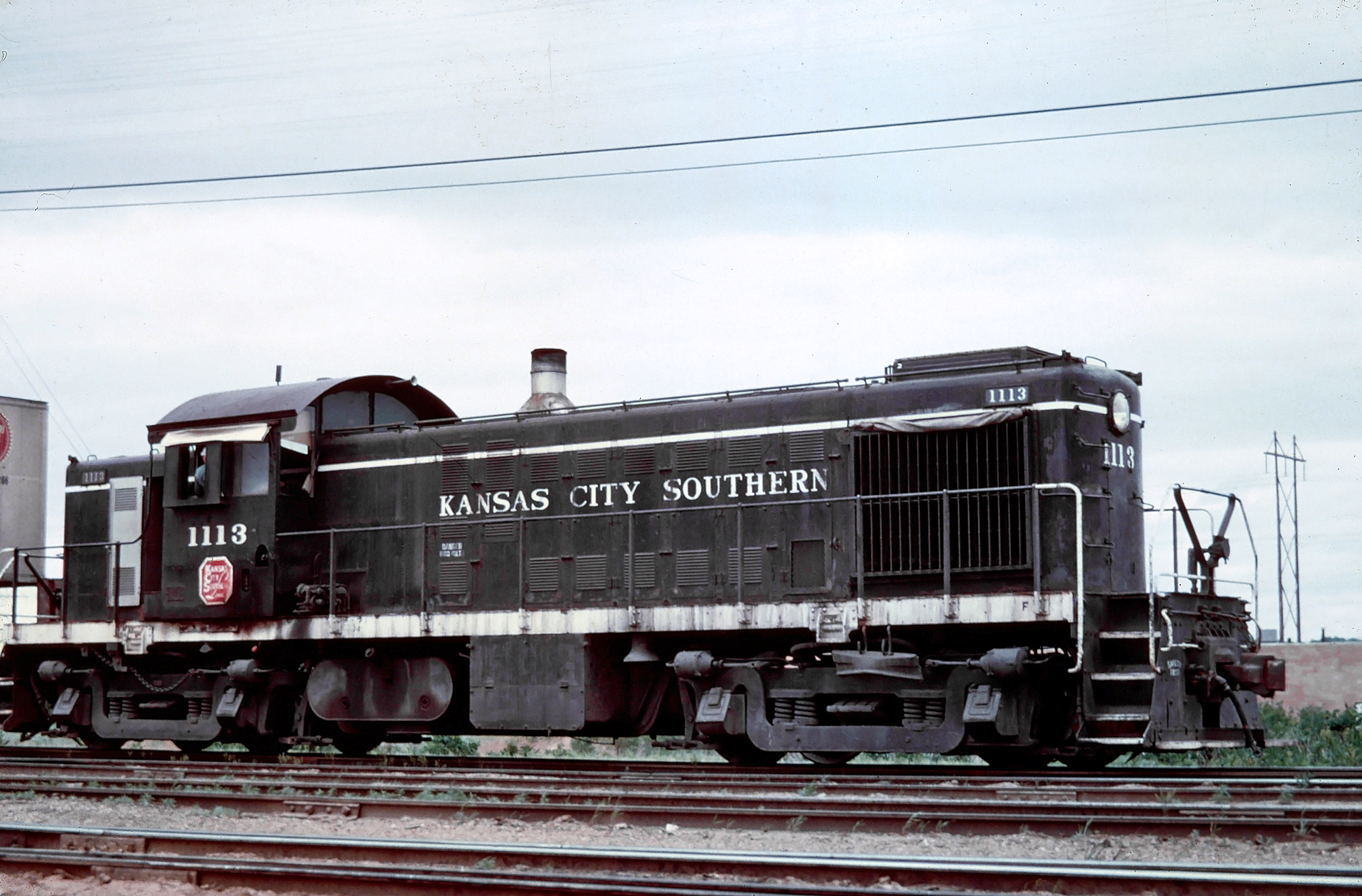 Kansas City Southern RS1 #1113 carries out switching work in Kansas City, circa 1967. American-Rails.com collection.
Despite only modest sales numbers the RS1 could be found on railroads across the country from the Pennsylvania and New York Central to the Milwaukee Road and Northern Pacific.
While most RS1s were used in light branch line work some were also utilized in other applications, such as switching passenger cars at passenger terminals.
The later RS2 and RS3 sold thousands to several railroads and private industries, offering just the right blend of size and power. Unfortunately, later models could not replicate the same success and throughout the 1950s Alco lost ground to EMD.
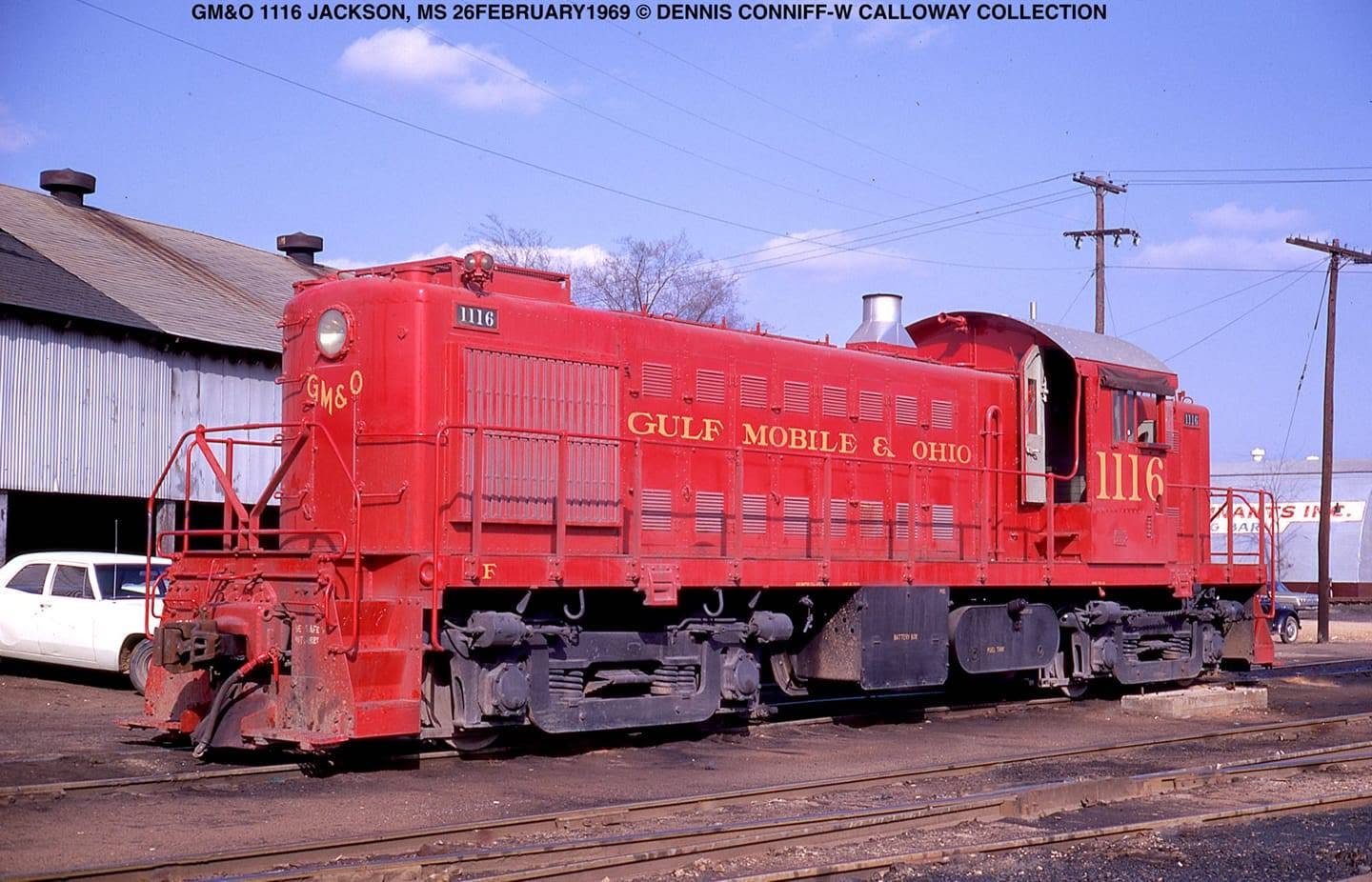 Gulf, Mobile & Ohio RS-1 #1116 in Jackson, Mississippi; February, 1969. Dennis Conniff photo/Warren Calloway collection.
 Marty Bernard caught Santa Fe RS-1 #2395 from Chicago's Roosevelt Road Viaduct at work near Dearborn Station on July 7, 1966.
Sources
- Foster, Gerald. A Field Guide To Trains. New York: Houghton Mifflin, 1996.
- Kirkland, John F. Diesel Builders, The: Volume Two, American Locomotive Company And Montreal Locomotive Works. Glendale: Interurban Press, 1989.
- Pinkepank, Jerry A. Diesel Spotter's Guide. Milwaukee: Kalmbach Publishing Company, 1967.
- Rail Heritage Publications. Early Diesel-Electric and Electric Locomotives. Simmons-Boardman Publishing Corporation, 1983.
- Schafer, Mike. Vintage Diesel Locomotives. Osceola: MBI Publishing, 1998.
- Solomon, Brian. Alco Locomotives. Minneapolis: Voyageur Press, 2009.
Recent Articles


-
Wisconsin Railroad Museums (2026): A Complete Guide
Oct 10, 26 11:51 PM
Wisconsin railroad museums—Green Bay’s Big Boy 4017 and Eisenhower’s A4, Mid-Continent at North Freedom, East Troy’s interurban, and the Riverside & Great Northern. Confirm hours on each site. -
Interstate Railroad (Virginia): Map, Roster, Logo, History
Oct 10, 26 11:22 PM
 Interstate Railroad, a Virginia coal road chartered February 18, 1896. Andover shops. Ten Alco RS3s, 30–39. Southern control in 1961. The company ended October 31, 1985.
 -
North Carolina Railroad Museums (2026): A Complete Guide
Oct 10, 26 11:16 PM
 North Carolina railroad museums—Spencer Shops, Wilmington’s Atlantic Coast Line 250, Hamlet’s Seaboard depot, and the New Hope Valley Railway. Confirm hours on each site.
 -
New Mexico Railroad Museums (2026): A Complete Guide
Oct 10, 26 10:54 PM
 New Mexico railroad museums—Santa Fe 2926 in Albuquerque, the Clovis depot, Alamogordo’s Toy Train Depot, and Belen. Confirm hours on each site.
 -
New York Railroad Museums (2026): A Complete Guide
Oct 10, 26 09:33 PM
 New York railroad museums—Phoenicia, Medina’s New York Central freight house, the Transit Museum, Long Island 35 and 39, and GG1 4933. Confirm hours on each site.
 -
Columbia, Newberry & Laurens Railroad: History, Timetable, Roster
Oct 10, 26 09:08 PM
 Columbia, Newberry & Laurens Railroad, Columbia to Laurens, 75 miles. Chartered in 1885. Five Atlantic Coast Line GP7s, 100–104. Merged into the Seaboard System on April 30, 1984.
 -
New Haven Diesel Roster (All-Time)
Oct 10, 26 06:35 PM
 New Haven diesel roster, all-time. 558 road numbers: 60 DL-109s, 30 FA-1s, 27 PA-1s, 60 FL9s, and the switchers from HH600 0900. Serials and order numbers.
 -
New Haven Steam Roster (Post 1900)
Oct 10, 26 06:31 PM
 New Haven steam since 1900. Drury's class grid: 226 Moguls, 33 Mikados, 50 Santa Fes, 70 Mountains, 141 Pacifics, and 10 Hudsons. Last fan trip July 19, 1953.
 -
New Haven Railroad: Rosters, Map, Logo, History, Trains
Oct 10, 26 06:26 PM
 New York, New Haven and Hartford. The Shore Line, Hell Gate, the 1952 map at 1,838.89 miles, and the railroad Penn Central took at 11:59:59 p.m. on December 31, 1968.
 -
C&O's 4-6-4 "Hudson" Locomotives (Class L): Specs, Roster, History
Oct 10, 26 05:36 PM
 Chesapeake & Ohio Class L 4-6-4 Hudsons. Eight L-2s, five L-1 rebuilds, five L-2-As. Specs, Baldwin works numbers, and the roster. No. 490 survives.
 -
Alton Railroad: Map, History, Timetables
Oct 09, 26 10:31 PM
 Alton Railroad, chartered February 27, 1847 as the Alton & Sangamon. Chicago, St. Louis, and Kansas City, the 1937 Official Guide, and the May 31, 1947 merger into the Gulf, Mobile & Ohio.
 -
Mobile & Ohio Steam Roster (Post 1900)
Oct 09, 26 12:26 PM
 Mobile & Ohio steam since 1900. Drury's class grid: 48 six-wheel switchers, 107 Ten-Wheelers, 15 Consolidations, 58 Mikados, and 14 Pacifics. Last revenue steam October 7, 1949.
 -
Mobile & Ohio Railroad: History, Map, Timetable
Oct 09, 26 11:31 AM
 Mobile & Ohio Railroad, chartered in 1848. Columbus on April 22, 1861, the Cairo & St. Louis, the March 1940 Official Guide, and the September 13, 1940 merger into the Gulf, Mobile & Ohio.
 -
Gulf, Mobile & Northern Steam Roster (Post 1900)
Oct 09, 26 10:42 AM
 Gulf, Mobile & Northern steam since 1900. Drury's class grid: Ten-Wheelers, Mikados, Russian Decapods, Pacifics 425 and 426, and three light 4-8-2s. Last revenue steam October 7, 1949.
 -
Gulf, Mobile & Ohio Diesel Roster (All-Time)
Oct 09, 26 10:41 AM
 Gulf, Mobile & Ohio diesel roster, all-time. The 1935 boxcab, DL-107s, 55 FA-1s, F3s and F7s, the Ingalls 4-S, GP30s through GP38-2s, and 21 SD40s. Serials and order numbers.
 -
Gulf, Mobile & Northern Railroad: History, Rebel Route
Oct 09, 26 10:36 AM
 Gulf, Mobile & Northern, from the 1890 Mobile, Jackson & Kansas City to the Rebel and the September 13, 1940 merger into the Gulf, Mobile & Ohio. Steam roster is the companion page.
 -
Gulf, Mobile & Ohio Railroad: Map, Photos, Trains, History
Oct 08, 26 11:48 PM
 Gulf, Mobile & Ohio, chartered in 1938 and merged September 13, 1940. The Mobile & Ohio, the Alton on May 31, 1947, the Rebel Route, and Illinois Central Gulf on August 10, 1972.
 -
New Jersey Railroad Museums (2026): A Complete Guide
Oct 08, 26 11:37 PM
 New Jersey railroad museums—Whippany, Maywood, Pine Creek, Mahwah’s Erie depot, Phillipsburg, and Boonton. Confirm hours on each site.
 -
New Hampshire Railroad Museums (2026): A Complete Guide
Oct 08, 26 11:34 PM
 New Hampshire railroad museums—North Conway, the Flying Yankee, Ashland, Gorham, Raymond, and Sandown. Confirm hours on each site.
 -
Missouri Railroad Museums (2026): A Complete Guide
Oct 08, 26 11:00 PM
 Missouri railroad museums—the National Museum of Transportation, Patee House, Frisco 4524, the Chicago & Alton depot, and Marceline. Confirm hours on each site.
 -
Milwaukee Road X3800: Deer Lodge’s Shop Goat
Oct 08, 26 04:28 PM
 Milwaukee Road X3800, the a home-built shop goat that served the Deer Lodge, MT yard. It was a 220-volt DC switcher, powered through an extension cord that moved electrics into a roundhouse where the…
 -
Key West Extension (Overseas Railroad): History, Construction, Decline
Oct 08, 26 03:59 PM
 Henry Flagler's Overseas Railroad, Miami to Key West, 1905–1935. The Seven Mile Bridge, the 1935 Labor Day Hurricane, and the road that became U.S. 1.
 -
Florida East Coast Steam Roster (Post 1900)
Oct 08, 26 02:34 PM
 Florida East Coast steam since 1897. Seventeen Ten-Wheelers, twenty Atlantics, eighty-seven Pacifics, ninety Mountains, fifteen Mikados, and the switchers.
 -
Florida East Coast Diesel Roster (All-Time)
Oct 08, 26 02:12 PM
 Florida East Coast diesel roster, all-time. E units from 1939, F3s, BL2s, GP7s and GP9s, the GP40-2 orders, 22 SD40-2s, and 24 ES44C4s. Serials and EMD order numbers.
 -
Florida East Coast Railway: Map, History, Rosters
Oct 08, 26 01:46 PM
 Florida East Coast Railway, Henry Flagler's line from Jacksonville to Miami and Key West. Receivership in 1931, the 1963 strike, Grupo México in 2017, and Brightline on the same track.
 -
Minnesota Railroad Museums (2026): A Complete Guide
Oct 08, 26 10:32 AM
Minnesota railroad museums—the Lake Superior Railroad Museum, Two Harbors, Jackson Street, Willmar’s Great Northern 2523, and Currie. Confirm hours on each site. -
Maine Railroad Museums (2026): A Complete Guide
Oct 08, 26 09:24 AM
 Maine railroad museums—Seashore Trolley, the two-foot lines at Portland, Alna, and Phillips, Boothbay, and the Bangor & Aroostook depots. Confirm hours on each site.
 -
Massachusetts Railroad Museums (2026): A Complete Guide
Oct 08, 26 12:08 AM
 Massachusetts railroad museums—Berkshire Scenic at Lenox, Shelburne Falls trolley No. 10, Edaville, Chatham’s 1887 depot, and Lowell. Confirm hours on each site.
 -
Clinchfield Steam Roster (Post 1900)
Oct 07, 26 12:09 PM
 Clinchfield steam since 1900. Fifteen H-4 Consolidations, K-1 Mikados, M-2 and M-3 Mallets, L-class 2-8-8-2s, eighteen Challengers. Class grid after Drury. Last steam April 16, 1954.
 -
Clinchfield Diesel Roster (All-Time)
Oct 07, 26 12:05 PM
 Clinchfield diesel roster, all-time. F3A 800, FP7 200, the F7s, GP7s, 25 SD40s, 18 SD45-2s, seven U36Cs, and the Family Lines hoods. Serials and EMD order numbers.
 -
Clinchfield Railroad: Map, Steam Locomotives, Roster, Logo
Oct 07, 26 12:02 PM
 Clinchfield Railroad, Elkhorn City to Spartanburg. George L. Carter, the Carolina, Clinchfield & Ohio, the 1924 lease, coal, the loops, and CSX. Steam and diesel rosters are companion pages.
 -
Kentucky Railroad Museums (2026): A Complete Guide
Oct 07, 26 11:39 AM
 Kentucky railroad museums—the Kentucky Railway Museum, Bowling Green’s L&N depot, Paducah, Versailles, and Covington. Confirm hours on each site.
 -
Kansas Railroad Museums (2026): A Complete Guide
Oct 07, 26 11:26 AM
 Kansas railroad museums—Santa Fe 3768 at Wichita, Santa Fe 132 in Topeka, the Great Overland Station, and Abilene. Confirm hours on each site.
 -
Cincinnati, New Orleans and Texas Pacific Diesel Roster (All-Time)
Oct 07, 26 10:38 AM
 All-time diesel roster of Southern locomotives lettered for the Cincinnati, New Orleans and Texas Pacific. Serials, order numbers, and builder dates.
 -
Cincinnati, New Orleans and Texas Pacific Railway
Oct 07, 26 10:31 AM
 Cincinnati, New Orleans and Texas Pacific Railway, incorporated September 8, 1881, to lease Cincinnati’s railroad to Chattanooga. Queen and Crescent route, Rathole, and the 2024 sale to Norfolk Southe…
 -
Indiana Railroad Museums (2026): A Complete Guide
Oct 07, 26 12:26 AM
Indiana railroad museums—Nickel Plate 765, Elkhart’s New York Central collection, French Lick, Linden’s junction depot, and Haley Tower. Confirm hours on each site. -
"Triplex" Steam Locomotive: Specs, History, Photos
Oct 06, 26 11:52 PM
 Erie class P-1 Triplex 2-8-8-8-2s. Three Baldwin compounds, 2603–2605, later 5014–5016, built 1914 and 1916. Matt H. Shay, the 1930 class card, and Virginian XA 700.
 -
Illinois Railroad Museums (2026): A Complete Guide
Oct 06, 26 11:47 PM
 Illinois railroad museums—the Illinois Railway Museum, Monticello, the Pioneer Zephyr, Galesburg’s Burlington 3006, and the depots. Confirm hours on each site.
 -
Iowa Railroad Museums (2026): A Complete Guide
Oct 06, 26 11:41 PM
 Iowa railroad museums—the Union Pacific Railroad Museum, RailsWest, Sioux City, Boone, and the National Hobo Museum in Britt. Confirm hours on each site.
 -
Charleston and Western Carolina Diesel Roster (All-Time)
Oct 06, 26 11:29 PM
Charleston and Western Carolina diesel roster. Twenty-one GP7s, two SW7s, two SW9s, and six F7As, all built 1950–1952. Serials, order numbers, and ACL and SCL numbers. -
Charleston and Western Carolina Railway: Map, History, Timetables
Oct 06, 26 11:18 PM
 Charleston and Western Carolina Railway, incorporated September 16, 1896. Port Royal to Spartanburg, with branches to Anderson and Greenville. Merged into the Atlantic Coast Line on December 31, 1959.
 -
Central of Georgia Steam Roster (Post 1900)
Oct 06, 26 04:00 PM
 Central of Georgia steam since 1900. Cooke Consolidations, Harriman Mikados, 32 Mountains, and eight Lima 4-8-4s. Class grid after Drury. Last steam May 1953.
 -
Central of Georgia Diesel Roster (All-Time)
Oct 06, 26 03:44 PM
 Central of Georgia diesel roster. SW1 No. 1 in 1939, E7s and E8s, nine F3As, 39 RS3s, GP7s through SD35s. Serials and order numbers.
 -
Central of Georgia Railway: Map, Logo, History, Rosters
Oct 06, 26 03:42 PM
 Central of Georgia Railway, from the 1833 Savannah charter to Southern control on June 17, 1963. Map, logos, Nancy Hanks II, and links to the steam and diesel rosters.
 -
Georgia Railroad Museums (2026): A Complete Guide
Oct 06, 26 03:33 PM
Georgia railroad museums—Savannah’s Central shops, Duluth, the General at Kennesaw, the Texas in Atlanta, Tifton, Waycross, and Albany. Confirm hours on each site. -
Florida Railroad Museums (2026): A Complete Guide
Oct 06, 26 03:18 PM
 Florida railroad museums—Boca Raton, Winter Garden, Whitehall, the Gold Coast, Parrish, Fort Myers, Milton, and Plant City. Confirm hours on each site.
 -
Connecticut Railroad Museums (2026): A Complete Guide
Oct 06, 26 01:05 PM
 Connecticut railroad museums—the Shore Line Trolley, East Windsor, the Naugatuck Railroad, Danbury Union Station, Willimantic, and the SoNo tower. Confirm hours on each site.
 -
Colorado Railroad Museums (2026): A Complete Guide
Oct 06, 26 12:47 PM
 Colorado railroad museums—Golden, the Forney’s Big Boy 4005, Pueblo’s Santa Fe 2912, and the depots at Castle Rock, Limon, and Ridgway. Confirm hours on each site.
 -
Atlantic Coast Line Steam Roster (Post 1900)
Oct 06, 26 12:44 PM
 Atlantic Coast Line steam since 1900. Copper Head Ten-Wheelers, 235 P-5 Pacifics, Q-1 Santa Fes, twelve R-1 4-8-4s. Class grid after Drury. Last steam June 30, 1955.
 -
Atlantic Coast Line Diesel Roster (All-Time)
Oct 06, 26 11:57 AM
 Atlantic Coast Line diesel roster. HH660 1900 in 1939, E3s for the Champion, FTs and F2s, GP7s 100–279, GP30s, U25Cs, and the 1967 SCL numbers. Serials and orders.