CSX SD40-2 8888, "Crazy Eights": The 2001 Runaway Train
Published: May 18, 2026
By: Adam Burns
On May 15, 2001, a single locomotive—CSX SD40-2 No. 8888—began one of the most infamous runaway train incidents in American railroad history. Nicknamed “Crazy Eights” by the press, the unmanned freight train rolled south out of Stanley Yard in Walbridge, Ohio (just southeast of Toledo), pulling 47 cars, including two tank cars filled with thousands of gallons of molten phenol, a highly toxic and corrosive chemical used in plastics, dyes, and pharmaceuticals.
For nearly two hours and 66 miles, the train barreled down the Toledo Branch at speeds reaching 51–53 mph with no one at the controls. There was no derailment, no collision, and no serious injuries—yet the event exposed critical vulnerabilities in rail operations and later became the loose inspiration for the 2010 film Unstoppable, starring Denzel Washington and Chris Pine.
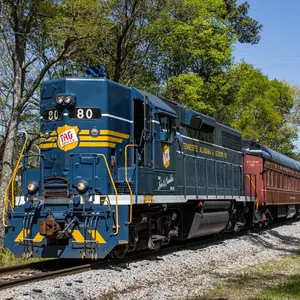
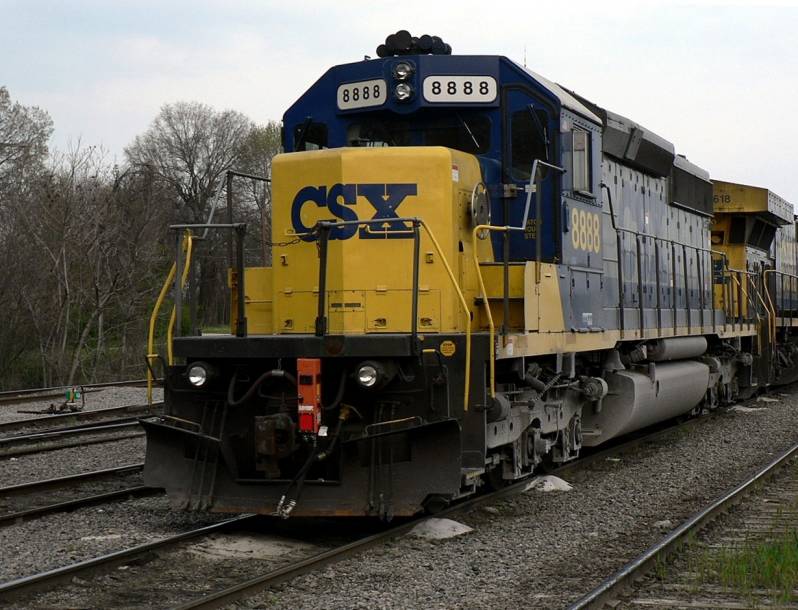 Dan Robie caught #8888 at Monroe Yard in North Carolina in 2008.
History
The history of this now infamous locomotive began back in August, 1977 when Conrail took delivery of SD40-2 #6410, part of a batch of 37 units acquired between August and September that year numbered 6404-6440 (serials 767078-1 thru 767078-37). These were part of a much larger order that totaled 166 examples acquired through 1979. Following the split of the railroad between Norfolk Southern and CSX Transportation in 1999 the unit wound up with the latter road.
A Routine Yard Move Goes Wrong
The day started ordinarily enough for Yard Crew Y116-15 at CSX’s Stanley Yard, the railroad’s primary classification facility for the Toledo area. The three-person crew—engineer, conductor, and brakeman—reported at 6:30 a.m. After routine switching, they received instructions around 11:30 a.m. to pull 47 cars (22 loaded, 25 empty, totaling roughly 2,900 gross tons) from Track K12 and place them on departure Track D10.
The locomotive was CSX 8888, an Electro-Motive Diesel (EMD) SD40-2 built in 1977 as Conrail No. 6410 and renumbered after CSX’s acquisition of Conrail assets. These 3,000-horsepower, 190-ton workhorses were legendary for reliability; the SD40-2 was one of EMD’s best-selling models.
As the train moved north out of K12 at about 11 mph, the conductor radioed that a trailing-point switch for Track PB9 was lined the wrong way. The veteran engineer (a 35-year CSX employee whose name CSX never publicly released) realized the train wouldn’t stop short of the misaligned switch on the damp rails. He applied the locomotive’s independent air brake (which only brakes the engine itself), made a 20-psi service reduction on the automatic brake valve, and attempted to set up dynamic braking.
Here, the critical error occurred. On EMD SD40-2s of that era, the throttle and dynamic brake controls shared a combined lever with a separate “setup” selector. The engineer believed he had selected dynamic brake mode, but he “inadvertently failed to complete the selection process.” When he moved the throttle to Notch 8 (maximum power), he actually put the locomotive into full throttle instead of braking. The independent brake disabled the “dead man’s” alerter, and because this was a yard move, the air hoses between the locomotive and cars were not connected—so the train’s car brakes were inoperative.
At roughly 8 mph, the engineer dismounted to throw the switch manually. He succeeded just before the train reached it, then tried to reboard the now-accelerating locomotive. Wet grab irons and poor footing caused him to slip; he was dragged about 80 feet before letting go, suffering only minor cuts and abrasions. The train continued south out of the yard.
By 12:35 p.m., the runaway was on the main line. The brakeman and another employee pursued in a vehicle but couldn’t board as speed climbed to 18 mph at the next crossing. The yardmaster and Toledo Branch dispatcher were alerted immediately, and local authorities, including the Ohio State Highway Patrol, were notified at 12:38 p.m.
Desperate Measures: Derailers, Shotguns, and a High-Speed Chase
CSX and authorities scrambled. A portable derailer was placed on the track near Galatea (milepost 34), but the train simply knocked it off the rails without derailing. Police officers, including Sgt. Tom Gwinn and Trooper Al Leitenberger, positioned themselves at crossings with shotguns, authorized to shoot the red emergency fuel-cutoff button (or radiator/fuel tank as a last resort) to starve the engine. Three shots hit the larger red fuel cap instead; even a direct hit on the button would have required it to be held down for seconds and likely wouldn’t have stopped the train immediately.
Evacuations were ordered in some areas, and an air ambulance and helicopters monitored the train in case of a spill or derailment. The two phenol tank cars posed a serious hazard—molten phenol causes severe chemical burns and is highly toxic if released.
The decisive action came from the crew of northbound freight Q636-15. Engineer Jess Knowlton (31 years of service) and conductor Terry Forson were ordered into a siding at Dunkirk. They uncoupled their SD40-2, CSX 8392, and waited. At about 2:05 p.m., as the runaway passed, they entered the main line and gave chase, reaching speeds as high as 66 mph (well above the solo-locomotive limit of 30 mph) to catch up.
Knowlton matched speeds at around 51 mph and coupled smoothly to the rear car. He then applied dynamic brakes on 8392, gradually slowing the combined trains without breaking the knuckle. By the time they approached Kenton, Ohio (near milepost 67), speed was down to about 11–12 mph.
CSX Trainmaster Jon Hosfeld, who had been racing alongside in a pickup truck, sprinted alongside the slowing train south of Kenton and climbed aboard 8888. He found the throttle still in Run 8, the locomotive brake fully applied, and the automatic brake at a 20-pound reduction. All brake shoes on 8888 were completely burned off from the prolonged drag. Hosfeld shut down the engine, and the train came to a safe stop at the Ohio State Route 31 crossing southeast of Kenton around 2:30 p.m.—just under two hours after it left the yard.
Investigation and Official Findings
CSX’s internal investigation, supported by Federal Railroad Administration (FRA) and National Transportation Safety Board (NTSB) inspectors, concluded the cause was “multiple gross errors in judgment by the locomotive engineer.” A sequence of mistakes had to align perfectly: exiting a moving locomotive (against policy), improper brake setup that disabled safety features, failure to complete dynamic brake selection, and the throttle error that restored full power. The control stand design on these older EMD units was noted as a contributing factor that made the mistake possible under stress.
No mechanical failure contributed. CSX held safety briefings using the event as a case study but did not publicly disclose disciplinary action against the engineer.
Aftermath and Lasting Legacy
The heroes—Knowlton, Forson, and Hosfeld—were celebrated nationally. They appeared on morning shows, received commendations, and even met President George W. Bush. All three later served as technical consultants for Unstoppable, which dramatized a similar runaway scenario with far higher stakes (including a fictional collision risk with a chemical plant).
CSX 8888 itself survived unscathed beyond worn brake shoes. It remained in service and was later rebuilt and upgraded to SD40-3 specifications in 2015 as part of CSX’s fleet modernization. As of 2026, it operates as No. 4389 with a new cab.
The incident prompted railroads to review yard procedures, brake testing, and control stand ergonomics, though no sweeping federal regulation changes resulted directly from it. It remains a textbook example of how a series of small human errors can cascade into a high-profile event—and how quick thinking by fellow rail workers can avert disaster.
Twenty-five years later, the “Crazy Eights” story endures as a reminder of railroading’s inherent risks and the dedication of those who keep the trains running safely. What could have been a catastrophic chemical spill through rural Ohio instead became a tale of heroism, a Hollywood movie, and a lasting piece of railroad lore.
Recent Articles


-
Norfolk & Western Diesel Roster (All-Time)
Oct 12, 26 11:59 PM
 Norfolk & Western diesel roster, all-time. 1,464 locomotives built new for the railroad, from the 1955 GP9s and RS-3s through the C36-7s, plus the merger fleets.
 -
Norfolk & Western Steam Roster (Post 1900)
Oct 12, 26 11:52 PM
 Norfolk & Western steam since 1898. The Roanoke grid: 1,266 locomotives, the J, the A, and the Y, and the last road steam on May 7, 1960.
 -
Norfolk & Western Railway: Map, Logo, Rosters, History
Oct 12, 26 11:45 PM
 The Norfolk & Western, from the City Point Railroad of 1838 to Norfolk Southern. Pocahontas coal, Roanoke steam, and the 1964 expansion.
 -
Louisiana Railroad Museums (2026): A Complete Guide
Oct 12, 26 11:24 PM
 Louisiana railroad museums—the DeQuincy depot, the Long Leaf sawmill, Jackson’s model railroad, and Southern Pacific 745. Confirm hours on each site.
 -
Michigan Railroad Museums (2026): A Complete Guide
Oct 12, 26 11:14 PM
 Michigan railroad museums—Pere Marquette 1225 at Owosso, Durand Union Station, The Henry Ford, and the Mount Clemens depot. Confirm hours on each site.
 -
Mississippi Railroad Museums (2026): A Complete Guide
Oct 12, 26 10:52 PM
 Mississippi railroad museums—McComb’s rebuilt Illinois Central depot and Illinois Central 2542, and the Casey Jones museum at Water Valley. Confirm hours on each site.
 -
The "E2b": PRR's Experimental Freight Electrics
Oct 12, 26 10:33 PM
 PRR class E2b: six GE B-B freight electrics, 4939–4944, 2,500 hp, 11 kV AC. Specifications, roster, and the 1964 scrap.
 -
Alaska Railroad Museums (2026): A Complete Guide
Oct 12, 26 10:10 PM
 Alaska railroad museums—the Museum of Alaska in Wasilla, Tanana Valley No. 1 at Pioneer Park, and the Engine 557 shop. Confirm hours on each site.
 -
Western and Atlantic Railroad: Map, History, Timetables
Oct 12, 26 09:55 PM
 The Western & Atlantic Railroad of the State of Georgia, authorized December 21, 1836, from Atlanta to Chattanooga. The state still owns the 137.33-mile line. CSX leases it. The through railroad opene…
 -
Nashville, Chattanooga & St. Louis Steam Roster (Post 1900)
Oct 12, 26 09:52 PM
 Nashville, Chattanooga & St. Louis steam since 1900. Drury's class grid: Consolidations, 51 Mikados, three 2-8-8-2s, Pacifics, and 25 4-8-4s. Last steam was January 4, 1953.
 -
Nashville, Chattanooga & St. Louis Diesel Roster (All-Time)
Oct 12, 26 09:27 PM
 Nashville, Chattanooga & St. Louis diesel roster, all-time. Switchers from 1941, 37 GP7s, and the F3s and F7s. The quantity column totals 132 locomotives.
 -
Nashville, Chattanooga and St. Louis Railway: Map, History, Logo
Oct 12, 26 08:41 PM
 The Nashville, Chattanooga & St. Louis, the Dixie Line. Charter of December 11, 1845, the Cumberland tunnel, and the Louisville & Nashville merger of August 30, 1957.
 -
Idaho Railroad Museums (2026): A Complete Guide
Oct 12, 26 02:44 PM
 Idaho railroad museums—Nampa’s 1903 depot, Wallace’s Northern Pacific depot, and Boise’s 1925 Union Pacific depot. Confirm hours on each site.
 -
Hawaii Railroad Museums (2026): A Complete Guide
Oct 12, 26 12:50 PM
Hawaii railroad museums—the Hawaiian Railway Society at Ewa Beach and the Laupahoehoe Train Museum on the Big Island. Confirm hours on each site. -
Marietta and Cincinnati Railroad: Map, History, Timetable
Oct 12, 26 11:44 AM
 Marietta and Cincinnati Railroad, chartered March 8, 1845 as the Belpre & Cincinnati. Opened in April 1857, sold under foreclosure December 9, 1882, and succeeded by the Baltimore & Ohio Southwestern…
 -
Tennessee Railroad Museums (2026): A Complete Guide
Oct 12, 26 11:39 AM
 Tennessee railroad museums—TVRM and Southern 4501 in Chattanooga, the Tennessee Central museum in Nashville, Casey Jones in Jackson, and the depots at Cookeville, Cowan, and Townsend.
 -
Virginia Railroad Museums (2026): A Complete Guide
Oct 12, 26 09:40 AM
 Virginia railroad museums—Roanoke’s Virginia Museum of Transportation and the O. Winston Link Museum, the C&O center at Clifton Forge, and the depots in Richmond, Fairfax Station, Suffolk, Parksley, a…
 -
Louisville & Nashville Diesel Roster (All-Time)
Oct 12, 26 12:15 AM
 Louisville & Nashville diesel roster, all-time. Switchers from 1939, the cab units, and EMD, Alco, and GE hoods through the SD50s. The quantity column totals 1948 locomotives, plus 29 yard slugs.
 -
Louisville & Nashville Steam Roster (Post 1900)
Oct 11, 26 05:44 PM
Louisville & Nashville steam since 1900. Drury's class grid: Consolidations, 165 heavy Mikados, 42 Big Emma 2-8-4s, Pacifics, and 22 Mountains. Last steam January 1957. -
Louisville and Nashville Railroad: Map, Rosters, History
Oct 11, 26 05:39 PM
 Louisville & Nashville, the Old Reliable. Charter of March 5, 1850, Milton H. Smith, the 921-mile main line, Big Emma, and the December 29, 1982 merger. Steam and diesel rosters are companion pages.
 -
Oregon Railroad Museums (2026): A Complete Guide
Oct 11, 26 05:19 PM
 Oregon railroad museums—the Oregon Rail Heritage Center, Brooks trolleys, Canby’s 1891 depot, Medford’s Willamette, and Train Mountain. Confirm hours on each site.
 -
Texas Railroad Museums (2026): A Complete Guide
Oct 11, 26 05:15 PM
 Texas railroad museums—Frisco’s Big Boy 4018, Galveston’s Santa Fe depot, Temple’s 1911 station, Plano’s interurban, and Fort Worth & Denver 304. Confirm hours on each site.
 -
Wisconsin Railroad Museums (2026): A Complete Guide
Oct 10, 26 11:51 PM
Wisconsin railroad museums—Green Bay’s Big Boy 4017 and Eisenhower’s A4, Mid-Continent at North Freedom, East Troy’s interurban, and the Riverside & Great Northern. Confirm hours on each site. -
Interstate Railroad (Virginia): Map, Roster, Logo, History
Oct 10, 26 11:22 PM
 Interstate Railroad, a Virginia coal road chartered February 18, 1896. Andover shops. Ten Alco RS3s, 30–39. Southern control in 1961. The company ended October 31, 1985.
 -
North Carolina Railroad Museums (2026): A Complete Guide
Oct 10, 26 11:16 PM
North Carolina railroad museums—Spencer Shops, Wilmington’s Atlantic Coast Line 250, Hamlet’s Seaboard depot, and the New Hope Valley Railway. Confirm hours on each site. -
New Mexico Railroad Museums (2026): A Complete Guide
Oct 10, 26 10:54 PM
 New Mexico railroad museums—Santa Fe 2926 in Albuquerque, the Clovis depot, Alamogordo’s Toy Train Depot, and Belen. Confirm hours on each site.
 -
New York Railroad Museums (2026): A Complete Guide
Oct 10, 26 09:33 PM
 New York railroad museums—Phoenicia, Medina’s New York Central freight house, the Transit Museum, Long Island 35 and 39, and GG1 4933. Confirm hours on each site.
 -
Columbia, Newberry & Laurens Railroad: History, Timetable, Roster
Oct 10, 26 09:08 PM
 Columbia, Newberry & Laurens Railroad, Columbia to Laurens, 75 miles. Chartered in 1885. Five Atlantic Coast Line GP7s, 100–104. Merged into the Seaboard System on April 30, 1984.
 -
New Haven Diesel Roster (All-Time)
Oct 10, 26 06:35 PM
 New Haven diesel roster, all-time. 558 road numbers: 60 DL-109s, 30 FA-1s, 27 PA-1s, 60 FL9s, and the switchers from HH600 0900. Serials and order numbers.
 -
New Haven Steam Roster (Post 1900)
Oct 10, 26 06:31 PM
 New Haven steam since 1900. Drury's class grid: 226 Moguls, 33 Mikados, 50 Santa Fes, 70 Mountains, 141 Pacifics, and 10 Hudsons. Last fan trip July 19, 1953.
 -
New Haven Railroad: Rosters, Map, Logo, History, Trains
Oct 10, 26 06:26 PM
 New York, New Haven and Hartford. The Shore Line, Hell Gate, the 1952 map at 1,838.89 miles, and the railroad Penn Central took at 11:59:59 p.m. on December 31, 1968.
 -
C&O's 4-6-4 "Hudson" Locomotives (Class L): Specs, Roster, History
Oct 10, 26 05:36 PM
 Chesapeake & Ohio Class L 4-6-4 Hudsons. Eight L-2s, five L-1 rebuilds, five L-2-As. Specs, Baldwin works numbers, and the roster. No. 490 survives.
 -
Alton Railroad: Map, History, Timetables
Oct 09, 26 10:31 PM
 Alton Railroad, chartered February 27, 1847 as the Alton & Sangamon. Chicago, St. Louis, and Kansas City, the 1937 Official Guide, and the May 31, 1947 merger into the Gulf, Mobile & Ohio.
 -
Mobile & Ohio Steam Roster (Post 1900)
Oct 09, 26 12:26 PM
 Mobile & Ohio steam since 1900. Drury's class grid: 48 six-wheel switchers, 107 Ten-Wheelers, 15 Consolidations, 58 Mikados, and 14 Pacifics. Last revenue steam October 7, 1949.
 -
Mobile & Ohio Railroad: History, Map, Timetable
Oct 09, 26 11:31 AM
 Mobile & Ohio Railroad, chartered in 1848. Columbus on April 22, 1861, the Cairo & St. Louis, the March 1940 Official Guide, and the September 13, 1940 merger into the Gulf, Mobile & Ohio.
 -
Gulf, Mobile & Northern Steam Roster (Post 1900)
Oct 09, 26 10:42 AM
 Gulf, Mobile & Northern steam since 1900. Drury's class grid: Ten-Wheelers, Mikados, Russian Decapods, Pacifics 425 and 426, and three light 4-8-2s. Last revenue steam October 7, 1949.
 -
Gulf, Mobile & Ohio Diesel Roster (All-Time)
Oct 09, 26 10:41 AM
 Gulf, Mobile & Ohio diesel roster, all-time. The 1935 boxcab, DL-107s, 55 FA-1s, F3s and F7s, the Ingalls 4-S, GP30s through GP38-2s, and 21 SD40s. Serials and order numbers.
 -
Gulf, Mobile & Northern Railroad: History, Rebel Route
Oct 09, 26 10:36 AM
 Gulf, Mobile & Northern, from the 1890 Mobile, Jackson & Kansas City to the Rebel and the September 13, 1940 merger into the Gulf, Mobile & Ohio. Steam roster is the companion page.
 -
Gulf, Mobile & Ohio Railroad: Map, Photos, Trains, History
Oct 08, 26 11:48 PM
 Gulf, Mobile & Ohio, chartered in 1938 and merged September 13, 1940. The Mobile & Ohio, the Alton on May 31, 1947, the Rebel Route, and Illinois Central Gulf on August 10, 1972.
 -
New Jersey Railroad Museums (2026): A Complete Guide
Oct 08, 26 11:37 PM
 New Jersey railroad museums—Whippany, Maywood, Pine Creek, Mahwah’s Erie depot, Phillipsburg, and Boonton. Confirm hours on each site.
 -
New Hampshire Railroad Museums (2026): A Complete Guide
Oct 08, 26 11:34 PM
 New Hampshire railroad museums—North Conway, the Flying Yankee, Ashland, Gorham, Raymond, and Sandown. Confirm hours on each site.
 -
Missouri Railroad Museums (2026): A Complete Guide
Oct 08, 26 11:00 PM
 Missouri railroad museums—the National Museum of Transportation, Patee House, Frisco 4524, the Chicago & Alton depot, and Marceline. Confirm hours on each site.
 -
Milwaukee Road X3800: Deer Lodge’s Shop Goat
Oct 08, 26 04:28 PM
 Milwaukee Road X3800, the a home-built shop goat that served the Deer Lodge, MT yard. It was a 220-volt DC switcher, powered through an extension cord that moved electrics into a roundhouse where the…
 -
Key West Extension (Overseas Railroad): History, Construction, Decline
Oct 08, 26 03:59 PM
 Henry Flagler's Overseas Railroad, Miami to Key West, 1905–1935. The Seven Mile Bridge, the 1935 Labor Day Hurricane, and the road that became U.S. 1.
 -
Florida East Coast Steam Roster (Post 1900)
Oct 08, 26 02:34 PM
 Florida East Coast steam since 1897. Seventeen Ten-Wheelers, twenty Atlantics, eighty-seven Pacifics, ninety Mountains, fifteen Mikados, and the switchers.
 -
Florida East Coast Diesel Roster (All-Time)
Oct 08, 26 02:12 PM
 Florida East Coast diesel roster, all-time. E units from 1939, F3s, BL2s, GP7s and GP9s, the GP40-2 orders, 22 SD40-2s, and 24 ES44C4s. Serials and EMD order numbers.
 -
Florida East Coast Railway: Map, History, Rosters
Oct 08, 26 01:46 PM
 Florida East Coast Railway, Henry Flagler's line from Jacksonville to Miami and Key West. Receivership in 1931, the 1963 strike, Grupo México in 2017, and Brightline on the same track.
 -
Minnesota Railroad Museums (2026): A Complete Guide
Oct 08, 26 10:32 AM
Minnesota railroad museums—the Lake Superior Railroad Museum, Two Harbors, Jackson Street, Willmar’s Great Northern 2523, and Currie. Confirm hours on each site. -
Maine Railroad Museums (2026): A Complete Guide
Oct 08, 26 09:24 AM
 Maine railroad museums—Seashore Trolley, the two-foot lines at Portland, Alna, and Phillips, Boothbay, and the Bangor & Aroostook depots. Confirm hours on each site.
 -
Massachusetts Railroad Museums (2026): A Complete Guide
Oct 08, 26 12:08 AM
 Massachusetts railroad museums—Berkshire Scenic at Lenox, Shelburne Falls trolley No. 10, Edaville, Chatham’s 1887 depot, and Lowell. Confirm hours on each site.