Fort Worth and Denver Railway: The "Denver Road"
Published: May 15, 2026
By: Adam Burns
The Fort Worth and Denver Railway (reporting mark FWD), nicknamed "the Denver Road," was a Class I American railroad that operated primarily in northern Texas from 1881 to 1982. It profoundly shaped the settlement and economic development of the Texas Panhandle and North Texas by linking Fort Worth to Denver, Colorado, and opening vast stretches of prairie to agriculture, ranching, and town-building. Chartered in 1873 as the Fort Worth and Denver City Railway Company (FW&DC), it changed its name in 1951. At its peak, it operated over 1,200 miles of road and carried millions of ton-miles of freight, mostly agricultural products, cattle, and later coal and intermodal traffic. Its story is one of visionary promoters, determined engineers, and adaptation through booms, busts, wars, and mergers—ultimately becoming part of the modern BNSF Railway.
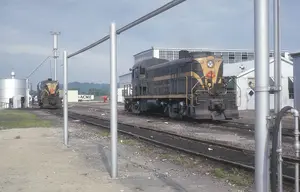
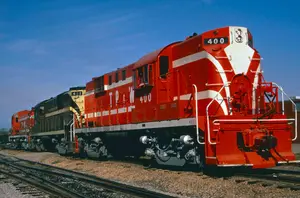
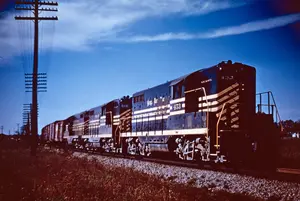
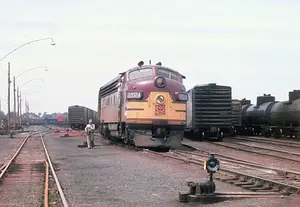
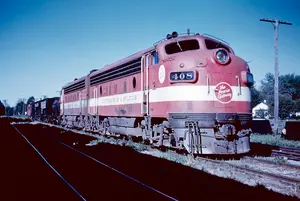
 Burlington F9A #750-A (serial 25099, sublettered for subsidiary Fort Worth & Denver, is seen here in Wichita Falls, Texas in August 1967. This unit was rebuilt in March, 1959 from an F7A carrying the same number (serial 11329) that was wrecked at Chugwater, Wyoming on September 17, 1958. It was one of the last F9s ever built. Tom Hoffmann photo, Rick Burn collection.
Founding Dreams and the Long Wait (1869–1881)
The idea for a railroad connecting Fort Worth to Denver emerged in the post-Civil War era, when Texas sought to modernize its economy. As early as 1869, promoters like Warren H. H. Lawrence advocated a line from the Gulf of Mexico to Colorado via Fort Worth, envisioning it as a vital trade corridor. On May 26, 1873, the Texas Legislature chartered the Fort Worth and Denver City Railway Company. Incorporators included prominent Fort Worth figures such as Khleber Miller Van Zandt, E. M. Daggett, and others. The charter promised land grants—sixteen sections per mile of track—but the Panic of 1873, a nationwide financial crisis, halted progress for nearly a decade.
Construction dreams revived in 1881 when Grenville M. Dodge, the legendary chief engineer of the Union Pacific Railroad and a key figure in the first transcontinental railroad, took interest. Dodge organized the Texas and Colorado Railway Improvement Company to build and equip the line in exchange for $20,000 in stock and $20,000 in bonds per mile. That same year, the FW&DC agreed with the Denver and New Orleans Railroad (D&NO) to connect at the Texas-New Mexico border. No lavish state subsidies were granted beyond right-of-way easements across 2,162 acres of public land.
Building the Main Line: Prairie Engineering and the 1888 Connection (1881–1888)
Construction officially began on November 27, 1881, at Hodge Junction, just north of Fort Worth. Dodge’s crews worked methodically across the open plains. By September 1882, they had laid 110 miles to Wichita Falls. Progress slowed due to funding and terrain, but resumed in 1885: 34 miles to Harrold, then 31 miles to Chillicothe in 1886. The big push came in 1887 with 194 miles from Chillicothe to the Canadian River, reaching Clarendon and Amarillo. By early 1888, the line hit Texline on the Texas state line.
Meanwhile, the Colorado side—reorganized as the Denver, Texas and Fort Worth—built south. On March 14, 1888, the railheads met at Union Park near present-day Folsom, New Mexico, 528 miles from Fort Worth. Regular through service between Fort Worth and Denver began on April 1, 1888. The “Denver Road” was born, creating the shortest rail route from the Gulf region to the Rockies. No major tunnels or dramatic mountain engineering were needed in Texas, but crews battled isolation, harsh weather, and the logistical challenges of supplying materials across empty prairie. The line crossed rivers like the Red, Pease, and Canadian, requiring bridges and trestles.
System Map

Timetables (1909)


Expansion, Feeder Lines, and Integration into the Burlington System (1888–1940)
In 1888, the Denver, Texas and Fort Worth acquired stock control of the FW&DC. Both faced receivership in the Panic of 1893 but reorganized. By 1895, Dodge served as president. In 1899, the Colorado and Southern Railway (C&S), successor to the D&NO, acquired the FW&DC. The C&S itself joined the Chicago, Burlington & Quincy (CB&Q, or “Burlington Route”) in 1908, though the companies operated separately to comply with Texas laws requiring in-state headquarters.
The FW&DC became the first railroad to penetrate northwest Texas, spurring explosive growth. It built or acquired feeder lines to serve the region more comprehensively. Key additions included:
- The Fort Worth and Denver South Plains Railway (chartered 1925), completed in 1928: 206 miles from Estelline to Plainview and Lubbock, with branches to Silverton and Dimmitt. It featured the notable Quitaque Railway Tunnel.
- The Fort Worth and Denver Northern (chartered 1929), finished in 1932: 110 miles from Childress to Pampa.
- Wichita Valley lines radiating from Wichita Falls to Seymour, Stamford, Abilene, and into Oklahoma.
- Terminal and industrial spurs, including the Fort Worth and Denver Terminal Railway and connections in Dallas via trackage rights over the Rock Island (1925).
By 1940, the Burlington-owned system in Texas exceeded 1,000 miles of main track. The railroad actively promoted settlement with the motto “No settlers, no trains.” It offered free seeds, trees, and seedlings to farmers, introduced winter wheat and cotton, and supported experimental farms. During 1890s droughts, it supplied free seed and extended credit via crop liens. Stockyards at Wichita Falls ended long cattle drives. Towns like Childress, Clarendon, Amarillo, and Dalhart boomed as depots and shipping points.
Passenger Service and the Streamliner Era (1930s–1960s)
Passenger trains were a hallmark. The premier service was the streamlined Texas Zephyr (trains 1 and 2), inaugurated August 22, 1940, running between Dallas and Denver via Fort Worth. It featured sleek diesel power and modern cars, providing luxury travel across the plains. Other named trains included the Gulf Coast Special, Colorado Special, and the Sam Houston Zephyr (introduced 1936 in partnership with the Burlington-Rock Island, Texas’s first streamlined train, linking Houston to Dallas-Fort Worth). Motorcars served branch lines to Lubbock and Abilene.
At peak during World War II (1944), the railroad earned over $12 million in freight revenue and nearly $6 million in passenger revenue, hauling troops, war materials, and agricultural output.
Peak, Postwar Decline, and Corporate Mergers (1940s–1982)
World War II marked the zenith. Postwar competition from interstate highways, trucks, and airlines eroded passenger traffic. The Texas Zephyr made its final run on September 10, 1967, after losing the U.S. Mail contract. All passenger service ended that year—before Amtrak’s creation in 1971.
Freight remained viable, but by 1972 the company reported operating losses amid rising costs. In 1970, the CB&Q, Great Northern, and Northern Pacific merged into the Burlington Northern Railroad (BN), but Texas subsidiaries like the FW&D retained separate legal identities due to state regulations. On December 31, 1981, BN acquired the Colorado and Southern, and the FW&D formally merged into BN on December 31, 1982, ending its independent corporate existence after 101 years.
Additional acquisitions in its later years included Wichita Falls terminal properties (1954) and 42 miles of the Texas Central (1973). Some abandonments occurred, such as segments to Spur (1967) and others in the 1970s.
Economic Legacy and Modern Fate
The Denver Road transformed the Texas economy. It facilitated the shift from open-range cattle empires to diversified farming and ranching. Wheat, cotton, cattle, and later oil-related traffic flowed through its rails. Cities it served—Wichita Falls, Childress, Amarillo, Dalhart—grew from frontier outposts into regional hubs. Its promotion of immigration and agriculture helped settle the Panhandle, once described as buffalo and Indian frontier.
Today, the former main line through the Texas Panhandle remains a heavily used BNSF corridor for coal, intermodal, and manifest freight between Fort Worth and the western U.S. Union Pacific holds trackage rights on parts of it. Some abandoned branches, like 64 miles of the South Plains line between Estelline and South Plains, became the Caprock Canyons State Park and Trailway in 1993, complete with the restored 528-foot Clarity Railroad Tunnel—a hiking and biking legacy.
Depots like the restored one in Clarendon (now the Saints’ Roost Museum) preserve artifacts. The railroad’s impact endures in the economic vitality of North Texas and the Panhandle.
Recent Articles


-
California High-Speed Rail Chief Resigns
Oct 30, 26 08:36 PM
 Ian Choudri resigned October 28, 2026 as chief executive of the California High-Speed Rail Authority. The board named Joe Stephenshaw interim chief executive.
-
The 1910 Portal Bridge Is Handed Over for Demolition
Oct 30, 26 04:03 PM
 Amtrak handed the 1910 Portal Bridge over for demolition on October 29, 2026, during the final cutover to Portal North. Regular NJ Transit and Amtrak schedules are expected November 15.
-
Union Pacific-Norfolk Southern Merger Review Runs to 2027
Oct 30, 26 03:59 PM
 Union Pacific says the Surface Transportation Board's review of the Norfolk Southern merger gathers information through May 28, 2027. A closing still depends on board approval.
-
Amtrak Board Will Hear Restructuring Comments on November 10
Oct 30, 26 03:41 PM
 Amtrak's board will hear public comments on its restructuring on November 10, 2026, from 2 to 3 p.m. Eastern. Written comments were due October 30. A proposal goes to the board in December.
-
Canadian Pacific Selkirk 5931 Restored in Calgary
Oct 30, 26 01:36 PM
 Heritage Park in Calgary unveiled a cosmetic restoration of Canadian Pacific 2-10-4 No. 5931 on October 27, 2026. One of two surviving Selkirks. It stays on display.
-
Gettysburg Railway to Host Steam for Lincoln
Oct 30, 26 01:18 PM
 Northern Central Railway of York No. 17 will recreate Lincoln's arrival at Gettysburg on November 18, 2026, with public steam trips November 19-21.
-
NC&StL No. 576 to Steam for the Public in Nashville
Oct 30, 26 01:00 PM
 Nashville Steam will fire NC&StL 4-8-4 No. 576 for the public on November 7, 2026, 9 a.m. to 3 p.m., at 220 Willow Street. Admission is free.
-
Pennsylvania Railroad E8s Join the T1 Trust
Oct 30, 26 12:38 PM
 The T1 Trust has acquired former Pennsylvania Railroad E8A diesels 5702A and 5761A from the Fort Wayne Railroad Historical Society. They are bound for Cumberland.
-
Ligonier Valley Railroad: History, Roster, Timetable
Oct 30, 26 12:03 PM
 The Ligonier Valley Railroad ran 10.5 miles from Latrobe to Ligonier, Pennsylvania. Opened December 1, 1877. Last day August 31, 1952.
-
Toledo, Peoria & Western Diesel Roster (All-Time)
Oct 30, 26 10:25 AM
 Toledo, Peoria & Western diesel locomotives, each frame once. Thirteen Alcos, three Lima-Hamilton switchers, and 26 Electro-Motive units.
-
Toledo, Peoria & Western Steam Roster
Oct 30, 26 09:14 AM
 Toledo, Peoria & Western steam locomotives from the Rogers Consolidations of 1895 through the 4-8-4s of 1937
-
Toledo, Peoria & Western Railway: Map, Roster, History
Oct 29, 26 11:12 PM
 History of the Toledo, Peoria & Western. The Peoria & Oquawka, George P. McNear, the Santa Fe and Pennsylvania years, and the railroad that came back in 1989.
-
Cotton Belt Diesel Roster (All-Time)
Oct 29, 26 07:58 PM
 St. Louis Southwestern diesel locomotives, each frame once. Baldwin switchers, F units, and new Cotton Belt-lettered power through the GP60s of May 1990.
-
Cotton Belt Steam Roster (Built Since 1900)
Oct 29, 26 06:52 PM
 St. Louis Southwestern steam locomotives built since 1900. Consolidations, Ten-Wheelers, and twenty class L-1 4-8-4s. The quantity column is 297.
-
Cotton Belt Railroad: Map, Logo, History, Rosters
Oct 29, 26 10:56 AM
 History of the St. Louis Southwestern, the Cotton Belt Route. The Tyler Tap, Paramore's silver spike, the Thebes Bridge, the Blue Streak, and Southern Pacific control. Steam and diesel rosters are sep…
-
Pere Marquette Steam Roster (Built Since 1900)
Oct 28, 26 11:54 PM
 Pere Marquette steam locomotives built since 1900. Consolidations, Mikados, Pacifics, and 39 Berkshires. The quantity column is 503.
-
Pere Marquette Diesel Roster (All-Time)
Oct 28, 26 11:48 PM
 Pere Marquette diesel locomotives, each frame once. Two SW1s, 14 NW2s, three GE 70-tonners, eight E7As, and six BL2s delivered lettered Chesapeake and Ohio. The quantity column is 33.
-
Pere Marquette Railway: Map, Logo, Rosters, History
Oct 28, 26 11:44 PM
 History of the Pere Marquette Railway. Timber roads, the Prince years, the Van Sweringens, the Ludington car ferries, and the Chesapeake and Ohio merger of June 6, 1947.
-
Nickel Plate Road (Railroad): Map, History, Rosters
Oct 28, 26 10:51 PM
 History of the Nickel Plate Road, the New York, Chicago and St. Louis. The Seney syndicate, the Van Sweringens, the Berkshires, and the Norfolk and Western absorption at 12:01 a.m. on October 16, 1964…
-
Nickel Plate Diesel Roster (All-Time)
Oct 28, 26 10:48 PM
 Nickel Plate diesel locomotives, each frame once. Alco switchers and PAs, GP7s and GP9s, and the GP30s. The quantity column is 440. The 1950 fleet was 117.
-
Nickel Plate Steam Roster (Built Since 1900)
Oct 28, 26 10:43 PM
 Nickel Plate steam locomotives built since 1900, including the Lake Erie and Western, the Clover Leaf, and the Wheeling engines that took Nickel Plate numbers. The quantity column is 786.
-
EMD "E9" Locomotives: Specs, Roster, History
Oct 28, 26 10:37 PM
 EMD E9 cab units and boosters, 2,400 horsepower, built April 1954 through January 1964. Gear ratios, specifications, and the production roster by owner, serial, and order.
-
NYC 4-6-4 #5344, "Commodore Vanderbilt"
Oct 28, 26 04:31 PM
 NYC J-1e Hudson 5344, the Commodore Vanderbilt. Alco, November 1931. Carl Kantola’s shroud, December 1934, then a Dreyfuss bullet nose in 1939. Scrapped at Collinwood in 1954.
-
New Jersey, Indiana & Illinois Railroad: A South Bend Shortline
Oct 28, 26 11:05 AM
 The New Jersey, Indiana & Illinois, the Jersey Line, ran from South Bend to Pine. Singer built it in 1905. Wabash stock control came in 1926. Two diesels, and the steam the record names.
-
Monon Diesel Roster (All-Time)
Oct 28, 26 10:13 AM
 Monon diesel locomotives, each frame once. F3s, nine BL2s, the C420s, and eight U23Bs. The quantity column is 96. The 1951 fleet was 57.
-
Monon Steam Roster (Built Since 1900)
Oct 28, 26 10:09 AM
 Monon steam locomotives built since 1900. Twelve-Wheelers, Mikados, light Pacifics, and thirteen six-wheel switchers. The quantity column is 148.
-
Monon Railroad: Map, Photos, History, Logo
Oct 28, 26 09:55 AM
 History of the Monon, the Hoosier Line. The New Albany & Salem, the X at Monon, Barriger's streamliners, and the Louisville & Nashville merger of July 31, 1971.
-
Missouri-Kansas-Texas Diesel Roster (All-Time)
Oct 28, 26 09:48 AM
 All-time diesel roster of the Missouri-Kansas-Texas. 406 locomotives, each frame once. Baldwin switchers, Alco cab units, F units, Geeps, and the SD40-2s.
-
Missouri-Kansas-Texas Steam Roster (Built Since 1900)
Oct 28, 26 09:43 AM
 Missouri-Kansas-Texas steam locomotives built since 1900. Moguls, Mikados, Pacifics, and the narrow-gauge shop tanks. The quantity column is 715.
-
Missouri-Kansas-Texas Railroad (Katy): Map, History, Rosters
Oct 27, 26 11:02 PM
 History of the Missouri-Kansas-Texas, the Katy. The race into Indian Territory, Gould, the 1923 railroad, the Texas Special, and the 1988 sale. Steam and diesel rosters are linked.
-
Soo Line Diesel Roster (All-Time)
Oct 27, 26 10:55 PM
 All-time diesel roster of the Soo Line and the Wisconsin Central. 786 locomotives, each frame once. Cab units, Geeps, the Milwaukee Road engines, and the SD60s. The South Shore's 24 stay on that page.
-
Soo Line Steam Roster (Built Since 1900)
Oct 27, 26 10:49 PM
 Soo Line and Wisconsin Central steam locomotives built since 1900. Consolidations, Mikados, Pacifics, 21 Mountains, and four Lima 4-8-4s.
-
Soo Line Railroad: Map, Logo, History, Rosters
Oct 27, 26 10:24 PM
 The Soo Line, from the flour millers' railroad around Chicago to the Sault, the Wisconsin Central, and the Milwaukee Road. Steam quantity 422. Diesels 786. Canadian Pacific took full control in 1990.
-
Minneapolis, Northfield and Southern Railway: Map, History, Rosters
Oct 27, 26 10:32 AM
 The Minneapolis, Northfield & Southern, the Dan Patch Line that became a Twin Cities belt. Steam, gas-electric mules, motor cars, and the 22 diesels, through the Soo Line.
-
Minneapolis & St. Louis Diesel Roster (All-Time)
Oct 27, 26 10:27 AM
 All-time diesel roster of the Minneapolis & St. Louis. 97 locomotives, each frame once. Switchers from 1938, 35 RS-1s, the FT and F-unit cabs, two SD7s, and 23 GP9s. Builder numbers included.
-
Minneapolis & St. Louis Steam Roster (Post 1900)
Oct 27, 26 10:25 AM
Minneapolis & St. Louis steam locomotives built since 1900. Moguls, Consolidations, 35 Mikados, and five Pacifics. -
Minneapolis and St Louis Railway: "The Peoria Gateway"
Oct 27, 26 09:52 AM
 The Minneapolis & St. Louis, the Tootin' Louie, from the 1870 charter to the Peoria Gateway and the Chicago & North Western sale on November 1, 1960.
-
Alco "PA" Locomotives: Restoration, Specs, Engine, Rosters
Oct 27, 26 12:12 AM
 Alco's PA passenger cab, 297 locomotives built from 1946 to 1953. The 244 engine, the production roster, the Delaware & Hudson PA-4s, and Nickel Plate Road 190.
-
Milwaukee Road Diesel Roster: (All Time)
Oct 26, 26 01:44 PM
 All-time diesel roster of the Milwaukee Road. 1,208 locomotives, each frame once. Alco, Baldwin, Davenport, EMD, Fairbanks-Morse, General Electric, and Whitcomb, with builder numbers.
-
Milwaukee Road Steam Roster (All-Time): Post-1900
Oct 26, 26 01:38 PM
 Milwaukee Road steam locomotives built since 1900. Prairies, Mikados, the N-class articulateds, the S-class 4-8-4s, and the Hiawatha Atlantics and Hudsons. Quantity column 1,974. Unique frames 1,951.
-
Milwaukee Road: Map, Electrification, Logo, History
Oct 26, 26 01:20 PM
 The Milwaukee Road, from the Milwaukee & Mississippi of 1850 to the Pacific Coast Extension, the Hiawathas, and the Soo Line sale. Why Lines West should have stayed.
-
Lake Superior & Ishpeming Railroad: Map, Roster, History
Oct 25, 26 11:38 PM
 Lake Superior & Ishpeming Railroad, reporting mark LSI, from the Marquette Range to the Presque Isle ore dock. The 1954 steam list and the diesels the railroad owned.
-
Kansas City Southern Steam Roster (Built Since 1900)
Oct 25, 26 09:09 PM
 Steam locomotives of the Kansas City Southern built since 1900, with the Louisiana & Arkansas and the Texas company.
-
Kansas City Southern Diesel Roster (Built New)
Oct 25, 26 11:46 AM
All-time diesel roster of the Kansas City Southern. E units, F units, Geeps, SD40s through SD70ACes, Fairbanks-Morse, Baldwin, Alco, and General Electric, with serials and order numbers. -
Kansas City Southern Railway: Map, Photos, History
Oct 25, 26 12:24 AM
The Kansas City Southern, from Arthur Stilwell's Gulf line to Canadian Pacific Kansas City on April 14, 2023. Steam and diesel rosters, the Southern Belle, and the Louisiana & Arkansas. -
Indiana Harbor Belt Diesel Roster (All-Time)
Oct 25, 26 12:17 AM
 All-time diesel roster of the Indiana Harbor Belt. 202 locomotive frames, each counted once. NW2s, SW7s, SW1500s, road switchers, and gensets. Slugs and boosters are outside the count.
-
Indiana Harbor Belt Steam Roster (Built Since 1900)
Oct 25, 26 12:13 AM
 Steam locomotives of the Indiana Harbor Belt built since 1900. 182 engines, each counted once. 0-6-0s, 2-6-0s, 0-8-0s, and 2-8-2s. The three U-4a switchers are three-cylinder Brooks engines of 1927.
-
Indiana Harbor Belt Railroad: Map, Rosters, History
Oct 25, 26 12:00 AM
 Indiana Harbor Belt, the inner belt across the Calumet, from the East Chicago Belt of May 16, 1896. Renamed June 29, 1907. Still operating, headquarters Hammond. Steam roster is the companion, 182 loc…
-
NYC's "P Motor" Electric Locomotives
Oct 24, 26 11:43 PM
 New York Central P motors: 22 Alco-GE 2-C+C-2 electrics, Cleveland Union Terminal 1050–1071, class P-1a. 3,030 hp one-hour on 3,000-volt DC catenary, then 660-volt third rail as P-2a and P-2b.
-
Illinois Terminal Car Roster
Oct 24, 26 11:40 PM
 Illinois Terminal cars. Mainline motors, the 1948 streamliners, sleepers, Alton and Valley Division cars, express motors, and the line cars rebuilt from pull cars.