MARC Train: Maryland Commuter Rail History, Lines & Roster
Last revised: September 14, 2026
By: Adam Burns
MARC is Maryland’s public commuter railroad: three lines into Washington Union Station on other people’s iron. The Penn Line uses Amtrak’s Northeast Corridor. The Camden and Brunswick lines use CSX, the old Baltimore & Ohio. The brand dates from 1984. The trains are older than that. Maryland began paying the B&O’s Washington suburban deficit on March 1, 1974, and picked up the ex-Pennsylvania Baltimore–Washington locals after Conrail threatened to drop them in 1977. The Northeast Rail Service Act let Conrail shed commuter trains on January 1, 1983; Amtrak has run the Penn Line for the state ever since.
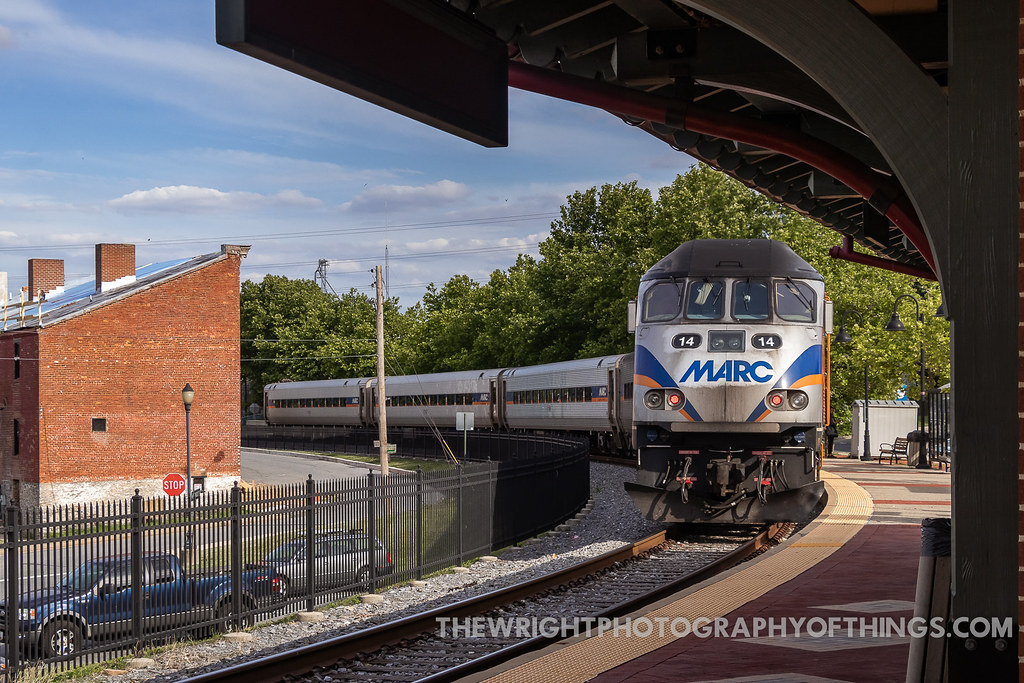
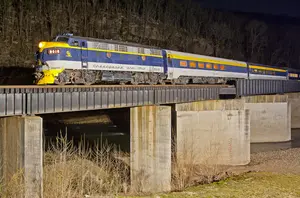
MARC train P891 arrives in Frederick, Maryland, along the B&O’s Old Main Line on June 12, 2019. Jon Wright photo.
On this page: At a glance · Three corridors · The state takes the trains · Penn Line · Camden Line · Brunswick Line · Silver Spring, 1996 · All-time locomotive roster · What still runs
At a glance
| Item | Detail |
|---|---|
| Owner | Maryland Transit Administration (MTA), Maryland Department of Transportation |
| Reporting mark | MARC |
| First state subsidy | B&O Washington suburban trains, March 1, 1974 |
| Penn Line under Amtrak | January 1, 1983 (NERSA; Conrail off the commuter business) |
| MARC brand | 1984. Originally Maryland Rail Commuter; later Maryland Area Regional Commuter |
| Lines | Penn (Amtrak NEC). Camden (CSX Capital Sub). Brunswick (CSX Metropolitan / Cumberland / Old Main Line, plus Frederick branch) |
| Route-miles / stations | About 187 miles; 42 stations (MTA / APTA order of magnitude) |
| Operators | Amtrak (Penn Line). Alstom (Camden and Brunswick; Bombardier contract 2013, Alstom after the 2021 purchase) |
| Frederick branch | Passenger return December 17, 2001. B&O had ended Frederick locals in November 1949 |
| Silver Spring collision | February 16, 1996. MARC 286 and Amtrak Capitol Limited 29. Eleven dead |
| Not this page | Fares, CharmPass, boarding etiquette. B&O, PRR, Amtrak, and CSX encyclopedias |
Information compiled September 14, 2026. Schedules and fares: mta.maryland.gov/marc-train.
Three corridors
Every MARC train is a public train on a private-era railroad. The Camden Line sits on the Baltimore & Ohio’s original Washington route. B&O passenger service Baltimore–Ellicott’s Mills began May 24, 1830; Baltimore–Washington on August 25, 1835. That is still, in the railroad sense, among the oldest passenger assignments in the country. The company encyclopedia is Baltimore & Ohio.
The Brunswick Line is the B&O west of Washington: Old Main Line to Point of Rocks, Metropolitan Branch (1873) into the District, Cumberland Subdivision on to Martinsburg, West Virginia. Frederick was a branch off the Old Main Line from 1831; B&O dropped the locals in November 1949. Amtrak’s Blue Ridge later used the Martinsburg end as a Washington commuter-in-all-but-name. MARC inherited that geography, not the Amtrak train.
The Penn Line is the other Baltimore–Washington railroad: the Pennsylvania’s Baltimore & Potomac (completed 1872) and the Philadelphia, Wilmington & Baltimore north of Baltimore, combined as the Philadelphia, Baltimore & Washington in 1902. Electrification reached Washington in 1935 (Baltimore 1933). Penn Central took the trains in 1968. Conrail took them April 1, 1976. The company encyclopedia is Pennsylvania Railroad. Amtrak’s Northeast Corridor is the host, not a second MARC encyclopedia; that hub is Amtrak.
The state takes the trains
By the early 1970s the B&O and Penn Central were still running Washington suburban trains without a state check. Amtrak had taken the long-distance names on May 1, 1971. The locals were left with the freights. In early 1974 the B&O moved to discontinue. Maryland DOT began a 50 percent subsidy of the Washington–Brunswick and Washington–Baltimore B&O trains on March 1, 1974—the first state-sponsored commuter rail into Washington. A 1975 operating agreement put the rolling stock and the full operating deficit on the state.
Conrail inherited the unsubsidized ex-PRR Baltimore–Washington electrics on April 1, 1976, and threatened to drop them April 1, 1977. Maryland began paying. Aging MP54 multiple-units still did most of the work until 1978, when leased New Jersey Arrow cars appeared. Amtrak and Maryland used some of those cars for a Philadelphia–Washington commuter, the Chesapeake, from April 30, 1978, to October 1983. BWI Rail Station opened for Amtrak and Conrail on October 26, 1980.
The Northeast Rail Service Act of 1981 is the same statute on the 1980s page that let Conrail stop running commuter trains. Effective January 1, 1983, Maryland paid Amtrak to operate the ex-PRR line (briefly marketed AMDOT). Chessie, then CSX, kept running the B&O pair under the state contract. A 1983 marketing study produced the MARC name and logotype in 1984: one public face on trains that still had B&O or Amtrak crews, and cars that in those years included leases from New Jersey Transit. The State Railroad Administration later folded into the Mass Transit Administration in 1992. That agency is now MTA.
CSX absorbed the B&O on April 30, 1987, and kept the Camden and Brunswick contracts until Bombardier Transportation took operations on July 1, 2013. Alstom bought Bombardier’s rail business in 2021 and won a new five-year contract in April 2023. Amtrak never left the Penn Line.
Penn Line
Seventy-seven miles, Washington Union Station to Perryville, almost all of it Amtrak’s Northeast Corridor. Most trains turn at Baltimore Penn; a few continue to Martin State Airport or Perryville. It is the only electrified MARC line, the only one with Saturday and Sunday service (from December 7, 2013), and by a wide margin the busiest of the three—on the order of twice the trains and twice the riders of Camden and Brunswick combined.
MARC extended north of Baltimore to Perryville on May 1, 1991, with Edgewood, Aberdeen, and Martin State Airport. New Carrollton replaced Capital Beltway on October 30, 1983. West Baltimore replaced Edmondson Avenue and Frederick Road on April 30, 1984. Bowie State replaced Bowie on February 27, 1989. Equipment on this line is why MARC once advertised 125 mph: AEM-7s from 1986, HHP-8s from the turn of the century, Siemens Chargers from 2018. The corridor encyclopedia is Amtrak’s. The commuter assignment is this page.
Camden Line
Thirty-nine miles, Washington to Camden Station, CSX Capital Subdivision, weekday peak service. Greenbelt opened May 3, 1993, months before Metro. Savage opened July 31, 1989; Muirkirk December 12, 1994; Dorsey replaced Elkridge in July 1996; Berwyn closed January 31, 1994. The stations moved to the parking lots. The railroad did not. This is still the B&O’s Washington branch, now a CSX freight main with a state commuter on it.
Brunswick Line
Seventy-four miles Washington–Martinsburg, plus a 14-mile Frederick branch off the Old Main Line at Frederick Junction. Weekdays only. Metropolitan Grove, July 6, 1987, was the first new Brunswick station in more than a century. West Virginia had funded Brunswick–Martinsburg shuttles in the late 1970s so the trips would qualify for federal aid; those shuttles became the west end of the MARC line.
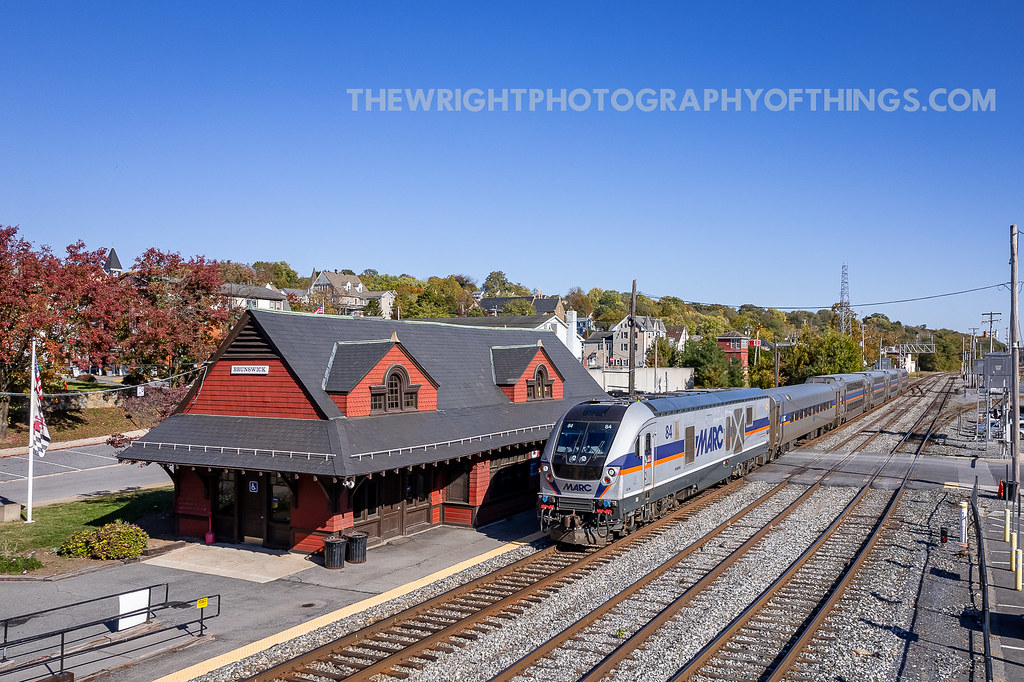
MARC train P871, out of Washington, D.C., arrives at Brunswick, Maryland, on October 21, 2022. Jon Wright photo.
Passenger trains returned to Frederick on December 17, 2001, fifty-two years after the B&O locals died: a $56 million rebuild of the industrial track, a connection at Point of Rocks, and new stations at Monocacy and downtown Frederick. The hero photograph is that branch on the Old Main Line in 2019. Brunswick itself remains the crew town and the place the west-end trains still carry the name.
Silver Spring, 1996
On February 16, 1996, at 5:39 p.m., eastbound MARC train 286—Brunswick to Washington, cab car leading in a snowstorm—struck Amtrak’s westbound Capitol Limited, train 29, at Georgetown Junction just west of Silver Spring. Eleven people on the MARC train died, including the three CSX crew members. The National Transportation Safety Board found that the MARC crew had passed an approach signal at Kensington, stopped for a flag passenger, and then failed to reduce for the stop ahead. The cab car hit Amtrak F40PH 255; the ruptured fuel tank fed the fire that killed most of the dead. NTSB/RAR-97/02 is the report. This page is the date. It is not a second accident encyclopedia.
All-time locomotive roster
MARC never owned a large fleet. What it did own, lease, or have rebuilt is small enough to list. Numbers were reused: E units 60–69 in the early 1990s, GP40WH-2s 51–69 after that; F9PHs 81–85, then Siemens Chargers 80–87. Cab control cars—including rebuilt F7s such as 7100, later at the B&O Railroad Museum—are not in the tables. Early MDOT years also used leased NJ Transit Arrows on the Penn Line and a mixed bag of rebuilt coaches; those are cars, not this roster.
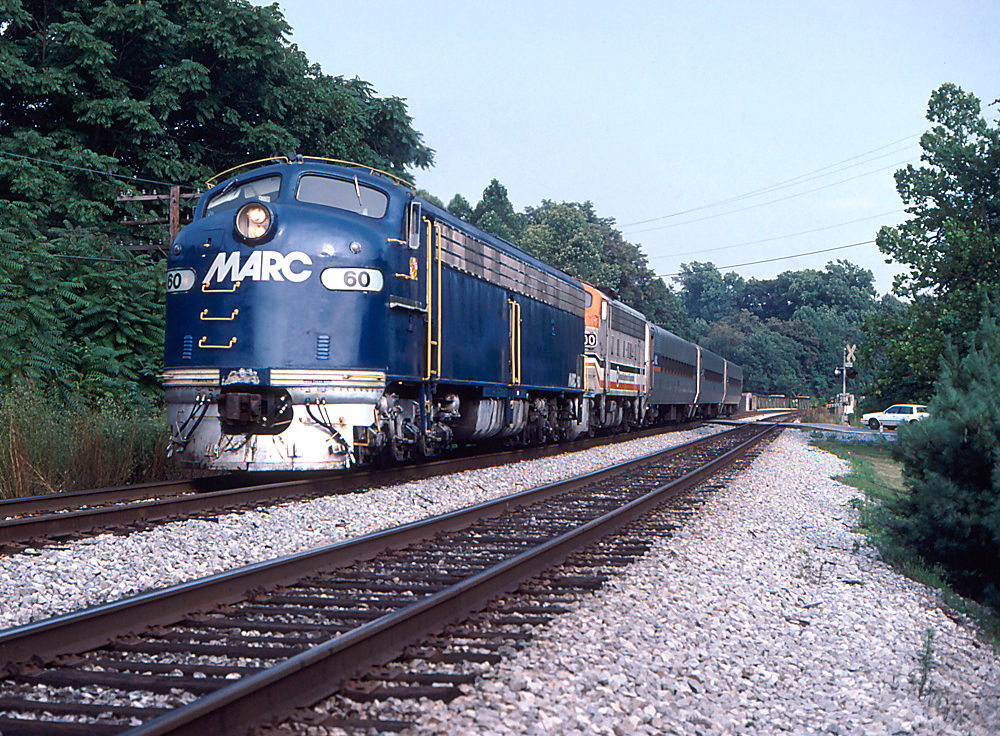
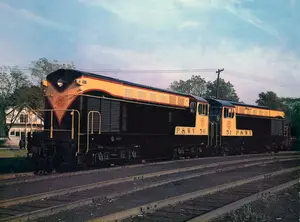
MARC E8AM 60 (built as Illinois Central E8A 4023 in 1951) with a westbound commuter at Forest Glen, Maryland, on July 23, 1992. Wade Massie photo.
Current and recently active (as of 2026)
| Builder / model | Road numbers | Qty | In service | Notes |
|---|---|---|---|---|
| MPI MP36PH-3C | 10–35 | 26 | 2009–2011 | Replaced the GP40WH-2s in revenue service |
| Morrison-Knudsen GP39H-2, rebuilt GP39PH-3C | 70–75 | 6 | 1988; rebuilt 2023 | 12-cylinder, 2,300 hp, Cummins HEP. Short consists and work |
| Morrison-Knudsen GP40WH-2 | 68 | 1 | 1993–94 (class) | Last of 51–69 kept for work and rescue |
| EMD GP40PH-2A | 4145 | 1 | Purchased 2018 | Ex-NJ Transit |
| Bombardier–Alstom HHP-8 | 4910–4913, 4915 | 5 in service | c. 2001–02; refurbished 2017–18 | 8,000 hp electrics, Penn Line. 4914 retired as parts. 125 mph |
| Siemens Charger SC-44 | 80–87 | 8 | 2017–18 | Replaced the AEM-7s. Cummins QSK95, 4,400 hp. 125 mph |
Former
| Builder / model | Road numbers | Qty | MARC years | Notes |
|---|---|---|---|---|
| EMD E8AM / E9AM | 60–69 | 10 | late 1980s–mid-1990s | Ex-Burlington Northern / Metra; built as E8As (No. 60 ex-IC 4023). Some later numbered 91–92 |
| Morrison-Knudsen F9PH | 81–85 | 5 | 1980s–2000s | Rebuilt from B&O F7s; former MDOT 7181–7185 |
| Morrison-Knudsen GP40WH-2 | 51–67, 69 | 18 | 1993–94 to 2009–11 | Cummins HEP, Gyralites. Several to MPI for SunRail MP32PH-Q rebuilds; 69 to CSX 9969; others to lessors (MPEX / PNLX) |
| EMD / ASEA AEM-7 | 4900–4903 | 4 | 1986–87 to 2017 | Penn Line electrics. Tested an Amtrak AEM-7 in October 1986. Stored after the Chargers arrived |
| Bombardier–Alstom HHP-8 | 4914 | 1 | c. 2001–02 | Parts source; class otherwise still active |
The GP40WH-2s were the face of MARC diesel power for fifteen years: nineteen Morrison-Knudsen rebuilds of freight GP40s, ordered 1993, in service 1994. MPI’s MP36PH-3Cs replaced them in revenue service between 2009 and 2011. The six GP39H-2s of 1988 were the earlier, smaller MK product and are still on the property after a 2023 HEP rebuild. Electric traction on the Penn Line ran AEM-7s first (four units, 1986–87), then six HHP-8s shared with Amtrak’s own unhappy class, then eight Chargers that can run the Corridor on diesel under the wire. That hardware story, in general, is diesel locomotives and electric locomotives.
What still runs
In 2026 MARC is still three lines into Union Station. Amtrak still runs the Penn Line; Alstom still runs Camden and Brunswick on CSX. Penn is still the only weekend service. Pre-pandemic weekday ridership was on the order of 36,000 (MTA FY2019). The 2020 crash cut that sharply; recovery has been partial. Expansion talk—all-day Camden and Brunswick, Delaware on the Penn Line, run-throughs with Virginia Railway Express—lives in MTA plans, not in a second encyclopedia here.
For a ticket, a delay, or which track at Odenton, use MTA MARC. For how American commuter rail left the private companies, stay on commuter rail.
Related reading on American-Rails.com
- Commuter rail · Amtrak · Blue Ridge · Virginia Railway Express
- Baltimore & Ohio · Pennsylvania Railroad · CSX · Conrail
- Diesel locomotives · Electric locomotives · Railroads In The 1980s
Sources
- Maryland Transit Administration / former mtamaryland.com “History of MARC Train” (state subsidy 1974–75; Amtrak Penn Line 1983; MARC name from the 1983 marketing study; SRA into MTA 1992)
- Northeast Rail Service Act of 1981; Conrail commuter offload January 1, 1983. Date also on the 1980s page
- Matt Van Hattem, “Maryland Rail Commuter (MARC),” Trains, June 30, 2006 (updated 2020): subsidies 1975–76, 50 percent farebox 1981, bilevels 2000–01, Frederick extension December 17, 2001
- Frederick News-Post, December 17, 2001; Progressive Railroading, December 14, 2001. MARC Frederick / Monocacy opening
- National Transportation Safety Board, Railroad Accident Report NTSB/RAR-97/02, MARC train 286 and Amtrak train 29, Silver Spring, Maryland, February 16, 1996
- Richard Adams and Ted Grumbine, Maryland Rail Commuter all-time diesel roster, TheDieselShop.us (archived 2023). MPI MP36PH-3C 10–35; GP39H-2 70–75; GP40WH-2 51–69; SC-44 80–87; AEM-7 4900–4903; HHP-8 4910–4915
- EMD GP40-based passenger locomotives (GP39H-2, GP40WH-2 class history). Bombardier–Alstom HHP-8 class: MARC 4910–4915, Amtrak 15 units
- MTA / APTA ridership: FY2019 weekday about 36,375; later-year recovery incomplete. Operators: Amtrak Penn Line; Bombardier Camden/Brunswick from July 1, 2013; Alstom from 2021, new contract April 2023
- Live American-Rails Blue Ridge, B&O, Pennsylvania, Amtrak, CSX, and commuter pages as linked above
Recent Articles


-
Tweetsie Railroad Ghost Train Halloween Festival (2026)
Sep 28, 26 11:44 PM
 Tweetsie Ghost Train—Friday and Saturday nights September 25–October 31, 2026, in Blowing Rock. Adult $65, child $45. One reserved steam ride plus the park. Ages 8 and up for the haunt.
 -
Milwaukee Road Class A 4-4-2: Specs, Roster, History
Sep 28, 26 11:20 PM
 Milwaukee Road Class A Atlantics 1–4, Alco 1935–1937, for the Hiawatha. Order S-1740, 84-inch drivers, 19x28, 300 psi, 30,685 lb. Full builder specs, roster, and the May 15, 1935 run at 112.5 mph. All…
 -
Strasburg Rail Road Halloween Trains (2026)
Sep 28, 26 11:00 PM
 Strasburg’s 2026 Halloween tickets—Pumpkins in Paradise on October 3, The Haunting of Pumpkin Junction, and The Brakeman’s Curse through October 25. Three fares. Legacy of Sleepy Hollow is an earlier…
 -
GSMR Peanuts Pumpkin Train (2026): Not on This Year’s Ticket Menu
Sep 28, 26 10:50 PM
Great Smoky Mountains Railroad’s September 28, 2026 ticket menu lists Nantahala and Tuckasegee excursions. A Peanuts Great Pumpkin train is not on that menu. Polar Express is on the November calendar. -
New Jersey Halloween Train Rides (2026)
Sep 28, 26 06:45 PM
 2026 New Jersey Halloween trains—Black River & Western to Everitt Farms through October 25, Delaware River Great Pumpkin through November 1, Whippany October 4, 10, and 11, Pine Creek night trains.
 -
New Hampshire Halloween Train Rides (2026)
Sep 28, 26 05:17 PM
 2026 New Hampshire Halloween train—Conway Scenic Halloween Express, October 24 and 25, about 1 hour from North Conway. Coach adult $30. Confirm on conwayscenic.com.
 -
Conway Scenic Pumpkin Patch Express (2026): Dates, Tickets & Tips
Sep 28, 26 05:09 PM
 Conway Scenic Halloween Express—October 24 and 25, 2026, about 1 hour from North Conway. Coach adult $30. A pumpkin after the ride while supplies last. Confirm on conwayscenic.com.
 -
Black River & Western Pumpkin Trains (2026): Dates, Tickets & Tips
Sep 28, 26 02:20 PM
 Suggested meta description: Black River & Western Pumpkin Train—Flemington to Everitt Farms, weekends September 26–October 25, 2026. Pumpkin patch, maze, and wagon rides. Confirm on blackriverrail…
 -
Scenic Dinner Train Rides (2026): A Complete Guide
Sep 28, 26 01:30 PM
 2026 scenic dinner trains by state—a seated meal on the train. Branson through October 30, Cincinnati Saturdays, Potomac Eagle, and the full state list. Confirm on the railroad.
 -
West Virginia Dinner Train Rides (2026): A Complete Guide
Sep 28, 26 11:58 AM
 2026 Potomac Eagle dining from Romney—about 3 hours in the Trough. Premium three courses $124. Superior four courses $159, ages 17 and older. Confirm on potomaceagle.com.
 -
Washington Dinner Train Rides (2026): A Complete Guide
Sep 28, 26 11:51 AM
 2026 Chehalis-Centralia dinner trains have run. The July 18 Roaring 20s dinner was $89. The planning calendar lists no later dinner. Confirm on steamtrainride.com.
 -
Texas Dinner Train Rides (2026): A Complete Guide
Sep 28, 26 11:27 AM
 2026 Texas has no plated dinner aboard the train. Grapevine sells snacks. The Texas State Railroad Dogwood lunch was served at the Rusk depot. Confirm on the railroad.
 -
Ohio Dinner Train Rides (2026): A Complete Guide
Sep 28, 26 10:15 AM
2026 Ohio dinner trains—Cincinnati Saturdays, $140, about 3 hours, ages 12 and up. Hocking Valley Elegant Dinner Train October 17 and November 7, from $95. -
Missouri Dinner Train Rides (2026): A Complete Guide
Sep 28, 26 10:09 AM
 2026 Branson Scenic Railway dinner train—three courses, about 2 hours, Fridays and Saturdays through October 30. Dome $123.50 plus tax. Confirm on bransontrain.com.
 -
Minnesota Dinner Train Rides (2026): A Complete Guide
Sep 28, 26 09:40 AM
 2026 North Shore Scenic Northwoods Dinner Train in Duluth—four courses in the SkyView dome, 2½ hours, $90, through September 26. Confirm on duluthtrains.com.
 -
Maine Dinner Train Rides (2026): A Complete Guide
Sep 28, 26 09:29 AM
 2026 Maine has no dining-car dinner. WW&F Pig Roast at SeaLyon Farm was June 13 and has run, $54.95. Sunset Express was a drink and ended September 5.
 -
Greenbrier, Cheat & Elk Railroad: Western Maryland's Logging Line
Sep 26, 26 11:59 PM
 Greenbrier, Cheat and Elk—the logging railroad the Western Maryland bought in 1927. Cass to Spruce, Summit Cut at 4,066.6 feet, Elk River Branch, Laurel Bank.
 -
Elkins (Western Maryland): Yard, History, Operations
Sep 26, 26 11:56 PM
 Western Maryland at Elkins—the Elkins Division yard, roundhouse, and wash rack. Belington, Durbin, Black Fork, and the Elk River branches met here.
 -
B&O's "Cincinnatian" (Train): Route, Consist, Timetable
Sep 26, 26 11:51 PM
 B&O Cincinnatian—Mount Clare five-car streamliner, January 19, 1947, trains 75 and 76. P-7d Pacifics 5301–5304. Detroit–Cincinnati from June 25, 1950, trains 53 and 54. Last run April 30, 1971.
 -
The Semaphore: Railroading's Classic Signal
Sep 26, 26 11:51 AM
 Railroad semaphore signals: blade and spectacle, lower quadrant and upper quadrant, US&S Style B and GRS Model 2A, Robinson’s track circuit, and the last blades on the Raton Subdivision.
 -
Black Fork Grade (Western Maryland): History and Operations
Sep 26, 26 11:47 AM
 Black Fork Grade—the Western Maryland climb through Blackwater Canyon. Thomas to Hendricks, past 3 percent, an H-9 and ten loads, helpers off at Fairfax.
 -
Western Maryland Steam Locomotives: History & Roster
Sep 26, 26 11:39 AM
 Western Maryland steam—H-9 Consolidations, I-2 Decapods, Lima 2-8-8-2s, Baldwin Challengers, and twelve Baldwin Potomac 4-8-4s. Post-1900 roster.
 -
Western Maryland Diesel Roster: All-Time
Sep 26, 26 11:32 AM
 Western Maryland diesels—S1 102 in 1941, fourteen F7 boosters, BL2s, hammerhead RS3s, Circus SD40s, and Chessie GP40-2s. Serials and order numbers.
 -
The Dutch Line (Western Maryland): History, Map, Operations
Sep 25, 26 09:38 PM
 Western Maryland Dutch Line—the Hanover Subdivision. Emory Grove to Highfield via Hanover and Gettysburg, York branch 1893, stone trains, and the route CSX still runs.
 -
The Durbin Branch (Western Maryland): History, Map, Operations
Sep 25, 26 09:13 PM
 Western Maryland Durbin Branch—the Coal & Iron Railway, 46.9 miles Elkins to Durbin, opened July 27, 1903. Mixed train until April 10, 1959. H-7B Consolidations.
 -
Western Maryland Railway: Map, Rosters, Logo, History
Sep 25, 26 10:24 AM
 Western Maryland Railway—the Fast Freight Line. Baltimore, Carroll & Frederick, May 27, 1852. Connellsville Extension 1912. Chessie, then into the B&O May 1, 1983.
 -
Illinois Dinner Train Rides (2026): A Complete Guide
Sep 25, 26 09:52 AM
2026 Monticello Railway Museum Murder Mystery Dinner Train—June 13, July 11, August 1, and September 5 have run. Three courses, about 2 hours, $112. Confirm on mrym.org. -
Georgia Dinner Train Rides (2026): A Complete Guide
Sep 25, 26 12:29 AM
 2026 Azalea Sprinter dinner train from Nashville and Willacoochee, Georgia—2½ hours. Club Car adult $147, Executive adult $177. Confirm on azaleasprinter.com.
 -
Baldwin "Centipede" Locomotives: Specs, Roster, Photos
Sep 25, 26 12:02 AM
 Baldwin DR-12-8-1500/2 Centipede—2-D+D-2, two 608SC engines, 3,000 hp. SAL 4500 from the 1943 test bed. 54 on the serial list, 52 sold. PRR BP60 then BH50. None preserved.
 -
Florida Dinner Train Rides (2026): A Complete Guide
Sep 24, 26 11:56 PM
 2026 Seminole Gulf Murder Mystery Dinner Train in Fort Myers—five courses cooked onboard, 3½ hours, $129 or $135 Saturday, plus tax and gratuity. Confirm on semgulf.com.
 -
West Virginia Northern Railroad: Map, Photos, History
Sep 24, 26 11:27 PM
 West Virginia Northern—Kingwood to Tunnelton, 11 miles of Preston County coal. Narrow gauge 1888, standard gauge 1895. Last freight February 19, 1991. Consolidations 8 and 9 survive.
 -
Rutland Railroad: Map, Rosters, History, Logo
Sep 24, 26 01:18 PM
 Rutland Railroad—Follett’s Champlain & Connecticut River, November 1, 1843. Bellows Falls–Burlington December 18, 1849. Green Mountain Gateway. Last train September 25, 1961. Vermont Railway Janua…
 -
Arkansas Dinner Train Rides (2026): A Complete Guide
Sep 24, 26 01:12 PM
 2026 Eureka Springs & North Arkansas Dinner Train—Eurekan dining car, about 2 hours, $53.62 tax included, opens May 9, Tuesday, Wednesday, Friday, and Saturday. Confirm on esnarailway.com.
 -
Arizona Dinner Train Rides (2026): A Complete Guide
Sep 24, 26 01:01 PM
 2026 Arizona has no plated dinner train. Grand Canyon Railway sells snacks in the cars and meals in Williams or at the rim. Verde Canyon includes a charcuterie tray.
 -
Rail News, The Latest
Sep 24, 26 12:36 PM
This page provides a portal to the latest in rail news, from preservation and restortation subjects to other notable topics. -
Cotton Belt 819 Moved Outside at Pine Bluff for Evaluation
Sep 24, 26 12:35 PM
Cotton Belt 819 left the Pine Bluff shop on September 22, 2026, first time outside in about 30 years. RDG Steam Services is evaluating the engine. No donation link posted. -
Reading Steam Locomotives: History, Roster & Photos
Sep 24, 26 12:14 PM
 Reading steam—Wootten fireboxes, Camelback Consolidations, Mallets, K-1 Santa Fes, G-3 Pacifics, T-1 4-8-4s. Post-1900 roster after Drury. Rambles ended October 17, 1964.
 -
Reading Diesel Roster: All-Time
Sep 24, 26 12:10 PM
 Reading diesel roster—AGEIR boxcabs, FTs, FA-1s, RS-3s, Train Masters, GP30s through GP39-2s. Serials and order numbers. Conrail April 1, 1976.
 -
Reading Railroad: Map, Logo, History, Rosters
Sep 24, 26 12:08 PM
 Reading Company—Philadelphia & Reading, 1833. Anthracite, Port Richmond, Reading Terminal. Operating company January 1, 1924. Conrail April 1, 1976.
 -
Nevada Dinner Train Rides (2026): A Complete Guide
Sep 24, 26 12:02 PM
 2026 Nevada Northern Taste of Italy—adults-only gala from East Ely. The September 19 date has run. Confirm any later night on nnry.com.
 -
North Carolina Dinner Train Rides (2026): A Complete Guide
Sep 24, 26 11:24 AM
 2026 North Carolina dinner trains—NCTM Wine & Dine in Spencer sold out February 13–15. GSMR First Class is the plated meal on the Nantahala Gorge excursion. Confirm on the railroad.
 -
Railway Express Agency (REA): Signs, Trucks, Logo & History
Sep 24, 26 09:40 AM
 Railway Express Agency—railroad-owned express company. Incorporated December 7, 1928. Operations March 1, 1929. Red diamond, green trucks. Last regular express November 7, 1975.
 -
Michigan Dinner Train Rides (2026): A Complete Guide
Sep 24, 26 09:28 AM
 2026 Steam Railroading Institute dining in Owosso—select evenings, no public dinner dates posted. Confirm on michigansteamtrain.com.
 -
Pittsburgh and West Virginia Railway: Map, Rosters, History
Sep 24, 26 12:24 AM
 Pittsburgh & West Virginia—the Hi-Line. Wabash-Pittsburgh Terminal 1904. Railway January 29, 1917. Connellsville February 11, 1931. N&W lease October 16, 1964. Wheeling & Lake Erie from May 17, 1990.
 -
Indiana Dinner Train Rides (2026): A Complete Guide
Sep 24, 26 12:13 AM
2026 Spirit of Jasper Ride & Dine is paused. No public trains. Depot at 201 Mill Street stays open as a rental. Confirm on spiritofjaspertrain.com. -
New Jersey Dinner Train Rides (2026): A Complete Guide
Sep 24, 26 12:01 AM
2026 Woodstown Central Dining in Motion—private table of four from $190, about an hour, Salem County. Confirm on woodstowncentral.com. -
Maryland Dinner Train Rides (2026): A Complete Guide
Sep 23, 26 05:19 PM
 2026 Western Maryland Scenic Allegheny Mountain Dinner Train—Cumberland, 3 hours, 21+, Saturday 7 p.m. Confirm on wmsr.com.
 -
Pittsburgh and Lake Erie Railroad: Map, Rosters, Photos
Sep 23, 26 03:28 PM
 Pittsburgh & Lake Erie—the Little Giant. Chartered 1875, Pittsburgh to Youngstown February 10, 1879. New York Central from 1883. Independent May 15, 1979. Last day September 11, 1992.
 -
Kansas Dinner Train Rides (2026): A Complete Guide
Sep 23, 26 01:11 PM
 2026 Abilene & Smoky Valley Smoky Valley Limited—two hours from the Rock Island Depot, about $72–$110, dates into December 31. Confirm on asvrr.org.
 -
The Belpaire Firebox: Simplicity and Greater Power
Sep 23, 26 01:03 PM
 Belpaire firebox—Alfred Belpaire, 1864. Square crown, straight staybolts at right angles. Pennsylvania standard after the 1880s. Great Northern was the other big user.