Southern Pacific Diesel Roster (All-Time)
Published: November 10, 2026
By: Adam Burns
Through the 1940s and 1950s the Southern Pacific bought diesels from Electro-Motive, Alco, Baldwin, Fairbanks-Morse, and General Electric. In the early 1960s it also tried diesel-hydraulics, German units from Krauss-Maffei and three Alco cabs with the same kind of drive. Passenger trains settled on the Alco PA. The E7 fleet was small. Joseph A. Strapac records that the railroad treated the E7 as a frail device on western grades and often assigned helpers to E7 consists. FP7s, with all of their weight on the drivers, were the mountain passenger locomotives. The railroad later bought one E8A and nine E9As. The streamlined power for the City of San Francisco, in 1937 and again in 1941, was joint equipment with the Union Pacific and the Chicago & North Western.
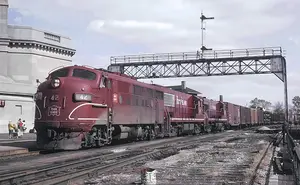
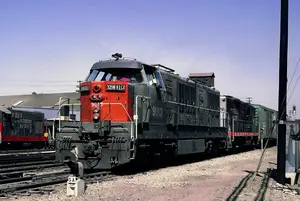
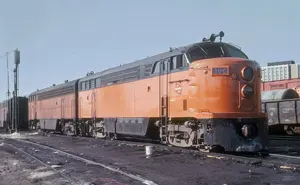
Freight went to Electro-Motive and stayed there for a generation. F3s and F7s, including Texas & New Orleans F7s, handled the through trains in black and orange, the Black Widow scheme, and then in the scarlet and gray that fans called the bloody nose. Hood units replaced the cabs. From the SD7 on, the railroad preferred Electro-Motive six-axle power: SD9s, three DD35s, the SD45, and then the SD45T-2 and SD40T-2 tunnel motors, which took cooling air in low on the frame so the intakes would still breathe in a snowshed or a tunnel. General Electric U25Bs and U33Cs were the other road fleet of those years. GP9s worked locals and the Peninsula commute, later beside three GP40P-2s. In the 1990s the new locomotives were GP60s and SD70Ms from General Motors Diesel in London, Ontario, and a General Electric road fleet of C44-9Ws and AC4400CWs, plus three MotivePower MK5000Cs.
Yards began with an SW1 in February 1939 and ran on through Baldwin and Fairbanks-Morse switchers, Alco switchers, and the later SW1500s and MP15s. The hydraulic experiment stayed small. From 1970 into 1989 Sacramento, and for a few years Houston, rebuilt Electro-Motive units the railroad already owned. Those programs were R8, then GRIP, then M-99 on the SD40s and SD45s. The rebuilt numbers are the same frames.
Locomotives numbered for the Texas & New Orleans are in the tables below. Cotton Belt locomotives, including SD45T-2s 9315–9343, are the Cotton Belt diesel roster. Northwestern Pacific, Pacific Electric, San Diego & Arizona Eastern, and Visalia Electric are not given separate number blocks in these tables. The company story is the Southern Pacific page, and the steam classes are the steam roster.
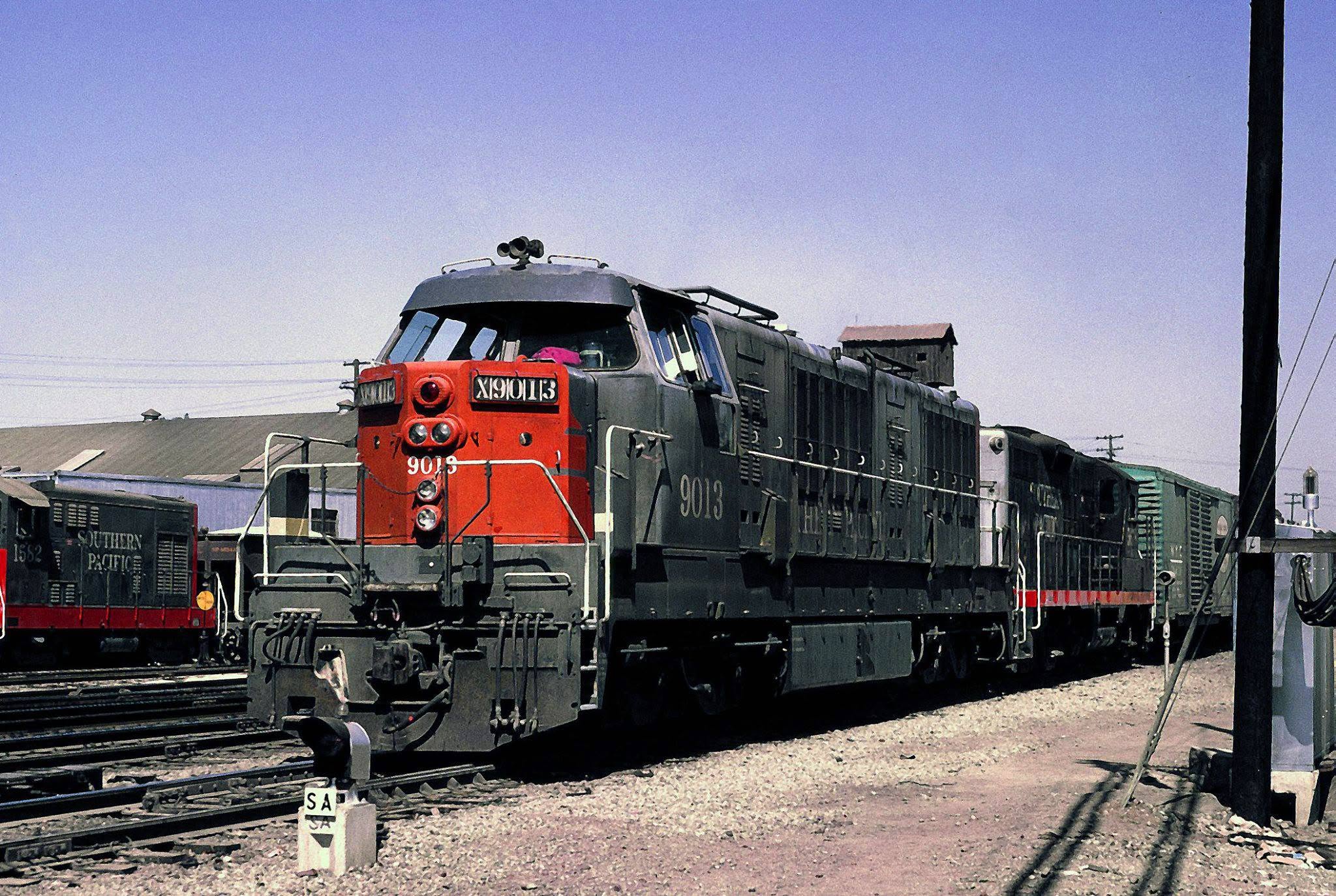
Krauss-Maffei ML-4000 hood unit 9013 at College Park in San Jose in August 1965, still in its as-built number. The system renumbering later made it 9116. Drew Jacksich photo.
On this page: At a glance · Numbers · Rebuilds · Alco · Baldwin · Fairbanks-Morse · Electro-Motive · General Electric · Krauss-Maffei · MotivePower
At a glance
| Item | Detail |
|---|---|
| Railroad | Southern Pacific. Mark SP. Company Southern Pacific |
| Builders | Electro-Motive, Alco, Baldwin, Fairbanks-Morse, General Electric, Krauss-Maffei, and MotivePower |
| Passenger | Alco PA cabs, a small E7 fleet, one E8A, and nine E9As. FP7s on the mountain trains. Daylight, Lark, and Sunset. Joint City of San Francisco E units |
| Freight cabs | F3 and F7, including Texas & New Orleans F7s. Black Widow, then scarlet and gray |
| Six-axle hoods | SD9s, SD45s, and the SD45T-2 and SD40T-2 tunnel motors. Low air intakes for snowsheds and tunnels. Donner Pass |
| Commute | Peninsula trains with GP9s and GP40P-2s 3197–3199. Train Masters later in that service. The modern operator is Caltrain |
| General Electric | U25Bs and U33Cs, then C44-9Ws and AC4400CWs in the 1990s |
| Hydraulics | Krauss-Maffei ML-4000s and three Alco C643DHs. A short experiment |
| Yards | Electro-Motive switchers from 1939, Baldwin and Fairbanks-Morse switchers, Alco S-series switchers, then SW1500s and MP15s |
| Paint | Black Widow, then scarlet and gray. A short orange variant between them was called Halloween. Kodachrome belongs to the Santa Fe–Southern Pacific attempt |
| 1965 numbers | Four digits. Switchers 1100–2999, passenger 3000–3399, freight from 3400 up |
| Rebuilds | R8, 1970–1976. GRIP, 1977–1980. M-99, also called GRIP II, on SD40s and SD45s through 1989. Same frames |
| Subsidiaries | Texas & New Orleans numbers are in these tables. Cotton Belt locomotives are the Cotton Belt diesel roster |
| Steam | Southern Pacific steam roster |
Numbers
Before 1965 the class and the number did not say what a locomotive was. A DF-113 was a Texas & New Orleans Baldwin. A DF-114 was a Pacific Lines SD7. Three-digit numbers on the Texas and Louisiana lines duplicated Cotton Belt numbers, and by then those units were pooled with the rest of the system. In the December 1965 issue of the Southern Pacific Bulletin, W. D. Lamprecht, vice president–system operations, laid out a new system. Every locomotive received four digits. Switchers took 1100–2999, passenger locomotives 3000–3399, and freight locomotives 3400 upward. Inside each band the numbers ran by type and by ascending horsepower. New numbers were chosen so that an old number and a new number would not be on two locomotives at the same time while the changeover ran. Units under 800 horsepower, and units due for retirement by 1970, kept their old numbers.
The class mark in the cab was rebuilt at the same time. The first letter is the builder: A Alco, B Baldwin, E Electro-Motive, F Fairbanks-Morse, G General Electric, K Krauss-Maffei. The sample in the bulletin is EF415AC-1. E is Electro-Motive, F is freight, 4 is the number of axles, 15 is horsepower in hundreds, A is a cab, C in that sample is Cotton Belt ownership, and 1 is the first group of that class. The railroad applied the new numbers as locomotives came through the shops.
The full old-to-new book is not printed here. A few blocks show how it worked. The C628s came as 4845–4869 and demonstrators 4870–4873, became 7100–7128 in the 1965 system, and later 3110–3136. SD35s 4816–4844 became 6900–6928. The three DD35s came as 8400–8402, then 9500–9502, then 9900–9902, and stayed in service until 1979. Krauss-Maffei cabs 9000–9002 became 9100–9102, the three former Rio Grande cabs became 9103–9105, and hoods 9003–9017 became 9106–9120. By 1972 the sixteen Train Masters were 3020–3035. GP9 5825 was still wearing its builder number at Bayshore in January 1965, before that bulletin had been carried out. GP9 3318 in June 1970 and GP9 3841 on the Santa Cruz Local in September 1987 are later numbers. The new number for 5825 is not given here.
Some blocks were used twice, years apart. GP30s 7400–7407 and the later SD45Rs both used 7400. DD35s 8400–8402 and SD40s 8400–8409 both used the low 8400s. Train Masters 4800–4815 and the 1980 GP38-2s both used 4800. The SD35s that had occupied 4816–4844 were already in the 6900s by the time those GP38-2s arrived. DD35s, SD45Xs, and two SD45T-2Rs all touched 9500. The C628s left 4845–4869 in 1965. The GP38-2s stop at 4844.
Between Black Widow and scarlet and gray, some switchers and passenger cabs wore a short-lived solid-orange scheme that fans called Halloween. The red and yellow Kodachrome scheme belongs to the Santa Fe–Southern Pacific attempt, which is a separate story.
Rebuilds
The rebuild programs used locomotives the railroad already owned. From 1970 through 1976 the work was called R8, at Sacramento and at Houston. Units were sold to the Southern Pacific Equipment Company and leased back, and the class suffix was E. Railfans said GP9E and SD9E. The railroad’s model column stayed GP9 and SD9. GP9 3434 became 3300 in February 1970 and 2886 in 1978. SD9 3810 became 4300 in August 1970. From March 1971 through June 1974, Houston rebuilt 71 switchers: three SW7s, nine SW9s, ten SW900s, eleven SW1200s, and thirty-eight NW2s. No SW7 appears in the Southern Pacific new-build rows below. The three SW7s were locomotives the system already had.
A letter of December 6, 1976, closed that work. In January 1977 the equipment company was merged into the railroad, and the suffix changed from E to R. The internal name of the next program was General Repair and Improvement Program, GRIP. Published lists and railfans have also called it General Rehabilitation and Improvement Program. The work was at Sacramento only, on GP9s, SD9s, SD35s, and GP20s. GP9 3843 came out as a GP9E in December 1976. GP9 3844 came out as a GP9R in January 1977. The SD7s were finished from March 1979 through June 1980 as SD7Rs 1500–1542, class EF615-R1. A 1981 company review printed those units as SD7E. One GP35R was done at Sacramento. Thirty-four more were done by Morrison-Knudsen, and twenty-six by Canadian National. SD35s upgraded under the E suffix kept 2,500 horsepower, class EF625-E1. SD35Rs were derated to 2,000 horsepower, class EF620-R1. The railroad preferred the word upgraded.
M-99, also called GRIP II, ran at Sacramento from late 1979 through late 1989 and took SD40s and SD45s only. The SD45s numbered 8800–9156 were the pool that program drew from. The SD40s numbered 8400–8488 were the SD40 pool. Those pools are wider than the groups Sacramento actually released. The first SD45R was 7400, out in December 1979 from SD45 8809. The first SD40R was 7300, out in March 1980 from SD40 8433. The SD45Rs were 7400–7566. The SD40Rs were 7300–7385, the last of them in August 1981. The SD45Rs kept the 20-cylinder engine and were rated at 3,200 horsepower, down from 3,600. Documents often called them SD45-2s. Later notes do not all agree on units that were turned back up. The SD40Rs received Dash-2 electrical equipment. The railroad called them SD40Rs. Union Pacific lists that group as SD40-2s. One locomotive, 7399, was released in October 1981 from SD45 8837 with a 16-cylinder, 3,000-horsepower engine in the original SD45 carbody. It is called both an SD40R and an SD44R.
The tunnel-motor half of the program was 126 SD45T-2Rs, numbered 6767–6892, released from April 1986 through December 1989. The first two were briefly 9500 and 9501. Those numbers were already on Santa Fe SF30Cs, and the two units became 6767 and 6768 in August 1986. The first four wore the proposed Santa Fe–Southern Pacific yellow and red. None of them left Sacramento in speed lettering. Cotton Belt 6888–6892 wore Cotton Belt initials on the nose. No. 6892, former Southern Pacific 9219, left the shop in December 1989. It was the last GRIP locomotive, and it was the end of locomotive work at Sacramento Shops. Later rebuilds went to Denver, and then to Morrison-Knudsen. Sacramento built the Dash-2 electrical cabinets in its own shop rather than buying them from Electro-Motive.
Alco
Alco was the passenger builder. Counting the Texas & New Orleans cabs, the railroad finished with 51 PA cabs and 13 boosters: 24 PA-1s, 27 PA-2s, 6 PB-1s, and 7 PB-2s. The Cotton Belt PA-1s 300 and 301 are a different railroad and are not in that 51. On a Southern Pacific pair the two cabs were A and C and the booster was B. The specification page is the Alco PA article. The last new Alco passenger cabs were PA-2s 6035–6045 in the fall of 1953.
The Century purchases were trials beside the Electro-Motive road fleet. Twenty-five C628s, plus four demonstrators, were the six-axle freight units of 1964 and 1965. Two of the 1965 numbers, 7115 and 7121, were later rebuilt as slugs 1000 and 1001. Ten C415 center-cabs arrived in December 1966 for yard and transfer work. Three C643DH cabs, 9018–9020, were the hydraulic experiment of 1964, with two 12-cylinder 251 engines and a Voith transmission. They were gone by the early 1970s. The C628 and Century articles cover the models.
The railroad also used Alco yard switchers, the HH660 and the S-1, S-2, S-3, S-4, and S-6, some of them numbered for the Texas & New Orleans, and road-switchers including the RS-11 and the RS-32. Six-axle Alcos included the RSD-5, the RSD-12, the RSD-15, and the C630. Those models are not given builder rows in this table.
| Model | Road numbers | Qty | Serial | Order | Built | Notes |
|---|---|---|---|---|---|---|
| PA-1 | 6005A, 6005C | 2 | 75783–75784 | — | May 1948 | A and C are the two cabs of a pair |
| PA-1 | 6006A, 6006C | 2 | 76072–76073 | — | June 1948 | — |
| PA-1 | 6007A, 6007C | 2 | 76074–76075 | — | July 1948 | — |
| PA-1 | 6008A, 6008C–6010A, 6010C | 6 | 77097–77102 | — | August 1949 | — |
| PA-1 | 200A, 200B–202A, 202B | 6 | 77085–77090 | — | June 1949 | Texas & New Orleans |
| PA-1 | 203A, 203B | 2 | 77091, 77092 | — | July 1949 | Texas & New Orleans |
| PA-1 | 204A, 204B–205A, 205B | 4 | 77093–77096 | — | August 1949 | Texas & New Orleans |
| PB-1 | 6005B–6007B | 3 | 75607–75609 | — | May–June 1948 | — |
| PB-1 | 6008B–6010B | 3 | 75786–75788 | — | August 1949 | — |
| PA-2 | 6019–6020 | 2 | 77999–78000 | — | August 1950 | — |
| PA-2 | 6021–6022 | 2 | 78001–78002 | — | September 1950 | — |
| PA-2 | 6023 | 1 | 78740 | — | April 1952 | — |
| PA-2 | 6024–6027 | 4 | 79036–79039 | — | April–May 1952 | — |
| PA-2 | 6028–6033 | 6 | 80434–80439 | — | May–June 1953 | — |
| PA-2 | 6034 | 1 | 80443 | — | September 1953 | — |
| PA-2 | 6035–6045 | 11 | 80835–80845 | — | September–October 1953 | Last new Alco passenger cabs |
| PB-2 | 5918–5919 | 2 | 78219–78220 | — | August–September 1950 | — |
| PB-2 | 5920–5921 | 2 | 78212–78213 | — | April 1952 | — |
| PB-2 | 5922–5924 | 3 | 80607–80609 | — | May–June 1953 | — |
| C628 | 4870–4873 | 4 | 3376-01–3376-04 | 3376 | May 1964 | Alco demonstrators 628-1 through 628-4. Later 7100–7103, then 3110–3113 |
| C628 | 4845–4869 | 25 | 3401-01–3401-25 | 3401 | March–April 1965 | Later 7104–7128, then 3114–3136. Nos. 7115 and 7121 became slugs 1000 and 1001 |
| C415 | 2400–2409 | 10 | 3458-01–3458-10 | 3458 | December 1966 | Center-cab switchers. No. 2407 later Burlington Junction 702. No. 2409 later Burlington Junction 21 |
| C643DH | 9018–9020 | 3 | — | — | 1964 | Twin 12-251C engines and Voith hydraulic drive. Gone by the early 1970s |
Baldwin
Baldwin’s share was heaviest in the yards and on the local road jobs of the late 1940s and early 1950s. The ten DS-4-4-1000s of September 1948 are the switcher group with a clean construction-number run. The AS-616 was the big road-switcher: 51 cabs, five boosters, and eight Texas & New Orleans cabs. The boosters were built as 5501–5505 and later became 4901–4905. Nos. 5253 and 5274 are at the Western Pacific Railroad Museum. The railroad also used VO-660s, VO-1000s, S-12s, S-10s, and DRS-6-6-1500s. Those groups are not given builder rows here. The switcher article is the Baldwin DS-4-4-1000.
| Model | Road numbers | Qty | Serial | Order | Built | Notes |
|---|---|---|---|---|---|---|
| DS-4-4-1000 | 1393–1402 | 10 | 73933–73942 | 776–785 | September 1948 | Specification numbers 776–785 |
| AS-616 | 5228–5278 | 51 | — | — | — | Cabs. Nos. 5253 and 5274 are at the Western Pacific Railroad Museum |
| AS-616 | 5501–5505 | 5 | — | — | — | Boosters. Later 4901–4905 |
| AS-616 | 177–184 | 8 | — | — | — | Texas & New Orleans cabs |
Fairbanks-Morse
Fairbanks-Morse sold the railroad two very different locomotives. The H12-44 was an ordinary yard switcher, 45 of them, including Texas & New Orleans 119 and 120. The Train Master was the opposite, a 2,400-horsepower hood unit that stayed in freight and then in Peninsula commute service. Demonstrators TM-3 and TM-4 became 4800 and 4801 in December 1953. By 1972 all sixteen were numbered 3020–3035. No. 3035 was at San Jose in May 1965, and 3022 was at Bayshore in October 1971. In the 1950s, 4802 and 4803 worked at 3rd & Townsend. The 1980 GP38-2s reused the old 4800 block after the Train Masters had moved into the 3000s. The model pages are the H12-44 and the Train Master.
| Model | Road numbers | Qty | Serial | Order | Built | Notes |
|---|---|---|---|---|---|---|
| H12-44 | 1486–1490 | 5 | 12L653–12L657 | LD140 | September 1952 | — |
| H12-44 | 1491 | 1 | 12L658 | LD140 | October 1952 | — |
| H12-44 | 1529–1535 | 7 | 12L760–12L766 | LD154 | May 1953 | — |
| H12-44 | 1536–1538 | 3 | 12L771–12L773 | LD154 | August 1953 | — |
| H12-44 | 1568–1571 | 4 | 12L833–12L836 | LD186 | January 1956 | — |
| H12-44 | 1572–1573 | 2 | 12L976–12L977 | LD186 | January 1956 | — |
| H12-44 | 1574 | 1 | 12L978 | LD186 | February 1956 | — |
| H12-44 | 119–120 | 2 | 12L979–12L980 | LD186 | February 1956 | Texas & New Orleans |
| H12-44 | 1577–1584 | 8 | 12L1062–12L1069 | LD201 | October 1956 | — |
| H12-44 | 1585–1586 | 2 | 12L1070–12L1071 | LD201 | November 1956 | — |
| H12-44 | 1587–1594 | 8 | 12L1072–12L1079 | LD205 | January 1957 | — |
| H12-44 | 1595–1596 | 2 | 12L1080–12L1081 | LD205 | February 1957 | — |
| Train Master | 4800–4801 | 2 | 24L732–24L733 | LD165 | May 1953 | Demonstrators TM-3 and TM-4. To the Southern Pacific in December 1953. Later in 3020–3035 |
| Train Master | 4810–4813 | 4 | 24L787–24L790 | LD164B | November 1953 | — |
| Train Master | 4802–4805 | 4 | 24L791–24L794 | LD164A | December 1953 | — |
| Train Master | 4806–4809 | 4 | 24L803–24L806 | LD164A | December 1953 | — |
| Train Master | 4814–4815 | 2 | 24L800–24L801 | LD164B | February 1954 | — |
Electro-Motive
Electro-Motive was the railroad’s road power. The switchers run from SW1 1000, built in February 1939 as a stock demonstrator, through the MP15ACs of 1975. F3s and F7s were the freight cabs, and the Texas & New Orleans F7s are in the same table. Five E7 cabs and ten E7 boosters were numbered for the Southern Pacific. Nine further E-unit carbodies in the table were joint City of San Francisco locomotives. SF-1 was later sold to the Southern Pacific and became 6011A. GP9s took the local freights and the Peninsula commute. After the covered wagons, the preference was the six-axle hood: SD7s and SD9s, then SD45s, then the tunnel motors. Ten SDP45s, 3200–3209, were built in 1967 into the passenger number series. GP40P-2s 3197–3199 were the commute cabs. The GP60s and the SD70Ms were built by General Motors Diesel in London, Ontario. E9A 6051 is at the California State Railroad Museum in Daylight paint and has run for the museum. The freight-cab article is the F7, and the last passenger cab is the E9.
Cotton Belt orders are left on the Cotton Belt diesel roster. That includes the GP60s numbered 9620–9714, which sit between Southern Pacific 9619 and 9715, and SD45T-2s 9315–9343. Cotton Belt SD45 8971, wreck-rebuilt as Southern Pacific 9156, stays on that page as well.
| Model | Road numbers | Qty | Serial | Order | Built | Notes |
|---|---|---|---|---|---|---|
| SW1 | 1000 | 1 | 804 | E257 | February 1939 | Stock demonstrator 804 |
| SW1 | 1004–1009 | 6 | 975–980 | E281 | November 1939 | — |
| SW1 | 1010–1016 | 7 | 1316–1322 | E385 | April–July 1941 | — |
| SW1 | 11 | 1 | 1323 | E385 | July 1941 | Texas & New Orleans |
| NW2 | 1310–1319 | 10 | 1353–1362 | E395 | June–July 1941 | — |
| NW2 | 1403–1405 | 3 | 7294–7296 | E1045 | February 1949 | — |
| NW2 | 1406–1425 | 20 | 7297–7316 | E1045 | April–June 1949 | — |
| NW2 | 72–79 | 8 | 7317–7324 | E1045 | March 1949 | Texas & New Orleans |
| NW2 | 80–88 | 9 | 7325–7333 | E1045 | June and August 1949 | Texas & New Orleans |
| SW8 | 12–16 | 5 | 17159–17163 | 4165 | April 1953 | Texas & New Orleans |
| SW8 | 4604–4611 | 8 | 17331–17338 | 4180 | January and March 1953 | — |
| SW8 | 4612–4621 | 10 | 18347–18356 | 4179 | June–July 1953 | — |
| SW8 | 4622–4623 | 2 | 19495–19496 | 4256 | January 1954 | — |
| TR6 | 4600 (A) | 1 | 13549 | 4147 | November 1950 | Electro-Motive demonstrator 1600 |
| TR6 | 4700 (B) | 1 | 13550 | 4147 | November 1950 | Electro-Motive demonstrator 1600B |
| TR6 | 4601–4603 (A) | 3 | 15084–15086 | 4100 | October 1951 | — |
| TR6 | 4701–4703 (B) | 3 | 15117–15119 | 4100 | October 1951 | — |
| SW900 | 4624–4625 | 2 | 19526–19527 | 4273 | April 1954 | — |
| SW900 | 4626–4633 | 8 | 19641–19648 | 4276 | June 1954 | — |
| SW9 | 108–112 | 5 | 12865–12869 | 4075 | April 1953 | Texas & New Orleans |
| SW1200 | 113–118 | 6 | 19486–19491 | 4255 | February 1954 | Texas & New Orleans |
| SW1200 | 123–128 | 6 | 22906–22911 | 4382 | February–March 1957 | Texas & New Orleans |
| SW1200 | 1597–1606 | 10 | 29638–29647 | 4469 | December 1964 and February 1965 | — |
| SW1200 | 1607–1623 | 17 | 30239–30255 | 4477 | May–November 1965 | — |
| SW1500 | 2463–2480 | 18 | 33123–33140 | 4518 | September 1967 | — |
| SW1500 | 2450–2462 | 13 | 33141–33153 | 7997 | August–September 1967 | — |
| SW1500 | 2493–2510 | 18 | 33980–33997 | 7109 | June–July 1968 | — |
| SW1500 | 2523–2552 | 30 | 35216–35245 | 4561 | July–November 1969 | — |
| SW1500 | 2553–2578 | 26 | 35789–35814 | 4570 | January–April 1970 | — |
| SW1500 | 2591–2612 | 22 | 4608-1–4608-22 | 4608 | October–November 1971 | — |
| SW1500 | 2613–2679 | 67 | 4608-23–4608-89 | 4608 | April–August 1972 | — |
| SW1500 | 2680–2689 | 10 | 72631-1–72631-10 | 72631 | April–May 1973 | — |
| MP15DC | 2690–2696 | 7 | 73625-1–73625-7 | 73625 | December 1974 | — |
| MP15DC | 2697–2701 | 5 | 74697-1–74697-5 | 74697 | January–February 1975 | — |
| MP15AC | 2732–2735 | 4 | 756053-1–756053-4 | 756053 | October 1975 | — |
| MP15AC | 2702–2731, 2736–2759 | 54 | 756064-1–756064-54 | 756064 | August–September 1975 | Nos. 2732–2735 are a separate order |
| F3A | 6100A, 6100D–6101A, 6101D | 4 | 4502–4505 | E811 | May 1947 | — |
| F3A | 6102A, 6102D–6119A, 6119D | 36 | 4506–4541 | E811 | October 1947–January 1948 | — |
| F3A | 6120A, 6120D–6139A, 6139D | 40 | 6903–6942 | E1035 | October 1948–February 1949 | — |
| F3B | 6100B, 6100C–6101B, 6101C | 4 | 4542–4545 | E811 | May 1947 | — |
| F3B | 6102B, 6102C–6119B, 6119C | 36 | 4546–4581 | E811 | October 1947–January 1948 | — |
| F3B | 6120B, 6120C–6139B, 6139C | 40 | 7066–7105 | E1035 | October 1948–February 1949 | — |
| F7A | 6140A, 6140D–6142A, 6142D | 6 | 6943–6948 | E1036 | June 1949 | — |
| F7A | 6143A, 6143D–6159A, 6159D | 34 | 6949–6982 | E1310 | June 1949 | — |
| F7A | 6160A, 6160D–6169A, 6169D | 20 | 7106–7125 | E1310 | August and October 1949 | — |
| F7A | 6240–6279 | 40 | 7214–7253 | E1044 | December 1949–January 1950 | — |
| F7A | 6280–6295 | 16 | 9237–9252 | 3015 | February 1950 | — |
| F7A | 6296–6339 | 44 | 10601–10644 | 3039 | October–December 1950 | — |
| F7A | 6340–6367 | 28 | 12745–12772 | 3071 | August 1951 | — |
| F7A | 6368–6377 | 10 | 12801–12810 | 3125 | September 1951 | — |
| F7A | 338–353 | 16 | 12811–12826 | 3126 | September 1951 | Texas & New Orleans |
| F7A | 6378–6405 | 28 | 16559–16586 | 3107 | July–August 1952 | — |
| F7A | 6406–6423 | 18 | 17172–17189 | 3153 | November 1952 | — |
| F7A | 354–363 | 10 | 17208–17217 | 3157 | December 1952–January 1953 | Texas & New Orleans |
| F7A | 6440–6445 | 6 | 18154–18159 | 3166 | February 1953 | — |
| F7A | 364–375 | 12 | 18357–18368 | 3167 | May–July 1953 | Texas & New Orleans |
| F7A | 376–381 | 6 | 18369–18374 | 3167 | March 1953 | Texas & New Orleans |
| F7B | 6140B, 6140C–6142B, 6142C | 6 | 7126–7131 | E1036 | June 1949 | — |
| F7B | 6143B, 6143C–6149B, 6149C | 14 | 7132–7145 | E1310 | June 1949 | — |
| F7B | 8140–8179 | 40 | 7254–7293 | E1044 | December 1949–January 1950 | — |
| F7B | 6150B, 6150C–6169B, 6169C | 40 | 8187–8226 | E1310 | June–August 1949 | — |
| F7B | 8180–8195 | 16 | 9253–9268 | 3015 | February 1950 | — |
| F7B | 8196–8211 | 16 | 10645–10660 | 3039 | October–November 1950 | — |
| F7B | 8212–8239 | 28 | 11881–11908 | 3039 | November–December 1950 | — |
| F7B | 8240–8267 | 28 | 12773–12800 | 3071 | August 1951 | — |
| F7B | 538–541 | 4 | 12827–12830 | 3126 | September 1951 | Texas & New Orleans |
| F7B | 8268–8285 | 18 | 17190–17207 | 3153 | November 1952 | — |
| F7B | 546–547, 542–545 | 6 | 17218–17223 | 3157 | December 1952–January 1953 | Texas & New Orleans. Road numbers are not in serial order |
| F7B | 8296–8303 | 8 | 18146–18153 | 3160 | February–March 1953 | — |
| F7B | 8290, 8292, 8294, 8291, 8293, 8295 | 6 | 18160–18165 | 3166 | February 1953 | Road numbers are not in serial order |
| F7B | 548–553 | 6 | 18375–18380 | 3167 | May–July 1953 | Texas & New Orleans |
| FP7 | 6446–6461 | 16 | 18130–18145 | 3160 | February–March 1953 | — |
| EA2 | SF1 | 1 | 744 | E162 | December 1937 | Joint City of San Francisco unit. Union Pacific, Southern Pacific, and Chicago & North Western |
| EB2 | SF2–SF3 | 2 | 745–746 | E163 | December 1937 | Joint City of San Francisco unit. Union Pacific, Southern Pacific, and Chicago & North Western |
| EA6 | SF4 | 1 | 1175 | E341 | March 1941 | Joint City of San Francisco unit. Union Pacific, Southern Pacific, and Chicago & North Western |
| EB6 | SF5–SF6 | 2 | 1176–1177 | E342 | March 1941 | Joint City of San Francisco unit. Union Pacific, Southern Pacific, and Chicago & North Western |
| EA7 | 907A | 1 | 3509 | E690 | August 1946 | Joint City of San Francisco unit. Union Pacific, Southern Pacific, and Chicago & North Western |
| EA7 | 6003A–6004A | 2 | 4150–4151 | E807 | August 1947 | — |
| EA7 | 6000A–6002A | 3 | 4152–4154 | E767 | April 1947 | — |
| EB7 | 908B–909B | 2 | 3515–3516 | E690 | August 1946 | Joint City of San Francisco unit. Union Pacific, Southern Pacific, and Chicago & North Western |
| EB7 | 6003B, 6003C, 6004B | 3 | 4155–4157 | E807 | August 1947 | — |
| EB7 | 6004C | 1 | 4217 | E807 | August 1947 | — |
| EB7 | 6000B, 6000C–6002B, 6002C | 6 | 4218–4223 | E767 | April 1947 | — |
| E8A | 6018 | 1 | 9317 | 2010 | January 1950 | — |
| E9A | 6046–6054 | 9 | 20095–20103 | 2068A | December 1954 | No. 6051 is at the California State Railroad Museum in Daylight paint and has run for the museum |
| GP9 | 400–410 | 11 | 19461–19471 | 5323 | May 1954 | Texas & New Orleans |
| GP9 | 240–249 | 10 | 19472–19481 | 5334 | May 1954 | Texas & New Orleans |
| GP9 | 280–283 | 4 | 19482–19485 | 5335 | May 1954 | Texas & New Orleans |
| GP9 | 5600–5602 | 3 | 19558–19560 | 5346 | June 1954 | — |
| GP9 | 5603 | 1 | 19564 | 5346 | June 1954 | — |
| GP9 | 417–428 | 12 | 19965–19976 | 5367 | May 1955 | Texas & New Orleans |
| GP9 | 5622–5625 | 4 | 19977–19980 | 5369 | April 1955 | — |
| GP9 | 411–416 | 6 | 19992–19997 | 5368 | October 1954 | Texas & New Orleans |
| GP9 | 5604–5621 | 18 | 20129–20146 | 5377 | January–March 1955 | — |
| GP9 | 5626–5719 | 94 | 21319–21412 | 5436 | February–May 1956 | — |
| GP9 | 429–438 | 10 | 21413–21422 | 5437 | May 1956 | Texas & New Orleans |
| GP9 | 439–448 | 10 | 22893–22902 | 5515 | December 1956 | Texas & New Orleans |
| GP9 | 5730–5799 | 70 | 22912–22981 | 5516 | January–April 1957 | — |
| GP9 | 5800–5844 | 45 | 25100–25144 | 5595 | March–April 1959 | — |
| GP9 | 449–458 | 10 | 25145–25154 | 5596 | February–March 1959 | Texas & New Orleans |
| GP9 | 5872–5891 | 20 | 25631–25650 | 5608 | August–September 1959 | — |
| GP20 | 7234–7237 | 4 | 26107–26110 | 5625 | August 1960 | Electro-Motive demonstrators 5625–5628 |
| GP20 | 7200–7223 | 24 | 27087–27110 | 5634 | January–March 1962 | — |
| GP20 | 7224–7233 | 10 | 27345–27354 | 5634 | March–April 1962 | — |
| GP30 | 7400–7407 | 8 | 28182–28189 | 7646 | March 1963 | These numbers were later reused by SD45Rs |
| GP35 | 7408–7439 | 32 | 28462–28493 | 7695 | December 1963–February 1964 | — |
| GP35 | 7440–7464 | 25 | 28867–28891 | 7695 | February–March 1964 | — |
| GP35 | 7465–7484 | 20 | 29551–29570 | 5669 | May–June 1964 | — |
| GP35 | 7700–7727 | 28 | 29702–29729 | 7756 | December 1964–February 1965 | — |
| GP35 | 7728–7761 | 34 | 30135–30168 | 7789 | April–June 1965 | — |
| GP35 | 7762–7782 | 21 | 30171–30191 | 7808 | July–November 1965 | — |
| GP38-2 | 4800–4844 | 45 | 78272-1–78272-45 | 78272 | May–July 1980 | These numbers had been used by the Train Masters |
| GP40X | 7200–7201, 7230–7231 | 4 | 766016-1–766016-4 | 766016 | February 1978 | Not a continuous number block |
| GP40-2 | 7608–7627 | 20 | 776071-1–776071-20 | 776071 | February–April 1978 | — |
| GP40-2 | 7658–7677 | 20 | 786266-1–786266-20 | 786266 | March 1980 | — |
| GP40-2 | 7940–7959 | 20 | 796354-1–796354-20 | 796354 | April–June 1980 | — |
| GP40-2 | 7240–7247 | 8 | 847009-1–847009-8 | 847009 | November 1984 | — |
| GP40P-2 | 3197–3199 | 3 | 74619-1–74619-3 | 74619 | November 1974 | Peninsula commute cabs |
| GP60 | 9600–9619 | 20 | 866185-1–866185-20 | 866185 | December 1987–February 1988 | Built by General Motors Diesel Division |
| GP60 | 9715–9769 | 55 | 907137-1–907137-55 | 907137 | April–July 1991 | Built by General Motors Diesel Division |
| GP60 | 9770–9794 | 25 | 936428-1–936428-25 | 936428 | November 1993–January 1994 | Built by General Motors Diesel Division |
| SD7 | 5308 | 1 | 15624 | 7512 | October 1952 | Electro-Motive demonstrator 990 |
| SD7 | 5279–5293 | 13 | 17144–17156 | 5157 | November 1952–January 1953 | — |
| SD7 | 5316–5335 | 20 | 18381–18400 | 5188 | August–September 1953 | — |
| SD7 | 5309–5313 | 5 | 18401–18405 | 5282 | July 1953 | — |
| SD7 | 5314 | 1 | 18406 | 5283 | July 1953 | — |
| SD7 | 5315 | 1 | 18407 | 5286 | July 1953 | — |
| SD9 | 5340–5371 | 32 | 19429–19460 | 5322 | March–May 1954 | — |
| SD9 | 5387–5417 | 31 | 19928–19958 | 5365 | February–April 1955 | — |
| SD9 | 5418–5423 | 6 | 19983–19988 | 5365 | April 1955 | — |
| SD9 | 5424–5444 | 21 | 20202–20222 | 5365 | April–May 1955 | — |
| SD9 | 5372–5386 | 15 | 20223–20237 | 5381 | January–February 1955 | — |
| SD9 | 5449–5493 | 45 | 21274–21318 | 5435 | January–May 1956 | — |
| SD35 | 4816–4844 | 29 | 29830–29858 | 7761 | December 1964–April 1965 | Later 6900–6928 |
| DD35 | 8400–8402 | 3 | 28903–28905 | 7699 | April 1964 | Later 9500–9502, then 9900–9902 |
| SD38-2 | 2971–2976 | 6 | 72681-1–72681-6 | 72681 | April 1973 | — |
| SD39 | 5300–5317 | 18 | 33998–34015 | 7110 | August–October 1968 | — |
| SD39 | 5318–5325 | 8 | 35815–35822 | 7219 | April 1970 | — |
| SD40 | 8410–8478 | 69 | 31491–31559 | 7861 | February–May 1966 | — |
| SD40 | 8400–8409 | 10 | 31560–31569 | 7875 | February 1966 | These numbers had been used by DD35s 8400–8402 |
| SD40 | 8479–8488 | 10 | 33671–33680 | 7083 | May–June 1968 | — |
| SDP45 | 3200–3209 | 10 | 32849–32858 | 7955 | May–July 1967 | Numbered in the passenger series |
| SD45 | 8800–8844 | 45 | 31991–32035 | 7887 | August–September 1966 | — |
| SD45 | 8845–8893 | 49 | 32759–32807 | 7954 | February–April 1967 | — |
| SD45 | 8894–8934 | 41 | 32808–32848 | 7971 | April–July 1967 | — |
| SD45 | 8935–8963 | 29 | 33632–33660 | 7082 | February–May 1968 | — |
| SD45 | 8982–9001 | 20 | 34350–34369 | 7138 | December 1968–February 1969 | — |
| SD45 | 9002–9007 | 6 | 34370–34375 | 7163 | February 1969 | — |
| SD45 | 9008–9030 | 23 | 34376–34398 | 7138 | February–April 1969 | — |
| SD45 | 9031–9036 | 6 | 34399–34404 | 7164 | April–May 1969 | — |
| SD45 | 9037–9051 | 15 | 34405–34419 | 7138 | March 1969 | — |
| SD45 | 9069–9103 | 35 | 34904–34938 | 7170 | March–April 1969 | — |
| SD45 | 9104–9123 | 20 | 35196–35215 | 7187 | October–December 1969 | — |
| SD45 | 9124–9151 | 28 | 35761–35788 | 7217 | December 1969–March 1970 | — |
| SD45X | 9500–9502 | 3 | 35741–35743 | 7288 | August–September 1970 | — |
| SD45X | 9503 | 1 | 36806 | 5751 | June 1970 | Electro-Motive demonstrator 4201 |
| SD45X | 9504–9505 | 2 | 36807–36808 | 5751 | February 1971 | Electro-Motive demonstrators 4202–4203 |
| SD40T-2 | 8300–8306 | 7 | 73629-1–73629-7 | 73629 | June–July 1974 | Tunnel motor |
| SD40T-2 | 8350–8356 | 7 | 73685-1–73685-7 | 73685 | June–July 1974 | Tunnel motor |
| SD40T-2 | 8489–8498 | 10 | 776068-1–776068-10 | 776068 | January–February 1978 | Tunnel motor |
| SD40T-2 | 8307–8321 | 15 | 776069-1–776069-15 | 776069 | February–April 1978 | Tunnel motor |
| SD40T-2 | 8357–8371 | 15 | 776070-1–776070-15 | 776070 | February–March 1978 | Tunnel motor |
| SD40T-2 | 8499–8573 | 75 | 786174-1–786174-75 | 786174 | November 1978–February 1979 | Tunnel motor |
| SD40T-2 | 8327–8341 | 15 | 786175-1–786175-15 | 786175 | March–May 1979 | Tunnel motor |
| SD40T-2 | 8377–8391 | 15 | 786201-1–786201-15 | 786201 | May–July 1979 | Tunnel motor |
| SD40T-2 | 8230–8299 | 70 | 786265-1–786265-70 | 786265 | March–July 1980 | Tunnel motor |
| SD45T-2 | 9166–9208 | 43 | 7336-1–7336-43 | 7336 | February–March 1972 | Tunnel motor |
| SD45T-2 | 9209–9260 | 52 | 72601-1–72601-52 | 72601 | April–June 1972 | Tunnel motor |
| SD45T-2 | 9302–9313 | 12 | 73621-1–73621-12 | 73621 | September 1973 | Tunnel motor |
| SD45T-2 | 9344–9370 | 27 | 73674-1–73674-27 | 73674 | January–February 1975 | Tunnel motor |
| SD70M | 9800–9824 | 25 | 936438-1–936438-25 | 936438 | April–May 1994 | Built by General Motors Diesel Division |
General Electric
General Electric was a real second source, and then a late one. Three 44-tonners, 1900–1902, arrived in August 1942. The road fleet of the 1960s and 1970s was the U25B and the U33C. The U25B rows below are 65 locomotives. Some of them were later rebuilt as fuel-tender slugs. The U33C rows are the 212 units delivered from 1969 through early 1975. The railroad also bought U28Bs, U28Cs, U30Cs, and U50s, and later four-axle Dash 7 and Dash 8 units, the B23-7, B30-7, B36-7, and B39-8, plus 70-ton switchers. Those models are not given number rows here. The 1990s road fleet included C44-9Ws 8100–8200 and AC4400CWs numbered in the 100s. The early U25B article is the U25B, and the six-axle fleet is the U33C. The small industrial units are the 44-tonner.
| Model | Road numbers | Qty | Serial | Order | Built | Notes |
|---|---|---|---|---|---|---|
| 44-ton | 1900–1902 | 3 | 15114–15116 | — | August 1942 | — |
| U25B | 7500–7505 | 6 | 34240–34245 | 1325 | March–April 1962 | — |
| U25B | 7515–7527 | 13 | 34685–34697 | 1372 | March 1963 | — |
| U25B | 7506–7514 | 9 | 34698–34706 | 1376 | March–April 1963 | — |
| U25B | 7528–7564 | 37 | 34765–34801 | 1405 | January–March 1964 | — |
| U33C | 8600–8629 | 30 | 36899–36928 | 1981 | January–April 1969 | — |
| U33C | 8630–8644 | 15 | 37032–37046 | 1807 | April–May 1969 | — |
| U33C | 8645–8646 | 2 | 37179–37180 | 1812 | October 1969 | — |
| U33C | 8647–8687 | 41 | 37181–37221 | 1812/1814 | February–June 1970 | — |
| U33C | 8688–8713 | 26 | 38095–38120 | 1871 | October–December 1971 | — |
| U33C | 8714–8737 | 24 | 38121–38144 | 1871 | December 1971–February 1972 | — |
| U33C | 8738–8767 | 30 | 38320–38349 | — | February–March 1972 | — |
| U33C | 8768–8777 | 10 | 38785–38794 | 1811 | January–February 1973 | — |
| U33C | 8778–8785 | 8 | 39297–39304 | 1811 | June–July 1973 | — |
| U33C | 8786–8796 | 11 | 39733–39743 | 1856 | February–April 1974 | — |
| U33C | 8585–8599 | 15 | 39753–39767 | 1842 | December 1974–January 1975 | — |
| C44-9W | 8100–8200 | 101 | — | — | 1994 | Road freight |
Krauss-Maffei
The diesel-hydraulics were a short, famous experiment. Krauss-Maffei built three cab units for the Southern Pacific on October 31, 1961, numbered 9000–9002, and three more the same day for the Denver & Rio Grande Western. The Rio Grande units came to the Southern Pacific in 1964 as 9021–9023. Fifteen hood units, 9003–9017, followed in 1963. The 1965 numbers were 9100–9120. Hood unit 9010 became 9113 and then a simulator car, SPMW 1, later 1166, then 8799, with the gearboxes and Cardan shafts removed. It was retired in 1984, donated to the California State Railroad Museum, and later sold to the Pacific Locomotive Association, which restored it cosmetically as 9010. The model page is the ML-4000.
| Model | Road numbers | Qty | Serial | Order | Built | Notes |
|---|---|---|---|---|---|---|
| ML-4000 | 9000–9002 | 3 | — | — | October 31, 1961 | Cab units. Later 9100–9102 |
| ML-4000 | 9021–9023 | 3 | — | — | October 31, 1961 | Built for the Denver & Rio Grande Western as 4001–4003. To the Southern Pacific in 1964. Later 9103–9105 |
| ML-4000 | 9003–9017 | 15 | — | — | 1963 | Hood units. Later 9106–9120. No. 9010 became the simulator car |
MotivePower
The last odd order was three MK5000Cs, 501–503, built by MotivePower in August 1994. They later became Utah Railway 5001–5003. A following MotivePower order, numbered 9901–9903, went to the Utah Railway and was not a Southern Pacific order.
| Model | Road numbers | Qty | Serial | Order | Built | Notes |
|---|---|---|---|---|---|---|
| MK5000C | 501–503 | 3 | 3092-01–3092-03 | 3092 | August 1994 | Later Utah Railway 5001–5003 |
Related reading
- Southern Pacific Railroad: Map, History, Logo
- Southern Pacific Steam Roster: Post 1900
- Cotton Belt Diesel Roster (All-Time)
- Cotton Belt Railroad: Map, Logo, History, Rosters
- Alco "PA" Locomotives: Restoration, Specs, Engine, Rosters
- Alco "C628" Locomotives: Roster, Data Sheet, Specs
- EMD "F7" Locomotives: Cab, Top Speed, Specs, Rosters
- EMD "E9" Locomotives: Specs, Roster, History
- SP Daylights: Consist, Route, Timetable
- Sunset Limited: Route, Timetables, 1993 Crash
- California State Railroad Museum, Since 1937
Sources
- Andre Kristopans, Electro-Motive production lists preserved at Utah Rails, for the Electro-Motive serials, order numbers, builder dates, and as-built road numbers.
- Don Strack, Utah Rails, for the R8, GRIP, and M-99 programs, the DD35 renumbering and service through 1979, and the pre-1965 class examples DF-113 and DF-114 from Joseph A. Strapac.
- Southern Pacific Bulletin, December 1965, pages 19–20, as transcribed by the San Diego Railroad Museum, for the four-digit numbering system and class EF415AC-1. W. D. Lamprecht, vice president–system operations.
- Joseph A. Strapac, Southern Pacific Historic Diesels, Volume 3, for the E7 on western grades, and his note of May 18, 2013, that the internal name of GRIP was General Repair and Improvement Program.
- Robert Byrne, letter of April 29, 2007, in SP Trainline, for Sacramento building the Dash-2 electrical cabinets.
- The Alco PA, C628, C415, Century, E9, F7, 44-ton, DS-4-4-1000, H12-44, Train Master, AS-616, U25B, U33C, and ML-4000 articles on this site, for those production groups.
- Richard Percy, Espee Archive, for the Alco switcher and road-switcher models named without builder rows, and for the 1972 Train Master numbers 3020–3035.
Recent Articles


-
EMD "F2" Locomotives: Specs, Roster, History
Nov 10, 26 12:22 AM
 EMD F2, the 1,350-horsepower bridge between the FT and the F3. 104 locomotives, July through November 1946. Spotting features, specifications, and the production roster.
-
Southern Pacific Diesel Roster (All-Time)
Nov 10, 26 12:08 AM
 Southern Pacific diesel roster with builder serials, order numbers, Texas and New Orleans numbers, and the 1965 renumbering. Alco, Baldwin, Fairbanks-Morse, Electro-Motive, General Electric, Krauss-Ma…
-
Southern Pacific Steam Roster: Post 1900
Nov 09, 26 11:56 PM
 Southern Pacific steam locomotives built since 1900. Pacific Lines, Texas and Louisiana Lines, cab-forwards, the GS 4-8-4s, and five narrow-gauge Ten-Wheelers. The quantity column counts the rows as p…
-
Canal Street Yard Assessment Stays Open Through December 7
Nov 09, 26 01:07 PM
The FRA signed the Canal Street Yard environmental assessment on November 6, 2026. Public inspection runs through December 7, and meeting dates are not confirmed. -
NS Legacy Cab-Signal Comments Are Due November 9
Nov 09, 26 01:05 PM
 The FRA must receive comments by November 9, 2026, on a Norfolk Southern plan to drop legacy cab signals on 14 line segments and rely on positive train control.
-
Elimination Grant of $27.8 Million Reaches Scott Road in Allen County
Nov 09, 26 12:53 PM
Allen County received $27,878,116, also stated as $27.8 million, to design and build a grade separation where Scott Road crosses Norfolk Southern. -
Vermont Receives $60.3 Million for the Western Corridor
Nov 09, 26 12:45 PM
Vermont will receive $60.3 million to rehabilitate about 60 miles of the Western Corridor. The delegation quote also calls the sum $60 million. -
Burlingame Grade Separation Wins a Federal Grant
Nov 09, 26 10:42 AM
 Rep. Kevin Mullin said on November 5, 2026 that the FRA awarded $90.4 million for the Caltrain Broadway grade separation in Burlingame. Early work is expected in May 2027.
-
Orange County Rail Line Gets a Coastal Permit
Nov 09, 26 10:18 AM
The California Coastal Commission on November 5, 2026 approved a 10-year permit for the San Clemente rail line, including about 690,000 cubic yards of sand. -
Railroad Quiet Zones Are Reinstated in St. Louis
Nov 09, 26 10:14 AM
 St. Louis said on November 6, 2026 that the FRA reinstated the city quiet zones. Horns are to stop after railroad systems are updated.
-
Southern Pacific Railroad: Map, History, Logo
Nov 08, 26 01:58 PM
 The Southern Pacific, from the December 2, 1865 charter and the Big Four to Sprint, the Rio Grande Industries purchase of 1988, and the Union Pacific merger of February 1, 1997.
-
California Awards Flexible Rail Aid to Nine Projects
Nov 08, 26 01:15 PM
CalSTA on November 5, 2026 awarded $66.58 million in flexible State Rail Assistance to nine California projects. Each amount in the summary is a cap, printed as up to. -
CSX Leaves Three Days Out of the Weekly Reports
Nov 08, 26 12:02 PM
CSX told the Surface Transportation Board it cannot recover October 27-29 data for the EP 724 and EP 787 reports covering the week ending October 30, 2026. -
NJ Transit Advances Three Station Housing Projects
Nov 08, 26 11:56 AM
 NJ Transit on November 5, 2026 advanced station projects in Jersey City, Bound Brook, and Morristown. The three are projected to add more than 1,000 homes.
-
River Fox Train Wraps a Locomotive for America 250
Nov 08, 26 11:06 AM
 The River Fox Train in West Sacramento wrapped a locomotive with America 250 markings, the American flag, and the Sacramento skyline. The wrap is expected to stay through 2027.
-
California Keeps Metrolink Service in the 2027 Budget
Nov 07, 26 11:35 PM
 Metrolink says a California State Transportation Agency grant lets the proposed fiscal year 2027 budget keep service at current levels. The board hearing is November 13, 2026.
-
WM's 4-6-6-4 Locomotives (M-2): Specs, Roster, History
Nov 07, 26 04:37 PM
 Western Maryland class M-2, twelve Baldwin 4-6-6-4s numbered 1201-1212, built in 1940 and 1941 for Hagerstown-Connellsville fast freight. Roster, specifications, and retirement in 1952-1953.
-
Missouri Pacific Diesel Roster (All-Time)
Nov 07, 26 04:26 PM
 Missouri Pacific diesel roster with builder serials, order numbers, subsidiary lettering, and renumberings. Alco, Baldwin, Electro-Motive, and General Electric. Texas and Pacific locomotives are on th…
-
Missouri Pacific Steam Roster (Built Since 1900)
Nov 07, 26 04:21 PM
 Missouri Pacific steam locomotives built since 1900. Drury quantity column 1,439. Sedalia rebuilds counted once, 1,407 frames. Last steam was 0-6-0 9301 in November 1955.
-
Missouri Pacific Railroad: Map, Locomotives, Logo, History
Nov 07, 26 04:19 PM
 The Missouri Pacific was a large Midwestern that carried a long history of financial difficulty until later years.
-
LIRR Service Changes Start on November 9
Nov 07, 26 03:15 PM
New Long Island Rail Road schedules start on every branch on Monday, November 9, 2026. Midday and weekend times change. Rush hour does not. Babylon service returns in stages. -
Draft EA Reviews Norfolk Southern Track in London, Ohio
Nov 07, 26 11:35 AM
The Surface Transportation Board environmental office issued a draft assessment on November 6, 2026, for about 0.96 miles of Norfolk Southern track in London, Ohio. Comments are due November 20. -
Metrolink Lines Will Not Run on Three Routes November 7
Nov 07, 26 10:53 AM
Metrolink will not run the Ventura County, Orange County, or Inland Empire-Orange County lines on November 7 and 8, 2026. The advisory says no substitute transportation will be provided. -
Hartford Line Adds a Weekday Round Trip on November 16
Nov 07, 26 10:48 AM
 Connecticut said the Hartford Line adds a weekday New Haven-Hartford round trip on November 16, starts a morning train in Springfield, and extends weekend stops to Windsor and Windsor Locks.
-
Board Issues a Policy Statement on Rail Preemption
Nov 07, 26 10:44 AM
The Surface Transportation Board placed a policy statement on public inspection for the November 9 Federal Register. It reviews existing preemption precedent and says it makes no binding determination… -
NJ Transit Restores Lines After the Newark Drawbridge Stop
Nov 07, 26 10:37 AM
 NJ Transit said Morris and Essex service between Hackettstown and Dover, and Montclair-Boonton service between Hackettstown and Montclair State University, resumed after the Newark Drawbridge stop.
-
EMD "SD35" Locomotives: Data Sheet, Specs, Roster
Nov 06, 26 10:35 PM
 EMD SD35, 2,500 horsepower, 16-cylinder 567D3A, built June 1964 through January 1966. 360 locomotives. Specifications and the production roster by owner, serial, and order.
-
EMD "SDP35" Locomotives: Data Sheet, Specs, Roster
Nov 06, 26 10:32 PM
 EMD SDP35, the steam-generator SD35. 35 locomotives, July 1964 through September 1965. Seaboard Air Line 1100-1119, Atlantic Coast Line 550, Louisville and Nashville 1700-1703, Union Pacific 1400-1409…
-
RJ Corman Will Be Replaced on Part of the Luzerne Lines
Nov 06, 26 01:34 PM
A November 6, 2026 notice says Wilkes-Barre Terminal Railway would acquire about 59.65 miles in Luzerne County and replace R.J. Corman as operator on part of the line. The earliest date is November 22… -
NS Names a Student Hub at the University of Georgia
Nov 06, 26 12:03 PM
 Norfolk Southern said a 100,000 dollar gift named a student-organization hub in Driftmier Engineering Center. The University of Georgia marked the naming on October 26. The space is for 23 clubs.
-
Union Pacific Filed Its Vena Recording Certification
Nov 06, 26 11:56 AM
 Union Pacific filed a November 5, 2026 verified statement that the confidential label is off the March 17 Vena recording and that parties of record received a copy at 3:30 p.m. Eastern.
-
OmniTRAX Adds Tenants at Its Blue Island Hub
Nov 06, 26 10:26 AM
 OmniTRAX has signed new construction-company leases at its 90-acre Blue Island, Illinois, hub and is planning a second phase.
-
Veterans and Active-Duty Members Exceed 16 Percent of Norfolk Southern
Nov 06, 26 10:14 AM
Norfolk Southern said on November 5, 2026, that more than 3,000 veterans and active-duty service members are more than 16 percent of its workforce. This year grants are $100,000 and $50,000. -
BNSF: Merger Would Put Half of U.S. Rail Shipments Under One Railroad
Nov 06, 26 10:00 AM
BNSF chief marketing officer Tom G. Williams told customers on November 3, 2026, that a Union Pacific-Norfolk Southern merger would put about half of U.S. rail shipments under one railroad. Nothing is… -
Amtrak Opens a Winter Fare Sale
Nov 06, 26 09:28 AM
Amtrak opened a Winter Wanderlust sale on November 5, 2026. Book by November 12 for travel from December 1, 2026, through March 14, 2027. Blackout dates apply. Coach and Acela Business only. -
CN and CPKC Report October Grain Records
Nov 06, 26 08:50 AM
 CPKC reported October 2026 grain records in Canada and the United States. CN reported 3.54 million metric tonnes across Canada. The releases do not print a combined total.
-
New Brunswick Transload Gets CN Rail Service
Nov 06, 26 08:49 AM
 CN said on November 4, 2026, that it has started serving AD Gagnon Transload Services near Grand Falls, New Brunswick. The site is three kilometres from the Trans-Canada Highway and lists room for 106…
-
Together, Freight and Passenger Rail Can Grow, Union Pacific Says
Nov 06, 26 08:47 AM
 Union Pacific said on November 5, 2026, that passenger obligations would remain if it combines with Norfolk Southern. The capacity claim is a Union Pacific analysis, not a Surface Transportation Board…
-
FM "C-Liner" Locomotives: Specs, Roster, Photos
Nov 05, 26 11:19 PM
 Fairbanks-Morse Consolidation Line cab units, the C-Liners. 165 locomotives, Beloit and Kingston, March 1950 through February 1955. Models, specs, and production rosters.
-
Atlanta, Birmingham & Coast Railroad: Map, History, Roster
Nov 05, 26 12:03 PM
 Atlanta, Birmingham & Coast, from Brunswick and Waycross to Atlanta and Birmingham. Atlantic Coast Line control at the close of 1926. Merged in January 1946 as the Western Division. Steam roster of th…
-
El Paso & Southwestern Railroad: Map, History, Logo
Nov 05, 26 12:00 PM
 The El Paso & Southwestern, the Phelps Dodge copper railroad from Tucson to the Rock Island at Tucumcari. Southern Pacific control on October 31, 1924.
-
Brightline Says Orlando Service Has Resumed
Nov 05, 26 11:55 AM
 Brightline said on November 5, 2026, that trains to and from Orlando have resumed after weather suspensions in Brevard County. Later that morning the departures page still showed the Orlando segment s…
-
Metra Customers Must Sign Up Again
Nov 05, 26 11:43 AM
Metra says customers who want service alerts must sign up again at metratracker.com. The November 2 story says the new system has launched and the old email list is shut down. A notice on the same pag… -
Norfolk Southern Packs Six Projects Into One Window
Nov 05, 26 11:38 AM
 Norfolk Southern used one 26-hour window on the W Line for six projects in Indiana and Kentucky, including three bridge replacements. The October 27 account does not give the calendar day of the work.
-
CSX: More Time to Comment on an Inspection Waiver
Nov 05, 26 11:29 AM
The Federal Railroad Administration extended comments on a CSX petition for relief from some qualified mechanical inspector rules until December 2, 2026. The November 2 notice does not grant the waive… -
Brightline Expects Orlando Service on Thursday
Nov 05, 26 09:21 AM
Brightline said on November 4, 2026, that it expects trains to and from Orlando to resume on Thursday, November 5. South Florida stations kept running. The departures page still showed the Orlando seg… -
Union Pacific: More Time to Comment on an Inspection Waiver
Nov 05, 26 09:15 AM
The Federal Railroad Administration extended comments on a Union Pacific petition for relief from some qualified mechanical inspector rules until December 2, 2026. The November 2 notice does not grant… -
Wisconsin Opens Comments on the 2027 Freight Plan
Nov 05, 26 09:03 AM
 WisDOT opened the draft 2027 State Freight Plan for comment through December 1, 2026. The plan covers freight rail with highways, harbors, aviation, and intermodal links. Completion is expected in sum…
-
U.S. Rail Traffic Rose 3.5 Percent in the Week Ending October 31
Nov 05, 26 08:52 AM
U.S. railroads moved 514,080 carloads and intermodal units in the week ending October 31, 2026, up 3.5 percent from a year earlier, the Association of American Railroads said on November 4. -
Muni and Bay Area Transit Measures Pass
Nov 05, 26 08:49 AM
 San Francisco Municipal Transportation Agency said on November 4, 2026 that Proposition H and a regional transit measure passed. Proposition H is about 160 million dollars a year for Muni. The regiona…