Staggers Rail Act of 1980: Statute, Contract Rates & the ICC
Last revised: September 10, 2026
By: Adam Burns
President Jimmy Carter signed the Staggers Rail Act on October 14, 1980. It is Public Law 96-448. The statute did not abolish the Interstate Commerce Commission and it did not free every rate. It let railroads write confidential contracts with shippers, raise many common-carrier rates without a suspension hearing, abandon or sell weak branches on a faster clock, and keep the Commission out of a rate case unless the railroad had market dominance and the revenue-to-variable-cost ratio cleared a statutory threshold that settled at 180 percent. That is the cage with the door cracked.
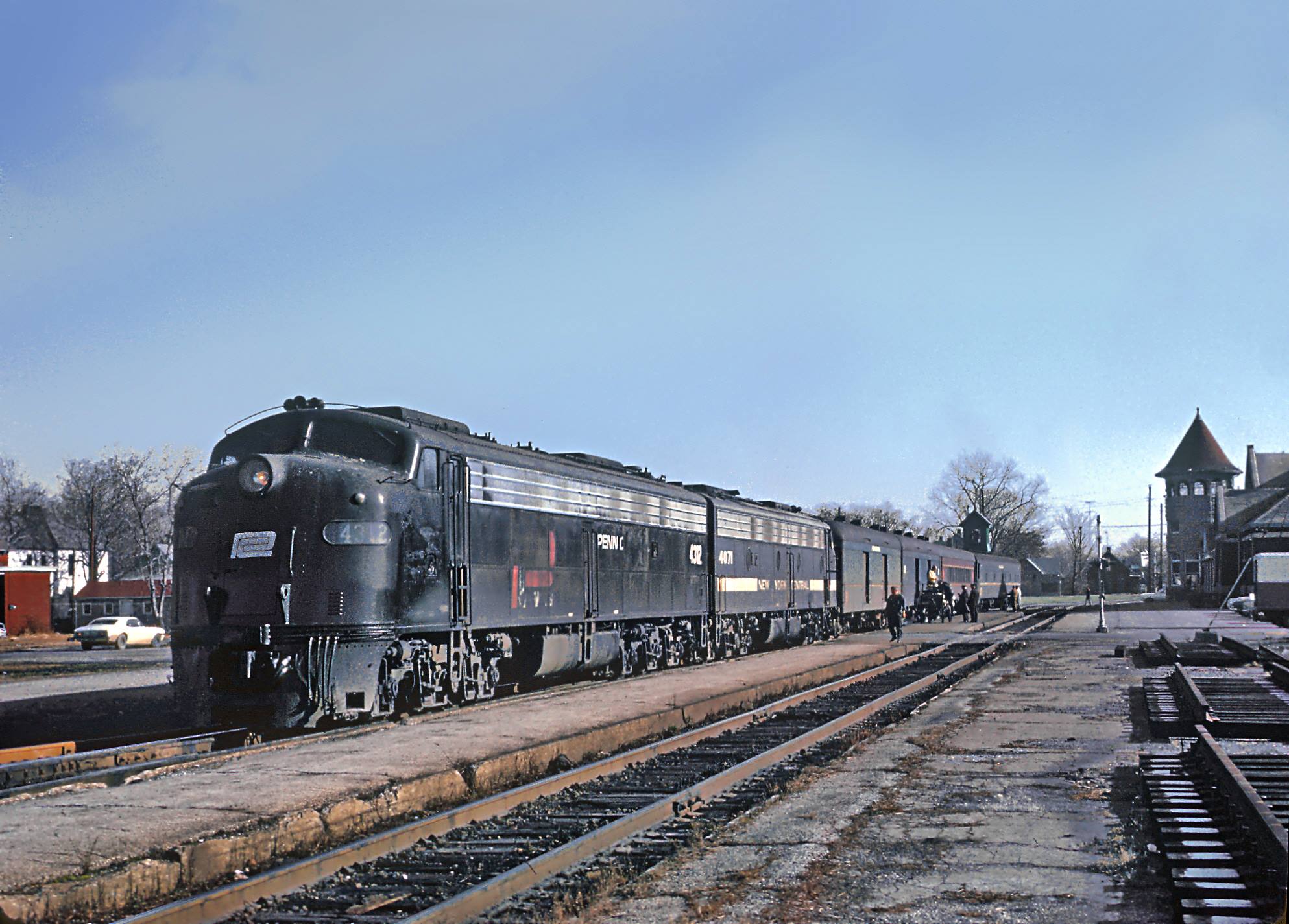
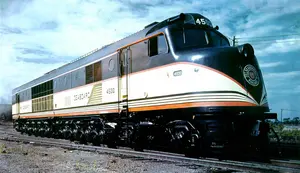
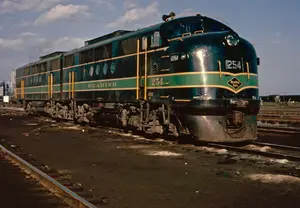
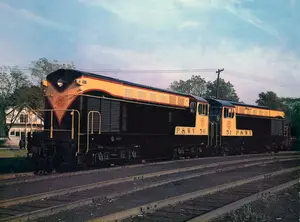
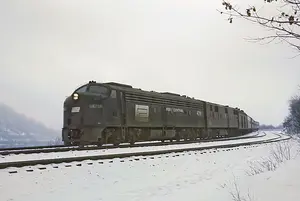
A worn Penn Central E8A has what remains of the Pennsylvania’s Spirit of St. Louis, westbound train 31, boarding at Terre Haute, Indiana, December 14, 1970. Ten years before Staggers; five months before Amtrak. Roger Puta photo.
On this page: At a glance · Why 1980 · Harley Staggers · The 4R Act · S.1946 and October 14 · What the statute does · What it did not do · Contracts, branches, short lines · Captive shippers · After the ICC
At a glance
| Item | Detail |
|---|---|
| Statute | Staggers Rail Act of 1980, Pub. L. 96-448. Long title: to reform the economic regulation of railroads |
| Signed | October 14, 1980, President Jimmy Carter. Harley O. Staggers at the signing |
| Senate bill | S.1946, introduced October 29, 1979, Sen. Howard Cannon (D-Nev.). Passed April 1, 1980, 91–4 |
| House bill | H.R.7235, introduced May 1, 1980, Rep. James Florio (D-N.J.). Passed September 9, 1980, 337–20; S.1946 taken up in lieu |
| Conference | Filed September 29, 1980. Senate agreed September 30, 66–2. House the same day |
| Named for | Rep. Harley Orrin Staggers (D-W.Va., 1949–81), chair of House Interstate and Foreign Commerce from 1966. He did not introduce S.1946 |
| Core tools | Confidential contract rates; a zone of rate freedom; market-dominance test; R/VC threshold phased up to 180 percent of variable cost; faster abandonments and line sales; ICC exemption power |
| Not abolished | The ICC (until 1995). Common-carrier obligation. Maximum-rate review where a railroad is market-dominant |
| Predecessor | Railroad Revitalization and Regulatory Reform Act (4R), signed February 5, 1976 |
| Same season | Motor Carrier Act, July 1, 1980 (trucks). Airline Deregulation Act was 1978 |
| Already gone | Rock Island liquidation, January 25, 1980. Milwaukee Pacific Extension embargo, March 1980. Staggers did not save those roads |
| Rates since | Inflation-adjusted revenue per ton-mile about 44 percent lower in 2024 than in 1981 (AAR) |
| Successor agency | ICC Termination Act, December 29, 1995. Surface Transportation Board from January 1, 1996 |
Legislative history from Congress.gov on S.1946 and H.R.7235, 96th Congress. Information compiled September 10, 2026.
Why 1980
By the late 1970s the Interstate Commerce Commission still sat on general rate increases, and a railroad that wanted a contract still had to live inside a published tariff. Penn Central had filed on June 21, 1970. Conrail had started on April 1, 1976 and was not yet in the black. Freight’s share of intercity tonnage had fallen toward about 38.8 percent. First track was already down from the 1916 peak of 254,037 miles. The Transportation Act of 1958 had given the Commission section 13a over passenger trains; it had not given freight rate freedom. That 1958 statute is a date on the 1950s page. The bankruptcies, Amtrak, and Conrail are the 1970s.
The photograph at Terre Haute is the industry Staggers was written against: a Northeastern giant in court, a named train on its last legs, paint that no longer matched the timetable. Amtrak took the intercity passengers the following May. The freight plant still had to earn a return under 1887 law as tightened in 1906 and 1910.
Harley Staggers
Harley Orrin Staggers was born in Keyser, West Virginia, on August 3, 1907. The Baltimore & Ohio’s Washington–St. Louis main ran through town. He sat in the House as a Democrat from West Virginia’s 2nd District from January 3, 1949, to January 3, 1981—sixteen terms. From 1966 until he retired he chaired the Committee on Interstate and Foreign Commerce, the panel that handled railroad bills. He died in Cumberland, Maryland, on August 4, 1991.
The Act carries his name because he ran the House committee, not because he dropped S.1946 in the hopper. In 1980 everyone in the room knew the commerce chair would have to move a rail bill if one was going to move. He stood at Carter’s right at the signing. The passenger trains he squeezed onto the B&O in northern West Virginia after Amtrak Day—the service railfans called Harley’s Hornet—are not this statute. This statute is freight.
The 4R Act came first
Congress had already cracked the door. The Railroad Revitalization and Regulatory Reform Act, signed February 5, 1976, funded Conrail, put a Final System Plan on paper, and gave the Commission limited rate flexibility and a somewhat faster abandonment process. Demand-sensitive rates and a “zone of reasonableness” start there. The 4R Act did not legalize confidential contracts and it did not write the 180-percent test. Those are Staggers. Conrail’s first years, still in mixed paint, are the 4R railroad. Profitability at the end of 1981 is after both statutes. The company encyclopedia is Conrail.
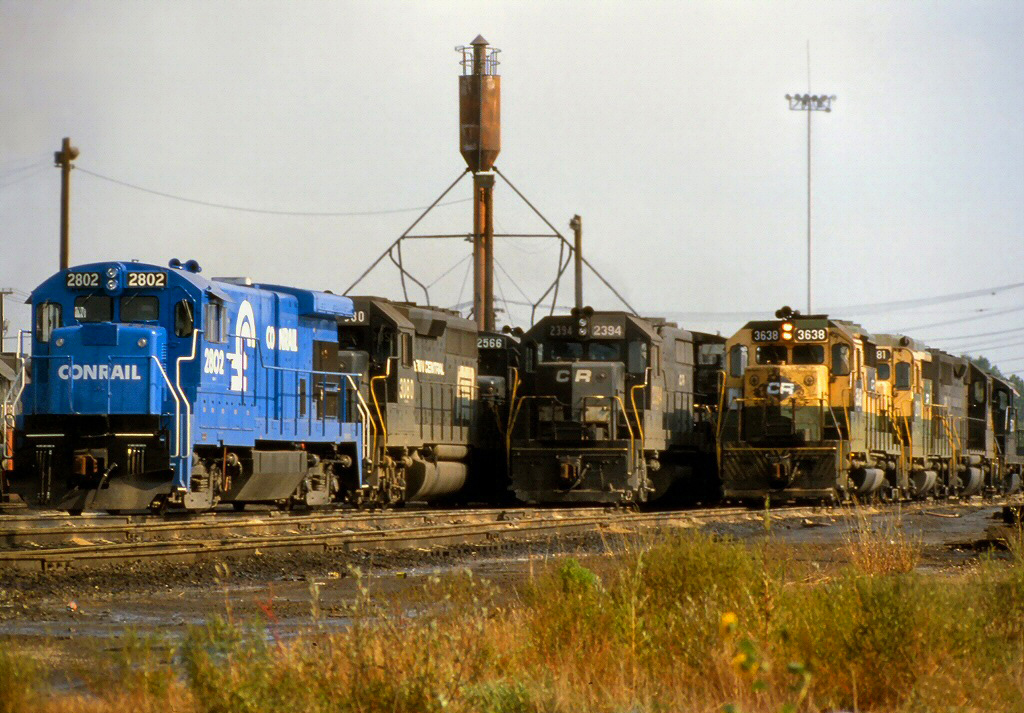
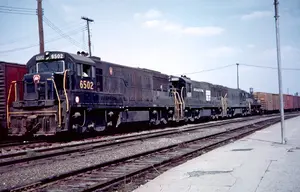
A new Conrail B23-7 beside former Penn Central and Reading units at the old New York Central terminal, Elkhart, Indiana, September 1977. Three years before Staggers; Conrail still in the red. Rob Kitchen photo.
S.1946, the House, and October 14
Senator Howard Cannon of Nevada introduced S.1946 on October 29, 1979. The Senate passed it on April 1, 1980, 91–4. Representative James Florio of New Jersey introduced a House companion, H.R.7235, on May 1, 1980; Interstate and Foreign Commerce reported it May 16. The House passed the Florio bill 337–20 on September 9 and then took up S.1946 in lieu. Conferees filed on September 29. Both chambers agreed on September 30—the Senate 66–2. Carter signed on October 14. The Motor Carrier Act, trucking’s parallel, had gone on July 1. Airline deregulation was already two years old. The same Congress that loosened trucks loosened rails.
What the statute does
Staggers is partial deregulation with a remainder. The tools that matter in the shops and the marketing departments are these.
Contract rates. A railroad and a shipper could sign a confidential contract for a movement without filing a tariff the competitor could read. The Commission did not have to approve the deal. After 1980 a large share of U.S. rail freight moved under contract. Common-carrier tariff rates remained for traffic that was not under contract. The Surface Transportation Board still has no jurisdiction over a contract rate.
Market dominance and the 180-percent test. The Commission could not reach in and call a common-carrier rate unreasonable unless the railroad had market dominance over that movement—no effective competition from another railroad or another mode. The statute added a numbers test. If revenue was below a rising percentage of variable cost, the railroad conclusively did not have market dominance. The floor started at 160 percent through September 30, 1981, then 165, 170, 175, and settled at a cost-recovery percentage that could not go above 180 percent. Clearing 180 percent does not prove dominance. It only lets the agency look. The qualitative test still has to find no effective alternative. That two-step is still the law at the STB.
A zone of rate freedom. Below the threshold, a railroad could raise many rates without an investigation or a suspension. The old world, in which a proposed increase sat in Washington while the carrier proved it was just and reasonable, is Mann-Elkins 1910. Staggers is the first statute that made a large band of increases a business decision.
Revenue adequacy. The Commission had to say whether a railroad was earning enough to attract and keep capital. The idea was a floor for the industry’s health, not a cap on every rate. How later boards used the finding is an STB argument, not this page’s encyclopedia of 1980.
Abandonments and line sales. Weak branches could come off, or be sold, without the multi-year docket that had been the 1970s. Class Is shed mileage. Short lines and regionals picked it up. That boom is why short lines and regionals have their own pages. By the mid-1990s several hundred non-Class I railroads were running on the order of 40,000 miles of spun-off track.
Exemptions. The Commission could exempt a class of traffic from regulation when the market would do the work. Boxcars and piggyback were early examples. Intermodal growth after 1980 sits on the today page; the exemption power is here.
Reciprocal switching and bottleneck access are in the Act. The Commission used them narrowly, as a remedy for anticompetitive conduct, not as a general way to put a second railroad on every captive siding. That is why shippers still argue about them.
What it did not do
It did not repeal the Interstate Commerce Act. The ICC sat until 1995. It did not end the common-carrier duty to take lawful freight. It did not deregulate passenger trains; Amtrak was nine years old. It did not write a labor-peace clause, and it did not “streamline” shop-craft bargaining. The 3R Act’s employee protections on Conrail are a 1970s statute. Line sales after Staggers often carried New York Dock-style conditions; that is implementation, not a harmony provision in 96-448.
It did not save the Rock Island. The road’s last freight had already stopped; the estate was in liquidation from January 25, 1980. The Milwaukee Road’s Pacific Extension embargo was March 1980. Those dates are on the 1970s page and on the company leaves. Crediting October 14 with those two names is a category error.
It did not freeze the Class I map. CSX Corporation as a holding company is November 1, 1980—eighteen days later. Norfolk Southern is 1982. Seaboard System is 1982. Conrail’s public offering is 1987. Those combinations used the new freedom. They are not the statute. They are the 1980s onward and the Class I list.
What changed on the ground
Contracts let a railroad price a coal move, a grain shuttle, or a stack train as a deal instead of a tariff. Abandonment and sale let a Class I stop paying for a 10-mph branch and let a short line try to live on it. Inflation-adjusted revenue per ton-mile, the AAR’s usual yardstick, was about 44 percent lower in 2024 than in 1981. Ton-miles rose even as route-miles fell. From 1980 through 2024 the Association of American Railroads puts Class I reinvestment of their own money—capital plus maintenance, not a federal plant—at about $840 billion. The today page uses 164,822 miles in 1980 and 136,650 in 2020 for the national network; that series is not the Stover first-track count on the decade leaves. The direction is the same: a smaller plant moving more freight.
Conrail posted a profit at the end of 1981. Whether Staggers or the 4R funding, the Northeast plant, or L. Stanley Crane gets the larger share is a Conrail argument. The timing is that the statute and the first black ink are in the same window.
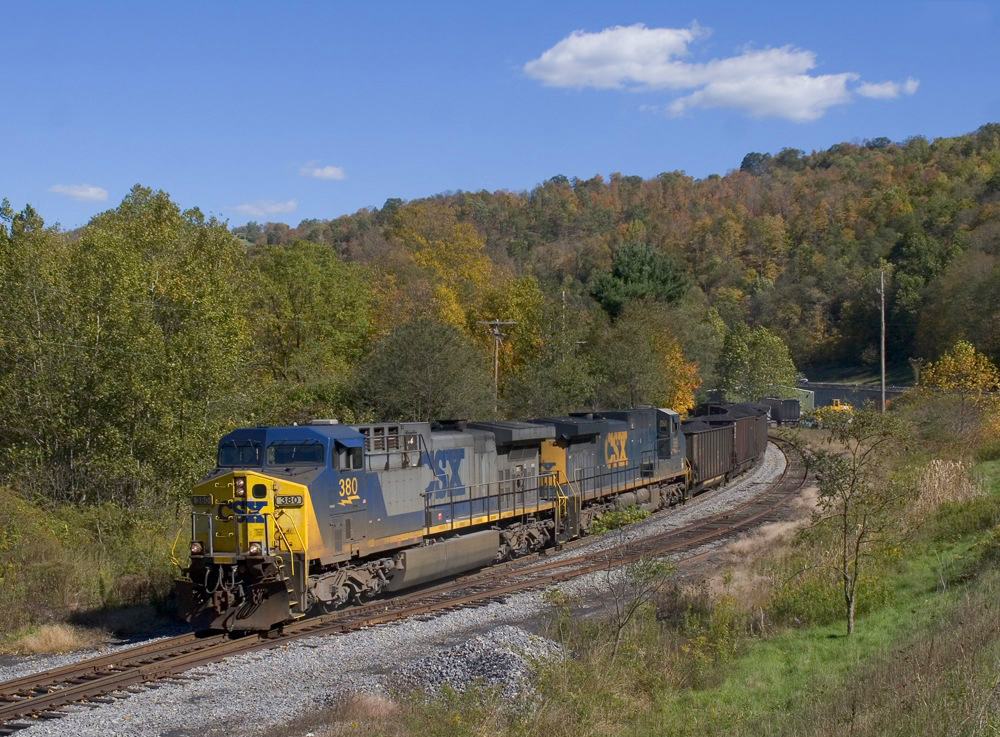
CSX coal train B880, a pair of AC4400CWs, westbound through Morrison, Maryland, toward the Mount Storm, West Virginia, power plant, October 13, 2006. Twenty-six years after Staggers. Wade Massie photo.
The remainder: captive shippers
A chemical plant, a coal mine, or an elevator with one railroad and no practical truck or barge alternative is still inside the 180-percent world. Those shippers cannot challenge a contract rate. They can challenge a tariff rate only after showing market dominance. The Government Accountability Office reported in 2007 that the share of tonnage moving at revenue-to-variable-cost ratios well above 180 percent had generally risen from 1985 through 2005. Rate cases at the STB are slow and expensive. That is the trade Staggers wrote: most traffic to the market, a minority still to the agency, and an agency that is not supposed to reach the minority unless the numbers and the alternatives both say so.
Coal in the 2006 photograph is the franchise that made Powder River and the Appalachians pay after the Clean Air Act. It is also the traffic that shows up in captive-shipper dockets. The locomotive type and the coal road are not this page.
After the ICC
The ICC Termination Act, Pub. L. 104-88, was signed December 29, 1995. The Surface Transportation Board opened January 1, 1996. The 180-percent test and the market-dominance inquiry came with it. Precision Scheduled Railroading, the six-railroad Class I list, and the Canadian combinations of the 2020s are later operating and merger stories, on the history hub and on today. Staggers is the 1980 door those later chapters walked through. It is not those chapters.
Related reading on American-Rails.com
- Railroad History (USA) · Railroads In The 1970s · Railroads of today (1980s onward)
- Railroads In The 1880s (Interstate Commerce Act, February 4, 1887) · Railroads In The 1900s (Hepburn, Mann-Elkins)
- Penn Central · Conrail · Amtrak
- Short lines · Regionals · Class I railroads
- Common carrier
Sources
- Staggers Rail Act of 1980, Pub. L. 96-448, 94 Stat. 1895, signed October 14, 1980. Congress.gov: S.1946 (Cannon, introduced October 29, 1979; Senate 91–4 April 1, 1980; conference September 29; Senate 66–2 September 30); H.R.7235 (Florio, introduced May 1, 1980; House 337–20 September 9)
- Railroad Revitalization and Regulatory Reform Act, Pub. L. 94-210, February 5, 1976
- Motor Carrier Act of 1980, July 1, 1980. Airline Deregulation Act, 1978
- ICC Termination Act, Pub. L. 104-88, December 29, 1995; Surface Transportation Board from January 1, 1996
- 49 U.S.C. §10707 (market dominance; 180 percent of variable cost). Phased R/VC floors in Staggers §202: 160 / 165 / 170 / 175 percent, then a cost-recovery percentage capped at 180
- Association of American Railroads. Staggers issue brief: inflation-adjusted revenue per ton-mile about 44 percent lower in 2024 than in 1981; about $840 billion in railroad-funded capital and maintenance, 1980–2024
- Transportation Research Board / National Academies, Modernizing Freight Rail Regulation (2015). Class I capacity reduction and short-line mileage after 1980
- U.S. Government Accountability Office, freight-rail rates and competition, 2007. Share of tonnage at high R/VC ratios, 1985–2005
- Harley Orrin Staggers (August 3, 1907–August 4, 1991). House, West Virginia 2nd District, January 3, 1949–January 3, 1981. Chair, Interstate and Foreign Commerce, 1966–81. Robert C. Byrd Center biography
- Loving, Rush, Jr. The Men Who Loved Trains. Bloomington: Indiana University Press, 2006. 1970s crisis into deregulation
- Rock Island liquidation, January 25, 1980. Milwaukee Road Pacific Extension embargo, March 1980 (dates on the 1970s page and company leaves)
Recent Articles


-
Conway Scenic Pumpkin Patch Express (2026): Dates, Tickets & Tips
Sep 28, 26 02:22 PM
 Conway Scenic Halloween Express—October 24 and 25, 2026, about 1 hour from North Conway. Coach adult $30. A pumpkin after the ride while supplies last. Confirm on conwayscenic.com.
 -
Black River & Western Pumpkin Trains (2026): Dates, Tickets & Tips
Sep 28, 26 02:20 PM
 Suggested meta description: Black River & Western Pumpkin Train—Flemington to Everitt Farms, weekends September 26–October 25, 2026. Pumpkin patch, maze, and wagon rides. Confirm on blackriverrail…
 -
Scenic Dinner Train Rides (2026): A Complete Guide
Sep 28, 26 01:30 PM
 2026 scenic dinner trains by state—a seated meal on the train. Branson through October 30, Cincinnati Saturdays, Potomac Eagle, and the full state list. Confirm on the railroad.
 -
West Virginia Dinner Train Rides (2026): A Complete Guide
Sep 28, 26 11:58 AM
 2026 Potomac Eagle dining from Romney—about 3 hours in the Trough. Premium three courses $124. Superior four courses $159, ages 17 and older. Confirm on potomaceagle.com.
 -
Washington Dinner Train Rides (2026): A Complete Guide
Sep 28, 26 11:51 AM
 2026 Chehalis-Centralia dinner trains have run. The July 18 Roaring 20s dinner was $89. The planning calendar lists no later dinner. Confirm on steamtrainride.com.
 -
Texas Dinner Train Rides (2026): A Complete Guide
Sep 28, 26 11:27 AM
 2026 Texas has no plated dinner aboard the train. Grapevine sells snacks. The Texas State Railroad Dogwood lunch was served at the Rusk depot. Confirm on the railroad.
 -
Ohio Dinner Train Rides (2026): A Complete Guide
Sep 28, 26 10:15 AM
 2026 Ohio dinner trains—Cincinnati Saturdays, $140, about 3 hours, ages 12 and up. Hocking Valley Elegant Dinner Train October 17 and November 7, from $95.
 -
Missouri Dinner Train Rides (2026): A Complete Guide
Sep 28, 26 10:09 AM
 2026 Branson Scenic Railway dinner train—three courses, about 2 hours, Fridays and Saturdays through October 30. Dome $123.50 plus tax. Confirm on bransontrain.com.
 -
Minnesota Dinner Train Rides (2026): A Complete Guide
Sep 28, 26 09:40 AM
 2026 North Shore Scenic Northwoods Dinner Train in Duluth—four courses in the SkyView dome, 2½ hours, $90, through September 26. Confirm on duluthtrains.com.
 -
Maine Dinner Train Rides (2026): A Complete Guide
Sep 28, 26 09:29 AM
 2026 Maine has no dining-car dinner. WW&F Pig Roast at SeaLyon Farm was June 13 and has run, $54.95. Sunset Express was a drink and ended September 5.
 -
Greenbrier, Cheat & Elk Railroad: Western Maryland's Logging Line
Sep 26, 26 11:59 PM
 Greenbrier, Cheat and Elk—the logging railroad the Western Maryland bought in 1927. Cass to Spruce, Summit Cut at 4,066.6 feet, Elk River Branch, Laurel Bank.
 -
Elkins (Western Maryland): Yard, History, Operations
Sep 26, 26 11:56 PM
 Western Maryland at Elkins—the Elkins Division yard, roundhouse, and wash rack. Belington, Durbin, Black Fork, and the Elk River branches met here.
 -
B&O's "Cincinnatian" (Train): Route, Consist, Timetable
Sep 26, 26 11:51 PM
 B&O Cincinnatian—Mount Clare five-car streamliner, January 19, 1947, trains 75 and 76. P-7d Pacifics 5301–5304. Detroit–Cincinnati from June 25, 1950, trains 53 and 54. Last run April 30, 1971.
 -
The Semaphore: Railroading's Classic Signal
Sep 26, 26 11:51 AM
 Railroad semaphore signals: blade and spectacle, lower quadrant and upper quadrant, US&S Style B and GRS Model 2A, Robinson’s track circuit, and the last blades on the Raton Subdivision.
 -
Black Fork Grade (Western Maryland): History and Operations
Sep 26, 26 11:47 AM
 Black Fork Grade—the Western Maryland climb through Blackwater Canyon. Thomas to Hendricks, past 3 percent, an H-9 and ten loads, helpers off at Fairfax.
 -
Western Maryland Steam Locomotives: History & Roster
Sep 26, 26 11:39 AM
 Western Maryland steam—H-9 Consolidations, I-2 Decapods, Lima 2-8-8-2s, Baldwin Challengers, and twelve Baldwin Potomac 4-8-4s. Post-1900 roster.
 -
Western Maryland Diesel Roster: All-Time
Sep 26, 26 11:32 AM
 Western Maryland diesels—S1 102 in 1941, fourteen F7 boosters, BL2s, hammerhead RS3s, Circus SD40s, and Chessie GP40-2s. Serials and order numbers.
 -
The Dutch Line (Western Maryland): History, Map, Operations
Sep 25, 26 09:38 PM
 Western Maryland Dutch Line—the Hanover Subdivision. Emory Grove to Highfield via Hanover and Gettysburg, York branch 1893, stone trains, and the route CSX still runs.
 -
The Durbin Branch (Western Maryland): History, Map, Operations
Sep 25, 26 09:13 PM
 Western Maryland Durbin Branch—the Coal & Iron Railway, 46.9 miles Elkins to Durbin, opened July 27, 1903. Mixed train until April 10, 1959. H-7B Consolidations.
 -
Western Maryland Railway: Map, Rosters, Logo, History
Sep 25, 26 10:24 AM
 Western Maryland Railway—the Fast Freight Line. Baltimore, Carroll & Frederick, May 27, 1852. Connellsville Extension 1912. Chessie, then into the B&O May 1, 1983.
 -
Illinois Dinner Train Rides (2026): A Complete Guide
Sep 25, 26 09:52 AM
 2026 Monticello Railway Museum Murder Mystery Dinner Train—June 13, July 11, August 1, and September 5 have run. Three courses, about 2 hours, $112. Confirm on mrym.org.
 -
Georgia Dinner Train Rides (2026): A Complete Guide
Sep 25, 26 12:29 AM
 2026 Azalea Sprinter dinner train from Nashville and Willacoochee, Georgia—2½ hours. Club Car adult $147, Executive adult $177. Confirm on azaleasprinter.com.
 -
Baldwin "Centipede" Locomotives: Specs, Roster, Photos
Sep 25, 26 12:02 AM
 Baldwin DR-12-8-1500/2 Centipede—2-D+D-2, two 608SC engines, 3,000 hp. SAL 4500 from the 1943 test bed. 54 on the serial list, 52 sold. PRR BP60 then BH50. None preserved.
 -
Florida Dinner Train Rides (2026): A Complete Guide
Sep 24, 26 11:56 PM
 2026 Seminole Gulf Murder Mystery Dinner Train in Fort Myers—five courses cooked onboard, 3½ hours, $129 or $135 Saturday, plus tax and gratuity. Confirm on semgulf.com.
 -
West Virginia Northern Railroad: Map, Photos, History
Sep 24, 26 11:27 PM
 West Virginia Northern—Kingwood to Tunnelton, 11 miles of Preston County coal. Narrow gauge 1888, standard gauge 1895. Last freight February 19, 1991. Consolidations 8 and 9 survive.
 -
Rutland Railroad: Map, Rosters, History, Logo
Sep 24, 26 01:18 PM
 Rutland Railroad—Follett’s Champlain & Connecticut River, November 1, 1843. Bellows Falls–Burlington December 18, 1849. Green Mountain Gateway. Last train September 25, 1961. Vermont Railway Janua…
 -
Arkansas Dinner Train Rides (2026): A Complete Guide
Sep 24, 26 01:12 PM
 2026 Eureka Springs & North Arkansas Dinner Train—Eurekan dining car, about 2 hours, $53.62 tax included, opens May 9, Tuesday, Wednesday, Friday, and Saturday. Confirm on esnarailway.com.
 -
Arizona Dinner Train Rides (2026): A Complete Guide
Sep 24, 26 01:01 PM
 2026 Arizona has no plated dinner train. Grand Canyon Railway sells snacks in the cars and meals in Williams or at the rim. Verde Canyon includes a charcuterie tray.
 -
Rail News, The Latest
Sep 24, 26 12:36 PM
This page provides a portal to the latest in rail news, from preservation and restortation subjects to other notable topics. -
Cotton Belt 819 Moved Outside at Pine Bluff for Evaluation
Sep 24, 26 12:35 PM
 Cotton Belt 819 left the Pine Bluff shop on September 22, 2026, first time outside in about 30 years. RDG Steam Services is evaluating the engine. No donation link posted.
 -
Reading Steam Locomotives: History, Roster & Photos
Sep 24, 26 12:14 PM
 Reading steam—Wootten fireboxes, Camelback Consolidations, Mallets, K-1 Santa Fes, G-3 Pacifics, T-1 4-8-4s. Post-1900 roster after Drury. Rambles ended October 17, 1964.
 -
Reading Diesel Roster: All-Time
Sep 24, 26 12:10 PM
 Reading diesel roster—AGEIR boxcabs, FTs, FA-1s, RS-3s, Train Masters, GP30s through GP39-2s. Serials and order numbers. Conrail April 1, 1976.
 -
Reading Railroad: Map, Logo, History, Rosters
Sep 24, 26 12:08 PM
 Reading Company—Philadelphia & Reading, 1833. Anthracite, Port Richmond, Reading Terminal. Operating company January 1, 1924. Conrail April 1, 1976.
 -
Nevada Dinner Train Rides (2026): A Complete Guide
Sep 24, 26 12:02 PM
 2026 Nevada Northern Taste of Italy—adults-only gala from East Ely. The September 19 date has run. Confirm any later night on nnry.com.
 -
North Carolina Dinner Train Rides (2026): A Complete Guide
Sep 24, 26 11:24 AM
 2026 North Carolina dinner trains—NCTM Wine & Dine in Spencer sold out February 13–15. GSMR First Class is the plated meal on the Nantahala Gorge excursion. Confirm on the railroad.
 -
Railway Express Agency (REA): Signs, Trucks, Logo & History
Sep 24, 26 09:40 AM
 Railway Express Agency—railroad-owned express company. Incorporated December 7, 1928. Operations March 1, 1929. Red diamond, green trucks. Last regular express November 7, 1975.
 -
Michigan Dinner Train Rides (2026): A Complete Guide
Sep 24, 26 09:28 AM
 2026 Steam Railroading Institute dining in Owosso—select evenings, no public dinner dates posted. Confirm on michigansteamtrain.com.
 -
Pittsburgh and West Virginia Railway: Map, Rosters, History
Sep 24, 26 12:24 AM
 Pittsburgh & West Virginia—the Hi-Line. Wabash-Pittsburgh Terminal 1904. Railway January 29, 1917. Connellsville February 11, 1931. N&W lease October 16, 1964. Wheeling & Lake Erie from May 17, 1990.
 -
Indiana Dinner Train Rides (2026): A Complete Guide
Sep 24, 26 12:13 AM
2026 Spirit of Jasper Ride & Dine is paused. No public trains. Depot at 201 Mill Street stays open as a rental. Confirm on spiritofjaspertrain.com. -
New Jersey Dinner Train Rides (2026): A Complete Guide
Sep 24, 26 12:01 AM
2026 Woodstown Central Dining in Motion—private table of four from $190, about an hour, Salem County. Confirm on woodstowncentral.com. -
Maryland Dinner Train Rides (2026): A Complete Guide
Sep 23, 26 05:19 PM
 2026 Western Maryland Scenic Allegheny Mountain Dinner Train—Cumberland, 3 hours, 21+, Saturday 7 p.m. Confirm on wmsr.com.
 -
Pittsburgh and Lake Erie Railroad: Map, Rosters, Photos
Sep 23, 26 03:28 PM
 Pittsburgh & Lake Erie—the Little Giant. Chartered 1875, Pittsburgh to Youngstown February 10, 1879. New York Central from 1883. Independent May 15, 1979. Last day September 11, 1992.
 -
Kansas Dinner Train Rides (2026): A Complete Guide
Sep 23, 26 01:11 PM
 2026 Abilene & Smoky Valley Smoky Valley Limited—two hours from the Rock Island Depot, about $72–$110, dates into December 31. Confirm on asvrr.org.
 -
The Belpaire Firebox: Simplicity and Greater Power
Sep 23, 26 01:03 PM
 Belpaire firebox—Alfred Belpaire, 1864. Square crown, straight staybolts at right angles. Pennsylvania standard after the 1880s. Great Northern was the other big user.
 -
Pennsylvania Railroad (PRR) Electric Roster: All Classes
Sep 23, 26 12:57 PM
Pennsylvania Railroad electrics—DD1s into Penn Station, P5s, 139 GG1s, B1 switchers, and 66 E44s. Class roster, 1905–1963. No unit-by-unit GG1 list. -
Penn Central Diesel Roster: All-Time
Sep 23, 26 12:46 PM
 Penn Central diesel roster—PRR classes on NYC, PRR, and New Haven power. New orders carry serials. GP38-2s are 7940-8162. Conrail April 1, 1976.
 -
Penn Central Railroad: Map, History, Logo
Sep 23, 26 12:32 PM
 Penn Central—Pennsylvania and New York Central merged February 1, 1968. New Haven January 1, 1969. Section 77 bankruptcy June 21, 1970. Conrail April 1, 1976.
 -
Iowa Dinner Train Rides (2026): A Complete Guide
Sep 23, 26 11:42 AM
2026 Boone & Scenic Valley Wolf Dinner Train—Saturdays May–October, Union Pacific dining cars, Bass Point Creek High Bridge. Confirm on bsvrr.com. -
Pennsylvania-Reading Seashore Lines: Map, Roster, History
Sep 23, 26 12:32 AM
 Pennsylvania-Reading Seashore Lines—Atlantic City Railroad renamed July 15, 1933. Pennsylvania two-thirds, Reading one-third. Camden to Atlantic City, Cape May, and Millville. Conrail April 1, 1976.
 -
Wisconsin Dinner Train Rides (2026): A Complete Guide
Sep 23, 26 12:28 AM
2026 Wisconsin Great Northern dinner train in Trego—$105, Namekagon River, January 8–31 and May 5–December 17. Mid-Continent’s remaining 2026 calendar is snack and scenic. Confirm on the railroad.