"Golden State" (Train): Route, Consist, Timetable
Last revised: February 24, 2025
By: Adam Burns
The Southern Pacific and Rock Island teamed up in the late 1940s to field their own Chicago–Los
Angeles streamliner named the Golden State, a long-running partnership between that dated back to the early 20th century.
The streamlined version featured all lightweight equipment with fine on-board amenities. However, the train was never as well known as others in the hotly contested LA – Chicago corridor traveling territory not as scenic as the Super Chief, City of Los Angeles, or California Zephyr.
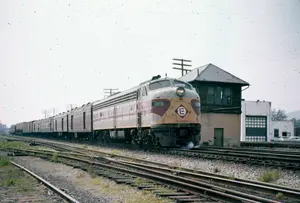
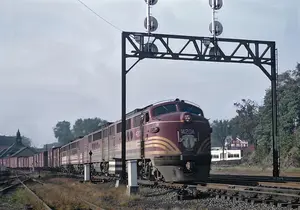
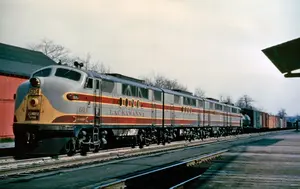
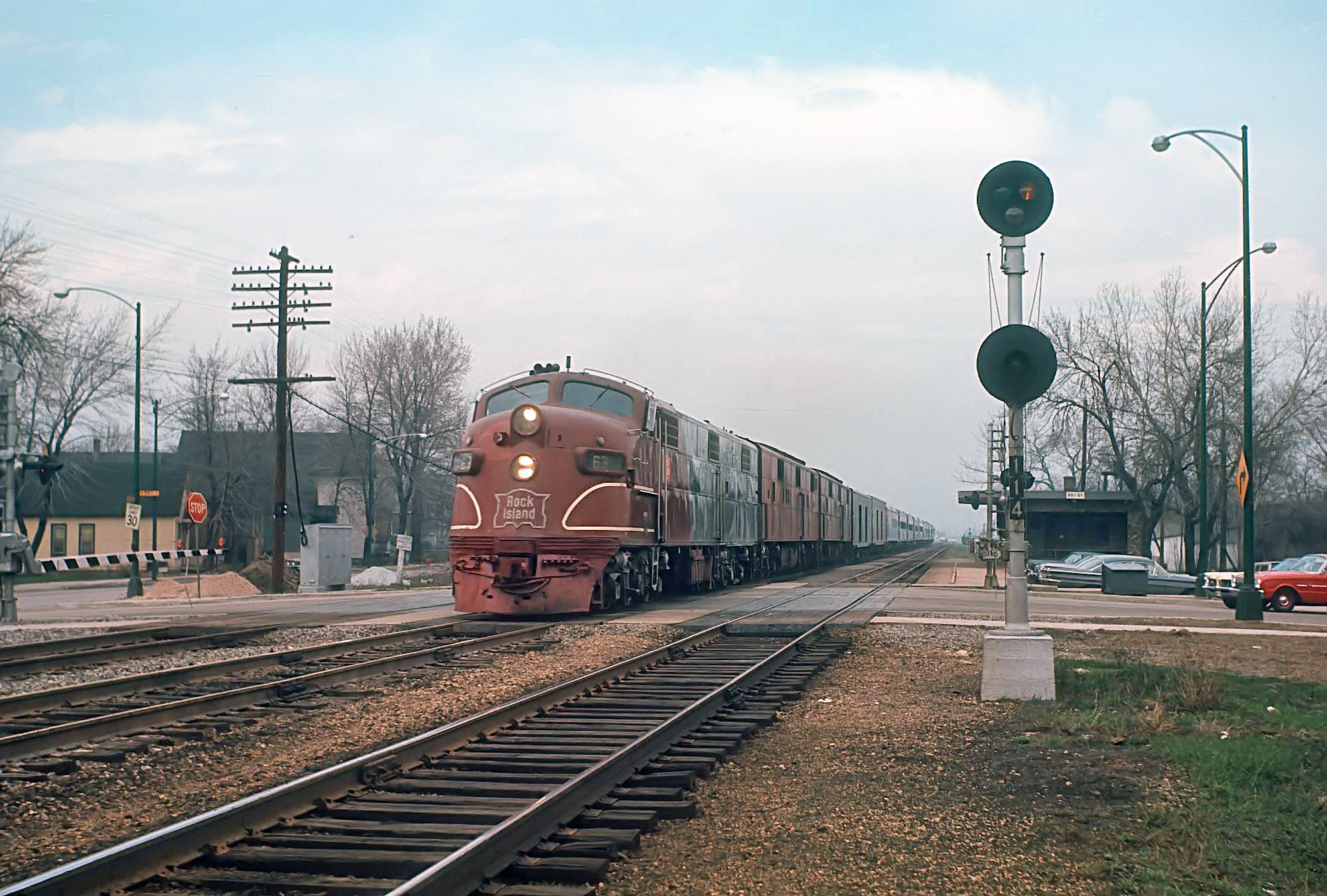 Rock Island E6A #631 ahead of train #3, the "Golden State," at 99th Street in Chicago; April, 1965. Rick Burn photo.
As such, the Golden State had trouble effectively holding its own against stronger competition.
Still, for twenty years it did its best in this cutthroat region until the Espee and Rock Island finally gave up on the train in the late 1960s. Today, both the Golden State, and the railroads, which hosted it are but a memory.
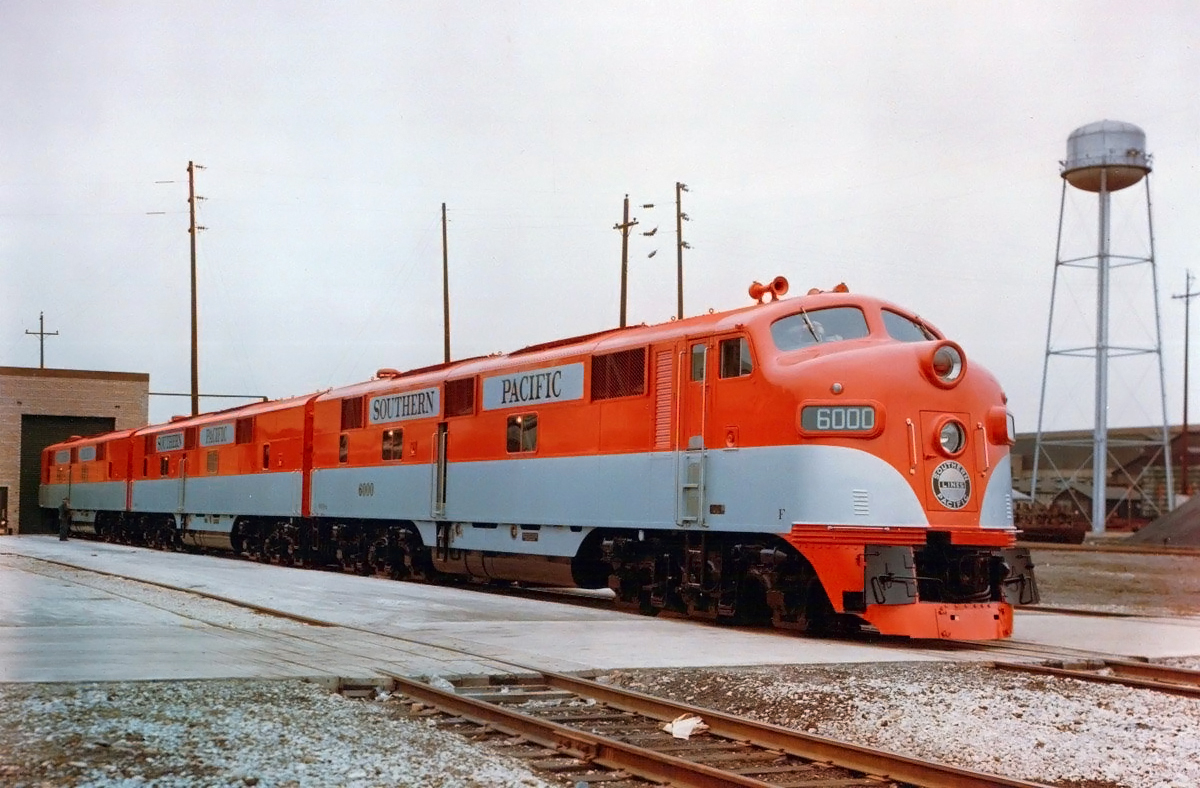 An A-B-B set of Southern Pacific's new E7's adorned in the "Golden State" livery following their completion in April, 1947.
History
The Golden State dates back to 1902 when it was then known as the Golden State Limited. The train ran seasonally, powered by traditional steam locomotives and carried standard, heavyweight cars.
Back then, the Rock interchanged with the El Paso & North Eastern at Tucumcari, New Mexico via its Golden State Route.
The EP&NE went on to become a subsidiary of the El Paso & Southwestern (EP&SW), which itself was later fold into the much larger Southern Pacific.
The SP would go on to abandon much of the EP&SW, except for its Tucumcari - El Paso main line which became part of the "Golden State Route" in conjunction with the Rock Island.
According to Mike Schafer and Joe Welsh's book, "Streamliners: History Of A Railroad Icon" the Golden State Limited had a tumultuous early career
and wasn't always on the timetable.
It remained a seasonal train until the 1930s when the two partners began upgrading its services by adding a barber shop, valet, air-conditioning (then an entirely new technology), and showers.
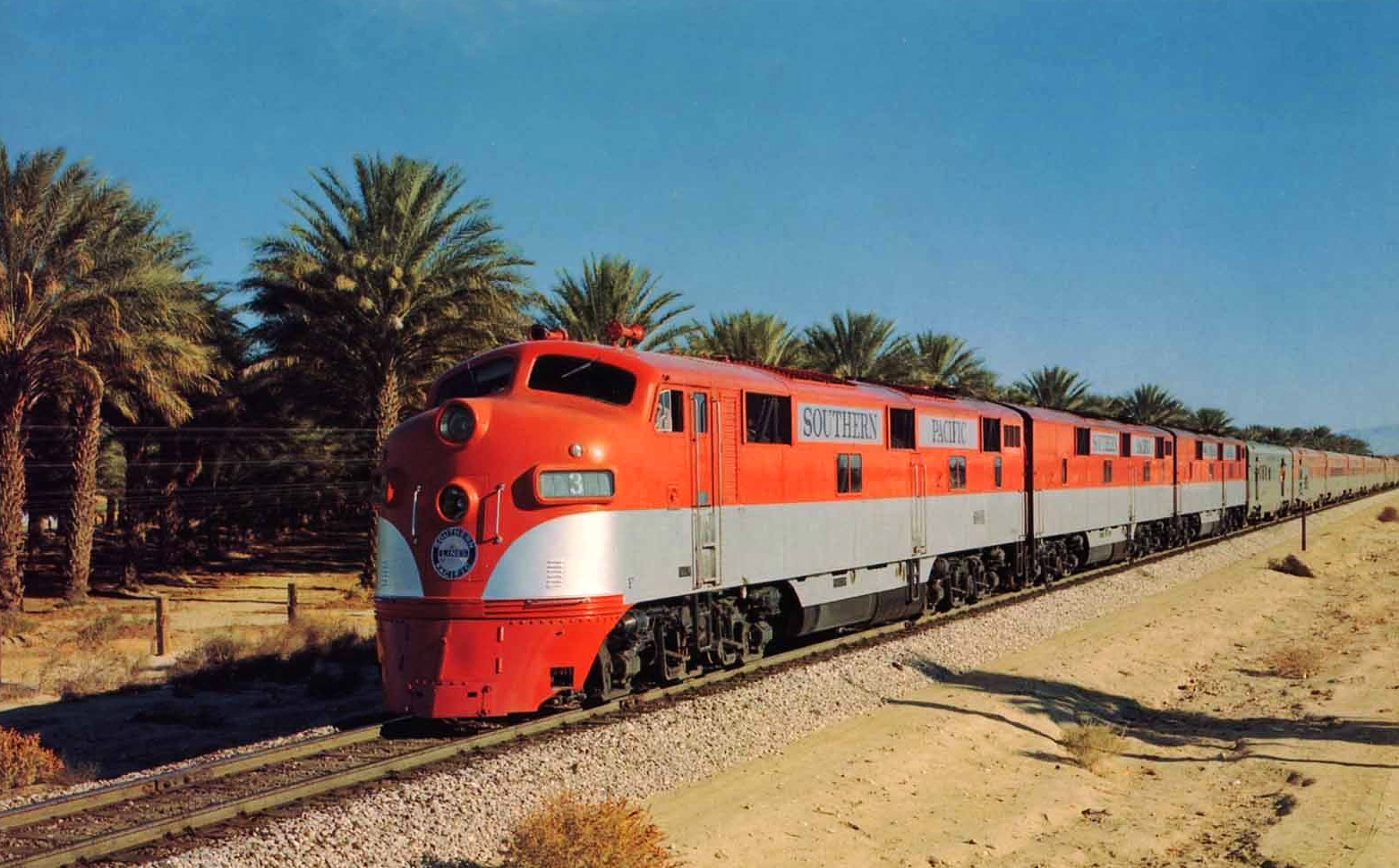 A Southern Pacific publicity photo featuring train #3, the westbound "Golden State," staged near Indio, California, led by an A-B-B set of E7's in January of 1948.
Just prior to the train's complete makeover it boasted its first lightweight equipment directly after World War II, receiving a 4-compartment/4-double bedroom/2-drawing room sleeper and a 6-section/6-roomette/4-double bedroom sleepers.
Both were Pullman built and serviced. To further enhance the train, Rock Island chipped in a trio of Budd Company lightweight diners.
Hoping to more effectively compete against the Santa Fe and Union Pacific, Rock Island and SP went all out and completely reequipped the train. In the process of doing so it was renamed as simply the Golden State (the Limited was dropped in 1947).
By January, 1948 it was ready to roll, and thanks to a strong marketing effort the train caught the public's attention. New equipment came from both Pullman and Budd along with a batch of lightweight cars from the never-launched Golden Rocket, another transcontinental train once planned by the two railroads.
At A Glance
La Salle Street Station (Chicago) Union Passenger Terminal (Los Angeles) |
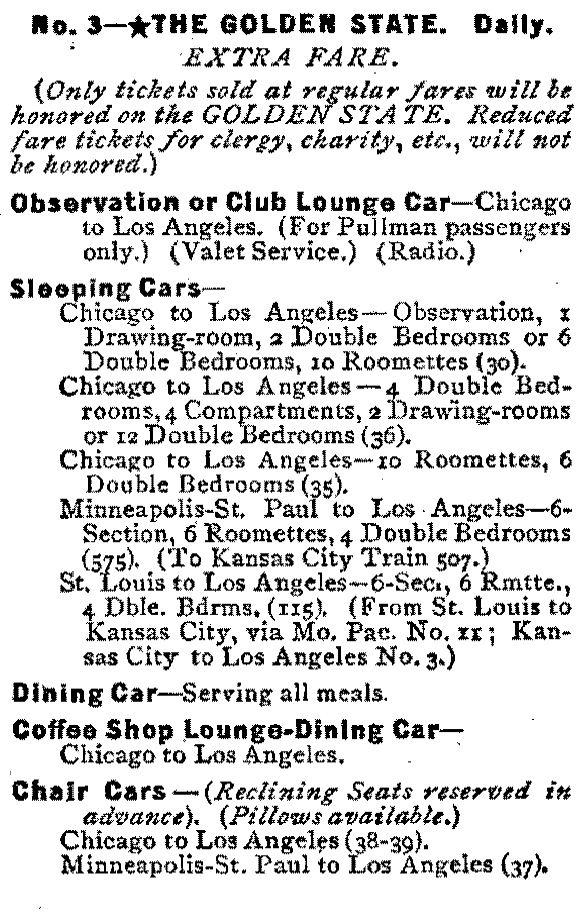
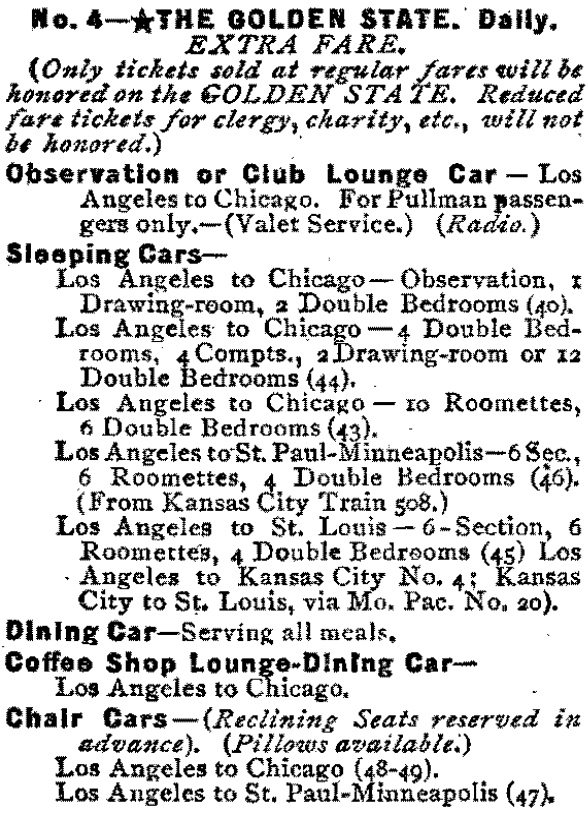
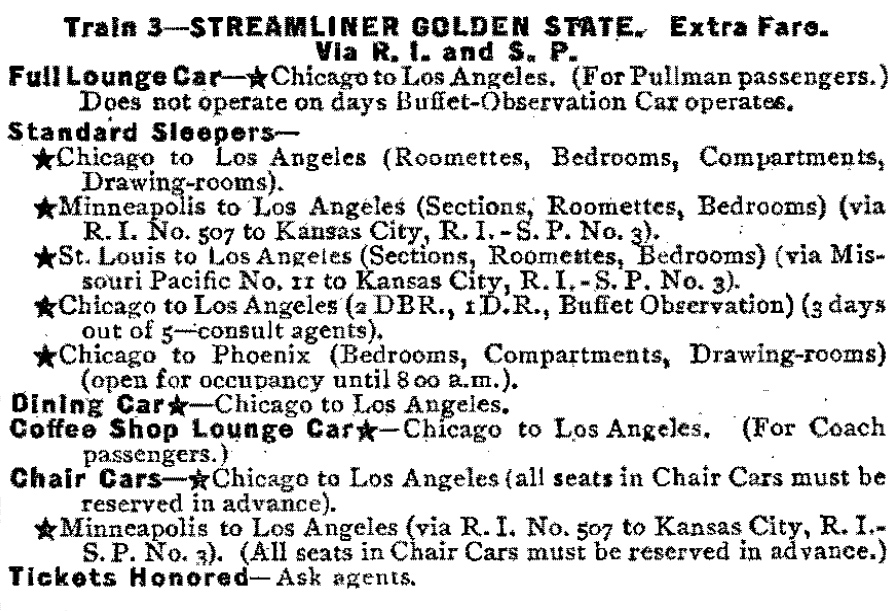
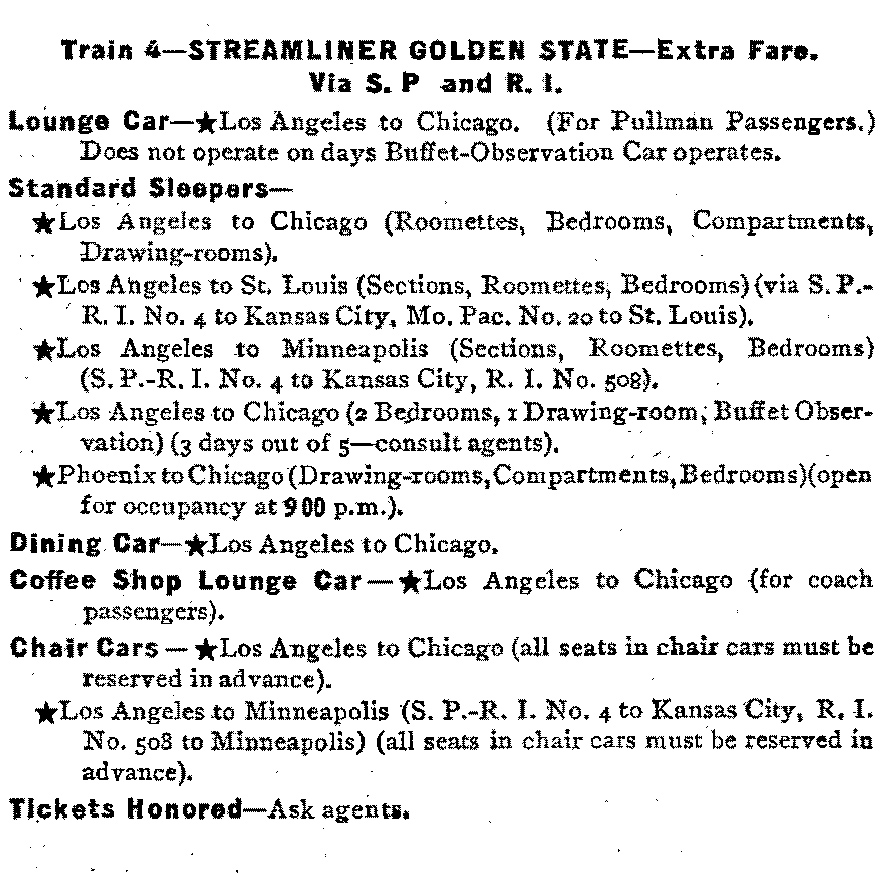
The upgraded Golden State boasted on-board features that included (along with air conditioning and showers) reclining seat coaches, diners, a coffee shop lounge-diner, club lounge, sleepers, and even a barbershop, running on a 46-hour schedule between Chicago and Los Angeles.
It carried five sleepers; one between New York-Los Angeles, another serving Chicago-Phoenix, two from Chicago to Los Angeles, and finally one between St. Louis-Los Angeles.
Timetable (1941)
| Read Down Time/Leave (Train #3/Rock Island) | Milepost | Location | Read Up Time/Arrive (Train #4/Rock Island) |
|---|---|---|---|
| 10:15 PM (Dp) | 0.0 | 11:30 AM (Ar) | |
| 10:25 PM | 6 | 11:15 AM | |
| F | 40 | F | |
| F | 114 | F 9:23 AM | |
| F | 179 | F | |
| 1:35 AM (Ar) | 181 | 8:10 AM (Dp) | |
| 1:40 AM (Dp) | 181 | 8:00 AM (Ar) | |
| F 1:47 AM | 183 | F 7:50 AM | |
| F | 210 | F | |
| F | 231 | F | |
| F | 292 | F | |
| F | 334 | F | |
| 8:25 AM (Ar) | 510 | 1:10 AM (Dp) | |
| 8:40 AM (Dp) | 510 | 12:55 AM (Ar) | |
| 9:50 AM | 579 | 11:35 PM | |
| 11:25 AM (Ar) | 661 | 10:10 PM (Dp) | |
| 11:30 AM (Dp) | 661 | 10:05 PM (Ar) | |
| F | 707 | F | |
| 12:50 PM | 735 | 8:37 PM | |
| 2:00 PM | 787 | 7:40 PM | |
| 4:05 PM (Ar) | 919 | 5:30 PM (Dp) | |
| 4:10 PM (Dp) | 919 | 5:25 PM (Ar) | |
| 5:57 PM (Ar) | 1030 | 3:44 PM (Dp) | |
| 6:01 PM (Dp) | 1030 | 3:40 PM (Ar) | |
| 7:45 PM (Ar) | 1124 | 2:05 PM (Dp) | |
| Time/Leave (Train #3/Southern Pacific) | Milepost | Location | Time/Arrive (Train #4/Southern Pacific) |
| 7:00 PM (Dp) | 1124 | 12:59 PM (Ar) | |
| 10:06 PM (Ar) | 1311 | 9:43 PM (Dp) | |
| 10:11 PM (Dp) | 1311 | 9:38 PM (Ar) | |
| 12:35 AM (Ar) | 1455 | 7:10 PM (Dp) | |
| 12:55 AM (Dp) | 1455 | 6:50 PM (Ar) | |
| 4:40 AM (Ar) | 1671 | 3:05 PM (Dp) | |
| 4:45 AM (Dp) | 1671 | 3:00 PM (Ar) | |
| F 5:10 PM | 1693 | F 2:37 PM | |
| 7:00 AM (Ar) | 1794 | 12:28 PM (Dp) | |
| 7:10 AM (Dp) | 1794 | 12:18 PM (Ar) | |
| F | 1859 | F | |
| F | 1892 | F | |
| 9:29 AM (Ar) | 1915 | 10:03 PM (Dp) | |
| 9:42 AM (Dp) | 1915 | 9:53 PM (Ar) | |
| 12:49 AM (Ar) | 2089 | 6:44 PM (Dp) | |
| 12:59 AM (Dp) | 2089 | 6:34 PM (Ar) | |
| 2:07 PM | 2154 | 5:21 PM | |
| F 3:02 PM | 2211 | F 4:25 PM | |
| 3:36 PM | 2239 | F 3:55 PM | |
| 4:51 PM | 2283 | 2:51 PM | |
| 5:21 PM | 2308 | 2:22 PM | |
| 5:55 PM | 2334 | 1:48 PM | |
| 6:15 PM (Ar) | 2340 | 1:30 PM (Dp) |
The Golden State's equipment also fielded its own special livery that included red/orange and silver. This same scheme was used on SP's locomotives while the Rock stuck with its "Rocket" scheme of crimson, silver, and white.
Overall, it was quite a handsome train and certainly matched its competitors in regards to the services provided.
Consist (Rock Island, 1952)
Consist (Southern Pacific, 1952)
Unfortunately, the streamliner lacked many things that made it difficult to effectively compete:
- Firstly, it traveled through some of the blandest scenery in the west (flat deserts or farmland), losing a valuable marketing opportunity to attract, and retain, travelers.
- Secondly, the train featured no Vista Domes or general dome cars to give patrons impressive 360-degree panoramic views.
- Thirdly, the Golden State could not offer schedules as fast as other trains like the Super Chief which could speed across the desert and Heartland in just over 39 hours.
This last issue was partially the result of the Tucumcari connection, although certainly not the primary issue.
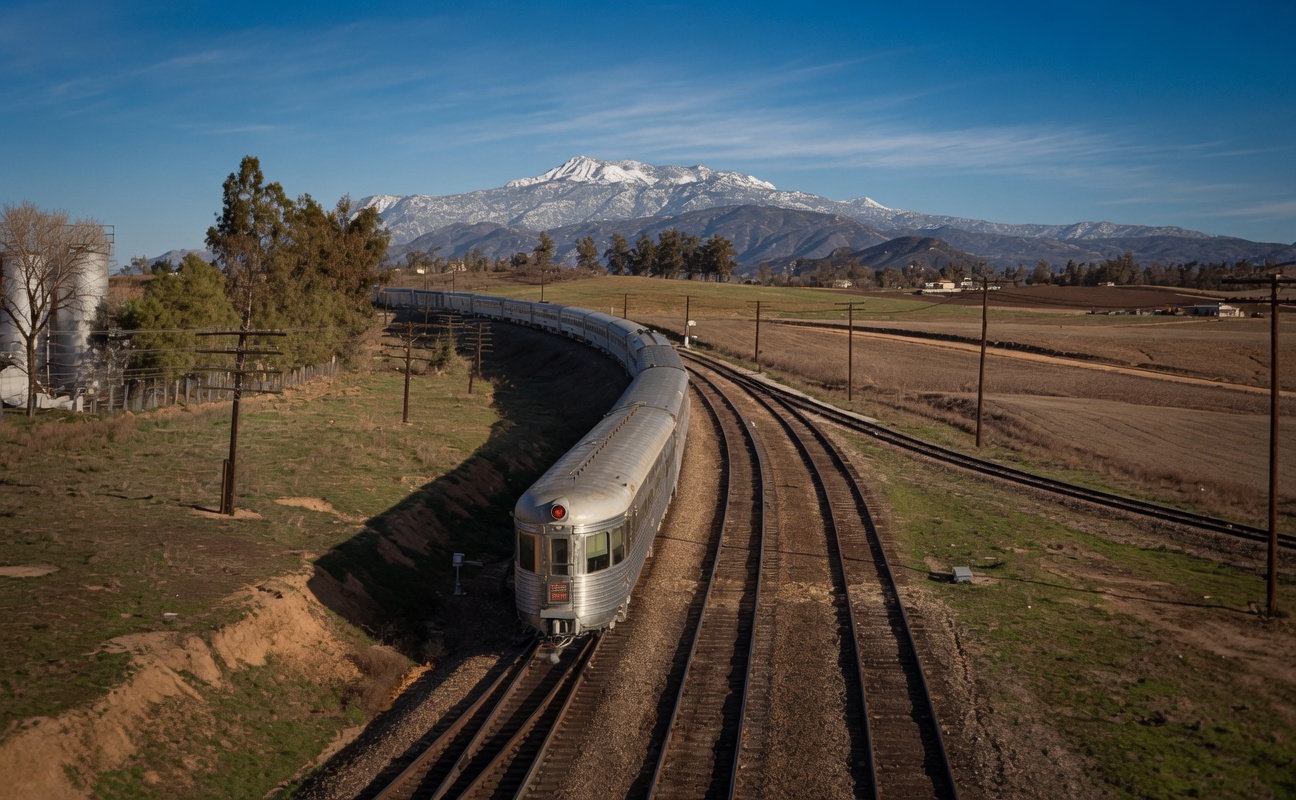 In this publicity photo Southern Pacific's train #3, the westbound "Golden State," rolls over Beaumont Pass in California; in the background looms Mt. San Jacinto. Author's collection.
The streamliner's only true marketing ploy was its ability to provide through sleeper service to New York, in conjunction with the Pennsylvania and New York Central. It also offered available connecting service from St. Louis via Kansas City during the Rock Island portion of the trip.
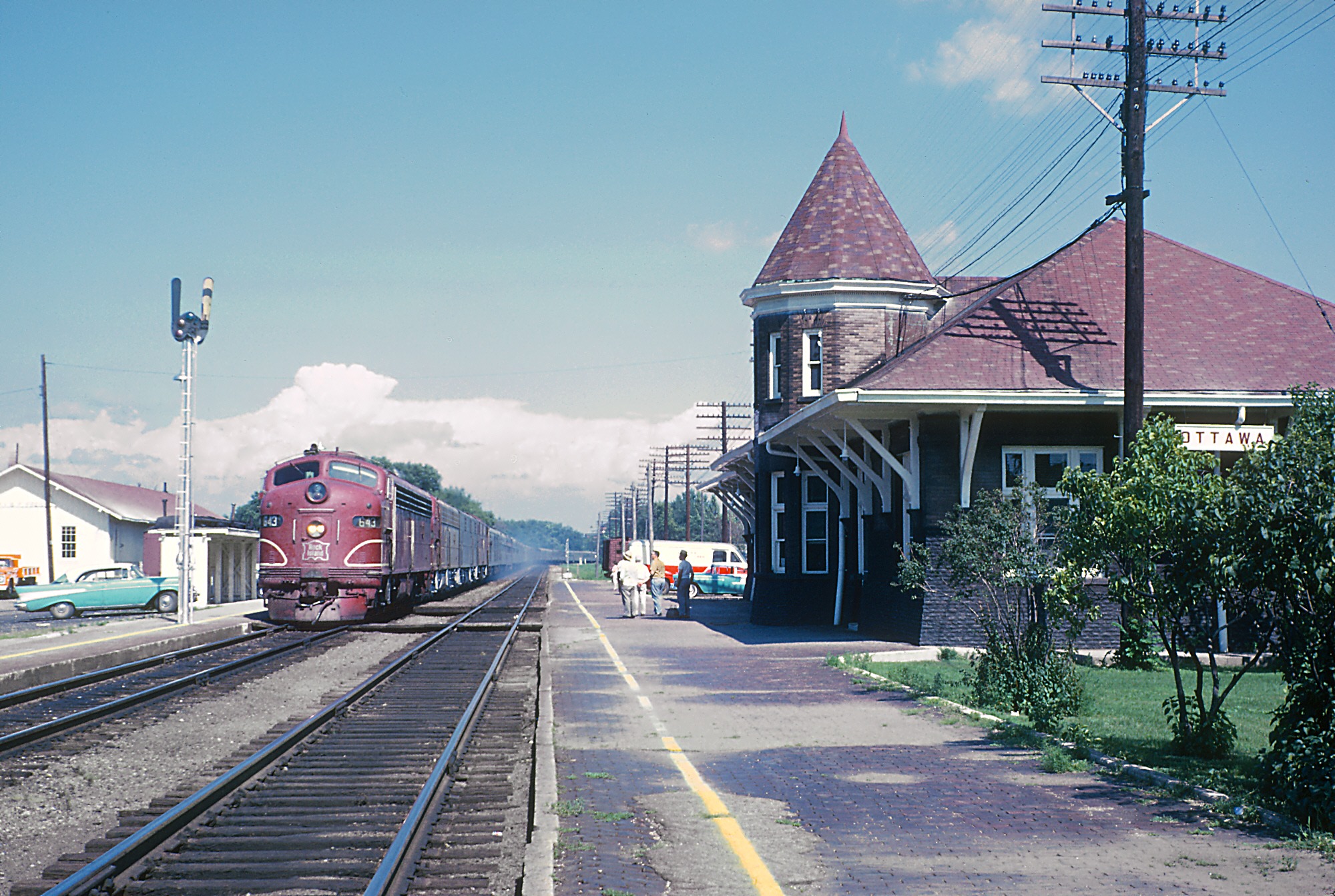 Rock Island's "Golden State" hustles past the station at Ottawa, Illinois in July, 1963. Roger Puta photo.
Timetable (1952)
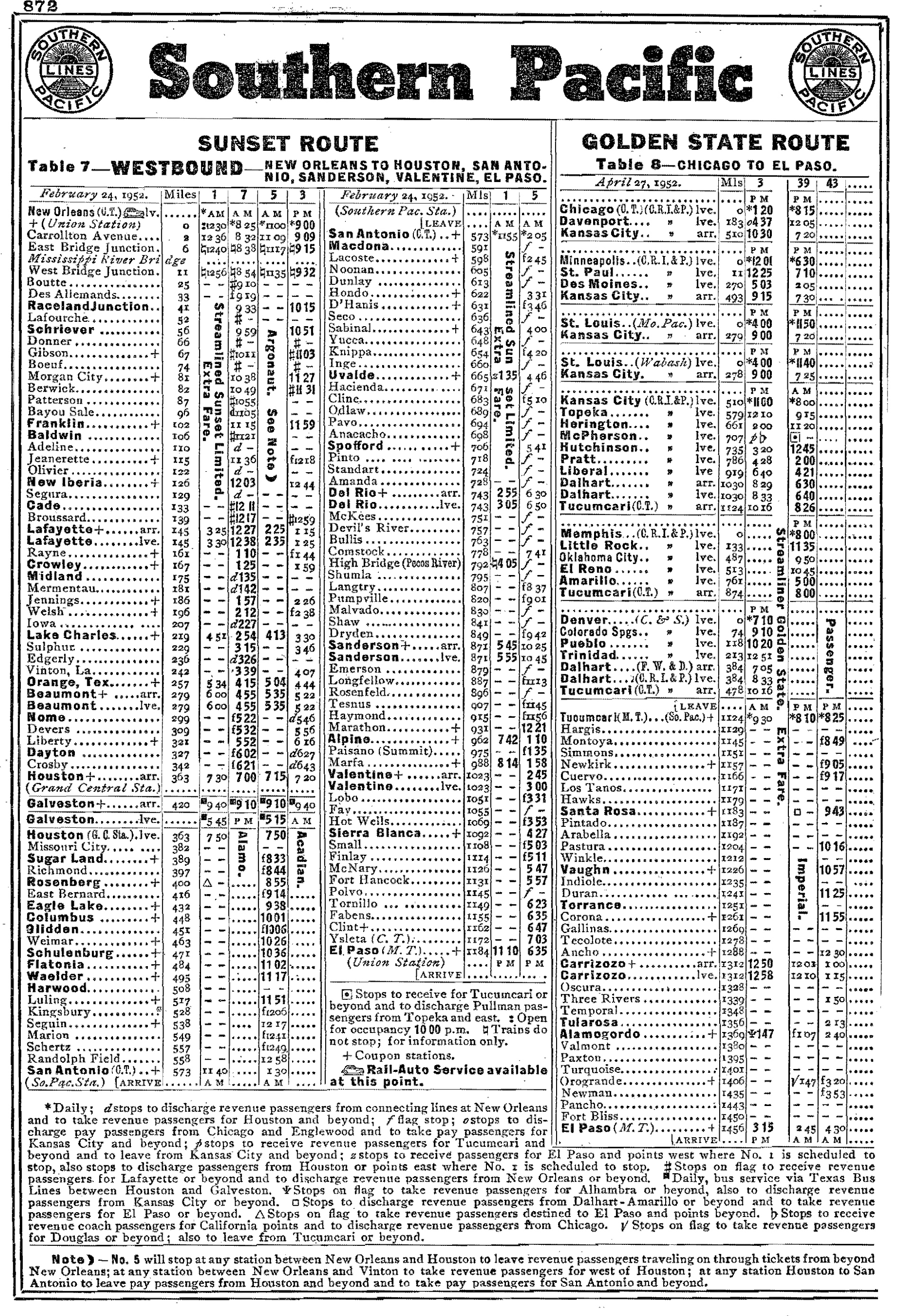
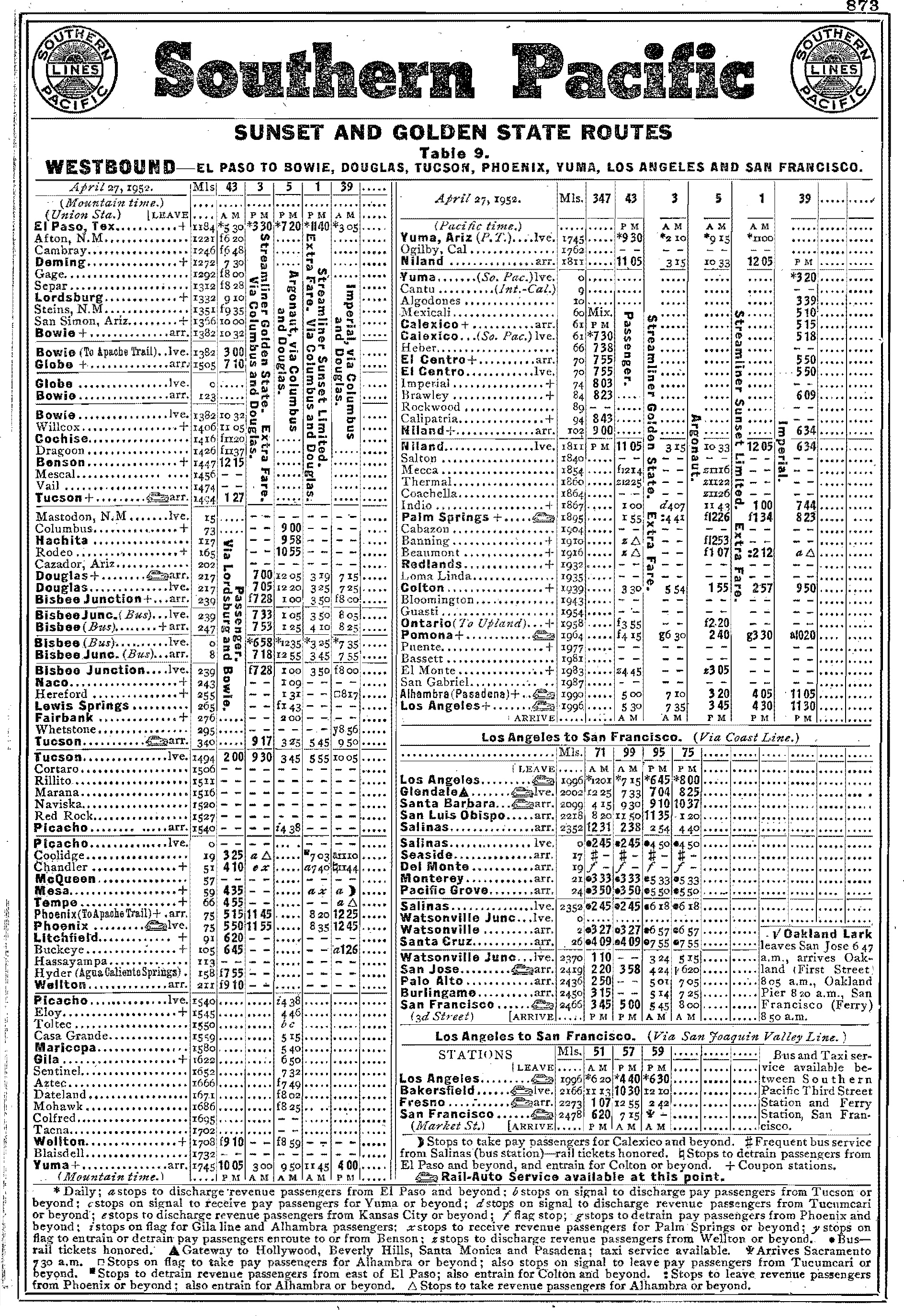
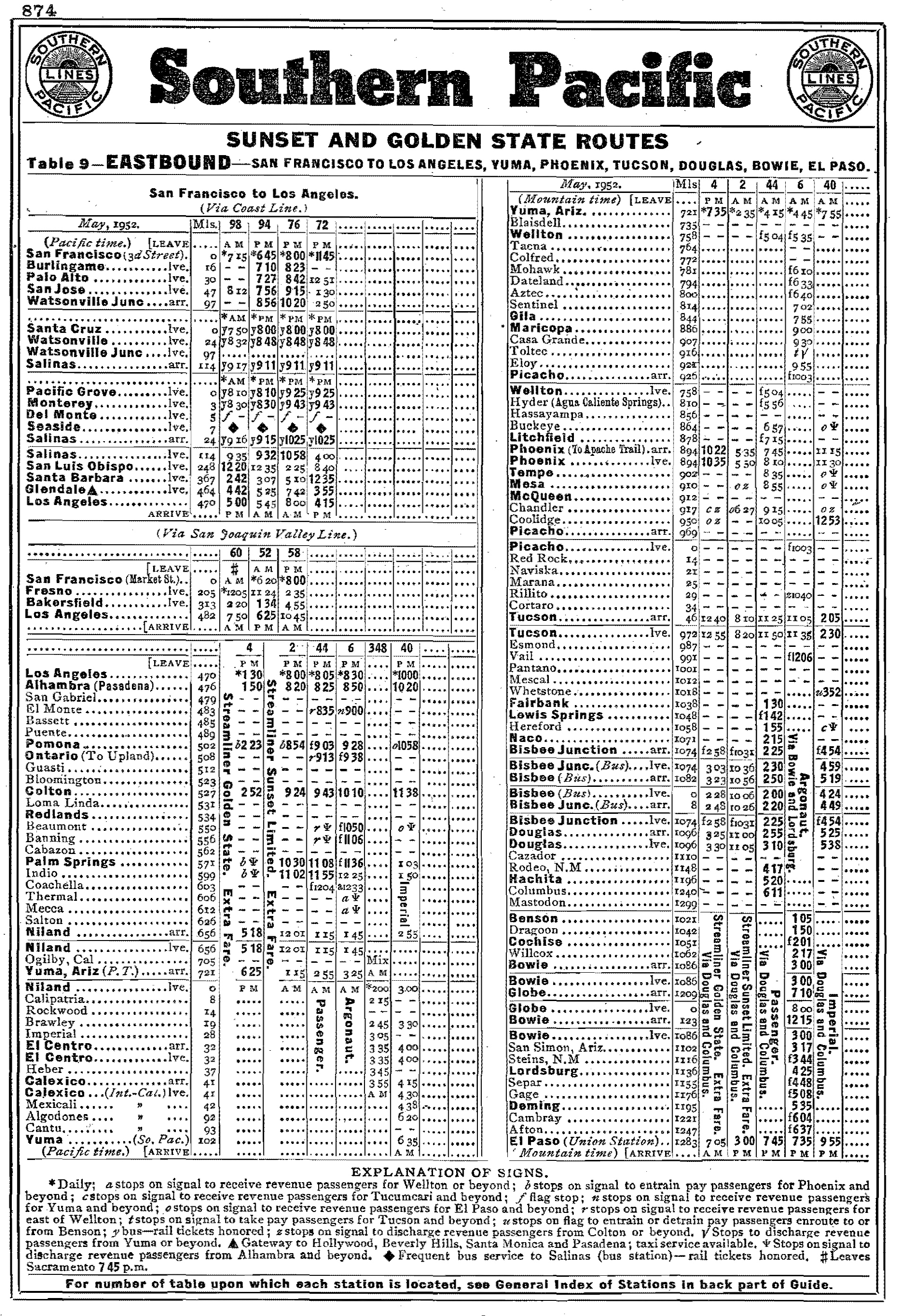
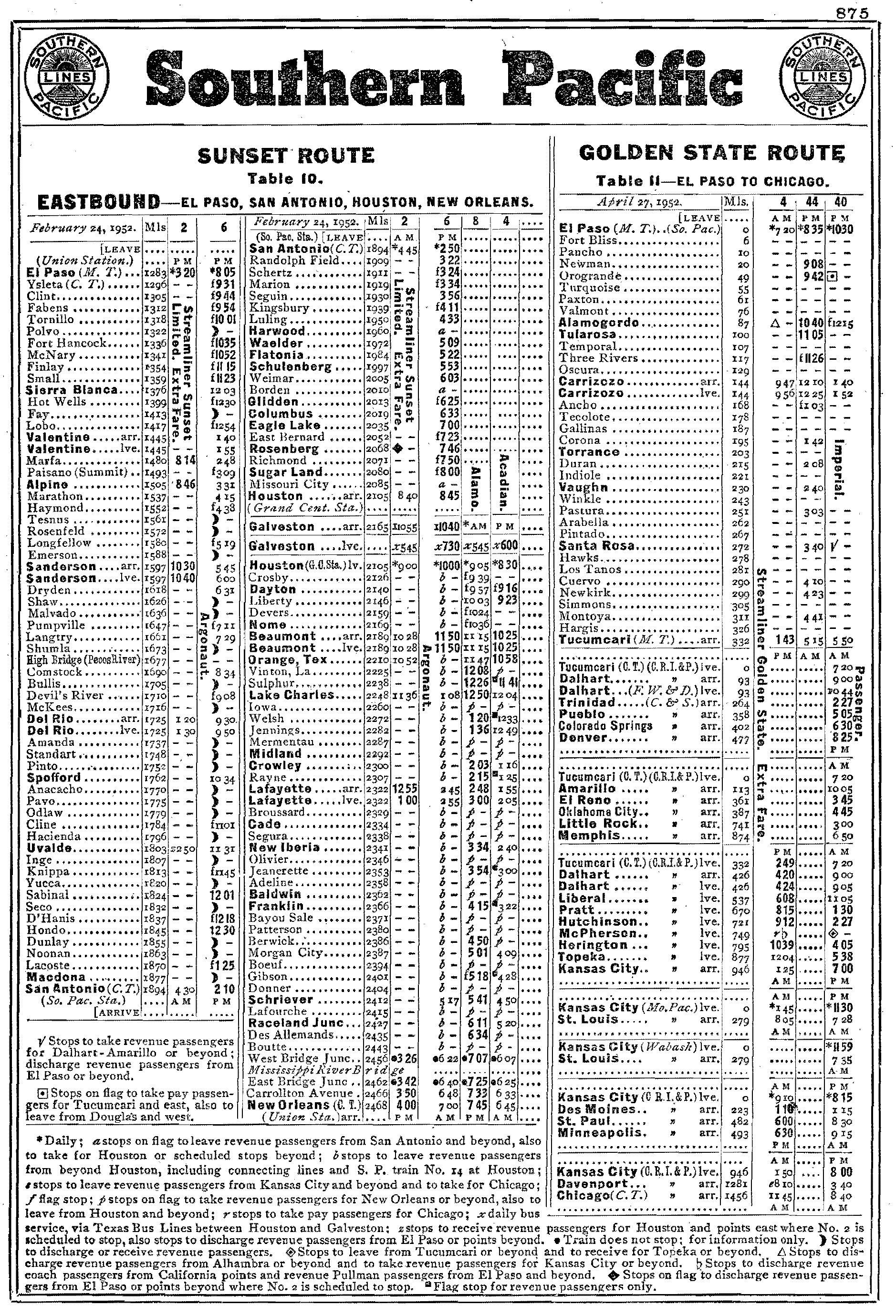
Listed as Trains #3 (westbound) and #4 (eastbound) on the railroads' official timetables, the Golden State would depart Chicago just after 10 pm and arrive at Tucumcari, New Mexico at nearly 8 pm the following day.
The SP would continue the train westward and into Los Angeles by just after 6 pm the day after. Considering the Golden State had to make additional stops that other western transcontinentals did not, it still carried a respectable average train speed of 52 mph.
Rock Island's "Golden State" hustles past the station at Ottawa, Illinois in July, 1963. Roger Puta photo.Final Years
As patronage declined so did the service, which by the late 1960s included only a few dismal cars pulled by a banged-up Rock Island E7's or E8's. The final westbound Golden State departed Chicago on April 8, 1968.
As mentioned before, the SP and Rock Island came extremely close to launching a much more luxurious train that would have operated over the same route as the Golden State to fully compete with the Santa Fe, Union Pacific, and others with no expenses spared.
The train was to be called the Golden Rocket and came so close to becoming a reality the Rock actually had its consist delivered before the Southern Pacific backed out (which resulted in that equipment transferred to the Golden State).
Photos
 The westbound "Golden State," train #3, is seen here operating on the Southern Pacific in a publicity photo probably dating to the late 1940s.
 Southern Pacific E8A #6018 and a mate are preparing to back on to Train 3, the westbound "Golden State" at El Paso Union Station on March 20, 1967. Roger Puta photo.
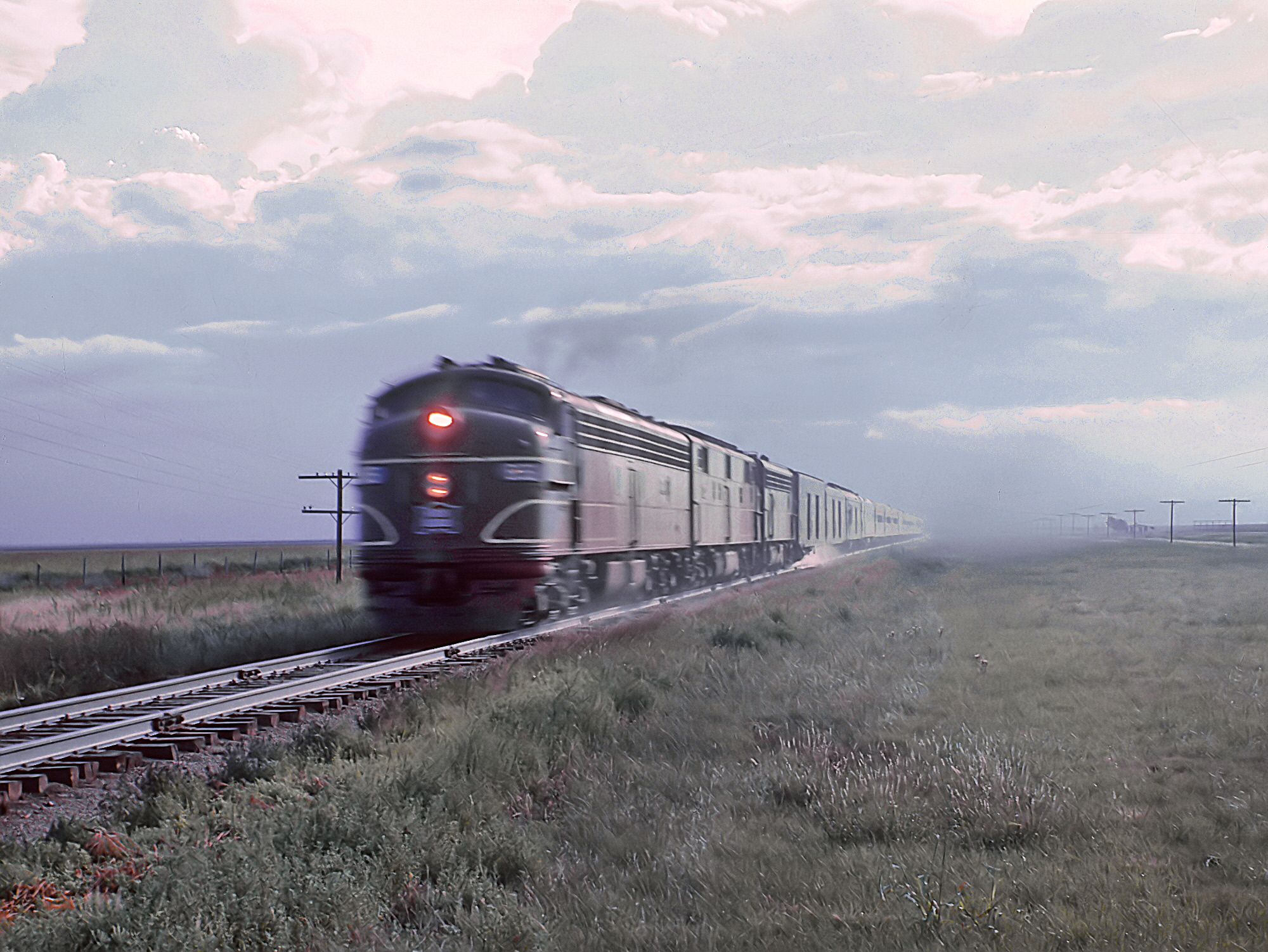 Rock Island's "Golden State" hustles along east of Tucumcari, New Mexico on July 28, 1962. Marty Bernard notes he caught the train during a family vacation that year.
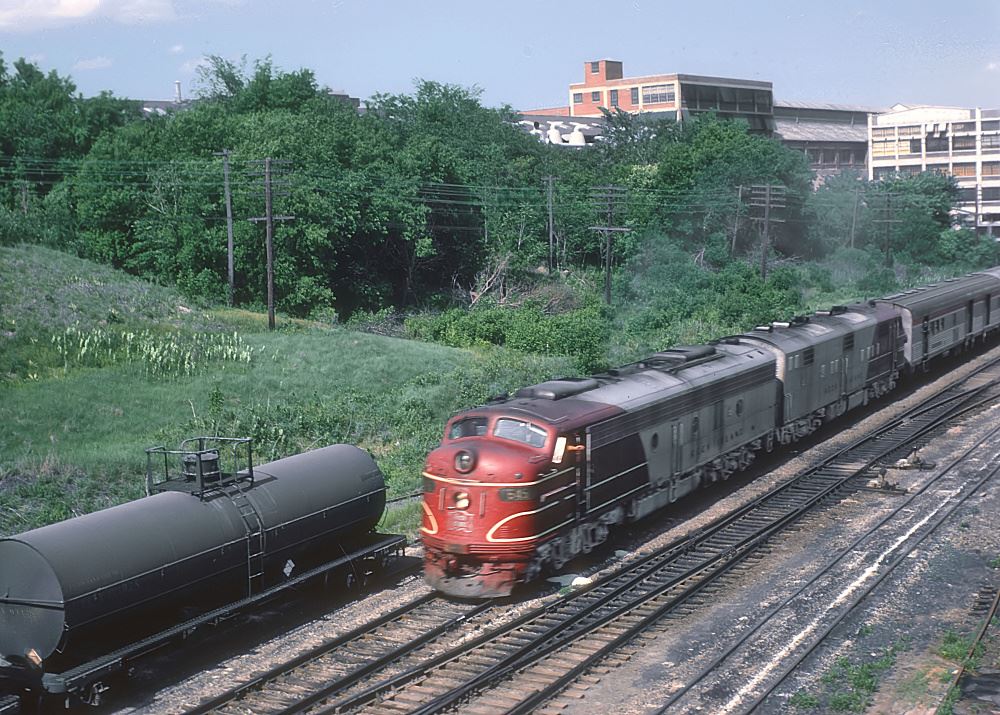 Rock Island's train 3, the westbound "Golden State," passes the Westclox Company in Peru, Illinois in the summer of 1960. Rick Burn photo.
Recent Articles


-
Boone & Scenic Valley Wolf Dinner Train (2026)
Sep 19, 26 08:15 PM
 2026 Boone & Scenic Valley Wolf Dinner Train—Des Moines River valley, Bass Point Creek High Bridge, Union Pacific dining cars. Confirm on bsvrr.com.
 -
C&NW 4-6-2s 1617 & 1620: Minnesota 400 Yellow Jackets
Sep 19, 26 11:28 AM
 C&NW Class E Pacifics 1617 and 1620—Alco Schenectady 1917, yellow-and-green E-4-style shrouds 1941 for the Minnesota 400. Crews called them Yellow Jackets. Renumbered 617/620. Scrapped 1956.
 -
Erie Lackawanna Diesel Roster: All-Time
Sep 19, 26 10:13 AM
 Erie Lackawanna diesel—Erie and DL&W inheritance, GP35s, U25Bs, SD45/SDP45/SD45-2, U34CH. All-time roster with serials and orders. Conrail April 1 1976.
 -
Erie Lackawanna Railway: Map, History, Logo
Sep 19, 26 10:06 AM
 Erie Lackawanna Railway—Erie and DL&W, October 17 1960–March 31 1976. Von Willer, White revival, Dereco, Agnes, Conrail. High-and-wide Chicago main. Map, logo, what remains.
 -
"Empire State Express" (1941 Train): Timetables, Route, Consist
Sep 18, 26 10:59 PM
 NYC Empire State Express—George Daniels 1891 day train, 999’s 112.5 mph claim, Budd stainless streamliner December 7 1941, Cleveland and Detroit sections, diesels, 1967 name drop. Timetables, consist…
 -
New York Central 4-6-4s 5426 & 5429: Empire State Express Hudsons
Sep 18, 26 10:32 PM
 NYC J-3a Hudsons 5426 and 5429—Alco 1937, Budd stainless shrouds 1941 for the Empire State Express. Pearl Harbor inaugural. Shrouds off by 1950. Neither preserved.
 -
"Stourbridge Lion" Locomotive: Facts, History, Photos
Sep 18, 26 10:27 PM
 Stourbridge Lion—Foster, Rastrick 0-4-0, first steam locomotive in the United States. Horatio Allen, Honesdale, August 8, 1829. Too heavy for D&H gravity track. Boiler in Baltimore; Colonie replic…
 -
Delaware & Hudson Steam Roster (Post 1900)
Sep 18, 26 10:01 PM
 Delaware & Hudson steam—Camelback 2-8-0s, Loree high-pressure compounds, Class K 4-8-4s, forty Challengers. Post-1900 class roster after Drury. Last steam July 21, 1953.
 -
Boston & Maine Steam Roster (Post 1900)
Sep 18, 26 02:57 PM
 Boston & Maine steam—B-15 Moguls, K-8 Consolidations, P-4 Lima Pacifics, T-1 Limas, R-1 Mountains. Post-1900 class roster after Drury. Last steam July 23, 1956.
 -
Boston & Maine Diesel Roster (All-Time)
Sep 18, 26 01:25 PM
 Boston & Maine diesel—boxcab 1100 1935, Flying Yankee 6000, FTs, E7s, BL2s, GP7/GP9, GP38-2s and GP40-2s. All-time roster. Last steam July 23, 1956.
 -
Mid-Continent Railway Museum Dining (2026)
Sep 18, 26 01:21 PM
 2026 Mid-Continent dining in North Freedom—select-date seated meals in luxury cars, reservations required. Pizza Limited June 28. Confirm on midcontinent.org.
 -
Bessemer & Lake Erie Steam Roster (Post 1900)
Sep 18, 26 12:11 PM
 Bessemer & Lake Erie steam—C3A 150–151, D1A/D2A Santa Fes, 47 H1 Texas types after Burlington. Post-1900 class roster after Drury. Last steam 2-8-0 156, May 14, 1953.
 -
Bessemer & Lake Erie Diesel Roster (All Time)
Sep 18, 26 12:09 PM
 Bessemer & Lake Erie diesel—Westinghouse 281 1936, Baldwin DRS-6-6-1500s, F7s 1950–53, SD7/SD9/SD18/SD38 family, RSD-15s. All-time roster. Last steam 2-8-0 156, May 14, 1953.
 -
Bangor & Aroostook Steam Roster (Post 1900)
Sep 18, 26 11:21 AM
 Bangor & Aroostook steam—Manchester Ten-Wheelers, Alco Mountains 100–109, G-2 Consolidations, Pacifics 250–254. Post-1900 class roster after Drury. Last steam Pacific 251, July 22, 1951.
 -
Bangor & Aroostook Diesel Roster (All Time)
Sep 18, 26 11:09 AM
 Bangor & Aroostook diesel—F3s 1947, eight BL2s, E7s, GP7s leased to the PRR, GP9s, GP38s. All-time roster. Last regular steam July 22, 1951.
 -
B&O Steam Locomotive Roster (Post 1900)
Sep 18, 26 10:33 AM
 Baltimore & Ohio steam—Old Maude, E-27 Consolidations, Q Mikados, Big Sixes, EM-1 Yellowstones, President Pacifics. Post-1900 class roster after Drury. Last public steam May 17, 1958.
 -
Baltimore & Ohio (B&O): Diesel Roster (All-Time)
Sep 18, 26 10:28 AM
 Baltimore & Ohio diesel—boxcab 1925, EMC 50 1935, EA 1937, FTs, F3s, F7s, FA-2s, sharks, GP7/GP9, GP30s after C&O 1963, SD50s 8576–8595 1984. All-time roster. Last steam 1958.
 -
Detroit & Toledo Shore Line Railroad: Map, Roster, History
Sep 18, 26 12:32 AM
 Detroit & Toledo Shore Line—Pleasant Bay 1898, named 1899, Detroit–Toledo freight bridge, GTW and Clover Leaf/NKP/N&W. Merged into Grand Trunk Western June 26, 1981.
 -
Lackawanna Steam Locomotives: History, Roster & Photos
Sep 18, 26 12:17 AM
 Delaware, Lackawanna & Western steam—Camelback 2-8-0s, Mikados, freight Pacifics, Poconos 4-8-4s, Hudsons. Post-1900 roster after Drury. Last steam July 13, 1953.
 -
Lackawanna (DL&W) Diesel Roster: All Time
Sep 18, 26 12:11 AM
Delaware, Lackawanna & Western diesel—boxcabs 1926, EMC SC 425–426 1935, FTs 1945, F3/F7/E8, GP7s, RS-3s, FM Train Masters. All-time roster. Last steam 1953. -
Lackawanna Railroad: Map, History, Viaducts, Rosters
Sep 18, 26 12:04 AM
 TDelaware, Lackawanna & Western—Liggett’s Gap 1832, named March 11 1853, Hoboken–Buffalo, anthracite, Phoebe Snow, Cutoff and Tunkhannock. It merged with the Erie to form Erie Lackawanna on Octobe…
 -
Rail News, The Latest
Sep 17, 26 11:56 PM
This page provides a portal to the latest in rail news, from preservation and restortation subjects to other notable topics. -
Union Pacific Big Boy 4014 Sets First Holiday Tour for Make-A-Wish
Sep 17, 26 11:54 PM
 Union Pacific Big Boy 4014’s first holiday tour: Cheyenne–Denver tickets, Nov. 21 Denver-area display, Make-A-Wish. Museum patrons Oct. 16; public Oct. 19.
 -
Conrail Diesel Roster (All Time)
Sep 17, 26 10:27 PM
Conrail diesel—~5,000 inherited 1976, Big Blue, GP15-1s, SD40-2s, SD50s, Dash-8s, SD60/60M/60I, SD80MACs. All-time CR-number roster. -
Chessie System (Railroad): The C&O, B&O, And WM
Sep 17, 26 09:38 PM
 Chessie System, Inc.—C&O, B&O, and Western Maryland. Kitten-C paint 1972, holding company February 26 1973, CSX November 1 1980, C&O into CSXT August 31 1987.
 -
Chesapeake & Ohio (C&O) Diesel Roster: All-Time
Sep 17, 26 06:01 PM
 Chesapeake & Ohio diesel—late steam, no Fairbanks-Morse, E7s 1946, GP7/GP9 flood, F7s, GP40-2s, B30-7s, SD50s 1984–85. All-time roster. Steam ended 1956.
 -
Chesapeake & Ohio (C&O) Steam Roster: Post-1900
Sep 17, 26 03:18 PM
 Chesapeake & Ohio steam—H-8 Alleghenies, K-4 Kanawhas, T-1 Texas, Greenbriers, H-6 1949 Mallets. Post-1900 class roster including Pere Marquette and Hocking Valley. Last steam 1956.
 -
Chesapeake and Ohio Railway: Map, Logo, History
Sep 17, 26 02:36 PM
 Chesapeake & Ohio Railway—Louisa Railroad 1836, named August 31 1868, Ohio River 1873. Coal, Chessie the kitten, Pere Marquette 1947, B&O control 1963, into CSX August 31 1987. Complete corporate…
 -
TVRM Valentine Train Ride (2026)
Sep 17, 26 02:31 PM
 2026 TVRM Valentine Train Ride in Chattanooga—Feb. 6–15, plated dinner, Grand Junction Depot. Confirm on tvrail.com.
 -
River Fox Train Dining (2026)
Sep 17, 26 02:29 PM
 2026 River Fox Train in West Sacramento—Brunch Train and Murder Mystery dinner. 18095 County Road 117. Confirm on riverfoxtrain.com.
 -
Weehawken Terminal, Serving The West Shore Railroad
Sep 17, 26 01:38 PM
 Weehawken Terminal—West Shore / New York Central Hudson waterfront station, opened 1884. Five ferry slips, sixteen tracks, Weehawken Tunnel 4,014 feet. Last ferry March 25, 1959. Port Imperial and HBL…
 -
West Shore Railroad: Map, History, Timetables
Sep 17, 26 01:32 PM
 West Shore Railroad—New York, West Shore & Buffalo 1880–83, Weehawken to Buffalo. PRR-backed rival to the Central. Morgan settlement, 475-year NYC lease January 1 1886. CSX River Sub today.
 -
Jersey Central Diesel Locomotives: History, Roster & Photos
Sep 17, 26 01:20 PM
 Central Railroad of New Jersey diesel—boxcab 1000, Baldwin double-enders, F3s, Train Masters, SD35s, GP40Ps. All-time roster. Steam ended July 1, 1954.
 -
Jersey Central Steam Locomotives: History, Roster & Photos
Sep 17, 26 01:17 PM
 Central Railroad of New Jersey steam—Camelback Ten-Wheelers, USRA Mikados, G-class Pacifics, suburban tanks. Post-1900 class roster after Drury. Dieselized July 1, 1954.
 -
Jersey Central Railroad (CNJ): Map, Rosters, History
Sep 17, 26 01:14 PM
 Central Railroad of New Jersey—Elizabethtown & Somerville 1831, named April 23 1849. Communipaw, anthracite, Blue Comet, Reading/B&O control. Conrail April 1 1976. Complete corporate history.
 -
Central Vermont Diesel Locomotives: History, Roster & Photos
Sep 17, 26 11:35 AM
 Central Vermont diesel—Alco S-2s 1942, RS-3s, RS-11s from DW&P, EMD GP9s 1956–57, GP38ACs 1971. All-time roster. Last steam April 4, 1957.
 -
Central Vermont Steam Locomotives: History, Roster & Photos
Sep 17, 26 11:19 AM
 Central Vermont steam—ten Alco 2-10-4s of 1928, four U-1-a Mountains, Consolidations. Post-1900 class roster after Drury. Last steam April 4, 1957.
 -
Central Vermont Railway: Map, Logo, Rosters
Sep 17, 26 11:03 AM
 Central Vermont Railway—Vermont Central charter October 1843, Bethel–White River Junction June 26, 1848. Grand Trunk 1898, CN 1923, RailTex/NECR 1995. Complete corporate history.
 -
Fitchburg Railroad: Map, History, Timetables
Sep 17, 26 10:40 AM
 Fitchburg Railroad—chartered March 3, 1842, Boston–Fitchburg March 5, 1845. Alvah Crocker, Hoosac west door, Vermont & Massachusetts, Cheshire. B&M 99-year lease July 1, 1900. Complete corpora…
 -
Steam Railroading Institute Dining (2026)
Sep 17, 26 10:30 AM
 2026 SRI Owosso dining—vintage dining cars, select evenings. 2026 dinner calendar not posted; 2025 Up In Smoke is the recent example. Confirm on michigansteamtrain.com.
 -
Canadian Pacific Railway: Map, History, Logo, Photos
Sep 17, 26 12:06 AM
 Canadian Pacific Railway—incorporated February 16, 1881. Last spike Craigellachie November 7, 1885. Soo, Milwaukee, D&H, DM&E. CPKC April 14, 2023. Complete corporate history.
 -
Canadian Pacific Diesel Locomotives: History, Roster & Photos
Sep 17, 26 12:03 AM
 Canadian Pacific diesel—E8A 1800 in 1949, FP7/FP9, FA-2, C424, SD40-2, SD40-2F Red Barns, AC4400CW, ES44AC, SD30C-ECO, SD70ACu heritage. All-time roster. Last steam November 6, 1960.
 -
Canadian Pacific Steam Locomotives: History, Roster & Photos
Sep 16, 26 11:35 PM
 Canadian Pacific steam—3,257 engines 1881–1949. D10 Ten-Wheelers, G3 Pacifics, Royal Hudsons, Selkirk 2-10-4s. Post-1900 class roster after Drury. Last steam November 6, 1960.
 -
Woodstown Central Dining in Motion (2026)
Sep 16, 26 11:31 PM
 2026 Woodstown Central Dining in Motion—Salem County table car, 50–60 minutes, private table of four from $190. Confirm on woodstowncentral.com.
 -
NCTM Wine & Dine on the Rails (2026)
Sep 16, 26 11:28 PM
 2026 NCTM Wine & Dine on the Rails in Spencer—Feb. 13–15, three-course dinner, 21+, $145/$140. Sold out. Confirm next season on nctransportationmuseum.org.
 -
Southern Railway 4-6-2 1380: The Streamlined Ps-4
Sep 16, 26 10:34 PM
 Southern Railway Ps-4 4-6-2 1380—Alco 1923, serial 64857. Otto Kuhler streamlining at Spencer 1940–41 for the Tennessean. Only streamlined steam locomotive on the Southern. Scrapped Baltimore 1953.
 -
Texas Mexican Railway: Serving The Border Since The 1880s
Sep 16, 26 09:58 PM
 Texas Mexican Railway—Corpus Christi, San Diego & Rio Grande March 1875, 3-foot. Tex-Mex June 1881, Laredo Sept 1881, Rio Grande bridge 1883. Standard gauge July 17 1902. Mexican government 1900–1…
 -
Mount Hood Railroad Dining (2026): No Plated Dinner Train This Season
Sep 16, 26 09:53 PM
 2026 Mount Hood Railroad in Hood River is scenic Fruit Loop trains with snacks and sandwiches—not a plated dinner train. Confirm on mthoodrr.com.
 -
Peoria and Eastern Railway: Map, Timetables, History
Sep 16, 26 09:39 PM
 Peoria & Eastern—Danville, Urbana, Bloomington & Pekin 1866, IB&W 1869, OI&W 1887. Incorporated Feb 21 1890, Big Four next day. NYC 1930, Conrail 1976. GP7s 5612–5625. Complete corporate history.
 -
Boston and Maine Railroad: "Route Of The Minute Man"
Sep 16, 26 11:30 AM
 Boston & Maine—Andover & Wilmington 1833, NH charter June 27 1835. Eastern, Boston & Lowell, Fitchburg/Hoosac, Concord & Montreal. Section 77 March 12 1970. Guilford June 30 1983. CSX June 1 2…