Common Carrier Railroad: Defining This Corporate Entity
Last revised: September 9, 2024
By: Adam Burns
You may have often heard the term common carrier and wondered about its meaning in relation to railroads. In a general sense it refers to any entity (railroad, person, or otherwise) which serves the public at the large, transporting people or goods (in regards to freight the company or person is responsible for any losses during transport).
The first railroad to provide such services in the United States was the acclaimed Baltimore & Ohio, earning such a distinction despite the fact that it was neither the first chartered nor the first put into operation.
Nevertheless the B&O maintains an important place within American and transportation history for the efforts and risks Baltimore businessmen carried out in financing its construction.
Photos
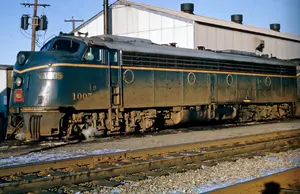
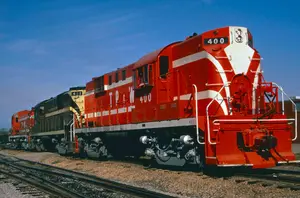
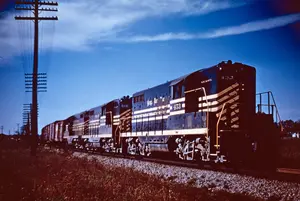
 An A-B-B-B-B-B set of gleaming Colorado & Southern E5's, led by E5A #9955 (built as Chicago, Burlington & Quincy #9914-A, named "Silver Arrow"), work their final years in freight service as the covered wagons are seen here near Larkspur, Colorado in early October of 1967. H. C. Crist photo. American-Rails.com collection.
History
The term "common carrier" in regards to this article will refer specifically to railroads although it generally relates to all transportation types, including pipelines and even telecommunication companies.
For the United States, the railroad concept kicked off with the opening of the Granite Railway in Massachusetts on October 7, 1826.
It was constructed primarily for the purpose of moving stone from Quincy to the Neponset River at Milton and used only strap-iron rails via cars pulled by horse. In addition, the system was a private operation only and not a common-carrier available to the general public.
The first publicly operated railroad was England's Stockton & Darlington, which officially opened for service, using steam locomotives (its first piece of motive power, according to the book "Railroads In The Days Of Steam" was referred to as Locomotion No. 1), on September 27, 1825.
Delaware & Hudson Canal Company
In the U.S., the Delaware & Hudson Canal Company would earn the distinction as the country's first to operate a steam locomotive when it put the Stourbridge Lion, an English-built locomotive, into service on August 8, 1829.
Piloted by Horatio Allen the locomotive navigated the company's 3-mile line from Honesdale to Seelyville and then returned.
Unfortunately, the 7-ton locomotive proved too heavy for the line (in particular was the bridge spanning Lackawaxen Creek designed only to handle only 3 tons), which had been built by chief engineer John B. Jervis using strap-iron rails lain atop wooden stringers.
During trials, the last of which was held on September 9th, the bridge held but ultimately the Lion was parked, placed in a shed, and sadly never saw regular service. It was eventually scrapped in 1870.
The early D&H was an interesting operation; it was designed largely as a canal system, specifically to handle anthracite coal destined for New York City.
During the early 19th century canals were hailed as the future of modern transportation, which would use a combination of newly constructed waterways that connected with larger creeks and rivers to offer a through route transporting people and goods from Point A to Point B.
However, canals were not without their limitations; they were generally quite slow and, in northern regions, would freeze during the winter months shutting down all operations for months at a time.
On April 23, 1823 the Pennsylvania and New York legislatures granted merchants (and brothers) Maurice and William Wurtz permission to construct the D&H and it was chartered that same day.
To move coal from the company's mines near Carbondale to the Hudson River the D&H built a dual railroad/canal system.
Due to the 950-foot Moosic Mountain a railroad was needed at the western end between Olyphant and Honesdale.
It was designed and built by engineer Jervis and spanned 17 miles using a 4-foot, 3-inch gauge; according to Jim Boyd's "The American Freight Train" it used steam-powered winches via inclined plans to pull loaded eastbound coal cars up the mountain while a gravity system was employed to release them down the other side.
From this point a 25-mile canal ran along Lackawaxen Creek, then crossed the Delaware River using a aqueduct suspension bridge (still in use today), and finally wound its way along the river for 23 miles to Port Jervis.
From this point it turned northeasterly and ultimately terminated at Kingston along the might Hudson River for the final trip southward. It spanned 108 miles and entered service in 1828 but as competition for surrounding traditional railroads increased it would close in 1899.
Baltimore & Ohio
Despite its early start the D&H, being chartered as a canal system, was not the first common-carrier railroad (it later did flourish into a successful railroad connecting Montreal, Quebec with Scranton/Wilkes-Barre, Pennsylvania).
That distinction would belong to the Baltimore & Ohio, originally chartered on February 28th, 1827 and officially incorporated and organized on April 24th, 1827.
The 1820s witnessed a flurry of transportation activity centered around the construction of either new railroads or canals.
Many waterway owners, such as those in control of the mighty Erie Canal which stretched 364 miles from Buffalo on Lake Erie to Albany on the Hudson River, along with stagecoach lines saw railroads (and rightfully so) as a threat to their future well-being.
There was wild claims that trains would scare horses away, kill and maim passengers as an unproven technology, or destroy agriculture by sparking fires.
The railroads' efficiency eventually outweighed these obstacles although they were unproven and many people would die in accidents, in particular, during the 19th century.
The merchants and bankers of Baltimore, led by Philip E. Thomas, were eager to see the B&O launched. As a port city it was in competition with others such as Charleston, Philadelphia, Boston, and New York which were already planning or had completed a railroad or canal.
The B&O laid its first stone on July 4, 1828, an event in which Charles Carroll took part, the sole surviving signer of the Declaration of Independence.
The B&O officially began operations handling passengers and freight over its initial 1.5-mile main line in January of 1830 using what eventually became the industry's standard-gauge, 4-feet 8 1/2-inches.
 A pair of South Shore Line boxcab freight motors, #702 and #703 (Class R-2), were photographed here between assignments at Michigan City, Indiana on June 25, 1960. American-Rails.com collection.
Mohawk & Hudson
As a common-carrier the B&O, under license/authority provided to it by a regulatory body (originally the state legislature but later more stringent federal laws and agencies were formed to govern the railroad industry), was tasked with handling any freight or passenger traffic without discrimination.
In other words, in most circumstances a railroad could not deny the transportation of legal freight and/or law-abiding citizens.
As a common-carrier it was tasked with serving the public at large. The B&O would carry out this requirement quite well for some 160 years before it was dissolved as a corporate entity in 1987.
Following the B&O and D&H operations numerous early railroads sprang up during the 1820s and 1830s with names like the Mohawk & Hudson (later New York Central) and Camden & Amboy (acquired by the Pennsylvania Railroad).
Today, the largest common-carriers in the country are the Class I's although they are no longer required to provide intercity passenger service, now handled by Amtrak.
Sources
- Boyd, Jim. American Freight Train, The. Osceola: MBI Publishing, 2001.
- Reynolds, Kirk and Oroszi, David. Baltimore & Ohio Railroad. Osceola: MBI Publishing, 2000.
- Schafer, Mike. Classic American Railroads. Osceola: MBI Publishing, 1996.
- Solomon, Brian and Schafer, Mike. New York Central Railroad. St. Paul: Andover Junction Publications, 2007.
- Stover, John. Routledge Historical Atlas of the American Railroads, The. New York: Routledge, 1999.
Recent Articles


-
Wisconsin Central Diesel Roster (Soo Line Years)
Nov 01, 26 11:31 PM
 Diesels built new for the Wisconsin Central in the Soo Line years. 97 locomotives, Alco 24 and Electro-Motive 73. These 97 are already inside the Soo Line roster of 786.
-
Wisconsin Central Ltd. Diesel Roster
Nov 01, 26 11:22 PM
 Wisconsin Central Ltd. diesels, 1987 to 2001. Thirty locomotives with a number fixed by another roster on this site or by a photograph. The fleet stood at 244 units. More than 100 were SD45s.
-
Wisconsin Central Steam Roster (Built Since 1900)
Nov 01, 26 11:20 PM
Wisconsin Central steam locomotives built since 1900. The quantity column is 156. Consolidations, Mikados, Atlantics, Ten-Wheelers, Pacifics, and Mountains. The Soo 4-8-4s stay on the Soo roster. -
Wisconsin Central Railway: Map, History, Logo, Roster
Nov 01, 26 11:15 PM
 Two railroads kept the Wisconsin Central name. The 1871 line was leased to the Soo on April 1, 1909 and merged January 1, 1961. Wisconsin Central Ltd. ran from October 11, 1987 until Canadian National…
-
Watchmen Talks Extended at Los Angeles and Long Beach
Nov 01, 26 10:41 PM
Suggested meta description: The Pacific Maritime Association and ILWU Local 26 extended their contract through 5 p.m. Pacific Time on November 4, 2026, moving a November 1 deadline at the ports of Los… -
LIRR September Ridership Tops the 2019 Mark
Nov 01, 26 10:39 PM
The Long Island Rail Road carried 102 percent of its September 2019 ridership in September 2026, Governor Kathy Hochul said on October 28. Metro-North carried 323,423 riders on October 24 and 25. -
North Carolina Awards the Rogers Road Bridge in Wake Forest
Nov 01, 26 10:22 PM
 NCDOT on October 28, 2026 awarded a contract to Blythe Construction for a bridge over the CSX S-Line on Rogers Road in Wake Forest. Work can start as early as November 30, with opening aimed at fall 2…
-
Trinity Books 2,190 Railcar Orders in the Third Quarter
Nov 01, 26 10:17 PM
 Trinity Industries on October 29, 2026 reported 2,190 new railcar orders and 2,030 deliveries in the third quarter. The company expects industry deliveries below 25,000 railcars in 2026.
-
New York Central's Jade Green E Units
Nov 01, 26 09:25 PM
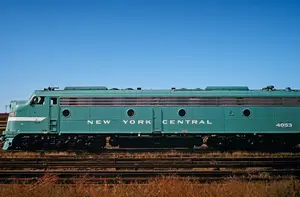
 In 1961 the New York Central tried Century Green, called Jade Green, on E8As 4053 and 4083 and E7B 4107. Dark gray became the passenger scheme. The green stayed on freight cars.
-
FRA Awards $1.24 Billion for Grade-Crossing Work in 37 States
Nov 01, 26 12:48 PM
 The Federal Railroad Administration on October 30, 2026, awarded $1.24 billion for 91 grade-crossing projects in 37 states under the Railroad Crossing Elimination program.
-
PATH Director Clarelle DeGraffe Will Retire at the End of 2026
Nov 01, 26 12:43 PM
Clarelle DeGraffe will retire at the end of 2026 after 37 years with the Port Authority of New York and New Jersey. James Sincaglia will succeed her as PATH director. -
Lehigh Gorge Scenic Railway Suspends Trains After a Rockslide
Nov 01, 26 12:30 PM
 The Lehigh Gorge Scenic Railway has suspended all trains indefinitely after a rockslide near Jim Thorpe, Pennsylvania, on October 31, 2026. Tickets through November 15 will be refunded.
-
Georgia Marks the Opening of the Gainesville Inland Port
Nov 01, 26 12:06 PM
 Norfolk Southern and Georgia Ports marked the Gainesville Inland Port on October 29, 2026. The terminal opened May 4 and can handle 200,000 containers a year at full build-out.
-
BLET Members Ratify Five-Year Deal on the Dakota, Minnesota & Eastern
Nov 01, 26 11:48 AM
 Brotherhood of Locomotive Engineers and Trainmen members have ratified a five-year agreement with CPKC covering Dakota, Minnesota and Eastern lines. Engineers' hourly pay rises 41.42 percent over the…
-
Canada Lists Roberts Bank Terminal 2 as a Project of National Interest
Nov 01, 26 11:03 AM
On October 30, 2026, Canada listed the Roberts Bank Terminal 2 container project at the Port of Vancouver as a project of national interest. The listing includes a widened causeway for rail. -
Amtrak Finishes the First Street Tunnel Work South of Union Station
Nov 01, 26 09:59 AM
 Amtrak on October 26, 2026 finished nine days of work at A Interlocking in the First Street Tunnel south of Washington Union Station. Trains south of the station are back.
-
CPKC Asks the STB to End the Union Pacific-Norfolk Southern Review
Nov 01, 26 12:23 AM
CPKC on October 30, 2026 asked the Surface Transportation Board to end its review of the Union Pacific-Norfolk Southern merger, citing remarks by the Union Pacific chief executive. -
U.S. Rail Traffic Rose 7.8 Percent in the Week Ending October 24
Nov 01, 26 12:13 AM
U.S. railroads moved 538,503 carloads and intermodal units in the week ending October 24, 2026, up 7.8 percent from a year earlier, the Association of American Railroads said. -
Schneider Will Shift Its Eastern Intermodal Freight to NS
Nov 01, 26 12:06 AM
 Schneider said October 29, 2026 that Norfolk Southern will be its primary eastern railroad. The move from CSX begins next month, with official implementation on January 1.
-
Union Pacific Dispatchers Will Vote on ATDA Representation
Nov 01, 26 12:00 AM
 The National Mediation Board has authorized a representation election for Union Pacific train dispatchers. The American Train Dispatchers Association announced the decision on October 29, 2026.
-
Wabash Diesel Roster (All-Time)
Oct 31, 26 12:35 AM
 Wabash diesel locomotives, each frame once, through the lease at 12:01 a.m. on October 16, 1964.
-
Wabash Steam Roster (Built Since 1900)
Oct 31, 26 12:30 AM
 Wabash steam locomotives built since 1900. Moguls, Mikados, Mountains, and the O-1 Northerns.
-
Wabash Railroad: Map, Rosters, History, Logo
Oct 31, 26 12:28 AM
 History of the Wabash Railroad, from the Northern Cross of 1838 to the Norfolk & Western lease at 12:01 a.m. on October 16, 1964. Follow the Flag. Steam and diesel rosters are separate pages.
-
Court Clears $257.7 Million in Notes for Brightline Florida
Oct 31, 26 12:18 AM
A New Jersey bankruptcy court on October 29, 2026 authorized $257.7 million in notes for Brightline Trains Florida. The operating company is not one of the 17 debtor holding companies. -
Brightline West Still Waiting on a $6 Billion Federal Loan
Oct 31, 26 12:11 AM
 Brightline West said October 27, 2026 that it is still working through a $6 billion federal loan and still talks about opening in 2029. The Florida restructuring is a separate company.
-
BNSF Reopens the Gallup Subdivision After New Mexico Flooding
Oct 31, 26 12:06 AM
 BNSF said October 28, 2026 that both Gallup Subdivision main tracks are back after flooding near Laguna, New Mexico. The El Paso Subdivision was still out of service.
-
CSX Says Interchange Is Moving Again After a Technology Outage
Oct 31, 26 12:01 AM
 CSX said October 29, 2026 that interchange with other Class I railroads is moving again after a technology outage that began October 27. Dispatching and positive train control stayed up.
-
Baldwin "Baby Face" Locomotives: Specs, Photos, Roster
Oct 30, 26 11:01 PM
 Baldwin's Babyface cab on the early road diesels: 50 short-cab units, 1946-1948, plus the related Centipede. Construction numbers, specs, and the sharknose that followed.
-
California High-Speed Rail Chief Resigns
Oct 30, 26 08:36 PM
 Ian Choudri resigned October 28, 2026 as chief executive of the California High-Speed Rail Authority. The board named Joe Stephenshaw interim chief executive.
-
The 1910 Portal Bridge Is Handed Over for Demolition
Oct 30, 26 04:03 PM
 Amtrak handed the 1910 Portal Bridge over for demolition on October 29, 2026, during the final cutover to Portal North. Regular NJ Transit and Amtrak schedules are expected November 15.
-
Union Pacific-Norfolk Southern Merger Review Runs to 2027
Oct 30, 26 03:59 PM
 Union Pacific says the Surface Transportation Board's review of the Norfolk Southern merger gathers information through May 28, 2027. A closing still depends on board approval.
-
Amtrak Board Will Hear Restructuring Comments on November 10
Oct 30, 26 03:41 PM
 Amtrak's board will hear public comments on its restructuring on November 10, 2026, from 2 to 3 p.m. Eastern. Written comments were due October 30. A proposal goes to the board in December.
-
Canadian Pacific Selkirk 5931 Restored in Calgary
Oct 30, 26 01:36 PM
 Heritage Park in Calgary unveiled a cosmetic restoration of Canadian Pacific 2-10-4 No. 5931 on October 27, 2026. One of two surviving Selkirks. It stays on display.
-
Gettysburg Railway to Host Steam for Lincoln
Oct 30, 26 01:18 PM
 Northern Central Railway of York No. 17 will recreate Lincoln's arrival at Gettysburg on November 18, 2026, with public steam trips November 19-21.
-
NC&StL No. 576 to Steam for the Public in Nashville
Oct 30, 26 01:00 PM
 Nashville Steam will fire NC&StL 4-8-4 No. 576 for the public on November 7, 2026, 9 a.m. to 3 p.m., at 220 Willow Street. Admission is free.
-
Pennsylvania Railroad E8s Join the T1 Trust
Oct 30, 26 12:38 PM
 The T1 Trust has acquired former Pennsylvania Railroad E8A diesels 5702A and 5761A from the Fort Wayne Railroad Historical Society. They are bound for Cumberland.
-
Ligonier Valley Railroad: History, Roster, Timetable
Oct 30, 26 12:03 PM
 The Ligonier Valley Railroad ran 10.5 miles from Latrobe to Ligonier, Pennsylvania. Opened December 1, 1877. Last day August 31, 1952.
-
Toledo, Peoria & Western Diesel Roster (All-Time)
Oct 30, 26 10:25 AM
 Toledo, Peoria & Western diesel locomotives, each frame once. Thirteen Alcos, three Lima-Hamilton switchers, and 26 Electro-Motive units.
-
Toledo, Peoria & Western Steam Roster
Oct 30, 26 09:14 AM
 Toledo, Peoria & Western steam locomotives from the Rogers Consolidations of 1895 through the 4-8-4s of 1937
-
Toledo, Peoria & Western Railway: Map, Roster, History
Oct 29, 26 11:12 PM
 History of the Toledo, Peoria & Western. The Peoria & Oquawka, George P. McNear, the Santa Fe and Pennsylvania years, and the railroad that came back in 1989.
-
Cotton Belt Diesel Roster (All-Time)
Oct 29, 26 07:58 PM
 St. Louis Southwestern diesel locomotives, each frame once. Baldwin switchers, F units, and new Cotton Belt-lettered power through the GP60s of May 1990.
-
Cotton Belt Steam Roster (Built Since 1900)
Oct 29, 26 06:52 PM
 St. Louis Southwestern steam locomotives built since 1900. Consolidations, Ten-Wheelers, and twenty class L-1 4-8-4s. The quantity column is 297.
-
Cotton Belt Railroad: Map, Logo, History, Rosters
Oct 29, 26 10:56 AM
 History of the St. Louis Southwestern, the Cotton Belt Route. The Tyler Tap, Paramore's silver spike, the Thebes Bridge, the Blue Streak, and Southern Pacific control. Steam and diesel rosters are sep…
-
Pere Marquette Steam Roster (Built Since 1900)
Oct 28, 26 11:54 PM
 Pere Marquette steam locomotives built since 1900. Consolidations, Mikados, Pacifics, and 39 Berkshires. The quantity column is 503.
-
Pere Marquette Diesel Roster (All-Time)
Oct 28, 26 11:48 PM
 Pere Marquette diesel locomotives, each frame once. Two SW1s, 14 NW2s, three GE 70-tonners, eight E7As, and six BL2s delivered lettered Chesapeake and Ohio. The quantity column is 33.
-
Pere Marquette Railway: Map, Logo, Rosters, History
Oct 28, 26 11:44 PM
 History of the Pere Marquette Railway. Timber roads, the Prince years, the Van Sweringens, the Ludington car ferries, and the Chesapeake and Ohio merger of June 6, 1947.
-
Nickel Plate Road (Railroad): Map, History, Rosters
Oct 28, 26 10:51 PM
 History of the Nickel Plate Road, the New York, Chicago and St. Louis. The Seney syndicate, the Van Sweringens, the Berkshires, and the Norfolk and Western absorption at 12:01 a.m. on October 16, 1964…
-
Nickel Plate Diesel Roster (All-Time)
Oct 28, 26 10:48 PM
 Nickel Plate diesel locomotives, each frame once. Alco switchers and PAs, GP7s and GP9s, and the GP30s. The quantity column is 440. The 1950 fleet was 117.
-
Nickel Plate Steam Roster (Built Since 1900)
Oct 28, 26 10:43 PM
 Nickel Plate steam locomotives built since 1900, including the Lake Erie and Western, the Clover Leaf, and the Wheeling engines that took Nickel Plate numbers. The quantity column is 786.
-
EMD "E9" Locomotives: Specs, Roster, History
Oct 28, 26 10:37 PM
 EMD E9 cab units and boosters, 2,400 horsepower, built April 1954 through January 1964. Gear ratios, specifications, and the production roster by owner, serial, and order.