Great Locomotive Chase Of 1862: "Andrews' Raid"
Last revised: November 7, 2024
By: Adam Burns
The Great Locomotive Chase has become a legendary event that unfolded during the early years of the Civil War, an attempt by Union forces and sympathizers to destroy railroad infrastructure north of Atlanta, Georgia in hopes of eventually capturing the strategic city of Chattanooga, Tennessee.
The celebrity locomotive in what also became known as Andrews' Raid was the Western & Atlantic Railroad's General.
The American Type 4-4-0 steamer was commandeered by James Andrews himself (leader of the raid) and used throughout the chase where he traveled northward from Atlanta causing as much damage as he could.
Unfortunately, the hasty Union plans were too slow and disorganized to cause serious damage and most of those involved were eventually captured.
Today, for history's sake the General remains preserved in Kennesaw, Georgia at the Southern Museum of Civil War & Locomotive History.
Photos
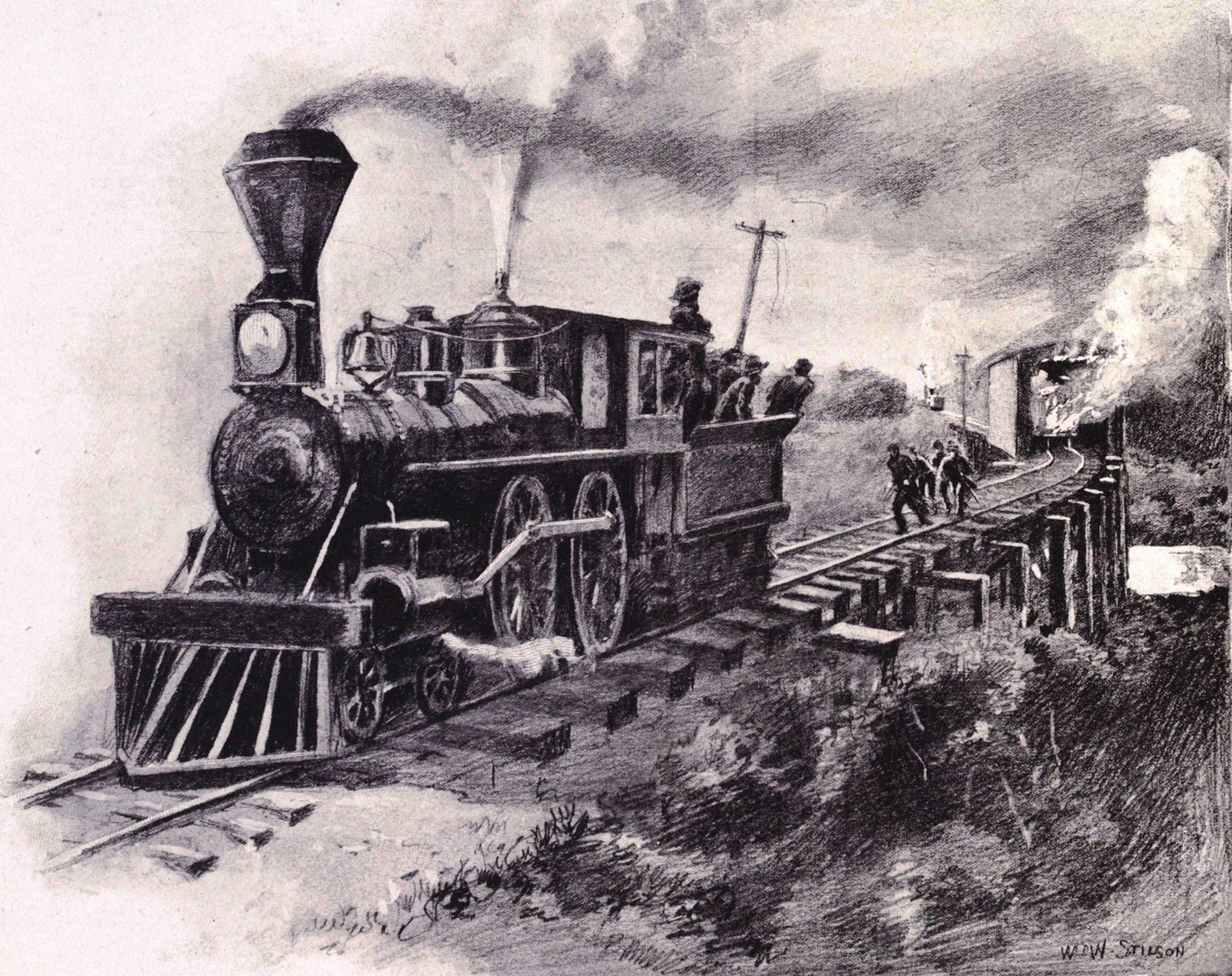 A drawing of the "Great Locomotive Chase." The Union raiders attempted to destroy bridges and trackage behind them to thwart their pursuers.
History
While the Great Locomotive Chase may have ended in Union loyalists failing to complete their goal it was a great example of the determination and bravery exhibited by both sides in fighting for their cause (and ultimately ended in most being recognized for their efforts).
What is also regarded as Andrews' Raid occurred during the early years of the Civil War and was carried out on the morning of April 12, 1862.
Leading the daring attempt was a civilian scout and spy known as James J. Andrews, who as an engineer and two other members of his party were also able-bodied railroaders; William James Knight and Wilson W. Brown (both of whom were privates in the 21st Ohio Volunteer Infantry).
Andrews' plan hoped to accomplish two goals, aside from destroying as much Confederate property as possible on his journey north from Atlanta he hoped to aid Major General Ormsby M. Mitchel who was moving his army through Tennessee and eventually hoped to capture the strategically important city of Chattanooga.
Andrews Raid
To pull off the raid Andrews was able to recruit roughly two-dozen soldiers from the 21st and 33rd Ohio Infantries as well as one other civilian, William Hunter Campbell.
The plan was to grab a northbound express passenger train out of Atlanta at the fuel and rest stop of Big Shanty (now known as Kennesaw), so chosen because the location did not have a telegraph, which would allow the raiders more time in executing their mission.
On that fateful morning, the team boarded the Western & Atlantic train at Marietta, Georgia and informed Conductor William Allen Fuller that they were Confederate secret service agents on a special mission for General Beauregard.
While somewhat wary of the story, especially of Confederate deserters, Fuller allowed the men to board the train without much of an issue.
Once the train had stopped at Big Shanty and the passengers and crew were enjoying breakfast at the next-door Lacy Hotel Andrews' team sprang into action (aside from the hotel the only signs of life at this location along with the depot was Confederate Camp McDonald).
Locomotives Involved
The train was led by the General, a 4-4-0 American type locomotive built by the Rogers Locomotive Works of Patterson, New Jersey in 1855. Additionally, the consist included two passenger cars and three empty boxcars.
It is somewhat shocking that Andrews' team was even able to steal the train as sentries were posted not far away. Nevertheless, William Pittenger and some of the other men uncoupled the passenger cars then hopped in the boxcars while Andrews, Knight, Brown, and another individual (who would work as the fireman) jumped in the cab of the General and off they went.
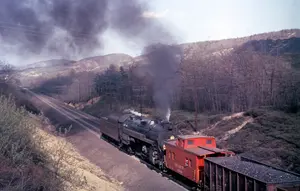
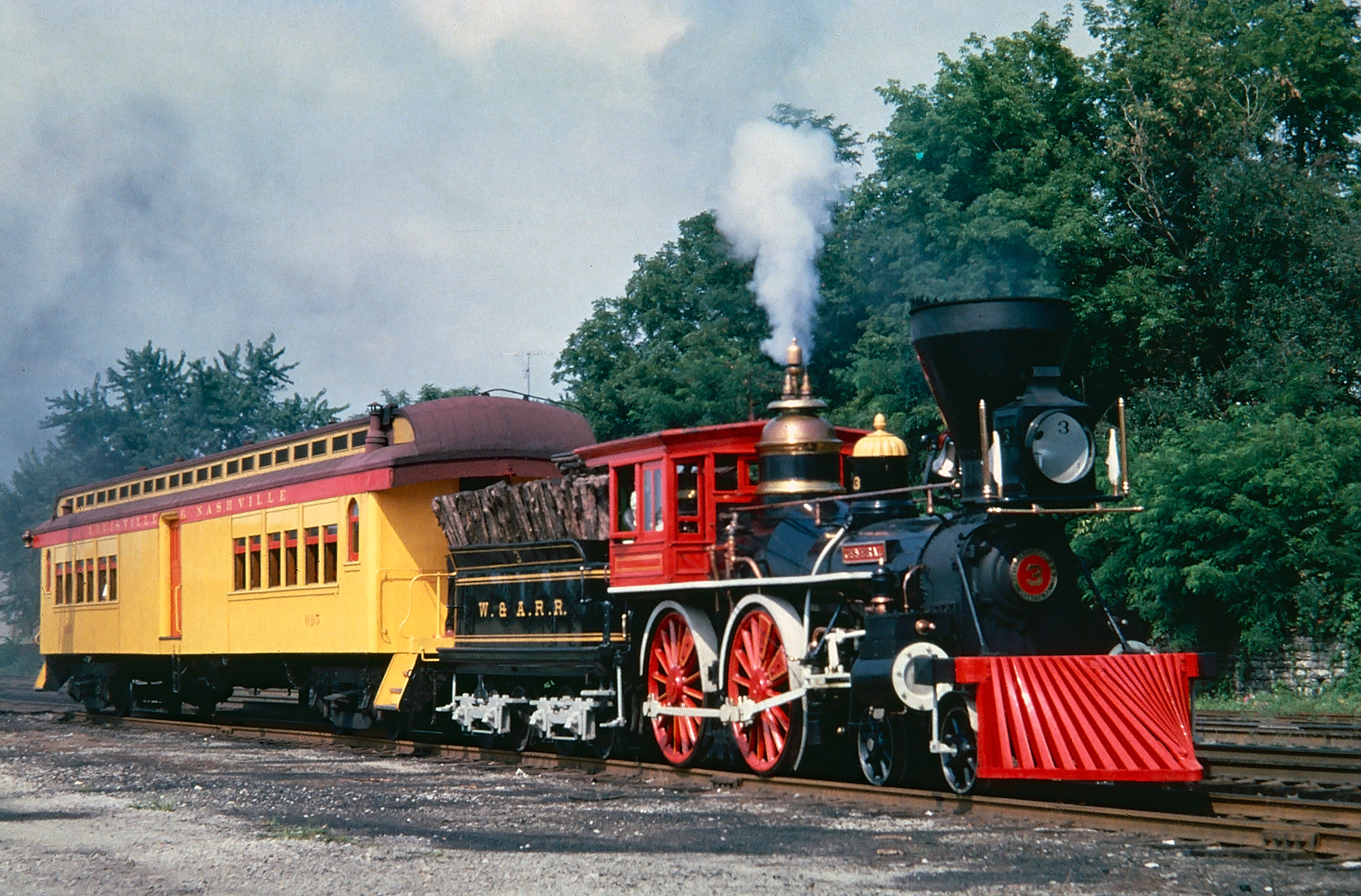 Western & Atlantic 4-4-0 #3, the "General," and Louisville & Nashville combine #665, the "Jim Crow," host a photo special on the L&N in July, 1970. American-Rails.com collection.
From the hotel Fuller could see that his train was being stolen and immediately raced after it on foot along with engineer Jeff Cain and W&A Locomotive Superintendent Anthony Murphy (in this era locomotives usually did not travel faster than 15 to 20 mph at-speed).
As the General gained speed the pursuers realized that catching it on the run would not possible so they grabbed a nearby handcar (a manually powered track car) and continued on. Not far up the line Andrews stopped quickly at Allatoona to cut telegraph wires and pull up a few rails.
Unfortunately, due to their pursuers and lack of manpower the raiders did not have enough time to cause any serious property damage (such as burning bridges, razing other buildings, or tearing up large sections of track).
For instance, not far up the line at Etowah sat the locomotive Yonah as well as a bridge. Andrews wanted to destroy both but lack of time forced him to steam on, and only received waves from the soldiers and passengers waiting at the small depot who were unaware of what was happening.
During the Civil War the railroad industry was still considered in its infancy although even by that time operations had become increasingly sophisticated including having strict timetables, which had to be closely adhered, to avoid collisions.
Andrews had acquired a timetable for the Western & Atlantic line and thus knew when to expect a train although this still meant he had to pull his train into sidings to meet oncoming traffic such as at the W&A yard in Kingston.
Here, Andrews met the southbound train from Rome, Georgia and its crew began inquiring as to the whereabouts of Conductor Fuller and the rest of the train.
Again, Andrews quick thinking got him out of trouble as he explained the train was rushing northward to resupply Beauregard with ammunition, a story that was very believable since it was an express run anyway with few station stops.
At A Glance
Unfortunately, Andrews could not have predicted the tenaciousness of Fuller who had acquired his own locomotive, the Yonah, and was now in hot pursuit of his train.
The raiders were also running into another predicament; as they waited in Kingston for another southbound freight to pass they learned that there several extras behind it (denoted by a red flag at the end of each train).
As Andrews learned through a conductor on one of the trains, Confederate forces had learned that General Mitchel planned to march towards Chattanooga and Beauregard was moving as much equipment out of the city as possible.
This long delay nearly allowed Fuller and the Yonah to catch the raiders, as he learned at Kingston he was just minutes behind them.
Unfortunately, the yard was full of traffic and Fuller and his crew abandoned their locomotive there, instead opting to catch the next northbound run out of the yard.
At Adairsville they saw more signs of damage left behind by the raiders but the engineer of the locomotive Texas, Peter Bracken, handed his steamer off to Fuller's team who were in such a hurry that they did not even bother to turn it around.
Time was running out for Andrews and his raiders; by the time they reached Calhoun the whistle of the Texas could be heard in the distance.
At Dalton, Fuller's on-board telegrapher was able to get a message through to Chattanooga about the incident just before the raiders cut the line.
(Thanks to "The Great Locomotive Chase" by Rosemary Entringer, from the May, 1956 issue of Trains as a primary reference for this article.)
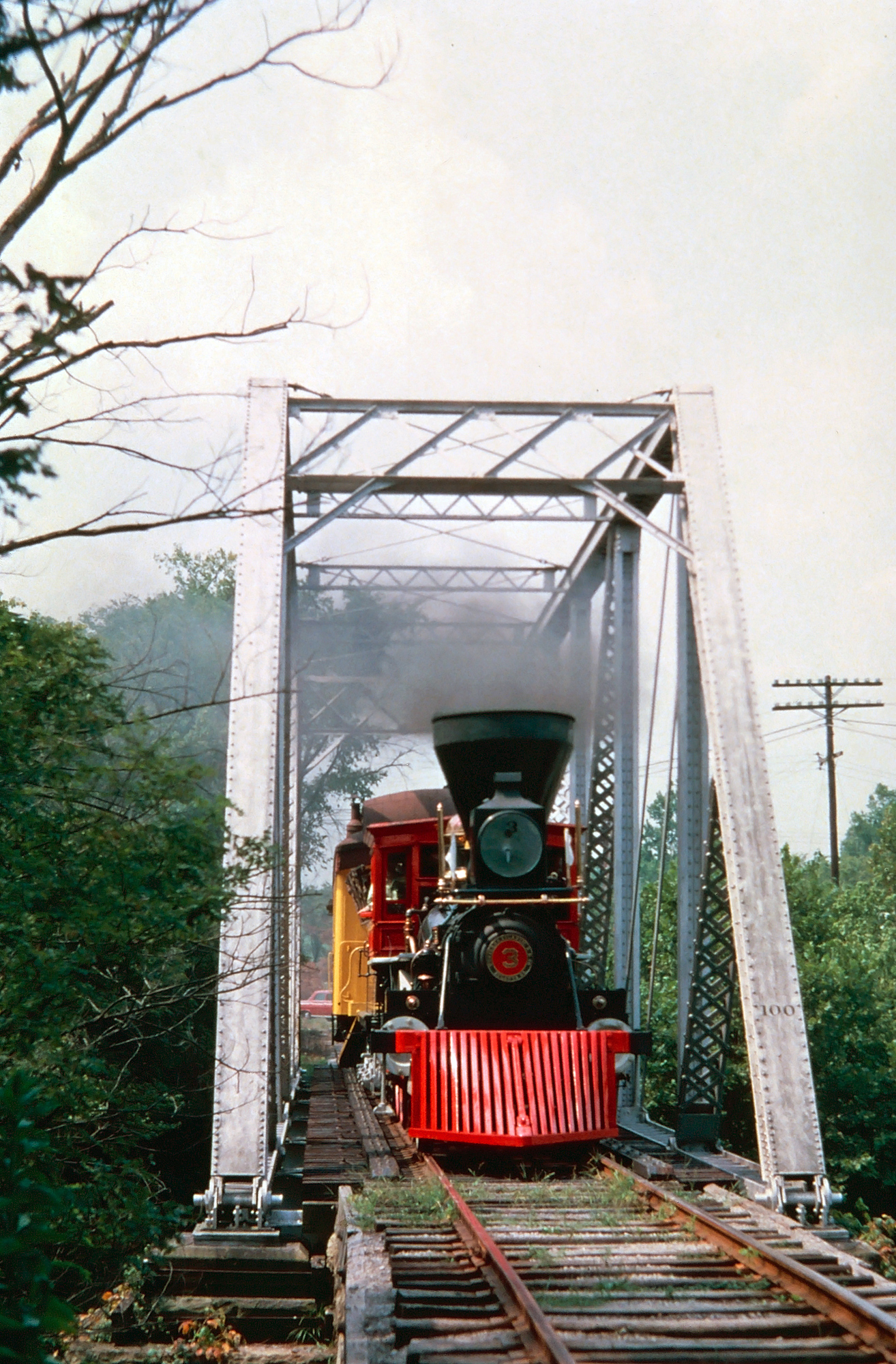 Another view of Western & Atlantic 4-4-0 #3, the "General," and combine #665 hosting a photo charter on the Louisville & Nashville in July, 1970. American-Rails.com collection.
Postscript
With forces now approaching from both north and south Andrews' team was desperate; they tried to burn the bridge at Chickamauga with an oil-soaked boxcar but it would not catch.
Finally, at milepost 116.3 (just 18 miles south of Chattanooga) with the General out of fuel and water the team abandoned the locomotive and took off through the Georgia countryside on foot, every man for himself.
Most of the group, including Andrews, was later captured although some managed to escape back to Union lines. The fate of those who were captured was mixed; some escaped, others were exchanged for Confederate POWs, and a few including Andrews were hung as spies.
A handful of the Union soldiers were awarded the Medal Of Honor, many posthumously, although Andrews was not eligible as a civilian.
Additionally, the Governor of Alabama commended many on the Southern side for their bravery, including Conductor Fuller. Today, the General is a permanent reminder of all those involved in the legendary Great Locomotive Chase.
Recent Articles


-
The Dutch Line (Western Maryland): History, Map, Operations
Sep 25, 26 09:38 PM
 Western Maryland Dutch Line—the Hanover Subdivision. Emory Grove to Highfield via Hanover and Gettysburg, York branch 1893, stone trains, and the route CSX still runs.
 -
The Durbin Branch (Western Maryland): History, Map, Operations
Sep 25, 26 09:13 PM
 Western Maryland Durbin Branch—the Coal & Iron Railway, 46.9 miles Elkins to Durbin, opened July 27, 1903. Mixed train until April 10, 1959. H-7B Consolidations.
 -
Western Maryland Railway: Map, Rosters, Logo, History
Sep 25, 26 10:24 AM
 Western Maryland Railway—the Fast Freight Line. Baltimore, Carroll & Frederick, May 27, 1852. Connellsville Extension 1912. Chessie, then into the B&O May 1, 1983.
 -
Illinois Dinner Train Rides (2026): A Complete Guide
Sep 25, 26 09:52 AM
 2026 Monticello Railway Museum Murder Mystery Dinner Train—June 13, July 11, August 1, and September 5 have run. Three courses, about 2 hours, $112. Confirm on mrym.org.
 -
Georgia Dinner Train Rides (2026): A Complete Guide
Sep 25, 26 12:29 AM
 2026 Azalea Sprinter dinner train from Nashville and Willacoochee, Georgia—2½ hours. Club Car adult $147, Executive adult $177. Confirm on azaleasprinter.com.
 -
Baldwin "Centipede" Locomotives: Specs, Roster, Photos
Sep 25, 26 12:02 AM
 Baldwin DR-12-8-1500/2 Centipede—2-D+D-2, two 608SC engines, 3,000 hp. SAL 4500 from the 1943 test bed. 54 on the serial list, 52 sold. PRR BP60 then BH50. None preserved.
 -
Florida Dinner Train Rides (2026): A Complete Guide
Sep 24, 26 11:56 PM
 2026 Seminole Gulf Murder Mystery Dinner Train in Fort Myers—five courses cooked onboard, 3½ hours, $129 or $135 Saturday, plus tax and gratuity. Confirm on semgulf.com.
 -
West Virginia Northern Railroad: Map, Photos, History
Sep 24, 26 11:27 PM
 West Virginia Northern—Kingwood to Tunnelton, 11 miles of Preston County coal. Narrow gauge 1888, standard gauge 1895. Last freight February 19, 1991. Consolidations 8 and 9 survive.
 -
Rutland Railroad: Map, Rosters, History, Logo
Sep 24, 26 01:18 PM
 Rutland Railroad—Follett’s Champlain & Connecticut River, November 1, 1843. Bellows Falls–Burlington December 18, 1849. Green Mountain Gateway. Last train September 25, 1961. Vermont Railway Janua…
 -
Arkansas Dinner Train Rides (2026): A Complete Guide
Sep 24, 26 01:12 PM
 2026 Eureka Springs & North Arkansas Dinner Train—Eurekan dining car, about 2 hours, $53.62 tax included, opens May 9, Tuesday, Wednesday, Friday, and Saturday. Confirm on esnarailway.com.
 -
Arizona Dinner Train Rides (2026): A Complete Guide
Sep 24, 26 01:01 PM
 2026 Arizona has no plated dinner train. Grand Canyon Railway sells snacks in the cars and meals in Williams or at the rim. Verde Canyon includes a charcuterie tray.
 -
Rail News, The Latest
Sep 24, 26 12:36 PM
This page provides a portal to the latest in rail news, from preservation and restortation subjects to other notable topics. -
Cotton Belt 819 Moved Outside at Pine Bluff for Evaluation
Sep 24, 26 12:35 PM
 Cotton Belt 819 left the Pine Bluff shop on September 22, 2026, first time outside in about 30 years. RDG Steam Services is evaluating the engine. No donation link posted.
 -
Reading Steam Locomotives: History, Roster & Photos
Sep 24, 26 12:14 PM
 Reading steam—Wootten fireboxes, Camelback Consolidations, Mallets, K-1 Santa Fes, G-3 Pacifics, T-1 4-8-4s. Post-1900 roster after Drury. Rambles ended October 17, 1964.
 -
Reading Diesel Roster: All-Time
Sep 24, 26 12:10 PM
 Reading diesel roster—AGEIR boxcabs, FTs, FA-1s, RS-3s, Train Masters, GP30s through GP39-2s. Serials and order numbers. Conrail April 1, 1976.
 -
Reading Railroad: Map, Logo, History, Rosters
Sep 24, 26 12:08 PM
 Reading Company—Philadelphia & Reading, 1833. Anthracite, Port Richmond, Reading Terminal. Operating company January 1, 1924. Conrail April 1, 1976.
 -
Nevada Dinner Train Rides (2026): A Complete Guide
Sep 24, 26 12:02 PM
 2026 Nevada Northern Taste of Italy—adults-only gala from East Ely. The September 19 date has run. Confirm any later night on nnry.com.
 -
North Carolina Dinner Train Rides (2026): A Complete Guide
Sep 24, 26 11:24 AM
 2026 North Carolina dinner trains—NCTM Wine & Dine in Spencer sold out February 13–15. GSMR First Class is the plated meal on the Nantahala Gorge excursion. Confirm on the railroad.
 -
Railway Express Agency (REA): Signs, Trucks, Logo & History
Sep 24, 26 09:40 AM
 Railway Express Agency—railroad-owned express company. Incorporated December 7, 1928. Operations March 1, 1929. Red diamond, green trucks. Last regular express November 7, 1975.
 -
Michigan Dinner Train Rides (2026): A Complete Guide
Sep 24, 26 09:28 AM
 2026 Steam Railroading Institute dining in Owosso—select evenings, no public dinner dates posted. Confirm on michigansteamtrain.com.
 -
Pittsburgh and West Virginia Railway: Map, Rosters, History
Sep 24, 26 12:24 AM
 Pittsburgh & West Virginia—the Hi-Line. Wabash-Pittsburgh Terminal 1904. Railway January 29, 1917. Connellsville February 11, 1931. N&W lease October 16, 1964. Wheeling & Lake Erie from May 17, 1990.
 -
Indiana Dinner Train Rides (2026): A Complete Guide
Sep 24, 26 12:13 AM
2026 Spirit of Jasper Ride & Dine is paused. No public trains. Depot at 201 Mill Street stays open as a rental. Confirm on spiritofjaspertrain.com. -
New Jersey Dinner Train Rides (2026): A Complete Guide
Sep 24, 26 12:01 AM
2026 Woodstown Central Dining in Motion—private table of four from $190, about an hour, Salem County. Confirm on woodstowncentral.com. -
Maryland Dinner Train Rides (2026): A Complete Guide
Sep 23, 26 05:19 PM
 2026 Western Maryland Scenic Allegheny Mountain Dinner Train—Cumberland, 3 hours, 21+, Saturday 7 p.m. Confirm on wmsr.com.
 -
Pittsburgh and Lake Erie Railroad: Map, Rosters, Photos
Sep 23, 26 03:28 PM
 Pittsburgh & Lake Erie—the Little Giant. Chartered 1875, Pittsburgh to Youngstown February 10, 1879. New York Central from 1883. Independent May 15, 1979. Last day September 11, 1992.
 -
Kansas Dinner Train Rides (2026): A Complete Guide
Sep 23, 26 01:11 PM
 2026 Abilene & Smoky Valley Smoky Valley Limited—two hours from the Rock Island Depot, about $72–$110, dates into December 31. Confirm on asvrr.org.
 -
The Belpaire Firebox: Simplicity and Greater Power
Sep 23, 26 01:03 PM
 Belpaire firebox—Alfred Belpaire, 1864. Square crown, straight staybolts at right angles. Pennsylvania standard after the 1880s. Great Northern was the other big user.
 -
Pennsylvania Railroad (PRR) Electric Roster: All Classes
Sep 23, 26 12:57 PM
Pennsylvania Railroad electrics—DD1s into Penn Station, P5s, 139 GG1s, B1 switchers, and 66 E44s. Class roster, 1905–1963. No unit-by-unit GG1 list. -
Penn Central Diesel Roster: All-Time
Sep 23, 26 12:46 PM
 Penn Central diesel roster—PRR classes on NYC, PRR, and New Haven power. New orders carry serials. GP38-2s are 7940-8162. Conrail April 1, 1976.
 -
Penn Central Railroad: Map, History, Logo
Sep 23, 26 12:32 PM
 Penn Central—Pennsylvania and New York Central merged February 1, 1968. New Haven January 1, 1969. Section 77 bankruptcy June 21, 1970. Conrail April 1, 1976.
 -
Iowa Dinner Train Rides (2026): A Complete Guide
Sep 23, 26 11:42 AM
 2026 Boone & Scenic Valley Wolf Dinner Train—Saturdays May–October, Union Pacific dining cars, Bass Point Creek High Bridge. Confirm on bsvrr.com.
 -
Pennsylvania-Reading Seashore Lines: Map, Roster, History
Sep 23, 26 12:32 AM
 Pennsylvania-Reading Seashore Lines—Atlantic City Railroad renamed July 15, 1933. Pennsylvania two-thirds, Reading one-third. Camden to Atlantic City, Cape May, and Millville. Conrail April 1, 1976.
 -
Wisconsin Dinner Train Rides (2026): A Complete Guide
Sep 23, 26 12:28 AM
2026 Wisconsin Great Northern dinner train in Trego—$105, Namekagon River, January 8–31 and May 5–December 17. Mid-Continent’s remaining 2026 calendar is snack and scenic. Confirm on the railroad. -
New Hampshire Dinner Train Rides (2026): A Complete Guide
Sep 23, 26 12:21 AM
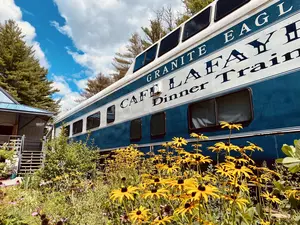
2026 Cafe Lafayette Dinner Train in North Woodstock—five courses, 2 hours, from $125. Children under 6 not allowed. Confirm on nhdinnertrain.com. -
PRR "GG-1" Locomotives: Roster, Photos, Specs
Sep 23, 26 12:13 AM
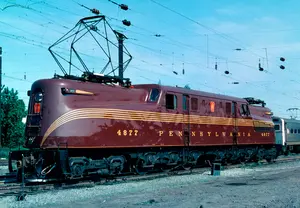
 PRR GG1 electric: 139 locomotives, 4800–4938, built 1934–1943. Specs, Loewy shell, Amtrak numbers, and the last revenue trip on October 28, 1983.
 -
Montana Dinner Train Rides (2026): A Complete Guide
Sep 23, 26 12:04 AM
2026 Charlie Russell Chew Choo from Hanover, near Lewistown—4.5 hours, prime rib, adult $151. Remaining listed dates sold out. Confirm on montanadinnertrain.com. -
Kentucky Dinner Train Rides (2026): A Complete Guide
Sep 22, 26 11:52 PM
2026 My Old Kentucky Dinner Train in Bardstown—four courses, 2.5 hours, adult $116. Confirm on kydinnertrain.com. -
Tennessee Dinner Train Rides (2026): A Complete Guide
Sep 22, 26 11:45 PM
2026 TVRM Chattanooga Dinner Train—Grand Junction, select Fri/Sat March 6–October 24, 6 p.m., from $110. Confirm on tvrail.com. -
The Trainphone: PRR's Wireless Radio System
Sep 22, 26 11:17 PM
 Pennsylvania Trainphone—Union Switch & Signal inductive telephone. Bel-Del trial 1941, Frenchtown November 29, 1943. Carriers at 88 kHz and 144 kHz. Out of service April 30, 1967.
 -
Pennsylvania (PRR) Steam Roster: Post 1906
Sep 22, 26 11:13 PM
 ennsylvania steam after 1906—H8, H9, and H10 Consolidations, 574 L1s Mikados, 598 I1s Decapods, 425 K4s Pacifics, 301 M1 Mountains. Drury’s grid. Last steam November 30, 1957.
 -
Pennsylvania Railroad (PRR) Diesel Roster: All-Time List
Sep 22, 26 10:59 PM
 Pennsylvania diesel roster—SW 3908 in June 1937, then Alco, Baldwin, EMD, Fairbanks-Morse, GE, and Lima. Serials and Alco order numbers. Penn Central February 1, 1968.
 -
Pennsylvania Railroad: Map, Logo, History, Rosters
Sep 22, 26 10:02 PM
 Pennsylvania Railroad—chartered April 13, 1846, Harrisburg–Pittsburgh, Horseshoe Curve 1854, Penn Station 1910. Standard Railroad of the World. Penn Central February 1, 1968.
 -
Pennsylvania Dinner Train Rides (2026): A Complete Guide
Sep 22, 26 04:48 PM
 2026 Pennsylvania dinner trains—Colebrookdale Dining Class in Boyertown and Strasburg Dinner on the Rails. Confirm on each railroad.
 -
New York, Ontario & Western Steam Locomotives: History & Roster
Sep 22, 26 04:40 PM
 NYO&W steam—camelback 2-8-0s and 2-6-0s, Class X Bull Moose 2-10-2s, Class Y and Y-2 Mountains. All-time class roster. Steam finished in the summer of 1948. None saved.
 -
New York, Ontario & Western Diesel Roster: All-Time
Sep 22, 26 04:36 PM
 NYO&W diesel—five GE 44-tonners 101-105, eighteen FTs, seven F3s, twenty-one NW2s. Serials and the NW2 order E824. Railroad liquidated March 29 1957.
 -
New York, Ontario & Western Railway: Map, Roster, History
Sep 22, 26 04:26 PM
 New York, Ontario & Western—New York & Oswego Midland chartered January 11 1866, O&W January 21 1880. Scranton coal, West Shore rights. Last train March 29 1957.
 -
Massachusetts Dinner Train Rides (2026): A Complete Guide
Sep 22, 26 04:16 PM
 2026 Cape Cod Dinner Train—Hyannis, Buzzards Bay, and North Falmouth. Four-course, 3–3½ hours, from $99.99. Confirm on capetrain.com.
 -
Colorado Dinner Train Rides (2026): A Complete Guide
Sep 22, 26 03:51 PM
 2026 Royal Gorge Route First Class Dinner and Lunch from Cañon City. About 2 hours, 12+, from $199+. Confirm on royalgorgeroute.com.
 -
New York and Long Branch Railroad: A PRR & CNJ Subsidiary
Sep 22, 26 03:11 PM
 New York & Long Branch—chartered April 8 1868, Perth Amboy–Long Branch July 1 1875, Bay Head Junction 1881. Jersey Central and Pennsylvania trains. Conrail April 1 1976. NJ Transit North Jersey Co…
 -
Monongahela Railway Steam Locomotives: History & Roster
Sep 22, 26 01:34 PM
 Monongahela steam—H-5 Consolidations, USRA light Mikados 170–179, Baldwin L-2s, ex-P&LE L-3s. All-time roster. Last steam May 26, 1954.