Canadian Pacific Kansas City (CPKC): History, Network & Overview
Last revised: August 10, 2026
By: Adam Burns
Canadian Pacific Kansas City Limited, doing business as CPKC, is one of North America’s six Class I freight railroads and the only one offering true single-line service linking Canada, the United States, and Mexico. The system was created on April 14, 2023, when Canadian Pacific Railway completed its combination with Kansas City Southern after Surface Transportation Board approval. Global headquarters remain in Calgary, Alberta, with major U.S. offices in Kansas City, Missouri, and Mexican headquarters in Mexico City and Monterrey.

Canadian Pacific AC4400CWM #8028 leads CSX grain train G124 through the snow at Martinsburg, West Virginia on January 31, 2021. Jon Wright photo.
CPKC markets roughly a 20,000-mile network and on the order of 20,000 railroaders. It is still the smallest of the Class I freights by route miles—thousands of miles shorter than the next-smallest peer and roughly half the size of the western giants BNSF and Union Pacific—but its three-nation franchise is unique. Full industry context: Class I Railroads overview.
At a Glance
| Item | Detail |
|---|---|
| Legal / trade name | Canadian Pacific Kansas City Limited (CPKC) |
| Class | Class I freight railroad (U.S. STB / AAR usage) |
| Formed | April 14, 2023 (CP control of KCS after STB approval) |
| Predecessors | Canadian Pacific Railway; Kansas City Southern Railway / Kansas City Southern de México lineage |
| Network | About 20,000 route miles (company figure) |
| Geography | Canada (transcontinental and regional), U.S. Midwest / South / gateway lanes, Mexico |
| Headquarters | Calgary, AB (global); Kansas City, MO (U.S.); Mexico City / Monterrey (Mexico) |
| Ticker heritage | Continues CP’s public-company lineage (TSX/NYSE listings under CPKC branding post-combination) |
| Official site | cpkcr.com |
Miles, employment, and revenue change with reporting years. Confirm investor materials and STB filings for formal work. Compiled August 9, 2026.
Why CPKC Matters
For more than a century, shippers moving freight from the Canadian Prairies to the U.S. Gulf or from the industrial Midwest into Mexico needed interline handoffs between separate railroads. CPKC’s selling point is operational simplicity: one railroad, one waybill culture, one service design from Vancouver or Montreal corridors south through Kansas City and into Mexico’s industrial heartland. Intermodal, automotive, grain, energy, chemicals, and forest products all figure in that north–south story.
Regulators and competitors scrutinized the deal precisely because it changed competitive geography without creating a new Atlantic–Pacific U.S. transcontinental. The STB’s 2023 decision emphasized that CPKC would remain the smallest Class I while still unlocking unique Canada–U.S.–Mexico lanes. That balance—end-to-end growth without a mega-Western or mega-Eastern footprint—is the railroad’s strategic identity three years into the combination.
Canadian Pacific: Building a Nation (1881–2021)
Canadian Pacific was born as a national project. Chartered in the early 1880s to bind British Columbia to the rest of the Dominion, CP drove the last spike of its first Pacific main line in 1885—an achievement still central to Canadian identity. Through the twentieth century the company grew into a diversified transportation empire (ships, hotels, airlines at various times) while the railway itself became Canada’s first true transcontinental freighter and passenger carrier.
Freight CP in the modern era is a high-density Canadian transcontinental with important U.S. gateways. Key U.S. expansions before KCS included:
- Soo Line heritage and Midwestern reach
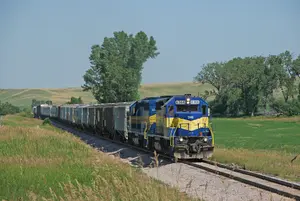
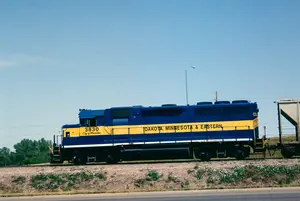
- Dakota, Minnesota & Eastern / Iowa, Chicago & Eastern properties (Powder River ambitions and Chicago–Midwest connectivity)
- Central Maine & Quebec (2020), restoring CP access toward Atlantic Canada and northern New England after decades of separation from the old Canadian Atlantic routes
By 2021 CP was already a Class I with a lean operating culture—shaped in the public eye by Precision Scheduled Railroading debates of the 2010s—and a management team looking for a transformative U.S.–Mexico partner rather than another eastern end-to-end merger of the sort floated with CSX or Norfolk Southern earlier in the decade.
Kansas City Southern: From Gulf Ambition to Mexico
Kansas City Southern traces to the late 1880s and the vision of linking Kansas City with the Gulf of Mexico. The classic KCS main became a north–south alternative to the east–west giants, famous for its “Southern Belle” passenger heritage and for freight that mixed agriculture, chemicals, energy, and industrial products through the mid-continent.
The late-twentieth and early-twenty-first centuries transformed KCS from a modest U.S. regional-scale Class I into a NAFTA / USMCA railroad:
- Expansion and modernization of U.S. mains and terminals
- Control of Mexican operations that became Kansas City Southern de México (KCSM), giving KCS the only U.S.-based Class I with a deep Mexican franchise
- Gateway strength at Kansas City, where almost every major North American railroad can interchange
That Mexican network—not raw U.S. route miles—is what made KCS uniquely valuable to Canadian Pacific. No other available partner offered a comparable single-ownership path into Mexico’s manufacturing belt and ports.
The Merger: 2021–2023 Timeline
| Date | Event |
|---|---|
| March 21, 2021 | CP announces agreement to acquire KCS (initial deal value widely reported near $25 billion equity / higher enterprise value as terms evolved). |
| Spring–summer 2021 | Canadian National submits a higher competing bid; bidding war and voting-trust debate follow. |
| August 31, 2021 | STB rejects CN’s proposed voting-trust structure, clearing the path for CP’s approach. |
| December 14, 2021 | CP completes acquisition of KCS shares; KCS placed into a voting trust pending full control approval. Final KCS transaction cost often cited near $31 billion class. |
| October 2021 onward | Formal merger application, thousands of public comments, multi-day STB hearing. |
| March 15, 2023 | STB approves CP control of KCS with conditions (competition, passenger, and other mitigations). |
| April 14, 2023 | CPKC combination day—single-line Canada–U.S.–Mexico railroad begins under the CPKC name. |
Applicants argued that pairing CP origins with KCS destinations (and vice versa) would divert trucks, grow intermodal, and create hundreds of millions of dollars in annual revenue synergies and cost efficiencies within a few years—without abandoning routes or closing major rail facilities. Labor, shipper, and competing-railroad filings filled the docket; the Board’s conditioned approval reflected that contested record rather than a rubber stamp.
From a map-history standpoint, CPKC is the most significant North American freight combination since CSX and Norfolk Southern divided Conrail in 1999—not because of sheer mileage added, but because it created a new kind of continental franchise.
Network and Traffic
CPKC’s map can be read as three interlocking stories:
- Canadian transcontinental and regional density — bulk grain, potash, energy, intermodal, and merchandise on CP’s historic Canadian spine and branches.
- U.S. mid-continent and southern gateways — Kansas City as the hinge; KCS mains toward the Gulf and Southeast; connections to every Class I and countless short lines.
- Mexican industrial corridors — automotive, appliances, intermodal, and general merchandise tied to nearshoring and USMCA supply chains.
Company materials at combination time spoke of tens of thousands of carloads and intermodal units that could shift to single-line CPKC service from competing interline routes, plus multi-year targets for new revenue and operating efficiencies. Actual results appear in CPKC’s quarterly and annual reports; integration of IT, crew bases, locomotive fleets, and service design was expected to take years, not months.
Reporting marks and subsidiary names from the CP and KCS families continue to appear on equipment and waybills during the transition era; commercially the railroad brands itself CPKC.
Financial Snapshot (Order of Magnitude)
Pre-merger marketing materials described a combined enterprise on the order of $8–9 billion in annual revenue with growth upside. Post-combination results (reported in Canadian dollars) have moved into the mid-teens of billions CAD for total revenues as volumes, yield, and merger synergies develop—still well below Union Pacific or BNSF in absolute size, consistent with CPKC’s “smallest Class I” status.
For current figures see:
- CPKC Investor Relations
- STB R-1 / financial data (U.S. Class I schedules, including SOO/KCSR-related filings)
- Class I revenue tables on American-Rails.com
Passenger and Public Conditions
STB approval included passenger and public-interest conditions. Notably, the Board required accommodations for potential Amtrak service improvements on certain former KCS lines (including the long-discussed New Orleans–Baton Rouge corridor concept). Freight remains CPKC’s business; passenger obligations are regulatory overlays, not a return to classic CP or KCS streamliner operations.
Looking Ahead
CPKC’s next decade will be judged on three tests: (1) whether single-line Mexico–U.S.–Canada service takes sustainable share from trucks and from multi-railroad routings; (2) whether integration preserves service reliability while extracting the promised efficiencies; and (3) how the railroad positions itself if the broader Class I map changes again—most visibly through the pending Union Pacific–Norfolk Southern merger case, which aims at a true U.S. coast-to-coast system of a different kind.
Whatever that larger map becomes, CPKC has already rewritten the north–south story. Canadian Pacific’s 1885 last spike bound a country; the 2023 combination bound a continent—not with a new Pacific-to-Atlantic U.S. main, but with a single railroad from Canadian ports and Prairies through America’s midsection into Mexico.
Related Reading on American-Rails.com
- Class I Railroads: Revenue, Statistics & Overview
- Class II Regional Railroads
- Short Line Railroads
- Canadian National Railway
- American Railroad History
- Fallen Flags
Merger conditions, traffic results, and corporate structure evolve. Confirm investor disclosures and STB dockets for formal decisions. Information compiled August 9, 2026.
Recent Articles


-
Lake Superior & Ishpeming Railroad: Map, Roster, History
Oct 25, 26 11:38 PM
 Lake Superior & Ishpeming Railroad, reporting mark LSI, from the Marquette Range to the Presque Isle ore dock. The 1954 steam list and the diesels the railroad owned.
-
Kansas City Southern Steam Roster (Built Since 1900)
Oct 25, 26 09:09 PM
 Steam locomotives of the Kansas City Southern built since 1900, with the Louisiana & Arkansas and the Texas company.
-
Kansas City Southern Diesel Roster (Built New)
Oct 25, 26 11:46 AM
All-time diesel roster of the Kansas City Southern. E units, F units, Geeps, SD40s through SD70ACes, Fairbanks-Morse, Baldwin, Alco, and General Electric, with serials and order numbers. -
Kansas City Southern Railway: Map, Photos, History
Oct 25, 26 12:24 AM
 The Kansas City Southern, from Arthur Stilwell's Gulf line to Canadian Pacific Kansas City on April 14, 2023. Steam and diesel rosters, the Southern Belle, and the Louisiana & Arkansas.
-
Indiana Harbor Belt Diesel Roster (All-Time)
Oct 25, 26 12:17 AM
 All-time diesel roster of the Indiana Harbor Belt. 202 locomotive frames, each counted once. NW2s, SW7s, SW1500s, road switchers, and gensets. Slugs and boosters are outside the count.
-
Indiana Harbor Belt Steam Roster (Built Since 1900)
Oct 25, 26 12:13 AM
 Steam locomotives of the Indiana Harbor Belt built since 1900. 182 engines, each counted once. 0-6-0s, 2-6-0s, 0-8-0s, and 2-8-2s. The three U-4a switchers are three-cylinder Brooks engines of 1927.
-
Indiana Harbor Belt Railroad: Map, Rosters, History
Oct 25, 26 12:00 AM
 Indiana Harbor Belt, the inner belt across the Calumet, from the East Chicago Belt of May 16, 1896. Renamed June 29, 1907. Still operating, headquarters Hammond. Steam roster is the companion, 182 loc…
-
NYC's "P Motor" Electric Locomotives
Oct 24, 26 11:43 PM
 New York Central P motors: 22 Alco-GE 2-C+C-2 electrics, Cleveland Union Terminal 1050–1071, class P-1a. 3,030 hp one-hour on 3,000-volt DC catenary, then 660-volt third rail as P-2a and P-2b.
-
Illinois Terminal Car Roster
Oct 24, 26 11:40 PM
 Illinois Terminal cars. Mainline motors, the 1948 streamliners, sleepers, Alton and Valley Division cars, express motors, and the line cars rebuilt from pull cars.
-
Illinois Terminal Diesel Roster
Oct 24, 26 09:31 PM
 All-time Illinois Terminal diesels, 62 frames. Alco S-2s and RS-1s, EMD switchers, GP7s, SD39s, GP38-2s, and the two GP20s. Serial numbers from the 1989 roster.
-
Illinois Terminal Electric Locomotives
Oct 24, 26 08:22 PM
 Illinois Terminal electric locomotives, 57 frames. Class A through Class D, the Decatur-built motors, and the battery locomotives. Class D is the same five Class C frames, rebuilt.
-
Illinois Terminal Steam Roster
Oct 24, 26 07:37 PM
 Illinois Terminal steam locomotives, 36 frames. Baldwin Moguls, three Class 30 Mikados, Florida East Coast 0-8-0s, and 2-6-0 No. 21, the last fire on June 30, 1950.
-
Illinois Terminal Railroad: Map, Roster, Photos, History
Oct 24, 26 07:32 PM
 Illinois Terminal, McKinley's Illinois Traction System, from the Danville coal towns to St. Louis. The McKinley Bridge, the sleeping cars, the 1937 break with the power company, the 1948 streamliners…
-
Southern Railway Diesel Roster (All-Time)
Oct 23, 26 11:00 PM
 All-time diesel roster of the Southern Railway. 2,505 locomotives in the system number series, from the 1939 demonstrator FT to GP50s and B30-7A1s. Serials included.
-
Illinois Central Diesel Roster (All-Time)
Oct 23, 26 04:06 PM
 Illinois Central and Illinois Central Gulf diesel locomotives, each frame once. The quantity column is 886. Serials and order numbers from Electro-Motive's builder lists. Paducah rebuilds and Gulf, Mo…
-
Illinois Central Gulf Diesel Roster
Oct 23, 26 04:02 PM
 Illinois Central Gulf operating numbers from August 10, 1972, to February 29, 1988. New frames stay on the Illinois Central diesel roster. Gulf, Mobile and Ohio frames stay on that roster. No Gulf fle…
-
Illinois Central Railroad: Map, Logo, History
Oct 23, 26 03:50 PM
Illinois Central, the Main Line of Mid-America, from the 1850 land grant to Canadian National control on July 1, 1999. Charter lines, Cairo bridge, Paducah, and the Illinois Central Gulf. Steam quanti… -
Grand Trunk Western Diesel Roster (All-Time)
Oct 23, 26 12:53 PM
 Grand Trunk Western diesel locomotives, each frame once. The quantity column is 377. Serials are filled for the Detroit, Toledo and Ironton and Detroit and Toledo Shore Line engines the railroad kept…
-
Grand Trunk Western Steam Roster
Oct 23, 26 12:14 PM
 Grand Trunk Western steam locomotives in service about 1937 to 1942, from Richard Leonard's class list. Drury has no chapter. The quantity column is the counted Grand Trunk Western rows. Two mixed Gra…
-
Grand Trunk Western Railroad: Map, Roster, History
Oct 23, 26 12:09 PM
 Grand Trunk Western, reporting mark GTW, Canadian National's railroad between Port Huron and Chicago. Trade name adopted in 1923. Steam class list quantity 232. Diesel quantity column 377. Identity in…
-
Green Bay and Western Railroad: Map, Rosters, History
Oct 22, 26 11:18 PM
 Green Bay & Western, the Green Bay Route, reporting mark GBW. From Kewaunee to Winona. Mailer's steam and diesel rosters, and the August 1993 sale to Fox Valley & Western.
-
Chicago & North Western Class E-4: Streamlined 4-6-4 Hudsons
Oct 22, 26 10:28 PM
 C&NW Class E-4, nine streamlined 4-6-4s, 4001–4009, Alco 1938. 84-inch drivers, 25-by-29 cylinders, 300 psi. Conventional Chicago–Omaha trains. Oil in 1947–48. Retired 1953–1956.
-
Gateway Western Railway: Map, Roster, History
Oct 22, 26 02:43 PM
 Gateway Western Railway, reporting mark GWWR. Class II from Kansas City to East St. Louis. Kansas City Southern control May 5, 1997. The 1992 diesel fleet, with serials and order numbers.
-
Duluth, Winnipeg & Pacific Railway: Roster, Map, History
Oct 22, 26 01:51 PM
 Duluth, Winnipeg & Pacific, the Peg, reporting mark DWP. From the Rainy River to Duluth. CNRHA steam list 36. Fifteen RS-11s. Merged into Wisconsin Central Ltd. on December 31, 2011.
-
Elgin, Joliet and Eastern Diesel Roster (All-Time)
Oct 22, 26 01:35 PM
 All-time diesel roster of the Elgin, Joliet and Eastern.
-
Elgin, Joliet and Eastern Steam Roster
Oct 22, 26 01:25 PM
 Elgin, Joliet and Eastern steam locomotives of the final decade, which largely comprised switcher types, 2-8-0s, and a large fleet of Mikados.
-
Elgin, Joliet and Eastern Railway: Map, Roster, History
Oct 22, 26 12:32 PM
 Elgin, Joliet & Eastern, the outer arc around Chicago, from the Joliet, Aurora & Northern of April 30, 1884. Illinois company March 18, 1887. Merged December 4, 1888. Principal lines sold Janu…
-
Denver and Salt Lake Railway: History, Roster, Timetable
Oct 22, 26 09:47 AM
 Denver & Salt Lake, the Moffat Road, from Denver to Craig. Tunnel opened February 26, 1928. Dotsero Cutoff dedicated June 16, 1934. Merged April 11, 1947. Steam locomotives 59.
-
Duluth, Missabe and Iron Range Diesel Roster (All-Time)
Oct 22, 26 09:43 AM
 All-time diesel roster of the Duluth, Missabe and Iron Range. 148 owned frames, each counted once. SW9s, SD9s, SD18s, SD38s, RSD-15s, and C630s. Serials and builder order numbers included. Helm SD40-3…
-
Duluth, Missabe and Iron Range Steam Locomotives (Since 1900)
Oct 22, 26 09:22 AM
 Duluth, Missabe & Iron Range steam locomotives built since 1900. Duluth & Iron Range, Duluth, Missabe & Northern, and later DM&IR acquisitions. Quantity column 252. Yellowstones 220-23…
-
Duluth, Missabe and Iron Range Railway: Roster, Map, Logo
Oct 22, 26 09:17 AM
Duluth, Missabe & Iron Range, reporting mark DMIR, from the Mesabi and the Vermilion to the Lake Superior docks. Formed July 1, 1937. Steam quantity 252. Owned diesels 148. On paper through Decemb… -
Duluth, South Shore, and Atlantic Railway: Map, Roster, Timetables
Oct 21, 26 11:21 PM
 Duluth, South Shore & Atlantic Railway, the South Shore. Marquette to the Sault, St. Ignace, Houghton, and Duluth-Superior. Soo Line on January 1, 1961. Twenty-four diesels.
-
Detroit, Toledo and Ironton Diesel Roster (All-Time)
Oct 21, 26 02:55 PM
 All-time diesel roster of the Detroit, Toledo and Ironton. 119 frames, each counted once. Serials and builder order numbers included. Last steam was December 24, 1955.
-
Detroit, Toledo and Ironton Steam Roster (Post 1900)
Oct 21, 26 02:49 PM
 Detroit, Toledo and Ironton steam locomotives built after 1900. Drury's class grid. The quantity column prints 141. Counted once, the frames are 137. Last steam was Mikado 805 on December 24, 1955.
-
Detroit, Toledo and Ironton Railroad: Map, Roster, History
Oct 21, 26 02:40 PM
 Detroit, Toledo & Ironton, reporting mark DTI, from Detroit to Ironton, Ohio. Railway organized May 2, 1905. Railroad articles filed February 21, 1914. Henry Ford, 1920 to 1929. Steam and diesel r…
-
Iowa, Chicago and Eastern Railroad: Roster, Map, History
Oct 21, 26 01:04 PM
 Iowa, Chicago & Eastern Railroad Corporation, reporting mark ICE. About 1,125 miles and about 275 miles of trackage rights from the I&M Rail Link. Operations at 12:01 a.m. July 30, 2002. Canad…
-
Rapid City, Pierre & Eastern Railroad: Route, Roster, Overview
Oct 21, 26 10:16 AM
 Rapid City, Pierre & Eastern Railroad, reporting mark RCPE. Genesee & Wyoming Class II. Agreement of January 2, 2014, Finance Docket 35799. Freight service from June 1, 2014, on the Dakota, Mi…
-
Dakota, Minnesota & Eastern Railroad: Roster, Map, History
Oct 21, 26 12:26 AM
 Dakota, Minnesota & Eastern Railroad, reporting mark DME. The July 2, 1986 Chicago & North Western sale, 826 miles and 139 miles of trackage rights. Canadian Pacific control October 30, 2008…
-
Detroit and Mackinac Railway: Map, Roster, History
Oct 20, 26 11:58 PM
 Detroit & Mackinac Railway, the Turtle Line. Bay City to Cheboygan along Lake Huron. Incorporated December 29, 1894. Lake State Railway leased the operation in 1992 and bought the lines in 1997. E…
-
Davenport, Rock Island and Northwestern Railroad
Oct 20, 26 11:22 PM
 Davenport, Rock Island and North Western Railway, the DRI Line. Clinton to East Moline across the Crescent Bridge. Burlington and Milwaukee. Merged into the Soo Line on June 29, 1995. Eighteen diesels…
-
Chicago Great Western Steam Roster (Post 1900)
Oct 20, 26 11:17 PM
Chicago Great Western steam locomotives built or rebuilt since 1900. Drury's class grid. 320 frames, each once. The quantity column prints 376 because a rebuild is listed again. Last steam in the reti… -
Chicago Great Western Diesel Roster (All-Time)
Oct 20, 26 10:47 PM
All-time diesel roster of the Chicago Great Western. 157 frames, each counted once. Serials and builder order numbers included. Steam was gone by 1950. The 1963 glance figure of 141 is one year's flee… -
Chicago Great Western Railway: Map, Photos, History, Rosters
Oct 20, 26 10:43 PM
 The Chicago Great Western, the Corn Belt Route, linked Chicago, the Twin Cities, Omaha, and Kansas City from September 27, 1885, until the Chicago & North Western merger at 12:01 a.m. on July 1, 1968…
-
Chicago, South Shore & South Bend Railroad: "The South Shore Line"
Oct 20, 26 05:48 PM
 Chicago South Shore & South Bend, the South Shore Line, from the 1901 Air Line through Samuel Insull's 1925 rebuild, the orange cars, the 800s, and the railroad NICTD and Anacostia still run.
-
Northwestern Virginia Railroad: Map, History, Timetable
Oct 20, 26 04:18 PM
 Northwestern Virginia Railroad, chartered February 14, 1851, Grafton to Parkersburg, 104 miles. Opened May 1, 1857. Foreclosure sale February 15, 1865, as the Parkersburg Branch. Twenty-three tunnels…
-
"Exposition Flyer" (Train): Consist, Timetable, History
Oct 20, 26 03:29 PM
 Exposition Flyer, Chicago to Oakland, June 10, 1939 to March 20, 1949. Burlington, Rio Grande, and Western Pacific. Heavyweight cars, then diesels and a vista-dome. Replaced by the California Zephyr.
-
Chicago, St. Paul, Minneapolis & Omaha Railway, "The Omaha Road"
Oct 20, 26 02:13 PM
 The Omaha Road, reporting mark CMO. Formed May 26, 1880. North Western management on December 16, 1882. Leased January 1, 1957. Class K-1 No. 183 and the sublettered diesels.
-
Chicago and Western Indiana Railroad: Map, Rosters, History
Oct 20, 26 01:17 PM
 Chicago and Western Indiana, chartered June 5, 1879. Five equal owners, Dearborn Station, and two main lines. Dolton suburban mile 16.6. Fifteen diesels. Railroad service ended in 1994. The Illinois c…
-
Railroad Tell-Tales: Protecting The Brakeman
Oct 20, 26 12:58 PM
 Railroad tell-tales: hanging ropes that warned a man on a freight-car roof of a low bridge or tunnel. The 1897 bridge-warning report, the 1905 Wisconsin statute, retainers, and why the roof walk outla…
-
Chicago & North Western Steam Roster (Post 1900)
Oct 20, 26 12:54 PM
 Chicago & North Western steam locomotives built since 1900, and the Omaha Road list beside it. Drury's parent quantity column sums to 1,445, with four rows left blank. The Omaha Road column sums to 24…