Central Pacific Railroad: Map, History, Facts, Logo
Last revised: September 15, 2026
By: Adam Burns
The Central Pacific was the western half of the first Pacific Railroad, and a California company before it was a federal project. Theodore D. Judah located a line over Donner Pass. Four Sacramento merchants—Collis P. Huntington, Mark Hopkins, Leland Stanford, and Charles Crocker—put up the money. They incorporated on June 28, 1861. Ground was broken on the Sacramento waterfront on January 8, 1863. The first rails went down October 26. Judah was already dying in New York and never saw a locomotive on his railroad. Chinese labor took the company through the Sierra. The rails met the Union Pacific at Promontory Summit, Utah Territory, on May 10, 1869. That meeting is the transcontinental page. This page is the company: Sacramento to the summit, the Big Four, the Southern Pacific lease of April 1, 1885, and a paper corporation that lasted until June 30, 1959. Union Pacific still runs Judah’s mountain.
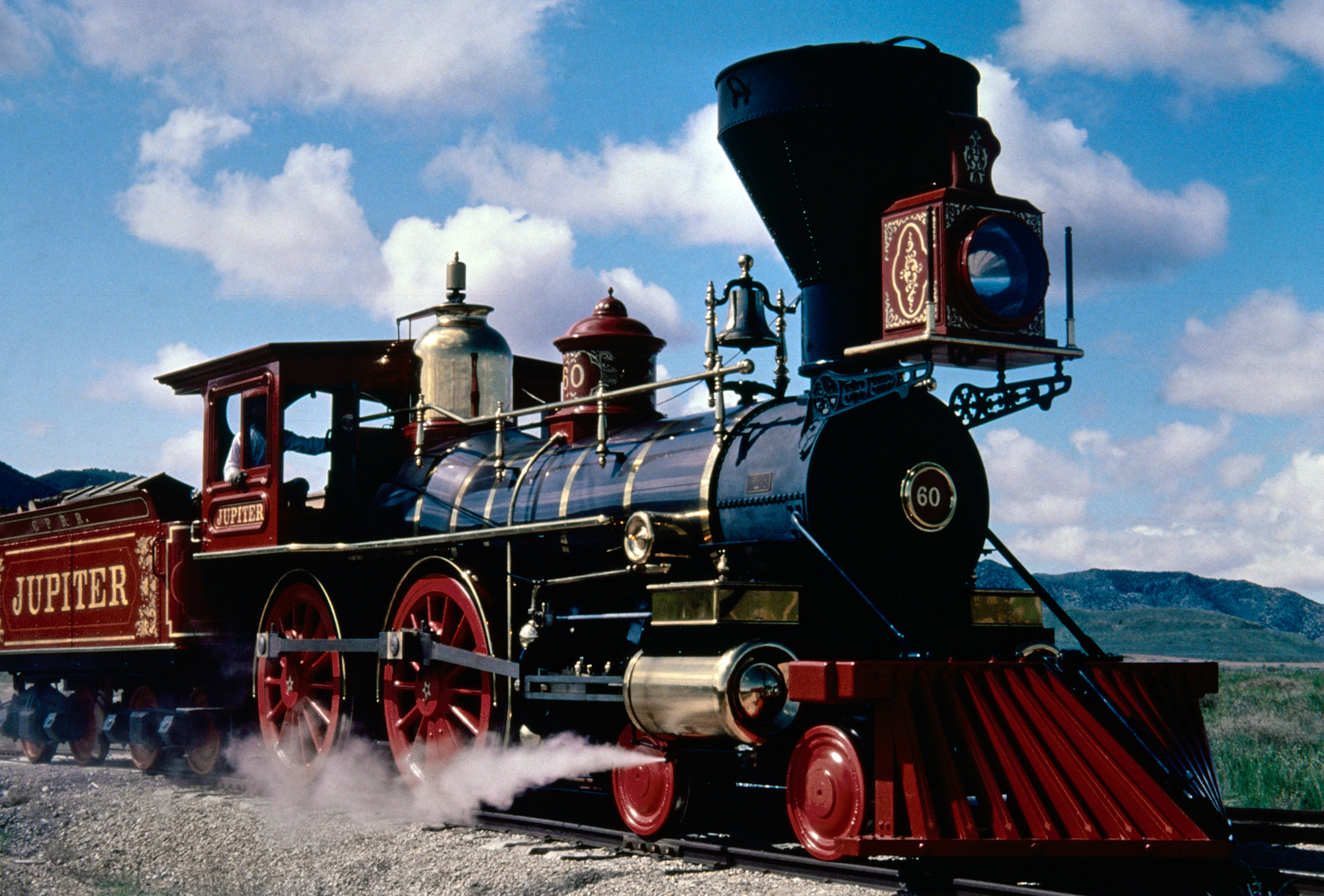
The replica of Central Pacific 4-4-0 #60, the “Jupiter,” at the Golden Spike National Historic Site in Promontory Summit, Utah circa 1982. This replica was completed by O’Connor Engineering in 1975 while the original was built by the Schenectady Locomotive Works of Schenectady, New York in 1868. American-Rails.com collection.
On this page: At a glance · Judah and the Big Four · The Pacific Railway Act · Sacramento, Cape Horn, the Governor Stanford · The Sierra · Nevada, the ten-mile day, Promontory · Southern Pacific and what remains
At a glance
The Central Pacific Railroad logo. Author’s work.
| Item | Detail |
|---|---|
| Headquarters | Sacramento, California |
| States | California, Nevada, Utah Territory |
| Incorporated | June 28, 1861, Central Pacific Railroad of California |
| The Four | Collis P. Huntington, Mark Hopkins, Leland Stanford, Charles Crocker |
| Engineer | Theodore D. Judah. Died November 2, 1863, age 37 |
| Ground broken | January 8, 1863, Front and K Streets, Sacramento |
| First rails / first locomotive | October 26, 1863. Governor Stanford (Norris 4-4-0, 1862), November 10, 1863 |
| Pacific Railway Act | Lincoln signed July 1, 1862. CP accepted October 7; Interior December 24. Amended July 2, 1864 |
| Promontory | May 10, 1869. About 690 miles from Sacramento |
| Ten-mile day | April 28, 1869: 10 miles 56 feet |
| Gauge | 4 feet 8½ inches |
| Southern Pacific lease | April 1, 1885 |
| Corporate end | Dissolved June 30, 1959 |
| Historic mark | CP (not Canadian Pacific) |
| Successor | Southern Pacific, then Union Pacific. Donner is still a UP main |
| Preserved engines | Governor Stanford at the California State Railroad Museum. The 4-2-4T C.P. Huntington. Jupiter replica at Golden Spike National Historical Park |
Mileage, tunnel, and labor figures follow the transcontinental encyclopedia on this site. Bond and land figures are the acts of 1862 and 1864. Information compiled September 15, 2026.
Judah and the Big Four
Judah was a Rensselaer-trained civil engineer who had already built California’s first railroad, the Sacramento Valley. He was sure a locomotive could climb the Sierra at Donner Pass, the only natural gap in that granite wall. In 1859 he went to Washington to say so. On January 14, 1860, he opened a “Pacific Railroad Museum” in the Capitol. Congress was slow. He sailed home, ran the line himself, and on November 1, 1860, wrote a loose incorporation. San Francisco would not touch it. Sacramento would.
Four merchants put up the cash California law required—$1,000 a mile, $115,000 to start. Huntington and Hopkins kept a hardware store. Stanford sold groceries and ran for office. Crocker sold dry goods. They incorporated the Central Pacific Railroad of California on June 28, 1861, directed to construct a railroad and telegraph “from the Pacific coast, at or near San Francisco, or the navigable waters of the Sacramento River, to the eastern boundary of California.” Stanford was elected governor that fall. Huntington went east and stayed there, buying iron, locomotives, and votes. Crocker took construction. Hopkins kept the books. They are the Big Four. Their biographies are their own pages. Judah was the engineer who had made them possible, and they squeezed him out of the decisions.
He sailed for New York on October 3, 1863, hoping to find a backer who would buy the Four out. Cornelius Vanderbilt’s name is the one that attached itself to that trip. How interested the Commodore really was is not clear. Nothing came of it. Judah caught yellow fever crossing Panama and died at the Metropolitan Hotel on November 2, 1863, age thirty-seven. The railroad was built on his maps. He never rode it over the summit.
The Pacific Railway Act
Jefferson Davis, as Secretary of War, had sent Army parties across the West in 1853. Slavery made a choice of corridor impossible. Lincoln’s election and secession took Southern votes out of the room. The central route—Omaha up the Platte, a meeting somewhere in the basin—was what remained. Grenville M. Dodge had already walked that eastern half. The surveys, the statute, and the spike as a national event are the transcontinental page. What the act did for this company is simpler.
Lincoln signed the Pacific Railway Act on July 1, 1862. It created Union Pacific as a federal corporation and authorized the already-chartered Central Pacific to build east from the Sacramento. The House had passed it May 6, 79–49; the Senate June 20, 35–5. Central Pacific accepted the agreement on October 7 and filed with the Interior Department on December 24. Land came in a checkerboard: ten alternate sections a mile in 1862, about 6,400 acres on paper; the amending act of July 2, 1864 doubled that to twenty sections, about 12,800 acres, and let the companies issue their own first-mortgage bonds up to the same amounts as the government issue. Bonds were $16,000 a mile on easy ground, $32,000 between the ranges, $48,000 in designated mountain miles—a loan, not a gift. The company had to finish 50 miles in two years, 50 a year after that, and the whole job by July 1, 1876, or lose the incentives. John Stover put the land-grant era in scale: between 1850 and 1871 the government offered on the order of 170 million acres for some eighty railroad projects; about 131 million acres were actually used.
Sacramento, Cape Horn, the Governor Stanford
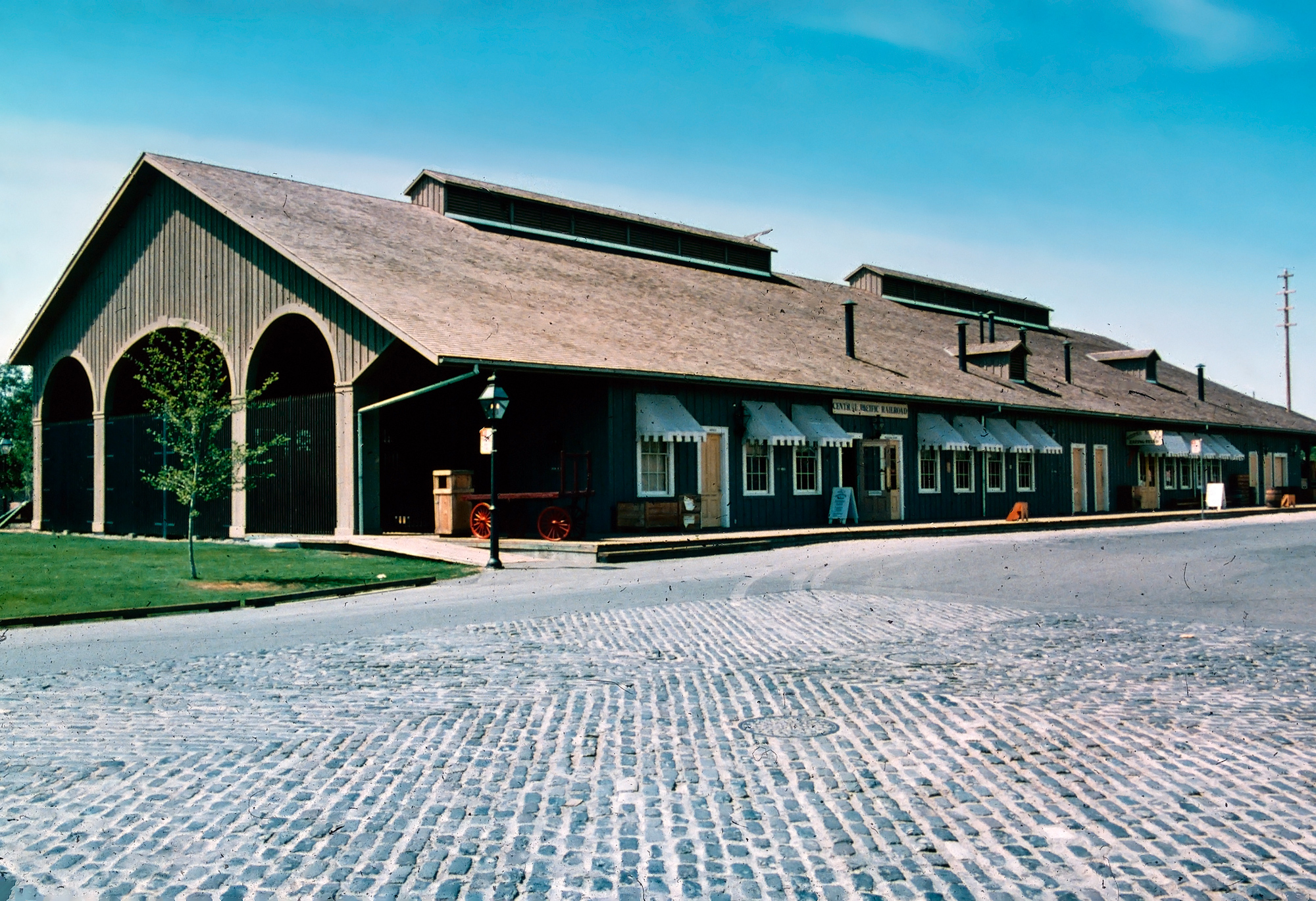
A replica of the Central Pacific depot in Old Sacramento, seen here at the California State Railroad Museum circa 1976. The original was completed during the 1860s and appears here as it would have circa 1876. William Myers photo. American-Rails.com collection.
Ground was broken on January 8, 1863, at Front and K Streets on the Sacramento River. Only Stanford and Crocker of the founders were there. Huntington was in New York buying material. Judah was in the Sierra. Hopkins did not bother. Everything the company needed except timber and granite came about 15,000 miles around Cape Horn, or across Panama, in ships Huntington kept on the water. Union Pacific could have iron dumped at Omaha. Central Pacific could not.
Brian Solomon, in Southern Pacific Railroad, notes that real grading lagged the ceremony by some ten months. First rails went down October 26, 1863, a few blocks to 21st Street. The company’s first locomotive, the 4-4-0 Governor Stanford, an 1862 Norris product of about 46 tons, made its first run over that track on November 10. Judah had been dead eight days. The engine is at the California State Railroad Museum. On March 25, 1864, it hauled granite and earned the company its first freight money. Service reached Auburn, at the foot of the Sierra, on May 13, 1865—about 35 miles in two years. From there the line followed the North Fork of the American River through Colfax, Dutch Flat, and Emigrant Gap toward Donner.
The Sierra
White labor would not stay in the mountains. James Harvey Strobridge, Crocker’s construction boss, tried fifty Chinese workers in 1865 as an experiment. They stayed. They drilled, they hauled, they laid, they cooked, and they did it for less money than the Irish gangs—commonly $26 to $35 a month against $35 plus board. By 1868 the Central Pacific had on the order of 10,000 to 12,000 Chinese on the payroll, first from California and then by recruitment from Guangdong, about 80 to 90 percent of the force. Stanford later told the federal government that without them the western half of the national highway could not have been finished. How many died in the Sierra is not known. Hundreds is the cautious floor. The company did not keep a proper count.
Fifteen tunnels were driven through granite with black powder, hand steel, and, from 1867, nitroglycerin mixed on the work. Summit Tunnel (Tunnel 6), at Donner Pass, was 1,659 feet long and as much as 124 feet deep in solid rock. Work began August 27, 1866. The heading holed through in August 1867. Rails were in on November 30, 1867. Elevation at the summit is 7,042 feet. Graders had already been sent ahead into Nevada because the bore had stopped the track. Snowsheds eventually covered some thirty-seven to forty miles of the mountain district so the line could run in winter at all. The tunnel-by-tunnel list and the pass as an operating mountain are the Donner and transcontinental pages. This was the company’s hardest money.
Nevada, the ten-mile day, Promontory
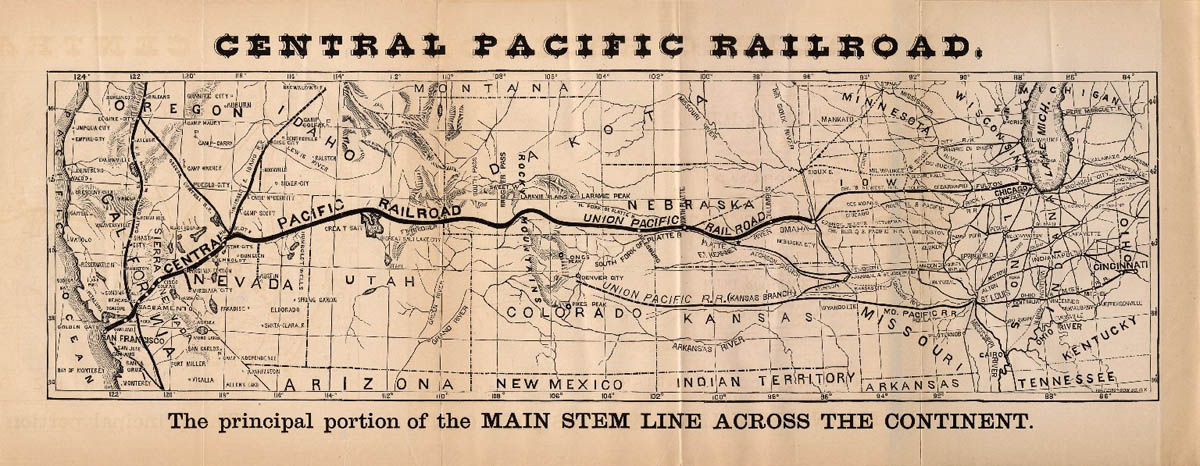
Central Pacific main line, Sacramento to Promontory Summit. American-Rails.com collection.
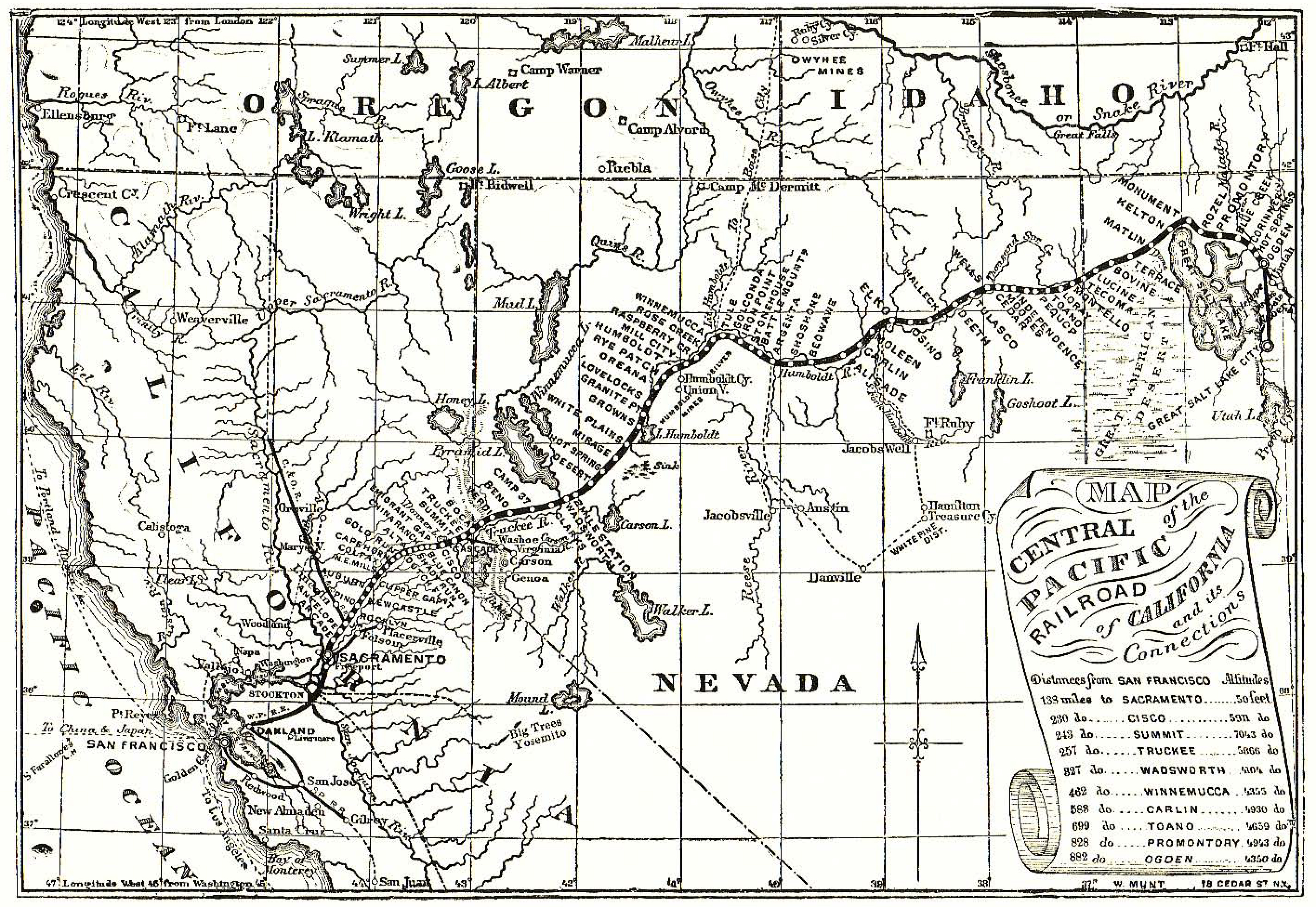
This 1870 system map depicts the Central Pacific only a year after operations began. Author’s collection.
Once Summit Tunnel had rail, the pace changed. Central Pacific reached Reno on June 18, 1868, 154 miles from Sacramento. The Humboldt Desert was alkali, heat, and no timber—not granite. The 1870 map on this page is the company a year after the spike: California, Nevada, Utah, and the Bay still filling in.
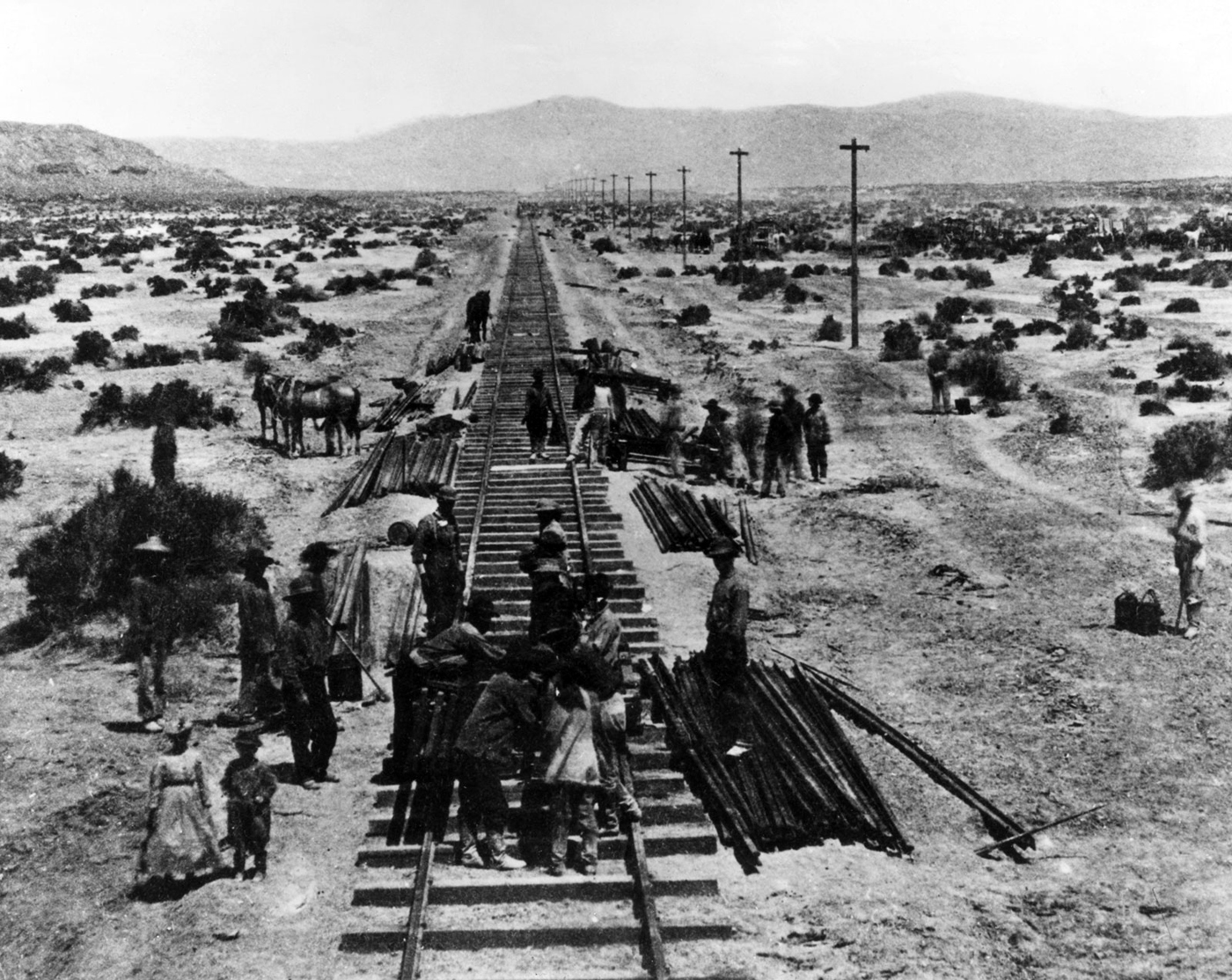
Track-laying of the Central Pacific across the open desert of Nevada during 1868.
The 1862 act never named a meeting point. By 1868 both companies were grading past each other in Utah, each hoping Congress would pay for its line. On April 9, 1869, Dodge and Huntington agreed to join at Promontory Summit. Congress confirmed it the next day. Charles Crocker then collected a bet. On April 27 a work train derailed after two miles. On April 28, 1869, Crocker’s gangs—Irish rail handlers and several thousand Chinese laborers—put down 10 miles and 56 feet between about 5 a.m. and 7 p.m. A locomotive ran the new track to prove it. The record still stands. The material list and the witnesses are the transcontinental page.
They met on May 10, 1869—not May 8; Weber Canyon washouts held Durant. Central Pacific 4-4-0 No. 60, Jupiter, Schenectady 1868, brought Stanford. Union Pacific sent No. 119. The gold spike, the champagne photograph, the telegraph word DONE, and the Chinese men who placed the last rail and were then moved aside are the transcontinental encyclopedia. Central Pacific had built about 690 miles from the Sacramento waterfront. The original Jupiter was later renumbered and scrapped in 1901. O’Connor Engineering built the replica in 1975; it reached the park in 1979.
Southern Pacific and what remains
May 10 did not put Central Pacific into San Francisco. A California subsidiary, the Western Pacific Railroad of 1862—not the later Gould road of the same name—finished the line from Sacramento to the Bay and put the company into Oakland. Through cars and a seven-day advertising schedule followed. The Big Four already had larger plans. They used the Southern Pacific, chartered in 1865, to take California. Central Pacific was leased to that company on April 1, 1885. The paper corporation lived on until it was dissolved on June 30, 1959.
Harriman’s Lucin Cutoff took the Overland Route off Promontory in 1904. Summit Tunnel was bypassed in 1997. Union Pacific still crosses Donner. The Governor Stanford and the C.P. Huntington are in Sacramento. The Jupiter replica steams at the park. Judah’s line is still a railroad. The name on the cab is Union Pacific’s.
Related reading on American-Rails.com
- Transcontinental Railroad · Union Pacific · Southern Pacific
- Donner Pass · Lucin Cutoff · California State Railroad Museum
- Collis P. Huntington · Charles Crocker · Leland Stanford · Mark Hopkins
- C.P. Huntington 4-2-4T · 4-4-0 Americans
- Railroad tycoons · Civil War railroads · Railroads in the 1860s · U.S. railroad history
Sources
- Pacific Railway Act, July 1, 1862, 12 Stat. 489. Amendatory act, July 2, 1864, 13 Stat. 356
- Ambrose, Stephen E. Nothing Like It in the World: The Men Who Built the Transcontinental Railroad, 1863–1869. New York: Simon & Schuster, 2000. Judah, the Big Four, Cape Horn supply, Vanderbilt trip
- Solomon, Brian. Southern Pacific Railroad. St. Paul: Voyageur Press, 2007. Grading lag after the January 8, 1863 ceremony; Auburn; SP lease
- Welsh, Joe, and Kevin Holland. Union Pacific Railroad. Minneapolis: Voyageur Press, 2009. 1864 land-grant doubling
- Stover, John F. The Routledge Historical Atlas of the American Railroads. New York: Routledge, 1999. Land-grant totals 1850–1871
- Heath, Earl. “Track-Laying Extravaganza.” Trains, January 1943. Ten-mile day, April 28, 1869
- American-Rails.com, Transcontinental Railroad. Summit Tunnel dates and elevation; Chinese labor peak; April 9, 1869 meeting agreement; Promontory May 10; Jupiter replica 1979 at the park; Ogden as the operating junction
- American-Rails.com, Southern Pacific. April 1, 1885 lease; June 30, 1959 dissolution
- Stanford University, Chinese Railroad Workers in North America Project. Ten-mile-day material list
Recent Articles


-
Pennsylvania-Reading Seashore Lines: Map, Roster, History
Sep 23, 26 12:32 AM
 Pennsylvania-Reading Seashore Lines—Atlantic City Railroad renamed July 15, 1933. Pennsylvania two-thirds, Reading one-third. Camden to Atlantic City, Cape May, and Millville. Conrail April 1, 1976.
 -
Wisconsin Dinner Train Rides (2026): A Complete Guide
Sep 23, 26 12:28 AM
 2026 Wisconsin Great Northern dinner train in Trego—$105, Namekagon River, January 8–31 and May 5–December 17. Mid-Continent’s remaining 2026 calendar is snack and scenic. Confirm on the railroad.
 -
New Hampshire Dinner Train Rides (2026): A Complete Guide
Sep 23, 26 12:21 AM
2026 Cafe Lafayette Dinner Train in North Woodstock—five courses, 2 hours, from $125. Children under 6 not allowed. Confirm on nhdinnertrain.com. -
PRR "GG-1" Locomotives: Roster, Photos, Specs
Sep 23, 26 12:13 AM
 PRR GG1 electric: 139 locomotives, 4800–4938, built 1934–1943. Specs, Loewy shell, Amtrak numbers, and the last revenue trip on October 28, 1983.
 -
Montana Dinner Train Rides (2026): A Complete Guide
Sep 23, 26 12:04 AM
 2026 Charlie Russell Chew Choo from Hanover, near Lewistown—4.5 hours, prime rib, adult $151. Remaining listed dates sold out. Confirm on montanadinnertrain.com.
 -
Kentucky Dinner Train Rides (2026): A Complete Guide
Sep 22, 26 11:52 PM
 2026 My Old Kentucky Dinner Train in Bardstown—four courses, 2.5 hours, adult $116. Confirm on kydinnertrain.com.
 -
Tennessee Dinner Train Rides (2026): A Complete Guide
Sep 22, 26 11:45 PM
2026 TVRM Chattanooga Dinner Train—Grand Junction, select Fri/Sat March 6–October 24, 6 p.m., from $110. Confirm on tvrail.com. -
The Trainphone: PRR's Wireless Radio System
Sep 22, 26 11:17 PM
 Pennsylvania Trainphone—Union Switch & Signal inductive telephone. Bel-Del trial 1941, Frenchtown November 29, 1943. Carriers at 88 kHz and 144 kHz. Out of service April 30, 1967.
 -
Pennsylvania (PRR) Steam Roster: Post 1906
Sep 22, 26 11:13 PM
 ennsylvania steam after 1906—H8, H9, and H10 Consolidations, 574 L1s Mikados, 598 I1s Decapods, 425 K4s Pacifics, 301 M1 Mountains. Drury’s grid. Last steam November 30, 1957.
 -
Pennsylvania Railroad (PRR) Diesel Roster: All-Time List
Sep 22, 26 10:59 PM
 Pennsylvania diesel roster—SW 3908 in June 1937, then Alco, Baldwin, EMD, Fairbanks-Morse, GE, and Lima. Serials and Alco order numbers. Penn Central February 1, 1968.
 -
Pennsylvania Railroad: Map, Logo, History, Rosters
Sep 22, 26 10:02 PM
 Pennsylvania Railroad—chartered April 13, 1846, Harrisburg–Pittsburgh, Horseshoe Curve 1854, Penn Station 1910. Standard Railroad of the World. Penn Central February 1, 1968.
 -
Pennsylvania Dinner Train Rides (2026): A Complete Guide
Sep 22, 26 04:48 PM
 2026 Pennsylvania dinner trains—Colebrookdale Dining Class in Boyertown and Strasburg Dinner on the Rails. Confirm on each railroad.
 -
New York, Ontario & Western Steam Locomotives: History & Roster
Sep 22, 26 04:40 PM
 NYO&W steam—camelback 2-8-0s and 2-6-0s, Class X Bull Moose 2-10-2s, Class Y and Y-2 Mountains. All-time class roster. Steam finished in the summer of 1948. None saved.
 -
New York, Ontario & Western Diesel Roster: All-Time
Sep 22, 26 04:36 PM
 NYO&W diesel—five GE 44-tonners 101-105, eighteen FTs, seven F3s, twenty-one NW2s. Serials and the NW2 order E824. Railroad liquidated March 29 1957.
 -
New York, Ontario & Western Railway: Map, Roster, History
Sep 22, 26 04:26 PM
 New York, Ontario & Western—New York & Oswego Midland chartered January 11 1866, O&W January 21 1880. Scranton coal, West Shore rights. Last train March 29 1957.
 -
Massachusetts Dinner Train Rides (2026): A Complete Guide
Sep 22, 26 04:16 PM
 2026 Cape Cod Dinner Train—Hyannis, Buzzards Bay, and North Falmouth. Four-course, 3–3½ hours, from $99.99. Confirm on capetrain.com.
 -
Colorado Dinner Train Rides (2026): A Complete Guide
Sep 22, 26 03:51 PM
 2026 Royal Gorge Route First Class Dinner and Lunch from Cañon City. About 2 hours, 12+, from $199+. Confirm on royalgorgeroute.com.
 -
New York and Long Branch Railroad: A PRR & CNJ Subsidiary
Sep 22, 26 03:11 PM
 New York & Long Branch—chartered April 8 1868, Perth Amboy–Long Branch July 1 1875, Bay Head Junction 1881. Jersey Central and Pennsylvania trains. Conrail April 1 1976. NJ Transit North Jersey Co…
 -
Monongahela Railway Steam Locomotives: History & Roster
Sep 22, 26 01:34 PM
 Monongahela steam—H-5 Consolidations, USRA light Mikados 170–179, Baldwin L-2s, ex-P&LE L-3s. All-time roster. Last steam May 26, 1954.
 -
Monongahela Railway Diesel Roster: All-Time
Sep 22, 26 01:16 PM
 Monongahela diesel—27 Baldwin S-12s, NYC RF-16 sharks, P&LE GP7s, GP38s 2000–2004, Super 7s 2300–2310. Serials and orders. Last steam May 26, 1954.
 -
Monongahela Railway: Map, Rosters, History
Sep 22, 26 01:14 PM
 Monongahela Railway—incorporated December 31 1900, Railway July 1 1915. Brownsville–Fairmont coal road. Last steam May 26 1954. Conrail May 1 1993.
 -
Virginia Scenic Railway Dining (2026)
Sep 22, 26 01:09 PM
 2026 Virginia Scenic Railway—Blue Ridge Flyer Dining Class from Staunton, about 3 hours, plated meal. Sunday Brunch from Louisa, about $132. Confirm on virginiascenicrailway.com.
 -
Virginia Dinner Train Rides (2026): A Complete Guide
Sep 22, 26 01:03 PM
 2026 Virginia Scenic Railway—Blue Ridge Flyer Dining Class from Staunton, Alleghany Special Dining Class, Sunday Brunch from Louisa. Confirm on virginiascenicrailway.com.
 -
Oregon Dinner Train Rides (2026): A Complete Guide
Sep 22, 26 12:51 PM
 2026 Oregon has no plated dinner train on the calendar. Mount Hood is scenic with snacks. Oregon Coast Scenic’s evening ride is the 21+ Moonlight with sandwiches.
 -
Maine Central Steam Locomotives: History & Roster
Sep 22, 26 12:33 PM
Maine Central steam—Ten-Wheelers, W-class Consolidations, S-class Mikados, C-class Pacifics, Hudsons 701 and 702. Post-1900 roster after Drury. Last steam June 13, 1954. -
Maine Central Diesel Roster: All-Time
Sep 22, 26 12:04 PM
 Maine Central diesel—railcar 901, HH660s, GP7s, E7s, F3s, GP38s, U18Bs, ex-Rock Island U25Bs. All-time roster with serials and orders. Last steam June 13, 1954.
 -
Maine Central Railroad: Map, Logo, Rosters, History
Sep 22, 26 11:36 AM
 Maine Central—Androscoggin & Kennebec and Penobscot & Kennebec, October 28 1862. Pine Tree Route. Mountain Division, Portland–Bangor–Vanceboro. Last steam June 13 1954. Guilford June 1981.
 -
Maryland and Pennsylvania Railroad: Map, Roster, Logo
Sep 22, 26 12:14 AM
 Ma & Pa—Peach Bottom 1868, Maryland & Pennsylvania February 12 1901, Baltimore to York. Last steam November 29 1956. York Railway December 1 1999.
 -
New York Dinner Train Rides (2026): A Complete Guide
Sep 21, 26 11:59 PM
2026 New York dinner train—Adirondack Dinner Train from Utica, 6 p.m., about 3 hours, First Class from $139. Arcade & Attica mystery dinner is served at Curriers. Confirm on the railroad. -
California Dinner Train Rides (2026): A Complete Guide
Sep 21, 26 11:49 PM
 2026 California dinner trains—Napa Valley Wine Train plated meals, River Fox brunch and mystery dinner, Roaring Camp barbecue at camp. Confirm on each railroad.
 -
Roaring Camp Starlight Dinner Party (2026)
Sep 21, 26 11:33 PM
 2026 Roaring Camp Starlight Dinner Party—Beach Train from the Santa Cruz Boardwalk, barbecue at Felton, ride back after dark. Confirm on roaringcamp.com.
 -
Long Island Rail Road Steam Locomotives: History, Roster & Photos
Sep 21, 26 11:29 PM
 Long Island steam—G5s 20–50, H10s 101–119, last steam at Hicksville October 8, 1955. Post-1898 class roster.
 -
Long Island Rail Road Diesel Roster: All-Time
Sep 21, 26 11:24 PM
 Long Island diesel—boxcab 401 in 1925, FM C-Liners, RS-3s, C-420s, GP38-2s, DE30AC and DM30AC. All-time roster with serials and orders.
 -
Long Island Rail Road: Map, History, Pictures, Logo
Sep 21, 26 08:27 PM
 Long Island Rail Road—Brooklyn & Jamaica 1836, Greenport 1844, Pennsylvania control 1900, Penn Station 1910. MTA since 1968. Steam and diesel rosters.
 -
Oregon Coast Scenic Railroad (2026): Sunset Dinner and Moonlight
Sep 21, 26 02:40 PM
 2026 Oregon Coast Scenic does not post the old four-course Sunset Dinner. The evening ride is the 21+ Moonlight Excursion from Garibaldi, with pre-ordered sandwiches. Confirm on oregoncoastscenic.org.
 -
Adirondack Dinner Train (2026): Dates, Tickets & What to Expect
Sep 21, 26 01:38 PM
 2026 Adirondack Dinner Train—Utica Union Station, 6 p.m., about 3 hours to Remsen. First Class from $139. Chef Patrick O’Connor. Confirm on adirondackrr.com.
 -
Lehigh Valley Steam Locomotives: History, Roster & Photos
Sep 21, 26 01:31 PM
 Lehigh Valley steam—Camelback Consolidations, 2-10-2s, K-class Pacifics, six Mountains, Wyoming 4-8-4s. Post-1900 roster after Drury. Last steam September 14, 1951.
 -
Lehigh Valley Diesel Roster: All-Time
Sep 21, 26 01:23 PM
 Lehigh Valley diesel—boxcabs 1926, FTs 1945, F3/F7, FA/PA, C628 Snowbirds, GP38-2s, U23Bs. All-time roster with serials and orders. Last steam September 14, 1951.
 -
Lehigh Valley Railroad: Map, Roster, Logo, History
Sep 21, 26 01:09 PM
 Lehigh Valley—DLS&S 1847, named January 7 1853, Mauch Chunk–Easton September 12 1855. Route of the Black Diamond. Jersey City–Buffalo. Conrail April 1 1976.
 -
Wisconsin Great Northern Dinner Train (2026)
Sep 21, 26 12:47 PM
2026 Wisconsin Great Northern dinner train—Trego, $105, Namekagon River. January 8–31 and May 5–December 17. Confirm on spoonertrainride.com. -
Lehigh and New England Railroad: Map, Rosters, History
Sep 21, 26 12:33 AM
 Lehigh & New England—South Mountain & Boston 1873, named April 2 1895. Anthracite, cement, Maybrook. Last Camelbacks, Alco FAs. Voluntary shutdown October 31 1961.
 -
TVRM Chattanooga Dinner Train (2026): Dates, Tickets & What to Expect
Sep 21, 26 12:20 AM
 2026 TVRM Chattanooga Dinner Train Experience—Grand Junction, select Fri/Sat March 6–October 24, three-course, 2–3 hours, from $110. Confirm on tvrail.com.
 -
Lehigh and Hudson River Railroad: Map, Rosters, History
Sep 20, 26 11:55 PM
 Lehigh & Hudson River—Warwick Valley 1860, Railway April 1 1882. Easton–Maybrook bridge road, Alphabet Route, Alco RS-3s and C420s. Conrail April 1 1976.
 -
Royal Gorge First Class Dinner Train (2026)
Sep 20, 26 11:47 PM
 2026 Royal Gorge Route First Class Lunch & Dinner—Cañon City, about 2 hours, from $199+, 12+. Confirm on royalgorgeroute.com.
 -
GE "44-Tonner" Locomotives: Roster, Specs, History
Sep 20, 26 11:09 PM
 GE 44-ton switcher—90,000-pound rule, Caterpillar D17000 center-cab, Sept 4 1940 CB&Q 9103 through Oct 1956 Dansville & Mount Morris 1. Phases, serial roster, PRR 46.
 -
Strasburg Rail Road Dining (2026): Dinner on the Rails & Elegant Expre
Sep 20, 26 11:00 PM
2026 Strasburg Rail Road seated meals—Dinner on the Rails, Elegant Express, Valentine dinner. Lee E. Brenner diner. Confirm on strasburgrailroad.com. -
International-Great Northern Railroad: Map, History, Timetables
Sep 20, 26 10:43 PM
 International–Great Northern—Houston & Great Northern 1866, International Railroad 1870, merged Sept 30 1873. Palestine, Longview–Laredo, Gould, Missouri Pacific March 1 1956.
 -
Nevada Northern Taste of Italy Dinner Train (2026)
Sep 20, 26 03:25 PM
2026 Nevada Northern Taste of Italy—adults-only multi-course Italian dinner, steam when healthy, East Ely. Sep. 19 gala listed. Confirm on nnry.com. -
Cape Cod Dinner Train (2026): Dates, Tickets & What to Expect
Sep 20, 26 02:53 PM
 Cape Cod Central Dinner Train—Hyannis, Buzzards Bay, and Falmouth. Four-course, 3–3½ hours, from $99.99. Confirm on capetrain.com.
 -
Erie Steam Locomotives: History, Roster & Photos
Sep 20, 26 11:55 AM
 Erie Railroad steam—Camelback 2-8-0s, 155 N-1 Mikados, 105 Berkshires, K-class Pacifics, Triplexes. Post-1900 roster after Drury. Last steam March 17, 1954.