
- Home ›
- Freight Cars ›
- Hoppers
Railroad Hopper Cars (Trains): Capacity, Dimensions, Overview
Last revised: February 26, 2025
By: Adam Burns
The modern open-top hopper car is a bit more sophisticated than what they might appear.
Today, the open-top version of these cars haul everything from coal to aggregates, such as ballast (a term which refers to the crushed rock used under the railroad tracks that acts as support and cushioning), and feature a number of different drop-bottom designs to empty their cargo.
You may then be asking, "What in the heck is the difference between gondolas and hoppers?" The drop-bottoms are basically what separate the two types.
Overview
Whereas gondolas can look just like hoppers, right down to their size, length, commodity, and even a basic form of drop-bottom as well (which discharges material straight down) hoppers do not.
Instead, they feature some type of angled or sloped chutes or hatches, which use the force of gravity to quickly unload their cargo and never requiring being tilted or turned upside-down in any way.
The original hoppers, as noted in more detail below, were essentially what is described as "jimmies," a little two-axle cars used on pioneering tram and mule-powered railroads of the 1820's and 1830's to haul about 1.5 tons of coal (3,000 pounds) from mines to a nearby canal or river.
Photos
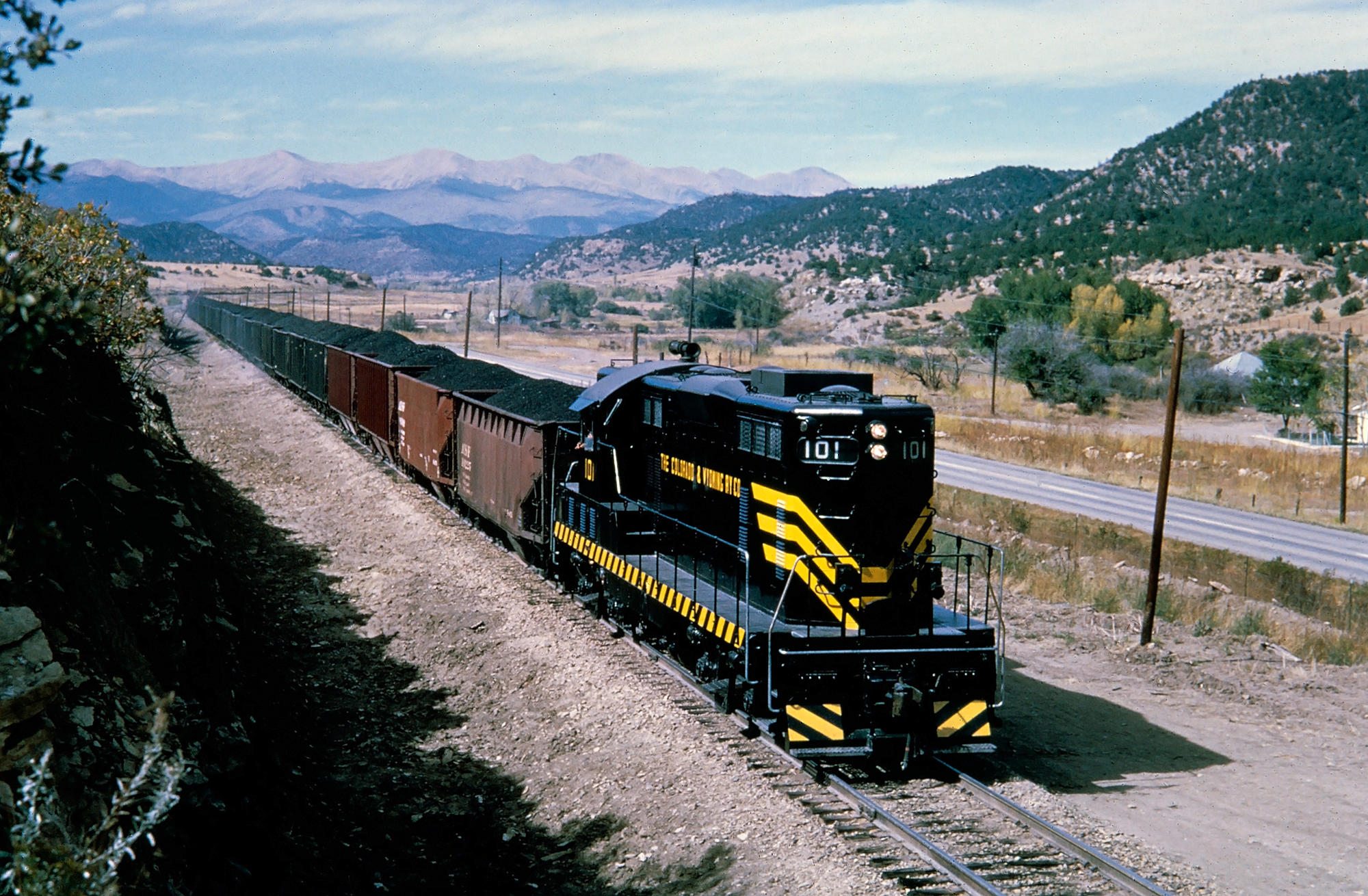 Colorado & Wyoming GP7 #101 leads a string of loaded coal hoppers eastbound from the Allen Mine near Weston, Colorado, circa 1967. American-Rails.com collection.
Notable here are the Lehigh Coal & Navigation Company (via its Mauch Chunk & Summit Hill Railroad) and the Delaware & Hudson Canal Company.
The little jimmies carried the basic features of the modern-day hopper which differentiates its from the gondola. Still, as Mike Schafer notes in his book, "Freight Train Cars," the hopper was essentially a fancy version of a gondola.
By 1840 the car had improved to include a pair of two-axle trucks for heavier loads and a better chute design for increased unloading.
As a result this version is often credited as being the original hopper car. In his book, "The American Railroad Freight Car," author John White, Jr. notes the earliest hoppers were those mentioned above and unloaded their coal by a lever which released a chute at the bottom.
The car was 7 feet in length, 5 feet 3 inches wide, 40 inches deep, and had a wheelbase of just 4 feet. It weighed 2,240 pounds and could haul about 2 tons.
The more modern coal hopper would appear around 1850; it featured four axles (which rode on an early truck system), was 11 feet 6 inches, 5 feet 3 inches wide, 40 inches deep, and carried a wheelbase of 9 feet 6 inches.
It weighed roughly 4,500 pounds and could haul 4 tons. Over the years, the hopper became larger and stronger (moving from wood and wood-steel construction to all-steel construction) able to haul heavier and heavier loads (which allowed for better efficiency and thus, better return-on-investment).
By the late 19th century the car could handle upwards of 40 tons thanks largely by the switch from wood to iron/steel in car construction.
For instance, during the United States Railroad Association’s reign during World War I, as with the 40-foot boxcar, the hopper became standardized with the 55-ton version.
Interestingly, the classic jimmie did not immediately disappear after the hopper was born. Some railroads continued using the design as late as 1900 until most jimmies finally fell out of favor.
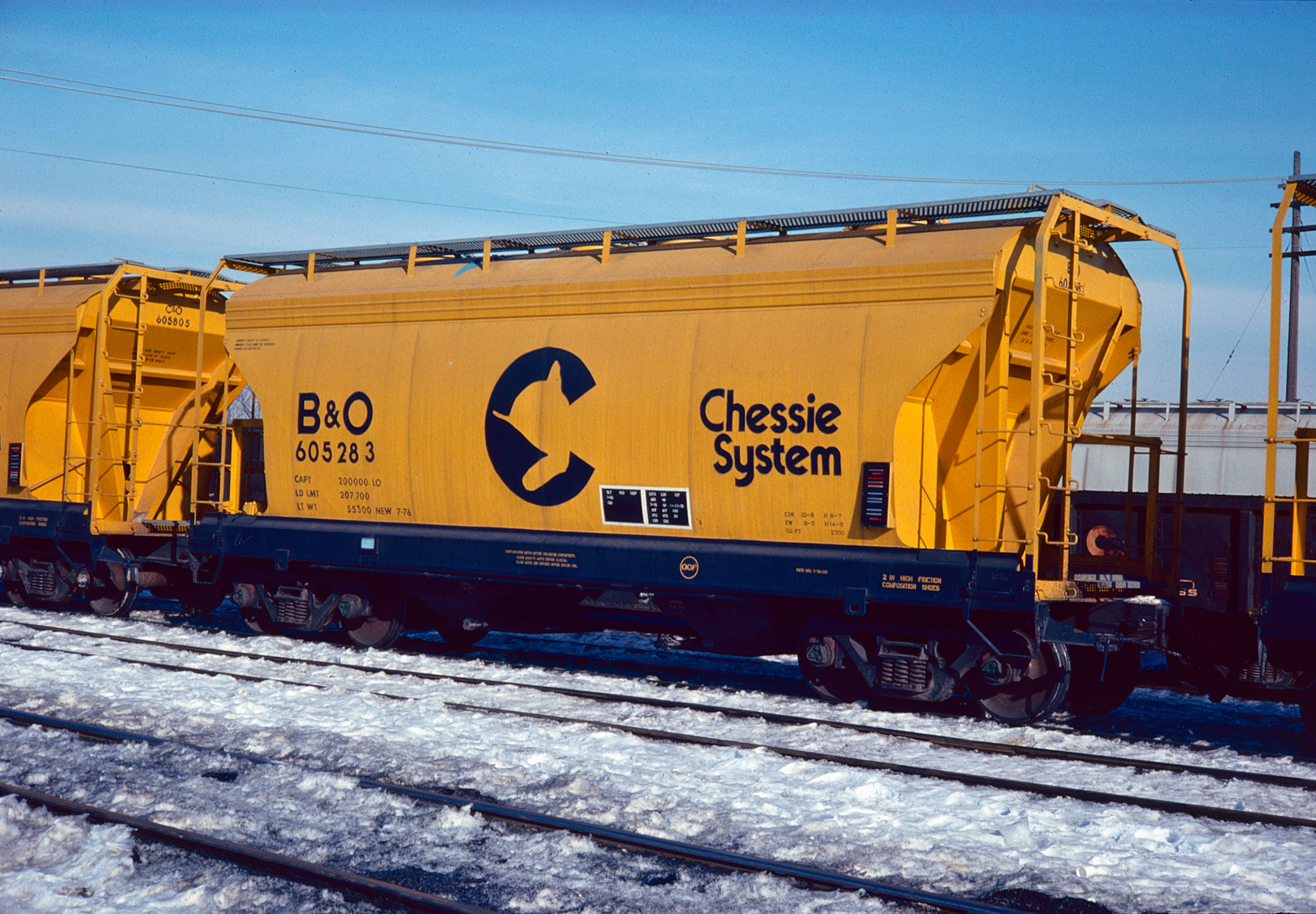 Chessie System (Baltimore & Ohio) two-bay covered hopper #605283; February, 1977. This car was manufactured by American Car & Foundry in June, 1976. American-Rails.com collection.
As the hopper became larger so did the number of drop-bottom chutes it carried; from two, to three, and now today most carry four chutes (more chutes allow for faster unloading times).
Similarly, what has allowed the increased number of chutes on a hopper is mostly the result of its increase in size from 50 tons to today’s 100-ton capacity, which is commonly used in the present-day industry.
The standard hopper found currently roaming the rails has come a long way, even from the USRA 55-ton standardized car of the early 20th century.
Not only are the current cars capable of hauling 100-tons but also many now have rotary couplings to literally spin the car 360 degrees while still attached to the train.
This setup increases the speed at which the product can be removed from the car. Although, one then wonders why have drop-bottom chutes at all?
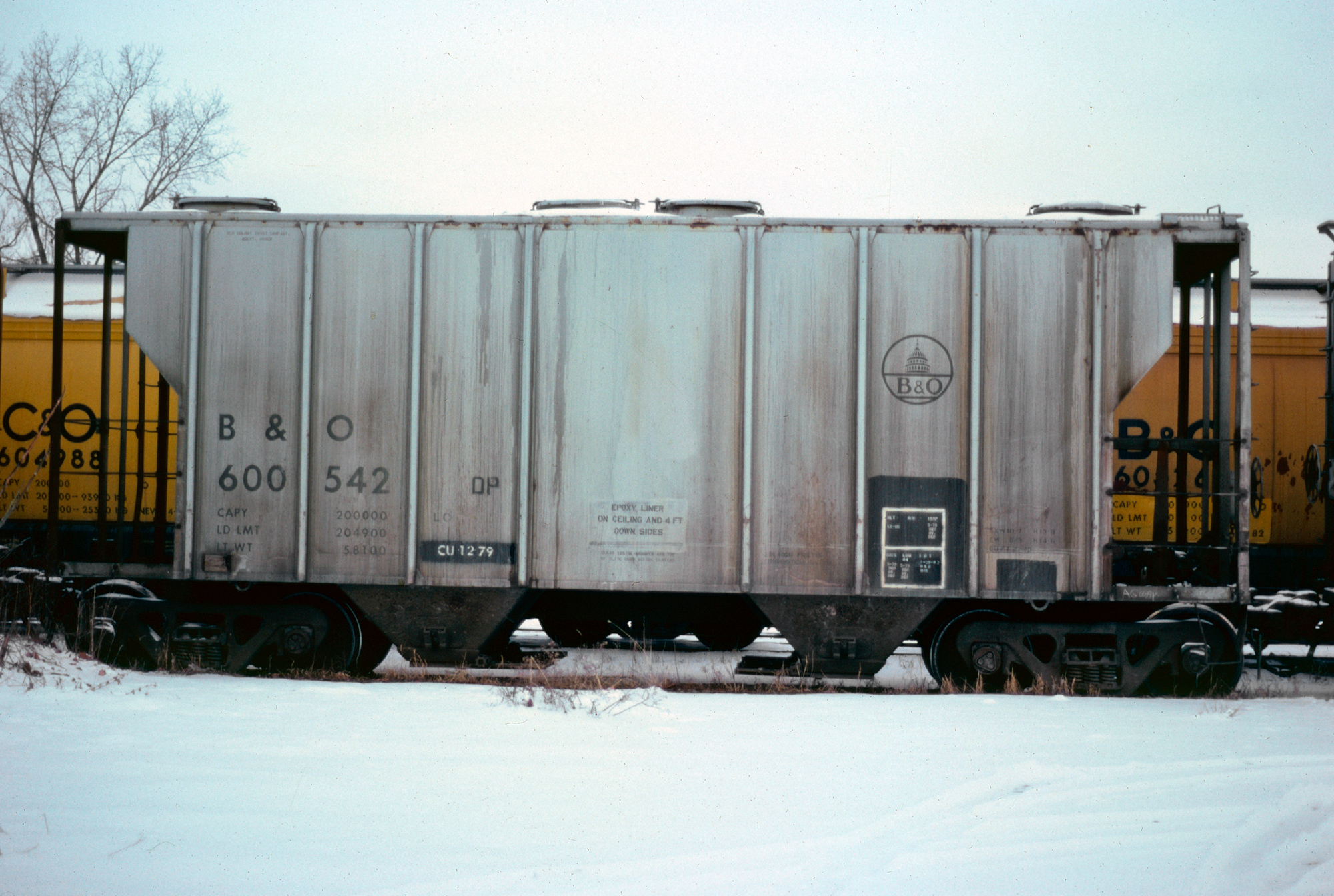 Baltimore & Ohio 2-bay covered hopper #600542 is seen here in March, 1983. These cars, boasting 2003 cubic feet of space, were manufactured by Pullman-Standard and classed as the PS-2. The often handled cement or sand but also carried everything from grain to gravel. American-Rails.com collection.
Other variations include covered hoppers, which carry bulk products such as grain, lime, cement, and in some cases sand that must be protected from the weather while in transit.
The history of this car can also trace its heritage back to the industry's early years. The first covered hopper is said to have appeared in the 1830s to haul, as mentioned above, grain and prevent its exposure from the elements.
The car had open hatches on the roof as well as on the bottom for loading and removal. Surprisingly, though, railroads were slow to use the covered hopper for this particular purpose.
Instead, ever-interested in redundancy they found the ubiquitous boxcar, capable of handling everything from cars to bundles of paper, could do the job just as well.
Capacity and Dimensions
Widespread use of the covered hopper for weather-sensitive products did not begin until after World War II, particularly during the 1960s and 1970s.
Today, aside from the freight already mentioned the car carries flour, plastic pellets, potash (fertilizer), fishmeal, and soybeans.
It is widely used and one of the most common cars you will see moving within a train. Ore jennies are yet another type and these little cars get their size for a reason.
They are built specifically for hauling taconite pellets (iron ore) which are much more dense (i.e., heavier) than most other types of bulk materials like coal and stone.
As such, they are much smaller but have a tonnage rating roughly that of a standard-sized hopper. (these cars are predominantly found in the northwest Great Lake region such as Minnesota and Michigan where large concentrations of iron ore continues to be mined).
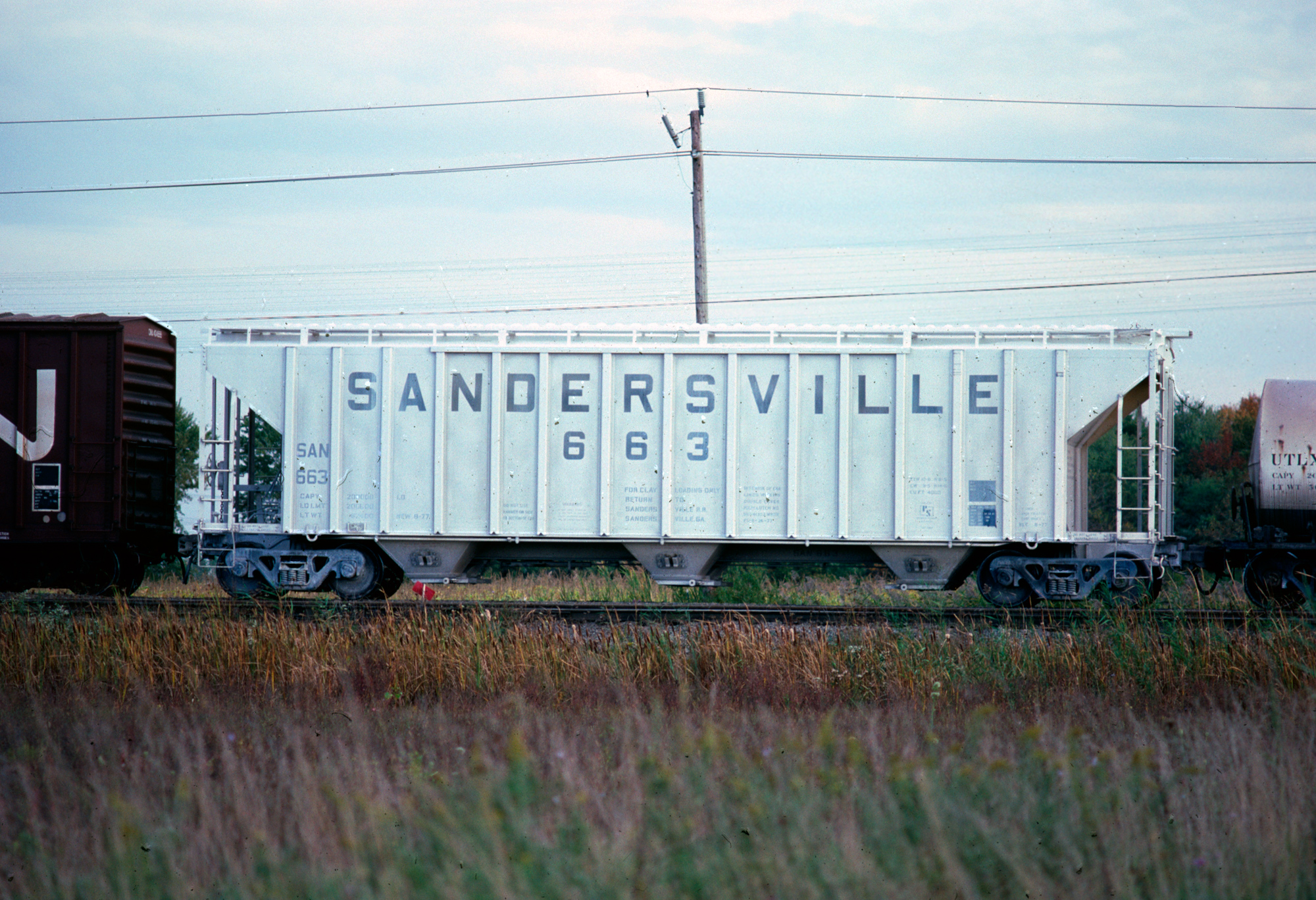 Sandersville Railroad three-bay covered hopper #663 is seen here in service during October of 1982. This particular car was used to handle the short line's primary traffic, kaolin, a type of clay found in east central Georgia that is used in a wide variety of products. American-Rails.com collection.
The history of the jenny can likely be traced to around the mid-1800s although as Mr. Schafer mentions in his book its widespread use did not begin until the end of that century when iron became commonly produced.
Later, the production of much stronger steel continued the need for the mining of iron, an essential component of steel.
In most ways the ore jenny is simply a miniature hopper, which could be found in service on many of the large Upper Midwest railroads which served mines in the region such as:
- Milwaukee Road
- Chicago & North Western
- Bessemer & Lake Erie
- Missabe Road (Duluth, Missabe & Iron Range)
- Soo Line/Duluth South Shore & Atlantic
- Lake Superior & Ishpeming
- Escanaba & Lake Superior
As the years go by the hopper car will undoubtedly become larger and more sophisticated.
Regardless of these changes the car will almost surely remain just as recognizable 50 years from now as it was 50 years ago; a platform capable of discharging a product quickly through bottom, angled chutes.
Recent Articles


-
Scenic Train Rides (USA 2026): State Guide to Tourist Railroads
Oct 04, 26 12:17 AM
 Scenic and tourist train rides in all 50 states for 2026. Colorado narrow gauge, Pennsylvania steam, Alaska’s White Pass, and the states with no full-size ride this month. Confirm on the railroad.
 -
Wyoming Scenic Train Rides (2026): A Complete Guide
Oct 03, 26 12:07 AM
 Wyoming has no full-size tourist railroad on the calendar in October 2026. Cheyenne Depot Museum and Douglas Railroad Museum are static. Union Pacific 4014’s posted public trip is a November run to De…
 -
Washington Scenic Train Rides (2026): A Complete Guide
Oct 02, 26 11:53 PM
 Washington tourist trains in 2026—Mount Rainier Scenic at Elbe, the Northwest Railway Museum, and Chehalis-Centralia. Lake Whatcom has no 2026 date on its ticket page.
 -
Wisconsin Scenic Train Rides (2026): A Complete Guide
Oct 02, 26 11:48 PM
 Wisconsin tourist trains in 2026—Wisconsin Great Northern, Osceola & St. Croix Valley, Mid-Continent, East Troy, and the National Railroad Museum.
 -
Pennsylvania Railroad Class Q2 4-4-6-4: Specs, Roster, History
Oct 02, 26 11:28 PM
 Pennsylvania Railroad Class Q2 4-4-6-4 duplexes. Twenty-six engines, 6131 and 6175–6199, Altoona 1944–45. Form 109-J specs, the 7,987 hp test of 6175, and a roster. All scrapped.
 -
Utah Scenic Train Rides (2026): A Complete Guide
Oct 02, 26 11:18 PM
 Utah tourist trains in 2026—Heber Valley Railroad from Heber City. Golden Spike at Promontory is a locomotive demonstration, not a line-haul ride.
 -
South Dakota Scenic Train Rides (2026): A Complete Guide
Oct 02, 26 11:06 PM
 South Dakota’s 2026 scenic train is the Black Hills Central 1880 Train, Hill City to Keystone. Steam is the summer assignment. Confirm the engine.
 -
Oregon Scenic Train Rides (2026): A Complete Guide
Oct 02, 26 11:04 PM
 Oregon tourist trains in 2026—Oregon Coast Scenic from Rockaway Beach, Mount Hood at Hood River, Eagle Cap from Elgin, and the Oregon Rail Heritage Center in Portland.
 -
Oklahoma Scenic Train Rides (2026): A Complete Guide
Oct 02, 26 10:36 PM
 Oklahoma has no full-size scenic railroad on an October 2026 calendar. Oklahoma Railway Museum Halloween and Polar trains, the El Reno trolley, and the Heartland Flyer.
 -
North Dakota Scenic Train Rides (2026): A Complete Guide
Oct 02, 26 01:14 PM
North Dakota has no tourist railroad on a 2026 calendar. Ride Amtrak’s daily Empire Builder. The Fort Lincoln Trolley in Mandan is not a current ticket. -
Nebraska Scenic Train Rides (2026): A Complete Guide
Oct 02, 26 10:11 AM
 Nebraska has no full-size scenic railroad in 2026. The Omaha Zoo Railroad runs weekends through October 4. Ride Amtrak’s California Zephyr across the state.
 -
Missouri Scenic Train Rides (2026): A Complete Guide
Oct 02, 26 09:56 AM
 Missouri tourist trains in 2026—Branson Scenic Railway and the St. Louis, Iron Mountain & Southern at Jackson. Belton has no 2026 schedule posted.
 -
Minnesota Scenic Train Rides (2026): A Complete Guide
Oct 02, 26 09:52 AM
 Minnesota tourist trains in 2026—North Shore Scenic Railroad in Duluth, the Duluth River Train, and the Como-Harriet streetcar.
 -
Kansas Scenic Train Rides (2026): A Complete Guide
Oct 02, 26 09:32 AM
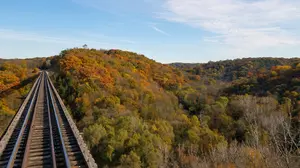
 Kansas tourist trains in 2026—the Abilene & Smoky Valley Railroad. Santa Fe 3415 is in overhaul. Midland Railway at Baldwin City is closed.
 -
Iowa Scenic Train Rides (2026): A Complete Guide
Oct 02, 26 08:41 AM
 Iowa tourist trains in 2026—Boone & Scenic Valley across the Bass Point Creek High Bridge, and Midwest Central’s December North Pole trains
 -
Indiana Scenic Train Rides (2026): A Complete Guide
Oct 02, 26 08:35 AM
 Indiana tourist trains in 2026—French Lick Scenic Railway, Nickel Plate Express, Hoosier Valley, and Hesston. Whitewater Valley is suspended.
 -
Illinois Scenic Train Rides (2026): A Complete Guide
Oct 02, 26 12:28 AM
 Illinois tourist trains in 2026—Illinois Railway Museum, Monticello Railway Museum, Fox River Trolley, and Silver Creek & Stephenson.
 -
Texas Scenic Train Rides (2026): A Complete Guide
Oct 02, 26 12:14 AM
 Texas tourist trains in 2026—Texas State Railroad, Grapevine Vintage Railroad, Austin Steam Train's Hill Country Flyer, and the Galveston Railroad Museum.
 -
Tennessee Scenic Train Rides (2026): A Complete Guide
Oct 02, 26 12:03 AM
Tennessee tourist trains in 2026—Tennessee Valley Railroad Museum, Dollywood Express, Three Rivers Rambler Christmas trains, and the Tennessee Central Railway Museum. -
South Carolina Scenic Train Rides (2026): A Complete Guide
Oct 01, 26 11:52 PM
 South Carolina's tourist train is the South Carolina Railroad Museum in Winnsboro—Blue Granite Express, pumpkin trains, and Santa trains on the old Rockton & Rion.
 -
Mississippi Scenic Train Rides (2026): A Complete Guide
Oct 01, 26 11:38 PM
 Mississippi has no regular tourist railroad in 2026. Ride Amtrak through the state, or book the excursion lines in Alabama, Tennessee, Louisiana, or Arkansas.
 -
Louisiana Scenic Train Rides (2026): A Complete Guide
Oct 01, 26 02:52 PM
 Louisiana has no regular full-size tourist railroad in 2026. New Orleans Polar Express returns December 11–31. Museums at Long Leaf, DeQuincy, and Jackson.
 -
Kentucky Scenic Train Rides (2026): A Complete Guide
Oct 01, 26 02:45 PM
 Kentucky tourist trains in 2026—Big South Fork Scenic Railway, Bluegrass Scenic Railroad, Kentucky Railway Museum, and My Old Kentucky Dinner Train.
 -
Georgia Scenic Train Rides (2026): A Complete Guide
Oct 01, 26 02:27 PM
 Georgia tourist trains in 2026—Blue Ridge Scenic Railway, SAM Shortline, Azalea Sprinter, Savannah shop rides, and what to confirm at Stone Mountain.
 -
Arkansas Scenic Train Rides (2026): A Complete Guide
Oct 01, 26 01:02 PM
 Arkansas tourist trains in 2026—Arkansas & Missouri through the Boston Mountains, and the Eureka Springs & North Arkansas dinner and excursion trains.
 -
Alabama Scenic Train Rides (2026): A Complete Guide
Oct 01, 26 12:59 PM
Alabama tourist trains in 2026—Heart of Dixie Railroad Museum at Calera, North Alabama Railroad Museum at Chase, and the Wales West Light Railway at Silverhill. -
The Circus Train: How Such Attractions Reached Distant Cities
Oct 01, 26 12:22 PM
 How circuses moved by rail: Coup's 1872 flats, the Ringling train's sections and car counts, the 1918 Hammond wreck, and the last show on May 21, 2017.
 -
West Virginia Halloween Train Rides (2026)
Oct 01, 26 12:19 PM
 2026 West Virginia Halloween train. Cass Scenic Halloween Train, October 30 and 31, steam, 5:00 p.m. from Cass Depot. Adult $75. About two hours to Whittaker. Family ride.
 -
Wisconsin Halloween Train Rides (2026)
Oct 01, 26 12:11 PM
2026 Wisconsin Halloween trains. Mid-Continent Pumpkin Special October 24–25, adult $24, pumpkins extra. Halloween Flyer October 24 at 4:30 p.m., adult $30. Osceola Pumpkin Express boards in Osceola… -
Utah Halloween Train Rides (2026)
Oct 01, 26 12:00 PM
 2026 Utah Halloween trains at Heber Valley Railroad. Pumpkin Train, about 40 minutes, with a cookie and a pumpkin. Halloween Express, about 90 minutes to Grim Hollow, Monday, Thursday, and Friday even…
 -
Texas Halloween Train Rides (2026)
Oct 01, 26 11:28 AM
 2026 Texas Halloween train. Texas State Railroad Spooky Special, adult-only, October 24. Boards Palestine at 5:00 p.m. About five hours to Rusk and back. Dinner on the grounds. Not steam. No fare on t…
 -
Tennessee Halloween Train Rides (2026)
Oct 01, 26 12:15 AM
 2026 Tennessee Halloween trains. Tennessee Valley Railroad Museum Rails, Wizards & Spells, selected days September 18 through October 25, from $35, about 2.5 hours. Spells & Potions tea from $60. The…
 -
Frisco's "Firefly" (Train): Consist, Route, Timetable
Sep 30, 26 11:37 PM
 Frisco Firefly—daylight streamliner, Kansas City to Tulsa and Oklahoma City. Trains 117 and 118. Pacifics 1018, 1026, and 1031. Last run May 22, 1960.
 -
South Carolina Halloween Train Rides (2026)
Sep 30, 26 11:29 PM
 2026 South Carolina Halloween train. South Carolina Railroad Museum Pumpkin Patch Express, the two Saturdays before Halloween. About three miles to the Greenbriar pavilion. Pumpkin for children 12 and…
 -
Oregon Halloween Train Rides (2026)
Sep 30, 26 08:10 PM
2026 Oregon Halloween train. Sumpter Valley Railroad Halloween Express at the Sumpter Depot, calendar window October 31 at 11:00 a.m. through November 1 at 12:30 p.m. Fare and the individual clocks ar… -
Oklahoma Halloween Train Rides (2026)
Sep 30, 26 03:45 PM
2026 Oklahoma Halloween train. Oklahoma Railway Museum, October 30 and 31, from Oakwood Station in Oklahoma City. Adults $15, children 3–12 $8. A candy bag with the ride. -
McCloud River Railroad: Serving The Timber Industry (1897-2009)
Sep 30, 26 03:37 PM
 McCloud River Railroad—Mount Shasta City to McCloud, Hambone, and Burney. Opened August 1, 1897. Alco No. 25 and EMD SD38s. Dinner train through January 2010. Railbikes in 2026; a dinner train is stil…
 -
Nevada Halloween Train Rides (2026)
Sep 30, 26 03:30 PM
2026 Nevada Halloween trains in Ely. Nevada Northern Pumpkin Patch Caper and Haunted Ghost Train. Adult tickets start at $45. Dates are on the railroad’s ticket calendar. Boulder City stays off until… -
Missouri Halloween Train Rides (2026)
Sep 30, 26 11:12 AM
 2026 Missouri Halloween trains. St. Louis Iron Mountain & Southern Pumpkin Patch Train on October 3, 4, 10, and 11, and Halloween Express on October 31 at 1:00 p.m. Jackson depot. No fare on the sched…
 -
Minnesota Halloween Train Rides (2026)
Sep 30, 26 11:06 AM
 2026 Minnesota Halloween trains. North Shore Scenic Great Pumpkin Train in Duluth, October 15–18. Everyone gets a pumpkin. Terror Train is October 30, an adult costume party, about three hours. Fares…
 -
Maryland Halloween Train Rides (2026)
Sep 30, 26 10:42 AM
 2026 Maryland Halloween trains. Western Maryland Scenic Pumpkin Patch Limited, October 17, 18, 24, and 25, $14. Colesville Trolleyween October 24, 25, and 31.
 -
West Side Lumber Company Railroad: Roster, History, Lines
Sep 30, 26 09:45 AM
 West Side Lumber at Tuolumne, California. Three-foot Shay and Heisler logging railroad. Lima shop numbers, builder specs, and where the engines are in 2026.
 -
Kansas Halloween Train Rides (2026)
Sep 30, 26 09:41 AM
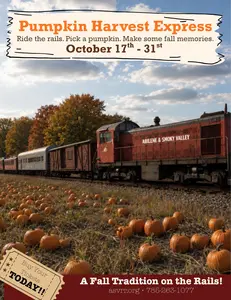
 2026 Kansas Halloween train. Abilene & Smoky Valley Pumpkin Harvest Express, October 17 through 31. About one hour. Shop prices $35.56 to $41.02. Everyone picks a pumpkin.
 -
Iowa Halloween Train Rides (2026)
Sep 29, 26 11:58 PM
2026 Iowa Halloween train. Boone & Scenic Valley Pumpkin Express, October 10, 10:00 a.m. from 225 10th Street. About 1 hour 15 minutes. Children pick a pumpkin. -
Arizona Halloween Train Rides (2026)
Sep 29, 26 11:43 PM
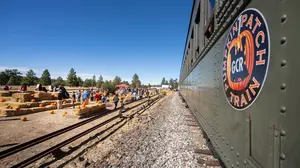
 2026 Arizona Halloween train. Grand Canyon Railway Pumpkin Patch Train from Williams, $39 with a pumpkin included. Select October dates on the ticket calendar. Haunted train cars are optional.
 -
Nevada Northern Halloween Trains (2026)
Sep 29, 26 06:18 PM
Nevada Northern 2026 Halloween trains in Ely. Pumpkin Patch Caper to Keystone Gulch and the Haunted Ghost Train. Adult tickets start at $45. Dates are on the railroad’s calendar. Confirm on nnry.com. -
Grand Canyon Railway Pumpkin Patch Train (2026)
Sep 29, 26 02:42 PM
Grand Canyon Railway Pumpkin Patch Train—select October 2026 dates from Williams, $39 with a pumpkin included. Haunted train cars are optional. Days are on the ticket calendar. Confirm on thetrain.com… -
Cass Scenic Railroad Halloween Trains (2026)
Sep 29, 26 02:37 PM
 Cass Scenic Halloween Trains—October 30 and 31, 2026, steam, 5:00 p.m. from Cass Depot. About two hours to Whittaker. Adult $75. Candy for every child. Confirm on mountainrailwv.com.
 -
Halloween Train Rides (2026): Pumpkin Patch, Haunted & Spooky Trips
Sep 29, 26 11:26 AM
 2026 Halloween train rides in nine checked states. Conway Scenic Halloween Express October 24–25. Strasburg’s three fall tickets. Great Smoky Mountains Railroad’s October trains are the gorge and rive…
 -
Maine Halloween Train Rides (2026)
Sep 29, 26 11:08 AM
 2026 Maine Halloween trains. Seashore Pumpkin Patch Trolley through October 18, adult $17. Happy Trolleyween October 23–25 at $15. WW&F Pumpkin Pickin’ October 3, 12, 17, and 24. Downeast’s booking it…



%20two-bay%20covered%20hopper%20%23605283%3B%20February%2C%201977.%20%20This%20car%20was%20manufactured%20by%20American%20Car%20%26%20Foundry%20in%20June%2C%201976.%20%20American-Rails.com%20collection.)

