- Home ›
- State History ›
- Iowa
Iowa Railroads: History, Map, Granger Lines & Today’s Network
Last revised: August 22, 2026
By: Adam Burns
Iowa railroads still mean open country and grain elevators as far as the eye can see—and that image is fair. The Hawkeye State was, and remains, the classic Midwestern granger landscape: east–west mains tying Chicago to the Missouri River, a dense web of agricultural branches, and more track than the traffic could permanently support. What the older version of this page understated is how much of that story still matters in 2026. Five Class I railroads operate here (Union Pacific, BNSF, Canadian National, CPKC, and a small Norfolk Southern footprint). The Iowa Interstate keeps the former Rock Island Chicago–Council Bluffs artery alive as a regional. Amtrak’s California Zephyr and Southwest Chief still cross southern Iowa. Boone & Scenic Valley, Midwest Central, and the last electric freight interurban in the country give visitors a reason to come even after the Rockets, Hiawathas, and City trains are gone.
This page is a full state overview: how the first rails and the first Mississippi River railroad bridge got here, which fallen flags built the map, what was abandoned, who runs freight today, and where you can still ride or visit. For trip planning only, see the dedicated Iowa scenic train rides (2026) guide and the Iowa railroad museums (2026) roundup.
On this page: At a glance · First railroad · Building the network · The grangers · Mileage · Today’s railroads · Abandoned lines · Passenger & tourist · Map · Related reading
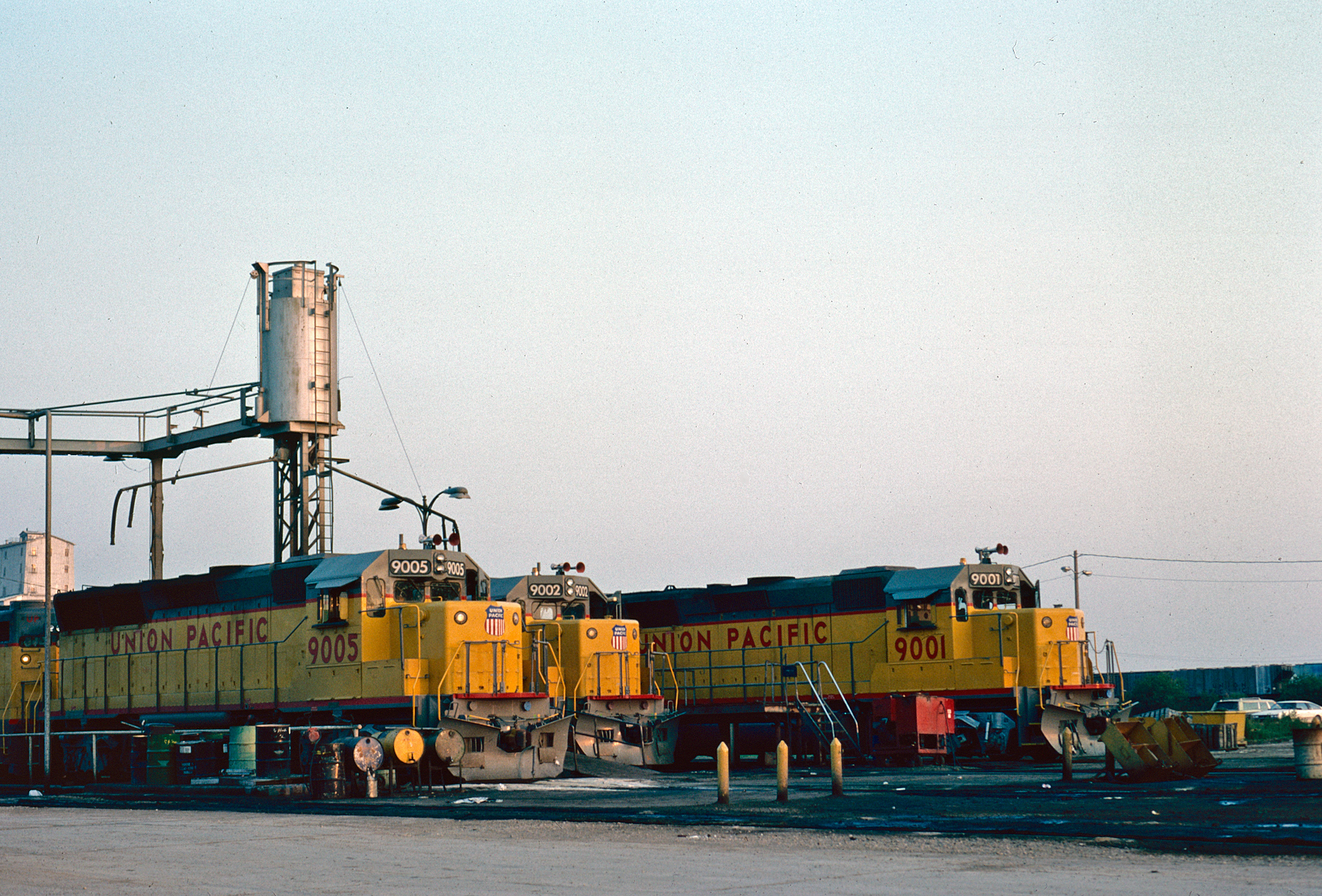
Union Pacific GP40X’s (sporting the experimental HT-B truck), including #9001, #9002, and #9005, layover in Council Bluffs, Iowa, on a June evening in 1981. American-Rails.com collection.
At a Glance (Updated)
| Topic | Notes |
|---|---|
| First railroad | Mississippi & Missouri, incorporated February 5, 1853; first Iowa rails Davenport–Walcott, June 1855 (locomotive Antoine Le Claire) |
| First Mississippi River rail bridge | Rock Island, Illinois–Davenport, Iowa, opened April 1856 (first railroad span of the river) |
| First railroad to Council Bluffs | Cedar Rapids & Missouri River (Chicago & North Western family), January 1867—not the M&M/Rock Island |
| Peak mileage | 9,808 route-miles (1920; Stover atlas tradition) |
| Modern freight network | About 3,800–3,836 miles; 17–19 railroads depending on how tourist and switching roads are counted; ~2,700 freight-rail employees (AAR / Iowa DOT, recent reporting years) |
| Share of peak remaining | Roughly 39% |
| Class I carriers | Union Pacific (largest mileholder), CPKC, BNSF, Canadian National, and a small Norfolk Southern presence |
| Principal regional | Iowa Interstate on the former Rock Island Chicago–Council Bluffs main |
| Traffic identity | Originating food products, chemicals (including fertilizers and ethanol-related traffic), and grain; terminating coal remains important at Iowa generating stations |
| Amtrak | California Zephyr (Burlington, Mount Pleasant, Ottumwa, Osceola, Creston) and Southwest Chief (Fort Madison). No service to Des Moines. Chicago–Moline (Quad Cities) remains a planned Illinois-side project as of 2026—confirm before travel. |
| Signature tourist / museum | Boone & Scenic Valley; Midwest Central (Mount Pleasant); Union Pacific Railroad Museum and RailsWest (Council Bluffs); Iowa Traction (last electric freight interurban) |
Mileage and carrier tables below combine historic research from this site with Association of American Railroads state fact-sheet figures and Iowa DOT rail profiles. AAR notes that statewide totals exclude trackage rights while individual railroad mileages include them, so Class I plus short-line columns will not add to the statewide total. Treat current operating maps as living documents.
First Railroad: The Mississippi & Missouri
Iowa’s railroad story starts on the Mississippi. The Mississippi & Missouri Railroad was incorporated in Iowa on February 5, 1853, as the western partner of the Chicago & Rock Island—chartered to build from Davenport toward Council Bluffs, with branches contemplated to Muscatine and north toward the Minnesota line via Cedar Rapids. H. Roger Grant’s edition of Frank P. Donovan, Jr.’s essays (Iowa Railroads) records the Muscatine branch opening on November 20, 1855; the northward plan took years longer.
Groundbreaking at Davenport came in 1853. Actual iron was slower. The first spikes went down in Davenport in June 1855. On July 19 the 4-4-0 Antoine Le Claire—named for a Davenport founder, and ferried across the river—became Iowa’s first locomotive. That same month it handled an excursion over the first 12 miles, Davenport to Walcott. Iowa City had subscribed $50,000 on the condition that a train arrive by January 1, 1856; crews finished under the wire, with the first train reaching Iowa City at 11:59 p.m. on December 31, 1855.
The more famous date is April 1856. The Chicago & Rock Island had reached the Illinois bank in 1854; the M&M was building west from Davenport. Between them rose the first railroad bridge across the Mississippi—about 1,528 feet as Bill Marvel notes in The Rock Island Line, a Howe-truss structure with a swing span over the navigation channel. Marvel has the locomotive Fort Des Moines crossing on April 21. Contemporary accounts and the National Archives mark the first scheduled passenger crossing on April 22, with The Des Moines heading a consist of cars. Either way, eastern Iowa was now in through rail communication with Chicago—and, as boosters liked to say, New York in about forty-two hours.
Fifteen days later, on May 6, 1856, the steamboat Effie Afton struck the bridge. One span and the boat burned. River interests sued to have the structure removed as a hazard to navigation. The most famous of those cases, Hurd et al. v. Railroad Bridge Company, brought a Springfield lawyer named Abraham Lincoln to Chicago in September 1857 to defend the bridge. The jury hung; the railroad kept using the crossing. A later suit, Mississippi & Missouri Railroad Company v. Ward (1862), reached the U.S. Supreme Court, which declined to treat the bridge as a nuisance that had to come down. The legal point was larger than one span: railroads could bridge the inland rivers.
Lincoln’s Iowa connection did not end in court. In August 1859 he visited Council Bluffs to look over M&M property, guided by attorney Norman Judd and engineer Grenville Dodge. That conversation helped fix Council Bluffs in his mind as the logical Iowa end of a Pacific railroad. As president he signed the Pacific Railway Act in 1862; a later order set the eastern terminus in Iowa. Mile 0 of the first transcontinental railroad is a Council Bluffs story as much as an Omaha one.
Under Chicago & North Western lease, the Cedar Rapids & Missouri River Railroad reached Council Bluffs in January 1867—the first railroad from the Mississippi to the Missouri, and the eastern supply line for Union Pacific construction. The M&M became part of the Chicago, Rock Island & Pacific. Its Davenport–Council Bluffs main is the corridor the Iowa Interstate runs today.
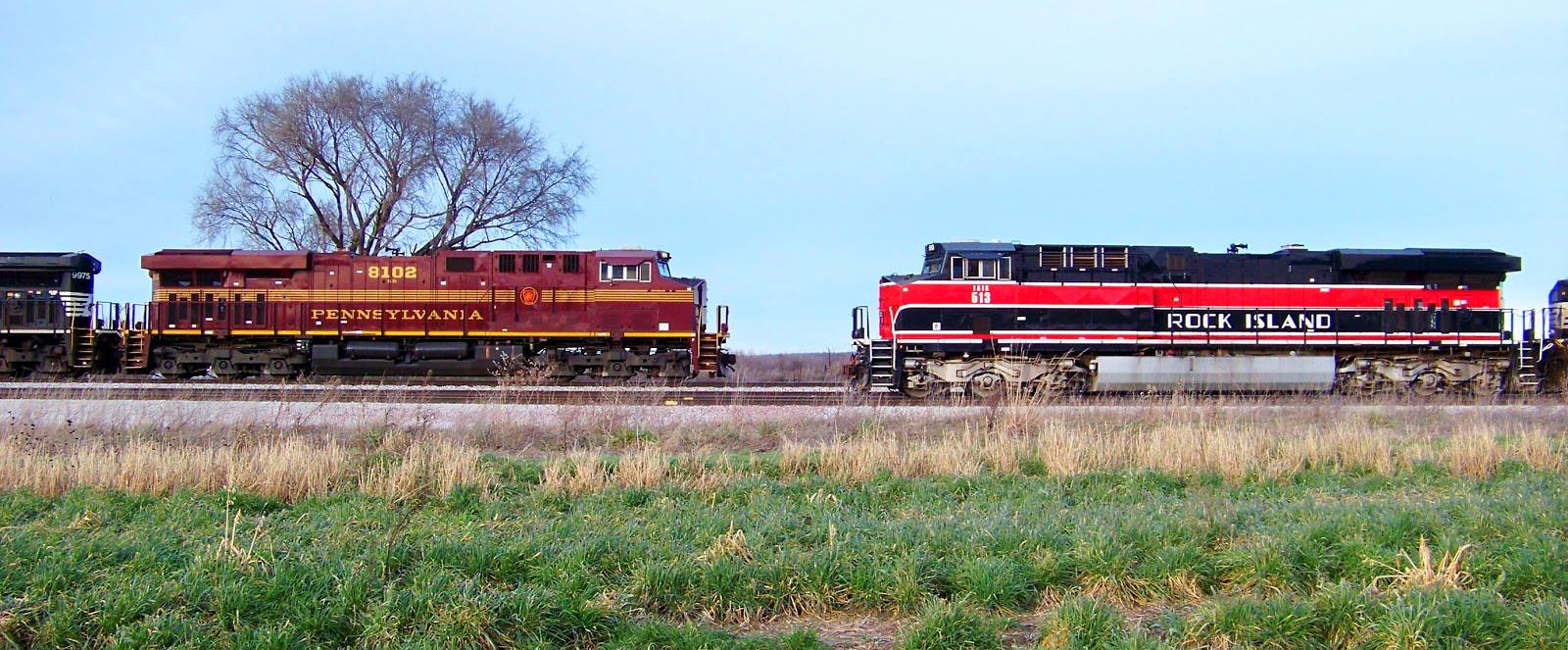
Iowa Interstate’s Rock Island heritage unit is tied down with train BICB-08 as Norfolk Southern’s Pennsylvania heritage unit passes at South Amana Yard, December 9, 2015. NS runs grain trains across the IAIS via Peoria to Heartland Co-op in Des Moines. Buddy Burton photo.
Building the Network: Land Grants and Four East–West Roads
Congress’s Iowa land-grant act of May 15, 1856, did as much as any court case to draw the map. It aided four east–west lines from Mississippi River towns toward the Missouri:
- Davenport — Mississippi & Missouri / Rock Island (today’s Iowa Interstate alignment in large part)
- Burlington — Burlington & Missouri River, later the Chicago, Burlington & Quincy’s Chicago–Denver main (today BNSF; Amtrak’s California Zephyr)
- Lyons / Clinton — Chicago, Iowa & Nebraska and Cedar Rapids & Missouri River, the Chicago & North Western family that first reached Council Bluffs (today Union Pacific)
- Dubuque — Dubuque & Pacific / Dubuque & Sioux City, the Illinois Central’s Iowa Division toward Sioux City and, later, a Chicago–Omaha corridor via Waterloo and Fort Dodge (today Canadian National)
By 1860 Iowa already had several hundred miles of track. After the Civil War the pace became a scramble. Every Chicago-based granger wanted Iowa grain and an Omaha/Council Bluffs connection with the Union Pacific. Secondary companies filled the counties the mains skipped. The result, by the 1910s–1920s, was one of the densest agricultural railroad maps in the country—and, in hindsight, far too much of it.
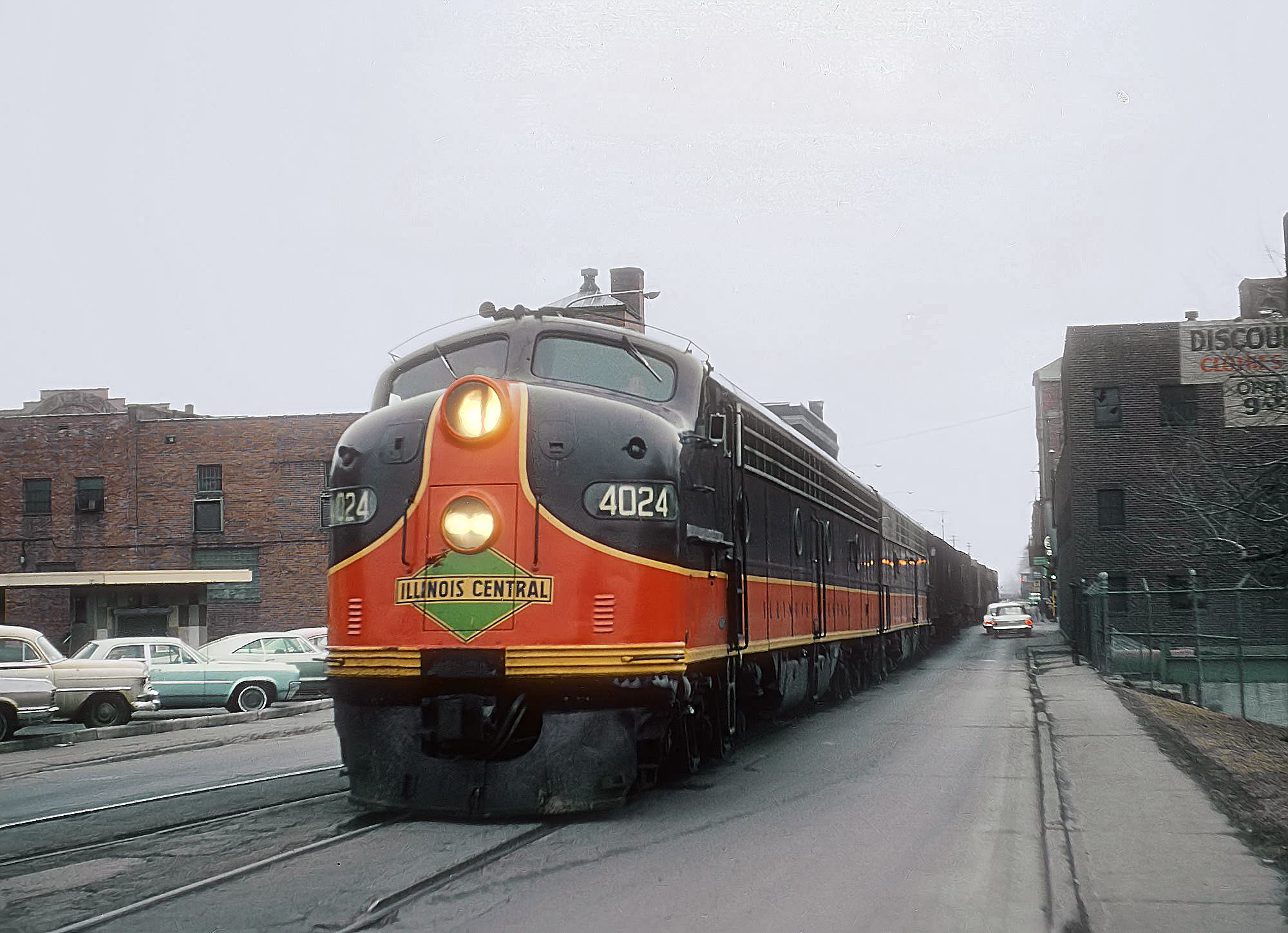
Illinois Central train #13, the Land O’Corn, in downtown Waterloo, Iowa, March 1967. Rick Burn photo.
The Grangers: Who Built Iowa
If you were trackside in Iowa before the 1980s, you could sample almost the entire Midwestern fallen-flag roster in a long weekend. The principal names:
Chicago, Rock Island & Pacific. The M&M’s successor. Chicago–Omaha via Iowa City and Des Moines; a Minneapolis–Kansas City crossing at Allerton and related Iowa branches; the Keokuk line; and a thicket of grain laterals. Passenger trademarks included the Rocky Mountain Rocket and Corn Belt Rocket. The railroad shut down on March 31 / April 1, 1980. Much of the Chicago–Council Bluffs main survived as the Iowa Railroad (1982) and then the Iowa Interstate (1984). Other Rock Island Iowa miles became the Iowa Northern and various short lines.
Chicago & North Western. First to Council Bluffs (1867), later the Overland Route connection for Union Pacific streamliners and, after 1995, UP itself. The C&NW’s Iowa plant included the Clinton–Cedar Rapids–Boone–Council Bluffs main, a dense northern-Iowa grain web, and—after 1968—the former Chicago Great Western. Union Pacific still runs the core east–west artery; most of the branches are gone or in short-line hands.
Milwaukee Road (Chicago, Milwaukee, St. Paul & Pacific). Two Iowas, really: a double-track Chicago–Omaha main (the Iowa Division) rebuilt to high standards in the 1910s, over which the Midwest Hiawatha still ran at 100 mph into the 1950s; and a Kansas City line via Ottumwa and the river towns. Northern Iowa also saw Milwaukee on the Calmar / Mason City country (Marquette / Varsity territory). After the 1977 bankruptcy the company gave up the Omaha gateway—one of the more startling abandonments in the Midwest—while pieces of the Kansas City route survived into Soo Line / CP / Iowa, Chicago & Eastern and, today, CPKC.
Chicago, Burlington & Quincy. The southern-Iowa Chicago–Denver main through Burlington, Ottumwa, Osceola, and Creston is still a premier freight railroad (BNSF) and the California Zephyr route. Burlington also ran a thinner southern-periphery network (Keokuk & Western, Humeston & Shenandoah, and related laterals) that was an early candidate for abandonment. Santa Fe, separately, clipped the southeastern corner for about 17 miles at Fort Madison on the Transcon; that crossing is why the Southwest Chief still stops there.
Illinois Central (IC). One long Iowa Division from the Mississippi toward Sioux City and Omaha, with Waterloo as the mechanical and operating heart. The Land O’Corn (Chicago–Waterloo) was the hometown passenger train; it died in 1967. Canadian National acquired the IC in 1999 and still runs Waterloo as a major yard on the Chicago–Council Bluffs corridor.
Chicago Great Western (“Corn Belt Route”). Only about 1,500 system miles, but it reached Chicago, the Twin Cities, Omaha, and Kansas City with a reputation for hustle and customer service. Oelwein was the shop town—the Hub City. C&NW bought the CGW in 1968 and spent the next two decades pulling up most of it. The Hub City Heritage Railway Museum in Oelwein keeps that story on the ground.
Minneapolis & St. Louis (“Peoria Gateway”) crossed north–central Iowa toward Albert Lea, Fort Dodge, Des Moines, and Oskaloosa. C&NW acquired it in 1960; little of the Iowa M&StL remains as a through route. The Wabash reached Iowa more modestly: a Brunswick, Missouri–Omaha line and a Moberly–Des Moines / Ottumwa penetration. Norfolk Southern is the corporate heir; the present NS Iowa mileage is small, but NS grain still uses Iowa Interstate haulage, which is why an NS heritage unit can show up at South Amana.
Interurbans were part of the same overbuilt map. The Cedar Rapids & Iowa City (CRANDIC) began in 1904 and reinvented itself as a successful freight short line. The Mason City & Clear Lake became today’s Iowa Traction Railway, the last electrically operated freight interurban in the United States. A fuller roster lives on the Iowa interurbans page.
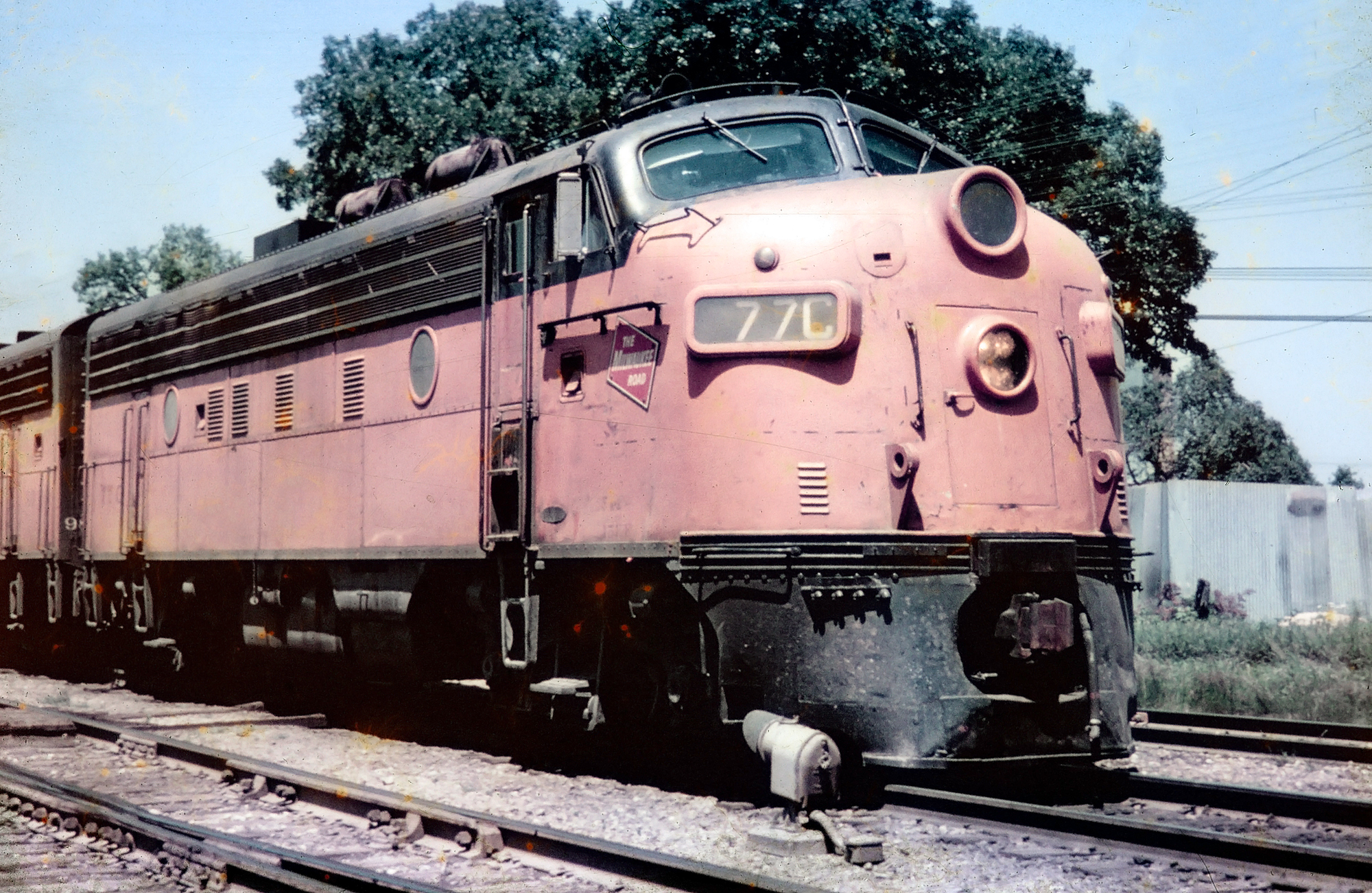
Milwaukee Road F7A #77-C in service at Council Bluffs, Iowa, July 1967. Fred Byerly photo. American-Rails.com collection.
Mileage: Peak to Present
John F. Stover’s historical atlas tradition puts Iowa at 9,808 route-miles in 1920—near the top nationally for a farm state, and the number this site has long used as the peak. Trucks, good highways, and the collapse of light-density grain branches did the rest. By the 2020s Iowa was operating on the order of 3,800 miles, or about 39% of that peak. Abandoned grades still cut farm fields from the Mississippi to the Missouri; if you like walking old rights-of-way, Iowa is a lifetime project.
Two current tallies are worth quoting side by side. The Association of American Railroads Iowa fact sheet (data year 2023, employment 2022) lists 3,836 freight-rail miles, 19 railroads, and 2,696 employees. Iowa DOT quotes 3,801 miles and 17 operating railroads in its 2023 quick facts, with 60.1 million tons originated and 29.9 million tons terminated that year, plus about 51,500 Amtrak rides. The difference is mostly counting rules (trackage rights, tourist miles, switching roads), not a disagreement about whether Iowa is still a serious railroad state.
AAR traffic for 2023 underlines the granger identity in modern dress. Iowa originated about 53.3 million tons / 572,500 cars, led by food products (20.8 million tons), chemicals (16.0), and grain (9.7), with crushed stone and sand and steel products behind. It terminated about 28.3 million tons / 311,100 cars, led by coal (13.2 million tons) into Iowa power plants, then chemicals and grain. Ethanol, fertilizers, and processed food are the commodities that replaced a thousand local grain-boxcar branches with unit trains on the mains that survived.
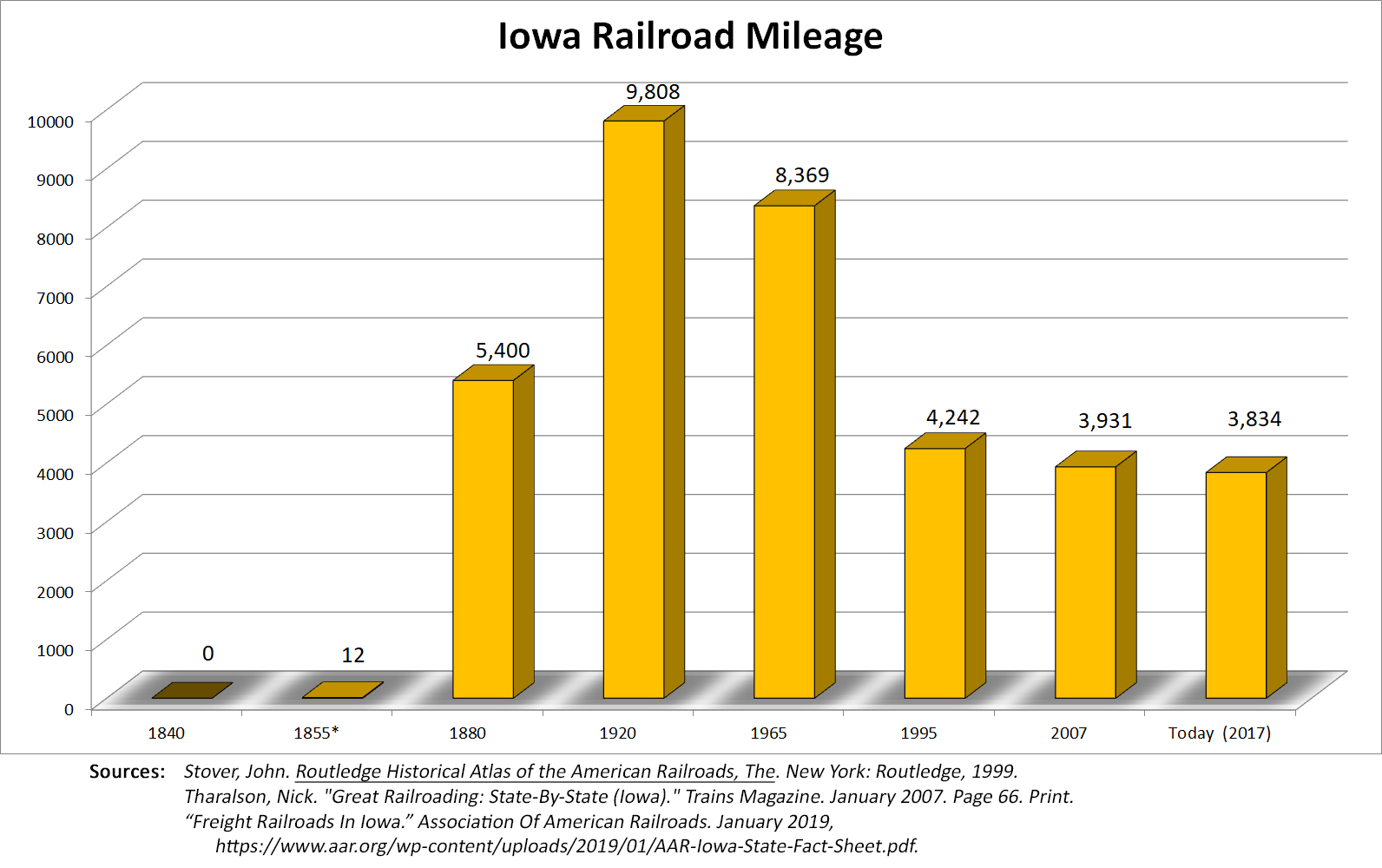
Historic Iowa railroad mileage chart from the American-Rails.com research archive (click through for full size).
Today’s Freight Railroads
Five Class I railroads operate in Iowa. Union Pacific is the largest mileholder. CPKC, BNSF, and CN each hold several hundred miles. Norfolk Southern’s own Iowa mileage is modest, but NS traffic is visible on the Iowa Interstate. AAR mileages below include trackage rights and are for 2023:
| Class I | Iowa miles (AAR, incl. trackage rights) | Role (summary) |
|---|---|---|
| Union Pacific | 1,553 | Former C&NW Chicago–Council Bluffs Overland connection and related Iowa plant; largest Iowa railroad |
| CPKC | 673 | Former Milwaukee / Soo / CP / Iowa, Chicago & Eastern Kansas City–Midwest corridors after the 2023 CP–KCS combination |
| BNSF Railway | 659 | Former CB&Q Chicago–Denver main (southern Iowa) plus the Santa Fe Transcon clip at Fort Madison |
| Canadian National | 572 | Former Illinois Central Iowa Division; Waterloo remains the principal Iowa yard |
| Norfolk Southern | 43 | Small owned mileage; additional grain via Iowa Interstate haulage (Peoria gateway) |
| Class I total (AAR) | 3,500 | Not comparable 1:1 with the statewide 3,836-mile figure (trackage-rights convention) |
Regionals and short lines (AAR Iowa miles, 2023; confirm before operational planning) do the local gathering the Class Is no longer want:
| Railroad | Iowa miles (AAR) | Role (summary) |
|---|---|---|
| Iowa Interstate Railroad | 355 | Class II regional on the former Rock Island Chicago–Council Bluffs main (~580 miles systemwide including Illinois). Interchanges with every North American Class I. Grain, ethanol, sand, metals, intermodal. RDC-owned; 40th anniversary in 2024. |
| Iowa Northern Railway | 209 | Former Rock Island Manly–Cedar Rapids and related branches; a major Iowa grain/ethanol short line |
| D&I Railroad | 67 | Sioux City–area former Class I fragments; South Dakota connections |
| Cedar Rapids & Iowa City (CRANDIC) | 57 | Former interurban; industrial freight for the Cedar Rapids corridor (Alliant Energy ownership tradition), plus acquired Milwaukee and Rock Island fragments |
| Iowa Southern Railway | 35 | Southern-Iowa short line on former Class I light-density trackage |
| Iowa Traction Railway | 10 | Mason City–Clear Lake; last electric freight interurban in the United States (Progressive Rail) |
| Burlington Junction Railway | 6 | Switching |
| Keokuk Junction Railway | 4 | Keokuk industrial / former TP&W-related switching |
| Iowa River Railroad / Iowa & Middletown / Davenport Industrial / Mount Vernon / Waterloo Railroad | 3–9 each | Localized switching and short hauls |
| Boone & Scenic Valley | 2 | Tourist railroad counted in some AAR tallies; former Fort Dodge, Des Moines & Southern |
AAR’s short-line column sums to 771 Iowa miles on that same include-trackage-rights basis. Names and owners move: Pioneer Rail, Progressive Rail, and other holding companies have shuffled Iowa properties more than once since this page was first written. For a living directory see the Iowa short lines guide and the carriers’ own customer pages.
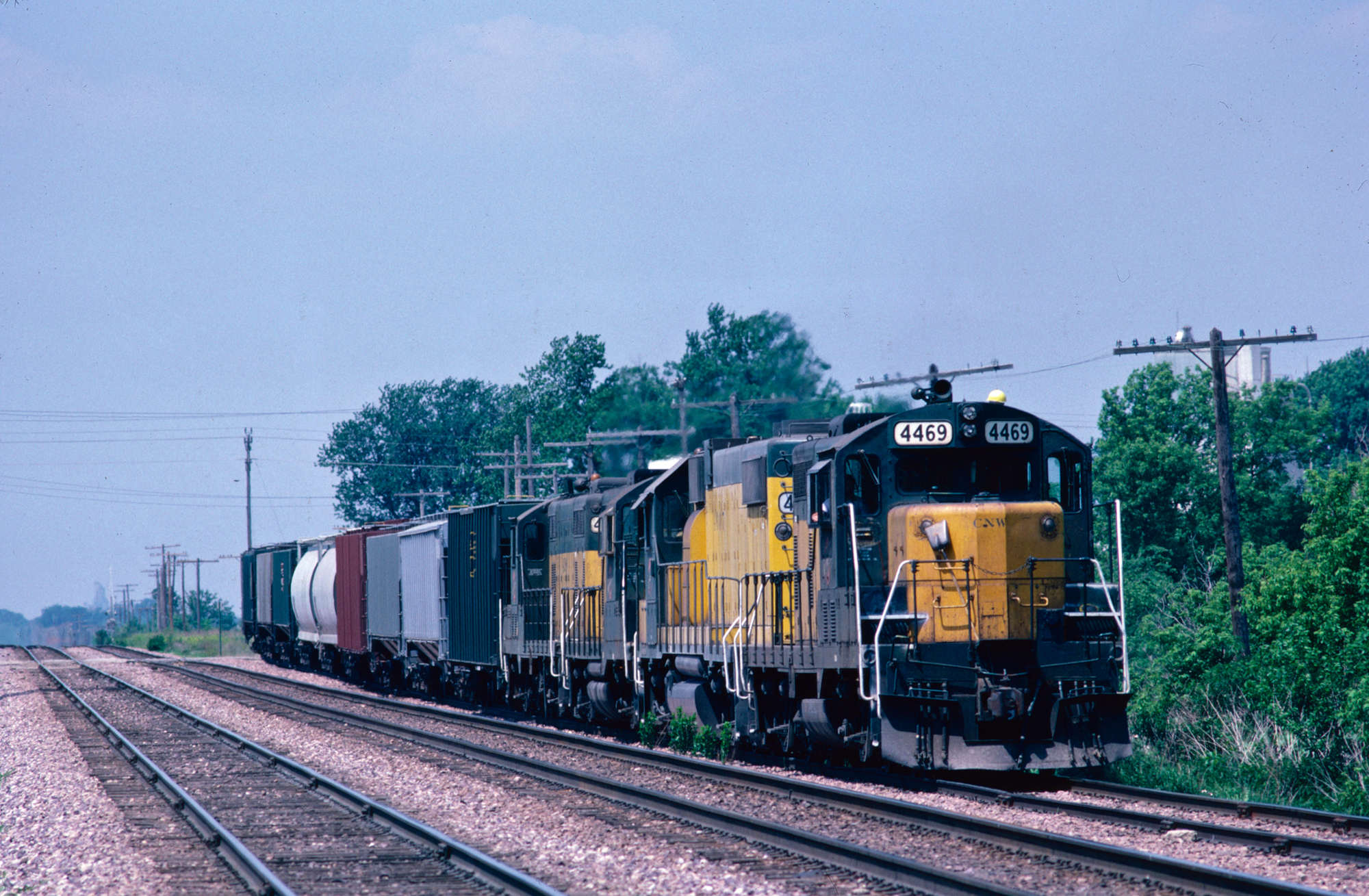
Chicago & North Western GP7u #4469 leads its freight onto the Omaha main line at Grand Junction, Iowa, May 1987. Dennis Hertrich photo. American-Rails.com collection.
Abandoned Lines (Selected)
Iowa epitomizes breadbasket abandonment. Most of what disappeared was not a famous mountain grade but a secondary agricultural branch that trucks could take. Those laterals are too numerous to list. A few through routes still deserve names, because they were mains—or felt like mains—until they were not.
- Milwaukee Road Iowa Division (Chicago–Omaha). Double-tracked, high-speed, and still hosting the Midwest Hiawatha at 100 mph in the 1950s. After Milwaukee’s 1977 bankruptcy the company gave up the Omaha gateway. Most of the Iowa main came up around 1980; a western remnant (on the order of Council Bluffs toward Bayard) lasted longer in other hands. The Pacific Extension abandonment is more famous. Giving up Omaha was, for Iowa, the more local shock.
- Chicago Great Western. C&NW’s 1968 purchase was followed by two decades of dismantling: the Des Moines–Kansas City main, the northern-Iowa lines toward Chicago, and the Twin Cities route. Oelwein’s shops outlived the railroad as a museum town.
- Burlington southern-Iowa secondary. The Keokuk & Western and Humeston & Shenandoah (and their CB&Q successors) formed a thin east–west across Iowa’s southern counties. Parts of the Humeston & Shenandoah came out as early as 1935; much of the rest went in the early 1980s.
- Rock Island, 1980. The corporate shutdown was not a complete physical abandonment. Iowa Interstate and Iowa Northern exist because shippers and the state refused to let the Chicago–Council Bluffs and Manly–Cedar Rapids corridors die. Many true branches did die.
- C&NW branch purge, 1980s–1990s. Even before Union Pacific took control in 1995, North Western had been selling or abandoning light-density Iowa grain lines. Fort Dodge, Des Moines & Southern mileage that did not become Boone & Scenic Valley is typical of what was lost.
- Illinois Central laterals off the Waterloo–Fort Dodge–Omaha spine, plus Milwaukee branches such as the Decorah line (service into the late 1970s, rails out around 1980).
- Interurbans at Cedar Rapids, Waterloo (Waterloo, Cedar Falls & Northern), Fort Dodge, and elsewhere—almost entirely gone as passenger railroads, with CRANDIC and Iowa Traction the freight exceptions.
What survives of those grades is often a county trail, a farm lane, or a dirt scar in a soybean field. The map of 1920 is still readable on aerial photos if you know where to look.
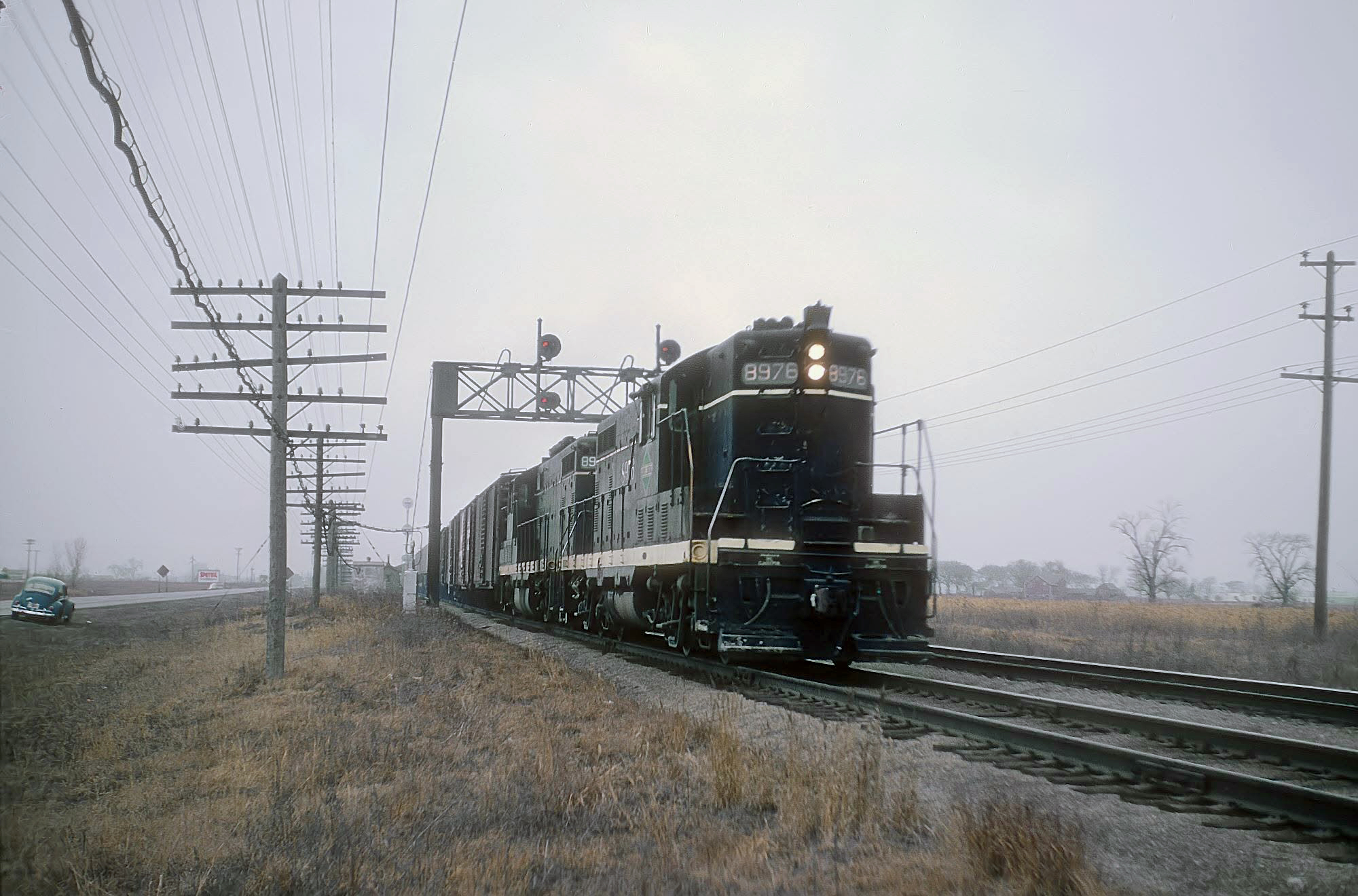
A pair of Illinois Central GP7s, led by #8976, west of Waterloo on the Iowa Division at what was then called Susie Siding, March 1967. Rick Burn photo.
Passenger Service & Tourist Railroads
The Rockets, City trains, Hiawathas, Land O’Corn, and Burlington Zephyrs that once stitched Iowa to Chicago, Denver, and the Coast are gone. What remains is two Amtrak long-distance trains, both on BNSF, neither of them serving Des Moines or the Quad Cities on the Iowa side.
Amtrak California Zephyr (Chicago–Emeryville) runs daily each way on the former Burlington through southern Iowa. Stations: Burlington, Mount Pleasant, Ottumwa, Osceola, Creston. Osceola is the practical stop for Des Moines (a highway drive from the capital). Amtrak Southwest Chief (Chicago–Los Angeles) clips the southeastern corner with a single Iowa station at Fort Madison (Historic Santa Fe Station).
Iowa DOT counted about 51,500 rail passenger rides in its 2023 facts. There is still no Amtrak to Iowa City, Cedar Rapids, Waterloo, Sioux City, or Council Bluffs. A Chicago–Moline (Quad Cities) corridor has been in planning for years; Illinois funded a large share in 2025 with service often discussed for the 2027 window, using BNSF Chicago–Wyanet and Iowa Interstate Wyanet–Moline. An Iowa City extension has been studied. As of this 2026 revision, Iowa has not funded that next step. Confirm current Amtrak timetables and any Quad Cities start date before you plan around them.
Tourist railroading is smaller than in mountain states, but it is real:
- Boone & Scenic Valley Railroad — former Fort Dodge, Des Moines & Southern from Boone toward Fraser / Wolf; 156-foot Bass Point Creek High Bridge (often cited as the highest steel interurban trestle in the country); Chinese-built JS 2-8-2 #8419 on selected Steam Saturdays in 2026; James H. Andrew Railroad Museum on site; dinner and seasonal specials. The signature Iowa ride.
- Midwest Central Railroad (Mount Pleasant) — 1.25-mile narrow-gauge loop at the Midwest Old Threshers grounds; Baldwin steam (Argent Lumber and Kahului among the collection); heaviest public operation around the Labor Day reunion, with Halloween and pumpkin trains in October.
- Iowa Trolley Park (Clear Lake) — restored 1913 Milwaukee Road depot, Plymouth diesel, and Mason City & Clear Lake equipment, next door to living Iowa Traction freight.
Museums worth the drive, covered in more detail on the Iowa railroad museums page:
- Union Pacific Railroad Museum (Council Bluffs) — the company’s official museum in the former Carnegie Library; transcontinental and modern UP story; typically free
- RailsWest Railroad Museum (Council Bluffs) — 1899 Rock Island brick depot; CB&Q 4-6-0 #915 and Union Pacific FEF-1 4-8-4 #814 among the outside power; Rocky Mountain Rocket / Midwest Hiawatha station history
- Sioux City Railroad Museum — Milwaukee Road shops historic district: roundhouse, turntable, and a 30-acre yard collection
- Hub City Heritage Railway Museum (Oelwein) — Chicago Great Western shops town; CGW F-unit #116-A on display in 2025–2026
- Delmar Depot Railroad & Military Museum — 1905 Milwaukee Road wooden depot
- National Hobo Museum (Britt) — convention town since 1900
- Trains on the Farm (Clarksville) — preserved CGW depot and local Rock Island / Iowa Northern context
- Trainland U.S.A. (Colfax) — large Lionel O-scale layout, seasonal
Rail Merchants International, a used-equipment dealer, has long been based in Iowa; if you actually want a caboose, that is a different kind of museum trip. Full seasonal schedules, ticket links, and operating notes: Iowa scenic train rides (2026).

Aging first-generation Milwaukee Road power, led by FP7 #62-A (built as #92-A), along the weed-covered yard at Calmar, Iowa, August 13, 1967. Roger Puta photo.
Historic Map
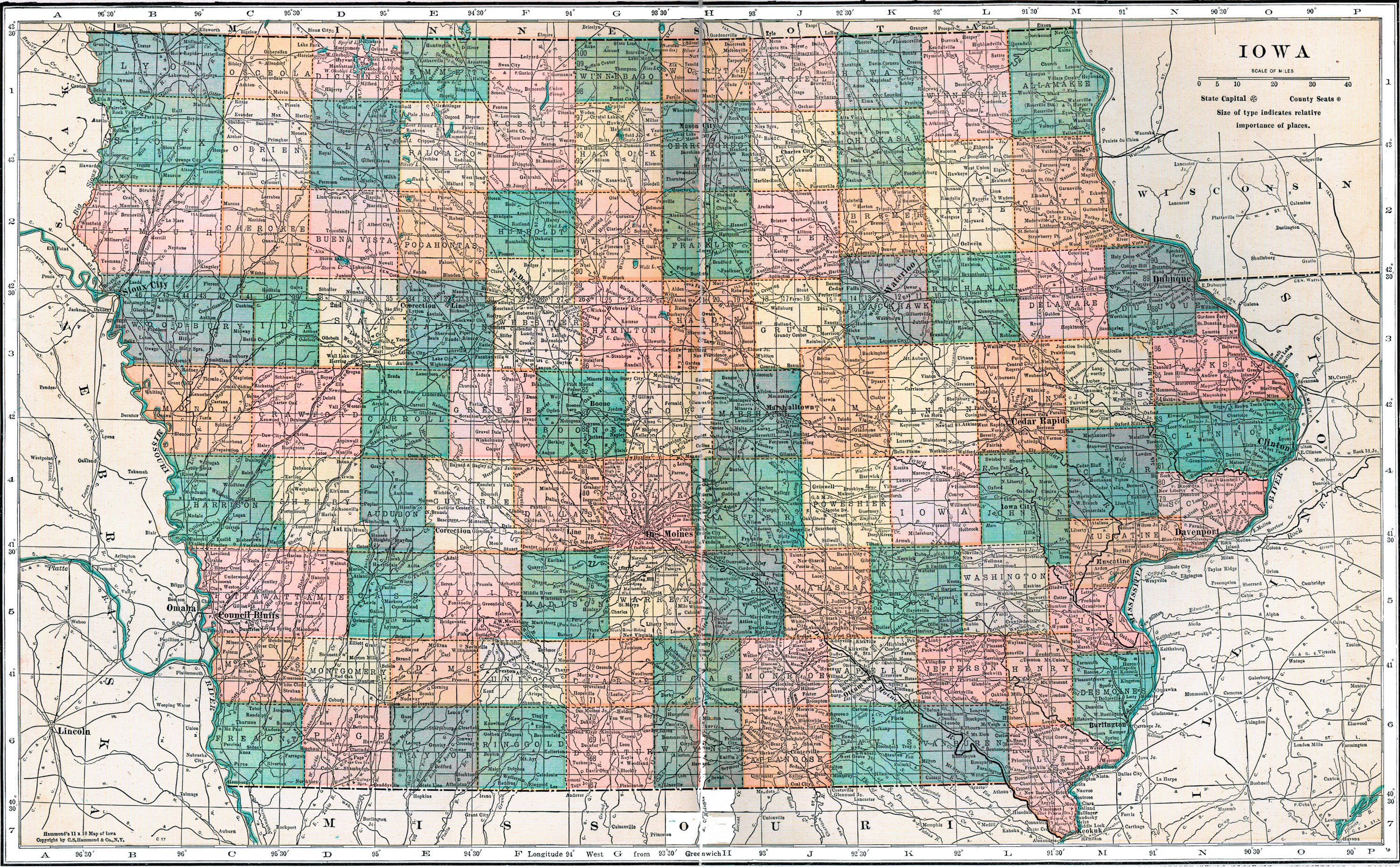
An Iowa railroad map, circa 1920. The drawing shows the state near peak rail mileage, before the major abandonments of the late twentieth century. Author’s collection.
More Views from the Archive
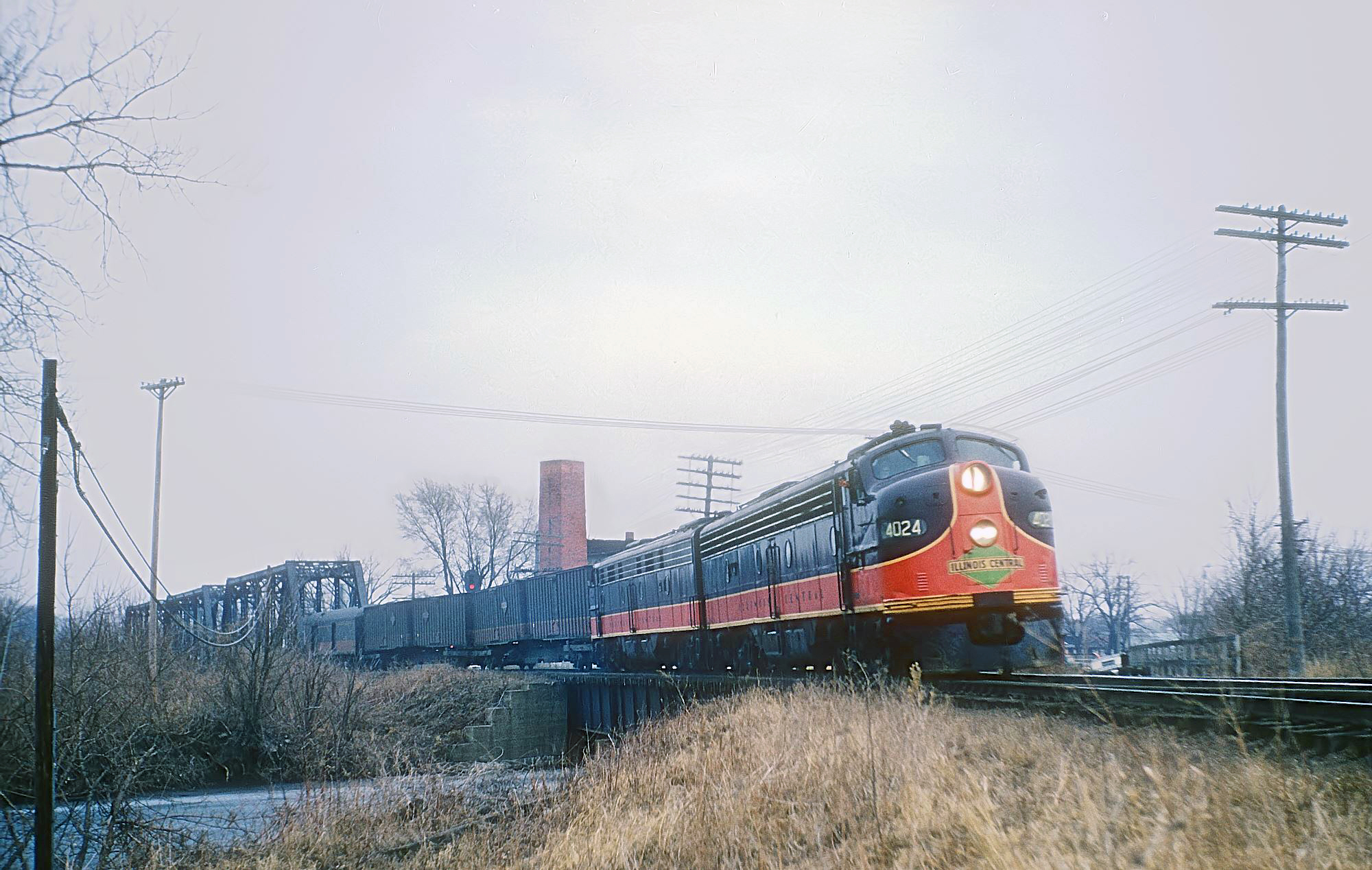
Illinois Central train #13, the Land O’Corn—mail containers and a baggage car, little else—at Cedar Falls, Iowa, March 1967. Within the year the train was discontinued. Rick Burn photo.
Related Reading on American-Rails.com
- Iowa scenic train rides (2026) · Iowa railroad museums (2026) · Boone & Scenic Valley
- Iowa short lines · Iowa Interstate · Iowa Northern · CRANDIC · Iowa Traction
- Fallen flags: Rock Island · Chicago & North Western · Milwaukee Road · Burlington (CB&Q) · Chicago Great Western · Illinois Central · Minneapolis & St. Louis · Wabash · Iowa, Chicago & Eastern
- Granger railroads · Iowa interurbans · Fallen flags hub · Railroad history
- Class I railroads · Short lines · Amtrak · State history hub
- Neighboring states: Illinois · Wisconsin · all states
Sources
- American-Rails.com original Iowa state research (M&M chronology, Government Bridge / Lincoln footnote, granger roster, Milwaukee Iowa Division and CGW abandonment notes, tourist/museum list)
- Association of American Railroads, Iowa state freight-rail fact sheet (2023 traffic and mileage; 2022 employment): ~3,836 miles, 19 railroads, 2,696 employees; Class I split UP 1,553 / CPKC 673 / BNSF 659 / CN 572 / NS 43; originated 53.3 million tons; terminated 28.3 million tons
- Iowa Department of Transportation, Freight Rail and Iowa Passenger Rail pages (2023 quick facts: 3,801 miles, 17 railroads; Amtrak California Zephyr and Southwest Chief station lists; ~51,499 passenger rides)
- Stover, John F. The Routledge Historical Atlas of the American Railroads—9,808-mile peak (1920)
- Marvel, Bill. The Rock Island Line—April 1856 bridge crossing and 1,528-foot span
- Grant, H. Roger, ed. Iowa Railroads: The Essays of Frank P. Donovan, Jr.—M&M branches and early construction
- National Archives, “Bridging the Mississippi” (Prologue)—April 22, 1856 opening; Effie Afton; Lincoln
- Mississippi & Missouri Railroad Company v. Ward, 67 U.S. 485 (1862); Hurd v. Railroad Bridge Company (1857, hung jury)
- Iowa Heritage / State Historical Society material on the Cedar Rapids & Missouri River reaching Council Bluffs, January 1867
- American-Rails.com carrier and tourist profiles: Iowa Interstate, Iowa Northern, CRANDIC, Iowa Traction, Boone & Scenic Valley, Iowa short lines, Iowa museums
Iowa state railroad page first developed in the American-Rails.com state-history series (circa 2008–2010) and revised over the years, most recently in a light pass dated September 11, 2024; substantially rewritten August 22, 2026 to correct the first-railroad / first-to-Council Bluffs / Lincoln-bridge chronology, add CPKC and Norfolk Southern to the Class I list, replace 2019 traffic figures with AAR 2023 / Iowa DOT 2023 numbers, and update Amtrak, short-line, and tourist/museum coverage while retaining the original granger-and-abandonment narrative.
Recent Articles


-
Greenbrier, Cheat & Elk Railroad: Western Maryland's Logging Line
Sep 26, 26 11:59 PM
 Greenbrier, Cheat and Elk—the logging railroad the Western Maryland bought in 1927. Cass to Spruce, Summit Cut at 4,066.6 feet, Elk River Branch, Laurel Bank.
 -
Elkins (Western Maryland): Yard, History, Operations
Sep 26, 26 11:56 PM
 Western Maryland at Elkins—the Elkins Division yard, roundhouse, and wash rack. Belington, Durbin, Black Fork, and the Elk River branches met here.
 -
B&O's "Cincinnatian" (Train): Route, Consist, Timetable
Sep 26, 26 11:51 PM
 B&O Cincinnatian—Mount Clare five-car streamliner, January 19, 1947, trains 75 and 76. P-7d Pacifics 5301–5304. Detroit–Cincinnati from June 25, 1950, trains 53 and 54. Last run April 30, 1971.
 -
The Semaphore: Railroading's Classic Signal
Sep 26, 26 11:51 AM
 Railroad semaphore signals: blade and spectacle, lower quadrant and upper quadrant, US&S Style B and GRS Model 2A, Robinson’s track circuit, and the last blades on the Raton Subdivision.
 -
Black Fork Grade (Western Maryland): History and Operations
Sep 26, 26 11:47 AM
 Black Fork Grade—the Western Maryland climb through Blackwater Canyon. Thomas to Hendricks, past 3 percent, an H-9 and ten loads, helpers off at Fairfax.
 -
Western Maryland Steam Locomotives: History & Roster
Sep 26, 26 11:39 AM
 Western Maryland steam—H-9 Consolidations, I-2 Decapods, Lima 2-8-8-2s, Baldwin Challengers, and twelve Baldwin Potomac 4-8-4s. Post-1900 roster.
 -
Western Maryland Diesel Roster: All-Time
Sep 26, 26 11:32 AM
 Western Maryland diesels—S1 102 in 1941, fourteen F7 boosters, BL2s, hammerhead RS3s, Circus SD40s, and Chessie GP40-2s. Serials and order numbers.
 -
The Dutch Line (Western Maryland): History, Map, Operations
Sep 25, 26 09:38 PM
 Western Maryland Dutch Line—the Hanover Subdivision. Emory Grove to Highfield via Hanover and Gettysburg, York branch 1893, stone trains, and the route CSX still runs.
 -
The Durbin Branch (Western Maryland): History, Map, Operations
Sep 25, 26 09:13 PM
 Western Maryland Durbin Branch—the Coal & Iron Railway, 46.9 miles Elkins to Durbin, opened July 27, 1903. Mixed train until April 10, 1959. H-7B Consolidations.
 -
Western Maryland Railway: Map, Rosters, Logo, History
Sep 25, 26 10:24 AM
 Western Maryland Railway—the Fast Freight Line. Baltimore, Carroll & Frederick, May 27, 1852. Connellsville Extension 1912. Chessie, then into the B&O May 1, 1983.
 -
Illinois Dinner Train Rides (2026): A Complete Guide
Sep 25, 26 09:52 AM
 2026 Monticello Railway Museum Murder Mystery Dinner Train—June 13, July 11, August 1, and September 5 have run. Three courses, about 2 hours, $112. Confirm on mrym.org.
 -
Georgia Dinner Train Rides (2026): A Complete Guide
Sep 25, 26 12:29 AM
 2026 Azalea Sprinter dinner train from Nashville and Willacoochee, Georgia—2½ hours. Club Car adult $147, Executive adult $177. Confirm on azaleasprinter.com.
 -
Baldwin "Centipede" Locomotives: Specs, Roster, Photos
Sep 25, 26 12:02 AM
 Baldwin DR-12-8-1500/2 Centipede—2-D+D-2, two 608SC engines, 3,000 hp. SAL 4500 from the 1943 test bed. 54 on the serial list, 52 sold. PRR BP60 then BH50. None preserved.
 -
Florida Dinner Train Rides (2026): A Complete Guide
Sep 24, 26 11:56 PM
 2026 Seminole Gulf Murder Mystery Dinner Train in Fort Myers—five courses cooked onboard, 3½ hours, $129 or $135 Saturday, plus tax and gratuity. Confirm on semgulf.com.
 -
West Virginia Northern Railroad: Map, Photos, History
Sep 24, 26 11:27 PM
 West Virginia Northern—Kingwood to Tunnelton, 11 miles of Preston County coal. Narrow gauge 1888, standard gauge 1895. Last freight February 19, 1991. Consolidations 8 and 9 survive.
 -
Rutland Railroad: Map, Rosters, History, Logo
Sep 24, 26 01:18 PM
 Rutland Railroad—Follett’s Champlain & Connecticut River, November 1, 1843. Bellows Falls–Burlington December 18, 1849. Green Mountain Gateway. Last train September 25, 1961. Vermont Railway Janua…
 -
Arkansas Dinner Train Rides (2026): A Complete Guide
Sep 24, 26 01:12 PM
 2026 Eureka Springs & North Arkansas Dinner Train—Eurekan dining car, about 2 hours, $53.62 tax included, opens May 9, Tuesday, Wednesday, Friday, and Saturday. Confirm on esnarailway.com.
 -
Arizona Dinner Train Rides (2026): A Complete Guide
Sep 24, 26 01:01 PM
 2026 Arizona has no plated dinner train. Grand Canyon Railway sells snacks in the cars and meals in Williams or at the rim. Verde Canyon includes a charcuterie tray.
 -
Rail News, The Latest
Sep 24, 26 12:36 PM
This page provides a portal to the latest in rail news, from preservation and restortation subjects to other notable topics. -
Cotton Belt 819 Moved Outside at Pine Bluff for Evaluation
Sep 24, 26 12:35 PM
 Cotton Belt 819 left the Pine Bluff shop on September 22, 2026, first time outside in about 30 years. RDG Steam Services is evaluating the engine. No donation link posted.
 -
Reading Steam Locomotives: History, Roster & Photos
Sep 24, 26 12:14 PM
 Reading steam—Wootten fireboxes, Camelback Consolidations, Mallets, K-1 Santa Fes, G-3 Pacifics, T-1 4-8-4s. Post-1900 roster after Drury. Rambles ended October 17, 1964.
 -
Reading Diesel Roster: All-Time
Sep 24, 26 12:10 PM
 Reading diesel roster—AGEIR boxcabs, FTs, FA-1s, RS-3s, Train Masters, GP30s through GP39-2s. Serials and order numbers. Conrail April 1, 1976.
 -
Reading Railroad: Map, Logo, History, Rosters
Sep 24, 26 12:08 PM
 Reading Company—Philadelphia & Reading, 1833. Anthracite, Port Richmond, Reading Terminal. Operating company January 1, 1924. Conrail April 1, 1976.
 -
Nevada Dinner Train Rides (2026): A Complete Guide
Sep 24, 26 12:02 PM
 2026 Nevada Northern Taste of Italy—adults-only gala from East Ely. The September 19 date has run. Confirm any later night on nnry.com.
 -
North Carolina Dinner Train Rides (2026): A Complete Guide
Sep 24, 26 11:24 AM
 2026 North Carolina dinner trains—NCTM Wine & Dine in Spencer sold out February 13–15. GSMR First Class is the plated meal on the Nantahala Gorge excursion. Confirm on the railroad.
 -
Railway Express Agency (REA): Signs, Trucks, Logo & History
Sep 24, 26 09:40 AM
 Railway Express Agency—railroad-owned express company. Incorporated December 7, 1928. Operations March 1, 1929. Red diamond, green trucks. Last regular express November 7, 1975.
 -
Michigan Dinner Train Rides (2026): A Complete Guide
Sep 24, 26 09:28 AM
 2026 Steam Railroading Institute dining in Owosso—select evenings, no public dinner dates posted. Confirm on michigansteamtrain.com.
 -
Pittsburgh and West Virginia Railway: Map, Rosters, History
Sep 24, 26 12:24 AM
 Pittsburgh & West Virginia—the Hi-Line. Wabash-Pittsburgh Terminal 1904. Railway January 29, 1917. Connellsville February 11, 1931. N&W lease October 16, 1964. Wheeling & Lake Erie from May 17, 1990.
 -
Indiana Dinner Train Rides (2026): A Complete Guide
Sep 24, 26 12:13 AM
2026 Spirit of Jasper Ride & Dine is paused. No public trains. Depot at 201 Mill Street stays open as a rental. Confirm on spiritofjaspertrain.com. -
New Jersey Dinner Train Rides (2026): A Complete Guide
Sep 24, 26 12:01 AM
2026 Woodstown Central Dining in Motion—private table of four from $190, about an hour, Salem County. Confirm on woodstowncentral.com. -
Maryland Dinner Train Rides (2026): A Complete Guide
Sep 23, 26 05:19 PM
 2026 Western Maryland Scenic Allegheny Mountain Dinner Train—Cumberland, 3 hours, 21+, Saturday 7 p.m. Confirm on wmsr.com.
 -
Pittsburgh and Lake Erie Railroad: Map, Rosters, Photos
Sep 23, 26 03:28 PM
 Pittsburgh & Lake Erie—the Little Giant. Chartered 1875, Pittsburgh to Youngstown February 10, 1879. New York Central from 1883. Independent May 15, 1979. Last day September 11, 1992.
 -
Kansas Dinner Train Rides (2026): A Complete Guide
Sep 23, 26 01:11 PM
 2026 Abilene & Smoky Valley Smoky Valley Limited—two hours from the Rock Island Depot, about $72–$110, dates into December 31. Confirm on asvrr.org.
 -
The Belpaire Firebox: Simplicity and Greater Power
Sep 23, 26 01:03 PM
 Belpaire firebox—Alfred Belpaire, 1864. Square crown, straight staybolts at right angles. Pennsylvania standard after the 1880s. Great Northern was the other big user.
 -
Pennsylvania Railroad (PRR) Electric Roster: All Classes
Sep 23, 26 12:57 PM
Pennsylvania Railroad electrics—DD1s into Penn Station, P5s, 139 GG1s, B1 switchers, and 66 E44s. Class roster, 1905–1963. No unit-by-unit GG1 list. -
Penn Central Diesel Roster: All-Time
Sep 23, 26 12:46 PM
 Penn Central diesel roster—PRR classes on NYC, PRR, and New Haven power. New orders carry serials. GP38-2s are 7940-8162. Conrail April 1, 1976.
 -
Penn Central Railroad: Map, History, Logo
Sep 23, 26 12:32 PM
 Penn Central—Pennsylvania and New York Central merged February 1, 1968. New Haven January 1, 1969. Section 77 bankruptcy June 21, 1970. Conrail April 1, 1976.
 -
Iowa Dinner Train Rides (2026): A Complete Guide
Sep 23, 26 11:42 AM
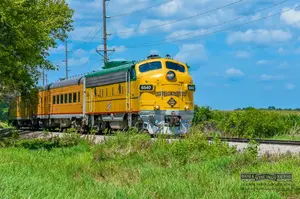
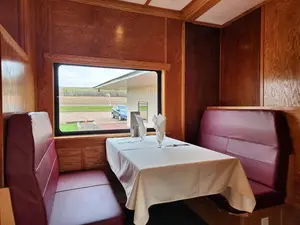
 2026 Boone & Scenic Valley Wolf Dinner Train—Saturdays May–October, Union Pacific dining cars, Bass Point Creek High Bridge. Confirm on bsvrr.com.
 -
Pennsylvania-Reading Seashore Lines: Map, Roster, History
Sep 23, 26 12:32 AM
 Pennsylvania-Reading Seashore Lines—Atlantic City Railroad renamed July 15, 1933. Pennsylvania two-thirds, Reading one-third. Camden to Atlantic City, Cape May, and Millville. Conrail April 1, 1976.
 -
Wisconsin Dinner Train Rides (2026): A Complete Guide
Sep 23, 26 12:28 AM
2026 Wisconsin Great Northern dinner train in Trego—$105, Namekagon River, January 8–31 and May 5–December 17. Mid-Continent’s remaining 2026 calendar is snack and scenic. Confirm on the railroad. -
New Hampshire Dinner Train Rides (2026): A Complete Guide
Sep 23, 26 12:21 AM
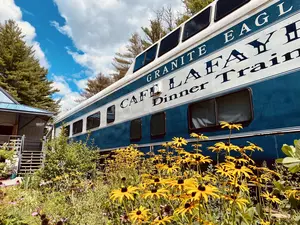
2026 Cafe Lafayette Dinner Train in North Woodstock—five courses, 2 hours, from $125. Children under 6 not allowed. Confirm on nhdinnertrain.com. -
PRR "GG-1" Locomotives: Roster, Photos, Specs
Sep 23, 26 12:13 AM
 PRR GG1 electric: 139 locomotives, 4800–4938, built 1934–1943. Specs, Loewy shell, Amtrak numbers, and the last revenue trip on October 28, 1983.
 -
Montana Dinner Train Rides (2026): A Complete Guide
Sep 23, 26 12:04 AM
2026 Charlie Russell Chew Choo from Hanover, near Lewistown—4.5 hours, prime rib, adult $151. Remaining listed dates sold out. Confirm on montanadinnertrain.com. -
Kentucky Dinner Train Rides (2026): A Complete Guide
Sep 22, 26 11:52 PM
2026 My Old Kentucky Dinner Train in Bardstown—four courses, 2.5 hours, adult $116. Confirm on kydinnertrain.com. -
Tennessee Dinner Train Rides (2026): A Complete Guide
Sep 22, 26 11:45 PM
2026 TVRM Chattanooga Dinner Train—Grand Junction, select Fri/Sat March 6–October 24, 6 p.m., from $110. Confirm on tvrail.com. -
The Trainphone: PRR's Wireless Radio System
Sep 22, 26 11:17 PM
 Pennsylvania Trainphone—Union Switch & Signal inductive telephone. Bel-Del trial 1941, Frenchtown November 29, 1943. Carriers at 88 kHz and 144 kHz. Out of service April 30, 1967.
 -
Pennsylvania (PRR) Steam Roster: Post 1906
Sep 22, 26 11:13 PM
 ennsylvania steam after 1906—H8, H9, and H10 Consolidations, 574 L1s Mikados, 598 I1s Decapods, 425 K4s Pacifics, 301 M1 Mountains. Drury’s grid. Last steam November 30, 1957.
 -
Pennsylvania Railroad (PRR) Diesel Roster: All-Time List
Sep 22, 26 10:59 PM
 Pennsylvania diesel roster—SW 3908 in June 1937, then Alco, Baldwin, EMD, Fairbanks-Morse, GE, and Lima. Serials and Alco order numbers. Penn Central February 1, 1968.
 -
Pennsylvania Railroad: Map, Logo, History, Rosters
Sep 22, 26 10:02 PM
 Pennsylvania Railroad—chartered April 13, 1846, Harrisburg–Pittsburgh, Horseshoe Curve 1854, Penn Station 1910. Standard Railroad of the World. Penn Central February 1, 1968.
 -
Pennsylvania Dinner Train Rides (2026): A Complete Guide
Sep 22, 26 04:48 PM
 2026 Pennsylvania dinner trains—Colebrookdale Dining Class in Boyertown and Strasburg Dinner on the Rails. Confirm on each railroad.